




Abstract
In this study, we examined whether and how the income gradient in child well-being may vary by grandparental coresidence and proximate residence in Japan, a country characterized by a high prevalence of intergenerational proximity and intensive family investment in children’s development. Using data from the Japan Child Panel Survey, we first demonstrated that household income is positively associated with multiple dimensions of children’s well-being, a relationship that was particularly strong for cognitive skills. We also found that children from lower-income families were more likely to coreside with grandparents than their counterparts from middle- and higher-income families, and that children from both lower- and higher-income families had similar likelihoods of living near their grandparents. However, children in lower- and higher-income families who coresided with grandparents had lower math and Japanese test scores than those living at a distance. These relationships resulted in smaller income gradients in test scores for children coresiding with grandparents and near their grandparents, relative to those whose grandparents lived farther away. International comparisons showed that the income gradient in children’s academic performance is largest in the US and smallest in urban China, with Japan being in the middle, and that multigenerational coresidence is generally associated with worse cognitive outcomes for children in both lower- and higher-income families across these three very different contexts. These findings provide new insights into the complex ways in which intergenerational proximity is related to economic disparities in children’s well-being.
Introduction
As described by Raymo and Dong (2020), family socioeconomic status (SES) is a well-established correlate of children’s well-being. Numerous studies have documented substantial differences by family income and other socioeconomic resources in children’s cognitive performance (Dahl and Lochner, 2012; Khanam and Nghiem, 2016; Washbrook et al., 2014), behavioral development (Akee et al., 2018; Duncan et al., 1998; Votruba-Drzal, 2006; Yeung et al., 2002), and a range of other non-cognitive and social outcomes (Akee et al., 2018; Blau, 1999; Pilkauskas, 2014). In general, children from low-SES families (particularly those living in poverty) fare worse than their counterparts from more affluent families (Duncan et al., 1998, 2017; Ermisch et al., 2012; Reardon, 2011). These disparities in child well-being are visible throughout early childhood and adolescence, and can accumulate across the life course to influence social inequality and mobility in adulthood and across generations (Ermisch et al., 2012).
The nature of relationships between family SES and child well-being may vary depending on the broader family context, including differences in family structure and stability (McLanahan, 2004; Perkins, 2017; Seltzer, 2019) and heterogenous relationships between these family characteristics and child outcomes (Bzostek and Berger, 2017; DeLeire and Kalil, 2002; Dunifon and Kowaleski-Jones, 2007; Lee and McLanahan, 2015; Perkins, 2019; Pilkauskas, 2014). However, few studies have explicitly examined how differences in family context and their relationships with child development may mitigate or amplify socioeconomic differentials in child well-being.
Of particular interest are recent demographic trends, including rising life expectancy and decreasing family size, that contribute to an increased role of grandparents in children’s lives (Bengtson, 2001). 1 Increase in the prevalence of grandparental coresidence and proximate residence, and associated growth in opportunities for intergenerational interactions and support, make it important to understand whether and how relationships between family SES and child well-being may differ by intergenerational proximity. Existing research on interrelationships among family SES, grandparental proximity, and child well-being has typically compared the developmental outcomes of children living in low-income, single-parent (mainly single-mother) families who have coresident grandparents with those of otherwise similar children without coresident grandparents, finding that children from disadvantaged families often benefit from having grandparents living in the same household (e.g., DeLeire and Kalil, 2002; Dunifon and Kowaleski-Jones, 2007; Zeng and Xie, 2014). These studies are important but are also limited in providing little or no information about how child outcomes vary not only by grandparental coresidence, but also by residential proximity among children in two-parent families across the SES spectrum. On the one hand, it is reasonable to expect that the documented benefits of grandparental proximity for children in low-income, single-parent families are enjoyed, to a greater or lesser degree, by all children. On the other hand, processes of selection into coresidence and proximate residence, and the stress that may accompany intergenerational proximity, may work in the opposite direction, to the disadvantage of some children more than others (a possibility that we revisit below).
In this paper, we focus on Japan, an East Asian country where the majority of children are reared in two-parent families, intergenerational coresidence and residential proximity are common, and normative expectations of intergenerational support are relatively strong. We use data from recent surveys of children in elementary and junior high schools to examine relationships between household income and multiple measures of child well-being, paying particular attention to how these relationships may differ by coresidence with, and geographic proximity to, grandparents. We address the following questions: (a) Is there a positive income gradient in child well-being? and (b) Do grandparental coresidence and proximate residence mitigate income disparities in child outcomes? We also conduct a comparative analysis of Japan, urban China, and the US to assess the similarities and differences among ‘strong family’ East Asian countries and one well-studied Western country.
Background
Recent trends in grandparental coresidence and proximate residence
In wealthy countries, increasing life expectancy, decreasing family size, and growing family instability and complexity have all significantly increased the potential for grandparents to play important roles in the lives of their grandchildren (OECD, 2011; Smock and Schwartz, 2020). For example, in the US, where living with grandparents has not been a normative arrangement, the percentage of children living with grandparents in multigenerational households increased from 5.7% in 1996 to 9.8% in 2016 (Pilkauskas and Cross, 2018), and around 35% of young Americans experience living in an extended family household before age 18 (Cross, 2018). Recent evidence also suggests an increase in intergenerational proximity in the US (Zhang et al., 2013), and it is clear that older Americans spend a substantial proportion of their remaining years living near their adult children (Raymo et al., 2019).
In societies characterized by strong kinship ties and cultural emphasis on intergenerational support, grandparental proximity—including both coresidence and proximate residence—is a common and important living arrangement experienced by many children. For instance, in southeastern Chinese mainland and Taiwan (China), 33%–44% of married couples were coresiding with the husband’s parent(s) in the early 2000s (Chu et al., 2011), 34% of Chinese aged 60 and over had an adult child living in their neighborhood, and another 14% had a child in the same county (Lei et al., 2015). In Southeast and South Asia, intergenerational coresidence remains common among the elderly, with 58%–76% of those aged 65 and over coresiding with an adult child in 2010, and intergenerational coresidence increasing in recent decades for people aged 25–29 (Esteve and Liu, 2014; Yeung et al., 2018).
The role of grandparental coresidence and proximate residence
Whether and how grandparental proximity matters for understanding the link between family income (and other measures of SES) and child well-being depends upon: (a) compositional differences among families, with respect to income, in grandparental proximity; and (b) differences in the association between grandparental proximity and child outcomes across families of different income levels. In the simplest case, when family income is unrelated to living arrangements and children in all families benefit (or not) equally from grandparental proximity, the income gradient in child well-being would not vary by grandparental proximity. However, variation in (a), (b), or both, may contribute to either stronger or weaker family income gradients in child outcomes for children living with, near, or far from their grandparents.
Family socioeconomic status and grandparental proximity
Research on who coresides with older parents and who lives nearby is limited, but recent studies suggest that grandparents are heterogeneous and that family SES is systematically associated with living arrangements. Intergenerational coresidence appears to be a strategic response to economic insecurity at both the individual and societal levels (Isengard and Szydlik, 2012), and economically disadvantaged families, including single-parent and minority families, are more likely to include coresiding grandparents, while their more affluent counterparts tend to live separately (Chan and Ermisch, 2015a, 2015b; Choi et al., forthcoming; Deaton and Stone, 2014; Glaser et al., 2018; Malmberg and Pettersson, 2007; Pilkauskas and Martinson, 2014). It also appears that older parents who live near (but not with) their adult children tend to be better off than their counterparts who coreside with their adult children. In the US, for example, grandparents who are either physically or materially disadvantaged are more likely to live with their grandchildren (US Census Bureau, 2008) whereas grandparents with more economic resources and better health are more likely to provide help without living in the same household (Ellis and Simmons, 2014; Luo et al., 2012). Indeed, the initiation of intergenerationally proximate residence in the US tends to be driven by the needs of adult children, with children moving closer to their parents more often than the reverse (Zhang et al., 2013). These relationships appear to be somewhat weaker in some European countries, including the Netherlands (Michielin and Mulder, 2007), but strong in others such as Italy (Tomassini et al., 2003).
Grandparental proximity and child outcomes
Intergenerational solidarity theory suggests that both grandparental coresidence and proximate residence could reinforce structural and functional solidarity between elderly parents and adult children (Bengtson and Roberts, 1991). Consistent with these theoretical expectations, studies have shown that intergenerational coresidence with elderly parents improves the economic and social well-being of adult children (parents), particularly low-income, single mothers (Pilkauskas et al., 2014), and strengthens intergenerational interactions and relationship quality (Dunifon et al., 2014; Pilkauskas and Dunifon, 2016). Proximate residence also facilitates mutual support and assistance among family members (Zhang et al., 2013). Of particular importance are financial transfers and other types of economic support among family members in households with coresident or geographically proximate grandparents. For example, research on the US shows that sharing the same household with other kin—often grandparents—allows adult parents to enjoy substantial savings on rent in large cities (Pilkauskas et al., 2014). Others note that private in-kind transfers—such as food, shelter, and household goods—are an important source of support in many low-income extended households, and demonstrate that the contribution of these private transfers to total income has increased over time (Haider and McGarry, 2005). Like intergenerational coresidence, geographic proximity to grandparents increases the probability that adult children receive financial assistance and transfers of other material goods (Cox and Stark, 2005; Schoeni, 1997). The benefits of resource sharing and intergenerational interactions among families with coresident or geographically proximate grandparents should presumably contribute to the well-being of grandchildren.
However, it is possible that the benefits children reap from grandparental coresidence and proximate residence are not the same in lower- and higher-income families. The economic hardship and resource constraints faced by lower-income families suggest that children in these families may benefit more than children in higher-income families from the pooling of resources and transfers of support associated with grandparental proximity. Consistent with these expecations, previous studies have found that among children in socioeconomically disadvantaged families, those with coresident grandparents tended to have better developmental outcomes, including better cognitive performance (LaFave and Thomas, 2017; Mollborn et al., 2011) and higher educational attainment (DeLeire and Kalil, 2002). In contrast, children in higher-income families with few resource constraints may receive little or no benefit from the presence of grandparents.
Some studies suggest that intergenerational proximity may be particularly beneficial for children to the extent that proximate grandparents tend to have higher SES and be healthier than coresident grandparents (Tomassini et al., 2003). Moreover, geographically proximate grandparents are less likely than coresident grandparents to be a source of family stress and conflict and may, in fact, help to relieve some of the stresses faced by their adult children (and grandchildren). Children in lower-income families may thus benefit more from residentially proximate grandparents than from coresident grandparents. Children in higher-income families are also likely to benefit from the resources and support provided by proximate grandparents, but presumably to a lesser degree than those in more economically disadvantaged families.
The above evidence suggests that (a) children in higher-income families are likely to live further away from their grandparents, whereas children in lower-income families are more likely to coreside with, or live near, their grandparents; and (b) children in lower-income families may benefit more from grandparental coresidence and proximity than their counterparts in higher-income families. Taken together, this evidence leads us to expect that grandparental coresidence and proximate residence should be associated with smaller family income gradients in child well-being.
At the same time, it is important to recognize that having grandparents in the same household or living nearby could be detrimental for grandchildren’s well-being in certain circumstances. Of particular relevance are negative selection processes into grandparental proximity that could offset some of its benefits for grandchildren. Coresiding grandparents who are economically dependent or in need of healthcare may divert limited family resources away from investments in children, and may also contribute to higher levels of family stress and conflict (Piontak, 2016). Similiarly, grandparents’ experience of acute health conditions or medical emergencies may have implications for family finances, emotional well-being, and time allocation that are detrimental to children’s well-being. At the same time, previous studies have found that adult children with lower levels of income, educational attainment, and employment stability are more likely to stay with (Xie and Zhu, 2009), or live near to their elderly parents (Chan and Ermisch, 2015a, 2015b). The lower economic capacity of these adult children may be negatively associated with the well-being of their offspring. These different patterns of negative selection into intergenerational coresidence should be kept in mind as we evaluate how children fare in different living arrangements.
The Japanese context
Japan is a particularly interesting context in which to examine how grandparental proximity may shape relationships between family income and child well-being. Intergenerational relationships and family norms in Japan conform to an East Asian pattern characterized by a high prevalence of grandparental proximity, strong intergenerational integration and shared obligations, and a high degree of intergenerational interaction. The percentage of households that include three generations declined from nearly 30% in the late 1970s to 16% in 2015 but remains relatively high in comparison with Western countries (Morgan and Hirosima, 1983; National Institute of Population and Social Security Research, 2018). Importantly, the decline in coresidence has been accompanied by a steady increase in the prevalence of residential proximity to parents among recently married men and women, with roughly 25% of those married for 5–10 years living near their parents (in-law) (Kato, 2013). This highlights the importance of incorporating intergenerational proximate residence as a category distinct from both coresidence and distant residence.
In Japan, research on economic disadvantage, grandparental proximity, and child well-being has focused primarily on single mothers and their children. This work is motivated by the fact that approximately one-third of single mothers coreside with other adults, typically their parents (Shirahase and Raymo, 2014). Relative to children in two-parent families, the children of single mothers have lower academic performance (Nonoyama-Tarumi, 2017; Park, 2007; Raymo, 2016) and worse health (Raymo, 2016), and they spend less time with their mothers (Raymo et al., 2014). These same studies find some evidence that coresidence with grandparents mitigates these negative relationships between single parenthood and child well-being (e.g. Nonoyama-Tarumi, 2017; Raymo, 2016). While these studies are important for understanding the role of grandparents in shaping the well-being of one specific group of children at the lower end of the socioeconomic distribution, they are limited in two important ways. The first is that none of them examined whether and how grandparental proximity (in addition to coresidence) may be related to family SES gradients in child well-being. The second is their limited focus on the children of single mothers. Despite the increasing prevalence of divorce and single-parent families (Raymo et al., 2014), the large majority of Japanese children are born and reared in intact, two-biological-parent families (Raymo et al., 2015).
In general, we expect family income to be positively associated with child well-being in Japan, especially for children’s cognitive outcomes. We also expect children’s outcomes to be positively associated with grandparental proximity (relative to distant residence), with children in lower-income families benefiting more than those in higher-income families. Family income could be either positively related, negatively related, or unrelated to grandparental coresidence and proximity. Assuming the expected relationships between family income and child well-being and between child well-being and grandparental proximity hold in Japan, a negative association between family income and grandparental proximity should contribute to some mitigation of the income gradient in child well-being. Conversely, grandparental proximity would do little to mitigate, or could even exacerbate, the income gradient in child well-being if family income is unrelated or positively related to grandparental proximity.
Data and method
Data
We use four waves of data from the Japan Child Panel Survey (JCPS). Conducted annually beginning in 2010, the JCPS is a child supplement to the Japan Household Panel Survey (JHPS) and the Keio Household Panel Survey (KHPS), both of which are nationally representative surveys of adult men and women. 2 Our sample comprises participants in the JHPS and KHPS who have children attending elementary or junior high school and those children (aged 7–16). The child surveys involve short tests of academic (cognitive) ability as well as a range of questions about time use, school, friends, and emotional well-being. The parents of children in the 2011 and 2013 waves of the JCPS are KHPS respondents, whereas the parents of children in the 2010 and 2012 waves of the JCPS are from the JHPS. In the 2014 and 2016 JCPS, children have parents in both the KHPS and the JHPS. Before 2014, information about grandparental proximity was only included in the KHPS. However, after harmonization of the questionnaires in 2014, both surveys have collected information about grandparents’ geographic proximity. We are therefore able to use the 2011, 2013, 2014, and 2016 waves of the JCPS in our analyses. We first linked each child in the JCPS data to their parents in the JHPS or KHPS, and then constructed measures of household income, grandparental coresidence and proximate residence, and other characteristics of parents, grandparents, and children.
Child outcomes
Because previous studies have suggested that relationships of child outcomes with parental and family attributes may differ depending on the outcome considered (Fomby and Cherlin, 2007; Lee and McLanahan, 2015), we examine both academic (cognitive) performance and non-cognitive outcomes. Indicators of academic performance include scores on short math, Japanese, and reasoning tests, which we standardized, by school grade, to have means of 0 and standard deviations of 1. Non-cognitive outcomes include two child-reported measures—a composite score of quality of life (QOL, ranging between 0 and 100) and self-rated health (SRH, also ranging between 0 and 100), with higher scores indicating better quality of life and health. 3 We also included an indicator of children’s behavioral problems—reported by parents and based on the Strength and Difficulties Questionnaire (SDQ, ranging from 0 to 33), with higher scores indicating more behavioral problems. In the waves used for our analyses, all cognitive test scores and SDQ were available for all children from grades 1 to 9, whereas QOL and SRH were only asked of older children in grades 3 to 9.
Household income
Linking children with their parents in KHPS/JHPS provides information on annual household income in the previous year (pre-tax, measured in units of 10,000 yen). We first divided the continuous measure of household income by the square root of household size to account for sharing and economies of scale. 4 In the empirical analyses summarized below, we classified this measure of equivalized household income into three categories: bottom 25%, middle 50%, and top 25%. Less than 4% of observations had missing values on household income, and these were assigned to a separate ‘missing’ category.
Grandparental proximity
We use a three-category measure of grandparental proximity: coresidence (living together in the same building or living in different buildings on the same plot of land), proximate residence (living within 1 km or in the same town), and distant residence (living in the same prefecture, ward, city, or farther away). 5 When answering the question about grandparental proximity, JHPS/KHPS respondents indicated which (grand)parents were most proximate, either paternal grandparents, maternal grandparents, or grandparents on both sides, but we do not have further information about when and why such living arrangements were initiated.
Other covariates
We included several covariates that may be associated with both household income and child outcomes. The first set contains characteristics of children’s parents, including their level of education (0 = high school and below, 1 = some tertiary education and above), employment status (0 = not employed, 1 = regular employment, 2 = nonstandard employment), mother’s weekly hours spent on childcare, mother’s age, and the marital status of parents (0 = married, 1 = otherwise). 6 The second set contains characteristics of children, including the focal child’s sex (0 = girl, 1 = boy), age, and number of siblings in the household. Third, in analyses examining the correlates of grandparental proximity and assessing the moderating role of grandparental proximity, we also included the education level of the child’s grandfather, in an effort to account for differential selection into geographical proximity. We used the education of paternal grandfather for families who indicated that the paternal side or both sides was most proximate, and used the education of maternal grandfather in cases where the maternal side was most proximate. In all analyses, we included region and year dummies to account for variation across geographic regions and over time. 7
For the purpose of comparison with other papers in this special issue, we restricted our analyses to children aged 10–15 years old. The analytical sample includes children with valid information on all variables and varies slightly by the specific outcome: 1236 children contribute a total of 2038 observations for analyses of cognitive outcomes, 1213 children contribute 1972 observations for analyses of QOL, 1218 children contribute 1980 observations for analyses of SRH, and 1224 children contribute 2016 observations for analyses of SDQ.
Method
We pooled all observations and conducted analyses in three steps. First, we estimated ordinary least squares (OLS) models to examine the association between household income and child outcomes, controlling for other covariates except grandparental proximity and grandfather’s education:

Second, to examine families’ living arrangements, we estimated multinomial logistic regression models for grandparental proximity as a function of household income, grandfather’s education, and other covariates:

This model estimates the log-odds of children living in families with coresident grandparents or those with residentially proximate grandparents relative to the base outcome of living distant from grandparents. In addition to the covariates included in Equation (1), the vector of covariates (Z) also includes grandfather’s education.
Finally, to assess whether and how associations between household income and child outcomes may depend on grandparental proximity, we estimated the following OLS models:


Based on results from Equation (4), we calculated differences in predicted child outcomes between children from the top 25% and the bottom 25% income groups, within each category of grandparental proximity, to evaluate the extent to which income gradients in child well-being depend upon where grandparents live.
Results
Descriptive results
Descriptive statistics.

Note: QOL refers to quality of life; SRH refers to self-rated health; and SDQ is the Strength and Difficulties Questionnaire.
Unadjusted differences in child well-being by household income.
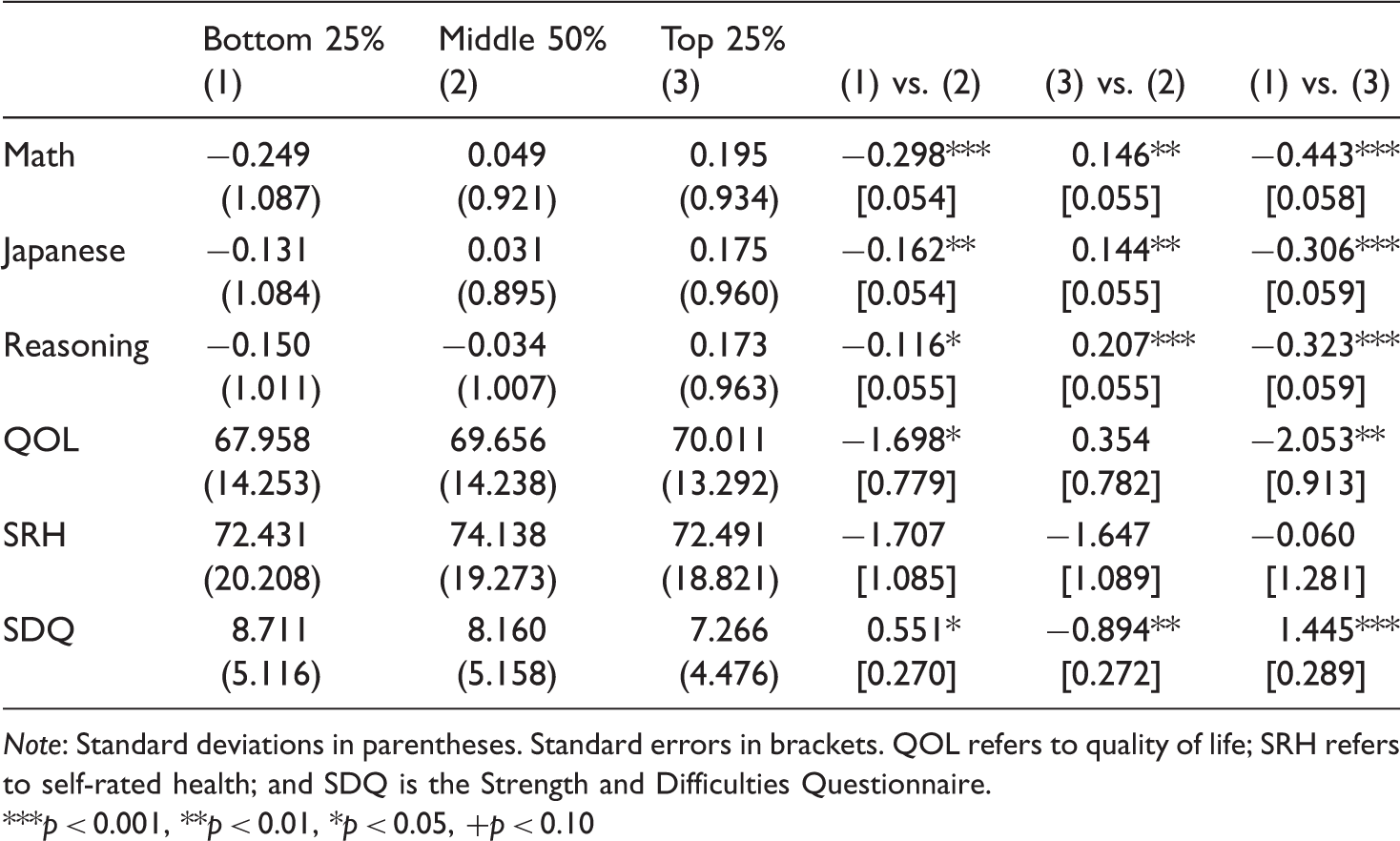
Note: Standard deviations in parentheses. Standard errors in brackets. QOL refers to quality of life; SRH refers to self-rated health; and SDQ is the Strength and Difficulties Questionnaire.
p < 0.001, **p < 0.01, *p < 0.05, +p < 0.10
Turning to children’s non-cognitive outcomes, the pattern for children’s behavior problems was consistent with that for test scores—children from families with the lowest incomes displayed the most behavioral problems while their counterparts in more affluent families had the fewest behavioral problems. Children in the middle 50% and top 25% income families reported similar levels of life quality, while children from the bottom 25% income families reported significantly lower quality of life. Finally, there was no significant difference across household income categories in children’s self-reported health. These patterns are generally consistent with the findings of previous research on Western countries.
Differences in child outcomes by household income
OLS regression results for the association between household income and child well-being.
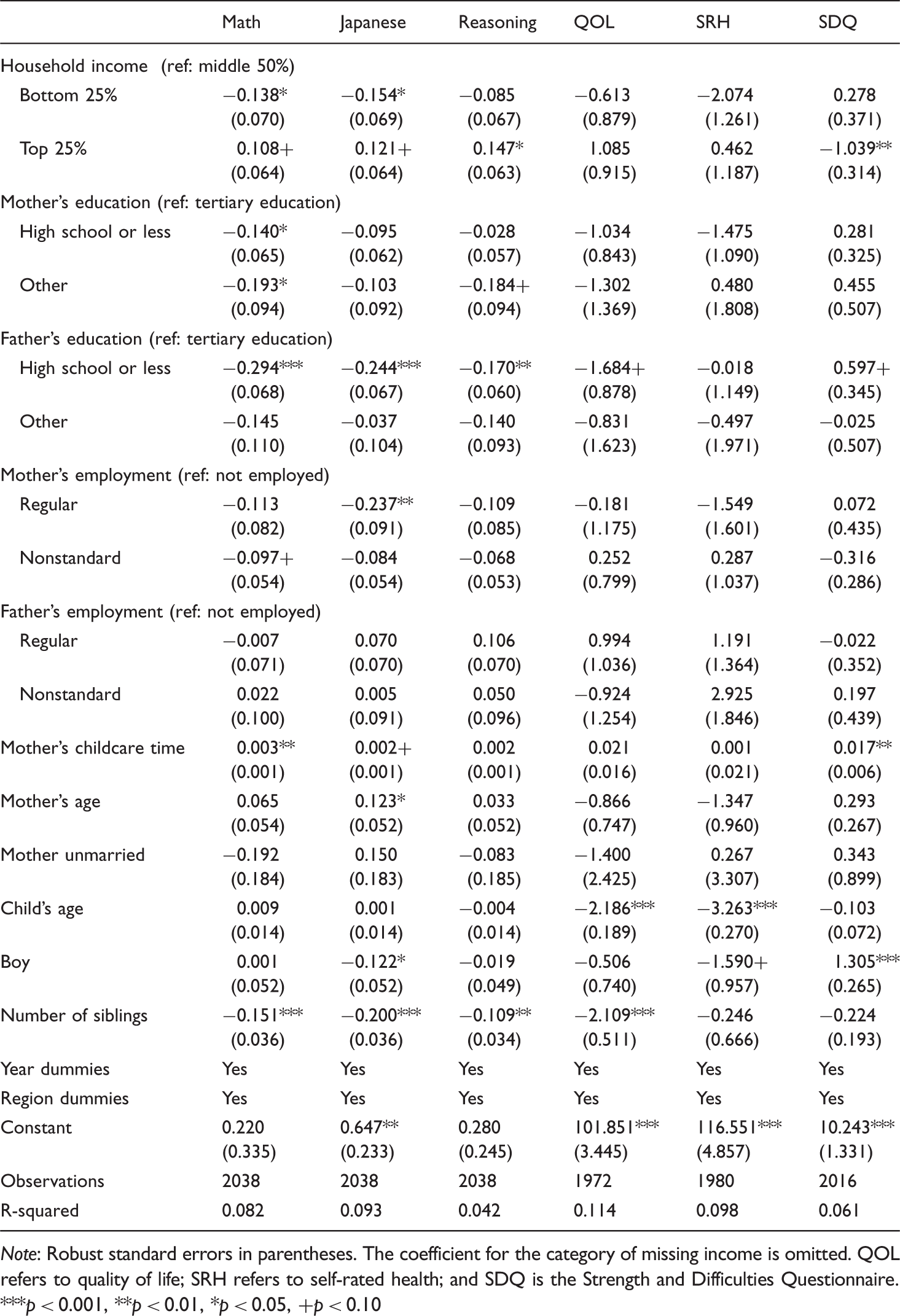
Note: Robust standard errors in parentheses. The coefficient for the category of missing income is omitted. QOL refers to quality of life; SRH refers to self-rated health; and SDQ is the Strength and Difficulties Questionnaire.
p < 0.001, **p < 0.01, *p < 0.05, +p < 0.10
The role of grandparental proximity
Multinomial regression results for the association between grandparental proximity, household income, and other covariates.

Note: Robust standard errors in parentheses. The coefficient for the category of missing income is omitted.
p < 0.001, **p < 0.01, *p < 0.05, +p < 0.10
OLS regression results for the association between selected measures of child well-being, household income, and grandparental proximity.

Note: Robust standard errors in parentheses. The coefficient for the category of missing income is omitted. Other covariates are the same as in Table 3. Full results are available upon request.
p < 0.001, **p < 0.01, *p < 0.05, +p < 0.10
Results of Model 2 indicate only modest variation in associations between household income and children’s academic performance across the different categories of grandparental proximity, as indicated by the coefficients of the interaction terms. In contrast to our expectations, it appears that grandparental proximity is beneficial only for certain child outcomes among children in the middle 50% of the household income distribution and is actually negatively associated with children’s academic performance in lowest and highest household income quartiles. Figure 1 describes differences in test scores for children in the bottom and top family income quartiles by categories of grandparental proximity. The income gradient in both math and Japanese scores is smallest among children coresiding with their grandparents, a pattern that primarily reflects the negative relationship between grandparental coresidence and test scores for children from high-income families. The income gradient in Japanese test scores is largest for children living far from grandparents, but it is children living near (but not with) grandparents who have the largest income gradient in math test scores.
Gaps in math and Japanese test scores between children from high- and low-income families by grandparental proximity.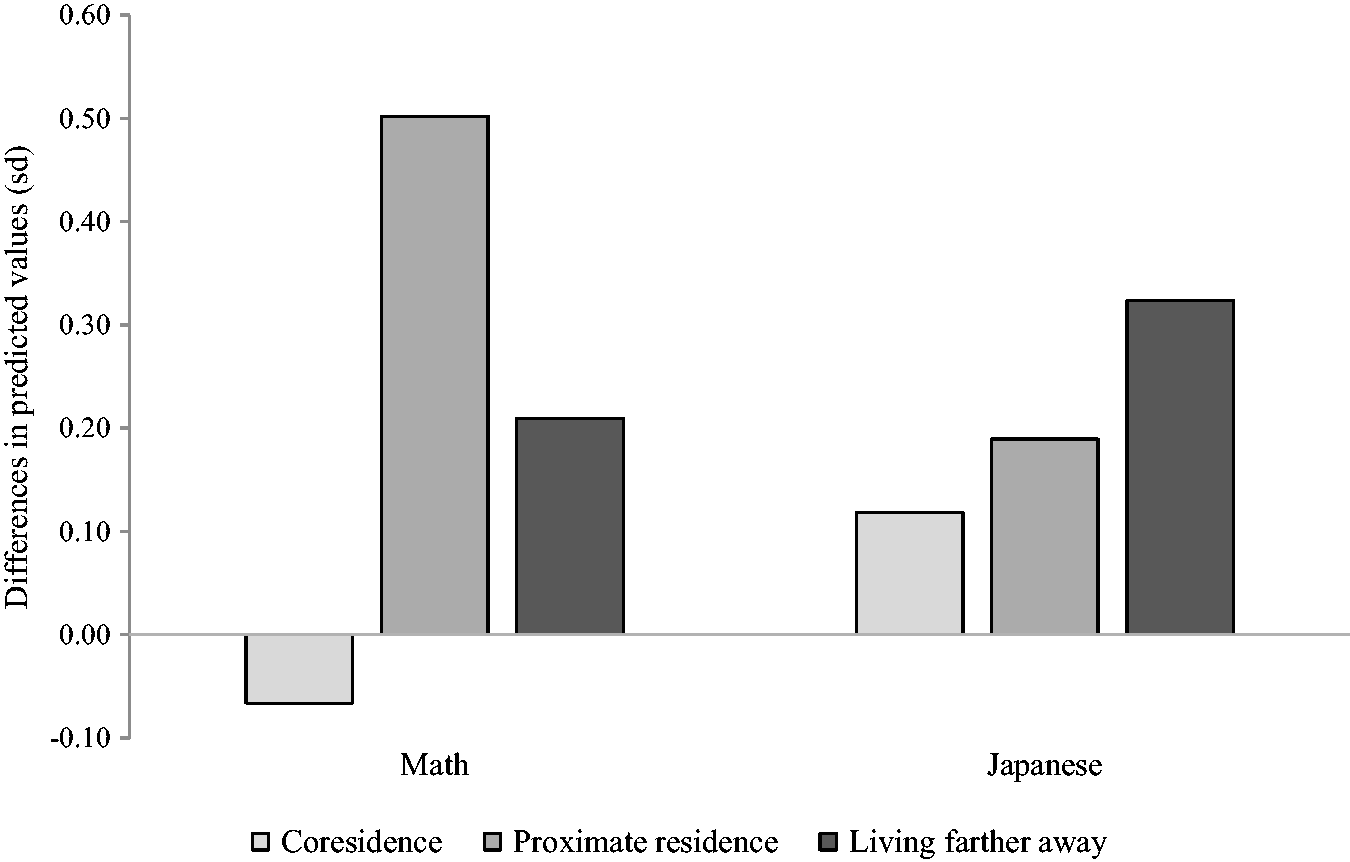
International comparison
To better understand how grandparental proximity may shape the income gradient in children’s cognitive test scores in Japan, we conducted parallel analyses for the US and urban China using the 2007 survey of the Early Childhood Longitudinal Study (ECLS) from the US and the 2010 and 2014 surveys from the China Family Panel Studies (CFPS) (urban sample). Children in the ECLS were aged 14–15 and children in the CFPS were aged 10–15. As in the analyses just described, we defined families in the first quartile of equivalized household income as lower-income families and those in the top quartile as higher-income families.
12
Unfortunately, we can only identify coresiding grandparent(s) based on household roster data and we have no information about the proximity of non-coresiding grandparent in either the US or China. After standardizing children’s cognitive test scores and constructing a set of comparable covariates (including year and region dummies), we estimated the same regression models (Equation 4) for the US and urban China, and plotted the gaps in the predicted values of children’s math and reading/word scores in Figure 2 (along with the corresponding figures for Japan).
Gaps in math and reading/word test scores between children from high- and low-income families by grandparental coresidence in the US, Japan, and urban China.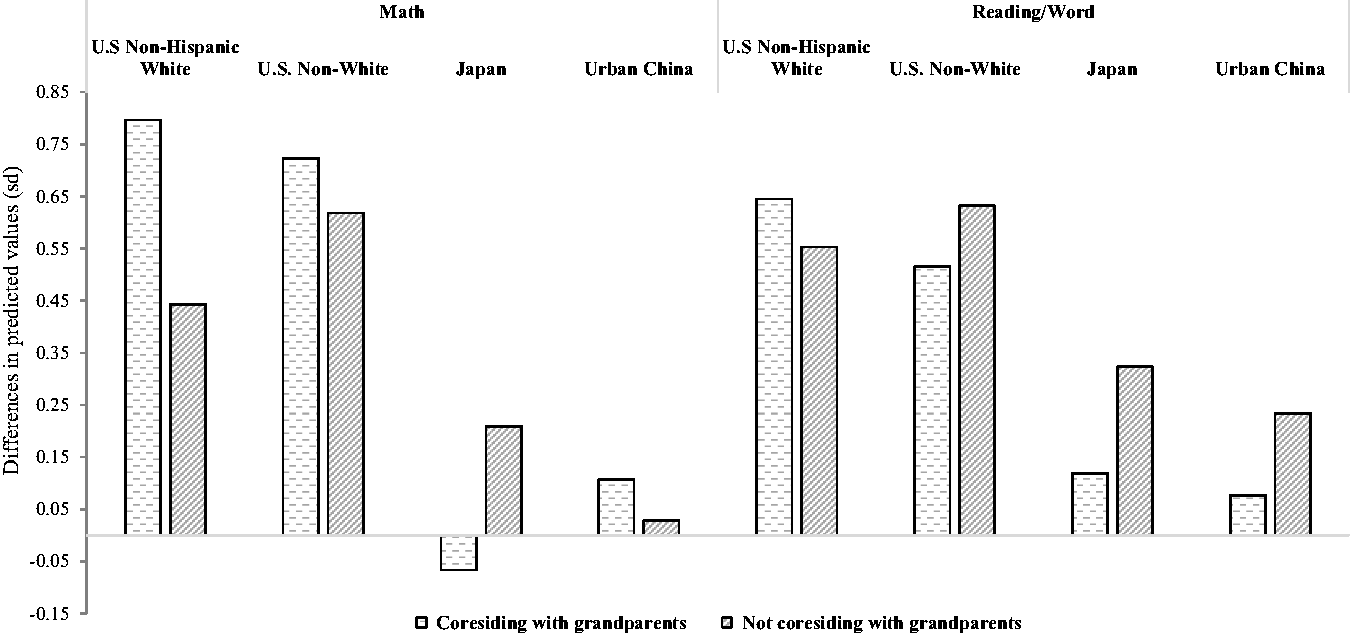
These figures show that the income gradient in children’s cognitive test scores are largest in the US and smallest in urban China. This is consistent with previous studies finding that family SES matters more in accounting for the academic success of children in the US (Bradbury et al., 2015), and exerts a weaker influence on children’s academic achievement in China (Liu and Xie, 2015; Lyu et al., 2019). With respect to the role of grandparental coresidence, non-Hispanic White children in the US had lower math and reading scores when living with their grandparents. This is particularly true for children from lower-income families, resulting in more pronounced income gaps in cognitive scores (particularly for math) among those coresiding with grandparents. A similar pattern is observed for math scores among children in other racial/ethnic groups (African-American, Hispanic, Asian, others). However, the income gradient in reading scores is weaker, with low-income minority children benefiting from grandparental coresidence. Among children in urban China, the income gradient is larger for math scores but lower for language scores for those coresiding with grandparents. The former is due to the lower math scores of children in the bottom income quartile (relative to children in middle-income families) while the latter reflects the relatively low language scores of children from high-income families.
Discussion
Using four rounds of data from a survey of elementary and middle-school-aged children, we investigated relationships between household income, grandparental proximity, and child well-being in Japan. We found that household income was positively associated with children’s well-being, especially their cognitive skills—a pattern found in previous studies of the US and other Western countries. We also showed that children in lower-income families were more likely to coreside with grandparents than their counterparts in middle- and higher-income families. Children in both lower- and higher-income families tended to have lower math and Japanese scores when coresiding with grandparents (relative to children living at a distance from their grandparents). The only case in which grandparents’ proximate residence was positively associated with children’s well-being was for the Japanese language scores of children in middle-income families. 13 Together, these compositional differences in grandparental proximity and its heterogeneous associations with child outcomes yielded smaller income gradients in children’s math and language scores among those coresiding with grandparents, and in children’s language scores among those living near their grandparents Interestingly, grandparents’ proximate residence was associated with a larger income gradient in children’s math scores.
We also compared the role of grandparental coresidence in Japan with that in urban China and the US. The income gradient in children’s academic performance was largest in the US and smallest in urban China, with Japan in the middle. One surprising finding was the negative relationship between multigenerational coresidence and cognitive outcomes for children in both low- and high-income families across these very different contexts. This pattern in Japan (and urban China) stands in contrast to the findings of earlier studies suggesting the benefits of grandparental coresidence for children’s educational achievement and attainment in rural Chinese mainland and Taiwan (China) (Pong and Chen, 2010; Zeng and Xie, 2014). 14 What might explain this discrepancy? First, it is important to note that the results of past studies on the US and other developed countries are similar to ours. Among children living with two biological parents, academic performance and educational outcomes are generally lower in multigenerational households than in nuclear families (Kreidl and Hubatková, 2014; Monserud and Elder, 2011). Almost all of the children in our analytical sample live in intact, two-parent families, suggesting that the lower test scores of children with coresident grandparents may reflect similar processes in Japan. Another possible reason discussed earlier is negative selection into grandparental proximity, a pattern that is well documented in developed countries (Sigle-Rushton and McLanahan, 2002). In Japan’s aging society, we expect that elderly grandparents in poor health are more likely to live with or near their adult children in order to receive regular care, thus contributing to resource dilution that may compromise the well-being of children, especially those in low-income families. It is also possible that, as in urban China (Xie and Zhu, 2009), adult children with more limited human capital are more likely to live with elderly parents, contributing to lower levels of child well-being in these households.
We are unable to directly evaluate this speculative interpretation because our data and models do not include health status and other important unmeasured and/or unobserved characteristics of grandparents, parents, and the household that may be associated with both grandparental proximity and child outcomes. Information about the circumstances motivating decisions regarding intergenerational coresidence and proximate residence would allow for a better understanding of relationships between grandparental coresidence or proximity for children’s outcomes, and income gradients in those outcomes. For instance, if a parent (typically the mother) initiates coresidence with her elderly parents following her own divorce or separation, grandparents may play a protective role for (grand)children. Additionally, grandparental coresidence and proximity tend to be more prevalent in early childhood than at later developmental stages in the US (Amorim et al., 2017), but we observe grandparental coresidence and proximity among Japanese children only at ages 10–15, by design. This limits our ability to provide a comprehensive picture of the role played by intergenerational proximity in shaping income gradients in child well-being. 15 Furthermore, children’s experiences of intergenerational coresidence are often short, thus suggesting that transitions into and out of coresidence (or proximity) may produce household instability that is detrimental to child well-being (Mollborn et al., 2012; Perkins, 2019). Information about the reasons, timing, and duration of different living arrangements is needed to more thoroughly investigate how the link between household income and child well-being may be related to grandparental coresidence and proximate residence.
There are several other ways in which future research can improve upon our study. First, the small number of available waves prevented us from taking advantage of the longitudinal nature of the JCPS data. Future studies, based on longer panels, can describe trajectories of well-being while also accounting for observed time-varying and unobserved confounders (e.g. by estimating growth curve models and/or fixed effects models) to better understand the interrelationships between household income (or other measures of SES), grandparental proximity, and child well-being at different developmental stages. Second, we measured grandparental residential proximity based on geographical distance (living within 1 km or in the same town). However, it is likely that 1 km may be too restrictive, especially in a setting like urban Japan, where efficient public transportation allows for easy movement across longer distances. Future studies may benefit from using different criteria to classify grandparental residential proximity, facilitating a better understanding of the relationship between distance (either spatial or temporal) and the amount and quality of intergenerational exchanges of support. Third, evidence that married women living with their mothers-in-law have lower levels of subjective well-being in Japan (Furuya and Raymo, 2020) suggests that the intergenerational stress and conflict thought to underlie this relationship may have negative spillover effects on children’s well-being in these households. Understanding how grandparental coresidence influences children requires more attention to the nature of intergenerational relationships among the triad of parents, grandparents, and children. Finally, other members of the broader family network—such as uncles, aunts, and cousins—may also provide resources and support that benefit children in different living arrangements and different socioeconomic circumstances (Erola et al., 2018; Jæger, 2012). Documenting how kin (including, but not limited to, grandparents) in extended family networks shape SES gradients in family and child well-being is a particularly promising direction for research on societies characterized by strong family ties.
Various agents and institutions—parents, grandparents, schools, educational systems, and social policies—presumably work together to shape inequalities in children’s early-life development and subsequent achievement. The foci of other papers in this special issue, including cram school attendance, time use at home, and the educational expectations of children and parents, are important pathways through which differenes in household income contribute to unequal child outcomes in East Asia (and in other societies). Differential investments in, and interactions with, grandchildren facilitated by grandparental proximity may alter the ways in which these factors influence child outcomes. Our study takes a valuable initial step toward an understanding of these processes by describing how grandparental proximity may shape the family income gradient in children’s cognitive and non-cognitive outcomes.
Footnotes
Declaration of conflicting interests
The author(s) declared no potential conflicts of interest with respect to the research, authorship, and/or publication of this article.
Funding
The author(s) disclosed receipt of the following financial support for the research, authorship, and/or publication of this article: This research was conducted at the Center for Demography and Ecology and the Center for the Demography of Health and Aging at the University of Wisconsin-Madison (P2C HD047873 and P30 AG17266, respectively).
