



Abstract
This study examines the effects of participation in private tutoring on Chinese students’ cognitive ability and school engagement, and further investigates the role of the formal schooling context in moderating these effects. Utilizing a nationally representative data set of Chinese middle school students and the method of propensity score matching, I find that participation in private tutoring significantly boosts students’ cognitive ability and school engagement. Moreover, multilevel models are employed to demonstrate that the observed positive effects of receiving private tutoring vary across schools. Specifically, these effects are more significant for students in low-quality schools and tend to decrease for students in higher-quality schools. This study thus calls for a systematic examination of the private tutoring effects on various dimensions of student development as well as the contextual influence of formal schools while discussing the implications of private tutoring for educational inequality in contemporary China.
Introduction
Private tutoring, also called ‘shadow education’, refers to students’ learning activities that occur ‘beyond the school walls’ (Park et al., 2016). In terms of content, private tutoring is closely related to the formal school curriculum, helping students review what they have already learned or preview what they will learn inside their schools. Parents pay for different types of private tutoring, either individual-based or class-based, in the hope that their children can ‘catch up, keep up, or get ahead of their peers’ (Bray et al., 2014). Existing alongside the formal schooling system, private tutoring is thus perceived as an alternative channel through which parents seek to secure better educational prospects for their children.
Some East Asian societies, such as Japan and Korea, are well known for their long traditions of embracing private tutoring as a means of preparing for the merit-based and high-stakes entrance examinations for higher-level educational institutions (Baker et al., 2001; Baker and LeTendre, 2005). The prevalence of private tutoring in these countries is markedly high (Park et al., 2011; Stevenson and Baker, 1992), and families’ spending on private tutoring is also substantial (Park et al., 2011; Russell, 1997). In recent decades, however, private tutoring is rapidly growing to be a global phenomenon, despite the diverse forms and features it takes across different social contexts (Aurini and Davies, 2004; Bray, 2009; Buchmann et al., 2010; Mori and Baker, 2010; Silova, 2010).
The worldwide growing demand for private tutoring has raised concerns about educational inequality due to unequal access to this kind of out-of-school learning resource. Existing literature has consistently documented the differential access to private tutoring by family socioeconomic status (Bray and Kwok, 2003; Buchmann et al., 2010; Park et al., 2011; Stevenson and Baker, 1992; Zhang and Xie, 2016). Therefore, if receiving private tutoring is really found to exert significant effects on student performance, in either a beneficial or a detrimental manner, it would then be encouraging for stratification researchers to incorporate private tutoring into their framework so as to develop a richer understanding of the mechanisms that shape the structure of educational inequality.
The effect of private tutoring on student outcomes, as revealed in a wide range of research, is indeed far from conclusive. While a few studies show that the effect of private tutoring on student performance is positive and strong (Buchmann, 2002; Park et al., 2011; Stevenson and Baker, 1992), some other studies find that the private tutoring effect is fairly small, albeit sometimes statistically significant (Kuan, 2011; Zhang, 2013). A few studies even report negative effects of certain types of private tutoring (Cheo and Quah, 2005; Lee et al., 2004).
In addition, although the private tutoring sector and the formal schooling sector basically offer students the same ‘learning menu’, the interplay of private tutoring and formal schooling in influencing student outcomes is rarely discussed. Although the demand for private tutoring has been found to vary across schools with different characteristics (Dang, 2007; Kim and Chang, 2010; Kim and Park, 2010), few researchers have attempted to relate the impact of private tutoring to the potential contextual influence of the formal schools.
This article contributes to the discussion with evidence from China. Drawing upon a nationally representative data set of Chinese middle school students, I first examine the effect of participation in private tutoring on two distinct aspects of student development—cognitive ability and school engagement—and second, pay further attention to whether the private tutoring effect is moderated by the quality of formal schooling to which the students are exposed. In the remainder of the article, I first develop the theoretical framework and analytical strategy with a literature review, I then introduce the data and measures, present the empirical results, and conclude by discussing my major findings and their implications.
Literature review and theoretical framework
Endogeneity and effects of private tutoring
In light of the growing prevalence of private tutoring, it is reasonable to expect that participation in private tutoring is beneficial for learning. Nevertheless, the endogeneity problem in receiving private tutoring, which is obvious yet seldom addressed, renders the link between tutoring investment and educational output less straightforward than it seems. In particular, students who receive private tutoring may differ in terms of a wide range of preexisting background factors; and these factors may affect both participation in tutoring and educational outcomes. Without taking into account these preexisting factors, the estimated private tutoring effect is likely to be subject to omitted variable bias.
In fact, the endogeneity problem of private tutoring may have partly led to the inconsistencies among past research studies regarding the private tutoring effect. For example, reviewing 13 empirical studies on the impact of private tutoring, Dang and Rogers (2008) demonstrate that studies that do not directly address the endogeneity of private tutoring tend to yield mixed results, but studies that control for endogeneity in some credible ways generally lend empirical support to a positive impact of private tutoring. Hence, taking the endogeneity problem into consideration seems to be crucial in estimating the private tutoring effect.
Meanwhile, most research has assessed the effect of receiving private tutoring only on the cognitive dimension of student performance. Far less is known, however, about the potential influence of private tutoring on students’ school-related behaviors and perceptions, such as their engagement in school and attitudes toward learning (Bray, 2003; Park et al., 2016). As is often noted in prior literature, school engagement is positively related to a myriad of developmental outcomes of students and is attracting growing public and scholarly attention (Fredricks et al., 2004; Wang and Holcombe, 2010); it is thus surprising that student engagement in school has been generally neglected in discussing the impact of receiving private tutoring.
Presumably, participation in private tutoring may lead to a higher level of school engagement. Since students usually learn the same subjects in private tutoring as in formal schooling, they may perform better in school examinations due to the extra after-school training and, as a result, feel more encouraged in learning and become more engaged in school life (Bray, 2003). Private tutoring can also help parents monitor and organize their children’s living space outside of school, and, in turn, protect students from adverse impacts of the deviant behaviors or anti-school feelings of peers. On the other hand, however, it is also possible that private tutoring may produce psychological frustrations. Because private tutoring is usually paid for by their parents rather than by themselves, students may be reluctant to have their after-school leisure time occupied by prolonged learning hours and thus become less interested in the school subjects and school life. To my knowledge, direct empirical evidence concerning the link between private tutoring and school engagement is sparse. A recent qualitative study in Taiwan showed that students who attend ‘cram schooling’, a class-based tutoring type, tend to pay little attention to class lectures and activities (Jheng, 2015). Of course, more empirical evidence from elsewhere is needed to test the effect of receiving private tutoring on school engagement.
Heterogeneity in the tutoring effect: Contextual influence of formal schools
In addition to the endogeneity problem of private tutoring and the narrow focus on students’ cognitive performance, another limitation of the previous literature in estimating the effect of private tutoring is the ‘uniform effect’ assumption (Choi and Park, 2016). That is, the potential effect of private tutoring is generally assumed to be homogenous across groups and settings. When the average effect of private tutoring is highly mixed, as Dang and Rogers (2008) showed, following the ‘uniform effect’ assumption would be of limited use in enriching our understanding of the potential implications of private tutoring for educational inequality, since the seemingly ineffective tutoring experience may still be particularly effective for certain student groups or in certain contexts.
In this paper, I attempt to take into account the contextual influence of formal schools by investigating whether the effect of receiving private tutoring is independent from, or conditional upon, the formal schooling context. Insofar as private tutoring mimics the mainstream formal schooling sector (Mori and Baker, 2010), the private tutoring effect may vary across schools with different characteristics. Additionally, a growing body of research has revealed a significant relationship between the characteristics of schools and student outcomes (e.g. Alwin and Otto, 1977; Jennings et al., 2015). These findings thus lend empirical support to a further investigation of the interactive influences of private tutoring and formal schooling.
I pay particular attention to heterogeneity in school quality and ask whether receiving higher-quality formal schooling mitigates or exacerbates the returns to private tutoring. A recent study with empirical evidence from Korean middle school students (Choi and Park, 2016) demonstrated that the positive effect of intense private tutoring participation is much stronger among students with disadvantaged status than among those with advantaged status. In other words, private tutoring may be more valuable for students who are facing more stringent constraints of educational resources. Following this insight, I expect that the effect of private tutoring is negatively associated with the quality of formal schools.
Indeed, there has been some scattered evidence on the interactive effect of private tutoring and formal schooling. Zhang's study (2013), for example, drew upon a sample of students who were in their final year of senior high school (12th graders) in Jinan, China, and found that students from schools with higher educational inputs are more likely to benefit from private tutoring. This finding demonstrates a ‘mutually enhancing’ effect of private tutoring and formal schooling in influencing student performance and thus runs counter to our expectation. It is unclear, however, whether the finding based on a certain city is generalizable to other regions or lower-grade students.
Private tutoring in contemporary China
In this section, I give a brief introduction to the development of private tutoring over the past decades in China. Since private tutoring generally follows the ‘institutional logic’ of formal education (Mori and Baker, 2010), it is helpful to start with a broad sketch of the formal schooling system. The formal schooling system in China is basically a combination of two consecutive educational stages: compulsory and post-compulsory. The compulsory stage consists of 6 years of elementary school and 3 years of middle school, and the post-compulsory stage starts from 3 years of high school and then extends to 3 or 4 years of college and beyond. Since 2010, the compulsory schooling has been free for all. To strive for equity, the government also keeps on executing the ‘nearby enrollment’ principle, which limits parents’ ability to mobilize family resources in making school choices (Wu, 2008; Zhang and Xie, 2016). However, after finishing middle school, students must take a standardized and merit-based entrance examination to compete for limited higher-level schooling opportunities.
The competition has appeared more intense in recent decades, partly due to the government’s persistent preference for building up a small proportion of key-point high schools and elite colleges as learning models for others. Compared with the majority, these ‘model minority’ schools usually enjoy favorable financial support, have better-qualified teachers, and have priority in admitting quality students. Recent evidence has demonstrated that attending key-point high schools significantly increases one’s likelihood of entry into tertiary education (Ye, 2015), and students who graduate from elite colleges enjoy a significant wage premium in the labor market (Li et al., 2012). Therefore, although post-compulsory education has become more accessible with the expansion of the whole schooling system, the opportunity to study in a key-point high school or a top-tier college is far from egalitarian.
Stevenson and Baker (1992) used the term ‘contested sponsorship’ to describe such a combination of a nonselective compulsory stage and a highly selective noncompulsory stage in Japan. Indeed, ‘contested sponsorship’ has played a prominent role in raising the demand for private tutoring in Japan and many other societies in East Asia (Baker and LeTendre, 2005; Park et al., 2011; Zhang and Xie, 2016). In such a context, parents are under pressure to invest in their children’s education in the early school years, and private tutoring emerges as a desirable investment venue along with formal schooling.
Private tutoring in China has been expanding rapidly in past decades (Hu et al., 2015; Xue and Ding, 2009), especially in urban areas. The participation rate of tutoring in Shanghai, as calculated with the 2012 Programme for International Student Assessment (PISA) data, is between 50 to 70%, depending on the tutoring subjects (Hu et al., 2015). Based on data collected from urban areas in 12 provinces in 2004, Xue and Ding (2009) report that the participation rate of private tutoring is 73.8% among primary students, 65% among middle school students, and 53.5% among high school students. These figures also reveal that a substantial proportion of students in urban China actually begin their private tutoring experience quite early, at least as early as elementary school, and the prevalence of private tutoring is higher at lower stages than at higher stages. At the country level, the participation rate of private tutoring is much lower. The corresponding figure, among students aged 10 to 15 years old, was around 25% nationwide in 2010 (Zhang and Xie, 2016).
Analytical strategy
Building upon prior research, I mainly address two research questions in this paper. Using a recently collected nationally representative sample of middle school students in China, I first examine the effects of participation in private tutoring on student outcomes, then look at whether the quality of formal schools to which the students are exposed moderates the private tutoring effects. In terms of student outcomes, I focus not just on students’ cognitive development, but also on their school engagement.
The first step is to estimate the effect of private tutoring on student outcomes. To alleviate the endogeneity problem of private tutoring, propensity score matching is employed. Specifically, a binary logistic regression model is fitted to predict the propensity scores in receiving private tutoring given a wide range of covariates. Next, the propensity scores are used to construct a matched sample in which students who receive tutoring are similar to those who do not. Then, based on the matched sample, the effects of private tutoring on students’ cognitive ability and school engagement are demonstrated by running a simple bivariate ordinary least square regression (OLS).
The second step of this study is to determine whether the effect of participation in private tutoring is conditional on school quality. As students are embedded within schools, multilevel models are specified to take the multilevel structure of the data set into account. In our case, the multilevel modeling separates the unexplained error into student-level and school-level components, thereby removing the correlation among error terms resulting from the data structure of students being nested in schools. At the school level, the school quality factor, which is indicated by the proportion of graduates entering key-point senior high schools, is introduced to allow for a random slope of private tutoring. The additional inclusion of a cross-level interaction between private tutoring and school quality could further reveal the degree to which school quality exacerbates or mitigates the private tutoring effect. To identify any curve–linear patterns in modeling the cross-level interaction, both continuous and categorical forms of the school quality variable are used.
Data and measures
Data
The data used come from the baseline China Education Panel Survey (CEPS). The baseline survey of the CEPS has collected a large sample of middle school students (seventh and ninth graders) from the 2013–2014 academic year. A stratified, multistage sampling with probability proportional to size was used in the survey. First, 28 principal sampling units (PSUs) were selected from 2870 county-level districts; next, 4 middle schools were selected in each selected PSU, comprising the second-level sampling units of a total of 128 middle schools stratified by type and size; then, in each selected school, four classes, two in grade seven and two in grade nine, were randomly sampled to form the third-level sampling units; and finally, all the students in the selected classes were included in the sample. In total, the CEPS successfully obtained a sample of about 20,000 middle school students. In addition to the student questionnaire, the CEPS also administered questionnaires to collect information from the student’s parents, classroom teachers and school principals.
Measures
There are two focal outcomes: cognitive ability and school engagement. Cognitive ability is based on a standardized cognitive ability test that all respondents take. The test systematically incorporates verbal ability, math ability, and logical reasoning in graphic forms. Two independent ability tests are administered for the seventh and ninth graders, respectively. The test scores are then constructed using the three-parameter logistic model under the item response theory (Hao and Yu, 2017). To aid comprehension, cognitive ability is rescaled to have a mean of 0 and a standard deviation of 1.
School engagement is a 12-item Likert scale that aims to assess the degree to which the respondent gets along with classmates and teachers and feels generally comfortable about his or her present school life. 1 As these items reveal high internal consistency (Cronbach’s alpha = 0.76), after reverse coding those negatively worded items, the average of the values on these items is taken and then the obtained average score is rescaled to have a mean of 0 and a standard deviation of 1.
Descriptive statistics by private tutoring status.
p-value refers to the significant levels for testing the null hypothesis of no between-group difference for each variable.
In estimating students’ propensity to participate in private tutoring, I use the following four groups of explanatory variables: (1) demographic characteristics, (2) family background, (3) institutional factors, and (4) educational background.
Demographic characteristics include students’ sex (1 = female); age; and sibling information (1 = only child). Family background is measured by a wide range of factors, including father’s and mother’ education (1 = primary and below; 2 = junior high; 3 = senior high; 4 = college and above), household economic condition (1 = poor; 2 = moderate; 3 = rich); computer at home (1 = yes); internet at home (1 = yes); study desk at home (1 = yes); and amount of books at home (5-point scale). Institutional factors include three dichotomous variables: hukou or registration status (1 = rural); migration status (1 = migrant); and ethnicity (1 = minority). In terms of educational background, grade is a dummy variable, with the ninth graders coded 1 and seventh graders coded 0. Meanwhile, it would be ideal to control for the corresponding measures of prior cognitive ability and prior school engagement, both of which are nevertheless unavailable in the data set. To minimize the confounding effect of previous academic performance, a retrospective measure of self-reported ‘academic efficacy and motivation’ is used. It is a scale with seven items designed to capture both students’ ability and willingness to learn in the sixth grade. 2 Since internal consistency is high among these items (Cronbach’s alpha = 0.779), principal component analysis is used to obtain one common factor and rescale it to have a mean of 0 and a standard deviation of 1. Finally, a full set of school dummies are also included to allow a different intercept for each school in predicting students’ likelihood of receiving private tutoring.
In the multilevel models estimating the cross-level interactive effect of private tutoring and school quality, school quality is measured by the proportion of graduates entering key-point high schools in the past academic year. This school-specific variable is collected from the school principals. It is originally a continuous variable ranging from 0.028 to 0.857, with a mean of 0.317 and a deviation of 0.162. To capture potential curve–linear relationships, it is also constructed and included in the model as an ordered categorical variable in the form of quintiles.
In the multilevel modeling section, two other school-level control variables are included: school’s location (1 = downtown; 2 = suburb; 3 = combined urban-rural area; 4 = township center; 5 = village) and school’s type (0 = private; 1 = public).
Results
Descriptive results
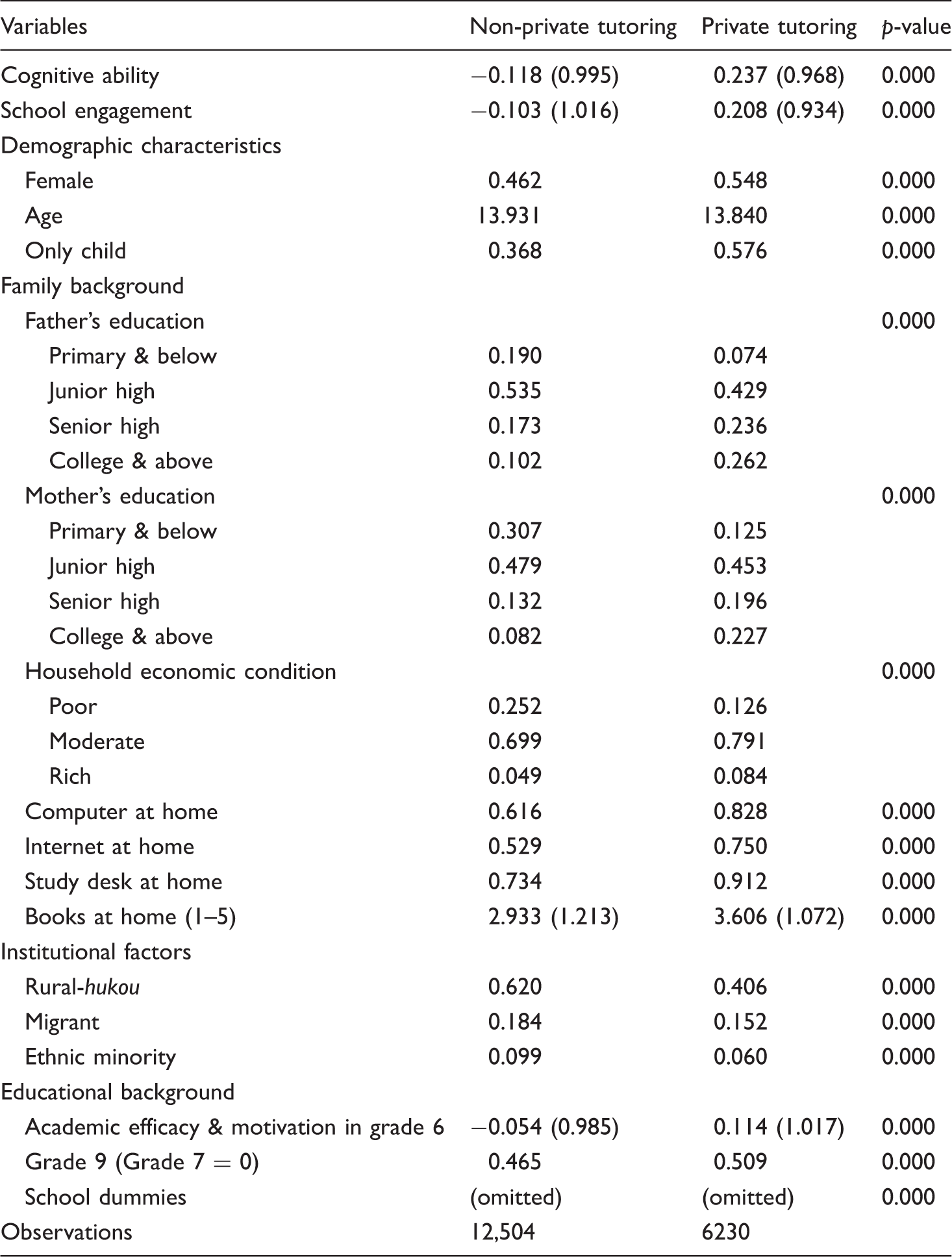
Table 1 presents a brief summary of the variables by private tutoring status. The p-values, given in the last column, refer to the significant levels for testing the null hypothesis of no between-group difference for each variable. The two dependent variables measuring students’ cognitive ability and school engagement are reported in the first two rows, followed by students’ demographic characteristics, family background, institutional characteristics, and educational background. The first two rows show significant differences by private tutoring status in both cognitive ability and school engagement. In our sample, students who participate in private tutoring are 0.355 standard deviations higher in cognitive ability and 0.311 standard deviations higher in school engagement. The crude comparisons here thus illustrate a beneficial effect of receiving private tutoring.
There are also significant between-group differences regarding family, institutional, and educational backgrounds, and most of these differences reveal a ‘tutoring advantage’. In terms of family background, the proportion of students with parents of higher educational levels and better family economic conditions is higher among students who participate in private tutoring than among students who do not. The proportion of students whose families have computers, internet access and more books is also higher among those who receive private tutoring. With respect to institutional factors, the proportion of students who are registered as rural-hukou holders, who have a migrant status, and who are identified as belonging to an ethnic minority is lower among those who participate in private tutoring. Concerning educational characteristics, students who participate in private tutoring are on average 0.17 standard deviations higher in academic efficacy and motivation while in grade six than those who do not receive private tutoring. Private tutoring is more prevalent among ninth graders, who are in their final year of compulsory education, than among seventh graders. The proportion of students who participate in private tutoring also varies significantly across schools (not shown due to space limitation). Lastly, concerning demographic characteristics, the share of female students is higher among students who participate in private tutoring than among students who do not, this being notably inconsistent with the gender disparity that has recently been documented in other East Asian societies such as Taiwan (Liu, 2012) and Korea (Choi and Park, 2016). Students who participate in private tutoring are, on average, slightly younger than their counterparts, and private tutoring is more prevalent among only children than among those with siblings.
Overall, Table 1 points to the fact that the two student groups classified by private tutoring status differ not only in cognitive ability and school engagement outcomes, but also in terms of a wide range of background characteristics. Due to the potential confounding effect of these background factors, we cannot attribute the average outcome gap between the two student groups solely to participation in private tutoring. In the following section, I employ the propensity score matching method to eliminate or alleviate this endogeneity problem and reexamine the effects of receiving private tutoring based on the matched sample after propensity score matching. After that, I proceed with the matched sample to further explore the interactive effect of private tutoring and formal schooling.
The effects of private tutoring and the contextual influence of school quality
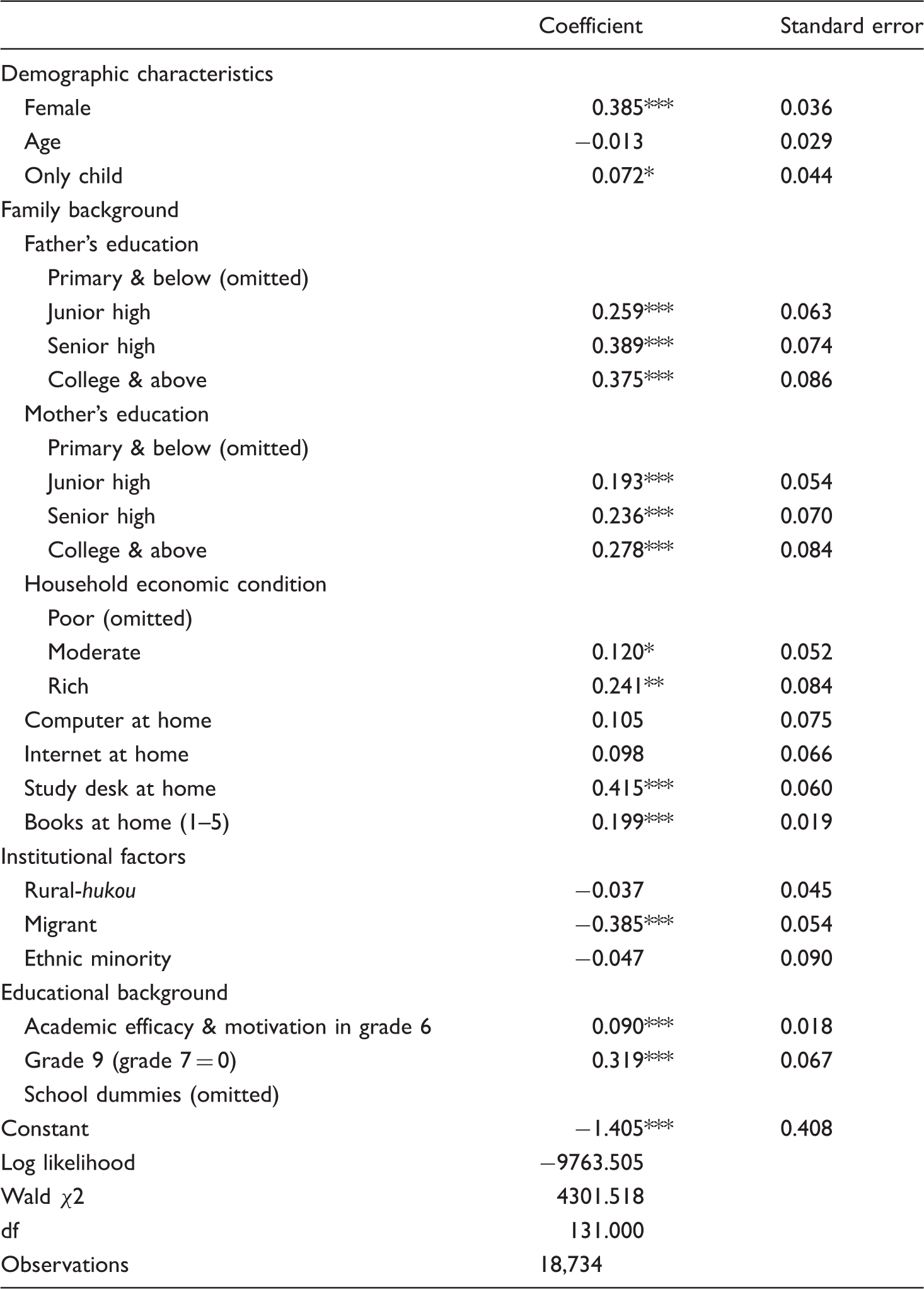
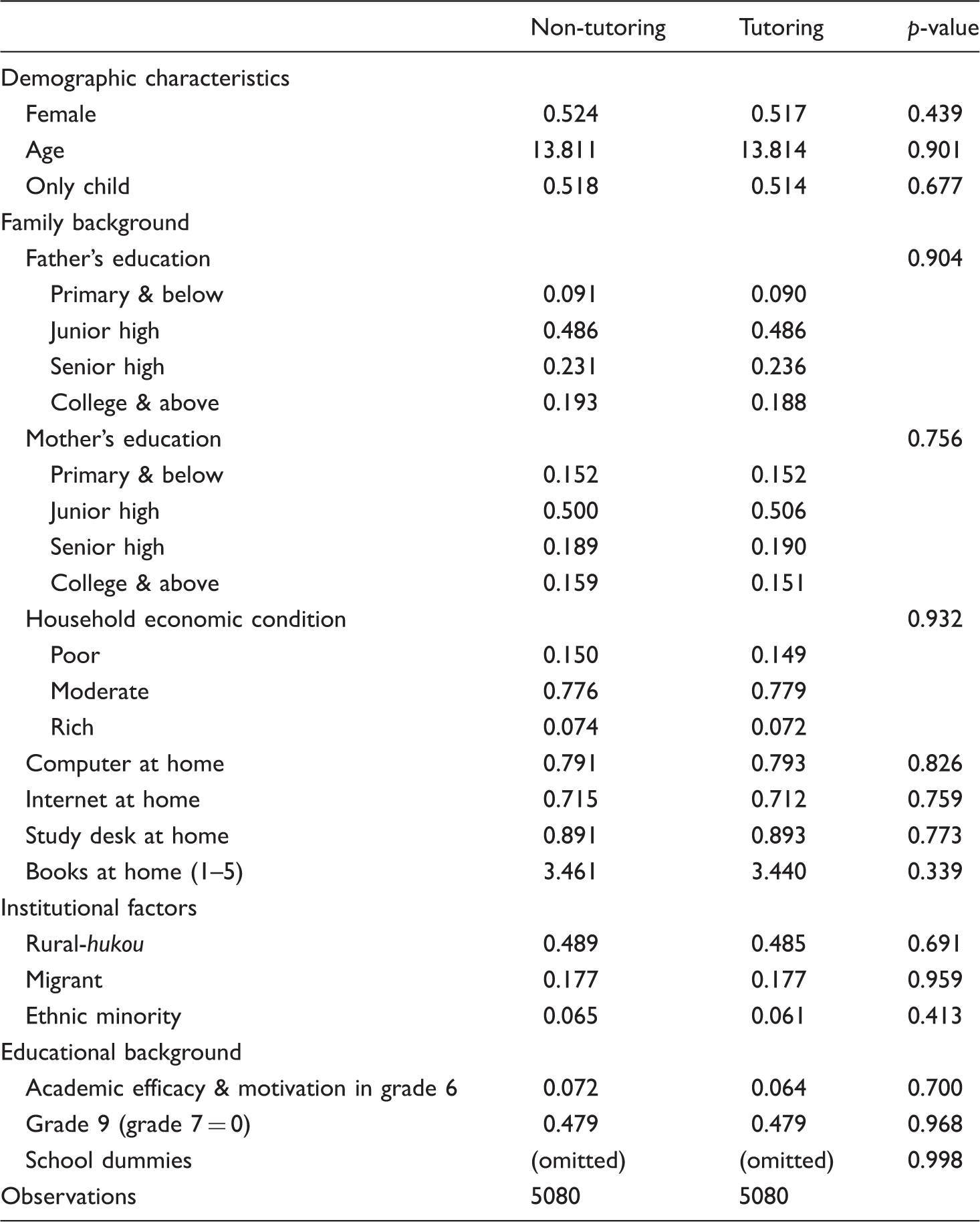
To implement propensity score matching, I first fit a binary logistic regression model to estimate the propensity scores in receiving private tutoring, then use the estimated propensity scores to construct a matched sample and check whether the original unbalanced distribution of all covariates would be satisfactorily removed within the matched sample.
Binary logit model predicting propensity of participation in private tutoring.
p < 0.1, **p < 0.01, ***p < 0.001.
df: degrees of freedom
Imbalance check.
p-value refers to the significant levels for testing the null hypothesis of no between-group difference for each variable.
Average treatment effects of private tutoring
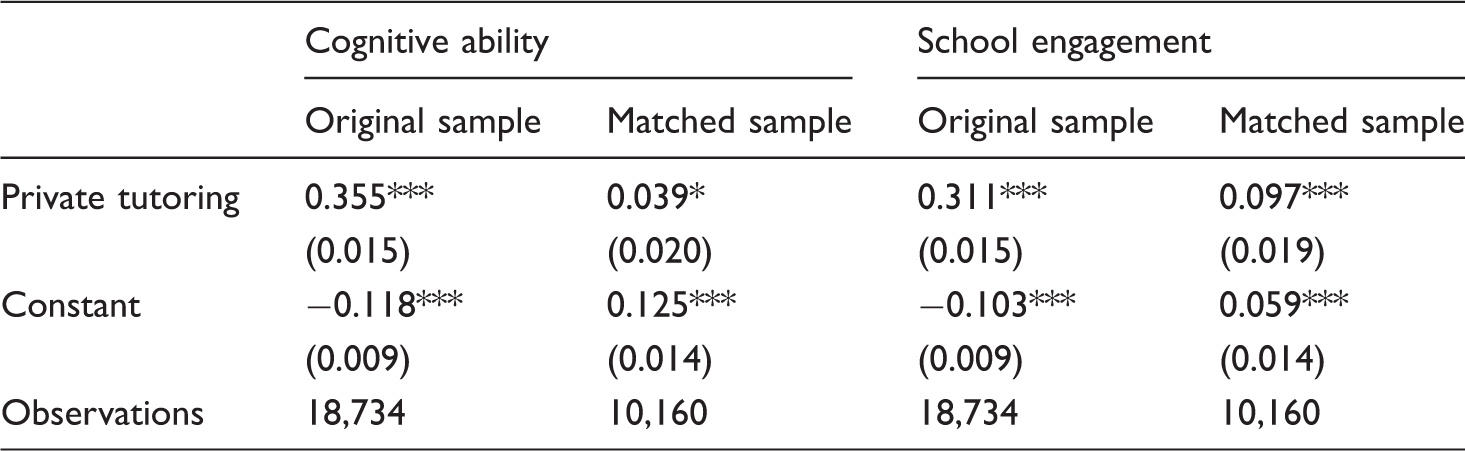
Bivariate ordinary least square regressions estimating effects of private tutoring on students’ cognitive ability and school engagement: original sample versus matched sample.
p < 0.1, ***p < 0.001. Standard errors in parentheses.
Although the average treatment effects of private tutoring on both cognitive ability and school engagement are not very large by Cohen’s criteria (Cohen, 1988), they may accumulate to be substantial over the schooling years and exert significant long-term effects (Kuan, 2011). Given the differential access to private tutoring by social background, as demonstrated in the current paper and elsewhere, we therefore suggest that private tutoring may rise to play a prominent role in shaping the structure of educational inequality in contemporary China.
Contextual influence of school quality
I now depart from the ‘uniform effect’ assumption and direct attention to the possibility that the observed effects of private tutoring may depend on school quality. As students are embedded in schools in the data set, multilevel modeling is used. It is necessary, in the first place, to determine whether the impact of private tutoring varies across schools. For each dependent variable, I have checked that including a random slope for the private tutoring variable in the school fixed-effect model significantly improves model fit, suggesting that the across-school variation in the private tutoring effect does exist.
Multilevel models predicting students' cognitive ability (matched sample).
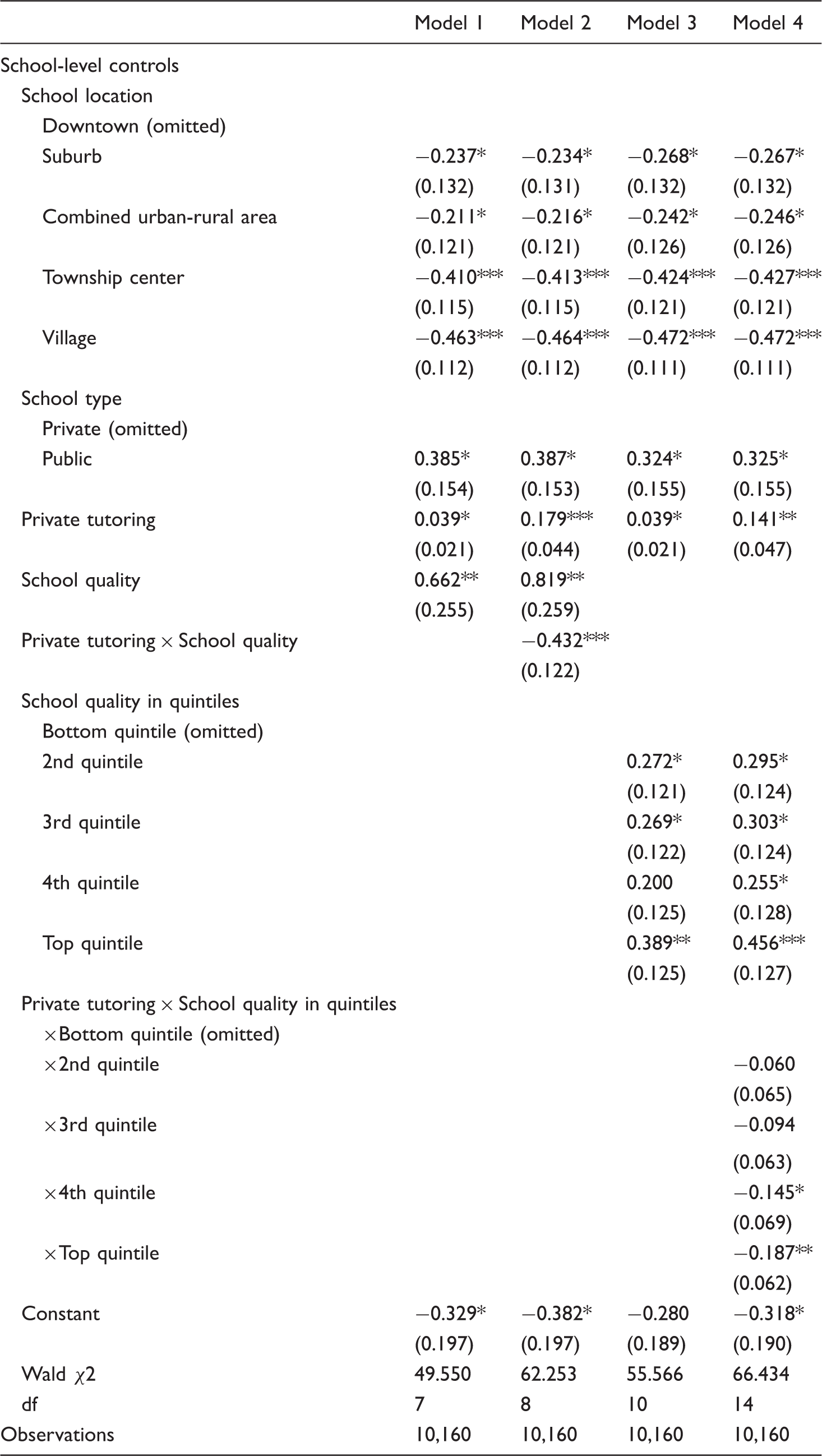
All models contain a random intercept for cognitive ability and a random slope for private tutoring. School quality is indicated by the proportion of graduates entering key-point high schools. Standard errors in parentheses. *p < 0.1, **p < 0.01, ***p < 0.001.
df: degrees of freedom:
To capture potential curve–linear effects, school quality is now treated as a categorical variable in the form of quintiles and rerun the models. Estimates are given in the last two columns in Table 5. Model 3 shows that compared with students whose schools fall into the bottom quintile regarding school quality, students whose schools belong to higher quintiles tend to have higher cognitive ability. In model 4, we see that the effect of private tutoring on cognitive ability is significantly reduced among students whose schools are ranked in the top two quintiles, compared with students whose schools are ranked in the bottom quintile. Moreover, the overall pattern as revealed by the entire collection of interactive terms is clear: the ability return to receiving private tutoring goes down as school quality goes up. Findings in models 3 and 4 are thus consistent with what has been observed in models 1 and 2.
Multilevel models predicting students' school engagement (matched sample).
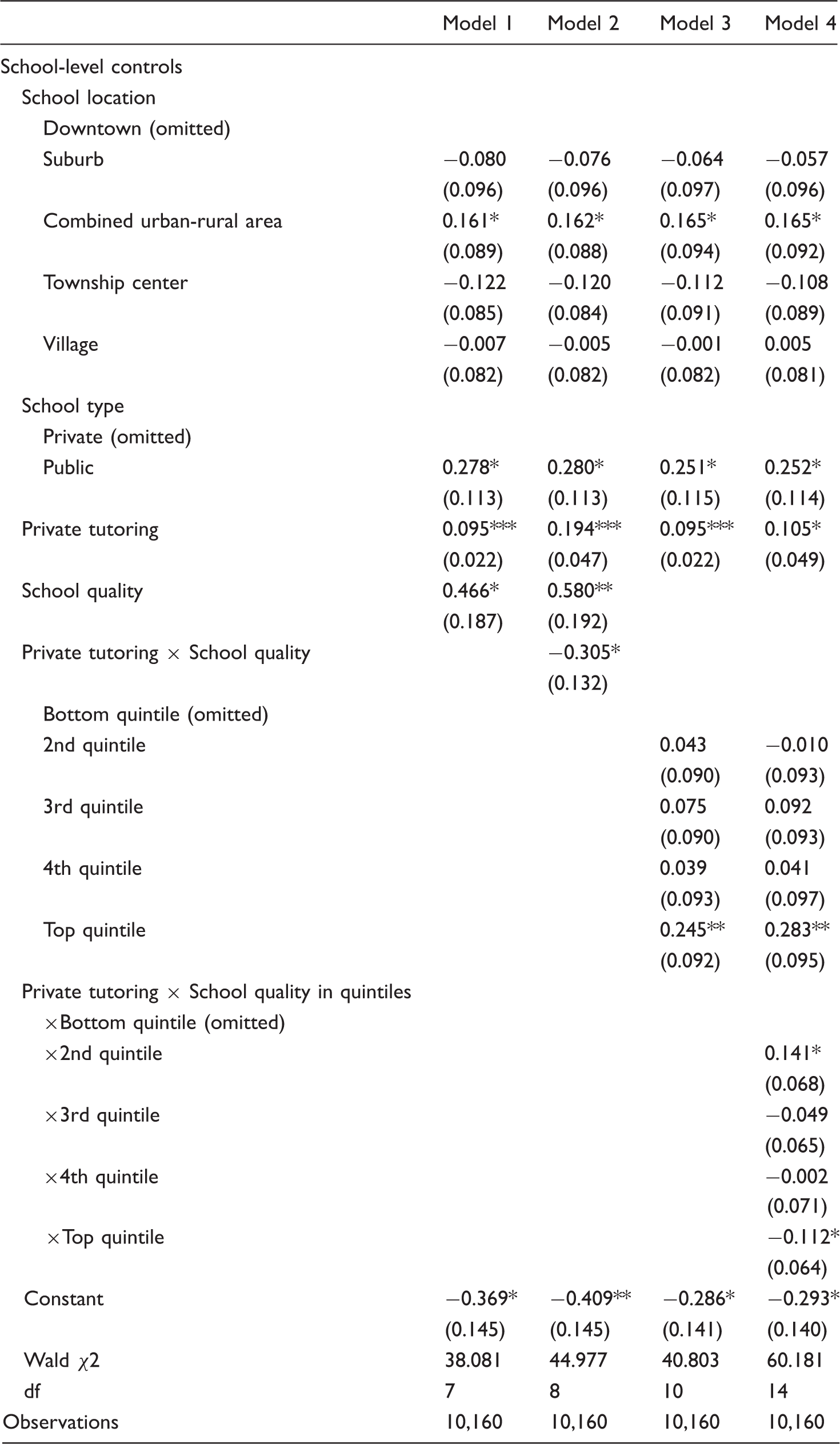
All models contain a random intercept for school engagement and a random slope for private tutoring. School quality is indicated by the proportion of graduates entering key-point high schools. Standard errors in parentheses. *p < 0.1, **p < 0.01, ***p < 0.001.
df: degrees of freedom:
Conclusion and discussion
The past decades have witnessed a worldwide expansion of the private tutoring sector. Previous studies have attempted to investigate the effect of private tutoring on educational outcomes in a myriad of societies, yielding mixed findings. Indeed, the implications of such an extracurricular learning activity for educational inequality need be appropriately addressed with respect to specific cultural or educational contexts (Park et al., 2011).
Using data on a nationally representative sample of middle school students in China, this article examines the effects of participation in private tutoring on students’ cognitive ability and school engagement, and moves beyond existing studies to further explore how the effects of private tutoring hinge upon the formal schooling quality to which students are exposed. The analytical results are based on a matched sample in which students who receive private tutoring are similar to their counterparts who do not receive private tutoring in terms of a wide range of background characteristics.
I find that participation in private tutoring not only boosts students’ cognitive ability, but also exerts a beneficial effect on students’ school engagement. The effect size of private tutoring is about 0.04 standard deviations for cognitive ability, and about 0.10 standard deviations for school engagement. These positive effects of private tutoring are not practically large, but they may be enlarged through more years of private tutoring and thus still have important implications for educational inequality in contemporary China. In addition, since the empirical evidence concerning the non-cognitive consequence of receiving private tutoring is still sparse and ambiguous, this paper also contributes empirically by showing the positive link between private tutoring and students’ school engagement with a nationally representative sample of Chinese students. With the growing visibility and dominance of private tutoring in educating students outside the domains of home and formal schools (Dang and Rogers, 2008; Park et al., 2011), a more systematic examination of the association between private tutoring and broader aspects of students’ development would be necessary.
The second question this paper addresses is whether the private tutoring effects are dependent upon the formal schooling context or, to be more concrete, the quality of students’ received formal schooling. The answer, based on my analysis of Chinese middle school students, is yes. Using multilevel models, I show that the beneficial effects of private tutoring are indeed negatively associated with school quality. To a certain degree, school quality also reflects students’ ability and socioeconomic background, and the finding in the current paper is thus in accordance with Choi and Park (2016) in that receiving private tutoring is more worthwhile for the disadvantaged. For students who attend higher-quality schools, on the other hand, participating in private tutoring exerts negligible effects on the two student outcomes concerned in this paper.
How do we account for the consistent negative association between the private tutoring effects and the quality of formal schools? Two possibilities may deserve further exploration.
One possibility may be the glass-ceiling effect. This is a straightforward explanation. As students in high-quality schools tend to already have an overall high level of cognitive and non-cognitive performance, they may find it difficult to get further ahead and gain a competitive edge over their school mates through attending extracurricular learning activities. In contrast, in low-quality schools, receiving private tutoring may be easier and more likely to make a significant difference.
Another possibility may be related to the status-quo of the private tutoring sector in the current educational context of China. Based on data from the baseline survey of the China Family Panel Studies, Zhang and Xie (2016) have recently demonstrated that among those who have received private tutoring, the monetary spending on private tutoring is still low overall, with an annual average of about 1300 Chinese Yuan or 200 United States Dollars (Zhang and Xie, 2016). This means that a majority of tutored students are indeed receiving low-quality private tutoring or are participating in private tutoring with a low level of involvement. As a result, when students are exposed to high-quality formal schooling, families’ efforts to invest in their children’s private tutoring are likely to be ‘crowded out’ or ‘invalidated’. If this is true, we would expect to see in future studies that the mitigating influence of the quality of formal schools would fade away when students gain access to higher-quality private tutoring or use private tutoring in a more intensive manner.
This study is limited to middle school students, and thus it does not take into account whether the effect of private tutoring and its interaction with school quality would differ in other lower or higher educational stages, or even show certain patterns as the students go through their formal schooling years. These important topics merit special attention in future studies.
Footnotes
Funding
The research was supported by The Fundamental Research Funds of Shandong University (11090075614058).
Conflict of interest
The author declares no potential conflicts of interest with respect to the authorship and publication of this article.