



Abstract
Twitter has become an indispensable tool for politicians and officials, including US mayors as heads of local governments, to engage with constituents in real time and convey their political agendas. However, there is limited research on the relationship between the political context associated with the role of mayor and their ways of communication on Twitter. This study explores the Twitter usage patterns of mayors of the 100 largest US cities in the light of two unique political contexts: partisan affiliation and form of municipal government. By conducting a twofold statistical analysis, this study found significant differences in Twitter usage patterns between mayor groups based on political context factors. However, regression analysis revealed that these differences were not caused by political party or form of government, but rather were more related to the city’s size in population. Differences in political context factors were not found strong predictors of the variation of Twitter usage patterns of mayors. The Communication Theory of Identity directs this twist to another potential scenario: identity gaps might exist within the mayors’ layers of identity construct. In addition, factors intrinsic to the city, such as its population size, have a substantial impact on the way mayors communicate on Twitter.
Introduction
Twitter and other social media tools have become a significant concern for scholars studying the role of information and communication technology in politics and public service (DePaula et al., 2018; Mossberger et al., 2013; Oliveira & Welch, 2013; Reddick et al., 2017; Vaccari & Chadwick, 2020; Williams & Gulati, 2020). Twitter, founded in 2006, has grown exponentially over the years to become a popular global platform for communication, news dissemination, and public engagement (Statista, 2021). The platform’s unique 280-character limit for tweets encourages concise and rapid communication with rich interactive functions like media, hashtags (#), and mentions (@), which has contributed to its widespread adoption in various sectors, including the public sector and politics. Politicians, journalists, activists, and public figures have turned to Twitter to share their thoughts, opinions, and announcements with the public in real time (Enli, 2017). Mayors, serving as the leaders of local governments in the United States, are undoubtedly present and active in this game.
It is important to note that public communication by mayors in the United States through Twitter is embedded in a unique political context. The United States is unique among Western countries in the widespread use of two major forms of municipal government, namely mayor-council and council-manager, based on different constitutional principles (Svara & Watson, 2010). Mayors, while sharing the same name of the title, are assumed to have different powers, roles, and methods of election in these two forms. Moreover, most mayors are players in the two-party system in the United States. Does the increasingly polarized partisan divide influence their communication? However, there is limited research on the relationship between these political contexts and mayors’ Twitter communication.
This research focuses on the Twitter use by the mayors of the 100 largest US cities and attempts to explore their Twitter usage patterns in two unique political contexts—partisan affiliation and form of government. The research question of this study is: Do partisan affiliation and form of municipal government make a difference in the ways mayors use Twitter?
This study obtained Twitter usage data from the accounts of mayors of the top 100 cities in the United States for 1 month in 2023. Through a two-step analysis approach using one-way analysis of variance (ANOVA) and Seemingly Unrelated Regression (SUR) regressions, this research seeks to determine whether there are variations in the Twitter usage patterns of mayors from different political contexts. The evaluation of usage patterns encompasses measures metrics of seriousness, activeness, interactivity, multimedia usage, and popularity.
Literature review
Political context associated with US mayors
Political context refers to the environment or backdrop against which political action and decision-making occurs. This context encompasses a wide array of factors, from institutional and legal frameworks to prevailing societal norms, historical legacies, and current economic or geopolitical trends. It informs how actors within a given system make decisions, form alliances, and prioritize issues. Dahl (1961) provides insights into these dynamics, emphasizing the interplay of power, resources, and interests in shaping political outcomes.
At the foundational level, the United States operates within a system of federalism where powers are divided between federal, state, and local governments. While the Constitution primarily addresses the relationship between the federal and state governments, local governments derive their power from the states, leading to substantial variation in local governance structures across the country (Peterson, 1981). US mayors, depending on the form of local government they operate within, can have varying degrees of executive authority, legislative oversight, and influence over key city functions. The form of government—whether mayor-council or council-manager in most cases—will influence how the mayor interacts with other local governmental bodies, state authorities, and even federal agencies.
Adding another layer to this context is the role of party politics. While many mayoral positions are technically nonpartisan, party affiliations and allegiances can significantly influence local policies and priorities. Mayors might face pressures not only from local constituents but also from state and national party leaders, especially on hot-button issues that transcend local politics (Stone, 1989).
The role of mayor in different forms of municipal governments
Mayors are particularly prominent in the US context. They are symbols of government, political leaders, executive officials, and policymakers that are directly associated with public affairs and services. There are two dominant forms of municipal government—the mayor-council and the council-manager. Mayors are assumed to have quite different powers in these two bodies.
The council-manager and mayor-council forms of government are the two most common municipal forms in the United States. While there are several structural elements that are associated with each form, the primary feature that distinguishes one from the other is the separation or unification of legislative and executive authority (Nelson & Nollenberger, 2011).
Mayor-council governments assign legislative authority to the council and executive authority to the mayor, creating a separation of powers like the federal government. The mayor-council system is characterized by a distinct separation of powers between the executive and legislative branches. The mayor is elected independently and has significant executive authority. In this system, the mayor is responsible for the overall management of the city, including appointing and removing department heads, preparing budgets, and overseeing the city’s daily operations. The city council, on the other hand, is responsible for enacting laws, setting policies, and approving budgets (Nelson & Nollenberger, 2011; National League of Cities, n.d.).
In the council-manager form, the mayor is usually a member of the city council and may be selected either by popular vote or from among the council members. The mayor’s role in a council-manager system is primarily ceremonial, with limited executive powers. The mayor may preside over council meetings and represent the city in official functions, but the primary responsibility for policy development and implementation falls on the city manager (National League of Cities, n.d.; University of North Carolina, 2019).
Party affiliation and political polarization in the United States
In recent years, the United States has experienced a significant increase in political polarization between the two major political parties, Democrats and Republicans. This deepening divide is characterized by a growing ideological gap, with both parties moving further to the left and right respectively, leading to a reduced common ground for bipartisan cooperation (Abramowitz & McCoy, 2019). As a result, political discourse has become increasingly contentious and policy-making more challenging at both the national and local levels (Binder, 2015). Twitter, as a vital platform for public discourse, has long exhibited symptoms of partisan polarization (Barberá, 2015).
In this context of heightened political polarization, mayors across the United States have turned to social media platforms, such as Twitter, to directly communicate with their constituents and shape public opinion on key policy issues (Gainous & Wagner, 2014). By leveraging the power of Twitter, mayors can bypass traditional media channels, which are often criticized for amplifying partisan divisions, and engage with citizens in a more immediate and personal manner (Jungherr, 2016). This direct communication can help mayors articulate their policy positions, build consensus around local initiatives, and foster a sense of civic engagement among their constituents.
Mayors’ communication via Twitter
Social media use by local government and officials has been recognized as a significant extension of public institutions and a promising solution for improving public service in the information technology age (Bonsón et al., 2012; Ding, 2022, 2023; Karlsson et al., 2012). With the potential for generating two-way communication and enhancing interaction between citizens and government, it is seen as an innovative approach to better engage with the public.
Scholars have started to explore the role of Twitter use in presidential campaign (Hong & Nadler, 2012; Yaqub et al., 2017), and the organizational level of Twitter use such as the US congress (Hong, 2013; Shapiro & Hemphill, 2017), municipalities (Mossberger et al., 2013). Politicians use Twitter to communicate with the public to achieve goals in their positions. Shapiro and Hemphill (2017) argue that social media enhances opportunities for policy agenda builders in the US Congress to share information with journalists. Hong (2013) found that politicians’ adoptions of social media have yielded increased donations from outside their constituencies, and politicians with extreme ideologies tend to benefit more from their social media adoptions. Notably, Mossberger et al. (2013) examined the use of social networks and other interactive tools in the 75 largest US cities between 2009 and 2011. They further examined three case study cities by analyzing discussions on social networks and conducting interviews. Their findings revealed that one-way “push” strategies, as described by Mergel (2013), are the main way of communication, but there are also indications of an increasing willingness to engage in dialogue with the public. These works provide numerous references for the variables needed to assess Twitter’s usage patterns.
The rise of Twitter as a powerful tool for public sector users has been increasingly evident during the Trump administration (2016–2020) with its widespread adoption. Twitter’s influence extends beyond the individual users, as trending topics and hashtags can quickly capture the attention of the global community, leading to discussions, debates, and even policy changes (Parmelee & Bichard, 2012). Mayors across the United States have become avid users of the platform, utilizing it to engage with their constituents and communicate their political agendas. This trend can be traced back to 2013 when New York City’s former mayor, Bill de Blasio, was elected and took to Twitter to express his gratitude to the people of New York. Other mayors, such as Chicago’s mayor Lori Lightfoot, have also demonstrated their adeptness in using the platform to their advantage. In 2016, Development Counselors International (DCI), a communications firm that specializes in marketing places, found that 74% of mayors in large US cities were already using Twitter, with a group of “Tweet Elite” mayors demonstrating exceptional skills in using the platform for public communication (Development Counselors International, 2016).
Through Twitter, US mayors can advocate their political campaigns and interact with citizens regarding local governance (Eom et al., 2018). Naturally, curiosity rises regarding whether the mayors employ different attitudes or activities of Twitter communication based on their role shaped by the form of government and partisan affiliation. The results of this study will contribute to the interdisciplinary study of politics, public administration, and communication.
Communication Theory of Identity (CTI)
In this study, the author employs the CTI as the conceptual framework to explore how US mayors navigate the complexities of their political context in Twitter communication. CTI is a comprehensive framework that examines how individuals construct and express their identities in social interactions and how they negotiate and coordinate multiple identity roles across different contexts (Hecht, 1993; Jung & Hecht, 2004). Before this theory, the study of how individuals or groups construct their identities has been a focal point in the fields of behavioral and social sciences for a long time. Goffman, in his 1959 publication “The presentation of self in everyday life,” introduced the notion that people consistently enact their identities, likening it to a performance on a stage. Building on this concept, Collier in 1997 discussed an individual’s perception of self, as well as the link between their social actions and the identity assigned to them.
The theory suggests that identity is both a product and process of communication, and it is through communication that individuals create, maintain, and transform their identities (Hecht et al., 2005). According to the theory, identity includes four different frames: personal (i.e. how people see themselves), enacted (i.e. how identity is expressed in interactions), relational (i.e. relational roles), and communal (i.e. group memberships) (Hecht et al., 2005). Each frame offers a lens through which we can examine the intricate dance between communication and identity, emphasizing the multifaceted nature of identity construction.
Personal Frame: This encompasses an individual’s self-perception or self-image. It is rooted in self-reflection and how an individual perceives themselves. Hecht et al. (2003) identify three assumptions of identity as a personal frame: Identities are hierarchically ordered meanings attributed to the self as an object in a social situation; Identities are meanings ascribed to the self by others in the social world; Identities are a source of expectations and motivations.
Enacted Frame: This suggests that identity is partly formed by social interactions, underlining the importance of communication. It emphasizes the messages that define identity. Hecht and colleagues state that identity can be the main message or part of it, while also conveying information about the relationship. This frame suggests that identities are emergent and are enacted in social behaviors, social roles, and symbols (Hecht et al., 2003, p. 236).
Relational Frame: This underscores that identities are crafted through social connections. An individual’s social behavior interlinks with others, forming a unique relationship identity. Hecht et al. (2003) offer four ways in which identity can be relational: People see themselves through the lens of others, shaped by interactions; Individuals see themselves in the context of their relationships. Relationships themselves possess a distinct identity through communication; Identities stand in relation to other identities (p. 237).
Communal Frame: This perspective emphasizes the collective identity of a community or group. This identity unites the group and is ingrained in its shared memory. New group members are inculcated with these identities, ensuring their continuity.
These four frames offer a holistic view of identity, illustrating its complexity and multifaceted nature.
CTI provides valuable insights into how the four frames jointly construct their identity on Twitter. For the identity of US mayors, four frameworks can elucidate their intertwined multifaceted layers of identity frames. Party affiliation constitutes a significant communal aspect of their identity. Studies by the Pew Research Center found that voters of the two largest political parties in the United States who are exhibiting significant differences in usage, posting volume, demographic traits, and activeness on Twitter (Pew Research Center, 2020). The title of mayor can be interpreted through the relational framework, indicating their presumed audience and the relationship with the audience when interacting on Twitter. It is noteworthy that the differences between the mayor-council and council-manager systems of mayoralty define the identity of mayors within the relational framework. Differences in the mayor’s relationship with the council, municipal executive powers, and methods of election may shape distinct identity attributes. The personal traits of a mayor are reflected through the personal framework. The enacted frame suggests the influence of the mayoral identity on their mode of communication. Identities prescribe modes of appropriate and effective communication (Hecht et al., 2003). Therefore, theoretically, differences in identity frames should influence their activities on Twitter and result in differences in their ways of communication (Figure 1).
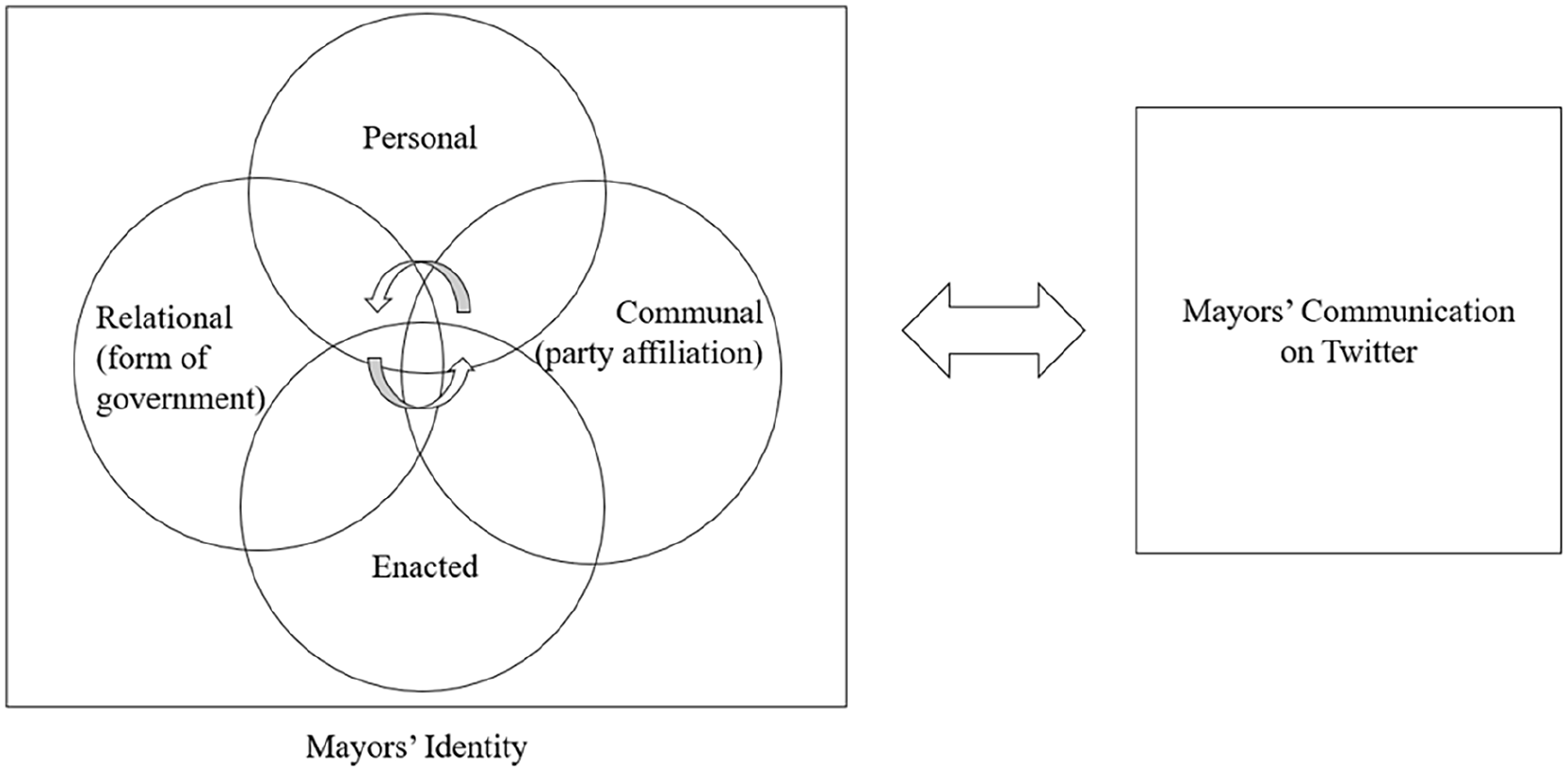
A conceptual framework based on the Communication Theory of Identity (CTI): The mayor’s identity frames influence their communication on Twitter.
Thus, the CTI theory provides a conceptual framework to understand the roles of the forms of government and partisan affiliation play in mayors’ identity construct and thus their communication on Twitter. Following the logic of the CTI framework, the author introduces variables to test two hypotheses, aiming to address the research question of the paper: Do partisan affiliation and form of municipal government make a difference in the ways mayors use Twitter?
Methodology
To answer the research question, at least two types of investigations are needed: first, from a statistical perspective, one should analyze whether there are variations in relevant metrics indicating mayors’ Twitter activities based on their identity groupings. Building upon that, a qualitative, semantic study of the tweet contents can further elucidate the nuances between the groups. This study focuses on the former aspect. The CTI conceptual framework provides two hypotheses for testing:
H1. Mayors from different forms of government have distinct usage patterns on Twitter.
H2. Mayors with different party affiliations exhibit different usage patterns on Twitter.
The analysis of this study to test the hypotheses consists of two steps: the first step is to summarize the differences in seriousness, activeness, interactivity, multimedia (pictures, GIF, music, or videos) usage, and popularity of mayors in the top 100 cities in the United States who use Twitter, and to compare the differences between political parties and forms of government. As of 2020, 64,537,560 individuals (about twice the population of California) lived in the top 100 largest US cities, accounting for 19.47% of the nation’s total population (Ballotpedia, n.d.). In the United States, these aspects were measured by referring to some measurements in previous research and by considering the functionality of Twitter (see Table 1). The one-way ANOVA method with post hoc tests for pairwise comparisons was used as the methodology for this step. In cases where there was heterogeneity of variance that could not be resolved through adjustment, the Kruskal–Wallis test was employed.
Variables and operationalizations.
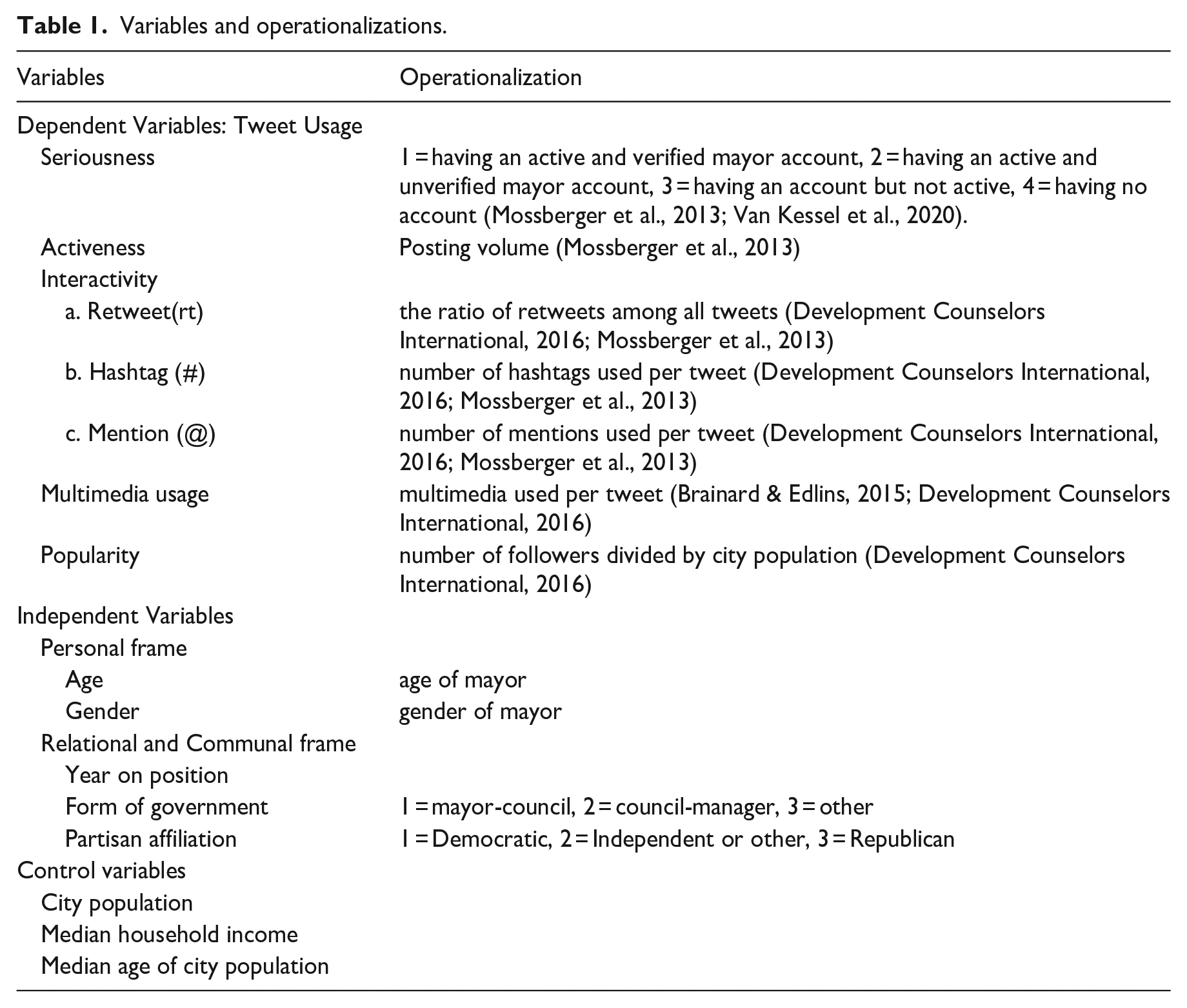
The data for this step was collected from the Twitter usage of mayors in the 100 biggest cities in the United States (by population from US Census 2020) for 4 weeks between February 13 and March 12, 2023 (Ballotpedia, n.d.). The data was collected on March 13 using the Twlet software, which allows Twitter content to be downloaded as an Excel document. The downloaded content includes tweets, followers, retweets, number of favorites, and media attached. The number of hashtags and mentions was then extracted from the tweets.
For the identification and selection of mayor accounts, this study follows these rules: (1) The selected accounts represent the role of the current “mayor”—that is, they explicitly represent the voice of the mayor himself—not personal accounts of individuals holding the mayor position, nor accounts of the mayor’s office. (2) Among the accounts that meet condition (1), verified official accounts are given priority. (3) When there are no accounts meeting condition (1) or (2), accounts are identified based on their descriptions and content and interactions with other official or verified accounts. (4) If none of the above conditions are met, it is determined that there is no account available.
Given that this study is primarily concerned with the daily usage patterns of the users (the mayors) rather than a particular event, the data collection period deliberately excludes special period like the election month (November) and the 2 months before and after, a period when mayors might increase their activity levels in an atypical manner. While a month might seem brief, it is considered acceptable for several reasons: (1) Twitter, as a microblogging tool designed for real-time, high-frequency communication. It provides enough data within a month to ascertain user activity levels and some communication habits. In a referenceable example, among members of US Congress in 2021, 477,586 posts were made on Twitter throughout the year, averagely 91.5 for each congressman/congresswoman per month (Stacy Jo Dixon, 2022). (2) Many published studies have adopted similar sampling durations (e.g. Caldarelli et al., 2020; Development Counselors International, 2016; Diddi & Lundy, 2017; Macskassy, 2012; Welch et al., 2011). (3) This study uses a 1-month sample as a starting point, and based on its results, there’s potential for expanded sampling or content analysis. Of course, this is also one of the limitations of this research.
To further explore the impact of partisan affiliation and forms of government on mayors’ use of Twitter, the second step employed SUR analysis on STATA software. The small sample option syntax was used to adjust for the sample size. SUR analysis has the advantage of being able to estimate two or more related models simultaneously, thereby improving the efficiency and accuracy of estimation, particularly in cases where the sample size is small. It is also better suited to handling data with heteroskedasticity and autocorrelation, which improves the accuracy of estimation (Greene, 2003).
SUR analysis is typically applied to datasets with multiple related regression equations and interrelated disturbance terms, as in the case of this study, where each mayor has different traits and forms of government that can affect their use of Twitter. Therefore, SUR can provide a unified estimation and treatment of these related factors, improving the accuracy and reliability of the analysis (Baltagi, 2008).
Based on the CTI theory, the author collected data from three aspects for the regression: the first aspect is the personal frame of the mayors, including age and sex. The second aspect is the enacted frame including form of government of the cities they serve and their year in their position. The third aspect is their communal frame, the partisan affiliation. The data of these variables was collected from the Ballotpedia website. In addition, to control differences between cities in regression analysis, data on city population, median household income, and median age were also collected from US Census Bureau Website. For all variables and their operationalizations, please see Table 1.
Results and findings
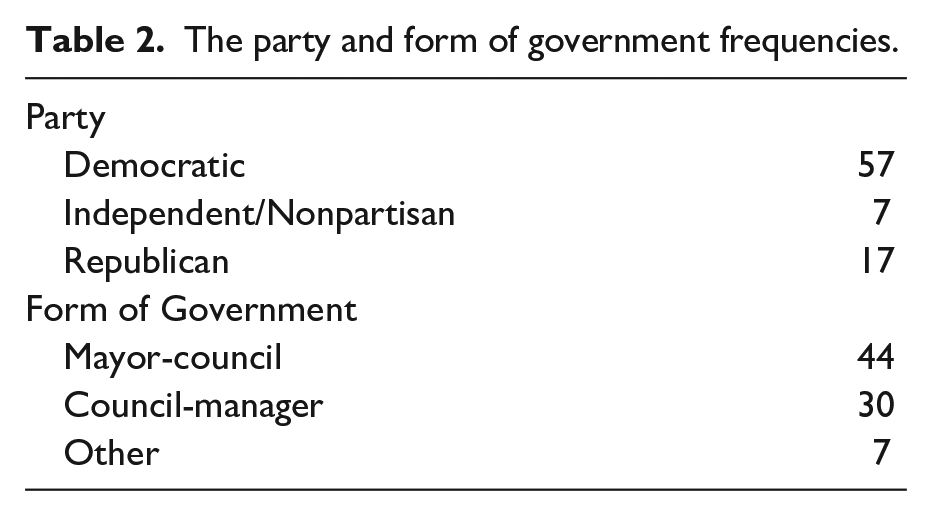
In the top 100 largest US cities, there are 47 mayor-council governments, 46 council-manager governments, and seven in another form, including six hybrid governments, and one city commission. As of December 2022, the partisan breakdown of the mayors of the 100 largest US cities was 62 Democrats, 25 Republicans, 4 independents, and 7 nonpartisans. The affiliation of one mayor was unknown, and one office was vacant. All of them have Twitter accounts.
Among the top 100 largest cities in the United States, 94 mayors are on Twitter, with the exceptions of El Paso TX (22nd), Laredo TX (87th), Irving TX (88th), Chesapeake VA (89th), Scottsdale AZ (92nd), and San Bernardino CA (100th). This figure has made significant progress compared to the 74% of DCI in 2016.
Of the mayors who have Twitter accounts, 13 were inactive during the study period, including Virginia Beach VA (42nd), Tulsa OK (47th), Aurora CO (51st), Tampa FL (52nd), Irvine CA (64th), Lincoln NE (71st), Plano TX (72nd), North Las Vegas NV (79th), Reno NV (82nd), Winston-Salem NC (90th), Garland TX (93rd), Spokane WA (96th), Fremont CA (97th), and Santa Clarita CA (99th).
Figure 2 shows the volume of Twitter posting from mayors in the 100 largest cities in the United States for a period of 4 weeks (13 February to 12 March 2023). The distribution of partisan affiliation and forms of government among the 81 mayors with complete data is shown in Table 2.
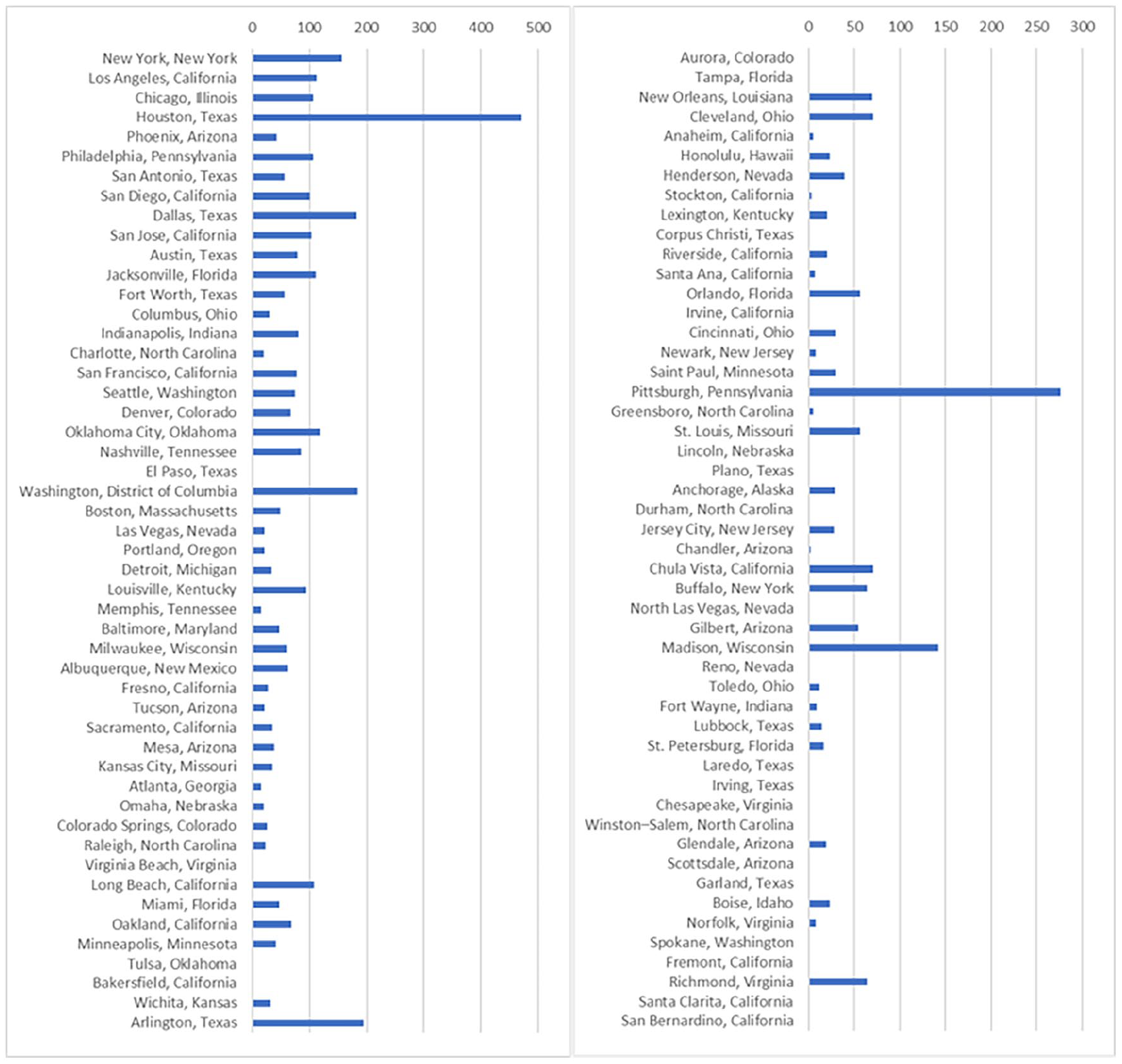
The volume of Twitter posting from mayors in the 100 largest cities in the United States for a period of 4 weeks (13 February to 12 March 2023).
The party and form of government frequencies.
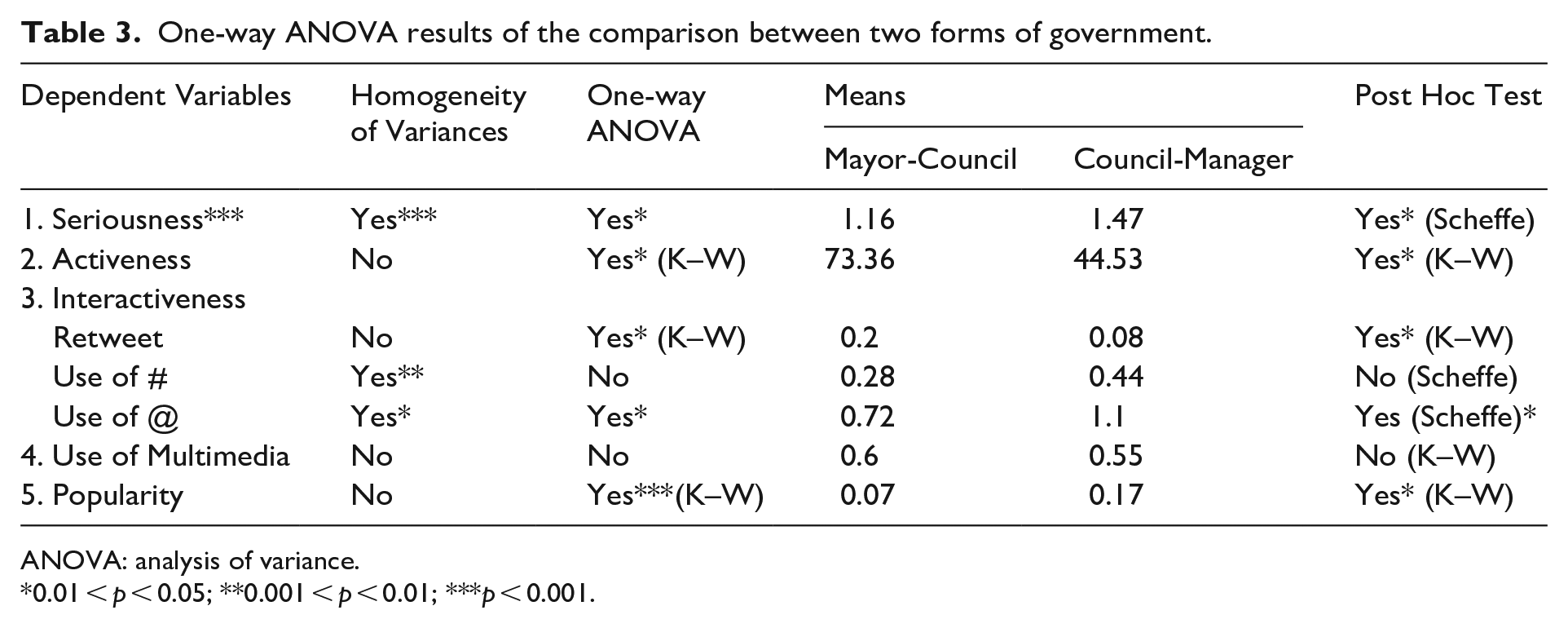
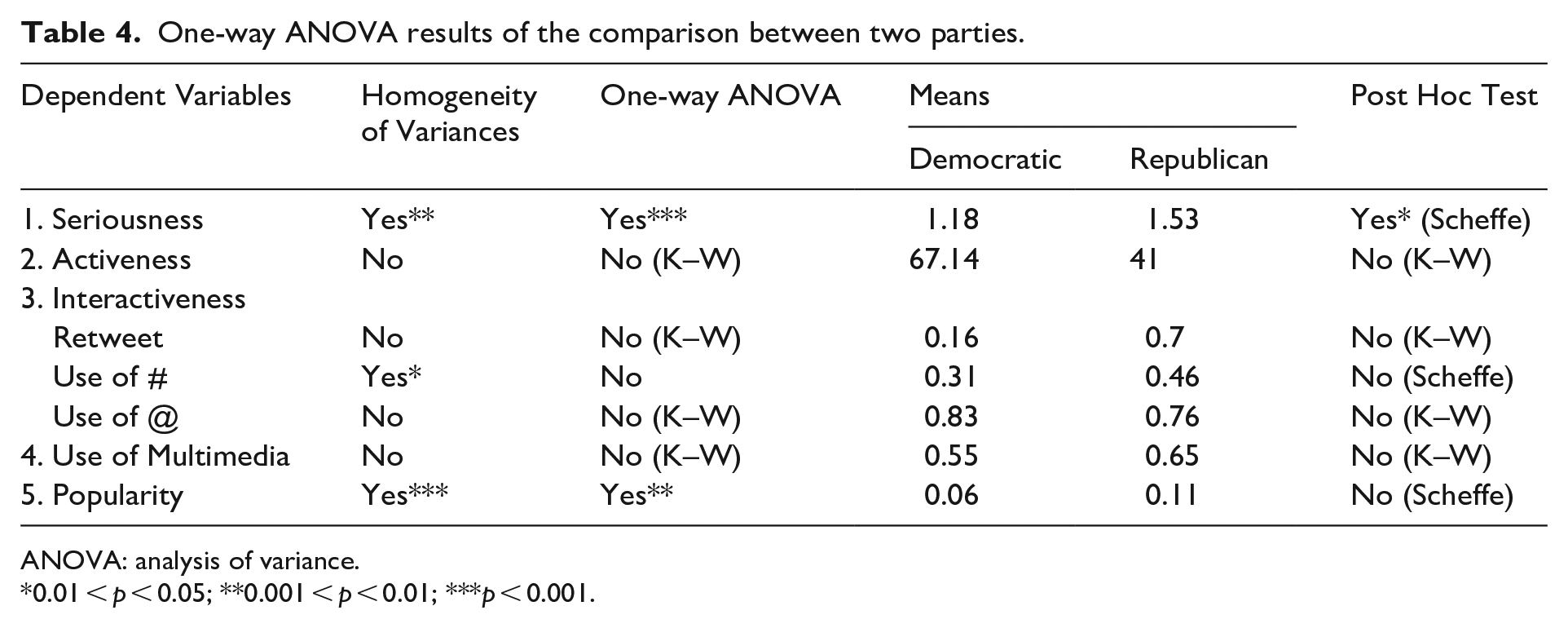
Based on the results of the one-way ANOVA, seriousness, activeness, interactivity (retweet and @ subareas), and popularity are significantly different between the two forms of government (see Table 3). As shown in Table 4, there were statistically significant differences in seriousness respects among mayors from the two major political parties.
One-way ANOVA results of the comparison between two forms of government.
ANOVA: analysis of variance.
0.01 < p < 0.05; **0.001 < p < 0.01; ***p < 0.001.
One-way ANOVA results of the comparison between two parties.
ANOVA: analysis of variance.
0.01 < p < 0.05; **0.001 < p < 0.01; ***p < 0.001.
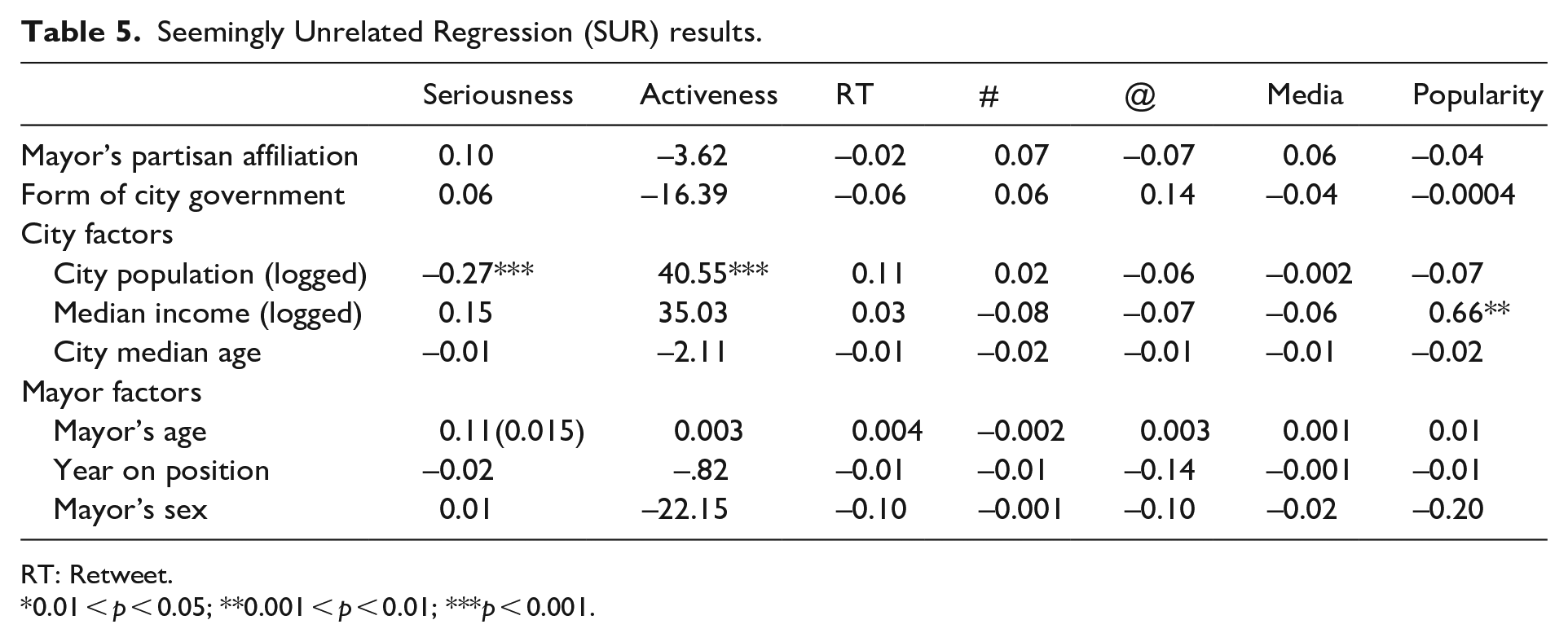
However, the results of SUR further revealed the complexity of the issue (see Table 5). Although mayors belonging to the two major political parties and different forms of government exhibited different patterns of Twitter use, neither partisan affiliation nor forms of government were strong predictors of the seven dependent variables in the regression analysis.
Seemingly Unrelated Regression (SUR) results.
RT: Retweet.
0.01 < p < 0.05; **0.001 < p < 0.01; ***p < 0.001.
Discussions
The twist in the findings
The two hypotheses of this study are tested, and the results show an apparent twist. Neither of the two hypotheses was entirely refuted; instead, they were partially confirmed.
For H1, the forms of government could be associated with differences in mayors’ usage pattern metrics. As shown in Table 3, one-way ANOVA revealed significant differences in the metrics of seriousness (1.16 vs 1.47), activeness (77.36 vs 44.53), use of @ (0.72 vs 1.1), use of retweet (0.2 vs 0.08), and popularity (0.07 vs 0.17). The follow-up Post Hoc Test also indicated that the differences were between the mayor-council and council-mayor forms of government. This can be interpreted as, overall, mayors from the mayor-council form of local government tweet more frequently. However, when it comes to setting up and verifying their Twitter accounts, they are not as diligent as mayors from the council-mayor form. Mayors from the mayor-council form use retweets more frequently, but they engage in dialogues with other users using @ less often. Their total number of followers relative to their city’s population is also smaller.
For H2, the results have an apparent twist: the results of the one-way ANOVA showed that partisan affiliation could cause differences among mayors in seriousness. The follow-up Post Hoc Test also showed that the difference indeed occurred between the Democratic and Republican parties. For another variable, although there was a significant result in the one-way ANOVA for popularity, the Post Hoc Test did not show significance between the Democratic and Republican parties. While not reaching statistical significance, a clear disparity in average activeness was observed between mayors of the two parties (67.14 vs 41). This observation aligns with a study by the Pew Research Center, which found that 69% of the most active tweeters are Democrats.
However, on the other hand, when variables indicating city’s and mayor’s demographic traits were controlled for in the regression analysis, partisan affiliation and forms of government were found not to be predicting factors. This finding denies the causal relationship between the form of government or partisan affiliation and the differences observed in the ANOVA tests previously identified.
Identity gaps from the CTI perspective
This study is the first to apply CTI to evaluate the social media communication of American politicians. It is the first to incorporate political backgrounds, including party affiliation and forms of local government in the United States—elements traditionally studied in political science and public administration—into the scope of identity and communication research. This broadens the perspective for researching the online communication of politicians and public administrators. It also extends the concept of identity to the organizational and institutional levels.
Why isn’t the difference between the relational (form of local government) and communal (party affiliation) frame a predictor of the difference in the mayors’ communication pattern? CTI offers some possible explanations.
One factor is the existence of identity gaps. As briefly explained in the literature review, Hecht and his colleagues developed the concept of identity gaps after discovering dialectical tensions that may exist between each of the four frames (Jung & Hecht, 2004). Because the four frames of identity in communication are intertwined, when tension arises between two or more identities, the expression of one frame may be diluted. For example, tensions such as personal-relational, personal-communal, or relational-communal can lead to conflicts and counteractions between these frames. Supporting evidence can be found in Figure 2, where even among the latter half of the 100 largest cities with populations far smaller than those on the top, there are still highly active individuals like the mayors of Pittsburgh, Madison, and Richmond, who rival their counterparts in the largest cities.
In another scenario, while the Twitter platform may inherently function with a community-oriented design (communal frame), individual users (enactment frame) might engage in ways that diverge from its collective ethos, leading to a tension between the platform’s communal perspective and the users’ individual actions. Such users might perceive their personal identity on Twitter as distinct from the broader identity shared by the entire Twitter community. In simpler terms, Twitter itself may act as a communal frame (Paxman, 2021). Some mayors might not adapt to the Twitter community as well as others, thus failing to fully express the characteristics of their other communal frames in communication.
In the third scenario, Twitter provides an easier platform for image management, which can be seen as an expression of the enacted frame in communication identity (Paxman, 2021). The way mayors manage their image on Twitter could potentially influence their communication style, leading it to not fully align with their form of government and party affiliation. This represents an identity gap between the Enacted-Relational or Enacted-Communal frames.
City size matters to political traits?
It is worth noting that in the regression analysis, urban factors, especially population and income, are significant. That is, the differences among cities, especially population, are the root cause for the significant results in the ANOVA analyses. From another perspective, is it possible that larger cities are more likely to have Democratic mayors and adopt the mayor-council form of government? Thus, could the differences reflected in the ANOVA tests be due to population differences?
It is possible that the larger the city and the greater the population under its jurisdiction, the more significant the political role of the mayor becomes. Consequently, Twitter evolves into a formal aspect of the mayor’s office, characterized by seriousness and activeness, and there might even be dedicated media teams responsible for managing their accounts, ensuring frequent and rich interactions to engage the public. Also, the uneven distribution of partisan affiliation and government form among the mayors of the top 100 cities in the United States is not surprising. Meanwhile, mayors of larger cities tend to be Democrats and typically operate under the mayor-council form of government. As a result, significant differences are observed in the ANOVA test. This can be explained by two factors: first, due to the ideology and voter base of the Democratic and Republican Parties, most mayors in large US cities are Democrats.
According to the literature, there are two main explanatory factors for the dominance of Democratic mayors in large US cities. First, it is due to the ideology and voter base of the Democratic Party, which is more aligned with urban issues and policies (Andrews, 2018; Kneebone, 2018). Second, the larger and more diverse population of urban areas often leads to a more progressive and liberal political environment that is favorable to Democratic candidates (Andrews, 2018; Stonecash & Maisel, 2018).
According to a study by the National League of Cities, the mayor-council form of government is the most common form of local government in the United States, with over 54% of cities with populations over 25,000 using this form (National League of Cities, n.d.). This may be because the mayor-council form of government provides a clear separation of powers between the executive and legislative branches, allowing for greater accountability and checks and balances in decision-making (Berman & Bowman, 2014). In addition, larger cities may have more complex issues to address and may require a more hierarchical and organized form of government, which the mayor-council system can provide (Trela, 2018).
However, the correlation matrix analysis of the sample data doesn’t clearly support this hypothesis. The correlation coefficient between city population and its form of government is −0.1644, and between city population and the mayor’s political affiliation is −0.1530. Neither value surpasses the 0.2 threshold, indicating they aren’t strongly correlated. However, this doesn’t entirely negate the aforementioned possible explanation, as the results might be due to the small sample size. On the other hand, a sample of mayors in the United States using Twitter may never be large enough to permit a more extensive analysis.
In addition to the two perspectives mentioned above, the findings of this study also resonate with research on local politics. For instance, Jensen et al. (2021) found that the same voters who have disagreements on national issues tend to have similar preferences regarding local development matters. This implies that the influence of partisan polarization is less pronounced in local affairs. This offers a new perspective for interpreting the results of the current study.
Limitation and conclusion
Through the lens of the CTI, this study found significant differences in Twitter usage patterns among mayors in the top 100 cities in the United States based on their political party and form of municipal government. Regression analysis further uncovered that these differences were not caused by political party or form of government, but rather were more related to the city’s population and income. CTI promotes a layered conception on identity, suggesting that US mayors’ public personas and individual characteristics aren’t primarily dictated by their party affiliation or form of government. Instead, identity gaps between identity frameworks might lead mayors to exhibit more unique communication styles. In addition, factors intrinsic to the city, such as its population size, have a substantial impact on the way mayors communicate on Twitter. This research is the inaugural application of CTI in assessing the social media interactions of US politicians. For the first time, it integrates elements like party affiliation and American local governance structures—factors commonly examined in political science—into the framework of communication and identity theory. This offers a more expansive view for analyzing the digital communication strategies of political figures and public officials.
This study contains a few limitations, including the fact that the data was collected over only a 4-week period, and the study was limited to statistical usage and quantitative analysis. Future research is recommended to use longer-term data and focus on content analysis to further uncover the impacts of political contexts on mayors’ communication.
