




Abstract
This article takes a reflective turn by investigating Afrocentric representations in selected speeches of former US President Barack Obama through the framing analytic lens. While past research has yielded knowledge on the role of race in American politics and Obama’s identity construction, there is limited work on such representations within an Afrocentric perspective. It focuses on how Obama used his ethnic African heritage to frame his identity and politics. To be specific the study examined the presence of Afrocentric frames and predominant narratives present in selected Obama speeches. Most of Barack Obama’s communication can be viewed as a project of identity construction and dissemination. Four Afrocentric frames were unearthed. These include: (a) exceptionalism and African origins, (b) heritage and memories of a father, (c) communalism and (d) Africa and democracy. The current study contributes to research applications of the framing theory, identity construction and political image-making within the Afrocentric paradigm.
Introduction
Barack Obama’s presidency received substantial global attention. The main goal of this study is to explore Barack Obama’s constructions and representations of his Africanity in selected speeches. While past research has yielded knowledge on the role of race in American politics and Obama’s identity construction, there is limited work on such representations within a broader African-centred or Afrocentric perspective. Existing studies have either studied Obama within the US African American racial dynamics (Cisneros, 2015; Enck-Wanzer, 2011; Parameswara, 2009; Pham, 2015), theological settings (Copeland, 2008; Froehle, 2011; Perkinson, 2012) or other Afrocentric rhetorical dynamics that usually do not foreground framing (M. W. Bennett & Plaut, 2017; Howard, 2011) communicative approach. Framing is a powerful tool for speechmakers in the construction of identity narratives focused on the selection and projection of personhood through symbolic representations, ideologies, ethnic backgrounds and values (Sclafani, 2015; Zacharias & Arthurs, 2008).
Political discourses related to identity investigations are an important area of inquiry because they contribute to fully comprehending an individual’s persona or representations, political communication, identity construction, self-narrative frames and intercultural dynamics within a broader and continuously evolving global arena (Renström, 2011; Sikanku et al., 2023). Obama’s identity negotiation during his political campaign offers important entry points for modern studies on identity claims from/through the Afrocentric lens. Afrocentricity basically refers to inquiry that seeks to develop knowledge rooted in the historical, ethnic, cultural dimensions of people of African descent through a systematic approach. It involves scholarly studies into people of African descent where self-creation of the individual recognizes one’s Africa lineage and where ‘culture is emphasized . . . in research projects as well as the interpretation of research’ (Pellerin, 2012, p. 150). Simply put, studies from the Afrocentric perspective provide the opportunity for the African roots and heritage to become a subject matter of examination or research through discourse, language and narrative inquiries (Bekerie, 1994; Schiele, 1996; Tutton, 2012). This contributes to furthering research on discursive functions of speeches by expanding the studies into the area of identity framing within the political sphere thereby enhancing our understanding of the dynamics in self-representations or constructions through the Afrocentric constructions or frames in Barack Obama’s speeches.
Studies on Obama’s language and Africanity can benefit from the current approach of casting an in-depth look at the building blocks of identity construction, managing making meaning and opportunities for analysis beyond linguistic or syntactic elements (Van Gorp, 2007). Thus, framing – a communicative approach that is grounded in the process of defining – shapes attention to what is deemed relevant for a person or issue at stake. According to Xiao and Jie (2019, p. 322), ‘leaders also need to apply framing tools to vivify the pictures . . .’ in the minds of audience. Basically, framing – a burgeoning communicative analytic approach – focuses on meaning making, the moderation of values and the shaping of everyday reality in the socio-political sphere. The key to appreciating the connection between discourse and identity is comprehending the idea that words and language can be used for the construction and postulation of certain identities and personas. From a scholarly perspective, it can be argued that to make sense of these postulations and the process involved in the formation of such image constructions, there is the need to pay attention to communicative functions such as framing (Scheufele & Iyengar, 2011; Tonkiss, 1998). To holistically grasp or fully comes to terms with Obama’s persona, the present study contributes to communicatively unravelling and interrogating the constructs, portrayals, symbolic expressions and the meanings signified in a less studied (Afrocentric) aspect of his self-image.
The point is that Obama’s identity claims took on an Afrocentric dimension which has not fully been examined, particularly from a communicative or language perspective, and that’s what this research seeks to do. Electoral campaigns are not just partisan political events but provide the space for conversations about ethnic representations and the construction of identities. The self-framings matter both nationally and internationally due to their implications for the formation of collective identities on the one hand, and the emergent ideological and value-based frames that could emerge from the analysis on the other hand. This is therefore a unique opportunity to discursively examine a major identity dynamic, the Afrocentric element – a significant aspect of Obama’s global identity. While other scholars have offered extensive racial and political studies into the Obama phenomenon (Howard, 2011; Pham, 2015; Stewart, 2011), it is important to offer systematic insights into the frame constructs of such a novel figure.
The overriding goal of this study is to examine how Barack Obama discursively constructed his African identity in his speeches using the framing approach. It focuses on how Obama used his ethnic African heritage to frame his identity and politics. To be specific the study will examine the presence of Afrocentric frames and predominant narratives present in selected Obama speeches. Most of Barack Obama’s communication can be viewed as a project of identity construction and dissemination. Identity has been defined by Castells (1997) as ‘the process of construction of meaning on the basis of a cultural attribute, or related set of cultural attributes, that is/are given priority over other sources of meaning’. The central question then becomes: how did Barack Obama frame or construct his Afrocentric identity or what were the dominant Afrocentric frames present in these selected speeches. To critically analyse Obama’s use of Africanity, this study will focus on his most relevant speeches which are related to his identity, heritage and Africanity. These include the 2004 Democratic Convention Keynote speech, A More Perfect Union (‘Race’ speech), Announcement for President speech, Selma speech, A World Stands as One (‘Berlin’ speech) and the 2008 Presidential Nomination Acceptance speech.
This research makes an important contribution to the study of one of the most visible global leaders of the 21st century due to its inter-disciplinary scope. His historical achievement and his multi-racial character, by themselves, have invited studies from wide-ranging disciplines. At issue is not only his identity but his communication and specifically, the frames that he used to discursively construct his political persona. This research therefore is cross-disciplinary or lies at the intersection between several disciplines such as communication studies (or more specifically political communication), international studies/global studies (or more specifically international communication), African studies and Black studies. Faced with a multicultural personality such as Barack Obama, the ethnic or Afrocentric dimension of him had to be explored and perhaps this study could also be useful, to some extent, to the discipline of sociology or cultural studies. In sum, the study can be perceived as an inter-disciplinary one – an approach which must be embraced because of the intellectual breath, comprehensiveness, richness and analytical depth such intersecting studies provide.
The theoretical and empirical significance of this study is seen in the fact that it fills a gaping gap in the literature by paying attention to scholarship that takes into consideration a much-ignored aspect of race and ethnicity, the Afrocentric paradigm. The quest to understand racial and ethnic dimensions with the modern or contemporary era cannot be fully achieved without an appreciation of diverse identity narratives, often times either ignored or subjugated to the background; one of this is the Afrocentric paradigm. This framework is a viable tool for critically analysing the first Black president of the United States and one who had a direct bloodline to Africa.
The contemporary relevance of this study is also seen in light of the fact that this article contributes to discourses of identity from a communicative perspective where much critical insights and attention are devoted to the self-framing of Obama through his speeches and own words. It therefore stands to reason that this study contributes to scholarly and public understandings of the discursive construction of race by digging deeper through the systematic application of a communication-centred theory of framing. Framing provides a much appropriate, much needed and much relevant approach to understanding racial constructions because it helps to unearth themes and decipher the framing devices, the context, meanings, patterns and long-term deconstruction of identity narratives to advance scholarship while reinforcing the powerful role of communication in the identity studies.
Framing
The extant literature on framing denotes a concept that is useful for analysing how issues or personalities are constructed (Boyer, et al., 2022; Heilman, 2022; Sikanku et al., 2023), meaning-making (Sclafani, 2015), the discursive portrayals (Colvin et al., 2020, pp. 84–98; Wineinger & Nugent, 2020, pp. 91–118) and symbolic representations (Fordjour & Sikanku, 2022). The concept of framing rests, basically, on the idea that communication is constructed by asserting certain narratives, identities, themes, beliefs, values and ideas over others (Kwansah-Aidoo & Mapedzahama, 2018, pp. 6–18; Sikanku, 2020). This can be done through the use of framing devices such as key words, roots, quotes, storylines, catchphrases, narratives and life-stories (Fordjour & Sikanku, 2022). Framing is therefore a relevant concept for this study because it is intrinsically related to using words or language in contributing to identity formation and self-creation.
In identity studies, the major issues of concern are related to an ‘individual’s concept of self’ (Waters, 1994, pp. 795–820). It also involves ‘an internal, self-constructed, dynamic organization of drives, abilities, beliefs, and individual history’ mostly through discourses and language (Marcia, 1989, pp. 401–410). Framing, well known as a conceptual approach for examining the selection and representation of issue and personalities, is increasingly acknowledged as a useful approach to delineating how identities are constructed. More specifically, in relation to this study, the focus will be on unearthing key Afrocentric frames present in the selected speeches of Barack Obama.
There is enormous usefulness in the application of framing to the study of Barack Obama’s Afrocentric speeches because it helps us to unearth how such a worldwide political figure shaped this aspect of his persona and identity. Framing is critical to better understanding people’s personalities, individual agency in the creation of self, choice, culture and values in a contextual and broader sense. This research will therefore examine what aspects of Obama’s heritage matter to him, what has been selected, how they have been used as instruments for political communication and identity formulation and what meanings he seeks to postulate over others.
Cornell and Hartmann (2006) write that ‘identity construction involves the assertion . . . of meaning’ beyond those which have been assigned. This, they write, ‘generally depends on the ability . . . to promote or resist’ whatever conceptions, boundaries and meanings have been imposed on an individual or group. These points reveal that, at the level of theory, framing offers substantial support for an examination of Barack Obama’s speeches because it is related to how President Obama made choices, though the use of words or language and biographical narratives to project certain aspects of his background as well as heritage in a bid to shape or ‘frame’ his self-identity. With this mind, framing therefore emerges as a particularly important theoretical premise to examine Afrocentric representations in Barack Obama’s speeches and how it was constructed or expressed.
Methodology
This study makes use of content analysis (quantitative) and textual analysis (qualitative) to account for a broader analysis of Afrocentric frames present in select Obama speeches. The quantitative approach grants researchers the ability to objectively and systematically account for the presence of specific variables such as frames in communicative texts. Descriptive statistics will be used in this present research. Qualitative approaches are also useful because they contribute to a much broader and comprehensive understanding of issues in a meaningful way.
Speech selection
In terms of speech selection, speeches that were selected included those which made references to Obama’s Afrocentric elements. These speeches have also been identified generally as major or pivotal speeches in Obama’s political career (Augoustinos & De Garis, 2012; Frank, 2009; Hargrove, 2009). Speeches were first read to get a broad overview and to see if they were relevant for this study. Those which contained references to Obama’s African heritage, roots, race, values and Africa in general were deemed as relevant and used for the study. These speeches used included: (a) The 2004 Democratic Convention speech (July 27, 2004), (b) The Presidential candidacy announcement speech (February 10, 2007), (c) ‘Selma’ speech delivered on the occasion of the 42nd anniversary of Bloody Sunday in Selma, Alabama (March 5, 2007), (d) ‘More Perfect Union’ (‘Race’) speech (March 18, 2008), (e) ‘The World as One’ speech delivered in Berlin, Germany (July 24, 2008), (f) Nomination Acceptance speech and 2008 Democratic National Convention (August 28, 2008) and (g) Remarks by US President to Ghanaian Parliament (July 12, 2009).
When one observes the trajectory of the campaign and Obama’s political journey it is clear that the speeches selected such as the 2004 Convention speech that launched his career, the nomination acceptance speech, the candidacy announcement speech that launched his campaign where he talked about his origins, the Selma speech that touched on race and ethnicity, the famous ‘More Perfect Union’ speech, the defining global-related speech in Berlin and his history-making speech in Accra are all extremely significant.
Textual analysis
According to Fürsich (2009, pp. 238–252), ‘Textual analysis is generally a type of qualitative analysis that, beyond the manifest content of media, focuses on the underlying ideological and cultural assumptions of the text’ (p. 240). This makes it relevant for the current research as we delve into understanding the qualitative framing of Obama’s Afrocentric values through the values he espouses, the political ideologies of democracy he calls on African governments to adopt and the other Afrocentric cultural aspects of his discourse. Media scholars note that textual analysis also addresses the limitations of quantitative content analysis by paying attention to latent content instead of just manifest quantifiable data. Textual analysis therefore allows for more in-depth and comprehensive insights (Daymon & Holloway, 2002; McKee, 2003; Sikanku et al., 2023).
People’s words greatly inform us about themselves and their identity. Framing analysis through the qualitative approach will help to reveal not just specific frames but also ‘the often-intricate ways in which these meanings are put together . . . the twists and turns through which data are shaped and look for patterns’ (Tonkiss, 1998, pp. 245–260).
Practically the following approach was adopted for the qualitative (textual analytic) aspect of the study. After the original speeches were obtained a first reading was conducted to achieve initial familiarization and any immediately emerging ideas or narratives, catchphrases, key words or other framing devices. A second reading was done, carefully and into detail, still guided by theory, taking note of patterns, emerging frames, similar narratives, key framing devices and references to Afrocentrism, Africa and identity. An additional reading was done to firm up frames, meanings generated and existing connections to the central issue of Afrocentricity and identity construction. Statements that had to do with bringing to fore Africa, African values, beliefs, roots and culture were noted. Connections to theory and literature were also a part of the process. Frame categories were merged and further analysed to give a further meaning. The qualitative textual analysis helps to give a much more in-depth and critical assessment of the speeches.
Content analysis
Content analysis is an established method for the social analysis of communicative texts. It generally refers to the systematic and quantitative analysis of phenomenon or communication messages for the purposes of this study. According to Krippendorf (2012, p. 24), content analysis helps to make ‘replicable and valid inferences from texts (or other meaningful matter) to the contexts of their use’. In this research the frames ascertained from the initial analysis were used to construct a coding guide for the quantitative aspect of the study making the exercise both replicable and valid. Through content analysis, descriptive statistics are used to give an overview of the presence of frames in the speeches.
Content analysis is a methodological approach that allows researchers to analyse communicative content to identify major frames and their presence in a text. In conducting content analysis scholars have identified an inductive approach where the text is read to identify existing patterns and themes which are then used to construct a coding scheme to code and analyse the data. In practical terms frames were deemed as the ‘lens that brings certain aspects of reality into sharper focus’ (Di Gregorio et al., 2012, p. 1). Since this research was chiefly concerned with the Afrocentric frames present in the speeches this was the major category of interest that was coded for.
Each speech was therefore coded to ascertain the major Afrocentric frames present. The frame categories that emerged included exceptionalism (used to describe the uniqueness and special character of America), heritage and memories (references to his African roots and memories of the homeland), communalism (references to the communal values) and Africa and governance (references to the nature and growth of democracy or governance in Africa). Inter-coder reliability was established by applying Cohen’s Kappa formula using 10% of the articles randomly selected for the reliability assessment. The results indicated a favourable or strong reliability result: frame = 0.95.
In terms of statistical analysis tools, the Statistical Package for Social Sciences computer software was used to analyse the coded frame categories. The various speeches were then coded using the Afrocentric frames. This allowed for the data to be analysed by generating frequency tables and graphical illustrations that contributed to better comprehension. This also explains the issue of occurrences, that is, how frequently the frames appeared in each of the speeches. The data are presented in terms of both frequency and percentages.
As has been noted by previous scholars, the use of both content and textual analytic methods lends further richness and rigour to the study of communicative texts. Results and discussions on these frames are contained in the next section.
Results and discussion
Barack Obama’s presidential campaign and his election as the President of the United States marked a significant historic moment for both the United States and the world. This section presents results from data analysis of Afrocentric representations in Obama’s speeches. The major frames unearthed are presented and discussed.
Exceptionalism and African origins
American exceptionalism refers to the unique character of the American social, cultural and political system (Lipset, 1996; Middlekauff, 1994, pp. 387–392; Tyrrell, 1991, pp. 1031–1055; Voss, 1993). Over the past two centuries various terms have been used to describe the exceptionalist character of America such as ‘empire of liberty’ (Reynolds, 2009), ‘the leader of the free world’ (Harrop, 2000, p. 3) and ‘the last best hope of earth’ (W. J. Bennett, 2007). In the speech Obama frames the exceptional nature of America by way of his African roots. He uses his African origin – the rarity of someone with his background rising to such high political stature – as a demonstration of America’s exceptionalism. He believes few nations offer this opportunity.
Exceptionalism, an enduring trope in the United States, has been a major issue of discussion in presidential campaigns (Ignatieff, 2009). After expressing his gratitude for having the opportunity to speak at the convention, Obama immediately summons the theme of American exceptionalism: Tonight is a particular honour for me because, let’s face it, my presence in this stage is pretty unlikely . . . I stand here knowing that my story is part of the larger American story, that I owe a debt to all those who came before me, and that, in no other country on earth is my story even possible (Obama, 2004). By this sentence, Obama alludes to the fact that his status as an African American, a minority and the son of an African did not bar him from attaining the heights he had attained, including the privilege of addressing a national political convention of a major party.
A central tenet of American exceptionalism is that the country privileges a culture of openness, liberty and individual freedom to all people irrespective of creed or colour to aspire to their highest potentials (Gergen, 2012; Pease, 2009). Obama’s Africanity is ensconced in American exceptionalism because according to him, despite his African background, America – the ‘magical place’ – provided him the unique opportunity to pursue his ambitions. Another example of the exceptionalism frame emerges when Obama talks about his name:
They would give me an African name, Barack, or blessed, believing that in a tolerant America your name is no barrier to success. They imagined me going to the best schools in the land, even though they weren’t rich; because in a generous America you don’t have to be rich to achieve your potential. (Obama, 2004)
The paragraph above is a clear example of the American exceptionalism constructed through African origins frame because it speaks to the idea of possibility and opportunity in American society despite having African ancestry. He refers to such possibilities as ‘small miracles’ or as the ‘true genius of America’. From a framing perspective, Barack Obama thus decides to select his African name and emphasizes his African background to support the idea of American exceptionalism. Obama thus through Africanity connects with his American audience by subscribing to the uniqueness, equality and liberty that America offers him to pursue his opportunities.
In this frame Obama embraces and contextualizes his Africanity through the core theme of exceptionalism. He does this when he talks about: ‘. . . the hope of a skinny kid with a funny name who believes that America has a place for him, too. The audacity of hope’ (Obama, 2004). In any presidential campaign the issues of heritage, roots and identity remain an important fixture, especially in a multicultural society such as the United States. As a presidential candidate, the way in which Obama presented his Africanity and how proactive he was in constructing his identity were important to how he was defined and perceived in the public arena. Obama defined his identity by foregrounding not suppressing his African identity and legitimizing it within the American proposition of exceptionalism. This is consistent with what has been identified as an Afrocentric act or Afrocentrism in the literature (Asante, 1990; Stewart, 2011, pp. 269–278).
Thus, Obama resolves the tension between his ‘funny name’ (Obama, 2004) and his audience by embracing his Africanity – even if in a self-deprecating way – instead of avoiding, excluding or backgrounding it. Clearly Obama’s Africanity emphasizes the uniqueness or difference of America as the leader of the free world where everyone despite the sound of their name can aspire to a better future. After opening his speech (‘More Perfect Union speech’) with a historical tone and touching on the ‘improbable’ character of his achievement as the ‘son of a black man from Kenya . . .’ maintain in his ‘More Perfect Union’ speech that ‘. . . and for as long as I live, I will never forget that in no other country on Earth is my story even possible’ (Obama, 2008a). The fundamental point here is that Obama digs into his African story to exemplify the exceptionalist nature of America.
The basic idea of framing involves the notion that discourse provides a lens, frame or narrative through which to view an issue or personality or through which identities and issues are constructed. Obama certainly advocated his Afrocentric background within the context of his achievements as exceptional.
Heritage and memories of a father
We can observe elements of Obama’s Afrocentric character through discourse about his father and his connections to Kenya. Obama’s life story is a major part of his speeches and in the process, he reveals his roots, origins or Africanity when he chooses to mention and present the narrative of his father and his African roots to his audience. This frame was constructed both through Obama’s father’s immigrant experience and his African background:
My father was a foreign student, born and raised in a small village in Kenya. He grew up herding goats, went to school in a tin-roof shack. Through hard work and perseverance my father got a scholarship to study in a magical place . . .. (Obama, 2004)
Barack Obama Senior was born and raised in Kogelo, Kenya, which is often referred to in public discourse as Obama’s ancestral home and is the ‘small village’ Obama talked about in the above paragraph. It is no surprise therefore that Kogelo was the site of enormous global attention during the presidential campaign, witnessing visits from several major local and international news networks.
Obama’s discursive construction of his identity includes using the thematically reinforcing image of his father, which brings to the fore his Afrocentric background and the immigrant narrative of his family. Although he identifies as an American and specifically as an African American, he is conscious of his diverse or transnational heritage, stating at one point that:
I stand here today, grateful for the diversity of my heritage . . .. (Obama, 2008)
Part of this heritage is derived from his Kenyan cultural ethnicity which is a central part of multi-layered or pluralistic identity. Thus, the inclusion of his father’s narrative illustrates his Afrocentricity while Obama Sr’s status then as a foreign student relates to the trope of immigration present in America’s social and political life. It tells us how Obama valued his father and the historical ties he has with his ‘small village’: Kogelo. This is consistent with Banita’s (2010, pp. 24–45) view that Obama discourse, though political in a major way, can also be construed as a ‘conventional type of ethnic and immigrant writing’. Even though Obama mentions in other settings that he was raised by a single mother, the memory of his father lives with him, and as we see here has become a major part of his identity.
Another speech in which the ‘Memories of a father’ frame is reflected is his speech in Berlin titled ‘A World Stands as One’. This speech allowed Barack Obama both to speak as an American and to show how his cultural distinctiveness across several times and spaces permits him to call himself a ‘citizen of the world’. Such a description satisfies Tutton’s (2012) characterization of an Afropolitan as a first-generation African immigrant with different ethnic mixes and a global outlook. The constructionist view of framing is seen as the very process of speech or discourse which enables the individual to present racial, ethnic, social and cultural aspect of that individual that foregrounds several aspects of reality to constitute their preferred identity (Van Gorp, 2007, pp. 60–79).
If we assume, as most scholars do, that the social construction of identity can be multiple and shifting (Fair, 1996) and that language and text allow individuals to decide what include and exclude or what to foreground and background (Fairclough, 1995) then the discursive highlights of Obama’s speech should give an indication of his own identity framing:
I know that I don’t look like the Americans who’ve previously spoken in this great city. The journey that led me here is improbable. My mother was born in the heartland of America, but my father grew up herding goats in Kenya. His father – my grandfather – was a cook, a domestic servant to the British. (Obama, 2008)
Africanity is represented here through the memories of his father and grandfather. According to Castells (1997), identity is composed of different units such as race, ethnicity, geography, biology, productive and reproductive institutions, history and collective memory. Identity ‘ensures a unity of the individual’s personality overtime; it enables one to be oneself in different situations’ (Rimskii, 2010, pp. 11–33).
Obama in this speech summoned the history of his persona through his ethnic connections to his goat-herding Kenyan father while at the same time admitting the coexistence of different identities, thereby making him an ‘unconventional’ candidate. It is a balancing act that is important in the political process, but which Obama has repeatedly not shied away from in most of his speeches as he seeks to emphasize and consciously constructive a narrative about his identity which is rooted in his father’s African origins.
Working through his diverse identity make up can be confusing and often winding but one can make the case that Obama refuses to background his African ethnicity and actually revels in the heritage of this identity. To put it another way, Obama celebrates his Afrocentricity. This act has theoretical backing as one can identify it as an Afrocentric act – that is the appreciation of Africa as a primary component of identity construction. In addition, it needs to be pointed out that Obama used the memory of his father and the sufferings experienced by his grandfather in colonial Africa to create a commonality of suffering with African Americans. Through the selective process of framing, we are able to gain insights into the prominent aspects of Obama’s identity. He underscores the importance of his father for part of his identity message by not just mentioning where he came from but how his father’s story brought him to America and his own (Obama Jr’s) birth. Such biographic representations generate an individual awareness of self with respect to multiple realities and finally bring a deeper theme to one’s identity which in the case of Obama is that of pluralism, unity, hope and ambition all which can be traced to the ‘dreams’ and ‘audacity’ of his African father.
The third speech in which the frame of Obama’s father and Kenyan roots is evident is his speech delivered to commemorate the 42nd anniversary of Bloody Sunday in Selma, Alabama. Obama’s ‘Selma’ speech paid tribute to and honoured the memories of the civil rights movement and the ‘giants’ who contributed to fighting for equality and justice particularly within the Black community. However, in a political year, the speech also had some political undertones: to cement his stature within the African American community as a credible Black politician. In this sense the speech that Obama gave to commemorate the civil rights march was heavily tilted towards African American voters. For the purposes of this dissertation, the present analysis discusses recognizable elements of Afrocentric discourse present in his text. Here again, the memory of his father is identified as an Afrocentric frame.
In Obama’s speech at Selma, Obama strikes a common thematic unit between African American and African history by speaking of discrimination and segregation and sufferings that both communities have undergone as a result of slavery and colonialism. Obama himself recognizes his atypical African American background based not just on his white parentage but his Africanity as well. He states that: . . . a lot of people been asking, well, you know, your father was from Africa, your mother, she’s a white woman from Kansas. I’m not sure that you have the same experience (Obama, 2008). This statement indicates that Obama is acutely aware of his difference even among the African American community.
The importance of his direct Africanity through his socialized and Luo clan affiliations epitomizes the Afrocentric component in this speech. Herein, Obama tries to reach out to black America while relying on the colonial experience of his Kenyan grandfather in what in the Weberian sense of identity (lineage, ancestral and heritage connections) will be the inextricable connection between the experiences of Blacks in Africa and the United States: And I tried to explain, you don’t understand. You see, my grandfather was a cook to the British in Kenya. Grew up in a small village and all his life, that’s all he was – a cook and a house boy. And that’s what they called him, even when he was 60 years old. They called him a house boy. They wouldn’t call him by his last name. Sound familiar? The discourse in this portion of Obama’s speech is Afrocentric because it brings together the enduring symbolic relationships between both communities with Barack Obama proceeding directly from an Afrocentric standpoint as the son of an African father.
More specifically the productive lens of Afrocentrism is used to emphasize historical, social and identitarian linkages between Africa and African Americans. The frame of Obama’s father and his roots is yet again reflected in his speech (titled ‘The American Promise’) delivered at the 2008 Democratic National Convention in Denver, Colorado. According to Stewart (2011, pp. 269–278), ‘Afrocentric discourse contributes intellectually to the world’s history as a component of multicultural realities and promotes community by celebrating diversity’.
In this speech, Barack Obama once again referred to his multicultural background rooted in his Kenyan father’s image and his current achievement as the Democratic Party’s standard bearer:
Four years ago, I stood before you and told you my story – of the brief union between a young man from Kenya and a young woman from Kansas . . .
Once again, the central element of Afrocentricity in Obama’s speech is linked to the memories of his father. Pan and Kosicki’s (1993, pp. 55–75) framing definition adopted for this study perceives the concept as one where subjects cite events or biographical episodes to support a thesis or storyline when conveying messages. In regard to identity construction, therefore, Obama’s framing of his identity includes a constant reference to the memory of his ‘Kenyan father’. This is perceived as an Afrocentric act because Obama clearly foregrounds the memory of his Kenyan father as part of his identity.
Communalism
A major discursive frame of Barack Obama which can be considered as Afrocentric was his belief in community. While Barack Obama’s primary audience was American – and he constantly tied his speech to enduring American values – he achieved this by sometimes grounding his rhetoric in what can be deemed Afrocentric. He often did this using rhetoric that can be labelled communitarian: language that recognizes collectivism, togetherness and the importance of community. This is consistent with other observations by scholars such as Rowland and Jones (2007) who believe that Obama’s address at the 2004 convention, for instance, was both a moment of re-enactment and a reconstitution of the American moral voice (pp. 425–448).
One of the major frames to emerge from this Afrocentric analysis of Obama’s speeches is one that seeks to bind people together through an emphasis on collectivism or communitarianism, which is a major feature of Afrocentrism. Communalism in Africa embodies a sense of community or collectivism. The paragraph which is most representative of this frame can be seen when Obama says that Americans wield:
A belief that we are connected as one people. If there’s a child on the south side of Chicago who can’t read, that matters to me, even if it’s not my child . . .. I am my brother’s keeper; I am my sister’s keeper. It’s what allows us to pursue our individual dreams yet still come together as a single American family. (Obama, 2004)
In this frame Obama tries to appeal to his audience by using a frame of collectivity and unity either to show that he is no different or that he will work together with them to achieve a common purpose. This type of rhetoric is in line with some of Asante’s (1998) elements of Afrocentricity such as the recognition of community as a living principle. For instance, the sense of living as a community of brothers and sisters – a prevailing characteristic of most African societies – is also reflected in Obama’s discourse. The collective ethos of African societies has been well demonstrated in the literature (Fiske, 2002; Koopman, 2005; Nolte-Schamm, 2006).
Similar examples of communalism include his call on Americans to look out for senior citizens: ‘If there’s a senior citizen somewhere who can’t pay for her prescription and has to choose between medicine and rent that makes my life poorer, even if it’s not my grandmother . . .’ (Obama, 2004). The use of such inclusive language in Obama’s speech was a pragmatic way of appealing to Americans to join his campaign and participate in solving the country’s problems. In fact, the word ‘we’, which denotes inclusiveness, is used more frequently than ‘I’. In so doing he gave a voice to voters and called on them to work together to build stronger communities.
The next example of the Africanity and African values of community frame can be found in Obama’s ‘A More Perfect Union’ speech. In general, several Afrocentric studies have validated the idea that most African societies are based on a collectivist culture associated with a spirit of togetherness and unity (Asante, 1998; Badejo, 1992, p. 183; Stewart, 2011, pp. 269–278). According to Asante (2003), nothing is more beautiful in African societies than
the ecstasy that occurs when a group of people have got on the same road to harmony . . . that is a true manifestation of spirituality, the true materiality of life which can only be determined when the person joins in the collective expression of power.
Barack Obama clearly expressed this collectivist spirit through his emphasis on unity and togetherness:
I chose to run for the presidency at this moment in history because I believe deeply that we cannot solve the challenges of our time unless we solve them together – unless we perfect our union by understanding that we may have different stories, but we hold common hopes; that we may not look the same and we may not have come from the same place, but we all want to move in the same direction – towards a better future for our children and our grandchildren (Obama, 2008).
According to Kinder and Sanders (1990, pp. 73–103), frames are embedded in political discourse and unearthed by deciphering common themes, patterns or story lines which are inherently related to meaning. The above quote points to the mainstreaming of unity as a dominant narrative in Obama’s speech. Obama, due to his difference and multicultural identity, uses the theme of unity to bring the country together. While individual agency seems to be a major theme in his opponent’s speeches, a close look at the speech indicates an emphasis on collectivity and unity. This, according to him, was a result of ‘how hungry the American people were for this message of unity’ (Obama, 2008). With regard to Reverend Wright’s comments, Obama’s overriding concern was to condemn the pastor’s comments and focus on his call for unity rather than divisiveness: As such Reverend Wright’s comments were not only wrong but divisive, divisive at a time when we need to come together to solve a set of monumental problems – two wars, a terrorist threat, a failing economy, a chronic health care crisis and potentially devastating climate change . . .
In his speech Barack Obama’s stance on togetherness is evident and seemed to be derived from his experiences with communitarian societies outside the United States. He is clear in his concern for working together. Thus, Obama demonstrates the need to limit the role of race and ethnicity as a tool for politics and treat it more as a means to social unification despite the differences. This collectivist takes on American society that gives rise to a whole new take on the American dream: one that is based on a near perfection of the union based on a communal coherence as the engine of development, governmental interventions and social equality.
In addition, examples of the ‘community’ frame are also present in Obama’s speech announcing his candidature for the presidency. These were fundamental referential statements or nods to the symbols of Africanity in Obama’s speech. To be specific, the Afrocentric element of Obama’s speech announcing his candidacy for president centred on his call for unity and inclusiveness. Afrocentricity is widely viewed as discourse that pays attention to togetherness and community (Asante, 1998; Fiske, 2002; Schiele, 1996; Stewart, 2011). In his announcement of his candidacy for the presidency, Obama relies on a basic narrative of togetherness, making conscious efforts to couch his run for the presidency as an undertaking done on behalf of and with the people. Obama contended that America’s problems cannot be solved by individuals but by Americans working together. Candidate Obama calls on the electorate to ‘. . . begin by working together’ (Obama, 2008, p. 1) to transform America. He believes that government intervention and efforts at forging a better society for the communal good should not be ignored. Instead, it can be harnessed for the benefit of the whole community.
Here again the basic theme underlying Obama’s worldview subscribes to the principle of community as the primary means of solving society’s problems. The approach is right in tandem with the tenets of Afrocentricity as we can see from some of his words contained in the speech:
And that is why, in the shadow of the Old State Capitol, where Lincoln once called on a divided house to stand together; where common hopes and common dreams still . . . I stand before you today to announce my candidacy for President of the United States (Obama, 2008).
Consistent with the Afrocentric element of community or working together towards common aspirations, Obama summons Americans to ‘converge’ and work together to achieve their ‘common’ or shared goals. This theme is powerful as Obama signals his belief in communalism as a basic premise for his announcement.
Africa and democracy
The theme on Africa and democracy was mostly present in the speech delivered to the Ghanaian parliament. This is not surprising since it was Obama’s first trip to Sub-Saharan Africa and the first time speaking directly to an African parliament. The president used the opportunity to focus on development and governance on the continent and in Ghana. The first focus of the president was to offer commendation for Ghana’s democratic practice:
The people of Ghana have worked hard to put democracy on a firmer footing, with repeated peaceful transfers of power even in the wake of closely contested elections. (Applause) And by the way, can I say that for that the minority deserves as much credit as the majority. (Applause) And with improved governance and an emerging civil society, Ghana’s economy has shown impressive rates of growth (Obama, 2009, p. 1).
Next, the president espoused some democratic ideals. He emphasized the need for participatory democracy where the will and views of the people will be respected. In doing this President Obama called on Africans to eschew the culture of dependency and to be involved in the governance of their countries saying: ‘Africa’s future is up to Africans’. He highlighted the need for participation as one of the basic elements of democratic practice saying the will and inclusion of the people were central to democracy:
Governments that respect the will of their own people, that govern by consent and not coercion, are more prosperous, they are more stable, and more successful than governments that do not.
The president then moves on to what later became of the most memorable and iconic quotes of his speech. This is when the president called on African nations to build strong institutions:
Now, make no mistake: History is on the side of these brave Africans, not with those who use coups or change constitutions to stay in power. (Applause) Africa doesn’t need strongmen, it needs strong institutions. (Obama, 2009, p. 1)
There is no doubt that the reality of democratic practice in Africa is one that has been characterized by frequent coups. From a framing point of view, the rhetorical passion and pointedness with which the president makes this statement denote the importance to which he attaches to the issue at stake. President Obama is keen to encourage democratic consolidation in Ghana and Africa by relying on key words such as ‘coups’, ‘strongmen’ and ‘institutions’ to demonstrate contrast and the need to abhor one while turning towards the other (strong institutions). The president then moves to speak about his country America and its relationship with Africa within the context of governance:
Now, America will not seek to impose any system of government on any other nation. The essential truth of democracy is that each nation determines its own destiny. But what America will do is increase assistance for responsible individuals and responsible institutions, with a focus on supporting good governance – on parliaments, which check abuses of power and ensure that opposition voices are heard; on the rule of law, which ensures the equal administration of justice; on civic participation, so that young people get involved; and on concrete solutions to corruption like forensic accounting and automating services – strengthening hotlines, protecting whistle-blowers to advance transparency and accountability. (Obama, 2009, p. 2)
This quote speaks to the often-discussed issue of the balance of power in relations between developed and developing nations. President Obama seeks to assure the content that it will not make any impositions. He however returns to the theme of good governance by insisting that America will only deal favourably with nations which adopt credible democratic ideals.
To grant this more nuance we can state that Obama was uniquely placed to offer a formidable, blunt and honest critique of Africans in a way that perhaps, a US President of a different race, may not have been able to do because of his heritage and direct connection to the continent without experiencing the kind of backlash, pushback or usual chorus of a western president ‘preaching’ or lashing out at an African leader. More often than not, developed nations are accused of preaching to less developed ones expecting them to tow Western democratic ideals instead of developing their own governance systems. Indeed considering the political historicity of African governance which has often been characterized by strong leaders and overbearing governments, and the continuous resistance of certain African leaders to change, the point to bear in mind is both about what Obama said and how he said it. And this is what lies at the heart of framing: the way in which issues were presented. He used honest rhetoric to chastise African leaders who hang on to power. He talked about disease and poverty without being subject to accusations of Afropessimism. However on the flip side, Obama was also able to talk about Africa as being ‘partners’ rather than coming to the global table as a lesser political force. These are framing scenarios that should not be taken lightly as President Obama is able to frame the continent in respectful and redemptive way while in the same breath espouse the observed reality of a continent immobilized by strong men and needing some tough rhetorical discursive moments. These frames unearthed helped to account for the Afrocentric representation of Obama in the selected speeches.
Content analytic results
To support the qualitative analysis that has been provided, this research also conducts some basic content analysis to decipher the nature of occurrence in terms of frequency, for the various themes identified in the various speeches. Each speech was content analysed for the presence of the Afrocentric frames identified. The results of this exercise are presented below taking each speech one after the other. The tables and graphs clearly and distinctively show the level of presence of these frames which have already been discussed in-depth in the qualitative analytic section.
2004 democratic convention keynote speech
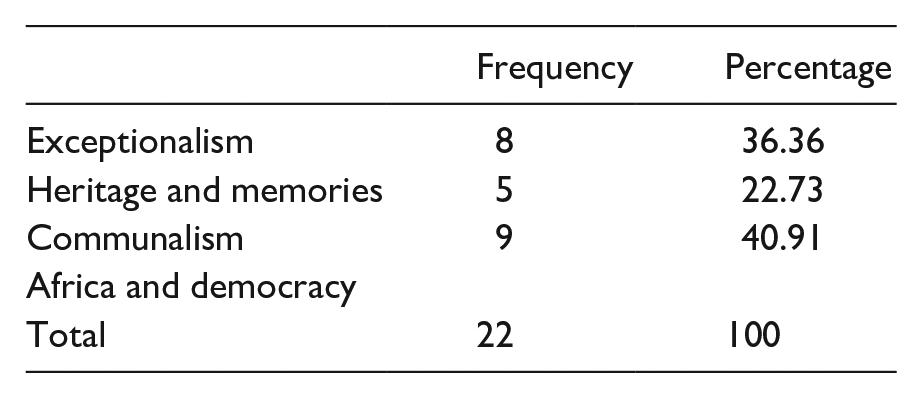
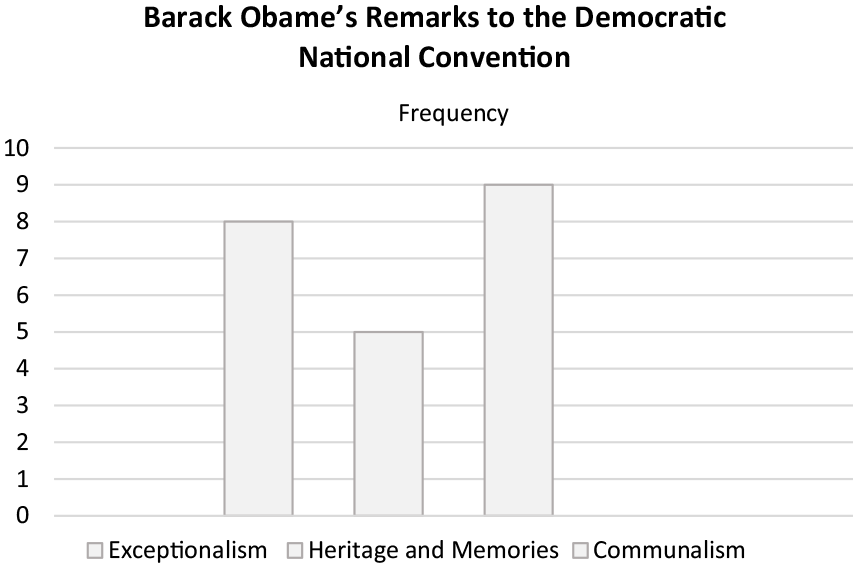
The first speech that was content analysed was the keynote speech delivered by President Obama during the 2004 Democratic Convention. Results indicated that communalism (40.91%, n = 9) was the most frequently occurring frame. This was followed by the exceptionalism frame (36.36%, n = 8), and then the heritage and memory frame (22.73%, n = 5). There was no presence of the Africa and democracy frame.
Presidential candidacy announcement speech
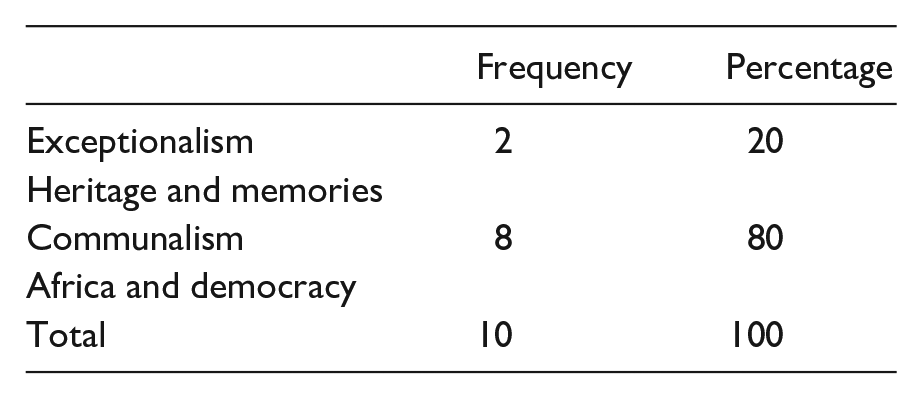
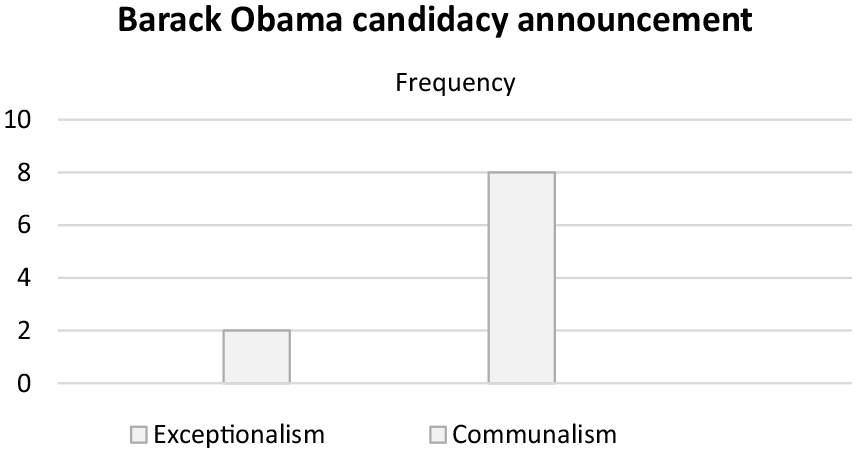
In the presidential candidacy announcement speech, two frames were presented, that is, the communalism frame and the exceptionalism frame. Heritage and memories frame and the Africa and democracy frames were not present here. Out of the frames present, the highest occurring frame was the communalism (80%, n = 8), followed by exceptionalism (20%, n = 2).
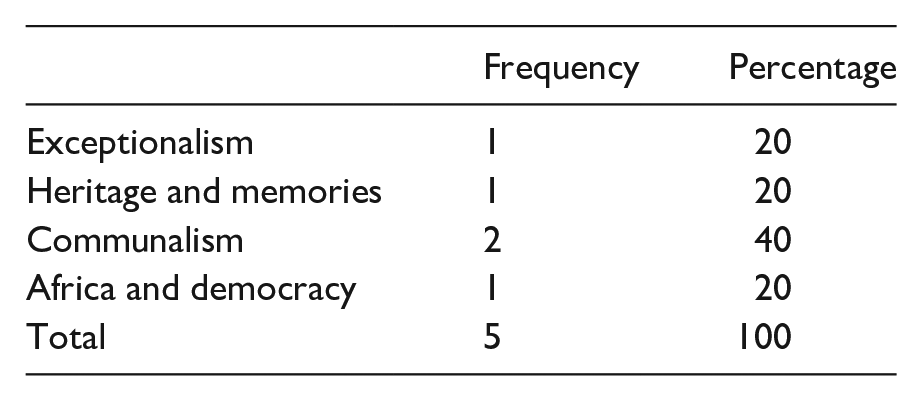
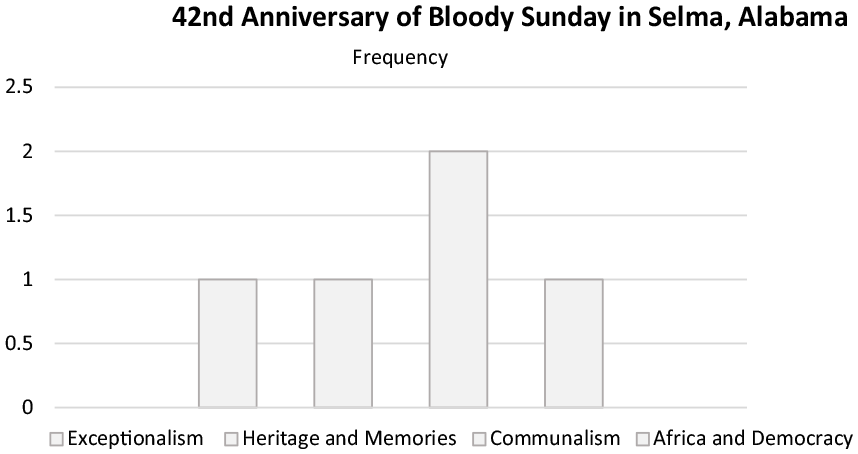
42nd anniversary of Bloody Sunday in Selma, Alabama
Communalism again was the most frequently occurring frame in the speech delivered by President Obama at the 42nd anniversary of Bloody Sunday in Selma, Alabama speech. The rest of the frames occurred an equal number of times:
‘More Perfect Union’ (‘Race’) speech
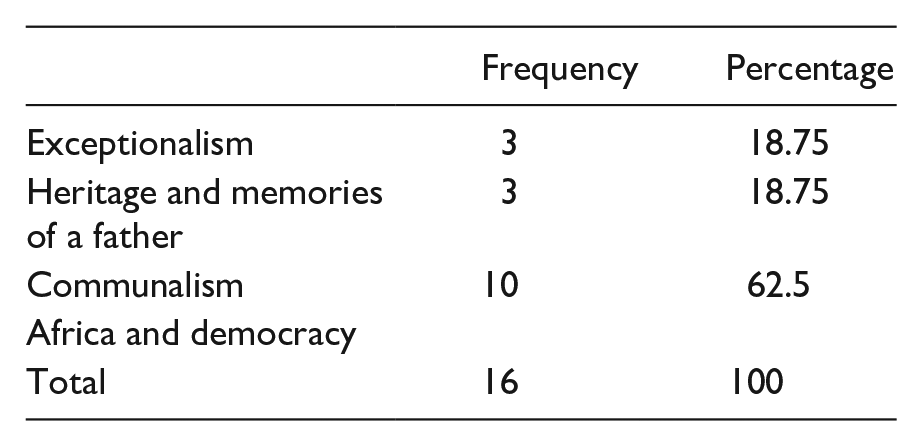
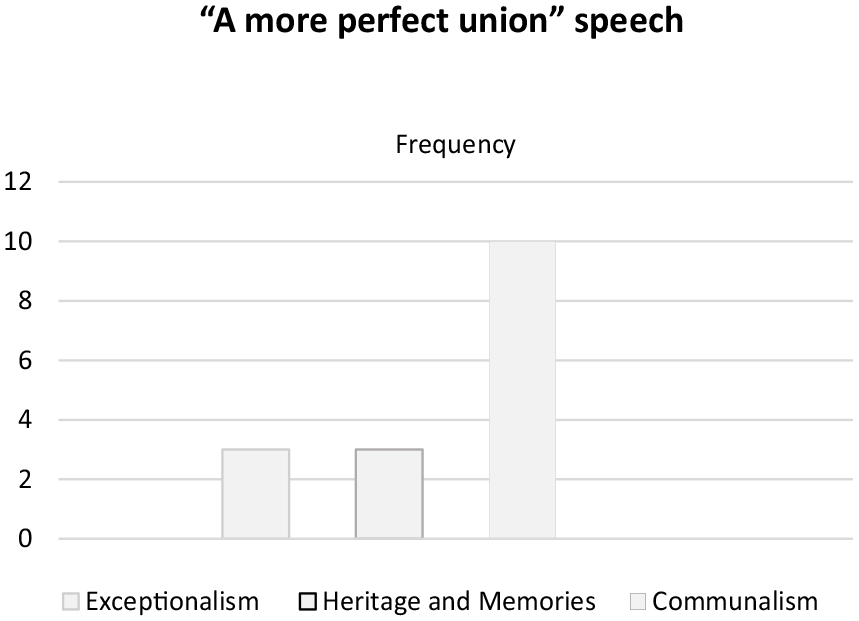
The content analysis for the ‘More Perfect Union’ speech contained the following results: communalism (62.5%, n = 10), exceptionalism (18.75%, n = 3) and heritage and memories of a father (18.75%, n = 3). The frame on Africa and democracy was absent.
‘The World as One’ speech delivered in Berlin, Germany
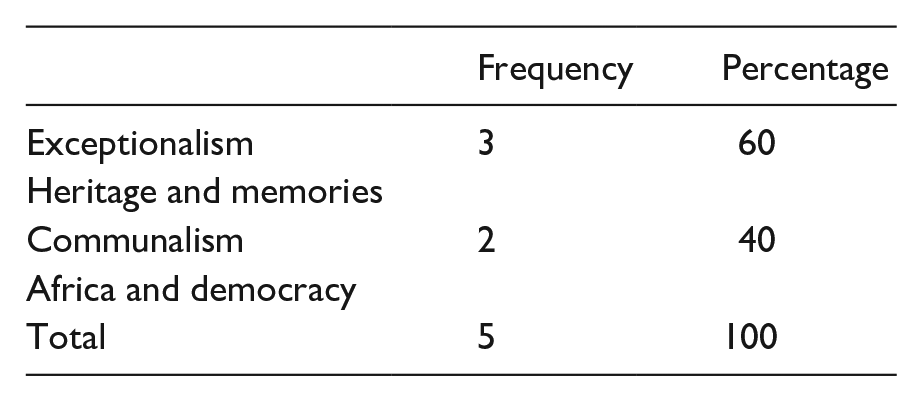
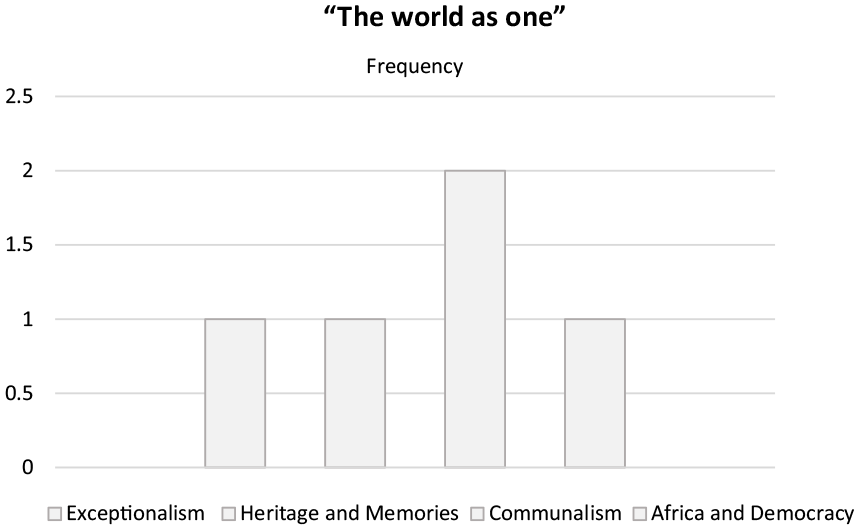
The ‘World as One’ speech constituted one of President Obama’s most important speeches as a candidate because of its international nature. The speech focused on the exceptional (60%, n = 3) nature of America and the need for the world to be more ‘communal’ (40%, n = 2). This was reflected in terms of the presence of these two frames in the speech.
Remarks by the president to the Ghanaian parliament
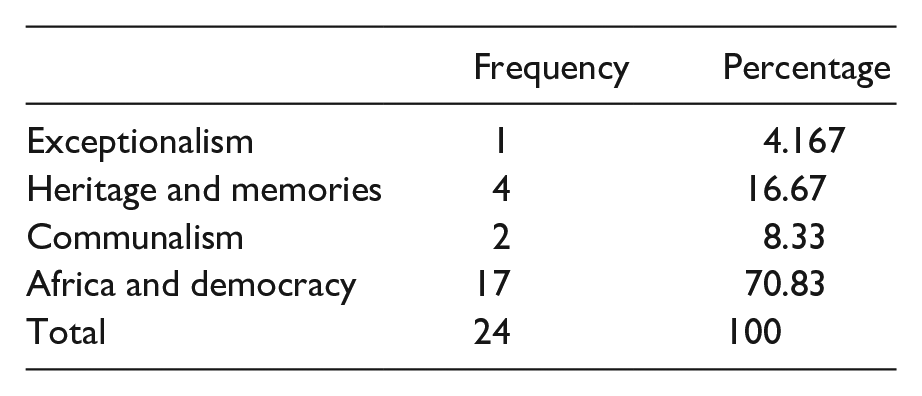
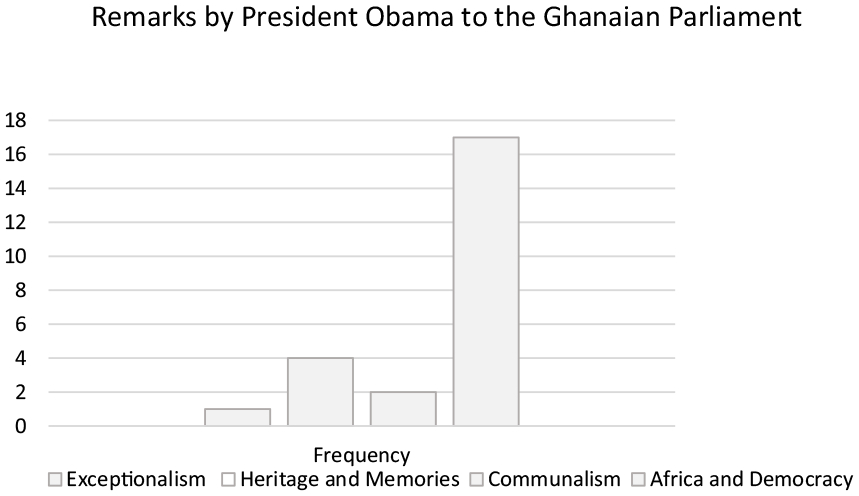
The speech delivered by President Obama to the Ghanaian parliament contained the following frames: exceptionalism (4.167%, n = 1), heritage and memories of a father (16.67%, n = 4), communalism (8.33%, n = 2) and Africa and democracy (70.83%, n = 17). Since the speech was delivered in the Sub-Saharan country of Ghana (it was his first trip to Sub-Saharan African country as president), it’s not surprising that the president focused on governance in Africa.
The nomination acceptance speech, Denver (2008)
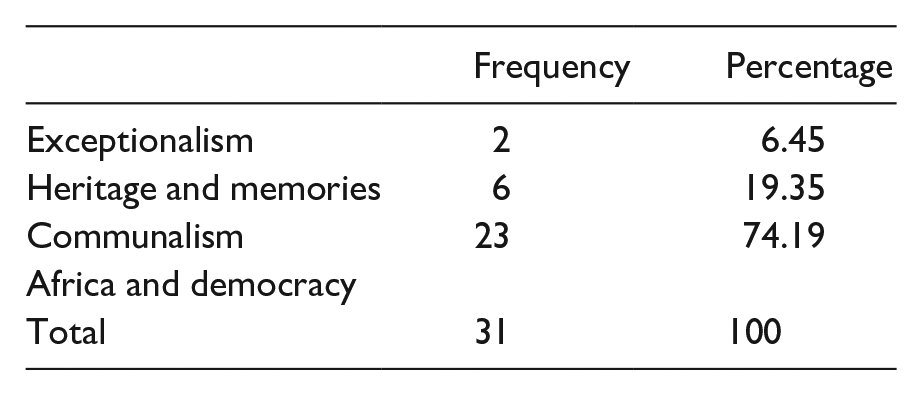
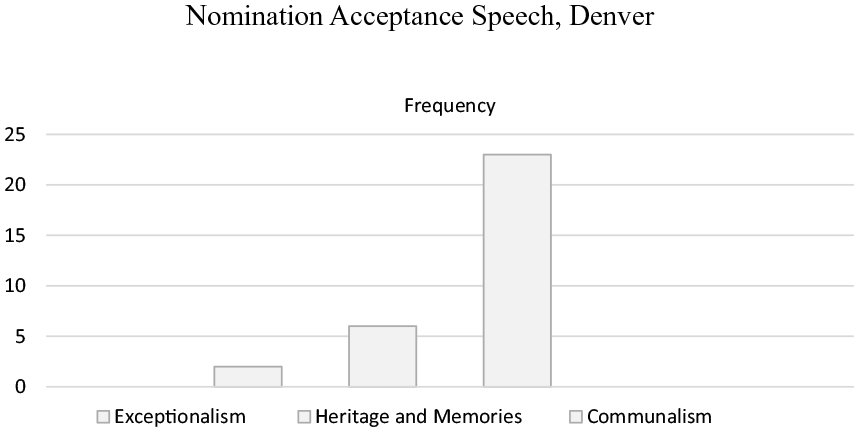
Once again communalism (74.19%, n = 23) was the most frequently occurring frame when President Obama’s nomination acceptance speech was examined. This was followed by heritage and memories of a father (19.35%, n = 6) and exceptionalism (6.45%, n = 2).
Conclusion
This study sough to explore representations of Afrocentricity in selected speeches of Barack Obama from a framing perspective. Framing research serves as an extremely important and useful framework to address issues of identity formation and image building. That said, it is useful to point out that, within the context of this research framing is also an important tool to make meaning of certain aspects one’s ethnic lineage while connecting with audiences. Four Afrocentric frames were unearthed. These include: (a) exceptionalism and African origins, (b) heritage and memories of a father, (c) communalism and (d) Africa and democracy. To assess the Afrocentric representations, framing analysis was employed. This is an approach that enables researchers to decipher themes, patterns and narratives of representation in communication texts. Framing allows scholars to examine aspects of communication that are selected, foregrounded and advocated by speakers. It is against this backdrop that the present research took place. To be specific, aspects of Afrocentricity were investigated and discussed.
The first frame on exceptionalism and African origins was concerned with how Obama used his African background to demonstrate the uniqueness or improbability of his candidature and subsequent election. The exceptionalism frame was achieved by Obama constantly foregrounding his Kenyan background and his Luo roots ‘. . . in no other country on earth is my story even possible’. A frame is, among other things, a way to shape reality about a situation including their identity by giving certain meanings to it. It can be established then, from the analysis that has taken place that Obama sought to shape reality about his identity by tapping into his African roots to give meaning to the implausible, rare or unlikely nature of his achievements. In doing this his Africanity and his personality become a major subject of reference in his speeches and for the general public. This aligns with the discourse on Afrocentricity where the subject of his Africanity becomes a major subject of discourse.
The second frame that was generated was ‘heritage and memories of a father’. Here again Obama strongly asserts his African heritage as a major component of his identity through the constant references to his Kenyan father and Luo roots saying he is ‘grateful for the diversity of my heritage’ (Obama, 2008). The obsession with the memory of his father who grew up herding goats, the historical and ethnic links and his references to his grandfather help to frame his Afrocentric identity as he ties his heritage and descent to his overall persona rather than excluding or putting it in the background.
The last frame communalism – utilized by Obama through references to community, interlinkages, unity and togetherness – can also be considered within the Afrocentric paradigm. This is because as opposed to western values where individualism has been identified as a major characteristic, the concept of communalism is a major feature of African cultural values and belief systems. Obama’s speech contained major references of community and collectivism as a ‘tacit theory’ (Gitlin, 1980) or principle of social life and organization. Obama’s selection, consistent and dominant references of communalism as part of his political style, gives us insight into the ideological foundations of his identity, personality and governance approach. It gives further meaning to who he is and what shapes his persona. The focus on the collectivist approach contributes to making this frame or aspects of his identity Afrocentric.
The current study contributes to research applications of the framing theory to forms of communication such as speeches. It also adds to the research on Afrocentricity with regard to Barack Obama and the African diaspora broadly. What emerges are three different frames accounting for his Afrocentric identity: a belief that the community is indispensable to our definition of who we are, the references to his African roots as part of what makes his candidature unique and the constant references to his heritage and obsession with the memories of his father. As these symbolic discursive constructions show, Obama clearly foregrounded his African identity. As Makokha (2011, pp. 13–22) postulates, Afrocentricity also covers people of Black descent irrespective of geographic location, particularly Africans or children of Africans who are ‘new embodiments of inter-cultural or inter-racial unions between Africa and the rest of the world’. This research helps to unearth and discuss such contemporary discourses on Africanity and contributes to our knowledge of Obama’s identity and the Afrocentric literature. Future research may expand this investigation into other textual publications such as Obama’s books where he further lays forth his thoughts, ideas and the factors that shape his identity.
Footnotes
Author’s note
Godwin Etse Sikanku is now affiliated to University of Media, Arts and Communication (UniMAC-IJ).
