



Abstract
The study examines whether trust, job satisfaction, and leader-member exchange mediate the relationship between servant leadership and organizational citizenship behavior. The study also examines whether trust and leader-member exchange mediate the relationship between servant leadership and job satisfaction. This study used quantitative methods with a sample of 180 lecturers from 26 Christian higher education institutions in Indonesia. A partial least squares approach was used to verify the hypothesis that had been proposed. Results from factor analysis and structural equation modeling showed that trust, job satisfaction and leader-member exchange are direct outcomes of servant leadership, and organizational citizenship behavior was an indirect outcome of servant leadership.
Keywords
Introduction
Servant leadership is necessary to master the challenges of the 21st century (Parris and Peachey, 2012). Theologians and educational practitioners have adopted servant leadership approaches to leading their organizations (Langhof and Güldenberg, 2020). Research on servant leadership suggests that servant leadership is a predictor of organizational success (Claar et al., 2014; Rao et al., 2019) and positively influences organizational functioning (Hashim et al., 2019; A. Lee et al., 2020). Servant leadership is an important organizational variable that significantly affects follower behavior (Al-Asadi, 2019) and inspires followers in helping to achieve organizational goals (Liden et al., 2008; Mustapha, 2019; Senjaya and Pekerti, 2010). The servant leadership style differs from other value-based styles by prioritizing the development and empowerment of followers (Brown and Bryant, 2015; Choudhary et al., 2013). Based on this perspective, servant leadership is a viable leadership theory and is considered an important field of research because it has the potential for success that impacts the organization and improves followers' welfare (Eva et al., 2019; Harrison, 2017). By emphasizing empowering others, collective engagement, and collaboration, it is an effective leadership practice to control unexpected adaptation challenges such as those posed by the coronavirus pandemic (Fernandez and Shaw, 2020). Servant leadership is a human-oriented leadership style (Dami et al., 2022)—servant leaders develop a vision, lead members of their institutions, carry out managerial functions, manage resources, and provide professional development for their members to improve the organizational climate (Burhanuddin, 2017, 2018).
The results of a systematic review study from 1998–2018 showed that the majority of servant leadership research was conducted in business disciplines or organizational psychology (n = 203), with a few studies in other disciplines, such as health (n = 15), education (n = 10), and hospitality (n = 8) (Eva et al., 2019). However, according to Sawan et al. (2020), only four studies were carried out in the field of education from 2015–2020. Based on the results of bibliometric reviews of 263 articles (69.2%), 57 book chapters (15%), 44 proceedings (11.6%), 12 book reviews (3.2%) and four books (1.1%) about servant leadership since 1970 in the Web of Science (WoS) core collection, it was found that there was a significant gap in the study of servant leadership, where most of the research to date has been carried out in the United States, the Netherlands, China and Australia compared in the context of Africa, the Middle East and Asia (Najam and Mustamil, 2020).
Servant leadership studies in the context of higher education have been carried out in various countries, such as Palestine (Aboramadan et al., 2020a, 2020b), Germany (Moll and Kretzschmar, 2017), America (Gooch et al., 2021; Sahawneh and Benuto, 2018), Turkey (Erkutlu and Chafra, 2015), Pakistan (Amin et al., 2019; Haider et al., 2020; Saleem et al., 2020), Ethiopia (Bitew and Gedifew, 2020; Gedifew and Bitew, 2019), the Philippines (Ramos, 2020), Saudi Arabia (Shafai, 2018), Kuwait (Alshammari et al., 2019), Spain, and China (Latif and Marimon, 2019; Latif et al., 2021). Servant leadership research in higher education in Indonesia focuses on measuring, verifying, and validating the dimensions of servant leadership (Handoyo, 2010; Melinda et al., 2020), the influence of servant leadership on lecturer performance through trust in leaders (Filatrovi et al., 2018; Keradjaan et al., 2020), analysis of the dimensions of servant leadership and their differences between public and private universities (Melinda et al., 2019), servant leadership and university performance (Melinda et al., 2018; Quddus et al., 2020), analysis of the character of servant leadership owned by the leadership of public and private universities (Adda and Buntuang, 2018), and the characteristics of servant leadership and its implications for the world of higher education (Jondar, 2021).
The study of servant leadership in Christian higher education is dominated by non-empirical research (Adda and Buntuang, 2018; Apriano, 2020; Hancock, 2019; Hartono et al., 2021; Jondar, 2021; Prajogo, 2019; Siburian, 2020; Silalahi, 2020). Some empirical studies focus on the development, verification and validation of instruments to measure servant leadership (Ingram, 2003), quantitative (pre and post-test) (Hylen and Willian, 2020), quantitative (descriptive) (Burch et al., 2015), and qualitative (Burch et al., 2015; Jagela, 2019; Ricky, 2017). To date, little research uses structural equation modeling to explore the relationship between servant leadership, trust, job satisfaction, leader-member exchange, and organizational citizenship behavior in the Christian higher education context.
The results of these studies showed that servant leadership influences organizational citizenship behavior (OCB) (Amir and Amir, 2019; Shafi et al., 2020). A recent study conducted on about 1876 lecturers from 120 departments in Malaysian universities using multi-level structural equation modeling (MSEM) found that servant leadership significantly predicts job satisfaction and organizational citizenship behavior at the lecturer level (Ghasemy et al., 2022). This result contrasts with other research that did not find a relationship between servant leadership and whether an organization fosters a learning culture, facilitates learning activities, disseminates learning outcomes, and utilizes learning to improve performance (Xie, 2020). Other studies have shown no direct positive relationship between servant leadership and organizational performance (De Waal and Sivro, 2012), and the results of one study showed no impact of servant leadership on follower performance (Sihombing et al., 2018). The results of previous studies have shown inconsistencies in the effect of servant leadership on the organizational citizenship behavior of individuals and organizations.
Servant leadership builds trust and loyalty from followers, encouraging followers to actively contribute to the organization’s development (Hai and Van, 2021). Servant leadership affects trust in leaders, which may, in turn, improve organizational performance (Du Plessis et al., 2015; Keradjaan et al., 2020). In addition, leader-member exchange has an important role in mediating the relationship between servant leadership and organizational citizenship behavior (Wu et al., 2013). Finally, one study suggests that servant leadership increases job satisfaction in higher education (Singh and Ryhal, 2021). However, according to Aboramadan et al. (2020a), Dahleez et al. (2021), and Latif and Marimon (2019) that research on servant leadership in higher education is limited and requires more attention.
One goal of applying servant leadership to the higher education context is to promote engaged learning, volunteerism, and co-curricular experiences throughout the university structure. It aims to assist faculty with the incorporation of engaged learning techniques in their classrooms, to develop community partnerships that support internships and community-based learning or research, and to facilitate other servant leadership initiatives on Christian campuses (Espy, 2006). The results of research conducted at Indonesian Christian universities in East Java province, Indonesia, suggest that adopting servant leadership models can help these universities reach international standards of quality.
In summary, based on our review of prior research about servant leadership, four research gaps were found. First, there are some mixed results in the research. Some studies show that servant leadership has no relationship with fostering learning organizations, organization performance, or follower performance. The extent to which organizational trust mediates other outcomes of servant leadership is also unclear. Second, studies of servant leadership in Christian higher education have not measured and tested multiple variables in a single model. Specifically, models have not simultaneously considered servant leadership, trust, leader-member exchange, job satisfaction, and organization citizenship behavior (Mcquade et al., 2020; Latif et al., 2021). Third, there is a methodological research gap with most articles of servant leadership being non-empirical. Finally, previous research has investigated the outcomes of servant leadership, but not much research has been conducted in the field of education, let alone in the context of Christian higher education. In addition, there is still little research on servant leadership in Indonesian Christian colleges and universities. Yukl (2017) emphasized the need to conduct more servant leadership research in universities and other organizations in the higher education sector because it has a potential positive role in individual and organizational outcomes.
Current studies focus on identifying the outcomes of servant leadership and establishing direct and indirect effects. This study also simultaneously models the outcomes determined by previous studies, including equity, job satisfaction, leader-member exchange and organizational citizenship behavior in the context of Christian higher education in Indonesia. This study makes significant key contributions to empirical literature and supporting theories about the direct and indirect relationships between trust, job satisfaction, organizational citizenship behavior, and leader-member exchange. In addition, this study provides Christian higher education with a practical means to identify early potential servant leaders in leading higher education.
Operational definition of variables
In the context of Christian higher education, servant leadership is a natural feeling of a Christian higher education leader who wants to serve first to help, support, encourage, and motivate lecturers. This definition is built on the assumption that “I am a leader; therefore, I serve” rather than “I am a leader; therefore, I lead” (Liden et al., 2015; Ling et al., 2016; Greenleaf, 1977; Van Dierendonck and Nuijten, 2011; Barbuto and Wheeler, 2006).
Trust is a construction of relational agreements in the work setting between Christian higher education leaders and lecturers. Trust is a key component in a successful relationship between the two for mutual help, cooperation, management, sharing, and enabling mutual understanding. The belief held by lecturers that the leader of Christian higher education is reliable, competent, and trustworthy to fulfill his promises is based upon their prior experiences of the leader showing care and attention to them (McAllister, 1995).
Leader-member exchange is a positive and high-quality dyadic relationship in which Christian higher education leaders and lecturers work together in a formal and informal capacity with mutual respect, which ultimately contributes to the organization’s effectiveness (Liden and Maslyn, 1998).
Job satisfaction is an emotional reaction and positive attitude demonstrated by lecturers towards their work and work environment. Recognition, productivity, compensation, promotion, personal achievement, and achievement of other goals lead to a feeling of fulfillment (Weiss et al., 1967).
Organizational citizenship behavior is informal, discretionary behavior that positively impacts Christian higher education. It is the behavior of lecturers that is driven by concern for the college and that arises from prosocial values (Williams and Anderson, 1991).
Theoretical foundation
Social exchange theory
Social exchange theory defines how the benefits of exchanging services determine social interaction. In addition, social exchange theory proposes that the orientation of individual exchanges is an influential factor in social exchange relations (Jahan and Kim, 2021). The influence between servant leadership, trust, job satisfaction, and organizational citizenship behavior can be explained through social exchange theory. The main idea in social exchange theory is that parties enter into and maintain an exchange relationship with one another and hope that it will be beneficial (Blau, 1968). According to Stafford (2014), a social exchange involves relationships with others, beliefs that do not conflict with legal obligations, are more flexible than formal agreements, and rarely involve bargaining explicitly. The social exchange theory also includes the desire to reduce losses and maximize profits by individuals in the interactional relationship between them (Thibaut and Kelley, 1959). In servant leadership, the process of interaction and exchange (explicit or implicit) between the servant leader and subordinates is central to the relationship (Liden et al., 2008). In serving the followers, the leader is involved in a high level of interaction with them and, therefore, will affect the level of trust and relationships (Schwarz et al., 2016). Based on social exchange theory, servant leadership’s direct effect on outcomes such as job satisfaction among followers may be mediated by its capacity to foster followers' trust of their leaders (Mayer et al., 1995; Rousseau et al., 1998).
The norm of reciprocity
The norm of reciprocity is a social rule that states that people should repay favors and other acts of kindness (Gouldner, 1960). The norm of reciprocity can explain the influence between servant leadership, trust, job satisfaction, leader-member exchange and organizational citizenship behavior. Uehara (2016) asserts that people feel obligated to return benefits they receive from others and appear to be more psychologically and emotionally averse to over-benefiting than under-benefiting from social support interactions. Thus, individuals in each social relationship contribute resources to maintain the relationship. Because of the norm of reciprocity, subordinates who receive such resources will reciprocate by developing high leader-member exchange relationships with their leaders who have provided such resources (Amah, 2018). On the same principle, subordinates who receive such resources are willing to treat discretionary efforts with high organizational citizenship behavior and will also be satisfied with their work.
The theory of leader-member exchange
The main premise of the theory of leader-member exchange is that leadership behavior contributes to the development and maintenance of strong interpersonal relationships between the leader and followers and plays an important role in helping followers reach their full potential (Liden and Maslyn, 1998; Manz and Sims, 1987). Servant leaders emphasize the development and growth of subordinates in the context of moral and social concerns (Rodríguez-Carvajal et al., 2014). The leader who serves will empower the subordinates; they support, encourage, and facilitate the growth and development of their subordinates (Liden et al., 2015; Van Dierendonck, 2011). The servant leader will help subordinates to grow and succeed by showing a sincere interest in their career development and allowing subordinates to improve their skills (Chiniara and Bentein, 2016). Van Dierendonck (2011), in his literature review of servant leadership, found that several studies show that high-quality leader-member exchange relationships, trust, satisfaction and fairness positively affect personal growth, work attitudes, and follower performance.
Hypotheses development
Servant leadership and job satisfaction
Researchers in several fields have found that the higher the subordinate perception of servant leaders in an organization, the higher their job satisfaction (McCann et al., 2014). Ndoria (2004) uses the leader-member exchange theory to explain the influence of servant leadership on job satisfaction—success arises from the formation of high-quality relationships and interactions between leaders and subordinates. Servant leaders committed to paying attention to the well-being of subordinates will increase their job satisfaction and motivation (Thompson, 2002).
Thompson (2002) reports a significant positive relationship between servant leadership and job satisfaction in educational settings. Servant leadership pointed out that serving others by favoring positive behaviors at the macro and micro levels can result in high levels of job satisfaction (Boone and Makhani, 2012). The most significant difference in servant leadership can be described as the capacity to build faculty confidence, emphasize the importance of integrity, and focus on long-term relationships with the organization (Liden et al., 2008). When servant leadership maintains self-efficacy, individual motivation, and communal engagement, faculty will intrinsically become committed to the organization’s mission, realize greater job satisfaction and a willingness to maintain high levels of performance, and will be more likely to model the behavior and interests of leaders and organizational processes (Liden et al., 2008).
There is a significant positive effect of servant leadership on job satisfaction.
Servant leadership and organizational citizenship behavior
The leader’s behavior strongly influences subordinates' behavior by being a model to imitate or a standard to meet. Servant leadership has been identified as a significant predictor of the organizational citizenship behavior of followers (Mahembe and Engelbrecht, 2014). Social exchange theory proposes reciprocity in relationships, in which a person who receives any reward will try to reciprocate with something of equal value. Based on the attitude of the servant leader, subordinates are expected to respond with the same attitudes and behaviors and tend to promote reflective behavior (Erdurmazlı, 2019; McNeff and Irving, 2017; Newman et al., 2017). A qualitative study also found a positive relationship between servant leadership and organizational citizenship behavior. Servant leadership encourages moral reasoning in followers resulting in higher levels of organizational citizenship behavior (Graham, 1995). The study by Ehrhart (2004) also supports servant leadership as a potential antecedent of organizational citizenship behavior in followers.
Similarly, studies conducted by Ng et al. (2008), Neubert et al. (2008), and Zhao et al. (2016) found a positive relationship between servant leadership and organizational citizenship behavior in followers. The positive relationship between servant leadership and organizational citizenship behavior shows that servant leaders can encourage followers to assist their peers. As explained by the theory of social learning (Bandura, 1977), servant leaders' strong focus on leading by example and paying attention to the well-being of followers can influence followers to engage more frequently in organizational citizenship behaviors (Sendjaya et al., 2020).
There is a significant positive effect of servant leadership on organizational citizenship behavior.
Servant leadership and organizational citizenship behavior through trust
Regarding organizational citizenship behavior, a leader focuses on developing a positive attitude and a sense of community among subordinates (Schaubroeck et al., 2011). The servant leader behaves with humility, politeness, honesty, and trust, which creates a psychologically safe environment for subordinates. This environment lays the foundation for affective beliefs and induces cognitive trust in subordinates. The leader’s trust can help develop a safe social environment in the workplace, and the leader’s attention behavior can result in group cohesion and a high level of subordinate interaction (Shim et al., 2016).
In certain cases of affective beliefs, the study by Yang et al. (2009) found that extra-role behaviors, such as organizational citizenship behavior, are related to affective beliefs. Zhu et al. (2013) found that affective trust but not cognitive trust between leadership and subordinates increased organizational citizenship behavior. Cognitive trust reflects subordinates' confidence in the leader’s competence, their confidence in the leader’s ability to be a guide, facilitates their task efforts and evaluates their work experience in a favorable way that is supposed to strengthen the safe social environment and sense of community in the workplace. Previous studies have found that cognitive beliefs increase workers' willingness to share information and proactively seek feedback (Mayer et al., 1995; Paswan et al., 2005). Chraim (2016) concluded that there is a relationship between servant leadership and organizational citizenship behavior through the medium of trust. Qiu and Dooley (2022) found that trust in leaders fully mediates the relationship between servant leadership and organizational citizenship behavior.
Trust mediates the effect of servant leadership on organizational citizenship behavior.
Servant leadership and job satisfaction through trust
Using the theory of social exchange (Blau, 1964), the effect of servant leadership on subordinate attitudes may be mediated by trust between the subordinate and the leader (Mayer et al., 1995; McAllister and Bigley, 2002). The perspective of social exchange explains how servant leadership influences subordinate relationships to build trust with their leaders (Greenleaf, 1977). Servant leaders focus on the betterment of their subordinates. In return, subordinates respond by trusting their leader. A servant leader generously shares and builds trust with subordinates and encourages subordinates to plan future opportunities. When subordinates feel they are receiving benefits from the servant leader, they are motivated to trust their leader (Whitener et al., 1998).
The transformational servant leadership model finds that vision, influence, credibility, trustworthiness, and service are consequences of servant leadership (Farling et al., 1999). Subordinates’ job satisfaction is higher when relationships are based on trust in their leader (Spreitzer and Mishra, 2016). Joseph and Winston (2005) found that servant leadership correlates with trust in the leader. Trust in the leader is defined as the intention to accept vulnerabilities based on the expectation of the leader’s positive intentions or behaviors (Dirks and Ferrin, 2002). Senjaya and Pekerti (2010), using a sample of 555 employees, found that servant leadership is associated with trust in their leaders. Servant leadership is associated with high-quality social exchange relationships (Dirks and Ferrin, 2002; Joseph and Winston, 2005; Senjaya and Pekerti, 2010), which in turn builds the trust of subordinates in the leader and increases job satisfaction.
Trust mediates the effect of servant leadership on job satisfaction.
Servant leadership and organizational citizenship behavior through leader-member exchange
The leader-member exchange theory has been proposed as a mechanism that explains the process by which servant leaders influence their followers to go beyond their job roles and engage in behaviors that benefit organizations and other members of the organization (Henderson et al., 2009; Van Dierendonck, 2011). Leader-member exchange refers to the level of emotional support and the exchange of valuable resources between the leader and subordinates (Liden et al., 2008). In other words, it measures the extent to which both parties are involved in the process of social exchange of a reciprocal nature (Masterson et al., 2000). Relationships characterized by high levels of leader-member exchange typically exhibit high levels of mutual trust, respect, and obligation (Newman et al., 2017).
Servant leadership tends to increase the organizational citizenship behavior of followers through developing high-quality leader-member exchange relationships. The strong leader-member exchange relationship is characterized by high trust and support between leaders and followers and the exchange of material and non-material benefits, going beyond the job description specifications (Ilies et al., 2007; Liden et al., 2008). To reciprocate the development of strong leader-member exchange relationships and maintain balanced and fair social exchanges with their leaders, followers tend to go beyond what is required of them in their job descriptions through organizational citizenship behavior (Wayne et al., 2002). The results of the research of Wu et al. (2013) and Newman et al. (2017) using social exchange theory and leader-member exchange theory show that servant leadership positively influences organizational citizenship behavior, and leader-member exchange mediates this influence.
Leader-member exchange mediates the effect of servant leadership on organizational citizenship behavior.
Servant leadership and job satisfaction through leader-member exchange
Statistical studies have shown that being a group member and having high-quality leader-member exchange relationships are valuable and desirable for an organization. Leader-member exchange can be used to explain the relationship between the servant leader and the follower. Through mutual trust and respect, servant leadership builds high leader-member exchange qualities between servant leaders and followers. Servant leadership convinces followers and builds consensus within the group through reasoning, factual evidence, inspiration, and consultation. In addition, the servant leader strengthens and develops the follower with the correct mixture of hints and autonomy. All these efforts are beneficial to establishing the quality of the leader-member exchange between the servant leader and the follower (Van Dierendonck, 2011). Akdol and Arikboga (2017) found that leader-member exchange partially mediated the relationship between servant leadership and job satisfaction.
Leader-member exchange mediates the effect of servant leadership on job satisfaction.
Servant leadership and organizational citizenship behavior through job satisfaction
Servant leadership can increase followers' job satisfaction, shaping organizational citizenship behavior among them (Putra and Fitri, 2021). Servant leadership is indispensable for organizations to strengthen or improve leadership styles through service and support to followers in the workplace. Organizations should also reinforce the increased need for follower satisfaction in the workplace. The impact of the increased need for follower job satisfaction will help maximize the improvement of the follower’s organizational citizenship behavior in the workplace. Servant leadership that promotes authenticity, humility, integrity, listening, compassion, responsibility, courage, and altruism, can lead to individual satisfaction and behavior change (Coetzer et al., 2017). Roza et al. (2021) and Ngah et al. (2021) pointed out that job satisfaction mediates the relationship between servant leadership and organizational citizenship behavior.
Job satisfaction mediates the effect of servant leadership on organizational citizenship behavior.
Method
Research design
This type of study tests hypotheses to explain the effect that exists between variables. Data were collected on each lecturer individually; hence the unit of analysis is individual. Data were collected from lecturers in Christian higher education in the province of East Java, Indonesia, and one response was taken from each lecturer individually. The data is collected once and represents a portrait from a single point in time. Therefore, this study was represented as a cross-sectional study with a survey type.
Samples and procedures
Data were collected and pre-tested with a pilot study from 8 June 2022 to 6 July 2022, and the main study was conducted 8 July 2022–8 August 2022. The initial contact was made via WhatsApp with the general secretary of Badan Musyawarah Perguruan Tinggi Keagamaan Kristen Indonesia (BMPTKKI) in Jakarta and the head of Persatuan Perguruan Tinggi Teologi (PPTT) in East Java province, Indonesia. The researchers explained the purpose of the research and requested permission to conduct the study. After approval, the research team held two meetings via Zoom to determine the target universities for distributing questionnaires to collect original data and to gather data from the Indonesian Ministry of Education and Culture’s Higher Education Database (PDDikti). In the end, 26 of the 33 Christian universities agreed to participate in the study. After that, the general secretary of BMPTKKI and the head of PPTT in East Java, Indonesia, communicated and sent a research permit to the leaders of Christian religious universities in East Java to distribute questionnaires. Online questionnaires were distributed to lecturers through a Google Form.
Based on PDDikti data, the total number of lecturers from 26 Christian higher education institutions who became the population in this study, was 450 respondents. Sample members were identified using a stratified random sampling procedure such that there was proportional representation across the geographic areas in which the higher education institutions were located. Using G*Power software, we conducted a power analysis while also considering the number of variables in our model. After that, the criteria for the number of research samples based on the analysis of structural equation modeling models (Hair et al., 2017), were determined by 5–10 times the number of manifest variables/indicators of the entire latent variable. This study used five latent variables with 20 manifest variables/indicators; thus, the minimum number of samples used in this study according to the criteria for the number of samples for SEM analysis was 20 × 9 = 180. Ultimately, we calculated that a sample size of 180 respondents would provide sufficient sample for our analysis. Based on the 26 Christian higher education selected in the sample, and subsequently, the number of sample members in each area was calculated using a proportional allocation formula (Riduwan, 2012; Yamin and Kurniawan, 2011):
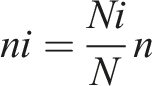
Information:
ni = Number of sample members by area
n = Total sample members
Ni = Number of population members by area
N = Total population members
The number of respondents we sampled from each Christian higher education institution in Indonesia can be seen in Table A1. All studies can be found in the appendix.
In this study, 180 questionnaires were successfully collected when the questionnaires were distributed. The 180 respondents consisted of lecturers (65.56%), vice-rector/vice chairman (12.78%), heads of study programs (7.78%), heads of quality assurance agencies (4.44%), deans (2.22%), bureau heads (1.67%), and others (0.56%).
Instruments
The study’s theoretical framework consists of five constructs, each measured through various items. To improve the accuracy of the results, pre-testing was carried out to ensure the validity of the instrument’s content, readability, and conciseness using expert evaluation consisting of two psychometric experts, two education management experts, and one Christian leadership expert. A Confirmatory Factor Analysis test was carried out using SPSS version 25 (Table A2) and structural equation modeling with SmartPLS 4 (Tables A3 and A4). The results of the CFA test show that the data reasonably fit with the model.
This instrument was adapted and modified from the previous author to fit the context of respondents (lecturers) in Christian higher education in Indonesia. In addition, this study also combined several instruments from previous studies to show complementarity with each other and the novelty of this study. All items in the designed survey were measured according to the 5-point Likert scale that ranged from (1) strongly disagree to (5) strongly agree. First, 15 items used to measure servant leadership were developed by Latif and Marimon (2019) and adapted to measure servant leadership, which consisted of eight dimensions, including behaving ethically (2 items), development (2 items), emotional healing (1 item), empowerment (2 items), pioneering (2 items), relationship building (1 item), and wisdom (1 item). The other two dimensions of servant leadership adapted from Sendjaya et al. (2017) and Ukeni et al. (2019) included transcendental spirituality (2 items) and motivation to serve (2 items). An example of the items for servant leadership is “The rector/chairman rejects manipulation.” Trust is measured using instruments developed by McAllister (1995), which include measures of cognitive trust (4 items) and affective trust (3 items). An example of items is “I and the rector/Chairman can freely share ideas together.” Job satisfaction is adapted from Weiss et al. (1967), which includes measures of intrinsic satisfaction (5 items), extrinsic satisfaction (5 items) and general satisfaction (1 item). An example of items is “I am very satisfied with my current salary.” Leader-member exchange was measured using four dimensions developed by Liden and Maslyn (1998), including affective exchange (2 items), loyalty (2 items), contributions (2 items) and professional respect (2 items). This instrument was chosen because it is consistent with the multidimensional perspective proposed by social exchange theory (Katz and Kahn, 1978; Sparrowe and Liden, 1997). An example of items is “The rector/Chairman will defend me before others if I confess honestly to the mistakes I have made.” Finally, organizational citizenship behavior was measured using instruments developed by Williams and Anderson (1991), measuring the construct at the individual (4 items) and organizational levels (3 items). An example of items is “I was able to express loyalty to the college.”
Data analysis
This study used partial least squares structural equation modeling (PLS-SEM) for data analysis, as recommended by previous researchers (Hair et al., 2020; Zeng et al., 2021). This technique is used for multivariate analysis because it can estimate theoretically established models of relationships between multiple variables (Shah et al., 2022). This study used SmartPLS version 4 to test the measurement and structural models (Hair et al., 2017; Sarstedt and Cheah, 2019). In particular, the measurement model was assessed to ensure the internal consistency (Cronbach’s alpha, composite reliability, Rho_A), convergent validity (outer loading and average variance extract/AVE), and discriminant validity (Heterotrait-Monotrait ratio of correction) met the recommended quality threshold. Then, structural models are analyzed for hypothesis testing—the relationship between latent variables. Structural models show the relationship between constructs assessed using bootstrapping with 5000 resamples to produce the value of the path coefficient and its significance (p < 0.05, one-tailed).
This research adopted the concept of mediation provided by Baron and Kenny (1986). When analyzing the mediation relationship, the guidelines from Baron and Kenny (1986) were the most used method by previous researchers. As for decision-making related to the type of mediation (Memon et al., 2018), this study adopts an understanding of the types of mediation and non-mediation from Zhao et al. (2010). Regarding the application of mediation analysis, this study uses bootstrapping because it has been recognized as one of the more rigorous and robust methods for testing the effects of mediation (Hayes, 2009; Zhao et al., 2010).
Results
Demographic profile
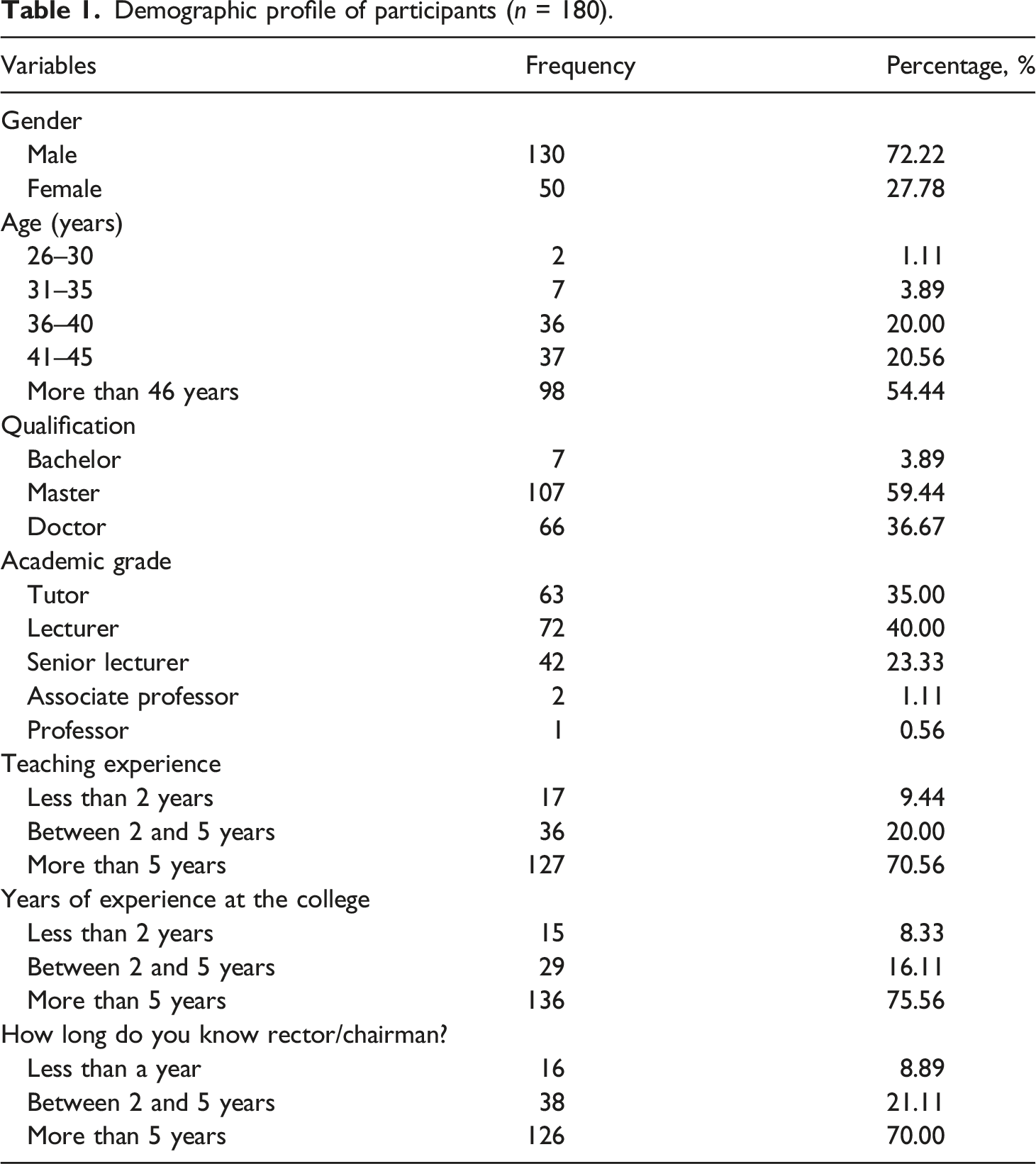
The respondents to this study were lecturers in 26 Christian higher education in the province of East Java, Indonesia. Table 1 shows that the most respondents were male (72.22%). The majority of respondents were more than 46 years old (54.44%). Most respondents had a master’s (59.44%) or doctoral (36.67%) degree. For academic roles, participants were lecturers (40.00%), tutors (35.00%), and senior lecturers (23.33%). Most respondents (70.56%) had more than 5 years of teaching experience. Most respondents (75.56%) also had over 5 years of experience at their present institution. Finally, a large majority of respondents (70.00%) knew the rector/chairman for more than 5 years (70.00%).
Assessment of measurement model
After performing the confirmatory factor analysis, descriptive statistics of variables (means and standard deviation) and correlations were analyzed. Results for the confirmatory factor analysis are shown in the appendix. As shown in Table A5, servant leadership has a positive correlation with trust (r = 0.695, p < .01), job satisfaction (r = 0.811, p < .01), leader-member exchange (r = 0.692, p < .01) and organizational citizenship behavior (r = 0.537, p < .01). It also shows that job satisfaction positively correlates with organizational citizenship behavior (r = 0.521, p < .01). Furthermore, trust has a positive correlation with job satisfaction (JS) (r = 0.810, p < .01) and organizational citizenship behavior (r = 0.287, p < .01). The analysis also showed that leader-member exchange and job satisfaction are positively related (r = 0.703, p < .01) and organizational citizenship behavior (r = 0.933, p < .01). These findings provide preliminary support for the main hypothesis (H1–H7). The means and standard deviations for all of the variables are also shown in Table A5.
Demographic profile of participants (n = 180).
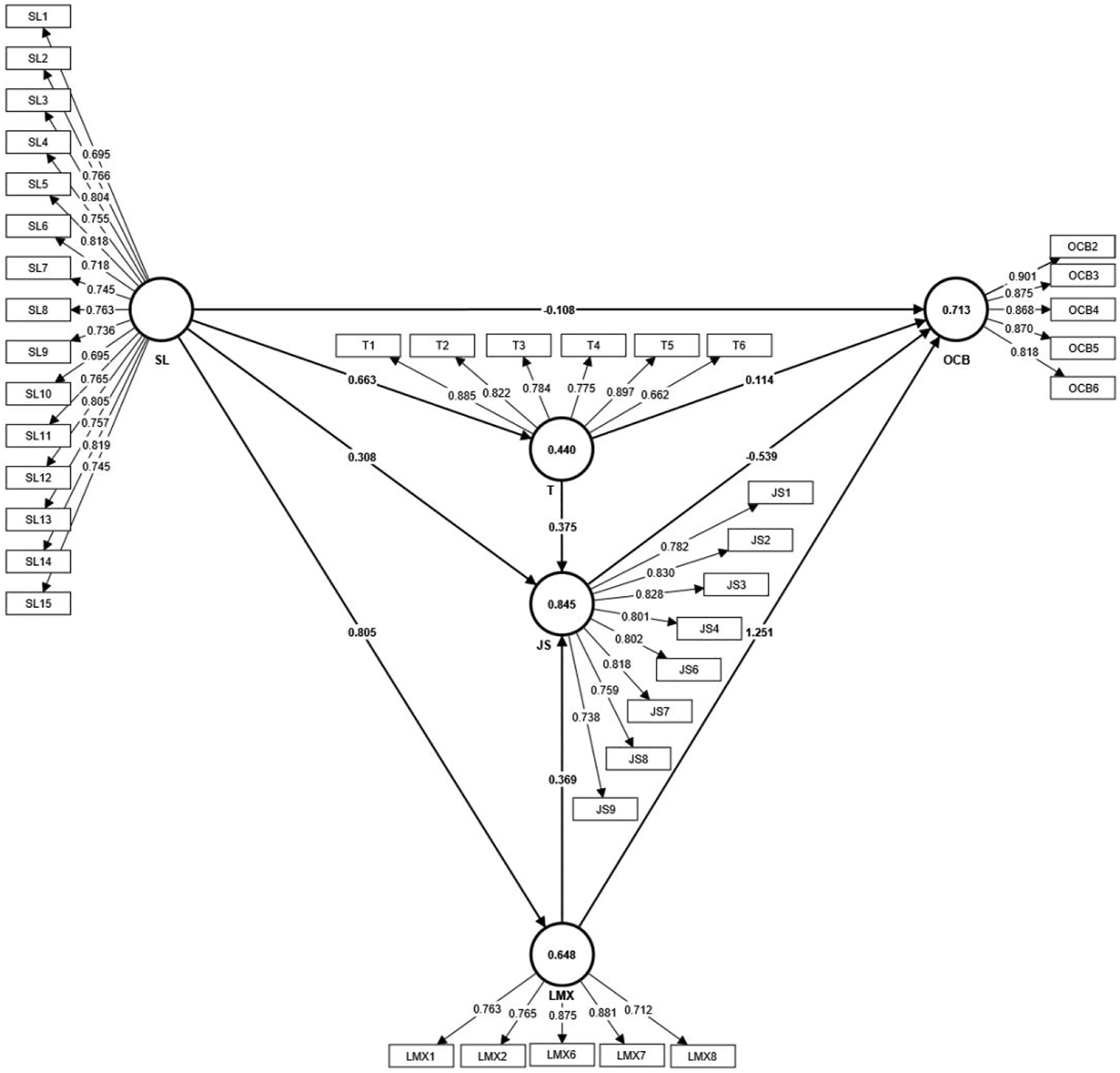
Measurement model (n = 180).
The study assessed the common method bias (bias due to using a single data collection method that may introduce systematic response bias and inflate or deflate the responses) using Harman’s single-factor test. This test used the principal component analysis and was forced to extract only one factor, to assess whether a single factor contributes more than 50% of the total variance. The results showed that the single-factor model accounted for only 44.47%, which means there were no problems with common method bias in this study.
Assessment of structural model
Summary of hypotheses testing.
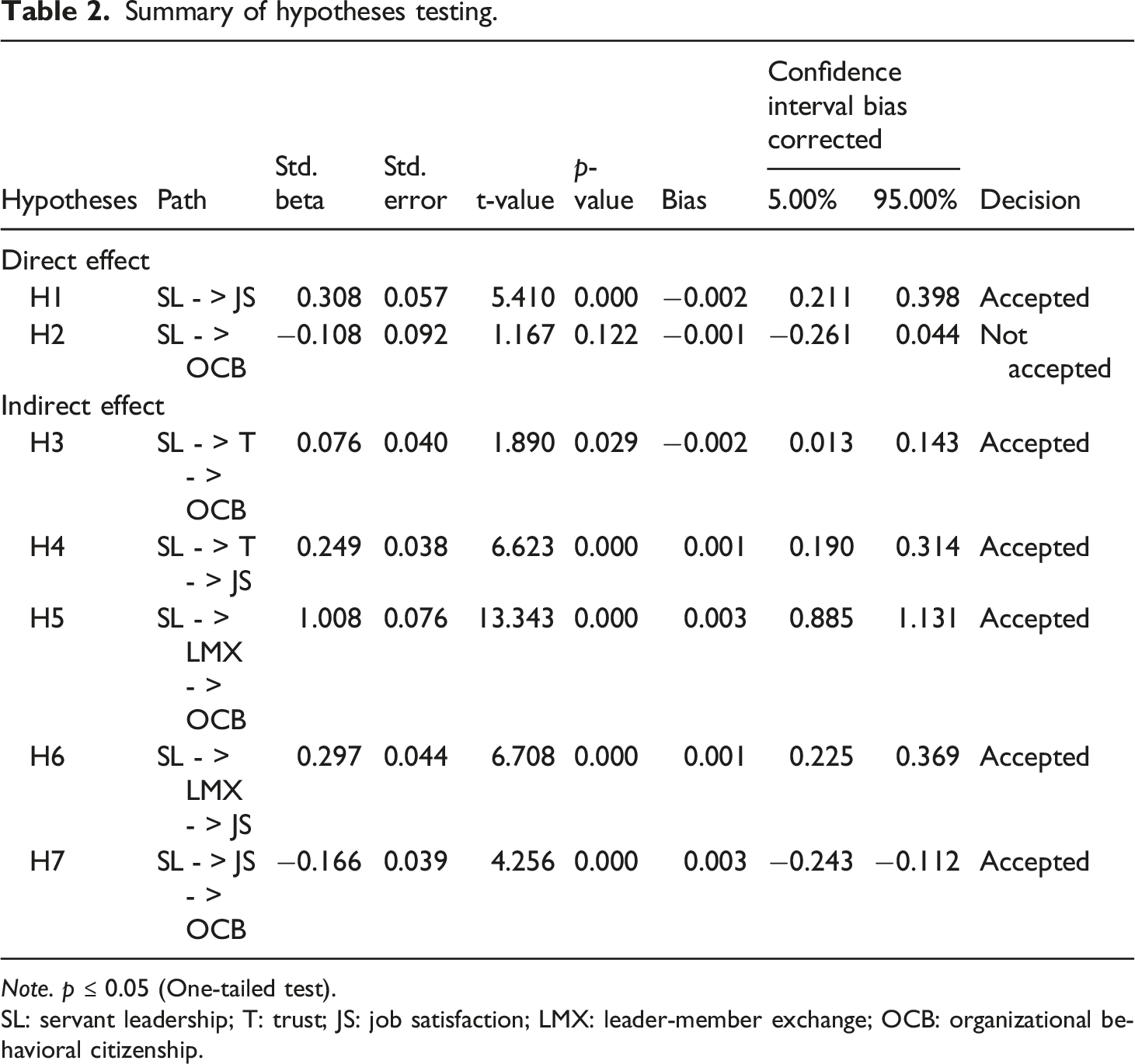
Note. p ≤ 0.05 (One-tailed test).
SL: servant leadership; T: trust; JS: job satisfaction; LMX: leader-member exchange; OCB: organizational behavioral citizenship.
After reporting the direct effect results, the results of the indirect effect are reported. Table 2 shows that the indirect effect of servant leadership on organizational citizenship behavior through trust (β = 0.076, t-value = 1.890, p < .05) and leader-member exchange (β = 1.008, t-value = 13.343, p < .05) are significantly positive, consequently H3 and H5 are not rejected. Meanwhile, the effect of servant leadership on organizational citizenship behavior via job satisfaction (β = −0.166, t-value = 4.256, p < .05) is negative significant; thus, H7 is also not rejected. Lastly, the effect of servant leadership on job satisfaction via trust (β = 0.249, t-value = 6.623, p < .05) and leader-member exchange (β = 0.297, t-value = 6.708, p < .05) is significant and positive. Therefore, H4 and H6 are not rejected.
After establishing the importance of the relationship between the constructs, the study evaluated the model’s predictive accuracy through R2. It can be seen as a combined effect of exogenous variables on endogenous variables. In other words, it represents the amount of variance in the endogenous construct described by all the exogenous variables associated with it. As the rule of thumb stated by Hair et al. (2017), the values of R2 = 0.75, 0.50, and 0.25 reflect the substantial, moderate, and weak contributions of exogenous variables to endogenous variables, respectively. The R2 value of the organizational citizenship behavior is 0.713. Therefore, 71.3% of the variance in organizational citizenship behavior is determined by servant leadership, trust, job satisfaction, and leader-member exchange. The R2 value of job satisfaction is 0.845, or 84.5% of the variants in job satisfaction determined by servant leadership, trust and leader-member exchange. The R2 value of trust is 0.440, or 44% of the variant in trust is determined by servant leadership, and the R2 value of the leader-member exchange is 0.648 or 64.8% of the variant in leader-member exchange is determined by servant leadership.
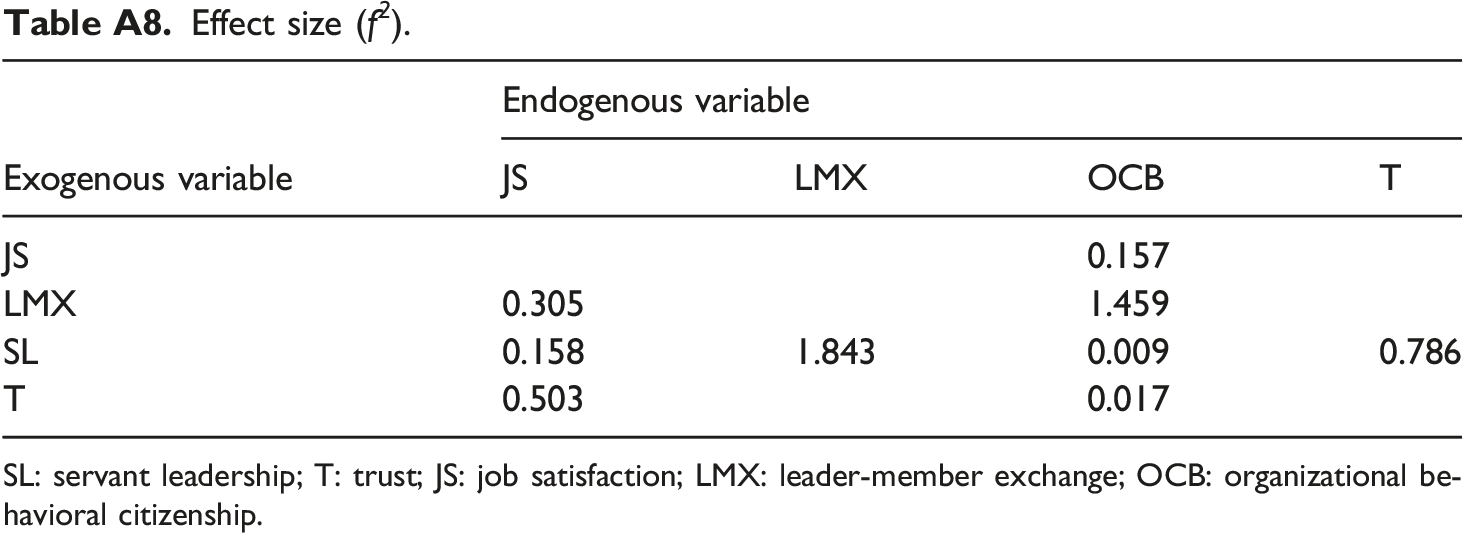
Then, the f 2 effect size is calculated to evaluate the R2 value of all endogenous constructs, the change in the value of R2 when a particular exogenous construct is removed from the model can be used to evaluate whether the omitted construct has a substantive impact on the endogenous construct (Table A8). Cohen (1988) provides guidelines on interpreting f 2 ; the values of 0.02, 0.15, and 0.35 represent small, medium, and large effects, respectively. Servant leadership has a medium effect on job satisfaction (f 2 = 0.158), a large effect on leader-member exchange (f 2 = 1.843), a small effect on organizational citizenship behavior (f 2 = 0.009), a large effect on trust (f 2 = 0.786). In addition, the size of the effect f 2 on the relationship between trust with job satisfaction shows the size of the large effect (f 2 = 0.503) and the small effect on organizational citizenship behavior (f 2 = 0.017). The leader-member exchange has a medium effect on job satisfaction (f 2 = 0.305) and a large effect on organizational citizenship behavior (f 2 = 1.459). Finally, the medium effect was found on job satisfaction and organizational citizenship behavior (f 2 = 0.157).
Discussion
In this study, the main purpose was to examine the effect of servant leadership on organizational citizenship behavior through trust, job satisfaction and leader-member exchange of lecturers at the individual level. Firstly, statistically, these findings suggest that servant leadership has a significant positive effect on job satisfaction and is in line with previous literature (Thompson, 2002; Boone and Makhani, 2012). Empirical research in public and private universities revealed a significant positive impact of leadership style on job satisfaction from faculty, where the servant leadership style was found to have the highest positive significant impact on faculty job satisfaction compared to the leadership style of coaches, human relations specialists, controlling autocrats, transformational visionaries, transactional exchanges, charismatic and entrepreneurial (Alonderiene and Majauskaite, 2016; Purnomo et al., 2021). Secondly, although previous studies confirmed that servant leadership has a positive effect on organizational citizenship behavior (Amir and Amir, 2019; Shafi et al., 2020; McNeff and Irving, 2017; Ng et al., 2008; Neubert et al., 2008; Zhao et al., 2016), this study found that servant leadership had insignificant negative effects on organizational citizenship behavior. The results of this study are in line with the findings of De Waal and Sivro (2012), Sihombing et al. (2018), and Xie (2020). The results of this study show that servant leadership does not have a direct impact on followers and organizations (such as OCBI and OCBO) but through important processes such as trust in leaders (Schaubroeck et al., 2011; Shim et al., 2016; Van Dierendonck, 2011), leader-member exchange (Amah, 2018; Wu et al., 2013), and job satisfaction (Amah, 2018).
Based on the model evaluation results, this study provides evidence of mediating relationships. First, trust mediates servant leadership and organizational citizenship behavior. These findings align with research from Chraim (2016) and Qiu and Dooley (2022). Furthermore, Lu (2014) states that servant leaders who develop quality relationships with their subordinates will induce cognitive and affective trust, resulting in mutual exchange and extra-role behavior. In addition, this study’s results also explain that trust mediation’s effect on servant leadership and organizational citizenship behavior is not only found in the context of public universities in Pakistan (Saleem et al., 2020) but also in private higher education based on the Christian religion in Indonesia. The current findings also contradict previous studies, which stated that the indirect effects of servant leadership on organizational citizenship behavior through trust were not accepted (Shim et al., 2016; Amir and Amir, 2019). Second, the effect of servant leadership on job satisfaction is mediated by trust. These findings are consistent with previous studies (Dirks and Ferrin, 2002; Joseph and Winston, 2005). Chan and Mak (2014) found that trust in leaders mediates the relationship between servant leadership and subordinate job satisfaction. The positive influence of servant leadership on subordinates' trust in leaders increases job satisfaction. This study found the complementary mediation effect of trust on servant leadership and job satisfaction because the direct and indirect effects were significant and positive. Thirdly, this finding provides mediation support from leader-member exchange on servant leadership and organizational citizenship behavior. This study’s results align with previous studies (Wu et al., 2013; Newman et al., 2017).
Regarding this mediation effect, Van Dierendonck (2011) asserts that servant leaders influence followers' extra-role behavior, such as organizational citizenship behavior, by developing high-quality social exchange relationships characterized by reciprocal exchanges of attention and concern. Fourthly, this finding differs from previous research by Akdol and Sebnem Arikboga (2017), which found leader-member exchange as a partial mediator on servant leadership and job satisfaction. The current findings suggest that the type of leader-member exchange mediation on servant leadership and job satisfaction is complementary mediation because the direct and indirect effects are significant and positive. Lastly, indirect-only mediation is found in the role of job satisfaction mediation on servant leadership and organizational citizenship behavior. These findings confirm previous studies (Coetzer et al., 2017; Roza et al., 2021; Ngah et al., 2021).
Theoretical and practical implications
Theoretical implications
This research provides a better understanding of the influence of servant leadership, trust, job satisfaction, and leader-member exchange on the organizational citizenship behavior of Christian higher education lecturers in East Java province, Indonesia. It expands the current understanding of the organizational citizenship behavior literature by testing the predictors of organizational citizenship behavior and identifying the theoretical foundations underlying the growth of organizational citizenship behavior. Based on literature analysis and empirical testing, this study offers several conclusions. First, growth in lecturers' organizational citizenship behavior can occur if there is an increase in servant leadership, trust, job satisfaction, and leader-member exchange. Second, this is the first study in a Christian college to examine the influence of servant leadership on organizational citizenship behavior with PLS-SEM analysis. The study contributes to the literature by providing a more comprehensive understanding of the mediating role of trust, job satisfaction and leader-member exchange in the effect of servant leadership on organizational citizenship behavior. The rector/chairman’s servant leadership style influences the growth of lecturers' organizational citizenship behavior through increased trust, job satisfaction, and leader-member exchange. Third, servant leadership can change the work environment and strengthen the motivation and capacity of lecturers to demonstrate organizational citizenship behavior through important processes such as trust in leaders, job satisfaction and leader-member exchange.
In developing the research framework, this study simultaneously combines three different theories: social exchange theory, leader-member exchange theory, and norm of reciprocity. Social exchange theory can explain the mediating role of trust, job satisfaction and leader-member exchange. First, in servant leadership, the process of interaction and exchange (explicit or implicit) between the servant leader and subordinates is the center of the relationship, which is the process of serving the followers. The leader engages in a high level of interaction with them and therefore will affect the level of trust, satisfaction and leader-member exchange. Social exchange theory needs to be supported by two other theories, namely, the norm of reciprocity and leader-member exchange. Lecturers who receive resources from the rector/chairman will reciprocate by developing a high leader-member exchange relationship with their rector/chairman who provides the resources and is willing to enact discretionary efforts in a high organizational citizenship behavior manner and will also be satisfied with their work. Second, leader-member exchange theory states that high-quality leader-member exchange relationships are found to, in turn, correlate with desired outcomes such as job satisfaction, commitment, high performance, innovative behavior, and organizational citizenship behavior on the part of lecturers. The servant leader (rector/chairman) will empower lecturers, support, encourage, and facilitate the growth and development of lecturers. In addition, leader-member exchange theory asserts that servant leaders (rectors/chairman) will help lecturers grow and succeed by showing genuine interest in their career development and allowing lecturers to improve their skills.
This study confirms previous studies' results that servant leadership and organizational citizenship behavior can be applied in Indonesian culture, which emphasizes the character of sociability, maintaining friendship, holding high power distances, collectivism, low uncertainty avoidance, and short-term orientation. In other words, power distance, short-term orientation culture, and paternalism are not found to be obstacles to leadership and organizational citizenship behavior practices in Christian higher education in Indonesia.
Practical implications
Current studies offer practical implications for Christian higher education to promote servant leadership, trust, job satisfaction, leader-member exchange, and organizational citizenship behavior, similarly, in terms of training future leaders who can implement servant leadership styles so that their skills in building trust, job satisfaction, leader-member exchange and organizational citizenship behavior among lecturers need special attention. Our findings suggest that leadership strategies are appropriate if the Christian higher education institution focuses on improving servant leadership and organizational citizenship behavior through increased trust, job satisfaction, and member-leader exchanges.
Since certain aspects of the servant leadership style can be learned and adjusted, a training program to improve the rector/chairman’s servant leadership skills is likely to be a good investment. Christian colleges may also consider hiring servant leaders with characteristics of honesty and a need to serve. Furthermore, Christian universities should facilitate a humane orientation that supports servant leadership by recognizing the need to pay attention to lecturers and rewarding lecturers for being altruistic and respectful to improve organizational citizenship behavior through trust in leaders, job satisfaction and leader-member exchange. Christian colleges can also reduce the distance of power by decentralizing decision-making.
The rector/chairman could also design a coaching program for lecturers to increase job satisfaction, trust, leader-member exchange and organizational citizenship behavior. This is in line with one of the characteristics of servant leadership that the servant leadership style emphasizes empowerment, encouraging followers to perform at their highest potential and allowing lecturers to make the most of their abilities freely.
Conclusion
Current studies identify the outcomes of servant leadership in Indonesian Christian higher education and establish direct and indirect effects. Trust, job satisfaction, and leader-member exchange in this study were placed as mediation, which aimed to discover more about servant leadership’s indirect effects on organizational citizenship behavior and job satisfaction. These findings reveal that servant leadership is not important as a direct factor in the organizational citizenship behavior of Indonesian Christian higher education lecturers. Servant leadership can only influence the organizational citizenship behavior of lecturers when attention is also placed on fostering trust, job satisfaction and leader-member exchange, because of their mediating roles. Servant leadership is a leadership style suitable for the rector/chairman of Christian higher education because it has a direct effect on job satisfaction and has an indirect effect on organizational citizenship behavior through trust, job satisfaction, and leader-member exchange. In addition, trust and leader-member exchange mediate servant leadership and job satisfaction. Based on these findings, the servant leader (rector/chairman) of Christian higher education needs to improve leader-member exchange, trust, and job satisfaction to improve the organizational citizenship behavior of lecturers and increase trust and leader-member exchange so that job satisfaction increases, which will have an impact on the organizational citizenship behavior of Christian higher education lecturers in Indonesia.
This research investigates areas that research academics in Christian higher education have overlooked. No such research has been conducted in Christian universities, particularly in East Java province. This study can be helpful in creating a framework for lecturers aiming to become future educational leaders. Based on this research, appropriate programs can be designed to demonstrate the practical implications of implementing increased servant leadership, trust, job satisfaction, leader-member exchange and the growth of organizational citizenship behavior of lecturers in Christian higher education.
Limitations and future research
Similar to previous studies, this study has some limitations that need to be considered in future research. First, only one leadership style was tested in this study. Therefore, future research needs to consider using other leadership styles (transformational, transactional, entrepreneurial, charismatic, e-leadership, ethical, and authentic leadership) to make comparisons. Second, demographic data in this study was not considered in the analysis. Future research could use some demographic data as moderator variables. Third, data collection is only taken from the individual level. We propose that the data be taken from both the individual and organizational levels. Fourth, this study only uses three theories, including social exchange theory, norm of reciprocity, and leader-member exchange theory. Future research could use situational strength theory and conservation of resources theory. Fifth, the participating respondents from 26 Christian colleges had different numbers. Of course, this will affect the results of data analysis of the influence between variables both directly and indirectly. Therefore, future research needs to consider involving a balanced number of respondents if the goal is to understand whether the results generalize to specific institutions. Sixth, this study could not establish causality. Future research must examine the causal relationship between servant leadership and trust, job satisfaction, leader-member exchange and organizational citizenship to obtain more comprehensive and holistic research results.
Footnotes
Declaration of conflicting interests
The author(s) declared no potential conflicts of interest with respect to the research, authorship, and/or publication of this article.
Funding
The author(s) received no financial support for the research, authorship, and/or publication of this article.

Appendix
Effect size (f 2 ).
| Exogenous variable | Endogenous variable | |||
|---|---|---|---|---|
| JS | LMX | OCB | T | |
| JS | 0.157 | |||
| LMX | 0.305 | 1.459 | ||
| SL | 0.158 | 1.843 | 0.009 | 0.786 |
| T | 0.503 | 0.017 | ||
SL: servant leadership; T: trust; JS: job satisfaction; LMX: leader-member exchange; OCB: organizational behavioral citizenship.