




Abstract
Rumors spread on social media overshadow the truth and trigger public panic. One effective countermeasure to address this issue is online rumor-combating. However, its effectiveness on social media has not been fully verified. In this study, drawing on construal level theory, we use temporal distance—the time interval between a rumor-combating post being released and receiving responses from social media users—to measure the effectiveness of rumor-combating. We also adopt elaboration likelihood model to explore the factors that could enhance this effectiveness. The empirical results show that perceptible (central route) factors, including the author’s authoritative combating methods, media richness, and positive emotions, are negatively related to temporal distance and are more effective for enhancing rumor-combating effectiveness than imperceptible (peripheral route) factors, such as the author’s influence and activeness. In addition, media richness exerts positive moderating effects on the relationship between perceptible route factors and rumor-combating effectiveness, implying that with the help of images or videos, rumor-combating effectiveness improves. This study addresses the need to enhance the effectiveness of rumor-combating and has practical implications for combating rumors in the social media.
Keywords
Introduction
Social media has become a major channel for people to exchange information in today’s digital age (Chen et al., 2022). The rise of social media platforms, such as Facebook, Twitter, Instagram, and Sina Weibo, has led to billions of users sharing and consuming information daily. Through sharing articles, posting status updates, or engaging in discussions, social media provides a platform for users to exchange information in real time with a global audience (Kent & Taylor, 2021). However, the ability to use social media anywhere at any time provides a rich substrate for rumor spreading. Some scholars have used the term “infodemic” to refer to the spread of rumors on social media (Guo et al., 2020), and they have highlighted the need to take action to counter the spread of rumors and to prevent their potential risks and adverse effects.
In practice, blocking rumors and spreading the truth are the main means of combating rumors (Shrivastava et al., 2020). The latter tends to be relatively more effective than the former due to the increasing difficulty of blocking rumors due to the openness of social media. As Y. Zhang et al. (2022) pointed out, any method of rumor-combating may lead to a backfire effect since when a rumor goes against individuals’ existing beliefs or assumptions, they may refute it or dismiss it entirely, even in the face of credible evidence. This can lead to rumor spreading and make it difficult to correct or dispel false beliefs. Accordingly, scholars have focused on enhancing the effectiveness of rumor-combating and have quantitatively explored the effectiveness through shares, comments, and likes on social media (Li et al., 2021b; Wang et al., 2022). However, measures of rumor-combating effectiveness have often overlooked the impact of time-related factors. For example, if a rumor-refutation post is forwarded and commented on by social media users long after it was released, the rumor may have already spread widely, thereby disseminating the negative impact of the rumor. In this case, the rumor-combating post may not be effective. In addition, many scholars have focused on factors that affect the spread of rumors on social media, including the emotional appeal (Zhou et al., 2021a), novelty, or unexpectedness of the rumor (Aditya & Darke, 2020), the level of uncertainty or ambiguity in the rumor (Duffy & Tan, 2022), and the social influence of individuals who share the rumor (Hosni et al., 2020). However, few studies have focused on enhancing social media rumor-combating effectiveness. Understanding the factors that influence the effectiveness of rumor-combating can inform the development of more targeted and persuasive communication strategies for rumor rebuttals.
Thus, this study addresses two research gaps: (1) the effectiveness of rumor-combating has mostly been measured based on the number of forwards, comments, and likes (Li et al., 2021b; Zhao et al., 2016), and there is a lack of new (especially temporal perspective) measurement indicators and (2) various factors have been studied in relation to the spread of rumors (Ozturk et al., 2015), while our study focuses on the factors that can enhance the effectiveness of rumor-combating on social media. To address the first research gap, drawing on construal level theory (CLT), we propose temporal distance (the time interval between a rumor-combating post being released and receiving responses from users on social media) to measure rumor-combating effectiveness. Regarding the second research gap, we applied an elaboration likelihood model (ELM) to organize the factors that enhance rumor-combating effectiveness via central and peripheral routes. A rumor-combating post on social media cannot comprehensively cover all details. Taking Sina Weibo in China as an example, some information can be viewed directly by users, such as the content of a post, the number of reposts, comments, and likes already associated with the post (see Figure 1). However, the post author’s profile cannot be directly observed by users since it must be obtained from the post author’s home page (see Figure 2).

Example of a rumor-combating post (perceptible factors or central route).

Example of a rumor-combating post author’s home page (imperceptible factors or peripheral route).
Drawing on this information process, we argue that social media users may follow either a central or peripheral route (via perceptible and imperceptible factors, respectively) to enhance rumor-combating effectiveness, but the peripheral route may be less effective for combating rumors. In the social media context, ELM has been widely used to explain users’ decision-making processes (Li et al., 2021a; Liao & Huang, 2021). In this study, we defined perceptible factors as the information that can be directly viewed by social media users in rumor-refutation posts (as shown in Figure 1), and we defined imperceptible factors as the information that social media users cannot directly obtain from posts, except with additional effort, such as information about the post authors that can only be acquired from their home pages (as shown in Figure 2). Social media users may not give equal weight to these factors and may focus more on perceptible than imperceptible factors. This inconsistency provides the authors of rumor-combating posts on social media platforms with ideas for enhancing rumor-combating effectiveness. Figure 3 presents our research focus in comparison with the existing literature.

Position of this study relative to the existing literature on rumor-combating effectiveness.
Theoretical Background
Rumor-Combating on Social Media
A rumor is commonly defined as a statement that lacks truthful information (Zhou et al., 2021a), but rumors are an inevitable part of online and offline social communication. As previous studies have shown, word-of-mouth dissemination, high ambiguity, and emotional need are the three main characteristics of rumors (Agarwal et al., 2022). On one hand, the free features of social media provide a channel for rumors to be propagated (Wang et al., 2022). On the other hand, social media can be a powerful tool for combating rumors (Zhao et al., 2016). The existing literature has indicated that rumor spreading may not always worsen and can potentially be controlled or countered via social media (Zhao et al., 2016). Accordingly, rumor-combating refers to individuals and organizations’ information dissemination behavior to contradict or correct misinformation, aimed at controlling the spread of rumors and correcting people’s misperceptions (Tanaka & Hirayama, 2019).
To date, the determinants of users’ rumor-combating behavior on social media have been extensively studied. For example, Wang et al. (2022) investigated the influence of social media users’ rumor-combatting behavior on not-in-my-backyard conflict based on situational crisis communication theory. Furthermore, prior research has been devoted to developing rumor-combating models to improve the effectiveness of rumor-refutation on social media (Xiang et al., 2023). These studies have provided new insights into the potential of social media for combating rumors. However, few researchers have paid attention to the consequences of fighting rumors (i.e., the effectiveness of rumor-combating). Although some researchers have evaluated the effectiveness of rumor-refutation based on the number of forwards, comments, and likes (Y. Zhang et al., 2022), their evaluations have not considered the timeliness of users’ responses. For instance, the number of forwards, comments, and likes cannot fully reflect the effectiveness of rumor-refutation methods, especially since users’ forwards, comments, or likes may occur long after a post’s release and indicate inadequate or ineffective refutation. Besides the limited attention span of social media users, other factors may influence rumor-combating effectiveness. For example, if an influential author publishes a rumor-combating post on social media. It is likely to be widely disseminated by others. However, social media users may not conduct fact-checking, news verification, and misinformation debunking (Himma-Kadakas & Ojamets, 2022) regarding the rumor-combating post because rumors generally undermine social trust (Chen et al., 2021; Paek & Hove, 2019). Instead, users are likely to give feedback (e.g., via forwards, comments, and likes) regarding the rumor-combating post to enhance the overall effectiveness of rumor-combating. Therefore, it is necessary to further investigate other measures and reorganize the factors that enhance rumor-combating effectiveness.
Temporal Distance
CLT holds that different levels of psychological distance influence how people construe objects or events and the factors they consider when making decisions (Trope & Liberman, 2010). Temporal distance is a critical concept in CLT (Liberman & Förster, 2009). It refers to a subjective perception of how far away in time an event or decision seems to be. Specifically, events that are considered as distant in time are thought about in more abstract and conceptual ways, while events that are considered as near in time are thought about in more concrete and detailed ways (Trope & Liberman, 2010). Accordingly, temporal distance can be a useful construct for measuring the effectiveness of various strategies and interventions (Rim et al., 2009). For example, in marketing and advertising, understanding the temporal distance of a promotional campaign can help marketers optimize their messaging and timing to maximize its impact (Loebnitz et al., 2022). By considering how consumers perceive the timing of a promotion or product launch, marketers can adjust their strategies to align with the consumer mindset and increase the effectiveness of the promotion.
In this study, temporal distance refers to the time delay between a rumor-combating post first published on social media and users responding to it. This delay can impact the effectiveness of rumor-combating, since a longer temporal distance can allow the rumor to spread further and potentially be more widely believed before the correction reaches a significant audience. This may lead to rumor-combating posts on social media being less effective due to users’ responses being temporally far from the posts’ releases (Zhao et al., 2016). Accordingly, the traditional perspective on temporal distance needs to be changed, and we argue that users may place a higher value on rumor-combating information on social media that is relevant to the present rather than the future. In fact, some researchers have shown that the greater the temporal distance to an outcome, the smaller the considered value of that outcome (Laran, 2010). Temporal distance has an immediacy effect; that is, users are rather impatient regarding the future benefits of rumor-combating posts on social media because they seek immediate gratification. Hence, by properly determining the temporal distance between a release on social media and users’ responses, the shortcomings of rumor-combating effectiveness can be evaluated.
Elaboration Likelihood Model of Persuasion
Rumor-combating on social media can be defined as a stimulus-based decision-making process. As shown in Figures 1 and 2, stimuli can be divided into two subdimensions—perceptible and imperceptible—from social media user perspective. A rumor-combating post on social media aims to stop the spread of a rumor and decrease uncertainty in a way that effectively persuades people to critically evaluate the information they encounter (Wu et al., 2023). This may involve a persuasive endeavor to address public concerns or doubts and to leverage persuasive communication strategies (Z. Tang et al., 2022). Accordingly, ELMs are well suited for evaluating the persuasion processes underpinning rumor-combating.
ELM is first developed to understand attitude formation during persuasion processes. In the ELM, there are two distinct routes to persuasion: a central route and a peripheral route (Petty & Cacioppo, 1986). Specifically, the central route involves individuals critically evaluating the information that is directly presented to them (Moradi & Zihagh, 2022). They carefully process and analyze the content of the information, considering its merits and implications. Persuasion through the central route is based on the strength and quality of the arguments presented in the information (Bao & Wang, 2021). The peripheral route, in contrast, involves individuals being influenced by superficial factors or factors that cannot be directly received, such as the author’s attractiveness or influence (Shi et al., 2018). Instead of requiring cognitive effort, peripheral processing requires only that individuals consider obvious cues that allow them to make quick decisions (Zhou et al., 2016). Persuasion through the peripheral route relies on indirect or imperceptible cues (Cheng et al., 2024). The ELM has been extensively applied to social media to evaluate users’ decision-making and has proven effective in various persuasive contexts, such as marketing, online gaming, and information technology acceptance (Li et al., 2021a; Liao & Huang, 2021). However, few researchers have attempted to use the ELM in the rumor-combating context.
On social media, when users view a rumor-combating post (see Figure 1), interaction with the post (e.g., via reposting, commenting, and liking) occurs through factors that can be received directly, such as the authentication status of the post’s author, combating methods, multimedia content, and sentiments. Other factors (e.g., the number of followers, number of posts released, and social media platform level) related to the post author’s detailed profile may influence users’ decisions less because they are not directly received; users must make additional efforts to obtain that information by clicking on the author’s home page (see Figure 2). Using the ELM, we thus argue that perceptible information is likely to be processed via the central route because individuals are consciously aware of the content and can critically evaluate it. When information is visible, clear, and easily understandable, individuals are more inclined to engage in deep processing and consider the persuasive arguments presented. This may lead to more thoughtful evaluations of the information and a greater likelihood of attitudinal or behavioral change. In contrast, imperceptible information may be processed via the peripheral route because individuals may not consciously notice or pay attention to the information (Giakoumaki & Krepapa, 2020). This may lead to more automatic and superficial processing of the information, which is potentially influenced by peripheral factors rather than the core information itself (Singh et al., 2023). Based on this information processing pattern, social media users may pay more attention to information that they perceive directly from the rumor-combating post and be less likely to consider information acquired from the post author’s home page; they may also ignore information that they perceive indirectly from the post. Therefore, we propose that two types of factors influence the persuasive process of rumor-combating for social media users: perceptible factors (directly received in rumor-combating information) and imperceptible factors (indirectly received in rumor-combating information). We map these factors to the central and peripheral routes, respectively.
Hypotheses Development
Perceptible Factors as the Central Route
Based on the above discussion, this study theorizes combating methods and media richness into perceptible factors. Social media users require more cognitive effort to evaluate these factors critically; thus, we mapped them to the central route.
In general, there are three main rumor-combating methods: direct rumor-combating, indirect rumor-combating, and joint rumor-combating (Wang et al., 2022). As their names suggest, the first method involves directly combating, denying, and/or attacking the rumor content. This can be done through public statements, fact-checking websites, or social media posts (Shrivastava et al., 2020). Indirect rumor-combating involves diminishing the negative impact of the rumor by stating the truth or changing the context surrounding the rumor. This can be done by promoting positive stories, highlighting the credibility of sources, and focusing on the truth without giving unnecessary attention to the rumor itself, which means strategically addressing the misinformation without amplifying it further (Li et al., 2021b). The last method employs both direct and indirect rumor-combating methods. In practice, different rumor-combating methods may induce positive effects. Xiao et al. (2018) indicated that, during an initial rumor crisis, refuting rumors directly through sarcasm and denial may convince people that an organization or institution is confident and capable of fighting rumors. By indirectly engaging with the rumor, individuals and organizations can prevent it from spreading further while still effectively addressing and refuting it. The indirect rumor-combating method helps protect the credibility of the true information and reduces the risk of unintentionally giving the rumor greater exposure (J. Li & Chang, 2023). This method can help redirect the conversation toward accurate information and prevent the rumor from gaining traction. The joint rumor-combating method involves sharing resources, coordinating messaging, and amplifying efforts to combat rumors through various channels. By combining direct and indirect rumor-combating methods, a joint effort may be more effective in addressing and dispelling rumors (Wang et al., 2022). Hence, we developed the following hypothesis:
Previous studies have indicated that emotions determine users’ willingness to share information on social media (Wang et al., 2017; Yin et al., 2020). The emotional valance of a message is helpful for magnifying the vividness of the message (Li et al., 2021a) and promoting user engagement by drawing emotions into information to attract others’ attention and build relationships (Ji et al., 2019). Existing literature has shown that combating rumors can be a challenging and emotionally charged process (Wu et al., 2023). Rumors are often associated with negativity because they can spread false information, cause misunderstandings, harm credibility, and create unnecessary fear or anxiety (Pal et al., 2020). Research has suggested that positive emotions have the power to mitigate the impact of negative emotions (Barclay & Kiefer, 2014). However, positive emotions can shift individuals’ mindsets and perspectives, making it easier for them to cope with negative emotions (Allard et al., 2020). Some studies have also indicated that social media users prefer to share posts with positive emotions (X. Tang et al., 2019; Xu & Zhang, 2018). In general, rumor-combating on social media typically has positive connotations because it aims to slow and stop the spread of rumors as soon as possible and minimize their negative impacts. Hence, we formulated the following hypothesis:
Media richness is an aspect of communication theory used to examine the effectiveness of different communication channels in conveying information (Suh, 1999). The richness of a communication medium influences how well it conveys complex and ambiguous messages (Maity et al., 2018). Social media channels vary in terms of media richness, with plain text cues considered to have low media richness and images and videos considered to have high media richness (Zhou et al., 2021b). Plain text cannot convey nonverbal cues and capture attention (Hasyim & Arafah, 2023), but images and videos can convey a wealth of information through visual and auditory elements and present complex messages in more engaging and impactful ways. Thus, individuals and organizations often use images or videos in their social media communication strategies to enhance media richness and to create more engaging and compelling content for their audiences (Costa-Sánchez & Guerrero-Pico, 2020).
In this study, media richness refers to the formation of rumor-combating information. Due to word limits, social media users often prefer to post additional content using images or videos (Lee & Xu, 2018). High media richness means lower uncertainty and tends to be more helpful for decision-making (Zhou et al., 2021a). Guidry et al. (2020) showed that multimedia content is most likely to attract individuals’ attention. Researchers have also examined the positive relationship between multimedia content and social media users’ engagement. For example, Shi et al. (2018) analyzed 1,479,310 tweets on Twitter and found that tweets with pictures were the most popular, while plain text tweets had no effect on the number of reposts received. Videos were also observed to increase reposts (Lee & Xu, 2018). Compared with plain text, tweets with multimedia content are considered to have high information quality and to be more useful for individuals (Yan & Huang, 2014). However, the effect of media richness on rumor-combating effectiveness remains debated. An item of rumor-combating information with high levels of media richness is vivid and straightforward and provides more detailed and nuanced information for combating rumors. Thus, it increases the credibility of the information and makes it more persuasive for the information recipients. Thus, we hypothesized the following:
In addition, a rich communication medium that includes, for example, images or video conferencing, is generally more effective for conveying complex and ambiguous messages than a lean communication medium, such as a text message (Yang et al., 2020). Media richness can enhance understanding, improve feedback, and facilitate more meaningful interactions among people (John & De’Villiers, 2020). Accordingly, media richness plays an important role in enhancing communication efficiency. Prior studies have noted the moderating role of media richness in the relationship between content-related factors and user behavior on social media. For example, Zhou et al. (2021b) analyzed 9,631 rumors about COVID-19 and found that rumor content that included images or videos received more reposts. In this study, rich media is assumed to evoke emotional responses and effectively engage social media users, making them likely to pay attention to and remember the rumor-combating message being presented. When the author of a rumor-combating post is considered as authoritative and credible, leveraging media richness can further strengthen the impact of the message on combating the rumor. Similarly, the effectiveness of combating methods can be enhanced by media richness. For example, using images, videos, and interactive content to demonstrate the falsehood of a rumor can have a more profound impact on recipients than text-based explanations alone. Emotions also play a crucial role in rumor-combating effectiveness, and media richness can help amplify the emotional impact of rumor-combating messages. By incorporating elements such as compelling visuals, music, or personal narratives, the communication can evoke stronger emotional responses in the recipients, making the message more memorable and persuasive in dispelling rumors. Hence, we hypothesized the following:
Imperceptible Factors as the Peripheral Route
Following the perceptible factors, authoritativeness, activeness, and influence of the author of rumor-combating information and positive emotions are summarized as imperceptible factors. Social media users require less cognitive effort to evaluate these factors critically; thus, we mapped them to the peripheral route.
Authoritativeness refers to an author’s perceived credibility and trustworthiness based on expertise, qualifications, and recognition in a given field (Oro et al., 2017). The author may have received formal recognition, such as awards, certifications, or scholarly publications, which bolster their authoritative status. For example, a medical professional shares health-related information on social media. Authority helps individuals assess whether the information presented is reliable and worth considering (Ray, 2019). Previous research has indicated that an authoritative presence on social media is essential for building strong relationships and connecting with others (Hashmi et al., 2020). In this study, the author’s authoritativeness is defined as the extent to which social media users perceive the source of rumor-combating information to be trustworthy. On social media, all users are allowed to almost freely post information without using their real names as their usernames. Thus, it is difficult for information recipients to determine the authoritativeness of rumor-combating posts when deciding whether to interact with the information. Social media platforms provide various authentication mechanisms to improve the reputation and trustworthiness of information sources. As shown in Figure 2, Sina Weibo uses a blue “V” badge as an authentication mechanism to show that authors’ authenticity has been verified. This is similar to the blue checkmark on Twitter and Instagram (Dumas & Stough, 2022). Authors with the blue “V” badge are typically celebrities, influencers, or other public figures who have been verified by Sina Weibo to ensure that they are who they claim to be. This badge promotes trust in the eyes of social media users and helps distinguish between authentic and imposter accounts (Maragkou et al., 2019). Some researchers have claimed that the good reputations of information sources help increase the authority of messages on social media (Shi et al., 2018). In addition, individuals are likely to accept and interact with the information and arguments that come from a trustworthy source on social media ((Li, Zhou, et al., 2021; Y. Zhang et al., 2022). Therefore, we hypothesized the following:
Differs to author’s authoritativeness, an author’s influence is defined as the extent to which an individual is welcomed by others on social media (Shi et al., 2018). The more fans an author has, the more influence the author has. Previous studies have shown that a message released by an author with great influence is considered as more credible than a message released by an author with weaker influence (Li et al., 2021a; Zareie et al., 2019). Using data collected from Twitter, Cha et al. (2012) found that tweets posted by authors with large numbers of followers received more reposts than those with few followers. Liu et al. (2012) also showed that an author’s influence has a significant positive effect on the responsibility of a message on social media. Researchers have typically viewed the author’s influence as a peripheral route (Shi et al., 2018). Following the same logic, the author’s influence may positively affect the effectiveness of rumor-combating; that is, stronger influence decreases temporal distance. Therefore, we hypothesized the following:
The author’s activeness refers to the extent to which the author is active on social media. In practice, an author needs to maintain relationships with his or her followers by releasing posts in a timely and regular manner (Li et al., 2021a). More frequent posting behavior means higher activeness. Some studies have suggested that an author’s activeness impacts his or her online reputation (Sinha et al., 2013). Therefore, we assumed that an author’s activeness would decrease the temporal distance in the same way as the author’s influence. Hence, we hypothesized the following:
Based on the preceding arguments, we developed our research model (see Figure 4). We subdivide the perceptible factors into four categories: author’s authoritativeness, combating methods, media richness, and positive emotions. The imperceptible factors are subdivided into two categories: the author’s influence and his or her activeness. We group these factors according to the central and peripheral routes and their influence on rumor-combating effectiveness. In our study, we use temporal distance as a measure of the effectiveness of rumor-combating. Thus, we assume that the perceptible and imperceptible factors would be positively related to rumor-combating effectiveness; in other words, these factors would reduce the temporal distance between the release and reposts of or comments on rumor-combating posts on social media.

Research model.
Methodology
Pilot Survey
Based on the social media user’s information processing patterns, we categorized the factors influencing the effectiveness of rumor-combating into two types: perceptible and imperceptible. Then, we mapped them to the central and peripheral routes. To validate the effectiveness of the operationalization, a survey was conducted. We selected Sina Weibo—a leading social media platform in China—as our research setting. Weibo Piyao is a special section on Sina Weibo dedicated to combating rumors and misinformation. It features posts that aim to combat false information and provide users with verified and reliable information on various topics. This section is a valuable resource for users to access accurate information and combat the spread of rumors on social media. Thus, many studies on rumor-combating have used Sina Weibo as their research setting (Wang et al., 2022; Y. Zhang et al., 2022). Ten rumor-combating posts from Weibo Piyao were randomly selected. We sent private messages to users who shared or commented on each post, inviting them to participate in an online survey. In the end, 873 users agreed to participate in the survey.
The survey comprised two rounds. In the first round, each participant was asked to evaluate whether the features of a rumor-combating post or the post’s author were more important. As shown in Figure 5, 764 participants reported being more focused on the rumor-combating post itself. Furthermore, we inquired about the reasons, and 541 participants reported that the rumor-combating posts were more intuitively presented, while the author’s information was not directly accessible. The results of the first survey round supported the perceptible and imperceptible factors proposed in our study.
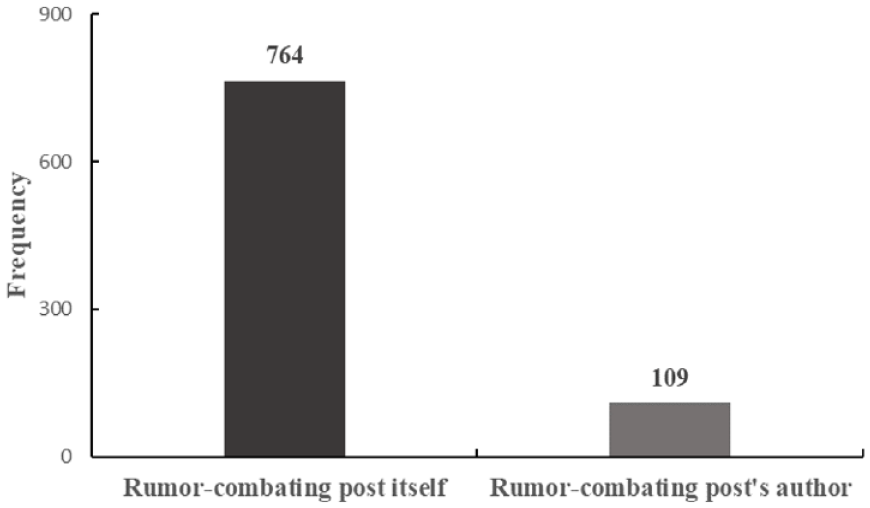
Distribution of social media users’ focus.
In the second round, we explained the above six factors proposed in this study to the participants and asked them to evaluate which factors required them to exert more cognitive effort. As shown in Figure 6, most participants reported that combating methods, media richness, and emotions required more cognitive effort. The results of the second survey round confirmed the feasibility of linking both the perceptible and imperceptible factors to the central and peripheral routes in ELM.

Distribution of social media users’ cognitive effort.
Empirical Data Collection
In this study, we developed a Python web crawler to automatically acquire rumor-combating posts published in Sina Weibo’s rumor-combatting section. To avoid violating Sina Weibo’s data collection terms, we collected only publicly available data that anyone could access. We used the BeautifulSoup library to parse the HTML content of the site and identify the specific elements that contained rumor-combating posts (as shown in Figures 1 and 2). Finally, we collected 13,211 posts, including the post content, release timestamp, repost or comment timestamp, number of reposts/comments/likes, authentication status, and multimedia content. In addition, we collected the rumor-combating post authors’ information from their home pages.
Variable Operationalization
Dependent Variable
Temporal Distance
We used temporal distance to measure rumor-combating effectiveness (i.e., the time interval distance between a rumor-combating post being released and reposted or commented on for the first time). On the Sina Weibo platform, reposting and commenting behavior are independent; the timestamp of a comment may be earlier than the timestamp of a repost (and vice versa). Thus, we measured the temporal distance as the interval in hours between the timestamp of a rumor-combating post being released by an author and the timestamp of the post being reposted or commented by other users for the first time. For robustness checking, we used the average difference in hours between all reposts and comments.
Independent Variables
Combating Methods
As mentioned previously, there are three rumor-combating methods. Any rumor-combating post can be based on only one method. To determine which rumor-combating method was used, three research assistants with experience in rumor-combating on social media were invited to code the posts. Following the procedures suggested by prior research (Zhou et al., 2021b), we conducted three rounds of manual labeling. In the first round, we divided the posts into three equal parts and randomly assigned them to the three assistants. Then, drawing on the definitions of the rumor-combating methods, the assistants independently coded the rumor-combating posts. After the coding is completed, the kappa statistic (Cohen, 1960) was used to verify the reliability of the rumor-combating classification method. The average values for the three rumor-combating methods were .803, .794, and .752. In the second round, assistants are assigned to different rumor-combating datasets than those used in the first round. The kappa values were .765, .793, and .721, meeting the suggested threshold (Cohen, 1960). In the third round, the assistants were assigned to different datasets from those used in the first and second rounds. The kappa values were .817, .775, and .748, respectively. These results shown that the coding of rumor-combating methods is reliable and meet the suggested threshold (Cohen, 1960). Drawing on the three research assistants’ coding results, we used a threefold (direct, indirect, and combined) categorization to reflect a rumor-combating post’s refuting method. For example, if a rumor-combating post employed a direct method, we assigned a threefold classification to the post’s combating method (1, 0, 0).
Media Richness
Using the method recommended by prior researchers (Chen et al., 2020; Ji et al., 2019; Zhou et al., 2021aa), we divided a rumor-combating post’s media richness into three levels (text-only, text + images, and text + video) based on the presentation format of the post. The media richness, from low to high, was coded as 1, 2, or 3, respectively.
Positive Emotions
With the help of an automated sentiment analysis technique (Baidu NLP; Baidu, 2019)—a popular Chinese text analysis technique that has been used by other researchers (Li et al., 2021a)—we converted the emotions in each rumor-refutation post into values of 0–1. If the value is greater than .5, the post was regarded as containing positive emotions, and negative otherwise.
Author’s Authoritativeness
As shown in Figure 1, the Sina Weibo platform provides a “V” badge to indicate whether or not authors have been verified. An author with such an icon may hold an official account approved by the social media platform. A rumor-refutation post released via a certified account can be considered as more authoritative and reliable. Thus, this variable was dichotomous, with 1 indicating an author with a high level of authoritativeness and 0 indicating an author with a low level of authoritativeness.
Author’s Influence
Drawing on the extant literature (Li et al., 2021a; Shi et al., 2018), we deemed an author’s number of followers to reflect his or her attractiveness and likeability. Thus, we used the number of followers to label the influence of the rumor-combating post’s author.
Author’s Activeness
Based on the measure of a microblogger’s activeness proposed by Li et al. (2021a), we employed the number of posts the rumor-combating post’s author had released before publishing the rumor-combating post to measure the author’s activeness.
Control Variables
Text Length
According to the existing literature (Zhang & Watts, 2008), the text length of a post not only reflects an author’s efforts, but also provides more information for recipients. Therefore, we controlled for the text length of the rumor-combating posts according to their Chinese word counts.
Punctuation
As Li et al. (2021a) suggested, appropriate punctuation makes information clearer and easier for recipients to understand. In this study, we used the number of punctuation marks (i.e., “!,” “?,” “;,” “,,” “.”) in the rumor-combating posts as the control variable.
Followers
A follower is a social media user who actively follows other users, meaning that the user passively receives other users’ attention. For example, as shown in Figure 2, “789” refers to the author’s own following, and “845.9 million” refers to the author’s followers. The number of an author’s own follows appears to be related to his or her information-seeking behavior. In this study, based on prior research (Yan et al., 2018), we controlled for the number of an author’s own follows of a rumor-combating post.
Mention
Mentioning refers to an author using “@username” in his or her post to gain target users’ attention, which is important for interactions to occur (Shi et al., 2018). Therefore, we included the number of times a rumor-combating post mentioned other users as a control variable.
Hashtags
In social media practice, a hashtag (i.e., a word beginning and ending with the # symbol, such as #internet powered#) is added to posts to aggregate messages (Li et al., 2021a; Shi et al., 2018). In this study, the number of hashtags contained in a rumor-combating post was included as a control variable.
Table 1 shows descriptions of all the variables employed in this study.
Variable Description.

Data Analysis and Results
Statistics and Correlation Analysis
We analyzed 13,211 posts related to rumor-refutation using Stata version 15.1. Table 2 shows the descriptive statistics for all variables. In addition, we checked for multicollinearity, and all the variance inflation factor for the variables were well below the threshold of 10. Thus, multicollinearity was not an issue in our data. Notably, the Follower variable was log-transformed (base 10) before being included in the regression model.
Correlation and Descriptive Statistics.

Note. (3)–(5) corresponding to the three combating methods.
p < .05; **p < .01; ***p < .001;
Model Specification
To test our hypotheses regarding the relationships between perceptible factors (central route), imperceptible factors (peripheral route), rumor-combating effectiveness (temporal distance), and how media richness moderated these relationships, we construct the following model

where
Estimation Results
Following the process recommended in the extant literature (Zhou et al., 2021a), we conducted hierarchical regression analysis in three steps: first, we include only control variables in the regression model; second, we added independent variables to the first-step model; third, we introduced the interaction terms of author’s authoritativeness, combating method, emotions, and media richness to the second-step model.
Table 3 reports our estimation results. Regarding combating methods, indirect rumor-combating is negative and statistically significant (
Regression Results.

p < .05; **p < .01; ***p < .001.
As expected, media richness exerts a significant negative moderating effect on the relationships between direct rumor-combating (
Furthermore, drawing on previous studies (Chen et al., 2020; Zhou et al., 2021a), we constructed an interaction diagram. Figure 7 illustrates that a temporal distance between rumor-combating posts with multimedia content was significantly associated with the direct and indirect combating methods. For the combined rumor-combating method, media richness has a weak or no effect on temporal distance.

The moderating effect of media richness on combating methods.
Robustness Checks
To validate the reliability of our findings, we conducted several robustness checks, as follows. First, in the main analysis, we measured the temporal distance by the time interval in hours between release and reposting or commenting for the first time. As shown in Figure 1, many users engage in reposting and commenting. Hence, we remeasured the temporal distance as the average time interval in hours (M = 5.79, SD = 11.05) calculated from all the repost and comment timestamps. Table 4 summarizes the estimation results, which are identical to our main findings.
Robustness Check of Using Average Time Interval.

Note: *p < .05; **p < .01; ***p < .001.
Second, in the main analysis, we used ordinary least squares (OLS) analysis to estimate our model. We re-estimated it using hierarchical linear modeling (HLM). Table 5 summarizes the results, which are consistent with the prior OLS results.
Robustness Check of Using HLM.

p < .05; **p < .01; ***p < .001.
Discussion
Key Findings
In this study, we aim to enhance the effectiveness of rumor-combating on social media based on the ELM. Unlike previous approaches to measuring effectiveness using reposts, comments, and likes following the CIT, we develop a new measure—temporal distance—and divide the factors that affect rumor-combating effectiveness into two dimensions—perceptible and imperceptible factors. Based on real rumor-combating data collected from social media, we present three significant key insights in this section.
First, regarding perceptible factors (the central route) (1) different rumor-combating methods have different influences on rumor-combating effectiveness. Specifically, indirect rumor-combating lead to a decreased temporal distance, while the effects of the other two methods are not significant. Previous studies have claimed that direct rumor-combating is questionable because denying rumors based solely on personal experience may backfire and inadvertently reinforce false beliefs (Pal et al., 2020; Tanaka & Hirayama, 2019). People tend to believe rumors that align with their preconceived notions or confirm their biases (Langraw & Zaman, 2023), so simply denying a rumor without providing credible evidence or alternative explanations may not be effective in changing their minds. The combined rumor-combating method involving more content about the rumor requires people to make greater efforts and take time to comprehend the content (Wu et al., 2023). Due to differences in information processing ability, people may experience information overload and be less likely to repost or comment on rumor-combating posts on social media. Instead of directly confronting the rumor, indirect rumor-combating involves disseminating the truth on social media to gradually refute the misinformation and educate people (Z. Tang et al., 2022); (2) media richness is negatively related to temporal distance. Multimedia content can provide supplementary information about events and further reduce uncertainties (Zhou et al., 2021a). Images or videos contained in a rumor-combating post can provide additional evidence to forcefully combat the rumor; social media users can thus obtain more information about the rumor and be more inclined to take prompt action in response to the post; (3) a rumor-combating post with positive emotions reduces the time interval between release and reposting or commenting. In practice, rumor-combating is generally considered a justice behavior and is often associated with positive emotions. Information processing on social media is emotion oriented (Wang et al., 2017); therefore, the positive emotions revealed by a rumor-combating post can function as cues to trigger users’ affective responses (Verhagen & Van Dolen, 2011). When stimulated, users are likely to give timely feedback on rumor-combating posts.
Second, with respect to imperceptible factors (the peripheral route), the author’s authoritativeness enhances rumor-combating effectiveness by decreasing temporal distance. A verified status implies the trustworthiness and credibility of the author publishing the rumor-combating information, which changes social media users’ attitudes toward rumor-combating posts. When a post is published by a verified author (with a high level of authoritativeness), users tend to accept the post’s arguments and share them quickly to reduce the damage caused by the rumor. The author’s influence and activeness do not significantly affect rumor-combating effectiveness. According to the ELM, individuals may not be greatly motivated by peripheral cues (Shi et al., 2018). When exposed to a rumor-combating post on social media, users pay attention to the post itself and interact with it as soon as possible to mitigate the negative consequences of the rumor (Zhou et al., 2021b), regardless of the author’s influence and activeness. As shown in Figures 1 and 2, the number of followers and posts released are not directly related to the rumor-combating post. Thus, users may not be motivated to make additional efforts by clicking on the author’s home page to obtain further information. Furthermore, the accuracy, relevance, and persuasiveness of the information present to combat the rumor may have a more significant impact on combating rumors than the author’s influence or activeness (Zhou et al., 2021a). Accordingly, users are likely to be persuaded by strong, evidence-based arguments rather than merely by the influence and level of activity of the author.
Third, we find that media richness plays a negative moderating role in the relationships between the direct and indirect rumor-combating methods and temporal distance. Specifically, a post that employes a direct rumor-combating method does not significantly decrease the temporal distance; however, when such a post includes images or videos, it significantly decreases the temporal distance. This interesting finding indicates that multimedia use can decrease users’ cognitive effort (John & De’Villiers, 2020). Images or videos can increase the direct rumor-combating post’s vividness and make it seem more convincing. Thus, users tend to exhibit prompt reposting or commenting behavior in relation to direct rumor-combating. In addition, the interaction effect between emotions and media richness is not significant. A possible explanation for this is that multimedia content may not match the rumor-combating content compared with images or videos; plain text is more likely to invoke users’ emotional involvement (Yan & Huang, 2014).
Theoretical Implications
This study makes several theoretical contributions to research on rumor-combating effectiveness in the context of social media. First, we extend the literature on temporal distance to the rumor-combating context and propose a new measure of rumor-combating effectiveness. Existing studies have mainly evaluated effectiveness by using the number of reposts, comments, and likes (Li, Zhou, et al., 2021; Y. Zhang et al., 2022). However, these measures do not consider the impact of the time dimension, that is, the time interval between a piece of rumor-combating information being released and it being reposted or commented on. The shorter the time interval, the higher the probability that the rumor-combating information will be disseminated to more people, thereby enhancing the effectiveness of rumor-combating. In our research, we used the temporal distance between a post’s release and reposting and commenting to deepen our understanding of rumor-combating effectiveness.
Second, this study provides novel insights into ways to enhance rumor-combating effectiveness based on ELM. The ELM we developed was based on persuasion theory, which suggests that people can be influenced through either central or peripheral routes (Bao & Wang, 2021; Moradi & Zihagh, 2022). Few researchers have used the ELM to investigate persuasion’s role in rumor-combating in the social media context. In addition, prior studies have revealed that users cannot focus on all the information published on social media due to their limited attention spans (Carstens et al., 2018; Matthes et al., 2020); some scholars have thus called for further research to explore the determinants of rumor-combating effectiveness (Z. Tang et al., 2022). To fill this research gap, we divided the influencing factors into two dimensions based on the ELM—perceptible factors (directly viewed by users from the rumor-combating information) and imperceptible factors (indirectly viewed by users from the rumor-combating information). We then mapped these two dimensions to the central and peripheral routes, respectively. The empirical results confirm the ELM’s explanatory power and applicability to the rumor-combating context.
Third, our study expands the literature on the moderating role of media richness in shaping the relationship between the central route and rumor-combating effectiveness. Media richness theory holds that different communication media vary in their ability to convey information effectively (Maity et al., 2018). With advances in technology, the information posted on social media is no longer limited to “lean” media (e.g., plain text) but can be displayed or supplemented through “rich” media (e.g., images and videos). Previous studies have revealed that high levels of media richness can improve the depth and clarity of communication, the ability to address concerns and provide accurate information, and people’s levels of engagement and trust (John & De’Villiers, 2020; Zhou et al., 2021a). Our research is consistent with the extant literature examining the moderating effect of media richness in the rumor-combating context.
Practical Implications
Our findings also have several implications for rumor-combating practices on social media. First, a rumor-combating post released by a verified author tends to enhance rumor-combating effectiveness. This authentication can also help distinguish reliable sources from potential sources of misinformation, thereby improving the overall effectiveness of rumor-combating practices. Thus, authors who aim to combat rumors should increase their authoritativeness via authentication from social media platforms to enhance their credibility and increase the authoritativeness of rumor-combating sources.
Second, the indirect rumor-combating method is positively related to the effectiveness of rumor-combating on social media; it often involves providing factual information, evidence, and context to subtly or strategically counter false claims. By consistently sharing reliable facts, data, and evidence that contradict rumors on social media, users and organizations can influence public perceptions and undermine the credibility of false claims over time. Thus, authors should provide true facts in the rumor-combating information they publish, rather than simply denying or attacking the rumor content to reduce users’ false beliefs.
Third, the significant effect of media richness suggests that using media-rich channels can enhance the effectiveness of rumor-combating. Leveraging factors that incorporate visual, auditory, and interactive elements can make messages more engaging, persuasive, and memorable. By using videos, infographics, live presentations, and other multimedia formats, individuals and organizations can convey factual information and evidence in more compelling and impactful ways. Thus, authors publishing rumor-combating posts on social media should pay more attention to the use of multimedia to improve their posts’ vividness and information quality.
Fourth, authors should consider emotional valence when creating rumor-combating posts on social media. Too much negativity or sensationalism can potentially backfire and undermine the credibility of posts. Incorporating positive emotions into rumor-combating posts can help make the content more relatable, engaging, and memorable. By evoking emotions, posts can resonate with people on a personal level and elicit positive responses. This, in turn, can help capture people’s attention and enhance the effectiveness of rumor-combating on social media. Tapping into emotions and crafting rumor-combating posts that resonate with individuals and organizations can create more compelling and persuasive content that helps correct false claims and effectively combat rumors.
Limitations and Future Work
The current study has some limitations. First, the text analysis of rumor-combating posts could be further extended. Methodologically, we use a simple text-mining method to extract the posts’ sentiments, but other factors were not extracted using the same or similar methods. Therefore, more complicated methods can be used to extract the above proposed factors. Second, due to limited data collection, we do not examine various types of rumor-combating posts to determine how the type of post might affect rumor-combating effectiveness (the Sina Weibo platform does not provide relevant information). Previous studies have indicated that different categories of information may attract different levels of users’ attention to social media (Wang & Huberman, 2012). Thus, future researchers are encouraged to explore the effects of various types of rumor-combating posts on the effectiveness of rumor-combating. Fourth, our study focuses only on user response (e.g., reposting and commenting behavior) from a temporal distance perspective. In fact, users’ emotional responses to different rumor-combating methods may vary widely and may not always be positive. Thus, future researchers could attempt to investigate users’ emotional responses to rumor-combating in the context of social media.
Conclusion
This study extends the current understanding of the effectiveness of rumor-combating from a temporal distance perspective. Based on the ELM, we map the perceptible and imperceptible factors to the central and peripheral routes, respectively. The empirical results show that perceptible factors, such as the author’s authoritativeness, media richness, and emotions, reduce the temporal distance between the release of rumor-combating information and its reposting or commenting, and the richness of media tend to intensify the factors’ influences. Interestingly, the imperceptible factors, such as the author’s influence and activeness, do not reduce the temporal distance. Our findings suggest that the central and peripheral routes have different impacts on rumor-combating effectiveness. Compared with existing studies, this study takes the first step toward using temporal distance to evaluate the effectiveness of rumor-combating and applying the ELM to organize the factors that enhance such effectiveness. The empirical findings contribute to the literature on rumor-combating effectiveness and the use of the ELM, as well as having significant practical implications for rumor-combating.
Footnotes
Acknowledgements
The authors express their gratitude to the anonymous reviewers for their insightful comments and encouragement that helped improve this article.
Declaration of Conflicting Interests
The author(s) declared no potential conflicts of interest with respect to the research, authorship, and/or publication of this article.
Funding
The author(s) disclosed receipt of the following financial support for the research, authorship, and/or publication of this article: This project has received funding from the National Natural Science Foundation of China (32400939) and the China Postdoctoral Science Foundation (Certificate No.: 2024M752289).
