



Abstract
This article explores the self-presentation strategies of young Japanese people (aged 19–21) on social media during the COVID-19 pandemic, with a specific focus on their creative resistance to social constraints. Drawing from ethnographic investigations conducted with Japanese college students, we delve into the creative practices undertaken by these individuals to carve out “safe places” within the digital sphere amid the prevailing peer pressure in Japanese culture to rigidly adhere to quarantine rules. Our findings illuminate the diverse strategies employed by Japanese youth to not only project a “socially responsible” self-presentation during the pandemic but also strategically navigate the boundaries between public and private spheres while challenging dominant structures on media platforms and societal norms to assert their agency and autonomy through creativity. These tactics ranged from the management of self-expression on social media to overt acts of defiance against societal expectations. By examining individual cases of Japanese youth, we shed light on the nuanced ways in which individuals leverage hyperconnectivity across various social media platforms to manage their identities and challenge societal norms, thus shaping their experiences of the pandemic. This article also contributes to understanding the dynamic interplay between culture, virtual social networks, and individual agency in times of crisis.
Introduction: COVID-19 and Japanese Youth
The COVID-19 pandemic has thrust societies worldwide into unprecedented territory, compelling individuals to navigate through unprecedented challenges. Central to the global response has been the reliance on public information disseminated by health authorities and the adoption of stringent measures, including social distancing and remote work and education. Despite a justification for accepting restrictions on social activities to contain the spread of the novel virus, individuals had no choice but to accept this widespread change into their lives. As a result, many aspects of everyday life shifted online, including work, schooling, socializing, and life. Individuals underwent a rapid shift, moving both face-to-face interactions and substantial social activities to online spaces. While the ramifications of social distancing and isolation are yet to be fully understood, it is clear that the boundaries between the physical and digital realms have blurred, giving rise to hybrid online/offline realities.
In times of restricted mobility and social distancing measures, social media has emerged as a lifeline for communication, social interaction, and information channels. This phenomenon has been particularly pronounced for young people who tend to rely on social media. Even before the pandemic, Japanese youth had integrated platforms such as Twitter (now X), Instagram, and LINE into their daily lives, utilizing them not only for socializing but also for creative self-expression and identity construction (Abe, 2018; Kim, 2018; Ohashi et al., 2017). The changing role of social media during COVID-19 may hold important implications, not only for understanding how individuals perceived and navigated this crisis but also for assessing how the current media environment shaped and intervened in the individual’s experience of this social disaster. How have the pandemic-induced social restrictions influenced individual’s self-presentation on these platforms, and how have they coped with these challenges?
Against this backdrop of the COVID-19 pandemic, our study aims to investigate how Japanese youth have adjusted their self-presentations, particularly on social media platforms. We seek to understand the impact of pandemic-induced restrictions that have influenced young individuals’ digital identities and the evolving landscape of social media use, uncovering the diverse strategies employed by Japanese youth to navigate the pandemic era. To achieve this, we conducted a qualitative study involving 32 Japanese college students aged between 19 and 21 from 2022 to 2023, as the COVID-19 crisis was gradually subsiding. In the subsequent sections of this article, we will delve into the findings of our study, shedding light on the ways Japanese youth have adapted their online self-presentation amid the COVID-19 pandemic. By examining these nuanced experiences, we seek to gain deeper insights into the complex dynamics of self-presentation in the digital age and shed light on the ways individuals navigate social expectations while maintaining their authenticity and agency in online spaces.
The Japanese Contexts: Peer Pressure and “Careful Surveillance”
Self-Restriction Policy and Peer Pressure
During the COVID-19 pandemic, Japan, like many other countries, faced the challenge of implementing effective measures to contain the spread of the virus. In response to the global pandemic declaration, the Japanese government immediately reinforced border controls and focused on high-risk areas prone to mass infection clusters, prioritizing the treatment of severe cases as a key component of its quarantine strategy. The government also issued social distancing guidelines, urging citizens to “stay home” and refrain from unnecessary outings and face-to-face gatherings. In addition, measures such as wearing masks in public and adjusting operating hours for restaurants and bars were encouraged (Nagata et al., 2021).
While many countries worldwide implemented lockdown measures for specific regions, others, like South Korea, enforced compulsory regulations imposing legal penalties for breaching social distancing or gathering restrictions. In contrast, Japan’s approach diverged from this global trend. Instead of enforcing quarantine guidelines through legal means, Japan relied on requests for voluntary self-restraint, known as jishuku in Japanese. The Chinese characters for jishuku are “自/ji” meaning “self” and “粛/shuku” meaning “solemn,” “quiet,” and in this case “restraint,” conveying the idea of individuals exercising solemnity and restraint in their actions and behaviors. This term encapsulates the notion of individuals exercising self-discipline and responsibility in Japan, particularly in the context related to the COVID-19 pandemic. Iijima (2021) emphasizes that jishuku represents a distinctly Japanese approach to combating COVID-19, attributing significant cultural connotations to the term. This cultural nuance implies a collective Japanese mindset or peer pressure, which many individuals might interpret as an almost compulsory directive.
In fact, despite the government guideline advocating for voluntary compliance, Japanese society responded with remarkable unity, conscientiously adhering to the quarantine guidelines on their own terms. Individuals stayed at home and diligently wore masks in public spaces. Schools and colleges swiftly transitioned to offering classes either online or offline, prioritizing hygiene measures. In addition, restaurants and bars complied with governmental recommendations, even temporarily closing or adjusting opening hours. Many companies, previously hesitant to adopt digital tools in the workplace, promptly implemented telecommuting systems and embraced online work tools such as Zoom. Consequently, jishuku proved to be an effective strategy in limiting individual mobility in Japan. Relying primarily on non-binding measures, Japan has been marked as one of the countries that have relatively successfully handled the COVID-19 crisis at the initiatory stage. 1
The success of Japan’s voluntary quarantine measures can be attributed in part to the country’s cultural tradition of “reading the air.” As noted by Yamamoto (1977), the shared perception symbolized by the term “air” serves as a guiding principle for individual behavioral norms. This concept, deeply rooted in Japanese society, underscores the importance of understanding unspoken social cues and conforming to communal expectations, often under the influence of peer pressure. Gokami and Sato (2020) observed that quarantine guidelines issued by health authorities effectively formed a communal behavioral expectation, akin to the collective “air,” which individuals found challenging to oppose. Sato (2023) further argued that the strong peer pressure in Japanese cultural tradition may have regulated individual behavior even more rigorously than legal enforcement during the pandemic, serving as a mechanism for vigilance and accusations against those who did not adhere to quarantine rules.
Rich Motoko, the New York Times Japan bureau chief, and Ben Dooley, the correspondent, concurred, stating that despite the voluntary nature of the restrictions, peer pressure and collective cultural consciousness in Japan contributed to the relatively successful management of the COVID-19 crisis, particularly in the initial stages (Rich & Dooley, 2022). Therefore, the argument that Japan’s collective cultural norm consciousness enabled successful quarantine measures without legal enforcement appears generally convincing (e.g., Andrew, 2020; Nagata et al., 2021).
While the Japanese jishuku approach may have its limitations, such as the potential for uneven compliance and criticism of vigilante behavior, it nonetheless highlights the importance of cultural context in shaping responses to the pandemic. Japan’s experience during the pandemic emphasizes the intricate interplay between cultural norms, peer pressure, and public health policies.
Crises and “Careful Surveillance”
The concept of “careful surveillance” (Andrejevic et al., 2021) warrants greater acknowledgment and broader interpretation, as it adeptly encapsulates the dual nature of caring and surveillance. Initially addressing the intricate relationship between humans and companion animals in the context of technological advancements like pet wearables, “careful surveillance” emphasizes the necessity for surveillance to be conducted with mindfulness of its impact on both humans and animals (Hjorth & Richardson, 2016, np).
The global pandemic and the accompanying public health interventions have exposed that “careful surveillance” extends beyond private caring for companion animals to encompass political and social rationale for power and technology-driven surveillance. During the COVID-19 pandemic, widespread implementation of authoritative or technological intervention into personal lives and privacy has been largely accepted under the guise of caring for the well-being of those being monitored. Network technologies, including automated surveillance and the analytical capability of big data, have further accentuated this shift. Simultaneously, the use of social media for maintaining constant connectedness has become increasingly prevalent amid restrictions on mobility. Peer pressure has emerged as a means of demonstrating care for the community and ensuring the safety and security of all individuals.
It was not only in Japan but also globally that state power and surveillance emerged as pivotal mechanisms in the fight against COVID-19 (see Mark Andrejevic et al., 2021 for the Australian case). However, the concept of “careful surveillance” found particular relevance in Japan, a country frequently beset by natural disasters, including earthquakes to seasonal typhoons. In such contexts, surveillance tends to assume a role centered on care and social protection during emergencies and disasters. Before the COVID-19 pandemic, the Japanese society placed paramount importance on community safety and protection, particularly in the face of natural calamities. Vigilant observation and peer pressure for social conformity during times of disaster and crisis were not perceived as invasive surveillance but rather as an essential social mechanism. The exercise of monitoring power was interpreted as an act of caring for and ensuring the security of the community. Thus, the cultural norm of “careful surveillance” might have been deeply rooted both conceptually and practically in Japan, reflecting the country’s historical experiences with natural disasters and societal emphasis on collective well-being.
An evident example of this cultural phenomenon is the emergence of the term jishuku-keisatsu during COVID-19, which has become one of the most frequently discussed social phenomena associated with the pandemic in Japan (Okai, 2022). The term combines jishuku with “police” (keisatsu), and refers to the personal and voluntary monitoring, accusing, and even attacking individuals who do not wear masks in public. This phenomenon, also known as “mask keisatsu” (mask police), occasionally leads to aggressive scolding or public accusations against non-compliant individuals. While it has often been criticized as an excessive or even distorted interpretation of jishuku measures, it also reveals how Japanese people seek to safeguard public order through spontaneous monitoring and engage in omnidirectional surveillance in their daily lives during the crisis. It is worth noting that this phenomenon was particularly prominent in the virtual realm. As discussed later, social media has become a significant stage for jishuku-keisatsu, with individuals browsing across social media platforms to capture moments of self-restraint violations and leave scolding comments or aggressive reactions. Japan’s response to the pandemic reveals the ambiguous and contradictory nature of power and culture in times of crisis, where authority’s intervention in personal life and surveillance is required and often rationalized. The careful surveillance and peer pressure were conspicuous in Japan, not only influencing the ways the youth perceive and experience the COVID-19 crisis but also impacting their creative involvement with social media.
We have provided comprehensive background information and cultural context to establish an understanding of Japanese society and its response to the pandemic. While the COVID-19 pandemic is a global contingency, it also manifests as a local event with unique cultural nuances. Beginning with the next section, we will narrow our focus to the realm of social media and its impact on Japanese youth during the pandemic. This shift enables us to explore not only how the pandemic influenced youth’s self-presentation on social media but also how they creatively resisted strong peer pressure while maintaining connections.
Social Media and the Global Pandemic
The Pandemic and Self-Presentation on Social Media
Much of the literature concerning social media highlights that self-presentation in online environments involves more than simply transferring one’s offline identity to the digital realm. Rather, it entails the development and management of a distinct persona across various social platforms (i.e., Papacharissi, 2011, 2012; Scolere et al., 2018; van Dijck, 2013). Furthermore, as boyd (2014) contends, social media is not a homogeneous space; it encompasses multiple social contexts and norms, making it more challenging for individuals to navigate, negotiate with, and manage their online personas effectively.
Amid the COVID-19 pandemic, marked by widespread anxiety and societal pressure for self-restraint, social media platforms have undergone an evolution, transforming into arenas that demand greater social responsibility and surveillance. As face-to-face interactions yield to online communication due to mobility restrictions, the distinction between mediation and mediatization, as articulated by Couldry (2008), and Couldry and Hepp (2008), becomes increasingly blurred. Consequently, the already weakened boundary between public and private realms seems to be further disrupted during the pandemic. While previous research often focused on the emergence of digital intimate publics, characterized by social media’s amplification of private, intimate, and affective contexts (Dobson et al., 2018; Hjorth & Arnold, 2013), the global pandemic has revealed a transformation in this dynamic. During this period, there has been a noticeable shift away from emphasizing the sharing of personal and private moments. Instead, there is a significant focus on the public sphere, highlighting the importance of social responsibility and obligation within the interconnected virtual space of social networks.
The global pandemic meant further challenges for the younger generation, deeply entrenched in digital hyperconnectivity in their daily lives. With face-to-face interactions severely restricted, the youth embraced social media as a primary outlet for their desires for virtual identities and interactive engagement. However, social media also became a public stage where they confronted the social crises arising from the pandemic, navigating societal norms and peer surveillance. This intensified the pressure for continuous self-presentation on social media, heightening the complexities of the management of online personas. With the onset of the pandemic, social media evolved into public platforms addressing crises, challenging young individuals to redefine the border between public and private realms. This departure from the previous norm led to more intricate dynamics of online self-presentation, reflecting the evolving nature of socially mediated networks amid global challenges.
Japanese Social Media Landscape During the Pandemic
From the early stages of the pandemic, in Japan, social media became a key platform for disseminating information about the severity of the situation and related preventive measures. For example, following the Japanese government’s declaration of a state of emergency due to the spread of COVID-19, a well-known musician gained significant attention by sharing a self-composed song on social media urging people to refrain from going out. This song quickly went viral, but controversy ensued when then-Prime Minister uploaded a parody video of this musician’s messages, sparking further controversy online. 2
Regardless of the political intentions behind such actions, the circulation of pandemic-related information on social media platforms likely intensified anxiety surrounding the pandemic. Matsubara (2021) noted that during the pandemic, the Japanese social media landscape fostered an atmosphere that promoted the observance of self-restraint guidelines, encouraging mutual surveillance via socially mediated networks. This trend aligns with Abe’s (2018) observation of social media in Japan, which traditionally promoted a culture of peer surveillance, exerting pressure on individuals to conform to societal norms. The global pandemic further entrenched this tendency, reinforcing Japan’s cultural inclination toward peer pressure. Consequently, social media not only served as a primary source of pandemic-related updates but also facilitated sociopolitical discussions on quarantine policies, reflecting the unique context of Japan’s response to the crisis.
With this understanding, our study focuses on the actual practices of young Japanese individuals on social media during the pandemic. Specifically, the ways of self-presentation become crucial in understanding how the external conditions of the COVID-19 pandemic translated into peer pressure and subsequently influenced individual media practices within the realm of hyperconnectivity. In other words, we aim to comprehend their creative practice on social media as a critical subject in understanding peer pressure, cultural expectations, and individual engagement with digital networks.
Methodology
In this section, we will outline our methodology and fieldwork details, explaining the rationale behind our approach.
Fieldwork Overview
Adopting a qualitative approach, our fieldwork aimed to investigate diverse cases of self-presentation of Japanese youth during the COVID-19 pandemic. We conducted our fieldwork with college students aged 19 to 21 years at a university in Tokyo, Japan, where one of the authors is affiliated. The fieldwork took place between May 2022 and January 2023, during a period when the COVID-19 situation had not been completely resolved in most Japanese educational institutions. In Japan, college marks a period of increased social engagement for young individuals. However, the pandemic disrupted these opportunities, leading to significant psychological and social challenges. 3 As young people turned to social media for connection, we selected college students as suitable subjects for investigating how online self-presentations evolved in response to the pandemic’s impact.
Since 2020, in Japan, almost all university classes have transitioned online due to the pandemic. However, from 2021 onward, face-to-face classes were gradually resumed, albeit with strict quarantine measures in place. At the university where our fieldwork was conducted, although nearly all classes were held face-to-face, quarantine rules such as body temperature checks at the entrance, mandatory mask-wearing during conversations, and prohibition of large social gatherings among students were still enforced. Given these circumstances, conducting fieldwork at the author’s affiliated institution was a practical choice.
Our fieldwork consisted of two main steps: a face-to-face group workshop session on social media use during the pandemic (“workshop” below) and then additional interview sessions with selected volunteers representing specific trends and practices. All activities and interviews were conducted in Japanese. Workshop participants were recruited using snowballing techniques through university seminars in 2022. An introductory session was organized to provide an overview and outline of the study, emphasizing that students would not face any disadvantages if they chose not to participate, or if they withdrew during the process. Only students who expressed interest were invited to participate in the workshop. Eventually, 31 students in their second and third year of undergraduate courses volunteered to participate, most of whom enrolled in media and communication courses, indicating their interest in the topic. To ensure anonymity, pseudonyms chosen by the participants themselves were used.
For the workshop phase, the incentive for participation was the opportunity to meet other students face-to-face and potentially make new friends, which was particularly appealing during the restricted period when social interactions were limited. Interview participants in the second phase of the project were provided with a gift certificate of 1,000 yen as a token of appreciation for their time and contribution to the interview. The entire research process adhered to appropriate research ethics regulations. 4
It is important to acknowledge the limitations of our study, which focused solely on college students and their experiences. Although participants’ narratives varied widely and included experiences outside the classroom, this narrow context may limit the generalizability of our findings. Furthermore, as the workshop aspect of our study was conducted as part of university coursework, it occurred within a challenging environment characterized by an imbalanced relationship between professors and students, which may have made it difficult to uncover highly private contexts.
Methods
In the workshop phase, participants were divided into groups of three or four and engaged in open discussions on questions provided by authors regarding their social media use during the pandemic. No interventions occurred during these discussions, aiming to evoke memories of the early phases of the pandemic. To facilitate recall of participants’ experiences, a set of questions was provided in advance, focusing on daily social media usage, photo-taking, storage, sharing habits, and social networking site usage. This approach resembled a focus group interview, allowing for a natural exploration of participants’ thoughts and perspectives through peer interactions (Cohen et al., 2011), a method commonly employed in marketing and media research either alone or in conjunction with surveys, observations, and interview (Flick, 2018). We applied the method because it could encourage participants of similar ages to freely discuss their early pandemic experiences and memories.
Subsequently, participants were directed to individually access a Google Form and provide personal responses to the questions addressed in the discussion session, using a self-chosen nickname. They were also given the option to upload and share related photos. Before submitting their responses, participants were reminded of the precautions regarding the use of their provided information and data. They were given time to consider taking part in the study again and to decide whether to consent.
In the second phase, participants who agreed to cooperate were recruited for hour-long, in-depth interviews to explore the specific background of maintaining multiple social media accounts. Snowball sampling was employed at this stage to identify individuals who could provide insights into using multiple social media accounts, resulting in the participation of three individuals. Two of them had participated in the workshop, while the third was a student who had been ill on the day of the workshop but expressed interest in participating in the interviews. Before commencing the interviews, participants were informed, as were the workshop participants, that they could request to stop at any point during the interview, withdraw any data they didn’t want to be used, and that their choices would not disadvantage them in any way. Following this explanation, participants completed a consent form.
General Characteristics of Data
This article included responses from 31 workshop participants, collected via Google form, supplemented by transcribed text from recorded interview sessions conducted with three additional participants. Two interviewees had also attended the workshop, bringing the total number of participants to 32. The workshop was held on two separate occasions. Tables 1 and 2 outline the profiles of the first and second workshop participants, including their nicknames, ages, genders, and self-identifications as social media users/photographers. Social media platforms such as LINE, Twitter, and Instagram were mentioned in the workshop. According to a survey by the Japanese Ministry of Internal Affairs and Communications, LINE is the most commonly used app among people in their 20s, but its usage is primarily for private communication. 5 Therefore, our study focuses on the analysis of Twitter and Instagram usage, particularly on self-presentation on these platforms.
Profile of the Participants of the Workshop (Second-Year Students).

Profile of the Participants of the Workshop (Third-Year Students).

Of the 31 workshop participants, 21 were women, reflecting the high level of interest in social media among women in Japan. 6 18 participants responded that they are middle/heavy users of social media, including selective heavy users depending on the app, underscoring Japanese young generation’s reliance on social media during the pandemic. Female users tended to identify themselves as heavy mobile photographers and sharers, resonating that visual communication via Twitter and Instagram is particularly popular among young females in Japan (Kim, 2018). The perspective on gender diversity was not considered in this study. Finally, we classified and segmented the data and transcripts into meaningful units according to “open coding” methods as outlined by Flick (2018), and then derived qualitative insights through discussions among co-authors regarding the data.
Analysis: Diverse Strategies of Self-Presentation
All of our participants relied on social media platforms to varying degrees during the pandemic, underscoring the importance of these platforms for maintaining social connections and seeking emotional support during times of hardship (Acar & Muraki, 2011; Hjorth & Kim, 2011; Lee, 2019). Particularly during the early stages of the pandemic, when fear and anxiety about public health were at their peak, social media seemed to serve as their primary means of social interactions and self-presentation. In our study, we focused on participants’ sharing practices on social media as a form of self-presentation under the social pressure of COVID-19. Through our analysis, we identified three distinct categories:
These three positions represent different strategies and approaches to self-presentation during COVID-19, invoking Michel de Certeau’s (1984) concept of “tactic.” This concept refers to creative and resourceful ways people adapt to their surroundings, often without direct control over the larger social or cultural systems they are a part of. In our study, this concept is instrumental in highlighting how participants found and showcased ways of self-presentation on social media within challenges and constraints imposed by the pandemic, such as social norms, surveillance, and peer pressures. In the following sections, we will describe cases from each of the identified categories, exploring the thought processes and considerations that participants undergo when deciding how they share, withhold information, or adopt alternative strategies for sharing. Through these case studies, we aim to illustrate how participants interpret, negotiate, and ultimately find ways to express themselves amid the conflict and struggle between social pressure and personal goals.
Category 1: Conformity
While social media has emerged as the primary platform for maintaining one’s social presence during the pandemic, many participants displayed a strong inclination to share images on these platforms, particularly if they appeared to be coping well during such a challenging time. As staying home was widely regarded as responsible behavior, participants often depicted their experiences of social distancing and efforts to endure the pandemic.
For example, Hideo, a 19-year-old male, was a high school student when the global pandemic was declared. He experienced frustration when classes transitioned online and school events were canceled due to COVID-19, feeling that his lifestyle had been disrupted. Throughout the pandemic, Hideo made it a habit to share images almost daily, using them as a way to document and preserve memories of the period of self-restraint. One notable instance of sharing that exemplifies Hideo’s experiences during COVID-19 occurred when he uploaded a photo showcasing his new hobby—a picture of his newly acquired guitar (see Figure 1). Recognizing the necessity of staying home, Hideo decided to utilize his time more productively by taking up the guitar. He believed that there were likely many others who, like him, had started playing the guitar during the period of social distancing, and he wanted to demonstrate his commitment to maintaining a sense of normalcy amid the crisis. It is noteworthy that the photo was taken in a mundane setting—Hideo’s living room, typically considered one’s private space. However, by sharing this image on social media, Hideo effectively transformed his private area into a public space, reinforcing the expectation of being responsible during the COVID-19 crisis. Through this act of sharing, Hideo not only showcased his personal endeavor but also contributed to the collective narrative of resilience and adaptability during challenging times.

Hideo’s newly bought guitar during the pandemic.
For Yuta, a 20-year-old male, the pandemic went beyond disrupting social life; it instilled an ever-present, invisible fear. When his father contracted COVID-19 and both he and his mother had to undergo PCR testing at the hospital; he was gripped by horror, particularly in the hospital’s somber atmosphere. Seeking information and solace, he turned to Twitter to understand the pandemic’s global impact and transmission patterns. While he identified himself as a prolific mobile photographer, he rarely shared his photos on social media. However, during this time, he felt compelled to share a unique image—a photo of a gorilla statue wearing a mask positioned at the entrance of a restaurant (see Figure 2). He believed that this humorous portrayal injected levity into the gravity of the global crisis, symbolizing the pandemic’s profound impact on daily life.

The poignant portrayal of a mask-wearing statue amid the pandemic.
Hideo’s sharing of his newly acquired hobby and Yuta’s depiction of a humorous yet poignant scene amid the pandemic underscored their resilience and adaptability during these unprecedented times. These instances exemplify how social media played a crucial role in fostering a sense of connectedness and collective resilience, as individuals navigate the complexities of life during a global crisis. They also vividly depict how the everyday practices and sensibility of ordinary individuals have been affected by quarantine guidelines, showcasing the profound impact of the pandemic on self-presentation on social media.
These examples illustrate the adaptive measures people have taken, forming new routines, and infusing humor into challenging situations, thus demonstrating how individuals conform to social restrictions imposed by the COVID-19 pandemic. As individuals sought to share their experiences, they did so with increased consciousness, promoting public health responsibility and meticulous surveillance. Sharing practices on social media have become a form of digital face-work, presenting oneself as a responsible citizen. These images serve a dual purpose: first, projecting the public context of social responsibility spurred by the pandemic, and second, encapsulating backstage moments that offer personal solace and foster a sense of connectedness.
Category 2: Abstention
As the pandemic continued, young people encountered increasing difficulties in adhering to self-isolation and social distancing measures. Offline activities like socializing, gathering, and hanging out were seen as rule-breaking if shared online. Especially, images without masks became a significant taboo, especially on social media platforms where individuals could potentially face the scrutiny of their peers at any time.
For example, O, a 19-year-old male, harbored concerns about how others would perceive him if they saw him without a mask, which led him to refrain from sharing any such images. O expressed growing apprehension about potential judgment from others and thus avoided sharing photos depicting such as dining out or engaging in gatherings with a large group of people during the pandemic. He meticulously selected images that did not include elements expected by society and chose not to share them, as he deemed such images undesirable during the pandemic.
Keiko, a 20-year-old female who was an avid photographer and frequent sharer on social media, had never considered wearing a mask for a photo before the pandemic, despite a widespread acceptance of wearing the mask as a public manner and politeness. However, during her coming-of-age ceremony that coincided with the height of social distancing measures—an important life event for Japanese youth to experience once in a lifetime—she chose to wear a mask for a photo with friends that she intended to share on social media (see Figure 3). She commented, “It felt like a waste, but also felt that this was the right thing to do for the pandemic.” Her case exemplifies how she compromised with changing norms and expectations during COVID-19, ultimately setting aside her preference for visual self-presentation within the context of a global crisis.
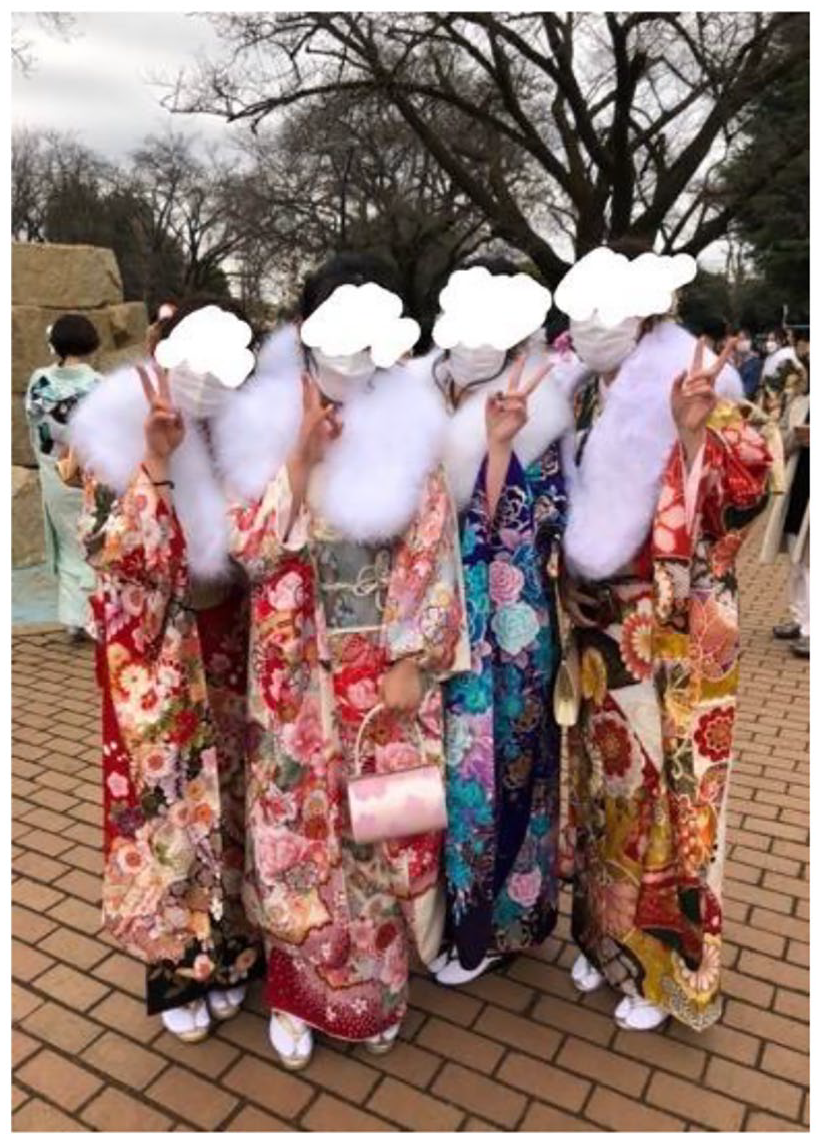
Commemorative photo of a lifetime ceremony while wearing masks.
While much of the literature concerning social media has emphasized sharing as a fundamental aspect (John, 2016; Jurgenson, 2019), the act of non-sharing does not mean a rejection of the social; instead, it represents a dialectical form of the social. Accordingly, the category of abstention can be viewed as a reflexive response to social conformity, suggesting the categories of conformity and abstention are two sides of the same social interpretation. Thus, these cases present a distinct form of self-presentation compared with the category of conformity, as individuals in this category chose to withhold or alter their established practices on social media. Despite this difference, there is an interesting parallel with conformity to social norms, as the decision to abstain aligns with expectations of responsible citizenship.
Category 3: Selective Curation
While conformist images on social media dominate, certain taboo pictures continue to be shared, challenging the rigid and intricate societal resistance against “correct” self-presentation. It is noteworthy that many participants employ management of multiple accounts, to curate and compartmentalize distinct forms of self-representation on social media. boyd (2014) notes that handling multiple social media sites and identities is common, particularly among young individuals. Accordingly, in Japan, youth often manage multiple social media accounts, each serving distinct purposes and facets of their identities. Typically, they maintain a “main account” for public presentation and a broader audience, alongside “sub-accounts” for more focused, authentic self-expression to selective audiences.
The privacy and intimacy associated with sub-accounts vary, as reflected in the diverse terms used to describe them. For example, the main account is usually referred to as “hon-aka,” meaning “real-account.” Some accounts are termed “ura-aka,” translating to “back-account” or “dirt account,” offering complete anonymity for candid communication. Others are known as “kagi-aka” or locked accounts, accessible only to select individuals who receive permission beforehand. In this framework, individuals create and manage multiple sub-accounts within the relational context with one main account(“hon-aka”), instead of merely managing multiple social media accounts independently.
In our study, sub-accounts emerged as significant spaces where individuals could share their genuine feelings and personal thoughts with trusted others, providing reliable and safe places for images such as not wearing masks, traveling, or dining out with friends despite stay-at-home orders. For instance, Kyo, a 20-year-old female, initially began using LINE for personal communication in her second year of junior high school. Now, as a college student, Instagram has become a primary channel for social interactions. Currently, she manages four Instagram accounts, each serving different purposes. However, she faced criticism after sharing a photo of a gathering with friends on her main account during a COVID-19 emergency. Her main account, once a source of entertainment and relaxation, became a source of embarrassment as she faced jishuku-keisatsu for not adhering to the rules during the pandemic. This experience prompted her to realize the need to separate her general audience and her trusted friends on social media. To maintain privacy and avoid criticism, she shared personal moments, like karaoke, only her sub-account (“ura-aka”), accessible only to trusted acquaintances. She says, I was afraid of other’s judgment, so I couldn’t post karaoke pictures on the main account for a long time. When I shared the pictures on a sub-account where only close friends were invited, no one criticized me, and it lifted my spirits.
This sub-account provided her with more intimacy and privacy, allowing her to express true feelings without fear of accusation from a wider audience.
Similarly, Shieri, a 20-year-old female, created a lock-account (“kagi-aka”) as a private space to channel her anxiety and anger toward COVID-19. Alongside LINE for personal communications, she manages two Instagram and three Twitter accounts. Among those, this particular account serves as a refuge for expressing her gloomy emotions freely, deemed inappropriate on her main social media. This account is locked without invites, meaning there are no followers, providing her with a private space to share her thoughts without worry. She consciously follows accounts of people who do not know personally but who share similar concerns, seeking empathy. For example, venting her frustration at missing a live event due to COVID-19, which she was reluctant to speak out even to friends, this account served as her go-to space for candid expression, shielding herself from public scrutiny during the pandemic. She reflects, I felt it was not appropriate to share my emotion publicly, so I wrote them while keeping the account locked and unfollowed by anyone. Sometimes it is even difficult to discuss with friends nearby. In this account, sometimes I saw strangers expressing similar frustrations. It was a relief to know I was not alone.
Meanwhile, the case of Natsumi, a 20-year-old female, also provides an example of a creative type of back-account. She manages a LINE, four Twitter, and three Instagram accounts. Skillfully navigating multiple platforms, she curates individual accounts for distinctly different purposes and standards. Her main Instagram account is limited to friends she has met face-to-face, while another on Instagram is locked, allowing only her very close friends for intimate communication in a manner that would serve as a back-account in an ordinary setting. The third Instagram account is dedicated to her otaku hobby, connecting with people who share similar interests. Three Twitter accounts function as information channels for different purposes. However, the last Twitter account, which Natsumi aptly named “zero-zero account,” is particularly interesting. This account, named for its lack of followers or following, serves as a private space for her to express frustrations and stress in a textual form. She sometimes refers to it as her “kabe-uchi” account, meaning “punching the wall.” Here, she can vent her emotions, particularly when hesitant to share her sadness or stress with her other social media accounts. Although this account does not include any photographs, the act of expressing her feelings through text also serves as a form of visualization, helping her externalize her emotions and manage stress.
Discussion
The Dramaturgy of Social Media: Reshaping Front, Back, and Offstage
We have depicted how Japanese youth responded to the pandemic concerning their self-presentation on social media, where peer surveillance and conforming pressure already existed. The pandemic brought heightened surveillance, especially focusing on mask-wearing and social distancing. This led to the establishment of new norms for self-presentation. Japanese young people chose to share images that followed these new rules, using tactics such as conforming, refraining from sharing altogether or creating a specific space of privacy to evade surveillance.
Here, we draw upon Goffman’s (1959) metaphor of theater in explaining everyday practice rituals and provide a theoretical foundation for elaborating on our findings, especially how digital face-work on social media works. This theory identifies three classifications of interaction: front, backstage, and off-stage. The front stage refers to the mindful performance of an individual’s public “act”—for example, how to act in public when waiting in line or eating in public. Backstage is the opposite, where individuals can relax and be themselves away from the public eye, such as in the privacy of their own homes. Off-stage is when individuals are unaware that they are being watched—for example, doing something in their backyard without realizing that the neighbor can see.
As Shulman (2022) aptly articulates, individuals tend to embody the officially endorsed values of society when presenting themselves to others, striving to maintain idealized impressions while concealing any discordant information (Goffman, 1959, p. 35). Our study sheds light on how the COVID-19 pandemic has intensified these trends on social media. The societal context of increasing peer pressure has further bolstered these tendencies.
From a dramaturgical perspective, our study unveils an intriguing shift in the realms of front, backstage, and off-stage in the context of social media. Sharing practices extend beyond mere networking; they involve negotiating the boundary between public and private, serving multiple purposes beyond self-presentation. Through sharing, withholding photos, or curating content, individuals effectively manage their social image and control the impressions they convey. By strategically using multiple accounts and carefully curating sharing practices, individuals safeguard their privacy (backstage) while simultaneously engaging in social interactions (front). Unlike offline scenarios, where constraints are dictated by physical proximity and relationships, social media allows for a malleable boundary between front, backstage, and off-stage. This adaptability is facilitated by the creation of multiple accounts tailored for diverse audiences, leading to a dynamic interplay within Goffman’s framework. The COVID-19 crisis added a layer to this framework, where individuals conscientiously navigate front, backstage, and off-stage dynamics. While some conform to predefined roles, others actively redefine these boundaries, leveraging hyperconnectivity and creativity.
Creating “Safe Places” in Social Media
Meanwhile, the maneuvering of multiple social media sites and accounts during the pandemic reflects how individuals seek and negotiate different levels of performativity on these platforms. Rather than being solely dictated by societal norms, individuals actively set up different contexts of social interaction and handle diverse levels of intimacy via selective self-presentation. The creation and curation of multiple accounts are the means of adaptive technique, emphasizing the agency and creativity of individuals. Once more, de Certeau’s concept of tactic offers valuable insights into this phenomenon. Tactics involve exploiting gaps, loopholes, or overlooked spaces within the dominant structure to assert agency and autonomy. Throughout the pandemic, people have employed diverse tactics on social media to address the challenges and uncertainties it presents. Notably, the creation of safe places within these platforms has emerged as a prominent tactic. These spaces provide individuals with environments where they can express themselves authentically, shielded from judgment or surveillance.
Under the constraint posed by the pandemic, individuals exercise agency by strategically managing their social engagement and self-presentation across various social media platforms. These practices involve actively creating “safe places” on social networks, where individuals feel secure and empowered to express themselves authentically, free from judgment or surveillance due to COVID-19. Through a blend of self-presentation tactics, individuals curate their content to align with different aspects of their identities and relationships, reinstating boundaries and compartmentalizing expressions based on their desired level of participation. This dynamic and purposeful interplay highlights the creative ways individuals reflect their personality, interests, and values in digital space during the pandemic.
Conclusion: Navigating the Digital Stage Amid Crisis
Our exploration into the self-presentation of Japanese youth on social media during the COVID-19 pandemic unveils a nuanced choreography of online behaviors. The pandemic, acting as a catalyst for intensified social media engagement, has reshaped the dynamics of front, backstage, and off-stage elements within Goffman’s dramaturgical framework. Social media played a dual role as a tool for caregiving and surveillance, establishing specific cultural norms around power, observation, and control. The dramaturgic perspective enables an examination of how individuals developed tactics of compartmentalization, creating and shifting front, backstage, and off-stage spaces through curated sharing practices on social media. The deployment of tactics such as the creative curation of multiple accounts exemplify how individuals actively created safe spaces in social media, demonstrating agency and creativity in navigating the complexities and uncertainties of social expectations.
The fluidity observed in digital face-work reflects an adaptive response to the circumstances, highlighting the resilience and ingenuity of individuals during challenging times. Humphreys’s (2018) argument about the self-presentation, emphasizing the dynamic nature of media accounting practice, underscores the autonomy in terms of self-expression and stage performances on social media. The propensity for blurring and trespassing across platforms and various media accounts, as discussed, makes digital face-work inherently fluid and changeable, dependent on media practice. During the pandemic, individuals sought to creatively engage with their surroundings, describing how this dynamism generates a creative flow in one’s virtual sociality.
Our findings also underscore the multifaceted role of social media during the crisis. It served not only as a surrogate for face-to-face interactions, providing solace and maintaining a semblance of normalcy but also as a dynamic stage for negotiating cultural norms. This is especially notable in a society where the cultural orientation of careful surveillance holds significant sway, as seen in Japan. Our study not only contributes to the understanding of an individual’s creative agency and adaptability of social media during the crisis, but also offers a glimpse into the complex interplay of technology, culture, and individual agency on the digital stage. As we conclude, future research could further explore the long-term implications of the pandemic on online behaviors, delving into how these dynamics continue to shape social media practices post-crisis.
Footnotes
Declaration of Conflicting Interests
The author(s) declared no potential conflicts of interest with respect to the research, authorship, and/or publication of this article.
Funding
The author(s) received no financial support for the research, authorship, and/or publication of this article.
