




Abstract
In this article, we discuss the roles users play in political conversations on Twitter. Our case study is based on data collected in three dates during the former Brazilian president Lula’s corruption trial. We used a combination of social network analysis metrics and social capital to identify the users’ roles during polarized discussions that took place in each of the dates analyzed. Our research identified four roles, each associated with different aspects of social capital and social network metrics: activists, news clippers, opinion leaders, and information influencers. These roles are particularly useful to understand how users’ actions on political conversations may influence the structure of information flows.
Introduction
Brazil, the eighth largest economy in the world, has been facing a political and economic crisis after several corruption scandals. The impeachment of President Dilma Rousseff, from the Worker’s Party, in 2016, seemed to aggravate, instead of solving the country’s problems. The indictment and later judgment of Rousseff’s predecessor and mentor, also from the Worker’s Party, Lula da Silva, for corruption, has polarized Brazilians and influenced the country’s political conversations for several months. 1 Lula was condemned by a Brazilian court on 24 January 2018 and, later, judged by the Supreme Court, and arrested. 2 The political turmoil has also had a big impact on social media discussions, fueling debates and controversies, 3 particularly as Brazilians saw Twitter and Facebook as platforms for political activism and discussion (França, Goya, & Penteado, 2018; Ruediger, 2017).
Given this context, we seek to analyze, in this article, the roles users play in political conversations on Twitter. Our main goal is to understand how users’ actions in these political discussions influence the network structure, and, thus, also the information flow that shapes social media’s public sphere (Bruns & Highfield, 2016; Fuchs, 2015; Papacharissi, 2009). The roles users play within these networks will be described in terms of social capital (Coleman, 1988; Lin, 2001) and further connected to their effects in the network. For this discussion, we will work with three data sets with tweets about Brazilian ex-president Lula’s trial, collected in three important dates for the trial. Our methodological approach is composed of a combination of social network analysis (SNA) metrics and observational analysis.
The article is organized as follows: first, we discuss echo chambers and political polarization. Then we address social capital and political conversation. Next, we present our methods, followed by results and analysis. In the final section, we discuss our findings.
Public Sphere, Echo Chambers, and Political Polarization
Political conversations on social media are linked to the discussion about the public sphere. Traditionally, this is associated with Habermas’ (1991, 1996) concept. Habermas (1991) initially believed in a public sphere with the citizens occupying equal hierarchical positions when deliberating. However, he later reviewed the concept (Habermas, 1996) and further described the public sphere as a network with several arenas connected by a communicational flow that encourages the debate between groups and individuals with different ideas. Based on this discussion, many authors debate the presence of public sphere on social media, disagreeing in some points.
Bruns and Highfield (2016), for example, argue that the public sphere structure on social media is based on many microspheres connected by users they call “bridges.” The “bridges” are users that connect different groups, helping to spread new information among them. In social networks structured as polarized crowds, the presence of these “bridges” is rare, which tends to limit the flow of new information within the groups. Fuchs (2015), on the contrary, states that social media characteristics are not adequate for the existence of a public sphere, and its potential is very limited because of the fragmented discussions. The author argues that the social media environment is proper for homogeneous conversations, so users become separated by “walls” and do not get in contact with different opinions. By doing so, fragmented discussions are likely to create a lack of deliberation on social media. In this case, political conversations might not enhance democracy and might end up preventing the existence of a public sphere (Papacharissi, 2009).
The absence of controversy in political discussions tends to create individuals with poorer arguments and with difficulties to face different points of view when exposed to them (Wojcieszak & Mutz, 2009). Thus, fragmented conversations may be associated with the polarized structure of some networks and societies (Fuchs, 2015). As shown by Wojcieszak and Mutz (2009) and Brundidge (2010), individuals are more frequently exposed to homogeneous content in political groups. This means that political discussions are more likely to create fragmented conversations and polarization.
In social media discussions, political opinion leaders tend to reinforce homogeneous ideas within polarized groups (Druckman, Levendusky, & McLain, 2018; Soares, Recuero, & Zago, 2018). Journalism is also affected by fragmented discussions, as some studies showed that news outlets have their visibility limited by polarized groups, and in many cases, news outlets are dragged inside groups because of the users’ actions of mentioning and retweeting them (Allcott & Gentzkow, 2017; Alves, 2017; Flaxman, Goel, & Rao, 2016; Recuero, Zago, & Soares, 2017). These polarized groups can display stronger and more extreme political positions, with actors becoming enclosed in echo chambers that reinforce their own political beliefs (Gruzd & Roy, 2014).
The concept of echo chambers, as proposed by Sunstein (2001), states that, inside these extremely closed groups, individuals tend to only get in contact with like-minded content. In this process, individuals are encouraged to connect with others who share similar points of view, and these groups become less open to different types of information, reinforcing the homophily. 4 Sunstein (2017) argues that social media provides the perfect environment for these chambers, because of algorithmic filters and users’ actions. The idea of the echo chambers in political conversations on social media, however, has been criticized by some authors. Guess, Lyons, Nyhan, and Reifler (2018) argue that the echo chambers’ effects are limited. The authors state that the technology does not strongly affect the political polarization and that those inside polarized groups are only the highly active users, that is, a motivated minority. Thus, these chambers would not affect political discussion and public sphere that much. Even so, the motivated minority would be capable of affecting the discussion because of their actions in supporting what they believe.
Echo chambers are often also connected to what Pariser (2011) calls “filter bubbles.” The idea of filter bubble focuses on the process of social filtering, based on the individuals’ preferences. The fragmentation in the debates created through this process may damage the public sphere as a “place” where political discussion and disagreement help consolidate democracy. These fragmented social structures seem to be very common in political conversations on social media. Smith, Rainie, Himelboim, and Shneiderman (2014), for example, identified the “polarized crowds” as a typical network structure. These networks are characterized by the presence of two groups with little to no connection among them (Himelboim, Smith, Rainie, Schneiderman, and Espina, 2017; Smith et al., 2014) and would also represent social networks embedded in particular contexts.
What is important, however, is that these information flows artificially skewed in these groups may present a false perception of consensus, thus, creating artificial support for political narratives, even though some of them may be, for example, fake news (Shao, Ciamppaglia, Varol, Flammini, & Menczer, 2017). The homogeneous environment of polarized groups might create biased narratives based on filter bubbles (Pariser, 2011) and also in psychological mechanisms such as motivated reasoning (Kunda, 1990), the idea that individuals may have their reasoning affected by motivation. Furthermore, polarized groups create a space where biased conclusions based on motivated reasoning tend to be confirmed and reinforced by other users—such as the opinion leaders (Druckman et al., 2018; Soares et al., 2018).
The lack of “bridges” (Bruns & Highfield, 2016) and controversy (Wojcieszak & Mutz, 2009) tend to create more radicalized groups (Sunstein, 2001, 2017) that reinforce biased narratives based on motivated reasoning (Kunda, 1990). Consequently, the political conversations do not enhance democracy, but instead make it weaker, preventing the formation of a proper public sphere (Papacharissi, 2009).
Polarized structures have been found in the Brazilian political context, even with some apparently neutral users being dragged into the polarized groups (Alves, 2017; Recuero et al., 2017). This polarization process would prevent news shared by certain users enclosed by a certain group (such as news outlets, for example) to reach the other group in the network, thus, also affecting the information flows.
Based on this discussion, we seek to identify important users in polarized networks, as they may influence the way the public sphere is shaped and perceived by other users.
Social Capital and Political Conversation
Social capital is often connected to the set of resources someone has access to in a social network (Coleman, 1988; Lin, 2001). These resources are related to peoples’ connections and interactions, the strength of the network and the way actors access information, for example (Lin, 2001). Polarized social structures might affect the way social actors can access and mobilize social capital. Because they limit information access, they may also decrease the amount of value social networks create and share. Furthermore, social capital may even be used to deepen the polarization of these networks in political debates. But before we proceed in this discussion, we must discuss what is social capital and how it can be accessed.
Social capital is a very controversial concept. Most authors agree that it relates to the values people can access through their social network, while they disagree in the ways it can be accessed (Burt, 1992; Coleman, 1988; Lin, 2001; Putnam, 2000). To some, social capital is a collective resource and can only be accessed by the group as a whole. To others, social capital can be accessed by individuals as well (Coleman, 1988; Putnam, 2000). While to some authors, social capital has a positive effect in groups (Putnam, 2000), to others, it reinforces inequality and power relationships (Bourdieu, 1986). Nevertheless, social capital may be a useful concept to help understand how people create value for their online social networks and how these values may shape their use, for example, of social network sites (Ellison, Steinfeld, & Lampe, 2007).
There are also different types of social capital discussed by different authors. For Putnam (2000), for example, social capital is linked to the types of social ties. 5 Putnam (2000) argues that types of social capital are associated with the type of tie, calling bonding social capital the values aggregated by strong ties and bridging social capital the ones associated with weak ties. While this typology has been largely used, the categories are too broad for our analysis.
Coleman (1988), on the contrary, associated social capital with individual appropriation and usage, even though it is built by a collective group. Social capital is a resource that can be transformed into several other types of resources, not only allowing individuals to do things within the networks but also allowing the groups to create and share trust. Based on this idea, Bertolini and Bravo (2002) discussed social capital based on its dimensions and levels, in an attempt to refine the idea and its application. For the authors, social capital is a concept that can be accessed by individuals and collectives in different levels. The first level of social capital is associated with weak ties and forms of social capital that can be accessed by individuals and groups. The second level comprises strong ties and values that are accessible only by groups We define therefore the distinction between social capital at the first level (SC1) and social capital at the second level (SC2) on the basis of the fact that their production and their maintenance respectively present and do not present one or more problems of collective action. (Bertolini and Bravo, 2002, p. 4)
The first level is necessary for the maintenance of the second level, but it can exist without the latter. The dimensions of social capital are the categories the authors propose: (1) relational, which is associated with the values users access through exchange and links; (2) normative, associated with the knowledge of the social norms that guide groups; (3) cognitive, associated with the sum of knowledge and information one has access through its ties; (4) trustworthiness of social environment, related to the knowledge and trust of the group; and (5) institutional, which gathers the formal and informal institutions. The first three dimensions are connected to the first level of social capital and the other two, to the second level. These dimensions are particularly useful to examine the social capital present in social media groups (Recuero & Zago, 2009), as we intend to explore in this article.
Social capital has also been connected to political participation and influence, particularly to the individual actions in the public sphere (Bourdieu, 1986; Lin, 2001). Lake & Huckfeldt (1998), for example, suggested that “politically relevant social capital (that is, social capital that facilitates political engagement) is generated in personal networks” and may increase the likelihood of individuals being engaged with politics. The values created within social networks facilitate the engagement of actors in political participation, such as voting or activism, for example (Tsatsou & Zhao, 2016), thus linked with democracy. Zúñiga, Barnidge, and Scherman (2017) have argued that social capital produced within online social networks is not only different from offline social capital but also produces different patterns of political behavior. Online social capital has been shown to be positively connected to political participation as well (Zúñiga, Jung, & Valenzuela, 2012). As social media may expose the actors to more information and mobilization, it may also motivate their participation in the political sphere. It is particularly important for this discussion that online social capital may be connected to different patterns of political participation, as the authors showed. Our work intends to discuss in a more specific way the different forms that actors mobilize and build these different types of social capital as they act in social media channels. We will focus, thus, on social capital as a result of the roles actors play in the conversation in the social networks. It is connected to their actions and it is a result of their actions. We will use the classification offered by Bertolini and Bravo (2002) to better understand these roles.
Methods
As we explained at the beginning of this article, we want to discuss the roles users play in political conversations on Twitter and how these roles influence public conversations. Our specific research questions are as follows:
RQ1. What are the roles users play in political conversations on Twitter and what is the type of influence they hold in these roles?
RQ2. How the different types of social capital these users mobilize in these political conversations may further influence the public sphere?
For this discussion, we selected a case study to analyze related to the political discussions on Twitter: the former Brazilian president Lula corruption trial, which took place on 24 January 2018.
Data Collection
For the data collection, we used a crawler that accessed Twitter’s streaming application programming interface (API). This crawler collected tweets with the keyword “Lula,” comprising a data set that was further filtered for Portuguese tweets. The crawler collected data on 22 to 24 January—the 2 days leading up to the judgment day and the day of the actual judgment. We chose to analyze those three dates because 24 January 2018 was announced in advance as the day that the Federal Court would make a decision regarding the case. Thus, a more intense online debate could be observed in the days leading up to the decision—and especially on the day of the decision itself. Table 1 summarizes the number of nodes and edges in each data set. We chose to separate the data collected in each day, so we could examine if the key nodes and the general structure of the conversation would have changed in time.
Summary of the Data Sets.
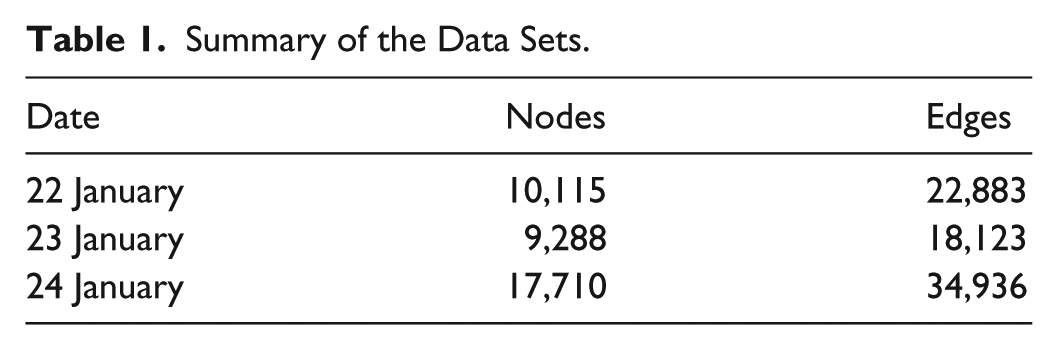
While each node represents a unique account in Twitter, the edges are represented both by retweets or mentions between users.
Data Analysis
We analyzed the structure of the resultant networks and the position of users in each date using SNA. Then, we selected the 12 nodes with the highest metrics to further qualitatively analyze their tweets and discuss their roles.
SNA has been used frequently to discuss social media networks and their structure (Grandjean, 2016; Tremayne, 2014). SNA offers a group of metrics that can show each node position/importance in the structure of the network, and these positions have been also associated with social capital (see Burt, 1992, for example). We thus chose three metrics: indegree, outdegree, and modularity, which we will present next in this section. To further explore the networks, we used Gephi for visualization and Yifan Hu algorithm to create the graphs.
Indegree
The indegree measures the number of connections received in a directed network (Degenne & Forse, 1999; Wasserman & Faust, 1994). The higher the indegree, the higher the number of retweets and mentions received by the user. Indegree can be connected to several network values, such as visibility (since the node influenced the spread of a certain tweet), credibility, or expertise (since the node may be cited with the information to give it credibility—media outlets, for example). These values are connected to exchange and relations, therefore, relational social capital (Bertolini & Bravo, 2002). In addition, indegree helps to identify those nodes that influence others based on their opinions or the messages they tweet.
Actors with a higher indegree are linked with the idea of opinion leaders (Lazarsfeld, Berelson, & Gaudet, 1968) and their main role on political conversations is to influence how the others think, also possibly to persuade others based on what they say. It means these influencers have the ability to influence by “convincing an individual to change his or her opinion, attitude, and/or behavior” (Dubois & Gaffney, 2014, p. 1261). Opinion leaders are capable of influencing the discussion based on their opinions and reputation/authority in some matter.
Outdegree
The outdegree measures the number of connections sent in a directed network (Degenne & Forse, 1999; Wasserman & Faust, 1994). The higher the outdegree, the higher the variety of users someone retweeted or mentioned within a particular network. While outdegree in communication networks is connected to participation, as to have a high outdegree, a node needs to establish several connections, usually in several tweets; indegree is not. A node can be mentioned without actually taking part in the conversation. However, to make a mention, one has to tweet about the subject. Outdegree, thus, is a measure of participation. These values are connected to participation, thus relational social capital and also to cognitive social capital (Bertolini & Bravo, 2002), since these users actively spread information and make connections with it. The amount of participation one user had may also be associated with the concept of superparticipants. The superparticipants are defined by Graham and Wright (2013) as users who participate much more than average. The authors studied these users in discussion forums and concluded that they have a positive participation in these spaces. They found out that the superparticipants helped other users by summarizing topics, answering questions, suggesting topics to discuss and supervising if the users followed the forums rules, among others positive actions. On Twitter, however, there is space for further investigation about superparticipants. Bastos, Raimundo and Travitzki (2013), for example, have found that a committed minority, highly active, is capable of affecting social conversation and even reaching high visibility for the topic they are committed about, affecting everyone else’s perceptions on the subject.
Modularity
Finally, the modularity measures the tendency of creating modules or groups of tightly connected nodes in a network. The higher the modularity, the denser are the connections within a group and less dense are the connections to other groups (Newman, 2006). The more the modules, the more disconnected the network. This measure is important to show different clusters or groups, where we can analyze the roles nodes are playing. For this work, modularity shows how clusterized is a network and the context where each actor is tweeting from. In the case of networks with high modularity, some values related to social capital might be limited, such as the informational flow. Granovetter (1973), for example, states that weak ties are essential for social capital in social networks. When there are only disconnected clusters, the presence of weak ties and interaction among groups tend to be little, limiting the access to contradictory points of view (Wojcieszak & Mutz, 2009) and to new information. Modularity was calculated using Gephi, and we then used the results of the textual analysis, described in the next section, to identify the predominant groups in each conversation.
Textual Analysis
To examine the hypothesis of polarization, we analyzed the most prevalent discourse on each group, classifying the most retweeted tweets in the pro-Lula (the ones that were favorable to Lula) and anti-Lula (the ones that criticized him) groups. We arbitrarily decided to classify the most retweeted 50 original tweets because we found out through distribution (Figures 1 to 3) that they would represent an average of 30% of content circulated in each group (Table 2). This classification was used to exemplify the type of content from each cluster and will give further evidence of the antagonist discourse present in each group.
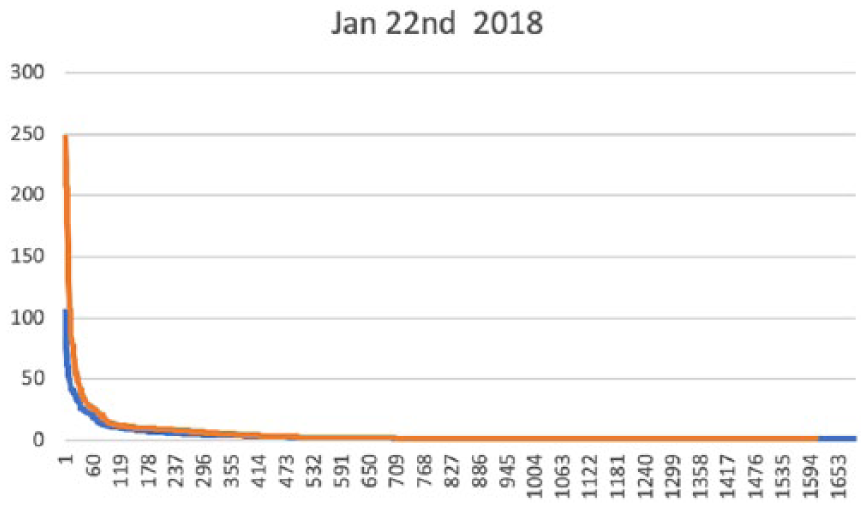
Distribution of retweets x original tweets on each of the two biggest modules based on 22 January’s data set.
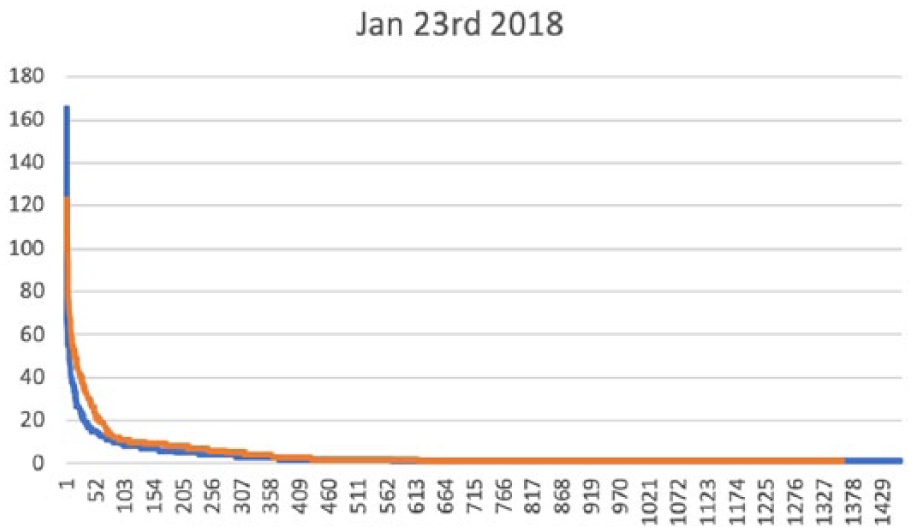
Distribution of retweets x original tweets on each of the two biggest modules based on 23 January’s data set.

Distribution of retweets x original tweets on each of the two biggest modules based on 24 January’s data set.
Tweets Analyzed for Each Cluster.

Notes. OT = original tweets; RT = retweets; S = sample.
The results showed that each group had a predominant position either pro-Lula or anti-Lula group. With the exception of three tweets in the whole data set (which comprised mostly of citations of other users), all the other tweets had the same discourse in each module.
For the purposes of this article, however, we will only present 10 of these most retweeted tweets as examples of what was being discussed in each module.
Observational Analysis
To better understand how users mobilized social capital and how their actions influenced the network, we chose to qualitative observe the 12 nodes with higher indegree and outdegree. We chose to analyze the 12 top nodes based on the distribution of nodes in the data sets, so we could reach the top 10%. 6 We further analyzed and discussed their general characteristics, such as number of followers, number of following, general political identification (in their profile description, picture, and exhibition names) and the content of the last 20 tweets. By doing so, we categorized these nodes based on their position in the conversation network and their profile characteristics. We also used the results of this same analysis to help identify the political position of the two main modules on each data set. All the 24 key actors (12 indegree and 12 outdegree) in each module in each data set shared the same political views, either “Anti” or “Pro Lula.”
Based on the ethical guidelines for Internet research (Markham & Buchanan, 2012), we anonymized the users and identified the nodes only by the type of account they represent (“user” for individual users, “celeb” for celebrities, “polit” for politicians, “group” for accounts representing groups or organizations, “news” for newspapers and other official sources of information, “journ” for journalists, and “blog” for blogs and bloggers), followed by a number.
Results and Analysis
In the three data sets, each node represents a different Twitter user profile, and the edges represent mentions or retweets among those users. The network shows the conversational connections made by the users. Therefore, when User A mentions or retweets User B, there is a connection between those two nodes. The graphs are directed, which allows us to identify those that either made or received more mentions.
The graph modularity for 22 January is 0.621, which is a relatively high modularity (varies between 0-1) and indicates the presence of separate modules, as we can see in Figure 4. The two main modules, or groups, are composed of nodes that are more connected to each other than to other nodes. The blue group (28.03% of the nodes) has the majority of users who tweeted in favor of Lula’s condemnation, representing an “Anti-Lula” position. The pink group (19.26% of the total number of nodes), on the other hand, comprises mostly users tweeting in favor or Lula’s absolution, and thus represents the “Pro-Lula” views.

Network graph—Lula’s trial on 22 January 2018.
Table 3 shows examples of the discourse in each cluster. The first cluster reverberates an anti-Lula discourse. Most of the tweets in this group used the hashtag “#ConvictTRF4,” where they ask the Court (TRF4) to convict the ex-president. In addition, there is a lot of visibility to tweets made by users with a clear anti-Lula position (especially among the most retweeted). On the other cluster, however, the discourse is quite different. First of all, there are several hashtags of allies of the ex-president, such as #SupportLulainPOA, which claimed for his supporters to march for him during the trial in the city of Porto Alegre (POA). In addition, most of the most retweeted tweets either contained a support message or were made by Lula’s supporters.
Most Retweeted Tweets in Each Module on 22 January 2018.

Note. RT = retweet.
On the second day of data (23rd), graph modularity is 0.685, which is also a relatively high modularity and indicates the presence of separate modules, as we can see in Figure 5. Once again, we can see two main groups. The blue group (25.28% of the nodes) has a majority of users who tweeted in favor of Lula’s condemnation, representing an “Anti-Lula” position. The pink group (16.95% of the total number of nodes), on the contrary, comprises mostly users tweeting in favor of Lula’s absolution, thus represents the “Pro-Lula” views.

Network graph—Lula’s trial on 23 January 2018.
To exemplify the discourse visible in each cluster, we also collected the 10 most retweeted tweets (Table 4). These data show the most prevalent discourse and, also in addition, the number of tweets from each module. Tweets from the anti-Lula cluster used the hashtag #ConvictTRF4 asking the Court to convict the ex-president. Tweets from this group are usually very clear in their positions against Lula’s acquittal, and there is a lot of visibility given to anti-Lula advocates and activists. Tweets pro Lula, on the contrary, used once again the hashtag #SupportLulainPOA. In addition, the most retweet content in this cluster is from Lula’s known supporters and allies and there is a strong discourse around injustice and democracy associated with Lula, but not to the Court.
Most Retweeted Tweets on Each Module on 23 January 2018.

Note. RT = retweet.
Finally, the graph modularity for 24 January is 0.652, similar to the other two, also showing two separate groups as we can see in Figure 6. The blue group (31.47% of the nodes) has a majority of users who tweeted in favor of Lula’s condemnation, representing an “Anti-Lula” position. The pink group (23.46% of the total number of nodes), on the contrary, comprises mostly users tweeting in favor or Lula’s absolution, thus represents the “Pro-Lula” views.
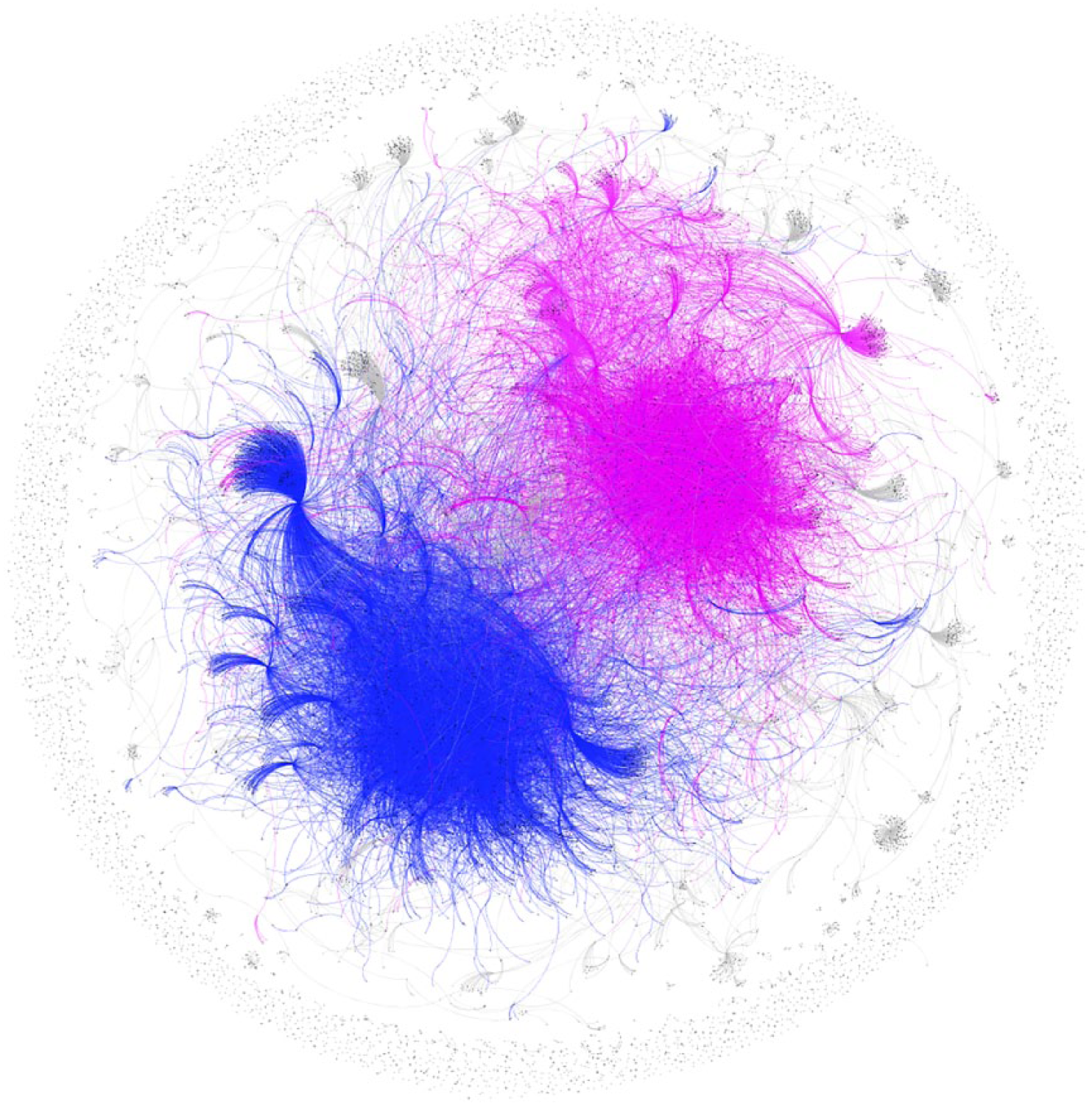
Network graph—Lula’s trial on 24 January 2018.
Table 5 depicts the 10 most retweeted tweets from each group. We can see that the observed pattern of giving visibility to supporters of each side, using hashtags and the polarized discourse reappears.
Most Retweeted Tweets in Each Module on 24 January 2018.

Note. RT = retweet.
Many of the tweets have hashtags with clear positions. One example is the #JailWithoutLulaisFraud, created to counter-act the one that accused the court of trying to meddle in the country elections where Lula was the lead in the polls (#ElectionwithoutLulaisFraud). It is also interesting to notice how the tweets against Lula attacked him, giving visibility to his detractors, while the tweets from the pro-Lula group clearly supported him and gave visibility to his supporters and the media comments that were favorable to his cause.
Throughout the days, the network got more clusterized, with a fewer total number of modules and thus, more nodes in the two main groups. This is evidence that the clusters got more connected, indicating that the conversation between each one did not reach the other ones, possibly creating echo chambers (Sunstein, 2001). The presence of two tightly connected modules tends to create echo chambers because the users within the groups have the propensity to reinforce solely their homogeneous point of view (Soares et al., 2018). Our data thus show that polarization was present in the networks and got stronger as the decision day approached.
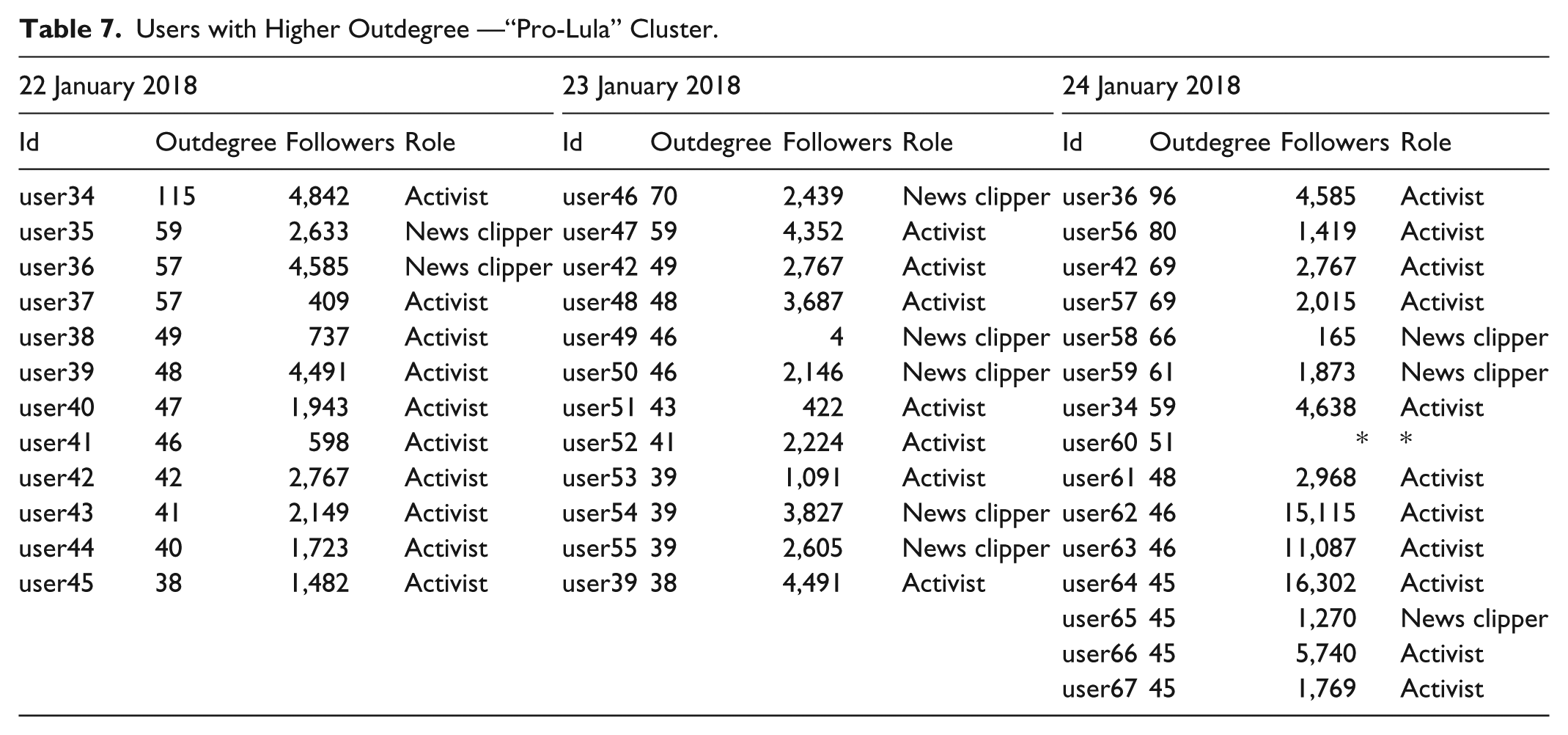
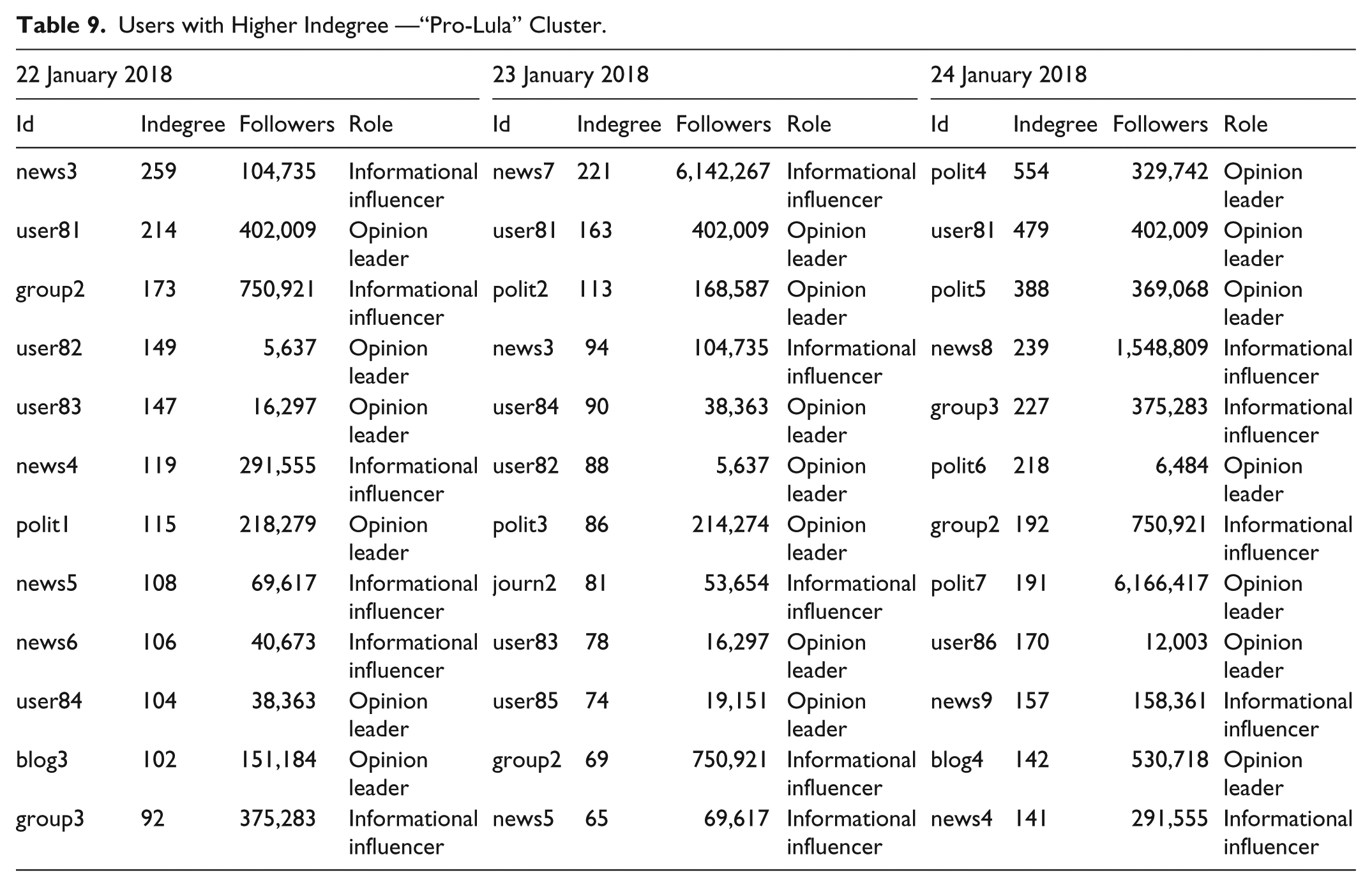
To understand the different roles users played in these polarized political conversations, we further analyzed the 12 users with the higher outdegree and indegree (see Tables 6 to 9).
Users with Higher Outdegree—“Anti-Lula” Cluster.

Users with Higher Outdegree —“Pro-Lula” Cluster.
Users with Higher Indegree —“Anti-Lula” Cluster.

Users with Higher Indegree —“Pro-Lula” Cluster.
Superparticipants’ Roles: Users with a High Outdegree
First, we will discuss actors with high outdegree. As we argued in the Methods section, outdegree is connected with participation. In our data set, many users had a high outdegree, indicating a large number of mentions and replies to other users (thus, more participation in the debate) but also a large number of tweets.
All top 12 users on the “Pro-Lula” group have averages of 40 tweets per day or higher, 13 which indicates a large amount of participation on Twitter in general. The “Anti-Lula” group also has high participation, only a few users have lower averages (below 40 tweets/day).
In terms of the number of followers, very few of those top 12 users have large follower counts, whereas most have an average of 1,000 or fewer followers.
We observed many users using their profile picture, description, or exhibition names to clearly identify themselves with one political view. Several users used either “MORO” 14 or “LULA” added to their exhibition names on Twitter, to show a political affiliation to one of the sides of the polarized discussion (e.g., “Renato LULA” or “Maria MORO”).
After analyzing those users, we identified two different roles the users with high outdegree performed:
It is also important to observe that some nodes appear repeatedly over time. For example, in the “Anti-Lula” cluster, user7 (activist) appears in all three data sets, while user3 (activist) appears two times. In the “Pro-Lula” group, one node appears in all 3 days (user42, activist) and two others appear in two (user39 and user34, both activists). This repeated participation is evidence of a high engagement of those nodes in the conversation about Lula’s trial. This observation is important, since it suggests that activists also tend to be more engaged in the political conversation over time.
Visibility Roles: Users with a High Indegree
Among the users with a higher indegree count in the data sets, we have celebrities, political figures, and newspapers. As we discussed in the previous section, indegree indicates the number of retweets and mentions one user get through their tweets. Thus, indegree can be seen as a measure of influence in the conversation, with more attention given to these users.
The top 12 users in these data sets have high follower counts (6,000 or more), as opposed to the lower follower count among the top users with a high outdegree. This means that those are users that already may have more visibility on Twitter, since they have a larger audience and thus their tweets have a higher chance of being retweeted. While most of the users have high indegree because they received several retweets to one or more messages posted on those days, some are there because they were mentioned by other users in different tweets even though they did not participate actively in the discussion (did not create new tweets on those dates).
We identified two roles those users with high indegree can perform in polarized political conversations:
In our data sets, we identified, in the “Anti-Lula” cluster, three opinion leaders that appear in 2 days (user73, user74, and user77), and five opinion leaders that appear in 3 days (user68, user 69, user70, user71, and user72). In addition, there are three informational influencers that appear in 2 days (news1, news2, and group1). In the “Pro-Lula” cluster, we found one opinion leader and one informational influencer that appear in the 3 days (user81 and group2) and three opinion leaders (user82, user83, and user84) and four informational influencers (news3, news4, news5, and group3) that appear in 2 days. These data seem to suggest that users who influenced the debate from the beginning kept influencing their networks in the following days. Opinion leaders and informational influencers, thus, tend to influence the debate not only in a given time but during the whole conversation.
Discussion
As we presented at the beginning of this article, our main goal was to discuss the roles users play in political conversations on Twitter. To understand the roles users played, we used their position in the conversation networks. Our first step was to understand the modules on each conversation and the prevalent discourse in each group. We found out that the majority of tweets with more visibility in each group were highly partisan, either pro or against Lula, indicating we faced polarized conversations. We further proceed to understand the nodes and their role in each group.
Our first classification was based on outdegree. This metric helped us to understand how users actually participate in the debates on Twitter. We found that some users are actively engaged in spreading information that corroborates with their own narratives, similarly to what Gruzd and Roy (2014) have also found. These actors are activists. They are the ones who help the emergence of echo chambers by retweeting and mentioning opinion leaders and information influencers. Their actions may help clusterize the conversation around certain political positions, while filtering tweets by mentioning and retweeting only like-minded users, in a very similar to what Pariser, (2011) define as filter bubble, but without the algorithmic influence.
Activists seem to actively work to create a false impression of consensus, of majority, of public opinion, creating a space that might be ideal for the spread of fake news, disinformation and hyperpartisan content (Sunstein, 2001, 2017). Even though these users do not appear to have a large network of followers, they end up influencing the conversation as very engaged users (similarly to what Graham & Wright, 2013 discussed as superparticipants).
Activists’ actions also use relational social capital (Bertolini & Bravo, 2002) by clusterizing the network around the people they think deserve to be heard or seen. By mobilizing relational social capital to spread this “consensus,” activists also diminish cognitive social capital, by only allowing similar contents to circulate. Their actions may actually harm the public sphere, by reducing the amount of different information that circulates within their networks (Fuchs, 2015). It is interesting that this is done not as a side effect of an algorithm as suggested by Pariser (2011) but purposely by the actors involved. These effects might explain why political environments in social media may be so homogeneous, similarly to what Wojcieszak and Mutz (2009) and Brundidge (2010) have found. While filtering, information activists may help create a more homogeneous group, they may influence the interconnection and the clustering of the network by creating more types of social capital of the second level through homophily. However, we did not find, in this study, any evidence of this.
The second type of role we were able to identify is the news clippers. These actors help to bring more information into the echo chambers, breaking the bubbles by spreading different kinds of information, thus, mobilizing cognitive social capital (Bertolini & Bravo, 2002). News clippers are potentially capable of acting as bridges between the groups, helping the informational flows and increasing the discussion (Bruns & Highfield, 2016; Granovetter, 1973). However, as we observed in this article, these users are largely outnumbered by activists in the political conversations analyzed. Thus, while activists actively work to reduce the variety of information that circulates within clusters in polarized networks, news clippers would be able to amplify the debate by serving the network more information. As one type of engagement may diminish cognitive social capital, the other may increase it.
We also analyzed the nodes through indegree. Indegree indicates nodes that are not necessarily very active or engaged within the network, but that their actions may influence others. In this category, we found most information influencers. These actors are usually not active participants of the conversation, but users mentioned or sometimes retweeted because of the perception others have of their political positions or messages. The presence of information influencers could be a way to reduce the echo chamber impact; however, they end up dragged by the clusters when their tweets reinforce the echo chamber’s narrative. These users are able to mobilize cognitive social capital (Bertolini & Bravo, 2002) by informing different networks, as well as giving credibility to the narrative that already is circulating in the cluster. These results are similar to the ones found by Recuero et al. (2017), actors with the potential to increase cognitive social capital and allow a more diverse discussion, which would be good to the political debate, but that end up being swallowed by the polarized crowds.
Finally, the opinion leaders are also related to the polarization because of the content of their messages. They normally have a clear position about the topic of the conversation and they are already associated with one of the two polarized modules we have been finding in our analysis of the Brazilian political conversations on Twitter—such as in the case of Lula’s trial that we focused in this article. These nodes also work with relational social capital (Bertolini & Bravo, 2002), mobilizing their followers to retweet them and to amplify their opinions. However, differently from activists, their strength is not in the numbers, but in their own credibility. Unlike activists, who have usually low visibility (since they have fewer followers), opinion leaders tweet fewer times, do not establish as many connections via mentions and retweets, and receive visibility. These actors, together with activists, seem to be the ones responsible for the polarization we observed within the political conversations in our case study. Opinion leaders publish the content and activists give visibility to it, reinforcing the fragmentation of the network (Fuchs, 2015).
Based on this discussion, social capital has an important role in the formation of polarized networks. As most engaged users mobilize mostly relational social capital, they help to increase the connections in the conversation while reducing cognitive social capital in the network. As the first level of social capital (Bertolini & Bravo, 2002; Coleman, 1988) is influenced this way, other forms of social capital related to the second level (such as trustworthiness and institutional social capital) cannot be achieved by these groups. By focusing on only one dimension of social capital, political echo chambers may actually damage democracy, by reducing the information and trust of the social networks. The lack of different dimensions of social capital can decrease political engagement and actual participation, as shown by previous research (Lake & Huckfeldt, 2002).
The fragmented network might also strike the public sphere on social media (Fuchs, 2015). The debate with contradictory positions helps to enhance democracy, and it is very important for the public sphere (Papacharissi, 2009; Wojcieszak & Mutz, 2009). The reduced number of informational influencers among the most important users in the conversation reduces the information flows and the cognitive social capital (Bertolini & Bravo, 2002) in the network, especially because those informational influencers who appear in the networks we analyzed are dragged inside one module and do not reach the other. Thus, the lack of new content may show how groups enhance the circulation of like-minded ideas, reinforcing the echo chambers. Our case study has also shown that many of the opinion leaders who started influencing the conversations had also increased or maintained their power in the 3 days. This also points to a very strong partisan identification in the echo chambers, with fewer to none influencers with different information appearing.
As Bruns and Highfield (2016) pointed, the bridges among clusters are very important for the public sphere on social media, and the absence of them create the walls, Fuchs (2015) argues, that threatens the existence of public sphere in these spaces. Even the informational influencers tend to be dragged to one side or the other of the discussion, possibly reducing the information flow because of the diminished presence of bridges (Granovetter, 1973). The activists also help the formation of the polarized structure by sharing only like-minded content. This means the discussion is probably limited inside the groups we found, as only similar messages circulate, and the opinion leaders already associated with the users’ views are those that have their tweets most reproduced.
In general, the number of activists who work in these echo chambers also influences information diffusion and the partisan content that circulates in the groups. While these users may get little visibility themselves, their active actions retweeting other users and hashtags increase the visibility of partisan content and might create an idea that their beliefs are shared by a bigger multitude of users because of their committed activity (Guess et al., 2018; Shao et al., 2017). Thus, while they try to negotiate cognitive social capital (Bertolini & Bravo, 2002), they actually increase only relational social capital (Bertolini & Bravo, 2002) by closing the conversation around certain subjects and political positions.
Even though some of the users with high outdegree might be bots or hybrids, their participation should also be taken into account. Not all bots are malicious (Gorwa & Guilbeault, 2018), and while some bots might be created with the sole purpose of disseminating false news, for example, some may be contributing to the discussion in terms of social capital by disseminating information that otherwise would not be retweeted or passed along in a network.
Finally, even though the categories proposed are not mutually exclusive, at least in our data set, no user appeared at the same time in both the top indegree and top outdegree lists, which might suggest that the users who participate more often are not necessarily the same who receive more visibility and attention through mentions and retweets.
Conclusion
In this article, we analyzed three networks of conversations about Lula’s trial (22 to 24 January 2018). We used three SNA metrics to understand the conversation and to identify some key users we then further analyzed. These users were those with higher indegree and outdegree in the three networks. Based on their profiles and their activity on Twitter, we categorized them. We found three polarized networks based on two groups: one with users which tweeted in favor of Lula’s condemnation, representing an “Anti-Lula” position and other with users tweeting in favor or Lula’s absolution, thus represents the “Pro-Lula” views. The two groups had low connections among them. This means that the content circulating inside one group did not circulate in the other group.
Two main research questions guided this article:
RQ1. What are the roles users play in political conversations on Twitter and what is the type of influence they hold in these roles?
We analyzed the 12 nodes with higher indegree and outdegree in each module of each network. Based on this analysis, we categorized the users’ roles. Among those with higher outdegree, we found (1) the activists (69.74% of the accounts), users with a clear political view who only retweet like-minded messages and (2) news clippers (22.37%), users who do not manifest a clear political view and tend to frequently retweet other accounts with a variety of topics. Among the nodes with higher indegree, we found (3) opinion leaders (70.83%), users with a clear political position who receive a lot of retweets and mentions based on the ideas they want to spread and (4) informational influencers (29.17%), users with a less marked point of view who end up being dragged to one module or the other by users retweeting or mentioning them.
RQ2. How the different types of social capital these users mobilize in these political conversations may further influence the public sphere?
We observed that activists mobilize mostly relational social capital (Bertolini & Bravo, 2002) by retweeting other several users and helping interconnect the nodes with a similar political view. The news clippers are related to cognitive social capital (Bertolini & Bravo, 2002) by providing access to several sources of information via retweets. The opinion leaders mobilize mostly relational social capital (Bertolini & Bravo, 2002) by using their position to influence their connections to give visibility to certain ideas. Finally, the informational influencers are related to cognitive social capital (Bertolini & Bravo, 2002) based on others’ perceptions, since their tweets are usually appropriated because they are seen as confirmation of the ideas that are already circulating in the polarized groups.
We also identified that activists are related to echo chambers (Sunstein, 2001, 2017) because when they mobilize relational social capital by retweeting like-minded messages, they end up helping to create the polarized groups by interconnecting nodes from their same module. The news clippers are capable of using their cognitive social capital to help the informational flows and act as potential bridges between the groups (Bruns & Highfield, 2016; Granovetter, 1973), but their action to break the echo chambers is limited because they are outnumbered by activists. The opinion leaders alone do not create these chambers, but they filter the ideas they spread and, by doing so, they receive more visibility among those inside one polarized group based on their retweets mobilizing relational social capital. Information influencers could use their cognitive social capital to reduce the echo chamber impact; however, they are dragged to one of the clusters when their tweets are considered part of their narrative.
Even though it is based on other previous research on political conversations, this study is limited to the networks analyzed and thus the results may not be generalizable to all political conversations on Twitter. Future work can focus on roles associated with other SNA metrics, like betweenness centrality or Eingenvector centrality. It is also possible to analyze the presence of the identified roles in other types of political conversations, or even other types of conversations on Twitter, to see if the same roles appear in different ways.
Footnotes
Declaration of Conflicting Interests
The author(s) declared no potential conflicts of interest with respect to the research, authorship, and/or publication of this article.
Funding
The author(s) disclosed receipt of the following financial support for the research, authorship, and/or publication of this article: The authors were funded by CAPES and CNPq (305189/2016-6).
