



Abstract
School psychologists, counsellors and guidance officers are integral to supporting student wellbeing and academic outcomes in Australian schools. This systematic literature review examines their roles within the Multi-Tiered System of Supports (MTSS) framework. The review followed the Preferred Reporting Items for Systematic Reviews and Meta-Analyses (PRISMA) guidelines, conducting searches in SCOPUS, Web of Science and Informit databases for peer-reviewed articles and grey literature published between 2003 and 2024. The inclusion criteria focussed on studies involving Australian school psychologists, counsellors and guidance officers, emphasising their roles, duties and professional practices. Of the 48 records identified, 11 studies met the criteria and were included in the synthesis. Findings indicate these professionals play diverse roles, encompassing whole-school prevention programmes, teacher training, individual and group interventions, psychoeducational assessments and crisis management. Despite their significant contributions, role ambiguity and systemic barriers, including workload imbalances and limited professional development opportunities, constrain their effectiveness. These challenges hinder alignment with MTSS principles and limit proactive interventions. This review underscores the need for clearer role definitions, systemic support and collaborative frameworks to enhance the capacity of these professionals in fostering equitable educational and mental health outcomes for Australian students.
Keywords
Introduction
Within international educational settings, the role of school psychologist, counsellor and/or guidance staff is a complex role that requires a vast range of skills and knowledge (Heled & Davidovitch, 2020), more so than other school leadership or support staff (Popov & Spasenovic, 2020). The roles of school psychologist, counsellor and guidance staff are an increasingly complex profession that is called upon to translate neuroscience into educational practice (Wilcox et al., 2021), respond to barriers to social justice (Viviers et al., 2023), assist with transition to inclusive education practices (Palomo et al., 2024; Sheremet et al., 2020) and respond to increases in mental health concerns in children and youth (Piao et al., 2022).
As with their international counterparts, Australia’s school psychologists, counsellors and/or guidance staff are all called on to undertake complex roles (Campbell & Colmar, 2014), including but not limited to: responding to the mental health needs of students (Bettman & Digiacomo, 2022), supporting career choices (Billett et al., 2020), supporting teachers with trauma informed practices (Oberg et al., 2025) and devising whole school well-being programmes (Green & Lloyd, 2021). In Australia the nature of the role, and the qualifications needed, will vary based on the requirements of the educational jurisdiction in that state or territory and the educational context (State, Catholic or independent). For example, New South Wales (NSW), Victoria, Tasmania, South Australia and Western Australia, state schools all predominantly employ school psychologists (those with a 5 year psychology degree; Department for Education, Children and Young People, 2025; Government of Western Australia, 2025; New South Wales Government, 2025) though New South Wales and Victoria also employ school counsellors (those with accredited counselling qualifications; Victoria State Government, 2025).
In Queensland, guidance staff (guidance officers in state education and guidance counsellors in Catholic education) are specialist teachers and are the primary provider of student support services, though school psychologists are increasing in numbers and are utilised for counselling (Queensland Government, 2025). Qualifications and professional registration requirements for psychologists, guidance staff and counsellors vary widely between each role, however for the purpose of this paper, school psychologists (SP), school counsellors (SC) and guidance staff (GS) will be referred to as school well-being professionals (SWBP) in recognition of the similarities in the purpose of the roles – to provide intervention services aimed at helping students to achieve positive educational, developmental and well-being outcomes within an education setting.
Currently, research on the tasks undertaken in the role of SP, SC and GS in Australia is sparse (Bell & McKenzie, 2013; Beltman et al., 2016), or limited in scope (Bettman & Digiacomo, 2022). While there is a growing body of literature that reflects singular concerns or tasks that SWBP undertake in their role, such as suicide prevention (McGillivray et al., 2021), universal mental-health screening (Burns & Rapee, 2022) or impact of the role on stress levels (Pennell et al., 2024), the research has yet to present an integrated and collective understanding of how the role in Australia sits within a multi-tiered system of supports (MTSS). Responding to these calls for further research into the professions of SWBP as a whole (Campbell & Colmar, 2014), this paper presents a narrative systematic review of the research in Australia aimed at answering the question ‘What is known about the school psychologist, school counsellor and guidance staff role in the current educational landscape of MTSS in Australia?’. The aim of this review was to describe the role as identified in the literature. Findings revealed that these roles are multifaceted but hindered by role ambiguity and systemic barriers. Aspects of the role that warrant further research were identified.
Literature review
The nature of school counselling and psychology has been a topic of interest for many decades (Burnham et al., 2023), however, the expectations of the role are not always clear. For example, a study by Blake (2020) of school counsellor roles in America found that school counsellors faced role ambiguity and conflict due to a lack of clarity in the role description, overlap with other allied health professions, and challenges with workload directives given at a school and district level. The issues of role ambiguity and conflict existed regardless of the demographics of the student population. Similarly, Havlik et al. (2019) investigated the role of professional agency for school counsellors and found that school counsellors often need to advocate for their role or risk being allocated tasks better suited for educators such as discipline or substitute teaching. Further, their study revealed that other school staff, including principals, can be resistant to school counsellors focussing their tasks to reflect the role of school well-being professionals rather than that of educator.
The dual identity of SWBP as both mental health service providers and educators further complicates their roles. A study by Levy and Lemberger-Truelove (2021) spoke to the need to embrace the educator-counsellor identity as a means to eliminate role ambiguity and for recognition of contextual influences on service delivery as critical for clarifying the range of tasks that should be undertaken by school well-being professionals. Similarly, Betters-Bubon et al. (2021) identified how school well-being professionals face questions about whether their professional identity is primarily as a counsellor or educator, or whether it is a conjoined identity. Though this role confusion led to some feelings of frustration with participants in their study, it also led to optimism about the potential for self-advocacy to help shape the role.
The role ambiguity of SWBP is highlighted in concerns emerging in the United States that a shift towards non-counselling duties is a barrier to providing adequate mental health services to students. A study of 291 school counsellors by Burnham et al. (2023) found that school counsellors often have non-counselling duties, including supervision duties and academic testing that leave them feeling overwhelmed and unable to attend to their core work as a counsellor. This finding supports earlier calls by Lambie et al. (2019) who raised concerns about the increase of mental health concerns in youth and the policy shifts towards school counsellors taking on service delivery that improves academic results. Further to this, the authors highlighted that there was a shift for school counsellors to move away from individualised service delivery to more ‘efficient’ whole school service delivery.
The complexity of school counselling roles and their alignment with broader systemic frameworks has drawn attention to the Multi-Tiered System of Supports (MTSS), a framework widely recognised for organising and addressing school-based academic, social/emotional and behavioural resources. MTSS focusses on data, systems and practices to deliver comprehensive support to students and schools (Bal, 2018; Goodman-Scott et al., 2020). It has evolved from earlier frameworks such as the academically focussed Response to Intervention (RTI) and behaviourally specific Positive Behaviour Interventions and Supports (PBIS; Goodman-Scott et al., 2022). By addressing the whole child, MTSS aims to be culturally sustaining and equitable, reflecting and supporting the diverse backgrounds of students and their communities while removing systemic barriers (Bal, 2018; Sugai et al., 2019).
A school counselling MTSS framework includes (a) data-guided decision-making at both the student and school levels, (b) systems of support embedded within school policies and procedures and (c) a continuum of tiered practices (Goodman-Scott et al., 2022). Tier 1 offers universal supports, such as general education initiatives and school-wide programmes. Tiers 2 and 3 provide targeted and individualised interventions for students with additional needs (Brown-Chidsey & Bickford, 2016). School well-being professionals are pivotal in MTSS implementation, aligning their programmes with its principles to enhance the academic, social/emotional and career development of students and provide a comprehensive counselling programme (American School Counselor Association, 2021). Both frameworks emphasise data-informed decision-making, multitiered service delivery, collaboration, equity and evidence-based practices (Goodman-Scott et al., 2020; Ockerman et al., 2012). Recent scholarship also advocates applying an antidiscrimination lens to MTSS, ensuring its practices address systemic inequities (Betters-Bubon et al., 2022).
Internationally, there is considerable literature that extols the virtues of school counsellors and psychologists implementing multi-tiered systems of support to guide academic, behavioural and well-being prevention and interventions (Gischlar et al., 2019; Goodman-Scot & Daigle, 2022). A review by Berger (2019) explored international evidence on trauma-informed MTSS approaches to address trauma in schools. The author found that screening tools were not used effectively at Tier 1 and that the research failed to integrate findings using the MTSS framework. Similarly, a systematic review by Arora et al. (2019) on the use of MTSS to address depression in schools found that all tiers of intervention provided positive outcomes for students. They identified that much of the research on interventions in the school setting did not place these interventions within a MTSS framework. Additionally, a comprehensive review by Nitz et al. (2023) of international MTSS studies found that the framework has been used effectively for behaviour support, though the authors called for future research to explore the interactions between school stakeholders to help improve MTSS implementation. Finally, in their review of a decade of research on MTSS in the American school psychology literature, Gischlar et al. (2019) concluded that there is a need for further reflection on the how school psychology and counselling staff utilise their time in the implementation and delivery of MTSS models to ensure fidelity and efficacy of service delivery within schools.
As highlighted my Arora et al. (2019) the American school context requires MTSS to be utilised before access to special education services are provided and this is incongruent with the Australian context. This coupled with the concerns around role ambiguity for school counsellors in the United States as a motivator, and the differences in the role description dependent on the educational jurisdiction in Australia, this paper sought to understand the tasks associated with the role of SWBP in Australia as reported on in the literature.
Methodology
This systematic literature review followed the PRISMA 2020 guidelines (Page et al., 2021) to ensure a rigorous and transparent study selection process. The review aimed to answer the question: ‘What is known about the school psychologist, school counsellor and guidance officer role in the current educational landscape of MTSS in Australia?’
Search strategy and study selection
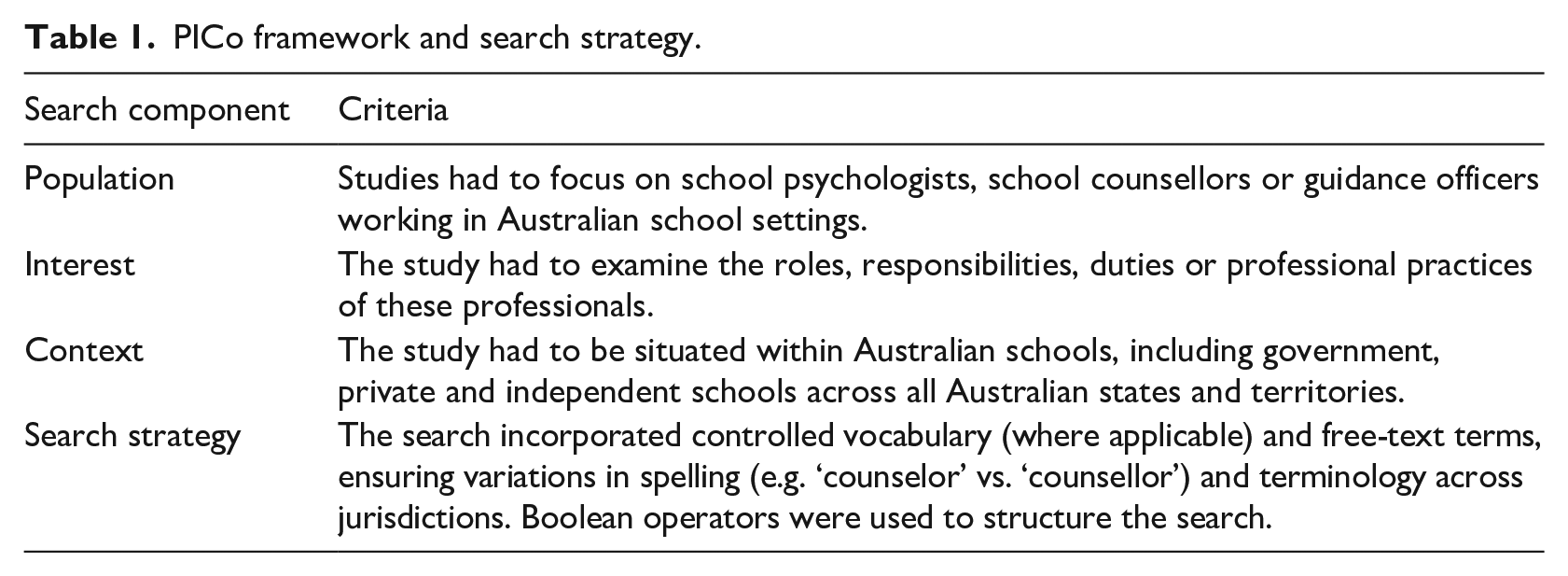
A systematic search was conducted in three phases across SCOPUS, Web of Science and Informit. The initial search (15 March 2024) and final search (1 May 2024) were limited to studies published between 2003 and 2024 to capture changes in the Australian educational landscape. No manual searches of reference lists were conducted. The review adhered to the PICo (Population, Interest, Context) framework (Lockwood et al., 2015) to determine clear inclusion parameters, as detailed in Table 1.
PICo framework and search strategy.
Search syntax and Boolean operators
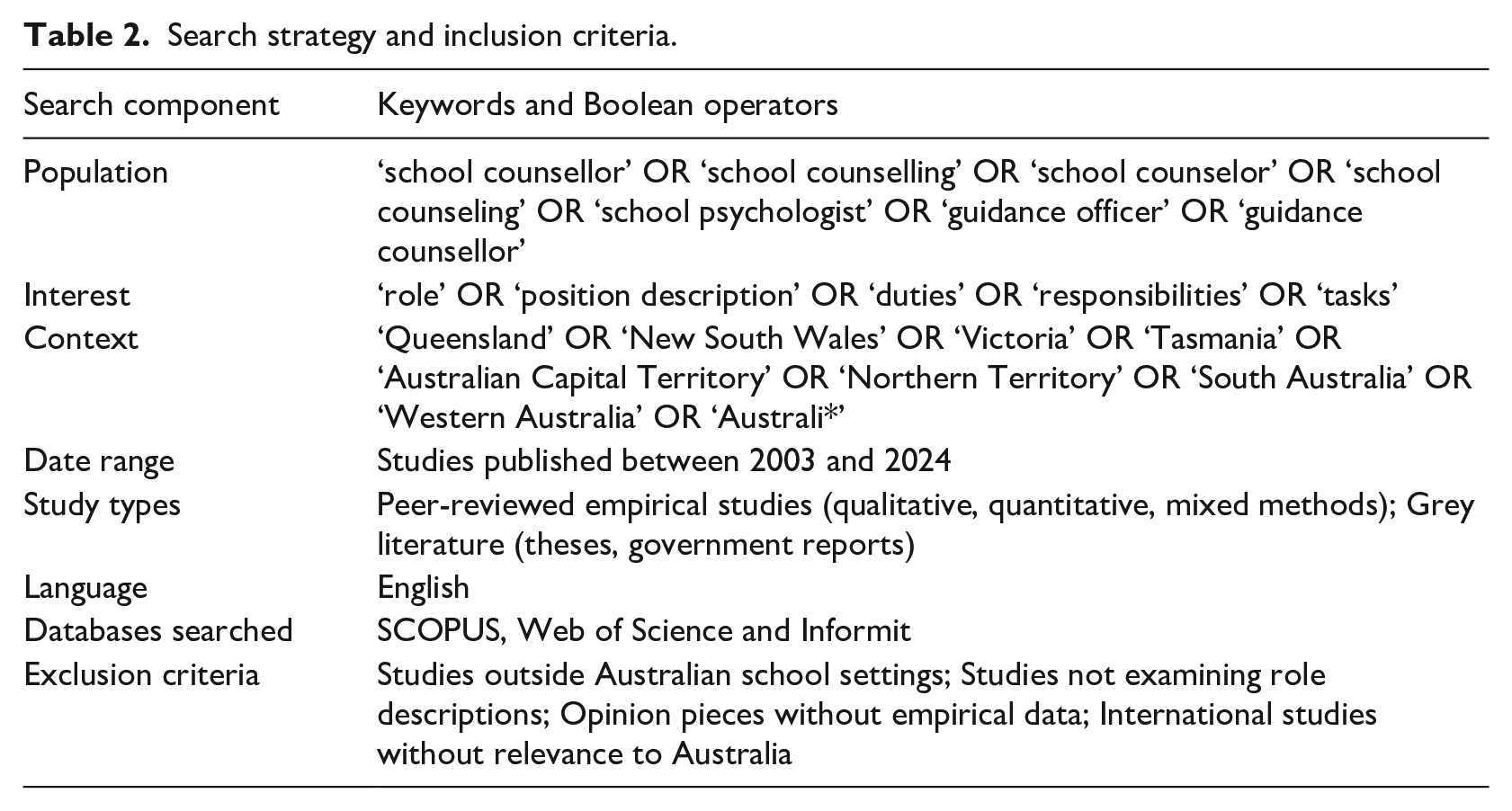
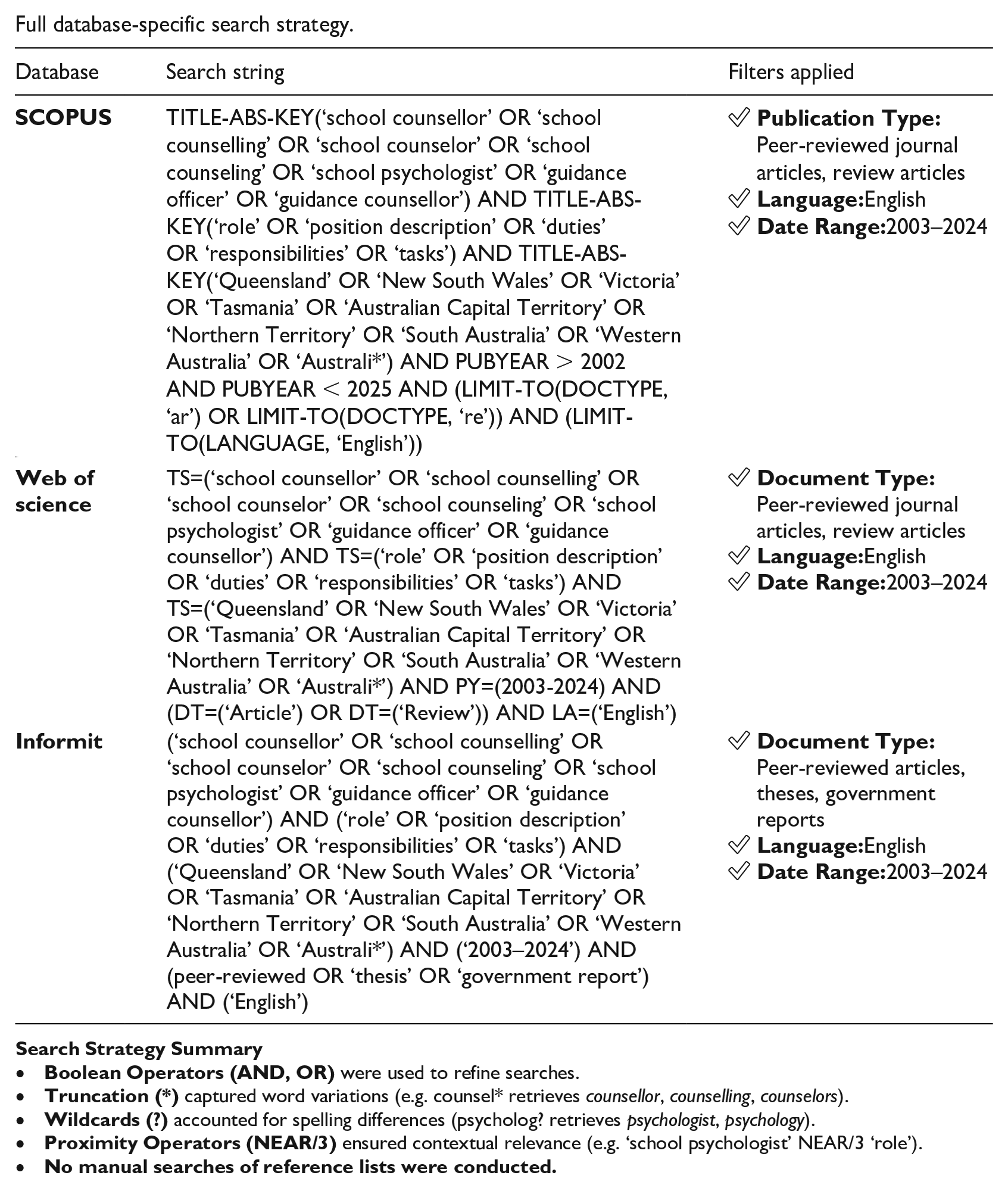
Boolean operators structured the searches across databases, with population-related terms such as ‘school counsellor’ OR ‘school psychologist’ OR ‘guidance officer’, interest-related terms such as ‘role’ OR ‘position description’ OR ‘responsibilities’, and location-specific terms such as ‘Queensland’ OR ‘New South Wales’ OR ‘Victoria’ OR ‘Australi*’ included. Search enhancements such as truncation (*), wildcards (?) and proximity operators (NEAR/3) ensured comprehensive retrieval of relevant literature. Filters applied included studies published in English, peer-reviewed journal articles, theses and government reports. Full database-specific search strategies are provided in Appendix A.
Study selection process
All retrieved studies were imported into EndNote for reference management, and duplicate records were removed before screening. A three-stage screening process was applied:
Title and Abstract Screening: Two independent reviewers screened titles and abstracts to exclude irrelevant studies.
Full-Text Review: Eligible studies were assessed for relevance and methodological rigor based on the predefined inclusion criteria.
Data Extraction and Thematic Categorisation: Studies were coded and synthesised using the Multi-Tiered System of Supports (MTSS) framework to categorise findings into Tier 1, Tier 2 and Tier 3 roles.
This structured approach ensured rigour, transparency and replicability, minimising bias and enhancing the reliability of findings (Table 2).
Search strategy and inclusion criteria.
Selecting studies
The search yielded 48 records, with 5 duplicates removed. Abstract screening excluded 27 records that did not meet the inclusion criteria, such as those focussing on non-Australian contexts or lacking empirical data. Following full-text review, 11 studies were included in the final synthesis. Exclusions at this stage were due to studies focussing on student mental health without addressing professional roles or insufficient methodological detail. Reviewer agreement was 85%, with discrepancies resolved through discussion. A systematic risk of bias assessment was conducted using the Mixed Methods Appraisal Tool (MMAT; Hong et al., 2018) to evaluate methodological rigour. Each study was assessed across five domains: relevance of research questions and design, clarity in data collection and analysis, appropriateness of study execution, potential for bias in participant selection and transparency in reporting. Two independent reviewers conducted the assessment, resolving discrepancies through consensus. Results, summarised in Appendix B, indicated that five studies had moderate risk of bias due to reliance on self-reported data, two had high risk due to unclear sampling and four demonstrated low risk with clear methodological designs. Bias sources included jurisdictional role variability, inconsistent professional definitions and small sample sizes.
Given the qualitative nature of included studies, no quantitative effect size calculations were performed. Instead, a narrative synthesis was employed, guided by a structured synthesis matrix to systematically extract and categorise findings. The thematic analysis process followed an iterative approach, with two researchers independently coding themes, refining them through collaborative discussions and mapping them onto the MTSS framework to align findings with professional role functions at different intervention levels. This process ensured methodological transparency, consistency and accuracy in synthesising findings. The inclusion of grey literature, such as theses and government reports, was necessary due to the limited availability of peer-reviewed studies on this topic. These sources provided valuable insights into professional roles that might not be captured in journal articles. However, potential biases from institutional perspectives and lack of formal peer review were acknowledged. To mitigate these risks, sources were critically appraised and cross-referenced with peer-reviewed literature where possible. A descriptive analysis of the tasks undertaken by SWBP was derived from the thematic analysis. While location and context of each study was recorded, no comparative analysis based on this criteria was conducted.
This systematic review was not pre-registered due to its exploratory nature and the absence of funding requirements necessitating pre-registration. However, all methodological decisions – including search strategy, inclusion criteria and data analysis – were determined prior to the review and fully documented in accordance with PRISMA 2020 guidelines. Formal statistical assessments of publication bias were not conducted due to the qualitative focus of this review. However, potential bias was minimised through the inclusion of grey literature to capture non-published institutional insights and the use of multiple databases (SCOPUS, Web of Science and Informit) to ensure diverse sources. The GRADE approach was applied to assess certainty of evidence, classifying findings as moderate confidence for studies using multiple data sources and validated methodologies and low confidence for studies reliant on self-reported data or small sample sizes. This methodology adhered strictly to PRISMA 2020 guidelines, ensuring a transparent, systematic and rigorous review process. The structured search, screening, risk assessment and thematic synthesis approach provides a robust foundation for understanding the evolving roles of school psychologists, school counsellors and guidance officers within Australia’s MTSS framework (Figure 1).
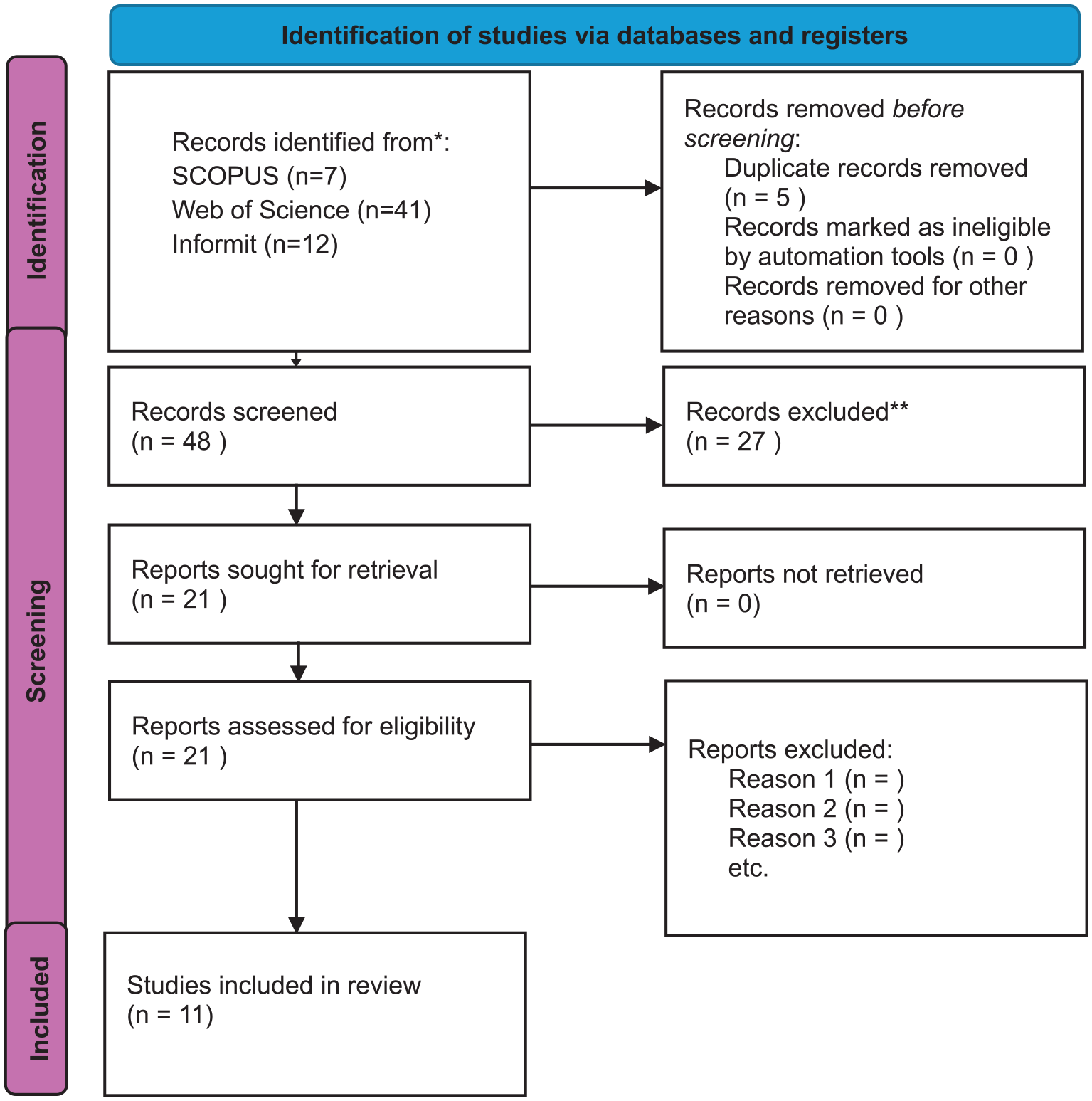
PRISMA flow diagram of search strategy and inclusion/exclusion of articles.
Analysis
A multiphase thematic analysis was conducted to synthesise the findings from the 11 included studies, following PRISMA 2020 guidelines (Page et al., 2021). The analysis aimed to evaluate study quality, identify key themes and explore relationships within the data. To systematically assess and organise the findings, studies were entered into a synthesis matrix tool (See Appendix C), allowing for the categorisation of themes, relationships and key findings (Wright et al., 2007). This tool facilitated structured data extraction, ensuring consistency in how studies were assessed and compared. Given the relatively small sample size, a descriptive evaluation was performed to summarise and contextualise the research findings (Braun & Clarke, 2006; Meier et al., 2006).
A narrative synthesis was chosen as the most appropriate method for analysis, as it allows for an integrative approach to interpreting diverse study designs and methodologies (Wright et al., 2007). This approach enabled a holistic understanding of the roles of school psychologists, counsellors and guidance officers within Australian schools, rather than relying solely on a meta-analytical approach, which would have been unsuitable given the heterogeneity of study designs. The thematic analysis was conducted in two phases:
First-Order Themes: The initial stage involved open coding of each study, documenting role-related tasks and responsibilities under preliminary themes (Braun & Clarke, 2006; Wright et al., 2007). These were recorded in the synthesis matrix as first-order themes, capturing the descriptive aspects of the role.
Second-Order Themes: The studies were then re-examined and coded to identify higher-level patterns, aligning findings with the Multi-Tiered System of Supports (MTSS) framework (Meier et al., 2006). Studies were cross-checked for consistency, ensuring alignment between themes and supporting an iterative refinement process.
By structuring the analysis in this way, the review provided a systematic, replicable synthesis of existing literature, allowing for a clearer understanding of the evolving roles of school well-being professionals within the Australian educational context.
Results
The role at Tier 1
The findings indicate that the Tier 1 role of SWBP encompassed whole-school and systemic approaches, with whole-school programmes linked to higher job satisfaction (Bell & McKenzie, 2013). However, Jimerson et al. (2006) noted that Tier 1 activities accounted for a relatively small proportion of SWBP workloads, with primary prevention programmes and whole-school professional development comprising only 7% and 6% of workload respectively. It was evident that SWBP contributed to whole school behaviour policy development and provided advice on discipline for individual students, although their input was not always effectively utilised (Howard et al., 2022; Thielking & Jimerson, 2006). Further, school psychologists were also identified as assisting in accessing additional funding in order to support teachers in classroom activities (Beltman et al., 2016) and contributing to schoolwide culture by fostering positive collaborations with principals (Bettman & Digiacomo, 2022). Building on assumptions that the role involves engagement with funding acquisition and school culture, Howard et al. (2022) felt that SWBP were well placed to support leadership in change management.
Professional development for teachers was identified as a significant component of Tier 1 responsibilities, with SWBP providing training on trauma-informed practices, behaviour support, reasonable adjustments for learning, mental health first aid and developing learning support plans (Bell & McKenzie, 2013; K. Eckersley, 2011; Howard et al., 2022; Thielking & Jimerson, 2006). Additionally, Howard et al. (2022) and Tsartas and McKenzie (2005) identified collaboration among students, families, communities and schools as a key priority for whole school prevention and promotion of mental health.
Despite their involvement in a range of activities at a whole school level, research engagement at Tier 1 was constrained by time limitations, with SWBP reporting little opportunity to collect data or review literature (K. Eckersley, 2011). Participants in K. Eckersley’s (2011) study expressed a strong desire for closer ties with universities to enhance school-based practices and contribute to university-led projects. Conducting research on school-specific issues was also identified as a potential area of contribution for SWBP by Bell and McKenzie (2013) and Thielking and Jimerson (2006).
The role at Tier 2
The findings indicate that the Tier 2 role of SWBP included delivering group programmes aimed at addressing shared student needs and fostering skill development in a collaborative environment (Thielking & Jimerson, 2006). Additionally, building social connections among students through small groups and targeted activities was identified as a key component of their work at this level (Howard et al., 2022). Interestingly, there was little in the articles reviewed that spoke to the role of SWBP in the identification processes of students needing supporting at a Tier 2 level.
The role at Tier 3
Service delivery
The findings indicate that Tier 3 service delivery predominantly employs a medical model, emphasising individualised interventions. However, this approach has been criticised for its limitations, with a systemic model preferred to understand students within the broader context of their home, school and community (Bell & McKenzie, 2013). Additionally, SWBP are often the primary referring agents when a student’s needs exceed the knowledge or capacity of teachers, facilitating access to specialised support (Thielking & Jimerson, 2006).
Assessment tasks
Assessment tasks were identified as a core component of Tier 3 responsibilities in the majority of the articles (n = 7), encompassing psychoeducational assessments, identification of disabilities and mental health evaluations (Bell & McKenzie, 2013; Beltman et al., 2016; K. Eckersley, 2011; Jimerson et al., 2006; Thielking & Jimerson, 2006; Thielking et al., 2006; Tsartas & McKenzie, 2005). On average, SP spent 22% of their time conducting psychoeducational assessments (Jimerson et al., 2006). Despite their importance, assessment tasks were associated lower job satisfaction, particularly in government schools where assessments were more frequent than in Catholic or independent schools (Bell & McKenzie, 2013). Barriers to assessments during COVID-19, especially for mental health and safety, were highlighted by Reupert et al. (2022). Additionally, assessments were considered less critical in secondary schools compared to primary settings (Tsartas & McKenzie, 2005). It is worth noting that while the majority of articles identified conducting assessments as integral to the role of SWB, they did not discuss this aspect of the role as part of the identification of students needing support at a Tier 3 level.
Collaborating
Collaboration was identified as a critical but complex aspect of the Tier 3 role, requiring SWBP to engage with multiple stakeholders, including teachers, parents, external organisations and community members. Multidisciplinary case management was a key feature of the role as identified by Howard et al. (2022), involving child protection, medical and mental health agencies and other specialists. Further to this Howard et al. (2022) discussed how the SWBP role included facilitating collaboration between these groups, ensuring alignment in support for students. Contrastingly, Bell and McKenzie (2013) stated that consultation with teachers and parents occupied only a small proportion workload, at 14% and 11% respectively. Reinforcing the dual need for case management and clinical practice skills in SP roles, (Bettman & Digiacomo, 2022) highlighted that counsellors cannot work in isolation though achieving consensus among stakeholders was often challenging where parents’ skill sets may vary or they hold misconceptions about mental health.
Additional collaborative tasks identified included SWBP participation in case management meetings, with Howard et al. (2022) noting that less than half of their participants actively worked with communities, even though 61% viewed it as an important aspect of the role. Similarly, K. Eckersley (2011) identified that 65% of SWBP acknowledged working with traumatised students and collaborating with external support organisations, and 80% rating this as an essential task. Participants in Tsartas and McKenzie’s (2005) study rated consultation with staff on learning and behaviour problems as the most important task for SWBP, although secondary teachers ranked collaboration on the inclusion of disabled students as the least important.
Finally, the unique nature of the SWBP role in working with diverse stakeholders was underscored by Thielking and Jimerson (2006) who emphasised the critical role in navigating various perspectives within the school setting. This was reinforced by Reupert et al. (2022) who found that parents increasingly sought support from SWBP for managing their child’s difficult behaviours, emotional wellbeing and academic work completion at home while Bettman and Digiacomo (2022) found that SWBP -principal collaboration was noted as a crucial element for fostering positive school cultures, enhancing student academic achievement, emotional health and readiness for postsecondary opportunities. This highlights the diverse range of stakeholders that SWBP are required to work with, and the diversity of issues that they seek to address in these collaborations.
Counselling
Counselling was universally (n = 11) identified as a significant component of Tier 3 responsibilities, with Bell and McKenzie (2013) identifying that SWBP dedicated approximately 29% of their time to this task. The use of cognitive behaviour therapy was highlighted as particularly effective indicating the need for knowledge of therapeutic approaches, although other interventions, such as family therapy, were not commonly included in the role (Bettman & Digiacomo, 2022). Tsartas and McKenzie (2005) revealed that counselling was perceived as more important in secondary schools than in primary schools, particularly for addressing severe issues such as suicidal ideation, eating disorders and trauma. However, they also noted that SWBP may not have specialised training or qualifications to help in these areas. Finally, Bettman and Digiacomo (2022) discussed how, in some circumstances, SWBP provided counselling for teachers following critical incidents, such as student suicides.
Discipline
An interesting finding was the perceptions of the role as it related to student discipline. For example, Thielking and Jimerson (2006) found that though SWBP would like to provide advice on disciplinary consequences for students due to their expertise and qualifications in understanding behaviour, however they felt that this advice was not always well received by administrative staff. They emphasised that while SWBP felt well placed to advise on discipline, the participants in their study did not feel it appropriate for them to deliver or apply disciplinary consequences, as this could lead to a break down in relationship between SWBP and student. Further, Beltman et al. (2016) discussed that while counselling can help students to develop emotional regulation skills, which in turn improves their behaviour in the classroom and reduces teacher stress, though Thielking and Jimerson (2006) emphasised that counselling should not be made mandatory as a disciplinary consequence.
Additional aspects
There were some aspects of the job that, though they are known to be a part of the role description, were not consistently evident in the discussions of the role. For example, only Bell and McKenzie (2013) discussed careers guidance when mentioning that parents were unaware that school psychologists undertook this role. Further, despite SWBP being considered as mandatory reporters in all jurisdictions in Australia, only Howard et al. (2022) discussed child protection as part of the SWBP role, and stated that school counsellors were well placed to create spaces where students feel safe enough to make disclosures. Similarly, crisis, or critical incident, management was only discussed by Howard et al. (2022) who stated it was standard practice for school wellbeing staff and Tsartas and McKenzie (2005) who found that crisis work was rated as less important in a primary school setting than in a secondary school setting by school staff (teachers and principals).
The way the role transcend tiers
Finally, the findings showed that there were aspects of the role that transcend, or occur across, the tiers of support. For example, Howard et al. (2022) highlighted how trauma informed practice, as well as culturally informed practice, can occur across tiers with school wellbeing staff able to influence school wide policy and provide whole school training in Tier 1, while simultaneously applying this knowledge to Tier 3 interventions. Interestingly, while many of the articles discussed collaborating with stakeholders at length, and emphasised the importance of working with others as a crucial aspect of the role, only Thielking et al. (2006) discussed the need for supervision (a formal process for receiving professional guidance and undertaking reflective learning). They identified that one third of their participants did not receive supervision, raising concerns for those who do not have supervision as a regular task within their role. Finally, both K. Eckersley (2011) and Jimerson et al. (2006) discussed how administrative responsibilities including organising files (Tier 3) and developing policies and procedure (Tier 1) are essential components of the SWBP role.
Discussion
The findings of this systematic review highlight the complexity of the roles undertaken by SWBP in Australian schools. While there is evidence that the responsibilities of Australian SWBP span multiple tiers of the MTSS framework, each with distinct demands and tasks, there is a lack of clarity whereby these roles, and the tasks undertaken, are not explicitly described as part of a broader MTSS framework. The concern that Australian SWBP may have limited knowledge of how their work fits within a MTSS framework has been acknowledged in a recent study of tertiary preparation programmes (Brown, 2025). One barrier to implementing MTSS in the Australian context may be a lack of instructional focus on MTSS in higher education degrees that prepare SWPBs. Loftus-Rattan et al. (2023) highlight that while the use of MTSS in USA schools is well established, psychology students are still often unfamiliar with the framework’s use in schools, despite the similarities between the MTSS and public health models of intervention and prevention. Even though SWBP are well placed to lead school MTSS implementation and culture (Goodman-Scot & Daigle, 2022), lack of pre or in-service training in MTSS could prevent SWBP from becoming MTSS leaders within their school environments.
Another significant finding was the limited explicit discussion of Tier 1 tasks forming a larger MTSS framework as part of the role of SWBP. This is potentially a reflection of limited research in Australia in the space of MTSS implementation as part of the SWBP role, though it might also reflect an inconsistent approach to MTSS in Australia. Internationally, the MTSS process used to identify students at a Tier 1 level can also uncover if the supports might be better directed to supporting the teacher implement Tier 1 interventions (Buckman, 2021). However, Vetter et al., (2024) highlighted how schools may have difficulties in implementing MTSS with fidelity, especially when knowledge of MTSS and a lack of consistent language or process is evident.
The findings also revealed that even though there appeared to be a disproportionate amount of time spent on Tier 3 activities such as psychoeducational assessment, there was limited discussion of assessments as a tool to identify students who require academic, behavioural or social/emotional supports at a Tier 3 level. Beyond organisation of prevention (Tier 1) strategies, MTSS is a framework that seeks to proactively identify students who require additional support to succeed through routine and specialised data collection. This is a crucial element of both Tier 2 and Tier 3. In a review of American MTSS implementation, Van Camp et al. (2021) emphasised the need for schools to have fidelity in the implementation of Tier 1 practices to ensure that students in need of Tier 2 or Tier 3 supports are effectively identified. Research demonstrates that these Tier 1 system-wide initiatives help to identify and address issues early, reducing the demand for intensive Tier 3 interventions and supportive school cultures (Goodman-Scott et al., 2020; Sugai et al., 2019).
Finally, the findings suggest there is some ambiguity around the role of SWBP, particularly regarding stakeholder expectations of SWBP, further complicating the alignment of practice with intended outcomes (Blake, 2020). However, a recurring issue is the ambiguity surrounding the roles of SWBP, which are inconsistently defined across jurisdictions and educational contexts (Howard et al., 2022) and include differences in stakeholder perceptions of the role (Blake, 2020). Role ambiguity would cease to be an issue if all jurisdictions and contexts conceptualised the role within an MTSS framework. Future comparative research, including longitudinal studies, could investigate the efficacy of using a MTSS framework in Australian education settings to structure the SWBP role in schools across contexts and educational systems. As a MTSS framework allows SWBP to address the many facets of their role, including academic and mental health supports for students, it is an ideal framework to begin to examine the tasks undertaken by SWBP in their role (Fallon, 2023; Ziomek-Daigle, 2016). This could provide greater certainty about the tasks undertaken at each tier, fostering collaboration among stakeholders and integrating the roles of SWBP more effectively into systemic frameworks. By addressing these areas, the profession can better support the development of clear, consistent and evidence-based practices that align with the educational and well-being goals of Australian schools.
Limitations
There were noted limitations to this review of the literature. Firstly, the search terms chosen may have been too narrow. For example, studies such as those by K. T. Eckersley and Deppeler (2013) and Hyde et al. (2022) both report on the tasks undertaken by school psychologists, however they use the phrase ‘psychologists in schools’ or ‘school psychology’ in the title or abstract. A broader employment of search terms may have yielded additional results that could have been included in this paper. A further limitation to this study related to the terms used to describe the roles of SWBP is the increasing diversity of professionals that are being used to deliver mental health and well-being supports within school settings. For example, Victoria employs mental health professional such as occupational therapists, social workers and mental health nurses in secondary and specialist schools (Victoria State Government, 2025) and South Australia has added social workers and occupational therapists to their school well-being workforce (Department of Education South Australia, 2025). Queensland likewise has also introduced social workers to deliver well-being programmes to individual students and their families, along with small group servics (Queensland Government, 2025).
Conclusion
Literature on the SWBP role within Australia is a growing area of research. This is evident in recent efforts to investigate specific areas of practice, such as trauma informed care (Oberg & Bryce, 2022; Schimke et al., 2022), specific mental health interventions (Gunawardena et al., 2024) and behaviour support (Fox et al., 2022). The contribution of this paper lies in the findings that the role of SWBP in Australia has not yet been fully mapped against the MTSS framework and as such, there are disparities in the tasks undertaken and the emphasis placed on them. In order to gain a clearer picture of how MTSS influences the role and tasks of Australian SWBP, this paper calls for further research on the role from a holistic perspective.
Footnotes
Appendix A
Full database-specific search strategy.
| Database | Search string | Filters applied |
|---|---|---|
|
|
TITLE-ABS-KEY(‘school counsellor’ OR ‘school counselling’ OR ‘school counselor’ OR ‘school counseling’ OR ‘school psychologist’ OR ‘guidance officer’ OR ‘guidance counsellor’) AND TITLE-ABS-KEY(‘role’ OR ‘position description’ OR ‘duties’ OR ‘responsibilities’ OR ‘tasks’) AND TITLE-ABS-KEY(‘Queensland’ OR ‘New South Wales’ OR ‘Victoria’ OR ‘Tasmania’ OR ‘Australian Capital Territory’ OR ‘Northern Territory’ OR ‘South Australia’ OR ‘Western Australia’ OR ‘Australi*’) AND PUBYEAR > 2002 AND PUBYEAR < 2025 AND (LIMIT-TO(DOCTYPE, ‘ar’) OR LIMIT-TO(DOCTYPE, ‘re’)) AND (LIMIT-TO(LANGUAGE, ‘English’)) | ✅ ✅ ✅ |
|
|
TS=(‘school counsellor’ OR ‘school counselling’ OR ‘school counselor’ OR ‘school counseling’ OR ‘school psychologist’ OR ‘guidance officer’ OR ‘guidance counsellor’) AND TS=(‘role’ OR ‘position description’ OR ‘duties’ OR ‘responsibilities’ OR ‘tasks’) AND TS=(‘Queensland’ OR ‘New South Wales’ OR ‘Victoria’ OR ‘Tasmania’ OR ‘Australian Capital Territory’ OR ‘Northern Territory’ OR ‘South Australia’ OR ‘Western Australia’ OR ‘Australi*’) AND PY=(2003-2024) AND (DT=(‘Article’) OR DT=(‘Review’)) AND LA=(‘English’) | ✅ ✅ ✅ |
|
|
(‘school counsellor’ OR ‘school counselling’ OR ‘school counselor’ OR ‘school counseling’ OR ‘school psychologist’ OR ‘guidance officer’ OR ‘guidance counsellor’) AND (‘role’ OR ‘position description’ OR ‘duties’ OR ‘responsibilities’ OR ‘tasks’) AND (‘Queensland’ OR ‘New South Wales’ OR ‘Victoria’ OR ‘Tasmania’ OR ‘Australian Capital Territory’ OR ‘Northern Territory’ OR ‘South Australia’ OR ‘Western Australia’ OR ‘Australi*’) AND (‘2003–2024’) AND (peer-reviewed OR ‘thesis’ OR ‘government report’) AND (‘English’) | ✅ ✅ ✅ |
Appendix B
Risk of bias summary.
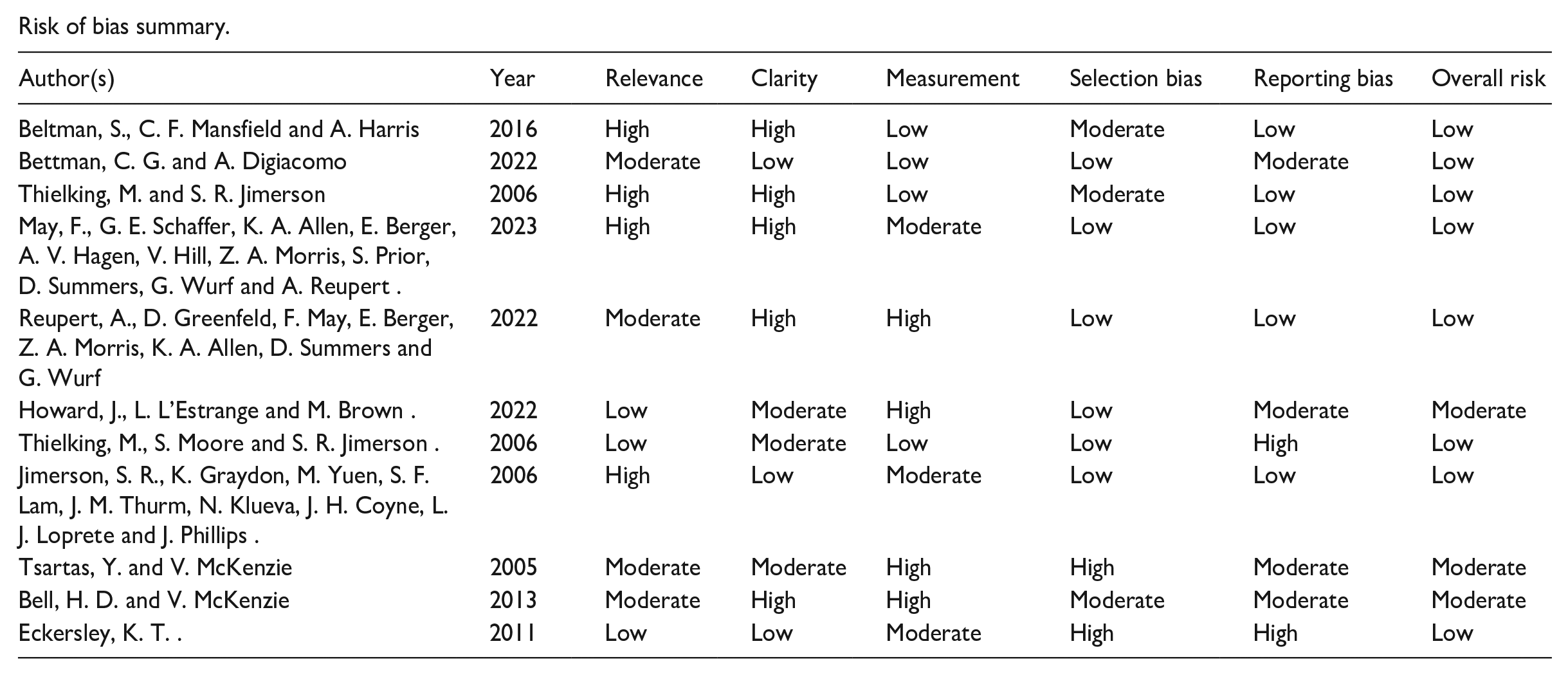
| Author(s) | Year | Relevance | Clarity | Measurement | Selection bias | Reporting bias | Overall risk |
|---|---|---|---|---|---|---|---|
| Beltman, S., C. F. Mansfield and A. Harris | 2016 | High | High | Low | Moderate | Low | Low |
| Bettman, C. G. and A. Digiacomo | 2022 | Moderate | Low | Low | Low | Moderate | Low |
| Thielking, M. and S. R. Jimerson | 2006 | High | High | Low | Moderate | Low | Low |
| May, F., G. E. Schaffer, K. A. Allen, E. Berger, A. V. Hagen, V. Hill, Z. A. Morris, S. Prior, D. Summers, G. Wurf and A. Reupert . | 2023 | High | High | Moderate | Low | Low | Low |
| Reupert, A., D. Greenfeld, F. May, E. Berger, Z. A. Morris, K. A. Allen, D. Summers and G. Wurf | 2022 | Moderate | High | High | Low | Low | Low |
| Howard, J., L. L’Estrange and M. Brown . | 2022 | Low | Moderate | High | Low | Moderate | Moderate |
| Thielking, M., S. Moore and S. R. Jimerson . | 2006 | Low | Moderate | Low | Low | High | Low |
| Jimerson, S. R., K. Graydon, M. Yuen, S. F. Lam, J. M. Thurm, N. Klueva, J. H. Coyne, L. J. Loprete and J. Phillips . | 2006 | High | Low | Moderate | Low | Low | Low |
| Tsartas, Y. and V. McKenzie | 2005 | Moderate | Moderate | High | High | Moderate | Moderate |
| Bell, H. D. and V. McKenzie | 2013 | Moderate | High | High | Moderate | Moderate | Moderate |
| Eckersley, K. T. . | 2011 | Low | Low | Moderate | High | High | Low |
Appendix C
Synthesis matrix tool.
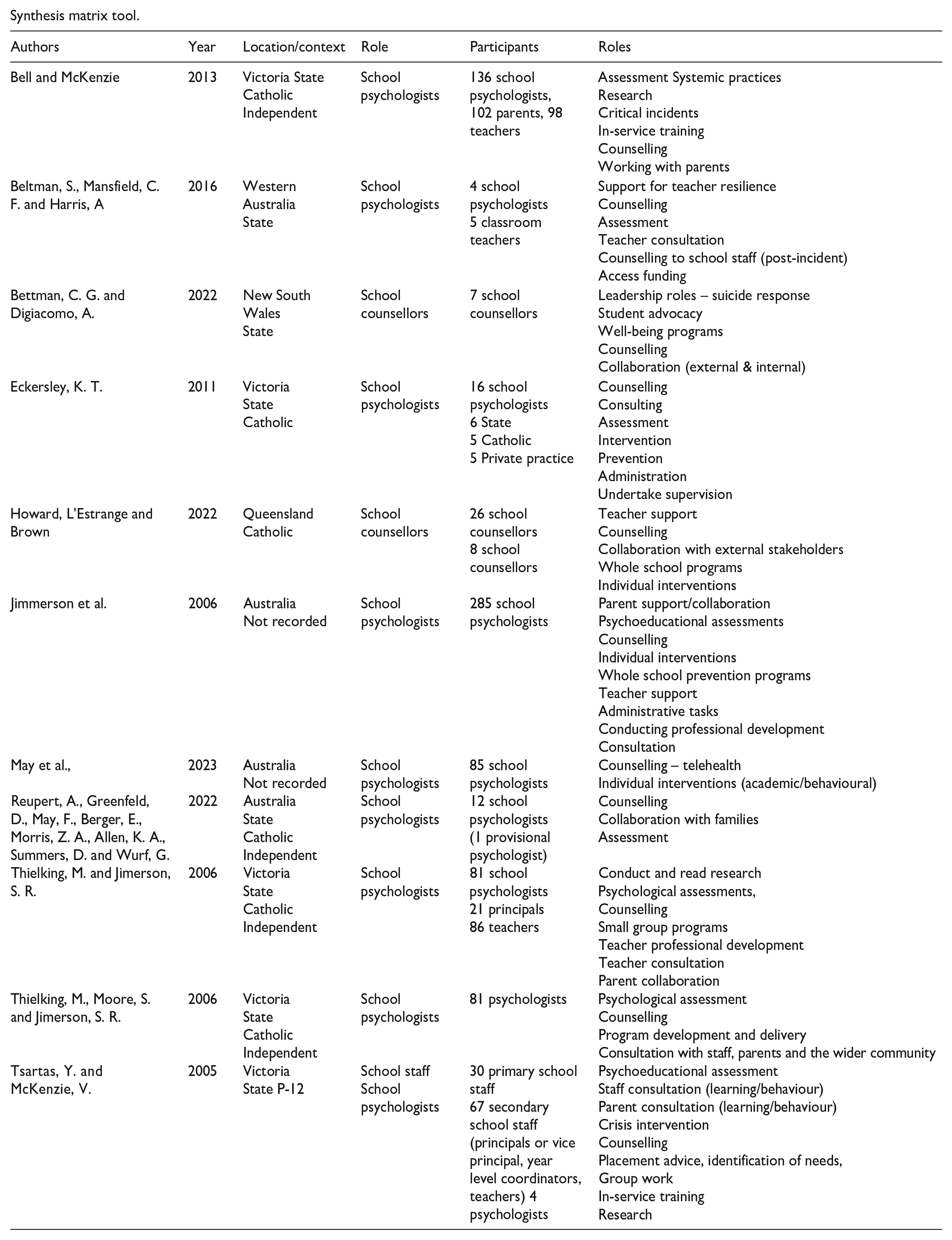
| Authors | Year | Location/context | Role | Participants | Roles |
|---|---|---|---|---|---|
| Bell and McKenzie | 2013 | Victoria State Catholic Independent | School psychologists | 136 school psychologists, 102 parents, 98 teachers | Assessment Systemic practices Research Critical incidents In-service training Counselling Working with parents |
| Beltman, S., Mansfield, C. F. and Harris, A | 2016 | Western Australia State |
School psychologists | 4 school psychologists 5 classroom teachers |
Support for teacher resilience Counselling Assessment Teacher consultation Counselling to school staff (post-incident) Access funding |
| Bettman, C. G. and Digiacomo, A. | 2022 | New South Wales State |
School counsellors | 7 school counsellors | Leadership roles – suicide response Student advocacy Well-being programs Counselling Collaboration (external & internal) |
| Eckersley, K. T. | 2011 | Victoria State Catholic |
School psychologists | 16 school psychologists 6 State 5 Catholic 5 Private practice |
Counselling Consulting Assessment Intervention Prevention Administration Undertake supervision |
| Howard, L’Estrange and Brown | 2022 | Queensland Catholic |
School counsellors | 26 school counsellors 8 school counsellors |
Teacher support Counselling Collaboration with external stakeholders Whole school programs Individual interventions |
| Jimmerson et al. | 2006 | Australia Not recorded |
School psychologists | 285 school psychologists | Parent support/collaboration Psychoeducational assessments Counselling Individual interventions Whole school prevention programs Teacher support Administrative tasks Conducting professional development Consultation |
| May et al., | 2023 | Australia Not recorded |
School psychologists | 85 school psychologists | Counselling – telehealth Individual interventions (academic/behavioural) |
| Reupert, A., Greenfeld, D., May, F., Berger, E., Morris, Z. A., Allen, K. A., Summers, D. and Wurf, G. | 2022 | Australia State Catholic Independent |
School psychologists | 12 school psychologists (1 provisional psychologist) | Counselling Collaboration with families Assessment |
| Thielking, M. and Jimerson, S. R. | 2006 | Victoria State Catholic Independent |
School psychologists | 81 school psychologists 21 principals 86 teachers |
Conduct and read research Psychological assessments, Counselling Small group programs Teacher professional development Teacher consultation Parent collaboration |
| Thielking, M., Moore, S. and Jimerson, S. R. | 2006 | Victoria State Catholic Independent |
School psychologists | 81 psychologists | Psychological assessment Counselling Program development and delivery Consultation with staff, parents and the wider community |
| Tsartas, Y. and McKenzie, V. | 2005 | Victoria State P-12 |
School staff School psychologists |
30 primary school staff 67 secondary school staff (principals or vice principal, year level coordinators, teachers) 4 psychologists |
Psychoeducational assessment Staff consultation (learning/behaviour) Parent consultation (learning/behaviour) Crisis intervention Counselling Placement advice, identification of needs, Group work In-service training Research |
Declaration of conflicting interests
The author(s) declared no potential conflicts of interest with respect to the research, authorship, and/or publication of this article.
Funding
The author(s) received no financial support for the research, authorship, and/or publication of this article.
Ethical approval
This project did not require ethical approval.

Data availability
There is no data associated with this paper.