




Abstract
School counsellors and psychologists work in challenging and complex environments. Clinical supervision is a form of support, and personal and professional development for counsellors and psychologists including those working in schools. Training is not always provided or available for supervisors or supervisees. The research question investigated was: What are the experiences of supervision and supervision training of practising Australian school counsellors and psychologists? Data were collected by an online survey and analysed using descriptive statistics such as frequencies. Hypotheses were tested using Spearman rank correlation and Mann-Whitney tests. Findings revealed that participants’ experiences of clinical supervision varied and benefits included support, new skills, feedback, and debriefing. Most participants had received some training in supervision. Overall, the findings suggest that supervision is beneficial for school counsellors and psychologists and that it may benefit practice.
Introduction
Clinical supervision has long been advocated as a form of support and professional development for counsellors (e.g. Bernard & Goodyear, 2019; Creaner, 2014; Gillen et al., 2024; Loganbill et al., 1982) including school counsellors and psychologists whose work tends to be busy and emotionally stressful (Gillen et al., 2024; M. McMahon & Patton, 2000, 2001; Miserentino & Hannon, 2022; Pennell et al., 2023). A longstanding definition of clinical supervision describes it as “an intensive interpersonally focussed one-to-one relationship in which one person is designated to facilitate the therapeutic competence in the other person” (Loganbill et al., 1982, p. 4). Supervision assists counsellors develop professionally and personally over time in relation to their skills and knowledge, emotional awareness, motivation, and ethical practice (Chae & Backer, 2024; Loganbill et al., 1982) which in turn influences their care of clients; indeed, supervision’s “raison d’être” (Holloway, 1995, p. 92) is “to ensure best practice in the service of the client” (Creaner, 2014, p. 326). Founded on a range of theories, methods, and techniques, providing supervision can be learned through training (Bernard & Goodyear, 2019; Neyland-Brown et al., 2019). The focus of this article is on the experiences of supervision and supervision training of Australian practising school counsellors and psychologists.
Clinical Supervision
Providing clinical supervision is a profession in its own right (e.g. Falender et al., 2014; van Kessel, 2023). It is underpinned by supervision theories, methods, and techniques (Neyland-Brown, 2019) that can inform supervision practice and supervision training. Elements of other disciplines, specifically teaching, counselling, and consultation, as well as evaluation, inform supervision practice (Bernard & Goodyear, 2019). In practice, clinical supervision is experiential and facilitates self-reflection and self-assessment by supervisees (Falender & Shafranske, 2017). Clinical supervision is commonly provided for counsellors, including school counsellors and psychologists in training during onsite practicum placements (e.g. Merlin & Brendel, 2017; Uellendahl, & Tenenbaum, 2015), and less commonly for practising professional counsellors and psychologists (e.g. Damra & Qa’aymeh, 2024; Thielking et al., 2006).
Considerable work has been done to identify what constitutes effective clinical supervision (e.g. Falender et al., 2014; Ladany et al., 2013). The quality of the supervisory relationship is fundamental to effective supervision (Bernard & Goodyear, 2019; Creaner, 2014; Harries, 2024). Benefits of supervision include enhanced self-efficacy (Cashwell & Dooley, 2001), professional and skill development (Damra & Qa’aymeh, 2024; Gillen et al., 2024; M. McMahon & Patton, 2001), and learning (Harries, 2024). Importantly, supervision contributes to a professional culture in work environments (Bernard & Goodyear, 2019) and may reduce burnout (Damra & Qa’aymeh, 2024; Lambie, 2007; Moyer, 2011).
Supervision Training for Supervisors and Supervisees
Despite claims that supervision is a profession in its own right (e.g. Bernard & Goodyear, 2019; Falender et al., 2014; van Kessel, 2023), supervisors commonly begin their supervisory practices on the basis of the supervision they received rather than specific supervision training (Falender & Shafranske, 2017). This approach, however, is not an adequate foundation for conducting supervision and “ignores the complexity of the supervisory process and, further, may lead to the perpetuation of inadequate or poor practices, resulting in marginally effective or even substantially ineffective supervision” (Falender & Shafranske, 2017, p. 6).
Clinical supervision facilitates a learning process. For example, in a clinical supervision learning cycle (Falender & Shafranske, 2017) supervisees are expected to self-assess, self-reflect, respond to feedback, and apply learning from feedback. Thus, supervision training could assist supervisees including those in training and practising professionals to better understand their roles and responsibilities in supervision and maximise their participation in supervision. To date, limited attention has been given to supervision training for supervisees and in the profession of school counselling.
School Counsellor Supervision and Supervision Training
School counselling is a specialised form of counselling that “is differentiated by characteristics unique to the school setting” (Merlin & Brendel, 2017, p. 304). Supervision is “integral to effective school counseling practice” (Miserentino & Hannon, 2022). Based on a content analysis of 69 articles on supervision of school counsellors published between 1968 and 2017, Bledsoe et al. (2019) concluded that “school counseling supervision remains less clearly defined and implemented compared to other counseling specialties and related disciplines” (p. 7) and that advocacy is needed so that school counsellors receive the supervision they need. They suggested that both group supervision and peer supervision could contribute to filling this need.
The quantity and quality of supervision may enhance school counsellor competence (Randick et al., 2019) and school counsellors who receive supervision may experience greater career satisfaction (Bledsoe et al., 2019; Miserentino & Hannon, 2022; Neyland-Brown et al., 2019). In research that investigated the supervision experiences of rural school counsellors in the United States, Duncan et al. (2014) found that participants perceived that supervision is important for their personal and professional growth. Supervision has also been found to be a source of support and feedback for school counsellors (Lambie, 2007).
Barriers to school counsellor supervision include who is providing the supervision, school counsellors’ reluctance to participate in it, and the supervisory focus (Gillen et al., 2024). Further research on the supervisory needs of school counsellors and psychologists is warranted (Bledsoe et al., 2019; Miserentino & Hannon, 2022) to better understand the personal and professional benefits they experience from supervision (Neyland-Brown et al., 2019).
While supervision training is provided in professions such as psychology (e.g. Australian Psychological Society, 2024), to date little training specific to school counsellors and school counsellor supervisors is available. Based on a critical review of school counsellor supervision literature, Miserentino and Hannon (2022) concluded that school counsellor supervisors should be employed as such and that their training for the role be standardised.
In the United States, rural school counsellors opined that being trained for supervision was important (Duncan et al., 2014). Neyland-Brown et al. (2019) found that school counsellor site supervisors who had received supervision training rated themselves higher on self-efficacy than school counsellors who had received no training. Despite this, it was also found there were no differences in the evaluation given by supervisees to supervisors who had received training and those who had not. Supervision training benefits school counsellors and psychologists who could potentially provide site-supervision for interns and practicum students benefit from supervision training (Chae & Backer, 2024). For example, a study conducted in the United States found that supervision training for potential school counsellor site supervisors, not only prepared them for their roles as supervisors but also rejuvenated their daily school counselling practice and the insights gathered through self-reflection helped them with goal setting and planning their future professional development (Chae & Backer, 2024).
The Australian Context
In the Australian context, research about the supervision and supervision training of school counsellors and psychologists was conducted late last century and in the early 21st century. This previous Australian research (M. McMahon & Patton, 2001; Thielking et al., 2006) found that school counsellors’ experience of supervision was variable with some not receiving any supervision and some being unsatisfied with what supervision they received. Further, M. McMahon and Patton (2001) reported that 24.1% of respondents never received supervision, 28.6% received supervision once a month or more, 26.8% received supervision four times a year, and 20.4% received supervision once or twice a year. Of those who received supervision, 56.1% indicated that the amount of time they spent in supervision was less than adequate and 43.9% indicated that it was adequate or very adequate. Similarly, Thielking et al. (2006) reported that nearly a third of school psychologists in her sample did not receive supervision and the others participated in individual supervision, group supervision, or both. Of those who participated in individual supervision, 33% did so irregularly, 19% did so once a month, and the remainder fortnightly or more often. Of those who participated in group supervision, 47% did so irregularly and the remainder did so once a month (37%) or once a fortnight (16%). Almost half of the sample (47%) were either very unsatisfied or unsatisfied with their supervision.
Research conducted late last century in the Australian state of Queensland found that school counsellor supervisors had received little supervision training (M. McMahon & Solas, 1996). Other Australian research on short-term supervision training for professional counsellors, including school counsellors and career counsellors, found a significant difference in the pre- and post-training results for the experimental group compared to a no training group and the difference was maintained for six months (M. McMahon & Simons, 2004). For a six-month period following this training course, participants recorded their supervisory experiences in a structured diary. In total, 13 participants returned their diaries which revealed similar findings to previous Australian research (M. McMahon, 2005). For example, even after training, participation in supervision varied from no participation to participation every month and benefits of supervision included support and learning.
Given the considerable time that has elapsed since previous Australian research on this topic (e.g. M. McMahon & Patton, 2001; M. McMahon & Solas, 1996; Thielking et al., 2006), it is timely to revisit the topic of Australian practising school counsellors and psychologists’ experiences of their supervision and supervision training in the Australian context. The aim of the present research was to investigate Australian practising school counsellors and psychologists’ experiences of their clinical supervision and supervision training. Thus, the research question was: What are the experiences of supervision and supervision training of practising Australian school counsellors and psychologists? Three hypotheses were proposed: that practising Australian school counsellors and psychologists who (1) have received training, are more likely to participate in clinical supervision; (2) have a contract with their supervisor, are more likely to have received supervision training than those who have not; and (3) have a contract with their supervisor, are likely to participate in more clinical supervision than those who have not. This investigation is timely given that little Australian research has been conducted on this topic since early this century (e.g. M. McMahon & Patton, 2001; Thielking et al., 2006).
Method
Prior to conducting the research, in accordance with the rules and procedures of the participating universities, ethical approval was applied for and granted by the Queensland University of Technology Human Research Ethics Committee (Approval Number: 1700000630) and The University of Queensland Human Research Ethics Office (Clearance Number: 2017001043 1700000630). Gatekeeper clearance was obtained from a national professional association with membership relevant to the research.
Participants
One hundred and sixty-three participants completed an online survey. However, 27 participants were removed including 26 who indicated that they never received supervision and 1 because they were not adequately sampled (i.e. missing 50% or more data points). Of the remaining 136 participants, the majority (84.1%; n = 111) were female. Almost half (46.3%; n = 63) of the participants had more than 12 years of experience in school counselling, with approximately a quarter (27.2%; n = 37) having between 6 and 12 years and a further quarter (26.5%; n = 36) having up to five years of experience. Almost three-quarters of the participants had a Masters degree (72.8%; n = 99) or PhD (1.5%; n = 2). Of the remainder 13.2% (n = 18) had a degree and 12.5% (n = 17) had other qualifications. The participants worked in primary/preschool/and special schools (33.8%; n = 46), primary/secondary schools (37.5%; n = 51), secondary schools (25.7 %; n = 35), and other settings (2.9%; n = 4). Participants came from all Australian states with most coming from Queensland (50.7%; n = 69), New South Wales (33.8%; n = 46), and Western Australia (8.1%; n = 11) and the remainder coming from South Australia (3.7%; n = 5), Victoria (2.9%; n = 4), and Tasmania (0.7%; n = 1). No participant came from the Australian Capital Territory or the Northern Territory. Over half of the participants worked in metropolitan areas (52.9%; n = 72), slightly more than a third in regional areas (41.9%; n = 57), and a small number (5.1%; n = 7) worked in remote locations.
Measures
Using the Qualtrics platform, the online survey comprised 124 items: 8 items gathered demographic information including gender and school sector (e.g. preschool, primary school, and secondary school), 85 gathered information on school counsellor activities, 10 items related to stress using the Perceived Stress Scale (PSS; Cohen et al., 1983), and 21 items gathered information on experience of clinical supervision. Data related to the PSS has been previously published (Pennell et al., 2023). This paper reports on the 21 items related to clinical supervision. To facilitate comparison with previous Australian research, the twenty-one items were extracted from the Guidance Officer Questionnaire (GOQ; M. L. McMahon, 1998; guidance officers are school counsellors in the Australian state of Queensland where the GOQ was administered) and embedded in an online survey distributed to participants. The Guidance Officer Questionnaire was described in detail in M. McMahon and Patton (2001). Three minor modifications were made to items related to the type of supervision to reflect the current research context (i.e. audiotape case presentation, videotape case presentation, and other types of supervision were replaced with telephone supervision, email supervision, and online supervision e.g., Skype – at the time of the research Skype was available).
For the purposes of this research, one item related to each of the gender of the supervisor, the frequency of supervision sessions, the duration of supervision sessions, supervision contracts, the adequacy of the amount of time spent in supervision, and when supervision is conducted (i.e. inside or outside of school time), and three items related to clinical supervision training (i.e. amount of training received, provider of training, adequacy of training). Seven items related to the type of supervision (e.g. “The type of clinical supervision I participate in includes individual supervision” and “The type of supervision I participate in includes the use of Skype”) ranked according to frequency on a 4-point scale ranging from always to never, five items related to the benefits of clinical supervision (e.g. “What I get from clinical supervision is new ideas and strategies”) were included in the online survey and employed a 4-point Likert scale (1 = Always, 2 = Frequently, 3 = Seldom, and 4 = Never). The twelve items had an acceptable internal consistency (α = .78) and was judged to have face validity by an expert.
Procedure
Recruitment comprised the gatekeeper association emailing its members on behalf of the researchers and inviting them to participate in the research. Attached to the email was a participant information sheet which contained details of the study, including the informed consent process and other essential information. Embedded in the email was a link to the online survey. Members who had read the participant information sheet and were willing to participate were advised in the email to use the link to access the survey.
Data Analysis
The data were analysed using descriptive statistics, such as frequencies. Table 1 summarises participant responses on the 21 items related to supervision.
Descriptive statistics for the 21 items related to supervision.
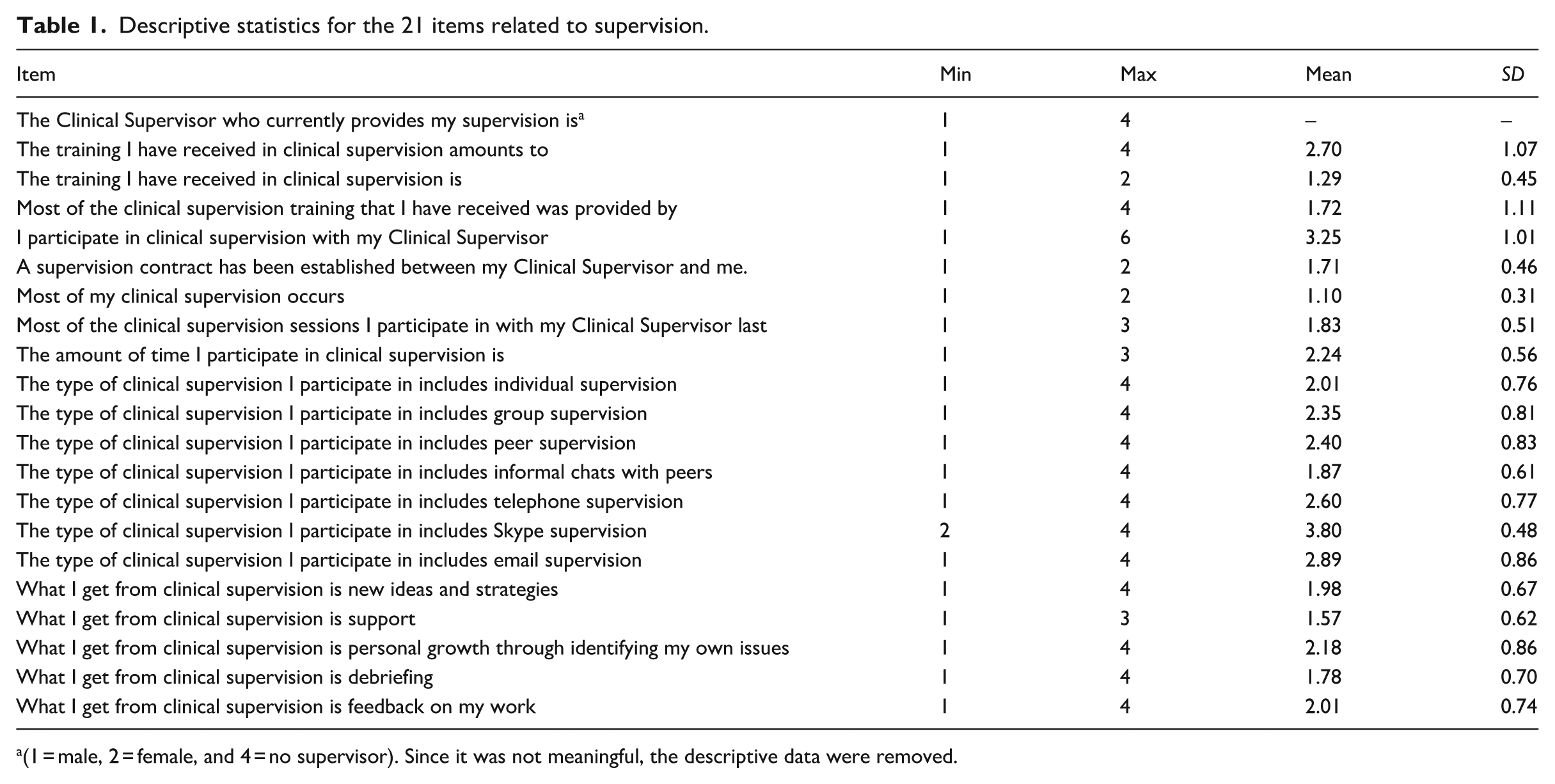
(1 = male, 2 = female, and 4 = no supervisor). Since it was not meaningful, the descriptive data were removed.
Results
The findings first report on the descriptive statistics related to school counsellors and psychologists’ experiences of clinical supervision in terms of supervision arrangements, duration, the types of supervision, the benefits of clinical supervision, and clinical supervision training. Subsequently, findings related to the three hypotheses are reported.
Supervision Arrangements
More than two-thirds of the participants (69.1%; n = 94) indicated that their clinical supervisor was female and a small number (7.4%; n = 10) indicated that they currently have no clinical supervisor. Fewer than a third of participants (29.4%; n = 40) had established a supervision contract with their clinical supervisor. For most participants (89.7%; n = 122), their clinical supervision occurred during their work time.
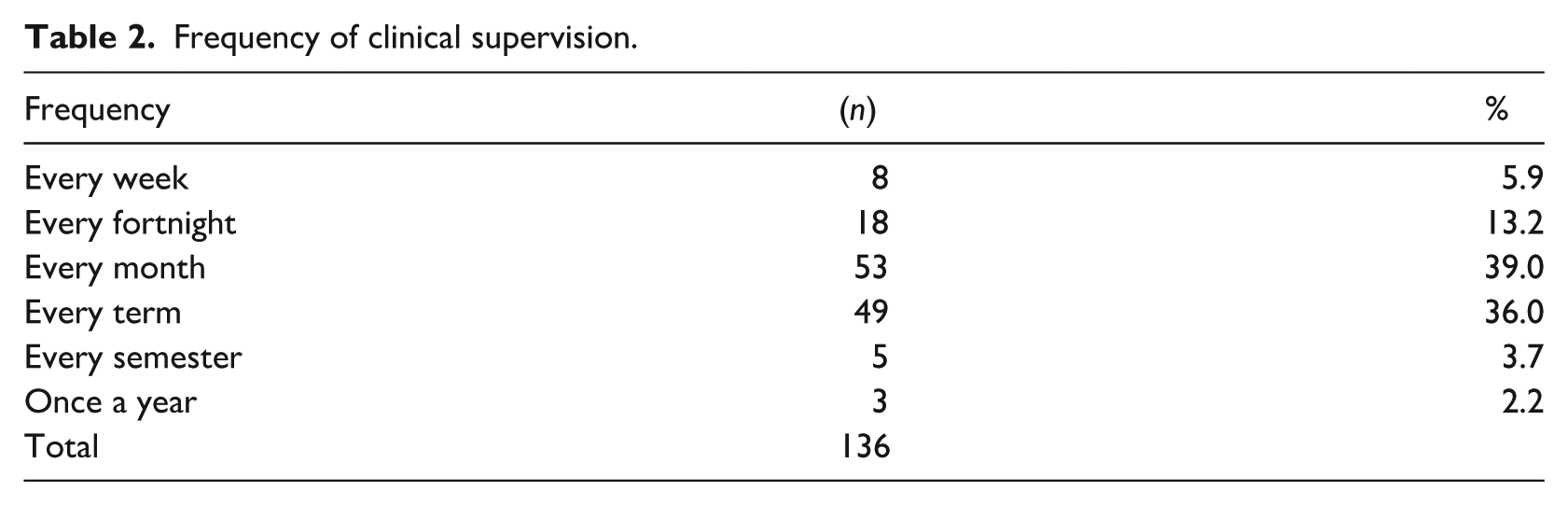
The frequency of participation of clinical supervision is illustrated in Table 2. Over three quarters of participants (94.1%; n = 128) engage in supervision at least four times a year. As mentioned previously, 26 of the participants indicated that they never received supervision and were removed.
Frequency of clinical supervision.
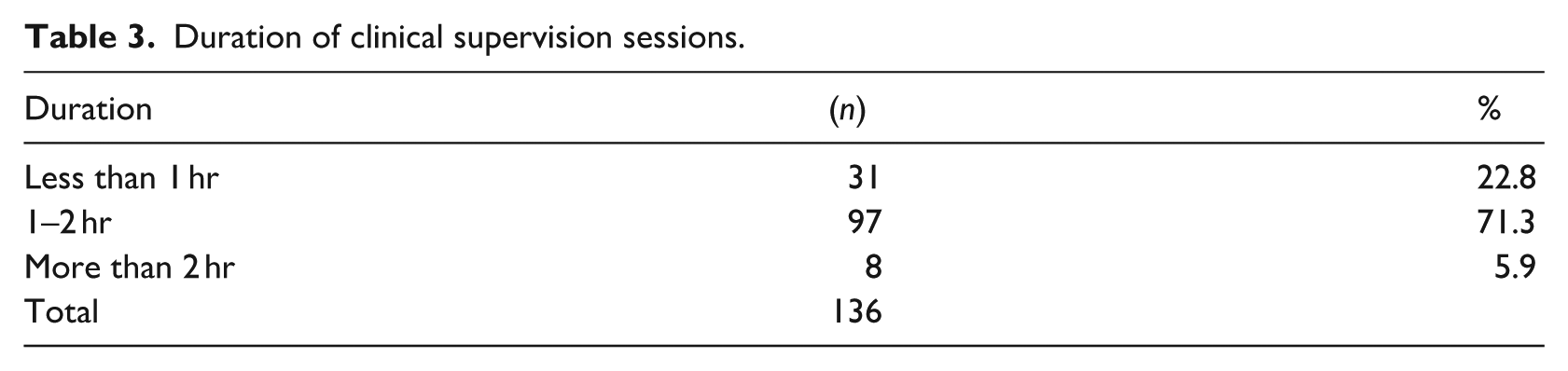
The duration of clinical supervision sessions is illustrated in Table 3. Approximately three quarters of participants (77.2%; n = 105) engage in supervision sessions that last at least 1 hr. Of the participants who engage in supervision, approximately two thirds find the amount of time they spend in supervision adequate (62.5%; n = 85) or more than adequate (6.6%; n = 9). Unfortunately, the remainder (30.9%; n = 42) find the amount of time they engage in supervision less than adequate.
Duration of clinical supervision sessions.
Types of Supervision
Participants indicated how often they participated in individual supervision, group supervision, peer supervision, telephone supervision, Skype supervision, email supervision, and informal chats with peers (see Figure 1). Approximately three quarters of participants (75.7%; n = 103) always or frequently engaged in individual supervision. Group supervision (63.9%; n = 87) and peer supervision (59.5%; n = 81) were the next most used types of supervision always or frequently engaged in. Fewer participants always or frequently engaged in supervision using technology such as telephone (49.3%; n = 67), Skype (3.7%; n = 5), or email (36.7%; n = 50). A majority of participants (96.3%; n = 131) indicated that they seldom or never engaged in supervision using Skype technology. Of interest, is that most participants (121; 89%; n = 121) engaged in informal chats with peers which may not necessarily be clinical supervision.
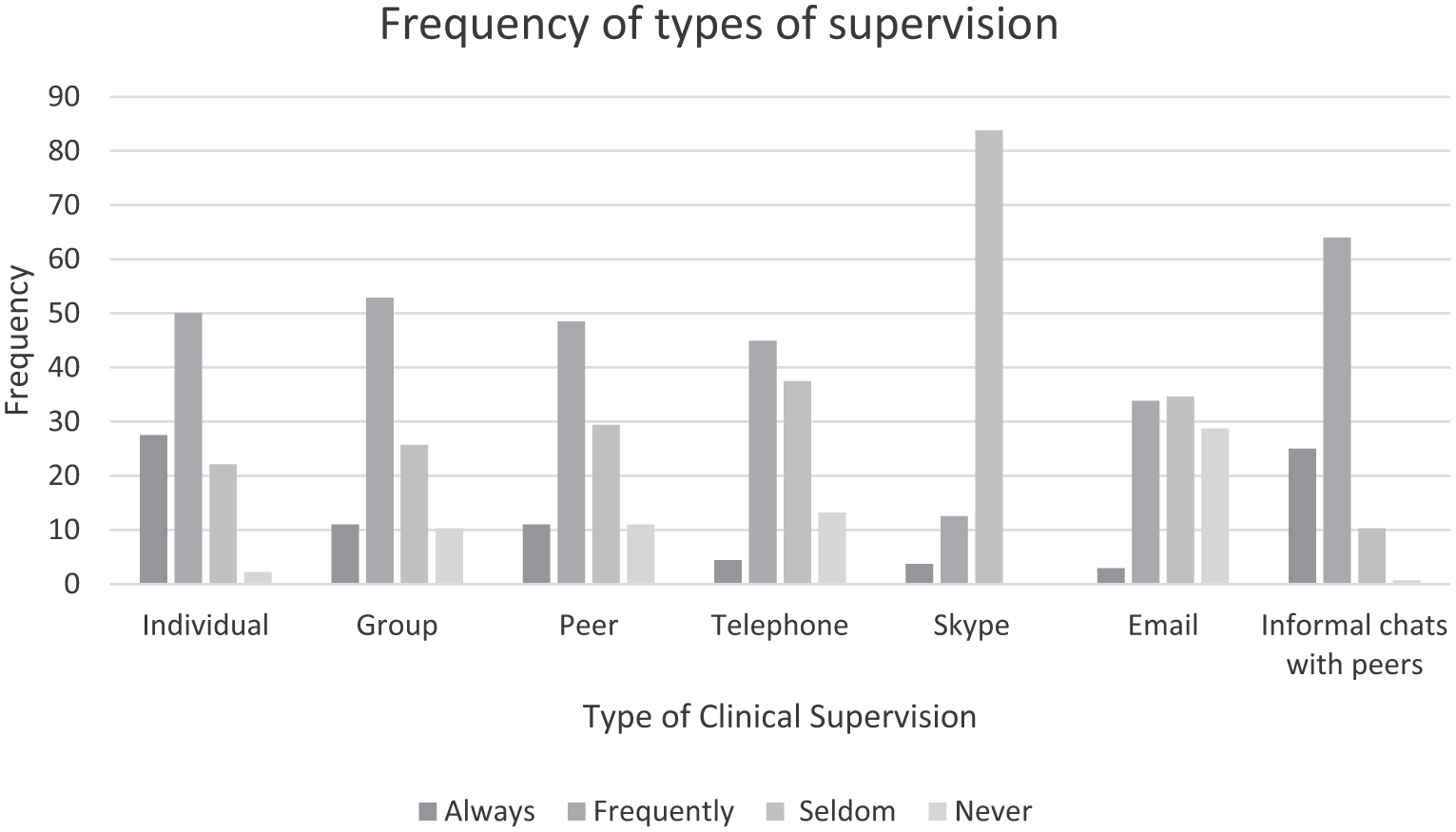
Frequency of types of clinical supervision.
Benefits of Clinical Supervision
Participants rated on a 4-point scale ranging from always to never five potential benefits they could receive from clinical supervision including new ideas and strategies, support, personal growth through identifying my own issues, debriefing, and feedback on my own work. As illustrated in Figure 2, almost all of the 136 respondents (93.4%; n = 127) to this question always or frequently felt support from their clinical supervision. Other benefits perceived by participants were debriefing (87.5%; n = 119), new ideas and strategies (80.2%; n = 109), feedback on their work (75%; n = 102), and personal growth through identifying their own issues (63.9%; n = 87).
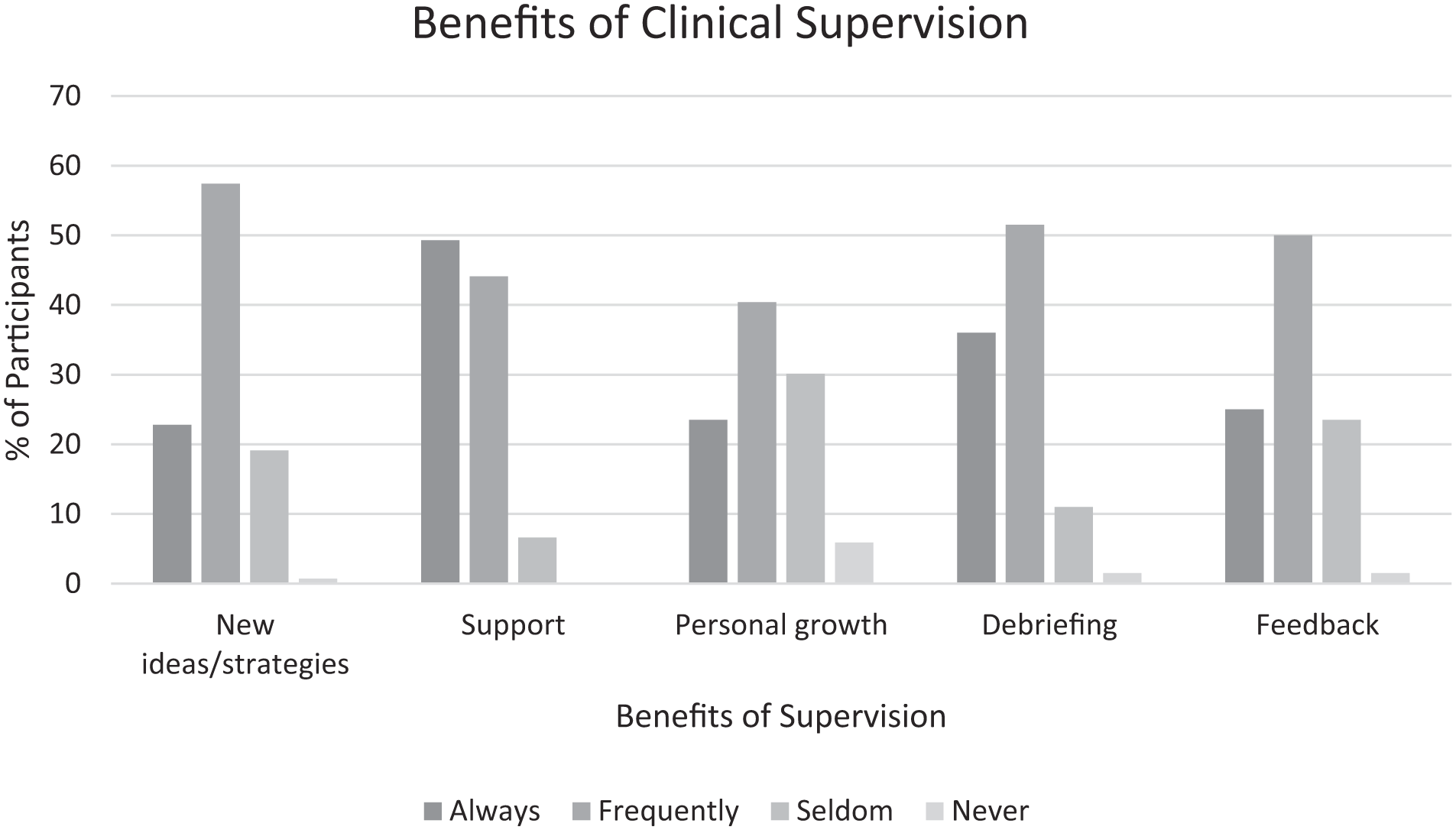
Benefits of clinical supervision.
Supervision Training
Approximately a third of participants indicated that they had received more than a month of supervision training (30.9%; n = 42) or less than a week (30.1%; n = 41). Over two-thirds of participants (69.0%; n = 94) indicated that they had received less than a month of supervision training. Some participants (15.4%; n = 21) had received no training in clinical supervision. Almost two-thirds of participants (60.3%; n = 82) indicated their supervision training was adequate. More than half of participants (55.1%; n = 75) had received supervision training from their employer with the remainder receiving training from a professional association (9.6%; n = 13), a university (8.1%; n = 11), or another provider (11.8%; n = 16).
Hypothesis 1 : Training Received and Clinical Supervision
It was hypothesised that school counsellors and psychologists who received supervision training are also more likely to participate in clinical supervision. After the assumptions check was performed, Spearman rank correlation was deemed appropriate to assess the relationship between clinical supervision training (M = 2.70, SD = 1.07) and participation in clinical supervision (M = 3.25, SD = 1.01). There was no correlation found between the two variables, (r = −.07, p = .424).
Hypothesis 2 : Supervision Training Grouped by Supervision Contract
It was hypothesised that those who have an established supervision contract and those who do not are significantly different to each other in terms of supervision training received. A Mann-Whitney test was run to test the hypothesis and found that there is no significant difference in the supervision training between participants who have or have no supervision contract with the mean rank of 75.25 and 65.69 respectively (U = 1,650, z = −1.34, n1 = 40, n2 = 96, p = .180).
Hypothesis 3 : Participation in Clinical Supervision Grouped by Supervision Contract
It was hypothesised that those who have an established supervision contract and those who do not are significantly different to each other in terms of the frequency of their participation in clinical supervision. A Mann-Whitney test was run to test the hypothesis and found that there was a significant difference in participation in clinical supervision between participants who have or have no supervision contract with the median of 3(IQR = 2–3) and 4(IQR = 3–4) respectively (U = 1,146, z = −3.92, n1 = 40, n2 = 96, p < .001) with a medium effect size, r = −.34. School counsellors and psychologists who have an established supervision contract have more frequent participation in clinical supervision.
Discussion
The findings of the present research are similar to those of previous Australian research (M. L. McMahon & Patton, 2000, 2001; M. McMahon & Solas, 1996; Thielking et al., 2006) that found school counsellors’ experience of supervision is variable with some not receiving any supervision and some finding the amount of supervision they receive unsatisfactory. Previous research conducted in the Australian state of Queensland found that approximately a quarter of participants did not receive supervision and more than half of participants believed their supervision time was inadequate (M. McMahon & Patton, 2001). Thus, the present findings suggest that more of the participants were receiving supervision and more were satisfied with it than their counterparts in 2001. However, the variable amount of time spent in supervision by the participants and the finding that some participants do not receive supervision, suggest that Miserentino and Hannon’s (2022) claim that supervision should be “integral to effective school counseling practice” may not yet have been realised.
The benefits of participating in supervision experienced by most participants included support, new ideas/strategies, personal growth, feedback, and debriefing echo those of previous international (e.g. Chae & Backer, 2024) and Australia research (e.g. M. McMahon & Patton, 2000, 2001). Similar to previous Australian research (e.g. M. McMahon & Patton, 2000, 2001; M. McMahon & Solas, 1996), participants perceived many benefits of participating in supervision primarily related to support and professional practice and to a lesser degree, personal growth. Although, benefits such as support, debriefing, and personal growth suggest that participation in supervision could be beneficial for reducing stress and burnout (Lambie, 2007; M. McMahon & Patton, 2000; M. McMahon & Solas, 1996; Moyer, 2011), more recent research found a negative relationship between perceived stress and the amount of supervision received (Pennell et al., 2023). Some of the benefits experienced from participation in supervision, such as gaining new ideas/strategies, suggest that there are direct benefits for practice. Gaining new ideas and strategies is widely recognised as a principal reason for school counsellor supervision (Creaner, 2014). Given the benefits of supervision experienced by participants in this study, as with previous research (e.g. M. McMahon & Solas, 1996), questions could be raised about the personal and professional costs of not participating in supervision.
Participants in our study engaged in a range of supervision types. More participants engaged in face-to face supervision (e.g. individual, group, and peer supervision) than in supervision utilising technology (e.g. telephone, online, or email). This is perhaps not surprising given that the supervisory relationship has been consistently claimed to be central to effective supervision (Bernard & Goodyear, 2019; Creaner, 2014). However, in an era of rapid advances in the use of technology and generative AI, it remains to be seen whether some forms of technology will experience greater use in supervision – and for supervision training (Chae & Backer, 2024) – in the future.
An interesting finding is that most participants in our study engaged in informal chats with peers. The nature of these chats is unclear as is their similarity of purpose to supervision. It may be that they operate as an “as needs” form of support when supervisors are not available or the next supervisory session is not scheduled for some time. Previous research (M. McMahon & Patton, 2001) found that this informal networking occurred in different ways (e.g. chats over coffee and meeting with peers) and may be with other school counsellors and psychologists or other professionals and that it was an important form of support.
Previous Australian research found that practising school counsellors had received little supervision training (M. McMahon & Solas, 1996), and it is encouraging that over 20 years later, most participants in the present research indicated that they had received some supervision training and most thought it was adequate. It is curious however, that participants who had received supervision training were more likely to participate in supervision (
Limitations and Future Research
The relatively small sample size precluded analyses that could provide a more nuanced understanding of the supervision and supervision training experiences of school counsellors and psychologists for example, the relationship between participation in supervision and years of experience, differences between school psychologists and school counsellors’ experiences of supervision. Future research could investigate the impact of professional isolation and differences between the experiences of clinical supervision and supervision training of school counsellors and psychologists working in regional and remote schools and those of their metropolitan counterparts. In addition, future research could distinguish between supervisors and supervisees and their experiences of supervision and supervision training.
Given the varied amounts of supervision experienced by participants, future research could investigate clinical supervision with a view to identifying “ideal” amounts. In addition, a more detailed understanding of the benefits of the various types of supervision may assist school counsellors and psychologists make informed choices about the types of supervision they participate in and may inform employing authorities about the provision of supervision. Greater understanding of the informal chats participants engaged in could offer insight into the support needs of school counsellors and psychologists. More detailed understanding is needed regarding the relationship between participation in clinical supervision and experience of stress and burnout. Better understanding of the nature of supervision training and the impact of supervision training on supervision practice is needed as well as a better understanding of the impact of establishing a contract between supervisors and supervisees on supervision practice.
Conclusion
This study investigated practising Australian school counsellors and psychologists’ experiences of their clinical supervision and supervision training. In the present study, it was encouraging that more participants engaged in supervision and have received supervision training than participants in research conducted earlier this century (M. McMahon & Patton, 2001; Thielking et al., 2006). The findings indicated that clinical supervision benefits school counsellors and psychologists personally and professionally. Advocacy with employing authorities and within the professions for clinical supervision for school counsellors and psychologists, including those in training, is warranted. It is hoped that through advocacy, the importance of clinical supervision to school counsellors and psychologists and to the quality of service delivery in schools may be better understood by employing authorities and by school counsellors and psychologists who receive little, or do not participate in supervision. Even though, the findings revealed less use of technology enabled supervision, rapid technological advances suggest that there could be opportunities to develop innovative and creative approaches to maximise access to clinical supervision. Given the personal and professional benefits of supervision for school counsellors and for practice, it seems that investing in supervision is worthwhile for employing authorities as well as for school counsellors and psychologists.
Footnotes

Funding
The authors received no financial support for the research, authorship, and/or publication of this article.
Declaration of conflicting interests
The authors declared no potential conflicts of interest with respect to the research, authorship, and/or publication of this article.