



Abstract
The COVID-19 pandemic affected the education sector worldwide; forcing a transition from face-to-face to a virtual environment and impacting the role of educators in schools. Like others, school counsellors transitioned to a virtual role, changing their approach to counselling. The purpose of this mixed methods study using a sample of 163 certified, licensed school counsellors in the United States and its territories, was to understand how the pandemic affected their roles and responsibilities. Data was collected using an online survey. Not surprisingly, results showed a marked increase in the number of direct counselling services (e.g. individual and group counselling, student academic planning and crisis response) delivered online. However, the findings indicated a lack of confidence and training amongst participants when delivering counselling online. Participants discussed feeling overwhelmed to effectively advocate for themselves to deliver school counselling services in a virtual setting. Qualitative data illustrated the different ethical concerns school counsellors faced. The school counsellor experience, both positive and negative, and recommended changes in policies and training requirements at the local, state and national levels and implications for curriculum for counsellor education programmes, are discussed.
Pandemic and its impact on schools
In 2020, the COVID-19 pandemic caused schools to shut down, leaving children at home without mental health services that school counsellors would usually provide in person at their school. Current research shows that the idea of a student safety net was no longer in place during school closures (Garcia & Weiss, 2020), including much-needed mental health services (Goodman-Scott & Perez, 2023). School counsellors perceived that the pandemic had a significant negative impact on young people’s mental health due to these service gaps (Alexander et al., 2022) as a consequence of the isolation and distancing guidelines (Harris & Jones, 2020). Additionally, students enrolled in high-poverty and rural areas in the United States faced a significant impact on their mental health (Zieher et al., 2021). Researchers have investigated the role and perspective of different entities in schools during the pandemic and quarantine: teachers (Daniel, 2020; Klapproth et al., 2020; Li & Yu, 2022), principals (Karakose et al., 2021) and superintendents (Steimle, 2021). Yet, there is a lack of research on the impact and change of role and responsibilities of school counsellors while moving their mental health curriculum to virtual delivery for students (Goodman-Scott & Perez, 2023).
Even though the pandemic and eventual quarantine were for a limited duration, the role and responsibility of school counsellors may have changed in the long term (Goodman-Scott & Perez, 2023). As of June 2022, 33% of public schools in the United States offered full-time remote instruction for all students, and 10% of public schools provided hybrid instruction (Institute of Education Sciences, n.d.). With students at home full-time or part-time, certain aspects of the school counsellor’s role were delivered virtually so that young people could continue to get mental health support. While resilient, counsellors faced constraints as they worked on the transition to a virtual role (Savitz-Romer et al., 2021). Hence, this study looks to fill in the gap of the impact of the pandemic on the role and responsibilities of practising school counsellors.
Role of the school counsellor
Per the American School Counsellor Association (ASCA), school counsellors are qualified individuals who create an equitable and inclusive school culture to provide academic, emotional and social support to students through counselling. School counsellors make a significant difference in the quality of their students’ lives and are often the first mental health professionals students interact with (Ohrt et al., 2016). School counsellor’s roles include meeting the mental health needs of all students within the school (Kaffenberger & O’Rorke-Trigiani, 2013) and advocating for their students (Perry et al., 2020). In the United States, school counsellors are trained and educated to provide short-term mental health services to students in K-12 settings (Zabek et al., 2023). Additionally, school counsellors build relationships with the community (specifically the mental health community), parents, teachers and other stakeholders such as teachers and principals (Kaffenberger & O’Rorke-Trigiani, 2013; Kazak et al., 2010).
School counsellors bridge school and home by encouraging parents to engage in their child’s academic, career and emotional development (American School Counseling Association [ASCA], 2019b). However, research suggests the importance of having a strong parent-school-counsellor relationship for student success (Jeynes, 2018; Paolini, 2019). Parent involvement in a school setting is limited due to barriers like lack of opportunities, communication and conflict with time (Baker et al., 2016). Likewise, school counsellors may have difficulty engaging students in a counselling relationship due to lacking student trust and understanding of the school counsellor’s role (Holland, 2015; McKillip et al., 2012).
While much of the time, school counsellors do complete activities that are deemed appropriate or match the requirement of the ASCA National Model (ASCA, 2019a), there are times when school counsellors complete tasks that are considered inappropriate or non-guidance activities (e.g. lunch duties, hallway monitoring, testing) as authorized by supervising administrators (Benigno, 2017; Blake, 2020; Chandler et al., 2018; Moyer, 2011). This could be due to the school administration’s lack of understanding of the school counsellor’s responsibilities, leading to excessive workload (Perry et al., 2020; Ruiz et al., 2018 impacting the delivery of services school counsellors can engage in per ASCA standards (Blake, 2020; Ruiz et al., 2018).
School counsellors and technology
Research suggests that school counsellors lack training when leveraging technology to work with students in school due to a lack of training and lack of knowledge managing the ethical implications of online counselling (Finn & Barak, 2010; Golden, 2017; Savitz-Romer et al., 2021; Stoll et al., 2020). Golden (2017) stated that school counsellors are more likely to use technology if they feel confident using online tools. Golden (2017) also suggested a correlation between counsellors who use technology for counselling and the higher education programme. If the school counselling degree programme were online, the school counsellors would have significantly more confidence in using technology because of the computer skills they have learned (Golden, 2017). Historically, school counsellors delivered indirect services online such as referrals for long-term support, consultation and collaboration with parents, teachers, other educators, and community organizations, professional development, documentation, and data analysis to identify student issues; however, school counsellors felt that online communication with students in the school was only moderately compatible with the role of a school counsellor (Steele et al., 2014). More specifically, before the pandemic, school counsellors used technology and online communication tools like emails, video conferencing, chat, social media, and online training, primarily for consultations, professional development, and documentation to accomplish indirect services (Steele et al., 2014). About 26% of the participants in a study of 755 school counsellors reported occasionally using technology for direct services such as individual and group counselling, student academic planning, and crisis response (Steele et al., 2014).
During the pandemic, school counsellors were abruptly required to adapt to their schools’ and students’ rapidly changing needs and move their curriculum online (Goodman-Scott & Perez, 2023). The COVID-19 pandemic and subsequent quarantine introduced novel constraints to school counselling, like social distancing. Within the system, school counsellors are the safety net for children to help with their mental health needs (Garcia & Weiss, 2020). However, the quarantine moved the safety net online. Limited research has addressed the impact of technology on school counsellors during the pandemic (Goodman-Scott & Perez, 2023). Research has suggested the need to understand how technology or teletherapy is being used by school counsellors (Golden et al., 2023). The current research focussed on understanding the impact of the COVID-19 pandemic on the role of school counsellors and the effect of using technology for delivering direct and indirect services among school counsellors. The study asked and answered the following three questions:
How has the COVID-19-induced quarantine impacted the role of school counsellors in the United States?
How has the delivery of direct and indirect services (per ASCA standards) changed due to the COVID-19 pandemic quarantine?
How has training impacted school counsellors’ transition from an in-person to a virtual setting?
Method
Design
The present research employed an exploratory mixed-methods survey to understand the school counsellors’ experience before and during the COVID-19 pandemic. With limited research on the experience of school counsellors during the pandemic (Goodman-Scott & Perez, 2023), mixed methods research was used to get an in-depth understanding of the experience of school counsellors during the pandemic (McKim, 2017). Additionally, the quantitative data is further explained using qualitative data that describes the participants’ experiences (Creswell & Creswell, 2022). The present research aimed to understand the implication of the pandemic and subsequent quarantine on school counsellors’ role as they transitioned from predominantly delivering direct and indirect services in-person to a virtual delivery setting and the impact their training has on the transition to teletherapy. Within the scope of this research, direct services were face-to-face student services and included individual student planning, individual or group counselling, structured guidance lessons and crisis response. Conversely, indirect services were other school counselling practices, including referrals for additional assistance, consultation and collaboration with parents, teachers, other educators, and community organizations, professional development, documentation and other services.
Ethics and recruitment
Ethical clearance was obtained by West Texas A&M University’s Institutional Review Board (IRB# 2021.01.001). Participants were recruited from school counsellor Facebook pages for elementary, middle and high school students on four separate occasions in 2021 (January 24, February 7, February 14 and March 28), and listservs such as those hosted by the ASCA and the Association for Counselor Education and Supervision (ACES). A survey link was posted to the Facebook page and included in the email and participants were told the questions would relate to implementation of the ASCA standards pre- and post-pandemic online or in-person to understand the change in their role.
Data analytic approach
Quantitative data was analysed using SPSS to compute descriptive statistics and frequencies. Qualitative data was analysed using Saldaña’s (2021) coding methodology. For the initial analysis of the qualitative data, the researchers used the Elemental method of structural coding, grouping exploratory themes into sections and categories based on the similarities and relationships (Saldaña, 2021). Structural coding is a question-based coding used for data collected for exploratory research through open-ended survey questions (Onwuegbuzie et al., 2016; Saldaña, 2021). Structural coding helps code specific research questions, answering multiple questions (Saldaña, 2021). The exploratory themes were further analysed and narrowed into more specific categories to develop emergent themes using pattern coding. Pattern coding is a secondary coding activity used to create a smaller number of categories that are emergent themes (Saldaña, 2021). The researchers agreed upon research themes. Atlas TI software was used to complete pattern coding to create major emergent themes that helped generate themes based on commonalities and similarities (Onwuegbuzie et al., 2016).
Materials and procedure
A study-specific survey was created to understand the experiences of the school counsellors before and during COVID-19. The survey was developed following the ASCA National Model (ASCA, 2019a, 2019b) components of define, manage, deliver and assess, as well as a literature review of research about the use of technology by school counsellors before the pandemic. The survey was administered using Qualtrics, an online survey platform, and included multiple choice, Likert scale, and open-ended questions. Specifically, the survey included informed consent and 29 questions, of which 9 assessed participants’ demographics, 17 items asked quantitative questions, and 3 open-ended qualitative questions (see Supplemental Appendix). The survey’s items focussed explicitly on delivering direct and indirect services as defined by the ASCA National Model (ASCA, 2019a, 2019b), explicitly asking about school counsellor experience before and during the COVID pandemic, and specifically asking about the services that provided virtually: individual student planning, individual or group counselling, structured guidance lessons, crisis response, referrals for additional assistance, consultation and collaboration with parents, teachers, other educators and community organizations, professional development, documentation and other services. Examples of the quantitative questions are ‘Before COVID-19, did you DELIVER direct services virtually/online?’ and ‘During COVID-19, did you deliver direct services virtually/online?’ with the respondents’ options being ‘yes’, ‘no’, or ‘sometimes’. If they answered ‘yes’ or ‘sometimes’, the respondents could select different ASCA-specific direct services they engage in, for example, individual student planning, individual or group counselling, structured guidance lessons and crisis response. All questions also specified the research’s definition of direct and indirect services delivered online, the tools used to provide the services, the participants’ comfort with online counselling, and the participant’s views on online counselling. The qualitative questions for the survey asked participants about the changes in the role of the school and the training the school counsellors received from their school/school district to move their curriculum online (see Supplemental Appendix). The participants averaged between 10 to 15 min to complete the survey.
Participants
The participants were licensed or certified school counsellors practicing in elementary school (n = 82; 50.3%), middle school (n = 33; 20.2%), high school (n = 71; 44.2%) and alternative school (n = 2; 1.2%) settings. Some counsellors delivered direct and indirect services in multiple schools. A total of 197 participants started the survey, but 34 incomplete surveys led to 163 participants. Demographic information is shown in Table 1. Participants were from 43 states in the US, with a majority from Texas (n = 21), California (n = 13), Ohio (n = 13) and the US territory of Guam (n = 1). Some participants were certified/licensed as school counsellors in multiple States. Most participants (n = 120; 72.6%) completed their degree in an in-person School Counselling programme, 27 (16.6%) completed their degree in a blended school counselling programme and 15 (9.2%) completed their degree in an online school counselling programme.
Demographics of participants (n = 163).
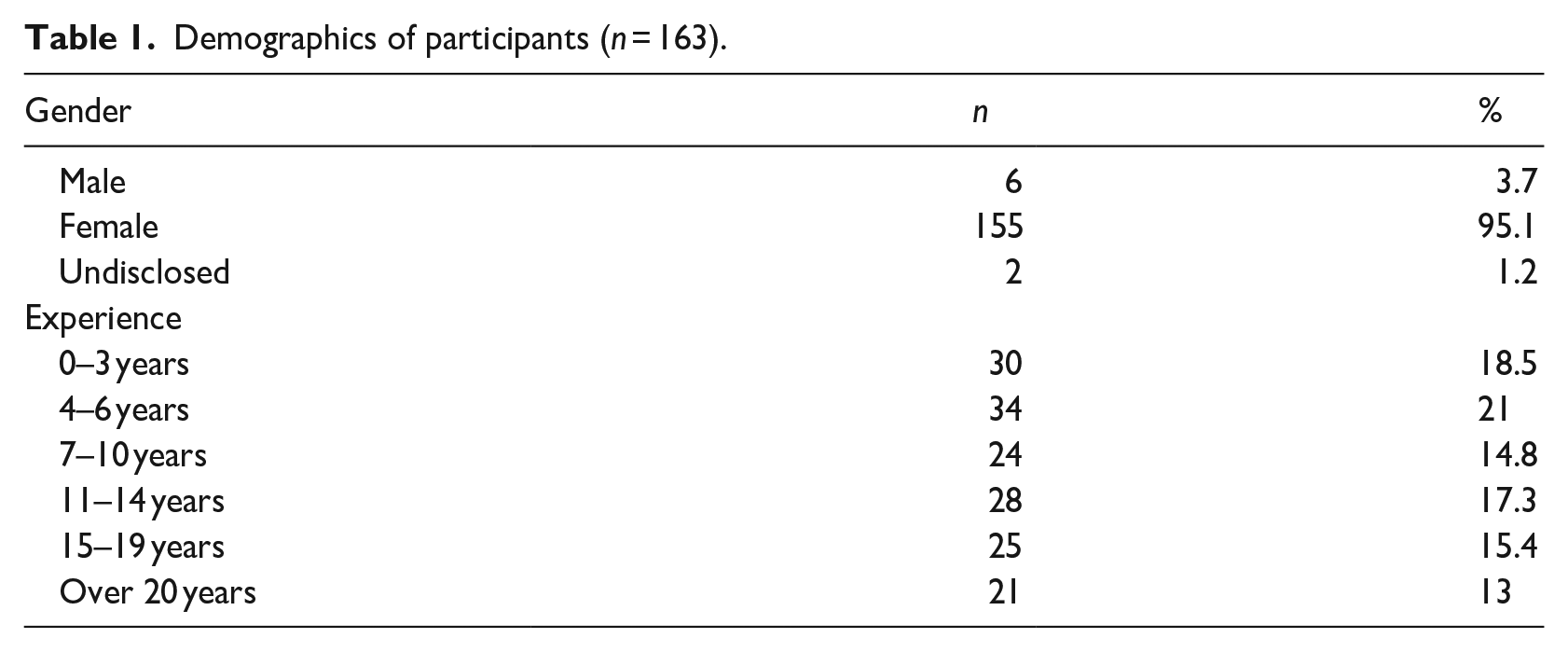
Participating school counsellors reported that they worked in urban (n = 6; 37.4%), rural (n = 59; 36.2%) and other (n = 41; 25.2%) geographic areas and in public (n = 142; 91.4%), and private (n = 8; 4.9%) and charter (n = 5; 3.1%) schools. Most participants served in middle socio-economic schools (n = 60; 36.8%); with the least from high socio-economic status schools (n = 5; 3.1%).
Results
The present research aimed to understand the role and experience of school counsellors as they transitioned to a virtual curriculum due to the pandemic. The results from a survey have been presented to align with the research questions, (1) ‘How has the role of the school counsellor changed due to the COVID-19 pandemic in the United States?’ (2) ‘How has delivery of direct and indirect services (per ASCA standards) changed due to the COVID-19 pandemic?’ and (3) ‘How has training impacted school counsellors transition from in-person to teletherapy?’ The quantitative and qualitative findings will be reported together within each research question. The quantitative data provided numerical insights and helped identify trends, and patterns, whereas the qualitative data attempted to explain the reasoning behind the responses. Reporting both data types allowed for triangulation and cross-validation of findings for each research question.
Changes to the role of the school counsellor
Most participants (n = 131; 80.4%) felt that the role of school counsellor had changed due to the pandemic, while 17 (10.4%) participants thought that the role might have changed. The remaining 14 (8.6%) felt the role had not changed. Furthermore, because of the pandemic, many participants (n = 114; 69.9%) felt they had to learn different technology tools for their role. This was followed by another participant who stated that their role: . . . relied heavily on administrative duties such as scheduling. A huge chunk of this year had been devoted to creating schedules for virtual learners and those who transitioned to in person learning. Every 9-week period, I had to create new schedules for students who changed their mode of learning. This task interfered with direct and indirect services that would have benefited students.
Concerning the delivery of direct services online, most participants reported feeling moderately comfortable (n = 54; 33.1%), while fewer (n = 39; 23.9%) felt slightly comfortable. Additionally, participants thought school counsellors could deliver their role virtually effectively and efficiently in a hybrid setting (n = 126; 77.3%) and an in-person setting (n = 107; 65.3%). In contrast, others stated that school counselling services could be delivered in a virtual-only environment (n = 74; 45.4%).
Technology adaptability
School counsellors adapted to the growing need to use Zoom and Google to meet with students in addition to a ‘virtual office’ or ‘counselor [sic] corner’. A participant shared: I worked with a retired Librarian . . . to create a Virtual Office. We worked to bring to the virtual realm what I meet with students and parents to provide . . .. The subpages are fantastic . . . When Social Justice raised its hand this summer - I worked to expand the information and offerings to include three pages on the topic . . . With the pandemic still holding on - the CALM Room has seen the most action. Teachers, students, and parents visit and work through the opportunities available. I had many ha-ha discussions with those who used it to calm down. The electronic version of me is there. What is in my office to share is there. What I share from my brain discussing options and opportunities is there. I may not be able to interact face to-face with over half my students but the electronic me can and does. We will see how it works at the end of the year.
Some participants reported that they were required to provide the same services to students as they did before the pandemic by ‘. . . utilizing technology . . .’ while ‘. . . accommodating the unique and varying needs . . .’ of all students and teachers. It turned out to be a ‘. . . challenging process . . .’ as school counsellors were also learning to manage teletherapy while ‘. . . juggling our own mental health’.
Personal experiences
Almost all participants felt overwhelmed and bogged down with responsibilities during the pandemic. In the words of one participant: I was a support to frightened students and families while being frightened myself. It was a time of high anxiety for all of us (at times it still is). I feel like I am putting Band-Aids on situations that require surgery a lot of the time, yet I am still responsible to coordinate all our testing and scheduling at the same time. I am very overwhelmed.
In addition, participants felt like their plates were ‘overflowing’ and were spending most of their time in front of the computer and working additional nights and weekends, ‘. . . lacking boundaries . . .’.
Direct counselling services
Twenty (12.3%) participants reported having experience with direct service delivery using online methods before COVID-19. A total of 131 (80.4%) participants reported engaging in direct services during the pandemic. These services included completing individual counselling, group counselling, individual student planning, crisis response and structured guidance lessons online during the pandemic. Table 2 lists the direct services counsellors provided before and during the COVID-19 pandemic. One participant reported that ‘Technology has become the foundation of delivering our services . . . I had to learn to be okay with teaching classroom guidance lessons to blank screens . . .’ while another participant felt that their ‘. . . job virtually feels more proactive, while in person most of my day was reactive . . .’ Additionally, virtually, crisis counselling was considered ‘. . . difficult . . . whether with Google meet or phone call. I don’t have access to student’s phone numbers to call if I have questions’.
Direct services.
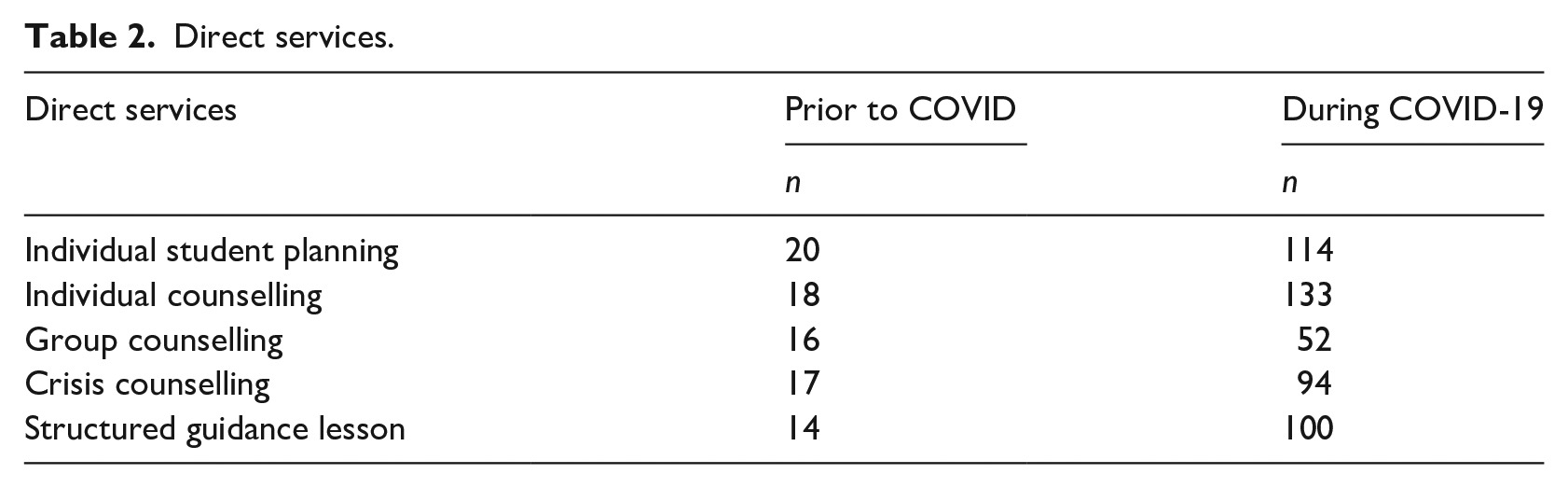
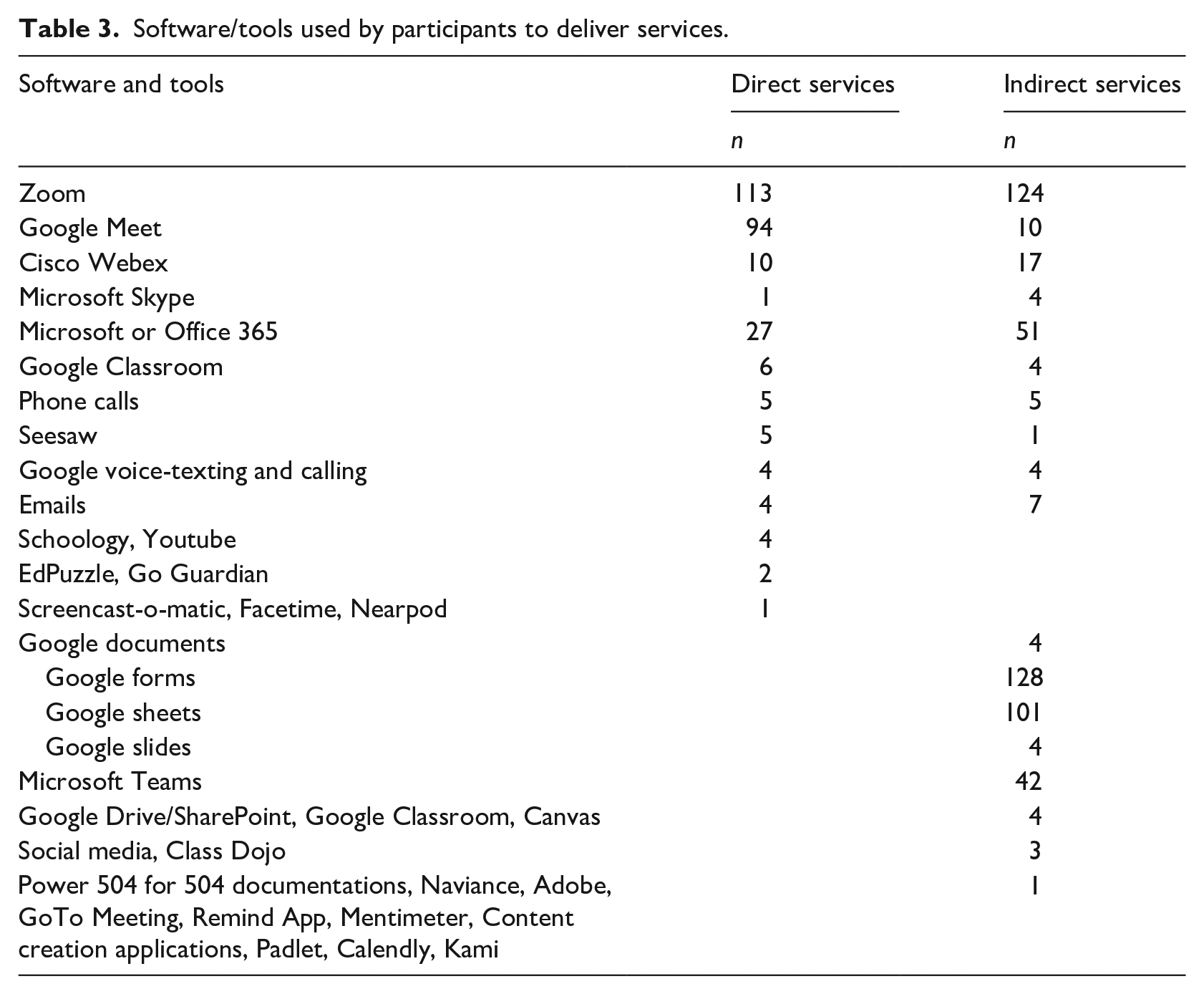
Table 3 lists the software/tools the participants used during this time. As reflected in Tables 2 and 3, school counsellors reported an increase in some facets of direct services. This increase was especially evident in the delivery of individual counselling. In contrast, other participants reported a decrease in group counselling sessions, individual counselling sessions and classroom lessons compared to in-person school settings. Participants reported: . . . I can no longer have groups. I work in a very small community and everybody knows each other. It would be too huge a risk to have the parents buzzing around about guess what Jr. said about his parents in group today, etc. etc. We no longer have a strong “read” on our student body because they are not attending in person 100% of the time. It scares me to think about how many students are in a toxic environment and have no way to get help. In the traditional setting teachers (& counselors) [sic] would be able to pick up on body language and make observations because we the staff see the kids more than their families do. However, most of the time HS students have their cameras off or are not engaging in the classroom due to masks. It has made it more challenging to connect with students during COVID-19.
Software/tools used by participants to deliver services.
A participant reported, ‘Individual counseling [sic] is not genuine in a virtual setting with a child. A child being abused, for example, is not free to talk about that when the abuser is sitting right there’. Some participants addressed the need to work harder within the school system to meet the mental health needs of students, ‘We have hybrid and entirely online students. All aspects of the counseling [sic] curriculum need to have both virtual and in-person options’.
Participating school counsellors reported, ‘We’re dealing with more anxiety, disengagement, and depression. With no new resources. I feel helpless most of the time’. Another participant reported: There is an increased focus on mental health which is a great change. However, nothing else has gone away. We’ve been expected to continue, business as usual, in a time that is anything but normal. Needs of students have increased exponentially with no increase in resources.
In contrast to other views of school counselling in virtual settings, one participant did share a positive perspective of providing resources to students through all avenues, ‘It has expanded to being more inclusive of at home students. I feel like there is a lot of untapped potential in the many digital formats that we aren’t utilizing . . .’.
Mental health needs within the school and community
Participants communicated that due to the pandemic, there was a ‘. . . higher importance and awareness . . .’ of students’ mental health needs within the school district. The participants reported that most delivered virtual direct services to implement their curriculum to meet their students’ mental health needs. Specific student mental concerns identified by these school counsellors were ‘high stress’, ‘learning coping skills’, ‘grief’, ‘anxiety’, ‘depression’, ‘trauma’, ‘suicidal ideations’, ‘thoughts of self-harm’, and ‘lack of college readiness’. In addition to the above concerns, school counsellors reported ‘. . . adding interventions’ such as ‘socio-emotional learning’ and ‘executive functioning skills’ to the school counselling curriculum.
In addition to student needs, participants reported ‘increased requirements’ for teachers and staff within the school district. During the pandemic, participants reported trying to help teachers and staff with ‘. . . self-care . . .’ and ‘. . . emotional wellness . . .’ Some participants said, ‘. . . a huge increase in staff needs over student needs’. Moreover, participants felt like they ‘became as much a counselor [sic] to our faculty and staff as I did to the kids’. As the participating school counsellors added information to the school counselling curriculum to support the new needs of students, they also had to meet the mental health requirements for teachers and staff.
Indirect counselling services
As each indirect service is addressed in Table 4, 151 (92.6%) participants reported completing indirect services virtually during the pandemic compared to 34 (20.9%) participants before the pandemic. The change from pre- to post-pandemic saw more communication with parents and ‘. . . a huge increase in staff needs over student needs . . .’ Almost all participants said they delivered indirect services virtually to students and their families, including collaborating and helping families with resources like ‘. . . food . . .’ ‘winter coats, hats, mitten . . .’. Some other school counsellors reported completing professional development on ‘how to do virtual counseling [sic]’ and reported collaboration with other counsellors.
Indirect services.
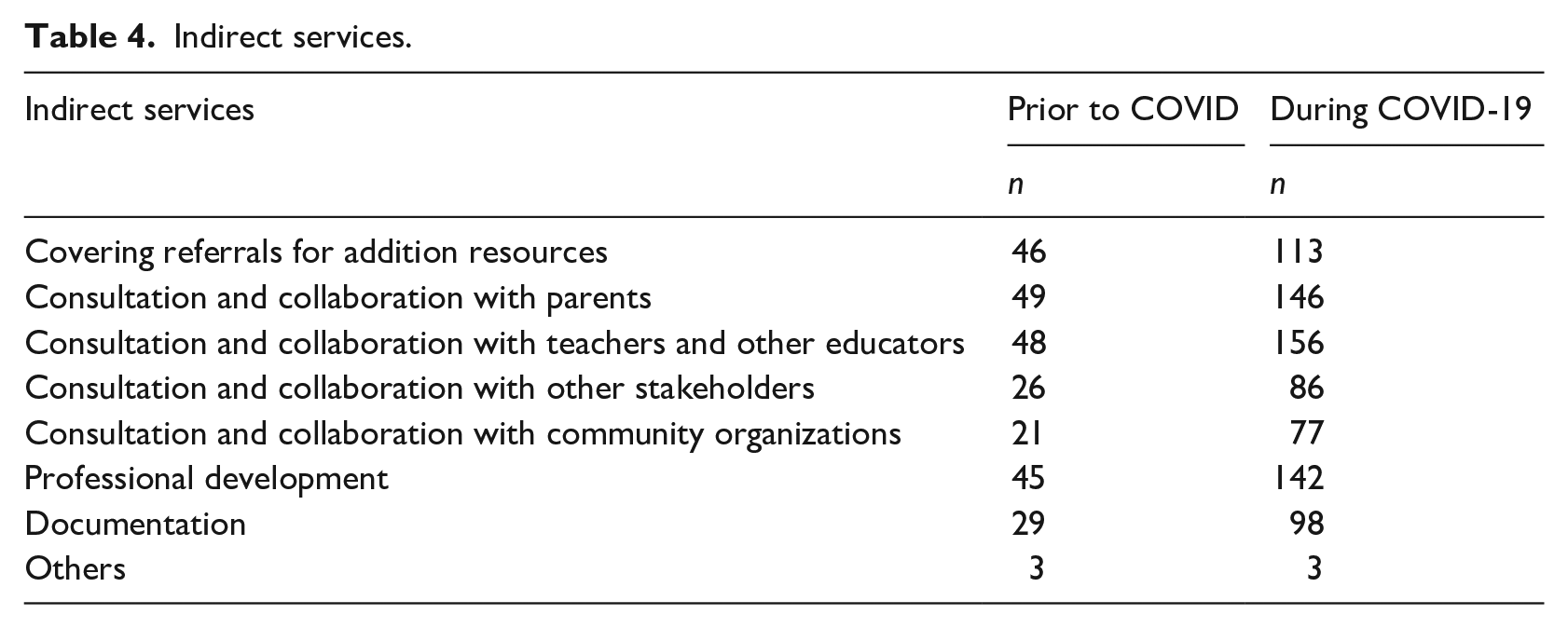
Most participants (n = 113; 69.3%) alluded to ‘. . . spending their time connecting families with resources available within the community’, which impacted their role as school counsellors. One participant described their role more as a ‘social worker’ than a school counsellor’s. Another participant reported the lack of participation from the school community ‘since it is hard to get students and families to participate, or get the word out i.e., everyone is so bogged down with emails and notifications that they have stopped reading/listening to them all together’. Participants disclosed that they used online resources to collaborate with the parents, community and other stakeholders much more than before the pandemic.
Student and family engagement
Student and parent engagement during COVID-19 was dissimilar compared to before COVID-19. Participants reported ‘various barriers’ to student engagement in school counselling during the pandemic, like students ‘ignore emails and refuse to set or attend appointments’, making it ‘harder to get with a student’. While participants noted ‘confidentiality’ as a reason for the lack of student engagement, the other barriers included a ‘lack of trust’ and ‘lack of rapport’ due to the ‘lack of privacy’. Participants reported a ‘lack of relationship’ with freshmen students who have ‘never met in person’ and have not established an ‘authentic connection’.
On a positive note, many participants noticed ‘increased parental involvement’ while using technology during the pandemic. During the pandemic, parent engagement increased, and the participants spent most of their time interacting with parents about attendance problems and ‘regarding behavior [sic] and home issues when learning remotely’. In addition, with remote learning, participants reported working with parents to learn about the students and engage in ‘parent coaching’. Participants reported that they were required to ‘think out of the box’ for continued parent and family engagement.
Non-counselling related activities
Many participants reported being required to complete administrative tasks and their regular counselling duties due to the COVID-19 pandemic. These additional duties included being ‘attendance monitors’, having to work on ‘checking grades’, ‘. . . Doing more Assistant Principal roles . . .’, and ‘tracking down students’ missing assignments’. Some participants felt that during COVID-19, their role was now more of a ‘secretary’ and/or an administrator than that of a school counsellor. Furthermore, some participants delivered non-school counsellor responsibilities like ‘lunch duties’, ‘record keeping’, ‘substitute teaching’, ‘checking students in’, and ‘hall duties’. Participants felt that these additional responsibilities took them away from their role as school counsellors, and they were ‘putting out fires all day’.
School counsellor training
In total, 143 (87.7%) participants reported that they did not receive training as part of their school counselling programme curriculum to deliver the services of a school counsellor virtually or in a hybrid setting. Participants reported receiving little (n = 9; 5.6%), some (n = 6; 3.7%) and extensive (n = 4; 2.5%) training to deliver virtual school counselling services as part of their school counselling programme curriculum, respectively. A participant reported: In my program, virtual counseling [sic] and some of the platforms used were mentioned. A lot of the training centered [sic] around the ethics and difficulties of virtual counseling [sic], such as bad or lost connections, confidentiality on the user end, self-harm, or suicidal statements.
Additionally, 116 (71.2%) participants reported that they did not receive any training, and 42 (25.8%) reported that they received some training from their school district when they were required to move their school counselling curriculum online.
Discussion
The COVID-19 pandemic and associated quarantines forced school counsellors to heavily modify the manner in which they delivered their services to their students and families. This abrupt and unplanned service delivery change challenged school counsellors to shift their work from face-to-face to online, synchronous and asynchronous delivery models. This shift’s unplanned and abrupt nature was fraught with adjustments to all stakeholders as the profession worked to improve its service delivery and standardize its procedures (Savitz-Romer et al., 2021). Having successfully navigated through the pandemic and evolved in its use of teletherapy, the purpose of the current study was to understand the ways in which technology affected and changed school counsellor’s roles and responsibilitites.
Findings from the current survey showed that the pandemic and eventual transition to virtual counselling caused ambiguity for the school counsellor’s role. Previous investigations indicated that school counsellors encountered challenges like lack of training, concerns about practicing ethically and advocating for their role as researched prior to the pandemic transitioning their in-person curriculum to an online format (Finn & Barak, 2010; Golden, 2017; Savitz-Romer et al., 2021; Steele et al., 2014; Stoll et al., 2020). The present study added to these findings that counsellors experienced a significant increase in the number of direct and indirect hours they delivered virtually during the pandemic, the requirement for school counsellor training, and ways to engage parents and students online.
Before the COVID-19 pandemic, most school counsellors typically provided minimal direct services such as individual and group counselling, virtually. Indirect services such as referrals and consultations with other stakeholders, were primarily offered online (Steele et al., 2014). In accord with Steele et al. (2014), the present study found that most school counsellors felt moderately comfortable delivering their services virtually. Golden (2017) suggested this could be because school counsellors did not feel they were trained to leverage technology effectively to deliver online counselling services, and this was confirmed by some participants in the present study. School counsellors in the current study also reported a lack of intimate knowledge of ethics, ways to manage confidentiality, and limitations during their virtual sessions which concur with prior research that described counsellors’ challenges delivering teletherapy (Finn & Barak, 2010; Golden, 2017; Stoll et al., 2020). Unlike Baker et al. (2016), the school counsellors in the current sample reported that using technology made parents more accessible and fostered collaborative relationships between school and home. However, in accord with Holland (2015), the present school counsellors reported difficulty engaging students using virtual counselling during the pandemic. In agreement with previous research (Benigno, 2017; Blake, 2020; Chandler et al., 2018; Moyer, 2011; Ruiz et al., 2018), our findings showed that school counsellors shared their concerns about administrators not understanding their role, before the pandemic. These concerns appeared to persist during the pandemic. Practicing school counsellors stated that they engaged in non-counselling related activities (e.g. communicating with parents and helping community members connect with resources) which impacted their ability to provide mental health services to students. Our findings shed light on the increase in technology usage for direct and indirect hours during the pandemic necessitating additional training for school counsellors for specific topics like implications of ethics when using technology and the school counsellors learning skills to advocate for their role.
Recommendations and implications
Taken together, the existing literature and current findings suggest that school counsellors would benefit from increased opportunities to learn techniques and strategies to manage the ethical implications of confidentiality. At the very core, it would be essential to have university programmes (Counsellor Education programmes) emphasize the ethical practices of teletherapy in their coursework with examples and techniques (Savitz-Romer et al., 2021). Best practices can be applied to the programme curriculum and taught through coursework, helping future school counsellors have a toolbox for confidently delivering virtual school counselling services (Golden et al., 2023). The school counsellors in our study suggested a toolbox with different skills and techniques to practice teletherapy for direct counselling (individual and group counselling) for situations like crisis intervention ethically and legally.
The present findings reflect the need for policy-makers and governing bodies (e.g. ASCA, CACREP) to prioritise the teaching and learning of technologies in accreditation standards for school counselling training programmes. Council for Accreditation of Counseling and Related Educational Programs (CACREP, 2024) standards discuss the importance of teaching technological applications to different individual and group counselling settings but do not detail any specific techniques or tools, especially lacking focus on teletherapy in specific specialized practice areas. Also, it can be beneficial for Counsellor Educators to teach future school counsellors’ ways to advocate for themselves, which can benefit the profession (Perry et al., 2020). National and State Department of Education boards can also have policies requiring school districts and university programmes to focus on training administrators like principals and superintendents to know the role of school counsellors and their contribution to the school and community. This can lead to a collaborative work environment to meet student mental health needs.
Technology can have its limitations when used in a school counselling setting, specifically concerns with breach of confidentiality for direct counselling services, there also have been positive impact of technology usage during the pandemic for school counsellors. Leveraging teletherapy, school counsellors reached a broader and more diverse set of students, many of whom previously did not receive counselling services prior to the pandemic (Stoll et al., 2020), especially children who are homeschooled. Additionally, using technology to connect with other school counsellors and supervisors for consultation can benefit them. These efforts can help school counsellors engage parents to facilitate the success of the students better.
Limitations and suggestions for future research
The current study employed a mixed-method exploratory design to understand the changes in the role of school counsellors introduced by COVID-19. Several limitations should be noted. Purposeful sampling was used, and findings are limited to the participants who are active in organizations such as ASCA and ACES and Facebook groups that support school counsellors, which may present a generalizability issue. Snowball sampling may have assisted with reaching a larger population (Leighton et al., 2021). While the sample comprised mostly female school counsellors, this is largely representative of the workforce. Given that no existing instrument to measure the constructs of interest was available, the study-specific survey used here may suffer from psychometric limitations (i.e. poor reliability and validity). There are well-known short-comings with cross-sectional research, therefore, it may be helpful for future studies to take a longitudinal look at how school counsellors advocate for their role and their work across their career. It would also be important to examine the skills and tools they use to deliver school counselling services safely and effectively in an ever-evolving digital world. We hope the present study becomes the catalyst of such work.
Conclusion
School counsellors’ roles and responsibilities changed during the pandemic. School counsellors were pressed into the online delivery of direct and indirect counselling services despite having little to no training in virtual counselling. They reported feeling overwhelmed to effectively advocate for themselves to deliver school counselling services in a virtual setting. Therefore, training organizations and policy-makers are urged to reflect on these findings and make much-needed curriculum changes.
Supplemental Material
sj-docx-1-spc-10.1177_20556365241268897 – Supplemental material for Learning from the pandemic: School counsellor experience during the pandemic in the United States
Supplemental material, sj-docx-1-spc-10.1177_20556365241268897 for Learning from the pandemic: School counsellor experience during the pandemic in the United States by Malvika Behl, Leigh Green, Elizabeth Garcia and John Laux in Journal of Psychologists and Counsellors in Schools
Footnotes
Declaration of conflicting interests
The author(s) declared no potential conflicts of interest with respect to the research, authorship, and/or publication of this article.
Funding
The author(s) received no financial support for the research, authorship, and/or publication of this article.

Supplemental material
Supplemental material for this article is available online.
References
Supplementary Material
Please find the following supplemental material available below.
For Open Access articles published under a Creative Commons License, all supplemental material carries the same license as the article it is associated with.
For non-Open Access articles published, all supplemental material carries a non-exclusive license, and permission requests for re-use of supplemental material or any part of supplemental material shall be sent directly to the copyright owner as specified in the copyright notice associated with the article.
