



Abstract
Within schools, school counsellors are often delegated the responsibility for reporting child maltreatment. In this paper, we present findings of a rapid review of empirical studies investigating what is known about school counsellors’ reporting of child maltreatment. Thematic categories identified include school counsellors’ training, knowledge, factors influencing reporting, and reporting experiences. These themes appear to act independently, in overlap, or collectively as facilitators and barriers to school counsellors’ effective reporting practices. The rapid review findings will guide future education and training initiatives to prepare school counsellors for their work in schools. Directions for future research are proposed.
Introduction
Rationale for the rapid review
Child maltreatment is a global crisis in child rights, further compounded by the global COVID-19 pandemic (Katz et al., 2022; Stewart-Tufescu et al., 2022). Children’s right to protection is enshrined in the United Nations Convention on the Rights of the Child, Article 19 (United Nations General Assembly, 1989) and enacted in the Sustainable Development Goals 3, 4, 5, & 16 (United Nations Department of Economic and Social Affairs, 2015).
For this rapid review, child maltreatment is conceptualised as a category of violence against children encompassing physical abuse, emotional abuse, sexual abuse, and neglect, and exposure to family and domestic violence also known as interpersonal violence (UNICEF, 2023). Child maltreatment occurs within children’s homes, education settings, workplaces, and communities (Pinherio, 2006). Children may experience one or more types of maltreatment, which can occur as single or multiple episodes extending over hours, days, months, or years. Perpetrators can be either family members or non-family members, or both. These dynamics make child maltreatment particularly destructive for child health, development, and wellbeing. The educational effects of child maltreatment are well documented and include school absences, poor academic achievement, grade retention, school dropout, and failure to graduate (Fry et al., 2018).
To address the serious consequences of child maltreatment, several key measures have been implemented to protect children and prevent further harm. These include identification, reporting, referral, investigation, support and treatment interventions, and follow-up when a child protection report has been made (Higgins et al., 2022).
Schools are a universal presence and constant influence on children’s lives. School counsellors are key members of the school-based child protection workforce being essential mentors for teachers in identifying and reporting suspicions of child maltreatment, and advocates for children in child protection responses (J. D. G. Goldman & Padayachi, 2000). Although there is no global monitoring of school counsellors’ reporting obligations, it has been reported that in several high-income countries such as Australia, Canada, and the United States of America, there are legal and policy obligations for school counsellors to report certain categories of child maltreatment (Mathews & Kenny, 2008).
Identifying and responding to child maltreatment is a multifaceted and demanding process that requires adequate professional preparation (Walsh et al., 2023). Reporting known or suspected child maltreatment is not an easy task for school counsellors as many may have received limited training on child maltreatment and may feel they do not have the appropriate skills to do this work (J. D. G. Goldman & Padayachi, 2000; J. Goldman & Padayachi, 2001). Moreover, their role in supporting victims of child maltreatment does not end with the making of a report. It also includes advocating for the child and working collaboratively with others to support the child (J. Goldman & Padayachi, 2001). Thus, it is critical that school counsellors are knowledgeable, skilled in reporting maltreatment, and equipped to provide support to students once a report has been made. This benefits the student by providing them with trauma-informed support at the school level and, where needed, referrals for further support to specialist agencies.
In this paper, we provide a rapid review of what is known about school counsellors and their reporting of child maltreatment. The term school counsellor is commonly used in Australia, however, in other countries these professionals may be known by different job titles such as school psychologist, guidance officer, or school guidance counsellor. Qualifications may also differ, yet they can perform similar roles within schools (Bettman & Digiacomo, 2022; Campbell & Colmar, 2014). Essentially, common features of the role include assisting students, teachers, families, and school communities by using proactive and reactive strategies to support students to achieve their socio-emotional and educational goals (Campbell & Colmar, 2014).
We have undertaken this review, in part to inform our teaching in higher education. The first author convenes a Master’s level school counsellor preparation program in which student feedback after a series of professional learning experiences identified varying viewpoints, knowledge, and comfort levels in addressing the needs of schools in relation to reporting child maltreatment. In their final semester of study, students expressed feeling daunted about the responsibilities that lay ahead for them in their child protection roles.
This rapid review synthesises what is known about school counsellors’ and their reporting of child maltreatment. To the authors’ knowledge, this is the first rapid review undertaken to provide a descriptive map of the empirical evidence relating to school counsellors and child maltreatment reporting. One previous systematic review synthesised US state child maltreatment reporting statutes relevant to counsellors (in general) rather than school counsellors (in particular) (Kenny et al., 2018). They identified specific features and application of reporting laws applying in the US context. This previous review did not focus on school counsellors as a specific counsellor sub-category and did not address issues specifically relevant to school counsellors’ roles.
Objective
This rapid review addressed the broad research question:
“What is known about school counsellors and their reporting of child maltreatment?”
Methods
A rapid review is a “type of knowledge acquisition and synthesis (much like systematic literature reviews) where certain elements of the systematic review are simplified and/or omitted such that information can be gathered in a time-sensitive manner” (Kazi et al., 2021, p. 1). Rapid reviews are normally undertaken within a 12-month period and are a streamlined approach to knowledge synthesis, often excluding risk of bias appraisal (Bidmead et al., 2023). Rapid review methodology is more commonly used in health sciences and is emerging in educational research. A rapid evidence review can inform educational decision making and provide directions about what initiatives might work to address problems in education (Cirkony et al., 2022). The purpose of this current rapid review was to inform decisions on the content and methods for school counsellor preparation for their school-based child protection roles. Here, we “scope” the literature (Arskey & O’Malley, 2005) rather than assess its effects because this is a nascent and under-researched field in which the evidence base has not yet matured to the stage of conducting efficacy studies. We followed the well-established PRISMA guidelines for review reporting (Page et al., 2021).
Search strategy
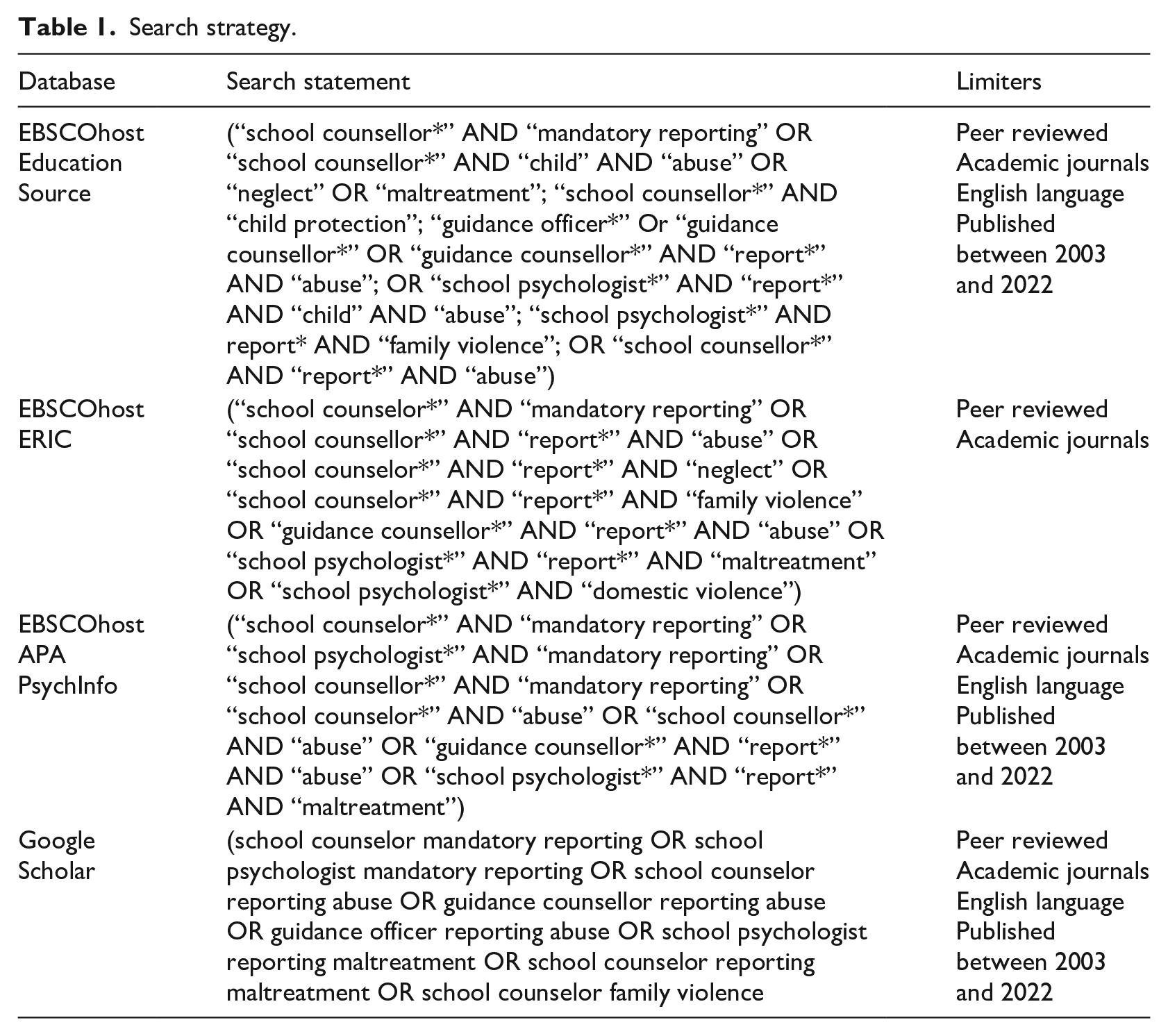
In this rapid review, we used a systematic search strategy. Two authors collaboratively formulated a list of search terms that fell into three broad categories: personnel (e.g., school counsellor, school psychologist), problem (e.g., child abuse and neglect, maltreatment), and focus (mandatory reporting).
Searches were conducted in January 2023. The following seven databases were identified as most relevant to the subject matter of the rapid review: ESBCOhost ERIC, EBSCOhost Education Source, EBSCOhost APA PsychoInfo, Informit A+Education, and Google Scholar. For Google Scholar, the first ten pages of results were used in a validation exercise to verify results from other databases (Kazi et al., 2021). Search terms were used in various combinations as required by each database platform as shown in Table 1. Searches were limited to peer-reviewed papers published in English, in academic journals, between the years 2003-2022 (inclusive). The search for literature between the years 2003-2022 (inclusive) was to gain insight into the research on school counsellors’ reporting of child maltreatment in the last two decades.
Search strategy.
Study selection criteria
We included primary empirical studies focused on school counsellors’ reporting of child maltreatment in which researchers had employed qualitative, quantitative, or mixed-methods research designs. We excluded studies in which school counsellors were not the focus of the study, systematic and other literature reviews (to avoid study repetition), and grey literature (to accept only the most scientifically rigorous studies).
Study screening
Two hundred and sixteen journal articles were identified in the searches. After duplicates were removed (n=161), 55 papers were uploaded to Rayyan, an online collaboration program for screening (Ouzzani et al., 2016). The 55 articles underwent a two-step blinded screening process with two authors working independently. First, the title and abstract were screened. Screeners reviewed each abstract and assigned a decision (include/exclude/maybe) and reason for the decision. Conflicts were resolved via discussion. After title and abstract screening, a total of 30 papers were excluded. Reasons for exclusion were: (i) wrong population (n=24) and (ii) wrong focus (n=6). Twenty-five studies remained.
At this point, the second author reviewed the reference lists of all potentially included articles (n=25), resulting in the identification of an additional six papers (n=6) potentially meeting the inclusion criteria, bringing the potentially included studies to a total of thirty-one (n=31).
Second, the full texts of the thirty-one potentially included studies were screened by two authors working independently and blinded to each other’s decisions. A further 13 articles were excluded. Reasons for exclusion were: (i) school counsellor not the focus (n=7); (ii) wrong study design (n=5); (iii) and wrong focus (n=1). A total of 18 articles were included at the conclusion of this process. The PRISMA flowchart is presented in Figure 1.
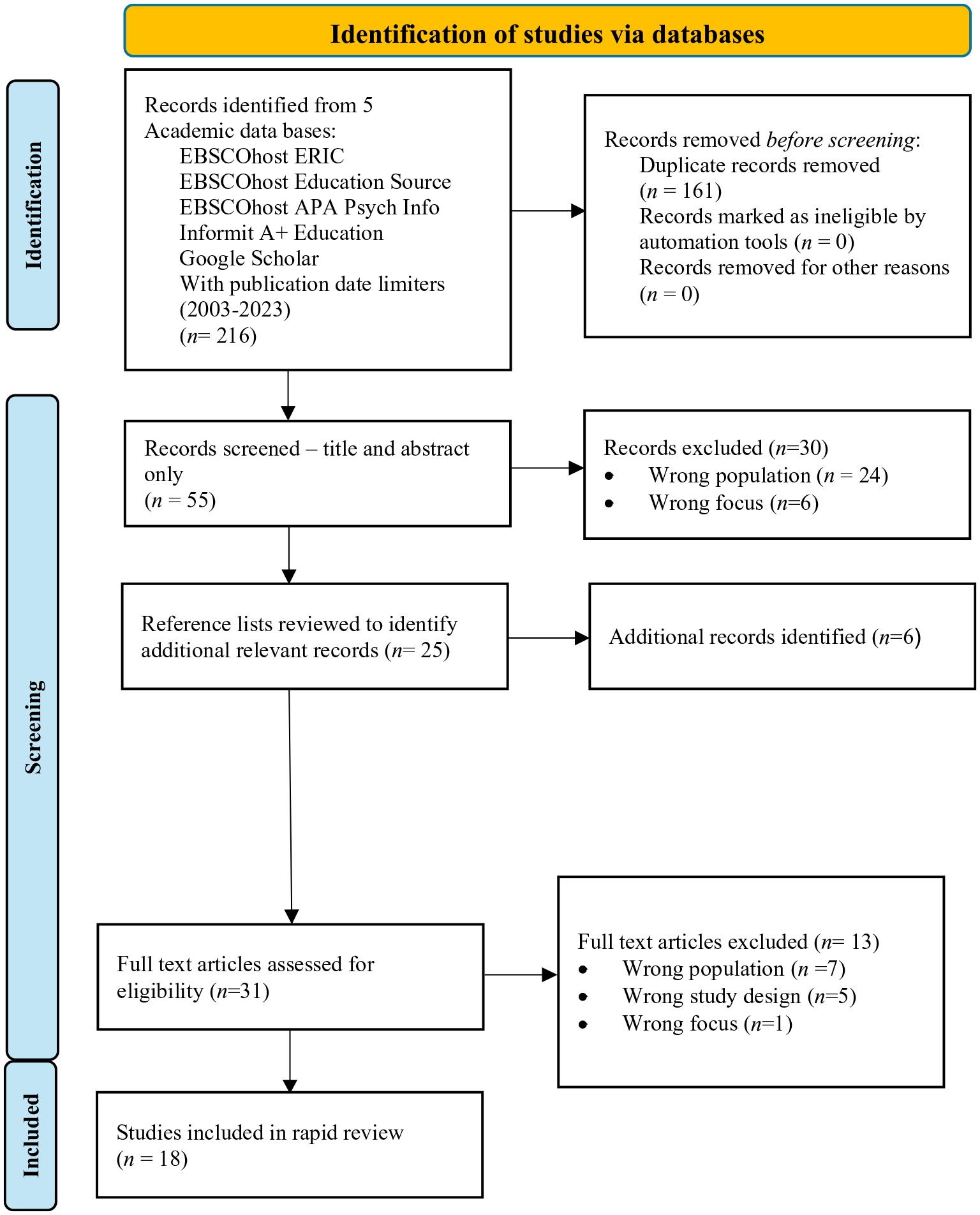
PRISMA flowchart.
Data extraction and analysis
Data from the 18 included studies were extracted into a Microsoft Excel spreadsheet by one author and validated by a second author. The data extracted included: author, year, title, country, study design, research aim, participants, and key findings. Only findings that were relevant to the research question were extracted.
Next, we charted the data (Arskey & O’Malley, 2005). This process involved sorting information according to key issues and themes. We coded themes inductively, using a previous review as a model (Walsh et al., 2023). We identified themes in the data corpus (Braun & Clarke, 2022). From these themes, we developed a descriptive map of the data corpus.
Findings
We detail the findings in three sub-sections: characteristics of the included studies, overview of study participants, and descriptive map of the included studies.
Characteristics of included studies
Characteristic of the 18 studies included in this rapid review are presented in Table 2. Most studies were conducted in the United States of America (n = 11) (Arbolino et al., 2008; Behun et al., 2019; J. K. Bryant, 2009; J. K. Bryant & Baldwin, 2010; J. Bryant & Milsom, 2005; Lusk et al., 2015; Ricks et al., 2019, 2022; Sikes et al., 2010; Tillman et al., 2015; Waalkes et al., 2022), four in Turkey (Esin et al., 2020; Peker & Celik, 2020; Sivis-Cetinkaya, 2015; Usakli, 2012), one in Australia (J. D. G. Goldman & Padayachi, 2005), one in Slovenia (Protner, 2013), and one in the United Kingdom (Jenkins & Palmer, 2012).
Overview of study characteristics.
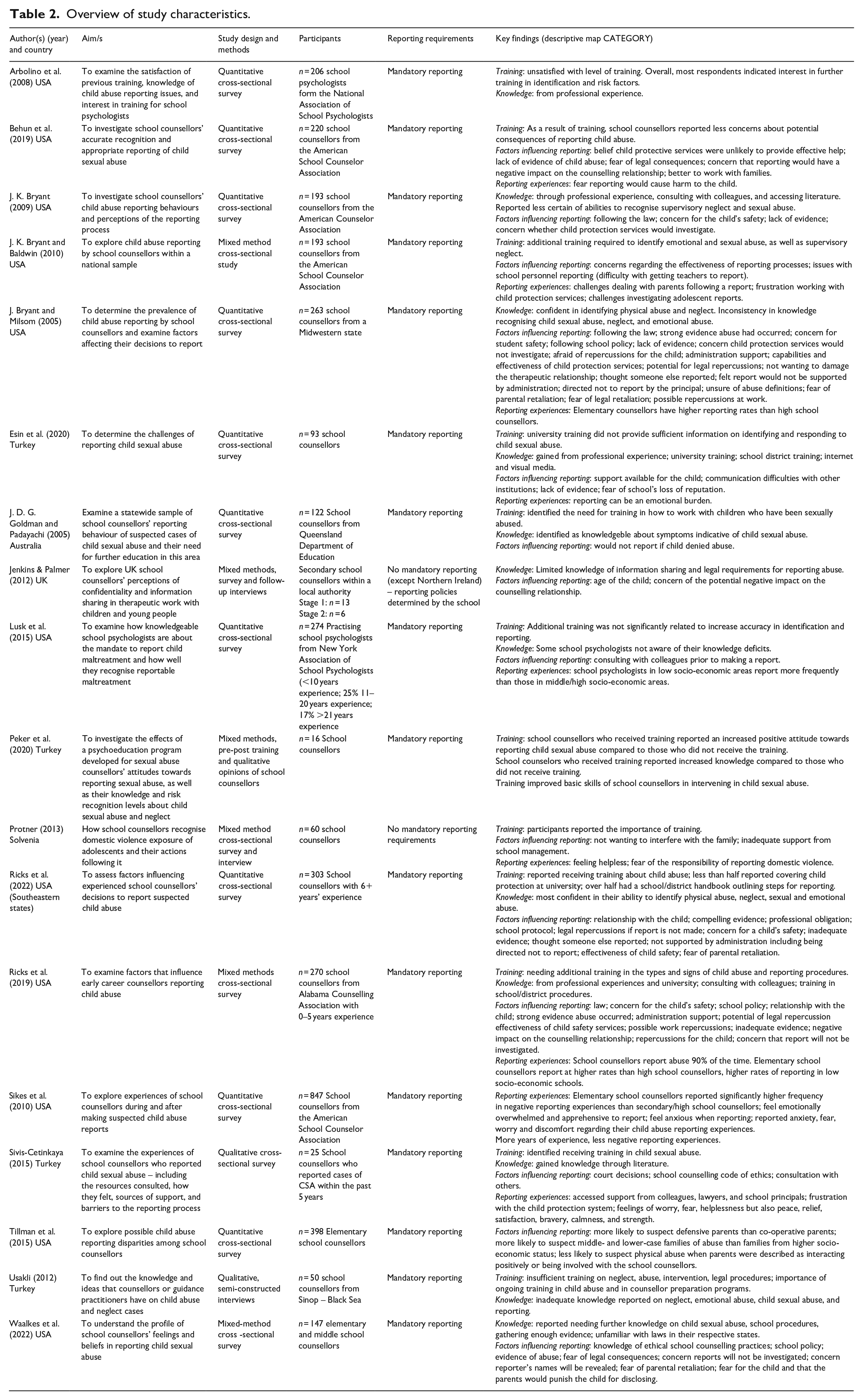
Of the 18 included studies, all collected data via participants’ retrospective responses to questions regarding their reporting of child abuse and neglect or constructs associated with reporting. Of the 18 included studies, 11 were quantitative cross-sectional study designs with most applying surveys or questionnaires (Arbolino et al., 2008; Behun et al., 2019; J. K. Bryant, 2009; J. K. Bryant & Milsom, 2005; Esin et al., 2020; J. D. G. Goldman & Padayachi, 2005; Lusk et al., 2015; Ricks et al., 2019, 2022; Sikes et al., 2010; Tillman et al., 2015), five were mixed method designs involving surveys or questionnaires with both closed and open ended items, or combinations of surveys or questionnaires with follow up interviews (J. K. Bryant & Baldwin, 2010; Jenkins & Palmer, 2012; Peker et al., 2020; Protner, 2013; Waalkes et al., 2022); and two were qualitative designs utilising individual interviews (Sivis-Cetinkaya, 2015; Usakli, 2012).
In terms of measures, three of the quantitative studies used J. Bryant and Milsom’s (2005) Child Abuse Reporting Questionnaire to measure school counsellors’ general knowledge of child abuse, child abuse reporting experiences, and perceptions of child protective services (J. K. Bryant, 2009; Ricks et al., 2019, 2022). This measure investigated school counsellors’ prevalence of child abuse reporting, decisional influences in reporting child abuse, and school counsellors’ ability to recognise child abuse (J. K. Bryant & Milsom, 2005). Two studies used vignettes to collect data on school counsellors’ hypothetical decision-making in cases of suspected child abuse and neglect (J. D. G. Goldman & Padayachi, 2005; Tillman et al., 2015). For example, J. D. G. Goldman and Padayachi (2005) provided four vignettes which described different sexual acts as well as background information, age of the child and the symptoms.
The 18 studies included in this rapid review addressed school counsellors’ reporting of all five child maltreatment subtypes. Ten studies examined reporting of child maltreatment broadly inclusive of child sexual abuse, physical abuse, emotional abuse, and neglect (Arbolino et al., 2008; J. K. Bryant, 2009; J. K. Bryant & Baldwin, 2010; J. Bryant & Milsom, 2015; Jenkins & Palmer, 2012; Lusk et al., 2015; Ricks et al., 2019, 2022; Sikes et al., 2010; Usalki, 2012). Six studies examined reporting of child sexual abuse (Behun et al., 2019; Esin et al., 2020; J. D. G. Goldman & Padayachi, 2005; Peker et al., 2020; Sivis-Cetinkaya, 2015; Waalkes et al., 2022); one study examined reporting of physical abuse (Tillman et al., 2015); and one study examined reporting of adolescents’ exposure to domestic violence (Protner, 2013).
Overview of study participants
As previously noted, the job title school counsellor is a widely recognised term used to describe the work of those who assist students, teachers, parents, and communities to ensure students can reach educational and social-emotional outcomes (Campbell & Colmar, 2014). Several other job title terms are also in use including school psychologist, guidance officer, or guidance counsellor (Campbell & Colmar, 2014). Those working in these roles may have different qualifications, professional experiences, and position descriptions, depending on the country, jurisdiction, or educational system in which they work (Campbell & Colmar, 2014).
The 18 included studies had collected information from a total of over 3500 participants comprising: school counsellors in sixteen studies (n= 3031) (Behun et al., 2019; J. K. Bryant, 2009; J. K. Bryant & Baldwin, 2010; J. Bryant & Milsom, 2005; Jenkins & Palmer, 2012; Peker et al., 2020; Protner, 2013; Ricks et al., 2019, 2022; Sikes et al., 2010; Sivis-Cetinkaya, 2015; Tillman et al., 2015; Usakli, 2012; Waalkes et al., 2022); and school psychologists in two studies (n = 480) (Arbolino et al., 2008; Lusk et al., 2015).
In terms of the status of school counsellors’ mandatory reporting roles, of the 18 included studies, 16 studies were conducted in jurisdictions in which authors claimed there were mandatory child maltreatment reporting laws at the time when studies were conducted (Arbolino et al., 2008; Behun et al., 2019; J. K. Bryant, 2009; J. K. Bryant & Baldwin, 2010; J. Bryant & Milsom, 2005; Esin et al., 2020; J. D. G. Goldman & Padayachi, 2005; Lusk et al., 2015; Peker et al., 2020; Ricks et al., 2019, 2022; Sikes et al., 2010; Sivis-Cetinkaya, 2015; Tillman et al., 2015; Usakli, 2012; Waalkes et al., 2022). However, we were unable to verify these claims and unable to determine whether school counsellors, specifically and in fact, were mandatory reporters at the time of the studies were conducted. In one study authors reported the absence of mandatory child protection reporting laws in the UK at the time of the study (Jenkins & Palmer, 2012), and this can be verified in records from the UK Independent Inquiry into Child Sexual Abuse in England and Wales (Independent Inquiry Child Sexual Abuse, 2022). However, we were not able to verify if school counsellors were also mandatory reporters at that time in Scotland or Northern Ireland. In one study mandatory reporting status was not stated (Slovenia) (Protner, 2013).
Descriptive map of the included studies
Using the 18 included studies, we compiled a descriptive map (Arskey & O’Malley, 2005) of the empirical landscape regarding school counsellors and their reporting of child maltreatment. Studies fell into 4 thematic categories:
Training – education and training undertaken by school counsellors about child maltreatment.
Knowledge – school counsellors’ knowledge in identifying and reporting child maltreatment.
Factors influencing reporting – aspects school counsellors took into consideration when deciding to report or to not report child maltreatment.
Reporting experiences – experiences of school counsellors when reporting child maltreatment.
The descriptive map of included studies is shown in Figure 2. In 15 of the 18 included studies more than one theme was addressed (Arbolino et al., 2008; Behun et al., 2019; J. K. Bryant, 2009; J. K. Bryant & Baldwin, 2010; J. Bryant & Milsom, 2005; Esin et al., 2020; J. D. G. Goldman & Padayachi, 2005; Jenkins & Palmer, 2012; Lusk et al., 2015; Protner, 2013; Ricks et al., 2019, 2022; Sivis-Cetinkaya, 2015; Usalki, 2012; Waalkes et al., 2022).
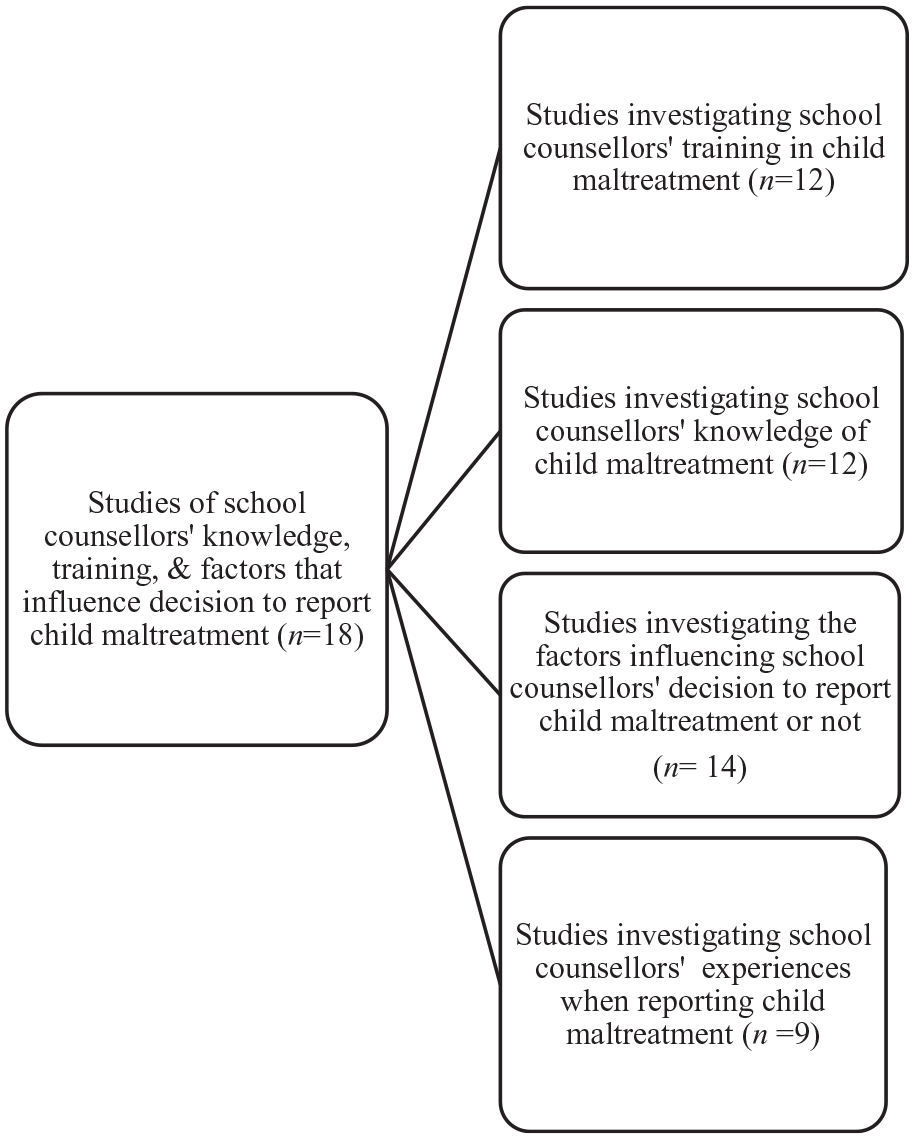
Descriptive map of included studies.
Training (n=12)
Studies in this first category examined child maltreatment training, specifically in child sexual abuse and the effect on school counsellors in identifying and supporting child victim/survivors. Few school counsellors identified that they received training in child sexual abuse (Sivis-Cetinkaya, 2015). Additionally, school counsellors reported that if they had received training at university, it was inadequate and did not provide sufficient information on identifying and responding to child sexual abuse (Esin et al., 2020; Ricks et al., 2022). Some school counsellors reported that as part of their training, their school district provided a handbook outlining reporting processes and procedures (Ricks et al., 2022). Findings highlight that school counsellors identified the need for further training in recognising and working with children impacted by child maltreatment.
Detail provided in study reports regarding the content and duration of the training that school counsellors had received was limited. One paper reported on a training intervention described as a psychoeducation program for school counsellors on child sexual abuse (Peker & Celik, 2020). As with preservice training, school counsellors were dissatisfied with the in-service training they had received, and its availability and completeness (Arbolino et al., 2008).
Despite these training shortcomings, studies stress the importance of further training, particularly in identifying types, signs, and symptoms of child maltreatment subtypes and relevant reporting procedures, as well as how to work with children and their families in the aftermath of child maltreatment (Arbolino et al., 2008; J. K. Bryant & Baldwin, 2010; J. D. G. Goldman & Padayachi, 2005; Protner, 2013; Ricks et al., 2019; Usalki, 2012).
Studies of specific training interventions yielded mixed findings. In some recent studies in which training interventions were evaluated school counsellors, after training, reported less concern about the potential consequences of reporting (Behun et al., 2019), more positive attitudes towards reporting, and higher levels of knowledge and risk recognition, compared to those who had not participated in training (Peker & Celik, 2020). In contrast, in an earlier study on child sexual abuse, less than 10% of school counsellors felt confident that the training would equip them to act as a resource person for a child who had experienced child sexual abuse (J. D. G. Goldman & Padayachi, 2005). Another study found that training provided in addition to initial basic training was not significantly related to an increase in accuracy in identifying and reporting (Lusk et al., 2015).
Knowledge (n=12)
Studies in the second category examined what school counsellors knew about identifying and reporting child maltreatment, and the sources of their knowledge.
School counsellors gained knowledge of identifying child maltreatment from varying sources, including professional experience (Arbolino et al., 2008; J. K. Bryant, 2009; Esin et al., 2020; Ricks et al., 2019) and consulting with colleagues (J. K. Bryant, 2009; Ricks et al., 2019), university training (Esin et al., 2020; Ricks et al., 2019), school district training (Esin et al., 2020; Ricks et al., 2019), accessing literature (J. K. Bryant, 2009; Sivis-Cetinkaya, 2015), and the internet and visual media (Esin et al., 2020). The specific categories of knowledge gleaned by school counsellors from these particular sources, however, were not elaborated.
Instruments used in the quantitative studies to assess school counsellors’ knowledge were typically multi-item measures with items asking about recognition and response. Interview schedules used in qualitative studies also tended to tap into similar topics. For example, ‘Have you ever detected a case of child [abuse/neglect/family violence] in your school’, could be presented either as a questionnaire item with closed-ended response options, or as an open-ended interview question. Studies revealed inconsistency in school counsellors’ knowledge of recognising child sexual abuse (J. Bryant & Milsom, 2005; J. D. G. Goldman & Padayachi, 2005; Ricks et al., 2022; Usalki, 2012), neglect and emotional abuse (J. K. Bryant, 2009; J. Bryant & Milsom, 2005). This is despite school counsellors’ themselves, reporting confidence in identifying these child maltreatment subtypes (J. K. Bryant, 2009; J. Bryant & Milsom, 2005; Ricks et al., 2022).
As with training, school counsellors identified deficits in their knowledge of child maltreatment, reporting inadequate knowledge of child maltreatment subtypes including neglect, emotional abuse, and child sexual abuse (Usalki, 2012; Waalkes et al., 2022). They likewise report deficits in knowledge of legal requirements in reporting and information sharing with other relevant agencies (Jenkins & Palmer, 2012; Usalki, 2012; Waalkes et al., 2022). In one paper, findings revealed that school counsellors may not be aware of the deficits in their own knowledge (Lusk et al., 2015).
Factors influencing reporting (n=14)
Studies in the third category identified workplace and organisational factors that influenced school counsellors to report child maltreatment. These factors included regulatory, institutional, and ethical requirements such as: following the jurisdictional law on reporting child maltreatment (J. K. Bryant, 2009; J. Bryant & Milsom, 2005; Ricks et al., 2019; Sivis-Cetinkaya, 2015), abiding by court decisions (Sivis-Cetinkaya, 2015), awareness of potential legal repercussions if not reporting (J. Bryant & Milsom, 2005; Ricks et al., 2019, 2022), following school policy (J. Bryant & Milsom, 2005; Ricks et al., 2019, 2022; Waalkes et al., 2022), and consideration of professional obligations and school counselling codes of ethics (Jenkins & Palmer, 2012; Ricks et al., 2022; Sivis-Cetinkaya, 2015; Waalkes et al., 2022). Other factors centred on support for school counsellors’ reporting role such as consultation with colleagues including the school psychologist, school administrators, and classroom teachers prior to making a report (Lusk et al., 2015; Sivis-Cetinkaya, 2015), support from the school leaders and clarity around repercussions for failure to report (J. Bryant & Milsom, 2005; Ricks et al., 2019, 2022), and school counsellors’ perceptions of the effectiveness of child protection services (J. Bryant & Milsom, 2005; Ricks et al., 2019, 2022).
Child factors influenced school counsellors to report child maltreatment, such as the school counsellor recognising evidence of child maltreatment (Behun et al., 2019; J. Bryant & Milsom, 2005; Ricks et al., 2019, 2022; Tillman et al., 2015; Waalkes et al., 2022). Child factors identified as relevant in their decisions included: the age of the child (Jenkins & Palmer, 2012), their relationship with the child (Ricks et al., 2019, 2022), and concern for the child’s safety (J. K. Bryant, 2009; J. Bryant & Milsom, 2005; Ricks et al., 2019, 2022).
Family factors also influenced school counsellors to report child maltreatment. School counsellors were more likely to suspect parents who were defensive as opposed to cooperative in cases of physical abuse (Tillman et al., 2015). School counsellors were more likely to suspect middle and lower-socioeconomic families of maltreatment than those from higher-income families (Tillman et al., 2015).
Studies in the third category identified factors that influenced school counsellors’ to not report child maltreatment. These included a lack of understanding of definitions of maltreatment (J. Bryant & Milsom, 2005) and a lack of sufficient evidence of maltreatment (Behun et al., 2019; J. K. Bryant, 2009; J. Bryant & Milsom, 2005; Esin et al., 2020; Ricks et al., 2019, 2022). School counsellors identified that they would not report child sexual abuse if the child denied it (J. D. G. Goldman & Padayachi, 2005; Protner, 2013), and if they feared their reporting would have a negative impact on the counselling relationship (Behun et al., 2019; J. Bryant & Milsom, 2005; Jenkins & Palmer, 2012; Ricks et al., 2019, 2022). In some studies, school counsellors feared legal consequences for making a report (Behun et al., 2019; J. Bryant & Milsom, 2005; Ricks et al., 2022; Waalkes et al., 2022). School counsellors also identified other workplace factors that influenced them to not report child maltreatment, or believed that reporting child maltreatment would not be supported by the school administration (J. Bryant & Milsom, 2005; Protner, 2013; Ricks et al., 2022). In a small number of studies, school counsellors revealed instances in which they were directed to not report maltreatment by their school leader(s) (J. K. Bryant & Baldwin, 2010; J. Bryant & Milsom, 2005; Ricks et al., 2022). Other factors influencing report decision-making by school counsellors at the school level included a fear of the school’s loss of reputation (Esin et al., 2020), believing that someone else had reported the maltreatment (J. Bryant & Milsom, 2005; Ricks et al., 2022), and knowing there would be ongoing support available to the child (Esin et al., 2020).
Fears of different types were identified as impediments to reporting in some studies in the third category, for example, fears of parental retaliation (J. Bryant & Milsom, 2005; Ricks et al., 2022; Waalkes et al., 2022), repercussions for the family (J. Bryant & Milsom, 2005), and repercussions for the child including that the child may be punished for disclosing (J. Bryant & Milsom, 2005; Ricks et al., 2019, 2022; Waalkes et al., 2002). Findings from some of the included studies in this third category identified a sense of conflict between therapeutic imperatives and reporting obligations that may influence report decision making. For example, not wanting to interfere with the family (Protner, 2013) or a belief that reporting child maltreatment would do more harm to the child (Behun et al., 2019), especially if the perpetrator were to become more abusive following the report (Waalkes et al., 2022).
Broader structural issues influencing school counsellors to not report included a lack of confidence in the child protection system (Behun et al., 2019). This lack of confidence stemmed from previous experience with reports not being investigated (J. K. Bryant, 2009; J. Bryant & Milsom, 2005; Ricks et al., 2019, 2022; Waalkes et al., 2022); communication issues with other institutions (Esin et al., 2020); concerns reporter names would be revealed (Waalkes et al., 2022); and the perceived effectiveness of mandatory reporting in general (J. K. Bryant & Baldwin, 2010).
Reporting experiences (n=9)
Studies in the fourth category highlight a variety of different school counsellor reporting experiences. One study reported the frequency of child maltreatment reporting by school counsellors, with findings demonstrating that school counsellors report child maltreatment 90% of the time (Ricks et al., 2019). They report with physical abuse more frequently than neglect, followed by emotional abuse and sexual abuse (Ricks et al., 2019). A small group of studies published findings on the relationship between disadvantage and child maltreatment suggesting that school counsellors working in schools in low socio-economic areas report child maltreatment more often than their counterparts working in schools in middle to high socio-economic areas (Lusk et al., 2015; Ricks et al., 2019). Elementary school counsellors appear to report child maltreatment at higher rates than high school counsellors (J. Bryant & Milsom, 2005; Ricks et al., 2019). Elementary school counsellors also have significantly higher rates of negative reporting experiences than high school counsellors (Sikes et al., 2010). Experienced school counsellors appear to have fewer negative experiences in reporting child maltreatment than their less experienced counterparts (Sikes et al., 2010).
Several studies in this fourth category shed light on the emotional toll of reporting child maltreatment on school counsellors (Esin et al., 2020; Sikes et al., 2010). School counsellors may be apprehensive and anxious when making a report (Sikes et al., 2010). They may harbour fears as described above (Behun et al., 2019; Sikes et al., 2010). They feel discomfort, sadness, anger, and a sense of helplessness (Protner, 2013; Sivis-Cetinkaya, 2015). The responsibility for reporting child maltreatment weighs heavily on their minds (Protner, 2013). Also identified were more generative effects such as feelings of peace, relief, satisfaction, bravery, calmness, and strength (Sivis-Cetinkaya, 2015). School counsellors identified that support from colleagues, lawyers, and principals assisted them to deal with experiences of reporting child maltreatment (Sivis-Cetinkaya, 2015). Studies in this fourth category also highlight that when called to make a report, school counsellors tend to believe that they have done the right thing (Sikes et al., 2010). However, studies also give voice to their frustration in working with child protection authorities and other services (J. Bryant & Baldwin, 2010; Sivis-Cetinkaya, 2015).
Discussion
This rapid review addressed the broad research question “What is known about school counsellors and their reporting of child maltreatment?”. The review has generated a descriptive map of 18 included studies. The empirical evidence shows that the experiences of school counsellors in reporting child maltreatment are seldom investigated despite school counsellors being considered frontline members of the school-based child protection workforce for decades (World Health Organisation, 2019). The existing evidence is limited to having been generated in only a small number of studies conducted primarily in western and high-income countries. Therefore, findings cannot be generalised to jurisdictions in a wider scope of contexts.
Studies investigating school counsellors' experiences in reporting child maltreatment reveal a bleak picture. Few participants in any study included in this rapid review felt they had sufficient training in identifying, reporting, and supporting children impacted by maltreatment. Their university training did not prepare them for working in the field (Esin et al., 2020; Ricks et al., 2022). Although some studies had been conducted some time ago, this situation appears to persist. For example, a recently published study by Avci and Yildirim (2023) investigating the experiences of Turkish school psychological counsellors in reporting sexual abuse cases found school counsellors did not view themselves as having sufficient knowledge or skills to support children who had experienced child sexual abuse. The training they received at university centred on counselling strategies and did not cover detection and reporting, legal processes, or how to support children who had been sexually abused (Avci & Yildirim, 2023). This perception of insufficient training at university level was a dominant finding in our review resulting in school counsellors garnering information from a range of different sources to address their knowledge deficits (Arbolino et al., 2008; J. K. Bryant, 2009; Esin et al., 2020; Ricks et al., 2019; Sivis-Cetinkaya, 2015). This lack of training at university level may vary by institution and course as there is no single preparation pathway to becoming a school counsellor and no universal course standards or requirements (Bettman & Digiacomo, 2022). It appears reasonable to conclude that school counsellors’ employing authorities have, in the past, not invested in school counsellors’ continuing professional learning, and this may be interpreted as them having not taken this training seriously. This has implications for students at risk, for example, the different types of behaviours displayed by students suffering maltreatment may not be understood by the school counsellor resulting in inadequate and untimely responses (Gilbert et al., 2009). This in turn restricts the school counsellors’ ability to adequately fulfil in their student protection roles (Gilbert et al., 2009).
Very few studies included in the review provided details on what was covered in the training curricula school counsellors received (Peker & Celik, 2020). Understanding more about the characteristics of training generally, and the characteristics of effective training specifically, is crucial to move the field forward. To our knowledge, no child protection courses in school counsellor preparation programs have been evaluated using rigorous experimental or quasi-experimental methods. This means that we do not yet have a complete picture about “what works” to prepare school counsellors for reporting child maltreatment. A key message, however, is clear. School counsellors continue to perceive their training as inadequate, and existing studies do not specifically report on training program content or methods. If school counsellors are to be effective in supporting children who have been maltreated, at a bare minimum, they must understand the traumatic effects of maltreatment, how symptoms manifest in children who have been maltreated, the procedures for reporting maltreatment, and how to support children after reports are made (Brown et al., 2008).
In this review, we offer a synthesis of factors influencing school counsellors to report or to not report child maltreatment (e.g., Behun et al., 2019; Lusk et al., 2015; Ricks et al., 2022; Waalkes et al., 2022). These factors can be conceptualised as institutional/organisational factors, school counsellor factors, and family and child factors.
Due to the nature of their role in identifying, reporting, and supporting students impacted by maltreatment, school counsellors are at risk of vicarious trauma, secondary traumatic stress, or burnout. This highlights the importance of self-care. Self-care is a protective factor for school counsellors and requires them to know and understand their needs (Guler & Ceyhan, 2020). School counsellors' awareness of their needs may vary along a continuum from unaware, through discounting, to highly aware (Guler & Ceyhan, 2020). Unless school counsellors are asked about their needs, their needs remain unidentified. Therefore, it is important to have formal systems in place for school counsellors to engage in professional and personal activities to assess and address their self-care needs. Evidence shows this can increase their self-efficacy in addressing child maltreatment (Gokalp, 2022; Tan & Chou, 2018). Professional activities to address school counsellor self-care include supervision, professional development, and professional support networks (Gokalp, 2022; Langston & Van Gordon, 2023). Personal activities include those that support school counsellors in leading a balanced lifestyle, such as physical, relational, emotional, and spiritual activities (Gokalp, 2022; Langston & Van Gordon, 2023). Professional and personal self-care activities influence the self-efficacy of school counsellors, including improved wellness, productivity and reduction in vicarious trauma, secondary traumatic stress, or burnout (Gokalp, 2022). Figure 3 shows how initial training, professional self-care and personal-self care may interact and contribute to supporting school counsellors’ self-efficacy in child maltreatment reporting.
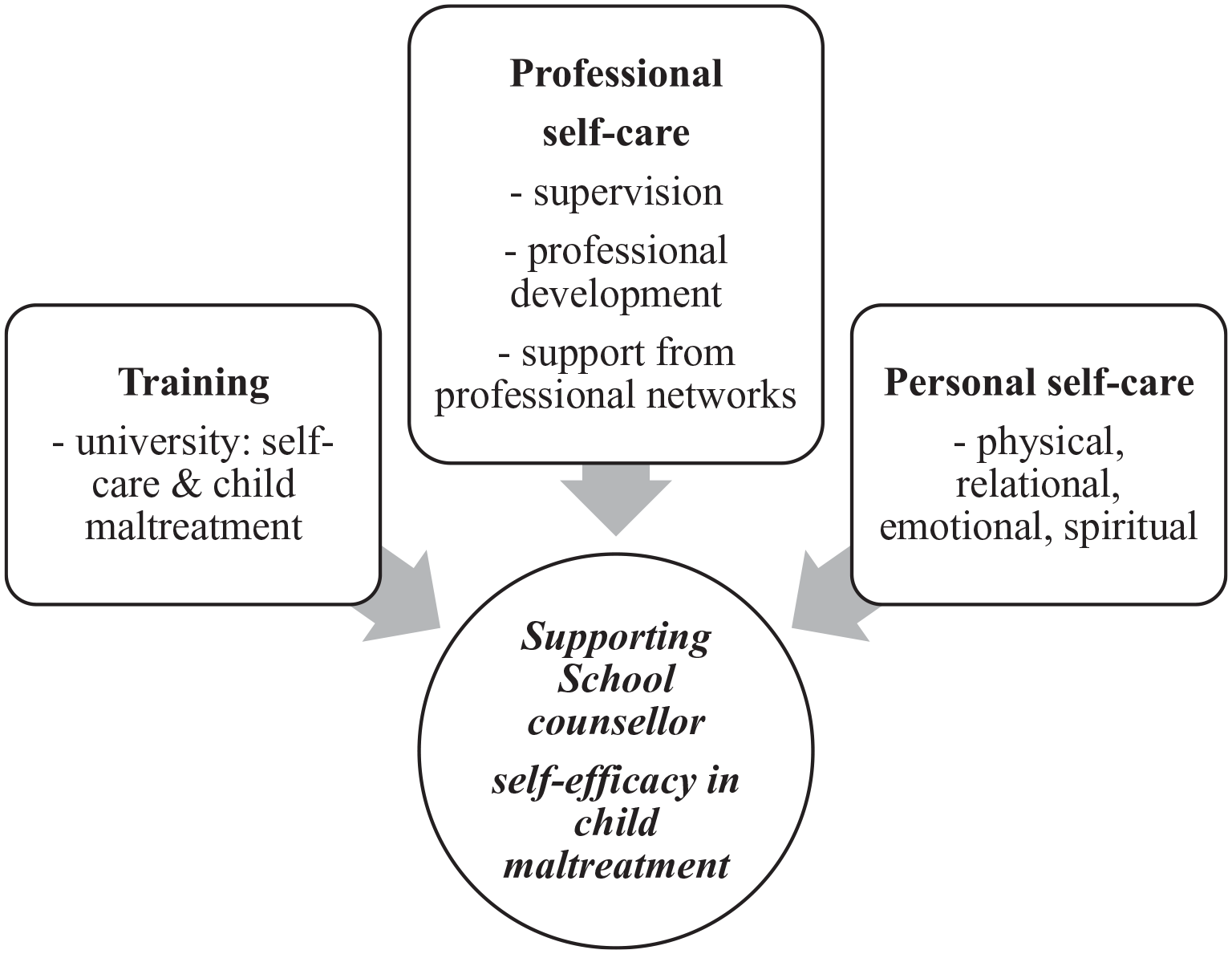
Supporting school counsellor self-efficacy in child maltreatment reporting.
Recommendations
Rigorous evidence-based training both in initial school counsellor preparation programs and ongoing professional learning programs is essential for school counsellors with mandatory child maltreatment reporting obligations. Their responsibility in ensuring the safety of children in schools and to provide appropriate support to students and their families demands this. School counsellors must be supported by well-designed and evidence-informed training that begins in their university school counsellor preparation programs and continues through their careers as ongoing professional learning. This is crucial to enable school counsellors to meaningfully provide for student protection and safeguarding. School counsellors are essential in promoting and supporting student mental health and well-being and are called upon to support students’ welfare at school. School counselling educators at university level should undertake curriculum mapping to identify what is being taught in student protection, how and when it is being taught, and then identify opportunities to enhance these offerings and strengthen school counsellor preparation.
To improve the conditions surrounding mandatory reporting of child maltreatment by school counsellors, it is essential that child protection authorities and services provide feedback on reporting outcomes back to reporters. However, we are aware that this type of information sharing may be precluded by specific privacy provisions within child protection statutes. Although privacy laws can allow the sharing of information across agencies in specific situations (e.g., when there is a serious and immediate threat to safety), there is evidence of inconsistency in the ways in which privacy provisions are enacted (Commonwealth of Australia, 2017). It is through feedback on outcomes that school counsellors and other educators will be enabled to become more robust and confident in reporting child maltreatment. Feedback is well documented as a powerful learning tool (Hattie, 2023).
With the changing nature of child protection systems and child protection laws, further research is required to investigate what works for school counsellors to enhance their knowledge, attitudes, self-efficacy, and reporting practice, and how this translates to outcomes for children experiencing various maltreatment subtypes. In future studies, research teams must accurately detail the status of child maltreatment reporting for school counsellors in the jurisdictions concerned (e.g., whether reporting is mandatory or voluntary and which child maltreatment subtypes are subject to reporting obligations). Statues should be cited where appropriate. This may require collaboration with legal academics with capability to unpick the nuances of legislative statutes.
Limitations
This rapid review has limitations that must be considered when interpreting the findings. We included studies published only in peer-reviewed academic journals. Including grey literature may have contributed studies with different findings. Our searches were limited to studies published in English as we did not have capacity to undertake translation. Studies from a wider range of countries may contribute different findings. There exists a lack of consistency in the ways in which different child maltreatment subtypes are defined and described, making comparisons between studies impossible. We did not plan to conduct meta-analysis as the studies in this field are few and highly diversified with heterogenous study designs and data collection methods. As the field evolves and studies begin to report on similar outcomes, it may be possible to conduct meta-analyses in future. In response to these limitations, future research should strive to use consistent terms, definitions, and descriptions to enable cross-study comparisons. A useful reference point for this task can be UNICEF’s (2023) International Classification of Violence Against Children. In addition, longitudinal study designs are needed to establish the effects of training interventions. In particular, there is a need for studies exploring the efficacy and effectiveness of school counsellors’ training at pre-service and in-service levels and the impact of training on child maltreatment reporting. Well researched models for achieving this goal can be found in the broader child protection training literature, for example in evaluations of the Second Step Child Protection Unit (see for example, Nickerson et al., 2021), and iLookOut for Child Abuse (see for example, Yang et al., 2020).
Conclusion
Findings from this study highlight the nascent status of research into school counsellors’ reporting of child maltreatment. We have identified several influences on school counsellor’s reporting, including institution/organisation factors, family and child factors, and school counselling factors. School counsellors must receive rigorous training while at university and ongoing professional learning thereafter. Their professional and personal self-care needs must also be supported. If this does not occur, school counsellors will be at risk of vicarious trauma, secondary traumatic stress, or burnout, which may seriously affect their professional performance, in turn placing the most vulnerable children at continued risk of maltreatment.
Footnotes
Declaration of conflicting interests
The author(s) declared no potential conflicts of interest with respect to the research, authorship, and/or publication of this article.
Funding
The author(s) received no financial support for the research, authorship, and/or publication of this article.
