



Abstract
Supervision is an essential part of school counsellor education training, particularly during internship and practicum experiences, as it plays a crucial role in assisting counsellor trainees in adapting to their new roles and identities. While essential to the profession, supervision literature lacks comparison studies across countries, leaving a significant gap in our understanding of whether, and to what extent, supervision is being effectively practised cross-nationally. In the current study, authors utilized a multisite analytic approach as a form of case study method to investigate similarities and differences in counsellor educators’ school counselling supervision practices in the US and Türkiye. The study sample included a total of four counsellor education programmes, consisting of two programmes from each country. The results indicated that while counsellor educators in the US pay more attention to crisis management, suicide assessment, feedback acceptance, multicultural issues, school counsellor self-care, and mindfulness, their counterparts in Türkiye focus on creating counselling goals, counselling micro-skills, theories, and techniques. The results also provided further support for an independent counsellor education accreditation body that could oversee the supervision practices across counsellor education programmes in Türkiye for a united counsellor training, supervision, and professional counsellor identity.
Keywords
The birth of the counselling profession can be traced back to the early 19th century when the global ramifications of the Industrial Revolution led people to migrate to larger cities in search of better job opportunities and improved living conditions. During this period, the field of counselling emerged with the primary aim of assisting individuals in finding suitable occupations. Counselling as a profession began its journey in its birthplace, the United States (US), in the early 1900s, and gradually expanded to non-western countries (Erford, 2019; Pope, 2009). In Türkiye, the establishment of counsellor training programmes within higher education institutions took place in the 1950s (Korkut & Mızıkacı, 2008). Presently, nearly 90 public and private foundation universities offer counselling programmes preparing counsellor trainees for their professional roles. These programmes are typically housed within the Faculty of Education, emphasizing the training of school counsellors, rather than clinical mental health (CMH) counsellors. As a result, many counselling graduates often practice in school environments.
Researchers have suggested that one of the most critical components of counsellor education is the supervision counsellor trainees receive during their training (e.g. Bernard & Goodyear, 2019; Özyürek et al., 2021; Yöntem et al., 2021). Although similar views and expectations exist among countries (also states/regions within countries; Henriksen et al., 2019), supervision training and practices vary greatly (Falender et al., 2021). This variability prompts the need for a deeper understanding of the international landscape of supervision practices. For instance, a study conducted by Ellis et al. (2015) examined supervisees’ harmful and inadequate supervision experiences. In this study, participants from the Republic of Ireland reported a higher rate of harmful and inadequate supervision experiences compared to their counterparts in the US. Similarly, comparative research conducted between South Korea and the US also highlighted similarities in counsellor education but differences in supervision duration and frequency (Son et al., 2013). Moreover, certain relationships such as supervisory working alliance, supervisee nondisclosures, supervisee satisfaction, and supervisory styles showed significant associations among participants from both countries, with higher correlations in the U.S. sample (An et al., 2020).
All the aforementioned studies represent quantitative investigations primarily grounded in the perceptions of supervisees. As far as our knowledge extends, the work of Falender et al. (2021) stands as the sole comprehensive resource encompassing a comparative analysis between the US and Türkiye. This noteworthy study extended its scope to include seven countries, incorporating both the US and Türkiye, thereby elucidating disparities in various facets of supervision, including regulatory frameworks, supervisor competence, the dynamics of the supervisory relationship, ethical and legal considerations, and the evaluation process.
Moreover, it is essential to underscore that among the previously mentioned comparative studies, none have delved specifically into the realm of school counselling supervision. Given the distinctive nature of school counselling and the unique demands it places on professionals, it becomes imperative to embark on comparative inquiries that specifically juxtapose supervision practices in this context between the US and Türkiye. Such studies hold the potential to not only shed light on existing disparities but also offer invaluable insights into areas warranting enhancement and avenues for cross-cultural exchange. In essence, these endeavours contribute significantly to the comprehensive understanding of cross-cultural school counselling supervision practices. The current study aimed to fulfil this purpose by scrutinizing school counselling supervision practices across multiple counsellor education programmes in the US and Türkiye.
Supervision of counsellor trainees in the US and Türkiye
Historically, counsellor education in Türkiye began in the 1950s through collaboration with the US. During this time, American education experts visited Türkiye for research purposes, while Türkiye also dispatched experts to the US (Aladag & Kemer, 2023; Poyrazli, 2003). Counsellor education and supervision in Türkiye have continued to evolve over the years under the influence of American and Western literature (Falender et al., 2021; Yeşilyaprak, 2009). Supervision remains a constantly changing and developing field in Türkiye (Aladag & Kemer, 2023). Counselling undergraduate programmes are typically housed within the Faculty of Education and are approved and monitored by the Council of Higher Education (CoHE). While it was previously mandatory for counselling curricula to adhere to the CoHE guidelines, recently, universities received the autonomy to develop their curricula. However, most counselling programmes in Türkiye still largely follow the CoHE guidelines. Furthermore, these guidelines do not include specific supervision standards, such as student-to-faculty ratio, frequency, supervision modalities, methods, or supervisor competency.
Turkish higher education institutions provide foundational counsellor education training at the undergraduate level, resulting in graduates being recognized as psychological counsellors lacking specialization in mental health or school counselling. However, most of these graduates predominantly find employment as school counsellors (ÜNİ-VERİ, 2021). Possession of an undergraduate counselling degree is sufficient to practice as a psychological counsellor, rendering master’s and doctoral degrees in counselling primarily oriented towards academic careers. Conversely, prospective counselling students in the US must choose between CMH and school counselling for their master’s degree education, a prerequisite for obtaining licensure as a CMH or school counsellor. In contrast to Türkiye, institutions in the US do not offer counselling training at the undergraduate level but provide opportunities for doctoral degrees aimed at academic pursuits. Furthermore, in both countries, practicum and internship courses are typically offered during the final phase of their respective counselling programmes (Atıcı & Çam, 2013; Boyacı, 2018).
Researchers in Türkiye have explored various aspects of the supervision process in the context of school counselling internships (Özyürek, 2009, 2010), individual counselling group supervision experiences (Koçyiğit, 2020), online supervision encounters (Özyiğit & Atik, 2021), and efforts to standardize counselling supervision practices nationwide (Kalkan & Can, 2019; Özyürek et al., 2021). In a national survey involving 365 senior counselling trainees, Özyürek (2009) revealed that Turkish counselling students frequently reported deficiencies and inconsistencies in their supervision experiences, and inadequately trained counsellor educators providing supervision in unwieldy supervision groups. These findings were subsequently corroborated by Özyürek (2010) and Boyacı (2018). Despite the overall insufficiency and inefficacy of supervision in Turkish counsellor education programmes, supervisors were often described as intimate and sincere (Meydan & Denizli, 2018). Furthermore, efforts to standardize supervision training across institutions in the country appear to be gaining momentum, garnering support from counsellor educators (Özyürek et al., 2021).
As of the end of 2022, the Turkish Psychological Counseling and Guidance Association (TPCGA) has obtained the authority to accredit counselling programmes, although none have yet received accreditation (Aladağ & Kemer, 2023). In contrast, the Association for Evaluation and Accreditation of Teacher Education Programs (AEATEP) accredits counselling programmes alongside teacher education programmes within education faculties in Türkiye (Association for Evaluation and Accreditation of Teacher Education Programs [AEATEP], 2023.). Out of approximately 90 counselling undergraduate programmes in Türkiye, 32 have obtained accreditation from the AEATEP (CoHE, 2018). Notably, AEATEP’s standards include limited provisions related to supervision (Kalkan & Can, 2019). Additionally, counsellor educators in Türkiye value organizations like the Council for Accreditation of Counseling and Related Programs (CACREP) for their role in establishing and upholding specific standards for counsellor education, particularly in the supervision of practicum and internship courses (Özyürek et al., 2021).
In the US, CACREP accredits and manages the supervision process within counsellor education programmes (CACREP, 2016). While not all programmes obtain accreditation, CACREP standards are instrumental in maintaining quality within counsellor training and the profession’s overall service provision. These standards address various aspects, including the student-to-faculty ratio, the minimum number of hours dedicated to direct and indirect contact during practicum and internship, and the required number of supervision hours.
Purpose of the study
Despite ongoing collaboration, publication, and mutual learning among counsellor educators in the US and Türkiye concerning counsellor education issues, the existing literature has yet to explore the resemblances and distinctions in supervision practices. While a substantial body of literature addresses the deficiencies observed in Turkish counselling programmes, such as the absence of supervision-related standards (Kalkan & Can, 2019), inadequate emphasis on experiential and applied learning (Aladag & Kemer, 2023), and concerns regarding supervisor competencies (Özyiğit & İşleyen, 2016), it remains unclear how these inadequacies manifest within in-class supervision practices and what variations exist in the supervision process and its implementation. Furthermore, the limited literature addressing school counselling supervision underscores the urgent necessity for researchers to develop cross-national school counselling supervision practices. Therefore, the primary aim of this study was to address the following research question: What are the similarities and differences in counsellor education supervision practices between the US and Türkiye? Building upon the findings of this study, we aimed to provide counsellor educators in both countries with recommendations for supervising school counsellor trainees at the undergraduate and master’s levels.
Method
Among the qualitative research designs, a multisite case study approach was utilized in the current study. In case studies, researchers gain in-depth knowledge about the research subject by using a combination of multiple data collection techniques (Patton, 2014). Within the context of the case study, observation, interview, and document review techniques are commonly used together (Stake, 1995). Multisite case studies ‘involve collecting and analysing data from several cases’ (Merriam, 2009, p. 49). Researchers in the current study, mainly utilized three sources of evidence in creating a full picture of the supervision practices in the US and Türkiye: observation, programme materials (i.e. syllabi, programme manuals, and programme websites), and follow-up meetings with counsellor educators and doctoral supervisors. In the current study, relevant similarities and differences between the US and Türkiye were identified and presented with evidence from these three sources.
Data collection sites
The research data were obtained by examining four counsellor education programmes: two from the US and two from Türkiye. Ethics Committee of Nevsehir Haci Bektas Veli University granted ethical approval for the data collection process in both the US and Türkiye. Programmes in the US acquired CACREP accreditation, and the programmes in Türkiye implemented CoHE’s counselling curriculum at the time of the study. Researchers made observations and reviewed supervision-related documents at these four sites. Follow-up meetings were conducted with faculty members and doctoral students (referred to as doctoral supervisors henceforth) who took part in the supervision of counselling undergraduate and/or master’s students. To enhance inclusivity, Turkish programmes were chosen from different regions of the country (e.g. Marmara, Black Sea) and cities of varying sizes (e.g. metropolitan, intermediary cities). Furthermore, to account for differences in programme implementation in Türkiye (Büyükgöze-Kavas, 2011), we selected one programme accredited by the AEATEP and another programme without accreditation.
Document review
For the purpose of this study, researchers conducted a comprehensive examination of supervision materials. These materials encompassed a range of documents, such as syllabi, programme manuals, supervision contracts, weekly logs, and assessment forms. Furthermore, the study involved an examination of the content available on the programmes' websites (such as supervision class enrolment procedures, related programme manuals, and internship manuals available on the programmes’ web pages). To organize the collected data on the programme materials, researchers created the “Supervision Material Review Form” for the current study. This form enabled the researchers to notice the ways through which counsellor educators (and counsellor education programmes) communicated with their counsellor trainees about the details of their supervision process. Through studying the supervision-related programme documents, researchers were able to reveal the components of each programme that were either overstressed or lacking in comparison to the others.
Observation
Researchers observed four counsellor education programmes (two in the US and two in Türkiye) to gain direct access to their supervision practices. For this purpose, researchers determined two main foci prior to the study; (a) group supervision sessions and (b) weekly practicum and internship class meetings. Firstly, the researchers informed the supervisors and their supervisees about the observation process and the purpose of the study. Following the approval of both the supervisors and the supervisees, observations started. Researchers participated in the supervision meetings only as observers. To put it more concretely, the researchers did not actively participate in the topics discussed in the observed supervision sessions, they only remained in the role of an observer. Observations were carried out during one full semester (i.e. 14 weeks). Only one researcher at each time participated in the supervision meetings because of concerns about confidentiality and disrupting the harmony of the supervision groups. Brief notes were taken during the observations, and detailed observation data were written down immediately after each supervision meeting. All observation notes were analysed with the participation of all researchers.
Follow-up meetings
Follow-up meetings were carried out after the document reviews and observations were completed. Participants granted their informed consent for the follow-up meetings. Through these meetings, it was aimed to gain a deeper understanding of the differences between the programmes in the two countries. These meetings were conducted with a total of 10 supervisors: five from the US and five from Türkiye. Participants from the US included three assistant professors with an average of 8 years of experience as counsellor educators and supervisors and two doctoral students who provided supervision as a part of their doctoral training (i.e. doctoral supervisors). Participants from Türkiye were all assistant professors with an average of 7 years of experience in counsellor education and supervision. Interviews lasted an average of 20 min ranging between 10 and 25 min. For the follow-up meetings, a semi-structured interview form developed by the researchers was used. This form included questions about the differences between supervision practices in the two countries. Questions were formed by analysing the document review and observation data. For example, observational data showed that basic counselling techniques were taught in supervision groups in Türkiye, whereas supervision groups in the US did not include such discussions. Hence, in the follow-up meetings, researchers invited supervisors to elaborate on the possible reasons for this difference (e.g. Basic counselling skills are handled in Türkiye during the supervision process, but not in the US. What do you think about this difference?). Researchers wrote down and analysed the responses of the supervisors in collaboration with the rest of the research team.
Researchers as instrument
As is customary in qualitative research, our research process was unavoidably shaped by various assumptions and biases stemming from our individual and shared previous experiences, perspectives, and socio-cultural backgrounds. Firstly, all three authors have prior professional involvement in the supervision process, and our shared learning experiences in counselling and supervision have predominantly drawn from Western academic resources (e.g. Bernard & Goodyear, 2019), which may have inadvertently influenced our data interpretation processes. Secondly, each of us received our undergraduate education in school counselling from institutions in Türkiye, while our connections with the US counsellor education and supervision systems vary, involving pursuits of doctoral and postdoctoral degrees and attendance at academic conferences. Throughout our study, we maintained a commitment to grounded analysis rooted in the data and insights garnered from multiple data sources, ensuring the integrity and validity of our findings.
Data analysis
Due to the nature of the case study approach, data were gathered from different sources including document review, observation, and follow-up meetings. Data collection and analysis were carried out simultaneously as suggested in the literature (Patton, 2014). In the analysis of the data, categorical aggregation and direct interpretation methods were used (Stake, 1995). The researchers created multiple forms to facilitate categorical aggregation (i.e. semi-structured interview form and supervision material review form). Researchers individually examined all the supervision documents, observations, and follow-up meeting notes. In line with the exploratory nature of the research, a specific framework (e.g. CACREP standards, supervision best practices) was not employed during the analysis. Researchers initially generated codes and arrived at themes by amalgamating relevant codes. As recommended in multisite case studies (Merriam, 2009), data pertaining to programmes in both countries underwent initial analysis within their respective contexts (i.e. within-case analysis), followed by comparative analyses (i.e. cross-case analysis; Merriam, 2009). Consequently, we generated themes that highlighted disparities in supervision practices between the two countries. The researchers discussed the variations in their thematic preferences until they reached a consensus. Throughout the research and data analysis phases, we actively sought regular input from two separate external experts, who served as external auditors. These experts also played a crucial role in providing their valuable insights during the finalization of themes associated with cross-country differences.
Trustworthiness
Based on Merriam’s (2009) and Stake's (1995) recommendations to enhance trustworthiness and credibility in qualitative research, we employed several triangulation strategies. Firstly, we gathered data from three distinct sources: pertinent programme documents, supervision sessions, and supervisors, to triangulate our data sources for the study. Secondly, multiple researchers were involved in both data collection and analysis, as part of our investigator triangulation strategy. Thirdly, during the processes of data collection and analysis, we incorporated methodological triangulation by employing observation, document review, and follow-up meetings. The utilization of multiple researchers and multiple data sources helped prevent analysis errors and facilitated the attainment of robust results. Additionally, the input from two external experts (external audit) served to validate the research findings. In addition to the triangulation strategies to increase trustworthiness, researchers invested time and effort in building trust with and learning about the culture surrounding the study sites (i.e. long-term observation; Krefting, 1991; Merriam, 2009). Finally, the findings of the data analysis were introduced back to the study participants for member-checking purposes (Christensen & Johnso, 2014). This way, the authors were able to ask the participants whether the study findings accurately reflected their opinions and experiences (Merriam, 2013).
Results
In this section, the study results are organized into three distinct parts. Initially, we provide insights into the general structures of counselling programmes, as well as the procedures for school counselling practicum and internship, within both countries. Given the variance in educational prerequisites – with the US mandating master 's-level education and Türkiye undergraduate counsellor training – numerous disparities in programme curricula became evident. Consequently, our results section primarily focuses on supervision courses and experiences related to supervision within these programmes. Subsequently, we delve into observational data pertaining to semester-long counselling internships in both countries. Finally, we present the findings from follow-up meetings, accompanied by a checklist detailing the supervision processes implemented in each of the two countries.
The overall structure of the supervision in counsellor education in the US and Türkiye
In the US, individuals pursuing counselling licensure are required to complete a master’s degree. Within master 's-level counselling programmes, there are two primary options: CMH and school counselling. The CMH counselling degree typically entails 60 credit hours of training. School counselling programmes traditionally consist of 48 credit hours; however, recent changes in laws and regulations suggest an expected increase to 60 credit hours (CACREP, 2016).
In Türkiye, undergraduate counselling programmes are structured to encompass both clinical and school counselling. The CoHE mandates that counselling programmes provide a curriculum of 160 credit hours (CoHE, 2018). Unlike counselling programmes in the US, Turkish counselling programmes include liberal arts and pedagogy courses. This difference may be attributed to Turkish counselling programmes' focus on training school counsellors with an emphasis on the traditional teaching role within the school counsellor identity.
In both countries, trainees are required to take content classes at the beginning of their training with the expectation that they become equipped to work with clients and students during practicum and internship. Regarding the supervision-focussed practice classes (e.g. practicum and internship), the US counsellor trainees in the CMH track take Practicum I, Practicum II, Internship I, and Internship II. These supervision courses are designed for only CMH students and their supervision needs. Similarly, school counselling trainees in the US take Practicum, Internship I, and Internship II at their master’s level training. In Türkiye, counselling trainees take School Counseling Internship I, Internship II, Individual Counselling Practice I, and Individual Counselling Practice II at the undergraduate level. Because the US counselling programmes are expected to take 2 years for school and 3 years for CMH counselling, trainees start their practicum experience in their second semester, and move to Internship I and II in their second or third year. In Türkiye, counselling trainees take School Counseling Internship I and Individual Counselling Practice I in the first semester of their senior year. Finally, they take the School Counselling Internship II and Individual Counselling Practice II concurrently in their final semester.
The programmes examined in the study had different practices for the instructor of record qualifications for school counselling practicum and internship classes. The US institutions hire practising CMH counsellors and school counsellors to teach practicum and/or internship courses. These instructors generally have experience as either graduates or site supervisors of these particular counsellor education programmes. On the other hand, the programmes in Türkiye did not prefer to hire school counsellors as the instructor of record for their practicum or internship courses.
Site supervisors in the US (both CMH and School Counsellors) provided individual and triadic supervision sessions weekly. This was noted in the supervision contract and followed up during the semester. In Türkiye, however, because trainees visit their internship sites in small groups ranging from 3 to 4, supervisor school counsellors provide only group supervision. Due to the higher numbers of student-to-faculty ratio in these supervision sessions, supervisors reported spending a significant portion of their time on documentation and problems faced by the students at their sites. Because interns in Türkiye cannot conduct individual or group counselling sessions at their internship sites due to legal boundaries, counsellor education programmes mandate counselling students to see clients on campus during the Individual Counselling Practice courses. Thus, counsellor educators supervised these counselling sessions in weekly group supervision meetings. There was no site supervisor involved in this process.
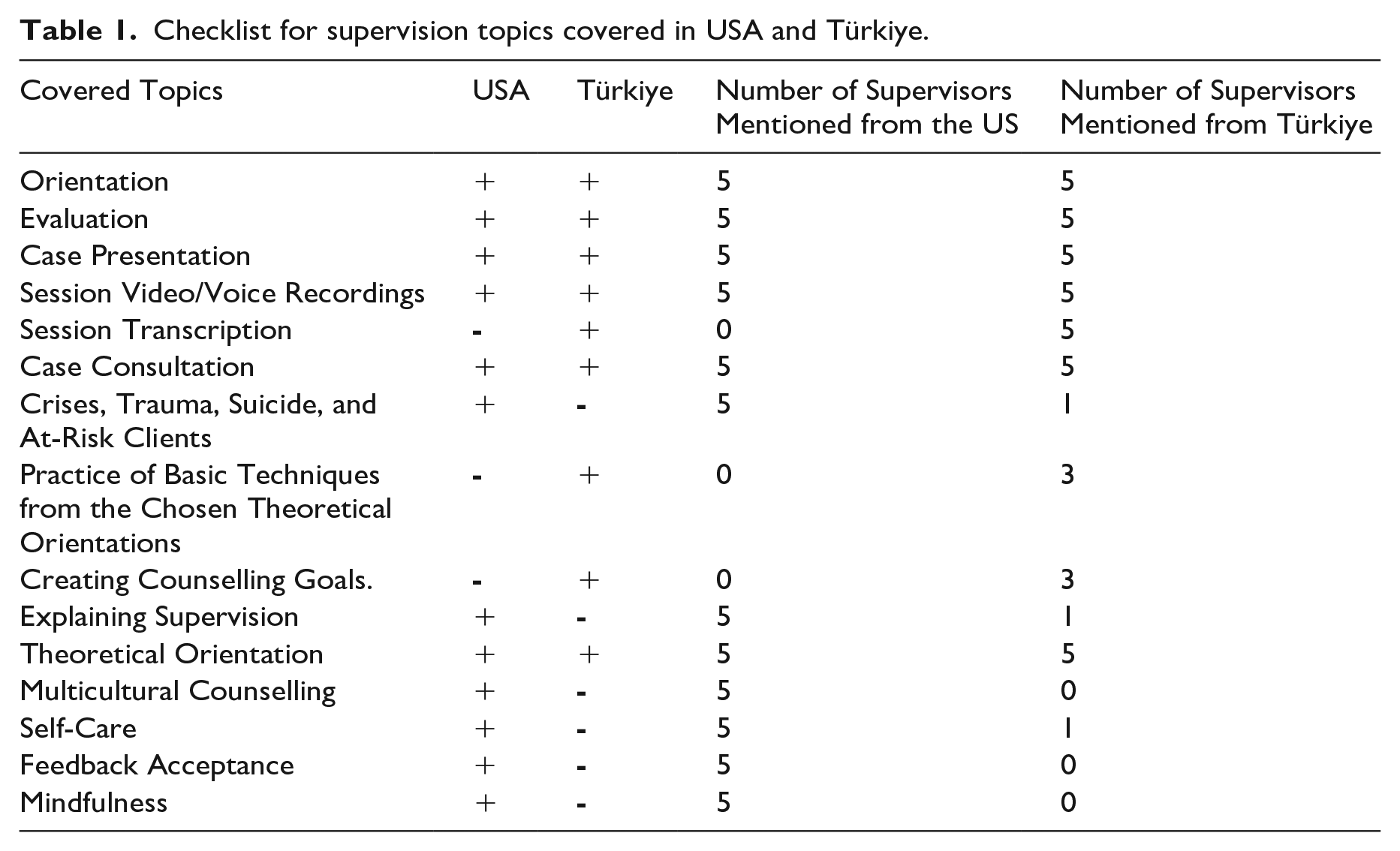
Group supervision observation report
Researchers observed practicum and internship courses in a small group supervision format in both countries. Some of the activities observed included content relevant to counsellor trainee experiences, discussions, case presentations, guest speakers, the assessment process, and paperwork procedures. Although similar patterns of supervision work were observed, there were application and structural differences between the counsellor education programmes in the US and Türkiye. Tables 1 and 2 offer a list of activities and procedure notes for each country. Due to the repetitive in-class activities (e.g. case presentations), we made an intentional decision to merge the weeks between 8 and 13 in Table 1. As the countries different in their final evaluation procedures, we included week 14.
Checklist for supervision topics covered in USA and Türkiye.
Weekly supervision process in the US and Türkiye.
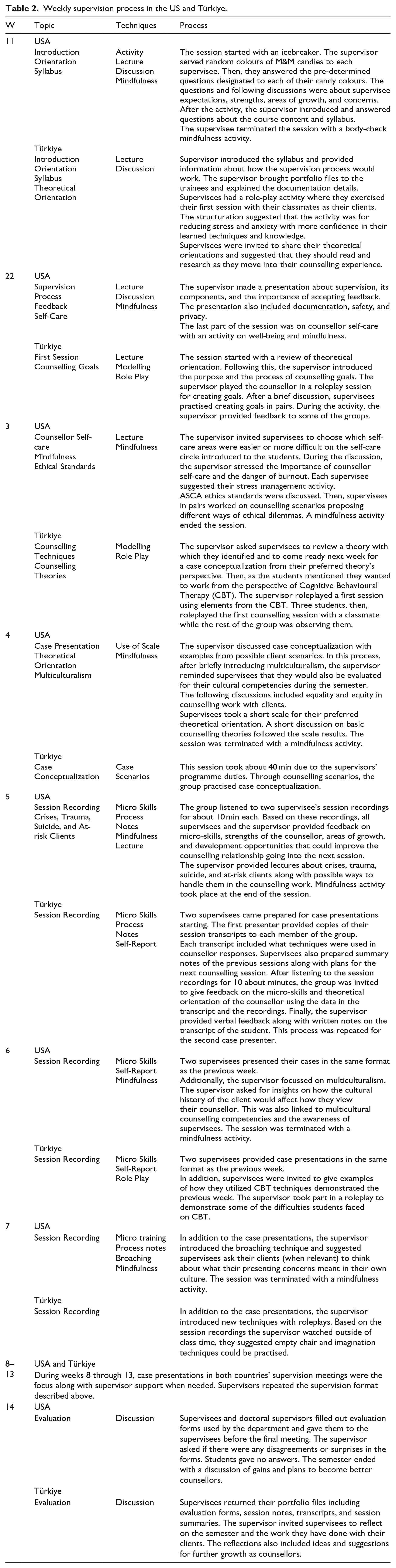
Table 1 not only highlights certain commonalities in supervision practices across programmes in both countries, such as orientation, case presentations, and session recordings but also underscores significant differences. For instance, Turkish programmes placed more emphasis on subjects like basic counselling techniques and setting counselling goals. Furthermore, Turkish programmes extensively utilized session transcripts, whereas they were not commonly employed in US programmes. Conversely, US programmes incorporated mindfulness activities provided training in feedback acceptance and implemented self-care activities for supervisees. Table 2 consistently demonstrates the integration of mindfulness activities into US programmes each week. Additionally, US supervisors prioritized the topics of ethics and trauma. In Turkish programmes, the use of role-play methods appears more prevalent, and there is a greater emphasis on theory-based techniques, such as CBT. When considering both tables together, it becomes evident that US programmes tend to prioritize the relational aspects of supervision, while Turkish programmes place a stronger emphasis on the supervisee, with a heavier focus on instructional elements within supervision.
Follow-up meeting results
To confirm the observation results, we conducted follow-up meetings with 10 supervisors (five from each country). In these meetings, general observations and predetermined questions were directed to the participants. Additionally, after introducing the list of different practices between the countries presented in Table 1, researchers asked participants if they viewed the information in their country’s column were accurate based on their personal experiences. Participants also reflected on the possible reasons behind the different supervision practices between the countries. The outcomes derived from the follow-up meetings align with the observations, affirming the results. Next are the responses addressing the commonalities and distinctions between the two countries.
Crises, trauma, suicide, and at-risk clients
In the initial stages of the supervision process, all supervisors in the US reported to incorporate discussions on subjects such as crises, trauma, suicide, and at-risk clients. Out of the five Turkish supervisors, one reported addressing crisis management and suicidal ideation at the outset of their supervision sessions. One of the Turkish supervisors who did not initially cover these topics explained that they were already addressed in the professional ethics and legal issues course. The remaining Turkish supervisors indicated that they introduced discussions on crises and suicide only when specifically requested or when a need arose during the supervision process.
Practice of basic techniques from the chosen theoretical orientations
Supervisors from the US reported that supervision is not the place for teaching the basic counselling techniques of a chosen theoretical orientation. The main reason for this is that the counsellors in training should have already acquired the techniques and skills through their counselling techniques and skills and counselling theories classes. Supervisors in Türkiye, on the other hand, stated that the inclusion of the theory-specific techniques supports the skills development processes for the counsellor candidates. When asked about the reason for this, it appeared that the supervisors from Türkiye had an agreement that the counselling supervisees might have not been well-prepared in their counselling techniques and skills classes. Two supervisors from Türkiye mentioned that instead of focussing on the techniques, they examined counselling session transcriptions in detail and provided feedback on whether the basic techniques and skills were applied appropriately.
Creating counselling goals
Supervisors from the US stated that they assumed the counselling supervisees had acquired the necessary training and skills before they reached their practice classes, therefore, they were expected to create counselling goals with real clients without extra training on the issue during supervision. Two of the Turkish supervisors reported providing specific feedback on counselling goals through their comments on the session audio/video recordings and transcriptions. Like supervisors from the US, supervisors from Türkiye did not have a specific supervision session on counselling goals. The supervisors from Türkiye who discussed the subject of goal setting during a supervision meeting stated it to be an important element in the counselling process, therefore, this issue should be addressed before supervisees start their counselling sessions with clients.
Explaining supervision
Participants from the US reported defining and explaining the process of supervision in their first meeting with their supervisees. Only one of the supervisors from Türkiye stated that at the beginning of the supervision process, they discussed the supervision process and the expectations from both parties (i.e. supervisor and supervisee). Other supervisors from Türkiye stated that they assumed that the counsellor candidates already knew about the supervision process and supervisee responsibilities.
Multicultural counselling
For participants from the US, multicultural considerations were at the centre of the supervision practices per CACREP standards. They reported touching on cultural aspects of counselling the supervision with supervisees. On the other hand, while four of the Turkish supervisors stated that they lacked knowledge and training on multicultural counselling and supervision, one stated that although he knew the subject, he did not know how to deal with cultural issues during the supervision process.
Self-care and counsellor burnout
All supervisors from the US emphasized that they included conversations and activities of counsellor well-being and self-care in the supervision process as a strategy against counsellor burnout. Only one of the Turkish supervisors reported addressing self-care practices in supervision meetings. This supervisor also reported to carry out academic research on the subject, and that they focus on self-care and wellness goals. Other participants from Türkiye, on the other hand, stated that they did not know much about these concepts and how to implement them during supervision.
Feedback acceptance
Supervisors from the US mentioned that including conversations on the feedback process in the supervision process would positively affect their approach to providing and accepting constructive feedback. Turkish supervisors stated that they did not openly focus on the feedback process during their supervision meetings. Three of the supervisors from Türkiye reported that they provided feedback through session videos, transcripts, and in-class case presentations without prior conversations about giving and receiving feedback. Two supervisors of Türkiye stated that this would be beneficial and that they would like to focus on this issue following the follow-up meetings.
Mindfulness
All supervisors from the US reported having a mindfulness activity at the beginning or end of their supervision sessions. Additionally, the purpose of this was to reduce anxiety, to start and end with positive emotions, and to model some of the skills and techniques related to mindfulness and self-care. Supervisors from Türkiye, on the other hand, stated that they did not address this issue in their supervision meetings. Two supervisors stated that this could be helpful and would address this issue in the next supervisory processes, while three supervisors stated that the issue was not relevant to supervision and, therefore would not be beneficial to the students.
Discussion
The current study focussed on the counsellor educators’ school counsellor supervision practices in the US and Türkiye. For this purpose, researchers made observations, analysed programme documents involved in the supervision procedures, and conducted follow-up meetings with counsellor educators and doctoral supervisors. Studying counsellor education programmes across two countries allowed us to capture the cross-national similarities and differences in the supervision practices of school counsellor trainees. Although the results of the study indicated varying practices and resources available in these countries, there also appears to be a high level of consistency. It is crucial to view the study findings as resources for both countries to further improve their supervision practices.
First, perhaps the most important finding of our study is that counsellor educators in the US closely adhere to the CACREP (2016) standards, providing a standardized supervision experience within their programmes and aligning with other CACREP-accredited institutions. In contrast, in Türkiye, while counsellor education programmes may adhere to the CoHE’s curricula, there appears to be a lack of established supervision standards for counsellor educators to follow. This finding underscores the need for an independent accreditation body in Türkiye, aligning with the findings of previous research (Kalkan & Can, 2019; Özyürek, 2009; Özyürek et al., 2021). Momentum towards a counsellor education and supervision accreditation institution in Türkiye is growing. For instance, Özyürek et al. (2021) found that the majority of their participants (N: 201 counsellor educators from Türkiye) supported the idea of such an organization. Thus, the current study provides valuable additional support for the movement towards the foundation of an independent counsellor education accreditation body in Türkiye.
Another major finding of the current study suggested that counsellor educators in these countries have varying foci of the school counselling supervision process. Accordingly, while counsellor educators of the US paid more attention to crisis interventions in school environments, feedback acceptance, multicultural issues, and school counsellor self-care and mindfulness practices, their counterparts from Türkiye utilized the supervision process for counselling goals, counselling micro-skills, and counselling theories. Although there is no specific previous study to validate these findings, it appears that counsellor educators from both countries are aware that novice counsellors often experience elevated levels of anxiety and stress, coupled with reduced confidence, during their initial real-world counselling encounters (McKibben & Webber, 2017; Meydan & Özyiğit, 2017).
To support their supervisees, in the US, counsellor educators appeared to concentrate on counsellor well-being and self-care as a means of alleviating supervisee anxiety. For instance, in the US, a focal point was feedback acceptance, which has been identified in research as a key contributor to novice counsellor anxiety during supervision (McKibben et al., 2019; McKibben & Webber, 2017). Conversely, supervisors in Türkiye addressed novice counsellors’ anxiety by placing significant emphasis on fundamental counselling skills, such as micro-skills, and by imparting insights into specific theories and techniques through role-play exercises and lectures. Further research is warranted to comprehensively explore the dynamics, implications, and cultural factors influencing these divergent approaches to supervision.
Another finding of the current study is related to the prerequisite classes before enrolling in the internship and practicum. While the counselling students had to pass foundational courses such as counselling theories and techniques in the US, this was not required for their peers in Türkiye. Thus, it would be likely to have supervisees who have not yet mastered counselling skills and techniques but are already conducting individual and group sessions at their internship site. Previous research also suggests that the highly populated classroom environments create difficulties during the practice-based supervision courses in Türkiye (Boyacı, 2018; Özyürek, 2009).
In alignment with prior research findings (Erdur-Baker, 2007; Kağnıcı, 2013; Karaırmak, 2008; Meydan & Kağnıcı, 2018), our study revealed that participants from Türkiye tend to exclude discussions of multicultural aspects in their supervision sessions. Despite the alignment of Turkish literature with the international discourse on multicultural aspects within counselling and supervision (Akalın & Türküm, 2021; Aydoğan, 2022), our study’s findings may be contextualized by the prevailing political climate in contemporary Türkiye. It is plausible that supervisors in Türkiye exhibit reluctance in addressing cultural dimensions of supervision and counselling, such as race, ethnicity, sexual orientation, religion, and socioeconomic background, due to concerns regarding potential reactions from students and institutions. The political environment in Türkiye may exert pressure on educators, potentially hindering open dialogue on sensitive cultural issues within supervision (Akalın & Türküm, 2021).
Limitations and future directions
While the results of our study offer valuable insights into the comparative aspects of counsellor education in two culturally distinct countries, it’s essential to acknowledge a limitation. The comparison involves two different levels of education, with counselling education in the US being at the master’s level, and in Turkey, it is at the undergraduate level training. Another limitation is the relatively small sample size. While this research offers valuable insights into the differences in supervision practices between the two countries, it is essential to acknowledge that the data were collected from a limited number of universities. Both Türkiye and the US boast numerous other universities and programmes, which may exhibit variations in school counselling supervision practices. It is advisable to validate the findings of this study through research involving more extensive and diverse samples.
Additionally, it is worth noting that this study primarily focussed on the structural and implementation aspects of school counselling supervision processes from the counsellor education perspective and, thus, did not explore the perspectives of supervisees or the supervisory relationship. Existing literature suggests that the perceptions of supervisors and supervisees can differ significantly (Borders et al., 2012). Therefore, future research endeavours should aim to encompass the experiences and perspectives of supervisees, thus providing a more comprehensive understanding of cultural disparities in cross-national supervision practices.
Finally, it’s worth noting that the Turkish educational system operates within a hierarchical structure emphasizing the importance of respect and competence. This hierarchical nature has been evident in the interactions between counselling students and their instructors in Türkiye (Yüksel, 2006). This hierarchical dynamic may have implications for the supervisory relationship and practices, particularly in terms of supervisees expressing concerns such as anxiety or cultural issues. Future research could explore the dynamics and implications of the hierarchical structure within the supervisory process.
Implications and recommendations for school counsellor educators and supervisors
The study findings indicate that, despite the absence of established supervision standards in Türkiye, Turkish participants exhibited a supervision process resembling their US counterparts. This suggests that Turkish counsellor educators are informed by international supervision literature. They can further enhance the supervisory experience by fostering a structured learning environment to process novice counsellor anxiety and multicultural concerns the supervisees might experience. Exploring alternative, socially oriented approaches to support supervisee well-being and address burnout can help move beyond Western literature’s influence and enhance supervisee functioning.
Without an accreditation body such as CACREP, counsellor educators in Türkiye struggle with systemic issues such as student-to-faculty ratios, the minimum number of direct and indirect contact during practicum and internship, and the required number of supervision hours. While the TPCGA is evolving to become an accrediting body in Türkiye, counsellor educators can consider implementing prerequisite foundational courses to ensure the enhancement of supervision quality and the effectiveness of training programmes in Türkiye.
Furthermore, school counsellor educators in Türkiye can integrate topics related to crises, trauma, and at-risk clients into the supervision process contributing to the supervisee’s professional development. Additionally, incorporating feedback acceptance into the supervision process can also foster a supervision environment with reduced hierarchical perceptions. Similarly, counsellor educators in the US can enhance their supervision practices by revisiting some of the counselling theories and techniques during the early stages of their supervision process. This is particularly vital because school counselling trainees may struggle to apply their theoretical training to internship sites (i.e. school environments).
Multicultural supervision has been consistently associated with favourable outcomes, including enhancements in supervisory alliance, supervisor satisfaction, counsellor skill development, counsellor self-efficacy, and overall counsellor competence (Crockett & Hays, 2015; Gatmon et al., 2001; Ladany et al., 1997). Drawing from practices implemented by counsellor educators in the US, the adoption of multicultural techniques, such as broaching, could potentially assist Türkiye’s supervisors in navigating sensitive cultural issues (Aydoğan, 2022; Aydoğan, et al., 2022; Jones et al., 2019). Broaching involves a continuous effort to sensitively incorporate clients’ and supervisees’ cultural backgrounds while considering the socio-political realities, aiming to create meaningful and effective counselling interventions (Day-Vines et al., 2007; Jones et al., 2019). Through this understanding, culturally competent supervisors can provide a safe space and educational environment for supervisees to practice addressing sensitive cultural issues.
Every year, thousands of international students pursue graduate education in the US, and some of them come from collectivist cultures such as Türkiye. When working with these students, US counsellor educators can encourage them to express their concerns in supervision and suggest more social ways (e.g. social support) for them to cope with their anxiety. Additionally, when addressing multicultural issues, they can incorporate activities that enhance cultural awareness among students from Türkiye and create an egalitarian learning environment for them to express their struggles with cross-cultural relationships in the US. Lastly, since there are no nationwide supervision standards in Türkiye, US counsellor educators should be mindful of potential knowledge and practice gaps among international students from Türkiye.
Conclusion
In conclusion, the current research study compared and contrasted supervision practices in counsellor education and supervision programmes in the US and Türkiye. The results indicate that although counsellor educators from both countries follow a similar approach to supervision including using video/audio recordings, group supervision, assessment forms, and discussions around ethics and theory, there exist discrepancies in the number of supervision hours, emphasis on at-risk clients, multicultural considerations, micro-skills, and counsellor self-care. We believe that CACREP’s involvement in counsellor education programmes, in general, assists counsellor educators and supervisors in providing better quality supervision experience to their counsellor trainees in the US. Thus, counsellor education programmes in Türkiye can greatly improve their counsellor education programmes with an accreditation body that is independent and self-governed by counsellor educators and supervisors.
Footnotes
Author’s note
Authors’ have used the English spelling of Türkiye throughout, which replaced Turkey in 2021.
Declaration of conflicting interests
The author(s) declared no potential conflicts of interest with respect to the research, authorship, and/or publication of this article.
Funding
The authors disclosed receipt of the following financial support for the research, authorship, and/or publication of this article: This study was financially supported by Scientific and Technological Research Council of Türkiye (TUBITAK 2019).
Compliance with ethical standards
All procedures performed in studies involving human participants were in accordance with the ethical standards of the institutional and/or national research committee and with the 1964 Helsinki Declaration and its later amendments or comparable ethical standards. Informed consent was obtained from all individual participants included in the study.
