



Abstract
Prior research suggests mindfulness-based interventions effectively reduce stress in trainee psychologists, enhance wellbeing and cultivate clinical skills and competencies. This study explored how trainee school psychologists perceived the effects of a mindfulness-based intervention on their development as psychologists. Forty trainee school psychologists participated in a 6-week online mindfulness-based intervention. They completed weekly written reflective journals throughout the programme which were later analysed using thematic analysis. Four core themes were identified: (1) changes in awareness and attention; (2) enhanced wellbeing; (3) commitment to ongoing personal practice and (4) cultivation and enhancement of professional development. Participants (n = 24) who completed the mindfulness workshop during the COVID-19 pandemic indicated that mindfulness practice was particularly useful for managing uncertainty and other related stressors. It was concluded that practicing mindfulness supported trainee school psychologists’ personal and professional development, particularly related to compassion, resilience and therapeutic presence.
Postgraduate psychologists-in-training (henceforth, ‘trainees’), experience stress and distress while endeavouring to fulfil their dual roles as professionals and students (Cushway, 1992). Early research revealed 75% of trainee clinical psychologists reported being moderately or very stressed as a result of their training, and 59% were at or above the cut-off for psychological distress on the General Health Questionnaire (Cushway, 1992). The trainees attributed their stress to causes such as complex clinical cases, poor supervision, financial strain, uncertainty, time pressure, juggling multiple roles and having a high workload. The ambiguous nature of clinical work can reportedly cause anxiety for trainees (Quinlan & Deane, 2021), negatively impacting their critical thinking skills, decision-making capacity and efforts to establish positive therapeutic relationships (Pica, 1998). More recently, a study investigating resilience and psychological distress in Psychology and Medical students reported that 55% of psychology students reported psychological distress, with 28% indicating very high levels of distress. Medical students reported lower levels of distress; however, this difference was non-significant following Bonferroni correction (Bacchi & Licinio, 2017).
The advent of COVID-19 has increased the prevalence of depression, anxiety and suicidality in university students. A recent online study of undergraduate and graduate university students (n = 2031) in the USA (Wang et al., 2020) reported high rates of moderate to severe depression (48.14%), anxiety (38.38%) and suicidal thoughts (18.04%). Alarmingly, 71.26% of participants reported an increase in stress and/ or anxiety levels during the pandemic with less than half reporting being able to cope with the stress associated with the pandemic. It seems reasonable to expect similar levels of psychological distress in postgraduate psychology trainees.
Mindfulness training has been proposed to help trainees manage stress, improve their psychological well-being and foster their development as clinicians (Chmielewski et al., 2020). Mindfulness has been defined as the purposeful and non-judgemental awareness of the current moment (Kabat-Zinn, 2014). A large number of studies have supported the benefits of mindfulness-based interventions for healthcare professionals and trainees (Schanche et al., 2020).
A systematic review of 19 studies of mindfulness-based interventions amongst healthcare professionals and trainees reported significant decreases in stress, anxiety and depression, and significantly improved mindfulness, mood, self-efficacy and empathy (McConville et al., 2017). A further meta-analysis of 38 randomised controlled trials reported that mindfulness-based interventions for healthcare professionals and trainees led to significant moderate improvements in anxiety, depression, psychological distress and stress, and small to moderate significant improvements for mindfulness, burnout, wellbeing and self-compassion (Spinelli et al., 2019).
Despite limited research investigating the effectiveness of mindfulness programmes for trainee school psychologists, it could be speculated that improvements in well-being experienced by school psychologists are similar to those reported in studies of healthcare professionals (McConville et al., 2017), while also positively influencing their work with other teaching staff, students and the wider school environment. For example, a positive effect on milieu was reported by Hallman et al., (2017) following the introduction of a brief mindfulness programme for staff working in a child and adolescent inpatient unit, noting a reduction in staff stress and absenteeism, and improved patient and staff safety including a reduction in restraints and seclusion. Evidence of both positive and negative ‘ripple effects’ (e.g. increased knowledge and increased substance use, respectively) have been found for other mental health interventions in community organisations (e.g. Beehler, 2016) and school contexts (e.g. Miller, 1996). For example, Miller (1996) interviewed 23 primary school teachers who had implemented a behavioural intervention following consultation with an educational psychologist noting various positive benefits, such as increased compassion and collaborative behaviour for other class members not directly involved.
While existing quantitative evidence for the benefits of mindfulness-based interventions is strong, researchers have suggested qualitative research may strengthen the understanding of lived experience (McConville et al., 2017). Qualitative mindfulness practice research has indeed grown in recent times to provide greater insight into the subjective experience of participants, the understanding of mechanisms of change, the understanding of the effects of mindfulness in specific populations and contexts, as well as the variables within settings that may influence outcomes (Frank & Marken, 2022).
Evidence from qualitative studies
A narrative review of five individual qualitative studies of mindfulness and self-care courses for counselling and psychology trainees reported benefits in both personal and professional domains. Trainees described increased calmness, feeling more centred, as well as enhanced concentration and attention (Christopher & Maris, 2010). Specifically, trainees reported a greater capacity for interpersonal connection. They noted that acceptance of their experiences facilitated present-moment awareness and supported more satisfying and authentic interpersonal interactions, with continued impact on themselves and their practice over 4 years later (Christopher & Maris, 2010).
A recent systematic review of qualitative studies reported that key relational skills such as facilitating a therapeutic presence with clients were honed following mindfulness training (Fletcher et al., 2022). Therapeutic presence is a multifaceted construct that includes the therapist preparing themselves to be open to the client’s experience, processing their own experience while in contact with the client’s experience and responding therapeutically to the client (Geller & Greenberg, 2002). Therapeutic presence is reported to be directly related to the client’s perception of the therapist empathy, the therapeutic alliance and therapeutic efficiency (Bourgault & Dionne, 2019). A common critique of postgraduate psychology training programmes is the tendency to overlook teaching the skills necessary to cultivate therapeutic presence and other such relational skills. Mindfulness training has been proposed as a strategy for addressing this deficit (Hemanth & Fisher, 2015a; McCollum & Gehart, 2010).
A thematic analysis was conducted on trainee reflective journals (n = 13) to investigate how trainees perceived mindfulness training facilitated their therapeutic presence (McCollum & Gehart, 2010). Students enrolled in a masters level practicum course, at the beginning of their clinical training were asked to practice mindfulness for 5 to 10 minutes daily, and complete weekly reflective journals to receive course credit. Students were asked to reflect on aspects of their practice, including any negative or positive experiences. Following completion of the semester, students were invited to submit their journals to the study. Thirteen of the 19 enrolled students consented to participate. Participants reported their mindfulness practice helped them to cultivate the qualities of being present such as by attending to inner experience, being aware of what is happening with clients, and acting from awareness. A balance between ‘being’ and ‘doing’ modes in therapy were indicated, with reported increases in compassion for self and clients as well as a sense of shared humanity (McCollum & Gehart, 2010). Similar results have been found in other qualitative studies. For example, a further study with clinical psychology trainees (n = 6) reported enhanced in-session awareness leading to greater therapeutic presence with clients (Hemanth & Fisher, 2015a). Another study with trainee psychotherapists (n = 8) reported that trainees perceived that mindfulness facilitated their ability to balance ‘being’ and ‘doing’ modes and enhance relational depth in session (Baker, 2016).
Existing research involving trainees has primarily focused on students training as clinical psychologists, with few studies examining the impact of mindfulness training for school psychology trainees. Alahari (2017) found potential benefits of mindfulness training for school psychologists, including listening more attentively and greater understanding of the child’s perspective. Therefore, it would be reasonable to expect that school psychology trainees would have similar experiences of mindfulness training as other trainees. However, there are meaningful differences between school psychologists/trainees in professional roles (e.g. student academic assessment, systems change) and work environments (e.g. schools) that might make their perceptions of the relevance of mindfulness training different from those of clinical psychology trainees.
One study engaged postgraduate students in educational counselling and special education at Tel Aviv University (Tarrasch, 2015). The participants (n = 19) completed mindfulness meditation training over two semesters and recorded their reflections weekly in written journals. Thematic analysis of the journal data identified three core themes about the training: ‘Process’, ‘Experience’ and ‘Outcomes’. Within these core themes were subthemes such as: changes in relationships to thoughts, increased awareness and self-acceptance, increased sense of calm and stress management, improved sleep and improved relationships with others. Further research is needed to clarify the potential benefits and limitations of integrating mindfulness training into the university curriculum for school psychologists in training.
Self-compassion and gratitude
A focus on self-compassion and gratitude is often included in mindfulness teaching (Brach, 2020; Germer & Neff, 2019). Mindfulness and self-compassion are interrelated constructs that both promote a gentle attendance to the human experience (Kabat-Zinn, 2003; Neff, 2003). Whilst strongly correlated (r = .69; Baer et al., 2012) they are proposed to differ in the scope of their attention, with mindfulness being more broadly focussed on all aspects of experience, whereas self-compassion tends to more specifically attend to human suffering. Self-compassion refers to the holding of one’s suffering with loving kindness (Neff, 2003). It is comprised of three components: loving kindness, common humanity and mindfulness. Mindfulness and self-compassion are proposed as both an outcome and a process. Whilst self-compassion is a relatively new psychological construct, it is gaining both clinical and research interest (Raes et al., 2011).
Gratitude, like self-compassion, has been developing as a construct of interest related to wellbeing (Wood et al., 2010). There are variations in the definition of gratitude as both a state and a dispositional trait. Wood et al. (2010) refer to gratitude as a dispositional ‘life orientation’ trait that directs attention to appreciating the positives in one’s experience and the world. Recent work by Duprey et al. (2018) identified both mindfulness and gratitude as cognitive assets associated with wellbeing, partially mediating the relationship between stressful life events and internalising disorders. However, gratitude reportedly holds a narrower scope of focus than mindfulness. Gratitude refers to noticing the positive whilst self-compassion is focused on alleviating suffering. Significant associations were found between mindfulness and gratitude (non-judging, r = .36, acceptance, r = .28, both p < .001) but the constructs were differentially related to stressful life events (Duprey et al., 2018). Specifically, mindfulness appeared more vulnerable to contextual factors whilst gratitude was a more stable construct. The authors found that a greater number of reported stressful life events in the preceding 6 months, was associated with lower levels of mindfulness, but not gratitude (Duprey et al., 2018). Specific strategies utilised to increase gratitude include: making gratitude lists, gratitude contemplation and behavioural expressions of gratitude (Wood et al., 2010). The established differences between the constructs of mindfulness, self-compassion and gratitude, while similarly associated with well-being, support their inclusion in mindfulness training programmes.
Other considerations for mindfulness research
There are several limitations noted in mindfulness research that are common to both school psychologists and other health professionals. Specifically, they include variations in the construct definition of mindfulness, validity of measurement, therapist training, programme fidelity and adverse events (Van Dam et al., 2018). In response to these concerns, Van Dam et al. (2018) proposed a non-exhaustive list of primary and secondary features characteristic of meditative practices and suggest researchers use a checklist related to therapist and programme characteristics so that studies can verify fidelity. Further, the Treatment Fidelity Tool developed by Kechter et al. (2019) provides a standardised format for monitoring fidelity and is consistent with addressing the noted limitations by Van Dam et al. (2018). Qualitative studies provide an opportunity to address some of the concerns raised by Van Dam et al. (2018) such as, construct definition and programme fidelity. Specifically, the narratives provided by end-users can offer greater insight into how a programme is being received and translated into practice by a participant indicating their understanding of the mindfulness constructs being presented. Reflections that are coherent and consistent with the programme’s working definition of mindfulness and its operationalisation will implicitly support confidence in the integrity of the programme.
Reports of meditation-related adverse events have increased concomitantly with the increased inclusion of mindfulness as a psychological intervention, and risk for an meditation-related adverse events is related to childhood adversity and the amount of meditation (Goldberg et al., 2022). Despite the potential for adverse events, the scoping review of conducted by Frank and Marken (2022) found that most studies focus on reporting the positive effects of mindfulness training, thereby representing a potential bias in the literature. The authors also recommend the use of second and third-person data in future research to evaluate the impact of mindfulness training more broadly than the programme participants.
The current study
The current study aimed to explore school psychologists’ perceptions of mindfulness training. Several attempts to address previous concerns regarding mindfulness research, such as fidelity, construct validity and self-report bias were made (Van Dam et al., 2018). The enhancements included: (a) an online platform that included recordings and activities, ensuring consistency across cohorts, with programme characteristics being readily assessable, (b) use of open-ended questions that were intentionally neutral to provide scope for trainees to discuss both the positive and negative effects of mindfulness, (c) thematic analysis of reflective journals completed throughout mindfulness training to ameliorate self-report bias, noted in previous studies; contemporaneous reflections to provide insight into the developing experience of mindfulness in trainees, rather than relying on the collection of student experiences post-training only, and (d) fidelity was assessed through review of student reflective journals for consistency with working definitions and application of strategies (McCollum & Gehart, 2010).
The research questions for the current study include
a) How do school psychology trainees perceive and reflect on changes in their skills and knowledge in mindfulness practices over time?
b) Do school psychology trainees perceive mindfulness to have an impact on their stress and wellbeing?
c) How do school psychology trainees intend to apply their skills and knowledge in mindfulness both personally and professionally?
Method
This method is reported according to the Journal Article Reporting Standards – Qualitative (Levitt et al., 2018), designed to ensure research rigour, such as researcher information and data analytic strategies.
Participants
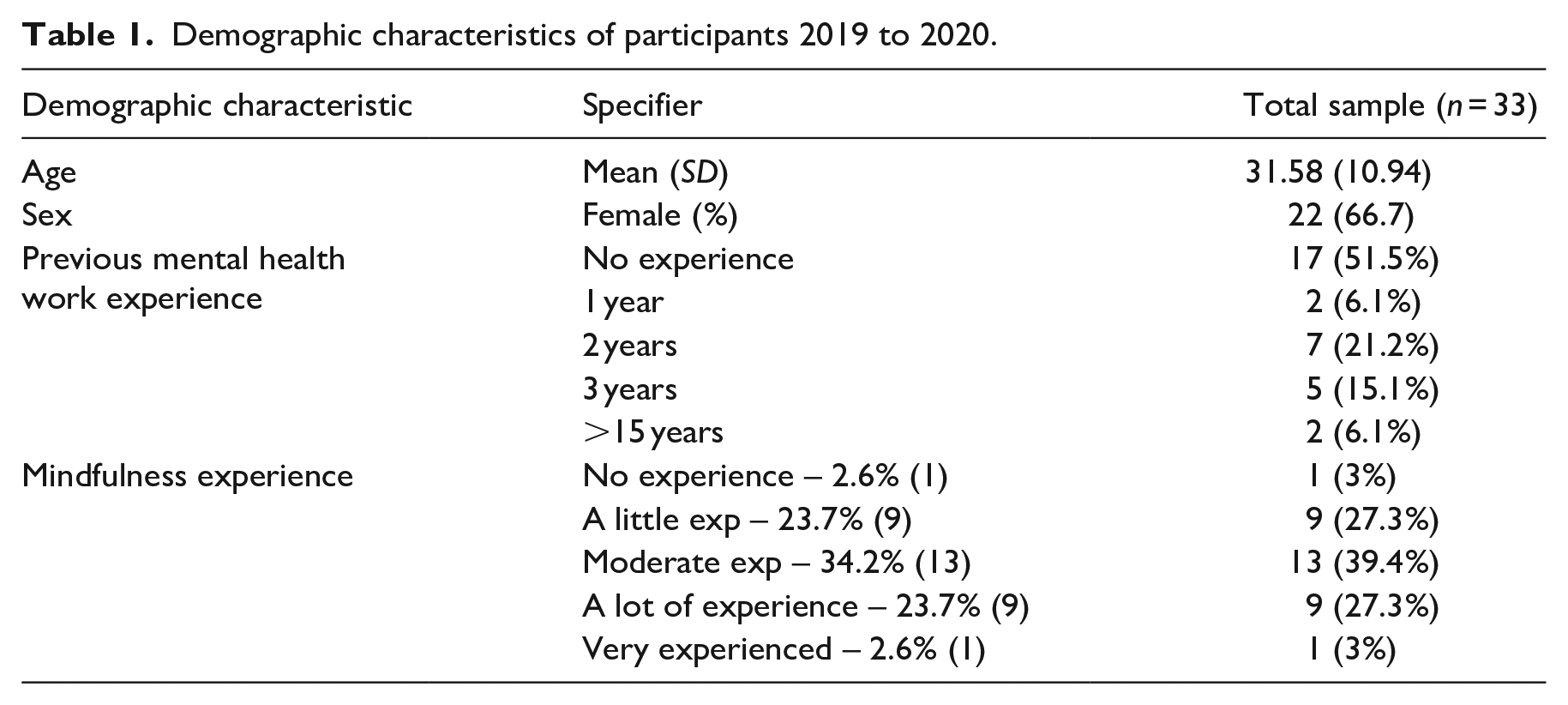
Participants were postgraduate school psychology trainees (n = 40) enrolled in the Master of Professional Psychology – School Psychology at a regional university. All participants were registered as Provisional Psychologists (trainees who have completed 4 of 6 years of their training and supervision requirements). Complete demographic data was available for 33 participants (see Table 1).
Demographic characteristics of participants 2019 to 2020.
Procedures
Students who were enrolled in the Master of Professional Psychology – School Psychology programme were invited to participate in the research. Data was collected across 2 years (2019–2020), whereby two cohorts of trainees were invited to participate. For both cohorts, the mindfulness training and data collection (reflective journals) were equivalent. Participating trainees were required to complete the online mindfulness workshop series, which were delivered over 6 weeks, by six 1-hr workshops and complete reflective journals as part of their core curriculum. Trainees were informed that participation in the research was entirely voluntary. All trainees consented and agreed to participate in the study. There was no dropout from the study. Ethics review and approval was obtained from the University of Wollongong Human Research Ethics Committee (HREC reference: 2019/012).
The mindfulness workshops were developed and delivered by the first author who is a Clinical Psychologist and academic staff member, with personal and professional experience in teaching and learning mindfulness. The risk of bias from impression management was minimised by ensuring participants were aware that their online reflective journals were not assessed as part of their coursework and were de-identified prior to access by the researchers when the subject was completed.
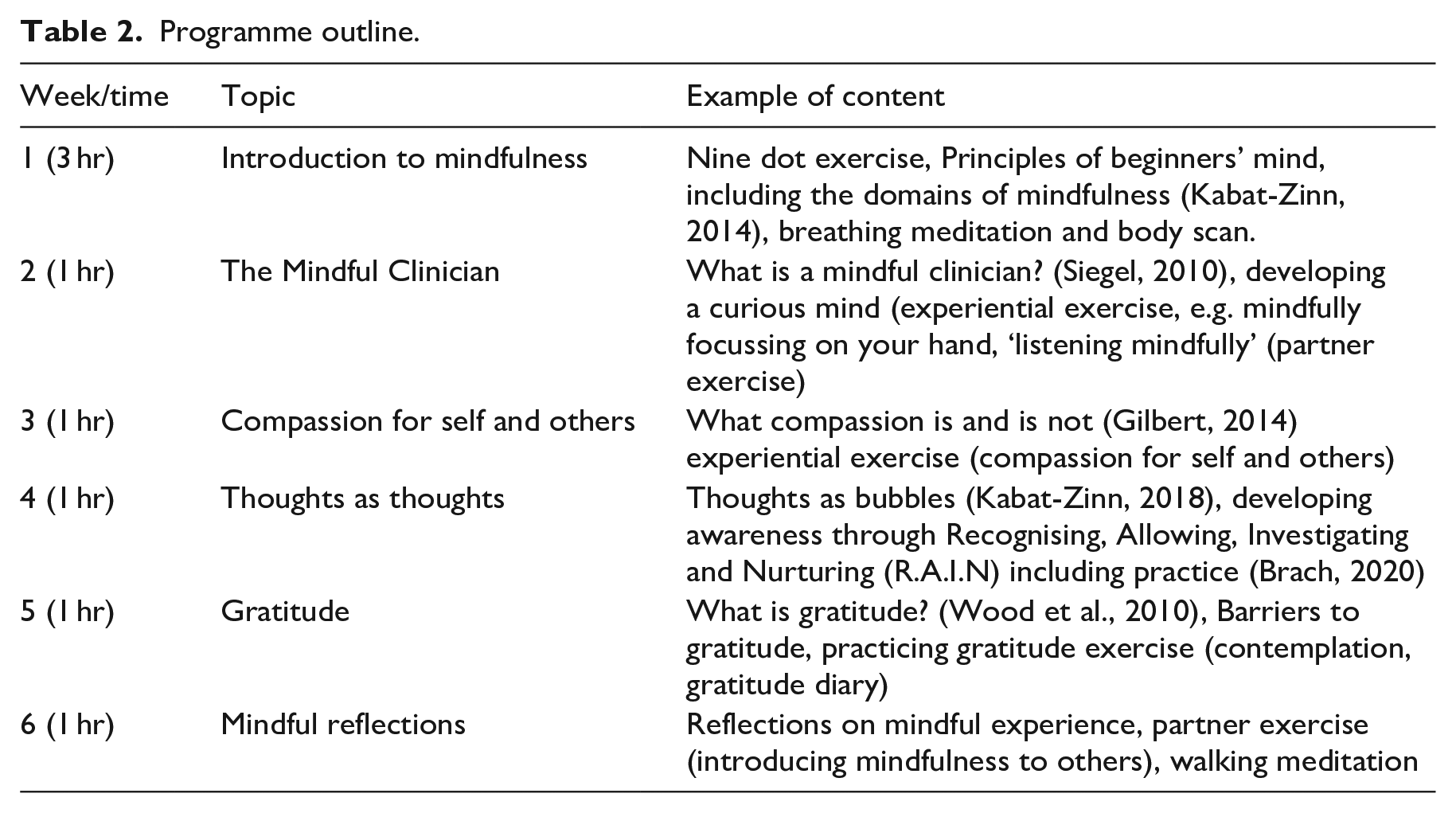
The mindfulness workshops were based on a Mindfulness-Based Stress Reduction approach, previously found effective in improving psychological functioning in healthcare professionals (see Kriakous et al., 2021) (see Table 2 for programme outline). Sessions consisted of pre-recorded videos introducing the content, the completion of structured activities to provide opportunities for practising mindfulness, and reflective journal exercises for participants to reflect on and consolidate their learning. Participants were informed that some activities may lead to distress and were encouraged to practice self-care and withdraw from the mindfulness activity where necessary.
Programme outline.
Gratitude and self-compassion were both included as specific mindfulness topics. Exercises associated with both self-compassion and gratitude included contemplation and gratitude diary keeping. Trainees met with each other weekly online (Zoom) at a predetermined time for partner exercises. Participants were encouraged to develop their practice and share resources with other trainees via an online discussion board. Participants were asked to write weekly reflections using the questions and prompts provided in their online reflective journals (see Appendix). The reflective journals were semi-structured and invited participants to reflect on key aspects of the mindfulness training identified as pertinent in the literature (e.g. compassion, curiosity, and gratitude). Prompts were provided in an open style to allow trainees to reflect on both positive and negative aspects of their experience.
Data analysis
Qualitative data was analysed thematically following the guidelines provided by Braun and Clarke (2006). Data analysis involved several iterative phases, namely: initial coding of interesting features of the data; collating codes into potential themes, and finally reviewing the codes, themes and dataset throughout reporting.
An inductive approach to data analysis was taken, meaning that a priori domains of interest were assessed, while new or unexpected salient themes and patterns were identified and derived from the data (Thomas, 2006). Data saturation refers to the point at which no new themes are identifiable in the research data (Guest et al., 2006). This occurred in the current study. Sample sizes for similar qualitative studies conducted with postgraduate psychology trainees have ranged from 6 to 22 participants (Hemanth & Fisher, 2015a; Solhaug et al., 2016). The research was underpinned by a social constructionist perspective, which theorises that responses reflect socially constructed, subjective understandings, rather than an ultimate truth (Gergen, 1992). Semi-structured reflective journal questions and prompts were based on previous findings from the literature but were also designed to uncover new understandings and facilitate the sharing of diverse perspectives.
The second author conducted initial data analysis and presented themes to the first author for scrutiny. Journal entries were reviewed to establish agreement. Any disagreement regarding themes was discussed and modified until an agreement was reached. The option of discussing themes with the third author was available if consensus was not reached, however, only minimal modification to themes was required. Structured methods of researcher reflexivity (i.e. a research logbook and field notes) were utilised.
Results
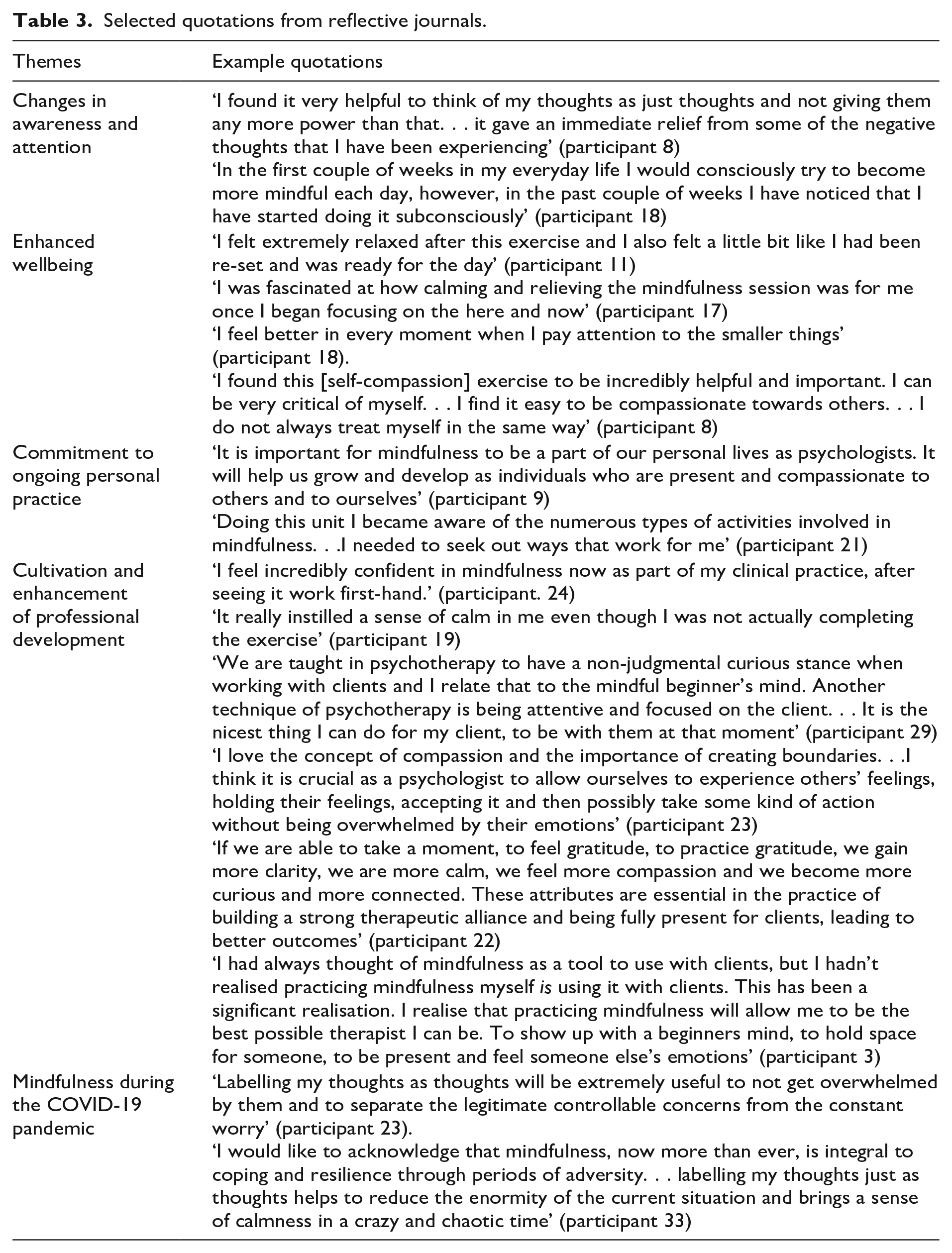
Thematic analysis of the reflective journal data identified four key themes: (1) changes in awareness and attention; (2) enhanced wellbeing; (3) commitment to ongoing personal practice and (4) cultivation and enhancement of professional development. Themes 1–3 appeared to reflect on the impact of mindfulness practice on personal lives whereas theme 4 referred to professional impact. Reflective journal entries ranged from 149 to 300 words. No meditation-related adverse events were reported within the reflective journals. Of note, in the 2020 cohort of trainees (n = 24), unprompted reflections about how mindfulness helped trainees cope during the COVID-19 global pandemic were identified. This generated a fifth theme for this group: ‘Mindfulness during the COVID-19 pandemic’. The additional theme suggests that trainees were able to reflect on issues pertinent to them. The benefits of self-compassion and gratitude are mentioned across themes indicating a consistent association with personal and professional wellbeing. Trainee quotes related to identified themes are presented in Table 3.
Selected quotations from reflective journals.
Changes in awareness and attention
Trainees reported increased awareness of their inner experiences (i.e. thoughts, feelings and physical sensations) as well as increased awareness of external stimuli (e.g. noises in the environment). Initially, trainees reported becoming aware of their mind wandering, often to the competing demands of university work, which caused frustration for some trainees, while others simply noticed this and practised bringing their attention back to the present moment. This reflection diminished over time, suggesting trainees’ ability to focus their attention on the present moment was improving with practice. Additionally, trainees reflected that mindfulness facilitated their capacity to acknowledge and let go of unhelpful thought patterns. They also reported increased incidental mindfulness practice, such as noticing sounds around them.
Enhanced wellbeing
Trainees reported mindfulness was a helpful strategy for enhancing and maintaining their wellbeing. They noted an increased overall sense of relaxation, as well as improved abilities to slow down, be fully present in the moment, and let go of stress or pressure placed upon themselves. Trainees specifically referred to exercises targeting compassion and gratitude as effective in promoting wellbeing. Practising gratitude reportedly enhanced well-being by bringing to the forefront things they could be grateful for, thereby providing a renewed perspective in difficult moments. Similarly, practising mindful self-compassion was an effective antidote for the high levels of perfectionism, self-judgement and self-criticism trainees experience. Trainees predicted practising mindful self-compassion would allow them to prevent burnout, cope more effectively with training demands and enhance their capacity to care for others.
Commitment to ongoing personal practice
Trainees valued having increased skills and knowledge of mindfulness for their own personal development. All trainees indicated that they intended to continue practising mindfulness incidentally or by formal routine. Several trainees reflected on the importance of scheduling mindfulness practice while others described informal mindfulness practices they could engage in, such as being mindful while travelling on the train. Either way, it was evident that trainees valued engaging in mindfulness in a way that felt authentic to them, and that suited their personal preferences. Many trainees listed ideas for how they could integrate mindfulness into their lives such as using a mindfulness ‘app’, practising yoga or walking in nature.
Cultivation and enhancement of professional development
Trainees recognised that through the mindfulness workshops, they were learning tools and techniques that they could implement with clients on a practical level, as well as cultivating within themselves the necessary intrapersonal processes to become more mindful, attuned, compassionate and resilient psychologists. Trainees noted the opportunity to practice delivering a mindfulness exercise to another participant role-playing as a ‘client’ increased their confidence for delivery to a client in a professional setting. Trainees identified that delivering the exercise-induced relaxation for both the ‘client’ and themselves. Trainees also perceived their mindfulness practice would allow them to be more effective clinicians. Specifically, enhancing the therapeutic alliance by cultivating a non-judgemental, curious and compassionate stance that supports the quality of the relationship and their agreed goals and methods for therapy. Trainees viewed having compassion for others as a way to effectively empathise with their clients’ pain while remaining professional in their role, and practising gratitude as key to becoming a more calm, curious and attuned clinician. Finally, through an activity designed to help trainees become more mindful clinicians by listening silently to a role-played ‘client’, trainees reported that they were able to let go of some of their fears and self-judgements about being a novice therapist and instead turn their attention to being present with the ‘client’, allowing them to connect on a deeper and more authentic level. Likewise, the ‘client’ reported a sense of being heard and validated in the silence.
Mindfulness during the COVID-19 pandemic
Twenty-four trainees completed the mindfulness workshops throughout March and April 2020 with COVID-19 being declared a global pandemic on 11 March 2020 (World Health Organisation, 2020). As such, additional reflections relating to the role of mindfulness in coping with the stressors of a global pandemic were identified by this cohort of trainees. Broadly speaking, nearly all the trainees in this cohort stated that mindfulness practices were helpful for coping with additional stressors associated with COVID-19. Such stressors included (a) uncertainty, being ‘bombarded’ with information and news relating to COVID-19; (b) managing the competing demands of completing university work, home-schooling children and working from home; and (c) changes to social connections, self-care and leisure activities.
Trainees reported that mindfulness helped them to take a step back when feeling overwhelmed, and to put less pressure on themselves during this period. Trainees also identified that being able to reframe their thoughts as just thoughts helped reduce rumination during this period of uncertainty. Trainees found gratitude practices to be particularly helpful for keeping things in perspective during this time of uncertainty. Many trainees were grateful that they were able to continue meeting their basic needs for food, shelter, health and safety, while others were grateful for the opportunity to ‘live a little different for a while’ with their family and/or housemates. Practicing gratitude was also identified to help navigate difficult feelings associated with COVID-19 such as loneliness, isolation and coping with constant change and uncertainty. Trainees commented that practising gratitude helped them to identify what they could be grateful for despite the current circumstances.
Discussion
The current study provided novel insights into the experience of postgraduate school psychology trainees who completed an online mindfulness intervention during their training. A subset provided perceived benefit of the intervention during the COVID-19 pandemic. The overall results of the present study demonstrate that trainee school psychologists perceive mindfulness to help direct their attention and awareness, improve their wellbeing and enhance their development as professionals with intent to commit to ongoing personal practice. Additionally, this study offers an opportunity to understand how mindfulness helped trainees cope with the distinct stressors of a pandemic. The trainees who completed the mindfulness workshops during the onset of COVID-19 described mindfulness as helping to reduce stress, rumination and worry; placing less pressure on themselves; and practising gratitude to cope with difficult emotions associated with the unique stressors they were experiencing.
Findings from the current study are broadly consistent with previous research investigating mindfulness for trainee psychologists, including one of the few prior studies that have been conducted with a similar group of educational counselling trainees (Tarrasch, 2015). In line with prior research (Hemanth & Fisher, 2015a; McCollum & Gehart, 2010), trainees reflected on their experience of mindfulness as a process, referring specifically to changes in awareness and attention that create space for new experiences (e.g. being grateful). They also identified beneficial outcomes such as enhanced wellbeing and enrichment of their professional development (Baker, 2016; Hemanth & Fisher, 2015b; Solhaug et al., 2016; Tarrasch, 2015). Such findings are encouraging as they indicate the current study’s online intervention appears to be teaching the same core facets, and processes of mindfulness as face-to-face programmes (reported in prior studies that use a Mindfulness-Based Stress Reduction framework) and supports the programme’s capacity for experiential learning delivered online.
Findings related to self-compassion and gratitude
The current study showed that compassion for self and others was perceived by trainees to play a significant role in facilitating the benefits associated with mindfulness. Increased awareness of compassion may have resulted from the association between the two constructs as well as explicit teaching on compassion (Neff, 2003). Trainees perceived that showing compassion for others would enhance their ability to empathise with their clients thus building a strong therapeutic alliance. Additionally, trainees also reported that self-compassion helped them to let go of self-criticism and perfectionism, thereby improving their wellbeing. This capacity is seemingly of great importance for managing the demands of the school environment and for fostering psychological wellbeing among the school community. This is supported by previous studies that have found that self-compassion significantly predicts positive changes in perceived stress (Shapiro et al., 2005) and that those higher in self-compassion experience lower levels of depression (Richardson et al., 2020). Thus, compassion appears to be an important mediating or process mechanism in mindfulness which was further suggested in the current study.
The current work also demonstrated that gratitude was reported by trainees to be associated with psychological wellbeing. Practising mindful awareness with the intention of gratitude appears to allow an individual to shift their attention from negatively appraising a situation to opening up to both neutral and positive perspectives. This was noted as a vehicle for supporting therapeutic presence and fostering alliance as it created greater space for compassion and curiosity. Gratitude seemed particularly beneficial during the COVID-19 pandemic when trainees were experiencing greater uncertainty, loss of freedoms and potentially greater isolation. Again, the practice appeared to shift the trainee’s perspective from focusing on what was lost to reporting greater acceptance and gratitude for what is. Mindfulness, self-compassion and gratitude are considered to be separate but interrelated constructs. The results from the present study appear consistent with previous findings that the constructs provide a mediating role between meditation practice and psychological well-being (Baer et al., 2012; Duprey et al., 2018). However, given the limitation of previous research being cross-sectional, future longitudinal research investigating this relationship is needed to help identify a potential sequential model to determine whether mindfulness facilitates self-compassion and/ or gratitude which might then enhance wellbeing.
Limitations and directions for future research
The current study addresses some of the limitations of previous mindfulness research, specifically, we have included (1) information regarding the facilitator’s qualifications and experience with mindfulness, (2) provided programme content information and trainee comments that reflect programme fidelity and (3) ensured equivalency in delivery of the programme between cohorts. This was possible as the intervention comprised pre-recorded workshops and exercises delivered online to both cohorts of trainees across 2019–2020 This is important considering the potential impact of COVID-19. The emergence of mindfulness-related abilities (e.g. awareness of the present moment, commitment to one’s practice and gratitude) were similar among both cohorts who took part in the study, but the 2020 cohort provided additional unprompted information regarding the value and added benefit of practising mindfulness during a global pandemic.
Despite an attempt to provide neutral open-ended questions to the trainees, reflections were all notably positive. Trainees may have been influenced by a perceived implicit expectation to focus on the benefits of the programme, however, the online format meant that there was minimal personal contact with the facilitator which would potentially mitigate these expectations. Further, trainees were aware that they were not being evaluated during the programme. Nevertheless, they may have been influenced by what they perceived as a socially desirable response. Likewise, participants did not mention the experience of any meditation-related adverse events. Possible reasons for this are speculative and may be related to a number of factors. Firstly, participants were informed of the potential for distress and encouraged to withdraw from an activity where necessary. This may have pre-emptively avoided the occurrence of an adverse event. Secondly, the online delivery of the workshop may have reduced the intensity of the exercises. Thirdly, the dual focus of purpose for the workshop, that is, self-care and the development of clinical skills may have implicitly influenced the participants’ approach to the activities, such as maintaining a professional approach that may reduce emotional vulnerability.
One of the limitations of the present study is that participants were early in their postgraduate training, and although most had started to participate in practicum placements, they had not yet been practising clinically for an extended period. This limits conclusions about the capacity to integrate mindfulness into professional practice and the school community. As evidenced in the reflective journals, trainees were reflecting on and applying their mindfulness skills in the early days of their practicum placements, however, it would also have been beneficial to understand trainees’ reflections once they had obtained some further practical experience in the field. While regular daily mindfulness practice was recommended during the programme, we were not able to reliably collect information regarding the type and frequency of practice. Hence, it can be assumed that this varied between participants and may have affected our results.
Future studies could use mixed methods approaches which include the collection of quantitative data. This may provide greater understanding of the facets of mindfulness that connect to specific clinical skills and aspects of wellbeing. The collection of information regarding type and frequency of practice would be important for future studies to inform findings regarding potential dose effects and also the effect on the occurrence of meditation-related adverse events. Additionally, a longitudinal analysis of the impact of mindfulness interventions would be helpful to determine how trainees continue to be influenced both personally and professionally into the future. For example, through promoting resilience in teachers, direct support by school psychologists for individual students experiencing difficulties, as well as through classroom or whole school-based programmes that foster a beginners’ mind stance (Lavy & Berkovich-Ohana, 2020). The current results indicate intentions amongst school psychology trainees to continue their mindfulness practice, future research should explore whether this converts to subsequent implementation in schools.
Practical implications and conclusion
Universities have an ethical obligation to impart practical strategies in self-care and stress management to trainees given the high levels of psychological distress and burnout associated with the caring professions (Pakenham & Stafford-Brown, 2012). However, changes and adaptations to university curricula need to be evidence-based. This study supports previous research indicating mindfulness-based interventions are beneficial for trainees’ psychological health and wellbeing, and their development of process-based therapeutic skills and competencies. It provides new evidence regarding its effectiveness for school psychology trainees. Online delivery for school psychologists yielded similar results to face-to-face programmes for clinical psychologists and other health professionals. This will be relevant as higher education institutions continue to adapt to the growing demand for flexible, online, self-paced programmes of study.
In conclusion, this study has explored how an online mindfulness-based intervention: (a) helped school psychology trainees develop skills and knowledge in mindfulness practices, (b). enhanced their wellbeing, and (c) built a personal practice they can continue to cultivate, and how this relates to becoming a more resilient, compassionate, curious and non-judgmental school psychologist. Further research in this area will continue to ensure that the integration of mindfulness training into university curricula is evidence-based and that opportunities to foster the development of future school psychologists are maximised.
Footnotes
Appendix
Declaration of Conflicting Interests
The author(s) declared no potential conflicts of interest with respect to the research, authorship, and/or publication of this article.
Funding
The author(s) disclosed receipt of the following financial support for the research, authorship, and/or publication of this article: The authors received financial support from the University of Wollongong Educational Strategies Development Fund.
