




Abstract
Background
Wearable digital health platforms increasingly operate at the boundary between consumer wellness and regulated medical applications. While platform strategies such as openness toward complementors have been widely discussed, less is known about how digital health platforms strategically balance openness, closedness, and regulation over time in real-world healthcare settings.
Objective
This study aims to examine how direct-to-consumer digital health platforms navigate regulatory environments and how strategic differences shape divergent innovation trajectories.
Methods
We conducted a qualitative comparative case study of two leading wearable digital health platforms, Fitbit and Apple Watch. Using longitudinal secondary data on product launches, FDA-certified applications, clinical trial activities, and partnership histories, we analysed platform strategies at the levels of product development, market expansion, and business development.
Results
The analysis reveals contrasting strategic pathways. Fitbit, as an early entrant, initially achieved market leadership through wellness oriented applications but became constrained by path-dependent strategies and limited regulatory engagement. In contrast, Apple leveraged regulatory reforms to introduce FDA-approved medical applications, combined openness toward third-party developers with closed control over core technologies, and actively engaged with regulators to create new growth paths. These differences resulted in divergent innovation trajectories despite operating in the same product category.
Conclusions
This study demonstrates that regulation plays a central role in shaping digital health platform innovation, functioning not only as a constraint but also as an enabler when strategically integrated. By positioning regulation alongside openness and closedness as a core strategic dimension, the findings contribute to understanding how digital health platforms can sustain competitiveness in regulated environments and offer practical insights for managers and policymakers involved in digital health implementation.
1. Introduction
Digital transformation and the resulting business model innovation have significantly impacted many industries, including healthcare. 1 In the healthcare sector, the adoption of information and communication technology (ICT) and digital technologies has been discussed under the concept of digital health since 2015.2–5 Digital health applications can support both wellness and medical purposes, improving the efficiency and accessibility of healthcare services.6–8
At the same time, the healthcare sector draws from many other industries because it operates within a complex multi-stakeholder ecosystem that includes regulatory agencies, health insurers, hospitals, clinics, clinicians, patients, and families
9
(Figure 1). In this ecosystem, stakeholders include not only direct customers but also regulators and insurers.
10
These institutional characteristics distinguish healthcare from many other industries and influence how innovation strategies can be implemented. Multi–stakeholders in healthcare.
Growth strategies based on digital platforms have been widely discussed in relation to market development, customer co-creation, and platform diversification.1,11–13 However, it remains unclear whether these strategies apply to the healthcare industry, which operates under the multi-stakeholder ecosystem and complex regulatory requirements.
Digital health is expected to accelerate the convergence of the healthcare and digital industries, giving rise to new partnership networks and business models.14–16 Among these developments, the wearable device market has emerged as a rapidly growing segment, with companies originally outside the healthcare sector, such as Fitbit, Apple, Amazon, and Alphabet, expanding into healthcare. 8 These firms have traditionally leveraged Direct-to-Consumer (DTC) models and are extending similar approaches to their healthcare offerings. In this study, DTC refers to a distribution model in which products or digital health services are offered directly to consumers without requiring a physician’s prescription. However, when such products are intended for medical purposes, their provision may still fall within the scope of medical device regulations.
This paper examines the drivers of the successful digital platform growth strategies in highly regulated industries through a qualitative case study of Fitbit (Fitbit Inc.) and Apple Watch (Apple Inc.). Fitbit held the largest share of the wearable device market in 2013 and expanded its activities, including the implementation of a DTC model in diabetes care. 14 Its sales increased until 2017 but declined after 2018, according to industry estimates. 17 In contrast, Apple Watch sales have grown steadily since 2015 and surpassed Fitbit in 2018 based on industry estimates, 18 currently holding the largest market share.
The contrasting trajectories of two companies in the same market provide an opportunity to analyse how product, market and business development processes contribute to value creation, an issue that this paper seeks to explore. By comparing these trajectories, this study aims to clarify how platform strategies interact with regulatory environments in shaping innovation pathways in digital health.
In the healthcare industry, there are not only product suppliers and patients, but also healthcare providers/clinicians, regulators, and payers/insurers as key players. Product suppliers provide healthcare providers with products such as drugs and medical devices. Healthcare providers diagnose patients and prescribe products. Patient data is collected via medical devices or applications by healthcare providers and/or product suppliers. Products must be reviewed and approved by regulators and priced by payers. Thus, these five types of players form interconnected networks within the healthcare system.
2. Theoretical framework
2.1. Open and closed strategies
How to create and leverage innovation to gain a competitive advantage and capture value has remained a critical issue both in practical and academic research for many years.19,20 Innovation used to be primarily carried out in a closed environment using only internal resources, as a closed strategy. And, as the technologies that make up products and services have become more complex, it has become necessary to seek new sources of technology outside the company and to collaborate with many other companies by allowing them to utilize the technology developed internally, as an open strategy. 21 An open strategy is much less a dichotomy of open versus closed than a continuum with varying degrees of openness. 22 Based on these concepts, the open and closed strategy was advocated as a combination of the open approach, which involves integrating technologies and resources from other firms and disseminating internally developed technologies externally, with a closed approach, which defines and protects areas of core value. 23 Also, open strategies and closed strategies are not static; the strategy could migrate back and forth between open and closed. 24
The research literature identifies four streams of platforms: organizational platforms, product family platforms, market intermediary platforms, and platform ecosystems. 25 In the platform ecosystem stream, platforms are defined as hubs of control within technology-based business systems.26–28 Competitive advantage in platform ecosystems heavily depends on the platform firm’s ability to stimulate value co-creation with its network of complementors and to leverage the resulting positive feedback dynamics.29,30 Therefore, concepts such as platform leadership and strategic interactions with complementors are emphasized.27,31–33 To leverage strategic interactions with complementors, platform firms can employ either an open-and-closed strategy. This strategy combines an open approach, which involves integrating technologies and resources from other firms and disseminating internally developed technologies externally, with a closed approach, which defines and protects areas of core value. This combined strategy aims to achieve both widespread adoption and high profitability in global markets. 23
The distinction between open and closed strategies is particularly important in platform-based industries, where firms must balance the need to attract complementors with the need to maintain control over core technologies and value capture mechanisms. In digital health, this balance becomes more critical because platform expansion often depends not only on technological interoperability but also on regulatory approval and stakeholder coordination. As a result, firms may shift dynamically between more open and more closed strategic positions over time in response to changes in regulatory conditions, ecosystem structure, and technological opportunities. Understanding these shifts is therefore essential for explaining how platform leaders sustain competitive advantage in regulated environments such as the digital health.
2.2. Institutions and regulations for innovation
As an institutional perspective on innovation, past research has examined the impact of technology and trajectories and the interaction between different industries, revealing mechanisms by which the convergence of two distinct industries can form new sectors. 34 This highlights the theory that new industry sectors can be formed through the convergence of knowledge, technology, and business from various industries, viewed from the perspectives of path-dependence and path-creation.35,36 Path dependence implies that current and future choices are conditioned by past decisions, resulting in increasingly constrained processes. 37 Path-dependent situations are created through three stages: historical events under specific conditions, self-reinforcing dynamics, and organizational lock-in 38. On the other hand, path creation arises from intentionally deviating from existing outcomes and relevance structures, fully recognizing the potential inefficiencies in the present to create a new future.39,40
Healthcare regulations aim to ensure the integrity of the multi-stakeholder healthcare ecosystem and guarantee the quality of medical care, taking into account the system’s complexity. The mainstream approach focuses on reducing accidents and unforeseen events to achieve ‘zero harm.’ This “zero harm” principle reflects a traditional regulatory approach in healthcare that prioritizes patient safety by minimizing risks associated with medical technologies before and after market entry. In practice, this involves requirements such as clinical validation and post-market surveillance. While these safety-oriented frameworks protect patients, they may also increase development costs and extend approval timelines for emerging technologies such as wearable devices. At the same time, they can encourage firms to improve the reliability and clinical credibility of their products, supporting their integration into clinical practice and market expansion.
Recently, attention has been drawn to analysing how healthcare functions correctly amid increasing complexity. 41 While regulations can restrict corporate behaviour and potentially hinder innovation, appropriately designed regulations can promote investment in innovation, process implementation, and the launch of new products.42–44 For example, regulatory reforms by the U.S. Food and Drug Administration (FDA) have facilitated the growth of FDA-approved mobile applications. 45 In Japan, the introduction of the Foods with Function Claims regime has led to the market entry and expansion of new functional food products. 46 These examples highlight the importance of considering the relationship between regulation and innovation.
The Porter Hypothesis suggests that strict regulations can induce innovation. Innovative technologies that are cost-efficient can offset the costs incurred to comply with new regulations. Innovations spurred by regulations can be further leveraged through patenting, ultimately providing a competitive advantage over companies not subject to such stringent regulations. 43 On the other hand, some studies indicate that regulations may have negative effects on innovation. 47 Previous studies describing pathways through which new technologies emerge in niche areas and potentially become part of the socio-technical system suggest that policy interventions and regulations play a role in supporting technological niches, opening new technological systems, and promoting transitions.48–50 Additionally, companies often engage in regulations actively through Corporate Political Activities (CPA) to influence the promotion or suppression of innovation. 51
Thus, the relationship between regulation and innovation is likely to be significant in the context of medical applications as well. In digital health, the applications of wearable devices encompass wellness applications and medical applications. In the US, the regulatory requirements applied to wearable devices are primarily determined by their intended use and associated risk level under the framework of the FDA. Functions intended only to support general wellness, such as activity tracking or lifestyle coaching, are typically not regulated as medical devices. In contrast, functions intended for the diagnosis, monitoring, prevention, or treatment of diseases are classified as medical devices and are subject to regulatory oversight. Depending on their level of risk and novelty, such devices may follow different regulatory pathways, including 510(k) clearance for devices demonstrating substantial equivalence to existing products, or De Novo classification for novel devices without a suitable predicate. In recent years, the FDA has also developed regulatory approaches for Software as a Medical Device (SaMD), which are particularly relevant for wearable platforms that rely on algorithm-based interpretation of physiological data. Furthermore, some wearable-based applications are authorized for over-the-counter use, whereas others require physician supervision, reflecting differences in clinical risk and intended users. These regulatory distinctions play an important role in shaping firms’ strategies for product development, ecosystem expansion, and market entry in the wearable device sector.
In this study, we operationalize ‘medical applications’ as functions that have received regulatory clearance or authorization for a specific intended medical use (e.g., by the FDA). At the same time, boundary cases exist. Some features may be marketed as wellness functions but are used in clinical contexts, and regulatory classifications may vary across jurisdictions. These considerations highlight the evolving and context-dependent nature of the boundary between wellness and medical applications in digital health.
2.3. Research objectives and questions
The aforementioned prior research confirmed the open and closed strategies as innovation strategies, value co-creation with complementor networks as a digital platform strategy, and the interplay between regulation and innovation as a characteristic of the healthcare industry. In our previous research, new business models in digital health were categorized, with one being the DTC model. 14 Currently, there is a lack of discussion on how digital health service platforms operating under the DTC model compete and coexist in the market. Additionally, there is insufficient analysis of how medical regulations have impacted digital health innovation and market expansion. Therefore, the objective of this study is to understand the differences in strategies for fostering innovation and leveraging regulations, using representative digital platforms in digital health as case studies.
To achieve this objective, qualitative analysis will be conducted using the specific examples of Fitbit and Apple Watch. These companies are key players in the digital health DTC model and are likely to have adopted different strategies. Therefore, comparing and analysing these strategies is essential to achieving the study’s objective.
In light of the above, the following research questions (RQs) are posed as complementary approaches that address different aspects of the objective, which focuses on the strategies employed by both companies to establish their current positions in the market, aiming to shed light on how each company has driven innovation and secured a competitive advantage. RQ1: Through what strategies have Fitbit and Apple Watch established their current market presence?
Next, it should be explored how the digital platforms of the two companies compete and coexist in the market. Given that building networks with complementors is a critical factor for platforms, this question highlights the differences in the companies’ strategies in relation to complementors and explores potential areas for collaboration. RQ2: How do the digital platforms of both companies compete and coexist?
Further, we examine how regulations and institutional frameworks have influenced the innovation activities and market expansion of both companies, seeking to understand how the regulatory environment shapes the formation and implementation of their strategies. For example, when regulations change or new regulations are introduced, firms may respond by developing and commercializing new products or by expanding the functionalities of existing products. Such responses may lead to the expansion of market segments that use these products. Therefore, analysing regulatory changes and firms’ strategic responses to them is considered meaningful. RQ3: How have institutions and/or regulations influenced the innovation and market expansion of both companies?
To address these questions, we conducted an in-depth qualitative case study at three levels: product, market, and business development, because the publicly available information we can collect as data represents actions regarding product, market, and business development, rather than the strategy itself. Specifically, we collected the facts of product development through the product launch and medical application by the FDA, market development through the clinical trials characteristics, and business development through the partnering history.
3. Methodology
3.1. Cases
The selection of Fitbit and Apple Watch as case studies is both representative and deliberately bounded. Wearable devices occupy a critical position at the regulatory boundary between wellness products and regulated medical devices, making them an exemplary context for examining how firms navigate innovation under regulatory constraints. Fitbit and Apple were chosen because both are global first movers and leading players that have pursued distinct strategic trajectories within the same product category. Their contrasting approaches, which is Fitbit’s early dominance and subsequent path dependence and Apple’s late entry combined with path creation, provide an analytically rich comparison for exploring the interplay of platform strategies, regulation, and ecosystem development. At the same time, this study focuses on two firms within a single product domain; therefore, the findings should be interpreted as illustrative rather than universally generalizable, as other digital health platforms, such as telemedicine or AI-based diagnostics, may operate under different institutional dynamics.
3.2. Analytical framework and procedure
The present case studies were conducted based on secondary publicly available information and analysed from three perspectives: product development, market development, and business development.
3.2.1. Product development
We compared the Fitbit and Apple Watch in the launched products, and also launched applications that were certified by the FDA. The launched products of Fitbit were identified based on the company’s SEC Filing Form 10-K (annual report) between 2015 and 2019 and information available on the Fitbit homepage, which was accessed on 24th April 2023. The launched products of the Apple Watch were identified based on the company’s SEC Filing Form 10-K between 2005 and 2022, which was accessed on 24th April 2023. For both the Fitbit and Apple Watch, products launched up to 2022 were listed in this study. The launch of applications certified by the FDA for Fitbit and Apple Watch was listed by referring to the 510(k) Premarket Notification database and De Novo database in the FDA database, which was accessed on 10th December 2023. In the database, either ‘Fitbit’ or ‘Apple Watch’ was input into the column of Device Name, and the applications were searched. For both the Fitbit and the Apple Watch, applications certified by the FDA up to 2023 were listed in this study.
Based on the above collected data, the launch timing of hardware (wearable devices) and applications was organized and visualized in a table (Figure 2). Based on this overview, the Discussion section examines the connections between wearable devices and applications, as well as their integration with smartphones and operating systems. On this basis, we discuss the degree of openness and closedness of wearable devices in relation to applications and smartphone ecosystems. Products in Fitbit and Apple Watch. (a) Shows the launch year of Fitbit and Apple’s wearable devices. (b) Shows the FDA certification year of the software for Fitbit and Apple Watch. ‘Company’ indicates the company that produced the software. Abbreviations: 510(k), 510(k) Premarket Notification by FDA; De Novo, Device Classification Under Section 513(f) (2); OTC, over-the-counter.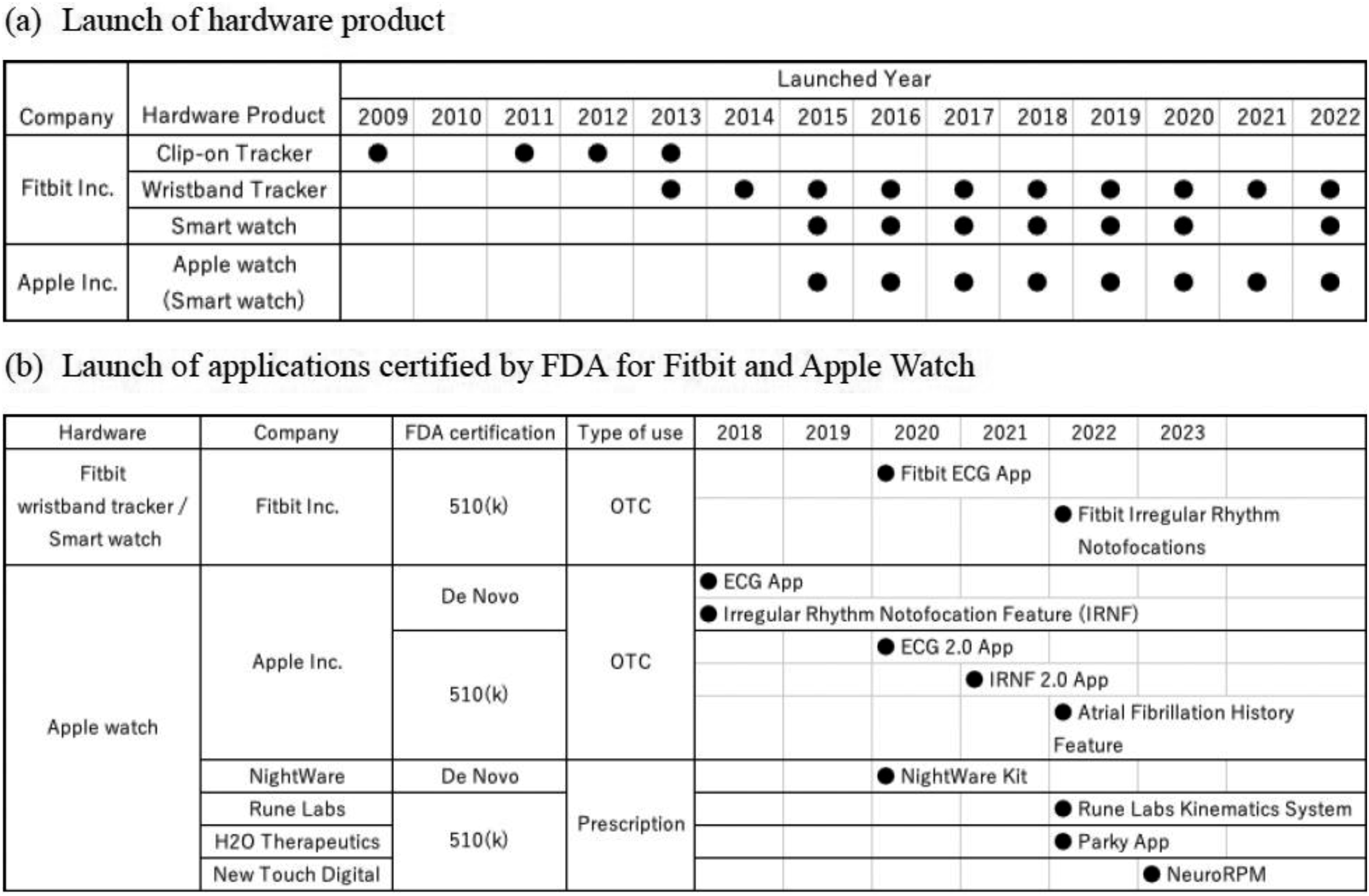
3.2.2. Market development
We compared Fitbit and Apple Watch in several clinical studies and their target subject conditions. The clinical studies with Fitbit or Apple Watch were searched for on Clinicaltrial.gov with ‘Fitbit’ or ‘Apple Watch’ as a search term in ‘other terms’ between 1st January 2007 and 31st December 2022 as the study start date. The Clinicaltrials.gov was accessed on 24th April 2023.
Based on the above collected data, the trends in the number of clinical studies were also compiled and visualized in a graph (Figure 3). In addition, the target diseases of the clinical studies were identified, and the proportion of each disease area relative to the total number of clinical studies within specific periods was visualized (Figure 3). Based on these analyses, we inferred the types of diseases or health conditions for which Fitbit or Apple Watch have been used. Comparison of clinical studies with Fitbit and Apple Watch. (a) Shows the year–over-year changes in the number of clinical trials using Fitbit or Apple Watch. (b)Shows the percentage distribution of target diseases in clinical trials using Fitbit or Apple Watch. The number of clinical studies involving Fitbit was 24 between 2010 and 2014, 226 between 2015 and 2019, and 283 between 2020 and 2022. The number of clinical studies involving Apple Watch was 0 between 2010 and 2014, 17 between 2015 and 2019, and 45 between 2020 and 2022.
3.2.3. Business development
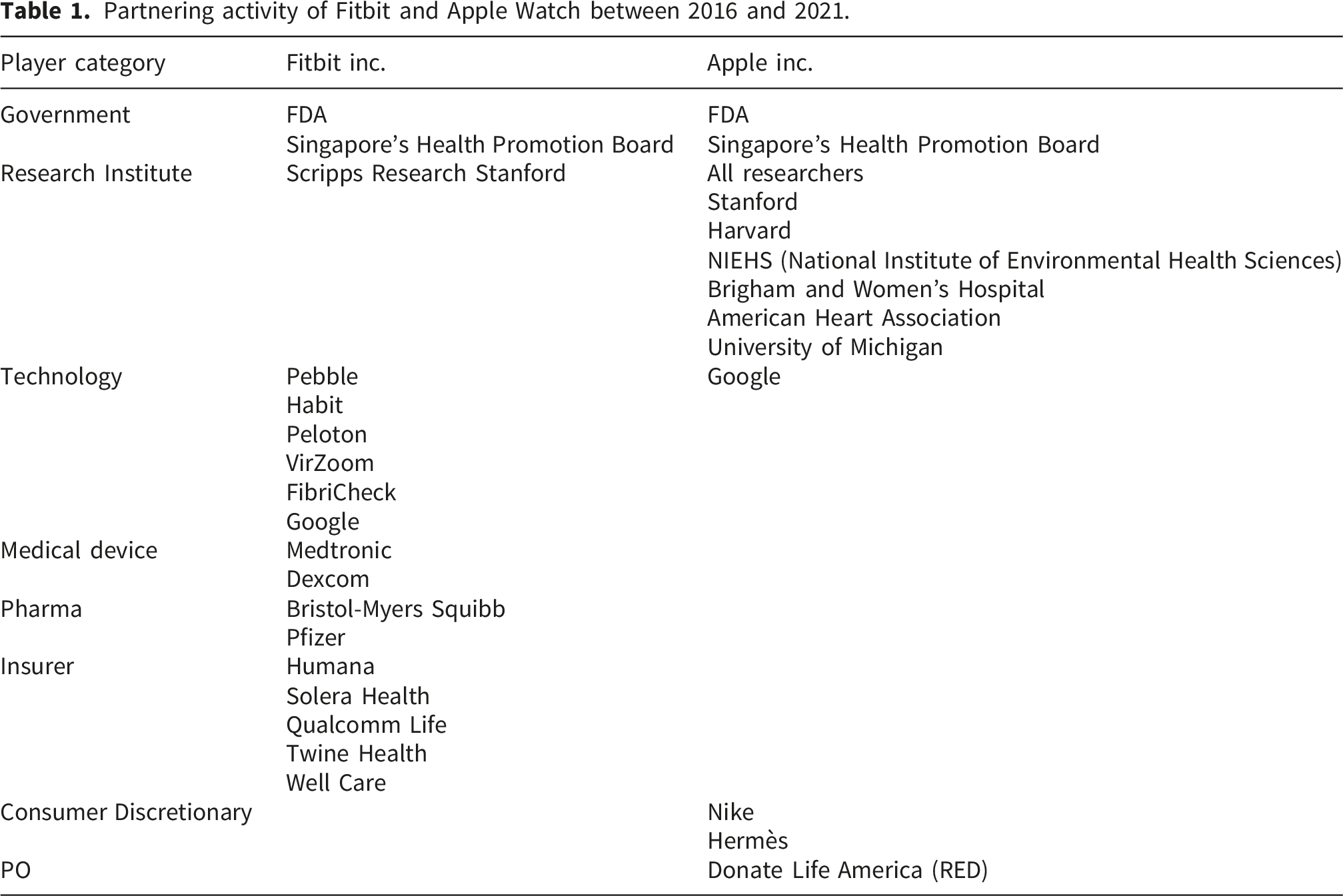
Partnering activity of Fitbit and Apple Watch between 2016 and 2021.
Finally, the findings from these three analytical perspectives—product development, market development, and business development—were integrated to examine the strategic trajectories of the two companies. The collected events and observations were qualitatively compared to identify patterns in how each company developed its wearable platform, expanded its market applications, and formed ecosystem partnerships. Through this comparative analysis, we examined how differences in product architecture, regulatory engagement, and ecosystem relationships shaped the evolution of the Fitbit and Apple Watch platforms. The synthesized results were then used to interpret the strategic implications discussed in the Discussion section.
4. Results
4.1. Product development
Fitbit and Apple Watch products are summarized in Figure 2(a). Fitbit entered the wearable device market early in 2009 as a fitness tracker. Fitbit launched the Clip-on trackers (2009 -2013) first, then launched Wristband trackers (2013-) and the Smartwatches (2015-). Apple Watch, on the other hand, entered the market in 2015 as a smartwatch and has remained the only smartwatch ever since (Figure 2(a)). Both have launched smartwatches since 2015, and there are no obvious differences between them in the hardware aspect. Next, we observed FDA-certified applications for Fitbit and Apple Watch. Both had wellness applications that did not require FDA certification since their product launch, and then developed medical applications that required FDA certification. The first to obtain FDA certification was the Apple Watch, which received De Novo certification for its ECG (Electrocardiogram) App and IRNF in 2018. Also, Apple Watch released improved versions of them in 2020-2022. On the other hand, Fitbit followed Apple Watch in receiving a 510(k) for the ECG App in 2020 and a 510(k) for the IRNF in 2022. These are medical use applications, but are OTC (over-the-counter). In addition, Apple Watch accepts not only in-house developed applications but also 3rd parties’ applications: four applications have been certified by the FDA since 2020, all of which were developed by other companies for Apple Watch. These are for medical use applications and require a prescription by physicians (Figure 2(b)). In the application aspect, the Apple Watch led to the development of medical use applications.
4.2. Market development
As mentioned above, Fitbit and Apple Watch developed the applications, which were certified by the FDA. This is one of the market expansions from the wellness market to the medical market. Apple Watch expanded the market to medical in 2018, and Fitbit in 2020 (Figure 2(b)). Showing good efficacy or effectiveness by Fitbit or Apple Watch in clinical studies, market expansion opportunities could arise. Therefore, clinical studies using Fitbit or Apple Watch were searched and summarized in Figure 3. First, we found that the number of clinical studies was higher in Fitbit than in Apple Watch. The number of clinical studies with Fitbit increased even after 2018, when Fitbit sales decreased (Figure 3(a)). Next, we compared the conditions of the target population of those clinical studies. As it was found in Figure 3(a) that Fitbit was superior in absolute values, a relative evaluation was carried out to understand the focused disease area of each. The results are shown in Figure 3(b). The period in Figure 3(b) was divided into 2010-2014, which are before the Apple Watch release, 2015-2019, which are after the launch of the first Apple Watch for 5 years, and 2019-2022 afterwards.
The expansion of clinical studies involving Apple may be attributed to the development of research platforms such as ResearchKit and CareKit, which likely encouraged an increase in studies aimed at developing medical applications. In contrast, Fitbit had accumulated more clinical evidence through a greater number of studies.
4.3. Business development
To develop the market in digital health, connections with other players are important to absorb new capabilities. So, the partnering activities related to Fitbit and Apple Watch are summarized in Table 1. Fitbit started partnering with external players in 2016, partnering with Humana as an Insurer, Pebble as an ICT company and Medtronic as a medical device company. The partnering was further accelerated with government/regulators, pharmaceutical companies, and research institutes, as well as insurers, ICT companies and medical device companies from 2017 onwards. Fitbit was acquired by Google in 2021. The most distinctive element of the partnering is the connection with the Government/Regulator. Fitbit, Inc. worked with the FDA on a pre-certification program from 2017 to 2022 and partnered with Singapore’s Health Promotion Board from 2019 (Table 1). Fitbit’s partnering focused on product or service development. Also, Apple had several partnering activities related to the Apple Watch or healthcare. Apple partnered with the government/regulator, technology companies, research institutes, consumer discretionary and non-governmental organizations (NGOs). The differences with Fitbit are partnering with Consumer Discretionary and NGOs.
Consumer Discretionary partnerships with Nike and Hermès have contributed significantly to the establishment of the Apple Watch brand. Partnering with NGOs is for social contributions and donations. Because Apple Inc. is an extremely large company, it can work with NGOs for the benefit of society even if there is no direct profit. Another point that should be mentioned is collaboration with all researchers in 2016. This refers to the release of clinical trial platforms such as CareKit and HealthKit, which enable collaboration with various researchers. This could lead to the development of 3rd parties’ applications, and FDA-certified applications have been launched, as shown in Figure 2(b).
5. Discussion
5.1. Integrated case insights and strategic implications
The comparative analysis of Fitbit and Apple Watch demonstrates that strategic alignment with regulation, combined with a deliberate mix of openness and closedness, is essential for sustaining platform leadership in regulated environments. This section integrates case insights to clarify how contrasting trajectories unfolded in the wearable platform market.
The distinction between wellness and clinical care functions also shapes the structure of the wearable device market. Wellness-oriented applications primarily aim to promote health maintenance and behavioural change, whereas clinical care applications focus on supporting diagnosis, monitoring, or management of diseases. As a result, these two domains differ not only in their objectives but also in regulatory requirements and stakeholder involvement. Wellness applications typically operate outside strict medical device regulation and are mainly adopted by consumers through direct-to-consumer channels. In contrast, clinical applications are often subject to regulatory approval and involve a broader set of stakeholders, including physicians, healthcare providers, insurers, and regulatory authorities. These differences influence firms’ strategic choices regarding product development, ecosystem design, and regulatory engagement in the wearable platform market.
Comparison of Fitbit and Apple Watch.

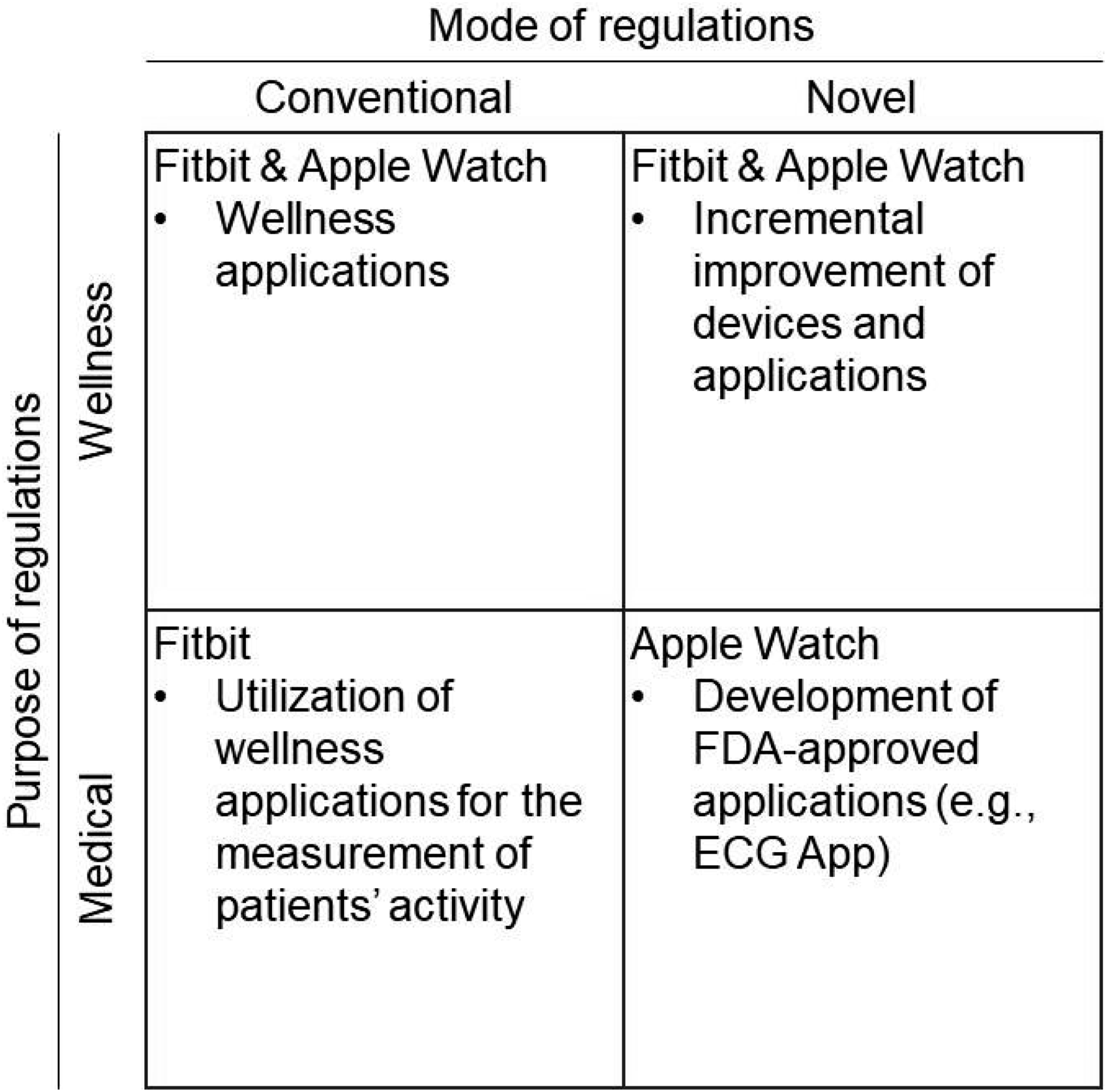
Figures 4 and 5 further illustrate how these strategic differences translated into divergent trajectories. Figure 4 depicts Fitbit’s reliance on wellness applications, showing how the absence of regulatory engagement restricted its scope for market expansion. Figure 5 contrasts this with Apple’s path-creation, where regulatory reforms enabled the introduction of FDA-approved medical applications. By combining openness toward app developers with closed control over the iPhone ecosystem, Apple built new growth paths that enhanced its market leadership.27,29 This balance reflects the importance of architectural leverage in platform ecosystems.
25
Product Architecture of Fitbit and Apple Watch. The relationship between wearable device applications and smartphones is shown. Applications are categorized into FDA-certified (i.e., medical applications) and non-certified (i.e., wellness applications). ‘In-house’ under FDA-certified indicates self-developed applications (developed by Fitbit or Apple), while ‘3rd parties’ refers to applications developed by external companies. The ‘Device’ column under Smartphones lists the product name and manufacturer. Regulatory Approach by Fitbit and Apple Watch. The relationship between regulation and wellness/medical is shown. The horizontal axis is divided into conventional regulation and new regulation, while the vertical axis is divided into wellness and medical. Both Fitbit and Apple initially entered the wellness sector, which is not subject to regulation, and then expanded into the medical sector. The diagram illustrates the difference between following conventional regulation and adopting new regulation during this transition.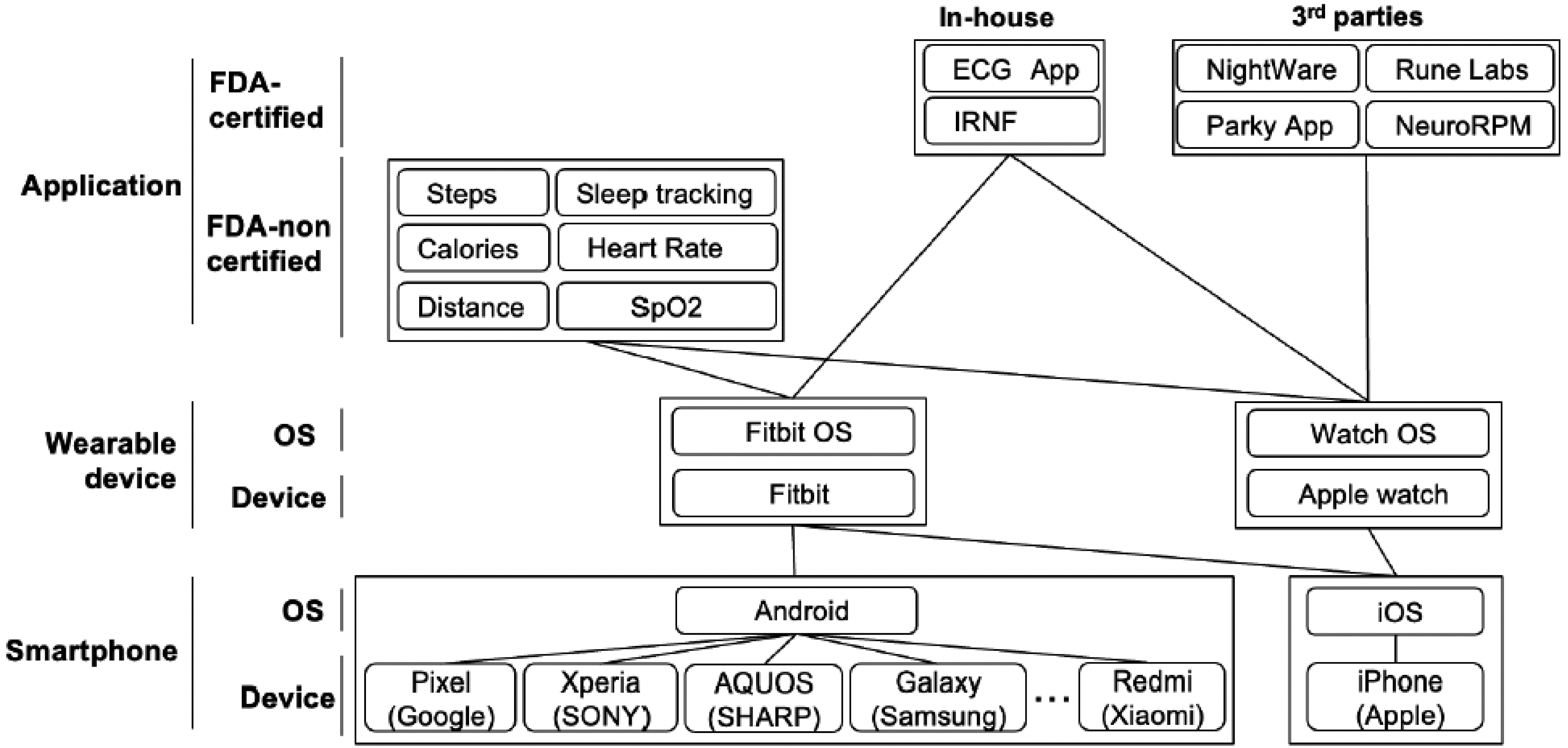
From a practical perspective, these cases illustrate the risks and opportunities of platform growth in regulated industries. Fitbit’s trajectory underscores the danger of early entry without adaptive path-creation: initial success may be undermined if firms become locked into limited applications and fail to engage with evolving regulation. Apple’s experience, by contrast, shows how firms can transform regulation from a constraint into an enabler of innovation by aligning product strategy with institutional change.44,45 Managers in other sectors, such as financial services, energy, and transportation, face comparable challenges, where the ability to balance openness toward complementors and closedness around core assets while navigating regulation determines long-term competitiveness.
Because the empirical data analysed in this study cover developments only up to 2022, several recent developments are briefly noted. These include the integration of Fitbit by Google, the rise of generative AI, and the intellectual property dispute between Apple and Masimo. The integration of Fitbit into Google’s ecosystem suggests increasing synergies between wearable devices as data collection platforms and AI technologies that interpret health-related data. At the same time, the Apple–Masimo case highlights the importance of intellectual property protection in medical technologies. Taken together, these developments indicate that future competition in digital health platforms will be shaped not only by regulatory approval of sensors and applications but also by the governance of health data, the emergence of AI-based health services, and strategic management of intellectual property.
Recent advances in artificial intelligence (AI) have significantly expanded the analytical capabilities of wearable devices, enabling the interpretation of large-scale physiological data streams and supporting clinical decision-making processes. In particular, the emergence of digital biomarkers derived from continuous sensor measurements has increased the clinical relevance of wearable platforms beyond traditional wellness monitoring. Furthermore, the integration of wearable-derived data into clinical decision support systems (CDS) is transforming these devices from lifestyle tools into components of healthcare infrastructure. These developments suggest that future competition among wearable platforms will increasingly depend not only on hardware innovation but also on data analytics capabilities and regulatory alignment with AI-enabled medical software.
5.2. Theoretical and practical contributions
As per theoretical contributions, prior research on platform strategy has typically examined openness and closedness in relation to intellectual property and firm boundaries. What has been underexplored is how these strategies operate when regulation becomes a central institutional force. By comparing Fitbit and Apple Watch, this study introduces regulation as a third analytical axis alongside openness and closedness, thereby extending the theory of platform strategy. We demonstrate that firms can not only fall into path-dependence when regulation constrains their options, but can also engage in path-creation by proactively leveraging regulatory change. This integrative perspective refines existing theories by linking complementor management, regulatory alignment, and innovation trajectories within a single conceptual framework.
As practical implications, the findings guide managers in regulated industries on how to balance ecosystem openness, regulatory compliance, and product control. Fitbit illustrates the risks of early entry without adaptive path-creation, leading to lock-in and declining competitiveness. In contrast, Apple leveraged regulatory reforms to pioneer medical applications, expand its base of complementors, and reinforce a closed ecosystem around the iPhone. The contrasting outcomes highlight the importance of aligning product and ecosystem strategies with evolving regulatory frameworks.
For broader relevance, although this study focuses on digital health, the insights extend to other highly regulated sectors such as financial services, energy, and transportation, where firms face similar challenges of innovating under institutional constraints. In such contexts, regulation should not be seen solely as a barrier but as a potential enabler of innovation and competitive advantage when combined with managed openness toward complementors and protection of core assets.
5.3. Limitations and future perspectives
The data in this study were obtained solely from publicly available secondary sources. Future research could involve detailed investigations and validation through interviews with stakeholders. Additionally, this study focuses on the specific cases of Fitbit and Apple Watch. Further research examining multiple additional cases could contribute to a broader generalization of the success factors for digital platforms.
This study does not include data collection or analysis regarding usability. Companies actively engage in regulations through Corporate Political Activities (CPA) with the intent to influence regulations to either promote or suppress innovation. 51 In the cases of Fitbit and Apple discussed in this study, there might have been lobbying activities; however, such information could not be captured from publicly available sources. As a direction for future research, conducting interviews with stakeholders to investigate lobbying activities directed at regulatory authorities could provide a deeper understanding of the relationship between companies and regulatory authorities, as well as the interplay between regulation and innovation.
Finally, this study provides only an overview of wearable devices, regulatory approvals, and trends in diseases targeted by clinical trials. The primary focus of the analysis in this study is not on clinical effectiveness, but on the interaction between strategic choice and regulatory environments in the development of digital platforms. At the same time, clinical effectiveness or value may serve as an important starting point for strategic decision-making, suggesting that future research could more systematically integrate this perspective. For example, Fitbit has often focused on maintenance of wellness/health and prevention of diseases, potentially helping users remain outside the clinical setting, whereas the Apple Watch increasingly monitors disease-related biomarkers, which may help identify triggers to visit the clinical setting. Therefore, further research could examine how the elemental technologies and functionalities of wearable devices relate to disease-specific metrics and clinical value. This could further clarify the connection between wearable devices and market expansion, including the broadening of applicable diseases.
6. Conclusions
This study investigated the growth strategies of Fitbit and Apple Watch as representative digital health platforms in a regulated industry. The analysis identified three key drivers of platform success: pursuing openness toward complementors, maintaining closedness around core technologies, and creating new paths through regulatory engagement. Fitbit, as an early entrant, achieved initial success by pioneering wellness applications and collaborating with traditional healthcare partners, but its reliance on path-dependent strategies limited adaptability. Apple, entering later, aligned closely with regulatory reforms, pioneered FDA-approved medical applications, and cultivated an ecosystem of third-party developers. This contrast illustrates two distinct strategic trajectories: path-dependence constraining further growth versus path-creation enabling market leadership. The comparative findings clarify how firms in regulated sectors can leverage platform strategies to shape innovation and competition. This study also demonstrates that regulatory frameworks can act not only as constraints but as enablers when proactively integrated into product and ecosystem strategies. This study is limited by its reliance on secondary data and its focus on two cases. Future research should incorporate interviews with stakeholders and examine additional industries to generalize the findings. Further analysis could also explore the role of corporate political activities and lobbying in shaping regulatory outcomes. Nevertheless, the study provides evidence that platform growth in regulated industries depends on balancing openness and closedness while actively engaging with regulatory change, and highlights how firms can navigate institutional environments and sustain competitive advantage in digital health and beyond.
Footnotes
Acknowledgements
The present study acknowledges the financial support of the Japan Science and Technology Agency (Grant Number: JPMJPF2202). We thank Dr Kota Kodama of Hoshi University for his helpful insights and suggestions.

Ethical considerations
The present study constitutes social science research observing companies, products, and services, and does not involve human participants or identifiable person data and therefore did not require institutional ethics review.
Author contributions
SK developed the method by retrieving and screening the identified data, analysing and interpreting the data, and drafting the manuscript; AS was partially responsible for the analysis and writing; KK and SS contributed by providing insight into data interpretation and helped with the final version of the manuscript. SS is the corresponding author of this manuscript.
Funding
The authors disclosed receipt of the following financial support for the research, authorship, and/or publication of this article: The present study acknowledges the financial support of the Japan Science and Technology Agency (Grant Number: JPMJPF2202; SS) and SECOM Science and Technology Foundation (KK).
Declaration of conflicting interests
The authors declared the following potential conflicts of interest with respect to the research, authorship, and/or publication of this article: SK is an employee of Chugai Pharmaceutical Co., Ltd., and SS is an Outside Director of Human Life CORD Japan Inc. (Tokyo, Japan), but have no conflict of interest of any kind with this study.
Guarantor
The present study requires no guarantor whatsoever.