



Abstract
Background
Informal caregivers of older adults with serious health conditions, particularly stroke, dementia, and fractures, often experience substantial caregiving stress. Online platforms may offer an accessible and effective means of supporting caregivers and reducing stress.
Objective
This study aimed to evaluate the effectiveness of a newly developed online platform in reducing caregiver stress and enhancing caregiver preparedness and competence. It also examined factors associated with platform use, as well as user satisfaction and engagement.
Methods
A longitudinal open-trial design was employed, with assessments conducted at baseline, 3-month follow-up, and 15-month follow-up. Primary outcomes included caregiver stress, preparedness, and competence. User profiles were examined by comparing characteristics between users and non-users of the platform. User satisfaction and engagement were also assessed.
Results
Of the 287 caregivers, 61% used the online platform. Compared with non-users, users showed a significant reduction in caregiving stress and greater improvements in caregiver competence, while no significant difference was found in caregiver preparedness. Users were more likely to be younger, employed full-time, have upper secondary education or above, report a monthly household income of HK$25,000 or higher, and have no chronic illness. At the 15-month follow-up, users reported high levels of satisfaction with the platform.
Conclusions
The online platform effectively reduced caregiver stress and improved caregiver competence, with high user satisfaction. Further enhancements, such as increased multimedia content on practical caregiving preparation, may be needed to improve caregiver preparedness outcomes.
Introduction
Global rise in age-related chronic diseases such as stroke, dementia, and fractures has intensified the demand for informal caregiving, particularly in rapidly aging societies.1–3 In those disease care, family caregiving plays a crucial role in dementia care, as most dementia patients live in a community and depend on their families for support. The role of family caregivers is multi-faceted and varied, as they must handle the family's reaction to the situation while meeting the needs of the person they are caring for. 4 While caregivers often voluntarily take on their role, it can have a detrimental impact on their mental and physical health, especially when the care is provided over an extended period of time. 5 Studies have identified negative physical health consequences of caregiving, including increased medication use 6 and pain that interferes with daily activities. 7 A reviewer of 32 studies found that one quarter of dementia caregivers reported clinically significant levels of anxiety, a rate higher than that observed in non-caregiver controls. 8 In Hong Kong, 25% of the interviewed caregivers surveyed reported experiencing three concurrent psychosocial health issues, including feeling overwhelmed by the immense responsibility of caregiving, depressive symptoms, and inadequate family support. 9
Despite the critical role of caregivers in supporting older adults with chronic diseases, existing support for caregivers is not adequate. Digital health platforms have transformed chronic disease management by enhancing accessibility, self-efficacy, and health outcomes, 10 yet their application to caregiver support remains underexplored. Current digital interventions rarely address caregivers’ unique needs for practical guidance, emotional support, and resource coordination—gaps that are particularly pronounced in non-Western societies where family caregiving is deeply rooted in cultural norms. 11
In Chinese societies, the value of filial piety places substantial expectations on family members, particularly adult children, to provide care for aging relatives with chronic illnesses. This cultural imperative often magnifies the physical, emotional, and financial burdens on caregivers, who typically receive limited formal support and may lack access to specialized caregiving resources. 12 Although mobile technology and digital platforms have revolutionized the delivery of health information and services, 13 few have been designed specifically for caregivers, and even fewer have evaluated their real-world implementation and impact in Chinese cultural contexts.
Furthermore, while some digital interventions have demonstrated efficacy in controlled trials, high attrition rates and limited engagement in real-world settings remain significant barriers to their sustained use and effectiveness. 14 There is a critical need to develop and pragmatically evaluate digital solutions that are tailored to the socio-cultural realities and specific challenges faced by Chinese caregivers of older adults with chronic diseases.
To address these gaps, a 656-carer online platform was developed and launched to support caregivers of older adults with stroke, dementia, and fracture. The number “656” originates from the homophonic sound of the first three characters (“老吾老”) in the teaching “love others’ elderly as you would love your own” (“老吾老,以及人之老”) from the Chinese classic “Mencius” (《孟子》). It emphasizes the vision of caring for the elderly, conveying the platform's commitment to empowering seniors to “age in place.” The platform provides community resources, assessment tools, discussion forums, and a chatbot for personalized feedback, catering to the practical and emotional needs of caregivers, social workers, and community members. More specifically, the current study aimed to address the following research questions:
Research question 1: What are the characteristics and digital behavior patterns that differentiate caregivers who adopt the 656 online platform from those who do not over 15 months? Research question 2: Does the use of the 656 online platform improve caregiver outcomes (stress, competence, and preparedness) among caregivers of older adults with chronic illnesses? Research question 3: What is the level of user satisfaction and engagement with the 656 online platform and its features (including the chatbot) among caregivers?
Methods
Study design
We adopted a longitudinal observational design to examine changes in caregivers’ outcomes over time under real-world conditions, without manipulating exposure to the digital platform. We have followed the STROBE (Strengthening the Reporting of Observational Studies in Epidemiology) statement in drafting this article. The study was registered at Clinicaltrial.gov (NCT06771557).
Participants
The participants eligible for inclusion should meet the following three criteria: (1) Chinese citizens aged 18 or above; (2) family caregiver who provide unpaid care or assistance regularly (daily or weekly) for an elderly individual aged 65 or above; and (3) the elderly individual receiving care has been diagnosed with any one of the following conditions: stroke, dementia, or fall-related fractures. Respondents are excluded if they meet one of the following criteria: (1) family caregiver who has been diagnosed with severe mental or physical illness or has impairments in cognitive function, such as comprehension, memory, observation, and other related abilities; (2) professional paid caregivers, such as domestic helpers or nurses; and (3) cannot communicate in Cantonese, Mandarin, or English.
Sample size
The sample size of 300 was determined to achieve a statistical power of 95%, with an assumed effect size (Cohen's d) of 0.5, 15 which indicates a moderate effect, and an attrition rate of 15%. Power analysis was conducted using standardized formulas, confirming that a sample of this size provides a high probability of detecting a true effect if it exists. Specifically, with a power of 95%, the study can detect a moderate effect size of 0.5 with a high level of certainty. The inclusion of a 15% attrition rate accounts for potential participant dropout, ensuring that the final sample remains sufficiently large to maintain the desired power level throughout the study.
Intervention (656 online platform)
The 656 platform provides valuable information regarding three common ailments among the elderly, namely stroke, dementia, and fall-related fractures. Serving as an online platform, the 656 platform incorporates a chatbot feature that facilitates connections between local caregivers, social workers, and community members to various services. The user journey is visualized in Figure 1, showcasing the step-by-step process of engaging with the platform. The screenshot of the platform can be found in Figure 2. The platform engages users through three parallel approaches: (1) systematic user education, which aims to build an online carer community, enhance service awareness, and empower knowledge via information provided on the website; (2) resource mapping, which identifies available aging-in-place services in the public and private sectors and supports informed decision-making through service introductions and a resources map; and (3) consultation, which provides service triage and coordination based on users’ needs and financial capacity via a chatbot and live chat. Through these three approaches, the platform offers several key features:
Artificial intelligence (AI) chatbot and live chat: The platform deploys an AI chatbot and live chat feature, providing round-the-clock interactive responses to users. This ensures that users receive customized solution feedback instead of excessive and incomprehensible information. Once the user registered with the portal, the system initiates a follow-up process to digitally guide them according to various stages of the aging/caring journey through a list of frequently asked questions and answers, generated from past platform data. Initially, the chatbot evaluates the user's current conditions. After a specific duration, the chatbot attempts to reconnect with the user to reassess their latest situation and determine if additional assistance is needed. If the chatbot is unable to address specific questions or inquiries, skilled elderly care workers are available through live chat to provide assistance. Problems-based elderly resource database: The platform includes a comprehensive database designed to address problems and provides resources for the full journey of dementia, fall, and stroke in the elderly. It covers both online and offline services, offering a territory-wide geriatric medical service list for public and private sectors. The database also includes dementia examination kits, territory-wide elderly district services, hospital discharge services, short-term caring helper matching services, and daily necessities services. These resources encompass various areas such as wound dressing, diet, housing, and transportation. Interim care solutions: The platform lists interim care solutions provided by St. James' Settlement and other non-governmental organizations (NGOs). These solutions aim to offer short-term relief for caregivers until more sustainable, long-term options can be identified. The services range from elderly sitter services, day care services, home modification advice, physiotherapy, in-home nursing care services, stroke rehabilitation programs, counselling services, and residential respite services, among others. The platform catalogues self-finance, non-subvented, one-off services, and long-term sustainable options. Professional knowledge and resources: The platform publishes professional knowledge on disease prevention, symptom detection, wellness, and resources targeting self-caring elderly individuals. These resources are available on the platform's website, providing valuable information and guidance for users. Exchange forum: An exchange forum managed by an experienced elderly care social worker is available on the platform. It serves as a digital community venue for users to support each other by exchanging information, sharing experiences with services, providing psychological support, and organizing events. The forum also allows users to provide ratings and reviews for services used.

User journey of elderly portal.
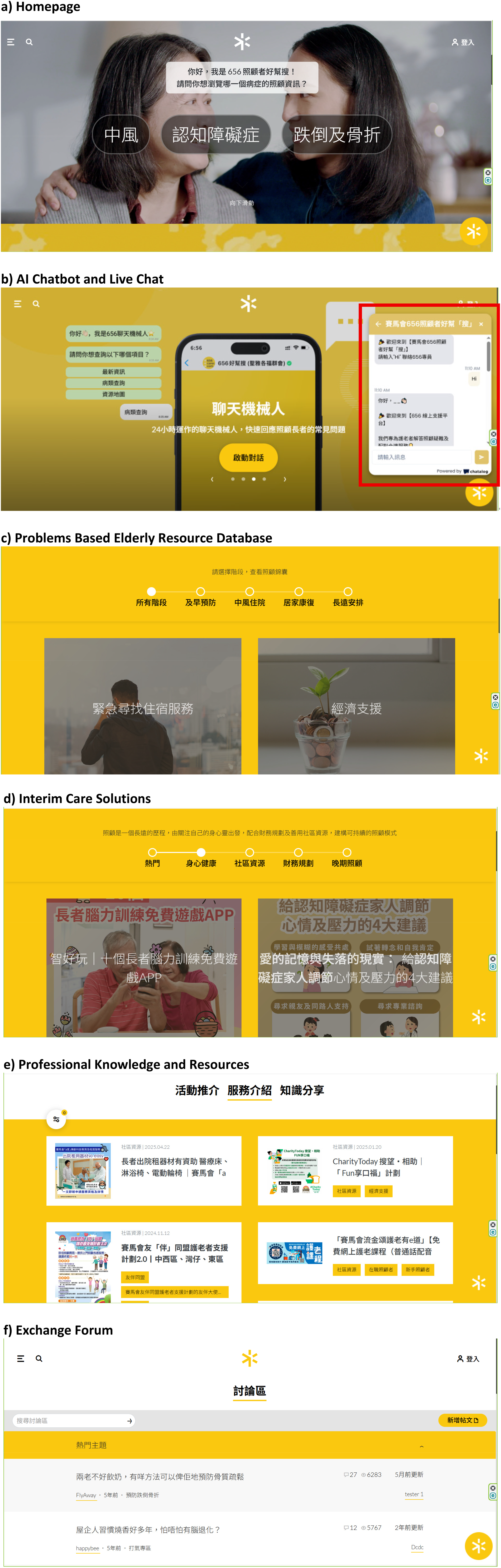
Screenshot of 656 online platform. (a) Homepage; (b) AI chatbot and live chat; (c) problems-based elderly resource database; (d) interim care solutions; (e) professional knowledge and resources; and (f) exchange forum. AI: artificial intelligence.
In summary, the 656 platform offers a comprehensive range of features and resources, including AI chatbot and live chat, an extensive resource database, interim care solutions, an exchange forum, data analytics and research, and professional knowledge and resources. These features aim to support caregivers and provide valuable assistance to the elderly, enhancing their overall well-being and caregiving experience.
Procedure
From December 2020 to May 2021, the study team recruited caregivers of the elderly with the three targeted disorders (stroke, dementia, and fall-related fractures) through various NGOs and social connections. NGO staff disseminated information about research recruitment to service users through activities, notices, social media, and WhatsApp messages. Meanwhile, the study team also distributed the information about research recruitment among caregivers via telephone, email, and WhatsApp messages through social connections. The recruited caregivers were asked to participate in the baseline survey, either through self-administration or interviews by trained interviewers. Subsequently, the caregivers were instructed to utilize the 656 platform. Those who completed the baseline survey were invited to participate in the first follow-up (FU) survey (3-month FU) from July to August 2021, 3 months after the pre-test survey. The recruited caregivers were invited to take part in the second follow-up survey (15-month FU) from July to August 2022, 1 year after the post-test survey. Further, an additional user satisfaction and engagement survey was conducted in August 2022 for those caregivers who reported using the online platform. Both users and non-users of the platform were contacted through WhatsApp messages, telephone calls, and emails at regular intervals during the enumeration periods. The procedure is visualized in Figure 3.
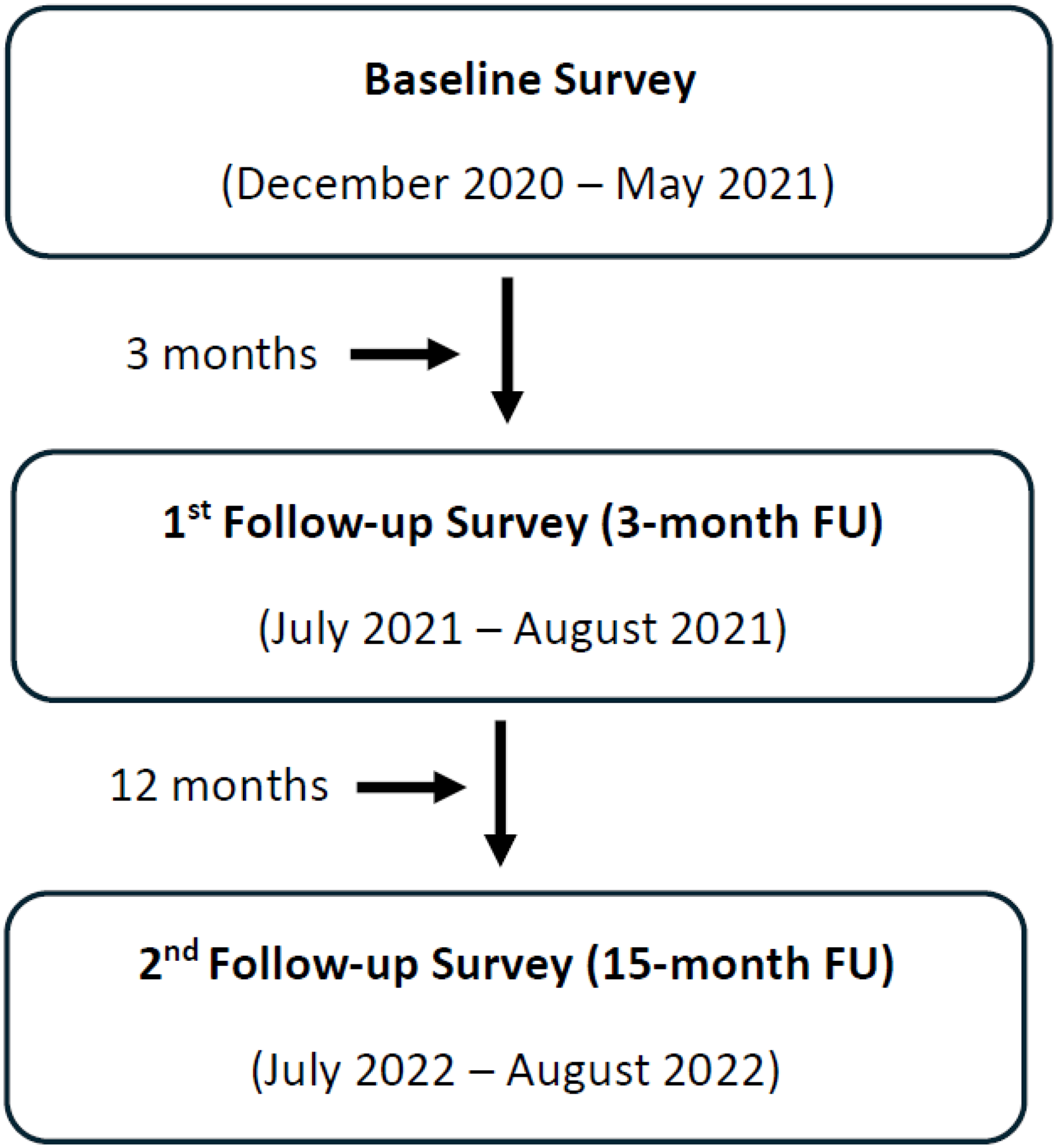
Survey procedure.
Measures
Caregiver stress was measured by the Modified Caregiver Strain Index (CMCSI). 16 It consists of 13 items with a total score ranging from 0 to 26. Each item is rated by a score of 0 (no), 1 (yes, sometimes), or 2 (yes, always). A higher score suggests a higher amount of strain felt by caregivers. The CMCSI demonstrated good psychometric properties in the Chinese population. 1
Preparedness for caregiving was measured by the Chinese version of Preparedness for Caregiving Scale. 17 The scale consists of eight items that ask carers how well prepared they believe they are for multiple domains of caregiving. Each item is rated by a five-point Likert scale from 0 (not at all prepared) to 4 (very well prepared), with a total score from 0 to 32. The scale showed good reliability and validity in the Chinese population. 17
Caregiver competence was measured by the Chinese version of Caregiver Competence Scale (CCS-C). 18 The scale includes four items to assess the sufficiency of a caregiver's performance as administered by the caregiver. A higher score indicates a better sense of competence. The CCS-C demonstrated good psychometric properties in the Chinese caregivers. 18
User satisfaction was measured using 10 self-designed question items that assessed the functions and helpfulness of the platform and chatbot. Each item is rated on a five-point Likert scale, ranging from 1 (Strongly disagree) to 5 (Strongly agree). A higher score indicates a higher level of satisfaction.
User engagement encompasses the number of months using the platform, the number of times using the platform each month, and duration for each usage.
Physical functioning was measured by the Barthel index (BI) and instrumental activities of daily living (IADLs). The BI assesses the degree of independence and mobility in individuals’ activities of daily living, which include feeding, grooming, bathing, dressing, bladder control, bowel control, toileting, ambulation, chair transfer, and stair climbing. 19 The score ranges from 0 to 100. Scores of 0–20 indicate “total dependency,” 21–60 indicate “severe dependency,” 61–90 indicate “moderate dependency,” 91–99 indicate “slight dependency,” and 100 indicates “independence.” 19 The independence in IADLs was measured by the Chinese version of Lawton Instrumental Activities of Daily Living (IADL-CV) with a total score ranging from 0 (low function, dependent) to 8 (high function, independent) for women, and 0 to 5 for men.
Digital behavior data were collected, including time spent on the internet per day, the electronic devices commonly used, whether participants searched for information or services related to older adults or caregiving, and the channels through which they obtained such information or services. The reasons for not using the platform were assessed with a multiple-response item at the 15-month FU.
Characteristics include age, gender, economic activity status, educational attainment, average monthly household income, chronic illness, types of disability, whether living with the elderly, whether the only caregiver in the family, number of caring (years), and number of caring hours per week.
Statistical analysis
The demographic characteristics included the mean (standard deviation, SD), median (interquartile range), and number (percentage). The difference in the baseline was tested by the two-sample t-test. A linear mixed model (LMM) was applied to test the efficacy of the online platform with adjusting the variables, including age, gender, the only caregiver in the family, caring hours per week, education attainment, average monthly household income, whether they have a chronic illness, BI, and IADL-CV. All fixed effects (group, time, group × time) and random effects by participants were included and tested in the LMM. The term group effect indicates differences between users and non-users; time effect captures changes across follow-up periods; and group × time effect refers to the interaction between usage group and time, representing how changes over time differ between users and non-users. All the data analyses were conducted in IBM SPSS 26.0 (IBM Corp., Armonk, NY, USA).
Results
Participants and user characteristics
A total of 343 caregivers were approached for the study, and 301 of them participated in the baseline survey, resulting in an enrolment rate of 87.8%. For the 3-month FU survey, 300 caregivers were included, indicating a dropout rate of only 0.3%. In the 15-month FU survey, 287 caregivers completed the survey, with a dropout rate of 4.7%. Among the 287 users who completed the 15-month FU survey, 57.8% were female caregivers. The average age was 51 years. The majority of caregivers (81.9%) had attained an upper secondary education level or higher. Most of the caregivers (64.5%) were living with the elderly individuals they were caring for. Besides, 69% of the caregivers reported that they were not the only caregivers in their family, suggesting that caregiving responsibilities were shared among other family members.
Research question 1: the characteristics and digital behavior patterns (Table 1)
In the 15-month FU survey, 175 caregivers (61.0%) reported using the platform (users), while 112 caregivers (39.0%) had not used it (non-users). The main reasons that non-users had not used the platform included “I did not have time” (56.3%), “no need to find relevant information” (31.3%), “the information provided by other platforms was more useful” (10.7%), and “the information provided by the 656 platform was not helpful to me” (5.4%).
Further analyses indicated significant differences between users and non-users in several factors. The proportion of users who were employed full-time or part-time (65.7%) was significantly higher than that of non-users (38.4%) (p < 0.001). The proportion of users who attained a lower-secondary education or below (25.7%) was significantly lower than that of non-users (38.4%) (p = 0.046). The proportion of users with a monthly household income of HK$25,000 (US$3194) was significantly higher than that of non-users (p < 0.001). The proportion of non-users with chronic illness (30.4%) was significantly higher than that of users (20.0%) (p = 0.045). Furthermore, the proportion of users who were the sole caregivers in their families (24.6%) was significantly lower than that of non-users (41.1%) (p = 0.003). Users reported shorter caregiving hours per week compared to non-users. The average caring hours per week for users were 28.1 (SD 15.9), while for non-users, it was 34.2 (SD 20.4) (p < 0.001).
Caregivers who used the 656 platform spent significantly more time on the internet compared to those who did not use the platform in the past year (p < 0.001). Among caregivers who used the platform, nearly two-thirds (65.8%) reported spending 3 h or more on the internet per day. In contrast, less than one-third (31.3%) of caregivers who did not use the platform reported spending 3 h or more on the internet per day. When it came to internet usage devices, the vast majority of caregivers (99.4%) reported using a smartphone to access the internet. This was followed by tablets (19.9%), desktop computers (14.3%), smart TVs (8.0%), and laptops (1.7%). Higher proportions of caregivers who used the 656 platform indicated that they usually used tablets (24.6%) (p = 0.012) and desktop computers (20.0%) (p = 0.001), compared to caregivers who did not use the 656 platform in the past year.
A higher proportion of caregivers who used the 656 platform (25.8%) reported searching for information or services related to the elderly or caregiving, compared to caregivers who did not use the 656 platform in the past year (12.5%) (p < 0.001). For caregivers who searched for information or services related to the elderly or caregiving, the most commonly used methods were search engines (e.g. Google, Yahoo, etc.) (74.3%), social media platforms (e.g. Facebook, Instagram, YouTube, etc.) (44.6%), websites (18.9%), and public forums (17.6%). About three-quarters of caregivers (75.6%) reported learning about information or services related to the elderly or caregiving from their relatives or friends. Other sources included news or magazines (24.4%), public facilities (19.5%), and NGOs (17.4%). A significantly higher proportion of users (24.6%) learned about information or services related to the elderly or caregiving through public facilities, compared to non-users (11.6%) (p = 0.007).
Participants’ characteristics and digital behaviors.

User was defined as those caregivers who reported using the 656 platform in the 15-month follow-up survey.
They are multiple-select questions.
Research question 2: efficacy of the 656 online platform
The LMM results (Table 2) revealed significant improvements among users of the 656 online platform compared to non-users at follow-ups. Specifically, users experienced a significant reduction in caregiver stress as measured by the CMCSI (β = −0.42, 95% confidence interval (CI) [−0.58, −0.27], p < 0.001) and improved caregiver competence (β = 0.26, 95% CI [0.16, 0.37], p < 0.001) relative to non-users. In contrast, the group-by-time interaction for caregiver preparedness was not significant, indicating no differential change in preparedness over time between the two groups. These findings suggest that the 656 online platform reduced caregiver stress and enhances competence among caregivers of older adults with chronic illnesses, while caregiver preparedness remained unchanged compared with non-users.
Model fit statistics supported the adequacy of the full model over the null model at all time points, as indicated by marked reductions in −2 log likelihood, Akaike's information criterion (AIC), and Schwarz's Bayesian information criterion (BIC). For example, for CMCSI at 15 months, −2 log likelihood, AIC, and BIC decreased from 3455.17, 3461.17, and 3475.44 (null model) to 2523.25, 2569.25, and 2678.69 (full model), respectively, with lower values indicating better model fit.
Efficacy of 656 online platform on caregiver stress, caregiver preparedness, and competence of caregivers of older adults with chronic illness.

CMCSI: modified caregiver strain index; BI: Barthel index; IADL: instrumental activities of daily living; AIC: Akaike's information criterion; BIC: Bayesian information criterion; CI: confidence interval; FU: follow-up.
The results were adjusted by the gender, age, the only caregiver in the family, caring hours per week, education attainment, average monthly household income, whether have a chronic illness, BI, IADL, and corresponding baseline CMCSI, caregiver preparedness, and competence of older adults in the corresponding models.
Model fit statistics at 15-month follow-up for each outcome are as follows: for CMCSI, the full model had −2 log likelihood = 2523.25 (null model: 3455.17), AIC = 2569.25 (3461.17), and BIC = 2678.69 (3475.44). For caregiver preparedness, the full model had −2 log likelihood = 5095.59 (5342.10), AIC = 5141.59 (5348.10), and BIC = 5251.03 (5362.37). For competence of caregiver, the full model had −2 log likelihood = 1903.19 (2663.51), AIC = 1949.19 (2669.51), and BIC = 2058.62 (2683.78).
p < 0.001.
Research question 3: user satisfaction and engagement
For the 15-month FU survey, a total of 150 users (85.7%, 150/175) participated in the user satisfaction survey, providing valuable insights into their experiences with the 656 online platform. The results are shown in Table 3. The survey results revealed high user satisfaction, with significant proportions of users agreeing or strongly agreeing with various aspects of the platform. Users acknowledged the platform's provision of practical care knowledge (80.0%), ease of operation (75.3%), sufficiency of information (75.4%), clear guidance and classifications (73.3%), and facilitation of resource and service searches within the community (72.7%).
User satisfaction and engagement.

Among the users of the 656 online platform, slightly more than one-third (34.7%) indicated that they had used the chatbot, while the remaining 65.3% had not utilized it. Among those who had used the chatbot, more than half expressed positive views regarding its functionality. Specifically, 65.3% agreed or strongly agreed that the inquiry process was smooth and time-efficient, 57.7% found the chatbot easy to operate, and 53.8% indicated that the information provided by the chatbot helped them address their needs or problems. Additionally, 51.9% of users agreed or strongly agreed that the chatbot offered clear guidance, assisting in their search for relevant information. However, it is noteworthy that only 42.3% of chatbot users agreed or strongly agreed that it accurately analyzed their needs and problems based on their specific situations. In contrast, 51.9% remained neutral on this statement, and 5.8% disagreed.
Among the users of the 656 online platform, 52.0% had utilized the platform for 1 to 5 months, while 24.7% had used it for 12 months or more, and 23.3% had used it for 6 to 11 months. On average, users had been using the platform for about 6.7 months. In terms of frequency, 35.3% of users used the platform once per month, 28.7% used it four times or more, 22.7% used it twice, and 13.3% used it three times. On average, users accessed the platform about 4.4 times per month. Regarding the duration of each usage, 46.0% of users spent 9 min or less during each session, while 54.0% spent 10 min or more.
Discussion
This pragmatic implementation study had three main objectives: (1) to identify the characteristics and digital behavior patterns of users who adopted the 656 online platform; (2) to evaluate whether the 656 online platform improves caregiver outcomes; and (3) to describe user satisfaction with, and engagement in, use of the platform.
Among 287 caregivers, more than half (61%) of caregivers used the platforms. Compared with non-users, caregivers who used the platform were more likely to be employed full-time or part-time, have higher educational attainment, have a higher proportion with a monthly household income over HK$25,000, have a lower prevalence of chronic illness, be less likely to be the sole caregiver in their family, provide fewer caregiving hours per week, spend more time on the internet, and be more likely to report searching for information or services related to older adults or caregiving. These socio-demographic patterns align closely with prior research on digital health adoption, which consistently identifies education, income, employment status, and digital literacy as strong predictors of engagement with online support tools.20,21
Crucially, users demonstrated significant improvements compared to non-users in terms of caring stress and competence of caregivers. The longitudinal mixed model analysis revealed some key impacts of the 656 online platforms on users compared to non-users. After adjusting for demographic differences, users demonstrated significant reductions in caring stress and improvements in competence as caregivers over time compared to non-users. This finding was consistent with the previous study to demonstrate that an online platform is a feasible way to compensate for stress in informal caregivers.22,23 This finding suggested the platform was effective in decreasing caregiver stress burdens and enhancing users’ confidence and skills in providing care.
However, there were no significant differential changes in preparedness trajectories between the two groups. This finding is noteworthy because preparedness is conceptually distinct from current stress or competence; it reflects a forward-looking sense of readiness for upcoming caregiving tasks and role demands. Recent trial evidence suggests that web-based psychoeducation alone may be insufficient to shift preparedness. Bauman et al., in a randomized controlled trial of a video-based web intervention for family caregivers in specialized palliative home care, found no significant intervention effect on the Preparedness for Caregiving Scale despite overall increases in preparedness over time in both intervention and control groups. 24 Qualitative work from the same project suggests that limited engagement and the emotionally challenging nature of anticipatory content may constrain impact on preparedness. 25 In line with this, our results imply that while the 656 platform may alleviate existing stress and build day-to-day caregiving capabilities, additional, more structured or interactive components may be required to “move the needle” on preparatory aspects, such as scenario planning, end-of-life decision-making, and coordination of future resources.
The users revealed high satisfaction levels, with a significant majority agreeing that the platform provided practical care knowledge, was easy to use, offered sufficient information, had clear classifications, and facilitated finding community resources. Early systematic reviews found that internet interventions for dementia caregivers were viewed as feasible, useful, and user-friendly when they offered tailored information and opportunities for guidance or peer interaction. 26 More recent meta-reviews similarly conclude that eHealth programs for informal caregivers are widely perceived as convenient and helpful, particularly when they integrate informational, psychoeducational, and psychosocial support components. 27 High satisfaction with the 656 platform suggests that its design and content are well aligned with caregivers’ informational needs and preferences and that the platform is functioning effectively as a local “hub” to connect caregivers with community services.
However, only around one-third of users had utilized the chatbot function, and among them, just 42% felt it accurately addressed individual needs. This pattern mirrors the broader eHealth literature on chatbots for dementia care. In a systematic review of dementia-related chatbots, Ruggiano et al. reported that while existing systems were generally easy to use, they often exhibited limitations in content coverage, personalization, and conversational quality, and that the evidence base for their educational and supportive value remained very limited. 28 Our data suggest that the 656 chatbot may face similar challenges: caregivers may perceive generic or poorly contextualized responses as misaligned with their unique caregiving situations. Enhancing the chatbot's domain-specific knowledge base, personalization logic (e.g. tailoring to care-recipient diagnosis and caregiver role), and integration with human support channels may be necessary to increase its perceived relevance and accuracy.
Usage patterns showed users had been accessing the platform for about 6.7 months on average, with an average of 4.4 times of access per month. This suggests that the platform has maintained a relatively consistent user base over time, and caregivers are engaging with the platform regularly, indicating a healthy level of interaction. Nearly half (46%) of the users had sessions lasting 9 min or less. These patterns suggest that caregivers tend to engage in relatively frequent but brief, task-oriented visits—likely to search for specific advice, verify information, or locate services. Similar “short, focused” engagement has been described in evaluations of other caregiver e-platforms. Similar patterns of relatively brief and heterogeneous engagement have been reported in other web-based caregiver platforms. For instance, in the CareVirtue feasibility study for dementia caregivers, care networks showed wide variability in total use and types of features accessed, yet caregivers still reported the platform as highly usable and useful and demonstrated a significant increase in their confidence scores over the 8-week study period. 29 These observations underscore the importance of designing platforms that deliver high-value information quickly and support “just-in-time” use, rather than expecting sustained, lengthy sessions.
Implications for practice
Our findings highlighted the generally positive perception of the chatbot's efficiency, usability, and helpfulness among users while indicating room for improvement in accurately addressing individual needs and problems. Key implications included enhancing the chatbot's ability to understand and respond to specific user contexts and situations, for example, incorporating ChatGPT model. As the platform matures, increasing personalization and tailoring of information and features to individual user needs and backgrounds could further boost satisfaction and engagement. Monitoring usage data over time and gathering user feedback would also inform refinements to platform content and features to align with evolving user requirements.
In the context of this study, 61% of the participants reported utilizing the online platform. To enhance user coverage in future practices and research, a multi-faceted approach is recommended. This should encompass the utilization of strategies such as harnessing the power of social media and online advertising and integrating gamification elements like badges, points, or rewards to stimulate user participation and engagement. Moreover, considering the incorporation of guided tours or tutorials to facilitate new user orientation could be a valuable avenue for exploration in forthcoming studies.
Limitations of the study
The major limitation of this open-trial study was the lack of randomization. The absence of random assignment means pre-existing differences between platform users and non-users could have influenced the results. Employing randomized controlled trial designs in future studies could help minimize potential biases. Another limitation stemmed from the use of self-reported measures like surveys to assess caring stress and competence. Such subjective measures can introduce issues like social desirability bias. 30 Incorporating more objective assessments through cognitive tests or expert evaluations could strengthen the methodology. Finally, the lack of detailed metrics tracking platform usage intensity for each participant made it difficult to control for or analyze dosage effects. Future studies should closely monitor usage data to elucidate how different levels of engagement with the platform may impact outcomes.
Conclusion
Our study found that 61% of the 278 caregivers used the online platform, and these users showed significant improvements in stress and caregiving skills. Users were typically younger, employed full-time, had higher education and income, and had no chronic illness. They also spent more time caregiving and on the internet. The platform helped reduce stress and improve caregiving skills but didn't significantly improve caregiving preparedness. Users were generally satisfied with the platform, but improvements could be made in personalization and the chatbot function. These findings suggest we need to make the platform more accessible for older, less educated, lower-income caregivers and those who are the only caregiver in their family. Future improvements could include more practical caregiving guidance and offline training workshops. However, our study had some limitations, such as no randomization or control group, reliance on self-reported measures, and lack of detailed tracking of platform usage. Future research should address these limitations to provide more robust findings.
Footnotes
Acknowledgments
The authors would like to acknowledge the St James’ Settlement, the staff of the 656 platform, and the family carers who participated in this study for their assistance and consent on data collection, and the D.H. Chen Foundation for its support for the 656 platform

Ethical approval
The ethical approval was obtained from the Human Subjects Ethics Sub-committee, City University of Hong Kong (1-2021-39-E). All participants were informed in advance about the purpose and content of the study, as well as issues of confidentiality. Written informed consent was obtained from all participants.
Author contributions
WZ: conceptualization, data analysis, writing, and editing.
RL: data collection and data analysis, and review.
AWMC: data collection and review.
AKCW: conceptualization and review.
JYHW: conceptualization, writing, and review.
Funding
The authors received no financial support for the research, authorship, and/or publication of this article.
Declaration of conflicting interests
The authors declared no potential conflicts of interest with respect to the research, authorship, and/or publication of this article.