



Abstract
Background
Bedbugs are blood-feeding parasites that infest human dwellings, causing discomfort and distress. Individuals affected by such infestations often feel too ashamed to seek help publicly. Social media including Facebook provides a space where people freely share their experiences as it offers some level of anonymity, making it a platform for real-time, community-driven insights. This reflects the concept of informal citizen science, where individuals voluntarily share lived experiences.
Objective
This study investigated bedbug infestations in Lusaka using publicly available social media (Facebook) data.
Methods
A qualitative case study design was employed using inductive thematic analysis of 1566 publicly available Facebook comments and replies posted between January 2021 and May 2025. Posts discussing bedbugs in Lusaka were purposefully selected using keyword searches. The selected data for thematic analysis came from 3120 comments and replies. Data were analysed using NVivo 12.3, supported by generative AI while quantitative data was generated in excel.
Results
Most participants identified public transport, low-cost lodges, social visits, schools, and poor hygiene as common sources of infestation, with long-distance buses cited most frequently. Chemical insecticides were the most used control method but were widely viewed as ineffective, leading to the adoption of hot water, paraffin, and home chemical remedies among others. Many expressed frustrations over recurring infestations and the adaptability of bedbugs, prompting calls for government intervention. Psychological impacts were evident, with reports of sleep loss, anxiety, and physical discomfort. Social stigma was also prominent, with infestations often linked to poor hygiene, causing embarrassment, strained relationships, and social withdrawal.
Conclusion
Facebook served as a rich source of informal citizen science, offering real-time, community-level insights into bedbug infestation patterns, lived experiences, and coping strategies. In contexts with limited formal data, Facebook-based citizen science can inform responsive, community-centred interventions for public health and surveillance.
Keywords
Introduction
Bedbugs (genus Cimex) are blood-feeding parasites that infest human dwellings, particularly in sheltered environments such as homes, hotels, and public transport. 1 The most common species are Cimex lectularius and Cimex hemipterus.2,3 The insects feed exclusively on blood at all life stages of development. 4 Presence of bedbugs in human dwellings has been linked to dermatological, psychological, and social consequences.4,5 Over the last few years, bedbug infestations have resurged across the globe driven by increased international travel, migration, rising popularity of second-hand furniture, and the development of resistance to chemical pesticides.6–9
Bedbugs are excellent at hiding in cracks and crevices, making early detection and effective treatment challenging. Their ability to conceal themselves in small, hard-to-reach spaces allows them to thrive unnoticed for long periods.6–9 This makes it challenging for homeowners, tenants, and even pest control professionals to identify infestations before they become widespread. 1 Moreover, the pests are nocturnal; feeding primarily at night, which further complicates efforts to spot them during daylight hours. 4
The social and psychological impact of bedbug infestations is another critical concern, particularly in sleeping areas where individuals may be most vulnerable. 5 People who experience infestations often report significant sleep disturbances, anxiety, and stress, with some studies suggesting that the presence of bedbugs can lead to long-term mental health issues.5,10,11 In addition, social stigma associated with bedbug infestation in one's home can exacerbate the psychological burden. 12 Infestation-affected individuals may feel ashamed and isolated, contributing to a sense of helplessness and frustration.10,12 In the case of infectious disease agents, bedbugs have been shown to be competent vectors for Bartonella quintana and Trypanosoma cruzi in experimental studies.2,13,14 So far, only Coxiella burnetii, a pathogen that causes non-specific fever and respiratory infections in humans, has been detected in bedbugs.1,15
Although most reports on bedbugs are found in formal scientific literature, valuable real-world data often emerge through unstructured public discourse, particularly on social media platforms.16–18 In many settings, such insights are overlooked by public health authorities until outbreaks escalate or fatalities occur. Social media is increasingly recognised as a powerful tool in public health not only for disseminating health risks and promoting behaviour change, but also as a complementary source of real-time data for disease surveillance.19,20 While it cannot replace traditional surveillance systems, social media offers timely, community-driven perspectives that are often missing in formal datasets. 21 This approach aligns with the principles of informal citizen science, where individuals voluntarily share personal observations and lived experiences without coordination by researchers. 22 Unlike formal citizen science projects that follow structured scientific protocols, informal citizen science typically emerges organically in response to trending topics or social triggers.
In this context, Facebook discussions, although unstructured, may offer a candid and contextually rich narrative of public health problems, revealing patterns and impacts often absent from official reports. As a form of informal citizen science, these discussions allow individuals to voluntarily share lived experiences, frustrations, and coping strategies without formal guidance from public health. In low-resource settings where formal surveillance is limited or delayed, such organically generated data can provide timely, community-level insights into emerging health issues. Based on these contexts, this study used inductive thematic analysis to investigate bedbug infestations, control methods, and associated impact using Facebook data from Lusaka, Zambia.
Methodology
Study design
This study utilised a qualitative case study design and a purposive sampling technique. The primary target was publicly available Facebook posts, comments and replies that discussed bedbug infestations in Lusaka, Zambia. Facebook was specifically selected for investigations because it is the biggest and most active and interactive social media platform in Zambia.16,18 The study period was January 2021 to May 2025. The period was specifically chosen as it coincided with intense Facebook posts about bedbugs in Lusaka, the capital of Zambia as well as bedbug outbreaks in France and other Western countries. 23 The study followed the Consolidated Criteria for Reporting Qualitative studies (COREQ) protocol [Supplementary material 1 (SPM1)].
Sample size and justification
The sample size of Facebook comments and replies was determined based on the aim of gaining a comprehensive understanding of public experiences and perceptions regarding bedbug infestations in Lusaka, Zambia. As this was a qualitative study, data collection continued until saturation was reached, the point at which no new themes or insights emerged from the data. During the initial analysis of the comments, it became evident that most recurring themes related to the infestation, coping strategies, and calls for action were consistently appearing. As the analysis progressed, these themes were refined and expanded, but no new significant categories emerged. Additional comments mainly served to confirm and deepen existing insights rather than contribute novel perspectives. Therefore, the 1566 comments and replies that aligned with the emerged themes were sufficient to provide a comprehensive understanding of the issue, justifying the total dataset of 3120 comments and replies reviewed.
Data collection
Data collection covered the period January 2021 to May 2025. Using a combination of keyword searches (‘bedbugs’, ‘bedbugs in Lusaka’, ‘bedbugs in Zambia’), posts and replies mentioning bedbugs were identified from publicly accessible Facebook content. The following criteria guided the selection: Facebook posts and replies related to personal experiences with bedbug infestations, pest control methods and their perceived effectiveness, frustrations related to infestations, and references to the possible origins of infestations. The data were collected by senior author (SMM). Gender of the participants was not inferred due to the similarity of local names between male and females in Zambia. Some Facebook profiles were also locked making it hard verify the gender or profession. A female or male picture did not automatically indicate the gender.
Data analysis
An inductive thematic analysis was conducted to examine Facebook comments and replies related to bedbug infestations in Lusaka. Rather than applying predefined categories, themes were identified directly from the data through an iterative process of open coding. The data were imported into NVivo version 12.3 (Lumivero, Denver, Colorado, USA) for secure storage, organisation, and analysis. A combination of generative AI tools and NVivo's qualitative coding features was used to facilitate the initial identification of potential themes. Thematic suggestions generated by AI were critically reviewed and refined by human investigators. Two members of the research team (SMM and LS) manually and independently validated and adjusted AI-generated codes to reduce misinterpretation and eliminate bias. They met to discuss the preliminary codes, and then the lead author (SMM) coded the remaining dataset and discussed any uncertainties with GSZ and the rest of the team members. To structure and compare themes across multiple data sources, framework matrices were developed within NVivo. These matrices enabled the researchers to systematically organise and analyse coded content by theme. The framework matrix approach also supported cross-case comparisons and the identification of patterns across different comment threads and discussion contexts. To complement the qualitative findings, descriptive statistics were used to quantify the frequency of each theme. Mentions were calculated and reported as absolute frequencies and percentages. Where applicable, the results were visually represented using tables and graphs to enhance interpretability and communication of findings. Narrative excerpts were included where necessary.
Results
A total of 1566 comments and replies from 11 Facebook posts were included in the study. Five themes (sources of bedbug infestations, attempted control measures, perceived resistance to insecticides, psychological and social effects, and social stigma) and 21 sub-themes emerged from the thematic analysis of the data. Out of the 1566 comments and replies selected in the study, the majority [28.2% (441)] were related to attempted control and the least were for 14.4% (225) perceived resistance to insecticides (Figure 1).
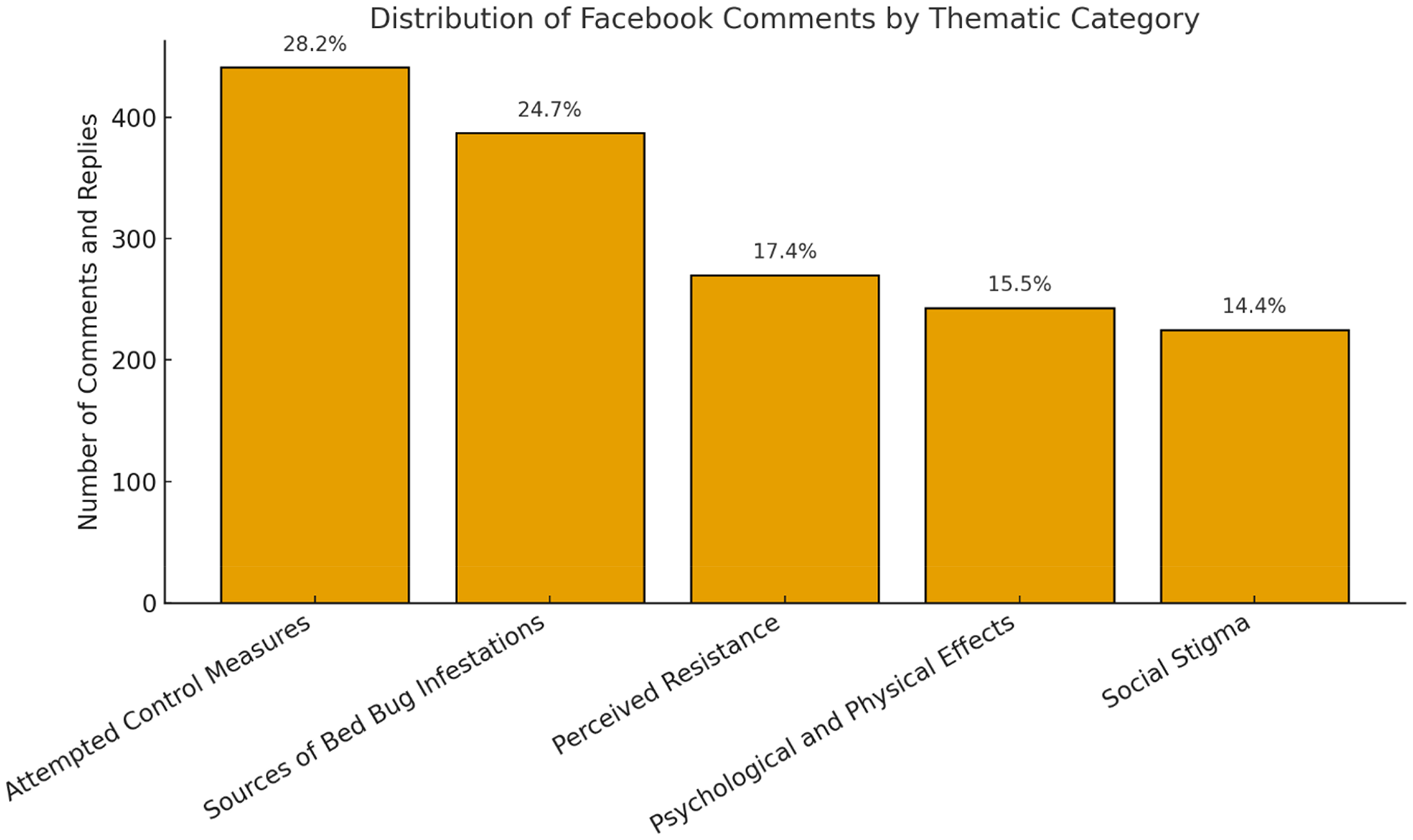
Distribution of Facebook comments and replies by thematic category.
Attempted control measures
Households in Lusaka reported using a wide range of methods (Table 1) to combat bedbug infestations, with chemical insecticides being the most common. One frustrated user remarked, ‘I have sprayed xxx brand so many times, I think the bedbugs now enjoy it’. Another echoed this concern: ‘These chemicals just weaken them; they always come back’. Hot water was cited as a more effective alternative, though labor-intensive. As one person explained, ‘Boiling water works, but it's exhausting, you have to pour it on every crack and crevice’. Others turned to diesel or paraffin despite their downsides, ‘Paraffin works, but now my whole bedroom smells like a petrol station’, one user said.
Attempted control methods for bedbugs.
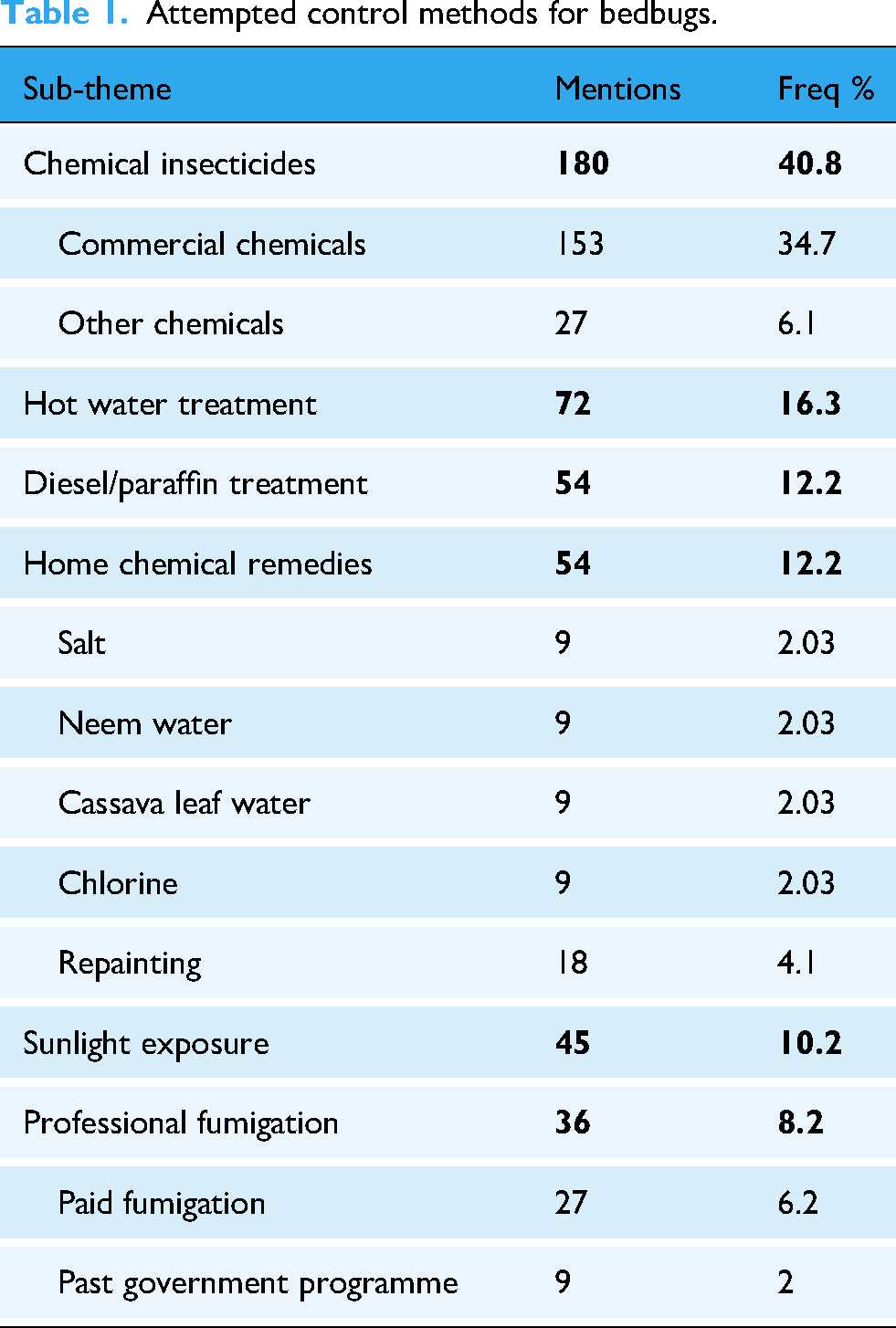
Even professional fumigation services were met with disappointment. ‘Paid so much for fumigation, but in two weeks, the bedbugs were back’, lamented one participant. Heat-based approaches like sunlight exposure also appeared popular, though limited in lasting impact. ‘I put my mattress in the sun; they disappeared … but just for a while’, said one user. In desperation, some individuals experimented with home chemical remedies, such as cassava leaf water. One commenter admitted, ‘Someone told me cassava leaf water works. I tried it, waste of time’.
Sources of bedbug infestations
Most participants linked infestations to public transport, low budget accommodation, social visits, schools, and poor urban hygiene (Table 2). Public transport, travel, and lodges and guesthouses were frequently cited as major pathways for bedbug infestations in Lusaka. One individual complained, ‘These Nakonde buses are the main problem, you come back home, and boom, bedbugs everywhere’ Another echoed this frustration: ‘Intercity bus station is infested. Sit for a few hours, and you carry them home unknowingly’. Travellers also pointed to luggage as a vehicle of transmission, as one person shared, ‘I travelled to Nakonde and came back with more than souvenirs, bedbugs were in my bag’. Guesthouses and lodges were similarly blamed, especially low-cost options. One user noted, ‘Cheap lodges are a nightmare. You pay for a bed and take home an infestation’. Educational institutions were also viewed as sources of re-infestation, particularly during school breaks. As one parent remarked, ‘Each time schools close, these kids bring home more than just their clothes’.
Sources of bedbug infestations in Lusaka.

Beyond institutional and travel-related sources, social relationships and everyday interactions were also affected. One person admitted, ‘I no longer visit people anyhow. You never know where you’ll pick up bedbugs’. Another stated, ‘I started noticing bedbugs after my girlfriend started sleeping over. Now I don't know if it's from her or my neighbours’. Finally, some participants pointed to broader environmental issues, expressing a sense of helplessness in the face of poor urban conditions. As one frustrated voice put it, ‘Lusaka's hygiene is terrible, no wonder bedbugs are everywhere’.
Perceived ineffectiveness of insecticides
Frustration with recurring bedbug infestations was a dominant theme, particularly in relation to the growing ineffectiveness of chemical insecticides (Table 3). One individual remarked, ‘I’ve sprayed everything, even mixed chemicals, but these demons don't die’. Many described how infestations returned despite treatment, shaking confidence in household pest control. As one person observed, ‘After spraying, they disappear for a few days, then suddenly they drop from the ceiling’, illustrating the insects’ elusive behaviour and ability to evade eradication by hiding in crevices. In response to these failures, some individuals reported escalating their efforts through chemical mixing. One commenter noted, ‘I mix three different chemicals now, just to make sure they feel it’. Amid this growing sense of futility, some turned to calls for public health intervention. ‘The government needs to fumigate Lusaka like they did for mosquitoes’, one person suggested.
Perceived persistence to insecticides.

Psychological and physical effects
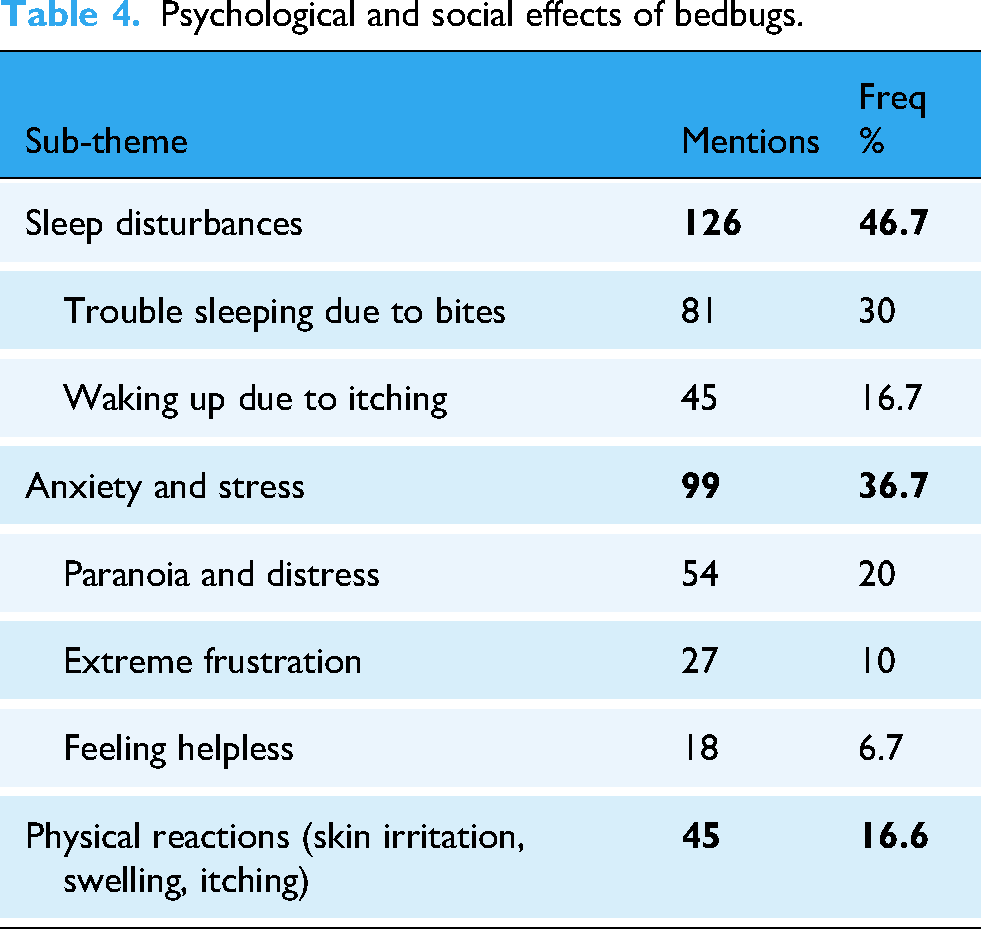
The psychological and physical toll of bedbug infestations emerged as a significant concern, with many individuals reporting sleep disturbances, anxiety, and painful bite reactions (Table 4). Sleep disruption was especially prominent, as one person shared, ‘I haven't slept in peace for months. They bite all night’. Another added, ‘Imagine waking up at 4:30 AM scratching everywhere’. Beyond sleeplessness, infestations were associated with anxiety and heightened stress. A commenter confessed, ‘I check my clothes every time I travel; I don't want to bring them home’. Another stated, ‘At this point, I feel like I need a gun to fight these things’. Physical reactions to bites added another layer of distress. One individual lamented, ‘My body is full of marks. These bites are not just itchy, they’re painful’.
Psychological and social effects of bedbugs.
Social stigma
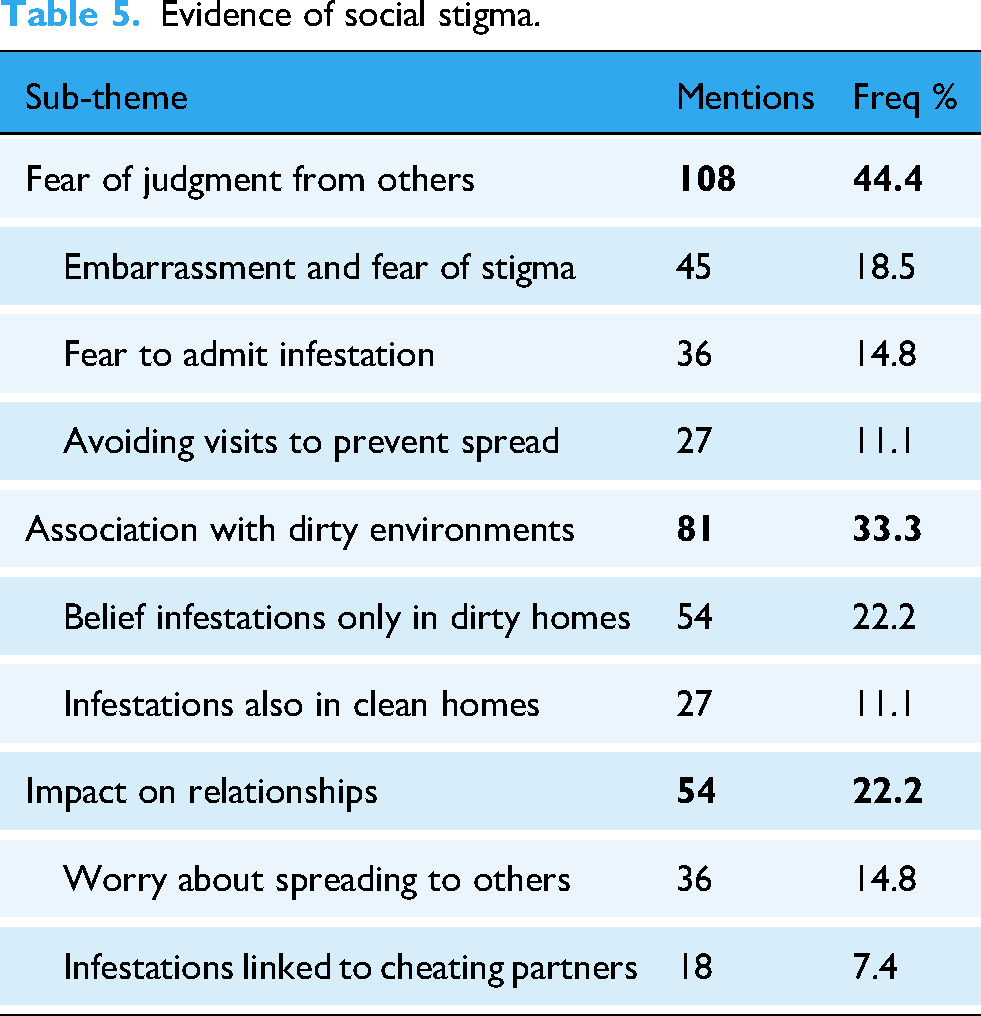
Bedbug infestations were closely associated with social stigma, fear of judgment, and strain on personal relationships (Table 5). A recurring perception was that infestations reflect poor hygiene, leading to embarrassment and silence. As one frustrated individual stated, ‘People act like only dirty homes have bedbugs. That's a lie’. Another added, ‘It's embarrassing to admit you have bedbugs. People will think you’re filthy’. This fear of judgment extended into social behaviours, with people altering how they interact to avoid blame. One person shared, ‘Some of us stopped visiting friends just to avoid spreading them’. These social constraints contribute to emotional distress and a breakdown of normal routines. Intimate relationships were also affected, often marked by suspicion and blame. One user claimed, ‘Some men are bringing bedbugs from their side chicks’ houses’.
Evidence of social stigma.
Discussion
This study explored the scale, sources, coping strategies, and psychosocial impacts of bedbug infestations in Lusaka, Zambia, using Facebook as a source of informal citizen science. The findings provide subtle, community-level insights, absent from formal surveillance systems on bedbugs in Zambia. The findings align with reports from other African settings, where commercial chemicals remain the most frequently used control method. 24 Similar to this study, the use of unproven techniques and risky combinations of chemicals was also common. However, unlike the Kenyan study, which quantified the proportion of people who considered chemicals effective, this study did not establish such percentages. 24 Even so, widespread frustrations with chemical use were clearly evident in the data. Regarding sources and transmission dynamics, participants most frequently identified public transport, particularly long-distance buses and bus stations, as primary sources of infestation, followed by low-cost lodges, schools, and poor urban hygiene. Similar to other studies in Africa, travel and tourism have been cited as the major sources of bedbugs. 25 These observations reflect how structural and environmental conditions may facilitate the spread of bedbugs, especially in low-resource urban settings. These findings suggest the need to consider human mobility and community living patterns in designing bedbug control interventions by public health agencies.2,25
The study also revealed extensive and unsupervised use of chemical insecticides, despite widespread perceptions of their declining efficacy. Many reported that commercial products failed to eliminate infestations, leading to the mixing of multiple chemicals and reliance on unproven alternatives. This is not a new phenomenon as bedbug resistance to insecticides is an emerging concern globally.4,8 This improvisation reflected both desperation and the absence of effective, affordable pest control services and help from local authorities. The effects of a chemical mixture are extremely complex and may differ for each mixture depending on the chemical composition but may range from immediate toxicity to the body and burns in the absence of protective wear to cancer. 26
The psychosocial impact of infestations was pronounced. Many participants described persistent sleep disturbances (insomnia), anxiety, and stress, especially due to night-time biting as previously reported elsewhere.4,5,10,27 Feelings of helplessness, paranoia, and emotional fatigue were common, emphasising the psychological burden associated with recurring infestations. These findings align with global literature documenting the mental health effects of chronic infestations and point to the unavailability of psychosocial support into urban health responses.5,10 Social stigma further complicated the problem of beg bug infestations. Bedbugs were associated with dirty homes, leading to embarrassment, social withdrawal, and strained relationships. A finding that resonates with other studies. 28 Some individuals avoided visiting friends and relatives or disclosing infestations to protect themselves from blame similar to what other reported in other countries.12,28,29 The belief that only unclean households are affected fuels silence and delays help-seeking, which in turn exacerbates the spread. 12 28–30
This study also demonstrates the value of social media as a tool for informal citizen science. Unlike formal citizen science, where public contributions are coordinated by researchers, informal citizen science emerges organically from public discourse. 22 The anonymity and reach of social media enabled individuals to express their frustrations, share solutions, and reflect on their experiences in ways that may not occur in traditional surveys or interviews. These discussions offer timely, community-driven data that can supplement formal surveillance. 21 Importantly, social media analysis may allow researchers and policymakers to monitor emerging health issues in real time, understand public sentiment, and identify gaps in service delivery.19,21 In this context, Facebook served not only as a communication platform but also as a repository of lived experiences, a public health dataset generated by the community itself similar to what was reported in other contexts. 31 Incorporating such data into public health planning could improve responsiveness, guide targeted interventions, and promote inclusive, participatory approaches to health governance. These are meaningful suggestions that have been echoed elsewhere.32,33
Overall, social media may be a valuable tool for public health surveillance of diseases and ailments, enabling rapid detection of outbreaks using real-time, user-generated data.21,34 It may also support health research by facilitating data availability and the wide dissemination of scientific evidence. When well utilised alongside influencers, social media platforms may also play an important role in health promotion and behavioural change, raising awareness of issues such as bedbug outbreaks and what to do, the need for vaccination, cancer screening, sexual health, road safety, and smoking cessation.34,35 For patients, it fosters peer-to-peer health care, may improve access to health professionals by enabling people to share recommendations and information on where they can be found, and provides emotional support. At the policy level, social media enables direct engagement with decision-makers and allows public health advocates to influence laws and campaigns through posts and replies on official public health Facebook platforms.34,36 During live radio shows, citizens may have options to ask public health officials via a radio station's Facebook page without having to call in. Finally, active expert engagement online, though absent in the posts observed in the study, can combat misinformation, boosting fact-checking efforts and improving public trust in health guidance. 37
On the other hand, social media carries significant risks. A major concern is the spread of misinformation and ‘infodemics’, which distort facts, undermine trust in science, and reduce adherence to effective public health measures as seen during COVID-19.34,37 Algorithms and bots often amplify misleading content by creating online environments (echo chambers) where people's existing beliefs and opinions are reinforced by repetition of information within a closed system thereby limiting exposure to dissenting views. 17 In the case of bedbug infestations in Lusaka, people provided misleading and harmful data about bedbug control methods that might have encouraged the use of unsafe or ineffective remedies. These included diesel, paraffin, and the mixing of various commercial chemicals. These approaches not only wasted household resources but also posed health and safety risks, with paraffin use leaving strong fumes and boiling water treatments being labour-intensive and hazardous. Such misinformation illustrates how dangerous unverified advice can be, potentially worsening infestations and delaying access to professional or scientifically backed interventions. More broadly, social media's negatives may include digital exclusion (limited access for many populations) and mental health risks from overuse (anxiety, depression, harmful comparisons). 38
Recommendations
Implement coordinated, city-wide bedbug control programmes: Public health authorities should launch a city-wide bedbug control initiative targeting high-risk areas such as buses, schools, and low-cost lodges. This should include professional fumigation, hotspot mapping, and training for certified pest control providers. A coordinated response may reduce unsafe DIY treatments.
Regulate and monitor insecticide use: Authorities should monitor the use of commercial and DIY mixtures and design educational materials about bedbugs and available safe control options. Educational materials should include the dangers of mixing chemicals.
Integrate mental health and psychosocial support into urban pest response: Mental health support should be included in urban health outreach, with referrals for those experiencing emotional distress. Peer support groups can also help reduce isolation and provide shared coping strategies.
Limitations
The study provided useful insights into the bedbug scourge in Lusaka. However, relying only on Facebook comments excluded perspectives from those without internet access or those who did not see the posts in their feeds. This is similar to our previous findings. 17 To a large extent, this created a non-representative sample, skewed towards a demographic that was both internet-connected and active on Facebook. In addition, the study faced challenges in determining participant gender: Zambian names often overlap between males and females, and many Facebook profiles were locked, making it difficult to verify gender or profession. Even when pictures were visible, they could not be taken as reliable indicators of identity. More broadly, social media analysis is constrained by issues of anonymity, selective self-presentation, and demographic bias, all of which can distort the diversity and authenticity of community experiences. Together, these factors suggest that while social media offers rich, contextual insights, it cannot substitute for more balanced approaches that incorporate interviews, surveys, or field observations for a fuller understanding of public perceptions of public health issues. However, a well-structured study is adequate to cover these insufficiencies and provide a robust report as long as the search items capture all the data. That said, though robust enough to capture bedbug issues in Lusaka, this study could have benefited from more search terms beyond the terms ‘bedbugs’, ‘bedbugs in Lusaka’, ‘bedbugs in Zambia’.
Conclusion
Bedbug infestations in Lusaka present not only a physical nuisance but also a public health concern marked by perceived treatment failure, emotional distress, and social stigma. Facebook proved to be a powerful tool for surfacing these hidden burdens. Public health authorities should consider engaging with social media as part of a broader strategy to detect, understand, and respond to community health challenges.
Supplemental Material
sj-docx-1-dhj-10.1177_20552076251390559 - Supplemental material for Citizen science in public health: Social Media insights into bedbug infestations, control methods and psychosocial effects in Lusaka, Zambia
Supplemental material, sj-docx-1-dhj-10.1177_20552076251390559 for Citizen science in public health: Social Media insights into bedbug infestations, control methods and psychosocial effects in Lusaka, Zambia by Samuel Munalula Munjita, Lungowe Sitali, James Mwanza, Victor Kagoli and Gerald S. Zimba in DIGITAL HEALTH
Footnotes
Acknowledgements
The authors want to thank all the participants in the current study.

Ethical approval
The names of participants contributing to the Facebook content were anonymised using unique codes to ensure complete anonymity, even in the event of unauthorised access. The data were managed in a password-protected Excel sheet stored on a password-secured project laptop. Only authorised members of the research, analysis, and data management team had access to the files. Ethical approval for this study was granted by the University of Zambia School of Health Sciences Research Ethics Committee under Protocol ID: 2023270326.
Contributorship
Samuel Munalula Munjita (SMM): conceptualisation; methodology; data curation; formal analysis; writing–original draft; visualisation; project administration.
Lungowe Sitali: data curation; formal analysis, validation; writing–review and editing.
James Mwanza: writing–review and editing; interpretation of findings related to mental health. Victor Kagoli: writing–review and editing; interpretation of data related policy and public health contextualisation. Gerald S. Zimba: analysis, writing–review and editing; policy and public health contextualisation. All authors reviewed and approved the final manuscript.
Funding
The authors received no financial support for the research, authorship, and/or publication of this article.
Declaration of conflicting interests
The author declared no potential conflicts of interest with respect to the research, authorship, and/or publication of this article.
Data availability statement
The data that support the findings of this study are available from the corresponding author upon reasonable request.
Guarantor
SMM.
Supplemental material
Supplemental material for this article is available online.
References
Supplementary Material
Please find the following supplemental material available below.
For Open Access articles published under a Creative Commons License, all supplemental material carries the same license as the article it is associated with.
For non-Open Access articles published, all supplemental material carries a non-exclusive license, and permission requests for re-use of supplemental material or any part of supplemental material shall be sent directly to the copyright owner as specified in the copyright notice associated with the article.
