




Abstract
Objective
Extended reality (XR), encompassing virtual reality, augmented reality, and mixed reality, has the potential to transform therapeutic practices for individuals facing physical impairments or social isolation. This study aims to explore how XR, when integrated with advanced digital tools and information and communications technologies, can enhance psycho-physical well-being and therapeutic effectiveness, thereby improving quality of life.
Methods
The research focusses on a pre-implementation phase assessing the knowledge and acceptance levels of XR technologies among healthcare professionals and the general population. For healthcare professionals, the study examines their perceived benefits of XR and their expertise in using such technologies to guide its implementation within care pathways. For the general public, the investigation centres on the perceived benefits and opportunities of XR in enhancing daily experiences and overall well-being.
Results
The study facilitates the preliminary definition of user requirements for both healthcare professionals and the general public, supporting the development of relevant scenarios and the identification of suitable XR technologies for therapeutic applications. The findings highlight the essential role of healthcare professionals in integrating XR into therapeutic frameworks while emphasizing the importance of addressing user needs and expectations. The structured methodology provides a foundation for designing an inclusive system that aligns with the needs of both stakeholders.
Conclusion
The successful adoption of XR in therapeutic contexts requires clear definitions, comprehensive stakeholder engagement, and structured implementation pathways. By prioritizing remote access to artistic and recreational activities, XR can be positioned as an essential element of therapeutic care, ultimately contributing to improved patient outcomes and quality of life.
Keywords
Introduction
Background and rationale: Context, actors, and technologies
Context
Physically impaired and socially isolated individuals often face significant barriers in participating in activities that promote participation, social interaction, and overall well-being. 1 These barriers stem from physical limitations, limited mobility, or environmental factors that exacerbate feelings of isolation and limit opportunities for connection. 2 Social isolation has been linked to a decline in mental and physical health, highlighting the urgent need for interventions that support psycho-social and emotional well-being. 3
Traditional therapeutic practices often struggle to address the complexity of these challenges, as they are frequently limited to in-person settings or narrowly tailored interventions. 4 This restricts access to meaningful experiences for individuals who are homebound or lack the resources to participate in community-based programmes. To overcome these obstacles, the integration of advanced digital tools, such as Extended Reality (XR) technologies, into therapeutic frameworks represents an innovative avenue. XR offers immersive environments that can recreate or simulate experiences, providing physically impaired and isolated individuals with access to activities and social interactions that were previously out of reach. 5 However, a key gap remains in our understanding of how such technologies can be effectively deployed to meet the specific needs of these populations.
Research exploring the design and implementation of XR-based interventions for impaired and socially isolated individuals is limited, particularly in understanding how these technologies can enhance therapeutic outcomes and support long-term social inclusion. 6 Addressing this gap requires an interdisciplinary collaboration and a focus on accessibility, user-centred design, and the active involvement of healthcare professionals and end-users. By situating this study within the broader context of technological advancements and therapeutic innovation, we aim to contribute to the development of inclusive frameworks that prioritize engagement, connection, and well-being for physically impaired and socially isolated individuals.
Extended reality and information and communications technology in healthcare and therapeutic practices
Emerging technologies are significantly reshaping the healthcare landscape, making innovative therapeutic solutions increasingly accessible. XR systems, in particular, offer a broad spectrum of potential applications within clinical settings. 7
XR is an umbrella term that embraces all immersive technologies that extend the reality we experience with our senses by either blending the virtual and “real” worlds or by creating a fully immersive virtual environment. It includes augmented reality (AR), mixed reality (MR), and virtual reality (VR).8–12 AR overlays virtual elements onto the real world, enriching perception and interaction. MR goes further by enabling real-time interaction between users and virtual objects within the physical space, enhancing realism and engagement. VR creates fully immersive 3D environments, promoting user presence and interactivity,13,14 (Figure 1).

Extended reality: Meaning, components and definitions.
In the healthcare sector, XR technologies have gained increasing relevance, finding application across a broad spectrum of clinical and therapeutic domains. These include cognitive rehabilitation for individuals with cognitive impairments, 15 the enhancement of sleep health, 16 and the treatment of conditions such as pruritus. 17 XR has also been widely adopted in the management of chronic pain. By immersing patients in calming and interactive virtual environments, these technologies help divert attention away from painful stimuli, thereby reducing – and in some cases even eliminating – the need for pharmacological interventions.18–23 The benefits of XR are especially notable for individuals with limited mobility or those experiencing social isolation, for whom traditional therapeutic approaches may be less accessible or effective.
For patients with mobility impairments, XR-based interventions offer a novel and effective means of participating in physical and therapeutic activities. These virtual experiences can be personalized to align with each individual’s unique needs and capabilities, facilitating a tailored rehabilitation process that promotes physical recovery, enhances motor function, and fosters greater independence. Numerous studies have underscored the positive impact of XR applications in motor rehabilitation. In the context of chronic neurological disorders such as Parkinson’s disease and Alzheimer’s disease, XR technologies support neuroplasticity by offering stimulating and contextually relevant exercises coupled with real-time feedback, presenting innovative alternatives to conventional therapeutic approaches. 24 Notably, VR training has demonstrated superior outcomes compared to traditional methods in improving upper limb motor function, performance in activities of daily living, and postural balance during post-stroke rehabilitation. 25 XR technologies have also proven valuable in assisted rehabilitation and injury prevention strategies, particularly in sports medicine. They provide clinicians with tools to identify and address biomechanical risk factors associated with common injuries, allowing athletes to practice safer, protective movement patterns more effectively. 26 Furthermore, the immersive nature of XR enhances patient engagement, making physical exercises more enjoyable and less repetitive. This can significantly improve adherence to long-term rehabilitation programmes. 27 Moreover, the integration of XR into healthcare also demands the development of new paradigms for human-computer interaction, moving beyond traditional input methods such as keyboards, mice, and touchscreens. In these immersive environments, users are no longer constrained by conventional interfaces; instead, they can interact more naturally, even when facing physical limitations. This inclusivity allows broader participation in therapeutic and rehabilitative activities, making XR a powerful tool in advancing equitable access to care.
Physical impairments not only restrict physical movement but often result in social isolation, particularly as symptoms progress. 28 This sense of loneliness can further exacerbate mobility limitations, creating a self-reinforcing cycle in which a reduced ability to leave one’s home deepens emotional and social isolation. Previous studies have demonstrated that participation in digital communities can significantly alleviate feelings of loneliness, isolation, and stigma.28–32 In this context, XR technologies hold considerable promise for addressing the multifaceted needs of socially isolated individuals, including older adults, patients with chronic illnesses, and individuals confined to their homes or care facilities due to physical or medical conditions that limit their engagement in everyday social and physical activities. 33
Beyond physical rehabilitation, XR can also contribute meaningfully to improving social engagement. For instance, AR applications have been shown to facilitate social interaction in individuals with autism spectrum disorder by supporting meaningful social exchanges and enhancing communication skills.34,35 More broadly, XR platforms can help mitigate the psychological burden of isolation by creating immersive virtual environments that simulate social and community settings. These environments foster a sense of connection and emotional support that is vital to maintaining mental well-being. Additionally, XR-based therapeutic environments–designed to be immersive, accessible, and controllable–can support gradual exposure to anxiety-inducing situations in a safe manner, offering effective interventions for a range of phobias and anxiety disorders.36,37
The role of healthcare professionals in the digital health revolution
Since patients may experience overstimulation, auditory discomfort, motion sickness, and face potential risks such as addiction and privacy concerns, 38 the successful implementation of XR technologies requires the active participation of the entire healthcare team. The knowledge of the individual characteristics of the patient and the possible adverse effects of XR interventions is crucial for accurately identifying suitable candidates and ensuring the safe and effective integration of these technologies into therapeutic practice. Thus, interdisciplinary collaboration among technology experts, clinicians, and caregivers is essential to fully harness the benefits of these innovations.
Nurses play a fundamental role in healthcare systems worldwide, serving as key providers of personalized care through their deep understanding of patients’ needs, concerns, and preferences. 39 As intermediaries between patients and the increasingly complex world of healthcare technology, they act as ‘agents of change’, 40 fostering trust and promoting ethical, patient-centred adoption of innovation. 41 Their ability to form strong therapeutic relationships makes them essential in facilitating the integration of new tools, including remote care solutions that improve access and reduce patient isolation. Furthermore, nurses have long demonstrated adaptability by incorporating complementary and alternative therapies into their practice, reflecting a holistic and flexible approach to patient well-being. 42
In addition to nurses, physiotherapists are fundamental in modern healthcare, contributing significantly to restore movement, improve function, and promote overall well-being. Their personalized approach allows for close monitoring of patient progress and the continuous adaptation of therapeutic interventions to the individual’s needs. 43 As healthcare increasingly adopts technologies such as XR and information and communications technology (ICT), physiotherapists are well positioned to support their effective and patient-centred integration. Although awareness of therapeutic XR remains limited in certain contexts within the physiotherapy community, these professionals have demonstrated a growing interest in integrating such technologies into their practice. 44 By incorporating XR and ICT into rehabilitation pathways, physiotherapists can enhance patient engagement and facilitate recovery in more accessible, motivating, and scalable ways.
Digital innovation for inclusive cultural engagement
Within the broader context of disability and social isolation, art and cultural heritage initiatives have increasingly embraced technology to provide more accessible and meaningful experiences. Emerging evidence indicates that interactive, art-based interventions, particularly those incorporating VR and AR, can significantly enhance emotional and social well-being, foster a sense of belonging, and stimulate both cognitive and sensory engagement among individuals with diverse needs.45,46 Such initiatives not only support individuals with physical or cognitive impairments but also play a crucial role in challenging stigma and promoting greater social cohesion within communities. 47
In recent years, efforts to make cultural heritage more accessible have given rise to an increasing number of innovative initiatives aimed at fostering inclusion and engagement among diverse audiences. One notable example is the work undertaken by the National Archaeological Museum of Naples, 48 which has implemented a range of tools and activities designed to enhance accessibility. These include video tutorials, virtual video tours, and autism-friendly VR experiences for children, all of which are made available to the public. Similarly, the ”Includiamoci” project was designed to foster social inclusion through XR and art therapy workshops tailored for young people and adults with cognitive disabilities. The initiative led to the creation of a virtual museum featuring participants’ artworks, as well as a digital stage design for a theatrical performance. 49 Another significant example is Agnano RiVive, an immersive VR application developed for the Museum of Preclassical Civilizations of Southern Murgia in Ostuni. This project enables users to virtually explore a reconstructed Upper Paleolithic settlement and interact with ancient artefacts in an engaging and accessible way. 50 In addition, White and colleagues 51 developed the ARCO system, an integrated platform for the digitisation, management, and presentation of cultural artefacts. This system supports both VR and AR exhibitions, offering a comprehensive solution for enhancing access to cultural heritage through immersive technologies.
These initiatives highlight the potential of digital technologies to foster inclusive, personalized cultural experiences, showing how institutions use tools like VR and AR to promote equity, access, and social inclusion.
Our contribution
Despite their potential to improve therapeutic outcomes and promote social inclusion, XR technologies still face significant gaps in research and application, particularly in cultural interventions for individuals with physical impairments or social isolation.
Existing studies often lack a well-structured design process grounded in a comprehensive analysis of the individual and collective needs of participants, which is essential to ensure that interventions are tailored to the specific needs of each user group. This approach may hinder the development of truly inclusive and effective solutions capable of addressing the cognitive, sensory, and emotional challenges faced by individuals with varying disabilities. Moreover, no research to date has adopted a broader approach that involves not only the individuals themselves but also the healthcare professionals supporting them, particularly in settings such as hospitals or long-term care facilities.
Our research explores the development of an inclusive XR-based system designed to leverage cultural interventions to support individuals with physical impairments or experiencing social isolation. By providing remote access to artistic and recreational activities, the system aims to integrate these experiences into patient care pathways as essential elements of therapeutic support, ultimately enhancing psycho-physical well-being. Central to this approach is the active involvement of healthcare professionals, particularly nurses and physiotherapists, whose expertise is crucial in tailoring and implementing XR interventions that meet the specific needs of each patient group and maximize therapeutic outcomes.
Specifically, this paper focusses on the pre-implementation phase of XR integration in healthcare, with the aim to assess the knowledge and acceptance levels of XR technologies among healthcare professionals (nurses and physiotherapists) and the general population, both considered potential end-users. For professionals, the study examines how their perceptions and experience with XR can inform its integration into patient care. For the general public, the focus is on evaluating the perceived benefits and opportunities these technologies may offer to improve day-to-day experiences and overall well-being.
The approach begins by examining the context, key stakeholders, and relevant technologies, establishing a rationale for XR integration in healthcare. Through a preliminary needs assessment, we identify potential use cases and user requirements. Methods include a comprehensive analysis of public perceptions and healthcare professionals’ knowledge of XR technologies, gathering qualitative data through questionnaires, which will inform the technological design and implementation strategies. Results are presented visually to highlight user needs and preferences, along with selected XR use cases and candidate technologies aligned with those needs. The discussion evaluates the implications of these findings, considering specific user groups, potential barriers to user adoption, and necessary planning actions for effective implementation.
Ultimately, this research underscores the importance of user-centred design and the active role of healthcare professionals in adopting XR as a therapeutic tool to promote social inclusion and improve quality of life.
Methods
The methodology used to design an inclusive system that combines XR and ICT technologies to improve individuals’ psycho-physical well-being and enhance therapeutic outcomes is illustrated in Figure 2. The approach taken during the pre-implementation phase of system design and development focusses on evaluating the knowledge and acceptance levels of both healthcare professionals and the general population. This process facilitates the preliminary definition of user requirements (for both the general public and healthcare professionals), the development of relevant scenarios, and the identification of potential candidate technologies.

Illustration of the phases and steps of the methodology adopted for integrating XR and ICT technologies into therapeutic frameworks. ICT: information and communications technology; XR: extended reality.
The methodology consists of the following steps:
Concept of the XR inclusive system for therapeutics practices definition. Definition of questionnaires for the general public and healthcare professionals. Data collection from questionnaires. Data analysis. User requirements definition. Scenarios selection and definition. Potential candidate technologies identification.
As shown in Figure 2, the steps of the pre-implementation phase can be grouped into preparation, execution and preliminary results subphases and they constitute the inputs for the future development and validation of the system. Each step is detailed below.
Concept of the XR inclusive system for therapeutics practices definition
The first step was represented by the definition of the concept of a hypothetical system including XR and ICT technologies that can allow people with disabilities or socially isolated to experience remote artistic and recreational activities. This allows the multidisciplinary team involved in this study to share a better understanding of the future result this preliminary investigation will lead to.
Definition of questionnaires for healthcare professionals and the general public
The second step of our methodology consisted in the creation of two customized questionnaires designed to evaluate the knowledge, awareness and adoption levels of XR technologies for immersive artistic and recreational experiences among both the general public and healthcare professionals. These questionnaires were developed based on questionnaires from previous studies that explored XR applications and awareness among the general public and healthcare providers.52–56 A structured process involving expert consultations and focus groups was carried out to ensure content validity and clarity. Prior to dissemination, internal consistency was assessed through reliability checks, which enabled refinement of the items without the need for a full-scale pilot or internet-based survey framework. The questionnaire for the general population comprised a total of 22 questions, while the questionnaire for healthcare professionals included 12 questions. Both questionnaires consisted exclusively of close-ended questions (please refer to the Supplementary Material for more details).
Among healthcare professionals, we chose to include nurses and physiotherapists due to their frequent and direct interaction with patients who are more likely to face mobility limitations or social isolation, conditions where XR-based interventions may have the greatest potential to make a significant impact. This approach allowed us to collect information from professionals who work closely with the target patient groups, thereby guiding the direction of the study.
Healthcare professionals were asked to respond with a focus on their role as facilitators or supporters in integrating immersive experiences into broader therapeutic or care pathways, considering how XR technologies could benefit therapeutic processes. The general population, on the other hand, was instructed to respond from the perspective of their own health and personal experience, focussing on the potential impact on their well-being.
Specifically, the proposed questionnaires first gathered demographic and professional characteristics of sample groups. For the general population, demographic data collected included age, gender, living area, household composition, employment status, and level of education. Demographic and professional data collected for healthcare professionals included age, gender, professional profile (nurse or physiotherapist), and years of working experience. Questionnaires also included a series of questions that can be categorized by theme and objective as follows:
Health self-assessment and activity engagement: This category was designed to collect information on the general population’s perceived health status, the frequency with which they leave their homes, the extent to which health issues (mobility issues, pain, psychological discomfort, etc.) limit their participation in activities, and their involvement in remote activities (online games, phone calls, video lectures, video conferences, etc.). Self-reported knowledge and awareness on the use of XR technologies: This category aimed to evaluate both general population’s and healthcare professionals’ self-reported knowledge and awareness of immersive experiences designed for remote engagement in cultural and recreational activities, specifically through XR technologies. Questions for both groups assessed whether participants had ever heard of XR technologies for remote engagement in cultural and recreational activities, as well as their current level of knowledge regarding the use and potential benefits of these technologies. To facilitate participants’ understanding, we included a brief description in the questionnaire to explain what immersive experiences are and the technologies involved in experiencing them. Perception of the benefits of immersive experiences: This section aimed to understand the general population’s and healthcare professionals’ perspectives on the potential benefits of XR technologies within therapeutic contexts. Questions explored whether engaging remotely in immersive experiences would enhance a sense of involvement and motivation within a therapeutic context, as well as improve therapy efficacy and overall health. Previous experience with XR and interest in training and research involvement: This category focussed on collecting information about the general population’s and healthcare professionals’ previous experience with XR technologies. Both groups were also invited to indicate their interest in receiving specific training on the use of XR and in joining research studies related to immersive technology. Personal interest in specific immersive experiences: This category aimed to gather insights into the general population’s interest in various types of immersive cultural and recreational experiences, which the authors hypothesized could promote inclusion and engagement, particularly in artistic contexts such as the city of Florence. This information aimed to inform the development of targeted application scenarios aligned with user interests. Motivation and perceived engagement with immersive experiences: This category was designed to assess the general population’s and healthcare professionals’ motivation and expected engagement with immersive cultural and recreational activities facilitated by XR technologies. Questions addressed the likelihood of recommending or intending to use these technologies, and confidence and enjoyment in utilizing them. This information was intended to provide insights into how XR experiences could foster engagement and satisfaction across different user profiles.
Data collection from questionnaires
The third step was the collection of data from the questionnaires. Specifically, the data were collected in July 2024. Two different digital questionnaires were sent out to respondents using the snowball sampling method. A small group of people was initially contacted by the authors: people who meet the inclusion criteria (being nurses, physiotherapists, and general population) and asked to answer the questionnaire and to recruit other participants, creating a recruiting chain. This method is particularly useful when trying to reach groups of population of whom we do not have a comprehensive list.
Snowball sampling may introduce selection bias, particularly by overrepresenting participants from the same professional or social networks. To mitigate this risk, the following measures were implemented: (i) Diversified entry points, where the snowball process began from multiple independent starting nodes (e.g., different hospital departments, academic contacts), reducing the likelihood of an overly homogeneous respondent pool; and (ii) descriptive monitoring, where participant characteristics (e.g., age, gender, professional role) were tracked throughout the collection process to assess representativeness and adjust dissemination strategies as needed.
The objective of the two questionnaires was to collect data and insights for a study examining the impact and applications of XR technologies. Participation was entirely voluntary, with assurances of anonymity and confidentiality to safeguard respondents’ information. The data collected was intended strictly for research purposes, contributing to a broader publication on XR.
Data analysis
The fourth step consisted of the analysis of the data gathered through the questionnaires, following a multidisciplinary approach. Beyond gaining an initial understanding of XR technologies and the interest in participating in this integrated therapeutic approach, this analysis provided a preliminary basis for defining the system’s key user requirements. It also facilitated the selection and definition of specific use cases that could potentially be tested in the near future to validate the system.
User requirements definition
The fifth step was represented by the definition of the user requirements. These are a key element for the identification of the system requirements that will be considered in the design phase. The user requirements took into account the user acceptance level and XR knowledge as emerged from the questionnaires together with the multidisciplinary expertise of the team.
Scenarios selection and definition
The sixth step involved the identification of specific experiential scenarios suitable for implementing the inclusive XR system. These scenarios were defined with consideration of their potential therapeutic benefits, particularly for individuals experiencing physical impairments or social isolation, by integrating these experiences into their care plans. The selected scenarios together with the user requirements represent the basis for the system design and validation.
Potential candidate technologies identification
The seventh step consists of a preliminary identification of the technologies that might be included in the proposed system in order to implement the key elements based on the identified user requirements and the selected scenarios.
Results
Results from questionnaires
The present study gathered data through structured questionnaires administered to a sample of the general population and healthcare professionals. In total, 517 individuals were invited to participate in the questionnaires, comprising 137 people (26.4%) from the general public and 380 (73.5%) from the healthcare sector. Of these, 33 participants of the general population and 89 of the healthcare professionals successfully completed the questionnaires, resulting in overall completion rates of 24.1% and 23.4%, respectively. The demographic and professional characteristics of each sample group are presented in Tables 1 and 2, corresponding to the general population and healthcare professionals, respectively.
Description of the general population sample (33 participants in total).

Description of the healthcare professionals sample (89 participants in total).

Among respondents, the age group most represented within the general population sample was 20–30 years (30.3%), while in the healthcare professional cohort, the predominant age range was 51–60 years (40.5%). Gender distribution was similar across both groups, with females constituting the majority (81.8% of the general population and 75.3% of the healthcare professional sample), indicating a notable gender imbalance. Within the general population group, a significant majority resided in urban areas (81.8%) and lived with family members (72.7%). Half of these respondents were employed (51.5%) and a considerable proportion were retired (45.5%). Educational levels were high, with 36.4% holding a master’s degree. Regarding the healthcare professionals, the largest professional subgroup was nurses, accounting for 59.6% of the sample. The majority had extensive working experience, with 56.2% reporting 21–30 years of professional practice. After detailing the characteristics of the samples, the following part presents the results from the questionnaire related to immersive experiences.
Most participants of the general population rated their health status as good (45.5%), with a considerable portion indicating average health (36.4%) and none reporting poor health (Figure 3). Additionally, over half of participants reported leaving their homes daily (69.7%), while a smaller portion did so frequently (24.2%). Only a few reported leaving their homes sometimes or rarely (3.0% each), and none reported never leaving their homes. A substantial majority of respondents (48.5%) rarely had to decline participation in activities due to health issues, while a smaller group (6.1%) encountered this challenge frequently, with none experiencing it daily. In terms of remote activity participation, 36.4% of respondents engage in these activities occasionally, while 18.2% participated daily. By contrast, 12.1% never or rarely took part in remote activities (Figure 4).

Self-assessed health status among participants in the general population group, indicating the percentage distribution across excellent, good, average, below average, and poor health ratings.

Frequency of outdoor activity, activity limitations due to health issues, and remote participation among participants of the general population.
With regard to self-reported knowledge and awareness on XR technologies for remote cultural and recreational activities, 43.8% of the general population and 48.9% of healthcare professionals indicated having heard of these technologies only sometimes, while 25.0% of the general public and 10.2% of healthcare professionals had never heard about them (Figure 5A). Most participants in both groups rated their current knowledge of XR technology usage as poor (48.4% for the general population, 40.5% for healthcare professionals), with a considerable percentage perceived their knowledge as very poor (29.0% for the general population, 33.7% for healthcare professionals) (Figure 5B). Similarly, understanding of the benefits of XR technology remains limited, with 37.5% of the general population and 37.1% rating their understanding as poor (Figure 5C).
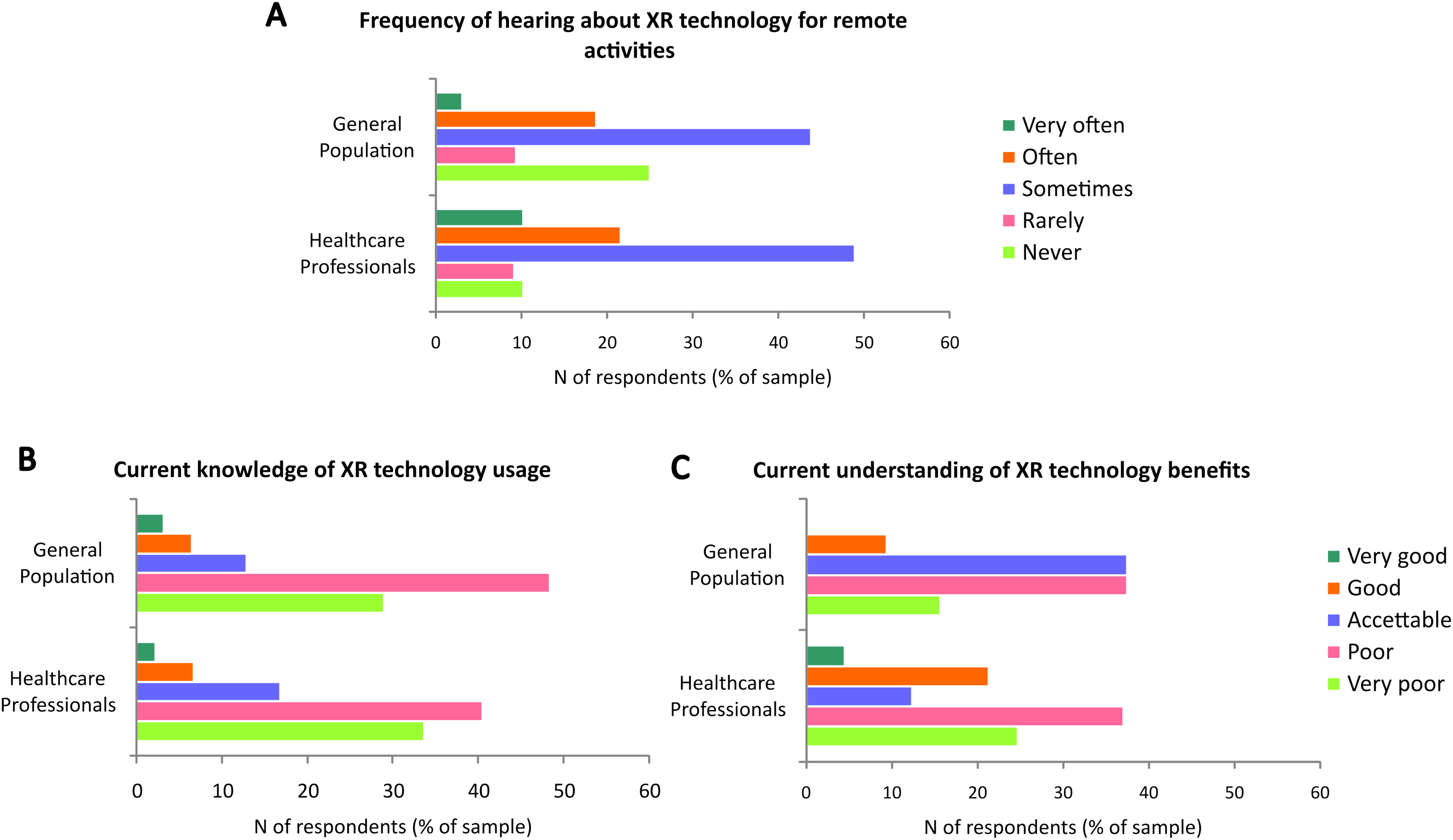
Self-reported knowledge and awareness on extended reality (XR) technology being used for remote cultural and recreational activities: (A) Frequency of hearing about XR technology, (B) current knowledge of XR technology usage, and (C) current understanding of XR technology benefits.
There was general agreement that using XR technologies would enhance engagement and motivation in therapy (43.8% for the general population and 40.9% for healthcare professionals), with 40.7% of general population and 47.2% of healthcare professionals agreeing that such experiences could improve therapy efficacy and overall health (Figure 6A, B).

Perceived benefits of extended reality (XR) technologies for engagement and motivation in therapy (A) and health improvement (B).
Previous experience with XR technologies is minimal, with 71.9% of the general population and 58.6% of healthcare professionals reporting that they have never used them (Figure 7A). Moreover, most participants had never attended workshops or received training on XR technology (81.3% of the general population and 74.2% of healthcare professionals) (Figure 7B). However, there is moderate interest in receiving XR technology training (81.3%) and participating in XR research applications (40.3%) among the general population, with healthcare professionals also expressing significant interest in these experiences (40.5% for training and 33.7% for research) (Figure 7C, D).

Previous experience with extended reality (XR) technology and interest in future engagement: (A) Technology usage, (B) workshops or training attendance, (C) interest in training, and (D) interest in research participation.
The general population also expressed preferences for various immersive experiences. Virtual tours with interactive environments (40.0%) and libraries with 3D video content (21.5%) were the most appealing, followed by interactive simulations and games (18.5%) and AR headsets (16.9%). Immersive podcasts were the least favoured (3.1%) (Figure 8). All proposed specific immersive cultural and recreational activities received considerable interest. Notably, the highest ‘very interested’ rating was for participating in virtual guided museum tours (43.8%), followed by self-guided virtual museum tours and virtual exploration of Florence’s landmarks (both at 40.6%), engaging with virtual artworks (37.5%), and participating in interactive events (34.4%) (Figure 9).
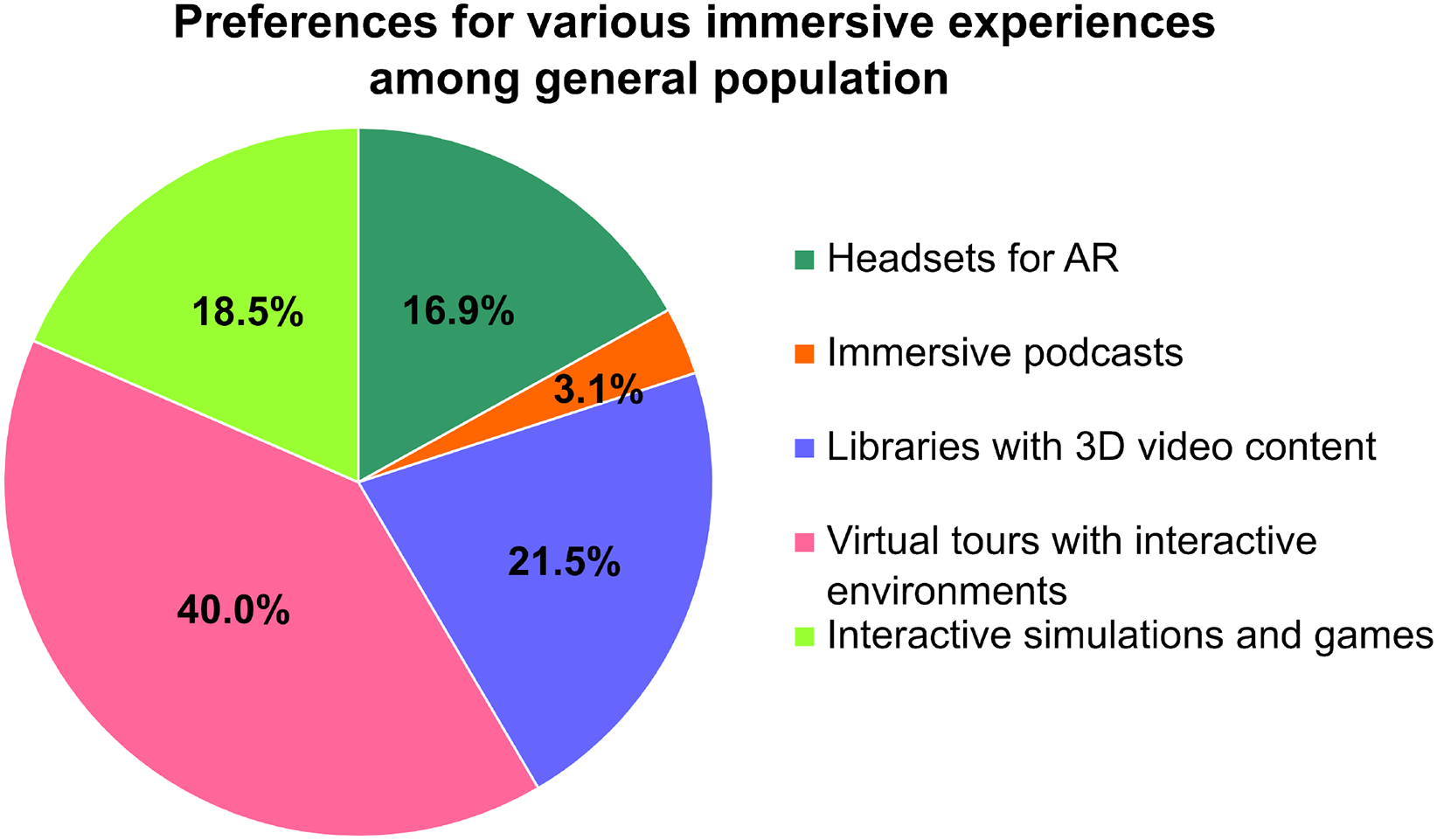
Preferences for different types of immersive experiences among the general population.

Interest in specific immersive cultural and recreational activities among the general population.
If participants had access to XR technologies, 53.2% of the general population (43.6% agree, 9.4% strongly agree) and 78.4% of healthcare professionals (55.7% agree, 22.7% strongly agree) would recommend or intend to use them (Figure 10A). Most participants agreed that using XR technologies would be easy (43.8% for the general population and 51.5% for healthcare professionals) and enjoyable (53.1% for the general population and 56.8% for healthcare professionals) (Figure 10B, C).

Motivation and perceived engagement with immersive experiences: (A) Recommendation or intended use, (B) ease of use, and (C) enjoyment of use.
User requirements definition based on questionnaires data
Based on questionnaires’ responses of the general population, it was possible to identify a series of user requirements for the optimal development of our system:
Accessibility and inclusivity: Remote accessibility, especially for users who have difficulties in leaving their homes, such as those with physical disabilities; user-friendly interfaces; support for multiple devices (VR headsets, smartphones, tablets, etc.) suitable for users with different needs and capabilities. Cognitive and educational benefits: Integrate content that stimulate learning and memory; provide cultural experience with educational value; offer content that allow users to stay updated on recent events; specific sessions for leisure and free time. Emotional engagement: Content should stimulate positive emotions, help to stay motivated, encourage creativity and interest in life. Social connection and inclusion: Tools should facilitate communication between users in order to exchange ideas; incorporate shared events to create a point of convergence between users with common interests; enable events that are difficult to reach, such as exhibitions or concerts held in different cities; participation with minimal effort; personalized schedule for selecting events of interest.
Users’ requirements identified from the questionnaire for healthcare professionals were:
Psychological and emotional well-being: Provide content and experiences that support mood, reduce anxiety and offer distraction from pain and discomforts; provide content that suggest a sense of calm and well-being, and mitigate symptoms of depression. Cognitive benefits: Provide content that enhances cognitive skills (memory, attention, problem-solving). Social connection and inclusion: Implement features that allow patients to experience inclusion and interaction with others; share experiences with people having similar interests. Accessibility and adaptability: Platform designed to be accessible by individuals with severe motor impairments, including support for use from different positions or via adaptive devices; allow users to participate according to their convenience; stimulate multiple senses or residual functionality; system used in various settings, from home settings to hospital rooms. Practical benefits: Incorporate features that track patient choices, interests and behaviours within the virtual environment for subsequent analysis.
To enhance clarity and better reflect the prioritization of user needs, the identified requirements were categorized and assigned a priority level based on survey findings (Table 3). The prioritization follows a three-tier scale (High, Medium, Low), determined by the frequency of mentions in the survey and their impact on system usability.
Summary of user requirements.

Identified scenarios
The analysis of the data gathered through the questionnaires testify both the users’ need of inclusive experiences and the interest in participating in immersive cultural activities. This allowed the selection and definition of some specific use cases that potentially can be tested in the near future in order to validate the ideas expressed in this paper empirically.
An output of the data analysis derived from the questionnaires has led to the refinement of the immersive activities initially proposed by the authors to promote inclusion and engagement, and to the identification of specific experience scenarios that can be implemented using XR technologies. These experiences could be significantly beneficial for impaired and socially isolated individuals when integrated into their therapeutic plans. The definition of these use cases was carried out by the involvement of Opera di Santa Maria del Fiore, serving as a content provider. In details, five specific scenarios were defined for XR application within the context of the Opera del Duomo Museum:
Guided virtual museum navigation
The virtual tour of the Opera del Duomo Museum provides an innovative and immersive experience for both individual visitors and groups. Utilizing XR technology, users can explore the museum by navigating through a meticulously reconstructed virtual environment that mirrors the actual museum galleries and enjoy the artworks. This experience is further enriched by the inclusion of a virtual guide, which enhances interactivity and offers a customized experience. Additionally, this functionality enables the presentation of previously unseen pieces and artworks that are currently not on display due to restoration or temporary exhibitions at other institutions. This option is already available and can be found on the Opera’s website.
Autonomous virtual museum exploration
This functionality provides an exceptional opportunity for independent exploration of the Opera del Duomo Museum galleries. Visitors have the freedom to navigate virtual galleries or digitized sections of the museum at their own pace, selecting content according to their personal interests. This feature also permits those who have previously engaged in a guided virtual tour to revisit specific areas of the museum autonomously, thus allowing for a deeper engagement with the exhibits. By offering this degree of autonomy, the museum significantly enhances the visitor experience, facilitating a more personalized and self-directed journey through its collections. This option is already available and can be found on the Opera’s website.
Virtual interaction with artworks
The virtual tour of the Opera del Duomo Museum can also offer an advanced and immersive experience by enabling detailed interaction with individual artworks. By providing virtual proximity to artworks, visitors can thoroughly examine these pieces, transcending the physical distance constraints imposed for the safety and preservation of the objects. Users can access comprehensive content related to the artworks, including in-depth information about the artists, historical context, and techniques used in their creation. Each sculpture within the museum will be digitized to obtain a three-dimensional model, which can be explored in full relief, even from perspectives that are physically inaccessible in the real space. Paintings will be scanned and represented within various frames distributed throughout the virtual exhibition space. Additionally, digital visualizations will facilitate the representation of lost or damaged elements, such as, for example, the reconstruction of a missing sword from a statue. Furthermore, both 2D and 3D animations, along with specific auditory elements for each painting, will be incorporated. A close-up interaction with artworks would encourage visitors to pay attention to specific details, understand their meaning, and relate to the overall artwork, contributing to guide the audience in learning how to observe and understand art. Thus, the creation of educational workshops will facilitate a more intuitive and accessible understanding of the museum’s collections and significantly enhance the overall visitor experience. Figure 11 provides a visual representation of this possibility, illustrating a scenario where a person with mobility issues can use a VR headset to engage in immersive interactions with individual artworks.
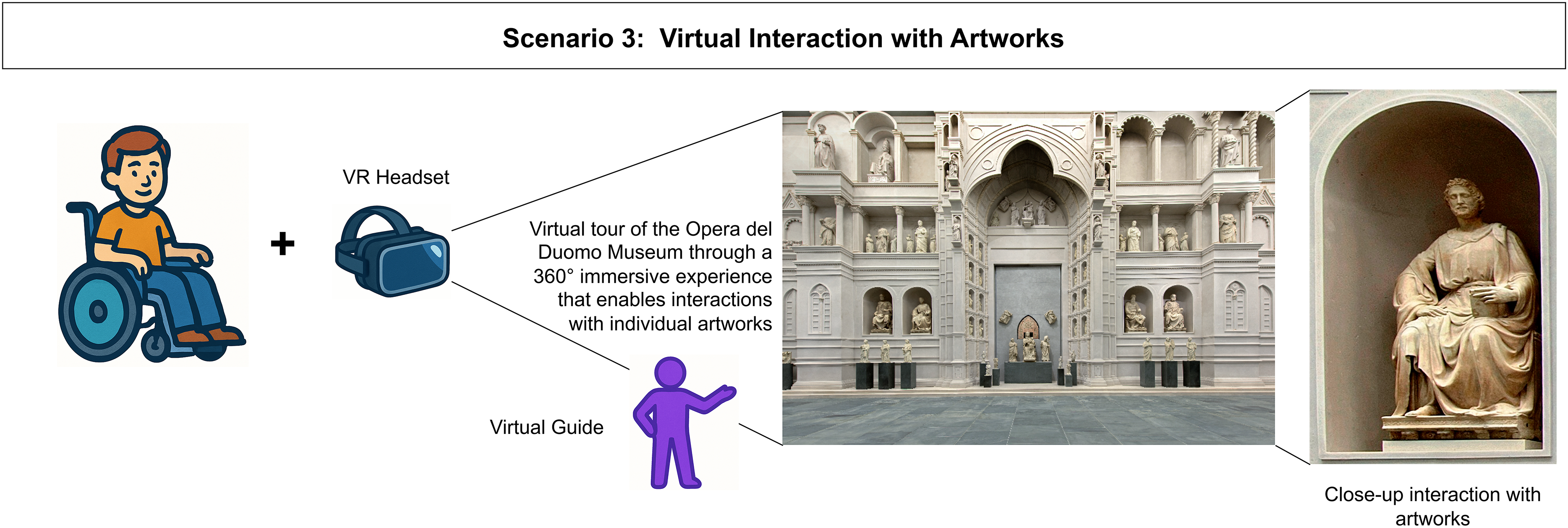
Scenario representing the use of a virtual reality (VR) headset for an immersive experience that enables interactions with individual artwork. Photographic Credits: Antonio Quattrone, courtesy of Opera di Santa Maria del Fiore.
Virtual hub for community involvement and artistic innovation
The virtual model of the Opera del Duomo Museum may incorporate a dedicated room designed as a virtual literary café, intended to facilitate remote engagement and active participation in a broad spectrum of artistic events. This virtual space would serve as a platform for the exploration and discussion of artistic works, including events that provide insights into the history of a piece or its creation techniques. In addition, it would host a variety of cultural activities such as virtual book presentations, online concerts, and thematic discussions on shared interests. The primary goal of this virtual café is to connect individuals with common interests, promoting meaningful dialogue and fostering social interaction and inclusivity. By doing so, it aims to alleviate feelings of loneliness and isolation. Figure 12 provides a visual representation of this possibility, illustrating a scenario where remotely connected people can use a VR headset to engage in a virtual community, in which the moderating presence of a virtual expert enables a discussion on the topic of interest.

Virtual reality (VR) Hub for community discussions on the artistic topic of interest. Photographic Credits: Fabio Muzzi, courtesy of Opera di Santa Maria del Fiore.
Virtual insights into the cultural heritage of santa maria del fiore cathedral and baptistery
A virtual immersion into Florence’s wonders offers a unique and unparalleled experience. Participants can enjoy virtual tours of the ascent to the Dome and Giotto’s Bell Tower of the Santa Maria del Fiore Cathedral, using immersive 360° technology, as displayed in Figure 13. This provides a singular opportunity to admire the panoramic views from above without physical constraints. Additionally, detailed 3D immersive guided videos of the Baptistery’s panels allow for an in-depth exploration of its intricate art and craftsmanship, offering insights that might be missed in a traditional visit. The experience digitally reconstructs the virtual space of the bas-relief, explored following the narrative sequence, and is enhanced by a narrating voice and the animation of some elements. This immersive experience enhances accessibility, providing educational value and convenience to a global audience, and fostering a deeper appreciation for Florence’s rich cultural heritage.

Virtual insight via virtual reality (VR) headset into two of the most visited Florence sites: the Dome and the Baptistery of Santa Maria del Fiore. Photographic Credits: Fabio Muzzi and Antonio Quattrone, courtesy of Opera di Santa Maria del Fiore.
Potential candidate technologies for our system
As outlined in Step 7 of the methodological framework (see Figure 2), the following overview of potential technologies is grounded in the user requirements and application scenarios previously identified, and serves as a preliminary selection of candidate solutions to be considered in the future design and implementation phases.
The potential of ICT tools within XR applications is significant for promoting social inclusion among individuals with mobility impairments or social isolation. XR-based systems can create immersive virtual spaces, allowing users to remotely engage in recreational and artistic activities from their homes as part of a therapeutic programme. This therapeutic use of XR not only provides emotional support but also facilitates social interaction, which can be continuously monitored through advanced sensor technologies, enhancing both the experience and the assessment of the therapeutic impact.57,58
Incorporating wearable and non-contact sensors enables real-time monitoring of participants’ emotional states and physiological responses to specific XR activities. These sensors can collect data on key physiological metrics, such as heart rate, skin conductance, and body temperature, which can provide valuable insights into emotional engagement and stress levels. Additionally, motion sensors can capture body movement, offering a more complete view of the user’s experience.57,59–62
Data collected through sensor systems can be processed by artificial intelligence (AI) algorithms to detect patterns, adapt the XR system to better meet user needs, and optimize therapeutic outcomes.63,64 The integration of sensor systems and AI algorithms has significant potential to dynamically adapt XR-based activities to individual’s emotional responses, tailoring content and interactions to better support the therapeutic goals. Such a system not only enhances user engagement but also provides healthcare providers with a real-time assessment tool to effectively monitor and adjust interventions. Key components of a potential XR system to be integrated into therapeutic practices for individuals facing physical impairments or social isolation might include:
Real-time emotional and physiological monitoring: Wearable and non-contact sensors are able to capture physiological and emotional states, feeding real-time data into the system. AI-driven analysis for adaptive experiences: AI algorithms analyse sensor data, enabling the system to tailor XR content based on user responses. Remote assessment and intervention tuning: Healthcare providers can remotely monitor health progress, using data insights to fine-tune the system and optimize therapeutic strategies.
For each of the identified key components, some details on the potential candidates technologies are provided, grouping them based on their functionalities.
Real-Time data acquisition through wearable and Non-contact sensors
Wearable sensors integrated into items such as wristbands, insoles, or rings can continuously collect physiological and motion-related data.57,65 For instance, EmotiBit, a wearable sensor equipped with photoplethysmography, electrodermal activity, temperature, and inertial measurement unit sensors, can measure a wide range of vital health metrics, including heart rate, skin conductance, and motion, offering comprehensive monitoring of both emotional and physical states. 66 Similarly, OpenGo Sensor Insoles, embedded with pressure sensors, accelerometers and gyroscopes, provide accurate gait and balance analysis, 67 while NexRing offers precise, continuous tracking of vital signs from the finger for long-term health monitoring. 68
Non-contact sensors may complement wearable data by providing innovative, non-invasive solutions that reduce physical interaction with individuals while ensuring efficient monitoring. 69 Non-contact options, such as the XeThru X4M200 Respiration Sensor, use radar-based systems to monitor respiration and movement without physical interaction, making them suitable for passive health tracking. 70
Additionally, non-continuous monitoring devices can provide valuable health insights during periodic check-ups throughout the day, as they are specifically designed to track vital signs over shorter time intervals. One example is the 6-in-1 Remote Health Monitor, which integrates electrocardiogram, blood oxygen saturation, blood pressure, and body temperature measurements, delivering medical-grade accuracy at critical moments. 71
AI-Driven data processing for behaviour analysis and adaptive experiences
AI algorithms process sensor data to analyse user responses and dynamically adapt XR content. By recognizing patterns in physiological signals such as heart rate variability and skin conductance levels, AI identifies emotional states such as stress or engagement. Behavioural analysis is further enhanced through visual and auditory inputs. Adaptive interventions adjust XR experiences in real time. For example, AI can modify task complexity or stimuli intensity based on detected user discomfort or disengagement, ensuring therapeutic goals are met effectively. Additionally, anomaly detection algorithms signal irregularities in physiological responses, prompting immediate intervention adjustments.
Remote monitoring, assessment, and intervention tuning
The integration of real-time data streams with AI analysis enables remote monitoring of user progress. Healthcare providers can evaluate emotional states, physical activity, and responses to XR interventions. Therapeutic strategies, including adjustments to session duration or content, are personalized based on insights from health data, tailoring them to align with the user’s tolerance and engagement levels.
Therefore, by combining XR, sensor technology, and AI algorithms, a novel approach to comprehensive therapeutic pathways is emerging, offering responsive, personalized, and data-driven strategies to address psychological needs. Such approach utilizes wearable and non-contact sensors to facilitate real-time health monitoring, emotional analysis, and dynamic intervention adjustments, thereby improving user engagement and overall well-being. The integration of continuous, intermittent, and non-contact data acquisition empowers healthcare providers to deliver effective therapeutic solutions remotely.
Discussion
General considerations
Some key findings emerge from this pre-implementation study.
Both questionnaires administered to the general population and healthcare professionals revealed varying levels of familiarity with XR technologies. The general population displayed a moderate awareness of these technologies. Conversely, healthcare professionals showed a broader range of familiarity, but generally possessing limited knowledge about their specific applications.
Benefits deriving from these tools are not clear, even if both groups believe that they exist and need their attention.
The positive attitudes towards XR technologies among healthcare professionals and the general population suggest potential for these tools to be integrated into therapeutic and recreational settings. For healthcare professionals, this could mean incorporating XR technologies into patient care plans, while the general population could benefit from more accessible immersive cultural experiences, and this result is really promising for the future of this pre-implementation work.
Educational gaps appear clearly, but the high interest in virtual tours and digital environments bodes well for the future implementation of such interventions, as it does not encounter total scepticism or disinterest.
The preliminary findings of this study are closely aligned with a growing body of literature highlighting the potential of XR-based interventions in both physical rehabilitation and psychosocial support.72–75 This alignment is evident in several key thematic areas, ranging from neuromotor rehabilitation and home-based therapeutic applications to adaptive and sensor-driven systems, psychosocial integration, and ethical implementation. Collectively, these areas illustrate how XR technologies are increasingly being recognized not only for their clinical utility, but also for their capacity to enhance user engagement, accessibility, and personalization in diverse therapeutic contexts.
To the best of our knowledge, this is the first study to investigate the implementation of a participatory co-design approach in the development of an inclusive XR-based system that integrates artistic and recreational interventions to support the specific needs of diverse user groups. This emerging field has been enriched by a number of pioneering initiatives that demonstrate how XR technologies can serve as powerful tools for inclusion, particularly when integrated with artistic and cultural dimensions. For instance, the “Includiamoci” project was specifically designed to promote social inclusion through XR and art therapy workshops targeting individuals with cognitive disabilities. 49 Similarly, Agnano RiVive – an immersive VR experience developed for the Museum of Preclassical Civilizations of Southern Murgia in Ostuni – enables users to explore a reconstructed Upper Paleolithic settlement and interact with ancient artefacts in an engaging and accessible manner. 50 Another significant example is the series of digital accessibility initiatives undertaken by the National Archaeological Museum of Naples, which have included the development of immersive VR experiences and inclusive digital tours aimed at enhancing access to cultural heritage for children with diverse abilities.
However, although these researches have explored the role of XR technologies in promoting inclusion and accessibility within cultural and social settings, our approach is distinguished by its foundation in a comprehensive, preliminary analysis of both individual and collective user needs. Our methodology builds upon and differentiates itself from existing research, particularly through the structured application of a participatory co-design process and the sustained involvement of healthcare professionals. Their continuous engagement, grounded in direct experience with the target populations, ensures that the system is not only innovative in its design but also closely aligned with the real-world priorities and challenges faced by its intended users.
Despite the promising potential, challenges remain in the widespread adoption of these technologies. Issues such as high costs, technological accessibility, and the need for specialized training for healthcare professionals must be addressed. Furthermore, the need for specialized training for healthcare professionals is a crucial consideration. Effective implementation of XR technologies in therapeutic contexts will require ongoing education and support to ensure that practitioners can leverage these tools effectively. Addressing these challenges will be essential to achieving widespread adoption and maximizing the benefits of XR technologies.
When designing a virtual platform, several factors should be considered, including, in the first instance, the heterogeneous target audience in terms of age, gender, physical or cognitive disabilities, and technological skills. To ensure accessibility, it is essential to implement user-friendly interfaces that enable easy navigation for individuals of all ages and technical abilities. Enjoyment of artworks should be facilitated by a combination of videos, graphics, illustrations, animations, sound, and storytelling, all tailored to address each patient’s specific needs and health conditions, to reach the widest possible audience. One potential advantage of this platform should lie in its ability to provide immersive experiences via filter-based searches. Users could select specific virtual content according to their personal interests and psychological state. Certain content may be categorized by the emotional responses it elicits, potentially making it more suitable for either relaxation or stimulation, depending on the user’s needs. Furthermore, immersive solutions could be customized to accommodate individuals’ deficits and remaining abilities, thereby offering not only a service for those experiencing loneliness and social isolation but also a diverse range of options tailored on specific health conditions. This personalized approach should consider both the patient’s health status at the initial interaction with the technology as well as the progression of the therapeutic treatment. Finally, providing various scenarios with different levels of engagement, such as guided tours versus self-exploration, can address the varying degrees of interest in immersive activities. Many individuals, particularly the elderly and those with limited technological skills, may initially have concerns about new technologies and might prefer starting with less immersive experiences. Gradually, as they become more familiar with the technology, they may be more inclined to engage in more immersive activities.
Technological challenges
The technological challenges described in this section emerge from a multidisciplinary analysis of user requirements, candidate technologies, and defined application scenarios, ensuring that the identified issues are both technically grounded and reflective of real-world needs.
Integrating XR technologies and ICT into therapeutic settings presents significant technological challenges. This section explores some of the main technological challenges associated with implementing XR as a therapeutic tool within personalized care plans, focussing on issues such as technology accessibility and adoption, continuous monitoring, interdisciplinary collaboration, usability and cost-effectiveness.
Technology accessibility and adoption challenges
Ensuring accessibility is essential for the successful adoption of XR technologies in therapeutic settings. Developing user-friendly XR solutions for a broad spectrum of users, including patients with diverse physical or cognitive challenges, and those who may be less familiar with technology, requires a strong focus on usability. Interfaces should be designed to be intuitive and inclusive, enabling effortless navigation and interaction regardless of age, digital literacy, or physical capabilities. The therapeutic XR system should also support a range of immersive experiences, from guided tours to self-directed exploration, with content that adapts to individual emotional and psychological needs. This graduated approach, which introduces XR experiences progressively, can improve user comfort and engagement, particularly among older adults and those unfamiliar with digital tools.
Continuous monitoring and data security challenges
An effective therapeutic XR system requires continuous, real-time monitoring of users’ physiological and emotional responses to various virtual environments. As stated, integrating wearable and environmental sensors to capture data (such as heart rate, skin conductance, and body temperature) enables the system to provide valuable insights into user engagement and stress levels. Motion sensors can also track physical activity, offering a more comprehensive view of user interaction. However, these data-intensive, real-time monitoring requirements present ICT challenges, particularly around non-intrusive sensor design and data security and privacy. Wearable sensors must be lightweight, non-invasive, and capable of extended operation to ensure continuous monitoring without discomfort or disruption. These devices must also maintain robust data security protocols to protect sensitive health information, while managing computational load and energy efficiency within the limits of the device’s hardware.
Interdisciplinary approach for AI-Driven adaptivity challenges
To achieve therapeutic effectiveness, an advanced XR system should adapt dynamically based on user responses, which requires an interdisciplinary approach leveraging AI. Collaboration among healthcare professionals, engineers, and data scientists is essential to identify relevant physiological indicators and link them to specific therapeutic needs. Developing accurate AI models necessitates extensive, high-quality data for effective algorithm training. This process includes defining measurable emotional and physical indicators, associating them with specific therapeutic objectives, and ensuring that AI algorithms can dynamically adjust XR content in real time. The system must accommodate diverse user needs, modifying content to either calm or stimulate based on real-time data, ultimately enhancing the therapeutic experience. An interdisciplinary approach ensures that AI-driven adaptivity is both meaningful and responsive to individual health and emotional states, aligning XR experiences with clinical goals.
Usability and device compatibility
A significant challenge in implementing XR within therapeutic settings lies in ensuring the system’s usability across a wide range of devices, each with different interaction modes and accessibility levels. Patients’ unique physical and cognitive requirements must guide device selection, as certain XR headsets, wearable devices, or controllers may be more compatible or accessible for some users than others. For example, individuals with limited motor function may struggle with controllers requiring fine motor skills, whereas others may benefit from eye-tracking or voice-activated navigation systems that reduce physical demands. Testing various XR devices with these specific usability needs in mind is essential to achieving widespread acceptance and effectiveness.
Cost-effectiveness and sustainability
Implementing an advanced XR therapeutic system including sensors for real time data collection and system tuning shall also be economically sustainable. Developing such a cost-effective model involves comprehensive logistical planning and collaboration among stakeholders to ensure the system meets therapeutic needs without becoming prohibitively expensive.
User acceptance issues and potential solutions
The findings from the questionnaires provide a foundational understanding of user acceptance and the actions needed to ensure effective implementation of XR technologies. Overall, participants from both the general population and healthcare professionals expressed a positive outlook toward the adoption of XR technologies, highlighting their potential to offer engaging and user-friendly experiences. This general favourability indicates a fertile ground for introducing XR into therapeutic and daily use contexts. However, an important limitation that emerged is the low level of prior experience with XR technologies across both groups. This lack of familiarity could result in unforeseen difficulties during adoption, particularly in understanding how to navigate and utilize XR interfaces effectively. Addressing this challenge requires proactive measures, including the development of systems with intuitive and accessible design, as well as the provision of clear, user-friendly instructions. Iterative user-centred design processes, which incorporate feedback from end-users during development, are critical for ensuring these technologies are approachable and functional. 76 Encouragingly, a significant proportion of respondents indicated a willingness to participate in training programmes focussed on XR technologies. This openness to learning presents an opportunity to invest in targeted education initiatives, both for healthcare professionals and the general public. For healthcare professionals, training programmes should emphasize practical applications in clinical settings, enabling them to integrate XR tools effectively into therapeutic workflows. For the general population, training should focus on introducing basic skills to increase confidence and ease of use, reducing potential barriers to engagement.
Ethical considerations
The use of XR technologies in therapeutic contexts requires careful ethical reflections. 77 The proposed system relies on real-time data collection to personalize experiences, which raises concerns regarding privacy, data security, and informed consent.
Ensuring transparency and control over data usage is essential, especially when dealing with vulnerable users. Moreover, the system must balance personalization with user autonomy. Options for different levels of immersion and assistance should be provided, allowing users to engage comfortably and safely. Accessibility and equity also deserve attention: Technological and economic barriers should not limit access to XR-based interventions. Lastly, content must be designed to avoid psychological discomfort, tailoring immersive experiences to users’ emotional and cognitive conditions.
Addressing these ethical aspects early will support the responsible development and acceptance of XR solutions in healthcare.
Study limitations and implications for design
Our study collected data using structured questionnaires administered to a sample of both the general population and healthcare professionals. The general population sample consisted of a relatively small number of participants, which may limit the representativeness of our findings. Furthermore, no specific inclusion or exclusion criteria were applied during participant recruitment. Although this approach allowed for the collection of diverse perspectives, it may also have resulted in an unbalanced distribution of certain demographic characteristics within the general population and produced findings that were not specifically tailored to the needs of defined end-user groups. However, given the preliminary nature of this research, the sample was intended as an initial exploratory step toward evaluating the potential implementation of the system. Consequently, while the survey targeting healthcare professionals specifically addressed individuals working with populations affected by physical impairments and social isolation – such as physiotherapists and nurses – the study did not, at this stage, include individuals directly experiencing such conditions. Despite these limitations, the feedback obtained from the participants was valuable and provided meaningful contributions to this early stage of development.
In future phases of the research, particularly during the co-design process, we intend to address these limitations by increasing the overall sample size to enhance the reliability and generalizability of the findings. We will also adopt a more targeted sampling strategy, including the application of specific inclusion criteria to involve relevant user groups, such as individuals with physical impairments or those experiencing social isolation. These individuals are expected to be the primary end-users of our XR and ICT-based system. Additionally, future iterations will utilize tailored questionnaires designed to better capture the unique perspectives and requirements of these populations.
Conclusions
This paper explores the transformative potential of integrating XR and advanced ICT tools into therapeutic practices, with a particular focus on enhancing support for individuals experiencing physical impairments or social isolation. By offering immersive, personalized, and accessible therapeutic experiences, XR has the capacity to reshape traditional therapeutic models, encouraging a more inclusive approach to mental and physical healthcare.
The study establishes its background and rationale by outlining the healthcare context, primary stakeholders, and relevant technological landscape for XR. To design an inclusive therapeutic system that leverages XR and ICT for social engagement and improved well-being, a pre-implementation study was conducted. This included data collection through questionnaires administered to the general public and healthcare professionals to assess perceptions of a potential XR system for social inclusion. The questionnaires helped define user requirements and inform the selection of practical use cases, with findings that reveal significant public interest and healthcare professionals’ openness toward XR as a therapeutic tool. Notably, the role of nurses emerged as crucial in facilitating the effective implementation of these technologies.
The results section summarizes key findings from the questionnaires, identifying core user needs and preferences, which informed the definition of user requirements, relevant case studies, and potential XR technologies suitable for therapeutic applications. In conclusion, this research underscores the critical role of healthcare professionals in the successful adoption of XR-based therapies, highlighting the need for their active involvement in system development. The study suggests that future research should focus on overcoming barriers to user acceptance, refining technological solutions, and optimizing XR for broader, more impactful therapeutic applications.
Future work
While this study has laid a strong foundation, several next steps are required to advance the integration of XR technologies into therapeutic practices. Future work will address the methodological refinements and areas of further research, including:
Methodological refinements: Future research phases will include larger sample sizes, more specific inclusion criteria, and greater involvement of end-users, such as individuals with physical impairments and social isolation. These refinements will allow for a more representative and focussed exploration of user needs. Exploring long-term therapeutic impact: Longitudinal studies are needed to evaluate the sustained benefits of XR interventions on physical and psychological well-being of individulas. Future studies will track participants over time to assess the lasting impact of XR on therapeutic outcomes. Personalization of XR systems: Research will focus on how to tailor XR interventions to specific user needs, such as those with different levels of physical impairment or varying social needs. This will ensure that the system is not only immersive but also adaptive to diverse user requirements. Multimodal technology integration: Integrating AI, wearable devices, and other ICT tools with XR systems is another promising direction. This combination could offer real-time feedback, personalized treatment adjustments, and a more responsive system for users. Real-world validation: Finally, the implementation of XR in clinical and therapeutic settings will be essential to test the system’s usability and effectiveness. Collaborating with healthcare professionals and conducting pilot studies will allow for real-world validation of the system’s capabilities.
By pursuing these research avenues, we aim to create a more effective and inclusive XR system, paving the way for its broader adoption in therapeutic contexts.
Supplemental Material
sj-docx-1-dhj-10.1177_20552076251350440 - Supplemental material for Extended reality and information and communications technology in therapy: Enhancing remote artistic and recreational engagement for physically impaired and socially isolated patients
Supplemental material, sj-docx-1-dhj-10.1177_20552076251350440 for Extended reality and information and communications technology in therapy: Enhancing remote artistic and recreational engagement for physically impaired and socially isolated patients by Chiara Barchielli, Sara Jayousi, Sara Guarducci, Stefano Caputo, Marco Alaimo, Leonardo Capanni, Giovanni Serafini, Monica Serrano, Paolo Zoppi and Lorenzo Mucchi in DIGITAL HEALTH
Footnotes
Acknowledgment
Only authors of this study contributed to this research.

Ethical considerations
This study did not require ethical approval as it did not involve human or animal subjects.
Author contributions
The authors contributed equally to this work based on their background. The paper is a result of co-creation activities carried out following a multidisciplinary approach. Application context and user requirements, C.B., M.A. and P.Z.; ICT overview and mapping, S.J., L.M. and S.C.; conceptualization, C.B. and S.J.; methodology, C.B., S.J. and S.G.; formal analysis, C.B., S.J. and S.G.; data curation, S.J. and S.G.; writing – original draft preparation, C.B., S.J. and S.G.; writing – review and editing, S.J. and L.M.; visualization, C.B., S.J. and S.G.; cultural content contribution, L.C, G.S. and M.S. All authors reviewed and approved the final version of the manuscript.
Funding
The authors disclosed receipt of the following financial support for the research, authorship, and/or publication of this article: This work was supported by the European Telecommunication Standard Institute (ETSI), Smart Body Area Networks (SmartBAN) Technical Committee, the European Union’s Horizon 2020 programme under grants No. 872752 and No. 101017331, and Fondazione Cassa di Risparmio di Firenze (project: smartHUB on Medical & Social ICT for Territorial Assistance).
Declaration of conflicting interests
The authors declared no potential conflicts of interest with respect to the research, authorship, and/or publication of this article.
Guarantor
Chiara Barchielli serves as the guarantor for this work and accepts full responsibility for the integrity and accuracy of the data, as well as the final approval of the manuscript.
Supplemental material
Supplemental material for this article is available online.
References
Supplementary Material
Please find the following supplemental material available below.
For Open Access articles published under a Creative Commons License, all supplemental material carries the same license as the article it is associated with.
For non-Open Access articles published, all supplemental material carries a non-exclusive license, and permission requests for re-use of supplemental material or any part of supplemental material shall be sent directly to the copyright owner as specified in the copyright notice associated with the article.
