




Abstract
Objective
Colombia's mental health system is plagued by significant shortages in services and health professionals. Digital health technologies enable access to information and care, overcoming barriers related to systemic limitations, geographic location, cost and stigma. This paper aims to characterise the sample of Colombians who sought telecounselling and support through Mentes Colectivas, a web-based mental health counselling platform.
Methods
Participants provided basic demographics and completed the Kessler 6 to track psychological distress. Counsellors collected information about participants’ level of functional impairment, presenting problems, mental health warning signs and session attendance. Descriptive statistics were used to characterise the sample. A range of inferential statistics were used to analyse group differences based on age and session, explore associations within clinical presentations, examine predictors of session attendance and analyse clinical differences between episodes of care.
Results
A total of 6442 participants (mean age = 33.6 years; 78.5% female) attended an initial session, with 35.7% returning for at least one follow-up session. Participants on average reported moderate levels of psychological distress, with young people reporting significantly higher distress relative to adults and older adults. Symptoms of anxiety and depression and sleep disturbances were most common.
Conclusions
This research confirms the feasibility of Mentes Colectivas to promote help-seeking and support self-management of mental health across the lifespan in Colombia. Digital health technologies have the potential to play a vital role in increasing equity of access to care for the Colombian population, improving mental health and functioning as well as potentially strengthening the health of families and communities.
Keywords
Introduction
Mental health in the Colombian context
Mental health is recognised as a fundamental human right 1 and is the target of the United Nation's (UN) Sustainable Development Goal 3.4, which aims to improve prevention and treatment of non-communicable diseases and promote mental health and well-being. 2 Nevertheless, the global burden of disease attributed to mental health problems has increased by 48.1% between 1990 and 2019, corresponding to an increase in cases from 654.8 million to 970.1 million. 3 Mental health disorders are a major cause of premature death from physical illness and suicide 4 and, strikingly, 14.6% of global years lost to disability were attributable to mental health disorders in 2019. 3 Indeed, global economic analyses have highlighted the marked financial loss associated with reduced population productivity due to depression and anxiety alone. 5
Within this global context, Colombia faces its own unique mental health challenges. As a result of more than 60 years of internal conflict, nearly half of the population has experienced permanent or intermittent conflict. 6 This has resulted in two to three times higher rates of anxiety, depression and post-traumatic stress disorders compared to unexposed groups, particularly affecting women and children. 7 Furthermore, the Colombian National Mental Health Survey found that 12.2% of adolescents aged 12–17 (11.2% males, 13.2% females) and 9.6% of adults (7.9% men, 10.8% female) had a mental health problem, with regional variability in prevalence. 8 These outcomes are likely attributable to and worsened by direct exposure to conflict-related traumatic events and violence, consequences of forced displacement (e.g., loss of loved ones, food and financial insecurity, living in refugee camps) 7 and lack of access to mental health care and emotional support services. 9 While the 2016 peace agreement between the government and the Revolutionary Armed Forces of Colombia offered hope, violence persists, continuing to displace people and exposing vulnerable populations to exploitation, poor living conditions and ongoing threats in urban peripheries. 10 In 2024, the United Nations High Commissioner for Refugees reported that Colombia had 6.8 million internally displaced persons, reflecting an increase of more than 1 million since the signing of the peace agreement. 11
Mental health care in Colombia
Colombians can access health services, including mental health care, through the Mandatory Health Plan, guaranteed by Health Benefit Plan Management Companies and delivered by the Health Service Provider Institutions as established by the General System of Social Security in Health. 12 The health system is working to move away from disjointed interventions to provide comprehensive care and prevention programs for individuals, families and communities. Law 1616 of 2013 was established to guarantee Colombians the right to mental health care, with children and adolescents being prioritised. 13 Further to this, the National Mental Health Policy advocates for the enhancement of well-being and the prevention, promotion, treatment and rehabilitation of mental health problems across diverse settings, from the community to specialised and complex care services. 14
Even though mental health services are included in the Mandatory Health Plan and insurance coverage is nearly universal (98%), 15 there are widespread inequities in both the accessibility and quality of health care in Colombia. 16 In 2023, there were approximately 72,000 registered psychologists, 5000 occupational therapists, 1449 general psychiatrists and 135 sub-specialised psychiatrists including only 91 child and adolescent psychiatrists. 17 The rate of psychiatrists per capita is at a low, with only 3 for everyone 100,000 people. 18 Notably, 90% of psychiatrists are concentrated in urban areas. Regional communities most affected by the longstanding armed conflict are far more likely to have no or very limited access to mental health services compared to urban centres, 10 with no mental health services for children available in the two poorest areas (i.e., Choco, La Guajira). 19
In an effort to expand the mental health workforce, the World Health Organization's (WHO) Mental Health Gap Action Program 20 has been widely implemented in Colombia to train and supervise primary care professionals in the provision of mental health care. 21 Nevertheless, the severe shortage of mental health services means that individuals seeking non-emergency care, including those in need of mental health support, are often turned away or unable to access care. 22 Notably, suicide rates are significantly higher in areas with fewer mental health services. 19 Even where services are available, stigma from family, community, colleagues and the media remains a recognised barrier to accessing mental health care due to a profound lack of understanding of the causes of mental illness. 23 Indeed, a qualitative study conducted with Colombian young people highlights the public perception that mental health services are reserved for individuals with severe mental illness and, thus, not considered necessary for those experiencing lower levels of emotional distress. 24
The potential of digital health technologies in Colombia
To drive progress towards the Sustainable Development Goals, the United Nations General Assembly specifically highlighted the opportunity to capitalise on the spread of information and communications technology (ICT) to accelerate human progress worldwide. 2 The COVID-19 pandemic spurred a rapid increase in the adoption of digital technologies by governments, businesses, schools and individuals, resulting in a 15% increase in the use of the internet in low- and middle-income countries (LMICs) during 2020. 25 Information and communications technology plays a key role in addressing global health needs and overcoming health system challenges, particularly through improvements in access and quality of care. 26 In relation to mental health, digital health technologies enable access to information and care for those who might otherwise be excluded from the system due to a lack of trained professionals, services 27 and stigma 28
Overall, Colombia has strong ICT infrastructure with universal coverage by at least a 4G mobile network, and 1GB data plans available for as little as $0.06 USD. 29 There are 39.51 million internet users in Colombia, reflecting 75.7% internet penetration for the total population. 29 Further, 77.7% of the population over the age of 5 owns a mobile phone (i.e., 90.3% smartphones, 10.3% conventional phones, 0.3% both), 30 with no significant difference reported between men and women. 25 On average, Colombians aged 16–64 spend 8 h and 43 min a day on the internet on any device, relative to the worldwide average of 6 h and 40 min. 29 A recent systematic review of studies conducted in rural communities in Colombia found digital health to be an acceptable and feasible method of care provision, typically increasing access to services. 31 Furthermore, a survey study conducted with 1580 primary health care patients in Colombia revealed that 65% of participants used the internet to access health information, with significantly higher rates amongst participants from urban relative to semi-rural centres. 32 However, only 5.8% of participants used the internet for mental health information, with no differences based on gender or age. 32
Digital mental health refers to the use of digital technologies in mental health care, including for ‘mental health and wellbeing promotion and prevention, wellbeing maintenance/self-care, early intervention, or for treating specific mental illnesses’. 33 Examples of digital mental health technologies include mobile health applications (e.g., mindfulness application, digital diaries), wearable devices (e.g., sleep tracker), telehealth videoconferencing platforms, remote monitoring devices and web-based platforms (e.g., Innowell 34 ). A growing literature supports the use of digital technologies as part of mental health care. For example, a systematic review and meta-analysis using adult patient data from studies in Europe, North America and China found that internet-based cognitive behavioural therapy was significantly more effective than control treatments for improving depressive symptomatology. 35 A meta-analysis of 22 studies conducted in LMICs found digital psychological interventions, primarily for depression and substance misuse, were moderately effective compared to control conditions. 36 Specific to the Colombian context, studies have demonstrated the value of technology to support the implementation of best practice clinical recommendations for adults with schizophrenia, 37 to facilitate screening, treatment planning and access to digital therapeutics for depression and alcohol use disorders 38 and to enable multidimensional self-report assessment, personalised feedback reporting, including recommended clinical and non-clinical care options as well as routine outcome monitoring for young people engaged in mental health care. 39
Identified barriers to the use of digital health technologies for the management of mental ill health in Colombia include limited literacy, poor digital literacy, limited or no access to technology and the Internet and cost. 40 More specifically, older adults have been identified as likely requiring additional support to use technologies generally and to access health care specifically. In rural areas, some Colombians cannot read or write which is likely to interfere with their ability to engage with text-based digital health technologies, though audio functions could help circumvent this issue. Most notably in regional areas, health services may not have broadband internet or provide clinicians with digital technologies, limiting their ability to facilitate patient engagement with digital health. 40 Additional funding from the Ministry of Health or Ministry of Information Technologies and Communications may help to improve ICT infrastructure and access to devices within services. Nevertheless, patients themselves in regional communities may not have a device by which to use digital mental health resources independently. 40
Notably, the digital mental health landscape in Colombia is sparse and the availability of high-quality, evidence-based, online health information in Spanish is limited.39,41 This highlights the need for digital health technologies that are culturally relevant and responsive to the specific context, attitudes, behaviours, needs and expectations of the target audience. 42 Failing to appropriately account for these factors can result in ineffective interventions and potentially cause harm, widening health disparities by excluding access by some groups (e.g., based on ethnicity, language or socioeconomic status). 43
Objective
The prioritisation of mental health has become a global imperative as it is a recognised barrier to sustainable development. 44 In recognition of the significant need for mental health supports and care across the lifespan in Colombia,6,8,45 mental health became a significant focus of public policy in 2013 with the passing of Law 1616 13 and then further supported by the National Council of Economic and Social Policy's Ten-Year Public Health Plan (2022–2031) which prioritises investments in mental health. 46 However, there remain profound limitations in the equity of access to mental health services due to poor infrastructure, shortages in trained mental health clinicians and poor funding.10,19,22,23,47 Acknowledging that a digital divide persists in Colombia, 48 digital health technologies offer a critical opportunity to improve access to and affordability of high quality and evidence-based mental health care for individuals, families and communities.39,49,50 This paper aims to explore the feasibility of digital mental health across Colombia by characterising the sample of Colombian young people, adults and older adults who have sought counselling and support through Mentes Colectivas, a web-based mental health platform (detailed further in the Methods section).
Methods
Ethical considerations
This study was approved by the Ethical Review Board of the Faculty of Medicine of the Pontificia Universidad Javeriana (Protocol number: 2020/094). As part of the Mentes Colectivas registration process, users provide electronic informed consent to have their data used for research purposes.
Study design
This is an observational study of Mentes Colectivas, a freely available technology platform offering mental health telecounselling, advice and support across Colombia, available Monday to Friday from 7 am to 7 pm. 51 The study was conducted nationally in Colombia between September 2020 and April 2024.
Mentes Colectivas
Mentes Colectivas was designed and built by mental health and information systems experts to respond to the mental health crisis resulting from COVID-19. Figure 1 depicts the overall platform functionality. Users complete a registration process (Step 1), after which they must select their preferred method of communication (i.e., chat, internet call or phone call) and their preferred time to be contacted (Step 2). They can schedule an appointment immediately or within the next 72 h and receive up to five follow-up sessions, as needed. A smart algorithm allocates individuals to the appropriate counsellor, based on their self-reported level of distress. Users then receive a link through WhatsApp (or similar messaging platform), which allows them to initiate the chat or call, or they may wait to be called by Mentes Colectivas’ personnel (Step 3). Once connected, the counsellor listens to the user and provides guidance (Step 4), followed by suggesting appropriate resources and tools, according to the user's needs (Step 5). To provide these resources and tools, the counsellor is supported by a recommendation engine that automatically suggests potential options based on relevant user data, including their level of distress. This method aims to provide a good user experience by offering resources specifically tailored to the individual's characteristics and needs. Additionally, it allows the counsellor to efficiently identify the most appropriate resources, thereby reducing response time. It is noteworthy that in real-world implementation, some participants expressed the need for additional support beyond the initial six sessions. In response, these individuals were given the option to return for an additional episode of care through the platform.

Overview of Mentes Colectivas’ functionality.
Mentes Colectivas is promoted through social media platforms, such as Instagram, Facebook, WhatsApp and X platform. To do so, a variety of educational posts and videos designed to inform followers about mental health are used. A sample post from Instagram is shown in Figure 2. Social media posts are intended to primarily provide information and highlight Mentes Colectivas as a telecounselling resource for users.

Example Instagram post promoting Mentes Colectivas.
Mentes Colectivas offers more than 200 web-based psychoeducational resources available at any time with The Grief Podcast shown as an example in Figure 3.
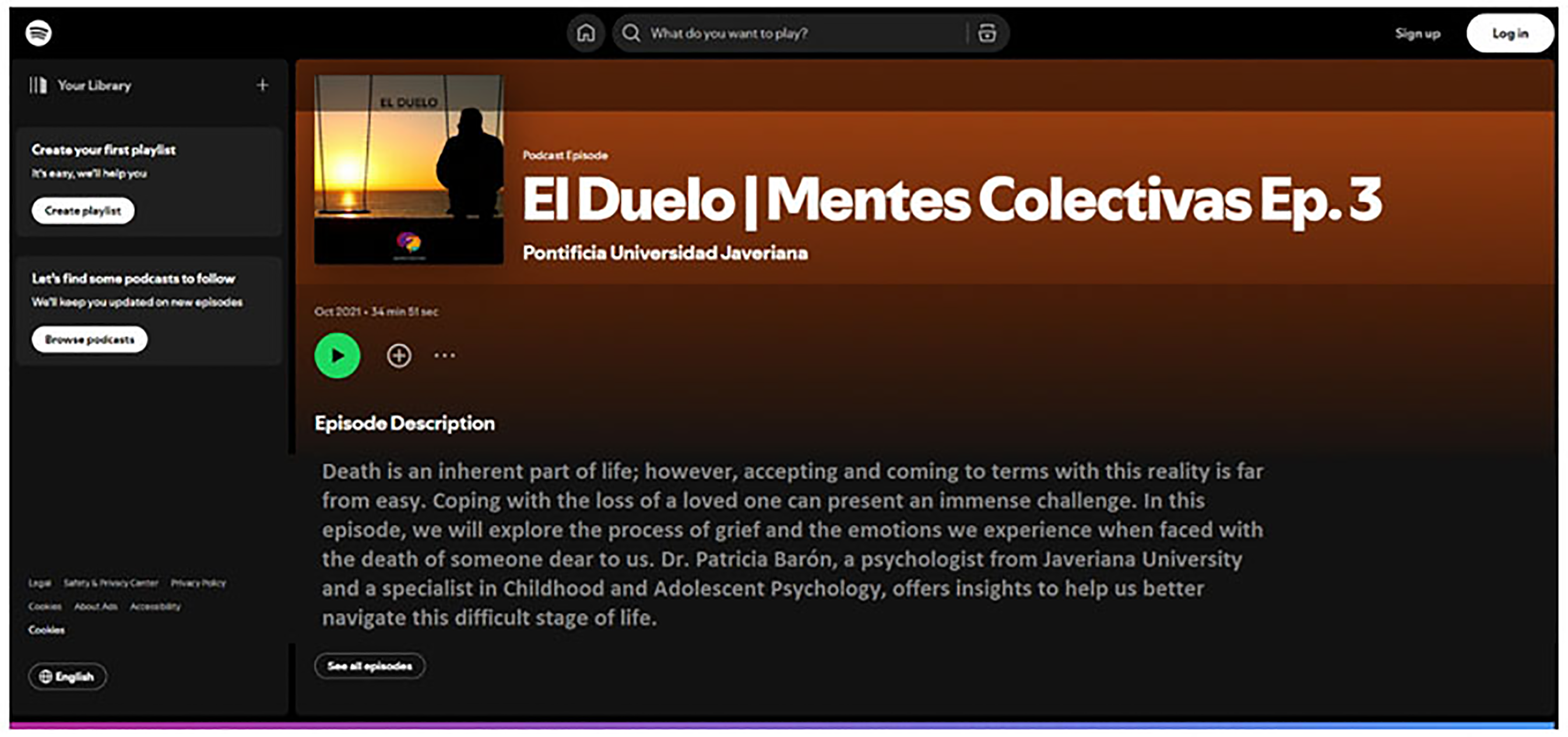
Example web-based psychoeducational resources available through Mentes Colectivas.
Importantly, Mentes Colectivas is a telecounselling platform staffed by counsellors or counsellors-in-training who provide psychological support and guide users to appropriate resources. In accordance with Resolution 2654 of 2019, telecounselling is considered a component of teleorientation which focuses on providing individuals with information, counselling and guidance about health promotion, disease prevention, diagnosis, treatment, rehabilitation and palliative care through the use of digital health technologies. 52 By providing education on mental well-being, stress management and early signs of mental health problems such as anxiety or depression, teleorientation empowers individuals to seek timely care and adopt preventive practices. In contrast to teleorientation, telemedicine involves the direct delivery of health care services including diagnosis, treatment and clinical monitoring. To be able to deliver telemedicine, providers need to be registered with Colombia's Special Registry of Health Service Providers. 52 Given these requirements, as a telecounselling platform Mentes Colectivas is neither diagnostic nor a replacement for psychotherapy or medical consultation. Furthermore, individuals in need of immediate crisis support are directed to national emergency lines for safety, the protection of children and adolescents and for people who are victims of violence.
Participants and data collection
Mentes Colectivas provides free telecounselling to individuals aged 14 and older. The platform's primary purpose is to provide psychological support and guidance for users, with research data collection being a secondary function. As such, the platform itself is promoted ongoingly for its clinical utility; however, users are not specifically recruited for research. There are no exclusion criteria with regards to accessing the platform for support and all platform users aged 14 years and older have the option to consent to share their data for research purposes as part of the registration process.
For the purposes of this study, participants have been grouped into three age groups: young people (14–25 years), adults (26–64 years) and older adults (≥65 years). During the registration process, users are asked to provide basic demographic information, including date of birth and gender identity. Additionally, at registration and at each subsequent login, they are asked to complete the 6-item version of the Kessler Psychological Distress Scale (K6), a validated measure of psychological distress 53 widely used internationally, including in Colombia, and validated in Spanish. 54 K6 items are ranked on a 5-point Likert scale with scores summed to a maximum possible total score of 24. Total scores are classified into four categories: ‘no psychological distress’ (0–7), ‘mild’ (8–12), ‘moderate’ (13–17) and ‘severe’ (18–24). 54
All other data is entered by the counsellor assigned to the user using a tick box form embedded within Mentes Colectivas that collects information about level of functional impairment (i.e., none or minimal, mild, moderate and high), presenting symptoms or problems (e.g., breakup, grief, mild anxiety symptoms, sleep disturbances and unstructured suicidal thoughts) and self-reported mental health warning signs (e.g., alterations in psychological functioning, self-harm, structured suicidal thoughts). In relation to the latter, counsellors reviewed a standardised checklist of widely recognised mental health warning signs 55 with all participants to determine their presence or absence. Additionally, counsellors are required to track session attendance (i.e., attended, not interested, does not answer), whether emergency services were recommended and/or resources were provided and recommendations for follow-up (e.g., no monitoring required, routine monitoring, intensive monitoring). Notably, the data collection process, including variables of interest, was iteratively refined over time based on real-world clinical experience using the platform with individuals and for research purposes. Therefore, for several variables, data is available for only a subset of participants.
Data analysis
Descriptive statistics were used to summarise the demographic characteristics, degree of psychological distress, preferred digital mode of contact, presenting needs, session attendance and clinical recommendations for the study sample. One-way analyses of variance (ANOVA) and covariance (ANCOVA) and Bonferroni post-hoc comparisons were computed to examine the difference in K6 scores based on age group and session (i.e., first, second). Kendall's tau-b correlations were used to assess the association between self-reported K6 scores and 1) counsellor-rated level of need; 2) number of presenting symptoms or problems; and 3) number of mental health warning signs for the whole sample and by age group. The strength of correlation coefficients was interpreted in accordance with established practices. 56 A multinomial logistic regression was calculated to examine predictors of session attendance. An independent sample t-test was used to analyse differences in psychological distress between participants presenting at baseline compared to those returning for a follow-up episode of care (i.e., after having completed an initial six sessions). Finally, Mann–Whitney U tests were used to examine differences in the number of counsellor-identified presenting problems and mental health warning signs for baseline relative to return participants. T-tests were used to analyse continuous variables whereas the non-parametric Mann–Whitney U tests were used to analyse ordinal data. IBM SPSS (Version 29) was used for all analyses.
Results
Baseline demographic and clinical presentation
A total of 6442 users (mean age = 33.6 years, range = 14–100 years; 78.5% female) participated in this study. The mean K6 score (n = 3310) was 14.3 (range = 0–24), with 309 participants (9.3%) reporting no psychological distress, 735 (22.2%) reporting mild distress, 1337 (40.4%) reporting moderate distress and 929 (28.1%) reporting severe distress. Demographic information, self-reported psychological distress, counsellor-rated level of functional impairment and presenting problems are summarised for the whole sample as well as by age group in Table 1. When there is missing data for a variable, the sample size for which the data is available is provided. Most participants presented with 1–3 presenting problems, with mild anxiety symptoms, mild depressive symptoms and sleep disturbances being the most common. Additionally, 10.5% of participants were found to present with mental health warning signs, the most common of which was having a previous suicide plan, followed by self-harm.
Baseline demographics and clinical presentation for total sample and by age group.

* Data for this study was collected during the COVID-19 pandemic; therefore, details with regards to respiratory distress were captured.
Differences and correlations with psychological distress at the first session
A one-way ANOVA found significant differences in K6 scores based on age group (F(2,3307) = 288.1, p < .001), with young people experiencing significantly higher levels of distress relative to adults (p < .001) and older adults (p < .001). Adults were also experiencing significantly more distress compared to older adults (p < .001).
Though statistically significant, Kendall's tau-b correlations showed weak to moderate associations between self-reported psychological distress and counsellor-rated level of clinical need for the whole sample need (Tb = .329, p < .001), as well as for young people (Tb = .238, p < .001), adults (Tb = .303, p < .001) and older adults (Tb = .434, p < .001). Similarly, significant but weak correlations were found between psychological distress and the number of presenting problems identified by the counsellor across the whole sample (Tb = .266, p < .001), as well as for young people (Tb = .172, p < .001), adults (Tb = .260, p < .001) and older adults (Tb = .392, p < .001). Finally, psychological distress was significantly but weakly correlated with the number of mental health warning signs identified by a counsellor across the whole sample (Tb = .172, p = .005) and for young people (Tb = .182, p = .019). The correlation was not, however, significant for the adult sample (Tb = .147, p = .149). The sample of older adults with data on warning signs was too small (n = 8) to conduct this analysis.
Outcomes and recommendations from the first session
Table 2 provides a summary of the attendance variables from the first session with a counsellor via the platform. Despite being able to schedule the session at a preferred time within the 7 am to 7 pm window from Monday to Friday, 50.5% of the whole sample did not answer when contacted and 6.8% were no longer interested in support or guidance at the point of contact. A multinomial logistic regression found that age group significantly predicted session participation (X(4) = 198.572, p < .001). Examination of the parameter estimates of the model indicates that users were less likely to answer than to attend the session if they were a young person (p < .001) or adult (p < .001), whereas older adults were more likely to attend the session than to not answer (p < .001). There were no differences in the likelihood of not being interested in receiving care based on age group.
Baseline session outcomes and clinical recommendations for total sample and by age group.

Monitoring psychological distress
Of the 6442 participants who completed a baseline session via the platform, 2307 (35.7%) completed at least one follow-up session (see Figure 4). Importantly, this reflects 91.8% (n = 2307) of those who were recommended to participate in routine or intensive monitoring by their counsellor.

Number of participants completing follow-up sessions based on age group.
One-way ANCOVAs found significant differences in psychological distress as measured by the K6 based on session for the whole sample (F(5,5978) = 2.949, p = .012) and the adult subsample (F(5,2486) = 3.810, p = .002), but not for young people (F(5,2767) = 0.441, p = .820). As depicted in Figure 5, Bonferroni post-hoc comparisons did not identify significant differences in mean K6 scores between visits 1, 2, 3, 4, 5 or 6 (all p values >.05) for young people and adults. The same analysis could not be performed for the older adult sample due to a smaller sample size (e.g., only four and two participants had completed the K6 at sessions 5 and 6, respectively).

Average Kessler 6 scores across sessions based on age group.
Clinical comparison of baseline and follow-up participants
There were 174 participants (mean age = 28.4 years, range = 14–85; 83.9% women) who returned to the platform for another episode of care, having previously completed six sessions of counselling. Of this group, a subsample of 126 had completed the K6, reporting moderate psychological distress on average (mean score = 14.1, range = 0–23). An independent sample t-test did not find a significant difference in self-reported psychological distress between the group of returning participants relative to those who were presenting for their first episode of care (t = 0.791, p = .427). Furthermore, Mann–Whitney U tests showed no significant differences in the number of counsellor-identified presenting problems (U = 476,955.00, p = .826) or mental health warning signs (U = 2369.00, p = .065) between the first-time and return participant groups.
Discussion
Feasibility of digital mental health in Colombia
Digital health technologies are attractive for their ability to: 1) deliver evidence-based information at any time without requiring contact with a clinician or service; 2) enable care in areas where service provision is limited by geographical barriers or clinician shortages; 3) provide information or care at no or low costs 57 ; and 4) overcome barriers due to stigma. 23 Overall, this research demonstrated the feasibility of digital mental health care for Colombians across the lifespan, including individuals in their 80s and 90s. Between September 2020 and April 2024, 6442 participants accessed Mentes Colectivas, with the vast majority (91.8%) of those who were recommended to participate in routine or intensive monitoring by their counsellor returning for at least one follow-up session and a smaller subset of the sample (n = 174) seeking multiple episodes of care. At the first session, participants on average reported moderate levels of psychological distress and were most frequently experiencing mild symptoms of anxiety and depression and sleep disturbances. Additionally, most participants were rated as having mild to moderate levels of functional impairment by their counsellor, with only a small proportion (7.4%, n = 191) referred to emergency services or presenting with mental health warning signs (10.5%, n = 286). Participants who chose to use the platform for more than one episode of care (i.e., beyond the initial six sessions) were found to present similarly to those who accessed the platform for the first time in relation to presenting problems, mental health warning signs and degree of psychological distress. All three digital methods of engaging with the platform were used, though older adults tended not to use the chat functionality. These findings indicate that delivering mental health support and advice digitally to individuals of varying ages and with diverse clinical presentations and levels of need is feasible in Colombia. This outcome aligns with previous reviews highlighting the feasibility and acceptability of digital mental health services in LMICs58,59 and underscores the critical need to leverage ICT infrastructure to support the delivery of mental health care in low-resource contexts.
Digital mental health may be particularly beneficial for young people. The young people who accessed Mentes Colectivas were experiencing significantly higher levels of psychological distress relative to the adult and older adult groups. Indeed, the peak burden of mental illness is during the major developmental periods of youth (ages ∼12–25), with 75% of adult disorders emerging before age 25. 60 Global trends indicate mental health has worsened among young people in recent decades, 4 contributing to a reduced life expectancy by approximately 15 years and major lifelong burden that impacts individuals, their families and communities. 60 The worldwide worsening of mental health among young people is thought to relate to large-scale and lasting societal changes (i.e., megatrends), such as growing intergenerational inequality, unregulated social media and insecurity of employment. 4 As in other LMICs, Colombia is marked by a complex interplay between social determinants of mental health, such as inequities in socioeconomic status, nutrition, housing and personal and community safety, 61 and early and repeated exposure to traumatic experiences due to prolonged armed conflict, which together heighten the risk of mental ill health among young people. Extensive research has demonstrated a linear relationship between early adversity and the likelihood of negative outcomes in mental health as well as learning, behaviour and physical health.62–64
Early intervention approaches in youth mental health have demonstrated clinical- and cost-effectiveness and have been shown to be acceptable to young people. 65 However, low-resource contexts, such as Colombia, are plagued by a stark shortage of services and clinicians with specialist training in child and adolescent mental health. 66 According to the WHO, there is 0.01 to 1 child and adolescent mental health worker for every 100,000 young people aged 0–19 years in low-income countries, 67 rendering the provision of early intervention and prevention services impossible. Furthermore, young people in Colombia acknowledge that mental health stigma and negative experiences with services interfere with their willingness to seek help. 31 Digital mental health technologies have the potential to fill this gap. For example, Mentes Colectivas enables young people to access care privately without having to attend a brick-and-mortar service. More broadly, digital mental health technologies have already demonstrated effectiveness for young people in detecting both emerging and fully manifest mental disorders, 68 monitoring clinical and functional outcomes to predict personal-level change,34,69,70 providing services via text message, web-based platforms, mobile applications and virtual reality 71 and coordinating care across a health system. 72
There is also emerging evidence to support the use of digital mental health technologies specifically by older adults. A recent systemic review found that 12 of 17 studies of digital interventions conducted with older adults in a mix of high-income countries and LMICs were effective in improving depression and anxiety symptoms or both. 73 Importantly, this study of Mentes Colectivas highlights that older adults are willing to access digital mental health technologies. Nevertheless, variability in familiarity with technology and digital literacy among older adults has the potential to limit the adoption of such technologies. 74 Qualitative research with older adults has identified several strategies to improve the uptake and effectiveness of digital health technologies for this population, including active co-design of digital health technologies specifically with the older adult community to ensure usability, acceptability and appropriateness; education and training materials embedded within the technologies themselves; and, support for digital health technology selection and real-world use such as by a carer. 75 In relation to the latter, the Mentes Colectivas counsellors noted that several older adults were supported by a carer in their use of the platform. This may indicate that they are interested in accessing mental health support and advice via technology but do not have the necessary digital literacy to do so independently. This lack of familiarity with digital mental health technologies coupled with societal mental health stigma may have made older adult participants more hesitant to report symptoms of mental ill health. However, older adults may also have been experiencing lower levels of psychological distress as they were well supported by a carer. It is also important to recognise that previous research has found that psychological distress decreases with age. 76 Further research is now needed to better understand how older adults in Colombia access and use digital mental health technologies and what factors are critical to their effectiveness for this population.
Colombia is well-positioned to capitalise on the potential of digital mental health technologies, such as Mentes Colectivas, to strengthen the mental health care system. Notably, Colombia was the first country in Latin America to pass legislation (i.e., Law 1419) that established guidelines for telehealth and ensured coverage for telehealth services under Social Security in Health benefit plans. 77 Furthermore, Resolution 2654 of 2019 documents a policy framework for telecounselling including specifications about its real-world use for mental health care delivery. 52 With these foundational systems in place, Mentes Colectivas now has the potential to act as a demand management tool by enabling counsellors to rapidly assess presenting problems and levels of functional impairment to make informed decisions about potential care pathways. Individuals presenting with lower levels of clinical and functional need could proceed with low-intensity telecounselling services through Mentes Colectivas, without burdening the under-resourced and under-staffed mental health system. Users identified as having higher levels of need, including those presenting with one or more mental health warning signs, could be triaged directly to more specialised mental health services, including via telemedicine, reducing delays in accessing the required level and intensity of care. As access is free and independent of service, insurance coverage and severity of illness, the platform could also enable inclusive monitoring of mental health at a population level to better estimate psychiatric morbidity to inform system reform. 61 However, this is likely to require enhanced capabilities to capture multidimensional self-report data at an individual level as well as a larger mental health workforce. Audio functions and features for those with literacy limitations would also broaden accessibility. Additionally, strategies to promote equity of access to the internet and digital technologies, including public Wi-Fi, community hotspots, shared or discounted devices and public funding supports, also need to be considered to enable widespread provision of digital mental health services.
Notably, in this study, the frequency of mental health warning signs was significantly but weakly correlated with psychological distress. It is important to recognise the individual variability associated with psychological distress and the considerable heterogeneity amongst those presenting with symptoms of mental ill health more generally. As an example, it has been shown that adolescents with very elevated levels of psychological distress (i.e., more than three standard deviations above the mean) are at the highest relative risk of suicidal thoughts and self-harm. However, most adolescents reporting suicidal thoughts and self-harm in the study had mild or moderate levels (i.e., one to two standard deviations above the mean) of psychological distress. 78 In other words, suicidal thoughts and self-harm are not unique to those experiencing very high levels of distress. The proposed triage model has the potential to consider warning signs as well as negative social determinants of health 61 when identifying users with higher levels of need. Notably, this model is likely to be most impactful for young people who, according to the data presented in this study, are experiencing significantly more psychological distress than adults and older adults, and for whom specialised health services are less accessible. Moreover, digital health technologies can be adapted to meet the cultural and contextual needs of rural communities, thus extending the health system to frequently underserved populations.
Future directions to enhance attendance and effectiveness
While this research confirms the feasibility of Mentes Colectivas as a platform to promote help-seeking and support self-management of mental health across the lifespan, it is now important to evaluate the clinical effectiveness of the care and resources provided as well as factors impacting user attendance. Outcomes from this research suggest that participants’ levels of distress did not change significantly in association with sessions or episodes of care. Furthermore, half of the whole sample (50.5%) did not answer when counsellors attempted to contact them via their preferred digital method, potentially reflecting barriers to attendance. Technology difficulties may have interfered with platform access, or it may be that participants required a more immediate response, particularly during nights and weekends when counsellors were not available. To be appropriate for the broadest audience, the platform may need to be expanded to provide both telecounselling (i.e., as a component of teleorientation) and telemedicine, including diagnostic and clinical treatment services. Further, factors such as the availability of specific content and functionality, concerns regarding data privacy and security, technology access and digital literacy and the severity of mental health issues may all interfere with an individual's willingness and ability to engage with digital mental health services.79,80 Importantly, there is a growing literature that highlights the value of digital navigators, health technology experts, in helping both individuals and health professionals overcome (i.e., navigate) the challenges associated with the implementation of and engagement with digital mental health technologies.81–83
A formal evaluation of both the platform's clinical effectiveness and its real-world implementation would provide valuable insights to optimise effectiveness as well as usability, acceptability and contextual appropriateness. 84 Mixed method approaches that incorporate both quantitative and qualitative methods are well-suited to digital health evaluation as the questions associated with such technologies are frequently broad, complex and multifaceted. 85 By capitalising on the strength of both quantitative and qualitative evaluation strategies, researchers can develop a deep understanding of the complexities that underpin the development, implementation, scalability and sustainability of digital health technologies. This includes recognising and evaluating how digital health technologies interact with, change, and are influenced by the context in which they are implemented.86,87 Measures of accessibility, reach, quality of care and cost-effectiveness can provide valuable data to influence policy with regards to mental health services generally and the significance of digital mental health technologies specifically. 88 Systematic collection of these types of service indicators can inform quality improvements at the level of the service, including care provided via digital mental health technologies, and at the system level when such data is aggregated.
Limitations
The variables collected from individuals and via counsellors using Mentes Colectivas evolved during the data collection process in relation to real-world clinical experience using the platform as well as in relation to research objectives. As a result, missing data or small sample sizes preclude group comparisons in some instances reflecting a major limitation of the dataset. We recognise that missing data limits the reliability and generalisability of the outcomes; however, we used statistical analyses appropriate for the available data to avoid over interpretation. Additionally, data has not been collected to understand why some participants enrol in the platform but then do not respond when contacted by a counsellor, or why participants do not attend the recommended follow-up sessions. Moving forward, this type of data will be critical to inform ongoing improvements to the platform design, functionality and implementation.
Conclusions
This study demonstrated that Mentes Colectivas is a feasible method by which to provide mental health telecounselling and support across the lifespan in Colombia. Additionally, the frequency of repeat users suggests acceptability of and satisfaction with the support provided, though a formal evaluation is still required to investigate effectiveness. While digital mental health interventions, such as Mentes Colectivas, have the potential to enable universal access to quality care, it is critical that such interventions are not conceived as a substitute for public health efforts to provide mental health services. Indeed, it is vital that the Colombian Government supports innovative models of mental health care that integrate the accessibility, data capabilities, personalisation and scalability of digital mental health technologies with the clinical expertise of specialist clinicians. Nevertheless, the profound systemic limitations within Colombia's existing health care system, including infrastructure and personnel, are likely to require many years and significant funding to resolve. Therefore, digital mental health technologies have the potential to play a vital role in increasing equity of access to care for the Colombian population, overcoming barriers related to personnel and service shortages, geography, cost and stigma.
Footnotes
Acknowledgements
The authors would like to acknowledge and thank all the participants who accessed the Mentes Colectivas platform as part of this research.
Guarantor
LOP
ORCID iDs

Ethical considerations
This study was approved by the Ethical Review Board of the Faculty of Medicine of the Pontificia Universidad Javeriana (Protocol number: 2020/094).
Consent to participate
As part of the Mentes Colectivas registration process, users provide electronic informed consent to have their data used for research purposes.
Author contributions/CRediT
LOP, PNBN, CGR, JMUR, TCL, AEA, AANM and EP were integral in designing, developing and implementing the Mentes Colectivas platform. LOP and PNBN oversaw research data collection and IANB, LTMZ and AMPM were actively involved in the implementation. APQ and JPM led and were part of the team that technically developed the platform. All data analyses were conducted by HML, with input and advice from LOP, PNBN, FI and IBH. All authors have contributed to and approved the final manuscript.
Funding
The author(s) disclosed receipt of the following financial support for the research, authorship, and/or publication of this article: IBH is supported by an NHMRC L3 Investigator Grant (GNT2016346). FI is supported by an NHMRC EL1 Investigator Grant (GNT2018157). Mentes Colectivas was implemented thanks to a philanthropic donation from Julymar Foundation and sustained by ‘Ecosistema’.
Conflicting interests
The author(s) declared the following potential conflicts of interest with respect to the research, authorship, and/or publication of this article: IBH is the Co-Director, Health and Policy at the Brain and Mind Centre (BMC) University of Sydney. The BMC operates an early-intervention youth services at Camperdown under contract to headspace. He is the Chief Scientific Advisor to, and a 3.2% equity shareholder in, InnoWell Pty Ltd, hich aims to transform mental health services through the use of innovative technologies. No other authors have competing interests to declare.