




Abstract
Objective
While endometriosis is estimated to affect 1 in 10 women globally, awareness of the disease as well as research and funding to fight the disease remains lacking as compared with other chronic diseases. This study examines how social media users utilized Instagram to raise awareness of and mobilize activism around endometriosis by analyzing prominent topics, word associations, and feminism themes in endometriosis-tagged posts on Instagram.
Methods
We used a mixed-method approach of combining computational analyses (topic modeling and word association) and human coding (qualitative thematic analysis) of Instagram posts on endometriosis.
Results
Our results show that while Instagram users discussed a variety of issues related to the disease on the social media platform, these issues tend to focus on four topic areas: (i) living with endometriosis, (ii) pregnancy and endometriosis, (iii) awareness and empowerment, and (iv) women's health and wellbeing. In addition, social media users widely incorporated three feminism themes: (i) bringing attention to invisible disability, (ii) solidarity and support among women, and (iii) advocacy and activism around women's health.
Conclusion
People with endometriosis use Instagram to create an online public sphere for raising awareness of the disease, offering networking and support to other endometriosis patients, and creating a movement for enhancing women's health and wellness. In doing so, they are also addressing sexism and misconceptions about endometriosis that have traditionally contributed to normalizing women's experience of pain associated with endometriosis and consequently delaying endometriosis diagnoses.
Introduction
Women suffering from endometriosis and organizations supporting endometriosis awareness used the term “invisible disability” in describing the inflammatory chronic pain condition where tissue similar to the lining of the uterus grows outside the uterus.1,2 Women with endometriosis often report debilitating pain. In addition, endometriosis is associated with increased risk of several cancers, including ovarian, breast, and skin melanoma, as well as conditions like systemic lupus erythematosus, rheumatoid arthritis, and heart disease.3–5 While endometriosis is estimated to affect one in 10 women globally, awareness of the disease as well as research and funding to fight the disease remains lacking as compared with other chronic diseases.2,5 Endometriosis also has a significant delay in diagnosis, with the average length of time from start of symptoms to diagnosis of endometriosis reported to be about 7.5 years globally. 1 Historically, endometriosis was frequently framed as a “career women's disease” and women were advised to get pregnant to manage or treat endometriosis in spite of lack of scientific evidence that pregnancy decreases symptoms. 6 It should also be acknowledged that endometriosis can affect individuals who are transgender, nonbinary, or gender-expansive and possess female reproductive organs.
In recent years, women with endometriosis have taken to social media to bring attention to the disease. Celebrities such as Lena Dunham and Amy Schumer, along with non-celebrity women with active social media presence, have used Instagram and other social media platforms to raise awareness of endometriosis while discussing their own experiences with the disease and sharing relevant information and resources. 7 For example, women mentioned that concerns about severe pain with endometriosis were dismissed by medical professionals or family members who claimed what they were experiencing were a “normal” part of being a woman.1,7 In posting about endometriosis, many social media users included hashtags such as #endometriosis, #endowarrior, #fightendometriosis, and #selfconfidence to emphasize their advocacy.
Against this backdrop, this research examines how social media users utilized Instagram to raise awareness of endometriosis and advocate for increased research funding and resources to fight against the disease. Specifically, the purpose of this study is to analyze prominent topics, word associations, and feminism themes featured in endometriosis-tagged Instagram posts. To identify prominent topics and word associations, we conducted computational analyses of 10,000 publicly shared Instagram posts during the period of April 2023–February 2024. In addition, we used human coding (qualitative thematic analysis) of a subset of the Instagram posts (1000 posts) to investigate prominent themes featured in the Instagram posts.
Though endometriosis studies in the medical field have somewhat increased in the past decade,2,8 research on how people use social media to seek and obtain information about endometriosis and to raise awareness of the disease is lacking. Our research addresses this gap by conducting an empirical research study on the topic. Findings of this study offer scholarly and practical implications for those who study or practice social media activism, women's health, and health communication.
Social media and health advocacy
As people around the world use communication technologies to connect with others, social media sites such as Facebook, Instagram, and X have become important channels through which people organize for activism,8,9 These online communities provide citizens with platforms for addressing common issues while offering the potential to serve as an alternative to mainstream media and other social institutions in dealing with those issues.
Health has emerged as a key area for online advocacy.2,8,10 Studies show that an increasing number of people seek and gain health-related information and support through online communities. In particular, popular social media sites serve as social spaces for people to raise awareness of issues concerning health and wellbeing. 10 For example, patients dealing with ulcerative colitis and Crohn's disease turned to Facebook to share information and news related to the disease and to describe their personal experiences with it. 11 Similarly, those suffering from chronic pain, due to ailments such as migraines and other illnesses, used Tumblr to reframe pain in personal and emotional ways and account for social aspects of pain not included in physical clinical assessments. 12
Social media platforms have provided everyday women with opportunities to share widely the realities of their lives. By employing hashtags on social media, crucial issues can be highlighted and brought to the awareness of Internet users worldwide. According to Dixon, 13 the utilization of hashtags on social media platforms enabled women to explore interconnected virtual conversations and thereby enhance discussion on issues related to women. For example, women facing chronic illnesses have utilized online media spaces to seek social support from peers.2,9 Similarly, social media platforms have provided a forum for women to engage in reflections regarding experiences with the medical community and affirm their feminist rhetorical agency over their own birth experiences. 14
Social media sites have become one of the most important channels for raising awareness about endometriosis.2,3,5 As people rely more and more on online resources for health information, women facing infertility due to endometriosis actively sought out digital resources including popular social media platforms such as Facebook and Instagram. 15 Many women, dissatisfied with traditional healthcare on endometriosis, reported finding solace and education on social media. 16 For example, people share their experiences, information, and resources through Facebook pages on endometriosis highlighting the importance and potential of online platforms in spreading awareness and education about the condition. 17 Conversations about endometriosis through social media facilitate feelings of empowerment, as people share resources and social support.
Research questions
Given important roles that Instagram plays in facilitating communication related to endometriosis, our study examines the following research questions. RQ1: What prominent topics are featured in endometriosis-tagged Instagram posts? RQ2: What are key patterns of word associations in endometriosis-tagged Instagram posts? RQ3: How are feminism themes incorporated in endometriosis-tagged Instagram posts?
Methods
To answer the research questions, we used both computational analyses and human coding (qualitative thematic analysis) of Instagram posts including the hashtag #endometriosis. A total of 141,234 Instagram posts with the hashtag were collected for this research using the Instaloader Python package in Spring 2024. The Instagram posts were shared between April 7, 2023, and February 6, 2024. Of the 141,234 Instagram posts, we eliminated non-English posts and cleaned data (e.g., stopword removal and noise removal). This process resulted in 103,161 posts in our dataset which included each Instagram post's postdate, caption, image, number of likes, and number of comments. From these 103,161 Instagram posts, we randomly selected 10,000 posts for computational analyses. The 10,000 posts selected for analysis include only those with at least one like and one comment. Table 1 summarizes descriptive statistics of these posts. Of the 10,000 posts, we selected 1000 posts for human coding. The month of March, which is Endometriosis Awareness Month, is excluded from this analysis, as this study focuses on how social media advocacy and activism are organically generated. During Endometriosis Awareness Month, endometriosis-related organizations often lead the coordination of social media content on endometriosis.
Descriptive statistics of Instagram posts (10,000 posts)

Computational analyses: topic modeling, communities, and word associations
We used topic modeling, community detection, and word co-occurrence analysis to examine prominent topics and word association patterns in 10,000 Instagram posts including #endometriosis. Considered as one of the most powerful techniques in text mining and latent data discovery, topic modeling has been widely utilized in analyzing social media posts.18,19 Specifically, this study used Latent Dirichlet Allocation (LDA), which is one of the most extensively used topic modeling approaches.18,21,29 LDA is a generative probabilistic model. Instagram texts were tokenized for the analysis, and Gibbs sampling was used to iterate over tokens. 22
For community detection analysis, the Girvan-Newman modularity maximization algorithm was used. 23 The Girvan-Newman method for detecting and analyzing community structure is based on the process of sequentially removing edges that have the highest number of the shortest paths that traverse them. By eliminating edges, the network is broken down into smaller, more tightly interconnected subnetworks called communities.
Word co-occurrence analysis is extensively used in examining associations of words in a dataset.24,25 In this study, we employed the word co-occurrence analysis to identify token pairs that appear most frequently in the collection of Instagram posts. The analyses were conducted using Wolfram Language (Mathematica) 14.0. 26
Human coding: qualitative thematic analysis
In addition to the computational analyses that provided a helpful snapshot of information included in the 10,000 Instagram posts, we conducted human coding of a subset of the Instagram posts to identify feminism themes in the posts. For this qualitative thematic analysis, we randomly selected 1000 Instagram posts from the 10,000 posts and examined them for feminism themes. The unit of analysis was the individual Instagram post. In coding the Instagram posts, we used a grounded theory approach 27 through which researchers identify inductively derived categories regarding a particular phenomenon. 28 The grounded theory approach is relevant for the current study given the lack of empirical research on this specific topic. Specifically, using an emergent coding structure, the coders first identified an initial set of frequently appearing categories and then applied them to the qualitative coding dataset. The Instagram posts were coded by six health communication researchers who have prior experience coding social media content. The coders participated in a series of research training sessions to become familiar with the research topic. To measure inter-coder reliability, all six coders reviewed the same 50 Instagram posts (5% of the entire dataset) and coded each post for feminism themes. The inter-coder reliability score was .85 (Scott's pi). After completing training sessions, each coder was assigned about 170 Instagram posts to analyze.
Results
The following findings are based on our computational analyses (topic modeling, community detection, and word co-occurrence analysis) of 10,000 Instagram posts on endometriosis and human coding of 1000 Instagram posts (qualitative analysis of feminism themes). Figures 1 and 2 provide data analysis visualizations.
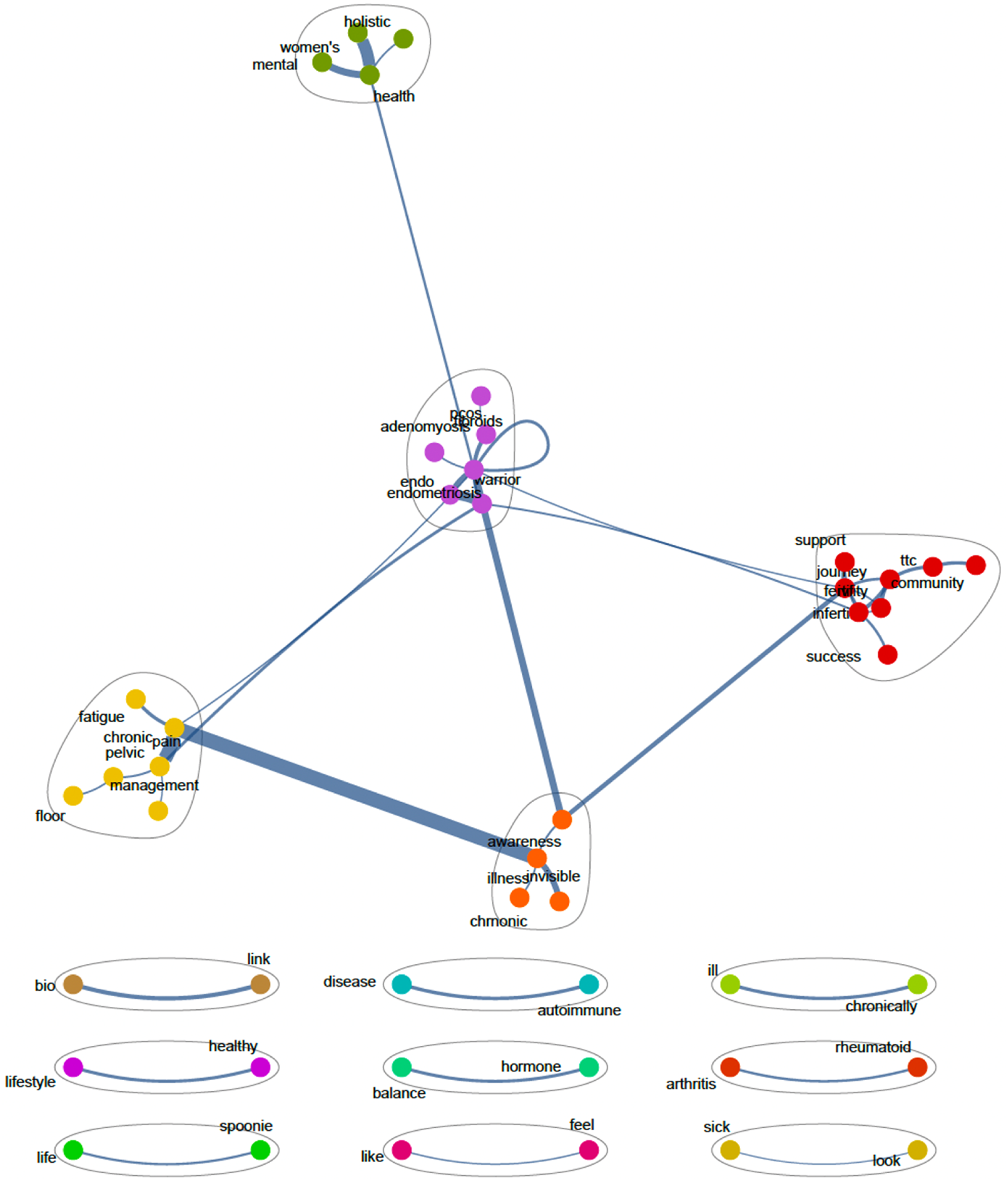
Community detection analysis.
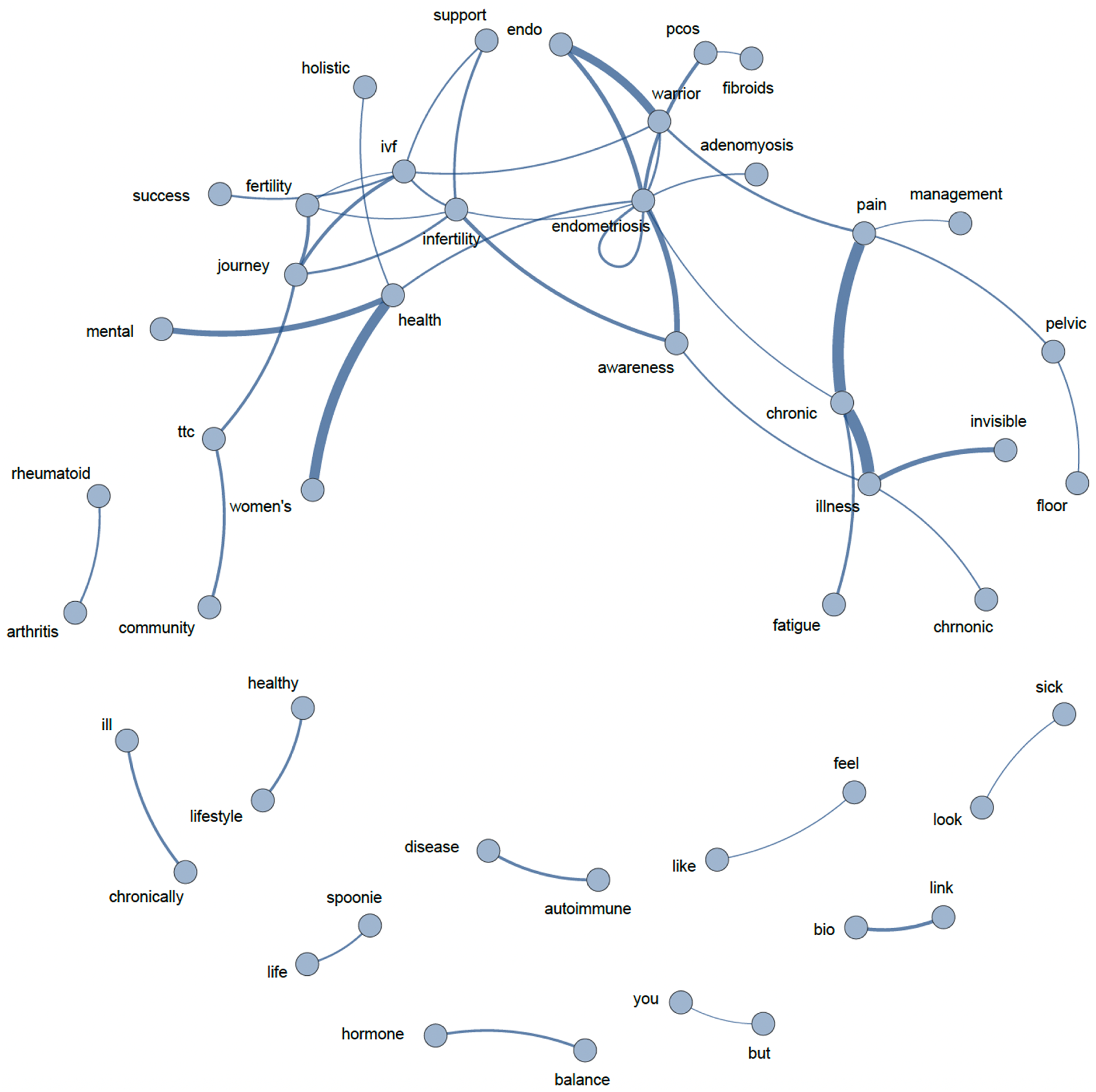
Word co-occurrence analysis.
Prominent topics and word associations (RQ1 and RQ2)
Results from our topic modeling and community detection analyses help understand prominent topics discussed in the 10,000 Instagram posts including #endometriosis. Using a Latent Dirichlet Allocation (LDA) approach as described in the Methods section, four topics were identified: (i) living with endometriosis, (ii) pregnancy and endometriosis, (iii) awareness and empowerment, and (iv) women's health and wellbeing. Figure 1 shows community detection analysis results. Communities in the graph were identified using the Girvan–Newman modularity maximization algorithm. 23
Living with endometriosis. Of the 10,000 posts, 3556 focused on living with endometriosis, 2541 on awareness and empowerment, 1996 on women's health and wellbeing, and 1907 on pregnancy and endometriosis. For posts addressing multiple categories, the most prominent category in each post was selected. Instagram posts under the topic of living with endometriosis often included endometriosis patients’ pain experiences, surgery information, and struggles to manage daily tasks. Some of the most frequently used words under this topic were chronic, pain, fatigue, pelvic, and management, as women with endometriosis discussed chronic pain conditions and management of endometriosis symptoms. For example, an Instagram user posted, I won’t lie this week has been haaaard! I am so shattered! We have had an ill/teething toddler who has basically been up all night (so that hasn’t been fun), been working, and then trying to fit my workouts in while being absolutely shattered and to top it off an endometriosis flare up kicked in with even more fatigue!
Similarly, a woman who had excision surgery for her endometriosis shared, 2 days post excision surgery…. I am SO proud of myself for fighting for myself, pushing for answers, knowing my body well enough to know something isn’t right. Friday wasn’t easy and I’ve been in a crazy amount of pain since. The pain meds I was given post surgery made me violently sick…I’m overwhelmed with every emotion…. In spite of all this I’m trying to stay positive and hopeful that post recovery, I'll be able to start living my life again.
Pregnancy and endometriosis. Instagram posts under the topic of pregnancy and endometriosis discussed how endometriosis can affect fertility, how they were dealing with endometriosis during pregnancy, and what infertility treatments were like. Some of the most frequently mentioned words in Instagram posts under this topic were infertility, fertility, ivf (in vitro fertilization), support, journey, success, community, and ttc (trying to conceive). A woman with endometriosis who is on IVF treatment wrote: One year ago we shared that we were soon going to be starting our IVF journey. We are still very much on that journey, and it's crazy to look back on all we have been through this past year and to think about what the future holds for us.
Another woman posted, “Getting through endo / infertility / IVF one caffeinated drink at a time.”
Awareness and empowerment. Instagram posts under the topic of awareness and empowerment included content promoting public understanding of endometriosis and supporting other endometriosis patients. Some of the most frequently mentioned words in Instagram posts under this topic were awareness, chronic, invisible, illness, pcos (polycystic ovary syndrome), adenomyosis, and warrior. Specifically, these posts discussed key information related to endometriosis and importance of offering support. For example, an Instagram user discussed, Endometriosis is a chronic disease and should be treated by professionals of all specialties to ensure no woman suffers in silence and is left alone with her pain. It's more than just a bad period, it's a life-threatening, debilitating condition.
The post continued, Endometriosis Awareness Month is next month but I already wanted to share this post so you can share some simple and important facts in your communities and among your family and friends to make them understand what we are going through. We are Endo warriors and despite all the health obstacles, we should not be ashamed or afraid to fight for our rights as patients and as women. Be strong, fight for your wellness and don’t lose faith in a better tomorrow!!!
Women's health and wellbeing. Instagram posts under the topic of women's health and wellbeing covered calls for more research and funding for women's health issues, mental health concerns related to endometriosis, and gender bias in healthcare. Some of the most frequently used words in Instagram posts with this topic were women's, health, mental, and holistic. One Instagram user posted, Let's talk mental health. We often talk about the physical issues of having chronic illnesses but chronic illnesses often correlate with mental health issues too. There are many studies out there to show the direct effect of having endometriosis and how it impacts a person's wellbeing. I personally have struggled myself. Overall, I try to remain as positive as I can. Humor really is the best remedy, but there are somedays where you cannot laugh anymore.
Our word co-occurrence analysis of the 10,000 Instagram posts shows how certain words appear together frequently in the corpus of Instagram posts. Figure 2 is a word co-occurrence network of Instagram posts. In the figure, the line, or edge, connected words that appeared together in the Instagram data. The width of the line corresponds with the frequency of those word pairs in the Instagram corpus with thicker lines indicating higher frequencies of the two words appearing together.
The top 20 pairs included: chronic and pain; chronic and illness; endo and warrior; endometriosis and awareness; invisible and illness; women's and health; mental and health; healthy and lifestyle; ivf and journey; infertility and ivf; endometriosis and pcos; ttc and fertility; pelvic and pain; arthritis and rheumatoid; feel and like; link and bio; chronic and fatigue; hormone and balance; autoimmune and disease; and ivf and success. Results from this word co-occurrence analysis suggest that issues related to pain are frequently mentioned in connection with endometriosis as well as mental health issues. The fact that “link” and “bio” were one of the most frequently mentioned pairs indicates that Instagram users were sharing resources related to endometriosis by encouraging people to visit websites included in their Instagram bios.
Feminism health themes (RQ3)
Our third research question asked how feminism themes are incorporated in endometriosis-tagged Instagram posts. A wide range of issues were covered in these Instagram posts including dealing with endometriosis-related pain, pregnancy journey, frustrations with existing treatment options, and offering support for other patients. Our results show that these issues were discussed through the following three feminism themes: (i) bringing attention to invisible disability, (ii) solidarity and support among women, and (iii) advocacy and activism around women's health.
Bringing attention to invisible disability. Women with endometriosis utilized hashtags like #endometriosis, #endometriosisawareness, #invisibleillness, and #endowarrior to create awareness around endometriosis which is often depicted as “invisible disability” or “silent disease.”1,2 These Instagram users’ efforts to raise awareness of endometriosis and educate the public about the disease are aligned with conscious or awareness raising which was popularized by feminists in the United States in the 1960s. 29 Raising awareness is an important step toward advocacy and activism. Consciousness-raising groups were considered the foundation of second-wave feminism which began in the 1960s and 1970s at the same time as the Civil Rights Movements. The second-wave feminism emphasized advocating for institutionalizing gender equality while questioning established conventions that shaped women's roles in society. In the second wave of feminism, activists emphasized the influence of sexism and patriarchal structures on all facets of women's personal lives.20,29
Some Instagram users posted endometriosis-related images or detailed descriptions of their experience to improve public knowledge of the disease. For example, an Instagram user posted images of healthy uterus and adenomyosis with a caption that read, “This is an illustration of what Adenomyosis adhesions look like, compared to a healthy uterus.” Another Instagram user stated that “one of [her] endo symptoms is continuous bleeding/spotting.” To alleviate this symptom, she said she switched to a new medication and expressed her hopes that the new medication would be helpful. In sharing her post, she included hashtags #endometriosisawareness and #lifewithendo and a photo of her updated medication to provide helpful information to her Instagram followers. Similarly, a woman with endometriosis described the intense pain she was feeling in her uterus over Labor Day weekend and her visits with an OBGYN and an oncologist to determine if her severe pain could be a sign of cancer. She said she sought acupuncture and infrared sauna therapy for pain relief. Her OBGYN told her that the pain was from a “slow growing cyst” that “is just now giving [her] issues” and referred her to an oncologist for further evaluation. Her account of this endometriosis flare-up and therapies described the pain that she has endured on a daily basis and pain relief approaches that she has been taking. Her explanation of the cysts on her uterus helped create awareness for those who may not have previously understood the gravity of the chronic condition.
Other Instagram posts sought or offered specific recommendations related to dealing with endometriosis. For example, one Instagram user asked, “Have you tried any diets for your endo? If so did they help?” Others provided dietary recommendations that can be helpful in reducing inflammation, one of the main mechanisms that triggers endometriosis. One Instagram user posted, Incorporating anti-inflammatory foods into your diet can help reduce inflammation in your body and potentially alleviate various hormonal imbalances issues. It's important to maintain a balanced and varied diet that includes these anti-inflammatory foods to support overall health and well-being.
In addition, physical exercises, such as yoga poses for relieving pelvic pain, were shared. Medical professionals specializing in endometriosis also used the hashtag #endometriosis when offering relevant resources via Instagram.
As a lot of information about endometriosis is shared online, misinformation is another aspect addressed in endometriosis-tagged Instagram posts. In fact, an empirical research study of 172 endometriosis patients showed that about 76% of them found misinformation about endometriosis online. 31 Instagram users shared posts aimed at correcting misinformation related to endometriosis—whether it is claiming that women with endometriosis cannot obtain pregnancy or asserting that certain herbs will cure endometriosis. For instance, Dr Eepika Aggarwal, an obstetrician and gynecologist, shared through her Instagram account: “Endometriosis is a common condition that affects many women, but there are still many myths and misconceptions surrounding it. Here are some of the myths and facts about endometriosis that you should know…”
Solidarity and support among women. Instagram users’ efforts on raising awareness of endometriosis contribute to rallying together in solidarity the community of individuals affected by the disease to support one another. By sharing their own painful experiences with endometriosis on Instagram, posters are encouraging their peers who may have similar experiences to join the conversation and community. Most of all, sharing their experiences with endometriosis online helps “[create] solidarity among women across the board.” 21
Our analysis shows that women with endometriosis used Instagram to offer informational, emotional, and networking support. These types of support were provided by women sharing their positive daily activities, information about treatments, and encouraging other women to advocate for themselves in medical spaces. For example, Isabella whose Instagram account is isa_and_endo shared that her Instagram account is aimed at providing “support, engagement, and resources” related to endometriosis. She wrote, Throughout my experience with Endo, I have never been able to find a resource that aimed to help girls my age. This account will mirror my blog that will take a deeper look into Endometriosis. I hope this will offer support, encouragement, and resources.
Some Instagram users shared specific affirmations for people living with endometriosis. For instance, an Instagram account posted a graphic with eight positive affirmations including “you are not defined by your pain,” “you are a warrior in your unique fight against endo,” and “your courage is inspiring.” Hashtags such as #endowarriors, #tribe, and #selfconfidence reinforced the solidarity and empowerment shared through the affirmations. Similarly, an Instagram user encouraged her followers to advocate for themselves. Before sharing with her audience that she has finally received answers to her years-long “pelvic pain,” she encouraged her followers to “[not] give up” and to “advocate for [themselves].”
Another Instagram user inspired her audience by sharing positive aspects of her life despite the daily pain that she experienced. For example, she posted photos from a vacation to the United Kingdom and stated that her “period was so, so bad.” Encouraging her followers to think positively, she expressed that she is grateful for “walking in blue skies with [her partner],” her “first day at [her] new job,” and for feeling beautiful in the dress she was wearing in the first photo. By empowering her followers to persevere and see through the pain of their diagnosis, she was showing them that they, too, can continue to live happy lives. In this context, quite a few Instagram users mentioned the importance of taking care of mental health while dealing with endometriosis pain.
Previous studies on online communities on health found that these virtual communities are important spaces for them to offer and receive different types of support including informational, emotional, network, and esteem support. 23 While offering support for other women with endometriosis, Instagram users also nurture solidarity among women with similar experiences, emphasizing the fourth wave of feminism that is at play with these Instagram posts. 29
Advocacy and activism around women's health. Our results suggest that those who posted on endometriosis on Instagram went beyond sharing their symptoms and providing support to other endometriosis patients; they tried to build a movement promoting women's health and wellness. This is aligned with recent phenomena that social media platforms have been increasingly used for advocacy and activism on health-related issues.24,25
Dozens of Instagram users expressed their frustration with significant delays in diagnosis or treatment of endometriosis due to the absence of rigorous medical procedures to examine the disease or because their symptoms were not taken seriously by their doctors. For example, Instagram account RealEndometriosisHelp wrote, “The symptoms of endometriosis can often be mistaken for other conditions, such as irritable bowel syndrome, pelvic inflammatory disease, or even typical menstrual cramps, leading to a delay in seeking or receiving appropriate care. #EndTheStigma #EndoAwareness #Endometriosis.” Some emphasized the need for medical professionals to pay more attention to what endometriosis patients say they are going through. Instagram user drpoppybhrt posted the following with a photo of her medical procedural summary: “Painful, long, horrible periods. Seen five other doctors. Was just offered birth control & diet pills. Actually had endometriosis requiring 13 hours of surgery & 3 surgeons (OBGYN, urology, colorectal). Listen to your patients! #endometriosis #endowarrior (Shared with permission).” Others also called for better medical assessments related to women's pain associated with endometriosis while discussing their experience of being dismissed or disbelieved by medical professionals regarding their endometriosis-related pain.
Some Instagram users focused on raising funds for organizations advocating for endometriosis awareness or conducting research into the disease. For example, fundraising events or webinars organized by the Endometriosis Foundation of America, which “strives to increase disease recognition, provide advocacy, facilitate expert surgical training, and fund landmark endometriosis research,” 26 was often shared by Instagram users. Through its Instagram account (endofound) with more than 35,000 followers, the Endometriosis Foundation of America shares facts, personal stories of people with endometriosis, policy updates, and resources related to endometriosis.
Many Instagram posts directly addressed sexism and patriarchy in promoting advocacy and activism on endometriosis. For example, Instagram account disabled.and.chic posted, So many falsehoods about endometriosis have been passed down for generations. These sexist traditions, presumptions, and also sexism based treatment protocols continue to harm many patients. It also results in people not understanding (or not believing) how very dangerous endometriosis can be. #endometriosis #endoBelly #EndoWarrior #EndoWarriors.
Another Instagram user shared, Sometimes I feel like the word “endometriosis” should only ever be listed with the (women facepalming) emoji, given for how long medical sexism has caused people with this disease to needlessly suffer and die (and be needlessly castrated against their will, of course. Let's not forget that one).
Other women with endometriosis discussed how their family members told them their symptoms were a standard aspect of the female experience, and even their doctors told them their symptoms were “normal” while failing to question whether endometriosis was causing chronic pain symptoms.
Discussion
Using a mixed-method approach of combining computational analyses and human coding (qualitative thematic analysis) of Instagram posts including #endometriosis, this study examined how social media users turned to Instagram to raise awareness of and mobilize activism around the chronic disease affecting around 200 million women around the world. Our findings offer scholarly and practical implications in the areas of social media activism, women's health, and health communication.
Scholarly and practical implications
Our results show that while Instagram users posting about endometriosis discussed a variety of issues related to the disease on the social media platform, these issues tend to focus on four topic areas: (i) living with endometriosis, (ii) pregnancy and endometriosis, (iii) awareness and empowerment, and (iv) women's health and wellbeing. In covering these topics, women with endometriosis were willing to share their own journey—whether it is related to managing pain, receiving fertility treatment, or dealing with anxiety before or after surgery such as excision or hysterectomy. Many of them were even ready to show surgery scars or other “low” moments in their endometriosis journey through Instagram posts. For example, a woman with endometriosis shared, Holy moly! What a weekend! no no I was not living it large I was in fact living it very small due an absolutely crushing bout of endometriosis which meant I was bed bound for most of the weekend and I didn’t leave the house for 3 days.
Another user posted, Shout out to endometriosis sufferers and in fact anyone dealing with a chronic/remitting condition because it is tough to plan for and live through not just for you (do I need to ring an ambulance or is this a “normal” amount of pain to endure?) but for the people around you who have to pick up the slack.
As previous research suggested, social media sites serve as important platforms for women to publicly portray their dynamic and self-reflective relationships with their bodies. 27 In particular, women and girls grapple with intricate tensions and paradoxes within the sphere of health and fitness on social media: the dual challenge of crafting visually appealing self-images while upholding the essential authenticity criterion through the presentation of “raw” and unaltered images. 29 Our results suggest that Instagram users posting on endometriosis are willing to share the good, the bad, and the ugly of their endometriosis journey to express themselves and support others with similar experiences.
Through human coding of endometriosis-tagged Instagram posts, this study found that social media users widely incorporated the following feminism themes in their posts: (i) bringing attention to invisible disability, (ii) solidarity and support among women, and (iii) advocacy and activism around women's health. Hashtags such as #endowarrior, #fightendometriosis, and #selfconfidence often were used in these posts to augment their statements of solidarity and advocacy. These feminism themes were well aligned with different waves of feminism, in particular the fourth wave. The fourth-wave feminism is centered around social media activism and the promotion of gender rights, gender equality, and people's gender, race, and class identities.29,30
Emerged amid the proliferation of the Internet and online social networking in the early 21st century, the fourth wave of feminism utilized online public spaces in support of women and other marginalized communities. 31 In particular, building on intersectionality approaches of the third wave, the fourth-wave feminism emphasized a need to understand feminism in the context of marginalized groups. In this sense, some Instagram users emphasized the importance of taking into account endometriosis experiences of transgender or nonbinary individuals who have female reproductive organs. 32
To create solidarity and mobilize activism, women used Instagram to educate others on their painful experiences with endometriosis and empower their peers who may have similar experiences. In doing so, women with endometriosis also highlighted sexism and patriarchal structures on many aspects of women's personal lives. For example, an Instagram user posted, In the 70s, endometriosis was called “the career woman's disease.” Women were blamed for their infertility—they were thought to have caused it themselves by postponing childbirth…. This myth was often used to discourage women from pursuing “male goals.” Remnants of this myth are alive and well today.
The post continued, The lack of sensitivity and empathy paired with sexism define the experience of many women seeking help with endometriosis. In this vulnerable situation, women are often subjected to undue criticism, their concerns dismissed due to the prejudice of medical professionals whose help they’ve come to seek.
Another Instagram user shared, Medicine has been unwilling to consider that a disease which affects gynecology patients could be this serious—bc of course, anyone born with a vulva is considered to be emotional & over-reactive. Medicine is so comfortable in that sexist belief, that it's resulted in a culture which largely refuses to help gynecology patients for fear of acknowledging that we do indeed have unique health issues to be taken seriously. (And who wants to admit to taking part in sexism that has caused this much suffering??)
Our findings indicate that these Instagram users are forging hashtag feminism while highlighting sexism and misconceptions around endometriosis.
The findings of the study provide insights for those who have been diagnosed with endometriosis or are seeking information related to the disease. Our analysis showed that endometriosis patients have formed a supportive community on Instagram where they share personal stories, pain management strategies, and their journeys of being diagnosed and treated for endometriosis. These posts could serve as informational and emotional support for endometriosis patients, offering practical advice to endometriosis patients and making them feel less isolated. Patient-led content can be particularly reassuring and uplifting, as many endometriosis patients reported being dismissed by medical professionals who claimed their pain experiences were “normal” for women.1,7,33,34 Endometriosis-related Instagram posts can help educate women to pay attention to potential signs of the disease. This educational aspect of endometriosis symptoms is important, especially given the average length of time (7.5 years) 1 from start of symptoms to diagnosis. Endometriosis-related content on Instagram can be identified by searching for posts with relevant hashtags (e.g., #endometrioisis, #endowarrior, and #fightendometriosis). In addition to patient-led content, endometriosis advocacy organizations and medical professionals also share information related to the disease via Instagram with some focusing on correcting misinformation in this area. As people's reliance on social media for health information and support increases, medical and communication professionals should work together to enhance research and policy efforts to address online misinformation related to endometriosis and health misinformation in general. This is particularly urgent, considering rapidly growing amounts of misleading medical information generated by artificial intelligence.35–38
Limitations and future research
There are several limitations of this research. First, this study does not include demographic information of Instagram users who posted about endometriosis. Users’ demographic characteristics (e.g., age, parental status, diagnosis of endometriosis, and presence of pain) may affect the types of posts they share. It would be helpful for a future study to combine content analysis of endometriosis-tagged Instagram posts with interviews with those who post the content to identify any associations between demographic characteristics and types of content shared. Conducting interviews with Instagram users posting about endometriosis will also help better understand intentions behind shared posts. Second, this research examined only English-language posts on Instagram, so our findings cannot be generalized to non-English posts related to endometriosis. Future research should examine content posted in different languages to understand how people in different countries or cultures discuss endometriosis through this popular social media site. Third, given that social media users actively interact with one another through comment or share features on social media platforms, it would be beneficial to analyze user comments and reactions regarding endometriosis-related posts. Fourth, a future study could benefit from comparing and contrasting social media posts during Endometriosis Awareness Month with those from other months. Finally, it would be useful to compare endometriosis-tagged posts on Instagram with those shared on other social media platforms such as Facebook or TikTok. Such comparative research may contribute to advancing our understandings of whether and how people use different social media platforms for different purposes in the context of endometriosis specifically and women's health broadly.
Conclusion
People with endometriosis use Instagram to create an online public sphere for raising awareness of the disease, offering networking and support to other endometriosis patients, and creating a movement for enhancing women's health and wellness. In doing so, they are also addressing sexism and misconceptions about endometriosis that have traditionally contributed to normalizing women's experience of pain associated with endometriosis and consequently delaying endometriosis diagnoses. Given that a high proportion of women rely on online sites for health information, endometriosis awareness campaigns and hashtag activism on Instagram can help those affected by the disease to receive both informational and emotional support. In addition, endometriosis-tagged posts can help those caring for endometriosis patients become more knowledgeable and empathetic about endometriosis patients’ physical and psychological challenges. Moreover, this could potentially play a role in creating momentum for demanding more research and more rigorous medical protocols in examining and treating endometriosis.
Footnotes
Acknowledgments
The authors would like to thank the Kansas Health Foundation and the KU Center for Digital Inclusion for their support of this research.
Author’s note
This document contains no copyrighted material. All content is original, public domain, or appropriately licensed for use within this document.
Contributorship
HS conceived the study. HS designed the study. NI, BJ, and AI contributed to the literature review. HS, KMB, MO, HH, RC, and MBC analyzed the qualitative data. HS cleaned and analyzed the quantitative data. All authors contributed to different sections of the manuscript. HS finalized the manuscript. All authors reviewed and edited the manuscript and approved the final version of the manuscript.
Declaration of conflicting interests
The authors declared no potential conflicts of interest with respect to the research, authorship, and/or publication of this article.
Ethical approval
This research is based on content analysis of publicly available social media posts. This study is part of a larger research program approved by the University of Kansas Institutional Review Board (STUDY00144048).
Funding
This research was funded by the Kansas Health Foundation (Grant 1002917).
Guarantor
HS.
Informed consent
In accordance with the ICMJE guidelines, we confirm that patient consent was not applicable to this study. All data were obtained from publicly available sources.
