




Abstract
Background
People with low back pain (LBP) are often recommended to self-manage their condition, but it can be challenging without support. Digital health interventions (DHIs) have shown promise in supporting self-management of LBP, but little is known about healthcare providers’ (HCPs) engagement in implementing these.
Aims
We aimed to examine HCPs’ engagement in patient recruitment for the selfBACK app clinical trial and explore their perceptions of the app.
Methods
In a mixed-methods design, we conducted a process evaluation alongside the selfBACK trial, triangulating quantitative data from trial recruitment logs and a vignette-based survey, and qualitative data from trial procedure documents, interviews with HCPs, and survey free-text responses. From 2019 to 2020, we recruited 57 HCPs from Norway and 39 health clinics in Denmark and collected quantitative and qualitative data in parallel. Results were integrated using displays.
Results
Overall, 825 patients were recruited by the HCPs. The vignette-based survey showed high agreement among HCPs (n = 62) with the self-management plans generated by the app (84.1–88.9%) but also highlighted concerns about tailoring and content. Interviews with HCPs (n = 19) revealed challenges with recruitment due to busy schedules, competing tasks, and varying levels of interest and engagement in the study.
Conclusions
The study identified factors that impact HCPs’ engagement in recruiting patients for the selfBACK trial and highlighted overall positive views of the selfBACK app, although some concerns about the content and tailoring of the app were raised. Understanding HCP motivations and workload is crucial for the successful implementation of DHIs in clinical practice.
Keywords
Background
Low back pain (LBP) affects up to 80% of the global population at some point in their lifetime and is one of the leading causes of disability worldwide. 1 People with LBP are recommended to self-manage their symptoms2,3 for example by undertaking education and exercise but this can be challenging without support.4,5 Digital health interventions (DHIs) provide an opportunity to support self-management of LBP and there is some evidence to suggest such interventions can be effective in reducing pain and back pain-related disability. 6 Further, they may be important in reinforcing healthcare providers’ (HCPs) advice on self-management.7,8
The implementation of DHIs for LBP has been studied from patients’ perspectives.9,10 However, less is known about HCPs’ engagement in the implementation of DHIs and their views on using such tools in their clinical practice. This is important to understand since HCPs often signpost patients to DHIs, and HCP views can significantly influence patients’ views on self-management activities. 10 Known barriers to recruitment in pragmatic trials are the recruiting HCPs’ lack of experience with research procedures and high workloads or competing tasks. Whether similar or more complex barriers exist regarding the recruitment of patients to randomized controlled trials (RCTs) of DHIs and specifically a DHI for LBP remains unclear.
We evaluated the effectiveness of a knowledge-based artificial intelligence-based app (selfBACK) in an RCT in primary care settings in Denmark and Norway. 11 The selfBACK app was developed to support individually tailored and evidence-based self-management of LBP.12,13 Results of the RCT indicated a small but favourable effect of the app-based intervention compared with usual care on LBP-related disability among patients receiving primary care. 11 A process evaluation was conducted alongside the RCT to understand the implementation of selfBACK viewed from the perspective of both patients 10 and HCPs who recruited patients to the study.
Aims
This mixed-methods process evaluation aims to examine HCPs’ engagement in patient recruitment for the selfBACK app clinical trial and explore their perceptions of the app.
Methods
Overall approach
We used a mixed methods design with data triangulation, allowing for the simultaneous independent collection of both quantitative and qualitative data, with integration in the interpretation. Data was collected during the selfBACK RCT conducted from March to December 2019. 14 We undertook separate analyses of the quantitative and qualitative data and then contrasted and compared the results while giving equal weight to each type of data (Figure 1). Quantitative data was collected using RCT recruitment logs and an online, vignette-based survey (which included self-management plans) of HCPs in the primary care sector (general practitioners [GPs], physiotherapists [PTs], and chiropractors) who had agreed to participate in the RCT. Qualitative data were collected in the form of documents on RCT procedures, interviews with HCPs and free-text response options in the survey. The analyses were underpinned by Normalization Process Theory (NPT), a theory frequently used to examine implementation processes. An overview of the aims, NPT constructs, and qualitative and quantitative data is provided in Supplementary File A. The quantitative data are reported in accordance with the reporting of a cross-sectional design following the Strengthening the Reporting of Observational Studies in Epidemiology (STROBE, Supplementary File B) guidelines, while the qualitative data are reported following the criteria of the Consolidated Criteria for Reporting Qualitative Research (COREQ, Supplementary Files B).

Data sources and triangulation using a mixed-methods convergence model
Settings and participants
All GPs, PTs and chiropractors practising within the primary healthcare setting in the Region of Southern Denmark or Trondheim Municipality in Norway were eligible for the RCT. All three HCP groups act as first-entry contact points for patients with LBP into the healthcare system. Overall, the Danish and Norwegian healthcare systems are comparable with universal, tax-funded healthcare systems and fair similar organisations and roles of the HCP in this study. 15
Recruitment strategy and logs
While trial procedure documents were similar in Norway and Denmark, due to slight differences between the Norwegian and Danish settings, minor modifications to the recruitment strategies were applied to each setting. The differences are described in detail in Supplementary File C. Generally, the recruitment strategy included an introductory meeting or visit from the research team at the clinic explaining the recruitment procedures. During the recruitment period, regular visits were made to all clinics, including bringing chocolate and handing out mugs with the selfBACK logo. As part of the RCT procedures, HCPs had to identify potentially eligible patients using a short list of inclusion and exclusion criteria (e.g., non-specific LBP of any duration), briefly inform them about the RCT, and ask for their permission to be contacted by the research team. The HCPs also had to register the patient's name and phone number either on a weekly list (Denmark) or by taking a photo and sending it by multimedia messaging service (MMS) to the research team (Norway). A member of the research team would then contact the patient, provide information and screen for eligibility (including a score of 6 or above on the Roland-Morris Disability Questionnaire [RMDQ]). 16 The clinics and HCPs were financially compensated for their time (Supplementary File C). Detailed recruitment logs of patients accepting and declining (with reasons) were kept in both Denmark and Norway. Due to the differences in recruitment procedures and settings, we registered the number of recruited patients by individual HCPs in Norway and by clinics in Denmark. In Denmark, 224 patients were recruited from a secondary care spine centre, and 16 patients self-referred to the project using contact information on flyers. Due to a lack of time and funding, results regarding the recruitment of these patients are not included in this report.
Vignette-based survey
To explore the HCPs’ view on the self-management plans created by the app, we conducted a cross-sectional online survey showcasing five vignettes of fictitious selfBACK patients in March 2020. The patient profiles were constructed using cluster analysis on real patient data from the selfBACK database. We pre-selected patient characteristics to be included in the cluster analysis (demographics and pain characteristics [i.e., intensity, duration, and disability]). A simulated self-management plan developed by the selfBACK system to match the patient profile was provided alongside each vignette. For each vignette, five statements on the appropriateness and relevance of the plan were presented and the HCPs were asked to indicate their level of agreement on a 5-point Likert scale with response options from “Completely agree” to “Completely disagree” (Supplementary File D). In addition, we queried HCPs’ characteristics and their use of LBP clinical guideline recommendations on physical activity, patient education, and physical exercises. The questionnaires were developed for this study in Danish and piloted by a GP and a chiropractor in Denmark with no connection to selfBACK, and minor revisions were made. Next, it was translated into Norwegian and distributed via email in both Denmark and Norway to HCPs who had actively recruited patients for the RCT.
Data were analysed descriptively using STATA© vs.18, reported as frequencies and proportions, and tested for differences across nationalities and professions using Chi2-test.
Interviews with healthcare providers
Study population
The study population consisted of the primary care HCPs (GPs, chiropractors and PTs), who had agreed to recruit for the RCT. We used a purposive sampling strategy to recruit HCPs from all three professions by balancing recruitment from clinics that recruited the most patients (high recruiters) and the least patients (low recruiters, based on the recruitment logs). The HCPs were invited to participate in an interview via phone and email. In Denmark, 14 HCPs were contacted via phone, whereafter an email with information about the study was sent. In Norway, invitations were sent via email to 19 HCPs. In total, 19 HCPs (12 in Denmark, 7 in Norway) agreed to participate.
Data collection
Exploratory, descriptive interviews were conducted in the native tongue of the HCP (Danish and Norwegian) by two female research assistants from the selfBACK team from January to March 2020. A pilot-tested, fixed interview guide was used including questions relating to HCPs’: (1) reasons for participating in the selfBACK project, (2) selection of patients to the RCT, (3) views on how the selfBACK app may have supported patient self-management, (4) in-clinic procedures for referral of patients to the RCT, (5) experiences with recruitment of patients, and (6) the impact of the selfBACK RCT on daily clinical practice. The interview guide is presented as Supplementary File E. The 19 interviews each lasted approximately 20 min and were audio recorded and transcribed verbatim.
Data analysis
Qualitative data were analysed using Ritchie's framework analysis. 17 This method is particularly suitable for recognizing and visualizing patterns of themes, within and across individual interviews. Table 1 shows the analytic steps. In the second step (identifying a thematic framework), we used NPT and a structured coding framework to analyse data in a deductive manner, 18 but also inductively to allow for the development of themes that fell outside the coding framework. Transcripts were analysed in the original language. Quotes were translated into English and the correctness of these translations was confirmed by the Danish and Norwegian co-authors. 6
The analytic steps of the interviews with healthcare providers.

NPT was then applied to understand the implementation process further. It consists of four main constructs (coherence (making sense of the work involved in the app and RCT); cognitive participation (engaging with the app and RCT); collective action (operationalization work, investment of resources to complete required tasks); and reflexive monitoring (appraisal work, evaluation and reflection on the app and processes)) and helps understand the process by which the selfBACK RCT was operationalised and sustained in clinical practice.19–22
Integration of quantitative and qualitative results
Integration of quantitative and qualitative data is a unique attribute of mixed methods research.23,24 In this study, we used joint displays to converge results from the different data sources. Joint displays are tables or figures that can organize mixed data collection and analysis. Juxtaposing results enables contrasting and comparison of data and may reveal novel patterns and relationships that would have been masked without the mixed methods design, thus, broadening both the scope and depth of understanding. 24 In the presentation of the convergence of findings, we have mapped the quantitative findings onto the themes identified in the interviews and defined agreement as those who have answered “agree” or “completely agree” in the survey.
Ethical considerations
The selfBACK RCT, including the qualitative process evaluation, was registered with ClinicalTrials.gov (NCT03798288) and approved by national ethical committees in Denmark (S-20182000-24) and Norway (2017/923-6). All HCPs provided written signed informed consent for participation in the study and were informed that interviews would be recorded before arranging the interview. Clinics and HCPs were reimbursed for recruiting participants to the trial (Supplementary File C), but no reimbursement was given for participation in the interview or survey.
Results
Recruitment
Table 2 summarises the recruitment into the RCT through the 57 Norwegian HCPs and 39 Danish clinics that participated. This study considers the recruitment of 825 patients from GPs, chiropractors and PTs. Not included in this report are 224 patients recruited from a secondary care spine centre in Denmark, and 16 patients self-referred to the project using contact information on flyers
Numbers of healthcare providers (Norway) and clinics (Denmark) and the number of patients they recruited to the selfBACK RCT.

*HCPs’ reasons for declining participation:
In Norway, 5 out of 8 PTs declined due to time constraints. Even though selfBACK seemed interesting, they had recently been involved in another research project.
In Denmark, GPs from clinics who declined told us it related to being too busy/too much work. PTs who declined said they were not interested, their patients were not eligible for selfBACK (specialised clinics), or they did not have the time to be involved in the project.
** Patients recruited from the mixed clinics were recorded as patients from chiropractic clinics.
Abbreviations: GP = general practitioner, Chiro = chiropractors, PT = physiotherapists, HCP = Healthcare provider.
Vignette study
Sixty-two HCPs (9 GPs, 28 chiropractors and 25 PTs) responded to the vignette-based survey (Supplementary File F). The distribution of HCPs’ responses is presented in Figure 2 using vignette 4 as an example. Vignettes 1–5, the suggested self-management plans, and the distribution of HCPs’ responses are represented in Supplementary File D.

The distribution of the healthcare providers’ responses in the vignette-based survey using vignette 4 as an example.
HCPs showed high agreement (84.1–88.9%) with the suggested self-management plans with GPs exhibiting the highest agreement (75.0–100%) and PTs the least (76.5–88.9%).
Agreement with the individual content components was also high (41.7–93.8%), with over 50% of HCPs agreeing with 17 out of 20 content components. Exceptions were steps in vignettes 1 (41.7%) and 4 (42.2%) and exercises in vignette 5 (48.9%). Free-text responses indicated some concerns about the low recommended number of exercises.
Agreement was highest in vignette 2 (63.0–89.1%), and lowest in vignette 4 (42.2–73.3%). In vignette 4, some PTs and chiropractors suggested alternative exercises. In vignette 4, all three groups of HCPs pointed to the relatively low recommended number of steps, but many also indicated that the patient's type of job (walking many steps) was important for determining a relevant number of recommended steps. Finally, some comments from the HCPs indicated that the provided information was insufficiently tailored and too general for the patient, although no alternatives were suggested.
Across the self-management plans, educational content had the highest agreement (73.3–93.8%), while the number of exercises received the least agreement (48.9–71.1%). GPs consistently agreed the most, followed by chiropractors, and PTs the least. Suggestions for alternative exercises were provided in the free text, particularly by PTs. Except for 3 variables out of 30, we did not observe any statistically significant differences across nationalities (data not shown).
Interviews with HCPs
Interviews were undertaken with four GPs, eight chiropractors and seven PTs (n = 19) with 9 to 31 years of clinical experience. The interviews led to the identification of two main themes with eight subthemes (Table 3). Throughout, NPT constructs are noted (in brackets) to aid the understanding of the implementation process at play, and supporting citations from the interviews are used to illustrate results. The labelling of the participants indicates their profession and nationality (e.g Chiro2_No is a Norwegian chiropractor)
Overview of themes and sub-themes
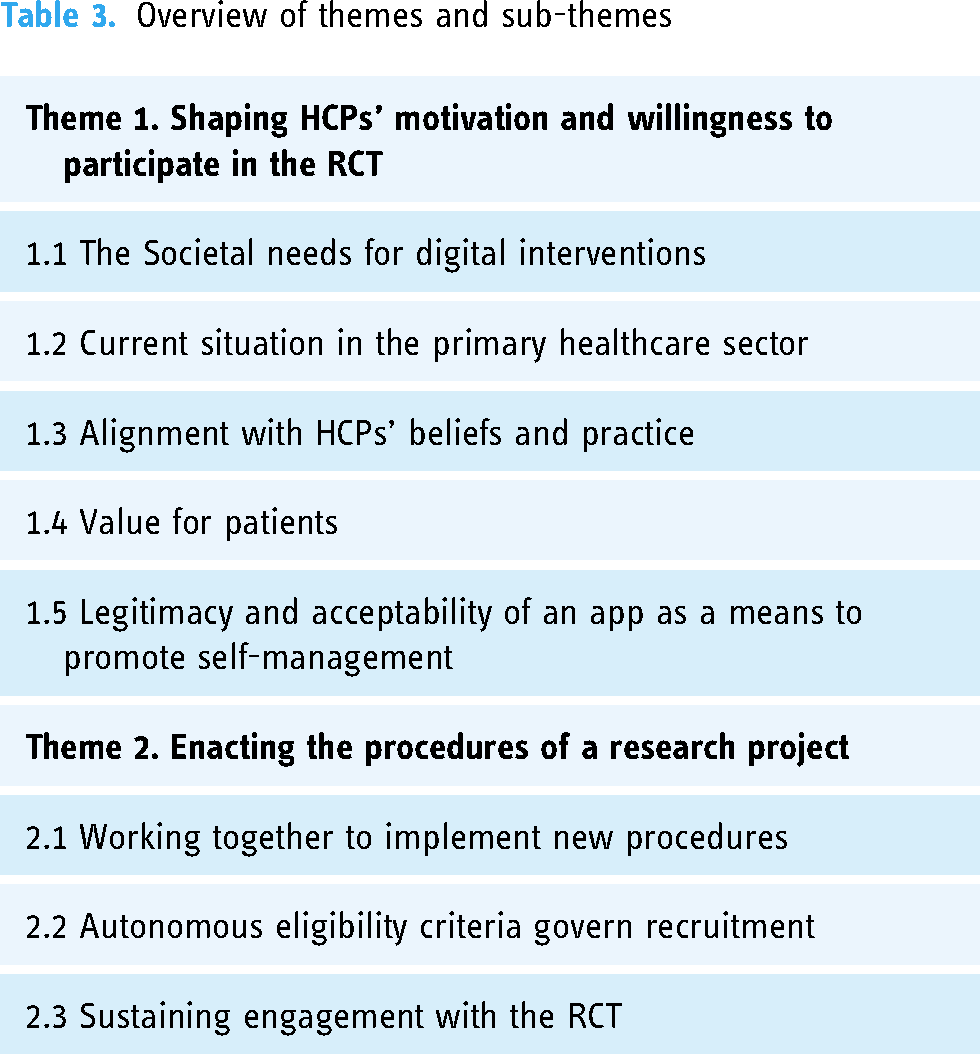
Theme 1: shaping HCPs’ motivation and willingness to participate in RCT recruitment
The societal need for digital interventions
HCPs acknowledged the increasing use of smartphones in society and the high levels of trust in digitally conveyed information, especially by younger people. However, concerns were expressed about the increased prevalence of musculoskeletal pain and LBP in society at large together with the need for people to exercise to stay healthy and the necessity of finding viable solutions to promote physical activity and healthy lifestyles. Chiro2_No: “But they all sit with a smartphone and everybody wants easy solutions.” Chiro1_No: “In a way, it is an important study, because, with the general increase in musculoskeletal disorders and back pain, I think, we need to find out more about what we can do and everybody knows that physical activity, movement and exercise is healthy and good.”
Current situation in the primary healthcare sector
GPs in particular felt that people with LBP were a large part of their workload but with few treatment options available. GP1_No: “… I think it is a really large group of patients, so I think it would be really good… because we need tools. I don’t always feel we have much time to go through all the exercises, and then it would be great if we had something concrete, and perhaps… it might become an alternative to the prescription pad or referrals…”
GP1_DK: “Also, there are some patients who can’t afford physiotherapy, but most have a smartphone.”
Alignment with HCPs’ beliefs and practice
The HCPs’ willingness to participate in the RCT was strongly linked to their beliefs about the importance of patient self-management and exercise when experiencing LBP and how that can be achieved. PT4_DK: “But it is the self-understanding that you [the patients] need to take responsibility when something needs to be done”.
PT2_No: “The thing about educating the patients in pain and understanding how they affect the pain, and how pain affects your behaviour, is something that emphasize a lot when I talk to my patients.”
In particular, PTs and chiropractors elaborated on the potential of the app as an extension of their current practice. A chiropractor explained how having “as many different tools as possible” (Chiro5_DK-1) in the toolbox was necessary to target different types of patients - the app might target patients that would otherwise not be easily supported.
PT4_DK: “I think there is a nice connection [between usual practice and selfBACK]. They [the patients] get the sense of how important is to do something themselves and find out what is good for them, what is the right direction to take. And the constant reminder, that is also a part of our job, to try to pass on the responsibility, because one thing is the visit here once a week or whatever, but we are only a tiny fraction of what needs to be done.”
The HCPs felt the app helped to reinforce their advice by repeating information given during the consultation. HCPs’ understanding of their professional roles and responsibilities concerning self-management influenced HCPs’ willingness to participate. One chiropractor perceived themselves as a guide, while the key to health mainly relied on the patient's work between consultations.
They described chiropractors as “motivators” with the obligation to “stimulate” (Chiro3_NO), while a PT articulated their role as “give them [the patients] the responsibility” (PT4_DK) for their health. However, one PT also recognized that many patients struggle to self-manage when treatment ends. PT1_DK: “They are often left somewhat on their own when they leave”
Finally, a few HCPs described an aspect of altruism in their professional roles by expressing an obligation to contribute to research and the development of their professions. A focus on their professions and practice and not specifically on their patients was described by two HCPs: PT3_DK: “We think it is interesting to be part of such projects and to be in developing the profession. We have students for the same reason, and because we have a responsibility when having a clinic as large as ours.”
Value for patients
Some HCPs’ motivation and perception of the potential value of the RCT was positively influenced by the possibility that the patient would be offered a specific treatment element (the app) when participating in the RCT, and that the content did not conflict with treatment already offered by the HCP (NPT construct: Coherence). PT5_DK: “There is a lot of research for the sake of research, and not so much [direct benefit] for the patient. In this project, they [the patients] would benefit continuously… and it is a supplement to what we do.”
Legitimacy and acceptability of an app as a means to promote self-management
The familiar content and perceived timeliness of the app as an innovative, assistive technology for patients, shaped HCPs’ agreement with the intervention as a means to promote self-management and value as a supplementary tool in clinical practice (NPT construct: Cognitive participation). Provided patients were informed about symptoms indicative of a serious pathology like cauda equina, HCPs approved of the app as safe to use. The scientific foundation and evidence-based content added to the perceived quality and trustworthiness of the app. GP2_No: “Back pain is rarely dangerous in any way, so I think it is safe for the patient. And it is so that there is always the possibility of adding red flags too, and if that happens, you [the patients] can contact a GP.”
GP2_NO: “But I’m against going around and over-registering all values during a day…if it is blood pressure, heart rate and so on, then, people become too occupied with health, and the slightest deviation can lead to horror and anxiety and over-use of health services at worst.”
When asked what could have been done differently, several HCPs would have liked to know more about how the selfBACK system tailored content to individual patients or would have liked to be able to follow up on or add content to the app.
Chiro2_DK: “I use apps for almost all patients, so I’m used to guiding people through the app… I go in and adjust the exercises the apps suggest, when I have them [the patients] in my consultation, so that I can find the threshold for what they can tolerate, but that is difficult [with the selfBACK app].”
These findings suggest that, although HCPs were generally positive about the app as a supplement to clinical care, it may also potentially infringe on clinical autonomy and decision-making.
Theme 2: enacting the procedures of a research project
Working together to implement new procedures
The HCPs commended the research team for setting up very easy-to-follow RCT procedures but described difficulties getting into new working habits (NPT construct: Cognitive participation). Further, the team was praised for being consistent and persistent in their contact with the clinics and HCP personnel. Frequent, personal follow-up visits created a sense of ownership of the project and kept the project at the forefront. “I think the personal contact was good, that everything isn’t done by email or telephone, but you actually meet…you probably have a little more, that is a deeper relationship to it [the RCT] and a little more ownership” (Chiro5_1_DK)
A chiropractor (Chiro3_DK) had delegated the responsibility of handling patient lists and following up on the HCPs’ work to the clinic secretary who regularly “poked” the HCPs for patients. At another clinic, recruitment was discussed at weekly staff meetings, and a competition was created to recruit the most patients.
High recruiters often described extra efforts or strategies that they had implemented to facilitate or sustain recruitment, which were not mentioned by low recruiters. For example, using visual cues (post-its or recruitment documents within eyesight, mugs) or making notes in patient files, to remind themselves to inform patients about the RCT. Often patient leaflets were distributed in multiple places in the clinics and in one PT clinic, electronic information screens in the waiting area were used to inform the patients about the RCT. “We actually had some [leaflets] all over the place, also in the office where we sit by the computer. And that was intentional so that we would remember.” (PT4_DK)
“We have a maximum number of projects that we can handle in the clinic, both in relation to us [the HCPs] and the secretaries who are also involved in providing information” (Chiro1_DK)
Working together with other staff members and creating communities of practices beyond what was requested by the research team increased buy-in to drive recruitment procedures forward and contrasted with low recruiters who were less likely to mention specific strategies or did not get around to implementing intended initiatives.
Autonomous eligibility criteria govern recruitment
In addition to the RCT eligibility criteria, most HCPs added a layer of their own criteria when recruiting patients (NPT construct: Cognitive participation). The individual criteria differed between high and low recruiters and were sometimes conflicting in nature.
High recruiters generally found it easy to decide which patients to include, and a GP (GP2_No) stated that s/he simply informed all LBP patients about the RCT. The GP mentioned telling the patients about the project briefly and letting the research team do the rest. Most HCPs described striving to find “the right” patients. Several high recruiters selected patients with more LBP episodes and longer duration of pain as eligible candidates, while not recruiting those with short duration of LBP and few symptoms. Other criteria mentioned were patients who were perceived to need structure, self-management tools and exercise, those with little time to exercise and those who are tech-savvy. Some high recruiters mentioned not recruiting patients who were perceived to be demotivated for self-management or not committed to treatment in general. “So, there might have been some that I excluded as I was thinking, this is never going to… you will never live up to this anyway. I also think people had to deserve it a little.” (Chiro3_DK)
“You get a feel of how positive in general they are, while others are more like life is a struggle and things are a burden, and to saddle someone with an extra task, I think that becomes too much overload on a person in a way. So, kind of the entire life situation, perhaps also.” (Chiro1_No)
To be able to evaluate these criteria, some low recruiters described needing to know the patient well and often waiting until later in a course of treatment, at which point the patient had improved and become ineligible for the RCT.
When discussing their personally defined criteria, HCPs did not agree about the relevance of the RCT and the app for patients with more severe or longstanding problems, with low recruiters applying stricter personally defined criteria. Low recruiters were highly selective in whom they would offer the RCT to and, thus, continuously made decisions on behalf of their patients.
Sustaining engagement with the RCT
Most patients accepted the invitation, which spurred HCPs to continuously support the RCT and recruit more patients (NPT construct: Collective Action). Further, HCPs explained that it was easier to “sell” the RCT to patients who already “bought into” the self-management concept or were positive about self-monitoring and exercise – this reinforced their continuous support for the RCT. Some would even have liked the eligibility criteria to be broader so more patients would have received the offer. “We have a lot of those NOT eligible, unfortunately. And the only downside was that we were sorry, we couldn’t simply send a bunch [of patients] to you. Because, if it had been everybody with back pain, we would have bombarded you [with patients].”
Integration of quantitative and qualitative results and interpretations
The convergence of the quantitative and qualitative findings and meta-inferences are presented in Table 4. Areas of complementarity showed that the HCPs’ motivation to participate and recruit patients was shaped by a balance between recognizing the need for change in clinical practice and society and the daily challenges of high workload and stress. The urgency of the study was linked to the volume of LBP patients, and HCPs’ confidence and perceived treatment options, which varied by profession. While there was overall enthusiasm for the self-management app and patient education, survey results revealed HCPs questioning specific app components, potentially due to perceived infringement on traditional professional roles. Professional identities influenced RCT procedures, with some clinicians displaying an authoritarian approach, while others embraced innovation and collaboration, fostering a sense of ownership in the project and commitment to recruitment.
Comparison and contrasts of quantitative and qualitative findings and interpretations.

Areas of
Areas of
Areas of
Areas of
*Agreement is defined as those who have answered “agree” or “completely agree” in the survey.
Abbreviations: GP = general practitioner, Chiro = chiropractors, PT = physiotherapists, HCP = Healthcare provider.
Discussion
We have examined the engagement of HCPs with the recruitment of potential selfBACK RCT participants and the HCPs’ perception of the selfBACK app. While many clinicians displayed high interest in the study, believing it was relevant and timely, recruitment was still challenging because of busy schedules and competing tasks. This was despite the study procedures being perceived as easy to follow, and the engagement and effort of the study teams being appreciated. Consequently, there was a large variation in the number of patients recruited by different HCPs, reflective of different flows of LBP patients, with chiropractors seeing many more LBP patients, but also by approaches to engagement with the study and hesitancy by some HCPs. Importantly, we have shown that HCPs were generally positive (84–89%) about the self-management advice given by the app and so this seems likely to facilitate future uptake and utilization. While there was overwhelming enthusiasm for the concept and potential of the selfBACK app and overall satisfaction with the app's self-management plans, there were still some questions relating to the app content, particularly relating to concerns about insufficient tailoring or a belief that the app could challenge patients to do more.
Previous investigations have indicated that HCPs have various motivations, experiences and personal preferences regarding DHIs that significantly influence their endorsement of DHIs for patients with chronic pain conditions in clinical practice. 7 HCPs’ added workload and shortage of resources are further barriers to the implementation of DHIs in routine healthcare practice across a large range of conditions.8,25 These findings are in line with ours, and it would therefore appear that such views also translate to clinical trial studies. By inviting HCPs to both recruit patients and engage in a novel type of treatment, we increased the workload considerably. Having had designated research staff to undertake the recruitment and reduce the burden for the HCPs, the HCPs’ perception of the app might have been different.
In concordance with traditional professional roles, education and exercise prescription was mainly employed by PTs and chiropractors. 26 These two professions, and especially PTs, expressed a preference for maintaining control over planning patient care programs, including the flexibility to adapt or modify the app content. The overall high agreement with the educational components suggests that the content was perceived to have some universal validity. In contrast, the lower agreement with the presented exercises may reflect the HCPs’ personal preferences and idiosyncrasies regarding the choice of exercises. The desire for autonomy aligns with findings from various HCPs, who share concerns about maintaining authority in patient care when using digital tools.27–29 Although not directly voiced, the interference of digital tools on the rapport and trust in the patient-provider relationships found in other studies, may also potentially have impacted the recruitment and perception of the app in the present study.27,30,31
We have identified important factors that align well with other literature on barriers to recruitment in RCTs,32,33 and which need to be addressed if self-management apps and other types of DHI are to be implemented in clinical care. It is important to understand the motivation for HCPs to engage in DHIs and how the reality of their daily workloads is balanced against their beliefs and values. The HCPs’ engagement was partly determined by their professional identity; the paternalistic, traditional authoritative figure, who made decisions on behalf of the patient or the innovator and collaborator who was invested in the potential of a DHI for LBP. Finally, DHIs, like the selfBACK app, may be perceived by some HCPs as compromising their professional autonomy, which may pose a significant barrier to implementation, something that needs to be considered when introducing DHIs into research projects and clinical practice.
This study has several strengths, including a mixed-methods approach and a large dataset consisting of results from five data sources that have been integrated using joint displays and NPT as a guiding theory for data collection and analysis. The study also has limitations. Due to the recruitment strategy in Denmark, we could not identify the number of actively recruiting individual Danish HCPs or calculate the Danish response rates in the survey, which may limit the generalisability of our recruitment results. Although we had high acceptance rates, and few HCPs declined to participate, the participating HCPs were self-selected and likely more enthusiastic about the topic than clinicians in general. Thus, we have not heard the voices of those declining participation, particularly Danish GPs, nor the secondary spine centre personnel. Further, the voices of patients are not included here, but have been reported elsewhere. 10 Interviews with HCPs were in a few instances short and conducted by interviewers with moderate experience in interviewing. The qualitative data collecting finished as the time and funding for the selfBACK study concluded, and we did not formally assess saturation, although, from analysis, it is our impression that saturation was reached. The results are specific to the contexts that apply to the primary care sector and the three groups of HCPs in Denmark and Norway, and other conclusions may have been drawn if the study had been conducted elsewhere. We used an outcome-based honorarium to compensate the participating clinics and HPCs for their time and effort in recruiting patients, which may have impacted their decision-making process in the recruitment process and incentivized them to put undue pressure on the patients. 34 However, we did not see any indication of this. Rather, the HCPs restricted their recruitment by adding their own inclusion criteria aligned with their beliefs and values.
Conclusion
We have identified factors that impact HCPs’ engagement in recruiting patients for the selfBACK RCT and demonstrated strong approval of the app content, albeit with some concerns about the content and tailoring of the app content. The study focus triggered high interest among HCPs, and that along with easy-to-follow trial procedures and engaged research teams supported the HCP in recruiting patients. Nonetheless, recruitment of patients was still challenging for some due to competing tasks and workload. The selfBACK app and other similar DHIs must be considered both useful and trustworthy by HCPs for them to recommend such tools to their patients. Thus, understanding HCPs motivations and workload is crucial for the successful implementation of DHIs in clinical practice. To ensure buy-in from HCPs and trust in future DHIs, we recommend using a robust, theory-driven development process that takes into consideration clinicians’ input at the early stage and throughout the development and implementation phases.
Supplemental Material
sj-pptx-1-dhj-10.1177_20552076241313159 - Supplemental material for The engagement of healthcare providers in implementing the selfBACK randomised controlled trial – A mixed-methods process evaluation
Supplemental material, sj-pptx-1-dhj-10.1177_20552076241313159 for The engagement of healthcare providers in implementing the selfBACK randomised controlled trial – A mixed-methods process evaluation by Mette Jensen Stochkendahl, Barbara I Nicholl, Karen Wood, Frances S Mair, Paul Jarle Mork, Karen Søgaard and Charlotte DN Rasmussen in DIGITAL HEALTH
Supplemental Material
sj-docx-2-dhj-10.1177_20552076241313159 - Supplemental material for The engagement of healthcare providers in implementing the selfBACK randomised controlled trial – A mixed-methods process evaluation
Supplemental material, sj-docx-2-dhj-10.1177_20552076241313159 for The engagement of healthcare providers in implementing the selfBACK randomised controlled trial – A mixed-methods process evaluation by Mette Jensen Stochkendahl, Barbara I Nicholl, Karen Wood, Frances S Mair, Paul Jarle Mork, Karen Søgaard and Charlotte DN Rasmussen in DIGITAL HEALTH
Supplemental Material
sj-docx-3-dhj-10.1177_20552076241313159 - Supplemental material for The engagement of healthcare providers in implementing the selfBACK randomised controlled trial – A mixed-methods process evaluation
Supplemental material, sj-docx-3-dhj-10.1177_20552076241313159 for The engagement of healthcare providers in implementing the selfBACK randomised controlled trial – A mixed-methods process evaluation by Mette Jensen Stochkendahl, Barbara I Nicholl, Karen Wood, Frances S Mair, Paul Jarle Mork, Karen Søgaard and Charlotte DN Rasmussen in DIGITAL HEALTH
Footnotes
Acknowledgements
We thank chiropractors Andreas Østergaard and Simon Alstrup Hansen for collecting data for the vignette study as part of their master thesis project. We thank Marlene Jagd Svendsen for contributing to the design of the study and for conducting the interviews.
Author contributions
All authors took part in designing the study. MJS performed the qualitative analysis supported by BN, KW, FM and CDNR. CDNR and MJS analysed the quantitative data. MJS compared and contrasted the data supported by BN and CDNR. Abstraction and interpretation of results were discussed during multiple meetings with all co-authors. MJS drafted the manuscript with significant contributions from BN and CNR. All authors provided feedback on versions of the draft manuscript and approved the final version.
Availability of data and materials
The data is available (in original language) from the corresponding author upon reasonable request.
Competing interests
All authors declare that they have no competing interests. After ending the RCT study, selfBACK was licensed to the Norwegian University of Science and Technology's Technology Transfer Office and a third party. The researchers do not have any personal financial benefits from working with the study.
Ethics approval and consent to participate
The RCT, which this evaluation was part of, was approved by the Danish Data Protection Agency and regional ethics committees in Denmark and Norway. All participants provided written informed consent before trial enrolment.
Funding
The authors disclosed receipt of the following financial support for the research, authorship, and/or publication of this article: This work was supported by the European Union Horizon 2020 Research and Innovation Program, (grant number 689043).
ORCID iDs

Supplemental material
Supplemental material for this article is available online.
References
Supplementary Material
Please find the following supplemental material available below.
For Open Access articles published under a Creative Commons License, all supplemental material carries the same license as the article it is associated with.
For non-Open Access articles published, all supplemental material carries a non-exclusive license, and permission requests for re-use of supplemental material or any part of supplemental material shall be sent directly to the copyright owner as specified in the copyright notice associated with the article.
