




Abstract
Introduction
COVID-19 is one of the most severe global health events in recent years. Google Trends provides a comprehensive analysis of the search frequency for specific terms on Google, reflecting the public's areas of interest. As of now, there has been no bibliometric study on COVID-19 and Google Trends. Therefore, the aim of this study is to perform a comprehensive bibliometric analysis of existing Google Trends research related to COVID-19.
Methods
We retrieved 467 records from the Web of Science™ Core Collection, covering the period from January 1, 2020, to December 31, 2023. We then conducted scientific metric analyses using CiteSpace, VOSviewer, and the Bibliometrix package in R-software to explore the temporal and spatial distribution, author distribution, thematic categories, references, and keywords related to these records.
Results
A total of 467 valid records, comprising 418 articles and 49 reviews, were collected for analysis. Over the 4 years, the highest number of publications occurred in 2021. The United States had the most published papers, followed by China. Notably, the United States and China had the closest collaborative relationship. Harvard University ranked as the institution with the highest number of published papers. However, there appeared to be a lack of collaboration between institutions. The research hotspots related to COVID-19 in Google Trends encompassed “outbreak,” “epidemic,” “air pollution,” “internet,” “time series,” and “public interest.”
Conclusion
This study provides a valuable overview of the directions in which Google Trends is being utilized for studying infectious diseases, particularly COVID-19.
Introduction
COVID-19 has emerged as one of the most significant global health emergencies in recent decades. 1 While the pandemic era appears to be nearing its end, the shadow of the COVID-19 epidemic continues to linger. Humanity has collectively transitioned into the post-COVID-19 era, yet the enduring effects of the virus continue to significantly impact various systems within the human body, including the cardiovascular, nervous, and endocrine systems. These aftereffects are manifested in symptoms such as fatigue and cognitive dysfunction, among others. Given these circumstances, there is an urgent need to thoroughly review and interpret the long-term implications of COVID-19.2,3 Throughout the pandemic, countless individuals worldwide are turning to online platforms to seek information about COVID-19, making web search queries an invaluable resource for understanding public concerns. 4 Google Trends, a freely accessible online database, compiles data from Google searches dating back to 2004. This tool enables comprehensive analysis of the frequency of Google searches for specific terms, offering insights into longitudinal population-level changes. Presently, the utilization of Google Trends analysis is widespread, encompassing predictions of critical social outcomes such as disease spread, key economic indicators, and even the assessment of psychological health symptoms and requirements within a population. 5 In the post-pandemic era, recognizing the utility of Google Trends for COVID-19 is beneficial for addressing potential future pandemic outbreaks. Bibliometric analysis involves the quantitative statistical examination of publications, aiding researchers in comprehending the historical development, current trends, and focal areas within a specific field. Initially proposed by Pritchard in 1969, bibliometrics has become an essential tool within the scientific research process.6,7 Through bibliometric analysis, researchers employ data quantification methods to qualitatively and quantitatively assess publication characteristics, swiftly grasp key research domains, evaluate the quality and impact of research results, and formulate future research directions. Moreover, bibliometric analysis facilitates the identification and tracking of specific authors or research groups, furnishing insights into the development and popularity of their publications within a particular field. While bibliometrics is now widely employed across various disciplines, its application in investigating infectious diseases using Google Trends research remains limited.
In this study, we employed bibliometric analysis methods to conduct a pioneering examination of the utilization of Google Trends for COVID-19 pandemic. This allowed us to gain a comprehensive understanding of the overall landscape and emerging trends in COVID-19-related publications based on Google Trends, unveiling prospective role of Google Trends in COVID-19 pandemic.
Materials and methods
Search strategy
For our study, all the publications related to Google Trends and COVID-19 were obtained from the Web of Science Core Collection (WoSCC). The literature search was conducted on December 31, 2023, using the following search strategy: TS = (COVID-19 OR SARS-CoV-2 OR novel coronavirus OR 2019-nCoV OR pandemic) AND TS = (Google Trends). The search was limited to the time span of 3 years, from January 1, 2020, to December 31, 2023. Only publications written in English and classified as articles or reviews were included in analysis. After removing the duplicates manually, a total of 467 valid records comprising 418 articles and 49 reviews were collected from WoSCC as the final data set for further analysis (Figure 1).

Flowchart illustrating the detailed selection criteria and bibliometric analysis process for Google Trends and COVID-19 research in the Web of Science Core Collection database.
Data analysis
CiteSpace is one of the software commonly used in bibliometric analysis.8,9 In this study, CiteSpace V6.2.R4 was used to analyze the keywords burst detection of the top 25 keywords with the strongest citation bursts. The parameters for CiteSpace in analyzing keyword mutations were as follows: Years Per Slice: 1; Term Source: Title, Abstract, Author Keywords, and Keywords Plus; Node Types: Keywords; Link Strength: Cosine; Links Scope: Within Slices; Selection Criteria: g-index (k = 25); Pruning: Pruning sliced networks and minimum spanning tree. The remaining parameters used the default settings of the software.
VOSviewer is widely utilized to construct maps of authors or journals based on co-citation data, or to generate maps of keywords based on co-occurrence data. 10 In our study, we utilized VOSviewer 1.6.18 to perform the co-authorship, co-citation, co-occurrence analysis. In conducting institution co-authorship analysis, we modified the VOSviewer thesaurus file to merge organizations from the same institution. The remaining parameter settings were detailed in the Results section, while parameters not described are set to the software's default settings.
Bibliometrix package in R-Studio V4.2.1, which is designed for bibliometric analysis, was employed to analyze literature and visualize bibliometric data, such as creating a country collaboration map. 11 In addition, the tidyverse package, tidyquant package, and ggplot2 package in R-Studio V4.2.1 were used to create a double y-axis plot of the distribution of publications and citations. Bibliometrix R package, programmed in R for comprehensive bibliometric analysis, was used to conduct a comprehensive scientific map analysis, such as the analysis of the most local cited journals.
Results
Temporal distribution map of the publications and citations
Research on COVID-19 and Google Trends commenced in 2020 with 81 publications (17.3%). The highest number of publications occurred in 2021 (n = 163, 34.9%), followed by 2022 (n = 139, 29.8%) (Figure 2). However, as of December 31, 2023, there were only 84 publications for the year 2023, which represented a significant decrease compared to the previous 2 years. This decline could potentially be attributed to the development of vaccines and changes in policies, which may have reduced the level of public attention and interest in COVID-19. The total number of citations for these publications was 7470, with an average of 16.00 citations per paper (Figure 2). Moreover, the H-index, a metric used to assess the productivity and impact of authors’ work, was 42. This indicates a strong influence and recognition of the research in this field.

The distribution of annual publications and citations from 2020 to 2023.
Distribution of countries/regions
The 467 publications analyzed in our study originated from 87 countries/regions (Figure 3(A)). The USA had the highest number of publications (n = 141, 30.2%), followed by China (n = 53, 11.3%), Italy (n = 44, 9.4%), and England (n = 44, 9.4%) (Figure 3(B)). These four countries collectively accounted for more than half of the total publications, highlighting their significant research interest in the intersection of COVID-19 and Google Trends. To visualize the collaborative efforts among countries with at least two publications, we constructed a countries’ collaboration world map (Figure 4). China and the USA, in addition to having the highest publication counts, exhibited extensive collaborations both with each other and with other countries. However, it is worth noting that some countries, like China and Italy, while contributing substantially to the overall number of papers, had comparatively fewer partnerships with other institutions, suggesting potential areas for increased collaboration.
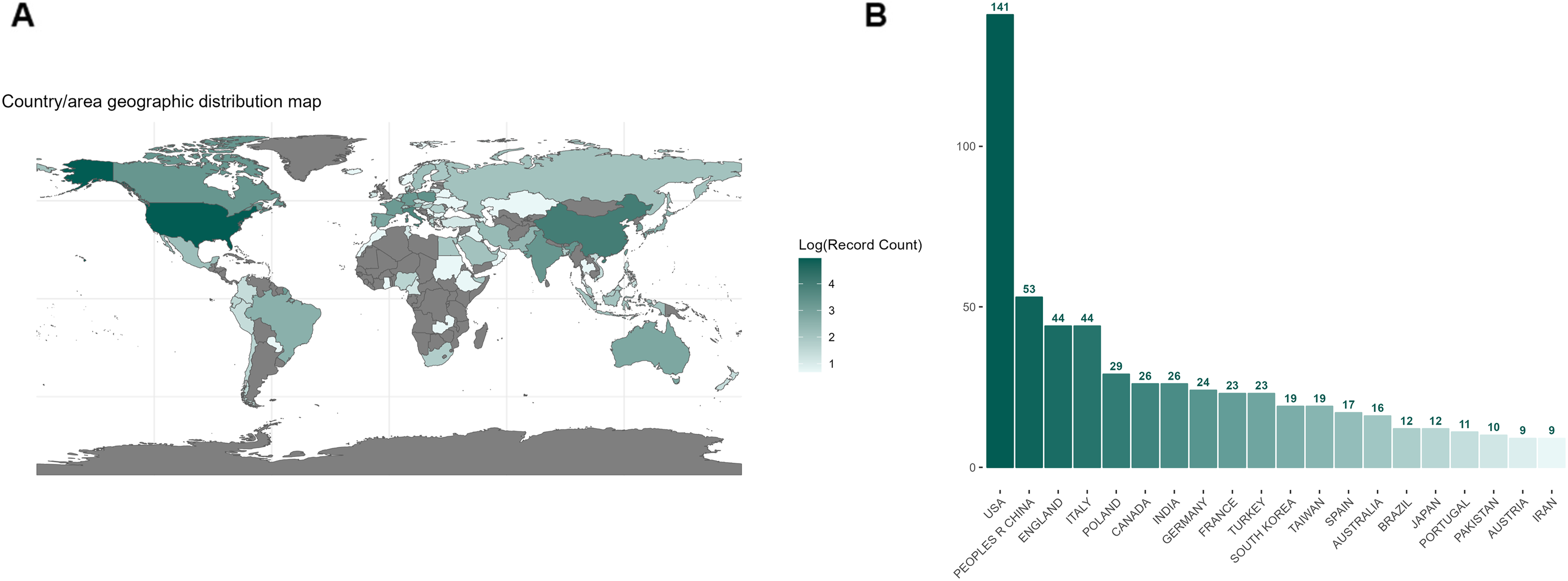
Bibliometric analysis of COVID-19-related publications based on Google Trends (January 1, 2020 to December 31, 2023). (A) The distribution map of geographical publications by country/region. (B) The number of publications of the top 20 counties/regions.

The country collaboration world map.
Distribution of research institutions
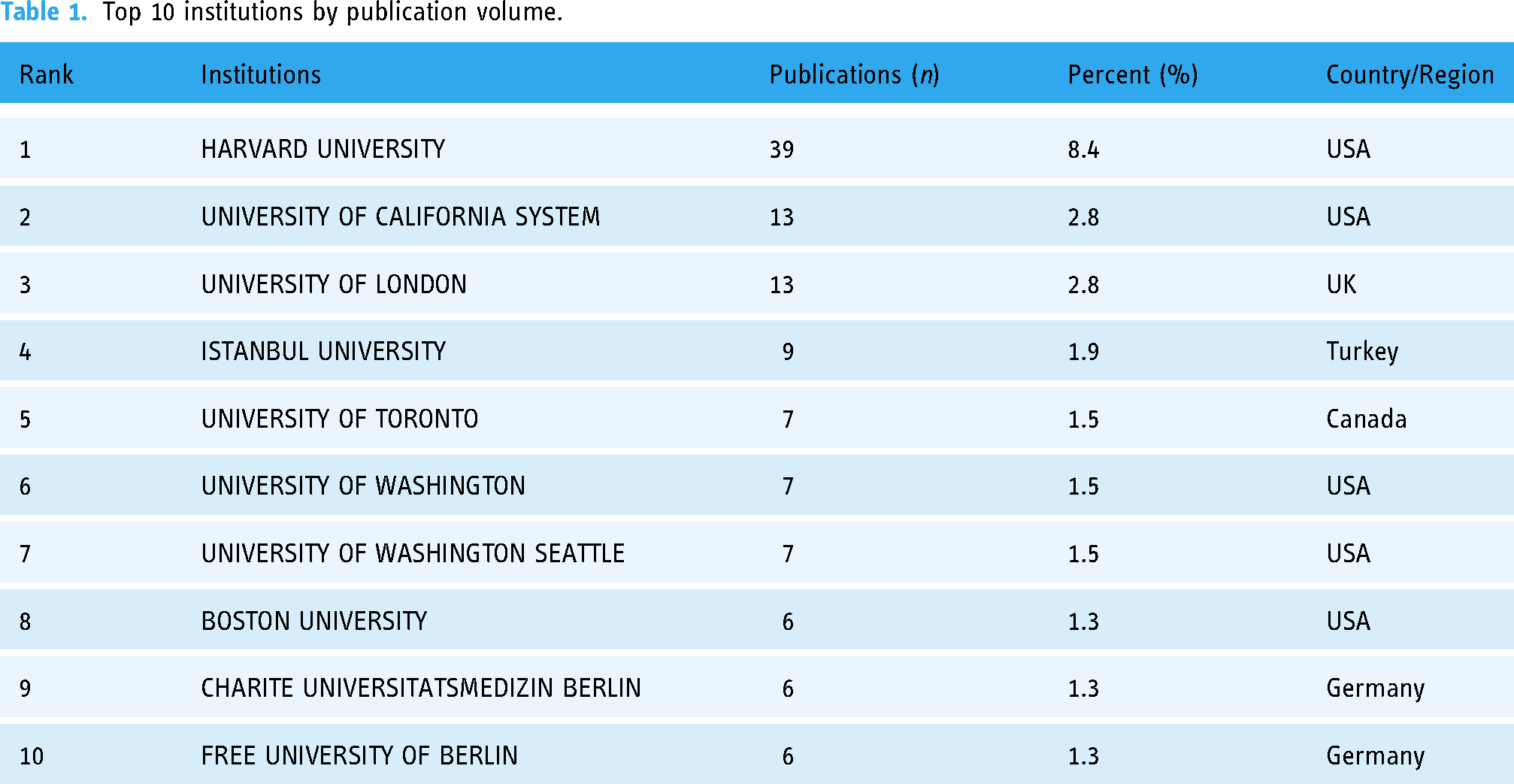
Among the 1110 institutions involved in the publications, Harvard University led with 39 publications, followed by University of California System (n = 13), University of London (n = 13), Istanbul university (n = 9), and University of Toronto (n = 7) (Table 1). Further exploring collaboration patterns, we examined a collaborative network involving 178 institutions that each had published at least 2 papers (Figure 5). The analysis revealed that Harvard Medical School closely collaborated with the University of Washington and the Boston University, Yonsei University, and National Taiwan University. In addition, we noted that China and Italy, despite publishing a lot of papers, did not have institutions from either country in the top 10. Overall, there has been relatively limited collaboration between institutions in the context of COVID-19 and Google Trends research.

The institution co-authorship analysis.
Top 10 institutions by publication volume.
Authors and co-cited authors
A total of 2153 authors participated in COVID-19 and Google Trends research, with 4 authors meeting the minimum threshold of five publications. We have chosen authors who have published more than two articles and have created a collaborative network diagram (Figure 6). Among them, Kardes Sinan was the most productive researchers with nine publication and demonstrated extensive collaboration with other researchers (Table 2). Co-citation refers to the scenario where two or more articles are cited simultaneously by one or more papers, indicating a co-citation relationship between those articles. Among the 14,265 co-cited authors, 9 authors were co-cited more than 50 times. To visualize these co-citations, we selected authors with a minimum co-citation count of 10 and created a co-citation network graph (Figure 7). Notably, Mavragani A (n = 175) emerged as the most frequently cited author, followed by Eysenbach G (n = 114) and Nuti SV (n = 73).

The author co-authorship analysis.

The author co-citation analysis.
Top 10 authors by number of publications and citations.

Journals and co-cited journals
Regarding the number of published papers, the top 5 categories in COVID-19 and Google Trends research were Public Environmental Occupational Health, Environmental Sciences, Multidisciplinary Sciences, Health Care Sciences Services, and Medical Informatics (Table 3). A total of 255 academic journals have contributed papers on this topic, with 7 journals publishing at least 10 papers (Table 4). The Journal of Medical Internet Research had the highest number of publications (impact factor [IF] = 7.4) (n = 30, 6.4%), followed by the International Journal of Environmental Research and Public Health (IF = 4.614) (n = 22, 4.7%) and PLoS One (IF = 3.7) (n = 21, 4.5%).
Top 20 categories in COVID-19 and Google Trends.

Top 10 journals by number of publications.

IF: impact factor; Source: Journal Citation Reports 2022.
We analyzed the most cited journals and presented the top 20 journals. Journal of Medical Internet Research was the most cited journal (n = 504), followed by PLoS One (n = 457), Lancet (n = 249), International Journal of Environmental Research and Public Health (n = 232). Journal of Medical Internet Research, International Journal of Environmental Research and Public Health, PLoS One, JMIR Public Health and Surveillance, and Scientific Reports were both the top 10 publishing journals and the top 10 cited journals (Figure 8(A)). In terms of co-cited journals, a total of 310 journals were cited at least 10 times (Figure 8(B)). The Journal of Medical Internet Research ranked as the top co-cited journal, leading in both publication count and citation count (n = 504). Following closely, the second-ranked co-cited journal in terms of both publication count and citation count was PLoS One (n = 458). Notably, although The Lancet did not publish any papers directly related to COVID-19 and Google Trends in our search strategy, it ranked third in terms of citation count (Figure 8).

Citation of journals
Co-cited references
Highly cited papers, serve as indicators of groundbreaking research within a specific field, playing crucial roles in identifying influential research. We also compiled a list of the top 10 highly cited publications on COVID-19 and Google Trends (Table 5). All of these publications received more than 20 citation times. Among them, the paper by Venter et al., published in Proceedings of the National Academy of Sciences of the United States of America, received the highest number of citations,12,13 followed by the paper by Cuan-Baltazar et al., published in JMIR Public Health and Surveillance.14,15 In terms of co-cited references, a total of 64 references were cited at least 10 times and we have created a collaborative network diagram (Figure 9).

The reference co-citation analysis.
The top 10 most cited references.
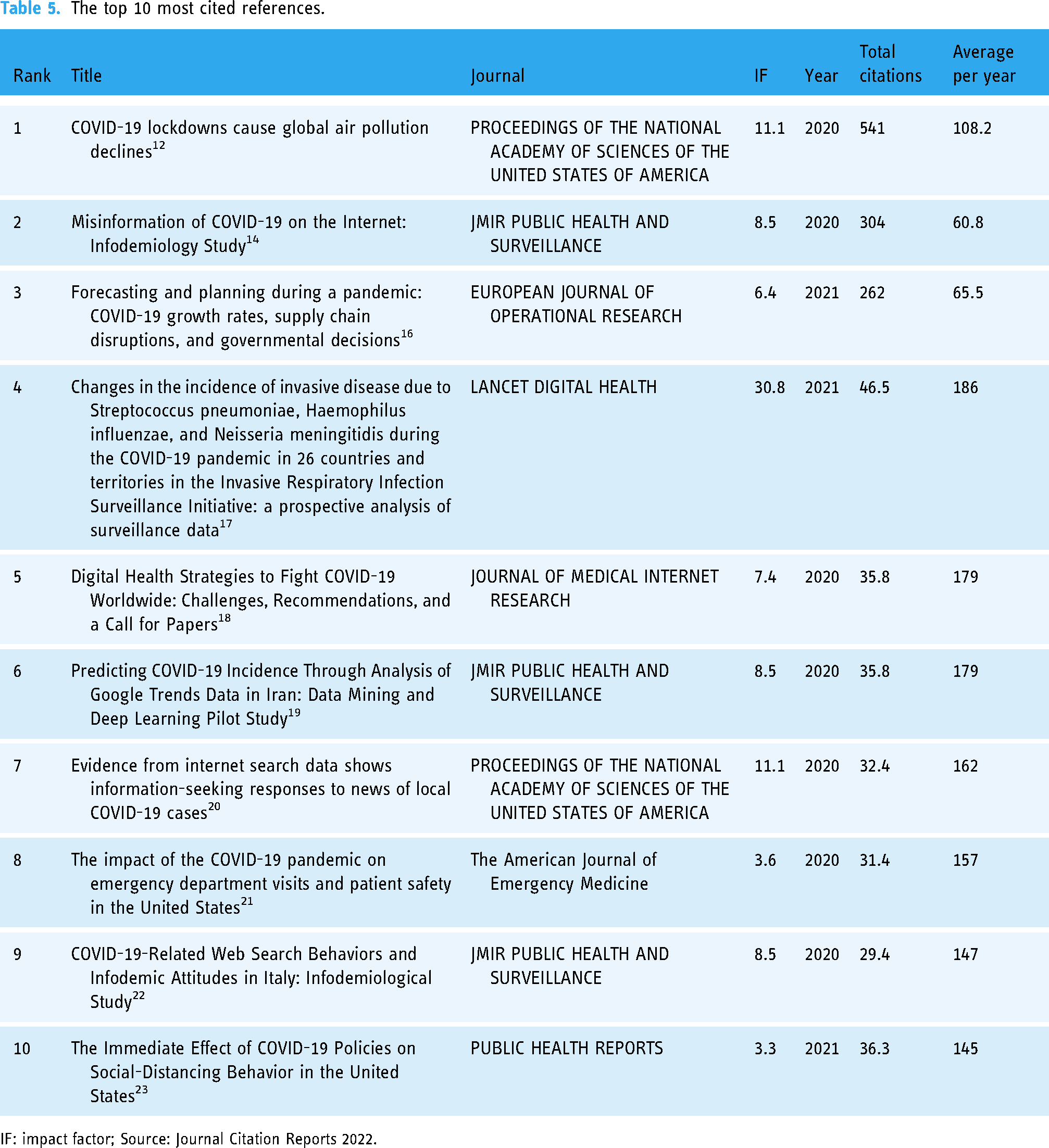
IF: impact factor; Source: Journal Citation Reports 2022.
Keywords and keywords bursts analysis
Keywords serve as the author's concise summary of the essential aspects of their article. In bibliometrics, “keyword bursts” denote a marked shift in the frequency or significance of keywords within a specific field or topic over a given timeframe. Keyword bursts can be identified and described through the analysis of keywords in a series of documents, helping researchers understand the development dynamics and changing trends in specific areas. In addition, keyword co-occurrence analysis can help identify research hotspots and their distribution in a field. In our study, a total of 2005 keywords were identified among the 467 publications, with 88 keywords appearing at least five times. We conducted a keyword co-occurrence analysis and generated a network visualization graph, which revealed the presence of seven distinct clusters (Figure 10). The red cluster mainly included behavior, search, misinformation, online health information, vaccine, fake news, communication, vaccination, coronavirus, social media, infodemiology, media, public health, twitter, vaccine hesitancy, trend, information, and infodemic. The green cluster mainly included pandemics, cancer, mortality, model, prevention, deep learning, incidence, management, machine learning, mental-health, prediction, internet, forecasting, google trends, quality, outcomes, and time-series. The blue cluster mainly comprised transmission, influenza, united-states, children, disease, prevalence, suicide, search trends, seasonality, epidemiology, infection, outbreak, and surveillance The yellow cluster mainly consisted of scopus, covid-19 pandemic, sars-cov-2, health, impact, google-scholar, countries, care, science, air quality, antimicrobial resistance, and education. The purple cluster consisted of covid-19, trends, risk, pandemic, lockdown, systems, time, population, social distancing, epidemic, mobility, and tool. The cyan cluster was composed of public interest, telemedicine, telehealth, infoveillance, digital health, health information, big data, infectious disease, and immunity. The orange cluster was made up of depression, insomnia, gender, stress, anxiety, mental health, and google (Figure 10). Based on the co-citation network, we also conducted emergent word detection for the keywords. The top 25 keywords with the strongest citation bursts in COVID-19 and Google Trends were reported (Figure 11). Among them, “public health” had the strongest citation bursts, followed by “outbreak,” “epidemic,” “air pollution,” “internet,” “time series,” and “public interest” (Figure 11). We selected six keywords that overlapped or were similar in co-occurrence analysis and keyword bursts in 2023 (Figure 12). The results revealed that keywords across different clusters exhibited a complex network of associations. Overall, the interconnections among the red, purple, and green clusters were observed to be more closely related (Figure 12).

The keyword co-occurrence analysis.

The top 25 keywords with the strongest citation bursts. The blue lines in the graph represent the timeline, and the red lines above the blue ones represent the start and end time of keyword occurrences. The length of the blue lines represents the duration of time.
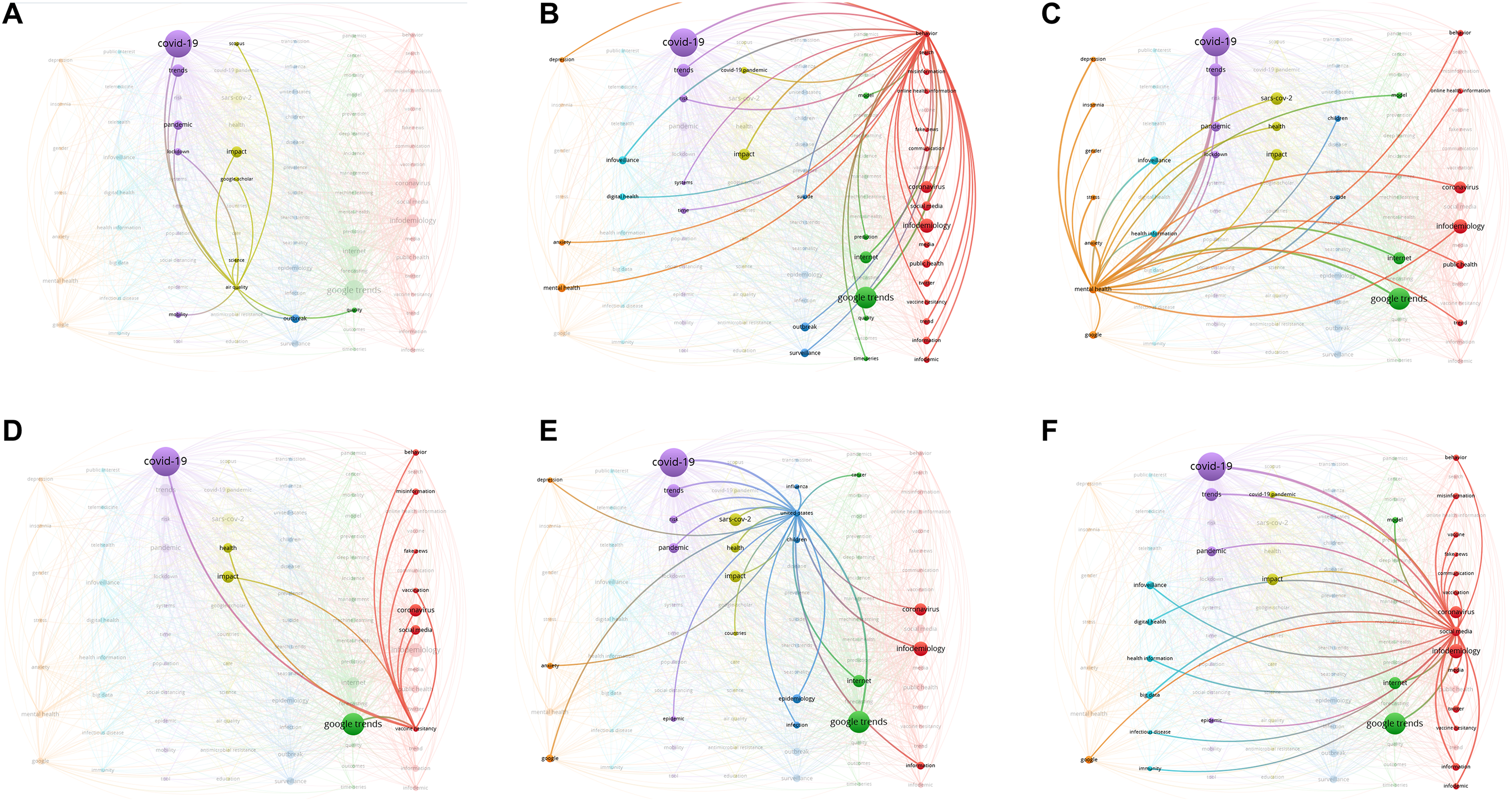
The relationship of six keywords that coincide or are similar in 2023 in the keyword co-occurrence network in keyword mutation and keyword co-occurrence analysis. (A) “air quality,” (B) “behavior,” (C) “mental health,” (D) “vaccine hesitancy,” (E) “United-States,” and (F) “social media.”
Discussion
In conclusion, our study represents the first bibliometric analysis of COVID-19 and Google Trends, providing a comprehensive assessment of the literature across various aspects such as publication years, countries, institutions, authors, disciplines, journals, and keywords.
The publication of articles on COVID-19 and Google Trends began in 2020, peaked in 2021, and had significantly decreased by December 31, 2023. America was the leading country in the fields related to COVID-19 and Google Trends, accounting for 30.2% of the total number of studies. Furthermore, China has also made key contributions, which accounted for more than a tenth of the research conducted. Among the top 10 productive countries, China, India, and Turkey are developing countries. 24 As China (with a population of 1.4 billion) and India (with 1.36 billion) stand as two of the world's most populous countries, any increase in the incidence rate or mortality within their borders could lead to immeasurable and severe consequences.25,26 Therefore, we recommend that China, India, and Turkey, particularly China and India, establish international collaborative platforms and organizations. This proactive approach would involve seeking closer collaborations with scholars and institutions from both developing and developed countries. Such collaborations would facilitate the sharing of resources, knowledge, and technology, thereby expediting advancements in scientific research. 25 Harvard University was the most productive institution among the 1110 institutions involved in the publications, followed by University of California system. In the collaborative network consisting of 183 institutions, the majority of the research involved relatively limited collaboration. Among the top 10 institutions, 50% are from the United States, while China and India, despite their large publication outputs, do not have any institutions within the top 10. Both the collaborative network maps of institutions and authors appear relatively scattered. Kardes Sinan has taken a good lead among the researchers, with 9 publications and showed wide collaboration with others. The most productive authors primarily come from the USA and China, while the most frequently cited authors are mainly from the USA, Poland, and China. Among the top 10 most productive authors, eight were also among the most cited authors. The research topics of these authors spanned multiple areas, including changes in public attention to various diseases such as myocarditis, gastrointestinal disorders, hepatobiliary and pancreatic diseases, kidney diseases, pediatric immunological diseases, and oral health.27–30 They also explored mental health issues, such as depression and anxiety, 31 as well as the impact of human mobility restrictions and epidemic control measures (such as home isolation and social distancing) on disease transmission.32,33 Additionally, their research investigated the role of information epidemiology in information dissemination and public perception, particularly in the identification and prediction of disease outbreaks. 31 In addition, they examined public interest in treatments and interventions, such as anti-rheumatic drugs and vaccines. 34 In our author collaboration analysis, the network was broadly divided into two collaborative clusters, which are connected through the author Pei, Sen. The research conducted by Pei and colleagues primarily focuses on using big data (such as big data monitoring, mobile data analysis, etc.) to monitor public health issues and social behaviors in real-time (such as mental health monitoring related to pandemics, economic stress, suicidal behavior, etc.), particularly during the COVID-19 pandemic, with the goal of enabling timely intervention and decision-making.35,36 However, most authors’ collaborations were limited to collaborations within the team and were destitute of international collaborations. In the current research environment, one reason for the lack of cooperation between institutions is that research often focuses on specific areas, such as COVID-19 and Google Trends, which may reduce the willingness for interdisciplinary collaboration. Additionally, barriers to data access play a significant role; for example, in certain regions (such as China), the unavailability of Google search leads to the exclusion of research data from these areas, thereby affecting collaboration opportunities with researchers from other countries. Lastly, the lack of previous collaborative history makes institutions more cautious in future collaborations, diminishing their willingness to cooperate. Increasing evidence suggests that greater inter-institutional communication and collaboration among authors may be associated with higher research productivity and quality.37,38 Therefore, there is a need to expand the collaborative network between institutions and authors, particularly with the network of American universities.
The Journal of Medical Internet Research emerged as the leading publication with the highest number of publications in the field of COVID-19 research. Among the top 10 highly cited publications on COVID-19 and Google Trends, the JMIR Pubic Health and Surveillance and Proceedings of the National Academy of Sciences of the United States of America had two publications. Most of the 10 publications were specifically focused on COVID-19 and Google Trends, covering various aspects related to COVID-19, including its impact on air pollution, misinformation on the internet, forecasting and planning during the pandemic, changes in disease incidence, digital health strategies, prediction models, information-seeking behaviors, and the effects of pandemic policies on social behavior and healthcare utilization. The majority of these highly cited references are from the initial year of the 2020 pandemic, representing groundbreaking research in the field. They have provided direction and a foundation for subsequent studies. When exploring Google Trends in the context of COVID-19 applications, it is advisable to prioritize reading these highly cited references. These articles shed light on the diverse applications and directions of utilizing Google Trends for studying trends related to COVID-19. Google Trends has demonstrated its ability to track public interest and concerns related to infectious diseases. 39 Ming et al. reported an increase in public interest regarding masks, disease control measures, and public health guidelines during the early stages of the COVID-19 epidemic. 40 Additionally, Barbosa et al. highlighted a rise in interest surrounding lung diseases during the first months of the COVID-19. 41 These findings indicate that media outlets have the potential to effectively target public interest in specific areas through science communication that is popular. Moreover, Google Trends has proven to be correlated with traditional surveillance data and has shown potential in predicting disease outbreaks. 42 Back in 2002 during the SARS outbreak and in 2012 during the MERS outbreak, internet searches and social media data were successfully utilized to forecast the spread of diseases. 43 The application of big data, including Google Trends, presents new opportunities for advancements in the field of public health. Ayyoubzadeh et al. conducted an analysis using linear regression and long short-term memory (LSTM) models on data obtained from Google Trends. The study aimed to construct a model for predicting the incidence of COVID-19. 19 This demonstrates the potential of leveraging Google Trends data in developing predictive models and informing public health strategies.
Through this analysis, we gained insights into the theme's development and identified potential future research hotspots. COVID-19 and Google Trends research mostly focused on the fields of Public Environmental Occupational Health, Environmental Sciences, Multidisciplinary Sciences, Health Care Sciences Services, and Medical Informatics. Keyword burst detection has the ability to track research frontiers. 44 In 2020, keywords such as “public health,” “outbreak,” “epidemic,” “coronavirus,” and “infection” experienced strong citation bursts, indicating a high level of attention from both the public and researchers towards public health, epidemic outbreaks, and related viruses in the early stages of the pandemic. These keywords reflected the direct impact of the COVID-19 outbreak. By 2021, keywords like “surveillance,” “internet,” “time series,” and “public interest” began to show citation bursts. This shift indicated a change in focus towards epidemic monitoring, information dissemination, and its effect on public interest. Researchers began to explore how to use the internet and time-series data for epidemic analysis and forecasting. In 2022, keywords such as “air pollution,” “vaccine hesitancy,” and “behavior,” saw a significant increase, signaling that researchers were beginning to focus on vaccine hesitancy, behavioral changes, and their impact on public health, while also examining the relationship between environmental factors (such as air pollution) and health. From 2020 to 2022, an evolution in the focus of research can be observed: initially, the emphasis was on the direct effects of the pandemic (such as public health and outbreaks); then, the focus shifted towards data monitoring and information dissemination; and finally, the attention turned to broader issues like vaccine uptake and environmental health. This shift reflects the maturation of the research field and a deeper understanding of the long-term impacts of the pandemic. Currently, the research hotspots in the context of COVID-19 and Google Trends encompass “vaccine hesitancy,” “outbreak,” “epidemic,” “air pollution,” “internet,” “time series,” “public interest,” “search engines,” and “Google Earth Engine.” Some researchers have employed Google Trends analysis to demonstrate that the growth in searches related to vaccine hesitancy may result from concerns regarding COVID-19 vaccines, 45 fake news, 46 infodemics, conspiracy beliefs, and religious fatalism. 47 Moreover, Google Trends data can be employed for predicting COVID-19 vaccine administration and monitoring sentiments related to vaccination.45,48,49 Interestingly, there was approximately a 40% reduction in pollution across India during the COVID-19 lockdown. This suggests that research on air quality during epidemics may become a new research direction. 50 The research conducted by Moazeni et al. demonstrated that an increase in NO2 levels in the air corresponded to a decrease in COVID-19 incidence rate in Isfahan province, a metropolitan region of Iran. 51 These findings indicated the potential factors for analyzing the associations between COVID-19 incidence and air pollution by integrating Google Trends data or other big data sources.
In our co-occurrence analysis of keywords, there are a total of seven clusters. Among them, red cluster focuses on the behavioral aspects of information dissemination and reception related to COVID-19. It includes topics such as misinformation, vaccination communication, the role of social media in spreading fake news, and public health messaging. The emphasis is on understanding how information and misinformation about the pandemic are shared online, vaccine hesitancy, and the methods used to communicate vital health information to the public.52–55 The green cluster is oriented towards the use of predictive models and their applications in understanding the pandemic's impacts on health outcomes and management strategies. It includes the utilization of deep learning and machine learning for forecasting pandemic trends and their effects on mental health, mortality, and disease prevention. Google Trends is highlighted as a tool for prediction and forecasting, emphasizing the importance of internet-based data in pandemic-related research.56–59 The blue cluster deals with the fundamental aspects of infectious diseases, focusing on their transmission, the epidemiological study of COVID-19 and influenza, and the effects of seasonality. It includes research on specific population groups, such as children, and the implications for public health surveillance and outbreak management.56,60,61 The yellow cluster reflects on the academic and broader health impacts of the COVID-19 pandemic, including the role of major academic databases like Scopus and Google Scholar in disseminating research. It touches on the effects of the pandemic on health systems, air quality, antimicrobial resistance, and education.50,62,63 The purple cluster focused on the societal and behavioral responses to the pandemic, including lockdown measures, social distancing, and their effects on population mobility and epidemic trends. It signifies an interest in how populations adapt to pandemic conditions and the consequences of these adaptations.32,64,65 The cyan cluster centers on the role of digital health technologies, such as telemedicine and big data, in responding to the pandemic. It highlights the growth of digital health solutions and their potential in managing infectious diseases and enhancing public health surveillance.66–68 The orange cluster focuses on exploring the psychological effects of the pandemic. This cluster delves into issues such as depression, anxiety, stress, and insomnia, highlighting the significant impact of COVID-19 on mental health and the varying effects across different genders.56,69–72 In addition, a complex network of associations is also discovered between the keywords of different clusters, indicating that studies of COVID-19 based on Google Trends are not limited to a single field.
Although employing the Web of Science for bibliometric analyses is widespread, this approach has its drawbacks. Our selection criteria confined to articles and reviews in English, potentially biasing outcomes and limiting applicability across different linguistic and cultural contexts. Additionally, the inherent delay in literature indexing and retrieval could impede our ability to deliver comprehensive information. In addition, Because Google search is not accessible in some regions (such as China) due to differences in national policies, data from specific countries and regions are excluded in the analysis, potentially skewing the results. In China, there is a preference for using Baidu, Weibo, or other platforms for search purposes, which also leads to certain biases.
Overall, the use of Google Trends in conjunction with traditional surveillance methods and data analysis techniques holds promise for enhancing public health responses by providing valuable insights and predictive capabilities regarding infectious disease outbreaks, including the ongoing COVID-19 pandemic. This study demonstrates the potential of using Google Trends data to predict COVID-19 transmission patterns, offering valuable insights for public health policy formulation. By analyzing search trends related to COVID-19, policymakers can identify regions at higher risk for pandemic outbreaks, thereby optimizing resource allocation and targeting preventive measures more effectively. This data-driven approach not only enhances the precision of policy interventions but also helps mitigate the impact of public health crises. Additionally, we propose the establishment of a real-time monitoring system that integrates Google Trends with other large-scale data sources, such as social media platforms and meteorological data. This comprehensive system would enable policymakers to respond swiftly and appropriately to public health emergencies. For instance, during the early phases of an epidemic, real-time analysis of search trends could inform adjustments to lockdown measures or vaccination strategies, ensuring a timely response to the evolving situation. Furthermore, by examining correlations between search spikes and vaccine hesitancy, policymakers can devise more targeted health communication strategies. Tailored messaging aimed at specific demographic groups could help reduce vaccine hesitancy and improve public vaccine uptake. In addition, we argue that Google Trends data is not only valuable for monitoring COVID-19 but can also be applied to other public health issues, such as influenza or air pollution. This approach offers a broader framework for evidence-based policymaking, fostering continuous innovation in public health strategies. In the future, more accurate and sensitive trend prediction models should be built between Google Trends data and the spread of COVID-19. This entails incorporating a wider array of influential factors such as weather, policy changes, and different geographic regions and population groups to improve the accuracy of forecasts. At the same time, more media databases such as Twitter and Baidu index could be combined to enhance the accuracy of predictions. Moreover, exploring novel epidemiological research methodologies is imperative, encompassing the integration of machine learning, artificial intelligence (AI), and other technologies for prediction and intervention. This entails creating a more flexible and real-time epidemic surveillance system, significantly boosting our capacity for swift response to public health crises. In recent years, emerging technologies such as Information and Communication Technology (ICT) and AI have become leading solutions in the healthcare sector.73,74 A non-invasive AI model proposed by Kumar et al. for passive health monitoring demonstrates a sophisticated approach for predicting COVID-19 infections in home environment. 75 Furthermore, the multi-scale long short-term memory (MS-LSTM) model developed for routine health monitoring of elderly patients emphasizes the need for effective, non-invasive methods for the early detection of potential viral infections 73 . These innovative frameworks outperform existing strategies in terms of performance metrics, highlighting the necessity of strengthening healthcare systems to better respond to future crises. 76 The findings from these studies demonstrate the transformative potential of ICT in addressing health crises, particularly in enhancing monitoring capabilities for vulnerable populations. Despite the waning focus on COVID-19 due to the widespread availability of vaccines and continuous advancements in treatment methods, our findings serve as valuable guidance for utilizing Google Trends in researching other prevalent diseases in the future. We firmly believe that Google Trends will find widespread application in research on other prominent diseases in the future, fully harnessing its advantages in real-time tracking, big data analysis, predictive analytics, and extensive coverage. As technology continues to advance, Google Trends will play a crucial role in providing real-time insights and facilitating evidence-based decision-making for public health and medical research.
Conclusion
In conclusion, this study provides a detailed analysis of the collaboration patterns and publication trends in the context of COVID-19 research utilizing Google Trends. The findings reveal that there remains a notable lack of international collaboration, which may hinder the potential for interdisciplinary advancements. Most manuscripts are concentrated in a few leading journals, suggesting a targeted approach for authors considering publication venues. Furthermore, the increasing relevance of mental health issues related to the pandemic highlights an urgent need for further investigation in this area. Overall, this comprehensive overview of the current landscape in COVID-19 research serves as a valuable resource for researchers and policymakers, guiding future studies and fostering greater collaboration across institutions and disciplines.
Footnotes
Declaration of Conflicting Interests
The authors declared no potential conflicts of interest with respect to the research, authorship, and/or publication of this article.
Ethical Approval
Ethical approval and patient consent are not required for scoping review because the data are collected from publicly available publications.
Funding
The authors disclosed receipt of the following financial support for the research, authorship, and/or publication of this article: This work was supported by the College Students’ Innovation and Entrepreneurship Training Program of Anhui Medical University, the College Students’ Innovation and Entrepreneurship Training Program of China, the Doctoral Start-up Foundation of Anhui Medical University (grant numbers X202310366081, 202310366003, 0801055201).
