




Abstract
Introduction
Teledentistry is a specialized area within telemedicine employs digital technology and telecommunications to remotely manage dental patients, offering care, advice, education, and treatment. The significance of teledentistry escalated during the COVID-19 pandemic.
Objective
This study presents a bibliometric analysis of teledentistry, based on a retrospective search of the Scopus database.
Materials and methods
The research utilized Bibliometrix and VOSviewer software.
Results
Publications on teledentistry have shown a recent surge, particularly since 2020, attributed to the pandemic. Out of 369 articles, just 28 (7.5%) were single-authored, while most involved collaborative efforts. These articles were dispersed across 160 journals, with the Journal Of Telemedicine And Telecare, International Journal Of Environmental Research And Public Health, and Telemedicine And E-Health each publishing over 15 articles. Remarkably, 66% of the journals featured open-access content. The University of Western Australia emerged as the most prolific institution, with 12 publications, while the United States, Chile, and Brazil led in the number of published documents.
Conclusions
The growing interest in teledentistry, mainly fueled by the pandemic, has promising implications for dental practice. Despite the existing limitations, it holds potential. This bibliometric analysis provides a comprehensive overview of the field and offers valuable quantitative insights for shaping future research and funding strategies, especially concerning protocol development and digital risk assessment.
Keywords
Introduction
Telemedicine is considered “the delivery of health care services, where distance is a critical factor, using information and communications technologies for the exchange of valid information for treatment and prevention of disease and injuries, research and evaluation, and the continuing education of health care workers, to advance the health of individuals and communities.”1,2 Teledentistry is a specialized area within telemedicine that addresses dental healthcare needs and utilizes digital technologies to provide remote dental care and services. It results from combining digital technology and telecommunications in the dental field.3,4 It provides remote dental care, advice, education, or treatment. It uses digital technologies instead of direct patient contact.
5
Teledentistry makes patient consultation easier by sharing photos, x-rays and clinical information, making communication between dental and non-dental professionals more accessible.6–11 In addition, it can ensure dental assistance to patients living in rural areas, allowing people who live there to limit travel and be able to find specialists who, in those areas, may not be there.
7
Also, it allows the identification of high-risk populations and supports treatment remotely. It positively impacts reducing costs and increasing productivity.8–10,12–17 Electronic oral health helps improve people’s oral health and prevent dental disease.
16
The implementation of telehealth and teledentistry has become more evident after the COVID-19 pandemic.5,18–20 This reduced face-to-face visits during patient care.
21
Before the pandemic, dentistry was the slowest branch to adopt technology with conventional diagnostic and treatment techniques.
22
Teledentistry allows remote patient management through various methods, including teleconsultation, telediagnosis, telemonitoring and teletriage.5,23 Remote patient assistance can occur through an asynchronous (store and forward), synchronous (real-time interaction) approach. In addition, it can offer health services through mobile devices (smartphones and tablets) to monitor the patient’s oral condition or promote oral health through applications.5,24–29 As a result of the COVID-19 pandemic, dentists and patients are safer by eliminating unnecessary interpersonal interactions without giving up consultations with doctors about their health by using teledentistry.19,20,30,31 Despite the benefits of teledentistry in clinical practice, dentists need more specific knowledge. In addition, some obstacles make it difficult to spread this practice, like national regulations, technological requirements, economic reimbursement issues, limited access to a fast Internet connection, and the country’s degree of development.13,32 It is still being determined which branches of dentistry lend themselves to teledentistry, and there are no applicable guidelines for remote patient management.
33
Practical guidelines for remote patient assistance are needed.
26
The legal and professional obligations that apply to the patient who comes to the clinic are also valid for the doctor who works in teledentistry.
34
Orthodontics was the first branch of dentistry that found practical applications using teledentistry.
35
Teledentistry can manage virtual checkups to monitor treatment progress, increase patient collaboration, and manage minor emergencies.
36
Although there is a remarkable consensus among the authors that many orthodontic procedures require the patient’s presence in the clinic, including the first visit.
37
To date, the number of patients treated through teledentistry has increased. Technology is used to diagnose and manage patients in many branches of dentistry. It can also promote oral health in patients of all age groups.15,25,28,38–44 Telemedicine, including teledentistry, is an ever-expanding practice worldwide. It is projected to grow 20% additionally over the next five years and revenue growth from 38B dollars in 2018 to
Bibliometric studies give us a general view of scientific publications on a specific topic to know the most productive authors or countries and their relationships. It also allows us to evaluate the citations. This overview of scientific publications is useful for strategizing potential research and funding areas. By examining the trends, patterns, and critical contributors in scientific publications, researchers and funding agencies can gain insights into the current research landscape in teledentistry. This information can help identify research gaps, areas of high research activity, and potential collaborations. Strategizing research and funding involves deciding where to allocate resources, which areas to prioritize, and which collaborations to pursue. The bibliometric analysis provides a comprehensive overview of the scientific output, including prolific authors, institutions, journals, and research areas, which can inform these strategic decisions. For example, identifying the most productive authors or institutions can help identify potential research partners or centers of excellence. Similarly, recognizing journals with a high publication volume can highlight influential outlets for disseminating research findings.
Unfortunately, only some bibliometric studies have been found in the scientific literature. These data prompted the authors to formulate these two investigative questions: Q1: What is the scientific contribution of authors, journals, countries, and institutions on teledentistry? RQ2: What keywords are recurring? RQ3: How often do other researchers cite the publications in subsequent studies? RQ4: Do the publications have financial sponsors? In this regard, the authors have examined how the focus on teledentistry has changed, especially during the COVID-19 pandemic, when interpersonal relationships have been restricted or prohibited by the authorities of various countries.
Materials and methods
In this study, the authors conducted a bibliographic search in the international electronic Scopus database. They used keywords such as “teledentist*” and similar words chosen by the MeSH (Medical Subject Headings). The research on Scopus was carried out as follows: TITLE-ABS-KEY (teledentist*) AND (EXCLUDE (DOCTYPE, “le”) OR EXCLUDE (DOCTYPE, “no”) OR EXCLUDE (DOCTYPE, “ch”) OR EXCLUDE (DOCTYPE, “cp”) OR EXCLUDE (DOCTYPE , “ed”) OR EXCLUDE (DOCTYPE, “cr”) OR EXCLUDE (DOCTYPE, “bk”) OR EXCLUDE (DOCTYPE, “sh”)) AND (EXCLUDE (SRCTYPE, “b”) OR EXCLUDE (SRCTYPE, “p”) OR EXCLUDE (SRCTYPE, “k”)).
The time frame for publication searching followed the inclusion and exclusion criteria in Table 1.
Inclusion and exclusion criteria.

Data extraction
The authors extracted all eligible document data in the CSV format of Microsoft Excel 2019. The information extracted was about abstract content, citations, bibliography and keywords. They also obtained funding details and references for each publication about the topic (Table 2).
Data found in the Scopus database.
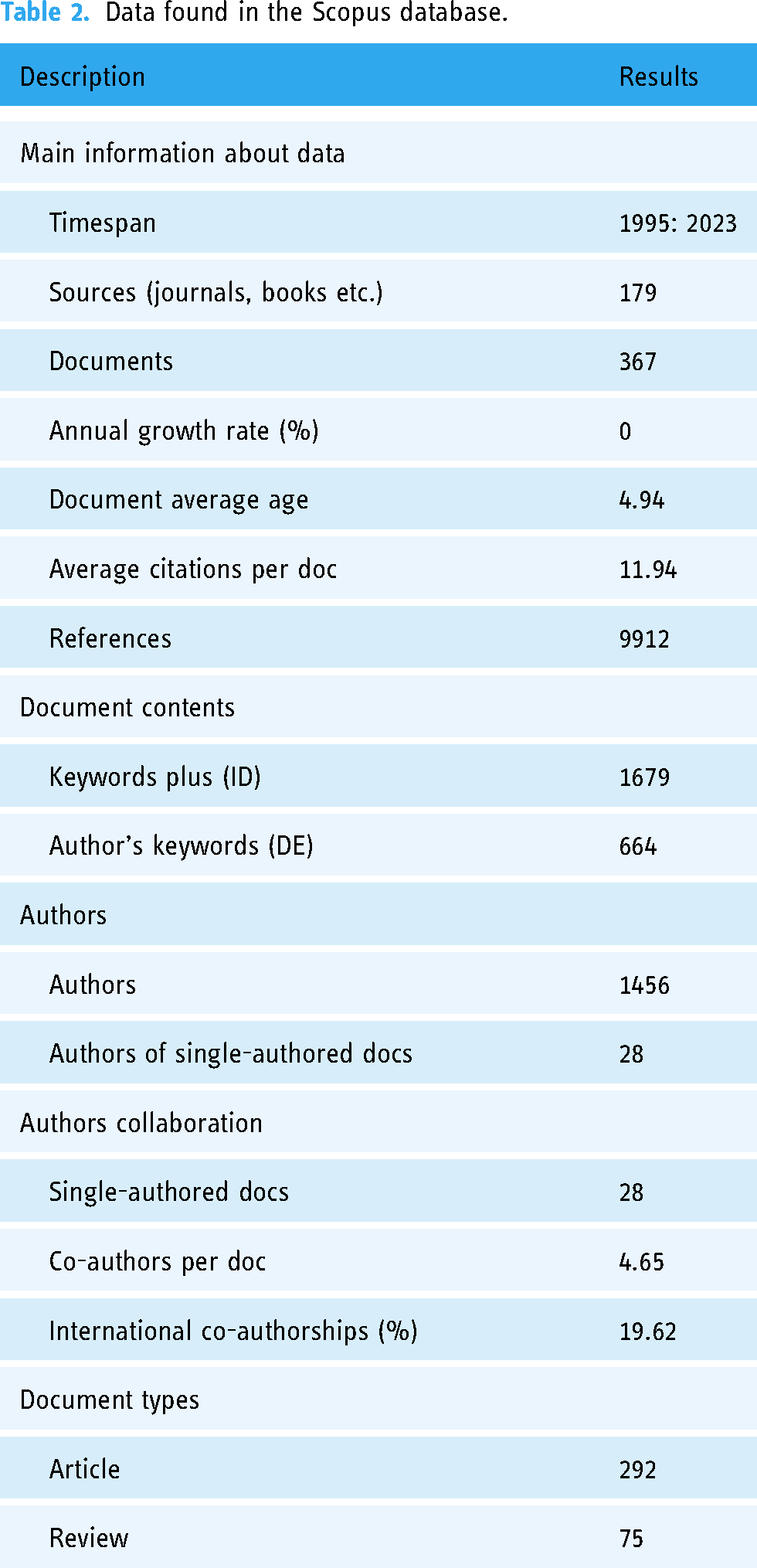
Bibliometric analysis
Finally, the bibliometric analysis was carried out.
The study analyzed the trend of scientific articles on teledentistry. They researched the most prolific authors, the institutions and the journals that have published more on the topic. The authors also documented research types and areas, keyword map analysis, and highly cited papers. Scopus CiteScore 46 and SCImago Journal Ranking & Country Ranking 47 were used to determine the journal impact factor. Then, the authors present the analysis results with graphics and data visualization using Bibliometrix and VOSviewer.48,49
Results of the bibliometric analysis
Outline of the annual publications
The consistent and substantial increase in publications in recent years (from 10 articles in 2019 to 97 articles in 2022) suggests that teledentistry continues to be a highly active and evolving research area (Figure 1). This sustained growth indicates a ongoing interest in exploring the various facets of teledentistry and harnessing its potential to improve oral healthcare. The data shows that interest in teledentistry has steadily grown, indicating a rising awareness of its potential benefits and applications in dental care. The increasing number of publications reflects the growing attention the dental community and researchers are giving to teledentistry as a viable approach to enhance dental services. The notable surge in teledentistry publications in 2020 and onwards suggests a potential correlation with the COVID-19 pandemic. The pandemic forced a paradigm shift in healthcare delivery, including dentistry, as face-to-face interactions became challenging due to infection risks and lockdown measures. As a result, researchers and practitioners turned to teledentistry as an alternative means of providing dental care and consultations remotely. The rapid increase in teledentistry publications in 2020 and beyond demonstrates the agility of the dental community in adapting to the crisis and seeking innovative solutions. The pandemic acted as a catalyst for embracing telehealth technologies, and teledentistry emerged as a crucial tool to ensure continuity of care while minimizing in-person contacts.

Publications per year.
Most prolific authors engaged in teledentistry research
The analysis of the most prolific authors engaged in teledentistry research provides valuable information about the collaborative nature of this field, highlights leading researchers and institutions, and underscores the global impact of teledentistry research efforts. It also offers insights into potential research collaborations and signifies the growing importance of teledentistry as a specialized dental care and research area. The fact that only 7.5% of the articles are single-authored publications indicates that teledentistry research is predominantly collaborative. Collaborative research fosters knowledge exchange, enhances the quality of research outcomes, and promotes interdisciplinary perspectives, ultimately contributing to the advancement of teledentistry. The most productive authors who have published five or more articles are significant contributors to the teledentistry literature. Among them, Tennant M from the University of Western Australia, International Research Collaborative – Oral Health and Equity, stands out with 12 publications (3.2%), followed closely by Estai M from the same university with 11 publications (2.9%). This indicates that these authors and their institutions have dedicated substantial efforts and resources to advancing teledentistry research. Giraudeau N of Centre d’études Politiques de l’Europe Latine, Montpellier, France and Kanagasingam Y of the University of Notre Dame Australia, Digital Health and Telemedicine, Fremantle, Australia have published 10 articles (2.7%). The other most productive authors who have published five or more publications are shown in Table 3.
Most prolific authors engaged in teledentistry research.

Evaluating their collaboration and the citations is interesting. Figure 2 shows the co-authorship network. It can be seen the authors have dedicated themselves to teledentistry since 2020. The Cook J cluster was one of the first to publish on the topic, followed by Kopycka-Kedzierawski DT, Tennant M, and Giraudeau N. Figure 3 shows the authors whose publications have received the highest citations. A density map must be used to interpret the results. The names found in the red patch are the most frequently mentioned, followed by the orange, yellow and light blue ones. The latter received the fewest citations (Figure 3).

Most prolific authors engaged in teledentistry research about the publication period.

Co-authorship network based on available data using VOSviewer.
Most prolific journals
Table 4 highlights the journals in which the authors have published five or more articles on teledentistry, and three journals stand out as the most prolific. The Journal of Telemedicine and Telecare has published 22 papers (88%), making it the most active journal in this area. The International Journal of Environmental Research and Public Health and Telemedicine and E-Health have also demonstrated significant engagement with teledentistry, publishing 15 articles each (60%). The frequency of publications in these leading journals indicates that they serve as essential platforms for disseminating innovative findings, best practices, and advancements in teledentistry. The fact that the authors have published their publications in 160 different journals indicates the scientific community’s broad interest and engagement in teledentistry research. This diverse publication landscape suggests that teledentistry is a multidisciplinary field, attracting contributions from various disciplines, including dentistry, telemedicine, public health, technology, and more. Notably, most journals (107 out of 160—(66%)) have published open-access articles. Open-access publishing fosters greater visibility and accessibility of research findings to a broader audience, including researchers, practitioners, policymakers, and the public. This openness can accelerate the dissemination of knowledge and foster collaboration within the scientific community.
Journals that have published at least five articles on teledentistry.

Most productive corresponding author’s state affiliation
The University of Western Australia is the most productive institution, with 12 publications (2.7%) on teledentistry. This indicates the university’s commitment to teledentistry research and its active engagement in advancing the field. Université de Montpellier in France follows closely with 11 publications (2.5%), underscoring the global interest and involvement in teledentistry research. The other affiliations with five or more articles published are shown in Table 5.
Most productive corresponding author’s state affiliation.

Multiple institutions with ten or more publications (Eastman Institute for Oral Health, Saveetha Dental College and Hospitals, and Saveetha Institute of Medical and Technical Sciences) indicate a collective effort from various dental schools and research centers. This diverse range of affiliations showcases the involvement of different academic and clinical settings in generating knowledge in teledentistry.
Documents by country
The topic has been extensively treated in many parts of the world. The United States of America has published more documents (Figures 4 and 5). Figure 5 shows the countries that have published on teledentistry.
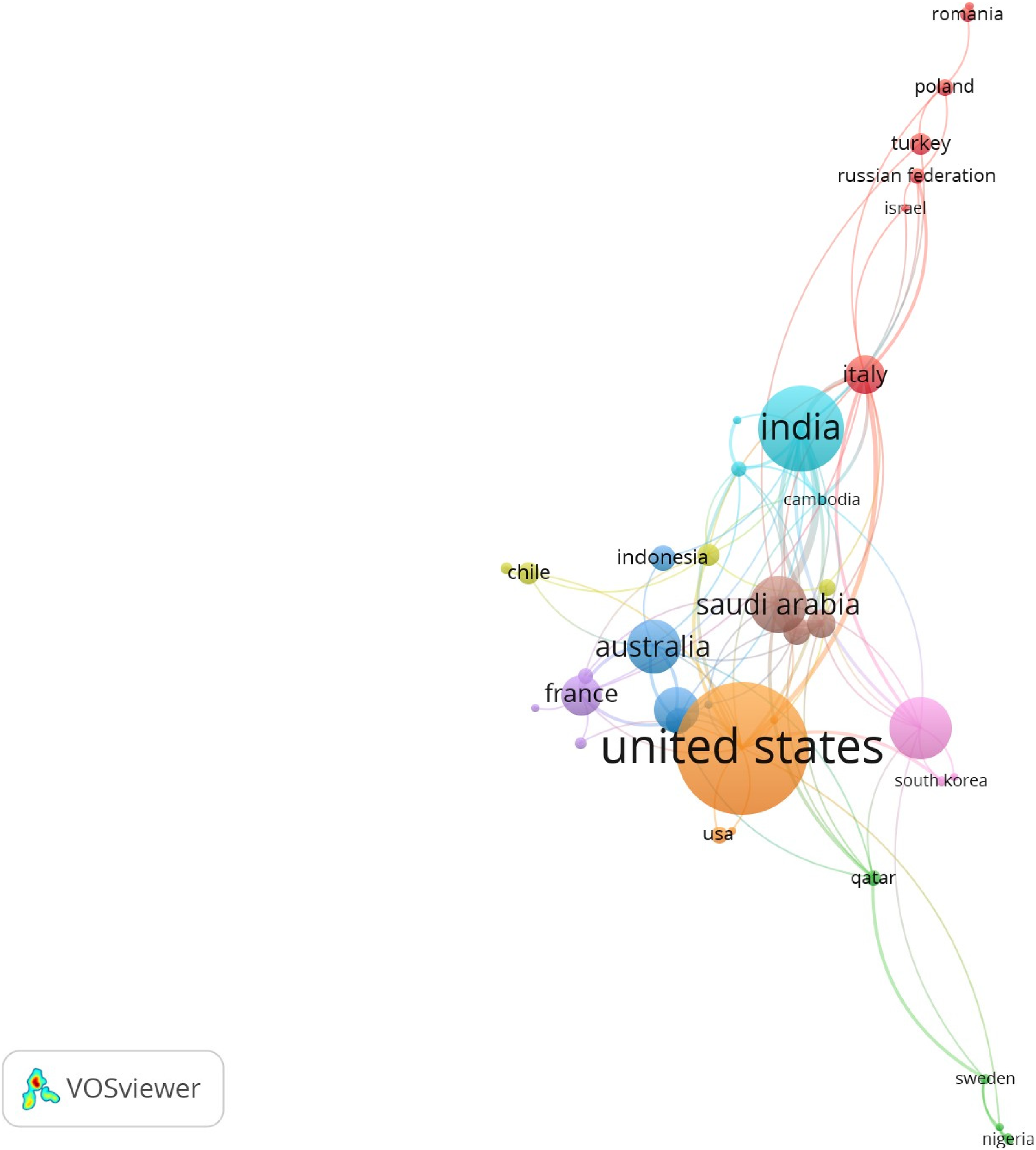
Countries with the most number of publications.

Countries with the most number of publications: the United States: 106 documents, India: 60; the United Kingdom: 42; Australia: 34; Brazil: 32; Saudi Arabia: 29; France: 23; Italy: 19; Canada and Malaysia: 13; Pakistan: 12; Chile, Indonesia, and Iran: 10; Germany and Turkey: 9; Switzerland: 7; Poland: 6; Japan, Qatar, Romania, Russian Federation, Serbia, and the United Arab Emirates: 5; China, Colombia, and Portugal: 4; Cambodia, Nigeria, South Korea, Spain, and Sweden: 3; Egypt, Finland, Greece, Hong Kong, Hungary, Ireland, Israel, Jordan, Mexico, the Netherlands, Norway, Samoa, Singapore, and Taiwan: 2; Albania, Angola, Bangladesh, Cuba, Cyprus, Czech Republic, Denmark, Fiji, Georgia, Iraq, Kuwait, Palestine, Peru, Philippines, Slovakia, South Africa, Thailand, Tunisia, and Uruguay: 1.
The United States of America, India, the United Kingdom, Saudi Arabia, and Australia have obtained the highest number of citations. Evaluating the strong relationships between various authors in the field of teledentistry provides valuable insights into collaboration patterns and the growth of knowledge networks. This analysis allows us to understand the collaborative dynamics within the research community and how researchers collectively contribute to advancing teledentistry as a scientific discipline. Estimating the strong relationships between various authors in teledentistry research emphasizes the power of collaboration in driving scientific progress. These collaborations foster a dynamic research ecosystem, promote knowledge dissemination, and ultimately contribute to the continuous advancement of teledentistry as an essential component of modern dental care (Figure 6).

Countries with the most number of citations.
Funders
Evaluating the funders of research in teledentistry provides valuable insights into the level of interest and support that this field of study receives from various organizations and institutions. The organizations and universities that have funded two or more articles are shown in Figure 7. The significant teledentistry supporter’s research is in the Americas, including the USA, Chile, and Brazil. The presence of funded research in teledentistry indicates the potential for future growth in the field. As more organizations and institutions invest in teledentistry research, it can pave the way for advancements and breakthroughs in dental telemedicine, leading to improved patient care and oral health outcomes.

Funding sponsor.
Document type and research area
The articles represent the majority of scientific production (79.7%). However, only 20.3% is covered by reviews. This finding was influenced by limitations on the Scopus search (Figure 8).

Documents by type.
In terms of the research area, the ones mainly dealt with teledentistry are medicine (35.2%) and dentistry (34.4%) (Figure 9).

Documents by research area.
Publications keyword frequency
The keyword frequency analysis in Figures 9 and 10 demonstrates the popularity and significance of teledentistry as a research area. The strong presence of keywords related to patient care, technological advancements, and the impact of COVID-19 highlights the ongoing evolution of teledentistry and its potential to transform dental healthcare delivery.
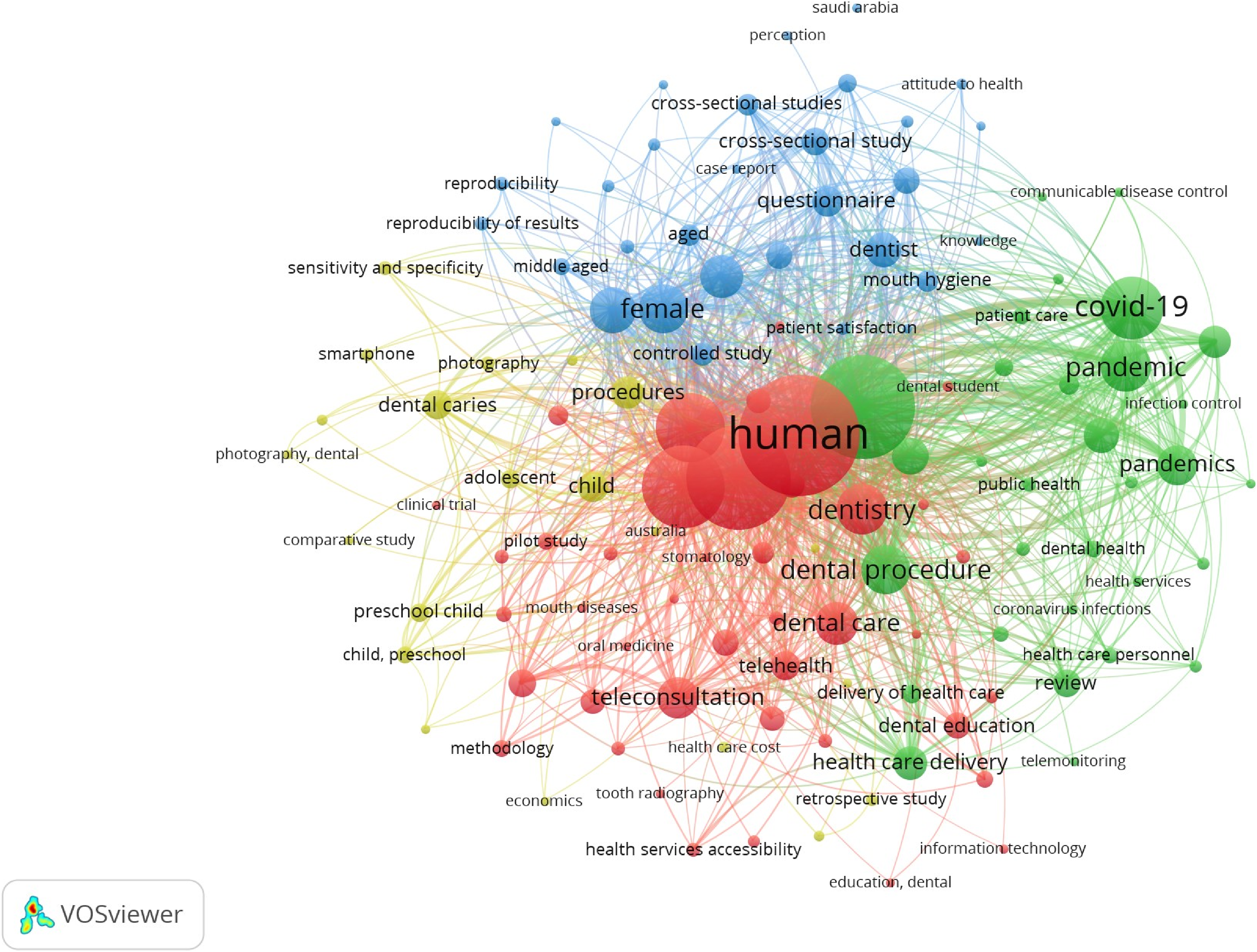
Most frequent keywords.
Figure 10 indicates how often the keywords chosen by the authors to outline their articles occur. The result was filtered in the VOSviewer settings by entering ten as a minimum. Keywords help identify key search domains. Therefore, the bigger the circle around the word, the more frequently it was used by the authors.
Figure 11 highlights that the most used keywords are human, teledentistry, telemedicine, and COVID-19. According to the legend, teledentistry was used after telemedicine but before COVID-19. This means teledentistry has been analyzed in the scientific literature even before the pandemic. The high frequency of “human” as a keyword emphasizes the central focus of teledentistry on patient care and human subjects. This underscores the patient-centric approach of teledentistry and its relevance in improving oral health outcomes for individuals. The prominence of “teledentistry” and “telemedicine” as keywords highlights the close association between these two fields and their frequent usage as complementary terms. This suggests that teledentistry is firmly rooted in the broader telemedicine domain, leveraging similar technological and communication advancements to improve dental care. The significant presence of “COVID-19” as a keyword indicates that teledentistry’s relevance and application were further magnified during the pandemic. While teledentistry was already a topic of interest before COVID-19, the pandemic likely accelerated its adoption and implementation to deliver dental care while minimizing in-person interactions.

Most frequent keywords-detail.
Patient base covered by teledentistry and the life improvement
These additional research areas provide further insight into the different applications of teledentistry across various dental specialities and patient populations. It demonstrates how teledentistry addresses specific oral health needs, such as orthodontic treatment, care for special needs patients, and managing dental caries and enamel defects. Additionally, teledentistry has shown promise in providing dental care to vulnerable populations, including prisoners and older adults. Including preventive dentistry and strategies for safety net implementations highlights efforts to enhance preventative measures and ensure equitable access to dental services. The utilization of teledentistry in various specialities, such as periodontics, endodontics, prosthodontics, and oral medicine, showcases its versatility in supporting different aspects of dental care. Moreover, the application of teledentistry in forensic dentistry indicates its potential in legal investigations and identification processes (Figure 12).

Patient base covered by teledentistry.
Discussion
By examining the publications per year since 1995, the analysis revealed a significant increase in interest and research output in recent years, particularly after the onset of the COVID-19 pandemic.
Despite certain impediments to the diffusion of teledentistry,5,15,27,50 there is growing consensus among healthcare professionals and patients regarding its benefits.51,52
Identifying the most prolific authors, institutions, and journals in teledentistry research showcases the significant research output of specific individuals and institutions. It establishes a foundation for collaboration and knowledge exchange among researchers. Furthermore, recognizing the journals that have published many articles on teledentistry allows researchers and practitioners to stay updated on the latest advancements and access to teledentistry’s latest developments and best practices.
The study’s analysis of research areas and keywords reveals the breadth and depth of teledentistry research. It identifies medicine and dentistry as the primary disciplines, emphasizing the interdisciplinary nature. Moreover, the analysis of recurring keywords provides a snapshot of the key themes and concepts driving teledentistry research, such as human, telemedicine, teledentistry, and the impact of COVID-19. These findings contribute to a better understanding of the core focus areas and terminology used within teledentistry research.
Examining publications by country sheds light on teledentistry research’s global reach and impact. The dominance of the United States, India, Australia, and Brazil underscores their significant contributions. Understanding the geographic distribution of research allows for identifying potential collaborations, resource-sharing, and developing targeted initiatives in regions with lower research output. This information may be influenced by factors such as funding availability, research infrastructure, and the academic potential of universities.
The interpretation of this bibliometric analysis reveals essential considerations about the patient base covered by teledentistry. Digital dentistry enables dental care to reach patients in remote or underserved areas where access to traditional dental clinics may be limited. With teledentistry, patients can access virtual consultations and remote services, bridging the gap between patients and dental professionals, regardless of their physical location. 7 Teledentistry is crucial in improving access to dental care for vulnerable populations. Traveling to a dental clinic may be challenging or not feasible for these groups. Teledentistry offers a convenient and accessible alternative, allowing them to receive necessary dental services without needing physical travel.8–10,12–14,16,17
Modern lifestyles can be hectic, leaving individuals with limited time for in-person dental appointments. Teledentistry provides a convenient solution for busy professionals, students, or parents who may need help to fit dental visits into their schedules.5,24–29
Teledentistry proves valuable during emergencies and natural disasters when access to traditional healthcare facilities may be disrupted. In such situations, dental professionals can remotely assess and provide initial guidance to patients, addressing urgent oral health needs until in-person care becomes possible.5,18–21
Teledentistry allows for cross-border collaborations and consultations, enabling dental professionals to assist international patients with oral health needs.6–14,16,17 For patients with dental anxiety or phobia, teledentistry may offer a less intimidating first step toward seeking dental care. Initial consultations through virtual platforms allow patients to discuss their concerns and build a rapport with dental professionals before visiting the clinic in person. 5
Teledentistry platforms can provide patients with educational resources, interactive tools, and personalized guidance to enhance their oral health knowledge and self-care practices. By promoting patient education and engagement, teledentistry empowers individuals to maintain their oral health actively, improving overall dental outcomes and quality of life. 16
It’s important to note that while teledentistry offers numerous benefits, it is not a substitute for all dental procedures. Therefore, a comprehensive approach combining teledentistry with in-person dental visits is often recommended to provide the best possible care for patients. 37
The interpretation of this bibliometric analysis points out specific aspects of teledentistry research that have received relatively less attention in the scientific literature. These aspects include patient privacy, medico-legal considerations, and guidelines for remote consultations. Identifying these gaps in research coverage can serve as a valuable insight for the scientific community and policymakers, highlighting areas that require further investigation and development.
In summary, this bibliometric analysis has practical implications for guiding future research and funding in teledentistry. Identifying productive authors, institutions, and journals can inform strategic research partnerships and funding decisions. Institutions with a strong publication record, like the University of Western Australia, can serve as leaders in advancing teledentistry research. The analysis also highlights areas that require further investigation and development, such as patient privacy, medico-legal aspects, and guidelines for remote consultations. These findings can guide funding agencies and policymakers in allocating resources and support to advance teledentistry research in these critical areas.
The novelty of this bibliometric analysis lies in its comprehensive examination of teledentistry research trends, including the analysis of authors, institutions, journals, research areas, and keywords. By systematically analyzing a large body of scientific literature, this study provides valuable insights into the current state of teledentistry research. It establishes a foundation for future research directions and funding strategies. It contributes to the existing knowledge by offering a holistic perspective on teledentistry’s growth, impact, and potential applications in dental care, especially in light of the COVID-19 pandemic.
Although, there are some limitations of this bibliometric analysis. The analysis was conducted using the Scopus database, which may only encompass some relevant publications on teledentistry. The analysis focused on publications in the English language, which could introduce a language bias.
While efforts were made to select relevant keywords, it is possible that some critical terms were overlooked or not included in the analysis. The bibliometric analysis focused on quantitative aspects of publication output, such as the number of articles, authors, and citations. However, the research did not assess individual publications’ quality, rigor, or impact. These limitations should be considered when interpreting the findings of this bibliometric analysis, and further research and analysis incorporating multiple databases, languages, and qualitative assessments would provide a more comprehensive understanding of teledentistry research trends and impact.
Conlcusions
The analysis highlights several significant findings:
Rapid growth: Remarkable increase in publications from 2019 to 2022. The pandemic has accelerated the adoption and exploration of teledentistry. Collaborative efforts: Collaboration among authors is prevalent in teledentistry research, with only a tiny percentage of single-authored publications. Leading contributors: The University of Western Australia emerges as the most productive institution, closely followed by other institutions from different countries. Scientific production: The Journal of Telemedicine and Telecare emerged as prolific. Open-access articles make teledentistry research accessible to a broader audience. Unexplored aspects: Patient privacy, medico-legal aspects, and guidelines for remote consultations have received less attention in the scientific literature. These findings call for focused research efforts. Funders contributing: Continued collaboration and investment from funders will be crucial in shaping the future of teledentistry and ensuring its potential to revolutionize dental practice and improve patient outcomes.
Overall, this bibliometric analysis provides valuable insights into teledentistry research, its growing significance, and areas that require further investigation. The findings can guide researchers, practitioners, and policymakers in strategically directing future research and funding to advance the field. Teledentistry has the potential to revolutionize dental care by improving access, reducing costs, and enhancing patient outcomes. Continued research and collaboration in this area will contribute to the successful integration of teledentistry into mainstream dental practice, benefiting patients and healthcare providers.
Footnotes
Acknowledgements
Not applicable.
Consent statement
In compliance with ethical considerations, it is important to clarify that this Bibliometric analysis does not involve the collection or analysis of any personal data, including sensitive patient information. As this study solely utilizes publicly available data from existing scientific publications, there are no human subjects involved, and thus, no consent statement is required.
Declarations of conflicting interest
The author(s) declare that they have no known competing financial interests or personal relationships that could have appeared to influence the work reported in this paper.
Ethical approval
Not applicable.
Funding
The author(s) received no financial support for the research, authorship, and/or publication of this article.
Garantor
Not applicable.
