




Abstract
Introduction
Information and communication technology advances have resulted in new communication channels, namely digital communication media, that can support maternal health education.
Objective
This study examines the current research situation on the use of digital communication media in the context of maternal health education.
Methods
The papers were collected from the Scopus database. Bibliometric analysis, methodological analysis, and meta-synthesis were performed to achieve the research objectives. Of the 426 papers, 316 were included in the filtering process (published in journals and English). A total of 98 papers were included in the analysis stage, with criteria that the paper must contain empirical studies, discuss digital communication media (maternal-health education), and the research subject is pregnant women.
Results
The bibliometric analysis results show the top authors (authors with the most publications and citations), top countries, top journals, top papers, and the research collaborations on the topic. The four theme groups in the meta-synthesis show that digital communication media has been widely utilized and is an effective tool for maternal health education. The USA, Australia, and Iran are the countries where most research is on digital communication media (maternal health education). The most researched digital communication media are mobile apps and social media. Most studies on this topic used a quantitative approach with experiments as a data collection procedure.
Conclusion
Several research gaps proposed in this study were exploring perceptions and acceptance of pregnant women regarding maternal health education, maternal education based on country context, and further research by considering the relevant theories.
Keywords
Introduction
The advancement of information and communication technology has created a variety of digital communication media that can enhance and facilitate the flow of information and knowledge. 1 They enable the delivery of information and knowledge to inaccessible locations by conventional means, expanding communication's impact. In addition, they generate new participatory public spaces where everyone can talk and work together to create shared content. Likewise, digital communication media allows direct interaction in real-time and can reach various audiences. 2 Digital communication media allows organizations to interact with online stakeholders and users and strengthen their relationships.3,4
Digital communication media displays photos, audio, and video in an encoded format or digitally compressed. During the encoding process, data are processed into audio and video inputs, which can be translated back into their original form using various devices such as computers, the internet, tape recorders, smartphones, and many more. Encoded material can easily be transmitted, manipulated, distributed, and sent over computer networks. Digital media products include smartphone applications, data stored on CDs or USBs, hospital ultrasound examinations, and various audio and video games installed on tablets or game boxes.5,6
In the last few decades, digital media as a communication tool has developed rapidly. Digital communication media has entered all aspects of life quickly and successfully. 5 According to Nuseir, 7 almost all industries use digital communication media. These include film and entertainment, business, technology, health, hospitals, education, training, advertising, government, sports, environment, radio and television, publishing, and printing. E-commerce, games (online and mobile), websites and mobile applications, animation, social media, videos, data visualization, blogs, and location-based services are some forms of digital communication media.8–10 To communicate with friends and family worldwide, people use digital communication media, such as mobile phones, and internet applications, such as email, social networking sites, and video chats. 10 In the context of the world of health education, several studies have highlighted the use of digital communication media for health education.9,11,12
Digital communication media plays an important role in human life, including health. This technology helps the public to access support and resources to improve quality health. 13 Digital communication media also offer solutions to maternal and infant health and care problems, which are global health problems, especially in developing countries.14,15 As is well known, one of the leading causes of high maternal and infant mortality rates is the lack of access of pregnant women to health information and resources, such as midwifery care during pregnancy and childbirth, experienced birth attendants, and comprehensive reproductive care.14,16 Limited access can be reduced using digital communication media, such as consulting blogs or websites, discussion forums, social media, and mobile phone applications. Digital communication media can remove physical barriers that traditionally hinder access to health support and resources. 11 Digital communication media help mothers find the health information and support they need, 17 and overcome health literacy problems, 18 which limit their ability to make the right decisions about their health. 17
From the perspective of health care providers, digital communication media has enormous potential to revolutionize health education with diverse populations by increasing their ability to implement evidence-based behavior change strategies in ways that are often far more effective and efficient than was possible in the past. 19 Digital communication media make it possible to provide information, education, or health interventions during pregnancy and postpartum, which in turn will improve the health of mothers and babies before and after childbirth. 15 Digital communication media also give health workers access to information and professional advice that will help them improve their skills. 14 Good communication between parents-to-be and health professionals and the responsiveness and flexibility of health professionals during pregnancy and childbirth are essential factors in one's care for a positive pregnancy and childbirth experience. 17
Many digital communication media have been developed to deliver educational content on pregnancy health to lower maternal and infant mortality rates. The educational content on pregnancy health through digital communication media can include childbirth, baby care, pregnancy care and fetal development, puerperal health, nutrition and exercise, maternal mental health, and infectious disease prevention and control. 20 Meanwhile, by conducting a literature study, Conrad 21 found that topics that received much attention from pregnant women and were widely searched for included fetal development, pregnancy ailments and complications, childbirth information and preparation, and health and nutrition during pregnancy. Information searches can also vary depending on the stage of pregnancy.21,22 In the first trimester of pregnancy, the most frequently searched information was about miscarriage, morning sickness, and bleeding, while the most commonly searched topics in the third trimester were about signs of labor, labor induction, and pain.21,22
Educational content on pregnancy health is expected to improve pregnant women's knowledge, encouraging the formation of health-related quality of life. 23 Research indicates that maternal health education through digital communication media has proven effective in increasing pregnant women's health knowledge and behavior during Covid-19.24,25 In addition, educational content on pregnancy health is expected to increase the empowerment of pregnant women. 26 In this case, empowerment can be achieved by increasing pregnant women's skills to identify their needs and problems independently and find the resources needed to overcome these problems and control their lives better. 26
The development of digital communication media for maternal health education has spurred numerous studies investigating, among others, its acceptability, use, effectiveness, and impact.27–30 As digital communication technology develops, ongoing research in this subject is essential. Unfortunately, the understanding of the trend, how these studies were conducted, and their findings are currently limited due to a scarcity of comprehensive reviews in published articles on the subject. A literature review offers insight into the existing body of knowledge and leading contributors and helps uncover gaps that will direct future research to produce novelty and inspire practical actions from various stakeholders.31,32 This study aims to address the existing gap by reviewing articles focused on the use of digital communication media in maternal health education. This study identifies research developments, the bibliographical characteristics, research context, and research stream; synthesizes the findings of previous studies; and pinpoints research gaps from published articles. This study combines bibliometric analysis, methodological analysis, and meta-synthesis to achieve these objectives. Bibliometric analysis assists researchers in mapping the progress of knowledge in a field and identifying other issues that need further study. 33 In the end, the bibliometric study will improve and enrich the intellectual structure of the field.34,35 Because the bibliometric study has a weakness, the analysis produces less detailed information. 8 Wilcox et al. combining bibliometric study and content analysis will yield more detailed analytical results without subjective bias. 23 Furthermore, meta-synthesis explains the results of previous studies and helps push our understanding of certain phenomena further than the research carried out by each study.
Methods
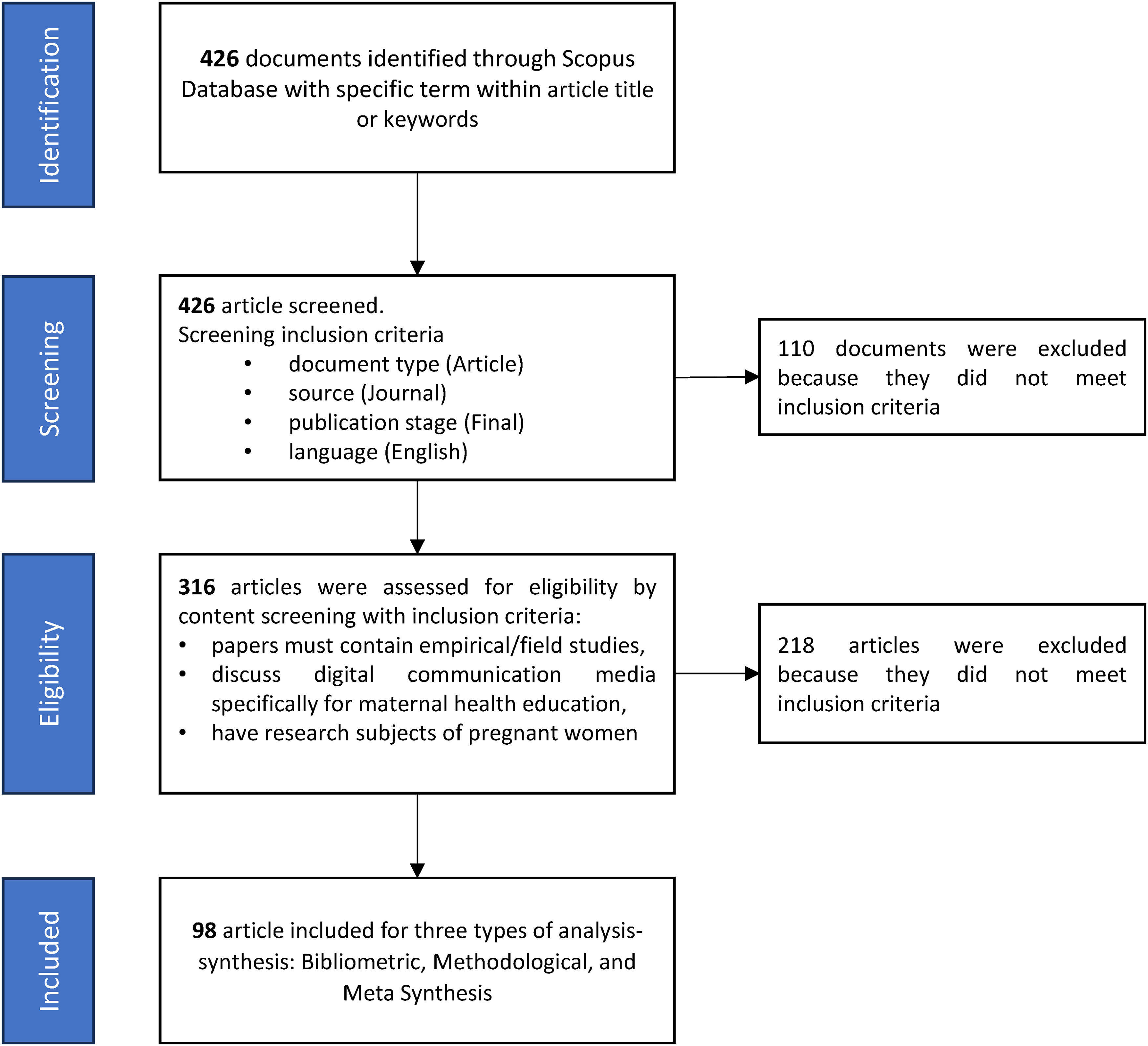
Figure 1 shows the stages of data collection and analysis. Generally, this stage is divided into three: paper search and filtering, paper content screening, and data analysis (bibliometric analysis, methodological analysis, and meta-synthesis).
Data collection and analysis.
Paper search
A paper search was conducted to identify studies on digital communication media in the context of maternal health education. Relevant papers were collected from the Scopus database on September 6, 2024. This database was chosen because it has broad coverage and is the most complete abstract-based bibliometric database. 36 Scopus is one of the largest databases for peer-reviewed research papers. 37 Also, Scopus has high-quality standards, a broader database of abstracts and citations regarding journal coverage, and easy data retrieval. 36 It covers a broader spectrum of journals than PubMed and Web of Science, and its citation analysis is faster and covers more articles than Web of Science analysis. 38 Scopus enables flexible searching across numerous bibliographic fields. 39 Furthermore, based on the search results, the Scopus database provides more articles related to Digital Communication Media and Maternal Health Education than Web of Science.
Papers search in Scopus database using the terms consisting of pregnant women AND digital media OR web-based media OR digital platform OR digital content OR electronic media OR online media OR interactive media OR virtual media OR social media OR digital communication OR online platform OR mobile media OR mobile applications OR mobile apps OR website OR application OR apps OR Facebook OR WhatsApp OR Twitter OR Instagram OR TikTok OR YouTube AND health OR pregnancy AND education OR promotion OR information OR campaigns OR counseling OR literacy OR advocacy OR empowerment. The terms were searched for in the title and abstract. The query from this search process is: TITLE (“pregnant women”) AND TITLE (“digital media” OR “web-based media” OR “digital platform” OR “digital content” OR “electronic media” OR “online media” OR “interactive media” OR “virtual media” OR “social media” OR “digital communication” OR “online platform” OR “mobile media” OR “mobile applications” OR “mobile apps” OR website OR application OR apps OR facebook OR whatsapp OR twitter OR instagram OR tiktok OR youtube) AND TITLE ((health OR pregnancy) AND (education OR promotion OR communication OR information OR campaigns OR counseling OR literacy OR advocacy OR empowerment))) OR (KEY (“pregnant women”) AND KEY (“digital media” OR “web-based media” OR “digital platform” OR “digital content” OR “electronic media” OR “online media” OR “interactive media” OR “virtual media” OR “social media” OR “digital communication” OR “online platform” OR “mobile media” OR “mobile applications” OR “mobile apps” OR website OR application OR apps OR facebook OR whatsapp OR twitter OR instagram OR tiktok OR youtube) AND KEY ((health OR pregnancy) AND (education OR promotion OR communication OR information OR campaigns OR counseling OR literacy OR advocacy OR empowerment)
The paper search obtained 426 documents.
Paper screening and filtering
The papers obtained in the paper search process were then screened and filtered to obtain papers published in journals, in the final stages of publication, and written in English. The filtering process is done by selecting “Article” in the “document type” option, “Journal” in the “source type” option, “Final” in the “publication stage” option, and “English” in the “language” option in the Scopus database filters menu. This study includes only papers published in journals. The publications, including conference papers, books, or book chapters, are not included because the information is often quoted from journals. 40 In addition, paper journal restrictions are applied to get quality papers and go through a rigorous review stage. Journal papers usually undergo a much more rigorous review process, increasing the published material's credibility. 41 Furthermore, the study did not involve papers in the press but only final papers to ensure no further changes were made to the papers. The language barrier is applied because it adjusts the author's language ability and supports the analysis process. Barriers to English are also common in similar studies.36,42,43 The filtering process left 316 documents meeting the criteria and entering the next stage, i.e., content screening.
Paper content screening
To be included in the analysis, papers must meet specific eligibility criteria; papers must contain empirical/field studies (using primary data), discuss digital communication media specifically for maternal health education, and have research subjects (respondents/informants) of pregnant women. Those criteria were set to obtain research papers (not conceptual or review papers) with the core discussion of digital communication media in maternal health education. Examination of the papers’ content is carried out manually by reading the abstract and full text that was carried out on 316 documents to determine whether they met the specified eligibility criteria. Papers that did not meet the criteria were excluded, and those that met the criteria were analyzed. This stage left 98 documents for the analysis stage.
To guarantee the accuracy of the paper search procedure, the author team engaged in discussions to establish the terms employed, implement Boolean logic, and specify the section for terms exploration. All authors collectively observed paper search and filtering in the online Scopus database. Three authors (EYM, TR, SD) screened content using the determined inclusion and exclusion criteria. A discussion is held if there is confusion in determining whether an article is included. The results underwent verification by one author (TR).
Data analysis
To achieve the study objectives, three types of analysis-synthesis approaches were used: bibliometric analysis, methodological analysis, and meta-synthesis.
Bibliometric analysis
Bibliometric analysis is a statistical and quantitative method that can be adopted to analyze, evaluate, and monitor several published scientific studies.44,45 Currently, bibliometric analysis is becoming more popular as a means of scientifically finding patterns in knowledge accumulated in the literature, revealing emerging trends in research fields, and analyzing the structure of the research on which it is based, its evolution, and its dynamic aspects. 46 Analyzing the development of papers based on the number of papers per year in bibliometric analysis has an important role in setting publication trends and evaluating the importance of the topic for researchers, academics, and professionals. 47 Bibliometric analysis can also reveal research collaboration patterns. 34 The analysis can identify researchers who often collaborate and build research networks. A further benefit is that bibliometric analysis can assist in exploring the intellectual structure of a particular domain in the literature.34,35 It can explain the development and extent of a particular field of knowledge.35,47
In this study, a bibliometric analysis was conducted to describe and analyze research developments on the use of digital communication media in the context of maternal health education, which includes publication trends (number of publications per year), research fields, researchers with the highest number of publications and citations, countries with the highest number of publications and citations, journals with the highest number of publications and citations, most-cited papers, research collaborations, research themes, and research streams. The bibliometric analysis consisted of co-authorship, citation, co-occurrence, bibliographic coupling, and co-citation analyses. VoSviewer, a software for visualizing scientific landscapes, was used to analyze and visualize results.
Methodological analysis
The methodological analysis allows the researcher to examine the methodological and epistemological approaches adopted in previous research in a field. This analysis identifies methodological trends as research methods often or less frequently used in the selected scientific disciplines. 48 A review of the methods in several studies was found to explain differences in study results. 49
Methodological analysis in this study was conducted to identify and classify research contexts (locations and digital communication media types) and research methodologies (research approach, research design, research methods, grand theories, and data analysis techniques). Location indicates the country where the research was conducted. Identifying research locations can show how broad the scope of the topic is. Digital media communication types indicate the types of digital communication media that were the object of previous research. This analysis was conducted to find out which media have received much attention from researchers or are widely used as media for maternal health education. This study uses quantitative, qualitative, and mixed (quantitative and qualitative) research approaches to classify research approaches. Research designs are classified into surveys, experiments, observations, interviews, and mixed. Research methods from previous studies are categorized into two groups: cross-sectional and longitudinal. Grand theory is used as a research reference in developing a framework, hypotheses, or research questions. For healthcare research, the theory has many uses, such as assisting in determining appropriate study questions and target groups, clarifying issues and measurement methods, providing a more detailed and informative description of the intervention features and supporting conditions for implementation, finding unwanted effects; and assisting in analysis and interpretation of results. 50 Data analysis techniques are used to answer the main research questions.
Meta-synthesis
Meta-synthesis is a form of content analysis that aims to create a theory or model that can explain the results of a group of similar studies. 51 Meta-synthesis is an exploratory and inductive research design to synthesize selected research series. 52 Meta-synthesis integrates and compares findings or metaphors from several studies to provide interpretive translations, basic narratives, or theories.53,54 Meta-synthesis can integrate multiple studies to obtain comprehensive and interpretable results. 55 Meta-synthesis differs from a meta-analysis of quantitative studies. Meta-synthesis has been applied in various research fields. In health research, meta-synthesis is used, among others, in studies related to health professionals, 56 self-efficacy in health, 57 and related to nursing rules and management of maternal mental health. 58
This study uses meta-synthesis to evaluate previous research findings on this topic. Meta-synthesis of research findings helps push our understanding of certain phenomena further than the research carried out by each study.
Results
Bibliometric analysis
Publication trends
The analysis shows that research on the use of digital communication media for maternal education began in 2014 (see Figure 2). In that year, there were 2 journal papers discussing this topic. Unfortunately, researchers’ attention to this topic fluctuated greatly in the following years. This is indicated by the very fluctuating number of journal papers published on this topic each year. No journal papers on this topic were published in 2015, a year after the first journal papers were released. However, the number of journal papers increased the following year, 2016. This topic received much attention from researchers in 2022. There are 21 journal papers on the use of digital communication media for pregnant women's education. This number is the highest compared to previous years. The COVID-19 pandemic may have been a driving factor. The COVID-19 pandemic, where direct social interactions were limited, encouraged the increased use of communication and information technology to support daily activities, including health education or monitoring/examination of the health of pregnant women. This change attracts the interest of researchers who want to study or investigate this phenomenon.

Publication trends.
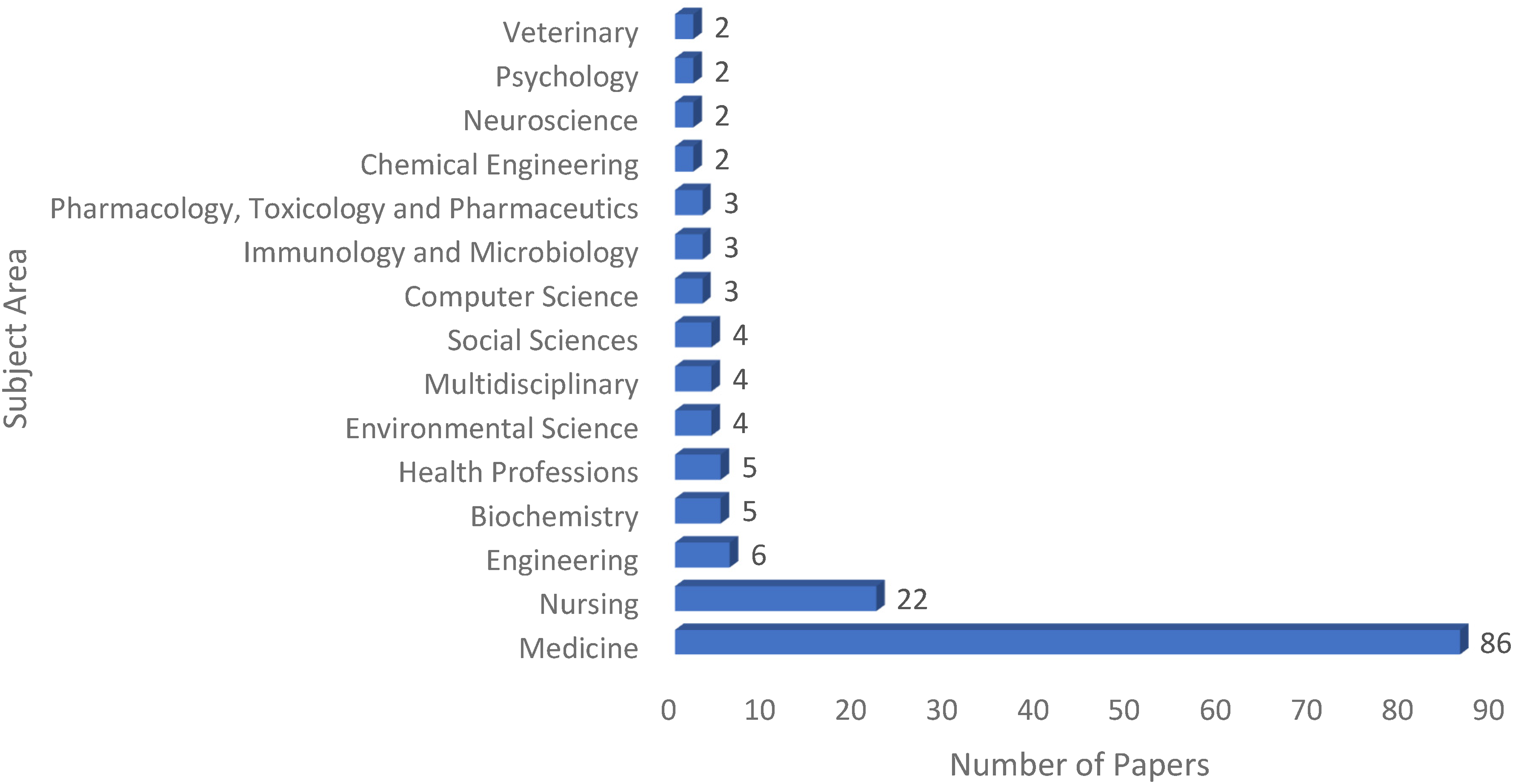
If viewed from the subject area, most of the research on the use of digital communication media for maternal health education is from the field of Medicine (see Figure 3), with 86 journal papers. This is reasonable, considering the topic of this study is about health and health care.
Papers by subject area.
Authors with the highest number of publications and citations
Co-authorship analysis with authors as the unit of analysis was conducted to determine the most productive authors, namely the authors with the highest number of papers. The analysis results show that 550 authors were involved in writing 98 papers on the use of digital communication media in the context of maternal health education. As shown in Table 1, 30 authors resulted in more than one publication. O'Leary S.T. and Omer S.B. produced the most publications compared to other authors. They have made three journal papers on this topic, starting in 2019 with two journal papers. Therefore, both authors can be considered the main contributors to this topic. They made a significant contribution to the development of research in this field. Further analysis shows that the three authors are co-authors of papers related to maternal vaccines.
Most productive authors.

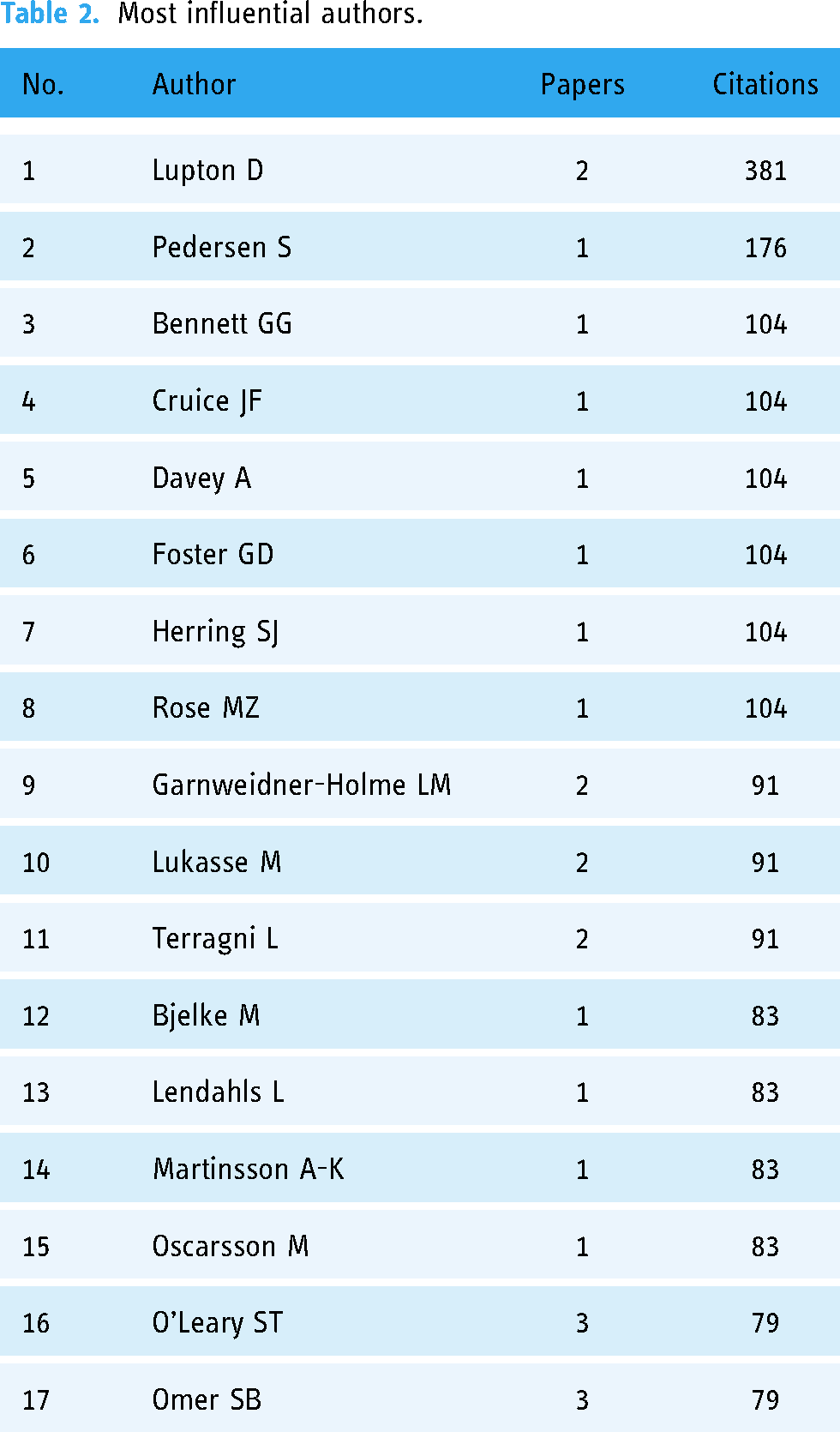
When viewed from the number of citations, 460 of 550 authors have been cited. Table 2 shows the authors with the most citations. Lupton D is the most-cited author (381 citations), followed by Pedersen S (176 citations). This is known based on the citation analysis results with authors as the unit of analysis. The number of citations obtained by the author indicates the quality of the papers he/she has compiled and shows the author's impact and popularity. 37 The greater the number of citations, the more influential the author is. Therefore, it can be concluded that the four authors are popular and have significantly impacted the development of knowledge and research in this field.
Most influential authors.
Countries with the highest number of publications and citations
As many as 36 countries are involved in research and writing journal papers on the use of digital communication media in the context of maternal health education. This topic has received attention from 18.5% of the world's countries. As shown in Table 3, 11 of the 36 countries published more than two papers. The USA is the most productive country, with the highest number of papers (29), followed by Australia with 12 papers and Iran with 10.
Most productive countries.

To investigate which countries have had the most impact on the development of knowledge and research on the use of digital communication media for the context of maternal health education, a citation analysis with countries as the unit of analysis was carried out. The analysis results show that 33 of the 36 countries contributing to research on this topic have been cited at least once. Australia is the most cited country (548 citations), followed by the USA (523 citations) and the UK (362 citations). It can be said that the three countries are the most influential.
It is natural for Australia to be the most influential country in this field. First, Australia is one of the most productive countries in publishing papers on the use of digital communication media for maternal health education. Additionally, Australia began publishing on this topic early, starting in 2016, indicating that it has been a focus of attention for a long time. Moreover, the papers often explore the use of digital media for pregnancy information, which is frequently referenced in further research. Meanwhile, the USA is the most productive country regarding the use of digital communication media for maternal health education. Given the many papers published, it is unsurprising that the USA is the second most cited country (Table 4).
Most influential countries.

Journals with the highest number of publications and citations
Citation analysis with sources as the unit of analysis shows that 66 journals have published research results on the use of digital communication media in the context of maternal health education. Table 5 shows the journals with more than one publication on this topic. Under the topics examined in this study, most of those journals are related to health and pregnancy/birth. BMC Pregnancy and Childbirth and Midwifery are the two journals with the highest number of papers. Nevertheless, this number is not far from that of other journals. BMC Pregnancy & Childbirth is a peer-reviewed journal that considers papers on all aspects of pregnancy and childbirth. The journal welcomes submissions on the biomedical aspects of pregnancy, breastfeeding, labor, maternal health, maternity care, trends and sociological aspects of pregnancy and childbirth. Meanwhile, Midwifery is officially recognized by the European Midwives Association. Midwifery publishes the latest peer-reviewed research to inform the safety, quality, outcomes, and care experiences during pregnancy, labor, birth, postnatal care, and beyond for childbearing women, infants, and their families. The journal's publications support midwives and maternity care providers in exploring and developing their knowledge, skills, and attitudes. Based on these findings, it can be said that the two journals are the media most in demand by researchers in this field to publish their research results.
Most productive journals.

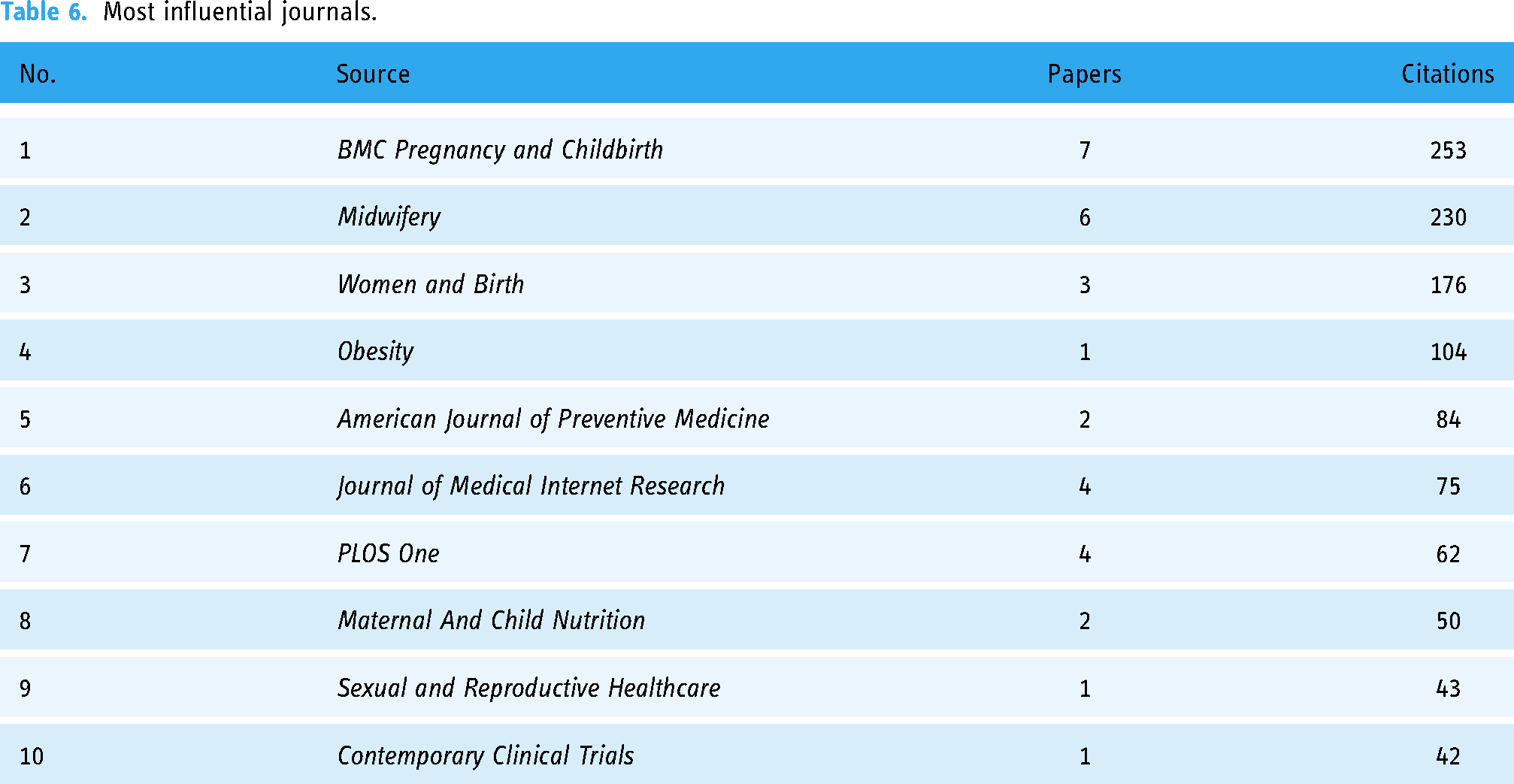
The analysis results also show that 59 of 66 journals have been cited at least once. In addition to having the highest number of papers, BMC Pregnancy & Childbirth and Midwifery have the most citations, with 253 and 230 citations, followed by Women and Birth (176 citations) and Obesity (104 citations) (see Table 6). To increase the usefulness of research results, researchers can choose these four journals as media for publishing them.
Most influential journals.
Most-cited papers
Citation analysis with documents as unit analysis shows that 82 out of 98 papers have been cited at least once. Table 7 shows the 10 papers with the most citations. “The use and value of digital media for information about pregnancy and early motherhood: A focus group study” 59 written by D. Lupton received 205 citations, more than any other paper. Still authored by D. Lupton and S. Pedersen, “An Australian survey of women's use of pregnancy and parenting apps” 60 became the second most-cited paper. Following that, the paper entitled “Preventing excessive gestational weight gain among African American women: A randomized clinical trial” 61 written by S. J. Herring et al., ranked third in citations. These three are the most influential papers on this topic based on the number of citations. The three papers discuss the use of digital communication media to educate pregnant women, similar to the topics examined in this study. Therefore, it is natural that these three are the most widely cited on this topic.
Most influential papers.

Research collaboration
Co-authorship analysis was conducted to investigate collaborations between researchers. Among the 30 authors with more than one paper, nine collaboration groups are shown in Figure 4. The size of the nodes indicates the number of papers, and the different colours of the nodes indicate collaboration groups. 34 The first group (red) comprised 11 authors, the second group (green) comprised five authors, the third (blue), fourth (yellow), and fifth (purple) groups each comprised three authors, the sixth group (navy blue) comprised two authors, and the seventh, eighth, and ninth groups each comprised one author. Unfortunately, there has been no collaboration between the groups. This lack of cooperation is likely due to the development of digital communication media related to maternal health education, which can vary depending on the context of each researcher's country. Additionally, besides providing information related to general pregnancy health, digital communication media for maternal health education can be particular, focusing on issues such as gestational diabetes, gestational weight gain, vaccines, and anemia. However, collaboration is still needed to enhance the quality of research with a broader scope and diverse perspectives.

Network visualization of researcher’s collaboration.
Figure 5 shows the authors’ geographical collaboration in the research on digital communication media in the context of maternal health education. Geographical collaboration shows the social structure of the research community in the research field. 37 Of the 32 countries that contributed to writing 98 articles based on author affiliation, 18 collaborated, while the remaining 14 did not collaborate with other countries. As shown in Figure 4, three main collaboration clusters were formed by the 18 collaborating countries. The first cluster (red) comprises the USA, Canada, Georgia, India, Nepal, Nigeria, and South Korea. The second cluster (green) comprises Australia, Saudi Arabia, Sweden, Oman, Egypt, and Vietnam. The third cluster (Blue) comprises Iran, Germany, China, South Africa, and the UK. The USA is the origin of most of the collaborations. It has the most comprehensive collaboration network, collaborating with 10 countries in the network.
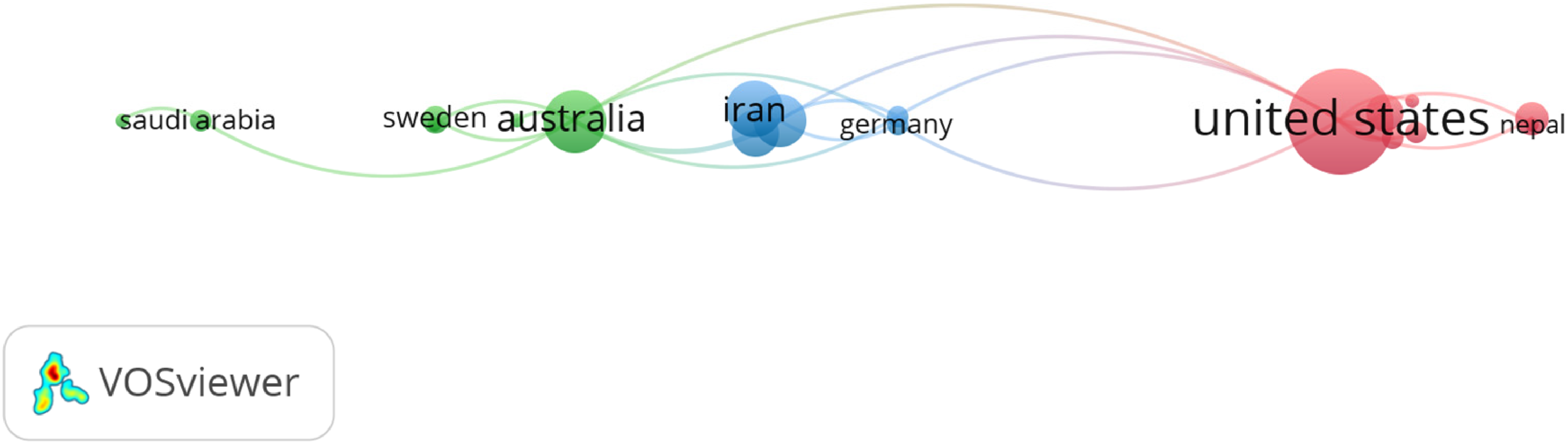
Network visualization of countries collaboration.
Research themes
Keyword co-occurrence
A co-occurrence analysis was conducted to find the keywords most used by the authors to describe their research and research themes related to the use of digital communication media in the context of maternal health education. Co-occurrence analysis assumes that keywords frequently appearing together have a thematic relationship. 34 Analysis of keyword co-occurrence can also help determine future research directions to expand the boundaries of the literature by tracking the development of research interest in this area. 69
The analysis results show that the authors used 294 keywords. However, several keywords have the same meaning. After using a thesaurus to standardize terms and manage language variations, 269 keywords were identified. The most frequently used keywords are pregnancy, pregnant women, m-health, and social media. Furthermore, 28 keywords are used more than three times. Figure 6 displays a co-occurrence network of author keywords. The node sizes represent occurrences, and the node colours represent groups. In this study, pregnancy was the most frequently used keyword (38 times) and had a strong relationship with other keywords with 25 links, followed by application with 23 times occurrences and 19 links, pregnant women with 18 times occurrences and 18 links, mHealth with 14 times occurrences and 15 links, and social media with 12 times occurrences and 8 links. These keywords can help writers and academics understand how the literature on digital communication media and maternity education has relied heavily on these concepts for many years. 36
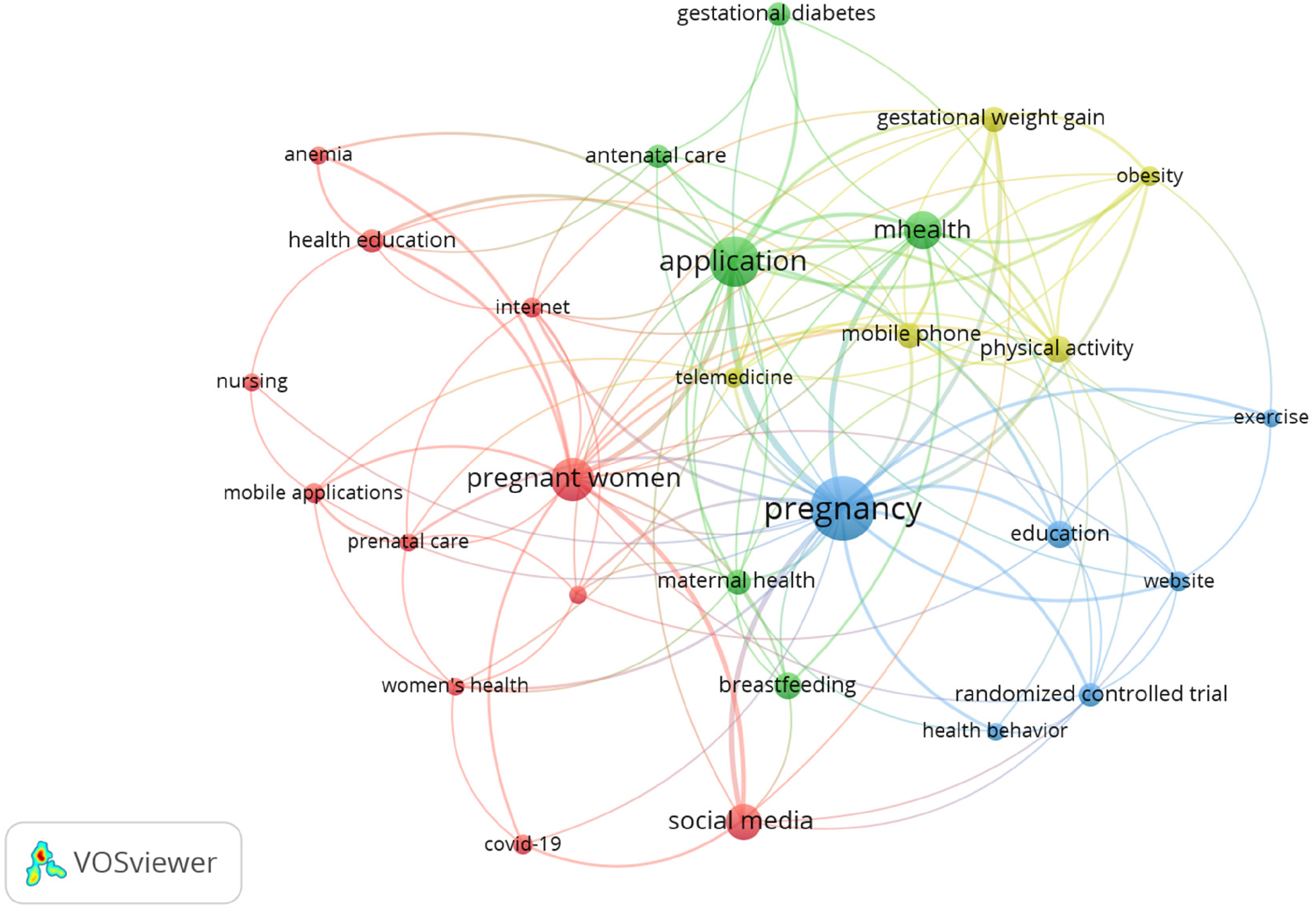
Network visualization of keyword co-occurrence.
Co-occurrence analysis shows that four keyword clusters were formed (see Figure 6). As shown in Table 8, a set of keywords in each cluster can be used to explore research themes.
Thematic analysis from keywords co-occurrence.

Figure 7 shows changes in the use of keywords by authors occasionally. The color of the node indicates the keyword's usage period. Keywords with the same color indicate that these keywords were used in the same period. The lighter the color (more yellow), the newer the keywords are. Based on this figure, a significant movement is seen over time in the keywords used. In the early stages, research on digital media in the context of education for pregnant women was focused on using digital media to gain information on antenatal care. This can be seen from the keywords widely used: pregnancy, antenatal care, anemia, exercise, gestational weight gain, m-health, internet, and website. More recent research in this field has shown changes in the types of digital media used and the purposes for which they are used. The early stages featured the widely used internet (web-based eHealth) and social media and recent research has paid more attention to mobile health applications and telemedicine. This technology is used to address issues related to Covid-19, physical activity, and prenatal care.

Overlay visualization of keyword co-occurrence.
Bibliographic coupling
Bibliographic coupling is a scientific mapping method assuming two publications with the same references and similar content. 34 Linkages are based on the number of references shared by two authors/publications. Two authors are bibliographically combined if both cite a third author. 70 The emphasis on contemporary documents helps discover current trends and future research potential. 71 This study conducted a bibliographic coupling analysis to identify current research themes. Bibliographic coupling analysis of 98 papers shows that some papers are not linked, meaning they do not have the same references as others. Figure 8 displays a map highlighting 71 linked papers that cite the same papers. The node color indicates the theme cluster.
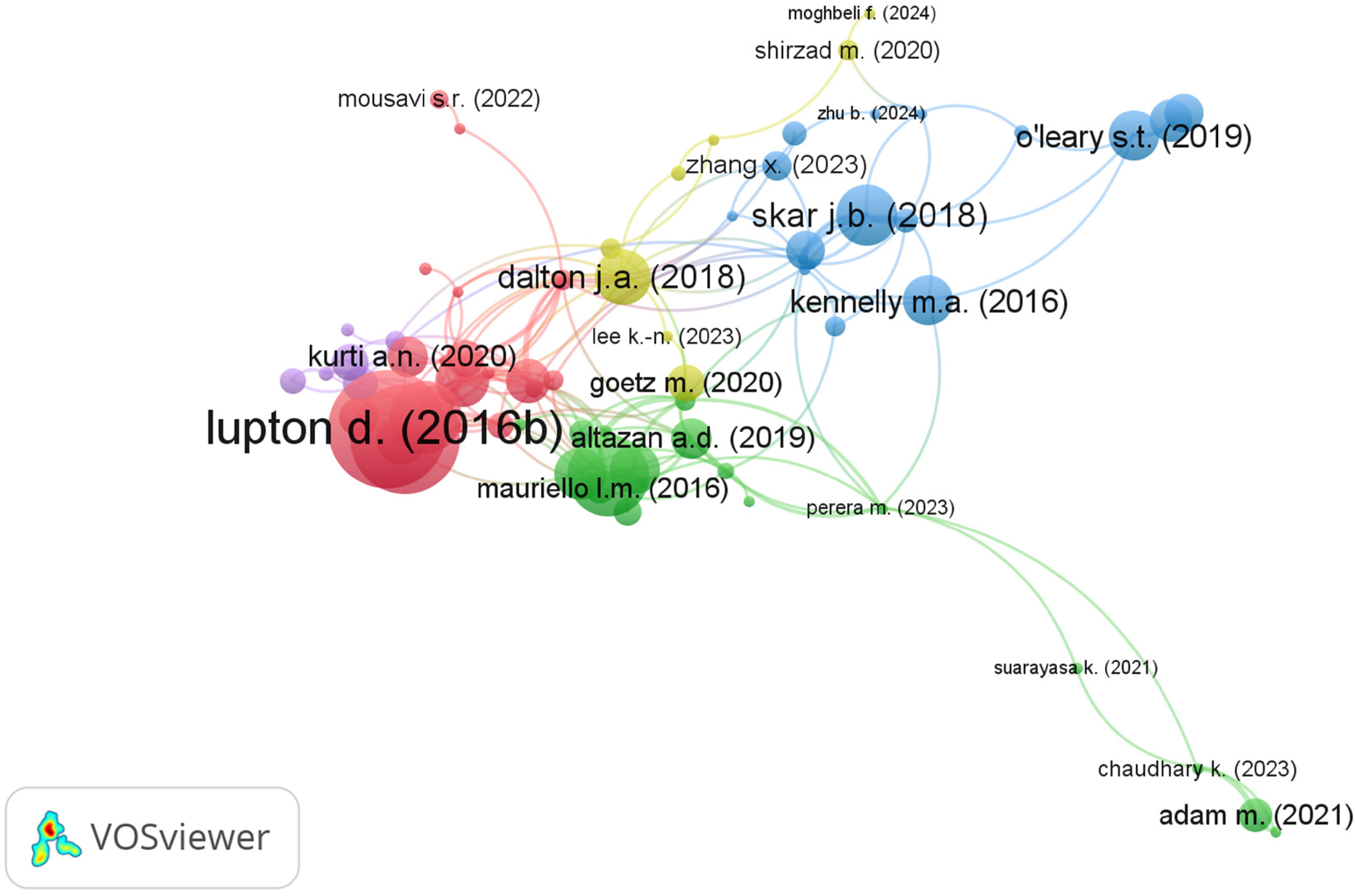
Network visualization of bibliographic coupling.
Five groups were used to categorize the 71 papers included in the analysis (see Figure 8). Table 9 provides a more detailed view of the 5 most-cited papers in the group. Within the red group, the most influential paper was written by Lupton D, 59 which explored the use and value of digital media for information about pregnancy and early motherhood. This paper examines the types of digital media people use for pregnancy and parenting, their reasons for using them, and how they perceive their usefulness or effectiveness. Another paper surveyed to investigate women's use of pregnancy and parenting apps, 60 identify how women use the Internet as a source of information during their pregnancy and how it affects them, 62 reveal the impact of social media usage of pregnant women, 65 and the impact of mobile application use on pregnant women's adaptation to pregnancy. 72 Based on the contents of the five papers, the red group discussed the topics related to digital communication media, user engagement, and their impact.
Research theme based on bibliographic coupling.

The green group highlights paper topics related to digital communication media as an intervention media for pregnancy health. 61 the paper with the highest number of citations in the group evaluated whether a technology-based behavioral intervention could decrease the proportion of African American women who were overweight or obese. Meanwhile, Dodd et al. 66 evaluated the impact of a smartphone application as an adjunct to face-to-face consultations in facilitating dietary and physical activity change among pregnant women. Van Horn et al. 73 discuss interventions to stop hypertension and improve lifestyle. Similar to Herring et al., 61 Altazan et al. discussed behavioral interventions aimed at addressing excess gestational weight gain in overweight and obese women. 74 Furthermore, Adam et al. evaluate a community-based mobile video breastfeeding intervention. 75
The blue group was focused on the effectiveness assessment of digital media-based pregnancy health interventions through a Randomized Controlled Trial. Papers in this group investigated the effectiveness of pregnancy health interventions using a Randomized Controlled Trial related to gestational diabetes mellitus (GDM), 63 Maternal Vaccines, 68 Prenatal stress self-help mindfulness, 76 and exercise and nutrition. 78 A randomized controlled trial is a prospective, comparative, and quantitative research study carried out in a controlled environment involving the random assignment of interventions to various comparison groups. 87 The randomized controlled trial is the most rigorous and reliable research method for assessing the existence of a cause-and-effect relationship between an intervention and its outcome. 87
The yellow group consists of papers that discuss mobile app-based digital media for pregnancy health education. Information technology is constantly evolving; information technology for pregnancy health education continues to develop. This study's findings related to the keyword co-occurrence overlay visualization indicate changes in the types of digital media used. Papers in this group focus more on mobile health applications. Dalton et al. 64 discuss the feasibility of The Health-e Babies App for antenatal education, Goetz et al. 79 discuss the electronic mindfulness-based intervention app for relieving prenatal depression and anxiety in hospitalized high-risk pregnant women, Chen et al. 20 analyze the online antenatal education class use via a mobile terminal app during the COVID-19 pandemic, Shirzad et al. 80 discuss The Effect of a Mobile-Based Education App on the Fear of Childbirth in Pregnant Women, and Moghbeli et al. 81 determine the effect of education through pregnancy application during pregnancy.
The purple group discusses digital communication media as an information source for improving pregnant women's knowledge. The most-cited paper in this group discussed improving pregnant women's knowledge related to pregnancy health. Pregnancy health discussed in this group relates to pre-eclampsia, 82 breastfeeding,83,85 health and parenting, 84 and supplemental health during pregnancy. 86
Research stream
The research stream was identified through co-citation analysis. Co-citation analysis is a science mapping technique that assumes publications frequently cited together with similar themes. 88 Analysis can reveal the intellectual structure of a field of research, 89 such as its basic theme. 90 Citation analysis also provides essential research stream mapping by identifying the main clusters related to a particular topic. 36 By identifying basic and historical works on a particular topic based on high-impact publications, co-citation analysis offers the intellectual roots of a particular topic. 91 In a co-citation network, two publications are linked when they appear together in another publication's reference list.
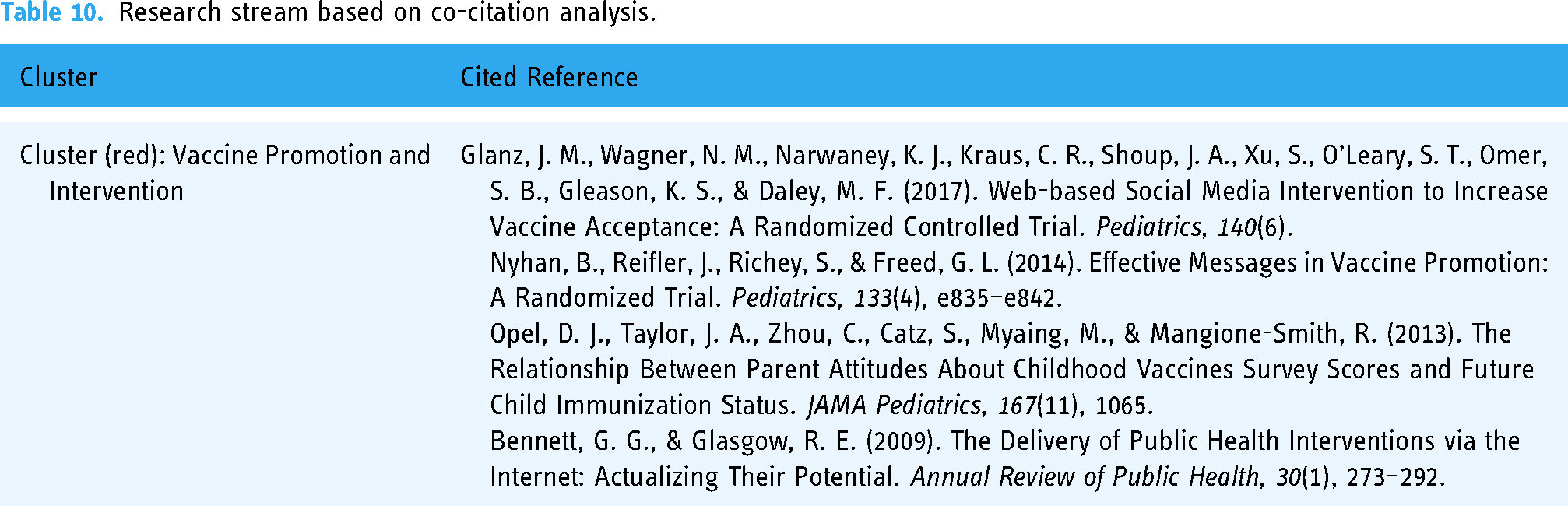
Co-citation analysis shows that 3999 references were cited, and 20 have been cited at least two times. Figure 9 and Table 10 show network and cluster visualizations formed from co-citation analysis involving 20 cited references with at least two citations connected. The linkage between the publications in Figure 9 is based on the number of times other publications have cited the two together. 70 Co-citation produces a single cluster cited references/research stream: vaccine promotion and intervention. This cluster consists of four papers that are often cited together and share the same focus on vaccines, whether related to vaccine promotion or vaccine intervention.
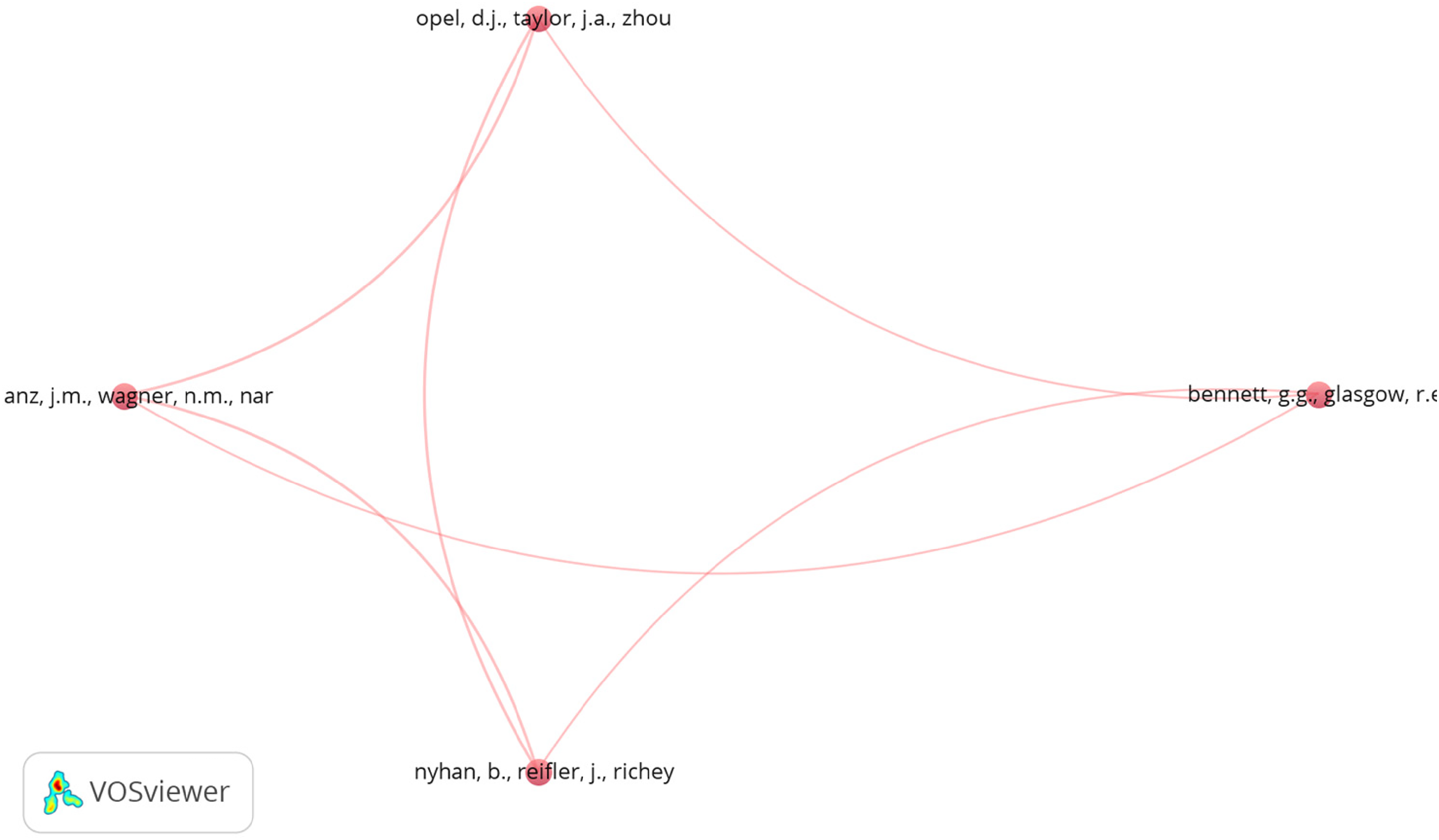
Network visualization of co-citation analysis.
Research stream based on co-citation analysis.
Methodological analysis
Research context
The research location is the location where the research is conducted. Based on the analysis of research locations, previous research on the use of digital communication media in the context of education for pregnant women was conducted in at least 32 countries (the USA, Iran, Australia, China, Indonesia, India, the UK, Turkey, South Korea, Saudi Arabia, Nigeria, Brazil, Taiwan, Sweden, South Africa, Norway, Ghana, Hong Kong, Nepal, Oman, Finland, Swiss, Spain, Malaysia, Canada, Tanzania, Germany, Vietnam, Thailand, New Zealand, and Japan). Figure 10 shows the distribution of research locations. The darker the orange color, the more frequently research on this topic is carried out in that country. The USA (23 papers), Iran (nine papers), China (eight papers), and Australia (seven papers) are the countries with the most research locations. This is probably because these three countries are developed countries where information technology is developing, and digital communication media for health is commonly used.

Research location.
Further analysis shows that various digital media are used for maternal health education (see Figure 11). Most digital media are mobile apps, followed by social media, websites, and instant messaging. Some pregnant women use more than one medium, too. Text messaging and online video conferencing are relatively rarely used compared to the others. This could be because the three media are more personal, and their reach is limited to specific recipients (individuals).

Types of digital media used.
Research approaches and research design
Table 11 shows the results of the research approach and design analysis. Based on the analysis, most previous research used a quantitative approach (82 out of 98 papers). Research designs widely used in research with this approach are experiments (52 papers) and surveys (22 papers). A total of seven previous studies used a qualitative approach. All of them used interviews as a data collection procedure/research design. Quantitative and qualitative approaches were also used in research on this topic. Nine of the 98 papers analyzed used a combination of these approaches. To collect data, they mainly combined several procedures. In addition, surveys and experiments were also used. Combining several procedures allows the researcher to overcome the weaknesses of specific data collection procedures. The use of survey procedures in research suggests that prior empirical research has concentrated on testing theories rather than creating new theories. 48 Furthermore, the experiment offers a more promising method for researchers to estimate the causal effect of a program. 92
Research approach and research design.

Research methods
Research can be divided into two types: cross-sectional and longitudinal. Cross-sectional studies collect data from several subjects at one point in time, which are used to compare study subjects. 49 In contrast, longitudinal research allows the researcher to establish a time sequence. 49 In longitudinal studies, research data are collected over time. 49 Analysis of previous research shows that most of the research is Longitudinal (61 out of 98 papers) (see Table 12). Experimental research design was widely used in both longitudinal research.
Research methods and research design.

Grand theory
The analysis shows that most of the research (88 out of 98) on this topic did not use a particular theory as a research reference in developing a framework, hypotheses, or research questions. This may be because clinical randomized control trials have discouraged the use of theory in health services research. 50 In the literature we analyzed, only six theories were found: Social Cognitive Theory (SCT) (three papers), Theory of Change (ToC) (three papers), The Health Belief Model (HBM) (one paper), the Unified Theory of Acceptance and Use of Technology (UTAUT) (one paper), Behaviour Change Wheel (BCW) (one paper), and Orem's Self-care Deficit Theory (one paper). Social cognitive theory (SCT) is a psychological perspective on human functioning that emphasizes the important role of the social environment in motivation, learning, and self-regulation. 93 SCT is one of the most attractive theories for behavior change interventions because it offers a framework for understanding why people choose and maintain health behaviors. 94 The ToC explains how and why an initiative is effective and can be validated through empirical testing by assessing indicators for every expected step on the hypothesized causal pathway to impact. 95 ToC is a pragmatic framework that describes how the intervention affects change. 95 Currently, ToC is widely used to assess the effectiveness of interventions to change a person's behavior, particularly in the context of health. The HBM attempts to predict health-related behavior in terms of specific belief patterns. 96 The HBM has been widely applied in many studies to explain and predict healthy behavior. The HBM is one of the most widely applied health behavior conceptual frameworks used by health educators, other health professionals, and psychologists. 97 The Unified Theory of Acceptance and Use of Technology (UTAUT) is a model that explains technology acceptance and use. 98 The UTAUT has four key constructs (i.e., performance expectancy, effort expectancy, social influence, and facilitating conditions) that influence the behavioral intention to use technology and/or its actual usage. 98 The Behavior Change Wheel (BCW) is a comprehensive framework for characterizing and designing behavior change interventions. 99 Orem's self-care deficit nursing theory (SCDNT) is a well-known theory with three nested nursing theories: the theory of self-care, the theory of self-care deficit, and the theory of nursing systems. 100 The theory emphasizes the importance of self-care in maintaining an individual's health and well-being. 99
Data analysis techniques
Table 13 shows the results of the use of data analysis techniques. The choice of this analytical technique depends on the research question to be answered. The analytical technique analyzed in this study is used to answer the main research questions. This study found that 29 out of 98 previous empirical studies on this topic used descriptive statistics—as many as 21 of the 98 papers used multi-analysis, more than one analysis technique. Regression-based analyses were used frequently (16 papers). Other analysis techniques that are widely used include the t-test (11 papers), Thematic analysis (five papers), Fisher's exact test (four papers), ANOVA (three papers), Content Analysis (two papers), and Bivariate analysis (two papers). Meanwhile, the McNemar test, the Mann–Whitney U test, SEM, Mann–Wilcoxon, and Shapiro–Wilk test were used once in each research study on this topic.
The use of data analysis techniques.

Meta-synthesis
Meta-synthesis was carried out to understand the results of previous research on digital communication media in the context of maternal health education. In this study, the synthesis was carried out based on research theme clusters resulting from co-occurrence analysis: cluster 1: Digital communication media and pregnant women’s prenatal care, cluster 2: Digital communication media and gestational diabetes, cluster 3: Digital communication media use for pregnancy health behavior, and cluster 4: Digital communication media and gestational weight gain.
Cluster 1: Digital communication media and pregnant women prenatal care
Previous research on this topic examined pregnant women's behavior using digital communication media (e.g., social media and mobile applications) to seek information related to prenatal care101–104 and health education.105–108 The synthesis of research findings on this topic shows that digital communication media is an innovative and promising approach to supporting prenatal and postpartum care. Digital communication media improves maternal knowledge, motivates self-care, promotes lifestyle improvements, and supports maternal autonomy and health. Specifically, it helps reduce pregnancy-related stress and depression and encourages better health practices. It also increases awareness of iron-rich diets, proper supplementation, and adherence to treatment protocols to prevent anemia. Ultimately, digital communication media improves health outcomes for mothers and infants.
Another study on this topic found digital communication media to be the most effective tool and could be used during the COVID-19 pandemic.109–111 It effectively addressed common concerns and misinformation regarding COVID-19 vaccination among pregnant women, increasing awareness and vaccine acceptance. 110 A study on this topic also found that the availability of reliable information and resources on digital communication media, especially social media, helped alleviate fears related to pregnancy and childbirth during the crisis and reduced anxiety levels among pregnant women. 109 A study by Suarayasa et al. found mobile health applications to be the most effective tool and could be used in conditions of the COVID-19 pandemic, providing accessible and reliable information about potential pregnancy risks and enabling early detection and intervention. 111 Pregnant women use the technology to ask questions of doctors or nurses and receive consultation services during restricted access to traditional healthcare services. 111 During the pandemic, providing remote health services through mobile applications can reduce pregnant women's anxiety about the inability to obtain health services. Another study on this topic found that misinformation or incorrect information in pregnancy-related apps can cause anxiety. Therefore, we need an application that contains evidence-based health information.
Cluster 2: Digital communication media and gestational diabetes
Research on digital communication media in the context of maternal health education also discussed using this technology to provide support or interventions related to gestational diabetes.63,112–116 The synthesis of research findings on this topic shows that digital communication media is an effective support service for avoiding gestational diabetes. The study findings of Smith et al. show that providing support or interventions related to gestational diabetes by combining technology and supportive counseling of smartphone applications demonstrated positive outcomes in promoting physical activity among women with gestational diabetes. 113 It improves pregnant women's understanding of the importance of physical activity for managing gestational diabetes. An experiment by Zhou found that women with GDM, who received tailored education about diet, exercise, and blood glucose monitoring experienced better blood glucose and glycosylated hemoglobin index than those who received standard care. 116 Another study revealed that the mobile application effectively provided educational content, diet recommendations, and physical activity, contributing to increased self-efficacy in managing women with GDM. 115 Furthermore, Women with GDM might ignore adherence to their treatment regimen. 114 They can be exposed to an increased risk of diabetes due to unawareness, a lack of access to healthcare services, and a poor perception of the disease. Smartphone-based education provides a beneficial method of GDM education due to the popularity, accessibility, and affordability of smartphones. 114 Smartphones can be used to increase the risk perception of type II diabetes in women with gestational diabetes 114 and potentially support their blood glucose management. 63 Thus, the risk of type II diabetes can be reduced.
Cluster 3: Digital communication media use for pregnancy health behavior
Previous research on digital communication media in the context of maternal health education also discussed using this technology to enhance health behavior among pregnant women. Health behaviors in this study are related to nutrition and exercise.23,101,105,115–118 Physical activity, diet, and health-related quality of life are related to maternal and infant health. 23 The synthesis of research findings on this topic shows that digital communication media can enhance engagement in regular exercise and promote healthier eating patterns. Previous research results indicated that pregnant women engaged in the digital media intervention showed significantly improved physical activity and dietary quality.23,116,118 Another study found that the mobile application that provides diet recommendations and physical activity effectively increased pregnant women's ability to manage gestational diabetes. 115 Furthermore, Mauriello’s study shows that smartphone app-based pregnancy education effectively engages pregnant women in adopting healthier behaviors, particularly in nutrition, physical activity, and smoking cessation. 101
Cluster 4: Digital communication media and gestational weight gain
Several studies highlighted the role of digital communication technology for education and health interventions related to weight during pregnancy, physical activity in pregnant women, and obesity.61,67,73,119,120 As it is known, gestational weight gain that exceeds the recommendation is associated with obesity and adverse outcomes for mother and child.119,120 Based on the findings of these studies, the use of digital communication media is beneficial for controlling weight gain during pregnancy and physical activity of pregnant women. The involvement of women in creating lifestyle interventions and allowing them to choose and adapt interventions is important to maximize and maintain the potential use of digital communication media in supporting adequate gestational weight gain (GWG).
Discussion
This study analyses research on digital communication media in the context of maternal health education. By integrating three analysis-synthesis approaches, this study identified bibliometric characteristics (e.g., publication trends, researchers with the highest number of publications and citations, countries with the highest number of publications and citations, journals with the highest number of publications and citations, most-cited papers, research collaborations, research themes, and research streams), research context (locations and digital communication media discussed), research methodology (research approach, research design, research methods, grand theories, and data analysis techniques), and findings from previous research. This study aims to provide theoretical and practical contributions using these three approaches.
Principal results
This study shows that research in this field began in 2014. This may be due to the rapid development of the internet, smartphones, and social media. This allows people to access e-mail and perform web surfing through their phones to find the information they need. The publication trend is increasing, although it has decreased in specific years. Over the last few years, as published papers show, this field has been the subject of attention for researchers from various fields. Medicine, a field that encompasses health science, medicine, and clinical research, is a field that deals extensively with this topic. Several factors, including the rapid advances in communications technology and the increasing use of smartphones by society, are behind the recent rapid growth of research in this field. The highest trend in 2022 shows that researchers were very interested in digital communication media in educating pregnant women during COVID-19 when direct interaction was limited.
The themes of the research conducted were identified through keyword co-occurrence analysis. We found four research theme clusters on this topic: digital communication media and pregnant women's prenatal care, digital communication media and gestational diabetes, digital communication media use for pregnancy health behavior, and digital communication media and gestational weight gain. A synthesis of the research results for each theme cluster has been carried out and concluded.
The analysis of the research approach and design found that most previous research on digital communication media in the context of maternal health education used a quantitative approach, both conducted by survey and experiment. This shows a tendency to use a positivistic paradigm in understanding the role of digital communication media in education and health care for pregnant women. In this case, researchers used a quantitative approach to measure and test the relationship between variables related to the use of digital communication media and their effects on education, health care, and health behaviors among pregnant women.
Furthermore, an analysis of the research approach found that previous studies used more longitudinal than cross-sectional studies. Longitudinal research has advantages over cross-sectional research, especially related to its ability to compare changes in a person's behavior at different times. 121 Collecting data periodically during pregnancy can provide information on the effect of using digital communication media as intervention media for pregnant women. The data can describe how the healthy behavior of pregnant women changes over time. In addition, the data also provide information on changes in the use of digital communication media by pregnant women, such as changes related to the frequency or the type of information that receives attention. Changes in the frequency of digital media use by pregnant women can indicate the usefulness of digital media in providing information needed by pregnant women. Meanwhile, the type of information search can vary greatly depending on the gestational age and pregnancy conditions. As we know, pregnant women experience significant changes both anatomically, physiologically, and metabolically according to gestational age. 121
Moreover, the study results show that descriptive statistics and linear and logistic regression analysis were widely used as analytical techniques to answer research questions. Multiple analysis techniques (multi-analysis) are also commonly used. Descriptive statistics are often used on a sample to estimate population characteristics. 122 It facilitates the description and summarization of data. 122 Regression analysis is carried out to answer various research questions involving the relationship between variables, namely the influence of the independent variable on the dependent variable. 123 In this context, regression analysis is widely used to assess the effectiveness of disseminating pregnancy-related health information on digital communication media, both general information and specific information aimed at pregnant women with special conditions such as anemia, obesity, gestational diabetes, pre-eclampsia, pregnant smokers, and pregnancy with complications.
Comparison with prior work
The realm of digital communication media has seen significant advancement. Stakeholders employ digital platforms to disseminate maternal health education. Various digital platforms have been created explicitly for this educational objective. Several studies have explored the use of digital communication media in pregnancy education. Regrettably, a comprehensive review of these studies is lacking, resulting in a limited understanding of the overall progress of research, key contributors, the research context, the flow of research, and the discoveries made.
In contrast to earlier research that linked digital communication media to maternal education during pregnancy, this study establishes a connection with these prior studies by conducting a thorough review and deriving comprehensive conclusions from the collective body of research. By integrating bibliometric analysis, methodological examination, and meta-synthesis, this study offers insights into research performance, knowledge mapping, identified gaps, and potential avenues for future research.
Theoretical implications
This research has various theoretical consequences. This is the first study to review the literature using bibliometric analysis, methodological analysis, and meta-synthesis to investigate the use of digital communication media for maternal education. Therefore, this study fills the gap in the literature related to the method of analysis/review of the literature to find out the state of the art on a research topic. The results of the context analysis in this study are useful for academics of communication technology and health by providing information related to digital communication technologies that have been utilized in the health sector. This information is important for studying the effectiveness of digital communication media and improvement. This also opens opportunities to examine the potential use of other digital communication technologies that are still underutilized and have not been used in the health sector. The meta-synthesis in this study classifies and summarizes previous research findings on the use of digital communication media for maternal education. This helps researchers and practitioners understand the results of previous studies through this one publication.
This study also found useful information about well-known researchers in this field with the highest number of papers and citations, most influential well-known researchers, most influential papers, and research themes. This information is useful for researchers in planning future research and papers to have novelty, demonstrate an adequate understanding of the relevant literature in their field, cite various appropriate literature sources, and not overlook important work in research. Furthermore, information about leading journals helps academics choose the best publication media so their research results have a high impact. This study combines existing studies, provides comprehensive knowledge and current research trends, and indicates future research directions. Using the results of this study will help the researcher determine where to position his research and what contributions to make, the methods that will be useful for his research, and analyze and interpret the results of his research.
Practical implications
Although this study uses literature analysis and synthesis to investigate digital communication media in the context of maternal education, it has practical implications. One possible consequence is that healthcare practitioners are encouraged to adopt and adapt digital communication media to suit patients’ characteristics and care goals. Thus, pregnant women with less health literacy can benefit from providing person-centered services.
The meta-synthesis of previous research results found that digital communication media has been used to seek information related to pregnancy health and issues. Digital communication media improves maternal knowledge, motivates self-care, promotes lifestyle improvements, and supports maternal autonomy and health. Digital communication media is helpful as media support or interventions related to pregnancy issues (e.g, gestational diabetes, anemia, anxiety, and gestational weight gain). It provides nutrition information, diet recommendations, and physical activity to avoid them.
Based on that, to increase the effectiveness of digital communication media in influencing pregnant women's behavior, practitioners must also identify factors that hinder the digital communication media used by pregnant women. Increasing the use of digital communication media related to pregnancy education is expected to improve pregnant women’s and children’s health. Besides, to increase the effectiveness of digital communication media in influencing pregnant women's behavior, practitioners or related parties can add educational content in the form of examples of behaviors that pregnant women need to do to get good pregnancy outcomes. Clear information within the context makes it easier for pregnant women to understand and apply it. Moreover, digital communication media is helpful as a support or intervention tool for pregnancy-related issues. Practitioners can develop user-friendly digital technologies that cater to everyone's needs, providing complete and up-to-date information. In addition to ensuring that the chosen digital platforms meet the needs of pregnant women, practitioners must ensure that the information conveyed is accurate and evidence-based.
Limitation
This study aims to provide an overview of research on maternal health education and digital communication media. However, it has limitations related to language barriers. It only looked at publications in English, so this analysis is limited to publications that meet this criterion. The fact that papers on the topic are published in multiple languages, not just English, suggests that a more comprehensive bibliometric study is needed to remove the language barrier.
Future research directions
Ultimately, this study found several topics that had not received attention and could be used as future research topics. First, advances in information technology, especially in digital communication media for health, allow pregnant women to search for information and conduct consultations online through certain platforms. This allows health consultations to be carried out more easily and inexpensively. Thus, research to explore how pregnant women perceive the information available online and online consultation is important. This can be used to develop and improve services in the future. Researchers can also broaden the topic of digital communication media research to cover developing issues, such as user engagement and user addiction. Second, research on digital communication media for pregnant women's education has only been conducted in 36 countries. This indicates a global picture of the development of the use of this technology in the world's health sector, and its effectiveness is less obtained. Therefore, research on how to use digital communication media to educate pregnant women in each country is needed. Third, this study found that the use of theory in research on this topic is still rare. This topic is related to behavior, and many social and behavioral theories can be considered (e.g., theory of planned behavior, social-ecological model, transtheoretical model and stages of change, learning theory, theory of reasoned action, health action process approach). Theory helps in the creation of research questions and underlies the methodology. 121 In addition, theory influences the way data is analyzed and interpreted. 121 Further research can consider these theories or develop new theories that are more relevant to the research context.
Conclusions
This bibliometric study examines digital communication media and maternal health education. It aims to track research developments on the topic and identify bibliographical characteristics, research context, research flow, and previous research results to identify gaps based on the published papers. This study evaluated 98 Scopus-indexed journal papers related to this topic.
The study found that overall publication trends are increasing, although they have occasionally fallen for several years. The highest trend in 2022 shows that researchers were very interested in digital communication media for educating pregnant women during COVID-19 when direct interaction was limited. Most publications on this topic are from the subject area of “Medicine”. The most referenced paper is “The use and value of digital media for information about pregnancy and early motherhood: A focus group study.” This study also found nine collaborative groups. Unfortunately, there has been no collaboration between the groups. Geographically, the UK is the origin of most collaborations. It has the widest collaboration network.
Based on the co-occurrence of the keywords used by the authors, four research themes can be identified: Digital communication media and pregnant women prenatal care, Digital communication media and gestational diabetes, Digital communication media use for pregnancy health behavior, and Digital communication media and gestational weight gain. A meta-synthesis of research findings from the four theme groups shows that digital communication media has been widely utilized and is an effective tool for maternal health education (e.g., in terms of prenatal care, gestational diabetes, pregnancy health behavior, physical activity, nutrition during pregnancy, and gestational weight gain).
Analyzing the themes based on the references used (bibliographic coupling) revealed five current research themes: digital media, user engagement, and their impact; digital media as an intervention media for pregnancy health; effectiveness assessment of digital media-based pregnancy health interventions through a randomized controlled trial; mobile app-based digital media for pregnancy health education; and digital media as an information source for improving pregnant women's knowledge. Furthermore, an analysis of the theme based on the cited papers shows a research stream on Vaccine Promotion and Intervention.
The methodological analysis identified that research on digital communication media and maternal health education had been conducted in at least 32 countries. The USA, Australia, and Iran are the countries with the most research locations. The most researched digital communication media include mobile apps and social media. Most previous research on this topic used a quantitative approach with experiments as a data collection procedure. In addition, methodological analysis also found that research on this topic used longitudinal methods more than cross-sectional methods. This study also highlights the limited use of theory in research. Lastly, this study found that descriptive statistics and regression-based analysis are the most widely used analytical techniques.
Footnotes
Acknowledgments
The authors thank the National Research and Innovation Agency (BRIN), Indonesia, for collaborating on this research. Furthermore, in preparing this manuscript, AI tools assisted researchers in translating drafts, improving sentence structure, and enhancing readability and communication quality
Contributorship
EYM, SS designed research and conducted research; TS, SD conducted research; EYM, TS, SD screened and analyzed data; TS, SD, and SS wrote the paper; EYM validated and finalized the paper. All authors read and approved the final manuscript.
Data availability
Data is available on request.
Declaration of conflicting interests
The authors declared no potential conflicts of interest with respect to the research, authorship, and/or publication of this article.
Ethical Approval
This research has received ethical approval from Universitas Esa Unggul, Health Research Ethics Commission, Jakarta, in the form of an Ethical Approval Statement with number 0923-12.023/DPKE-KEP/FINAL-EA/UEU/I/2024.
Funding
This research is fully funded by Esa Unggul University, Jakarta, Indonesia [No. 012/LPPM/KONTRAK-INT/PNT/VIII/2023]. Researchers express their views in this study but do not reflect the views of Esa Unggul University, Jakarta, Indonesia.
Guarantor
All authors are guarantors.

Patient consent
This paper does not involve patients, so it does not require patient consent.