



Abstract
Objective
The main aim of this review was to systematically collect and summarize the available evidence on health information-seeking behavior among people living with the two common types of chronic diseases in LMICs.
Methods
For this systematic review and meta-analysis, we searched PubMed, Embase, Scopus, Google Scholar, and forward and backward citations from included studies. The preferred reporting items for Systematic Reviews and Meta-Analyses (PRISMA) procedure were followed to develop and report the review. The pooled effect size and the effect's 95% confidence interval were calculated using a random-effect model meta-analysis for each research. A sub-group analysis was done to investigate potential sources of heterogeneity. To identify publication bias, Egger-weighted regression tests were employed.
Results
A total of 4281 articles were retrieved, with ten studies meeting the eligibility criteria for qualitative synthesis and only seven studies were eligible for the meta-analysis. The pooled extent of health information-seeking behavior among chronic disease patients was 50.5% (95% CI: 35.36–65.70, p = 0.00), with high heterogeneity (I2 = 98.25). Based on the sub-group analysis, it was found that 55% (95% CI: 29.9–79.4) of cancer patients and 40% (95% CI: 36.9%–43.9%) of DM patients sought out health-related information. In studies conducted before 2015, the level of health information seeking was 49%, increasing to 52% (95% CI: 41.0%–62.2%) after 2015.
Conclusion
The overall health information seeking behavior among diabetes and cancer patients has increased over time, but remains relatively low, with only nearly half actively seeking information. The findings also emphasize that patients require health-related information on various topics.. Health educators and health professionals should consider this diversity when developing interventions and educational materials to provide patients with the most comprehensive information and education regarding their healthcare issues.
Protocol registration number
CRD42023433169.
Background
Non-communicable diseases (NCDs) are illnesses or ailments that typically have a chronic nature, a gradual onset, a protracted course, and are typically not contagious from one person to another. 1 These diseases are the greatest cause of death globally and pose a serious threat to development and health, especially in low- and middle-income countries (LMICs). 2
NCDs affect people from all age groups, geographical areas, and nations. 3 Although these illnesses are frequently linked to older age groups, statistics show that each year, 17 million deaths from NCDs happen before the age of 70. 4 According to World Health Organization (WHO) estimates, 86% of these early fatalities take place in low- and middle-income nations. Cancer diseases account for 9.3 million deaths, annually, and 2.0 million deaths are caused by diabetes (including kidney disease deaths caused by diabetes). 4
Chronic disease frequently leads to considerable morbidity, physical and social limits, and difficulty in making decisions about one's own health. 5 Adhering to medication and treatment schedules may be harder for people with chronic diseases. For patients to recognize and control their symptoms effectively, adhere to drug treatment, 6 and have appropriate interactions with the healthcare system, patients’ self-reported knowledge, skills, and confidence are crucial. 7 As a result, people with chronic diseases strongly demand information about managing chronic conditions in daily life. 8 One of the most effective ways to carry out health promotion and health education is through the use of technology through online or web-based health information services. 9
The necessity to include patients in conducting self-management activities has increased due to the growing worry and health implications of one or more chronic illnesses.7,10 Despite being satisfied with their medical care, individuals may seek additional information about their illness from alternative sources. 11 Furthermore, the Internet and other media outlets have made health-related information more accessible. 12
Health information seeking is a way for individuals to gain knowledge about health, sickness, health hazards, and health promotion. 13 In light of the changing medical landscape and the rise of medical consumers, health information-seeking behavior is an active need-fulfillment behavior in which health information is obtained from numerous sources and has become an important issue. 14
It is crucial for patients to seek out health information from various sources because, frequently, the information offered by medical experts is insufficient because of problems including linguistic and cultural barriers, a lack of time on the part of medical professionals, and poor communication.15,16 As a result, patients often need to seek health information on their own to complement advice from healthcare providers, to gain additional perspectives, manage uncertainty, and to access general information.17,18
Research suggests that health literacy, 7 gender, race/ethnicity, education level, metropolitan status, and perceived health status can have an impact on the behavior of individuals searching out health information. According to this evidence, people who are younger, female, and have completed higher education are more likely to seek health information. 19 Compared to urban inhabitants, rural individuals seek health information less frequently and are more likely to use traditional sources. 20 The tendency of rural populations to seek out health information is thought to be related to their socioeconomic situation, specifically their lower levels of income and education. 20
Why it is important to do this review
Encouraging the public to adopt healthy behaviors and lifestyles is essential. Studies have shown that people with chronic diseases face challenges when trying to manage their conditions on their own. Health information or relevant and necessary information regarding aspects of one's health through various sources has long been regarded as a mechanism that promotes patients’ knowledge on treatment and lifestyle adjustments to diseases. 20 Understanding how people seek health information is important, especially as those with chronic diseases are more likely to do so than the general population is, as it may be able to provide resources to help them live healthier lifestyles or stop potentially dangerous habits.
This systematic review and meta-analysis focused on health information-seeking behavior among individuals living with chronic diseases, specifically people living with cancer and diabetes in developing countries. This focus is vital as individuals in developing countries often face challenges related to accessing health information due to socioeconomic factors, 21 healthcare infrastructure, 22 and cultural contexts,23,24 which significantly impact their health outcomes. Both of these diseases require extensive ongoing management strategies that include treatment adherence and lifestyle modifications. Research has shown that patient engagement and information-seeking are essential for the effective management of these diseases.25–27 Additionally, understanding health information-seeking behavior in the context of diabetes and cancer can have essential implications for health education and public health policies. Effective health communication and tailored interventions can enhance health literacy and empower patients. 28
There are some pieces of evidence on the information-seeking behavior of people living with chronic illnesses, specifically among cancer and diabetes patients. However, to our knowledge, there has been no comprehensive systematic review on the topic. Additionally, the pooled level of health information-seeking behavior and influencing factors among people living with these two chronic diseases in LMICs as a whole is unknown. Therefore, we set out to explore the evidence health information-seeking behavior among people living with these diseases, and to our knowledge, there have not yet been any published systematic reviews and meta-analyses on the subject so far to help guide decision-making. Therefore, this study aimed to systematically collect and summarize the available evidence on health information-seeking behavior among people living with the two common groups of chronic diseases (cancers and diabetes mellitus) in LMICs.
The findings of the study may assist healthcare managers, patients, healthcare professionals, and planners in designing appropriate interventions to enhance information-seeking behavior and pinpoint the main health-related information contents sought by those patients. This will contribute to improving the uptake and sustainability of information utilization and also provide a road map to guide health communication programmers. Importantly, this systematic review may have broad implications for digital health technology adoption in resource-limited settings.
Research questions
The objective of this review was to explore the literature surrounding the health-related information-seeking behavior of patients with chronic diseases in LMICs. Moreover, this review was conducted based on the following three predefined questions.
What are the available pieces of evidence on health information-seeking behavior among people living with chronic diseases in LMICs? What is the extent of health information-seeking behavior among people with chronic diseases in LMICs? What is the content of health-related information needed by chronic disease patients
Methods
Protocol and registration
The preferred reporting items for Systematic Reviews and Meta-Analyses (PRISMA) procedure were followed to develop and report this review. The protocol registration number is CRD42023433169.
Inclusion and exclusion criteria
In conducting this systematic review and meta-analysis, we focused on original peer-reviewed studies that evaluated health information-seeking behavior among people living with chronic diseases, specifically among individuals living with diabetes and cancer diseases in LMICs. All cross-sectional and other observational studies (case-control and cohort), were taken into consideration for inclusion, as these methodologies provide valuable insights into behavioral patterns and associations. Such diverse study designs enable a more comprehensive understanding of the study objectives. To ensure the reliability and credibility of the findings, we only included articles that are freely available in full text format and published in peer-reviewed journals. However, we excluded studies not published in the English language, as language barriers would hinder the accurate interpretation and synthesis of the data. Additionally, we did not include studies that were not available in full text and those that were difficult to extract data from, as the lack of complete information would compromise the validity of our review. Moreover, letters, reviews, expert opinions, editorials, and conference papers were not included; these types of documents often lack the original empirical data needed to evaluate health information seeking behavior thoroughly and do not provide the methodological rigor necessary for our systematic review.
Outcomes
This systematic review and meta-analysis focused on the assessment of health information-seeking behavior among people living with chronic diseases. The main outcome of the review is the pooled level of health information seefull-textking among people living with cancer and diabetes diseases in LMICs. For this study, LMICs are nations with a United Nations Development Programme human development index score of less than 0.8.
Types of studies
Quantitative studies including cross-sectional and other observational studies (case-control and cohort), were taken into consideration for inclusion. This review was not restricted by any date of publication. However, it was only focused on studies published in the English language.
Search strategy
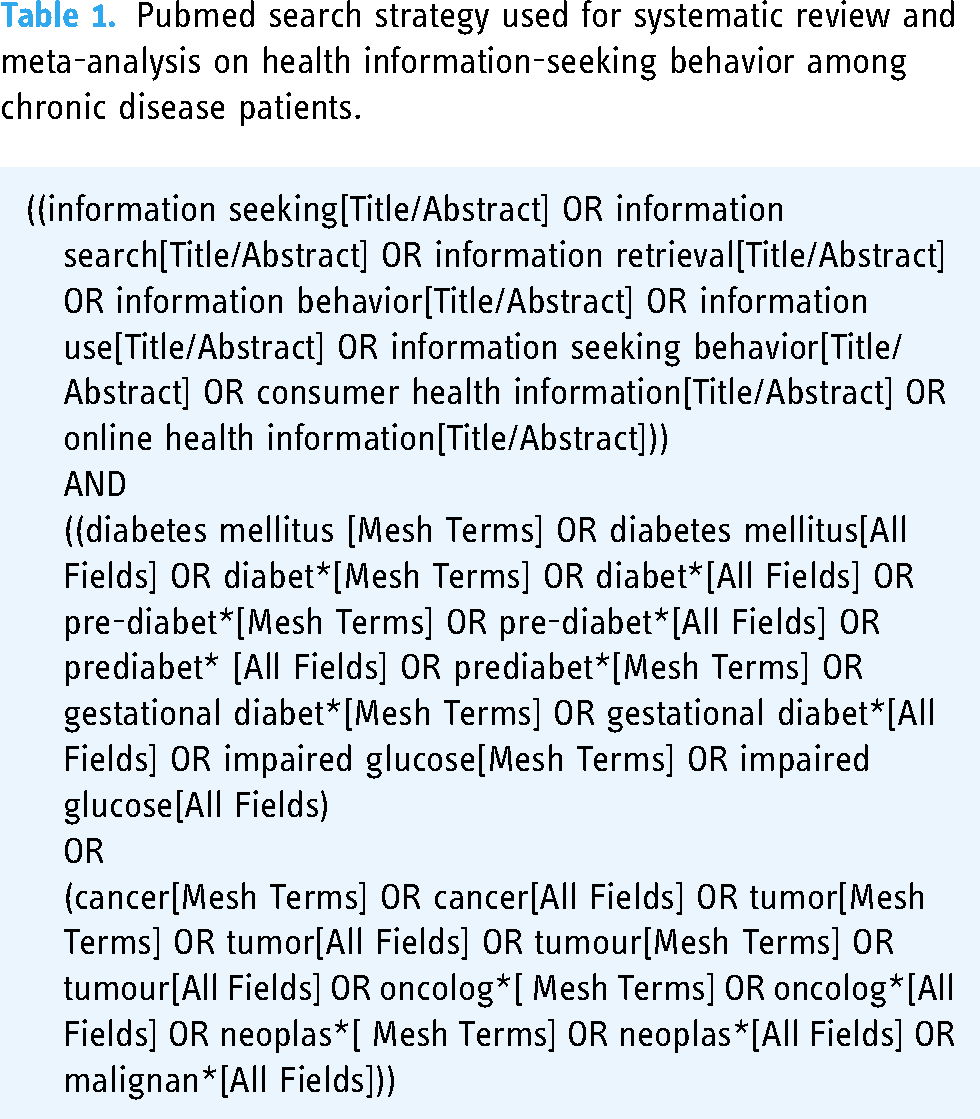
The research team was in charge of developing, designing, and putting the systematic search method into practice. Medical Subject Headings (MeSH) terms were employed for searching and Boolean operators (OR, AND) were used to stipulate our keywords. The literature search was conducted from January 13th to January 20th, and all papers published until January 20th, 2024, were considered.
Searches were performed on Web-based electronic databases such as PubMed, Scopus, EMBASE, Google Scholar, and manual searches. Then, forward and backward citations were checked from the included studies to include further published studies (Table 1).
Pubmed search strategy used for systematic review and meta-analysis on health information-seeking behavior among chronic disease patients.
Selection of studies
We performed a thorough review of the available documents and produced reports using the Preferred Reporting Items for Systematic Reviews and Meta-Analyses (PRISMA) guidelines. 29 The number of records that were identified, included, and removed from the study is shown using the PRISMA flow chart. Two independent reviewers screened the articles for inclusion based on the settled criteria.
Methodological critical appraisal
Two reviewers ((ADD and MZ)) independently assess the risk of bias; a third reviewer (HSN) settled disagreements in the quality assessment through discussion or adjudication. To evaluate the methodological quality of included studies, the Joanna Briggs Institute's (JBI) standard critical appraisal checklist was used.
Data extraction
Two independent reviewers (ADD and MZ) extracted the data using an Excel sheet to maintain an organized process. Only studies that were agreed upon by both reviewers were included in our review. For every article, important information such as the primary author's last name, year of publication, study area, type of diagnosed disease, sample size, participants, outcome measure, and other relevant characteristics were recorded. After data extraction by both reviewers, the two summary tables were compared to check for similarities.
Method of data analysis
STATA version 16 software was used for analysis. We used evidence tables and narrative synthesis to summarize all the papers included in this systematic review. The pooled extent of health information-seeking behavior was calculated using a random-effect model meta-analysis. Forest plots were utilized to assess the pooled effect size and weight with a 95% CI of each included study. The degree of heterogeneity between the included studies was assessed using the index of heterogeneity (I2 statistics). To investigate potential sources of heterogeneity, sub-group analyses, and sensitivity analyses were performed. To identify publication bias, Egger-weighted regression tests were employed. A p-value of ≤ 0.05 was declared as a statistically significant publication bias in Egger's test.
Results
Selection of studies
A total of 4281 articles were retrieved from databases such as PubMed (n = 1528), Embase (n = 909), Scopus (n = 1527), and other sources (n = 909). Of those 4281 records, 1585 articles were removed due to duplication using EndNote 20. Then, after abstract and title review, 2523 articles were excluded due to ineligibility with reasons, and 173 articles were further considered for full-text screening. Finally, 10 studies30–39 were eligible and included in the review, while the remaining 162 full-text articles were excluded (Figure 1).
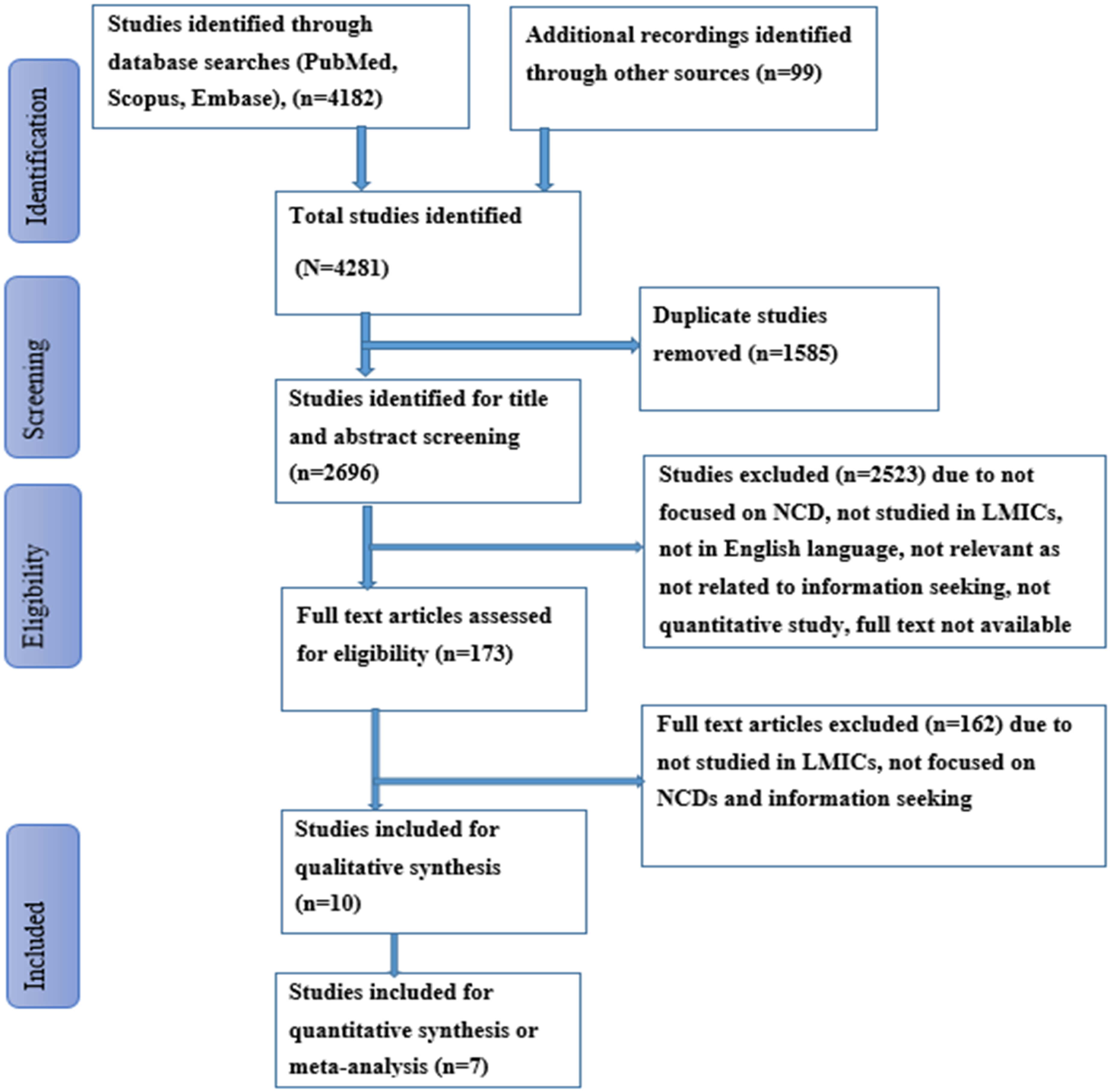
PRISMA flow diagram for inclusion of articles.
Characteristics of selected studies
The characteristics of the samples described in the studies are presented in Table 2. Out of the total articles that were examined, two were carried out in Saudi Arabia, two in Iran, two in Malaysia, and one each in Ethiopia, Jordan, Mexico, and Nigeria. Most of the studies were done on cancer patients and/or survivors, and only three were conducted on patients with diabetes. A sample size of 60 participants conducted in Iran on breast cancer patients was the minimum, while 423 was the largest sample reported by the study done in a referral hospital among DM patients in Ethiopia. The survey carried out in Jordan among cancer patients reported the highest percentage of information seeking (86%), while the study carried out in Malaysia revealed the lowest percentage of information seekers (22.5%). However, the three studies did not disclose the extent of the participants’ health information-seeking behavior (Table 2).
Characteristics of the included studies.

Topics of health-related information
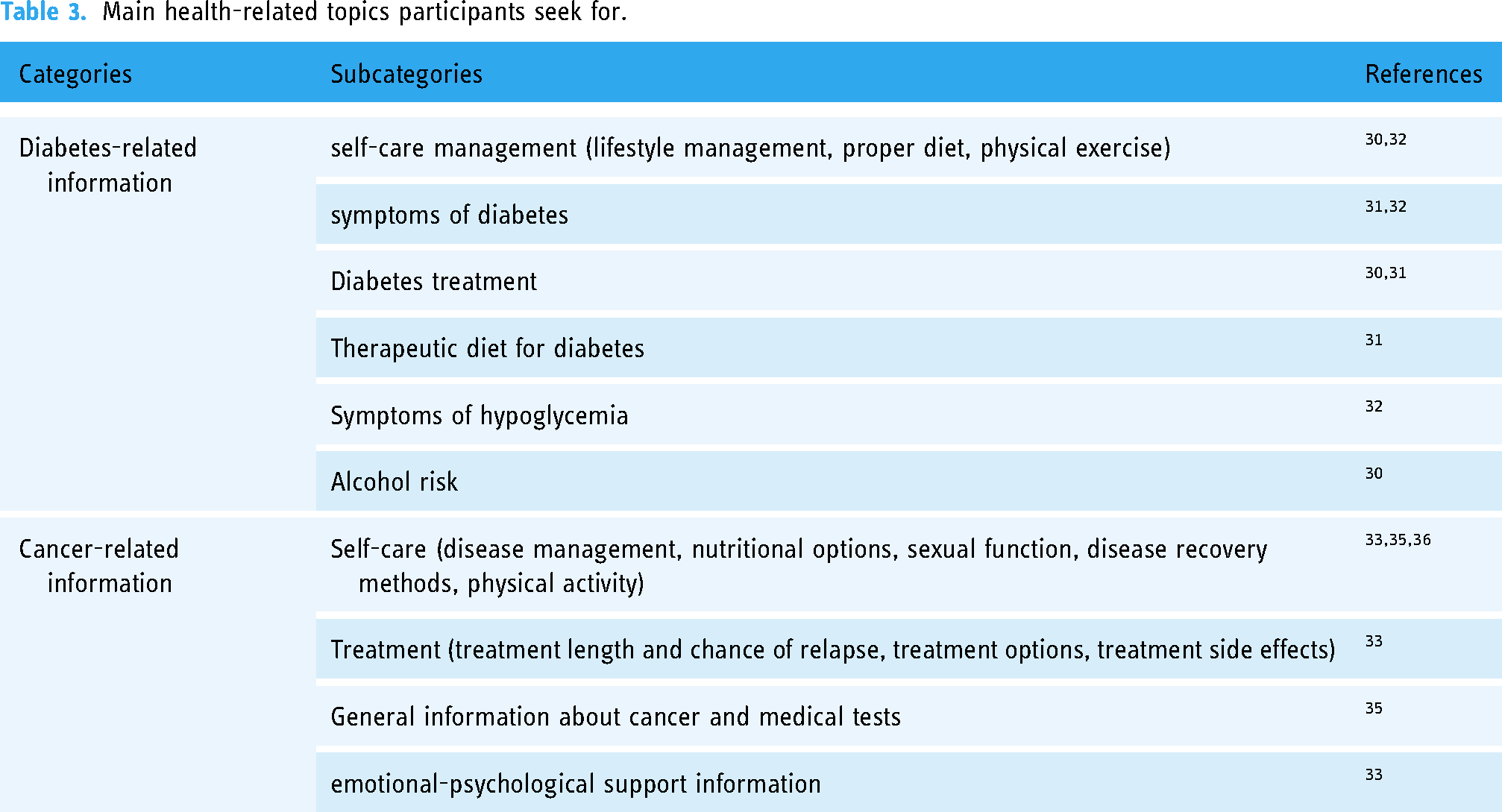
Regarding the topic of information, the studies reported that people with diabetes seek information about self-care management such as proper diet and physical exercise, diabetes symptoms, diabetes treatment, symptoms of hypoglycemia, alcohol risk, and a therapeutic diet for diabetes. Cancer patients and/or survivors have also sought a variety of cancer-related information on disease management, nutritional options, emotional-psychological support information, treatment options and chances of relapse, treatment side effects, and medical tests (Table 3).
Main health-related topics participants seek for.
Quantitative synthesis
Pooled level of health information seeking
Only seven studies were found to be fitted for the pooled estimation of health information-seeking behavior. Three studies were excluded for failing to disclose the extent of health information seeking. Hence, these studies were not further considered for the meta-analysis. In total, 2038 participants were involved in the pooled analysis. The overall extent of health information seeking among cancer patients and DM patients was 50.5% (95% CI: 35.36–65.70, p = 0.00) (Figure 2).

Forest plot of the extent of health information-seeking behavior among chronic disease patients in LMICs.
Subgroup analysis
Subgroup analysis is necessary since the original studies differ significantly from one another. Consequently, a subgroup analysis was conducted by year of study, type of diagnosed disease, and sample size. As a result, 55% (95% CI: 29.9–79.4) of the cancer patients and 40% (95% CI: 36.9%–43.9%) of the DM patients, sought health information. In studies conducted before 2015, the percentage of participants seeking health information was 49% (95% CI: 11.5–87.0), however, in studies conducted after 2015 that percentage rose to 52% (95% CI: 41.0%–62.2%) (Table 4).
Subgroup analysis of health-related information-seeking behavior among people with chronic diseases in LMICs.

Sensitivity analysis
Because the data were heterogeneous, a sensitivity analysis was performed to examine the effects of eliminating each study to see how each affected the total estimated prevalence. As a result, each point estimate falls within the overall 95% confidence range, suggesting that the pooled extent of chronic disease patients looking for health information is not impacted by the removal of any research from our systematic review and meta-analysis (Figure 3).

Sensitivity analysis of health-related information-seeking behavior among people with chronic diseases in LMICs.
Publication bias
The included studies were evaluated for potential publication bias using Egger's regression test. Hence, the analysis revealed no indication of publication bias in the results (p = 0.592) (Table 5).
Eager's test publication bias of the included studies.

Discussion
Education and adequate health information with behavioral-oriented programs are thought to make people with chronic illnesses more capable of managing their own health, practicing self-care, and eventually leading to better health outcomes. 40 To the best of our knowledge, this is the first systematic review and meta-analysis exploring the available evidence on the information-seeking behaviors of individuals with cancer and DM disease in developing countries. The main aim of the review was to identify the types of information content sought by patients with chronic disease and examine the pooled extent of health information seeking among those patients. As a result, the review identified eleven studies that examined patients with chronic disease health information-seeking behavior. Overall, the review found a small amount of published research on the topic.
The results revealed that the pooled prevalence of chronic disease patients’ health information-seeking behavior in LMICs was 50.5%. This percentage is lower than the findings of a previous study among cancer survivors, indicating that 80.8% of cancer survivors sought information concerning to their disease. 41 The possible reason could be due to the variation of study settings and its association with socioeconomic disparities. Our study was limited to low and middle-income countries, where the adoption of digital technologies and the ease of accessing online health information resources are lower than in the aforementioned study. 42 Additionally, this figure is lower than a systematic review that was done by focusing only European context. 42 The disparity might stem from varied study participants—the previous study involved solely health consumers and health professionals. Conversely, this systematic review focused on individuals with diabetes and cancer, indicating potential significant differences in health information requirements between patients and healthcare providers.
The studies have shown that people with chronic diseases need to search for information on diverse topics. Compared with the general population, patients with chronic diseases have more specialized information needs, including being aware of coping mechanisms, maintaining a healthy lifestyle, support in making decisions about medical treatment, and information on the underlying reasons for their ailments.43–45 This could be because individuals living with chronic diseases often encounter a multitude of complex and varied issues that can affect different aspects of their daily lives. Hence, in order to effectively address these diverse problems, patients require comprehensive information that covers various aspects of their condition and empowers them to make informed decisions about their healthcare and overall well-being. 46
This study indicates that both cancer patients and DM patients mainly seek health-related information to better understand their condition, manage their health, and prevent or control complications. A systematic review also showed that individuals with cancer need diverse information such as information about treatment options and side effects of treatment throughout the course of the care. 47 This implies that health educators, physicians, and other stakeholders involved in managing chronic illnesses ought to take into account a diversity of information contents when trying to provide care for these patients.
Patients with DM sought information related to their condition to better manage their health. Based on our review the main types of information topics sought by DM patients are diabetes management, nutrition and diet, physical activity, complications, medication management, lifestyle changes, and support resources. In line with an individual study done in Greece, 48 indicating that nutrition and dietary issues and diabetes complications were identified as the most crucial diabetes-related topics to be aware of. Patients’ keen interest in nutrition may suggest their awareness of the crucial role diet plays in managing diabetes mellitus and self-care. 49 However, it may also reflect the complexity of the issue and the difficulties linked to making long-term lifestyle changes. 48 Additionally, the suffering caused by the diseases recognized serious consequences and the desire to prevent or control them might be the reason why diabetes complications are such an important topic.
This study performed a subgroup analysis based on the type of disease diagnosed, the study period, and the sample size. The subgroup analysis showed that the overall pooled prevalence differed by disease type. Studies including cancer patients showed the highest pooled prevalence of health information seekers, or 55% (95% CI: 29.9 −79.4). Previous evidence also shows that disparity exists in health information seeking among patients with chronic disease based on the type of chronic illness. 50 Another piece of evidence also shows that three cancer disease-specific populations have shown significant variations in their information-seeking behaviors. 7 The possible reason could be patients’ internet searches for health information may be significantly influenced by the nature and timing of their chronic condition. In particular, those who have received a cancer diagnosis are more likely to search the internet for health information. Patients who received early-stage cancer diagnoses were more likely to search for health-related information. 50 Additionally, it might be easier for patients to find information about the early stages of some types of cancer, especially breast and prostate cancer due to the availability of more information. 7
There was a noticeable increase in the percentage of people seeking information, from 49% before 2015 to 52% after 2015, indicating a growing trend of individuals seeking health-related information in recent years. Due to the rapid advancements in technology and healthcare practices, the accessibility of health information regarding chronic conditions has significantly evolved over time. This transformation has empowered individuals to engage with healthcare providers, enhance their knowledge, and give people more chances to become informed51–53 could be the possible reason.
Limitations
This study is subject to certain limitations. First, all studies examined had a cross-sectional design. Second, the review was limited to focusing on only cancer and diabetes mellitus information seeking, which is less studied than health information seeking in general. Additionally, we included articles published only in the English language, which may lead to selection bias.
Conclusion and recommendation
Even though there has been an increase in information-seeking behavior over time among diabetes and cancer patients, the pooled extent indicates that it is still relatively low, with only nearly half of them actively seeking out health-related information. Additionally, the findings emphasize that chronic disease patients who actively seek health information require information on various health-related topics. Hence, health educators and health professionals should consider this diversity when developing interventions and educational materials to provide patients with the most comprehensive information and education regarding their healthcare issues.
To the best of our knowledge, this review is one of the first to examine the pooled prevalence of health information-seeking behavior among patients with chronic illnesses in LMICs. Our results provide insight into the health information-seeking habits of individuals with chronic conditions, particularly diabetes and cancer, and could assist in tailoring health communication targeted at this population. Improving patient education and decision-making during their continuum of care requires understanding distinct information-seeking behaviors among specific illness populations. Healthcare professionals can better meet patients’ needs and enhance overall outcomes by customizing their approach using this information. Therefore, researching these information-seeking differences among individuals affected by chronic illness is crucial.
Supplemental Material
sj-docx-1-dhj-10.1177_20552076241302241 - Supplemental material for Health information-seeking behavior among people living with the two common chronic diseases in low and middle-income countries (LMICs). A systematic review and meta-analysis
Supplemental material, sj-docx-1-dhj-10.1177_20552076241302241 for Health information-seeking behavior among people living with the two common chronic diseases in low and middle-income countries (LMICs). A systematic review and meta-analysis by Getanew Aschalew Tesfa, Abel Desalegn Demeke, Mesafint Zewold and Habtamu Setegn Ngusie in DIGITAL HEALTH
Footnotes
Acknowledgments
We would like to thank Dilla University for their financial support and encouragement in carrying out this review.
Author contributions
GAT: Conceptualization, data curation, formal analysis, methodology, project administration, validation, visualization, writing original draft, writing-review and editing
ADD: Conceptualization, data curation, formal analysis, methodology, validation, visualization, writing-review and editing
MA: Conceptualization, data curation, resources, software, methodology, project administration, validation, visualization, writing-review and editing
HSN: data curation, formal analysis, methodology, project administration, validation, visualization, writing review and editing
Declaration of conflicting interests
The authors declared no potential conflicts of interest with respect to the research, authorship, and/or publication of this article.
Funding
Financial support was provided by Dilla University. However, the funder has no role on data collection, analysis, interpretation, or decision on publication.
Guarantor
GAT

Patient consent
In the context of this systematic review and meta-analysis, patient consent was not required because the review of existing literature does not involve direct interaction with human subjects or their personal information.
Supplemental material
Supplemental material for this article is available online.
References
Supplementary Material
Please find the following supplemental material available below.
For Open Access articles published under a Creative Commons License, all supplemental material carries the same license as the article it is associated with.
For non-Open Access articles published, all supplemental material carries a non-exclusive license, and permission requests for re-use of supplemental material or any part of supplemental material shall be sent directly to the copyright owner as specified in the copyright notice associated with the article.
