



Abstract
Objective
This study examines the emotional state and interpersonal relationships of social media influencers, focusing on the psychological effects of their popularity and engagement. Despite increased awareness of mental health issues, influencers remain underrepresented in research. Barriers such as low mental health literacy, stigma, access issues, and the pressure to maintain virtual personas highlight the need for this investigation. This research addresses these gaps by systematically examining the impact of social media on influencers’ mental health.
Methods
An online survey was conducted using the positive and negative affect schedule (PANAS) and the Relationship Structures Questionnaire (ECR-RS). The target audience was social media influencers from various countries, with a specific focus on the United Arab Emirates (UAE). Participants were recruited from 2 November 2022, to 1 March 2023, through email, SMS, and direct messages on social media platforms. Statistical analyses included t-tests, ANOVA, and Pearson correlation coefficients.
Results
A total of 161 social media influencers completed the survey. A significant association was found between extended social media usage and heightened negative emotions among influencers spending more than 5 hours daily on these platforms (p < .05). Influencers earning less than $10,000 from social media reported the lowest negative feeling scores. However, higher income levels correlated with increased relationship avoidance and anxiety scores (e.g., p < .01 for avoidance and anxiety from parents and best friends). Additionally, an increase in the number of followers was associated with increased negative emotions (p = .001).
Conclusion
Our study provides compelling insights into the well-being, emotions, and relationship quality of social media influencers. It underscores the urgency of prioritizing their mental well-being on a global scale, helping them navigate the challenges of their digital careers while maintaining a positive impact on their audiences.
Keywords
Introduction
The global mental health burden has been a growing concern, with many countries making extensive efforts to raise public awareness and reduce or prevent mental health problems.1,2 Despite these efforts, reported rates of mental health issues, including depression and anxiety, have increased over the past decade. 3 Specifically, these increases have been observed globally, with significant rises in both anxiety and depression. 3 Low mental health literacy, stigma, and lack of access to treatment remain significant barriers to seeking help. 4 The COVID-19 pandemic further exacerbated this crisis and has led to unprecedented challenges across various employment sectors.5,6
Among the diverse groups facing mental health challenges, social media influencers are particularly underrepresented in research. Social media influencers, defined as individuals with significant and engaged followings on social media platforms who can influence their audience's opinions and behaviors, 7 face unique stressors. While they often promote positivity and self-love, they also express self-deprecation and modesty. 8 Understanding the mental health implications for social media influencers is critical due to several reasons, including the increasing prevalence of digital stressors and the constant pressure to maintain an idealized online persona. 9
The rise in global social media usage has heightened social expectations and barriers for influencers as they balance their virtual personas with real-life identities, potentially exerting immense pressure on their mental well-being. 10 Social media influencers experience unique stressors such as burnout, stress-related disorders, and reduced creativity,11,12 which may impact their ability to provide meaningful content and contribute positively to their communities. Moreover, their mental health deterioration could have ripple effects on their followers and the broader social media community. Many influencers have young followers who are still forming their identities, and these young individuals may encounter psychological challenges if their role models experience poor mental health. 13
Previous global research, conducted over the past decade, has highlighted the mental health impacts of social media usage. For instance, a study in China at the beginning of the COVID-19 pandemic reported anxiety in 23% and a combination of depression and anxiety in 19% of the sample, with higher social media exposure associated with increased odds of these conditions. 14 Similarly, Scottish adolescents who spent more time on social media experienced poorer sleep quality and higher levels of anxiety and depression. 15 In the United States, young adults using social media for more than 2 hours daily showed higher levels of depressive symptoms. 16 A UK cohort study found that 31% of 14-year-olds using social media for more than 5 hours daily experienced body weight dissatisfaction. 17 A systematic review found moderately strong evidence for associations between screentime and both obesity and depressive symptoms. 18 However, an 8-year longitudinal study reported no association between increased social media use and anxiety or depression at the individual level. 19
A qualitative study explored the views of adolescents, educational professionals, and mental health practitioners on social media for mental health promotion, identifying potential benefits and challenges. 20 Adolescents reported frequently seeking information about mental health on social media. 20 Despite extensive research on social media and mental health, no studies have systematically examined the impact on social media influencers. This gap highlights the urgent need to explore the psychological implications of influencers’ popularity and engagement on social media platforms.
The current study builds on a rich body of research on social media usage and its impact on well-being. Vaid and Harari (2020) explored the personality predictors of multiplatform social media use among young adults, providing a framework for understanding the diverse ways individuals engage with social media. 21 Vaid et al. 22 examined variations in social media sensitivity, offering insights into how different people and contexts influence social media's impact on well-being. These works provide a foundation for justifying the current study's focus on the unique stressors faced by social media influencers.
This cross-sectional study aims to explore the impact of popularity on the mental health of social media influencers, focusing on their social media use, well-being according to the positive and negative affect schedule (PANAS), 23 and the quality of their interpersonal relationships according to the Relationship Structures Questionnaire. 24 This research will potentially set the foundation for future digital health interventions and guidelines to prioritize influencers’ mental well-being globally, helping them navigate the challenges of their digital careers while maintaining a positive impact on their audiences.
Cultural variation in the relationship between social media and well-being
There is significant cultural variation in the relationship between social media usage and well-being outcomes. Studies have shown diverse impacts of social media across different cultures, with varying levels of sensitivity and effects on mental health. For example, research from China indicates a strong association between social media exposure and anxiety and depression, 14 while studies from Western countries show mixed results.16,19 Understanding these cultural differences is crucial for contextualizing the impact on social media influencers, particularly in the United Arab Emirates (UAE), where cultural norms and social expectations may differ significantly from those in Western or Eastern contexts.
The UAE-centric research is essential as it provides insights into how social media influences mental health within this unique cultural context. Given the UAE's rapid digitalization and high social media penetration rates, examining the specific mental health challenges faced by influencers in this region will offer valuable insights and potentially differing results from the global literature.
Aim
To examine the emotional state, quality of interpersonal relationships, and the impact of popularity and engagement rates on the mental health of social media influencers.
Objectives
Assess the emotional state of social media influencers.
Evaluate the quality of interpersonal relationships among social media influencers.
Correlate the number of followers and engagement rate with mental health parameters (emotional state and relationship quality).
Correlate income range with the emotional state and relationship quality of social media influencers.
Hypothesis
Social media influencers are likely to face a heightened risk of negative emotions and interpersonal relationship challenges due to the pressures and nature of their profession.
Materials and methods
Study design
This study employs a cross-sectional design using an online survey, which was completed by social media influencers. The survey was created using Google Forms in both English and Arabic languages.
Participants and procedure
Participants
The survey targeted social media influencers from various countries, with a primary focus on the UAE. An influencer is defined as an individual with a substantial and engaged following on social media platforms who can sway their audience's opinions and behaviors. All participants were over the age of 18 and had an active presence on one or more of the following platforms: Instagram, TikTok, Twitter, Facebook, LinkedIn, YouTube, Telegram, Snapchat, and Pinterest. Influencers were categorized based on their follower count as follows: nano-influencers: 1–10k followers; micro-influencers: 10–50k followers; mid-tier influencers: 50–500k followers; macro-influencers: 500k to 1 million followers; mega-influencers: more than 1 million followers. 25
Procedure
The study was conducted in line with the STROBE guidelines 26 from 2 November 2022, to 1 March 2023. To engage a diverse range of influencers, the survey was distributed to those with at least 1000 followers using a systematic approach.
In the first phase, an electronic version of the questionnaire (Supplementary Material) was sent to a database of 176 influencers provided by the Media Regulatory Office in the UAE, the body responsible for issuing licenses to social media influencers. Distribution occurred via Email and SMS.
To further broaden the survey's reach, direct messages were sent to influencers on Instagram, Twitter, and WhatsApp, inviting them to participate. Additionally, a snowball technique was employed, where influencers were asked to share the survey with up to three other influencers (Figure 1).

Illustration of the distribution process of the survey questionnaire to social media influencers.
Inclusion criteria
The survey included social media influencers aged 18 and above, with a minimum of 1000 followers, actively engaged on platforms such as Instagram, TikTok, Twitter, Facebook, LinkedIn, YouTube, Telegram, Snapchat, and Pinterest. Signing the consent was required to participate in the study.
Exclusion criteria
Participants who did not sign the consent form, were under 18, or had fewer than 1000 followers were excluded from the study.
Measurements
The survey comprised three different sections. The first section, designed by the researchers, consisted of 11 questions intended to gather demographic information and assess social media activities. The demographic data collected consists of several key variables, including age, gender, country of residence, industry, level of education, number of followers, social media channels utilized, type of social media activity, generated revenue, and number of hours spent engaged in social media activities.
The second section of the questionnaire consisted of the PANAS 23 and the Relationship Structures Questionnaire (ECR-RS). 24 These tools are available for use in academic research without specific permission, and appropriate credit has been given to their respective authors.
The PANAS: This instrument assesses the extent of positive and negative emotions experienced over the past month. It consists of two 10-item scales, one for positive affect and one for negative affect. Participants rate each item on a 5-point Likert scale ranging from 1 (“very slightly or not at all”) to 5 (“extremely”). 23
Relationship Structures Questionnaire (ECR-RS): This questionnaire evaluates attachment-related anxiety and avoidance across different relational contexts (mother, father, romantic partner, and best friend). It comprises nine items for each relationship type, rated on a 7-point Likert scale from 1 (“strongly disagree”) to 7 (“strongly agree”). 24
This section aimed to evaluate the emotional state of the social media influencers over the past month by using the PANAS scale. The PANAS scale is a reliable and valid self-report measure. Its effectiveness has been demonstrated across various countries and cultures, including Italy, Brazil, China, India, Chile, and Spain.27–32 It consists of 20 items with participants rating each on a five-point scale: “very little or not at all,” “a little,” “moderately,” “quite a bit,” or “extremely.” The positive feelings and emotions were interested, excited, enthusiastic, strong, proud, inspired, determined, alert, attentive, and active. The negative feelings and emotions were distress, upset, guilty, ashamed, scared, afraid, nervous, hostile, irritable, and jittery. The positive affect score (PAS) can range from 10 to 50, with higher scores representing higher levels of positive feelings. Similarly, the negative affect score (NAS) can range from 10 to 50, with higher scores representing higher levels of negative feelings. 23
The third section utilized the Relationship Structures (ECR-RS) questionnaire to assess the impact of popularity on interpersonal relationships. The ECR-RS has demonstrated validity and reliability through its utilization in studies across various cultures and countries, including Turkey, Spain, India, and Sweden.33–36 It includes nine items that are used to assess the attachment styles concerning four targets (i.e., mother, father, romantic partner, and best friend). The participants were expected to choose from a scale of 1 to 7, with 1 being strongly disagree and 7 being strongly agree. The questions were: It helps to turn to this person in times of need; I usually discuss my problems and concerns with this person; I talk things over with this person; I find it easy to depend on this person; I don't feel comfortable opening up to this person; I prefer not to show this person how I feel deep down; I often worry that this person doesn't really care for me; I'm afraid that this person may abandon me; I worry that this person won't care about me as much as I care about him or her. Average scores of attachment-related avoidance can range from 1 to 7, with higher scores representing higher levels of avoidance. Similarly, average scores of attachment-related anxiety can range from 1 to 7, with higher scores representing higher levels of anxiety. 24
The PANAS and ECR-RS were chosen due to their robust psychometric properties and relevance to the study's aims. PANAS measures both positive and negative affect, providing a comprehensive view of influencers’ emotional states. ECR-RS assesses the quality of interpersonal relationships, which is crucial for understanding the social dynamics influencers navigate.
Sample size calculation
We aimed to study approximately 200 subjects, based on the estimated prevalence of anxiety (23%) associated with social media exposure, as reported by Gao et al. 14 during the COVID-19 outbreak. This calculation was based on an allowable error of 5% with a 95% confidence interval.
Statistical analysis
Data were entered into Excel, incorporating range checks for the variables. Frequency tables and histograms were generated to examine the quality of the data and identify outlying values. Descriptive statistics were computed for all variables. Independent samples t-tests and ANOVAs were conducted to examine differences in PAS and NAS across demographic variables. For continuous variables such as Marital Partner Avoidance score, Best Friend Avoidance score, Mother Avoidance score, Father Avoidance score, Marital Partner Anxiety score, Best Friend Anxiety score, Mother Anxiety score, and Father Anxiety score, range checks were performed. Pearson correlation analyses were conducted to assess the relationships between the number of followers, time spent on social media, PANAS scores, and attachment-related anxiety and avoidance scores from the ECR-RS. Multiple regression analyses were then conducted to determine the predictive value of social media usage patterns and attachment styles on mental health outcomes. Statistical significance was set at p < .05. Data analysis was performed using SPSS version 24.
Results
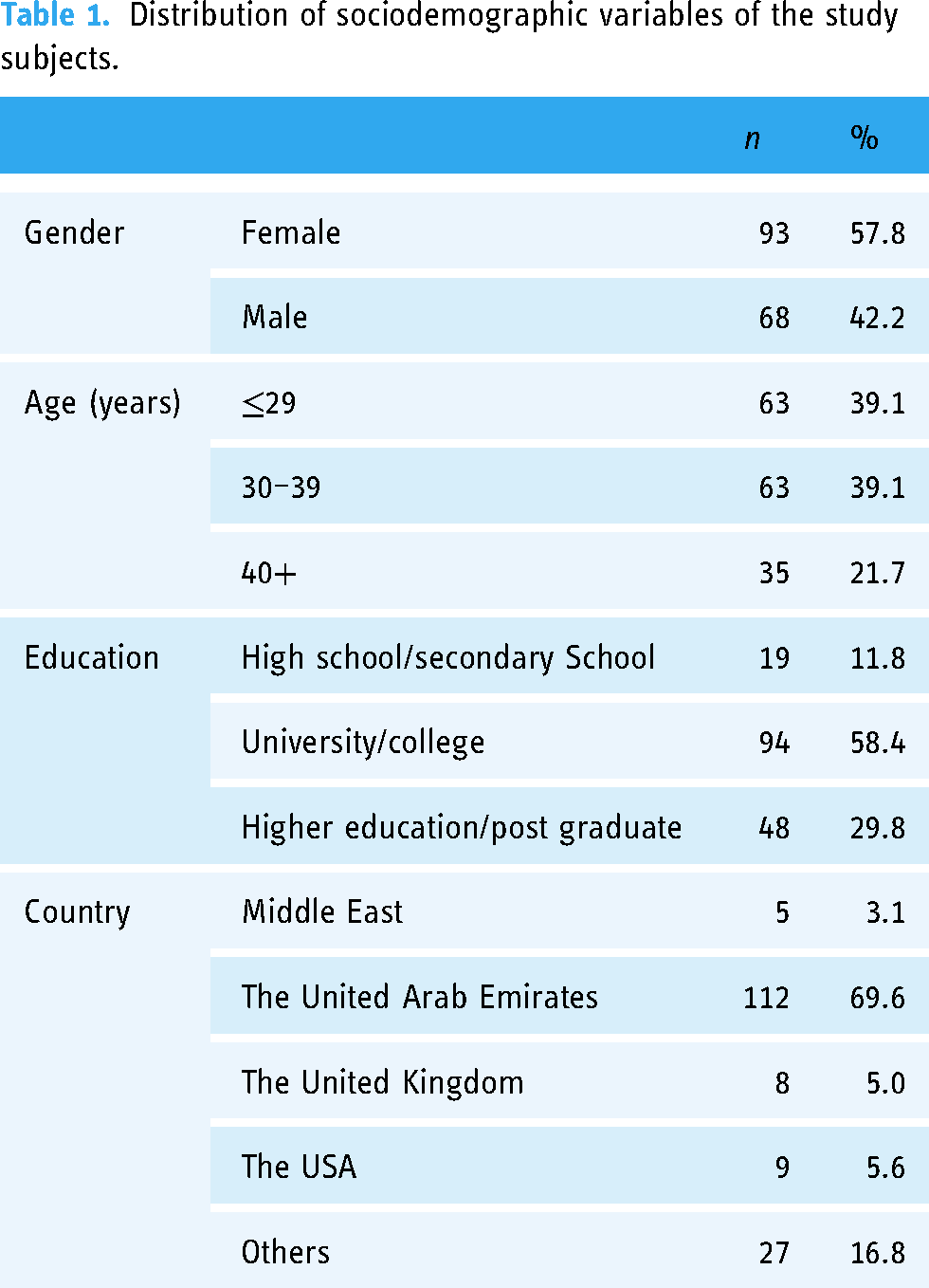
Our findings revealed a gender distribution of 58% female (n = 93) and 42% male (n = 68) influencers. Additionally, 60% (n = 97) of influencers were above the age of 30, with 67% (n = 112) living in the UAE. When considering their educational backgrounds, our data indicated that 89% (n = 142) of influencers held at least a bachelor's degree (Table 1). The main industries that social media influencers focus on are lifestyle, fashion and beauty, and health and education. In the realm of social media platforms, Instagram emerged as the most commonly used, with 86% (n = 139) of influencers reporting it as their primary platform, followed by TikTok at 57% (n = 92), then Twitter at 38% (n = 61), while Telegram was the least used with 6% (n = 10).
Distribution of sociodemographic variables of the study subjects.
The sample size of 161 social media influencers, representing a diverse range of influence levels. The distribution; nano-influencers with 1–10k followers at 28% (n = 46), micro-influencers with 10–50k at 17.4% (n = 28), mid-tier influencers with 50–500k followers at 21% (n = 35), macro-influencers with 500k to 1 million followers at 8% (n = 13), and finally mega-influencers with more than a million followers, constituted 25% (n = 39) of our sample. The majority of social media influencers, specifically 64.0% (n = 103), reported spending between 2 and 5 hours daily on social media platforms (Table 2).
Categories distribution of participating social media influencers (n = 161).

About 67% (n = 108) of social media influencers commonly use stories to connect with their followers. Followed by 64% (n = 103) who preferred posting on their feed. Additionally, live broadcasts were the least popular, with only 52% (n = 83) of influencers using them. On average, around 35% (n = 56) of influencers interacted with their audience by replying to comments and messages.
Among social media influencers, 64% (n = 103) have indicated receiving complimentary products or services. On average, approximately 38% (n = 61) of influencers earn an annual income ranging from USD 50,000 to USD 200,000 through their social media activities.
The results of the PANAS (Figures 2 and 3) revealed that among the study participants, the following percentages reflect experiencing positive emotions to a moderate degree or higher over the past month: interested 82.6%, excited 74%, strong 82.6%, enthusiastic 82%, proud 82.2%, alert 75.1%, inspired 75.8%, determined 79%, attentive 78.9%, and active 78.2% (Figure 4). On the other hand, the following percentages reflect experiencing negative emotions to a moderate degree or higher over the past month: distressed 55.3%, upset 52.8%, guilty 36%, scared 41%, hostile 29.2%, irritable 55.9%, ashamed 23.1%, nervous 58.4%, jittery 50.3%, and afraid 39.8% (Figure 5).

Box plot of PAS by gender and age (years).

Box plot of negative affect score (NAS) by gender and age (years).

Bar chart of positive affect score (moderate degree or higher).
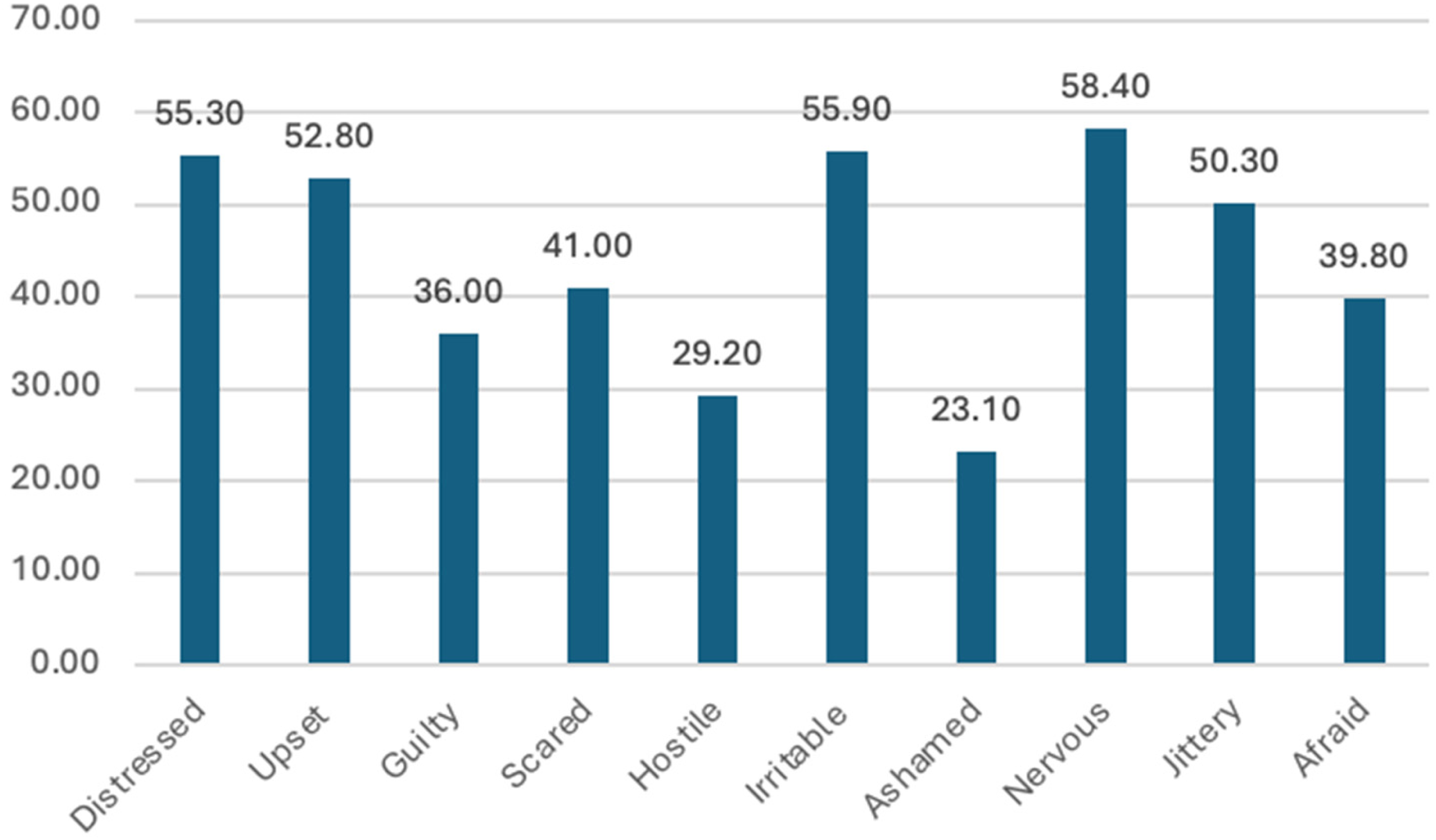
Bar chart of negative affect score (moderate degree or higher).
The results of the Relationship Structures (ECR-RS) Questionnaire reveal how social media influencers feel in their relationship with their mother, father, spouse, and best friend. The average avoidance score was as follows, for the mother the mean (SD) 3.79 (1.66), the father’s mean 4.14 (1.72), the spouse's mean was 2.9 (1.56), and the best friend's mean was 3.16 (1.30). The average anxiety score for the mother the mean was 2.25 (1.64), the father's mean was 2.79 (2.09), the spouse's mean was 2.8 (1.95), and the best friend's mean was 2.49 (1.54). The highest sense of security was associated in a descending order with the partner, best friend, mother, and last father (Figure 6).

The relationship structures (ECR-RS) dimensions for the participants towards: father, mother, partner, and best friend (n = 161).
There was a slight change in the mean of the PAS in relation to daily hours of social media use. However, the association between the PAS and daily hours spent on social media was not statistically significant (p = .815). On the other hand, a significant association was observed between extended social media usage and heightened negative emotions among influencers who spent more than 5 hours daily on these platforms. The mean (SD) for less than 2 hours 19.12 (7.87); 2–5 hours 24.86 (10.46); more than 5 hours spent on social media 26.90 (10.54), p = .033 (Table 3).
Correlation between negative affect score and time spent on social media (n = 161).

Statistically significant.
In terms of the correlation between attachment-related avoidance with parents and daily hours spent on social media, there was an increase in the mean attachment-related avoidance score (with mother or mother-like figure) with increase in daily hours spent on social media. However, the association between attachment-related avoidance score (with mother or mother-like figure) and daily hours spent on social media was not statistically significant (p = .132). There was an increase in the mean attachment-related avoidance score (with father or father-like figure) with increase in daily hours spent on social media from less than 2 hours to between 2 and 5 hours. However, the association between Attachment-related avoidance score (with father or father-like figure) and daily hours spent on social media was not statistically significant (p = .187).
In terms of the correlation between attachment-related anxiety with parents and daily hours spent on social media, there was an increase in the mean attachment-related anxiety score (with mother or mother-like figure) with increase in daily hours spent on social media. However, the association between attachment-related anxiety score (with mother or mother-like figure) and daily hours spent on social media was not statistically significant (p = .120). There was an increase in the mean attachment-related anxiety score (with father or father-like figure) with increase in daily hours spent on social media. However, the association between Attachment-related anxiety score (with father or father-like figure) and daily hours spent on social media was not statistically significant (p = .398). (Table 4)
Correlation between attachment style with parents and daily hours spent on social media (n = 161).

In terms of the correlation between attachment style with partners and daily hours spent on social media, there was an increase in the mean attachment-related avoidance score (with dating or marital partner) with an increase in daily hours spent on social media. However, the association between Attachment-related avoidance score (with dating or marital partner) and daily hours spent on social media was not statistically significant (p = .369). There was an increase in the mean attachment-related anxiety score (with dating or marital partner) with an increase in daily hours spent on social media. However, the association between attachment-related anxiety score (with dating or marital partner) and daily hours spent on social media was not statistically significant (p = .267).
In terms of the correlation between attachment style with best friends and daily hours spent on social media, there was an increase in the mean attachment-related avoidance score (with best friend) with increase in daily hours spent on social media. However, the association between Attachment-related avoidance score (with best friend) and daily hours spent on social media was not statistically significant (p = .158). There was an increase in the mean attachment-related anxiety score (with best friend) with increase in daily hours spent on social media. However, the association between Attachment-related anxiety score (with best friend) and daily hours spent on social media was not statistically significant (p = .061). (Table 5)
Correlation between attachment style with partners/best friends and daily hours spent on social media (n = 161).

The mean (SD) NAS increased gradually from 23.94 (11.36) for users of one social media channel to mean (SD) NAS of 37.83 (11.92) for users of seven social media channels, however, the NAS was lower in a minority of three participants who used eight social media channels 13.33 (2.31), p = .006.
The mean (SD) PAS increased with the increase in the number of followers. However, the association was not statistically significant p = .328. The mean (SD) NAS increased with the increase in the number of followers. The association was statistically significant (p = .001; Figure 7).
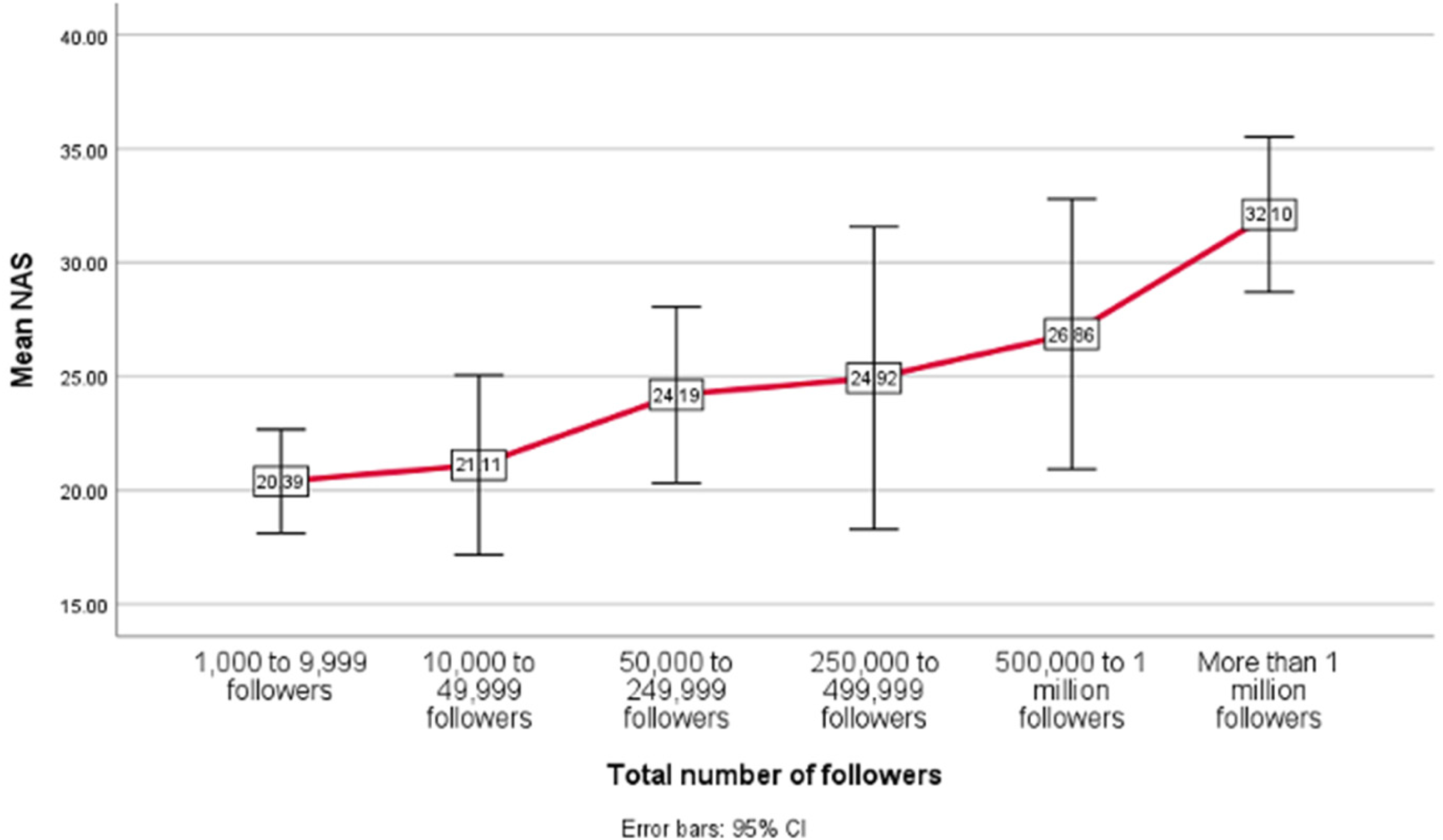
Correlation between the mean negative affect score (NAS) and total number of followers (n = 161).
Social media influencers who earned between USD 10,000 and USD 49,999and who earned more than USD 200,000 reported the highest PAS, mean (SD) of 39.82 (6.88) and 38.94 (4.28), respectively. However, the association was not statistically significant (p = .135).
Social media influencers who earned between USD 10,000 and USD 49,999, who earned between USD 100,000 and USD 199,999, and who earned more than USD 200,000 reported the highest NAS, mean (SD) of 32.45 (9.38), 32.46 (8.88), and 30.94 (10.80) respectively. While social media influencers who earned less than USD 10,000 reported the lowest NAS, mean (SD) of 18.89 (8.74). The association was statistically significant (p < .001).
The correlation between earning from social media and relationships according to the Relationship Structures (ECR-RS) Questionnaire revealed that increased income was associated with an increase in avoidance as well as in anxiety scores. Significant Pearson Correlation findings were for Best Friend Avoidance score average 0.244 (p = .002), Mother Avoidance score average 0.319 (p < .001), Father Avoidance score average 0.376 (p < .001), Marital Partner Anxiety score average 0.213 (p = .007), Best Friend Anxiety score average 0.297 (p < .001), Mother Anxiety score average 0.267 (p < .001), and Father Anxiety score average 0.399 (p < .001; Table 6).
Correlation between earning from social media and relationships according to the relationship structures (ECR-RS) questionnaire (n = 161).

Correlation is statistically significant at the 0.01 level (2-tailed).
Discussion
This study is one of the first to explore the mental health of social media influencers. It was conducted on social media influencers primarily based in the UAE, and our findings reflect this specific demographic.
Firstly, we observed a significant association between extended social media usage and heightened negative emotions among influencers who spent more than 5 hours daily on these platforms. This finding aligns with research conducted by Hunt et al., 37 which strongly recommends restricting social media use to 30 minutes per day to enhance overall well-being. The influencers who dedicate long hours to social media are often exposed to an overwhelming influx of content, potentially impacting their mental health negatively on various levels. 38 The constant stream of diverse content can overwhelm an individual’s cognitive capacity, and the need to stay relevant, keep up with trends, and manage a constantly evolving digital presence leads to chronic stress and emotional exhaustion. 39
Moreover, the curated nature of social media content often leads to unrealistic standards, fostering a sense of dissatisfaction and social comparison. According to the social comparison theory, 40 influencers are continually exposed to others’ seemingly perfect lives and successes, leading to upward social comparisons, which can negatively impact self-perception and emotions. This exposure puts pressure on influencers to maintain a facade of happiness, contributing to emotional strain and fatigue.
Income and emotions
Our research revealed that social media influencers who earn less than $10,000 from social media reported the lowest negative feeling scores (p < .001). This could be attributed to the fact that these influencers do not rely solely on social media as their primary source of income. Influencers earning lower incomes might be less affected by social comparison, leading to lower cognitive dissonance, i.e., discomfort due to conflicting beliefs and attitudes. 41 With smaller audiences and potentially less competitive niches, they might feel more connected and relatable to their followers. This could lead to a more realistic and positive self-perception, reducing feelings of inadequacy or self-doubt. In contrast, high-earning influencers commonly face social comparison. Previous research by Preoţiuc-Pietro et al. 42 found that users earning higher incomes from social media experience elevated levels of fear and anger, whereas users earning lower incomes are more comfortable sharing their opinions.
Our study also found that influencers who earned more than USD 200,000 had the highest NAS (p < .001). The need to continually monetize their social media presence to sustain their high income can be exhausting. This pressure might lead to a shift in content focus from personal passion to commercial viability, contributing to dissatisfaction and a sense of disconnection from their original purpose. Consequently, this shift may induce feelings of inadequacy and self-doubt, contributing to negative emotions.
Number of platforms and emotions
Our study highlighted a gradual rise in negative feelings among social media influencers as they engaged with an increasing number of social media platforms (p = .006). A study by Primack et al. 43 found that participants who used 7–11 social media platforms exhibited notably higher odds of experiencing elevated levels of both depression and anxiety symptoms, even after controlling for the overall time spent on social media. The fear of missing out (FOMO) on the latest trends or news likely induces feelings of anxiety and exclusion among social media influencers. 13 The demand for maintaining a presence across multiple platforms imposes the added pressure of crafting tailored content, increasing the burden and effort required. Increased usage across multiple platforms may also expose influencers to heightened risks of cyberbullying, harassment, and negative comments, significantly impacting mental health. Social media platforms are designed to be engaging and often addictive, leading influencers to spend extended periods online, affecting sleep patterns, emotional regulation, and stress levels. 44 Studies on adults have also demonstrated that cyberbullying is associated with anxiety and other mental health issues. 45
Number of followers and emotions
A significant association between negative emotions and an increased number of followers was found (p = .001). A substantial social media following likely translates into various implications. Influencers may engage in social comparison more frequently, leading to feelings of inadequacy, jealousy, or lower self-esteem. 46 Unhealthy competition and the pressure to maintain or increase follower count can increase the risk of burnout, especially if influencers create content or adopt behaviors that do not align with their values to gain more followers, popularity, and engagement on social media platforms. 47
With a growing follower count, individuals likely experience a loss of privacy and control over their personal lives. Their lives become more public, and they feel the need to maintain a certain image or lifestyle, constantly monitoring their actions and behaviors. The fear of not meeting these expectations leads to anxiety, stress, and negative emotions.
Income and relationship quality
We found that 64% of social media influencers across various age groups reported receiving complementary products or services. An average of approximately 38% of influencers disclosed earning an annual income ranging from USD 50,000 to USD 200,000 through their social media activities. Building on a study by Young et al. (2020), which identified a negative relationship between social media use and psychological well-being, 48 we delved further into attachment style using the Relationship Structures (ECR-RS) Questionnaire. Increased income from social media demonstrated a noteworthy association with elevated scores in both relationship avoidance and anxiety (Table 4). As influencers experience a rise in financial gains, there might be a consequential impact on the dynamics of their interpersonal relationships.
Relationship dynamics
Influencers exhibited a heightened avoidance score in relation to their parents, potentially reflecting a desire for financial independence and a reluctance to have parental control. Furthermore, influencers reported high anxiety levels within their relationships, highlighting concerns that those around them may seek to exploit their connections for personal gain. Additionally, social media influencers derive a high sense of security within their partner relationships, possibly attributing this security to the perceived financial impact they hold on these personal connections. These findings encourage further studies to delve deeper into each type of relationship examined in this study.
Interestingly, social media influencers displayed the strongest sense of security in their relationships in a descending order with their partners, best friend, mother, and lastly, the father. This possibly indicates the significance of romantic relationships for individuals in this influential role. Building on existing literature by Quiroz et al., 49 our finding aligns with the study highlighting that there is no association between the extensive use of social media and the quality of romantic relationship health for men and women.
Impact of COVID-19 on mental health
It is important to consider the impact of COVID-19 on mental health, especially since participants were recruited between 2022 and 2023, when the pandemic’s influence on mental health was significant.50,51 The pandemic led to increased social media usage as a means of maintaining social connections and accessing information. 52 This increased usage may have compounded the negative emotions and mental health issues observed in social media influencers during this period. Further research is needed to explore the long-term effects of the pandemic on the mental health of social media influencers.
Strengths and limitations
This study is one of the first to explore the mental health of social media influencers, with a special focus on the impact of popularity based on social media metrics. The researchers employed a diverse range of validated scales as part of the study questionnaire, which helped understand multidimensional correlations between the social media influencer's well-being and their environment. The study also found strength in employing strategic data collection methods by utilizing the snowball technique that allowed for statistically significant outcomes despite the niche target population.
Certain limitations were also acknowledged as a part of this study. While the data collected provided valuable insights, a larger and more diverse sample size could have yielded a more standardized analysis, especially with majority of the responses arising from the United Arab Emirates. Future studies should look into a larger sample size through collaborations with social media platforms for mental health research. This study did not conduct a thorough examination of fake followers. Future studies may address this limitation by utilizing paid tools to identify fake followers, calculating engagement levels, and considering other predictive factors for a more comprehensive analysis. Also, the responses could not be validated due to the confidentiality of the study. Additionally, the survey did not gather information on the influencers’ past or present mental health conditions. Incorporating this data could provide a more comprehensive understanding of the influencers’ well-being, thus enriching the results with a more holistic perspective. Moreover, the survey failed to reach some prominent social media influencers due to their reliance on agencies or account managers to handle requests. Future research may consider qualitative methods, including face-to-face interviews, to offer a more precise understanding of the subject matter. Lastly, this study relied on self-report measures and quantitative data exclusively. Advances in technology have introduced new possibilities for researchers to collect smartphone data passively and objectively, which might provide a more accurate picture of participants’ social media usage. Incorporating these methods in future research could offer a more robust understanding of the relationship between mental health and social media.
Conclusion
In summary, our study has revealed compelling insights into the well-being, emotions, and relationship quality of social media influencers. Notably, a clear connection was identified between extended social media usage and heightened negative emotions. Moreover, an interesting correlation emerged: as the number of followers increased, negative emotions also escalated. Additionally, elevated income levels were associated with increased relationship avoidance and anxiety scores. Furthermore, our research shed light on a gradual increase in negative feelings among social media influencers as they expanded their engagement across multiple social media channels. Lastly, social media influencers exhibited the strongest sense of security in their relationships with their partners. While our study did not specifically include clinical mental health measures such as anxiety and depression, the observed trends in emotional well-being and relational dynamics provide valuable preliminary insights that underscore the need for future research to explore these areas more deeply.
Supplemental Material
sj-docx-1-dhj-10.1177_20552076241287843 - Supplemental material for Beyond the filter: Impact of popularity on the mental health of social media influencers
Supplemental material, sj-docx-1-dhj-10.1177_20552076241287843 for Beyond the filter: Impact of popularity on the mental health of social media influencers by Ala’a K. Azayem, Faisal A. Nawaz, Lakshmanan Jeyaseelan, Hawk M. Kair and Meshal A. Sultan in DIGITAL HEALTH
Footnotes
Acknowledgment
This study acknowledges the Media Regulatory Office and New Media Academy for their invaluable support in disseminating the survey to their database of social media influencers.
Contributorship
AA, FN, and HK contributed to building the data collection tool. AA contributed to disseminating the survey. JL, AA, FN, and MS contributed to processing and analyzing data, and drafting the manuscript. MS conceptualized the study and supervised the steps of this research project. All authors contributed to carefully reviewing the article and approved the submitted version.
Data availability
The original contributions presented in the study are included in the article/Supplementary Material, further inquiries can be directed to the corresponding author.
Declaration of conflicting interests
The authors declare that the research was conducted in the absence of any commercial or financial relationships that could be construed as a potential conflict of interest.
Ethics approval
All the required official permissions have been attained before data collection. We obtained the Mohammed bin Rashid University of Medicine and Health Sciences (MBRU) Institutional Review Board Approval Letter, Ref: MBRU IRB-2022-147. Participation depended on reading and signing an electronic consent form. Participants were informed that their enrolment in the study is entirely optional. All collected data were anonymous and hence no personal identities were collected. The protected data was accessed only by the principal investigator on an Excel sheet. The anonymized data was only shared with the co-investigators for statistical analysis. The safety of data was overseen by the principal investigator, who also consults with and reports to the Research Committee at MBRU in case any concerns arise during the data collection phase.
Funding
The authors received no financial support for the research, and/or authorship. The publication fees of this article will be partially covered by Mohammed Bin Rashid University of Medicine and Health Sciences.

Supplemental material
Supplemental material for this article is available online.
References
Supplementary Material
Please find the following supplemental material available below.
For Open Access articles published under a Creative Commons License, all supplemental material carries the same license as the article it is associated with.
For non-Open Access articles published, all supplemental material carries a non-exclusive license, and permission requests for re-use of supplemental material or any part of supplemental material shall be sent directly to the copyright owner as specified in the copyright notice associated with the article.
