



Abstract
Background
The persistently high incidence of stroke in many nations is suggestive of an area for further improvement on existing strategies of primary stroke prevention. Although the era of digitalisation has led to the increasing use of mobile applications (apps) in healthcare, more studies are needed to determine the efficacy of apps in producing the desired health outcomes across different nations and cultures.
Objective
To describe the development and evaluate the usability of a mobile app in delivering a culturally adapted stroke prevention educational programme for middle-aged adults in the Republic of China.
Methods
The educational programme was developed in three phases. In Phase 1, the process involved analysing requirements and designing structured modules. Phase 2 concentrated on expert consultation and technical development to deliver the educational programme. Phase 3 included a usability trial and refinement of the educational program based on trial results.
Results
Educational content was derived from the Chinese Guidelines for the Prevention and Treatment of Stroke and the Dietary Guidelines for Residents. The WeChat platform was used to deliver the educational programme. Participants expressed satisfaction with the content, interface, and functions of the apps, indicating that the apps have good usability.
Conclusions
The development process of the Educational Programme was designed to maximise the culturally appropriate, and impact of lifestyle changes and stroke prevention. An app-based educational programme that has demonstrated good usability is a vital factor prior to deploying it in an intervention to evaluate its effects on health outcomes.
Introduction
Background
Stroke remains one of the leading causes of mortality and morbidity worldwide; 1 it is critical to emphasise the significance of timely intervention in reducing mortality and disability rates associated with a stroke. According to the 2024 Heart Disease and Stroke Statistics report by the American Heart Association, 2 there has been a concerning trend in stroke-related mortality in the United States. From 2011 to 2021, the age-adjusted stroke death rate increased by 8.4%, rising from 37.9 per 100,000 to 41.1 per 100,000. Concurrently, the actual number of stroke-related deaths surged by 26.3%, escalating from 128,932 to 162,890 deaths. Based on a 2020 study involving a large and representative sample of adults aged 40 years or older, the estimated prevalence, incidence, and mortality rate of stroke in China were 2.6%, 505.2 per 100,000 person-years, and 343.4 per 100,000 person-years, respectively. 3 Meanwhile, China also has a large population of chronic disease patients,4–6 including those with hypertension, hyperlipidaemia, diabetes, obesity, and heart disease which are high-risk groups and potential sources of stroke. These findings 7 emphasise the urgency to enhance stroke primary prevention strategies within the broader Chinese population. Lifestyle behaviours 8 are a crucial factor in the development of stroke risk factors, highlighting the importance of promoting healthy habits to reduce the incidence of stroke. 9
Mobile technology such as smartphones offers a potential solution for measuring a healthy lifestyle. 10 Applications (apps) are being used to prevent and manage risk factors, increase physical activity (PA), 11 improve dietary habits, 12 quit smoking, 13 and reduce stress, 14 depression and obesity. 15 However, at present, apps related to stroke prevention primarily focus on risk screening, 16 with a lack of comprehensive guidance on personalised dietary and healthy lifestyle choices. Furthermore, most dietary apps predominantly address utilising app functionalities for weight loss 17 and modifying intake of specific nutrients to meet the needs of certain diseases,18,19 while neglecting attention to stroke prevention knowledge among the population at risk of stroke. In addition, there is also a lack of intervention programmes that are tailored to the dietary habits of the Chinese population and culture.
WeChat, among the world's most popular social media communication platforms, boasts over 1.2 billion active users. Originating as a messaging service, it has evolved into a comprehensive social media platform. 20 As of Q2 2023, WeChat boasts a global user base of 1.671 billion monthly active users, with 4 million users in the United States. WeChat provides versatile features, 21 including WeChat Official Accounts and WeChat Mini Programs, enabling the efficient delivery of healthcare services. Tencent's (A Chinese conglomerate founded in 1998 that launched the WeChat mobile app, now China's leading social network and communications platform) revenue data indicates a remarkable year-on-year growth of 13.91%, adding 75 million users to WeChat Mini Programs, totalling 614 million users in 2023. The daily active users of WeChat Mini Programs have surged by 284% from 2017 to 2023. 22 With the increasing popularity of mobile health (mHealth) services, WeChat is positioned to play a crucial role in the mHealth landscape.
Given the increasing internet access and mobile phone ownership in China and the growing popularity of the WeChat platform, 23 a mobile phone educational programme that has been culturally adapted could be effective in strengthening health awareness of stroke for middle-aged adults who are increasingly at risk of the condition. Our programme combined WeChat Mini Programs and Official Accounts and aimed to enhance the prevention of stroke by drawing on established theories, knowledge of the disease, and evidence related to diet and exercise. To ensure the user-friendliness of the mobile phone programme, it was necessary to conduct usability testing with users.
Objective
This study aimed to develop and evaluate the usability of a WeChat app to deliver a healthcare programme to gain a deep understanding of the app's usability in practice and provide valuable insights and recommendations for the development of mHealth management apps.
Methods
Overall study design
This study employs a multi-phase, mixed-methods design. Figure 1 shows the overview of the Stroke-Preventive Diet and Lifestyle Educational Programme development process.
Collecting requirements from education guidelines, a review of lifestyle changes education apps already available, and theory that could most benefit from the development. Revising the prototype features with experts concerning content and establishing a software development team. Usability test the educational programme in a formative evaluation study with target participants for further refinement.

Overview of the stroke-preventive diet and lifestyle educational programme development process.
Phase 1: collection requirements materials of the stroke-preventive diet and lifestyle educational programme
The WeChat Mini Program 30 is a lightweight app that requires no installation, downloading, or uninstallation built within the WeChat platform with endless functionalities. 31 It offers a user-friendly interface and features a low entry barrier, wide audience reach, strong social interaction, and versatile app scenarios, which provide a native app experience, enabling richer and more intricate interactive experiences. It can make up for the limitations of Official Accounts in terms of interactive apps.
Phase 2: prototype development and revisions
Phase 2a: the features of the prototype underwent assessment through expert interviews
Expert consultation can be defined as an inquiry of information from one or more individuals. 32 Face-to-face interview is one of the most typical consultation methods. 33 Two interviewers, both holding PhDs in Nursing and possessing extensive training in qualitative research interview techniques, facilitated the sessions. They commenced by expressing gratitude to the experts for their time and interest, while succinctly restating the interview's objectives and aims. The interviews began with the presentation of the concept, utilising an initial draft prepared by one of the interviewers (LC). Questions were then posed, with a flexible approach employed to adapt to the natural flow of conversation. Throughout the dialogue, emphasis was placed on active listening and respectful engagement, with a commitment to avoiding interruptions, arguments, or dominating the discourse. Additionally, prior permission was obtained for recording or note-taking, ensuring strict adherence to the expert's confidentiality and preferences. The following four topics were discussed: (1) the main content (2) the adherence among the target population, (3) the suggestions for the format of modules, and (4) feasibility. After the interviews, researchers (LC and ZJH) undertook data analysis using semi-structured qualitative content analysis. They meticulously reviewed notes or recordings, summarising key points, insights, and feedback offered by the experts. Comparison and contrast of results were then conducted to identify patterns, gaps, or contradictions. Subsequently, the findings were applied to the research project, facilitating the resolution of questions, and issues, and the enhancement of the study. Throughout the study, the researchers critically scrutinised their roles and interrogated data interpretations to mitigate potential biases. It's noteworthy that all interviews with experts were conducted at their respective workplaces.
Phase 2b: prototype development
Establishing a software development team consisting of four members, including two senior software engineers (responsible for app module design, development, and ongoing maintenance), 1 professional graphic designer (responsible for page design), and a researcher (LC, responsible for formulating the app development plan and proposing system requirements for the app, maintained real-time communication with team members). The software development team, after optimising the initial draft of the app content based on preliminary research and expert consultations, proceeded to design the app. They also modified and wrote the frontend and backend code for the app and completed the development of the mobile app.
Phase 3: usability testing and refinement of the educational programme
Recruitment ceased upon reaching data saturation. Study inclusion criteria were (1) the presence of one or more ‘modifiable’ stroke risk factors including cardiovascular disease (CVD), hypertension, dyslipidaemia, atrial fibrillation, diabetes, being overweight or obese, being physically inactive, smoking, consuming excess alcohol; (2) owned a mobile phone with an iOS or Android operating system and had been using it for not less than 3 months. All participants provided written informed consent before taking part in the study and received a reimbursement of RMB 20 (approximately US $3) for their time involved.
Data collection procedures
At the conclusion of the 2-week period, participants were instructed to independently complete the validated 10-question SUS. The SUS score was interpreted using the adjective rating scale developed by Bangor 35 to ensure participants grasped the questions’ intent and could furnish accurate responses. Participants were allotted ample time to thoughtfully consider the questions and were provided with sufficient opportunity to furnish precise answers. Paper-based questionnaires were collected by researchers at the participants’ workplace, ensuring confidentiality. All data were anonymized and accessible solely to the researchers. The quantitative findings would be complemented by subsequent qualitative interviews to bolster the reliability and accuracy of the data.
The interview outline.

Data analysis
Results
Phase 1 study results
Combining the Chinese Dietary Guidelines for Residents with the HBM can lead to the design of a more comprehensive, scientific, and practical health app, helping users to better practice a healthy lifestyle. The American Heart Association 37 has extensively presented and discussed data supporting the benefits of PA and dietary changes in reducing the morbidity and mortality of CVD and stroke in adults. Adopting healthy lifestyles and effective self-management methods can effectively reduce these risk factors, thereby preventing stroke occurrence. According to Lancet Public Health, 38 methods for preventing stroke incidence may include lowering salt consumption, upping physical exercise, and changing eating habits. Therefore, educational content on healthy lifestyles is of utmost importance. Ensuring that our educational content and information are presented in a direct and easily understandable manner for research subjects is also a key focus for us.
Secondly, adherence holds paramount importance in stroke prevention, denoting patients’ active engagement with and adherence to medical advice and treatment regimens, encompassing medication, dietary modifications, exercise routines, and other lifestyle behaviours. Stroke prevention apps offer tailored health suggestions, routine reminders, and tracking capabilities to support users in formulating and executing self-management strategies, ultimately aiding in the attainment of predetermined health objectives. As highlighted by Ruo-Ting Sun et al. (2021), 39 delivering personalised health guidance and reminders via an app can significantly bolster patients’ adherence to treatment protocols.
Furthermore, in stroke prevention apps, particular attention to goal setting, action planning, and goal attainment is crucial. Users set specific, measurable, and achievable health goals through the app, such as daily step counts or controlling calorie intake per meal. The app then formulates corresponding action plans based on the user's health status and goals, recommending suitable exercise methods, dietary advice, and so forth. Setting goal 40 is essential to facilitating the successful use of reablement in a variety of situations. More precisely, to make it easier to customise reablement programmes to the needs of users and to create more productive interdisciplinary collaboration by encouraging mutual trust, sharing a common goal, and leveraging one another's skills. Through tracking and monitoring features 41 of the app, users can stay updated on their health status in real time, allowing them to adjust and improve their action plans promptly. This personalised approach to setting health goals, devising action plans, and real-time tracking and monitoring functions help enhance users’ health awareness and capacity for behavioural change, effectively preventing the occurrence of stroke.
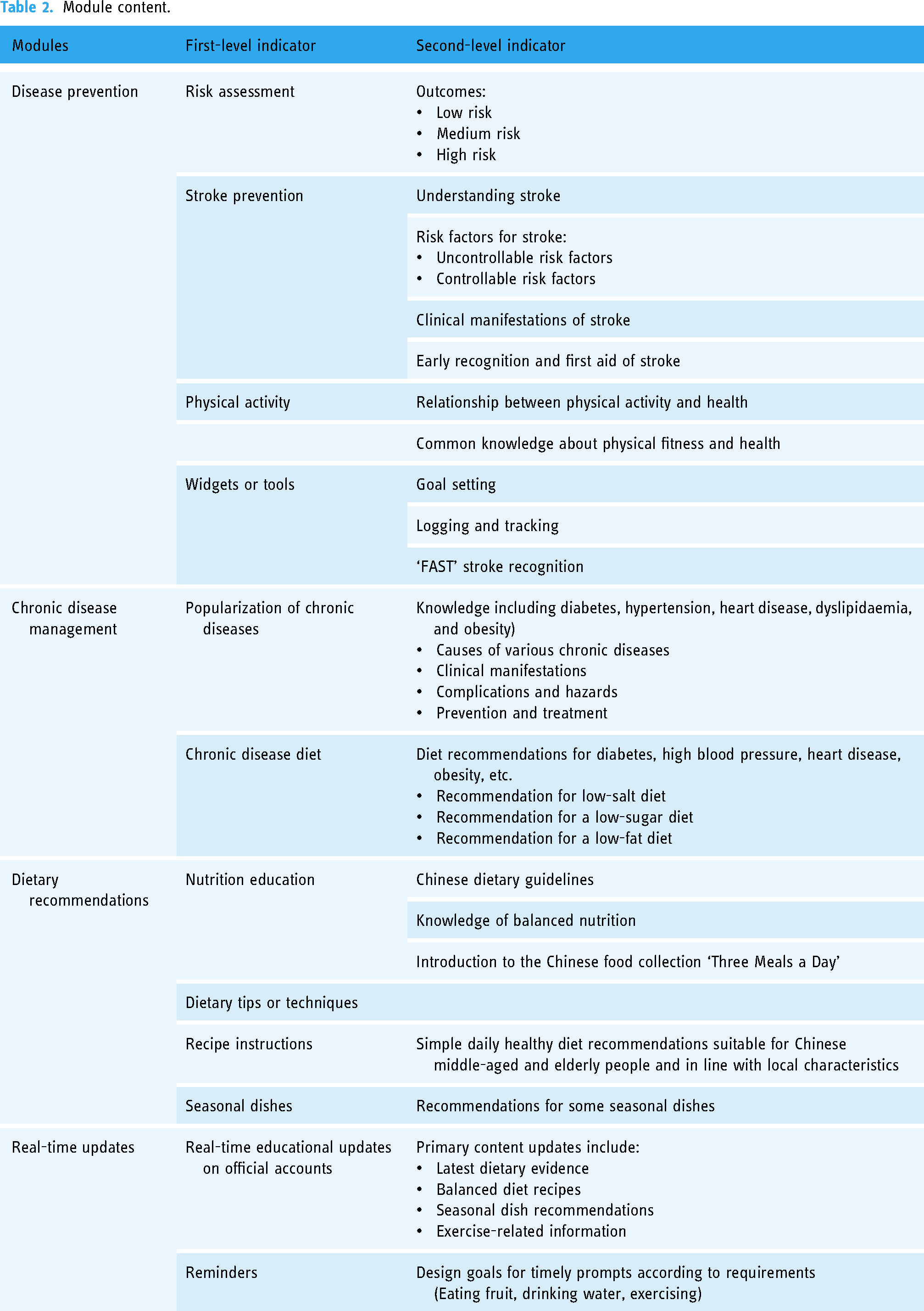
Through an extensive literature review aimed at elucidating the content and requisites of health management for individuals at risk of stroke, and a market survey aimed at gaining insights and innovating upon existing diet, PA, or healthy lifestyle management mini-programs and apps available in the market, we proceeded to craft the initial draft of the program. This program, titled ‘The Stroke-Preventive Diet and Lifestyle Educational Program’ features four primary indicators (disease prevention, chronic disease management, dietary recommendations, and real-time updates) as described in Table 2.
Module content.
Phase 2 study results
Phase 2a
The outcomes of the expert consultations encompass expert feedback obtained through expert interviews. The experts were deliberately selected so that they would produce diverse ideas from their different specialisations. Our interdisciplinary panel was composed of three nursing education experts, one clinical medicine physician, four clinical nursing experts, and one nutritionist to enhance the exchange of ideas. The experts contributed valuable insights concerning the content of the app modules, contents, feasibility, and adherence. These insights were subjected to discussions within the research team and subsequently integrated into the project (Table 3).
Summary of expert opinions.

Phase 2b
Before commencing the development process, the research team engaged in multiple discussions with the software development team. In these deliberations, the researchers initially introduced the background, objectives, and significance of the study. Subsequently, they delineated their envisioned content and desired features for the app. The technical team provided feedback regarding the feasibility of the proposed functionalities, confirming their ability to complete them within the agreed-upon timeframe and methodology. In instances where full implementation was unattainable, alternative suggestions were put forth. Upon the conclusion of the requirements discussion, a comprehensive list of the system's functionalities was compiled. This list specified the included features, sub-features, column attributes, column formats, column content, and other relevant details, which were documented in tables or textual formats. With the support of the software development team, five modules were constructed: risk assessment, diet, PA, identification, and real-time updates area. Figure 2 illustrates the conversion list within WeChat.

Subscription accounts and Mini Programs appear in the conversion list.
Both WeChat Mini Programs and Official Accounts are apps within the WeChat ecosystem. Official Accounts can promote Mini Programs in articles or custom menus, facilitating convenient use for users, and can also set up a Mini Program entrance in the menu bar for easy access. They can complement each other in various scenarios, providing an enhanced user experience (Figure 3).
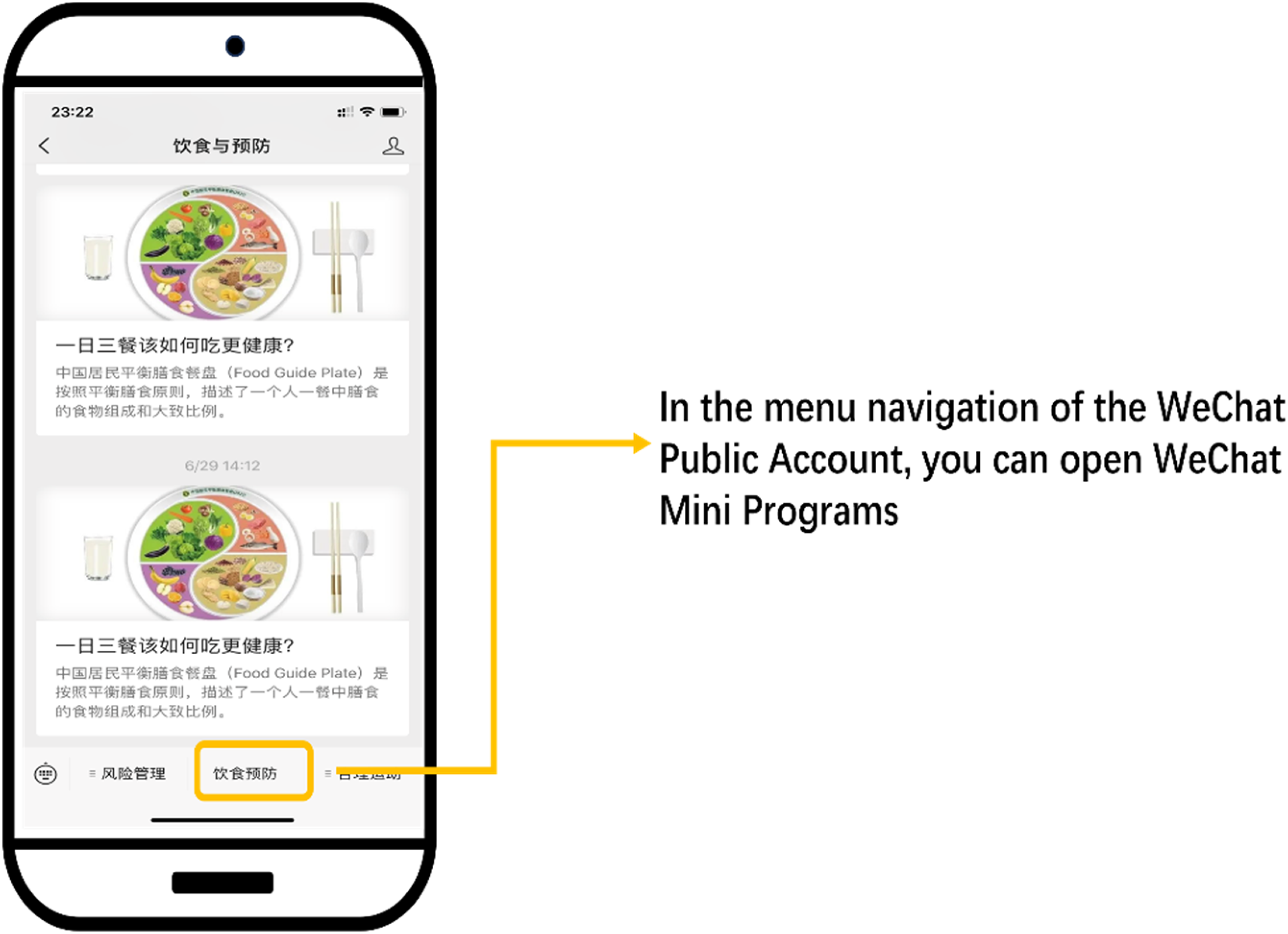
Illustration of the seamless integration of Mini Programs and official accounts.
The Mini Application has taken advantage of the WeChat Official Account's strengths to update the latest information in real time, including disease prevention knowledge, reminders, health interactions, and more. Use of the app begins with the login interface and once the users have logged in, they visualise the home interface, which includes several tabs (e.g. risk management, diet, exercise, and identification) (Figure 4).

Illustration of the Mini Application with four interfaces.
The tab of ‘Risk’ specifically covers certain health issues, including stroke risk assessment and the relationship between chronic diseases and stroke, so that users can perceive whether they face health threats and understand the consequences of the health issue to emphasise its severity. The interface educates users to assess their health risks through risk self-assessment (Recommended by the Stroke Prevention and Control Project Committee of the National Health and Family Planning Commission of China), explaining the risk factors of diseases to users, allowing users to evaluate their vulnerability in terms of health, and further motivating them to act. Prior to starting the assessment, provide clear instructions to participants, outlining its purpose and ensuring anonymity. Encourage honesty, emphasising that truthful responses enhance accuracy and ultimately benefit health.
The interface ‘diet’ introduces the current dietary situation, the content of balanced dietary guidelines, and the benefits of a healthy diet to make users aware of the benefits of a healthy lifestyle. It provides recommended dietary plans and recipe examples from the Chinese Resident Dietary Guidelines and lists specific steps for healthy eating behaviours. The interface takes into account personal factors such as age, gender, and socioeconomic status, as well as cultural and environmental factors that may affect health-related behaviours and provide solutions to help users at high risk of a stroke overcome barriers to a healthy lifestyle. These include how to develop a healthy eating plan and how to choose healthier foods. Additionally, the app may include other features such as recipe and nutrition value sharing.
The interface about ‘exercise’ provides suitable exercise plans in line with the guidelines of ‘eating and exercise combined for a healthy weight’ mentioned in the Chinese Resident Dietary Guidelines. This lists specific steps for healthy exercise behaviours and provides solutions to help users overcome barriers to adopting them.
The last tab of ‘identification’ is about how to quickly recognise stroke symptoms.
Phase 3 study results
Description of study participants
The study was conducted from December 2022 to February 2023, involving a total of 23 participants who completed the SUS. There were no dropouts among the participants during the study period. The demographic characteristics of the participants are presented in Table 4.
Demographic information of individuals (n = 23).
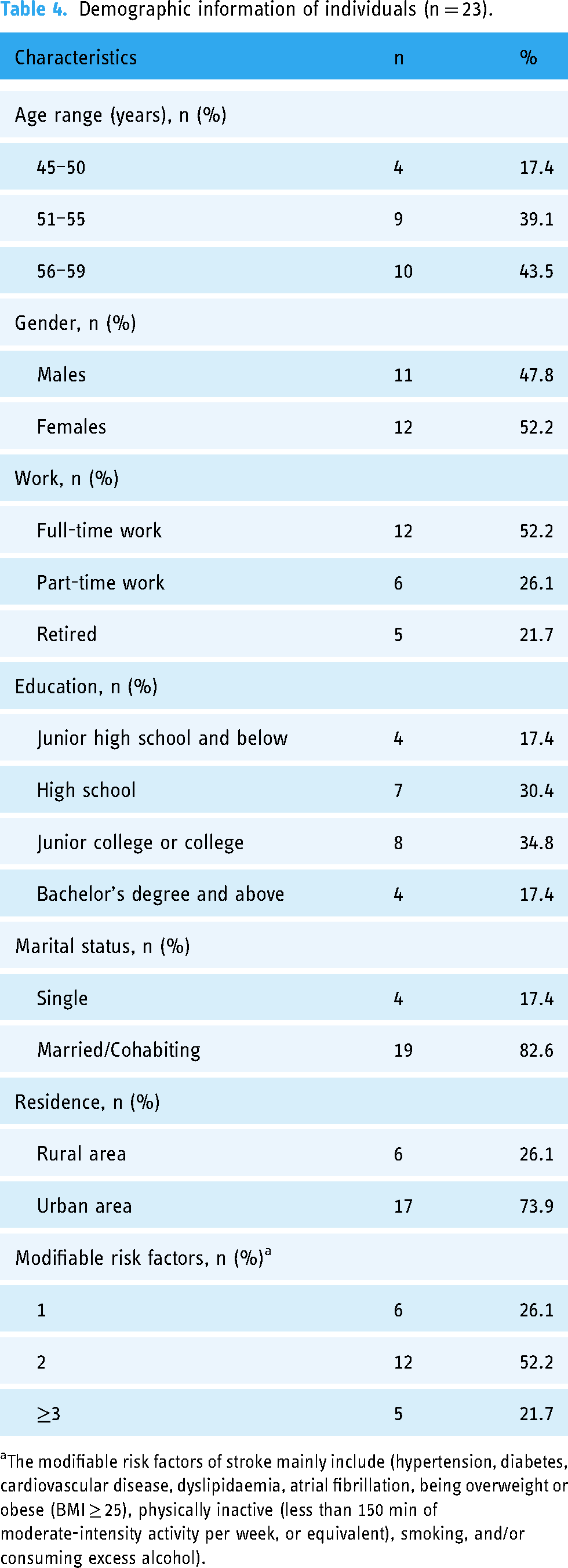
The modifiable risk factors of stroke mainly include (hypertension, diabetes, cardiovascular disease, dyslipidaemia, atrial fibrillation, being overweight or obese (BMI ≥ 25), physically inactive (less than 150 min of moderate-intensity activity per week, or equivalent), smoking, and/or consuming excess alcohol).
In this study, all 23 participants completed the quantitative evaluation. Table 5 refers to the detailed results. The mean SUS score of 23 users was 81.5 (SD 7.49), with a minimum score of 72.5 and a maximum score of 95, indicating the good usability of the app used in this study. All participants in the survey indicated that they would like to use this system frequently and discovered that this system's many features were effectively integrated. 95.7% of respondents said they felt very confident utilising the system and that it was convenient to use (Table 5).
The result of the SUS (n = 23).

SUS: System Usability Scale.
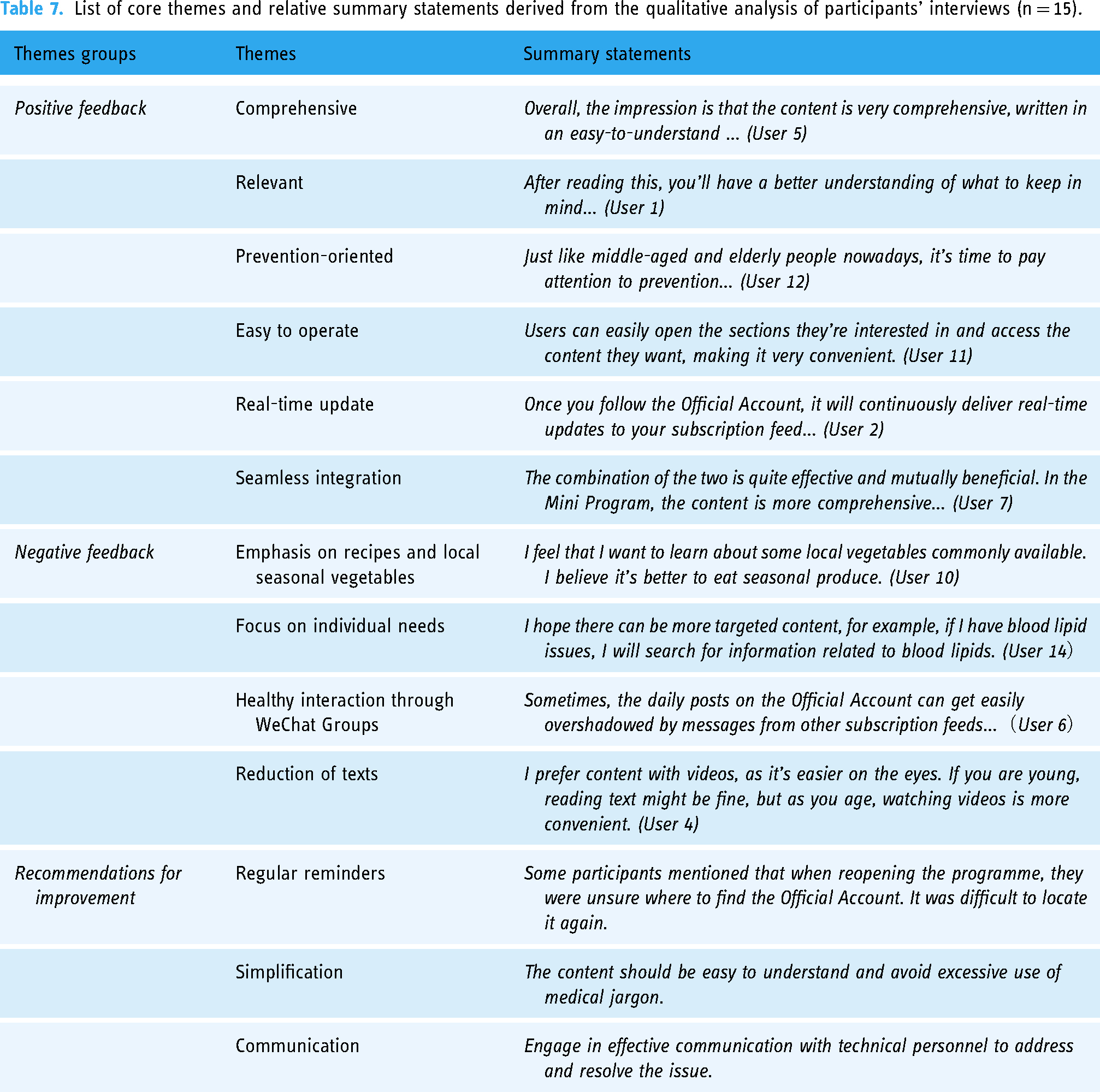
Positive and negative feedback in the semi-structured interviews revealed qualitative results. Table 6 displays the demographic attributes of the participants involved in the qualitative interviews. Table 7 lists core themes and relative summary statements derived from the qualitative analysis of participants’ interviews.
Demographic information involved in the qualitative interviews (n = 15).

List of core themes and relative summary statements derived from the qualitative analysis of participants’ interviews (n = 15).
Discussion
This study aimed to develop and evaluate the usability of a mobile app aimed at providing culturally adapted stroke prevention education to middle-aged adults in mainland China. This research findings indicate that the educational content, sourced from authoritative materials such as the ‘Chinese Guidelines for the Prevention and Treatment of Stroke’ and the ‘Chinese Resident Dietary Guidelines’ was well received by participants. Utilising the WeChat platform as a dissemination mechanism proved effective, with participants expressing satisfaction with the content, interface, and functionality of the app. The reasonable classification system of the app makes the information more organised, improving the efficiency of browsing and searching for information, resulting in positive feedback from users with valuable experiences. These findings suggest that the developed mobile app demonstrates good usability, aligning with the primary objective of assessing its effectiveness in delivering stroke prevention education.
We designed the Stroke-Preventive Diet and Lifestyle Educational Programme which is based on the WeChat ecosystem. Undoubtedly, the successful development and utilisation of mobile apps represent crucial steps in augmenting stroke prevention efforts among middle-aged adults in mainland China. Currently, WeChat has a very high usage rate in China.42,43 In recent years, there have been some studies on the use of WeChat for mobile education interventions.44–46 While the mobile age has brought an abundance of information, there remains a lack of reliable and targeted channels for learning through smartphones. A dedicated platform is required to facilitate effective learning for everyone. Participants in this study said that such a learning app made sense to them, not only to raise health awareness but also to guide them on how to eat and exercise better as preventive measures. The opening of such a channel through WeChat has been widely accepted, significantly enhancing the accessibility of learning for users.
Through the provision of culturally adapted educational content and harnessing widely utilised digital platforms such as WeChat, the app holds promise in reaching a larger audience and fostering behavioural changes targeted at mitigating the risk of stroke. The advantage of the Official Account is that it is updated in real time and can receive the most cutting-edge knowledge in real time in WeChat. 47 The functions and services of the WeChat Official Account are becoming more and more sophisticated and powerful. By offering more features and services within WeChat Mini Programs, users can become more dependent on the Official Account and Mini Program, increasing user engagement. Through the 2-week test conducted in this study, it was discovered that while Official Accounts possess powerful functions and can achieve full user push, which is convenient for information dissemination and publicity purposes, they may not meet the demands of complex interaction scenarios and are susceptible to being overshadowed by other subscription accounts. In other intervention studies based on WeChat Official Accounts, the sample size tested is often a large, 48 and the intervention time is relatively long because it takes time to achieve an effect in terms of information dissemination and promotion. Therefore, if we want to maximise the effectiveness of WeChat Official Accounts in the short term, maybe we need to leverage WeChat's communication features, such as WeChat Groups to help achieve this goal. 49
Furthermore, our research findings are consistent with existing literature on stroke management and risk factor control. Many studies50,51 emphasise the importance of education and awareness in stroke prevention, highlighting the role of lifestyle changes in reducing the risk of stroke. Kalkonde Y et al. 52 demonstrated the feasibility and acceptability of a mHealth intervention for stroke prevention, offering hope for improving lifestyle and medication compliance. In Sweden, a digitally augmented intervention called ‘Make My Day’ has been developed within primary healthcare settings to support healthy behaviours and habits in everyday life for individuals at risk of stroke. To explore experiences with this new intervention, a qualitative study 53 indicated that mHealth apps can support the incorporation of health-promoting behaviours and routines as part of lifestyle-based stroke prevention. However, increased personalisation and tailoring were found to be crucial for user satisfaction. By demonstrating the feasibility and acceptability of delivering stroke prevention education through a mobile app, this study contributes to the literature in this field, further complementing the role of nurse-led interventions. During the usability testing, the participants demonstrated high levels of cooperation and persisted in using the app until completion without any instances of dropouts. In this study, the quantitative questionnaire analysis results indicated that participants generally acknowledged the good usability of and their satisfaction with the mobile app. The results of the qualitative part are from users who see it as a tool for promoting and enhancing their lifestyles. The findings demonstrate a positive reception towards the mobile app and a willingness to recommend it to others.
In terms of generalizability, although this study primarily focuses on middle-aged adults in mainland China, the foundational principles of mobile app development and usability can be extrapolated to diverse populations and settings. WeChat has garnered a substantial user base, with the platform being utilised by many individuals aged 16 to 64, constituting roughly 78 percent of this demographic. 54 Additionally, in the United States alone, there are approximately 1.5 million users of this social media network, with about a quarter of individuals aged 18 to 24 actively engaging with the platform. Users typically spend an average of 82 min daily on WeChat, solidifying its position as a formidable competitor among major social media platforms such as Facebook and Instagram. By harnessing digital platforms and culturally sensitive educational content, our research highlights the potential of mobile technology in driving behavioural changes and mitigating the global burden of stroke. Further investigation is warranted to evaluate the app's long-term impact on stroke incidence and outcomes across diverse populations.
Areas for improvement
One limitation of our study design is that calculating completion time was ineffective in evaluating the user's usage pattern as we were unable to accurately measure the time for each task transition. Additionally, since the WeChat Mini Program developed in this study is based on the personal version rather than the enterprise version, we were unable to collect relatively complete data through the background for the 2-week usage. However, qualitative interviews are a further complement to usability testing, delving into users’ real feelings and experiences during the usage process and comprehensively evaluating all aspects of the app. The subsequent qualitative interviews provided some in-depth insights, which to some extent enriched our results. Finally, effectively carrying out dietary education and disease prevention requires a significant knowledge reserve for the daily maintenance of the educational programme. Team collaboration is essential for regularly updating and improving the content, ultimately leading to a more expert approach to primary stroke prevention.
Conclusions
This study demonstrated that the educational-based mobile programme offers an intuitive platform that is sufficient for a wide range of people who are at risk of stroke to use. The preferences of participants for mobile apps are also revealed by the study's findings, which can guide future investigations and development initiatives. Once we have further refined the project, we can conduct intervention experiments to validate its positive impact on individuals at risk of stroke and to verify its feasibility.
Footnotes
Acknowledgements
We thank Zhang Haiyan from the Xinxiang Medical University for her help with data collection.
Contributorship
LC made substantial contributions to design, conception of the study, data collection, data analysis, and writing of the manuscript. TCH made substantial contributions in the design, conception of the study, and reviewing. LWL made substantial contributions to design, data analysis, reviewing, editing, and study supervision. ZJH and CMC made substantial contributions to design, resources, data collection, data analysis, reviewing, editing, study supervision, and funding acquisition. The manuscript is approved by all authors for publication.
Declaration of conflicting interests
The authors declared no potential conflicts of interest with respect to the research, authorship, and/or publication of this article.
Ethical approval
Ethical permission for this research was received from the Ethics Committee of Xinxiang Medical University (XXLL-20210321).
Funding
The authors received no financial support for the research, authorship, and/or publication of this article: This research did not receive any specific grant from funding agencies in the public, commercial or not-for-profit sectors.
Guarantor
Prof. Chong Mei Chan
Patient consent
Obtained.
