



Abstract
Background
Telerehabilitation provide distant physical rehabilitation services and help overcome the barriers associated with face-to-face interventions for hip fractures. This study aims to analyse the progress of the application of telerehabilitation in hip fracture and reveal its research profile, hotspots and development trends.
Methods
The articles and reviews related to telerehabilitation in hip fracture were retrieved from 1992 to 2024. A bibliometric visualization and comparative analysis of countries, institutions, journals, authors, references and keywords were conducted using Java-based CiteSpace and VOSviewer.
Results
A total of 79 documents were obtained. Spain was the most academically influential country. The University of Granada was the most prolific institution. The author Ariza-vega P listed first in terms of publications and citations. Most publications were published in high academic impact journals. The major frontier keywords were “older adults,” “functional recovery,” “reliability,” “mortality,” “rehabilitation,” “mobility” and “quality of life.” The most popular keywords from 2020 to 2024 were “geriatric medicine,” “family caregiver” and “digital health.”
Conclusions
The historical and prospective perspective in telerehabilitation following hip fracture were presented. A primary focus in the early years was the impact of telerehabilitation on functional independence for hip fracture patients. Future outcomes are expected to include patient satisfaction, health-related quality of life and psychiatric symptoms. Exercise was also designed to eliminate travel burdens and strengthen self-efficacy, and improve the physical and psychosocial function of hip fracture patients. This work will provide a fundamental reference as well as a directional guide for future research.
Introduction
The hip fracture is considered one of the most severe low trauma fractures because of the potential impacts on physical and psychological aspects.1,2 The majority of patients who survive hip fractures have restricted mobility, lost their functional independence of individuals in their activities of daily living (ADL), and suffer from depression.3–5 Incidence of hip fractures rises with age and nearly doubles after the age of 50. 6 The number of hip fracture incidences in the world population are estimated to rise from 2.6 million in 2025 to 6.3 million in 2050.7,8 Accordingly, it is important to start rehabilitation early in order to prevent complications and to involve a multidisciplinary approach. 9 In general, rapid postoperative turnaround time, rising medical costs, shorter hospitalization days and prevention and control of coronavirus disease 2019 (COVID-19) have prompted postoperative rehabilitation exercises to be done outside the hospital. 10 Therefore, as a viable option for reducing musculoskeletal pain and improving physical function, telerehabilitation has been found to be as effective as conventional methods. 11
Telerehabilitation refers to the utilization of information and communication technologies (ICT) to provide distant physical rehabilitation services, including assessment, monitoring, intervention, supervision, education, consultation and counseling. 12 When compared with conventional in-person rehabilitation, telerehabilitation minimized transportation costs and time constraints for both patients and caregivers 13 and assisted patients at home without a therapist's physical presence. 14 Recent many researches have uncovered that telerehabilitation has similar clinical outcomes to face-to-face rehabilitation for a variety of pathologies and impairments.15–18 Home-based telerehabilitation can benefit elderly patients with hip fractures in terms of promoting recovery of hip joint function, improving quality of life and psychological factors.19,20 Many studies on telerehabilitation for hip fractures have also been published, therefore, it is crucial to provide a comprehensive overview of the field through the analysis of these publications.
For assessing and evaluating voluminous scientific literature, bibliometric analysis is regarded as a rigorous statistical approach. 21 Analyzing the structure of knowledge and developing trends in a particular field to produce quantifiable, repeatable and reliable results. 22 It is possible that researchers using bibliometric approaches can analyze citations, co-citations, geographic distributions and word frequencies to gain insight into certain fields of research and provide valuable conclusions. 23 Additionally, a bibliometric analysis can further facilitates interdisciplinary collaboration by aiding academics, physicians and policy makers in gathering information and gaining insight into a specific research area and its applications. 24
A number of studies have undertaken systematic bibliometric analyses in relation to telerehabilitation. However, the study was focused on knowledge structure and emerging trends of telerehabilitation. 25 And a bibliometric study was conducted to determine trends and topics related to potential applications of telerehabilitation for stroke patients. 26 Despite its importance, telerehabilitation for hip fractures is not given much attention. As far as we know, no specific studies that characterize research hotspots, global research collaborations or trends in telerehabilitation for hip fractures research areas. Therefore, the purpose of this bibliometric analysis was to gain an understanding of the current state of research on telerehabilitation for hip fractures, identify research gaps and steer future research paths.
Methods
Data acquisition and search strategy
We collected all research materials from the the Web of Science Core Collection (WoSCC) database. For the retrieval strategy, the following search criteria were applied in Supplemental 1 (Table 1), with the main topic being hip fracture and telerehabilitation research, the publication dates ranged from 1992 until March, 2024.
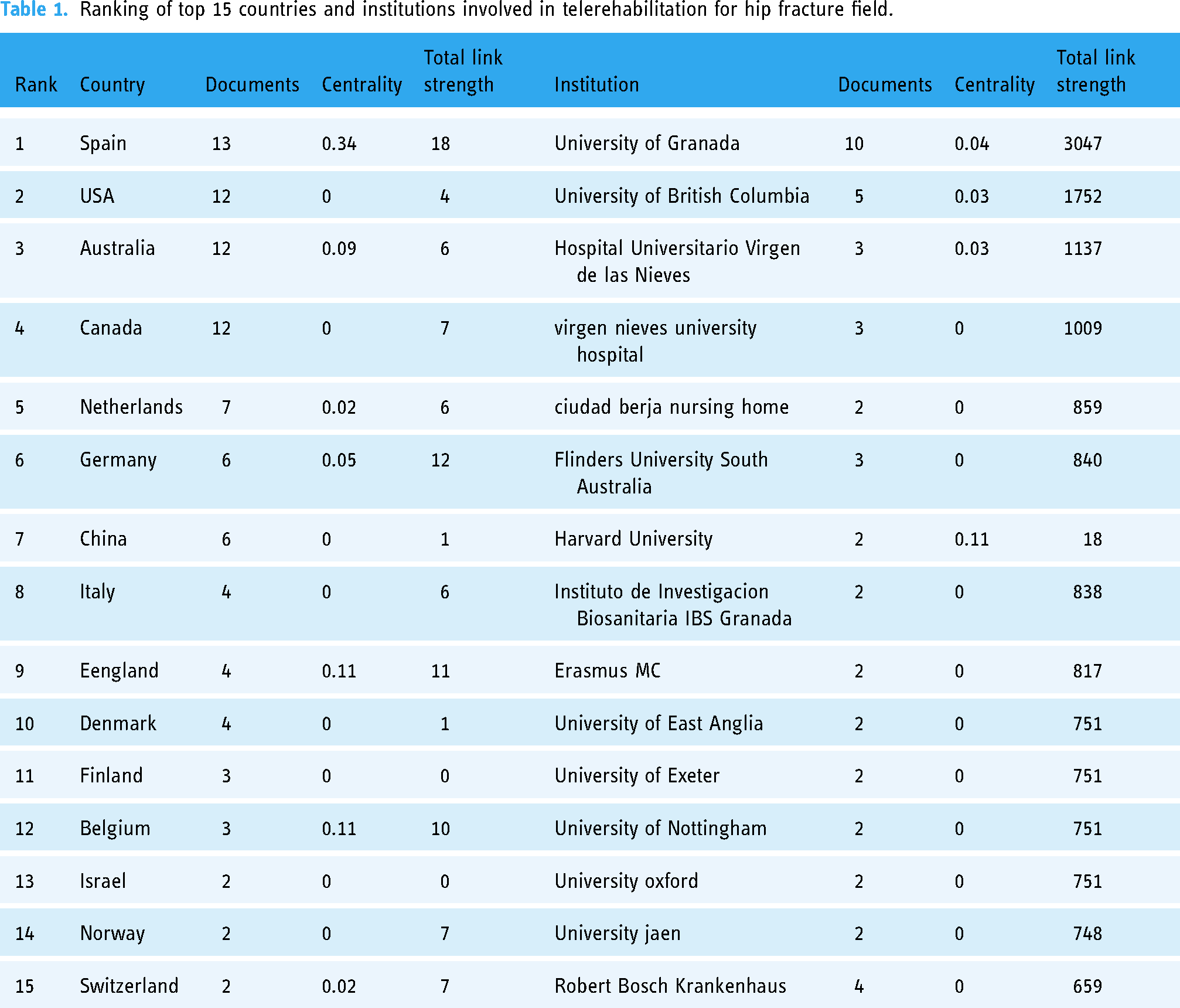
Ranking of top 15 countries and institutions involved in telerehabilitation for hip fracture field.
Literature screening and data extraction
The screening process consisted of two stages: preliminary screening and full-text screening. The full-text screening was conducted using the inclusion and exclusion criteria after preliminary screening according to the title and abstract. We analyzed published records including articles, reviews related to hip fracture and telerehabilitation and the language was limited to “English.” We removed duplicates, not hip fracture, not telerehabilitation intervention programs and articles written in languages other than English. Other types of documents were also excluded, including letters, news, editorial materials, proceeding papers, short reports, case studies and conference abstracts. Two reviewers independently evaluated the article titles and abstracts after receiving standard selection training. If necessary, full texts of articles were retrieved. Disagreements between the two groups were discussed and settled. The overview of the comprehensive search strategy and inclusion criteria used in this study are summarized in Figure 1 and Supplemental 1 (Table 2).
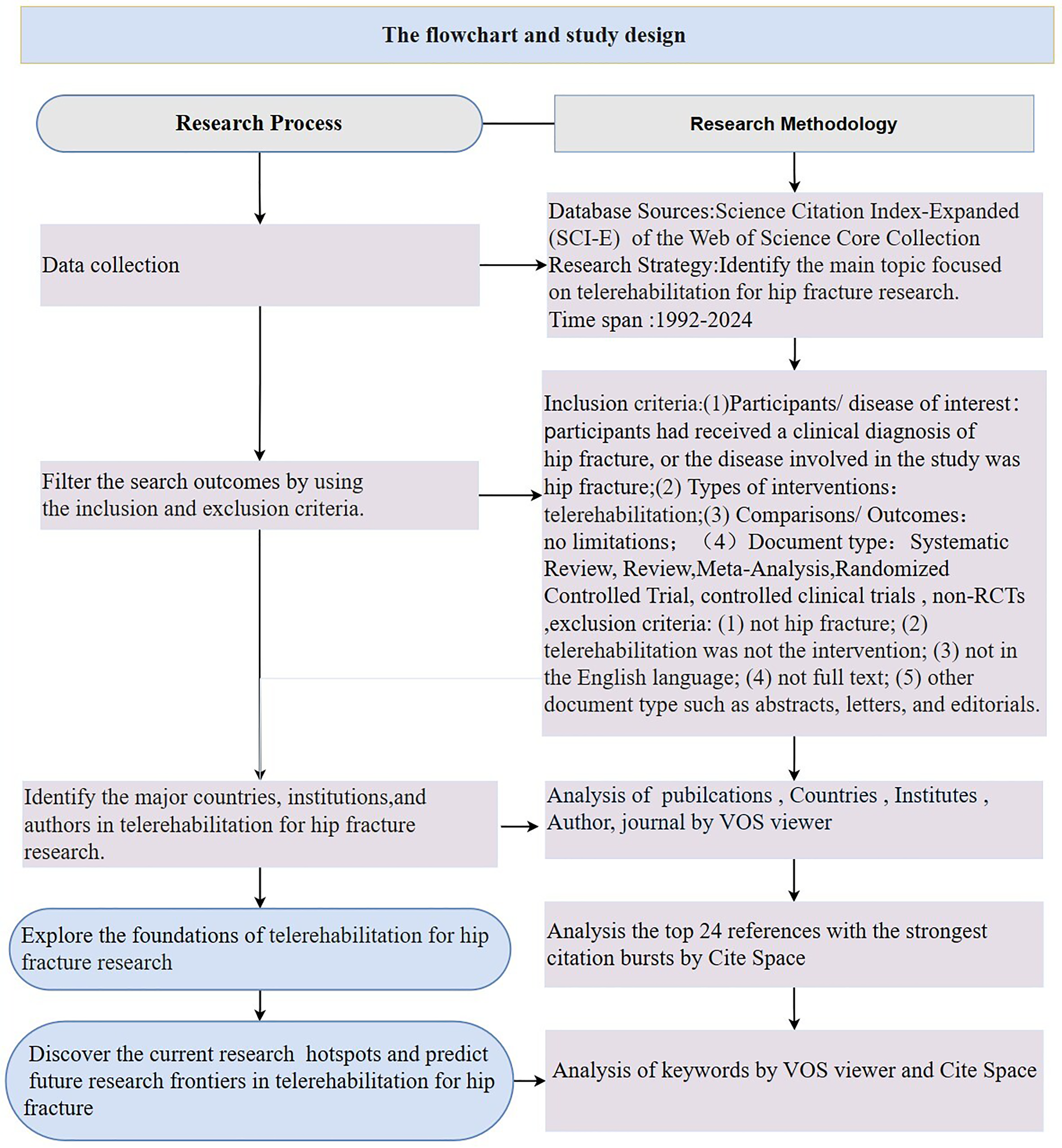
The summary of the flowchart and study design.
Ranking of top 15 authors, co-cited authors in telerehabilitation for hip fracture field.

Data analysis tool and analysis methodologies
VOSviewer was developed by Van Eck and Waltman, which offers a powerful bibliometric maps capability for visualizing the network of country, institution, authors, journals and other types of data. In this study, the full counting bibliographic coupling analysis of countries, authors, institutions, journals and co-citation analysis of cited authors and cited journals in the references were created using VOSviewer 1.6.18 (Leiden University, Van Eck NJ). By using the co-occurrence analysis in the Vosviewer, we also identified research hotspots based on keywords, including the frequently occurred keywords and the timeline of appeared years. Networks maps of frequently occurred keywords were visualized, as well as the timeline of keywords ranked by average appeared years. A number of parameters are chosen: counting method (full counting), type of analysis (co-occurrence), unit of analysis (all keywords), minimum number of occurrences of a keyword (1), of the 458 keywords, 458 met the thresholds. Additionally, a density map was created to visualize the frequencies of keywords appearing in publications.
In addition, by using CiteSpace (version 5.8.R3, Drexel University, United States), a Java application designed by Chen, 27 we performed the burst test of keywords and citations to identify potential research hotspots, frontiers and foundations for hip fracture and telerehabilitation.The burst map of keywords and citations was then generated. We defined the following parameters: time slice from 1992 to 2024 with one year per slice, top N selection criteria is 25. The red node represents “citation emergence” or “key words emergence” which signifies that the quantity of citations or key words in this node has increased dramatically over time.
Results
Analysis of publication outputs
A total of 79 documents (Supplemental 2) were obtained for further analysis after they all met the criteria set by the search between 1992 and 2024. And the number of publications was summarized in Supplemental 1 (Table 3). In addition, Figure 2 presents an overview of the number of papers published annually and the development trend in the field of hip fracture and telerehabilitation. Publications on telerehabilitation for hip fracture can be divided into three stages: the initial stage (1992–2014), the second stage (2015–2018) and the third stage (2019–2024). During the first stage (1992–2014), annual publications was maintained at a low level, the total number of articles was limited to no more than 10. After that, annual publications reached 10 for the first time in 2019, and the number of articles peaked at 15 in 2021. From the perspective of annual publications, the year 2019 was a critical turning point. Between 2019 and 2024, there was a considerable increase in publications, accounting for 73.41% (58/79) of all publications. However, with only 4 months included in 2024, the numbers decreased significantly.

The numbers of papers published each year.
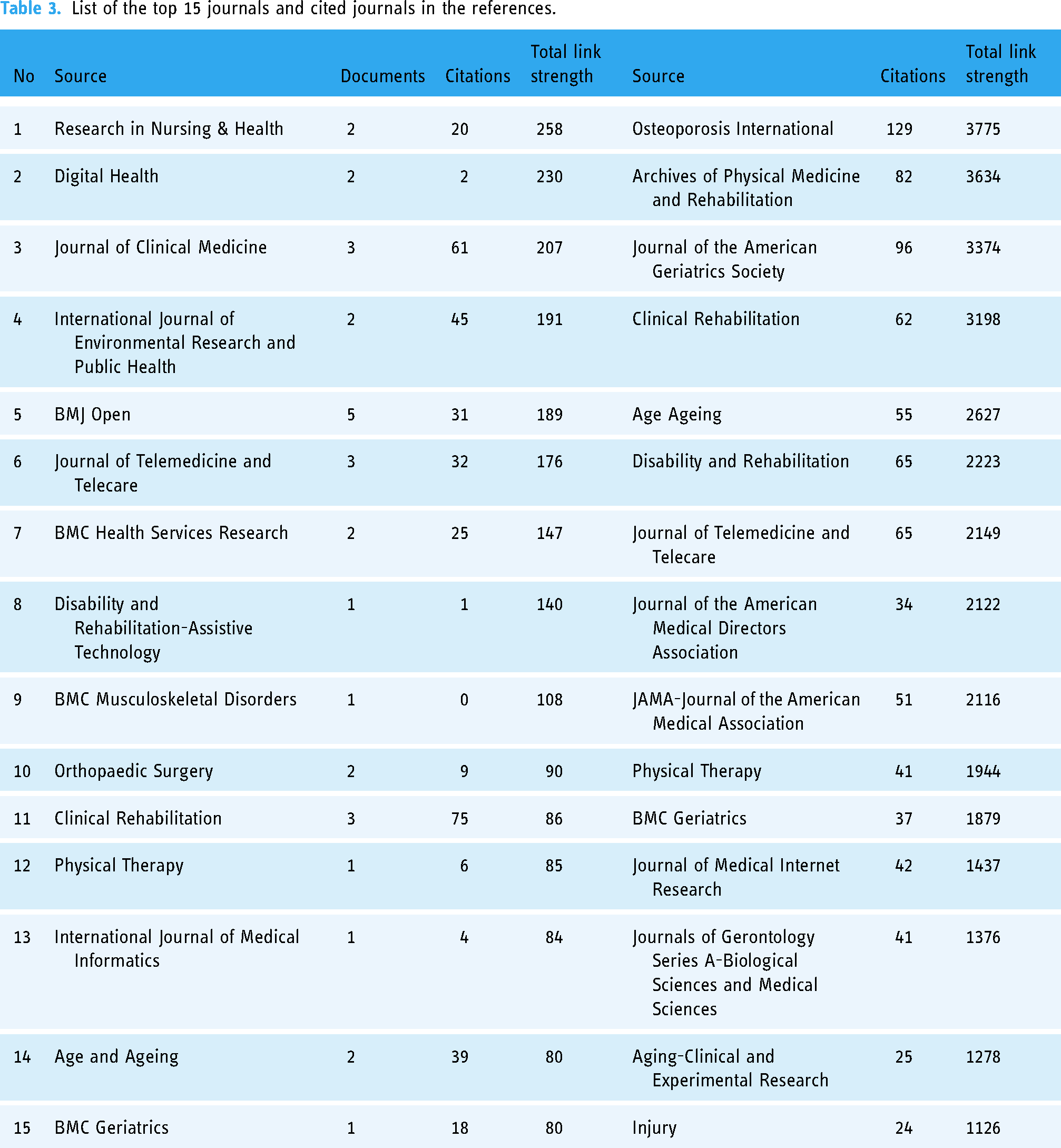
List of the top 15 journals and cited journals in the references.
Distribution of countries and institutes
A total of 30 countries/regions were involved in telerehabilitation for hip fracture domain. Detailed information about the top 15 countries and institutions is provided in Table 1 and Figure 3A. Spain was in the dominant positions, with 13 publications. Australia, United States and Canada were the third productive country and published same 12 literatures totally, followed by Netherlands (7) and Germany (6). Furthermore, according to the centrality data, Spain had the highest centrality (0.34), followed by England (0.11), Belgium (0.11) and Australia (0.09). Based on the definition of centrality, these countries exhibited considerable academic influence by collaborating closely with other nations. Combining publication and centrality data analysis, Spain, Australia, Netherlands have the most dominant positions in telerehabilitation for hip fracture domain.

(A) Cooperation network diagram of countries. (B) Cooperation network diagram of institutions.
A total of 232 institutions participated in the application of telerehabilitation for hip fracture field. According to Table 1 and Figure 3B, University of Granada was the institution with the greatest number of publications (10), followed by University of British Columbia (5 publications), Robert Bosch Krankenhaus (4 publications), virgen nieves university hospital (3 publications) and Hospital Universitario Virgen de las Nieves(3 publications). In terms of centrality, Harvard University ranked first (0.11), followed by University of Granada (0.04), University of British Columbia (0.03). therefore, it can be concluded from an analysis of publication numbers and centrality that these institutions play an important role.
Distribution of authors and co-cited authors
The full counting bibliographic coupling analysis of authors showed that the highly cited authors (Figure 4A). In terms of documents, Ariza-vega P was the author with the greatest number, with 61 cited times and 10 record counts. Followed by Prieto-moreno R and Molina-garcia P had seven and six record counts, respectively. According to Table 2, the top 15 authors with the greatest number of citations and documents in telerehabilitation for hip fracture research were listed. These authors were active authors in telerehabilitation for hip fracture research field. As far as co-cited authors are concerned, according to full counting co-citation analysis of cited authors in the references, the most frequently cited authors were Ariza-vega P, which had the most cited times (24 cited times), followed by Ortiz-piña M (20 cited times) and Crotty M (11 cited times) (Table 2 and Figure 4B).
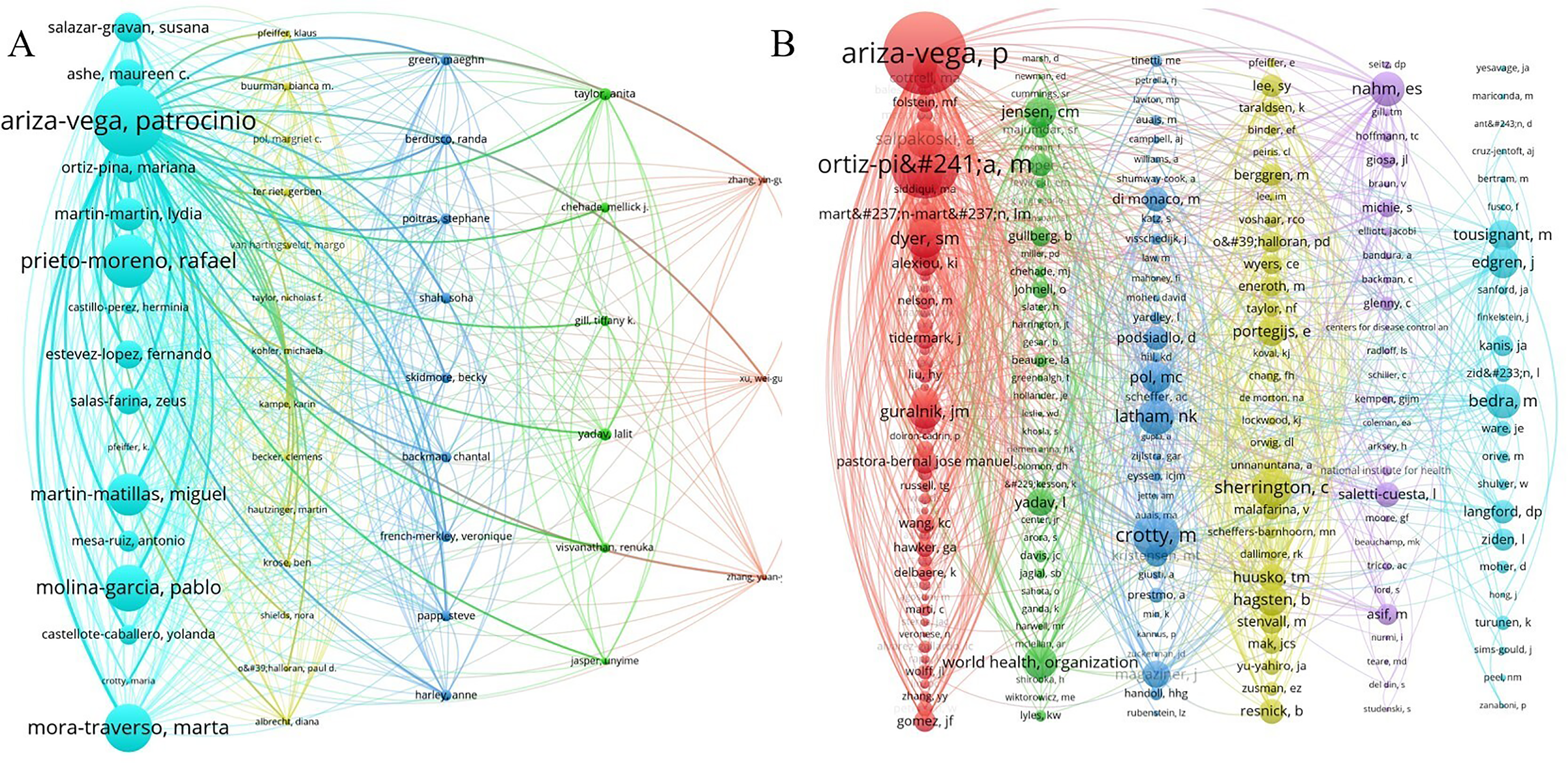
(A) Network diagram of influential authors. (B) Network diagram of influential co-cited authors.
Distribution of journals and co-cited journals
According to the full counting bibliographic coupling analysis of journals, the articles on telerehabilitation for hip fracture research were published in 57 scholarly journals (Figure 5A). When ranked by total link strength, Research in Nursing & Health was the top journal with the greatest number of total link strength, with 20 citations and 2 publications.The second journal with the high total link strength was digital health, with two publications. The third was journal of clinical medicine, with 207 total link strength and 3 publications. According to Table 3 (The table is attached at the end of the article), the top 15 journals that received the most citations and pubilications were listed.

Bibliographic coupling analysis highly cited journals, weighted by citations, visualized map (A). Co-citation analysis of most frequently cited journals in the reference lists, weighed by citations, visualized map (B).
The full counting co-citation analysis of cited journals displayed that journals most frequently cited in the references were osteoporosis international (cited by 129 times), followed by journal of the American geriatrics society (cited by 96 times), archives of physical medicine and rehabilitation(cited by 82 times) (Figure 5B). Table 3 provided the top 15 cited journals in the references.
Analysis of reference co-citation
The strongest citation bursts in references represent the research basics for future frontiers. Based on the strongest citation bursts, the 24 top references were identified in Figure 6. Among these references, Table 4 (The table is attached at the end of the article) showed 15 important classic references. Ortiz-Piña et al., 19 Li et al., 27 Bedra et al., 28 Agostini et al., 29 Kalron et al. 30 provided telerehabilitation protocol, feasibility and the effect on motor function recovery for patients with hip fracture. Cottrell et al. 11 supported telerehabilitation for the treatment of musculoskeletal conditions is effective and comparable to standard practice.Latham et al. 31 focused on investigating the effect of home-based exercise program on functional recovery after hip fracture. Ortiz-Piña et al. 32 analyzed and compared the effects of telerehabilitation and home-based in-person rehabilitation for older adult's function after hip fracture. Two articles written by Perracini et al. 33 and Auais et al. 34 provided insights on the utility of physical therapy management for hip fracture. Ariza-Vega et al. 35 and Asif et al. 36 investigated caregiver burden and experiences for patients following hip fracture.
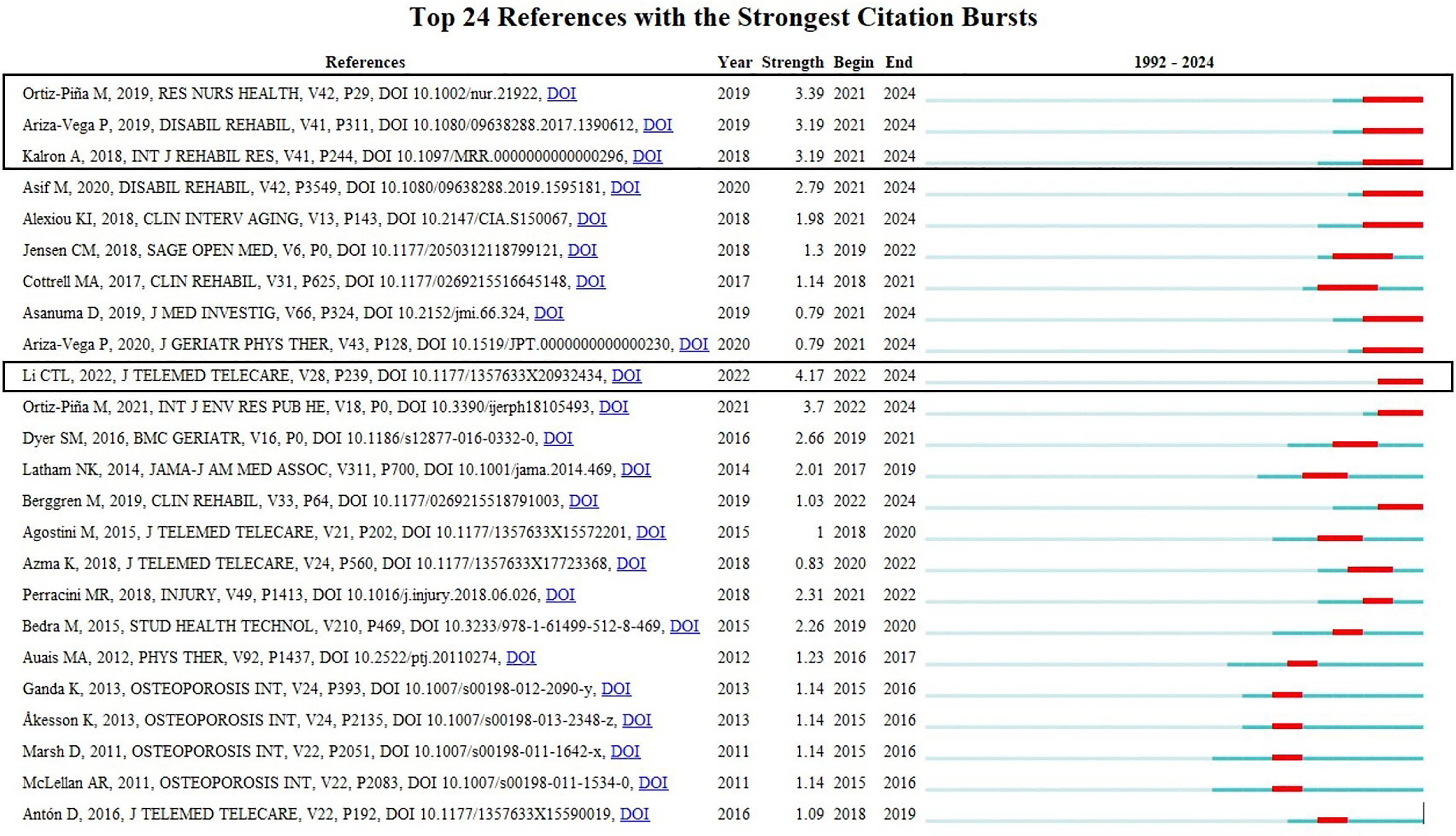
The top 24 references with the strongest citation bursts in telerehabilitation for hip fracture field.
The top 15 papers with the highest cited frequency and strongest citation bursts n telerehabilitation for hip fracture field.

Analysis of keywords
Analyzing keyword co-occurrence networks can provide insight into trends and changes in research topics, which is crucial to understanding the development of these topics. Utilizing bibliographic data, we created the map using a full counting strategy, limiting the minimum number of occurrences to one .When ranked by occurrence, the full counting co-occurrence analysis of all keywords results in 458 keywords. the top 10 frequently occurred keywords were “hip fracture,” “older adults,” “functional recovery,” “reliability,” “mortality,” “rehabilitation,” “care,” “scale,” “mobility” and “quality of life” (Table 5) (The table is attached at the end of the article). In addition, overlay visualizations of 458 co-occurrences of keywords are shown in Figure 7A. Co-occurrence analysis of keywords by network visualization are shown in Supplemental 1 (Figure 1). Depending on the color, the color represents the average occurrence time, the node size indicates the occurrence frequency, and the link thickness reflects the co-occurrence strength. Yellow represents a more recent occurrence, while dark blue implies an earlier presence. As measured by average time of occurrence, “risk,” “efficacy,” “geriatric rehabilitation” and “functional independence” was the earliest keyword to appear, followed by “rehabiliatation,” “exercise,” “scale,” “risk,” “mortality,” “recovery,” “reliability” and then gradually move over to “home telerehabiliattion,” “quality of life,” “meta analysis,” “digital health,” “depression,” “telerehabilitation,” “telemedicine” and “elderly patients.” Furthermore, an analysis of the keyword density map showed the most frequently used keywords (Figure 7B).

Co-occurrence analysis of keywords by overlay visualization (A) and co-occurrence analysis of keywords by density visualization (B).
The top 30 keywords of telerehabilitation for hip fracture-related studies.

Keyword occurrence burst can reveal new research trends and development in frontier areas. As shown in Figure 8, the top 25 keywords with the strongest occurrence burst are listed. The top five keywords with the highest citation burst in telerehabilitation for hip fracture domain were associated with “randomized controlled trial” (2.27), followed by “rehabilitation” (1.99) and “validity” (1.76). In addition, “risk” (2001–2016) is the keyword with the longest burst maintenance time, followed by “randomized controlled trial” (2009–2017), “excise program” (2009–2018). The most popular keywords from 2020 to 2024 were “geriatric medicine” (2020–2021), “family caregiver” (2021–2022) and “digital health” (2021–2024).

Top 25 keywords with the strongest citation burst in telerehabilitation for hip fracture field.
Discussion
Principal findings
An bibliometrics analysis was performed on publications related to telerehabilitation for hip fracture published from 1992 to 2024. To the best of our knowledge, it is one of the pioneer studies that focus on the specific topic of telerehabilitation after hip fracture. Publications on telerehabilitation for hip fracture can be divided into two stages: the initial stage (1992–2014), the second stage (2015–2018) and the third stage (2019–2024), and the number of articles peaked at 15 in 2021. There are several possible explanations for the rapid growth of this research area, including advances in telerehabilitation, the outbreak of COVID-19 and the increased demand due to growing aging population.
According to an analysis by country, telerehabilitation research relating to hip fracture has been dominated by the United States ,Canada, Spain and Australia. These countries contributed approximately 46.66% of all documents, demonstrating the outstanding research capabilities and commitment to advancement of the field. As for institutes, University of Granada published the highest number of articles, followed by University of British Columbia, Robert Bosch Krankenhaus, Hospital Universitario Virgen de las Nieves, which was explained by the strong academic environment and scientific foundations of these institutes. In terms of publication, Archives of physical medicine and rehabilitation, clinical rehabilitation, osteoporosis international were the most productive publication sources in this field. The influential researchers based on contributions and co-citations are Ariza-vega P, Ortiz-piña M, Crotty M, Prieto-moreno R. It would be recommended that more attention be paid to the above-mentioned countries, institutions, and authors, since they have made significant contributions to the field of telerehabilitation for hip fracture.
The hotspot and frontier
The equipment and programs, as well as research quality in telerehabilitation of hip fractures in older adults should be improved
It is common to conduct postoperative rehabilitation exercises outside the hospital due to rapid turnaround times, shortened hospitalization times and the prevention and control of the COVID-19 epidemic. 10 The concept of home rehabilitation refers to extending rehabilitation training from the hospital to the home. Recently, Internet technology and strong policy support have led to an emerging medical service model known as “Internet + medicine,” which offers remote rehabilitation as well as an important means of resuming medical services in an orderly manner, based on epidemic prevention and control which offers a platform for remote rehabilitation and facilitates the orderly resumption of medical services. 39 telerehabilitation is an emerging method of telemedicine for improving the self-contained motor, cognitive and psychological disabilities of the patient or family member at home. 40 In addition, the convenience of telerehabilitation, which can be conducted at any self-determined time, therefore, it is especially beneficial for those who live in remote areas or are unable to reach the care centers due to physical impairments. 41 Considering the poor physical condition of elderly patients, it can be difficult for them to visit hospitals. Therefore, telerehabilitation appears to be particularly beneficial to elderly patients with hip fractures. 42
Many studies have shown that home-based telerehabilitation promotes hip joint function recovery, improves quality of life and psychological factors to a certain extent in elderly patients with hip fractures.19,20 In addition, the systematic review by Cottrell and colleagues concluded that telerehabilitation (for conditions of the musculoskeletal system) is an effective and comparable form of rehabilitation for older adults. 11 Currently, Internet-based remote rehabilitation is mainly performed through websites and application software, employing smart devices including computers and mobile phones as the service provider. 43 However, considering that the average age for someone with a hip fracture is mid-80s, there may be perceived barriers for older adults in accessing and using ICT. 32 There were two major challenges identified in telerehabilitation for older adults, namely a lack of sufficient computer skills and exhaustion after an acute illness. As a result, they were unable to access the used IT platform efficiently because they were unfamiliar with computer use. And learning new features on their computer required extra effort also. 44 Furthermore, many factors can make recruiting patients for telerehabilitation interventions difficult, including impaired cognitive abilities, vision and hearing, anxiety, stress, dementia and a cluttered home environment.44,45 Threrfore, telerehabilitation programs should be accessible on multiple devices, including computers, laptops, tablets and smartphones, and patients should feel comfortable using these tools. 46 According to Peretti et al., electronic devices and equipment need to be improved in order to make the applications as fexible as possible. 47 However, there is limited evidence on the feasibility of home-based telerehabilitation for older adults with hip fractures. the current research evidence with different remote technologies, different experimental design and randomized controlled trials of high quality are still limited.
Emphasizing the relationship between telerehabilitation outcomes and depression symptoms in hip fracture of the older adults
Older adults with hip fracture are at increased risk of developing psychiatric illness, including depression and depressive symptoms. 48 Depending on the country, population, duration of depressive symptoms, method of assessment and type of hip fracture, there is a reported prevalence of depression among patients with hip fractures ranging from 9 to 47%.49,50 There is a connection between depressive symptoms and physical dysfunction after hip fracture, as a result of physical dysfunction, depressive symptoms persist after hip fracture. 51 Some studies showed that a lower quality of life, greater use of health system services and increased mortality are associated with depression in patients with fracture. 52 Other investigations have also demonstrated depressive symptoms are strongly correlated with clinical factors including medical morbidity, functional limitations, cognitive deterioration and pain. 53 Meanwhile, compared to people without depression or depressive symptoms, patients with depression are less likely to recover functioning following hip fractures (measured by balance or walking speed, or ADL).54,55 Those who experienced high levels of depression after a hip fracture had a considerably higher risk of not achieving their prefracture level of functioning. 56 Therefore, patients with hip fractures should receive treatment for depression. However, as far as the authors of the current study are concerned. Despite studies demonstrating the significant impact of depression on hip fracture recovery, there is little understanding of why or how this occurs. 57 There is room for future research to evaluate factors that may interfere with or moderate the development of depression symptoms and overall recovery outcomes, or trigger the development of psychological factors in the first place. 57 In addition, there are several methods used in the literature to describe and measure psychological factors and recovery outcomes, and due to the heterogeneity of measures makes comparing results of different studies difficult. The researchers working in this field should consider employing a consistent, standardized assessment tools to evaluate the psychological factors that affect patients recovering from hip fractures. 57 It is also important to screen for common psychiatric symptoms such as depression in rehabilitation process, and suitable referrals to psychiatric consultations should be made when necessary. 58
The impact of telerehabilitation on quality of life in older individuals of hip fractures should be paid more attention
In addition to causing increased mortality, morbidity and decreased mobility and independence, hip fractures are also related to reduced quality of life. The main focus of quality of life (QOL) is the physical, emotional and social well-being following diagnosis and treatment of a disease along with perceived functioning (i.e., health status; HS).59–61 As compared to prefracture status, QOL has been significantly reduced after fracture. There are several variables that have a negative effect on the outcome of QOL, including the physical and psychosocial functioning of the patient before the fracture, the psychological state, multiple comorbidities, such as psychiatric conditions, gender, malnutrition, unstable extracapsular fractures, postoperative pain, prolonged hospitalization and complications following the surgery. 1 Due to the steadily increasing number of elderly people around the world, it is important to expand clinical research into the QOL of the elderly who suffer from hip fractures. The quality of care for patients with hip fractures needs to be improved with more RCTs that measure QOL adequately using questionnaires that incorporate objective functioning in the three health dimensions of QOL, as well as subjective perceptions of health. 62
Home-based telerehabilitation exercise intervention should be designed to find new strategies
Fractures of the hip can result in disability, decreased quality of life, institutional care and death.7,63,64 In spite of the recommendation that surgery be the first treatment, most people cannot regain their previous level of independence, half are insufficiently mobility and a quarter require long-term nursing home care.64,65 In addition, as a result of poor recovery of physical function and mobility following hip fractures, future falls and fractures will cause worse health status and increase medical expenses. It has been reported that regular exercise (resistive and/or aerobic) as an effective lifestyle intervention can increase walking speed, improve quadriceps strength and improve balance and mobility.66–69 A study also demonstrated that an intensive extended rehabilitation program in an outpatient setting, led to significant improvements in function and mobility. 70 Accordingly, initiating and sustaining an exercise program for older adults after hip fracture may have a significant impact on their recovery and overall quality of life. 71 However, previous research has mostly examined the impacts of outpatient exercise programs on nursing home admissions,rehospitalization and overall health care expenses.72–74 There is a lack of evidence on the effects of long-term, supervised home-based exercise on the physical and psychosocial function of hip fracture patients. Therefore, the future of home-based rehabilitation should be focused on finding new strategies (such as using remote technologies or implementing more exercise training in a systematic manner in home care services) for enhancing functional independence and reducing rehabilitation costs. 75 Exercise intervention was also designed to eliminate travel burdens and strengthen self-efficacy and outcomes expectations, As a result, it helps these individuals not only initiate exercise immediately after hip fracture, but also maintain an exercise regime for the remainder of their lives.
Strengths and limitations
Using bibliometrics analysis and visual tools, we analyzed the literature in the telerehabilitation field for hip fracture in a qualitative and quantitative manner. As compared to traditional literature reviews, bibliometric visualization analysis is more comprehensive and intuitive. To the best of our knowledge, an in-depth bibliometric analysis of telerehabilitation field for hip fracture research is presented here for the first time. As a result of the more explicit nature of visualization analysis, the reader is able to capture key information more effectively and might also better grasp the research subjects, research hotspots and development trends in telerehabilitation field for hip fracture research. However, it is also important to acknowledge that despite the fact that our study provides a comprehensive picture of telerehabilitation for hip fracture research, several limitations need to be addressed. First, since we only analyzed data from Web of Science, the results may not be comprehensive. The WOS is, however, the most widely used bibliometric database 76 .To include further investigation, additional databases resources, such as Scopus, PubMed and Google Scholar should be incorporated. Second, Articles and reviews were the only materials evaluated in the final analysis, while gray articles and publicly accessible materials such as abstracts, letters and editorials were excluded from the study. Third, despite the fact that this field of research is rapidly developing, some recently published high-quality studies may be underestimated owing to their low frequency of citations. Last but not least, publication and citation counts may not directly reflect the scientific quality of the papers because they can be influenced by a number of factors, such as sample size, design and reporting standard. As well as assessing the scientific quality of the content, bibliometric analysis cannot provide information about bias risks, effect sizes and statistical significance of the conclusions and whether they are supported by the results. In spite of this, we believe that our study can provide an overview of the current situation and emerging trends, and make recommendations for further research regarding telerehabilitation for hip fracture.
Conclusions
Combining the software CiteSpace and VOSviewer, along with the WOS database, a comprehensive analysis of publishing data was evaluate to determine the number of publications, the influential nations and organizations, authors and co-cited authors, published journals and collaboration networks. We also presented a historical and prospective perspective as well as a discussion of major trends, hotspots and frontiers in telerehabilitation following hip fracture. A primary focus in the early years was the impact of telerehabilitation on functional independence for older adults after hip fracture. Future terehabilitation outcomes are expected to include patient satisfaction, quality of life and psychiatric symptoms such as depression in rehabilitation process. Exercise intervention was also designed to find new strategies which can eliminate travel burdens and strengthen self-efficacy and outcomes expectations, and improve the physical and psychosocial function of hip fracture patients. Overall, as a result of systematically summarizing the literature in this field, this study illustrates the dynamic development process and the structural relationships of knowledge as well as explore key hotspots and frontiers. This work will provide a fundamental reference as well as a directional guide for future research. To promote the academic development, it is encouraged to maintain cooperative connections between countries, institutions working in telerehabilitation for hip fracture field.
Supplemental Material
sj-doc-1-dhj-10.1177_20552076241255465 - Supplemental material for Emerging trends and prospects in telerehabilitation for hip fracture: Bibliometric and visualization study
Supplemental material, sj-doc-1-dhj-10.1177_20552076241255465 for Emerging trends and prospects in telerehabilitation for hip fracture: Bibliometric and visualization study by Liqiong Wang, Xiangxiu Wang, Ruishi Zhang and Chengqi He in DIGITAL HEALTH
Supplemental Material
sj-xls-2-dhj-10.1177_20552076241255465 - Supplemental material for Emerging trends and prospects in telerehabilitation for hip fracture: Bibliometric and visualization study
Supplemental material, sj-xls-2-dhj-10.1177_20552076241255465 for Emerging trends and prospects in telerehabilitation for hip fracture: Bibliometric and visualization study by Liqiong Wang, Xiangxiu Wang, Ruishi Zhang and Chengqi He in DIGITAL HEALTH
Footnotes
Contributorship
CH designed the research. LW, XW and RZ collected the data, LW and XW performed the data analyses. LW wrote the manuscript. All authors have read and approved the final manuscript.
Declaration of conflicting interests
The authors declared no potential conflicts of interest with respect to the research, authorship, and/or publication of this article.
Ethical approval
Not applicable, because this article does not contain any studies with human or animal subjects.
Funding
The authors disclosed receipt of the following financial support for the research, authorship, and/or publication of this article: This work was supported by the National Natural Science Foundation of China, Natural Science Foundation of Sichuan Province, Department of Strategic Development, Association for Science and Technology of China, West China Hospital of Sichuan University, China Postdoctoral Science Foundation, (grant number 82302858, 23NSFSC4712, 2022ZZ042006, 2023HXBH123, 2023M742480).
Guarantor
LW and CH.

Supplemental Material
Supplemental material for this article is available online.
References
Supplementary Material
Please find the following supplemental material available below.
For Open Access articles published under a Creative Commons License, all supplemental material carries the same license as the article it is associated with.
For non-Open Access articles published, all supplemental material carries a non-exclusive license, and permission requests for re-use of supplemental material or any part of supplemental material shall be sent directly to the copyright owner as specified in the copyright notice associated with the article.
