




Abstract
Objective
Although students at Minority-Serving Institutions (HBCUs, HSIs, TCUs, AAPISIs) have been found to make sound health choices as compared to their counterparts at Predominately White Institutions and have positive expectancy outcomes of physical activity engagement, it is consistently suggested that MSIs examine and bolster health enhancing avenues. Black and Latina women frequently use social media platforms to connect to content that can initiate and support lifestyle changes or improvements. Thus, establishing culturally relevant health related social media content geared toward Black and Latina College Women (BLCW) may be successful in achieving health-related goals. Therefore, the purpose of this study using social identity theory as a theoretical lens, was to identify the fundamental characteristics of culturally tailored health-related content for BLCW.
Method
This study employed a qualitative approach to ascertain the characteristics of culturally tailored health-related content for BLCW. Black and Latina college women were asked to provide feedback on mock culturally tailored health-related content in semi-structured focus groups. Participants discussed the authenticity and cultural relevancy of images designed to promote physical activity engagement and other healthy behaviors.
Results
Results indicated that at a minimum, culturally tailored health-related content should include an array of body shapes, authentic language and messaging, in relevant settings. Moreover, BLCW prefer content that is realistic, reflects their experiences, and embodies their relevant identities.
Conclusion
Social media content designed to attract and promote healthy lifestyles of BLCW must be comprised of imagery and language that represent the diversity of the priority group. The findings from this study can help to establish best practices when designing content intended to strengthen wellness among college students and young adults.
Keywords
Introduction
Black and Latina women aged 18–30 represent one of the largest groups of social media users, 1 particularly on Instagram, but experience some of the highest rates of online harassment (e.g., physically threatened, stalked, or sexually harassed). Online harassment is typically aimed at individuals with visibly identifiable characteristics, such as those associated with minoritized racial/ethnic backgrounds. Black and Latina women who have more phenotypical characteristics associated with their ethnic groups are at risk, which is particularly concerning in a society that highly values physical appearance, conventional attractiveness, and European aesthetics as standards of beauty. 2 Experts argue whether the onus for protection falls on social media platforms or individual users even though technological platforms are often designed with the assumption that the default user is White, male, and middle-class. 3 Subsequently, an increasing amount of literature has documented how social media and their affordances (i.e., anonymity, editability, association, and persistence) have been used to create and promote online harassment of Black and Latina women (e.g., Felmlee 4 ; Francisco and Felmlee 5 ; Musgrave 6 ).
Despite instances of hostility, Black and Latina women frequently use social media platforms as a means to connect and curate content that can initiate and support lifestyle changes and/or improvements 7 such as decisions related to physical health. Consequently, these decisions have dire consequences as health inequities within Black and Brown communities still exist at disparate proportions as 56.9% of Black women are considered obese and 43.7% of Latina women assume that same designation. 8 Black and Latina women are more likely to go without a pap smear or mammogram and overall experience larger declines in life expectancy than their counterparts. 9 Combating these outcomes require innovative approaches to health promotion such as targeting college aged women to aid in prevention.
One such avenue to address health disparities is through education both formally and informally (Cardinal and Casebolt 10 ; Chen and Wang 11 ). Higher education institutions, particularly those that are minority serving, (e.g., Historically Black College and Universities, Hispanic Serving Institutions) were recommended to increase physical activity (PA) promotion to decrease health-related issues such as obesity, hypertension, diabetes and cardiovascular disease. 12 The nationwide enrollment of both Black and Latina college women (BLCW) increases, 13 access to health-related curricula presents the opportunity to empower these students with knowledge to make informed lifestyle decisions which can affect future generations.14,15 The ubiquitous usage of social media creates an opportunity where institutions—that have readily accessible channels of communication—can engage BLCW with health content that is culturally relevant and student-centered. Unfortunately, BLCW are rarely centralized in health-oriented content within digital spaces 3 and although some literature has investigated the characteristics of physical activity programs geared toward Black and Latina women, none to our knowledge has solely focused on the attributes of the content as it relates to their identities.
Tailoring content to meet the needs of underrepresented populations is not new, as Joseph et al. 16 proposed three levels of cultural considerations when crafting physical activity programs. There are two dimensions of tailored content: surface level (matching intervention messages to observable characteristics) and deep level (incorporating values, beliefs, or norms shared by a group in relation to the intervention). 17 Within the literature, cultural adaptations have primarily focused on surface level (e.g., using images of Black and Latina women engaged in PA, haircare advice and tips, and content in Spanish) as opposed to deep level which focuses more on sociocultural norms and barriers to PA. 18 Furthermore, these studies are primarily investigated through a behavioral lens (e.g., social cognitive theory) negating the importance of how collectively shaped identities may influence healthy behavior. Identities are complex; entrenched within social structures and encompassing a multitude of processes that involve individual, interpersonal, and social processes. 19 According to Social Identity Theory, 20 individuals categorize themselves in certain social groups to define their membership within society at large. In turn, these group memberships impact how one perceives themself and often results in adopting behaviors of the group. Membership identification within a culturally tailored virtual community and the feelings derived can endear members to content creators and incite behavioral change.
Therefore, the purpose of this research is to identify the salient characteristics of culturally tailored health-related content for BLCW on Instagram. Using social identity theory as a theoretical lens, we seek to uncover attributes of health-related content that BLCW deems germane to cultural relevance. Findings from this study uniquely centered around Black and Latina college students in digital spaces can inform stakeholders in creating safe spaces for marginalized groups to encounter health-related content.
Theoretical framework
Social identity theory
Social identity theory states that an individual's self-concept and self-esteem are derived from perceived members within social groups. 21 Until recently, membership in these groups was primarily obtained through face-to-face interaction. Social media allows users to acquire and maintain these memberships through non-traditional modes (virtual spaces), making social media a crucial element for reaffirming social identities. There are three components that contribute to an individual's social identity: “a cognitive component (a cognitive awareness of one's membership in a social group—self-categorization), an evaluative component (a positive or negative value connotation attached to this group membership—group self-esteem), and an emotional component (a sense of emotional involvement with the group—affective commitment)” 22 p. 372. Adoption of a social identity is also dependent upon the degree to which a member perceives a similarity between self and other group members, making demographic factors such as gender, educational attainment, and ethnicity a powerful element in social identification, 23 which refers to the emotional commitment to a group rather than the cognitive component. 22
Fujita et al. 24 found in a study regarding social media content and university students that the more specific the identity narrative within the content, the greater the chance of attracting students’ attention to the content. Identity narrative is a mechanism for explaining an individual's perceived connection between their own identity's intertwinement with the identity of their selected group. 25 Furthermore, authentic student experiences were captured and co-created to produce identity themed content relevant to the multiple identities experienced by students (e.g., learner, university identity, etc.). This research focuses on the affective component of social identity, specifically as it relates to college women's ethnic identity-- an individual's preferences based on the attachment felt toward their racial group and related customs, traditions, and language. 26 The sense of emotional attachment or commitment to the ethnic group and the positive feelings attached to membership will be ascertained by culturally tailored content related to BLCW. The main drivers of identity-driven behavior are based upon the attribution of similarity and references to the current self-perception or the perception they aspire to. 27
Health promotion and social media
The advent of social media has changed the way individuals gather and distribute information. Experts argue the power of social media has not been fully actualized as it has the power to reach, influence, and change physical activity and diet-related behavior. 28 Furthermore, it can be used as a medium to present factual health-related information to college students with the goal to influence change in behavior. In a review of literature that spanned over a decade, Ghahramani 29 explored the methods used to impact change in health behaviors through social media interventions and the potential reach of social media beyond an avenue to create awareness. 28 Goodyear 30 found broad support for social media interventions to positively change physical activity and diet-related behaviors through information, interaction, and gamification. However, these interventions were not without fault, as many did not account for ethnicity and socio-economic factors which Goodyear 30 noted may result in differences in intervention results.
Chaudhary and Dhillon 31 examined the impact of Instagram on exercise adherence and self-efficacy of college women. In their study, the experimental group was given weekly exercise plans as well as exposed to exercise-related IG posts. Feedback from the IG group conveyed that content images need to be appealing, factual, positive, and presented (or endorsed) by experts who are role models. These suggestions provide a roadmap for interventionalists to create online content that has the potential to motivate college students; however, the absence of culture as a prominent characteristic may suggest the needs of minority students are not being met. That said, when developing IG content for college students, the content must not only be aesthetically appealing, but it must be relevant to the participants considering their age, cultural background, and body-type among many factors.
Culturally tailored content
A dearth of literature exists on the inclusion of cultural characteristics in creating physical activity interventions. Resnicow 17 proposed a model for understanding and developing culturally sensitive health prevention interventions. “Culturally sensitive interventions are implicitly multicultural” as they seek to “incorporate and appreciate perspectives of multiple race/ethnic groups"(p. 11). 17 The implementation of culturally tailored content is not new and has proven to be cost-effective in promoting health behavior 32 ; academic literature has acknowledged the effectiveness in targeting minority populations under both positive (antiviral promotion; e.g., Pasipanodya et al. 33 ) and negative (consumption of sugary snacks; Backholer et al. 34 ) circumstances. Ryan et al. 35 found that tailored interventions were more effective in influencing behavioral change and were rated by participants as more personally relevant, helpful, easier to understand, likely to be recommended to others, and novel than those in the non-tailored intervention group. Furthermore, the literature on cultural tailoring is not limited to Black women but other studies (e.g., Keller et al. 36 ) have explored characteristics of physical activity interventions that meet the cultural needs of Latina women.
The multicultural approach is inherently predicated on cultural sensitivity which is conceptualized by two dimensions–surface structure and deep structure. Adapted from the health communication theory and social marketing approaches used in public health, the structures explain the depth in which components within interventions or programs can be designed to influence intended behaviors of the priority population. 17 Surface structures consider the more visible or external characteristics of importance to the priority population or group (e.g., music, hair texture, clothing, food) and the medium and entity in which the information is presented (e.g., church, radio, trusted community organizer). In essence, intervention materials developed from the surface structure angle are designed to be attractive to the priority population due to the relatedness of the content. In contrast, deep structures delve more into longstanding cultural values. More specifically, deep structure content infuses important cultural beliefs, traditions, and identities into intervention strategies (e.g., religion, familial relationships, hesitancy, and trust). Given social networking sites (SNS) have the ability to replicate interpersonal experiences and provide factual health-based information, these tools should be used to responsibly and safely create health-oriented communities.
Method
Setting and participants
Using a primarily qualitative research approach, the purpose of the study was to identify the fundamental characteristics of culturally tailored health-related content for BLCW. This study was conducted in the United States across two universities, one large, Hispanic-Serving Institution (HSI) in the Southwest and one small Historically Black University (HBCU) in the Midwest. Upon institutional review board approval, participants at each stage of the study were recruited through flyers posted on campus, announcements made on learning management systems, and emails sent to list serves geared toward Black and Latina students (e.g., Black student union, historically Black and Latina sororities). In order to participate in the study, respondents were required to identify as female, be Black and/or Latina, be enrolled in an undergraduate or graduate program at either institution and be between the ages of 18 and 29.
Procedure
A three-step methodological approach, which spanned three weeks, was adopted to identify culturally relevant health content. First, the authors curated content from previous health-related studies, then worked with digital media students to create ten mock-ups of digital content. Next, a survey was created and administered to assess the cultural relevancy of each digital mock-up. Finally, the authors conducted focus groups to identify BLCW's appraisal of the content.
Step one
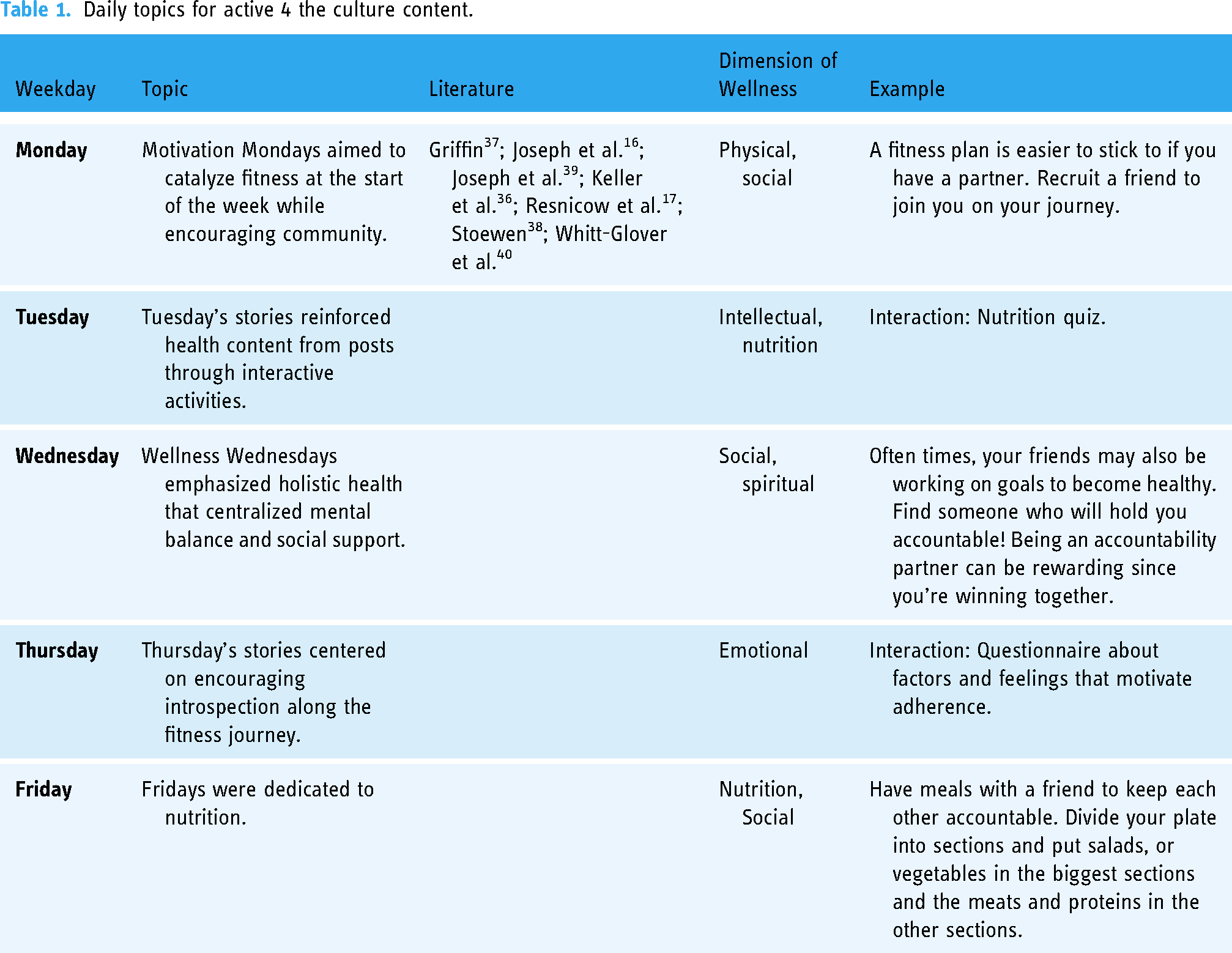
Health-related stimuli were created for our fictious Instagram account (see Figure 1), Active 4 The Culture. Content was methodically curated by the primary researcher who has an expertise in health and physical education. Informed by the work of Joseph,16 and others see (Table 1) a systematic approach was used to develop culturally relevant stimuli for BLCW. Health-related aspects of the stimuli were adapted from a text-message weight-loss campaign for young and middle-aged women, 37 and grounded in the dimensions of wellness (e.g., physical, mental, and emotional wellbeing) 38 Guided by previous research, stimuli were designed to highlight BLCW in authentic settings such as exercising on campus with friends or within a community of women with relevant hairstyles, attire, and diverse body shapes in an array of pertinent roles (e.g., student, family member, fitness enthusiast, employee). Stimuli included colloquial language relevant to BLCW as undergraduate and graduate researchers were instrumental in the creation of the content. Health-related messaging provided foundational health information that addressed physical health (e.g., recommended daily steps), social health (e.g., group fitness), spiritual health (e.g., confidence to adhere), emotional health (e.g., positive perception of health), intellectual health (e.g., fitness knowledge), and nutrition. To present daily foundational health knowledge, Mondays, Wednesdays, and Fridays were dedicated to traditional Instagram posts whereas Tuesdays and Thursdays were reserved for interactive stories. Table 1 presents the alignment between weekday topic, literature source, and dimension of health.

Before and after of stimuli.
Daily topics for active 4 the culture content.
Step two
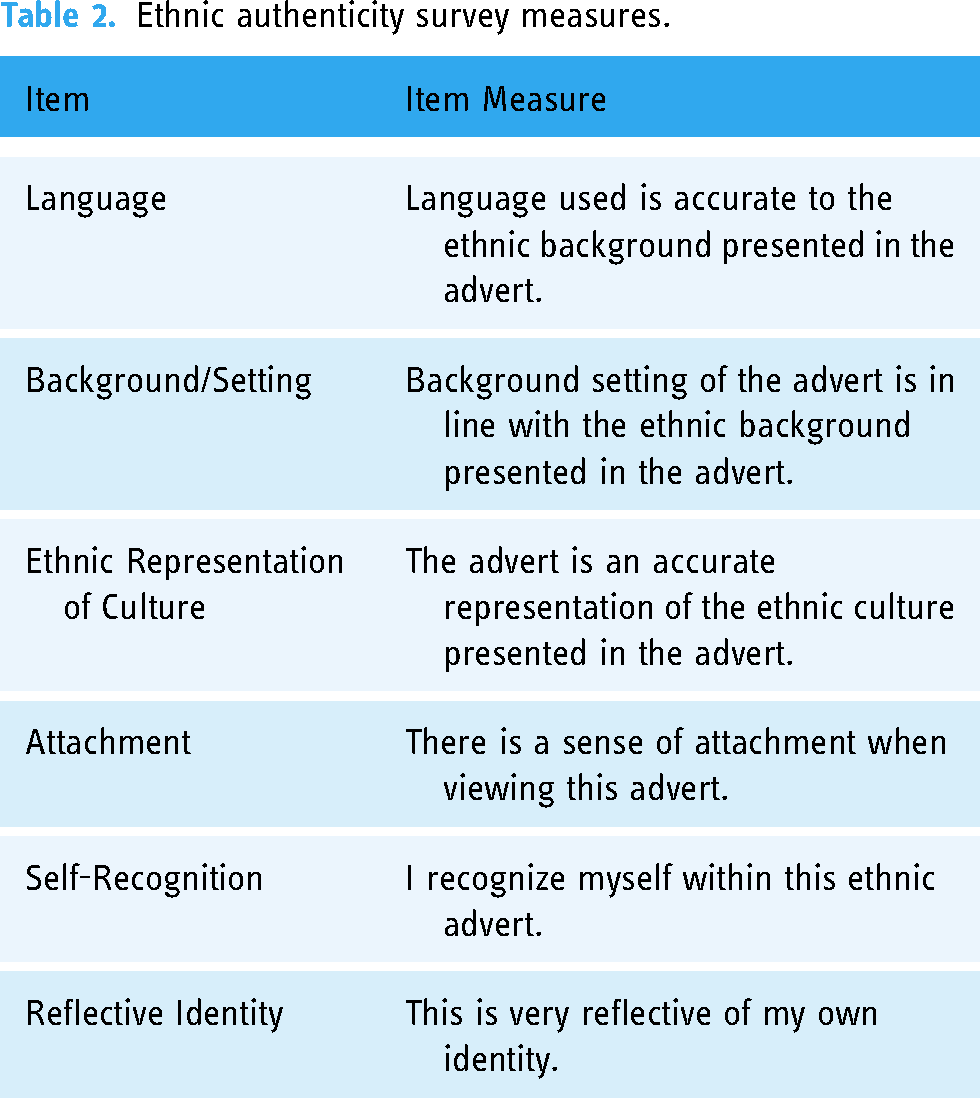
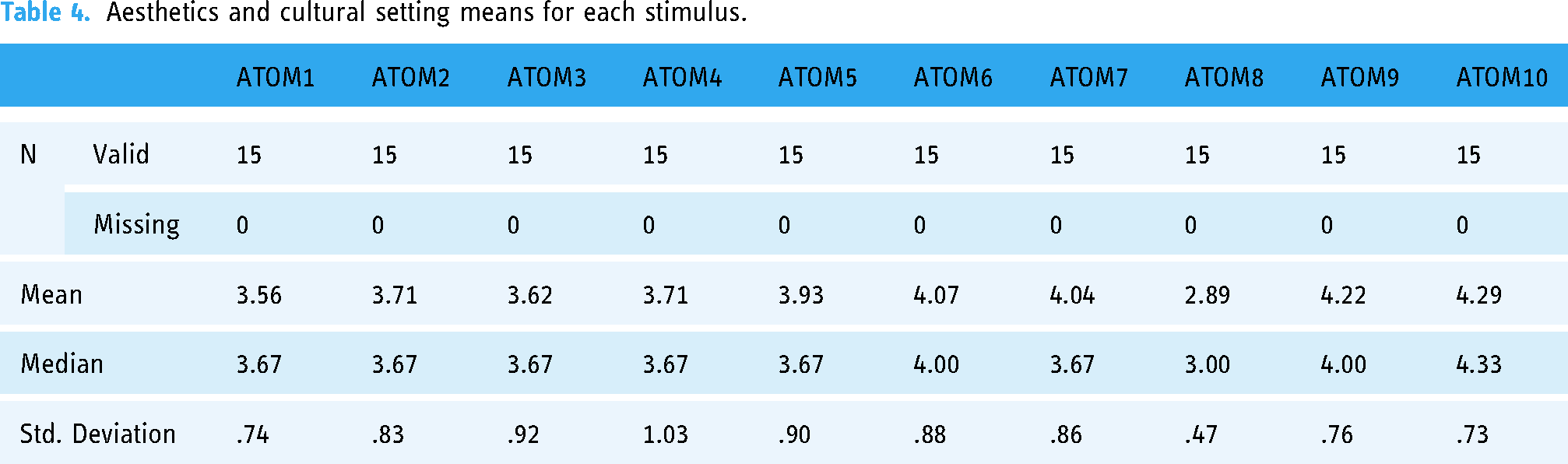
A survey was developed to assess cultural relevancy (i.e., aesthetics, social setting, and personal attributes) adapted from Alomar's 41 Authentic Ethnic Advertising scale (see Table 2). All items, previously validated by Alomar, 41 were measured on a 5-point Likert scale (1 = strongly disagree, 5 = strongly agree). Surveys were distributed electronically to 100 Black and Latina students at each researchers’ respective institution. Over 50 surveys were attempted; fifteen of which were fully completed. Composite scores were calculated (see Tables 2 and 3) for two dimensions of cultural relevancy: aesthetics and social setting (ATOM), and personal attributes (PA). The median and mean were calculated for each stimulus and were categorized as ‘low scoring’ if the mean fell below the median split for ATOM or PA. ‘High scoring’ stimuli had mean scores that exceeded the median for both ATOM and PA (see Tables 4 and 5). Stimuli that were characterized as both high and low on one dimension were separated and evaluated separately in the focus groups. Only two stimuli, stimulus one (M = 3.56, 2.96) and stimulus eight (M = 2.8889, 3.5556) were in the low-scoring group. Stimulus two (M = 3.71, 3.07) was solely in the high scoring group with the remaining stimuli not categorized.
Ethnic authenticity survey measures.
Participant characteristics from focus group.

Aesthetics and cultural setting means for each stimulus.
Personal attribute means for each stimulus.

Step three
Next, the researchers sought to identify which characteristics of the stimuli were deemed culturally irrelevant and which characteristics aided in cultural relevancy. Focus groups were conducted to determine the cultural relevancy (e.g., What about these images are not authentic or culturally relevant? What about these images make them culturally relevant?) of each stimulus. Each focus group was conducted through Zoom, recorded, and guided by a semi-structured interview protocol until data saturation was achieved. Zoom transcription was used to capture participants’ responses textually. To ensure accuracy of the transcripts, two-trained qualitative student researchers individually listened to the recordings while reading the transcripts. Edits were made, if necessary, and discussed amongst the authors until agreement. Atlas.ti software was used throughout the coding process. Following previous examples of qualitative analysis (e.g., Johnson and Chatteraman 42 ), the data were analyzed and coded by two trained student researchers using a combination of constant comparison analysis (Glaser 43 ) and classical content analysis (Berelson 44 ). The purpose of constant comparison analysis is to generate a theory or set of themes. 45 Similarly, with classical content analysis, data is chunked, coded, and counted for frequency.
There are three main phases to constant comparative analysis: 1) open coding where the data is divided into chunks and assigned a code for each segment, 2) codes are grouped into smaller categories and, 3) selective coding where theory is refined and integrated based on the relationship among the codes. For our current data, only steps one and two were used since our purpose was not to create a theoretical framework. Discussions about dissimilar coded quotations were conducted with the two authors of this study until an agreement was reached. Considering the work already done in cultural tailoring, we further categorized characteristics as deep and surface structures to highlight the depth in which the stimuli connected superficially (surface) to the characteristics of BLCW or align more with cultural values (deep).
Findings
Table 3 presents the characteristics of the focus group participants. Twelve female college students from two different minority serving institutions (MSIs) participated in three focus groups which each lasted an hour. Most participants identified as African American (n = 9), attended a small HBCU in the Midwest (n = 7), and the majority of participants were either classified as a junior or senior (n = 8). Ages ranged from 19 to 24 with an average age of 21.
The focus group interviews illuminated culturally relevant surface and deep structure characteristics of the stimuli.
Embodiment of intended behaviors
Prior to discourse on individual stimuli, participants were asked to discuss the most critical elements of social media content that creates connections to their identity. Overwhelmingly, participants believed that social media content piqued their interest when they could identify with imagery and when it was relevant to their own experiences. Social media imagery was most attractive and captivating when they saw themselves being depicted as engaging in physical activity. Irrespective of the institution attended or the ethnic or racial background, participants expressed belief that social media content, especially related to fitness and health, must be developed in a way that is inclusive of the diversity of people that utilize the platforms. As Participant 12 explained, “What makes content more engaging as a minority and a bigger girl, is that a lot of influential people on social media have body types like mine.” This description of physical features would constitute a surface structure perspective given the alignment to physical features such as body size and skin. Along similar lines, Participant 9 explained that representation serves to counteract narratives that disparage diverse bodies and helps to build confidence: I follow a lot of women that look like me, who are confident in their body. You know, a lot of plus size women are looked down upon, so when I see women that have the same body type as me, you know, having high self-esteem or posting what they wear, that catches my interest.
The perceived dearth of representation was not limited to body size nor was social media the only place where some participants felt they rarely saw a reflection of self. Admittedly, one participant described how it was imperative to connect with similar people on social media, especially considering the opportunity to be exposed to professionals in their prospective career fields. Participant 4, a graduate student, shared how she follows pages of scholars that she can relate to since there are only a few of those people teaching in her academic department and even fewer people that relate to her status as a first-generation student: I follow a lot of Latina academics, because I don't really have many Latinos in grad school that I connect with, or at least in my department. I'm first-gen, so I follow all of the first-gen people. There's one of them I really interact with more because she's always giving you an update about her life that involves academia. It's like you feel like you're growing with her because she just got to become a professor at a university.
Importance of diverse hair, body shape, and skin
Phenotypical characteristics such as hair, body shape and size, and skin complexion were described as important elements of culturally relevant social media content. As the participants discussed the stimuli, these features were consistently highlighted as relatable, relevant, and realistic to their lives.
Hair
Hair was deemed important regardless of whether the stimuli was scored high in cultural relevance. Most notably, compliments were typically geared towards hairstyles. Participant 10 stated that one picture really captured the essence of a Black girl. “This one is actually a really good picture because it's very natural with their edges laid, and they're wearing headwraps.” Hair was also considered important even if imagery was incongruent with their current hairstyles. Participant 8 mentioned, “Before I cut my hair, I had a big Afro. So, since I see that they also have an Afro…I'm more likely to follow them or even if I don't follow them, just look through their page.” Participant 4, a Latina graduate student, related to the imagery in terms of hair, but with a simple, yet comprehensive connection. “She's like my color and same body size. She has a braid and I also have a braid when I work out.” Braids served two purposes: style and practicality. Describing her interest in one image of three women stretching, Participant 6 noted the “The girl has locks and the other has braids. Usually, during the semester, I wear that kind of hairstyle as well because it is hot, so I wear a lot of gym clothes going back and forth to campus.”
Body shape and size
“So, I can't relate to their body type and stuff. They all look pretty fit, and honestly, that's not really how it is, like, big girls work out too.” This was Participant 1's opinion of a picture with three women going for a walk. Comments about body shape centered around making space for women who they felt were historically and persistently excluded from health-related information, images, and messaging. Participant 11 believed that effective health promotion content should not perpetuate stereotypical ideals of health but present the authentic range of bodies that people occupy. I feel like when you want to promote fitness, you got to be realistic. Everybody is not a small or medium. There are plus sized people who do fitness, and they look the same size, but they're healthy as well. -Participant 11
Skin
Skin complexion also emerged as an important factor regarding cultural relevancy. One stimulus featured three women stretching. One strikingly unique aspect of the stimulus was the diverse hairstyles (i.e., afro, blonde braids, and box braids), yet Participant 11's focus was on another feature: “Showing the different skin tones is what I like because most of the time, colorism is a real thing. Some brands only put the lighter skin people in the photos and don’t really show off the dark skin women.” In reference to that same picture, Participant 2 commented that the woman with the darker skin complexion was prominently positioned in the front of the photo. “I noticed in the last picture how like the dark-skinned girl was in the back, and there's nothing wrong with that, but sometimes it can be an issue, so I like how this time she's in the front.”
There was a nebulous connection between ethnicity and race, whereas Participant 7 did not automatically connect with Afro Latina imagery due to her lighter complexion. Participant 1, in contrast, made a strong connection because of her diverse family. When asks about her perception of Afro Latinas’ portrayal in the images, she explained: I feel like I include it in my culture because my grandma on my mom's side, and my dad's side are Afro Latina. My hair right now is straight because I took a shower, but it's usually curly, and my sister's hair is very kinky like the girl in the back of the photo. On the TV, or in certain movies, I think it's good for us to see us, because it gives our community more room to know that we can stand in certain rooms and be accepted for who we are, whether it's our hair, our skin complexion, or our bodies.”
Authentic language, messaging, and visual setting
The participants were asked to provide feedback about the authenticity of the stimuli in terms of language and messaging used as well as the setting or environment. We encouraged discussion on aspects such as design (e.g., wording placement, color scheme), phrasing, and cohesion between image and wording. These structures are considered to be surface; however, language also creates connections and aligns with cultural norms. Therefore, language can also be considered a deep structure. Participant 7 described how even the smallest use of familiar language is an attractive feature. Even if it's just like one common word, sometimes that can help you identify with a lot, you know. I'm not a fluent Spanish speaker, but sometimes there are a few tag words in Spanish that I do know and recognize because they are very commonly used. That makes me identify more with the content that I’m reading and looking at. -Participant 7
The development of the stimuli was grounded in the recommendations of works such as Joseph et al. (2017); however, the reality in which some of the participants lived, was not authentically represented in terms of messaging.
15
After viewing a stimulus (image) that included the heading, Mid-Week Pause, Participant 1 opined that the image demonstrated an unrealistic goal. Participant 1 stated: I can't really relate to that because I don't really have time to pause. Like, I work and I have school. When I come home and stuff, I do my classes, I do my homework, and then I will help out around the House. So yeah, it does seem very cliché’ so I probably like wouldn't stop to read that.
Participants also provided recommendations about the aesthetic appeal of the stimuli. Previously praised for the beautiful hair and headwraps worn by the models, a stimulus with two women preparing a salad was equally criticized for the placement of the words. Participant 10 pointedly stated, “The picture pulls you in, but the caption interrupts the moment. It's just smack-dab in the middle of the picture.” Suggestions such as those prompted minor changes to certain stimuli.
Discussion
The purpose of this research was to identify culturally relevant characteristics of health-related content developed and tailored for BLCW on Instagram. Literature suggests these characteristics may differ from mainstream recommendations primarily given ideals of body image, perceptions of fitness, and social acceptance are derived from White women. Our results confirm findings by Joseph et al. 16 and align suggestions by Keller et al. 36 that culturally relevant content is both necessary and represents the diversity of body shapes, hair, and skin represented by a variety of BLCW. By taking the multicultural approach 17 to health-related content creation, our research fills a significant gap in the literature by infusing cultural characteristics specifically relevant to both Black and Latina female students. Additional characteristics emerged from the data regarding body size, language used in content, and the embodiment of intended behavior as additional culturally relevant factors. Although this research refers to the work of Joseph et al. 16 and Keller et al. 36 to position findings, we recognize the intended purpose of those studies was to create a physical activity program or intervention which exceeds the scope of our work.
The advent of digital spaces and their ability to disseminate information widely highlights the importance of a more nuanced investigation of the content used to engage and inform participants. Our research further elucidates this topic by revealing components such as language, setting, and embodiment of the intended behavior which had been previously overlooked in the literature. Language serves as a mechanism for conveying the intended message of the stimuli in a voice that is relevant to the group. The Internet has amplified the importance of visual forms of communication particularly online communication as it “looks both at and through language, blurs the distinction between text, and context in a complex virtual culture that creates additional layers of reality” (Kramsch, 46 p. 34). As such the relationship between culture and language is apparent, however, the intersection in an online context reimagines what is deemed acceptable within a given community. Thus, the use of authentic language which speaks to the multiple identities BLCW embody is imperative.
The embodiment of intended behaviors supports previous work by Fujita et al. 24 which found the more the identity narrative is aligned with the user the increased likelihood of attraction to the content. In this instance, the identity narrative enables the content creators to establish a bridge between the identity of the physically active content and the identity of BLCW. 25 Additionally, embodiment of intended behaviors coincides with the tenets of social identity theory exemplifying the need for individuals to see themselves represented in the identity. For BLCW, this goes beyond their ethnic identity but speaks to the importance of their student identity as well. Joseph et al.'s 16 framework for developing culturally relevant fitness content for Black women did not consider the particular needs for college-aged women as the priority population were older and working women. The current study expands these findings to BLCW–identifying the unique needs of this population.
Finally, this study further contributes to the body of literature by providing recommendations for developing culturally health-related social media content for BLCW. Figure 2 illustrates content developmental considerations, content cultural considerations, along with example stimuli that encompass these features. Previously, Joseph et al. 16 and Keller et al. 36 provided content development suggestions for Black and Latina women, respectively; however, the nuanced needs of college-aged women were excluded.Specific to health-related stimuli, content should be developed with BLCW engaging in physical activities in diverse settings within a community of people. Content should be developed to include the embodiment of the intended behaviors of BLCW such that their multiple roles as student, parent, spouse, fitness enthusiast, or even employee are seen. Quite naturally, their racial and ethnic identities should be portrayed within content. As such, cultural considerations are situated in three zones that are to be considered simultaneously: internal, external, and peripheral. This serves to de-center the typical imagery of petite White women as the quintessential image of fitness. External cultural considerations center appearance such as hair size, texture, and type; body shape and size; and skin complexion diversity. It is important to note, diversity is beyond stylistic choices but speaks to variations that may only recognizable to those within the BLCW group. Peripheral cultural considerations emphasize language and settings that are relevant to the priority population. Current colloquialisms and familiar settings (e.g., campus, student center, amongst family) must be included in content design. When combined, these considerations have the potential to influence the behaviors of the priority population given that stimuli are designed to be relevant, relative, inclusive, and timely.
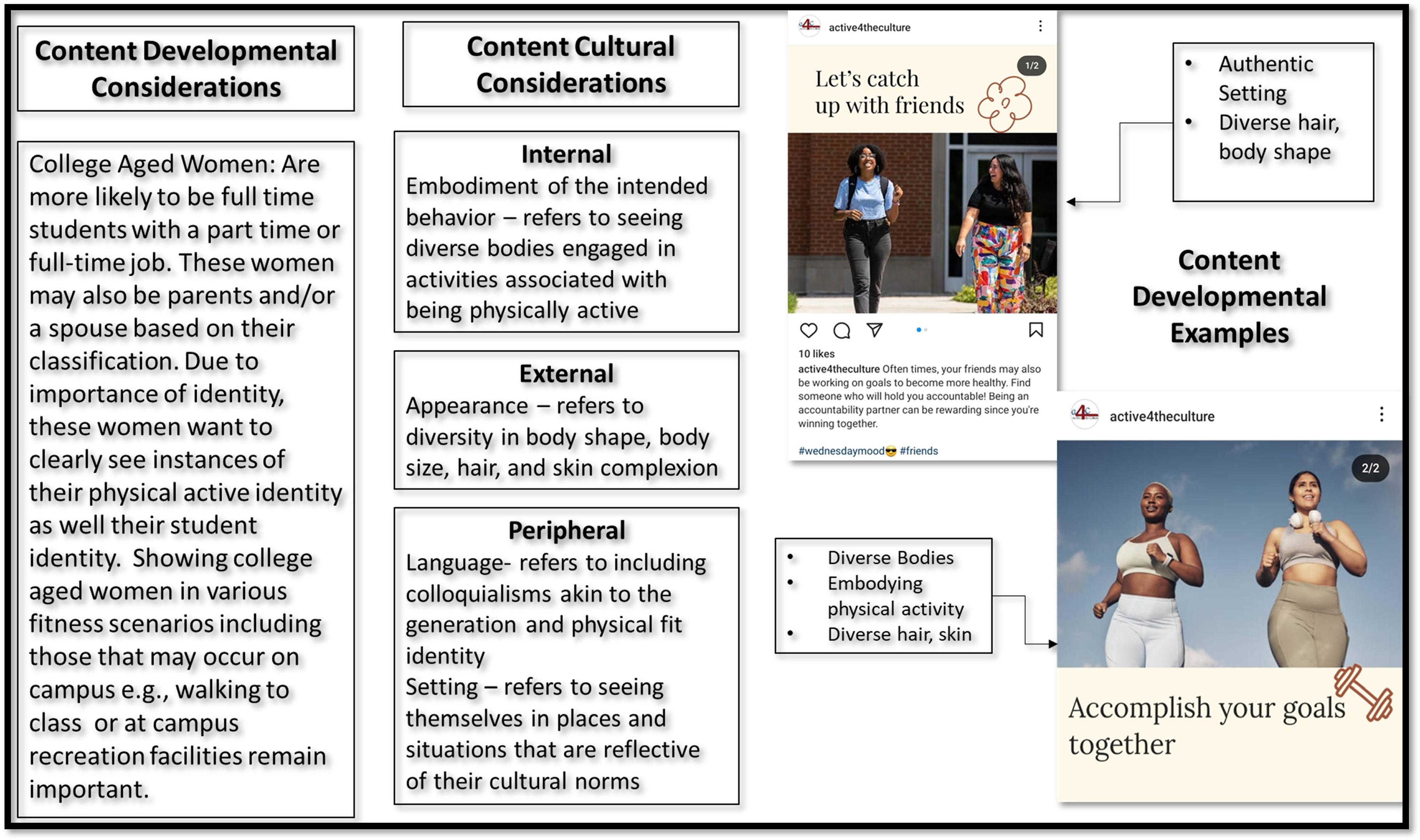
Model of cultural tailoring for BLCW health-related content.
Practical applications
The advent of social media has changed the way individuals, particularly young adults, search and consume information. Black and Latina women are a prominent (in terms of size and time spent) group of users of social media, especially Instagram. As such, social media content aimed to influence health behavior must be inclusive of the diversity of its intended population. BLCW gain a sense of belonging and attachment with online content that centers concepts unique to their experience's diversity in skin tone, hair type, language, and even settings. These authentic settings incorporate BLCW as physically active individuals—a depiction they believed typically associated with petite white women—as well as students which are profoundly a part of their embodied identities. More importantly, this population is still at an impressionable age, which not only makes them pliable but also provides helpful information for potential changemakers as they make crucial health decisions in their households and families. Thus, these findings should be considered as a basis from which universities, particularly those that are minority serving, tailor messaging, advertising, and student-oriented initiatives. As higher education institutions begin to truly center student physical and mental health in their operations, the voices of historically marginalized groups, such as BLCW, must be included if this goal of student well-being is to be achieved.
Considering content that is aimed to increase health behaviors, the continued utilization of archetypical images of healthy individuals should no longer dominate these campaigns. On multiple occasions, different participants mentioned that women who are curvier in body shape should also be represented in social media content as they, too, engage in physically active lifestyles. This negates the overused image of petite white women as health change agents and centers women of color, diverse body types, and those who may not typically follow traditional paths of physical activity engagement. Even with the steady dissolution of university-required health-related courses, 47 Carter-Francique48 found that Black college women report less use of campus recreation facilities, but still meet national physical activity recommendations. This further supports the notion that catch-all imagery that depicts fitness engagement in gyms may not appeal to individuals who find other means for physical activity (e.g., walking in groups, dancing, or outdoor fitness engagement).
Healthy bodies remain an important part of social media, with many pages promoting fitness and healthy eating. However, popular press has noted how some health inspired content such #FITSPIRATION (Jerónimo and Carraça49) or terms such as ‘summer body and ‘unbig your back50may cause a negative perception on fitness due to unrealistic goals and toxic body standards rooted in fatphobia. Thus, content that is absent of cultural tailoring embodying both the deep and surface perspectives may result in unintended or the opposite outcomes. As indicated previously, language serves an important role in culturally related health content and should be considered carefully.
Limitations
As with any study, limitations exist. First, the sample size is small relative to the population, therefore, findings may not be generalizable. Next, participant selection was constrained to two universities limiting the type and amount of feedback on the curated content. Additionally, there were considerably more Black participants than Latina which may provide a limited perspective of the latter group. Finally, only college women were considered in the sample which negates the perspectives of non-college women who are plagued with the same health disparities. Future research should use a national sample of Black and Latina women to verify our findings on health-related cultural content.
Conclusion
Although somewhat preventable, health disparities such as obesity, hypertension, and diabetes still remain alarmingly prevalent amongst women in Black and Brown communities. This warrants a unique approach to disseminating health-related information to these groups. The ubiquity of social media creates a mechanism to address not only the need for health-related information, but information grounded in the identities of Black and Brown women. Although prior literature has addressed cultural relevancy to physical activity programming, none has focused exclusively on the internal, external, and peripheral considerations when developing content for BLCW. More notably, BLCW desire to be integrally represented in health-oriented and fitness-related social media content, given their real-life involvement in those pursuits. Although this research primarily focused on promoting physical activity engagement, the insight into content development is transferrable to other areas such as sex education, vaccination hesitancy mitigation, and maternal health improvement, all of which remain salient concerns within these communities. These approaches should not be limited to the priority population in this study but considered as the undergirding paradigm in health promotion.
Supplemental Material
sj-docx-1-dhj-10.1177_20552076241241919 - Supplemental material for #Wematter: Creating culturally tailored health promotion content for Black and Latina college women on Instagram
Supplemental material, sj-docx-1-dhj-10.1177_20552076241241919 for #Wematter: Creating culturally tailored health promotion content for Black and Latina college women on Instagram by Olivia Johnson and Desmond W. Delk in DIGITAL HEALTH
Supplemental Material
sj-docx-2-dhj-10.1177_20552076241241919 - Supplemental material for #Wematter: Creating culturally tailored health promotion content for Black and Latina college women on Instagram
Supplemental material, sj-docx-2-dhj-10.1177_20552076241241919 for #Wematter: Creating culturally tailored health promotion content for Black and Latina college women on Instagram by Olivia Johnson and Desmond W. Delk in DIGITAL HEALTH
Footnotes
Acknowledgements
The researchers would like to acknowledge all the student researchers who worked on this study.
Contributorship
OJ and DD researched literature and conceived the study. Both were involved in protocol development, gaining ethical approval, participant recruitment, data analysis, collection. OJ wrote the first half of the manuscript. DD wrote the second half of the manuscript. All authors reviewed and edited the manuscript and approved the final version of the manuscript
Declaration of conflicting interests
The authors declared no potential conflicts of interest with respect to the research, authorship, and/or publication of this article.
Ethical approval
The ethics committee from the University of Houston and Langston University approved this study (number:4513). All participants provided written informed consent prior to taking part in the study.
Funding
This work was supported by the Facebook/Meta Foundation [submission 1712783672251885].
Facebook,
Guarantor
OJ

Supplemental material
Supplemental material for this article is available online.
References
Supplementary Material
Please find the following supplemental material available below.
For Open Access articles published under a Creative Commons License, all supplemental material carries the same license as the article it is associated with.
For non-Open Access articles published, all supplemental material carries a non-exclusive license, and permission requests for re-use of supplemental material or any part of supplemental material shall be sent directly to the copyright owner as specified in the copyright notice associated with the article.
