



Abstract
Objectives
The Healthy China 2030 strategy outlines the government's plans for healthcare reform, emphasizing the need for increased awareness about infectious diseases to prevent and fight future infections. Information campaigns can be used as a medium to raise awareness and encourage citizens’ willingness to protect themselves against diseases, such as COVID-19. Extant studies have found that individual health behavior decision-making can be changed under different information frames. However, limited evidence is available about emerging infectious diseases. Based on the Prospect Theory and Theory of Planned Behavior, the impact of information frames on self-protective behavior—vaccination against COVID-19 is investigated in this study.
Methods
A 2(gain/loss frame)*2(factual/emotional frame) intergroup experimental design was designed to explore the effects of different information frames. 228 valid participants in China were recruited and the experiment was performed online.
Results
First, the gain frame was more effective in promoting public self-protection behavior than the loss frame under information frame intervention. Compared with the factual frame, the emotional frame is more effective in reducing individual risk perception. Second, perceptual behavior control has masking effects on self-protection behavior under the influence of the gain/loss frame. Third, age, subjective norms, attitudes, and the gain frame, have predictive effects on self-protection behavior.
Conclusions
This study provides empirical evidence on the impact of information framing interventions on public self-protection behavior during the COVID-19 pandemic and provides important practical implications for public administrators and media practitioners.
Introduction
Scientists have developed vaccines that protect humans against life-threatening infectious diseases for quite a long time. The human immune system fights exposure to harmful bacteria or viruses while vaccines stimulate long-lasting antibodies that develop immunity. 1 The COVID-19 pandemic spurred innovation in vaccine development, such as the Oxford AstraZeneca vaccine and BioNTech Pfizer vaccine, which help protect individuals from infection. By February 2021, 1 year and 1 month after the first identification of COVID-19, seven different coronavirus vaccines were developed and being used around the world. 2 Although the World Health Organization (WHO) and national governments have actively publicized their plans and guidance to fight the disease and raise awareness about the importance to obtain the vaccine, the public are still hesitant. A survey about the acceptance of coronavirus vaccines, conducted in 19 countries in June 2020, explored the willingness of citizens to receive the vaccine and found that the uptake in most countries was far behind the requirements. 3 Vaccine safety concerns, anti-vaccine messaging on social media, 4 trust in governments, 3 personal motivation and psychological factors, 5 were found to increase citizens’ hesitation and willingness to receive the vaccine.
Information education, publicity and intervention are effective methods for combating citizens’ hesitation to receive the vaccine. 6 In the health communication field, researchers have proposed solutions to resolve vaccine hesitation. For example, personalized messages and the sharing of widely trusted sources have proven effective. 7 Combining human-centered, first-person expressions and emotional language, has shown to be an effective vaccine communication strategy. 8 In this sense, clear and widely available vaccine communication strategies can help governments provide timely information.
Information framing refers to the fact that different forms of information can affect decision makers’ preferences. 9 This relates to time, gain, loss, factual, emotional and composite frames, and they have been demonstrated to significantly impact individual behavioral decision making in public health domain. 10 However, their effectiveness depends on specific application scenarios. Although research on information framing in the public health domain is mature, little is known about information framing for emerging infectious diseases, especially in the context of COVID-19 pandemic. This study, therefore, explores how information framing affect individual risk perception and self-protective behavior during the pandemic. Specifically, the influencing mechanism of information frames in COVID-19 information communication is investigated. This study extends existing information-framing research related to emerging infectious diseases and contributes to the health information dissemination during post-pandemic.
Theoretical background and hypotheses development
Self-protective behaviors and vaccination intention
Protective behaviors are essential to reduce the harm or risk. Protective behaviors can be divided into two categories in general, including protecting others and self-protective. 11 Although it is still impossible to optimally model the relationship between human behaviors and the spread of infectious diseases, individual self-protective behavior is of great significance for the prevention and control of epidemic diseases. 12 Self-protective behaviors mainly include personal hygiene maintaining, 13 social distancing maintaining, masks using, healthcare advice seeking, 11 vaccination 14 and social distancing. 12
Before the COVID-19 outbreak, there were few studies on emerging infectious diseases and individual behaviors toward vaccination in China. One study investigated the public views on vaccination and related variables during the H1N1 epidemic, and found that public perception of disease severity decreased significantly in the later stage of the pandemic, and there was no correlation between disease susceptibility and vaccination. 15 In the early stage of outbreak of the Ebola, one study investigated the views of Americans on vaccination and their fear of Ebola virus, and found that the willingness to vaccination was related to fear, trust in the government and the predicted exposure to the disease. 14
After the outbreak of COVID-19, research on self-protective behaviors has gradually attracted increasing scholarly attention, but most of the existing research focused on the early stage of the epidemic and focused on those self-protective behaviors with the least efforts, such as hand washing, masks wearing and travel restricting.16,17 The exploration on vaccination is still in its infancy.
Influencing factors of self-protective behaviors
Existing research identified many factors that affect self-protective behaviors, and most of them are from the perspective of psychology. For example, fear, trust in the government's ability to control the disease and expected exposure to the disease are positively related to individual’s willingness to vaccinate against Ebola virus. 14 A study about avian influenza on poultry farmers in China found that the perceived risk, perceived vulnerability, self-efficacy and response efficacy were related to farmers’ self-protective behavior. 13 Those who had greater exposure to live poultry believed they were able to fight off the virus and were therefore less likely to adopt self-protective behaviors. 13 Public compliance is related to adopting self-protective behaviors. Specifically, although people may be less supportive of wearing masks and staying at home, they would be obeying handwashing, using antiseptic gels, and accepting vaccinations generally. This may attribute to their cultural background. 11
During COVID-19, a large number of researchers have explored the influencing factors of self-protective behaviors. The main influencing factors include sociodemographic factors, psychological characteristics and information characteristics. For sociodemographic factors, people's income, form of office and income loss would affect their willingness of adopting self-protective behaviors. 16 While public personal characteristics such as smoking, work status and trust in the government could affect their willingness of adopting self-protective behaviors. 17 For psychological characteristics, the attitudes, subjective norms and perceived behavioral control are highly related to self-protective behaviors (e.g. handwashing and isolation), and perceptive risk would have an impact on willingness of isolation. 18 Perceived threat and response of negative emotions are important predictors of self-protective behavior, and perceptive risk may mediate the impact of emotional response on self-protective behavior. 19 For the influence of media reports/information dissemination, the credibility of information is related to the compliance of self-protective behaviors. 20 While the audiences of high-quality news media have the highest willingness to protect themselves. 21
Information framing
Extant research into information framing has proven that how information is expressed can change decision makers’ preferences. 9 Information framing is split into risk selection frame, target frame and feature frame. 22 The target frame (i.e. gain/loss frame, narrative frame, time frame and composite frames) is widely employed in public health domain. The effectiveness of gain/loss frame, time frame (i.e. day/year and present/future), narrative frame (i.e. first person/third person, factual/emotional, and speech/schema) and composite frames, on individual's health behavior changes are different.23,24 Moreover, in different contexts, such as health behavior promotion, disease prevention and treatment, information receivers use different risk assessment of health behaviors and the impact of frames vary.25–27 The motivation of information receivers and individual characteristics also make the influence of frames different. 28 In addition, future expectancy, emotions, experience self-efficacy, information processing, behavioral motivation, health beliefs, health literacy and the degree of threat, are always used as moderators and mediators.29,30
Hypotheses development
Vaccination intention and theory of planned behavior
The Theory of Planned Behavior is widely used to predict health behaviors, such as preventative behavior toward severe acute respiratory syndrome (SARS) and public willingness to vaccinate against the influenza A (H1N1) virus.31,32 In the context of COVID-19 pandemic, prior studies have found that subjective norms, perceived behavior control, attitude and intention of prevention behavior, are closely related to disease prevention behavior.
33
However, perceived behavioral control and attitude have a greater influence on physical exercise intention compared with subjective norms based on the theory of planned behavior.
34
They also demonstrated that perceived behavioral control, attitude and subjective norms, are important mediating factors in the relationship between self-motivation/anxiety and willingness to exercise.
34
Therefore, we propose the following hypotheses:
Demographic variables were also demonstrated to correlate with vaccination intentions and showed conflicting influences in prior studies.
35
Therefore, we include individual's demographic variables and try to explore their influences. Accordingly, the following hypotheses are proposed:
Similarly, factors related to risk perception, such as perceived severity and perceived vulnerability, have been included in epidemic studies.
33
In general, the higher the level of risk perception, the stronger individual's behavioral willingness to prevent infection from epidemic diseases.
36
However, some studies found opposite results. As risk perception is always related to anxiety, it negatively predicts individual's behavioral willingness for self-protection.
37
Hence, we propose the following hypothesis:
Vaccination intention and information framing
Gain and loss frames
Information framing refers to changes in decision-makers’ preferences based on how information is presented. The gain/loss frame is the most frequently used information frame. When decisions are described in terms of potential returns (i.e. the gain frame), individuals tend to avoid risks. Conversely, when decisions are described in terms of potential losses (i.e. the loss frame), individuals tend to take risks. 9 In this study, we use information framing to explain individual's self-protective behavior.
Self-protective behaviors can be divided into two categories based on their impact on health, that is, negative behaviors correcting and positive behaviors adopting. The former means to correct the behaviors that may bring risk to one's health (e.g. smoking and drinking) while the latter means to promote the behaviors that may bring benefits to one's health (e.g. physical exercise and eating a healthy diet). During the COVID-19 pandemic, the WHO released guidelines containing various negative behaviors correcting and positive behaviors adapting, including staying away from epidemic areas, avoiding crowded places, wearing masks, cleaning and frequent disinfecting. 1
The information frames, in this context, create different effects under different decision-making scenarios in self-protective behavior studies. Information with the gain frame can better stimulate individuals’ behavioral willingness to self-protect against COVID-19.
38
The loss frame is more convincing and can promote individuals’ self-protective behavioral intentions effectively for negative behavior restraining, while the gain frame has greater effect and may positively influence individuals’ behavioral willingness to self-protection for positive behavior promoting.
10
In this study, as vaccination is viewed as a positive behavior, the gain frame is more effective in promoting the behavioral intention of individual self-protection compared with the loss frame. Hence, we propose the following hypothesis,
In the COVID-19 context, many studies have confirmed the positive effect of risk perception on behavioral intention.
36
However, the effect of the gain/loss frame on risk perception is not yet clear. In existing studies, the results of the influence of the gain/loss frame on individuals’ risk perception are different. Compared with the loss frame, the gain frame information is associated with lower risk perception by focusing on smokers.
23
However, the loss of frame information may reduce individuals’ risk perception and behavioral intention.
39
Some studies have also confirmed that risk perception acts as the mediating factor for the relationships between the gain/loss frame and health behavioral intention.
35
In our context, as vaccination is a positive behavior, we propose the following hypotheses:
Extant research on health behavior change has mainly focused on the influence of information framing on the predictors of behavioral intention based on the theory of planned behavior. Studies have found that gain frame induces higher subjective norms, but has no obvious influence on attitude and perceived behavioral control compared with loss frame.
40
This leads to the following research hypothesis:
Prior studies have also found significant effects of gain/loss frame on attitude. For example, loss frame information led to a more positive attitude in the context of human papillomavirus (HPV) vaccine uptake and a stronger willingness to receive the vaccine.
41
The frames had a significant impact on both subjective norms and perceived behavioral control.
42
This leads to the following research hypotheses:
In addition, some scholars have confirmed that subjective norms, attitudes, and perceived behavioral control, are the mediating factors of the influence of health interventions on behavior change. For example, Jemmott et al.
43
found that attitudes and subjective norms were the mediating factors of self-reporting on improving exercise intention. In the health field, information-framing interventions are subordinate to health interventions. Therefore, this paper takes subjective norms, attitudes and perceived behavioral control as the mediating factors which leads to the following hypotheses:
Factual and emotional frames
In recent years, the narrative frame has become an important research topic related to information framing. In the field of health communication, the factual statement is based on rational information that is logically repeatable and verifiable while the narrative description is based on perceptual information that is story-related and emotional.
44
The narrative is more likely to trigger readers’ emotions, and impact risk selection, risk perception and risk prevention.
45
Among the studies on self-protective behavior and narrative frame, the factual/emotional frame is the most commonly used.23,46 Based on previous studies, we propose the following hypotheses:
Composite frames
Many researchers have integrated narrative frame, time frame and visual frame, to form a composite frame based on gain/loss frame, to study the influence of composite frame on behavioral intention.10,47 Recent studies have revealed that loss-factual frame and gain-narrative frame information are more effective in stimulating HPV vaccination intentions,
10
and the interaction between the two frames has an impact on perceived severity. Similarly, the gain-narrative frame improved smoking risk perception.
47
This paper focuses on the composite frame effect of the gain/loss frame and the factual/emotional frame. Therefore, we propose the following hypotheses:
Methods
Experiment introduction
This study adopted a 2 (gain/loss frame)*2(factual/emotional frame) experimental design. The experiment included three phrases. In the first phase, the participants recruited received an introductory session about the experimental procedures, followed by a pre-test of their willingness to vaccinate against COVID-19. In the second phase, participants were divided into four groups and randomly assigned to one of the four types of information frame reading materials. Upon finishing the reading material, each participant was asked to answer several manipulations check questions. In the third phase, the participants were subjected to a post-test session, answering a series of questions related to risk perception, attitude and subjective norms toward COVID-19 and vaccination, as well as their demographic information.
This research was completed using Credamo, a professional data collection platform with more than 2 million participants from over 1800 universities globally. The Credamo platform has a strict screening mechanism to ensure questionnaire quality and to verify the official qualifications of participants to ensure data quality. Our experiment strictly followed not only the requirement of the platform, but also applied several restrictions. For example, the participants could not respond to the questionnaire twice using the same IP address. Participants were encouraged to complete the online experiment and received monetary rewards on successful submission. The experiment lasted for three days from February 25 to February 28, 2021.
Participants
Since China has fully vaccinated some groups with defined occupations, we limited the participants of the experiment to college students aged over 18 years old and residing in China's mainland. The reasons for the choice of college students as participants are that first, considering the availability of the experiment, many previous experiment studies had college students as their participants to explain their behaviors and propose corresponding strategies for the overall populations. Second, China has a high proportion of citizens holding college or higher degree, over 15%, and their figure is still increasing. We believe that college students are critical in the vaccine campaign. College students are always asked by their parents or grandparents for seeking health information online. Considering the low vaccination rate in the elderly, the college students can be an important persuader in their families to encourage their parents and grandparents to vaccine uptake. Focused on the first step in the early vaccine, we believe that if the college student uptake the vaccine first, and their family members are more likely to vaccine as well.
The experiment was completed in Chinese language only with participants being expected to have the ability to listen, speak, read and write in Chinese. We estimated the number of participants using the G*Power 3 software,46,48 which verified that the experiment must have at least 210 participants.
Experimental materials
To increase the credibility of the experimental materials and to provide a reader-friendly environment, the experimental materials were demonstrated via WeChat, one of the most popular social media platforms in China. The participants were informed of the source of reading materials. The reading materials were taken from the Technical Guidelines for New Coronavirus Vaccination released by the Chinese Center for Disease Control and Prevention. Since the original content was in the format of Question and Answer, which was not conducive to frame information processing, we changed the original information into an explanatory format and kept the textual meaning unchanged. Then, the information was further modified into four different frames. 23 Table 1 shows further details. It was necessary to make sure that the original information and the modified information had no difference in meaning. To make the emotional frame more reliable, the first paragraph of the reading material was modified into a short story about the COVID-19 vaccine uptake, while the number of words in each paragraph between different frames was kept roughly the same.
Demonstrations of the composite frames.

Variable measurement
This study has several variables including attitude, subjective norms, perceptual behavior control, willingness for self-protection behaviors—vaccination intention and risk perception. In addition, some questions were added concerning control variables and manipulation inspection.
Attitude. Attitude toward the COVID-19 vaccine uptake refers to an individual's overall evaluation of the COVID-19 vaccine uptake, including negative, positive and neutral dimensions. 49 We modified the measurement items suggested by Agarwal and Ajzen.49,50 Finally, five items were included to measure individual attitude, and a 5-point Likert scale was applied. The Cronbach's α of perceived behavioral control is 0.852 (CR = 0.846, AVE = 0.530).
Subjective norms. Subjective norms indicate the level of family members or friends who recognize the COVID-19 vaccination. 49 We modified the measurement items suggested by Agarwal and Ajzen.49,50 Finally, six items were included to measure subjective norms and a 5-point Likert scale was applied. The Cronbach's α of subjective norms is 0.885 (CR = 0.875, AVE = 0.547).
Perceived behavioral control. Perceived behavior control refers to individuals’ assessments of the difficulty of completing the COVID-19 vaccine uptake. 49 We modified the measurement items suggested by Agarwal and Ajzen49,50 and included two items to measure perceived behavioral control and the average value of the two items as the value of perceived behavioral control. A 5-point Likert scale was applied.
The willingness of self-protective behaviors—vaccination intention. In this study, the measurement of willingness to self-protective behaviors was limited to vaccination intention against COVID-19. We modified the measurement items suggested by Ajzen 50 and Zhang and Wang. 46 Finally, three items were used to measure vaccination intention. A 7-point Likert scale was applied. The Cronbach's α for pre- and post-intervention of vaccination intention is 0.842 (CR = 0.846, AVE = 0.647) and 0.835 (CR = 0.843, AVE = 0.641), respectively.
Risk perception. Risk perception refers to an individual's feeling about COVID-19, whether it is of high risk or low risk. 51 We modified the measurement items suggested by Juzhe Xi et al. 51 In total, nine items were used to measure risk perception. A 5-point Likert scale was applied. The Cronbach's α of risk perception is 0.870 (CR = 0.869, AVE = 0.489).
Control variables. On one side, control variables consisted of demographic variables, such as gender, age, educational level, health condition and whether or not people around the participant had received the COVID-19 vaccination. On the other hand, the initial willingness to vaccination and reading time was controlled.
Manipulation check. To evaluate the effectiveness of the gain/loss frame manipulation, participants were required to answer three questions on the materials they had read, such as whether the reading material emphasized the advantages of vaccination or disadvantages of not being vaccinated. Meanwhile, to evaluate the effectiveness of the factual/emotional frame manipulation, participants were required to answer three questions about the reading material, such as whether it was more of a factual description or a description with emotions. The manipulation check score was measured by the accumulation value of the six questions with one point for a correct answer. The manipulation check score demonstrates the participants’ understanding of the framed information.
Data analysis
For data analysis, we performed one-way analysis of variance (ANOVA) to test the level of manipulation, and a two-factor ANOVA to determine the impact of four types of information frames on the participants’ willingness to receive the COVID-19 vaccine. In addition, we conducted a mediation effect of risk perception, attitude, subjective norms and perceived behavioral control between information frames and willingness to COVID-19 vaccine using PROCESS (version 2.0, model = 4). 52
Results
Descriptive analysis
We recruited 281 participants, and 228 were valid, excluding those who had failed the manipulation check, understanding of the process or abnormal response time. All the participants were college students (males = 120, females = 108) with the majority being aged 21–23 years old (144, 63.1%). Many participants were in good health. Over half of the participants had heard of their family or friends receiving the COVID-19 vaccine. The participants covered a wide range of locations, including 27 provinces. Further details about the participants are presented in Tables 2 and 3 shows the independent variables.
Demographic variables.

Descriptive analysis of each dependent Variable

Note. PBC is Perceptual Behavior Control, the Sum loss frame is the average value of each dependent variable after the intervention of the loss frame, Sum gain frame is the average value of each dependent variable after the intervention of the income frame. ***Means p < 0.001.
Manipulation check
The one-way ANOVA analysis revealed that the score of the gain frame (M = 4.04, SD = 0.86) was significantly higher than the loss frame (M = 3.28, SD = 1.15), F(1226) = 31.810, p < 0.0001, η2 = 0.123. The score of the factual frame (M = 4.26, SD = 0.91) was significantly higher than the emotional frame (M = 3.06, SD = 0.89), F(1226) = 103.615, p < 0.001, η2= 0.314. This demonstrates that the manipulation of the independent variable factual/emotional frame and the gain/loss frame was effective.
Analysis of the effect of information frames
The impact of information frames on the willingness to receive the COVID-19 vaccine
We measured the changes in willingness to be vaccinated before and after each information frame intervention. A two-way ANOVA analysis of the difference between the willingness to be vaccinated was performed. In the main effect analysis, participants’ willingness to be vaccinated after the gain frame intervention was significantly higher than that of the loss frame, F(1224) = 4.367, p = 0.038, η2 = 0.019, while the factual/emotional frame exerted no significant effect on the willingness to be vaccinated, F(1224) = 0.001, p = 0.975. In the interaction analysis, the two had no significant effect on the willingness to get vaccinated, F(1224) = 0.079, p = 0.779. Thus, H2a was supported, while H3a and H4a were not supported. These results show that compared to the loss frame, the gain frame was more effective in stimulating individuals’ willingness to be vaccinated. Compared with the factual frame, the emotional frame had no significant impact on individuals’ willingness to receive the COVID-19 vaccine. In addition, the composite frame of the two did not have a significant impact on an individual's willingness to be vaccinated.
The impact of information frames on other dependent variables
Risk perception. Taking the gain/loss frame and the factual/emotional frame as independent variables, a two-way ANOVA analysis was performed for risk perception. Results found that the risk perception of the participants intervened by the emotional frame was significantly lower than those intervened by the factual frame, F(1224) = 5.087, p = 0.025, η2 = 0.022, while the gain/loss frame failed to exert an impact on risk perception, F(1224) = 0.833, p = 0.362. The interactive analysis of the two also had no significant impact on risk perception, F(1224) = 0.987, p = 0.322.
Perceived behavioral control. Taking the gain/loss frame and the factual/emotional frame as independent variables, a two-way ANOVA analysis was completed for perceived behavioral control. Results showed that the perceived behavioral control of the gain frame intervention was significantly lower than that of the loss frame, F(1224) = 5.374, p = 0.021, η2 = 0.023. Compared to the factual frame, the emotional frame had no significant effect on perceived behavioral control, F(1224) = 0.032, p = 0.859. The interaction analysis of the two did not show a significant effect on perceived behavioral control, F(1224) = 2.298, p = 0.131.
Attitude. Taking the gain/loss frame and the factual/emotional frame as independent variables, a two-way ANOVA analysis was performed for attitudes toward the COVID-19 vaccine uptake. Results showed that the information frames did not have any significant impact on individuals’ attitudes toward the COVID-19 vaccination. The gain/loss frame had no significant effect on attitude, F(1224) = 1.374, p = 0.242. The factual/emotional frame had no significant effect on attitude, F(1224) = 0.033, p = 0.857. The interactive analysis of the two did not show a significant effect on attitude, F(1224) = 0.659, p = 0.418.
Subjective norms. Taking the gain/loss frame and the factual/emotional frame as independent variables, a two-way ANOVA analysis was conducted for subjective norms. The information frames did not have any significant impact on individuals’ subjective norms. The gain/loss frame had no significant effect on subjective norms, F(1224) = 0.223, p = 0.638. The factual/emotional frame had no significant effect on subjective norms, F(1224) = 0.011, p = 0.915. The interactive analysis of the two had no significant influence on subjective norms, F(1224) = 0.146, p = 0.704.
Mediating effect analysis
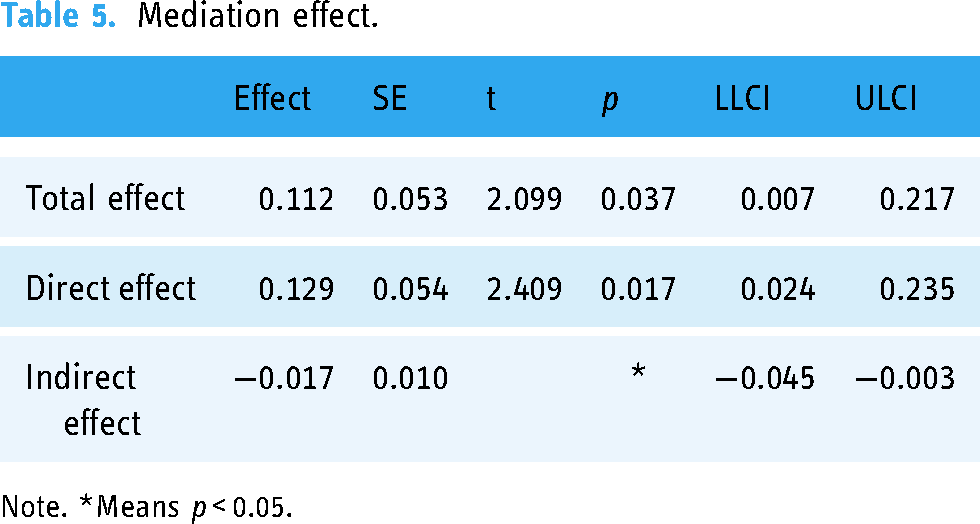
We used stepwise regression method to determine the causal relationship among independent variables, dependent variables and mediating variables, and then bootstrap method was used to test the indirect effects. 53 PROCESS (version 2.0, model 4) was used to verify the mediating effect. 52 For further analysis, we regarded the difference in willingness of vaccination before and after the intervention as the dependent variable, the gain/loss frame as the independent variable (treated as dummy variables, where gain frame = 1 and loss frame = 0), and perceived behavior control as an intermediary variable. The specific mediation model and mediation effect are presented in Tables 4 and 5.
Mediation model test.

Mediation effect.
Note. *Means p < 0.05.
Firstly, we checked whether the gain/loss frame affected the difference in willingness of vaccination. Table 4 revealed that information frames affected the changes in the willingness to receive vaccination. This means that compared with the information with the loss frame, the information with the gain frame is more effective in stimulating citizens’ willingness to receive COVID-19 vaccination.
Secondly, we examined the relationship between the information frame and perceived behavioral control, and whether perceived behavioral control was a predictor of willingness to receive the vaccination. Table 4 shows that the information frame was a predictor for perceived behavioral control. Compared with the gain frame, the loss frame intervention was more effective in stimulating participant's perceived behavioral control. However, perceived behavioral control was not an influencing factor in willingness to vaccinate (p = 0.084).
Since the direct influencing path was not significant as indicated, the bootstrap method was used to analyze the indirect effect. As shown in Table 5, the indirect effect of the information frame, mediated by perceived behavioral control on the willingness to receive vaccination, was significant. Meanwhile, the direct effect of the information frame on participants’ willingness to be vaccinated was significant. Since the indirect effect was in opposition to the direct effect, and the total effect was smaller than the direct effect, it was a suppression effect. The ratio of the indirect effect to the direct effect was |−0.017|/0.112 = 15.179%. Since the direct effect, indirect effect, and total effect were significant, there were other intermediaries in the influence mechanism of the information frame on the willingness to receive vaccination. Thus, H2g was supported.
In regards to other intermediary factors, due to the possibility of covert effect or complete intermediation, intermediary analysis was conducted for other dependent variables, but none of them were significant (indirect effect interval included 0). Therefore, H2h, H2i, H2c and H3c were not supported.
Discussion and suggestions
The impact of the gain/loss frame on self-protective behavior
This study demonstrates a positive effect in the change of willingness to vaccination in the gain frame group compared to that of the loss frame group which is consistent with prior research. 38 Vaccination intention is closely related to actively avoiding infection, which is the information propaganda method of the gain frame that individuals have generally accepted. In the cognitive dissonance theory, to ensure the coordination of cognition, we tend to reject news that is inconsistent with our attitudes and choose those that are consistent. Therefore, when individuals’ self-protective behavior intention is inconsistent with the behavior expressed by the information advocacy, the persuasive effect will be better than an information exchange strategy that is more consistent with individual's established thought. This can be further explained through prospect theory, and it shows that when the target behavior is risky, the loss frame is more motivating than the gain frame. When the target behavior is a low-risk behavior, the framing effect brought by the gain frame is stronger. 9 Therefore, for low-risk preventive behaviors, such as hand washing and social distancing, the gain frame is more motivating, while for disease detection and other behaviors that may identify potential risks, the loss frame information is more effective. 10 The vaccines involved in this study are limited to those used for COVID-19 vaccination, which is not sufficient to explain the frame effect. Because of the safety characteristics and uncertainties of vaccines, public psychologists may doubt the safety and efficacy of vaccines. Therefore, many studies conducted on vaccine behaviors also show the opposite frame effect. Bartels et al. 54 empirically found that when vaccine efficacy is relatively low (60%), that is when risk uncertainty is high, the loss frame is more effective. When vaccine efficacy is relatively high (90%), the gain frame is more significant. 54 Currently, most vaccines produced by the Sinopharm China Bio-Beijing Company are used in China. The protective effect of the vaccine is 79.34%, with the risk being relatively low and the vaccination result being relatively effective. Therefore, in the case of low vaccine risk, the gain frame is more effective.
These findings are inconsistent with prior research into the willingness of Chinese adults to receive the COVID-19 vaccine, and previous studies found no framing effects. 55 This may attribute to the differences in investigation time. Chen et al. 55 conducted their investigation in May 2020, only two months after the COVID-19 outbreak in China. At the time, Chinese citizens were in a state of defensiveness and the baseline willingness to vaccinate was very high. It is deemed hard to improve the already high willingness to vaccinate and thus the information frame is difficult to play a role. Due to China's effective prevention measures, Chinese citizens’ psychological state is stabilized compared with last year. With the availability of COVID-19 vaccines, citizens’ willingness to vaccinate is likely to change. Meanwhile, our results show that most Chinese citizens are increasingly willing to protect themselves after the intervention, denoting the necessity of deploying different health educational strategies during different stages of the pandemic.
The gain/loss frame has not yet had any impact on individual's perception of risk, which is inconsistent with prior research. 38 This may attribute to the time and location of the experiment. Their experiment was conducted in April 2020 in Colombia, while our study was conducted in February 2021 in China. For the former, the research period is considered the outbreak stage, while in our study, China has already achieved great success in the prevention and control of the disease, and the severity of the pandemic is likely to have an impact on risk perception. The current situation in China is under control and considered relatively low risk, while the risk perception level is also low. The data in our study shows that citizens’ risk perception of COVID-19 is at an intermediate level.
Many studies believe that the gain/loss frame influences behavioral willingness through the mediator of risk perception. However, this study empirically found that the gain/loss frame had no effect on risk perception, and that risk perception and its components (i.e. emotions, Cognitive judgment, and unusual severity) did not have any effect on behavioral intentions. This is similar to prior research which investigated the impact of risk perception on preventive behavior two years after the SARS outbreak, 56 but no association between the two was found. In addition, although risk perception is an important influencing factor of behavioral willingness, it is by no means the only pathway. 57 Subjective norms, attitudes, perceived behavioral control, and other factors may also affect the willingness to self-protective behavior. 50 Our study indicates that the gain/emotional frame might influence behavior intentions through other influencing paths.
The impact of factual/emotional frames on risk perception
In the field of health behavior change, many studies on narrative communication and risk perception have focused on the topic of vaccination, 46 cancer communication, and other aspects, but have yet to reach a unified conclusion. This study extends current understanding by providing the context of a major public health emergency and found that the risk perception of the group reading the emotional frame was significantly lower than that of the group reading the factual frame, indicating that the factual/emotional frame has a significant impact on risk perception. This relates to the research of de Wit et al. (2008) which concluded that bad emotions must be avoided due to defensive reactions in conversations about healthy behavior. Narrative description can avoid such reactions as well as risk perception.
However, we did not find a similar effect of factual/emotional frame on vaccination intention. This is consistent with the finding of Zhang and Wang (2019). Since the content of the narrative frame is based on a positive description of vaccination, rather than the opposite, vaccination is optional for citizens. Therefore, the factual/emotional frame has no specific effect on behavior intention. Meanwhile, in a meta-analysis on how narratives change behavioral willingness, education level was seen to potentially affect the effectiveness of narratives. 58 In our study, since all the participants were college students with relatively high education backgrounds, the factual/emotional frame was difficult to play a role.
The masking effect of perceived behavioral control
This research introduced the predictive factors of behavioral willingness based on the Theory of Planned Behavior into the information frame, and thus theoretically expanded the Theory of Information Frame. We found that the perceived behavioral control with the loss frame intervention was significantly higher than that of the gain frame intervention and that the perceived behavioral control was an intermediary factor of the gain/loss frame affecting citizens’ vaccination intention. However, we did not find a similar effect of the gain/loss frame on attitudes and subjective norms.
Perceived behavioral control is the level of difficulty perceived by an individual to perform a certain behavior. It consists of two aspects, self-efficacy and controllability, and the two are closely related. 50 Although perceived behavioral control seldom appears in research on information frames, self-efficacy is an important moderating variable and mediating variable 10 while self-efficacy is a manifestation of the performance of perceived behavioral control.
Compared with the gain frame, the information with the loss frame is a manifestation of fear appeal. For individuals with high self-efficacy, the loss frame is more effective in some situations. 59 In our study, the level of perceived behavioral control of participants in each group is relatively high, so the loss frame may play a role. In the theory of the Extended Parallel Process Model, which explains why fear appeals fail, Witte (1992) believes that the persuasion of fear appeal information has two processes, one of a danger control process and the other of a fear control process. When the information triggers an individual to perceive a strong threat or severity, an effectiveness evaluation is carried out. If the effectiveness is strong, the protective motivation is activated, and the individual accepts the information. If the effectiveness is weak, it will stimulate fear, activate defensive motivation, and eventually, the individual will reject the information. Combining the findings of the positive effect of perceived behavioral control on behavior willingness, this study found that the perceived behavioral control of the loss frame group was significantly higher than that of the gain frame group intervened by the loss frame information, which activated their protective motivation and increased vaccination intention. In addition, this influencing pathway covers up the influence of the gain frame on the vaccination intention. Some researchers drew different conclusions; for example, Latimer-Cheung et al. (2012) found that self-efficacy is an intermediary factor in the gain/loss frame that affects the willingness to quit smoking. One is likely to increase their self-efficacy and thus change their behavior when the information frame matches their expectations. This study found that there are other intermediary factors in the influencing mechanism of the gain/loss frame on vaccination intention. This implies that the gain/loss frame may affect vaccination intention through different influencing pathways.
Influencing factors of self-protective behavior
In our research, we found relationships between some demographic variables and vaccination intention. Gender might have an impact on vaccination intention, but the impact was relatively weak, and when other variables were added, the impact no longer existed. Meanwhile, health conditions played no role in behavioral changes. These findings are consistent with the study of Papageorge et al. (2021). However, they found that some specific health-related symptoms are related to vaccination intention, such as allergies and heart disease. All the participants included in this study were college students with relatively good health conditions, and their health concern is comparatively lower than other age groups. Future studies can consider adding specific health-related symptoms as independent variables for further analysis.
In the early stage of the pandemic, researchers found a significant impact on the willingness to self-protective behavior, while interpersonal communication was found to be key to learning the experiences of others. In fact, from the outbreak of COVID-19 to the good control stage, COVID-19 has always been an important topic of interpersonal communication. Nazione et al. 60 found that interpersonal communication can explain a small part of the variation in perceived severity. In addition, perceived severity is an influencing factor of self-protective behavior, but the effect of interpersonal communication on self-protective behavior has not yet been discovered. This study provides empirical evidence for the influence of interpersonal communication on the willingness to self-protective behavior, but this effect disappeared with the addition of other factors. This could be the reason that the influence of interpersonal communication on the willingness to self-protective behavior is relatively weak compared to other influences. 61
Age variation may also have a predictive effect on citizens’ willingness to protect themselves. This research found that the older the participant, the stronger the willingness to protect themselves. This is consistent with the findings of Xu et al. 62 who found that middle-aged people play the role of breadwinner and are more likely to protect themselves through various methods of self-protection. In this study, although the participants were college students, relatively older students were observed to be more likely to get opportunities for social practice, but this also means that they are more likely to be exposed to potential viruses and their willingness to protect themselves may be stronger.
Our research explored the predictability of subjective norms, attitudes, and perceived behavior control, based on the Theory of Planned Behavior for the willingness of self-protective behavior. We found that subjective norms and attitudes have predictive effects on self-protection behavior, denoting that the greater the pressure that individuals feel from social norms on self-protection behavior, the stronger their willingness to self-protect. Similarly, the more positive one's attitude, the stronger the willingness to self-protective behavior. Subjective norms had a relatively large contribution rate to the overall model and played an important role. The predictive effect of the variable attitude was relatively weak. However, the predictive effect of perceived behavioral control on behavior intention was not found, which was consistent with the findings of Cheng and Ng. 31 The latter study explored the predictability of factors based on the theory of planned behavior for SARS prevention behavior two years after the outbreak with some Chinese participants.
Subjective norms are affected by normative beliefs. Normative beliefs refer to an individual's expectations of society to perform certain behaviors. 63 With the high contagious rates of COVID-19, failure to comply with corresponding preventive behaviors will not only increase one's health risks but also bring risks to others in society. Compared with other diseases, society expresses greater pressure on self-protective behaviors related to COVID-19, and various countries have issued corresponding laws to restrict public behaviors. Although vaccination is not mandatory, under the propaganda of medical experts, the government and social media, citizens perceive social pressure to be relatively high. The effectiveness of subjective norm prediction is relatively high, and in studies in many countries during the pandemic, subjective norms have shown strong predictability on self-protective behaviors.64,65
In many studies, compared with the strong predictability of subjective norms, the predictive effects of attitudes on self-protective behavior are found to be inconsistent in the context of the COVID-19 pandemic. Our results complied with previous findings, for example, attitude is a predictor of self-protective behavior. 64 However, in some studies, attitudes did not have a predictive effect on self-protective behavior, 65 which may be related to the time and location of the experiment. When the experiment time and place are similar, the predictive effect of attitude on self-protective behavior willingness is likely to be the same. For example, Si et al. 66 explored the effectiveness of the theory of planned behavior in the post-epidemic era and predicted the behavior of wearing masks. The experimental time, participants, and the experimental location of the study were quite similar to ours.
Conclusion
The Healthy China Action Plan (2019–2030) established that it is necessary to attach great importance to the publicity of infectious diseases so that citizens can improve their understanding and knowledge about infectious disease prevention and control, strengthen their physical fitness and prevent infectious diseases, especially in the face of sudden infectious diseases, such as COVID-19. Due to its uncertainty and relevance, the epidemic situation changes rapidly, with citizens not possessing the corresponding knowledge reserves and their self-protection awareness being weak. It is a relatively effective and efficient model to promote the willingness of citizens to protect themselves through information propaganda.
In the context of COVID-19, based on prospect theory and planned behavior theory, this study constructs a theoretical model of information framing for public self-protection behavior and analyzes information through online experimental methods. We found the mechanism for the influence of information framing on public self-protection behavior. The main research conclusions are as follows:
First, this study provides empirical evidence on the impact of the information framing intervention on public self-protection behavior during the COVID-19 pandemic. The gain frame was found to be more effective in promoting public self-protection behavior than the loss frame when citizens accept information frame intervention. Compared with the factual frame, the emotional frame is more effective in reducing citizens’ risk perception.
Second, this study suggests that perceptual behavior control has masking effects on self-protection behavior during the pandemic based on the influence of the gain/loss frame. The perceptual behavior control of the subjects after the loss frame intervention was significantly higher than that of the gain frame intervention subjects, and the perceptual behavior control is one of the intermediary factors of the gain/loss frame affecting citizens’ self-protection behavior.
Third, this study found that age, subjective norms, attitudes and gain frame, have predictive effects on self-protection behavior. Gender and the experiences of others may also act as predictors of self-protection behavior.
This research proposes specific information-framing application strategies and information content strategies based on the theory of planned behavior and provides practical suggestions for public managers and media practitioners.
Although several studies have examined the role of information framing on healthy behaviors, research based on public health emergencies is still rare, especially related to the COVID-19 pandemic. This study is among the first to explore the impacts of information framing on self-protection behavior in the Chinese context. We take the COVID-19 vaccine uptake as an example to test the effectiveness of the frame effect during the pandemic. Combined with prospect theory and planned behavior theory, the specific mechanism of information framing affecting self-protection behavior has been explored. This study contributes to information framing and planned behavior theory, and provides a new theoretical perspective for follow-up information frame studies.
Moreover, this study has found the masking effects of perceptual behavior control, which may prove that the mechanism of loss frame for self-protection behavior is based on the extended parallel model theory of fear appeals. We also tested the predictability of planned behavior theory for the behavior of receiving COVID-19 vaccines.
Finally, this study guides the information dissemination of the health sector in the post-pandemic era and supplements existing research on the information framing of emerging infectious diseases.
This study has several limitations. First, the experiment participants were college students, and the result may not well reflect all the population during the pandemic. Future studies can include participants with more variation, for example, age, occupations and countries. Second, the behaviors featured were correlate to COVID-19 vaccination. Due to the heterogeneity of different self-protection behaviors, the applicability of other behavioral types needs further discussion. Third, our study is cross-sectional in nature, and we only explored the willingness of self-protection behaviors. Future studies can validate those effects with panel data and measure real-world self-protective behaviors as the outcome variable.
Footnotes
Acknowledgments
The authors would like to acknowledge and thank participants for their time and contribution to this study.
Contributorship
All authors were involved in gaining ethical approval, data collection and data analysis, and writing the manuscript. All authors reviewed and edited the manuscript and approved the final version of the manuscript.
Data Availability
The data that support the findings of this study are available on request from the corresponding author.
Declaration of conflicting interests
The authors declared no potential conflicts of interest with respect to the research, authorship, and/or publication of this article.
Ethical approval
All procedures performed in studies involving human participants were by the ethical standards of the institutional review board (Reference number: M201978313).
Funding
The authors disclosed receipt of the following financial support for the research, authorship, and/or publication of this article: This work was supported by the National Natural Science Foundation of China (Nos. 72104087, 72371111, 72001087).
Guarantor
WZ.
Informed Consent
Informed consent was obtained from all individual participants included in the study.
