




Abstract
Objective
Activity trackers appear cost-effective and acceptable intervention tools for promoting physical activity among older adults, particularly in the short-term. However, long-term studies focused on participants’ experiences continue to be scarce. This study evaluated participants’ experiences of a 12-month activity tracker-driven physical activity intervention.
Methods
Participants’ experiences were assessed qualitatively using open-ended questionnaire items (n = 113) and semi-structured interviews conducted after the 12-month intervention (n = 27). Quantitative items assessed the perceived ease-of-use and usefulness of the activity tracker during the intervention. Qualitative data was analyzed using thematic analysis and Wilcoxon signed-rank tests were used to examine changes in the perceived ease-of-use and usefulness over time.
Results
The 113 participants completing the 12-month intervention were on average 65.2 (SD 1.0) years old and 81.4% women with 92.3% providing activity tracker data on at least 2 weeks per each intervention month. In the qualitative analysis, four main themes with 20 subthemes were identified: (a) burdens of participation, (b) affective attitudes of using the activity tracker, (c) perceived effects of using the activity tracker, and (d) no perceived behavioral effects. At 12 months, the participants found activity trackers mainly easy to use (mean 4.6, SD 0.6), reliable (mean 3.6, SD 1.2), motivating (mean 3.9, SD 1.0), and helpful in reducing sitting (mean 3.7, SD 1.0) with no changes observed during the intervention.
Conclusions
The participants’ experiences were highly varied suggesting that tailored intervention designs are likely to be required for effectively using activity trackers to promote long-term changes in daily activity among older adults.
Introduction
Maintaining sufficient levels of daily physical activity promotes health, functional ability, and mental health among aging adults.1,2 However, with age, daily activity patterns tend to gravitate towards increased sedentary time at the cost of reduced physical activity. 3 With rapidly aging societies, there is a great need for new practices and methods with high reach and low cost for promoting physical activity among older populations.4,5
Wearable activity trackers have accumulated considerable amount of research interest and their use in promoting physical activity has become common.6,7 Currently, the use of wearable activity trackers for promoting physical activity is generally recommended based on their availability at relatively low cost (≤ US$50) and the accumulating evidence of their effectiveness for increasing physical activity.5,8,9 Several systematic reviews and meta-analyses focused on older adults have also reported promising findings for the utility of wearable activity trackers in promoting physical activity, although high heterogeneity in intervention designs, types of wearable devices used and the observed findings is also highlighted.7,10–14 However, based on meta-regressions included in the previous meta-analyses, variation in the effectiveness of previous interventions appears to be mainly attributable to differences in study duration, sample size, and nature of the control group, rather than to the type of wearable device being used.10,11,13 Currently, majority of the previous activity tracker interventions among older adults have been short-term with study durations ranging from few weeks to 6 months.7,10–14 However, the extent to which the short-term increases in physical activity are maintained in long-term is more unclear, especially when both the engagement with activity trackers as well as their impact on levels of daily activity tend to decline over time.15–20 There are few long-term (≥ 12 months) activity tracker interventions focused on older adults suggesting that while the initial activity tracker induced increases in physical activity are not necessarily maintained, the activity trackers might aid in preventing decreases in activity over time.21–23 For example, in a 12-month three-arm intervention study the use of pedometers, with or without additional counseling, prevented declines in physical activity when compared to control group. 21 In a further 12-month three-arm intervention study, the use activity trackers together with weekly feedback via text-messaging was observed to be equally effective in preventing declines in physical activity as individualized telephone counseling when compared to control group not receiving either. 22 In addition, a large-scale intervention study utilizing pedometers with minimal counseling observed increases in daily steps over 12 months when compared to a control group not receiving pedometers. 23 Taken together, these findings suggest that activity trackers may hold promise for promoting physical activity independent of other features included in the interventions.
Modern activity trackers are capable of recognizing activities at varying intensities and include increasingly complex sets of features that are based on automated on-going and real-time tracking of daily activity accumulation.24,25 While the abundance of available devices coupled with rapid technological development poses some challenges for cross-study comparisons, 26 the essential features of different activity trackers from the point of view of behavioral modification are relatively similar. In general, activity trackers tend to rely on supporting the self-regulatory processes of behavioral modification. Common features of activity trackers include functions related to behavioral self-monitoring, goal setting, provision of feedback, and various prompts and cues.13,24,25 Consequently, realizing their potential is likely to be highly dependent on the manner in which the participants experience, adopt and engage with their activity trackers.27–31
Previous studies examining participants’ experiences among older adults have found wearable activity-tracking devices to be acceptable, useful, easy-to-use, and feasible tools for promoting daily activity.32–38 An often utilized approach to conceptualizing participants’ experiences builds on technological acceptance, 29 using approaches such as the Technology Acceptance Model, according to which the intention to use technology is determined by factors such as ease-of-use and perceived usefulness. 39 Among older adults, the technological acceptance of wearable activity trackers has been found to be generally good.32,33,35 However, whether these devices are perceived as value-adding and adopted over the long-term may depend more on the user characteristics and the purpose of and motivation for using these devices, which are likely to fluctuate over time.31,40,41 Thus, technological acceptance, while a likely prerequisite for the initial adoption of activity trackers, is not a guarantee of long-term use nor effectiveness in terms of changes in activity. Consequently, complementary approaches for evaluating participants’ experiences are required, especially when activity trackers are used embedded within intervention contexts.
A promising framework for evaluating activity tracker-based physical activity interventions is the recently developed Theoretical Framework of Acceptability (TFA) for healthcare interventions.28,42 The TFA defines acceptability as the extent to which the participants consider the intervention appropriate based on their cognitive and emotional responses to the intervention. 42 The sub-domains of TFA distinguish between constructs such as burdens of participation and affective attitudes towards the intervention from the perceived effectiveness of the intervention. With the TFA, it is possible to make a conceptual distinction between experiences related to using activity trackers within interventions from the perceived effectiveness in terms of changes in the target behavior of the intervention. Thus, the TFA provides a well-suited framework for evaluating activity-tracker-reliant interventions where the automated features of activity trackers offer possibilities for various forms of engagement by the individual.27,28,30 Currently, the majority of the existing studies evaluating user experiences among older adults are short-term32,33,35–37 or consist of observational studies aiming to identify factors associated with the long-term use of activity trackers among existing users,40,41,43 while studies evaluating participants’ experiences from long-term intervention contexts continue to be scarce.34,38 Thus, further studies focusing on participants’ experiences from long-term intervention contexts are required to assess the long-term effectiveness of activity trackers as intervention tools for promoting changes in daily activity among older adults.
The purpose of this mixed methods study was to evaluate participants’ experiences of a 12-month activity tracker-reliant intervention among a community-based sample of recent retirees, (“Enhancing physical ACTivity and healthy aging among recent Retirees,” REACT-trial). 44 In the REACT trial, a consumer-based activity tracker (Polar Loop 2, Polar, Kempele, Finland) and the accompanying web-based software (Polar Flow) were intended as stand-alone tools for promoting daily physical activity. Participants were provided with activity trackers and requested to aim for the attainment of daily activity goals inherent in the activity tracker while uploading data from their trackers to the web-based software once a week.
The primary aim of the current study was to conduct a qualitative evaluation of the participants’ experiences of using the activity tracker during the 12-month intervention. We further examined adherence to wearing the activity tracker over the duration of the intervention and conducted exploratory quantitative analyses to examine (1) whether the participants’ ratings of perceived ease-of-use and usefulness changed during the intervention, and (2) whether the perceived usefulness after the 12-month intervention was associated with participants’ characteristics at baseline.
Methods
Study design and participants
The data used in this mixed methods study was collected in the context of a 12-month randomized controlled trial examining the impact of a consumer-based activity tracker (Polar Loop 2, Polar, Kempele, Finland) on accelerometer-measured daily physical activity and sedentary behavior among recently retired public sector workers living in Southwest Finland. A detailed description of the overall study design, recruitment, and main results have been reported elsewhere.44,45 Briefly, the REACT trial included participants retiring between the years 2016 and 2018, having sufficient knowledge of using a computer and Internet at home, and not suffering from major functional or health-related limitations to physical activity. Participants were enrolled in five 30–50 member groups, starting in March, April, June, October, and December in 2018. The data collection included baseline assessments and the follow-up measurements at 3, 6, and 12 months. Of the 117 participants randomized to the intervention group, four dropped out of the study after the baseline due to discomfort of wearing the activity tracker, thus yielding an effective analysis sample of 113 intervention group participants for the purposes of the current study. REACT trial was approved by the ethics committee of the Hospital District of Southwest Finland (107/1801/2017), and it was registered at clinicaltrials.gov (NCT03320746) in October 2017. All the participants provided signed informed consent for their participation in the study.
Intervention
In the REACT trial, the intervention group participants were provided with commercial activity trackers and requested to wear them for 12 months. The participants were also instructed to aim for the attainment of a daily activity goal presented by the tracker, and to upload data from their activity trackers to the accompanying web-based software once a week, where a researcher had created an account for each participant. The basic features of the activity tracker and the activity data uploading procedure were presented to each participant when the activity trackers were provided. The behavioral target of the intervention was defined in terms of daily activity measured by the activity tracker. The activity tracker utilized a built-in accelerometer to measure the on-going accumulation of daily activity, thus allowing the participants a multitude of options for attaining the daily activity goals. In principle, lower-intensity activities, such as light walking, contributed more slowly to the accumulation of the daily activity goal in comparison to higher-intensity activities, such as brisk walking. The daily activity goals inherent in the activity tracker had three pre-set levels of difficulty. Initially, the difficulty level of the daily activity goal was set to 1, which could be accumulated by, for example, ∼2 h of walking accumulated during the day. In comparison, level 2 daily activity goal required ∼3 h of walking and level 3 daily activity ∼3.5 h per day as per examples provided by the tracker's manufacturer. The activity tracker provided real-time feedback on the accumulation of daily activity, guidance on how to reach the daily goal (e.g. “walk for 25 minutes”), and issued sedentary alerts by vibrating and providing a prompt “it's time to move” after 55 min of inactivity. The web-based software allowed for daily/weekly/monthly self-monitoring of activity levels and provided feedback based on the accumulated activity levels and their implications for health. The research team monitored the data upload to the web-based software via shared access and sent reminders to the participant via email/sms if the uploads were missing for two consecutive weeks. In addition, the recommendation to increase the difficulty level of the daily activity goal was provided together with instructions for those participants who frequently attained their daily activity goals. No further instructions on how to attain the daily activity goal were given. The participants were also able to switch between the goal levels independently but were not explicitly instructed to do so. The intervention content is described in more detail elsewhere. 44
Data collection
Participants’ experiences
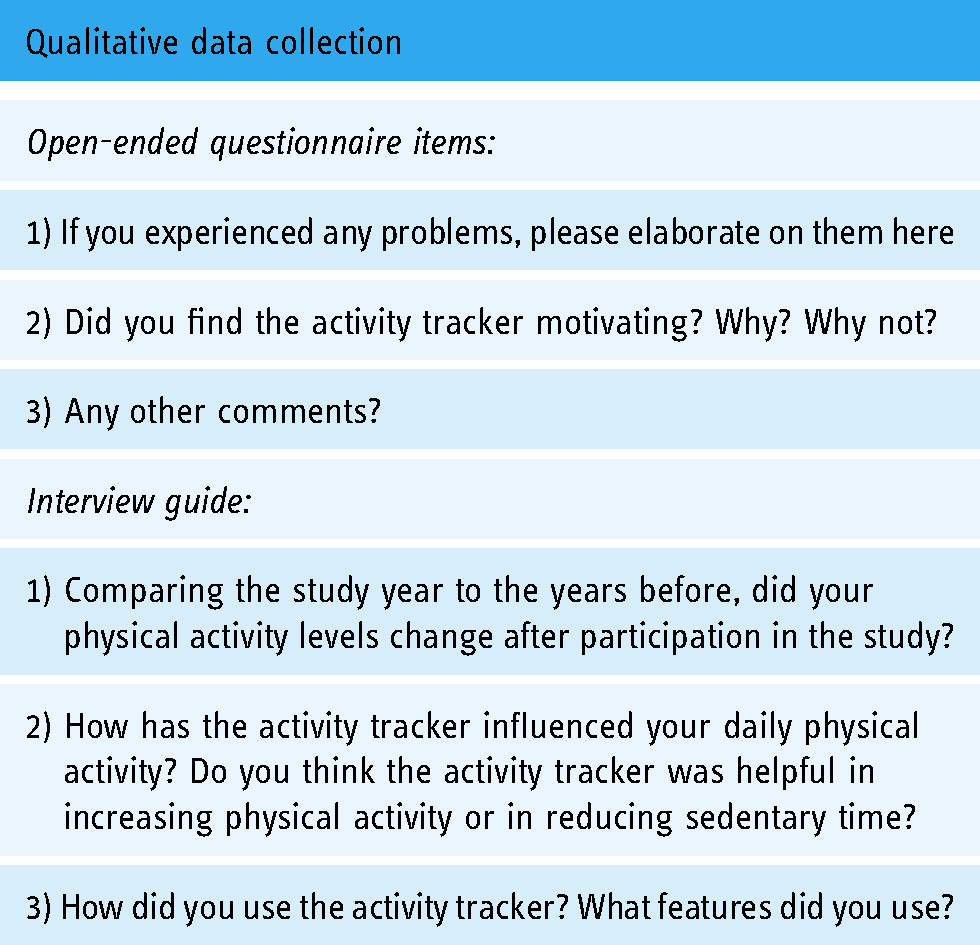
Participants’ experiences of using the activity tracker were evaluated qualitatively with open-ended questionnaire items included in the 3-, 6-, and 12-month study questionnaires and semi-structured interviews conducted after the 12-month intervention. At each time point, three open-ended questions with an unlimited response space enquired about (a) problems faced when using the activity tracker, (b) whether a participant found the activity tracker motivational, and (c) any other comments regarding participation in the intervention. The open-ended questions and the interview guide developed for the interviews by TL are presented in Table 1.
Open-ended questionnaire items and interview guide.
A convenience sample consisting of intervention group participants allocated in the first and second waves of data collection (n = 27) was interviewed after the 12-month intervention. The interviews were conducted face-to-face by TL during a study visit at the University of Turku, Finland and transcribed verbatim by a research assistant. The average duration of an interview was 15.0 min (SD 6.9).
Adherence
A researcher obtained monthly averages of daily steps recorded by the Polar Loop 2 activity tracker over the duration of the 12-month intervention through shared access to the participants’ accounts in the web-based software. Monthly averages of daily steps were recorded for those participants who provided a minimum of 2 weeks of activity tracker data per intervention month. The number of participants providing activity tracker data on minimum of 2 weeks per each intervention month was used to assess adherence to the intervention.
Perceived ease-of-use and usefulness
Perceived ease-of-use and usefulness were assessed with customized 5-point Likert-scale items included in the study questionnaire (1 = strongly disagree to 5 = strongly agree). The perceived ease-of-use was assessed with a single-item and perceived usefulness with three items assessing whether a participant found the activity tracker (a) reliable in measuring activity, (b) motivating in making lifestyle changes, or (c) helpful in reducing sitting time.
Background characteristics
Basic demographic information (date of birth, sex, and occupational background) was derived from the Pension Institute's register. The occupational background was categorized according to the International Standard Classification of Occupations (ISCO) as follows: “High” including managers and professionals (classes 1 and 2), “intermediate” including associate professionals (classes 3 and 4), and “low” including manual and service workers (classes 5–9). Body mass index (kg/m2) was calculated based on weight and height measurements conducted by a study nurse at baseline. The baseline questionnaire assessed the actual date of retirement, limitations in walking two kilometers (yes/no) and the number of doctor-diagnosed chronic conditions (none, 1, or >1). The following conditions were considered: angina pectoris, myocardial infarction, stroke, claudication, osteoarthritis, osteoporosis, sciatica, fibromyalgia, rheumatoid arthritis, depression or other mental illness, and diabetes. Baseline physical activity was measured with a wrist-worn accelerometer (ActiGraph wGT3X-BT; ActiGraph LLC, Pensacola, FL) worn for seven days prior to randomization with a minimum requirement of 10 h of wake wear time on at least four of the seven measurement days. 44 For descriptive purposes, we provide average daily minutes of moderate-to-vigorous activity (MVPA).
Data analysis
Qualitative analysis
As the primary aim of this study was to evaluate the participants’ experiences of the intervention, the qualitative data were analyzed using thematic analysis with a realist underpinning and focused on the semantic level. 46 The data analysis was conducted by MT, together with PK, neither of whom were involved in the design, data collection, or implementation of the intervention. Consequently, the initial approach to the data analysis was inductive and the research question guiding the analysis was defined broadly to include experiences of any kind related to using the activity trackers. Nvivo-software (Version 12; QSR International Pty Ltd, Melbourne, Australia) was used for qualitative analysis. MT is a doctoral student in public health with an educational background in sports and exercise psychology and social sciences. PK is a professor of physical education with experience in the social sciences of sport and physical activity.
Initially, the plan was to use the interview transcripts as the main data set and to utilize the responses to the open-ended questions as a form of data triangulation. However, a person responsible for the design and implementation of the intervention conducted the interviews, a fact of which the participants were aware of, which appeared to have introduced both interviewer and social desirability bias in the interview data. Consequently, we decided to use the responses to the open-ended questions as the main data set instead, while utilizing the interview transcripts for data triangulation. Although concerns have been raised about the ability of responses to the open-ended questions to support a proper qualitative analysis,47,48 the nature of the research question as well as the depth and coverage of the existing responses encouraged this decision.
The data analysis followed the steps outlined for thematic analysis, 46 while drawing on guidelines for using thematic analysis specifically for evaluating physical activity interventions. 49 More specifically, MT began the analysis by familiarizing himself with the intervention content and with the entire data corpus by reading through it multiple times. MT then coded the open-ended questionnaire data using word-specific coding and developed an inductive coding scheme for discussion with PK. Based on the initial coding scheme, MT searched for preliminary themes and reviewed their internal homogeneity and external heterogeneity with reference to the data extracts. MT then produced a thematic map of the preliminary themes and subthemes with data extracts for discussion with PK. To maintain focus on experiences related to using the activity tracker, a decision was made to exclude preliminary themes that were not associated with using the activity tracker as such (e.g. barriers to physical activity in general). In addition, it was decided that a minimum of three mentions by different participants was required for a subtheme. MT then re-read through the open-ended questionnaire responses, coded the interview transcripts based on the developed coding scheme, and revised the themes if needed. As no further themes or subthemes were identified based on the interview transcripts, the inductive analysis was considered completed. As a final step, the inductive themes were deductively categorized according to the TFA framework.
Exploratory quantitative analyses
The quantitative items assessing perceived ease-of-use and usefulness at 3, 6, and 12 months were summarized descriptively, and Wilcoxon Signed Rank tests were used to examine whether the ratings differed between the 3- and 12-month time points. We further examined whether the perceived usefulness after the 12-month intervention was associated with the baseline characteristics. A summary score for perceived usefulness was calculated using the three items measured at 12-month follow-up (Cronbach α = 0.81). Based on the highest and lowest quartiles on the summary score variable, the participants were classified into high and low perceived usefulness conditions. The differences in baseline characteristics between the high and low perceived usefulness conditions were examined using a t-test for continuous and a chi-square or Fisher exact test for categorical variables. All quantitative analyses were conducted using SAS software (version 9.4; SAS Institute Inc, Cary, NC), and a p-value of <0.05 (two-tailed) was used for significance.
Results
Participants
The participants’ characteristics at baseline are summarized in Table 2. The 113 participants completing the intervention were on average 65.2 (SD 1.0) years old, 81.4% were women, and had been on retirement on average for 1.2 (SD 0.6) years at baseline. 92.9% of the participants reported no functional limitations in walking 2 km and the average of accelerometer-measured daily MVPA was 56.0 (SD 31.0) minutes at baseline. Overall, 69 (61.1%) provided five or more responses to the open-ended questions out of a maximum of nine, while 12 (10.6%) did not respond to any of the open-ended questions during the study. The median number of available responses per participant was 5 (IQR 3–7) and the median length of an existing response was 15 words (IQR 7–24).
Baseline characteristics of the intervention group participants.

Qualitative analysis
Overall, four main themes with 20 subthemes were identified and categorized according to the following TFA domains: Burden (the perceived amount of effort required to participate in the intervention), Affective Attitudes (how an individual feels about the intervention), and Perceived Effectiveness (the extent to which the intervention is perceived as likely to achieve its purpose). 42 As the TFA did not form a pre-specified framework for the data collection, not all of the domains of the TFA were represented in the data. An overview of the results of the qualitative analysis is presented in Table 3 with quotes from participants. The contents of each main theme are briefly summarized below.
The results of the thematic analysis with quotes from participants drawn from open-ended questionnaire responses (Q) and interview transcripts (IV).

Burdens of participation
Burdens associated with participation in the intervention were associated with charging the battery, technical difficulties, and the uncomfortableness of wearing the device. The frequent need of recharging the activity tracker was found tiring and/or cumbersome in the long-term. Participants experienced technical difficulties, which were related either to the inability to use the accompanying web-based software features, uploading the data from the tracker to the web-based software, or to malfunctions of the device. However, the participants also reported being satisfied with the support they received from the research group in dealing with technical difficulties. The uncomfortableness of wearing the activity tracker in the long-term was also reported, particularly with reference to discomfort, sweating of the wrist, and disturbing sleeping if worn during night-time. Both the frustration with charging the device and the experiences of uncomfortableness with wearing it might have resulted in reductions in wearing the activity tracker over time.
Affective attitudes of using the activity tracker
The participants reported being satisfied with their participation in the intervention. The self-monitoring of daily activity levels was found interesting, although the initial interest might have been lost over time as using the activity tracker became mundane. There were also reliability issues reported in relation to specific activities, such as cycling, watersports, or gym, which might have been detrimental to the interest in using the activity trackers. Furthermore, the lack of recognition of activities might have been experienced as disheartening as the unrecognized activities were not conducive to the daily activity goal accumulation. In addition, previous experiences with similar devices were also reported as a reason for finding the device used in the intervention uninteresting.
The perceptions regarding the daily activity goals were varied. Participants reported finding the attainment of daily activity goals motivating and rewarding as it produced a sense of accomplishment. In addition, attaining the daily activity goals may have served as a catalyst to increase physical activity, while the maintenance of the increases might have been driven by other factors, such as perceived improvements in well-being, fitness, or functional ability. However, the failure to attain the daily activity goals might have produced guilt. In addition, the pursuit of daily activity goals, even if successful, may have been experienced as stressful in the long-term. Both the experienced guilt and stress may have contributed to plans to stop using the activity tracker as soon as the study was over. The sedentary alerts issued by the activity tracker, in turn, might have been found frustrating due to being perceived either as unfounded or insensitive to context, for example, by occurring during social events.
Perceived effects of using the activity tracker
Participants found the activity tracker helpful in becoming aware of their levels of daily activity. More specifically, the activity tracker might have served either in producing information to oneself about how active one is in general or, more specifically, to become aware of days of low activity. The high levels of sedentary time were found surprising, also by participants who considered themselves as physically active.
Participants reporting beneficial behavioral effects found the activity tracker helpful in increasing walking, making the daily activity more regular, in planning daily activity, and in breaking up prolonged sitting time at home, but not necessarily outside of home where the sudden urge to get up might be perceived as unnatural. However, the increases in activity might have been only occasional. In addition, the activity tracker may have been used as an interesting curiosity that could be used, for example, to measure steps accumulated on different walking routes. Surprisingly, participants also reported decreasing or abandoning cycling after participating in the study as the activity tracker did not recognize it as an activity.
No perceived behavioral effects
The participants who did not perceive the activity tracker as having an impact on their levels of physical activity attributed the lack of perceived effectiveness mainly to the lack of perceived need to modify their physical activity. The participants did not perceive a need to modify their behavior and thus did not find the activity tracker useful in this regard. Similarly, participants who did not find the activity tracker useful in reducing sedentary time perceived the sedentary alerts either as unnecessary or in conflict with their needs and hence, chose not to respond to them. However, even if the activity tracker was not found useful for modifying daily activity behavior, using it to monitor daily activity levels might have been found interesting or meaningful. Thus, using the activity tracker to monitor daily activity levels may have happened passively in the absence of any effort or desire to modify those levels.
Exploratory quantitative analyses
Due to considerable individual-level variation observed in the qualitative analysis, we additionally assessed the adherence to wearing the activity tracker and conducted further exploratory quantitative analyses to examine changes in perceived ease of use and usefulness during the intervention. In addition, we examined whether the baseline characteristics were associated with the perceived usefulness after the 12-month intervention.
Adherence
The monthly averages of the daily steps measured by the Polar Loop 2 activity tracker were summarized using means and standard deviations with a valid number of observations per month. The monthly averages of daily steps recorded by the activity tracker remained stable throughout the 12-month intervention, although minor peaks were observed during months corresponding with the 3- and 6-month follow-up physical activity outcome measurements of the REACT intervention. The monthly averages of daily steps are presented in Figure 1 with a number of valid observations per intervention month. Overall, the attrition rate in the trial was very low as 96.6% (113/117) of the intervention group participants completed the 12-month intervention. Furthermore, 92.3% (108/117) of the participants provided activity tracker data for more than 2 weeks on each intervention month, suggesting good adherence to wearing the activity trackers over the entire duration of the intervention.
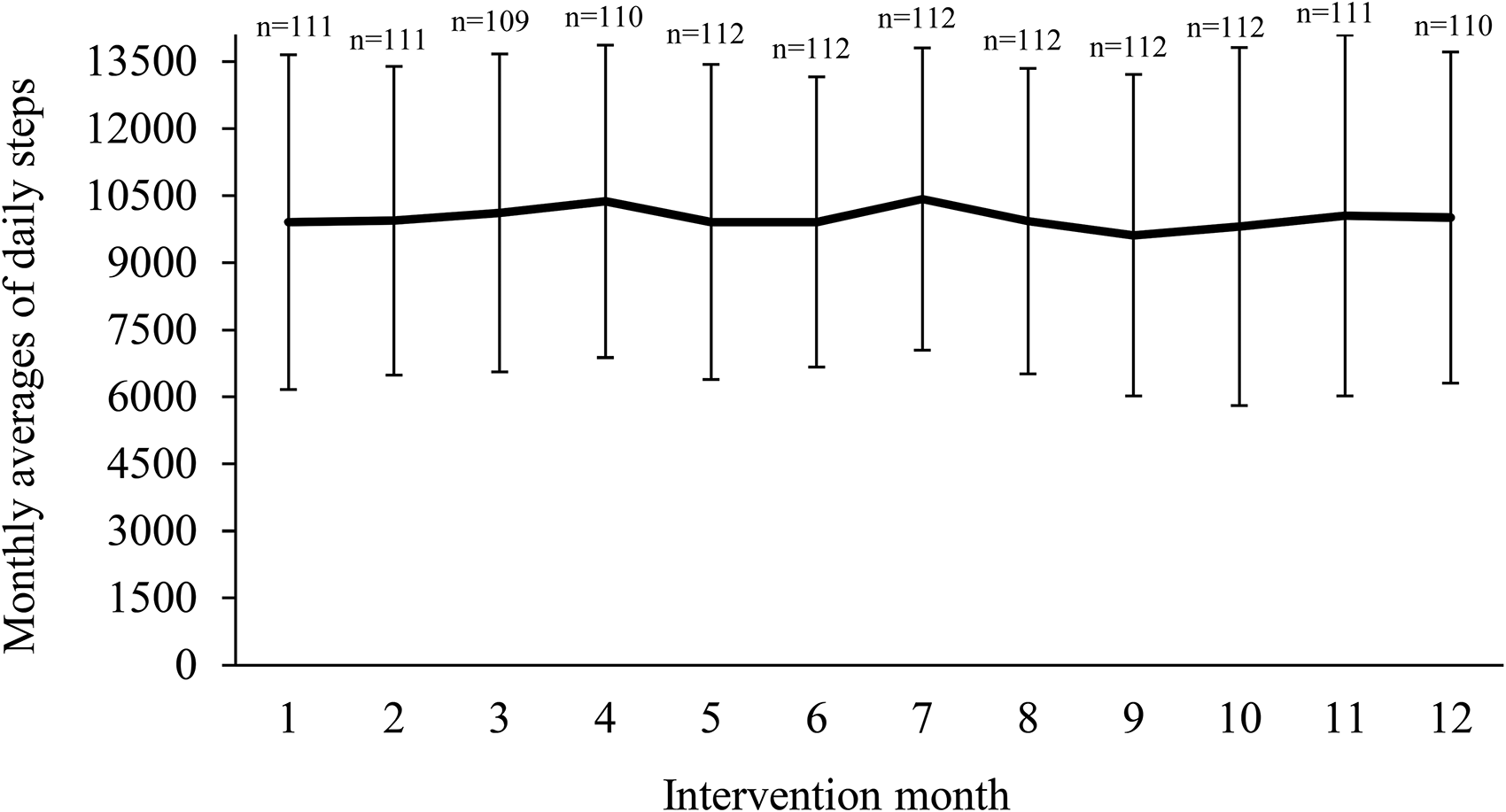
Monthly averages of daily steps recorded by the Polar Loop 2 activity tracker with standard deviations and the number of participants providing activity data on at least 2 weeks per intervention month.
Perceived ease-of-use and usefulness
After the 12-month intervention, the participants found the activity tracker easy to use (mean 4.6, SD 0.6). The responses were more varied, yet mainly positive, regarding the activity tracker's reliability (mean 3.6, SD 1.2), helpfulness in motivating change (mean 3.9, SD 1.0), or in reducing prolonged sitting (mean 3.7, SD 1.0). The responses at 12 months did not differ from the initial responses measured after the first 3 months of the intervention in ease-of-use (mean 4.6, SD 0.8, p = 0.87), reliability (mean 3.7, SD 1.1, p = 0.15), helpfulness in motivating change (mean 4.0, SD 1.0, p = 0.56), or in reducing sitting (mean 3.7, SD 1.0, p = 0.92). The percentages of participants’ ratings at 3-, 6- and 12-month time points are presented in Figure 2.
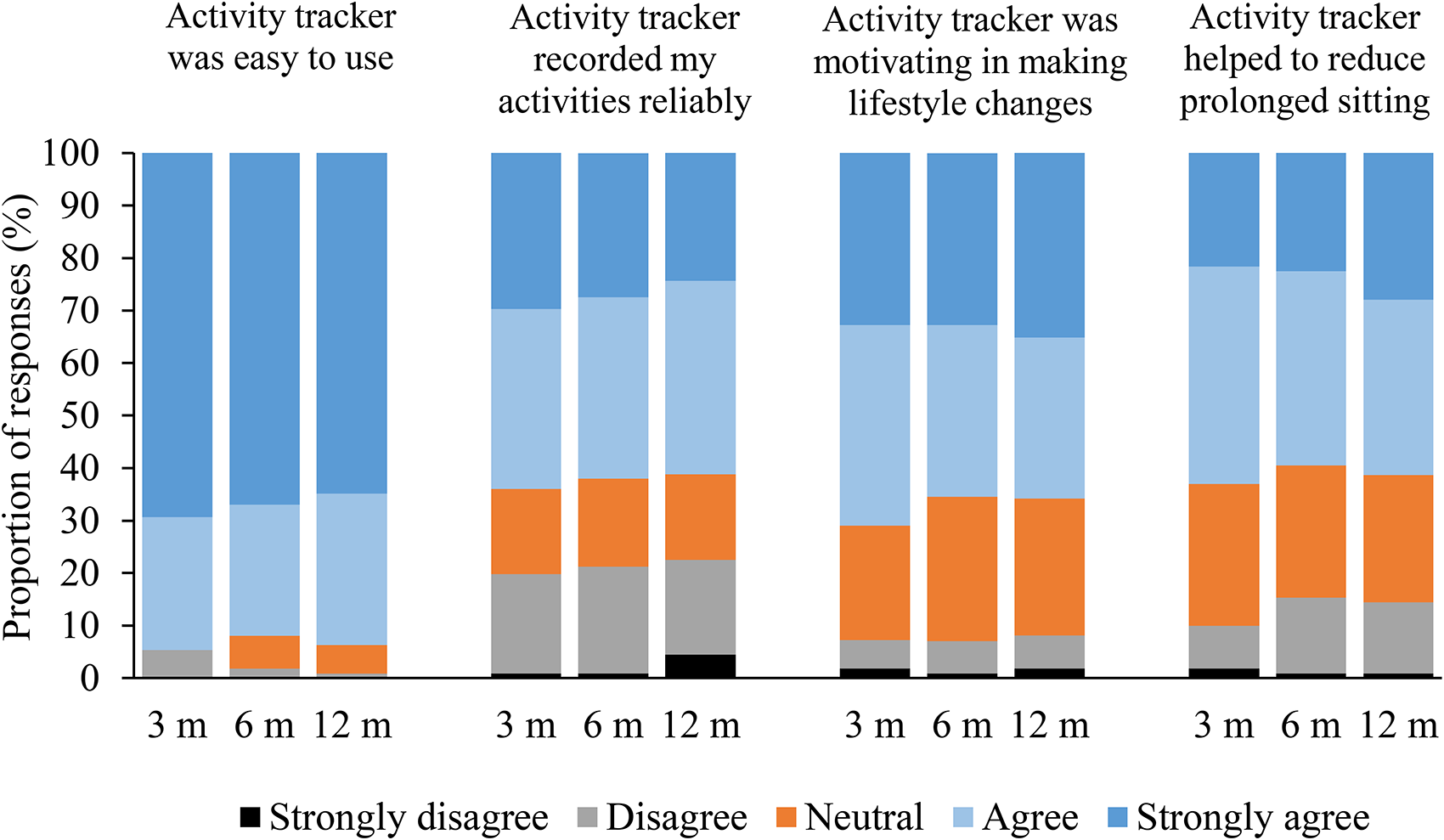
Participants’ responses to the items assessing perceived ease-of-use and usefulness at 3-, 6-, and 12-month time points (n = 110–113).
Perceived usefulness and baseline characteristics
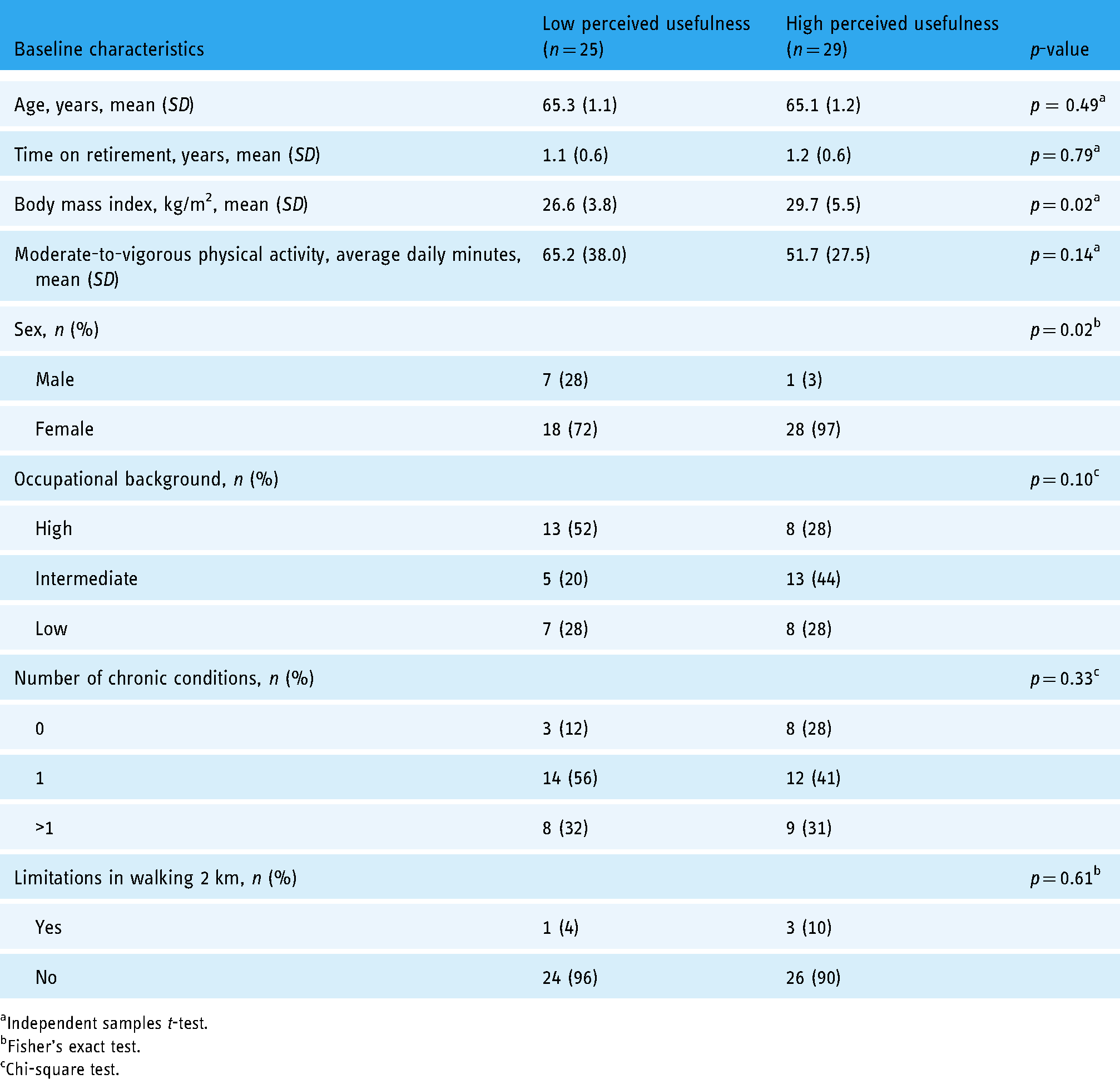
Based on a summary score for perceived usefulness measured after the 12-month intervention, the participants were classified into high and low perceived usefulness conditions defined as the highest (n = 29; mean 14.7, SD 0.5) and lowest (n = 25; mean 7.5, SD 1.7) quartiles on the summary score variable. The two conditions were then compared for differences in the baseline characteristics.
The comparisons for baseline differences across high and low perceived usefulness conditions are presented in Table 4. The average body mass index at baseline among those with high perceived usefulness was higher than among those with low perceived usefulness (t52 = −2.36, p = 0.02). In addition, the proportion of males among those with high perceived usefulness was lower when compared to those with low perceived usefulness (Fisher exact test, two-sided p = 0.02). No significant differences were observed between the two conditions at baseline in age (t52 = 0.69, p = 0.49), time on retirement (t52 = −0.27, p = 0.79), occupational background (χ22 = 4.5, p = 0.10), number of chronic conditions (χ22 = 2.2, p = 0.33), limitations in walking 2 km (Fisher exact test, two-sided p = 0.61), or in accelerometer-measured daily MVPA (t52 = 1.51, p = 0.14).
Baseline characteristics among participants categorized into high and low perceived usefulness conditions after the 12-month intervention.
Independent samples t-test.
Fisher's exact test.
Chi-square test.
Discussion
The purpose of this study was to evaluate the participants’ experiences of a 12-month activity-tracker-based intervention among a community-based sample of recent retirees. We used the TFA framework to categorize the qualitative findings and identified 20 subthemes under the following four main themes: (a) burdens of participation, (b) affective attitudes towards using the activity tracker, (c) perceived effectiveness of using the activity tracker, and (d) no perceived behavioral effects. The observed sources of burden were mainly associated with tasks imposed on participants due to their participation in the study, whereas the affective attitudes and perceived effects of using the activity tracker were varied. In particular, the daily activity goals were associated with both positive and negative affective outcomes in the long-term, while the lack of recognition of certain activities might have had both undesirable affective and behavioral consequences. The perceived behavioral effects in line with the aims of the intervention were identified as increased walking, regularity of activity, and breaking up prolonged sitting at home. However, using the activity tracker to self-monitor daily activity levels was not necessarily associated with a desire to modify those levels in the long-term and might have diminished over time.
Notwithstanding the mixed qualitative findings, the majority of the participants perceived activity trackers as both easy to use and useful in agreement with several earlier studies.32–38 Furthermore, in line with previous long-term activity tracker interventions among older adults, we also observed both low attrition rates and good adherence to wearing the activity trackers over time.34,38,50 However, in the main results of the REACT intervention, there were no significant differences observed in accelerometer-measured daily physical activity or sedentary time between the intervention and control groups over the 12-month follow-up.44,45 Based on our qualitative findings, this is likely to be attributable to the lack of perceived need for changes in daily activity as well as to the high individual-level variation in the participants’ experiences of using the activity tracker.
Overall, our qualitative findings are in agreement with a similar recent study evaluating participants’ experiences of a 12-month activity tracker intervention with health professional support targeted at older adults with chronic conditions. 38 However, in contrast to these earlier findings, we observed that the raised awareness of daily activity levels due to self-monitoring might have been motivationally neutral over the long-term. This is likely to be attributable to the relatively healthy and active community-based sample of our study, given that the information value derived from increased awareness has been found to be less relevant for those considering themselves relatively active or healthy.31,40 This was also reflected by the fact that the participants tended to be more surprised by their levels of sedentary time than their levels of physical activity, highlighting also the unconscious and habitual nature of sedentary time accumulation. 51
In the REACT trial, there were no specific instructions given regarding how to modify daily physical activity behavior during the intervention as the behavioral target of the intervention was defined in terms of daily activity goals measured by the activity tracker. 44 Participants reporting changes in daily activity behavior reported increasing mainly walking and breaking up prolonged sitting time at home, suggesting these to be the primary domains of daily activity where the potential of activity trackers might be realized among older adults. These findings are encouraging given that walking is highly accessible and the most popular form of physical activity among older populations, 52 whereas home is the primary location where sedentary time accumulates.53,54 However, defining the behavioral target of the intervention in terms of daily activity measured by the activity tracker also had some detrimental consequences related to wrist-worn activity trackers’ inability to recognize forms of activity where the wrist remains relatively immobile. While the lack of recognition has been identified as a source of frustration also in earlier studies,31,40 it is likely to be a particularly relevant issue when activity trackers are used embedded within interventions with behavioral targets that are defined in terms of activity tracker measured outcomes. 38 Based on our findings, the lack of recognition of certain activities is likely to hamper the interest in self-monitoring, diminish the meaningfulness of goal pursuits, and might even result in abstaining from the activities not recognized by the activity tracker. Thus, future studies aiming to promote physical activity with the help of activity trackers should consider using models capable of recognizing a broad range of activities preferred by older adults, such as cycling and swimming. Alternatively, the behavioral targets of interventions should be specifically defined in terms of activities that the activity trackers utilized are capable of identifying, such as the accumulation of steps.
In our study, the participant’s experiences of the daily activity goals ranged from rewarding and motivating to guilt-producing and stressful to irrelevant. This observation is in agreement with earlier findings suggesting that the motivational consequences of activity tracker-driven goal pursuits are not necessarily positive in the long-term.38,55 In the REACT trial, pre-set daily activity goals inherent in the activity tracker were utilized as the behavioral targets of the intervention. However, the pre-set goals might have been too demanding for some of the participants even at the lowest difficulty level. While this calls attention to a more individualized and flexible goal setting, it also raises questions regarding the lifespan of activity-tracker-driven goal pursuits. Given the vast amount of positive short-term findings7,10–14 coupled with more modest findings from long-term study designs,21–23 it appears possible that activity trackers may serve best in supporting initial changes in daily activity whereas further methods beyond the activity trackers might be required for their maintenance. Furthermore, our findings highlight that the potential of activity trackers for behavioral modification is likely to differ across participants’ needs and characteristics. 31 Thus, tailoring activity tracker interventions, for example, by using dynamic and adaptive goals based on an individual's existing behavioral patterns or by introducing social support and accountability via coaches or peer groups is likely to improve their effectiveness.21–23 Furthermore, given that for some participants the daily activity goals were a source of guilt and stress, future interventions should consider that adaptive goal setting may also require downward goal adjustment to foster engagement. It should also be critically considered, whether, why, and for whom the long-term use of activity trackers is a worthy goal. For example, based on previous research and our exploratory findings, older adults with a high body mass index might represent a particularly receptive subgroup for activity tracker-driven interventions,23,56,57 whereas being female, healthy, and engaging in exercise might be associated with long-term engagement with activity trackers, 43 but lower effectiveness in terms of changes in daily activity.44,45
We also observed that the participants’ ratings for ease of use and perceived usefulness remained relatively stable over time. Similar findings have been reported earlier 34 and they may suggest that participants tend to know relatively early on whether they are going to benefit from their activity trackers. However, given that there were participants reporting having owned similar devices before the study, it is equally possible that participants already familiar with activity trackers tend to self-select themselves to participate. While not necessarily undesirable, this should be taken into consideration when planning interventions as the prior experience of using activity trackers are likely to influence the expectations of the participants.
Finally, the burdens of participation identified in our study are similar to commonly identified barriers to using activity trackers among older adults suggesting that challenges associated with technological difficulties, battery life, and discomfort are, to some extent, unavoidable.31,35,40 Nevertheless, in intervention contexts they should be conceptualized as burdens that the participant must be able and willing to cope with in order to carry out the tasks requested by the intervention providers. While it is advisable to aim to minimize burdens imposed on participants, the high adherence rates and the fact that the ratings for ease-of-use of the activity tracker remained relatively high and stable throughout the study suggests these types of burdens to be bearable. However, while the identified burdens may not be harmful to adherence to wearing the activity trackers in intervention contexts, they are likely to be detrimental to the engagement and interest in using the device and thus, undesirable from the point of view of intervention providers.
In a recent comprehensive systematic review, the use of wearable activity tracking devices has been recommended as they appear capable of introducing clinically significant gains in physical activity at a relatively low cost across a variety of target populations. 9 Furthermore, similar gains in daily steps have been observed among healthy adults aged 18–65 years 58 and older adults aged 60 and above. 10 In addition, some evidence from long-term studies suggests that the increases in daily steps may be partly maintained over time in the adult general population. 59 Yet, among older adults, the potential long-term benefits of activity trackers may be better defined as preventing decreases in physical activity over time.21–23 However, based on the diverse experiences observed in the current study, the use of activity trackers as such is not likely to be sufficient for sustainably influencing the levels of physical activity among older adults. Among healthy adults aged 18–65 years, personalized goals and text-messaging have been found to be positively associated with the effectiveness of activity tracker interventions. 58 Similar features have also been included in previous activity tracker-driven interventions successful at preventing declines in physical activity over 12 months among older adults.21–23 These features should be further developed and tested by future activity tracker-driven interventions by introducing personalized, dynamic, and adaptive daily physical activity goals together with the provision of feedback and support delivered via text-messaging. However, to combat the tendency for reduced engagement with wearable activity trackers over time,17,18,20 future long-term interventions should seek to identify and address reasons for reduced engagement. In general, loss of interest in activity tracking, poor accuracy, technical difficulties, habituation, and discomfort in wearing and charging the device have been identified as the most common reasons for the abandonment of wearable activity trackers among adults. 60 Similar observations were also included in our qualitative findings highlighting areas, where engagement issues may be most likely to occur. However, it should be noted that the reduced engagement over time can also be due to existing physically active habits or successful physical activity habit formation. 60
Strengths and limitations
The main strength of the current study is the evaluation of participants’ experiences of using an activity tracker in a long-term intervention with minimal additional content by utilizing a multifaceted approach relying on both qualitative and quantitative data. In addition, the qualitative evaluation was conducted by researchers not involved in the design, implementation, or data collection of the intervention. However, this also poses some limitations due to reliance on existing qualitative data, the nature of which precluded deeper-level analysis to be made. Furthermore, while we utilized the TFA model to categorize our results, the initial qualitative data collection was not directed towards the TFA, and thus not all the domains of the TFA framework, namely ethicality, intervention coherence, opportunity costs, and self-efficacy, were represented in the data. 42 Consequently, some essential aspects of participants’ experiences of the intervention might have been missed, such as perceptions concerning the understanding of the purposes and targets of the intervention, as well as perceptions of the capability to attain those targets. Furthermore, due to the high variability of participant-level availability in the existing open-ended responses over time, we were not able to distinguish between concurrent and retrospective experiences of the intervention. However, the exploratory quantitative analyses suggested that the experiences are likely to have remained relatively stable throughout the study, although they were based on relatively few customized items. While we did not formally seek to assess data saturation due to reliance on existing open-ended questionnaire data, no further themes could be identified based on the interview transcripts suggesting that the saturation is likely to have been achieved. An important limitation of the current study is also the inability to identify participants with previous experience from similar devices as these are likely to have influenced the expectations and experiences of the participants. Furthermore, our qualitative observations suggest that the influences of previous experiences may be more likely to have been negative. However, we were not able to identify the total number of participants with previous experience as no questions about previous experience with wearable activity tracking devices was included in the data collection. Finally, while the recording of the data produced by the activity tracker allowed for monitoring of adherence to wearing the activity tracker over the entire duration of the study, our measure of adherence was rather crude. We used the number of participants providing daily activity data for minimum of 2 weeks within a given intervention month to assess the adherence to wearing the activity tracker. However, no data on the actual daily wear time of the activity tracker was recorded by the intervention providers. Thus, no conclusions can be drawn about the amount of time the activity tracker was worn during the months when daily activity data was recorded.
Future intervention studies using activity-tracking devices to promote physical activity among older adults should include assessments of participants’ experiences using both quantitative and qualitative metrics. Although studies about technological acceptance of activity-tracking devices among older adults are numerous,29,32–38 there is a dearth of studies where the activity trackers are conceptualized as intervention tools and assessed as such, particularly in long-term settings. Furthermore, theory-based frameworks focused on acceptability and engagement should be utilized in study planning and data collection to ensure coverage of relevant domains of importance.27,28,42 In addition, the assessment of participants’ experiences should be on-going to support the maintained engagement with the intervention over time.
Conclusion
Our study is one of the first to evaluate participants’ experiences of using activity trackers in a long-term intervention context among older adults. Based on our findings, the participants found the activity tracker mainly easy to use, useful, and interesting for monitoring their daily activity, which was also reflected by the excellent adherence to wearing the activity tracker observed during the study. However, the qualitative findings highlighted that good adherence to wearing the activity tracker or initial interest in using it to self-monitor levels of daily activity was not necessarily associated with long-term engagement with the device nor with effectiveness in terms of changes in the daily activity behavior. Due to the high level of individual-level variation observed in the participants’ experiences, activity trackers are likely to be best utilized in more tailored and specifically targeted intervention settings among older adults. Future studies should seek to identify subgroups likely to benefit from activity trackers, evaluate the lifespan of effectiveness, and to identify factors supporting the maintenance of the initial activity tracker-induced changes.
Footnotes
Acknowledgements
Not applicable.
Contributorship
TL and SS designed and obtained funding for the REACT intervention. TL collected the data and conducted the interviews. MT conducted the data analysis and interpretation together with PK and drafted the manuscript. AA contributed to the qualitative data analysis and to the writing of the manuscript. All authors provided input into manuscript preparation and approved the final manuscript.
Declaration of conflicting interests
The authors declared no potential conflicts of interest with respect to the research, authorship, and/or publication of this article.
Data sharing statement
Anonymized dataset supporting the conclusion of this article is available upon reasonable request for bona fide researchers with an established scientific record and bona fide organizations.
Ethical approval
This study was approved by the ethics committee of the Hospital District of Southwest Finland (107/1801/2017) and the REACT intervention was registered at clinicaltrials.gov (NCT03320746) in October 2017.
Funding
The work was supported by grants awarded by the Academy of Finland (grant 309526 to TL and 332030 to SS), Juho Vainio Foundation (to TL and MT), the Hospital District of Southwest Finland (to TL), Finnish Cultural Foundation (to MT), and the Finnish Ministry of Education and Culture (to SS).
Guarantor
MT
