




Abstract
Advance directives allow people to specify individual treatment preferences in case of decision-making incapacity involving decisions of utmost importance. There are many tools that provide information on the topic, digital forms for structured data input, or platforms that support data storage and availability. Yet, there is no tool supporting the innermost process of an advance directive: decision making itself. To address this issue, we developed a visual-interactive, semi-quantitative method for generating digital advance directives (DiADs) that harnesses the potential of digitalization in healthcare. In this article, we describe the DiAD method and its app lined with the exemplary narrative of user Mr S. linking the theory to an exemplary use case. The DiAD method is intended to lower barriers and increase comfort in creating an advance directive by shifting the focus from heavily text-based processes to visual representation and interaction, that is, from text to reflection.
Keywords
Introduction
Advance directives (ADs) govern individuals’ goals of care in case of incompetency, 1 that is, a state in which an individual has de jure lost decision-making capacity. They involve decisions of utmost importance about one's future healthcare, potentially about life and death. The legal status of ADs has been recognized in many countries over the past decades.2,3 Still, many people hesitate to make use of this instrument that could help them get the care that is well aligned with their values, preferences, and priorities. 4 One of the reasons for the reluctance to formulate an AD—besides the topic that many of us would rather avoid—may be the heavily text-based process underlying most ADs. Intelligent decision support might improve this process. 5 Across various decision contexts, people with access to decision support tools feel more knowledgeable, better informed, and even clearer about their values, and they seem to have a more active role in decision making and more accurate risk perceptions. 6 AD decision support is currently available in terms of valuable and very well-prepared information about the topic (e.g. prepareforyourcare.org) but not in terms of the decision making itself. There are digital applications for video-based ADs which provide interaction with healthcare professionals and online services that offer simple digital forms using boilerplate text fragments (Table 1). Final AD documents can be digitally stored in a variety of private (e.g. America living will registry) or governmental registries (e.g. the advance healthcare directive-registry of California).
Providers of digital support for generating an advance directive in the United States and Germany. The type of support differs among providers.

The data is automatically deleted after 3 months.
The data is stored locally on the electronic device.
Although these digital tools have undoubtedly proven to be very helpful, they are not designed to support the core process of an AD itself: decision making.
To address this issue, we developed a visual-interactive, low-barrier application for generating high-quality digital ADs (DiADs) in a comfortable and self-reflective way. The app is intended for anyone who wants to create an AD interactively in a self-reflective way and to optimize decision-making. Although individuals of advanced age and/or with serious health conditions might be more prone to complete an AD, doing so is recommended for all citizens. The DiAD app might be especially helpful for those individuals who prefer visual-interactive methods over heavily text-based approaches to generate an AD. The design is such that it is amenable to a broad range of ages and education levels (assuming basic digital literacy).
Here, we introduce the underlying DiAD method, which offers the benefits of relative quantification (allowing visual interaction), logic deductions, and intrinsic compatibility with artificial intelligence.
In visual analogy to a compass, the application presents goals of care sum vector as a compass needle which instantly leads to individual preferences (Figure 1). The DiAD method is able to visually reproduce the whole decision-making process and—due to relative quantification—to simulate future aspects. Simulating the occurrence of pre-defined situations may be of an added benefit for the attending physician in case of emergency if no further information on the patient is available.

The advance care compass. The visual representation of the digital advance directive (DiAD) method is the advance care compass (ACC). Its two vectors reflect the current quality of life (VCQL; black compass needle) and the desired goals of care in case of decision incompetency (VGOC; red compass needle).
Moreover, the DiAD method entails all advantages of digital text-based approaches like integrability, availability, and comfortable maintenance 7 (Table 2).
Different approaches to creating an advance directives. This table displays various features of the visual-interactive approach compared to digital and analog text-based approaches.

Of note, the DiAD method is intended to be complementary to the trusting relationship between patient and healthcare professional: It motivates an initial intra-individual reflection on the desired goals of care which can be discussed with healthcare professionals at any step of the DiAD during the synthesis of the AD if needed (Text Box 1).
Mr S. opens a digital advance directive (DiAD) account
Mr S. is an elderly gentleman in good health, who lives by himself in a small apartment. There are no close family relationships. Prompted by a conversation with a friend, Mr S. is pondering if he shouldn’t be issuing an advance directive (AD), which would allow him to make healthcare decisions now for a potential future state of legal incompetence. He thinks about his neighbor, who had survived a massive stroke, spent a long time on the intensive care unit and in rehab and is now struggling with severe physical and mental disabilities, needing home care around the clock. Mr S. decides that he would want to receive palliative care only should he himself be suffering from a life-threatening stroke. Having always been interested in technological innovation, Mr S. chooses the DiAD app over traditional paper forms. On his tablet, he creates an online account (Supplemental Figure S1 for the corresponding step in the web app) in order to be able to revisit, share and update his AD. Attentively, he reads the instructions introducing the app's data protection concept and its main graphic feature, the advance care compass (ACC; Figure 1 and Supplemental Figure S2).
In this article, we describe the DiAD method along with the corresponding steps in the DiAD application (Supplemental Figures) both lined with the exemplary narrative of user Mr S. (Text Boxes 1 to 4). The prototype app of the DiAD method is available from https://app.d-pv.de/login. The app underwent pilot user testing which showed that the core idea of presenting the goal of care preferences in the format of a compass was understood and appreciated as clear and intuitive (details in Supplemental Methods).
The DiAD method
Relative quantification
The DiAD method is based on the relative weighting of “aspects,” that is, items defining a person's current quality of life (CQL; Figure 2). Positive and negative aspects are weighted against each other (Figure 2A and B) so that the relative importance of individual aspects for the overall CQL is established (Figure 2C). The weighting of CQL aspects is based on experiences the individual is familiar with. In addition to CQL aspect weighting, the DiAD method allows the weighting of aspects that might occur during a potential future state of decision-making incapacity and could affect the future quality of life (FQL). By weighting CQL and FQL aspects against each other, the relevance of hypothetical FQL aspects is put into the context of familiar aspects of CQL, which helps users grasp the impact of potential future life events on their FQL and eventually on their preferred goals of care (GOC). The process of weighting can be iterated as often as needed to optimally represent CQL and FQL.

The current quality of life. In the lower left quadrant of the advance care compass positive aspects of the current life (CQL+) can be defined and weighted against each other (A). Weighting is represented by circle size and represents relative importance. In the lower right quadrant, negative aspects (CQL−) are described and weighted (B). The weighted sum of positive and negative aspects of current life yields the vector (VCQL) visualized by the black compass needle (C).
The DiAD method assumes by default a linear relationship between CQL and GOC (Figure 3A): The happier you are, the more likely you will want to receive curative treatment (and be willing to assume the burdens of medical interventions in order to maximize your chances to continue living 8 ). The lower your CQL, the less likely you will want to continue living, particularly if this comes at the price of considerable risk and burden, so you are assumed to be preferring palliative care. The assumed linear relationship between CQL and GOC serves as an initial estimate, which is immediately queried.

The goal of care estimate. A simple linear estimate of the desired goal of care (VGOC) is the inverse of VCQL (A). As the relationship between current quality of life and goal of care is not necessarily linear, manual adjustment is readily possible (B).
As the linearity of the relation between CQL and GOC is not necessarily given in every case, users are prompted to consider if this default applies to their mindset which seems intuitive but also takes into account the controversy in the literature about the relationship between perceived quality of life and treatment preferences.9–13 If not, users are invited to make adjustments, introducing a non-linear relation between CQL and GOC through the graphical user interface such that the chosen GOC match their individual preferences (Figure 3B). Users are informed that declining the linear relationship between CQL and GOC is an intended feature of the DiAD method and is entirely at the discretion of the user.
Users are interactively guided through the process using the analogy of a compass (Figure 1): the Advance Care Compass (ACC). CQL items are visually represented in the lower part of the compass and FQL items are in the upper part (Figure 1). Weighting allows for relative quantification which yields a comparable visual representation of aspects (circle size in the compass analog) and prepares the ground for meaningful user interaction. Theoretically, the user may generate as many circles as s/he wants.
Current quality of life
The first step of the DiAD method is the assessment of the current quality of life subdivided into positive (CQL+) and negative aspects (CQL−). The user is allowed to add as many aspects as needed to optimally describe the individual CQL. Each aspect is labeled and relatively weighted (Wi) against the other CQL aspects (Figure 2A and B). The process of weighing aspects may stimulate self-reflection on the user's CQL. The weighting of each aspect can be re-adjusted at any time. All CQL+ and CQL− aspect weights sum up to the CQL vector (VCQL) which represents the net CQL and is represented by a black compass needle after transforming VCQL into circle coordinates in degrees (Figure 2C and Text Box 2).
Current quality of life (CQL)
When prompted to answer the first question “What gives me pleasure?,” Mr S. chooses a circle displayed in the lower left quadrant of the compass, names it “Bowling with my friends” and adjusts its size in accordance with the weight this item carries for his current quality of life. He creates several circles in the same fashion (Supplemental Figure S3 for the corresponding step in the web app). He proceeds to fill in circles that reflect what reduces his quality of life, such as the loss of a good friend to cancer (Supplemental Figure S4). The CQL− circles are visible in the right lower quadrant of the compass. He then looks at the compass needle, which provides a summary of his current overall quality of life (Supplemental Figure S5), calculating the sum of both positive and negative weighted aspects. It is moderately positive, which resonates with his own assessment.
Goals of care and FQL
VCQL is a logical linear estimate of the potential overall goals of care (VGOC) based on the data input (equation (1)). During a state of decision-making incapacity, VGOC strongly contributes to the desired FQL in that they represent instructions to reach the individually most desirable condition. In the compass analogy, the estimated VGOC is represented by the inverse of VCQL and visualized by a red compass needle (Figure 3A and Text Box 3). The DiAD method, however, allows seemingly inconsequential goal-of-care decisions as well (e.g. good quality of life but a wish for palliative care) by actively declining the logical estimate and subsequent manual adjustment. With the DiAD method, such a non-linear relationship between CQL and GOC can easily be introduced by interactively moving the visual representation of the CQL vector to the
Adjusting future goals of care (FGC) Mr S. follows the other side of the compass needle, which is colored in red, and points to the right upper quadrant of the compass called “curative care” (Supplemental Figure S6). Mr S. frowns—the system seems to conclude from his fairly ok state today that he would like to receive curative treatment. When he clicks on the “curative care” symbol, an explanation of the term is shown (Supplemental Figure S7): “Everything that is medically feasible and reasonable will be done to keep me alive. I accept the burden that comes with life-sustaining interventions.” This is not quite what he wanted. He moves the cursor to the term “palliative care” below (Supplemental Figure S8) and reads: “Care focuses on alleviating my suffering. I accept a possible reduction of my life expectancy in the interest of increasing my comfort.” This is more like what he had in mind when starting the AD. Mr S. notes a text field prompting him to check if the compass needle correctly indicated his future goal of care preferences (Supplemental Figure S9). “Do you want to receive curative treatment? Click on the red compass needle to adjust its position in accordance with your preference.” Mr S. clicks on the compass needle and moves the red part over to palliative care.
The DiAD method is a semi-quantitative approach in that user’s weight aspects of life in relation to each other. As a result, it is not intended to represent an absolute scale for the individual goal of care preferences VGOC. The quantitative part comes only into play in the simulation mode (“What would happen if?,” Supplemental Figure S11) when any of the FQL aspects (see Potential future state of decision-making incapacity), in fact, occur and the simulation of the future scenario reveals a change in the goals of care, that is, a shift from curative to palliative treatment preferences or vice versa.
Potential future state of decision-making incapacity
In the second step, the user can optionally describe negative aspects of future quality of life (FQL−) in case of incompetency and label and weigh them relative to other FQL− or CQL aspects (Figure 4A). For example, these FQL− aspects may be based on the course of the disease of a close person (Text Box 4). They can explicitly be linked to specific measures that should be taken or withheld. The number of FQL− aspects and the granularity of information assigned by weighting, labeling, and linking aspects to measures gives the overall information depth. The more detailed the information, the greater the chance of receiving the desired treatment in a potential future state of decision-making incapacity.

Future aspects of life. In the upper half of the advance care, compass future aspects of life (FQL) can be defined and associated with measures at the desired level of granularity (A). The impact of each FQL− item on the goals of care (VGOC) can be simulated (B) such that reflection of one’s own decision is strengthened.
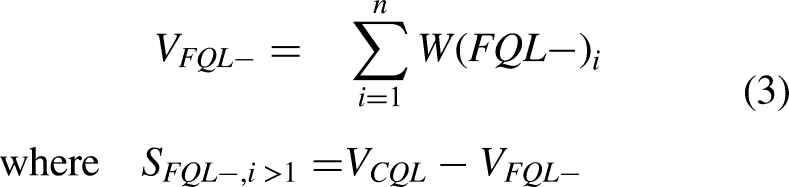
Once completed and authorized, the FQL− and CQL aspects allow for simulating the effect of a specific FQL− aspect—should it occur—on the goal of care. The simulation SFQL− represents the difference between the selected FQL− aspect and VCQL (equation (2)), transformed into circle coordinates and visualized by the respective compass needle position (Figure 4B). Selecting more than one FQL− aspect introduces a sum vector VFQL− (equation (3)) as the basis for SFQL−. Visualizing SFQL− may be useful for many, the patient, attending physician, or proxy. If a certain FQL− fully corresponds to a situation that has occurred, the simulation SFQL− yields the exact measures the patient wished. If the match is incomplete, SFQL− may serve as an optimal approximation of the individual ground truth, that is, fine-grained information on the desired goal of care for a similar situation. This can be of
Simulating specific events Next, the app invites Mr S. to explore the “What would happen if?” mode (
Artificial intelligence
The DiAD method provides excellent data for the application of artificial intelligence, for the following two reasons: First, the complete decision flow is connected to the current quality of life and traceable even if certain decisions do not conform with the default assumption of a linear relationship between CQL and GOC (because they are tracked as such and actively confirmed by the user). The user's final decision as to which goal of care to choose loses its black-box character and remains intelligible by humans. Second, the relative weighting of aspects introduces a quantitative component to a very subjective issue—the decision about life and death—and enables inter-individual comparisons in the context of individual decision flows. This in turn yields excellent training data for artificial intelligence, which is the basis for high-quality predictions. Artificial intelligence might be of great use for individualized decision support during the DiAD process and for predicting the most probable goal of care if no information about an incompetent patient's presumed will is available.
Benefits of the DiAD method
Relative quantification
Introducing relative quantification into the process of generating an AD is the key to our new visual-interactive approach with logic deductions and simulations. Thus, it becomes more comfortable to create an AD, and typical barriers of text-only methods are minimized. As a result, the DiAD method grants more individuals (including those who, for various reasons, have difficulties working with texts) access to an AD compared to canonical approaches and thus empowers the patient. Any remaining need to enter text input can be further reduced by speech-to-text algorithms inherently implemented in most operating systems.
As the DiAD method reveals the whole decision tree of an AD accompanied by the underlying relative weighting, it prepares the ground for applying artificial intelligence with the theoretical benefit of individualized decision support and emergency goal-of-care predictions.
Legal document
Sometimes, an AD may be required in the form of a text document. With the DiAD method, this need is readily matched because it can translate weighted CQL and FQL aspects together with VGOC and SFQL vectors back to text. The structure of an AD text document is specific for each country and follows certain conventions, which can be built into national editions/adaptions of the DiAD. The eventual goal of care is defined by VGOC and the measure to be taken or withdrawn under specific future conditions defined by FQL− items.
Once prepared and approved by the user, the DiAD application processes the content to build a legally valid, conventional text-based AD document. This feature allows the user to focus on content rather than on the formal aspects of an AD.
Advantages of digital format
The digital application of the DiAD method can be implemented using standard frameworks like Flutter; it can thus be readily integrated into the functionality of a variety of existing electronic patient records or other digital backbones that manage data retrieval and storage. The DiAD method comes with all the advantages of a digital tool, like permanent availability or instant sharing of the AD with the attending physician, close relatives, or proxies.
In particular, the DiAD method fits the typical clinical workflow well, because it allows for a serial, time-independent procedure. That means the patient works with the DiAD application and generates an AD. But some questions or uncertainties might remain which can be system-inherently attributed to the respective step of the DiAD method by the application. As a result, the patient knows exactly what to ask the healthcare professional, and the responding questions are documented and can be automatically presented to the physician by the application. The physician at once recognizes the issues to be discussed and is able to respond in a focused and tailored way. These potential issues can be addressed during a physical or remote (even asynchronous) consultation.
For the patient, this option means less emotional stress during the consultation, because her/his questions and concerns are saved and contextually embedded by the application. For the physician, the DiAD method enables an optimized workflow, as the patient is (i) well-informed and (ii) well-aware of the points that need to be clarified, and (iii) the tasks can be split into subtasks and processed at convenient times.
As preferences may change over time, it is generally recommended to re-evaluate one's own AD on a regular basis and if needed adjust treatment preferences—a task at the DiAD method excels at.
Another benefit of the DiAD method is its potential to document every step, every interaction, and any comment on a shared AD. Specifically, this means that the patient can log the starting time of AD generation, the questions that arose at a certain step with a timestamp, the virtual or real consultation of a physician for discussing the AD, or the confirmation that the physician has taken note of the AD together with the patient's health status. From a legal point of view, only persons with decision-making capacity can complete a valid AD. Physicians can confirm their decision-making capacity within the DiAD app—a feature that might be particularly relevant for people whose decision-making capacity might be in doubt.
The DiAD app will use data formats that allow for seamless communication with electronic health records and other medical information systems. Its interoperability ensures that the AD is 24/7 available and can be accessed when needed.
The AD can easily be modified by the patient at any time. In case the patient learns about a certain health condition or about treatment options or a new disease occurs, this additional information can readily be integrated into the current AD by just adding, for example, an FQL− or CQL− aspect. The DiAD application will automatically update the corresponding weights, and adapt VGOC and the next simulation already incorporates the new aspect (CQL−3 in Figure 5). The area of application is thus not just only the one-time creation of an AD, but the continuous adaption of the present circumstances, wishes, and needs of its user.

Changing the digital advance directive (DiAD). Due to its digital implementation of the DiAD method changing the advance directive is possible at any time. In this example, the new CQL−3 item is introduced.
Conclusion and outlook
The DiAD approach provides a generic semi-quantitative method for a visual-interactive creation of an AD. It essentially moves the focus from text to reflection, thereby lowering barriers and enhancing the comfort of completing an AD. The DiAD method is apt for integration into clinical workflows and is intrinsically AI-ready. It is empowering the patient through informed decisions and saves time for the attending physician. The DiAD method could be enhanced with different digital support tools that facilitate understanding, appreciation, reasoning, and communication of advanced health decisions (such as infographics or video clips illustrating patient experiences). Moreover, situational decision support plug-ins, for example, severe neurological or oncological events are easy to integrate into the DiAD method.
Future studies will need to investigate the effect of the DiAD method on the delivery of goal-concordant care and reveal issues to be optimized. This challenge should be faced by interdisciplinary teams with expertise in the fields of medical ethics, clinical care, law, data science, and programming.
Finally, we think the generic DiAD method could be applied not only to the case of advance decisions but also to a broad variety of binary decisions that benefit from the relative weighting of underlying aspects. For example, the DiAD method may drive decisions and aids in supporting competent individuals in choosing treatment options they are currently confronted with. In this case, the weighting would be limited to the first part of the DiAD approach, that is, weighting the pros and cons of a treatment option, or extended to consider risks and potential complications to see if the decision in favor of a certain treatment would remain.
Supplemental Material
sj-docx-1-dhj-10.1177_20552076221147414 - Supplemental material for From text to interaction: The digital advance directive method for advance directives
Supplemental material, sj-docx-1-dhj-10.1177_20552076221147414 for From text to interaction: The digital advance directive method for advance directives by Armin Biller and Nikola Biller-Andorno in Digital Health
Footnotes
Author contributions
Conceptualization: AB, NB-A; Methodology: AB, NB-A; Project administration: AB; Resources: NB-A; Supervision: NB-A; Visualization: AB; Writing—original draft: AB; Writing—review & editing: AB, NB-A.
Code availability
The web application will be freely available to readers upon acceptance of the manuscript under https://app.d-pv.de/login.
Declaration of conflicting interests
The authors declared no potential conflicts of interest with respect to the research, authorship, and/or publication of this article.
Ethical approval
Does not apply.
Funding
The authors received no financial support for the research, authorship, and/or publication of this article.
Guarantor
AB

Supplemental material
Supplemental material for this article is available online.
References
Supplementary Material
Please find the following supplemental material available below.
For Open Access articles published under a Creative Commons License, all supplemental material carries the same license as the article it is associated with.
For non-Open Access articles published, all supplemental material carries a non-exclusive license, and permission requests for re-use of supplemental material or any part of supplemental material shall be sent directly to the copyright owner as specified in the copyright notice associated with the article.
