




Abstract
Background:
People living with chronic kidney disease (CKD) face an increased risk of severe outcomes such as hospitalization or death from COVID-19. COVID-19 vaccination is a vital approach to mitigate the risk and severity of infection in patients with CKD. Limited information exists regarding the factors that shape COVID-19 vaccine uptake, including health information-seeking behavior and perceptions, within the CKD population.
Objective:
The objectives were to describe among CKD patients, (1) health information-seeking behavior on COVID-19, (2) their capacity to comprehend and trust COVID-19 information from different sources, and (3) their perceptions concerning COVID-19 infection and vaccination.
Design/Setting:
Cross-sectional web-based survey administered in British Columbia and Ontario from February 17, 2023, to April 17, 2023.
Participants:
Chronic kidney disease G3b-5D patients and kidney transplant recipients (CKD G1T-5T) enrolled in a longitudinal COVID-19 vaccine serology study.
Methods and Measurements:
The survey consisted of a questionnaire that included demographic and clinical data, perceived susceptibility of contracting COVID-19, the ability to collect, understand, and trust information on COVID-19, as well as perceptions regarding COVID-19 vaccination. Descriptive statistics were used to present the data with values expressed as count (%) and chi square tests were performed with a significance level set at P ≤ .05. A content analysis was performed on one open-ended response regarding respondents’ questions surrounding COVID-19 infection and vaccination.
Results:
Among the 902 patients who received the survey via email, 201 completed the survey, resulting in a response rate of 22%. The median age was 64 years old (IQR 53-74), 48% were male, 51% were university educated, 32% were on kidney replacement therapies, and 57% had received ≥5 COVID-19 vaccine doses. 65% of respondents reported that they had sought out COVID-19-related information in the last 12 months, with 91% and 84% expressing having understood and trusted the information they received, respectively. Those with a higher number of COVID-19 vaccine doses were associated with having sought out (P =.017), comprehended (P < .001), and trusted (P =. 005) COVID-19-related information. Female sex was associated with expressing more concern about contracting COVID-19 (P = .011). Most respondents strongly agreed to statements regarding the benefits of COVID-19 vaccination. Respondents’ questions about COVID-19 infection and vaccination centered on 4 major themes: COVID-19 vaccination strategy, vaccine effectiveness, vaccine safety, and the impact of COVID-19 infection and vaccination on kidney health.
Limitations:
This survey was administered within the Canadian health care context to patients with CKD who had at least 1 COVID-19 vaccine dose. Race/ethnicity of participants was not captured.
Conclusions:
In this survey of individuals with CKD, COVID-19 information-seeking behavior was high and almost all respondents understood and trusted the information they received. Perceptions toward the COVID-19 vaccine and booster were mostly favorable.
Background
Coronavirus disease 2019 (COVID-19) which is caused by severe acute respiratory syndrome coronavirus 2 (SARS-CoV-2) has a wide range of clinical manifestations, from asymptomatic infection to acute respiratory distress syndrome and multi-organ dysfunction.1-3 People living with chronic kidney disease (CKD), including patients on dialysis or with a kidney transplant, face an increased risk of infection, hospitalization, and mortality from COVID-19.4-6 Given their vulnerability, vaccination is an important strategy to reduce the risk of severe illness and death from COVID-19 in patients with CKD.7-10 Furthermore, booster doses are required to combat the emergence of new variants and the progressive waning of vaccine-induced immunity.11-13
Factors that influence the uptake of COVID-19 vaccines include the perceived risk of getting infected, socio-cultural determinants, trust in the government or health care system, as well as individuals’ knowledge, understanding, and perceptions of vaccine safety and efficacy.14,15 Health information-seeking behavior (HISB) can be defined as the type and amount of health-related information sought, the sources utilized, and the specific actions implemented to obtain the information. 16 Health information-seeking behavior plays an important role in COVID-19 vaccine uptake as individuals who actively seek out reliable and up-to-date information are more likely to engage in health protective behavior such as vaccination.17,18
Knowledge on HISB and other factors influencing COVID-19 vaccine uptake in patients with CKD is very limited. The main objectives of this study were to investigate COVID-19 HISB in patients with CKD, assess their ability to comprehend and trust COVID-19 information from diverse sources, and examine their perceptions concerning COVID-19 infection and vaccination.
Methods
Study Design and Participants
This cross-sectional web-based survey was administered in British Columbia and Ontario between February 17, 2023 and April 17, 2023 to 902 CKD G3b-5D patients and kidney transplant recipients (CKD G1T-5T) aged ≥18 years enrolled in a longitudinal COVID-19 serologic study. 19 Research Electronic Data Capture (REDCap) was used to distribute this optional survey via email, host it securely, and store the responses in a de-identified manner. The survey explicitly stated on its title page that completion indicated consent, and no compensation for participation was provided.
Survey Contents
This survey consisted of 20-questions organized into 4 sections, featuring a variety of response formats, including yes/no/somewhat questions, questions rated using 5-point Likert scales (1—strongly disagree to 5—strongly agree), and a single open-ended question (Supplemental File 1). The first section contained questions that captured demographic data (age, sex assigned at birth, education level, English reading difficulty, and place of residence), current kidney disease treatment (dialysis, transplant, or kidney care clinic), number of COVID-19 doses received, and perceived susceptibility of contracting COVID-19. The next section contained questions that assessed HISB by asking respondents if they had sought out COVID-19-related information in the last 12 months, the sources they used, and whether they trusted and understood the information they received. The third section consisted of questions to evaluate the readability and comprehensibility of COVID-19 vaccine knowledge translation (KT) materials made by the longitudinal COVID-19 serology study team that were mailed to participants months prior to the administration of the survey: FAQ letter (Supplemental File 2), newsletters (Supplemental File 3), and individualized antibody result letters (Supplemental File 4). The last section contained questions on perceptions toward COVID-19 vaccination using a 5-point Likert scale and an open-ended inquiry to allow respondents to write down any questions they had regarding COVID-19 infection and vaccination.
Statistical Analysis
Descriptive statistics were used to present the data with values expressed as count (%). Chi-square analysis was used to identify associations between the demographic and clinical characteristics of patients with CKD and their HISB or perceptions regarding COVID-19, one at a time. The level of statistical significance was set at P ≤ .05. For questions scored on a 5-point Likert scale, the frequency distribution of responses was presented. Two team members independently analyzed the questions and comments from survey respondents via an inductive content analysis. 20
Results
Patient Characteristics
The survey was completed by 201 patients (a 22% response rate) and only 2 respondents expressed some level of difficulty in reading in English. The median age 64 years old [IQR 53-74], 48% (96/200) were male, and 51% (102/199) had received a university degree. Non-dialysis-dependent patients with CKD treated in kidney care clinics accounted for 68% (127/188) of survey respondents, 19% (36/188) were receiving dialysis, 13% (25/188) were kidney transplant recipients. The COVID-19 vaccine uptake among respondents was high as 86% had received 4 or more COVID-19 vaccine doses at the time of the survey (Table 1).
Demographic and Clinical Characteristics.

COVID-19 Health Information-Seeking Behavior in Patients With Chronic Kidney Disease
Most respondents, 65% (128/197), reported seeking COVID-19-related information in the last 12 months, with the majority being female, university graduates, with 5 or more COVID-19 doses. Those who did not seek out information on COVID-19 were associated with having received a lower number of COVID-19 vaccine doses (P = .017). Age, sex, education, residency, province, and treatment type were not associated with seeking COVID-19-related information in univariate comparisons. The predominant sources of COVID-19 information, 77% (130/170), were official communications from Governments/Health Agencies and Health Care Professionals. Only 41% (69/170) and 9% (16/170) expressed using mass media (e.g., radio, TV, news, billboard, signs, flyers, posters) and social media (e.g., Twitter, Facebook, Instagram) as a source of information about COVID-19, respectively. Additional sources utilized by respondents are detailed in Figure 1.
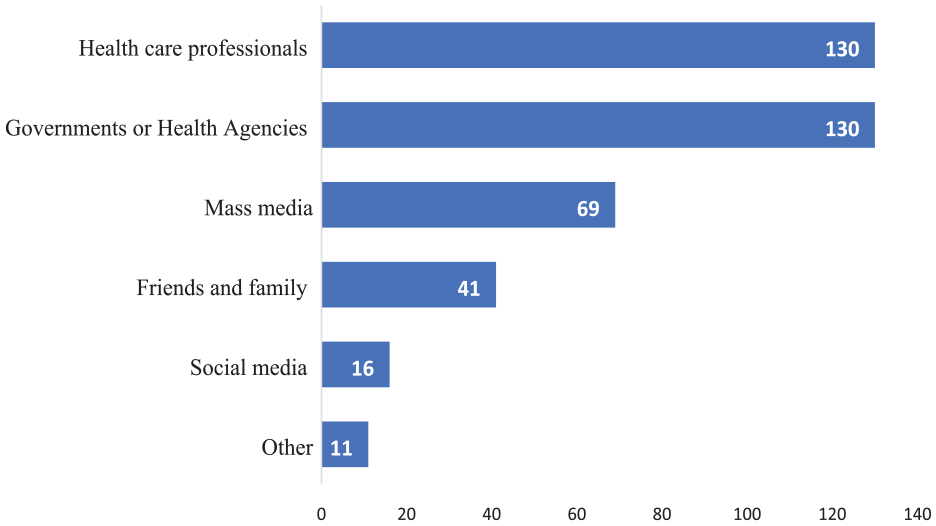
Sources of COVID-19-related information among patients with chronic kidney disease.
Comprehension was high as 91% (156/171) expressed understanding the information they received about COVID-19 from the sources they identified in the previous question. Those who did not understand information about COVID-19 were associated with having received a lower number of COVID-19 vaccine doses (P < .001). Age, sex, education, treatment type, residency, and province were not associated with understanding information about COVID-19 in univariate comparisons. Trust in information about COVID-19 was also high as 84% (144/172) of respondents expressed trusting the information they received from the sources they utilized. Those who did not trust the information they received on COVID-19 were associated with having received a lower number of COVID-19 vaccine doses (P = .005) or live in rural areas (P = .004).
Participants had favorable perceptions regarding the KT materials provided in the longitudinal serologic study, 85% (117/137), 87% (119/137), and 69% (92/133) found the newsletter, FAQ pamphlet, and antibody results letter easy to read and understand, respectively. About, 76% (53/70), reported that they found the information they received from the study team to be sufficient. Almost all the participants who did not seek information on COVID-19 from sources outside of the study found these KT materials easy to read and comprehend.
Perceptions About COVID-19 Infection and Vaccination in Patients With Chronic Kidney Disease
Regarding perceived susceptibility, 125/201 (62%) of respondents expressed some degree of concern (yes or somewhat) with contracting COVID-19 at the time of the survey. Female sex was associated with expressing more concern about getting a COVID-19 infection (P =.011) (Figure 2). Respondents that expressed some degree of concern toward getting infected with COVID-19 were associated with having sought out information on COVID-19 (P = .038).
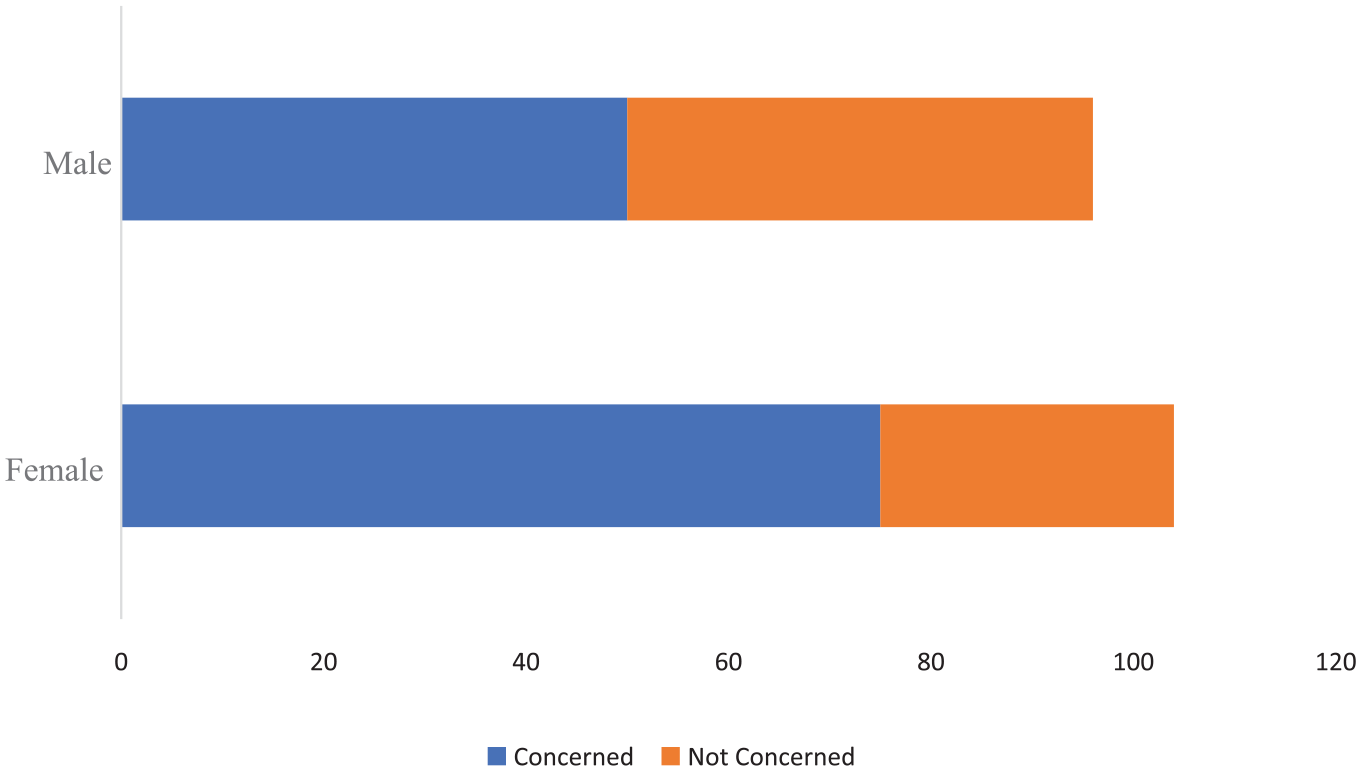
Concern regarding contracting COVID-19 among patients with chronic kidney disease by sex (P = .011).
Perceptions toward COVID-19 vaccines using a 5-point Likert scale are shown in Figure 3. Most, 77% (154/201), strongly agreed that vaccination was the best way to reduce the risk of severe COVID-19 and 71% (141/199) strongly agreed that the risk of severe illness or death from COVID-19 are greater than the risks of harm from the COVID-19 vaccines. Many, 71% (142/199), also strongly agreed that receiving additional COVID-19 vaccine doses provides more protection against the virus regardless of prior infection. Respondents who disagreed with the above statements about the COVID-19 vaccines were associated with having received a lower number of COVID-19 vaccine doses (P < .001) or residing in rural areas (P = .002).

Perceptions toward COVID-19 vaccination among patients with chronic kidney disease.
Content Analysis of Questions About COVID-19 Infection and Vaccination From Patients With Chronic Kidney Disease
A limited number of respondents 22% (44/201), provided questions they had regarding COVID-19 infection andvaccination, with the majority being male, university graduates, with 5 or more COVID-19 vaccine doses. Although most questions were related to vaccination, a few participants were interested in understanding the consequences of getting infected with COVID-19 and the present necessity of other health preventative behaviors (ie, masking, social distancing).
The content analysis revealed 4 major themes, expressed by 5 or more individuals (Table 2). The theme “COVID-19 Vaccination Strategies and Future Considerations” primarily revolved around questions related to the need for additional COVID-19 vaccine doses annually or with each new variant, as well as the administration or timing of these vaccine doses. The theme “COVID-19 Vaccine Effectiveness” encompassed questions related to the impact of the vaccine on transmission and protection, the evolution and future improvement of vaccine effectiveness, effectiveness of the vaccine in immunosuppressed individuals, and the effectiveness of boosters shots. The theme “COVID-19 Vaccine Safety and Long-Term Effects” pertained to concerns about the potential long-term effects and side effects of the COVID-19 vaccines. And finally, the theme “COVID-19 and Kidney Health” included concerns regarding the potential effects of COVID-19 infection and vaccination on patients with CKD, particularly in relation to kidney health and function.
Major Themes Surrounding Questions From Patients With Chronic Kidney Disease About COVID-19 Infection and Vaccination.

Two minor themes, expressed by 2 or 3 individuals, were also found. The theme “Skepticism and Criticism of COVID-19 Measures and Policies” revolved around criticism about various aspects of the COVID-19 response such as government actions and mandates, public health policies (ie, masking), and doubts about the transparency of information on COVID-19 vaccines. The second minor theme was “COVID-19 Immune Response” which encompassed questions about T-cell immunity, as well as the duration and differences between vaccine-generated and infection-generated antibodies, particularly in immunocompromised individuals. These questions were a follow up on information that respondents had received as part of the materials provided by the longitudinal COVID-19 serology team about their antibody results.
Discussion
This study offers insights into the COVID-19 information-seeking behavior of patients with CKD, their ability to comprehend and trust COVID-19 information from various sources, and their perceptions regarding COVID-19 infection and vaccination.
When seeking information about COVID-19, we found that patients with CKD used several different sources, with 77% using government and health care institutions as a source, compared with only 41% and 9% using mass media and social media, respectively. This is in contrast with the findings of Arevalo Iraheta et al, mixed methods study conducted from June to November 2020 in which patients undergoing dialysis and kidney transplant recipients received more information from news media (81%) than health care institutions (64%), and there was a greater usage of social media (36%) as a source. Given the fact that our study was conducted in 2023, some of the differences in our findings could be attributed to temporal variations in government communication strategies and the amount of information available on COVID-19, especially after the vaccines became available. In addition, our study cohort were slightly older, making them less likely to use social media. Several studies have reported that younger age, female sex, and a high level of educational attainment predicts HISB.21,22 However, we did not observe differences in COVID-19 HISB by these demographic factors or by CKD treatment type. Patients with CKD that sought information on COVID-19 were associated with having received a higher number of COVID-19 vaccine doses. This finding supports the idea that those who engage in HISB are more likely to adopt preventative measures. 16
Clear readability and comprehensibility of information on COVID-19 are crucial for enabling individuals, regardless of their educational background, to make informed decisions and adopt essential preventive measures. 23 Analyses on public health or government sources from 16 countries suggest that much of the information on COVID-19 are not readable for many individuals and a majority of resources exceed the recommended sixth to eighth grade reading level.23-25 Despite this, we found that most patients with CKD understood the information they received on COVID-19 from the various sources they utilized. Many also reported finding the KT materials provided within the longitudinal COVID-19 serology study easy to read and understand. We also observed that those who understood the information they received on COVID-19 were associated with having received a higher number of COVID-19 vaccine doses. This finding is supported by other studies that have shown a relationship between COVID-19 comprehension and engaging in protective health behaviors.26,27
Trust in health information sources during the COVID-19 pandemic has been a critical factor influencing public perception and health-related behaviors.28-31 However, mistrust in COVID-19 information is often fueled by the inconsistency of public health information, misinformation, and disinformation.32,33 We found that most patients with CKD trusted the information on COVID-19 they received, both from within the longitudinal COVID-19 serology study and from outside sources. This is consistent with other studies that have reported high levels of trust in COVID-19 information when using government and health care professionals as a source, and low levels of trust are seen when mass media and social media are heavily relied on for information.33,34 In this survey of individuals with CKD, trust on information on COVID-19 was not found to vary by age, sex, or educational attainment. This contrasts with findings by Figueiras et al, 28 were older adults, females, and those with higher levels of education (university diploma and postgraduates) reported higher levels of trust on COVID-19 information. 28 Due to their participation in a longitudinal COVID-19 serology study, it is likely that our study observed less variability in trust in COVID-19 information across demographic factors, as participants may have greater trust in health care professionals and COVID-19-related information. We also found that patients with CKD who trusted the information they received on COVID-19 were associated with having received a higher number of COVID-19 vaccine doses. This observation is supported by other studies that have shown that higher levels of trust on sources of health information are associated with an increased likelihood of adopting protective health behaviors.35,36
Several studies have shown that perceptions toward COVID-19 vaccination and perceived susceptibility to contracting the virus can predict whether an individual will engage in protective health behaviors.37-39 We found that most patients with CKD were concerned with getting infected with COVID-19. This finding is consistent with both quantitative and qualitative data from studies that have shown that people living with CKD, including patients on dialysis and kidney transplant recipients, are quite concerned or feel vulnerable about contracting COVID-19.40-42 We also found differences in this perceived risk by sex, with the female sex being associated with expressing more concern about contracting COVID-19, which coincides with findings from various populations in the literature.43-46 In addition, those who expressed concern about contracting SARS-CoV-2 were more likely to have sought out information about COVID-19, in the last 12 months. This is consistent with the findings from a study in Bangladesh that found that those with a higher perceived risk of COVID-19 were more likely to seek COVID-19-related information than those with a lower perceived risk. 22 In this survey we found that most believed in the effectiveness of the COVID-19 vaccines to reduce their risk of severe illness, that the benefits of the vaccine outweighed any potential risk, and the necessity of being up to date with additional vaccine doses irrespective of prior COVID-19 infection. Surveys administered among patients undergoing hemodialysis in Saudi Arabia, Italy, and France also found that that many respondents expressed positive perceptions regarding the benefits or effectiveness of the COVID-19 vaccines despite the high level of concern about contracting COVID-19.42,46
In this survey, respondents’ main questions revolved around the effectiveness of the vaccine, the timing and administration of additional vaccine doses, long-term safety and potential side effects of the vaccine, and the impact of COVID-19 infection or vaccination on kidney health. The major themes reflected in the general public’s perception toward COVID-19 vaccines expressed on Twitter during October to September 2022 from four countries (India, South Africa, the United Kingdom, and Australia) also centered on vaccine effectiveness, safety, and side effects. 47 Concerns about COVID-19 vaccine side effects and its potential impact on their donor kidney were also majorly reflected in a study that conducted semistructured interviews on kidney transplant recipients. 41 Skepticism of COVID-19 polices and questions on COVID-19 immunology were minor themes reflected in the questions posed by respondents in this survey. Criticisms related to the government’s COVID-19-relevant policies were also found as a subtheme in an analysis of comments by YouTube users on Canadian Prime Minister Trudeau’s COVID-19 daily briefings. 48
This study has 2 key strengths. First, this study provides information on the perceptions and HISB on COVID-19 among patients with CKD from two large Canadian provinces. Second, we assessed patients across the spectrum of kidney disease including non–dialysis-dependent CKD, individuals receiving dialysis, and kidney transplant recipients. Furthermore, this study demonstrates that HISB was associated with receiving additional vaccine doses, supporting the importance of trustworthy sources of information in changing patient health care–related behavior.
This study has several limitations. First, the race/ethnicity of respondents was not captured so we could not investigate racial differences in perceptions and HISB on COVID-19 in this population. Second, our findings are also limited to the Canadian health care context as COVID-19 messaging, vaccination strategies, and barriers to vaccination vary globally. Therefore, similar studies in different countries could differ. Third, the surveyed cohort consisted of patients with CKD who were enrolled in a longitudinal serology study and had at least one COVID-19 vaccine dose, potentially introducing selection bias. As those willing to participate in a serologic study and receive vaccines might differ from those who are not enrolled and/or have not received the vaccine, limiting the generalizability of our findings to a subset of patients with CKD who exhibit a proactive approach to their health. Fourth, another potential source of selection bias could have arisen from the fact that this survey was administered only to the CKD patients that had provided their emails when enrolling in the longitudinal serology study (902/2103). Lastly, the high percentage of participants with post secondary education (84%) may not fully represent the broader CKD patient population.
In conclusion, in this survey of patients with CKD, a majority actively sought out information related to COVID-19, and despite their concerns with getting infected and the potential impact it could have on their kidney function, many held favorable perceptions regarding the effectiveness and benefits of COVID-19 vaccines. Future studies employing diverse sampling methods across various geographical and sociodemographic contexts will contribute to a more comprehensive understanding of the perceptions and HISB related to COVID-19 in patients living with CKD. This knowledge will be essential to inform communication strategies, address barriers, and develop targeted interventions, ensuring sustained COVID-19 vaccine uptake within this vulnerable population.
Supplemental Material
sj-docx-1-cjk-10.1177_20543581241242550 – Supplemental material for Perceptions and Information-Seeking Behavior Regarding COVID-19 Vaccination Among Patients With Chronic Kidney Disease in 2023: A Cross-Sectional Survey
Supplemental material, sj-docx-1-cjk-10.1177_20543581241242550 for Perceptions and Information-Seeking Behavior Regarding COVID-19 Vaccination Among Patients With Chronic Kidney Disease in 2023: A Cross-Sectional Survey by Omosomi Enilama, Cynthia MacDonald, Pearl Thompson, Umair Khan, Selina Allu, Mary Beaucage, Kevin Yau, Matthew J. Oliver, Michelle A. Hladunewich and Adeera Levin in Canadian Journal of Kidney Health and Disease
Supplemental Material
sj-docx-2-cjk-10.1177_20543581241242550 – Supplemental material for Perceptions and Information-Seeking Behavior Regarding COVID-19 Vaccination Among Patients With Chronic Kidney Disease in 2023: A Cross-Sectional Survey
Supplemental material, sj-docx-2-cjk-10.1177_20543581241242550 for Perceptions and Information-Seeking Behavior Regarding COVID-19 Vaccination Among Patients With Chronic Kidney Disease in 2023: A Cross-Sectional Survey by Omosomi Enilama, Cynthia MacDonald, Pearl Thompson, Umair Khan, Selina Allu, Mary Beaucage, Kevin Yau, Matthew J. Oliver, Michelle A. Hladunewich and Adeera Levin in Canadian Journal of Kidney Health and Disease
Supplemental Material
sj-docx-3-cjk-10.1177_20543581241242550 – Supplemental material for Perceptions and Information-Seeking Behavior Regarding COVID-19 Vaccination Among Patients With Chronic Kidney Disease in 2023: A Cross-Sectional Survey
Supplemental material, sj-docx-3-cjk-10.1177_20543581241242550 for Perceptions and Information-Seeking Behavior Regarding COVID-19 Vaccination Among Patients With Chronic Kidney Disease in 2023: A Cross-Sectional Survey by Omosomi Enilama, Cynthia MacDonald, Pearl Thompson, Umair Khan, Selina Allu, Mary Beaucage, Kevin Yau, Matthew J. Oliver, Michelle A. Hladunewich and Adeera Levin in Canadian Journal of Kidney Health and Disease
Supplemental Material
sj-docx-4-cjk-10.1177_20543581241242550 – Supplemental material for Perceptions and Information-Seeking Behavior Regarding COVID-19 Vaccination Among Patients With Chronic Kidney Disease in 2023: A Cross-Sectional Survey
Supplemental material, sj-docx-4-cjk-10.1177_20543581241242550 for Perceptions and Information-Seeking Behavior Regarding COVID-19 Vaccination Among Patients With Chronic Kidney Disease in 2023: A Cross-Sectional Survey by Omosomi Enilama, Cynthia MacDonald, Pearl Thompson, Umair Khan, Selina Allu, Mary Beaucage, Kevin Yau, Matthew J. Oliver, Michelle A. Hladunewich and Adeera Levin in Canadian Journal of Kidney Health and Disease
Footnotes
Acknowledgements
The authors thank Zainab Sheriff, Katie Sharp, Mandana Rahimi, and Gail Klein for coordinating this study.
Ethics Approval and Consent to Participate
This survey was approved by the Sunnybrook Health Sciences Centre (CTO #3604) and the clinical research ethics board at the University. Participants indicated their consent through completion of the survey.
Consent for Publication
All authors read and approved the final version of this manuscript.
Availability of Data and Materials
All or portions of the de-identified data are available upon reasonable request to the corresponding author, Adeera Levin (
Declaration of Conflicting Interests
The author(s) declared the following potential conflicts of interest with respect to the research, authorship, and/or publication of this article: M.J.O. and M.H. are contracted Medical Leads at Ontario Renal Network, Ontario Health. M.J.O. is the owner of Oliver Medical Management Inc, which licenses Dialysis Management Analysis and Reporting System software. He has received honoraria for speaking from Baxter Healthcare. A.L. reports being a scientific advisor to, or member of, AstraZeneca, Bayer, Boehringer-Ingelheim, Canadian Journal of Kidney Health and Disease, Canadian Institutes of Health Research, Certa, Chinook Therapeutics, Johnson and Johnson, Kidney Foundation of Canada, National Institutes of Health (NIH), National Institute of Diabetes and Digestive and Kidney Diseases (NIDDK), Otsuka, Reata, Retrophin, and The George Institute; receiving research funding from AstraZeneca, Boehringer-Ingelheim, Canadian Institute of Health Research, Janssen, Johnson and Johnson, Kidney Foundation of Canada, Merck, NIDDK, NIH, Ortho Biotech, Otsuka, and Oxford Clinical Trials; having consultancy agreements with Amgen, AstraZeneca, Bayer, Boehringer-Ingelheim, Johnson and Johnson/Jansen, Reata, and Retrophin. No other competing interests were declared.
Funding
The author(s) disclosed receipt of the following financial support for the research, authorship, and/or publication of this article: This work was supported by the COVID-19 Immunity Task Force which is funded by the Government of Canada (grant 2122-HQ-000071).
Supplemental Material
Supplemental material for this article is available online.

Data Sharing
All or portions of the de-identified data are available upon reasonable request to the corresponding author, Adeera Levin (
References
Supplementary Material
Please find the following supplemental material available below.
For Open Access articles published under a Creative Commons License, all supplemental material carries the same license as the article it is associated with.
For non-Open Access articles published, all supplemental material carries a non-exclusive license, and permission requests for re-use of supplemental material or any part of supplemental material shall be sent directly to the copyright owner as specified in the copyright notice associated with the article.
