



Abstract
Fibrosis in inflammatory bowel disease (IBD) is a largely unresolved clinical problem. Despite recent advances in anti-inflammatory therapies over the last few decades, the occurrence of intestinal strictures in Crohn’s disease patients has not significantly changed. No antifibrotic therapies are available. This journal supplement will address novel mechanisms of intestinal fibrosis, biomarker and imaging techniques and is intended to provide a roadmap toward antifibrotic therapies in IBD.
Fibrosis is the final pathological outcome of the majority of chronic inflammatory diseases. 1 Fibrotic diseases across all organ systems, including the kidney, lung, pancreas and liver, are believed to contribute up to 45% of mortality in industrialized countries. 2 Our understanding of its underlying mechanisms, namely the accumulation of mesenchymal cells and excessive deposition of extracellular matrix (ECM), is increasing, with the first antifibrotic drugs now being in routine clinical use for idiopathic pulmonary fibrosis (IPF). 3
In contrast, knowledge in the field of fibrosis associated with inflammatory bowel disease (IBD), a life-long chronic relapsing-remitting inflammation of the intestine, is limited. More than 40% of Crohn’s disease (CD) patients with ileal disease manifestation will develop clinically apparent stricture formation, as shown in population-based studies. 4 Despite awareness of the clinical importance of fibrosis ultimately leading to intestinal obstruction, no specific antifibrotic therapy is available. Even less attention has been devoted to the second entity of IBD, ulcerative colitis (UC), and its complications linked to colonic fibrosis. 5 Immunosuppressive therapy in IBD may lead to a delay in disease progression 6 or reduction in the need for intestinal surgery, 7 but endoscopic balloon dilation as well as surgical approaches are still the major therapeutic tools for CD patients with symptomatic strictures. 8
The frequently observed progression of chronic inflammation toward the need for surgical intervention has led to the common belief that fibrosis is a one-way street. Novel observations indicate, however, that already-established strictures are reversible. After performance of strictureplasty in CD, the symptomatic recurrence rate was 39% for jejunoileal strictures and 36% for ileocolonic strictures. Of these recurrences, however, only 3% or 20%, respectively, were found at the previous site of strictureplasty. 9 When following asymptomatic patients radiologically, narrowing of the bowel caliber, indicating recurrence at the strictureplasty site, was noted in only 11% of patients after a median interval of two years. 10 On serial ultrasound examinations after strictureplasty, reversal of the thickness of the intestinal wall was found. 11 All of the above observations indicate the potential for reversibility of fibrosis.
Despite the large clinical problem and possible reversibility of fibrosis, the progress of developing novel antifibrotic drugs in IBD has been hampered by multiple obstacles. 8 The initial insult leading to IBD and the insults leading to a profibrotic phenotype of the disease are unclear. 2 No validated biomarkers are available that can stratify IBD patients into at-risk populations or that can be used to determine the degree of fibrosis or response to antifibrotic therapies.3,12 The progression of an initially inflammatory phenotype toward fibrostenosis is very slow and often takes multiple years. Finally, no defined clinical endpoints are available to measure the efficacy of any intervention. 12 This makes the design and pursuit of controlled clinical trials challenging to impossible.
To overcome these obstacles we need to continue to identify key pathogenetic factors critical in the process of intestinal fibrogenesis, which includes the development of animal models better reflecting the human disease process. The work on discovery of novel biomarkers for the prediction of fibrostenosis or response to therapy needs to be intensified and more solid endpoints for clinical trials in fibrosis are needed (Figure 1).
Working model for the development of future anti-fibrotic therapy approaches in inflammatory bowel disease.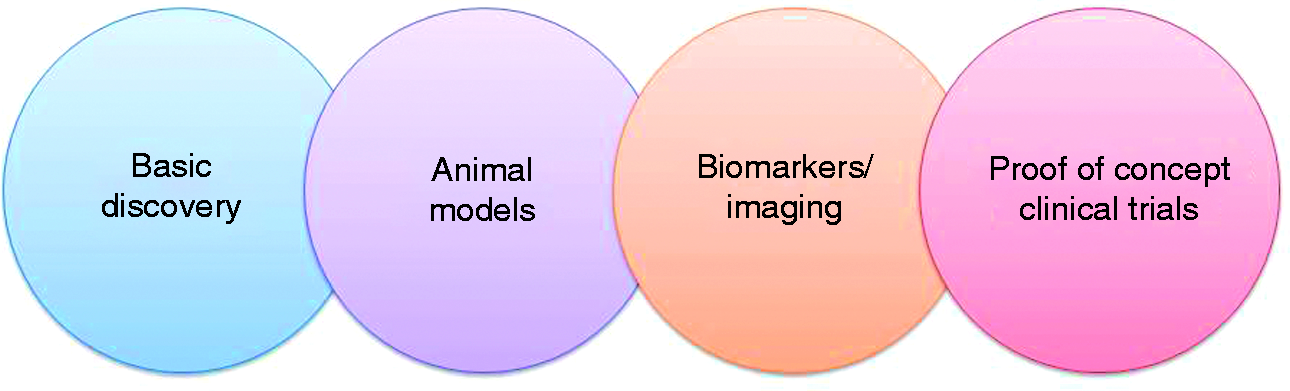
The following supplement on intestinal fibrosis is intended to provide you with a state-of-the-art update in the areas of these obstacles in the development of antifibrotic drugs in IBD.13–17 Ways to tackle these challenges in the future will be discussed. The articles are not to be read in isolation, but rather in synthesis creating a roadmap toward novel antifibrotic therapies in IBD. This project is an initiative of the United European Gastroenterology Young Talent Group and the authors were chosen based on being the world experts in their respective areas. They consist of pairing a future upcoming leader with an established expert. The articles cover the most promising basic mechanisms, biomarkers and imaging modalities. Finally, mechanisms of fistula formation will be discussed, the second complication of wound healing in IBD, as a means to provide novel targets for modulating intestinal repair.13–17
In summary, fibrosis in IBD is a largely unresolved clinical problem. Despite recent advances in anti-inflammatory therapies over the last few decades, the occurrence of intestinal strictures in CD patients has not significantly changed. No antifibrotic therapies are available. This supplement will address novel mechanisms of intestinal fibrosis, biomarker and imaging techniques and is intended to provide a roadmap toward antifibrotic therapies in IBD.
Footnotes
Funding
This research received no specific grant from any funding agency in the public, commercial, or not-for-profit sectors.
Conflict of interest
None declared.