




Abstract
Objectives:
Major depression is common in patients hospitalized with congestive heart failure and is independently associated with increased re-hospitalization and mortality.
Methods:
Hereby, we report the treatment for an elderly congestive heart failure patient with frequent emergency department visits having major depression and hopelessness.
Results:
Treatment outcomes measured showed that depressed scores of psychosocial needs were reduced with life review interview therapy in a palliative care day center.
Conclusion:
We hypothesize that multidisciplinary team’s approach to treatment was important for this case.
Introduction
Major depression is common in elderly patients hospitalized with congestive heart failure (CHF) and is independently associated with increased re-hospitalization and mortality. 1 Usual current treatment for major depression can be limited to use of antidepressant. 2 However, prescribing antidepressants does not resolve any spiritual distress, especially since the elderly are often confronted with loneliness, anxiety, worry about near future death and debility, resulting in low self-esteem or depression. From a narrative therapy approach, to address these psychological problems, a technique called life review has been used. It is defined as “the progressive return to consciousness of previous experience, which can be reviewed with the intention of resolving the issues of past conflict, thus giving hope to the significance of one’s life.” Previous studies have shown the positive effects of life review interview (LRI) on depression, self-esteem and life satisfaction. 3 In this study, we reported LRI therapy on an elderly patient with advanced CHF suffering from major depression and hopelessness and was treated with LRI therapy in a palliative care (PC) day center. Her depressed mood and psycho-spiritual needs were markedly reduced after receiving the therapy.
Case history
Madam X was an 86-year-old Chinese woman with poor social support. She was referred to our PC day center because of her advanced CHF in New York Heart Association (NYHA) Class 3. She also has history of hypertension, diabetes mellitus, hyperlipidemia, atrial fibrillation and ischemic heart disease with percutaneous coronary intervention. Her ejection fraction (EF) was 21%. Regarding her social background, she lived alone at home after her husband passed away. Her 43-year-old daughter lived far away with rare contact. In 6 months before receiving PC, she had frequent emergency department (ED) visits due to fluid overload, sepsis and repeated falls. She was deconditioned with bilateral lower limb weakness and was only able to walk slowly with a stick.
During the PC team’s initial assessment, her facial and general edema were related to her poor drug and fluid compliance. Fatigue and shortness of breath were also noted at rest. In addition, her depression was worsened due to grief from the loss of her husband, yet the prescribed antidepressants were without much improvements. She also expressed loneliness since there were only few relatives in Hong Kong. The impaired self-care ability had led to her feelings to loss of control and low self-esteem. Spiritually, there were feelings of hopelessness and helplessness. Her total score of Chinese version of Spiritual Needs Assessment for Patients (SNAP) 4 was 63 with spiritual subscale >13 which indicated significant spiritual needs while Hospital Anxiety and Depression Scale (HADS) score 5 revealed significant depressed mood at that time (Table 1).
Item scores of SNAP and HADS-depression scores before and after short-term LRI.

SNAP: Spiritual Needs Assessment for Patients; HADS: Hospital Anxiety and Depression Scale; LRI: life review interview.
The question stem of SNAP was “How much would you like help with the following?”
Response options were “very much” (4 points), “somewhat” (3 points), “not very much” (2 points) and “not at all” (1 point).
HADS-depression score ⩾8 indicates significant depression.
Madam X herself wondered how she could find hope and meaning in her life. To address this, she went through LRI therapy 3 for psycho-spiritual well-being support from PC team in the PC day center.
During LRI therapy, a trained interviewer/therapist conducted the therapy for her life review. A total of four sessions with 60 min, with a 1-week interval between each session, were conducted. In the first three sessions, the patient was asked to share significant life events and make stories about their life. The therapist would then reflect, consolidate patient’s happenings and to explore their unique meanings in life. Important keywords including both positive and negative elements of the interviews were recorded and summarized in the production of album/book with patients. Patient was also encouraged to select photos and drawings relevant to their stories out from the available resources in the interview room to decorate their album/book. During the last session, Madam X and the interviewer viewed the album together and agreed on the LRI contents. The therapist would follow up debriefing at the end of session to affirm patient’s life review from another meaning-making perspective in life. The album consisted of 50 pages funded by the day center (Figure 1). After the LRI therapy, Madam X reported that the LRI treatment had restored her hope and enabled her to have better communication with her daughter. Her daughter reflected that she could now better understand her mother. Madam X also expressed her wish to join more social gatherings and outdoor activities such as flower shows if possible. After therapy, she participated in almost all activities arranged by the PC day center. The patient and her daughter highly appreciated our arrangements. In the day center, Madam X could have social gatherings with other patients, such as enjoying opera, music video, watching television, doing some hand-made work, hair cut service and joining outdoor activities like going to Ocean Park. In fact, she has had the highest attendances rates (about two to three times per week) in our center. In addressing her drug and diet compliance, nurse counseling and volunteer clergy visits were also arranged for her as a part of psychosocial support to maintain her psychological well-being upon completion of LRI therapy.
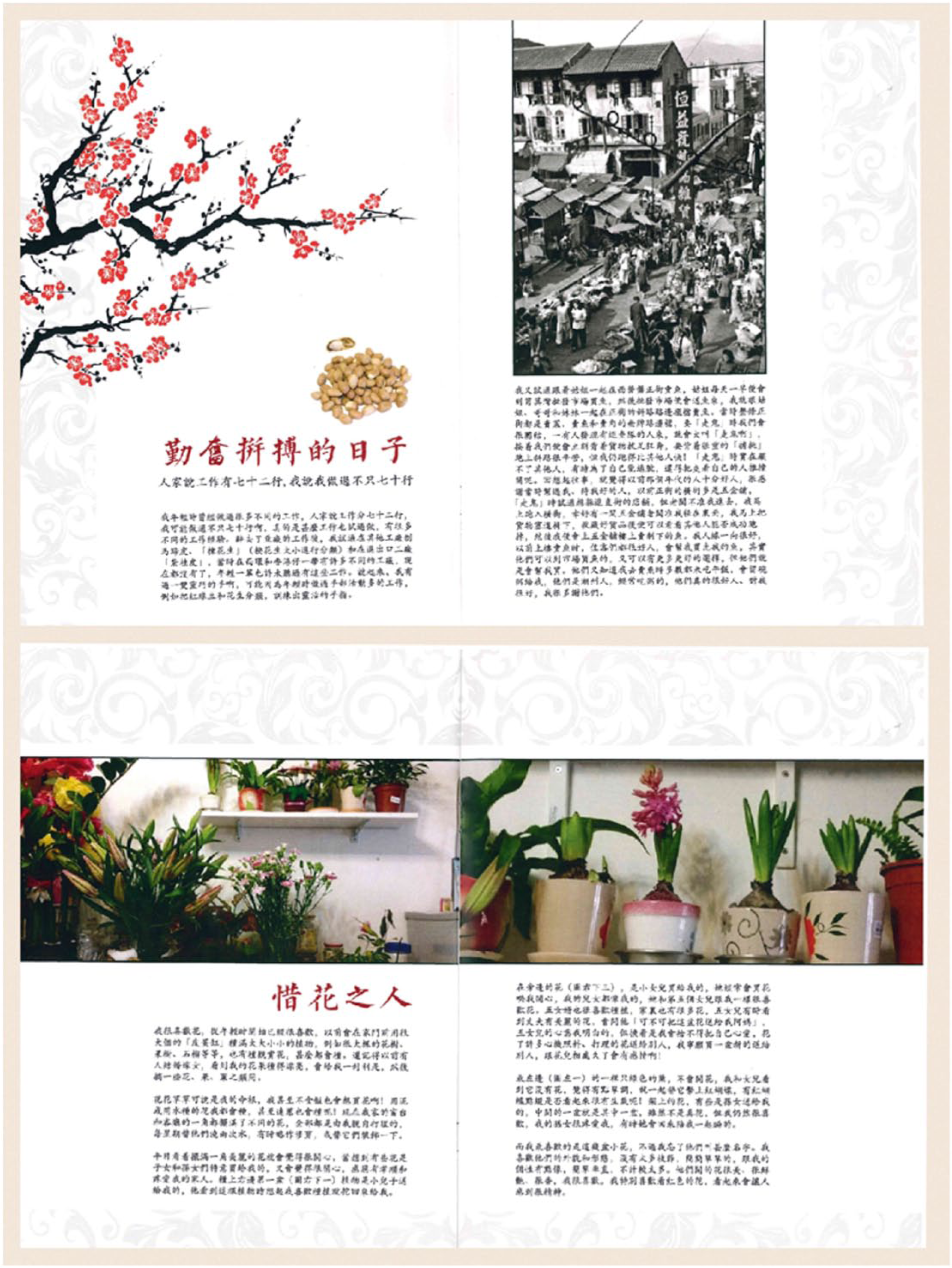
Sample of the life review book.
After 3 months of palliative day service, her mood was improved. The Edmonton symptom scores 6 of fatigue, mood and shortness of breath were improved (5 to 2, 7 to 3, 8 to 2 out of 10, respectively). The scores of SNAP and HADS-depression subscale were also reduced, which revealed less spiritual needs and reduced depression (Table 1).
Discussion
In this case, LRI provided psycho-spiritual support to an elderly CHF patient facing the terminal illness. For patients suffering from advanced CHF, the disease is often characterized by progressive deterioration over several years with episodic exacerbations that gradually becomes more life threatening over time. At more advanced stages, patients can experience a poor quality of life (QOL) associated with significant functional impairment, heavy symptom burden, mood problems and great spiritual distress related to end of life. 7 In a PC center, LRI therapy has helped patients achieve a better sense of purpose and eased their suffering in depressive symptoms similar as seen in advanced cancer patients. 3 Benefits of LRI can possibly be made for individuals with other by raising patients’ confidence and improving their coping skills. By enhancing spiritual well-being, her mood and QOL might also be improved.7,8
Previous studies showed that chronically ill people with frequent ED visits were associated with complicated psychosocial problems with limited access to support systems and inadequate home care support.9,10 PC services provided care by giving a multidisciplinary and individualized approach for addressing spiritual distress of advanced CHF patients. LRI therapy might help to reduce the psycho-spiritual needs more effectively with the multidisciplinary approach including input from pastoral worker and social worker.
It has been shown that depression occurs commonly in CHF elderly patients with conventional treatment usually being limited to the use of antidepressants, namely, a selective serotonin reuptake inhibitor and tricyclic antidepressant. However, the side effects, drug interactions and adverse reactions could affect the compliance in these patients, affecting the overall therapeutic benefits. Proposing LRI as an alternative, psycho-spiritual distress can be treated without the adverse reaction of the antidepressants could be avoided.
In conclusion, this case shows how LRI could help reduce psycho-spiritual needs and depressed mood by relieving psycho-spiritual distress and enhancing social support with the multidisciplinary approach in the PC day care setting.
Footnotes
Declaration of conflicting interests
The author(s) declared no potential conflicts of interest with respect to the research, authorship and/or publication of this article.
Ethical approval
Our institution does not require ethical approval for reporting individual cases or case series.
Funding
The author(s) received no financial support for the research, authorship and/or publication of this article.
Informed consent
Written informed consent was obtained from a legally authorized representative(s) for anonymized patient information to be published in this article.