




Abstract
Background:
COVID-19 has instigated many challenges for all groups of society, but these problems have been more tangible and difficult for female heads of households. The purpose of the present study is to analyse the lived experience of Iranian female heads of households during the COVID-19 pandemic.
Methods:
The present research was conducted with a qualitative approach and qualitative content analysis method on 40 female heads of households. Data collection was done through purposeful and snowball sampling and via face-to-face, semi-structured interviews from 1 September 2021 to 30 March 2022. Data management was done using MAXQDA-2018 software, and the analysis was done using the Graneheim and Lundman analysis method. Also, to increase the trustworthiness of the results, Guba and Lincoln’s criteria were followed.
Results:
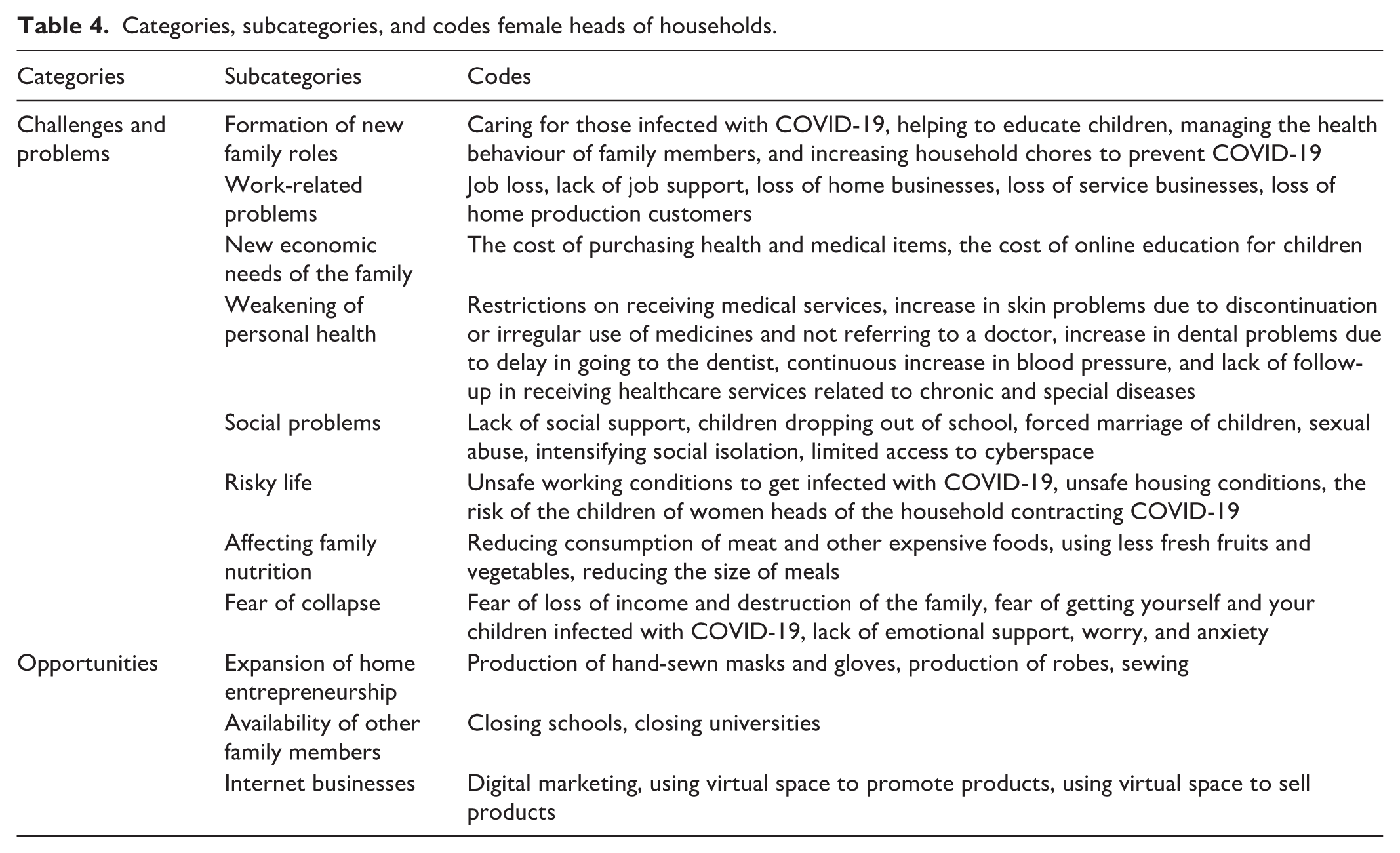
A total of 180 codes, 2 main categories, and 11 subcategories include: (1) challenges and problems (formation of new family roles, work-related problems, new economic needs of the family, weakening of personal health, social problems, risky life, affecting family nutrition, fear of collapse); (2) opportunities (expansion of home entrepreneurship, availability of other family members, internet businesses) were extracted from the data analysis.
Conclusion:
In general, based on the results, the COVID-19 pandemic, in addition to creating numerous personal, family, and social challenges for female heads of households, has also created positive and effective opportunities in their lives. Their resilience and willingness to make sacrifices become even more pronounced, especially during severe crises. Therefore, measures such as financial support from relevant organisations, easy access to necessary health services, and promoting their ability to manage situations in times of crisis through strengthening their resilience as a key strategy for coping with adversity can play a vital role in enhancing the health and quality of life of female heads of households and their children.
Background
The COVID-19 outbreak in 2019 poses the most significant risk to public health and is the most lethal pandemic since 1918 to date.1–4 The mortality of about 7 million individuals by the conclusion of 2023 serves as a clear indication of this reality (www.worldometers.info). The COVID-19 pandemic has brought about significant alterations that have impacted the lives of all social strata and heightened the burdens on all aspects of existence. 5 During natural catastrophes and social crises, women, as a vulnerable demographic, have more impact and encounter more challenges compared to men. This is primarily due to their restricted access to resources, as well as social and cultural constraints. Additionally, these events exacerbate pre-existing societal inequities. 6 Women who are the heads of households have been disproportionately impacted by the onset and spread of the COVID-19 pandemic. Their numbers have notably grown, particularly in undeveloped nations. A female head of a home refers to a woman who assumes the leadership role within a family due to circumstances such as separation, divorce, migration, or widowhood.5,7 Prior to the onset of the COVID-19 pandemic, Iran had over 3 million women serving as heads of households. Among them, approximately 70 thousand women assumed this role due to the death of the male head of the household caused by COVID-19. Additionally, around 800 women who were heads of households also lost their lives due to COVID-19. 8
Women who are heads of households face greater challenges compared to men due to their multiple roles in managing the home, raising and caring for children, and working outside the home with low pay and high levels of stress.9,10 As a result, they experience more social, economic, and psychological hardships than other women. These women not only provide financial and spiritual support for their family members but also bear the sole responsibility of caring for their children. Juggling these multiple tasks exposes these women to challenging circumstances. Moreover, women encounter gender-based prejudice in several domains, such as education, income, rights, and economic prospects. Consequently, their offspring often confront emotional instability, which adversely impacts their bond with the female head of the family.11–13
The COVID-19 pandemic has caused emotional and psychological issues for women who are the heads of families, impacting their capability and performance.8,14–16 They have the responsibility of covering household expenditures and determining the allocation of household revenues. As a result of the adverse impact of COVID-19 on companies, particularly small-scale enterprises and services, they face heightened pressure compared to previous circumstances. 9 The outbreak of COVID-19 presented various challenges for women, who were the heads of households. These challenges included managing their economic situation, facing rejection from society, dealing with cultural stigma, re-evaluating their own beliefs, making efforts to strengthen social connections, and placing special emphasis on the education and overall growth of their children. 17 In addition, the women affected by the COVID-19 outbreak have experienced a decrease in their ability to adapt or recover, engage in remarriage, engage in prostitution, work as domestic help, exhibit violence towards children, experience depression, live with their spouse’s parents, and ensure their children’s education due to the lack of access to online educational resources. 5 In their 2022 research, Sefidgarbaei and Mansouri examined Iranian women who were heads of households and found that they encountered issues like employment instability, sexual harassment, a lack of well-being, and mental distress during the COVID-19 pandemic. These challenges have the potential to jeopardise their overall health. 18 The findings of another study conducted in Iran indicated that the main challenges faced by female-headed households during the COVID-19 pandemic included a bleak outlook on the future and stress, a sense of discrimination and injustice, social exclusion, and moral vulnerability. 8 In their study conducted in Ethiopia, Akalu and Wang 19 found that female-headed households saw a greater impact on their food security during the COVID-19 period compared to male-headed households. These women faced more difficulties in accessing food, which posed a barrier to their overall food security. Women who are the heads of families need particular consideration during the COVID-19 crisis due to their concurrent experiences of poverty, gender discrimination, and insufficient social assistance. 20
Women, who are the heads of families in Iran, are particularly susceptible to the impacts of the COVID-19 pandemic. By examining their experiences, we may get insight into their specific issues and challenges. Tehran, the capital of Iran, is known as the most populous and diverse city in the country. It has a very high population density and cost of living, with the highest housing and urban service expenses in Iran. These factors can intensify the economic pressure on female-headed households. In smaller cities across Iran, social support for female heads of households tends to be stronger; however, in Tehran, due to the rise of individualism, such support is less prevalent. As a result, female-headed households in Tehran face distinct and more complex challenges. 21 Politicians and policymakers can then use this information to take more effective action to improve the situation for these women. Furthermore, there has been little exploration of the requirements and difficulties faced by female heads of households, with the majority of research undertaken in this area being of a quantitative nature. Hence, this research was undertaken to examine the first-hand encounters of women in Iran during the COVID-19 period, using a qualitative methodology.
Methods
Design of the study and participants
This study adopted a qualitative approach using conventional content analysis. Given the limited existing knowledge in the area under investigation, qualitative content analysis was deemed the most appropriate method. Qualitative research emphasises the exploration of the complexities and intricacies of the phenomenon, with the researcher playing an active role throughout the study. Content analysis enables the direct extraction of themes from textual data, thereby facilitating a deeper and more nuanced understanding of the subject matter. 22
The study participants were female heads of households in Tehran whose lives were impacted by the COVID-19 outbreak. The inclusion criteria for participation in the study consisted of being female, over 18 years of age, having a minimum of 1 year of experience as the head of a household, being able to communicate verbally, expressing a desire to take part in the research, and adhering to health regulations throughout the interview. COVID-19 had a profound impact on all families, but its effects were more significant on female-headed households due to their more vulnerable financial and social conditions. It can be said that COVID-19 affected the lives of all families to some extent, particularly those headed by women. To ensure the inclusion of participants most affected by the pandemic, interviews were initiated in institutions where female heads of households sought financial and social support—settings in which women were more likely to have been significantly impacted by the consequences of COVID-19. The primary sampling technique used in this study was purposive sampling, with the occasional utilisation of snowball sampling to find individuals. Therefore, the researcher selected many female heads of households who fit the study’s inclusion requirements by consulting several centres and organisations focused on supporting women, such as the Imam Khomeini Relief Committee and Welfare. Subsequently, he contacted them and delivered a concise overview of the investigation to ascertain the specific day and location for the interview. The women leaders of the home determined the specific time and location for the interview. Following the conclusion of each interview, the researcher requested that the participant provide referrals of additional women who met the study’s participation requirements. A total of 32 individuals were chosen via purposive selection, while an additional 8 people were picked by snowball sampling. The demographic details of the participating women are listed in Table 1. The majority of the interviews took place at the participants’ private residences or their professional establishments, with just the participant and the researcher present.
Description of the demographic characteristics of the participants.

Data collection
Data were collected via a semi-structured interview conducted in person. The researchers, drawing on their expertise and reviewing several studies in the area, formulated a series of interview questions over numerous online sessions, including all the authors of the publication. The interview questions were first tested in three trial interviews. Subsequently, an online conference was conducted to make final adjustments to the interview questions, resulting in the finalisation of the interview guide by making modest modifications to the prior questions (Table 2). The interview questions were intentionally designed to be broad and open-ended, as the study’s outset was unclear about the specific challenges and opportunities female-headed households had encountered during the COVID-19 pandemic. Nevertheless, to guide the interviews and ensure alignment with the study’s objectives, a few general guiding questions were developed and used as prompts. The research team, particularly the first and second authors, conducted over 20 qualitative studies during the COVID-19 pandemic with various population groups. Given that some participants in this study were illiterate, special attention was paid to designing interview questions that were understandable and accessible to all. Based on the researchers’ prior experience and a review of relevant literature, several general questions were initially developed. These questions were then piloted in three interviews, revised accordingly, and finalised to form the interview guide. While the guide included general questions, the interviews themselves were conducted flexibly, allowing follow-up questions based on participants’ responses.
Guide to interview questions with female heads of households.

The interviews included more than just the predefined interview questions; additional questions were posed based on the participants’ responses. Additionally, throughout the interview, the researcher used field notes as needed, and the observations made were then transformed into codes. Furthermore, specific questions were posed during the interviews to ensure continuous scrutiny and comparison of the intended code. The interviews had an average duration of 62 min, with the smallest interview being 34 min and the longest one lasting 87 min. All interviews were conducted by the third author, a female researcher with a Master’s degree in psychology and extensive experience and expertise in qualitative research and interviewing. At the beginning of each interview, the researcher provided a brief introduction of herself and explained the purpose of the study to the participants. In addition to outlining the study’s objective, how the results would be reported was also clarified. Finally, the interviews were recorded with the participants’ written informed consent. To ensure that participants felt comfortable sharing their experiences, the interviews were conducted in private, with only the researcher and the participant present.
Data analysis commenced after the first interview, and each code generated during the interviews was then presented as questions in subsequent interviews, ensuring a constant comparison of the codes to provide more comprehensive data. Data collection and analysis persisted until reaching the point of data saturation, 23 which occurred after 35 interviews. However, to ensure greater certainty, the researchers conducted an additional five interviews. Ultimately, no new code was generated, and the research concluded with the participation of 40 women who were heads of households.
Data analysis
Data analysis was performed following the five-step method proposed by Graneheim and Lundman, 24 utilising MAXQDA-2018 software. 25 The analysis process was collaborative: although three team members (including the first, third, and corresponding authors) directly conducted the coding and categorisation, all team members were regularly updated and invited to provide feedback, which was incorporated as needed. Initially, interviews were transcribed promptly by the primary researcher and a colleague. Subsequently, two researchers thoroughly reviewed the transcripts multiple times to gain a comprehensive understanding. They then conducted a detailed line-by-line and word-by-word examination to generate initial codes. These codes were grouped into categories based on similarities, and their interrelationships were explored. In the final step, broader and more abstract themes were developed by synthesising these categories. After completing the analysis, a comprehensive review session was held with all co-authors, during which minor revisions were made to the category and subcategory labels to enhance clarity and accuracy. A detailed example illustrating the coding process employed in this study is provided in Table 3.
An example of data analysis.

Trustworthiness
The Guba and Lincoln criteria were adhered to enhance the quality of the outcomes. 26 To enhance the research’s credibility, the researchers adhered to the idea of variety in sampling, ensuring the inclusion of women who were heads of families with varying socioeconomic situations and demographic traits. Following each interview, the researcher conveyed his overall comprehension of the participants’ statements to ascertain his ability to grasp their words and experiences, therefore eliciting their acceptance. Furthermore, upon completion of the research, the researchers shared the table containing categories, subcategories, codes, and quotes with seven participants via social networks. The purpose was to ascertain whether the researchers accurately captured their conversations and experiences. All participants approved the findings with only minor revisions. To ensure confirmability, the researchers shared the data coding process and article results with four renowned qualitative research experts. They made the required adjustments based on the experts’ recommendations. The table of results was presented to the specialists collaborating with the female heads of the home, and it received their approval. To enhance the reliability of the article, all contributors were actively involved in the analysis and coding processes. Their opinions were solicited and discussed in online meetings. Ultimately, the names of the categories and subcategories were finalised with unanimous approval from all authors. To enhance the generalisability of the research, a comprehensive account of the entire research procedure, spanning from participant selection to data analysis, was provided. A substantial number of direct quotes from participants were included. Additionally, the research findings were shared with three female heads of households who met the study’s criteria but did not participate. Ultimately, their endorsement was obtained.
Ethical considerations
To adhere to ethical principles in the study, explicit written informed consent was obtained from all participants, emphasising their voluntary participation and the option to discontinue or reschedule the interview at any time. For participants who were illiterate, the process of obtaining written informed consent was conducted as follows: the researcher read the consent form aloud in the presence of the participant and a legally authorised representative. Upon confirming the accuracy and content of the consent form, the legally authorised representative signed the document on behalf of the participant, thereby ensuring ethical standards were maintained. In addition, they received instructions on how to carry out the interview and disseminate the findings. Furthermore, they were guaranteed that their identities would be kept anonymous until the results were published. Furthermore, stringent health measures, including the use of masks and gloves, were implemented throughout the interviews to prevent the transmission of COVID-19 to the participants.
Results
In this research, 40 female heads of household participated. Also, from the analysis of the interviews, 180 codes, 2 categories, and 11 subcategories were obtained (Table 4).
Categories, subcategories, and codes female heads of households.
Challenges and problems
The first classification derived from the data pertained to the obstacles and difficulties faced by female household heads. Female household leaders faced several health, social, familial, and economic challenges during the COVID-19 pandemic. These challenges stemmed from the vulnerable state of their family and their professional situation, as well as societal perceptions of them. Indeed, the COVID-19 pandemic led to a decline in the social and economic standing of women who are the household heads, exacerbating the pressures they already faced.
Formation of new family roles
The advent of COVID-19 in Iran has brought about significant transformations in family structures, owing to the imposition of quarantine measures and the need to adhere to health procedures. This transformation was particularly evident in the lives of women, who were the only leaders of their families, as they had to assume the responsibilities of both a father and a mother for their children simultaneously. The COVID-19 pandemic has had a significant impact on Iranian families because of its widespread occurrence and the high number of infections. One consequence of this was the emergence of new familial responsibilities for women, who were the leaders of their households. One of these responsibilities was to facilitate the education of youngsters. Due to the COVID-19 pandemic and the subsequent closure of schools, the responsibility of teaching children fell upon families. In particular, women who were the sole leaders of their households and without a partner had to assist their children in the educational process. Naturally, a subset of these female heads of households lacked substantial education, which posed a barrier for their offspring. Female heads of households had the additional responsibility of caring for COVID-19 patients inside their families. This task was particularly challenging for those without a spouse present, as they experienced heightened pressure and dedicated significant time to the care of these patients. Additionally, mothers who were the heads of homes had the issue of effectively supervising their children’s conduct to minimise the risk of developing COVID-19. They constantly had to regulate the children’s conduct and oversee their comings and goings to prevent them from bringing home contaminants and transmitting infections to other family members. Furthermore, the majority of these women were employed elsewhere. However, due to the COVID-19 pandemic, the number of household chores increased, necessitating a significant amount of time dedicated to washing and cleaning. This added a substantial burden of stress to them.
Whenever one of the children contracted COVID-19, I assumed the responsibility of caring for all of them. At times, I even felt as though I had taken on the role of a nurse. (41 years old) My children contracted the coronavirus on multiple occasions, which caused me significant distress. I had to remain vigilant and attentive to their needs around the clock. (40 years old) Despite my limited educational background, I took on the responsibility of working with children to ensure that they do not fall behind in their studies. (39 years old) Due to my children’s noncompliance with hygiene protocols, I found it necessary to caution them in order to prevent them from contracting COVID-19. Unfortunately, my attempts to enforce these measures often resulted in conflicts within our household, as my children were resistant to my warnings. (45 years old) Due to the proliferation of the coronavirus, my domestic responsibilities have escalated. I have been compelled to undertake the tasks of cleaning and laundering my children’s garments. Regrettably, I lack the convenience of a washing machine, which has resulted in fatigue and an excessive workload. (43 years old)
Work-related problems
The majority of female heads of households were employed in informal occupations, such as domestic cleaning, geriatric care, hospitality, vending, and even waste management. Due to the COVID-19 pandemic, several occupations saw a decline, resulting in a reduction or entire cessation of income for these women. As they lacked insurance coverage, they faced significant financial strain. Several women engaged in the activity of hawking or producing homemade food and selling it in the market. However, due to the emergence of the COVID-19 pandemic, there was a significant decrease in the demand for their products. In addition, the majority of recreational and tourist establishments that marketed women’s home items were closed, resulting in a lack of buyers for their merchandise.
Prior to the onset of the COVID-19 pandemic, I would prepare meals at my residence, transport them, and engage in their commercialization. This endeavour yielded a favourable income and left me content. However, the advent of COVID-19 resulted in a significant decline in customer demand, leading to a cessation of sales. (51 years old) After the wedding hall closed, my employer provided me with a meager sum of money that only covered my expenses for two months. This situation posed significant challenges for me, causing immense pressure and leaving me unsure of how to proceed due to my limited educational qualifications. (45 years old) I was engaged in street vending and experiencing contentment; however, with the rapid transmission of the coronavirus, there was a significant decline in consumer purchases, resulting in a substantial reduction in my income. (34 years old)
New economic needs of the family
The female heads of households experienced both job stagnation and a decline in income. Additionally, the economic demands of their families escalated because many of them had children who required access to the internet and computers for their education, which had transitioned to an online format. Consequently, their family expenses exceeded previous levels. Furthermore, the acquisition and procurement of sanitary products to prevent COVID-19 have escalated the financial burdens faced by female heads of households, thereby jeopardising their well-being. Occasionally, to mitigate these expenses, they resorted to reusing the same mask many times, therefore increasing their susceptibility to contracting COVID-19.
Our financial circumstances were dire, as we had no significant source of income. My children needed internet access and a laptop for their studies, but the cost was prohibitively high and unaffordable for us. (39 years old) Every week, I incurred significant expenses in purchasing essential hygiene items, including masks and detergents. Unfortunately, there were instances where I had to forgo caution due to financial constraints. (36 years old) Occasionally, to economise, I compelled the children to use a single mask for multiple days. Despite being aware of the associated risks, I endeavoured to cleanse the mask daily or dilute the alcohol I purchased with water in order to extend its longevity. (40 years old)
Weakening of personal health
The escalation of COVID-19 transmission in Iran, together with the rise in the number of infected individuals and the implementation of quarantine measures, has led many female heads of households to either neglect their medical treatment or postpone it. Several women with dermatological issues refrained from seeking medical attention because of concerns about contracting COVID-19 and financial constraints. Furthermore, a majority of the women who took part in the study reported an exacerbation of oral hygiene issues. Moreover, women suffering from chronic and specific ailments had disruptions in their treatment procedures. The prolonged proliferation of COVID-19 in Iran poses a significant risk to the health of female heads of households, as they may encounter several health and treatment obstacles.
Before the outbreak of COVID-19, I used to consult a dermatologist every month for a new prescription. However, due to the spread of COVID-19 in Iran, I ceased visiting my doctor. Consequently, the number of spots on my face has significantly increased. (35 years old) Due to concerns about the coronavirus, I infrequently visited the doctor to have my blood pressure measured or undergo a body fat analysis. As a result, I experienced severe discomfort and was on the brink of death. Upon consulting a doctor, it was revealed that my blood pressure had reached a dangerously high level of 18 units. (59 years old) Due to dental damage, I sought the services of a dentist, but I postponed my visit out of fear of contracting the coronavirus. I eventually sought treatment after a year, experiencing nightly pain and significant discomfort due to the unfavorable circumstances. (42 years old) Due to my diagnosis of multiple sclerosis (MS), I was required to undergo monthly injections. However, when the COVID-19 pandemic emerged, I experienced apprehension about attending these appointments. Unfortunately, as a result of this hesitation, my condition deteriorated, leading to increased difficulty in mobility. (67 years old)
Social problems
Women, who were the primary heads of households, had several social challenges during the COVID-19 pandemic. One of the issues they faced was the absence or insufficient degree of social assistance. Indeed, the organisations that assisted women who were the primary earners in their households failed to adequately help them throughout the COVID-19 period, exacerbating their existing challenges. The attrition of children from women-led households was another social concern resulting from the decline in revenue and rise in expenditures. This was primarily due to their limited access to online education, which significantly impacted their educational pursuits. Due to financial constraints, several female heads of households were compelled to agree to the marriage of their adolescent daughters as a means of reducing family expenditures. This decision might potentially lead to numerous health issues for the children. Moreover, the decline in income and the incapacity to afford housing and living costs resulted in the vulnerability of female family heads, leading to their exploitation by others in their vicinity as a means to sustain their livelihoods. Certain women were coerced into consenting to a temporary marriage or engaging in extramarital relations beyond the bounds of Sharia law in return for financial compensation. Furthermore, due to the limited reading skills of the majority of female heads of households and the decline in in-person visits, they could not use virtual platforms. This predicament exacerbated their isolation, which in turn might contribute to the development of depression and other psychiatric ailments.
Although organisations provided assistance, their contribution was minimal, and I experienced increasing pressure daily. (59 years old) Due to my financial constraints, I was unable to purchase laptops and tablets for my children, resulting in their discontinuation of studies and effectively missing an entire year of education. (39 years old) Our expenditures were excessively high. Despite my daughter being only 15 years old, a potential suitor expressed interest in her. In order to alleviate our financial burden, I proposed that she enter into marriage. This way, our expenses would be somewhat reduced, and her husband would be obligated to purchase a laptop for her to pursue her studies. (47 years old) Upon witnessing the adverse impact of the Corona pandemic on my income, leading to financial difficulties and increased pressure, certain individuals in my vicinity proposed the idea of establishing a relationship with them or assuming the role of a concubine, to provide financial support. (29 years old) Throughout the Corona pandemic, our household experienced a lack of visitors, and I refrained from venturing outdoors due to the unavailability of work opportunities. Consequently, I remained confined to my residence, feeling isolated and disconnected from others regularly, as my unfamiliarity with internet usage further exacerbated my sense of loneliness. (59 years old) With the continuation of COVID-19, everything fell apart; our situation became very bad, and there was nothing I could do. My daughter had previously had a suitor, but since she was only 15 years old, I did not want her to get married. However, during COVID-19, I was forced to marry her off because the suitor’s financial situation was good and he could help us. (47 years old) During the COVID-19 period, due to financial difficulties and fear that something might happen to me and there would be no one to support my daughter, I was forced to marry her off while she was only 16 years old. If these circumstances had not arisen, I would not have allowed her to marry until the age of 30. I wanted her to study and succeed. (41 years old)
Risky life
The majority of female heads of households had adverse employment circumstances, such as engaging in street hawking and selling goods in the tube, hence increasing their susceptibility to developing COVID-19. Specific individuals were compelled to remain on the streets during the whole day, engaging in sales activities, therefore exposing themselves to the potential hazards of getting COVID-19. Also, most of these women lived in small houses and the suburbs of the city, which did not have enough conditions to take care of one of their family members if they were infected with COVID. Due to the lack of space, they had to stay in the same room with the infected person, which increased the risk of contracting COVID-19. Typically, women who were the primary decision-makers in their households were among the categories most susceptible to harm during the COVID-19 period. They had a higher likelihood of contracting the virus owing to their employment circumstances and unsuitable living arrangements. Additionally, the children of these mothers worked outside the home, primarily in jobs like peddling, which increased their susceptibility to infection transmission.
I refrained from going out for an extended period and abstained from work. However, over time, I found it necessary to venture outside. Despite being aware of the potential risk of contracting an infection, I had no alternative but to utilise the underground system. (30 years old) There were 5 of us living in a 45-meter house. My son, who was peddling outside, got infected with Covid-19, and we all got infected because we all had to sleep in one room. (44 years old)
Affecting family nutrition
The nutrition of families led by women was impacted as a result of the decline in their income. They reduced their diet to meat and other costly items due to financial constraints. Furthermore, their ability to get fresh produce was restricted, perhaps leading to long-term health issues and malnutrition among their young offspring. Overall, COVID-19 hurt the nutritional status of families, particularly among women who were the heads of households and faced larger economic and social constraints.
Due to a significant decrease in my income, I was unable to afford meat. As a result, there were occasions when my children went without meat for three months. (42 years old) To decrease the family’s expenditures, we opted to consume a reduced amount of meat and fruits, and if desired, we made minimal purchases. (59 years old) Due to concerns about contracting COVID-19, I refrained from purchasing vegetables for an extended time. Additionally, I reduced my fruit purchases. (64 years old)
Fear of collapse
Women who were the heads of homes had several difficulties during the COVID-19 pandemic, which brought their families dangerously close to the point of collapse. The majority of these women experienced profound distress, apprehension, and unease due to their concerns that the household’s financial resources would be terminated, rendering them unable to maintain family affairs effectively. In addition, they harboured concerns about contracting COVID-19 themselves and transmitting it to their children. They were aware that being ill would hinder their ability to adequately care for their family, thereby jeopardising the well-being of all household members. During this particular period, these ladies were in dire need of emotional support. Their lack of a companion exacerbated their suffering, leading to heightened levels of anxiety and distress.
I harboured concerns about the ongoing persistence of COVID-19 and the potential cessation of my income. I was genuinely uncertain about the course of action to take in the absence of financial resources and the means to support my children. (37 years old) I harboured significant concerns about the potential transmission of COVID-19 to my children, as I was aware of my limited ability to protect them. (47 years old) I made a conscious effort to exercise the utmost caution in order to avoid contracting any infections. I was aware that any unfortunate event befalling me would result in my children being displaced, as we lack a support network. (58 years old) I was in dire need of emotional assistance and support, but unfortunately, there was no one available to provide it. At times, I felt a profound sense of deficiency, unsure of how to proceed, trapped in a highly unfavourable circumstance. There were moments when I feared that my life would crumble. (51 years old)
Opportunity
The COVID-19 pandemic posed several obstacles for women, who are the primary decision-makers in their households. However, it also presented some favourable circumstances as a result of the alterations it brought about in their family dynamics. These options empowered women to shoulder the challenges arising from the COVID-19 pandemic as the leaders of their households.
Expansion of home entrepreneurship
The outbreak of COVID-19 in Iran created a need for masks and other personal protective equipment. This situation presented an opportunity for women, who are the primary earners in their homes, to make these items at home, either independently or with the assistance of donors. Under some circumstances, female heads of households engaged in the production of masks, gloves, and dungarees, which proved to be in high demand and allowed them to generate a substantial income. The COVID-19 pandemic has presented women, who are the primary decision-makers in their households, with the chance to establish a lucrative home-based enterprise.
As a tailor, the sole advantage I found in the COVID-19 situation was the increased opportunity to work and generate a higher income. I utilised my skills to produce masks, which proved to be highly sought-after. Initially, the demand for my masks was exceptionally high, resulting in swift sales. (42 years old) Amidst the COVID-19 pandemic, I engaged in the production of gowns through sewing, and with the assistance of an acquaintance, I successfully manufactured gloves. This endeavour proved to be highly beneficial for me. (51 years old)
Availability of other family members
A further benefit of the COVID-19 pandemic for women who were responsible for domestic duties and also served as heads of household was that, due to the closure of educational institutions, other members of the family were present and able to assist the mother in increasing her productivity and potential income. Typically, the offspring of these women assisted their mothers during labour, alleviating some of the financial burden.
During the closure of the school, my daughter assisted me. Her proficiency in many tasks proved beneficial. She assisted me in sewing and entertained the children. I also motivated them to collaborate with me, resulting in improved efficiency and speed. (43 years old) I experienced a certain degree of satisfaction when the university closed, as it allowed my daughter to assist me at home, enabling me to commence weaving my carpet at an earlier time. (45 years old with)
Internet businesses
Certain female heads of families generated money by establishing online enterprises. In addition, they used cyberspace as a platform for advertising and selling their items. Prior to the onset of the COVID-19 pandemic, several women had little knowledge about the internet. However, due to the widespread impact of COVID-19 and the subsequent closure of various retail outlets, they were compelled to embrace the online realm as a means to promote and sell their merchandise. Consequently, they successfully marketed and sold their items using popular social media platforms such as Instagram. This issue increased consumer acquisition and facilitated the sale of their items compared to the previous situation.
I previously engaged in the craft of carpet weaving. However, due to the impact of the COVID-19 pandemic on tourism, my business had to shut down. Fortunately, upon receiving a recommendation from one of my acquaintances, I decided to showcase my work on Instagram. As a result, I successfully attracted a wider customer base from various regions across Iran. (32 years old) Throughout the Corona period, I primarily engaged in selling self-produced handicrafts, eliminating the need for traditional peddling. This allowed me to generate income from the comfort of my own home. Presently, I predominantly sell my creations through the Instagram platform. (43 years old)
Discussion
This study aimed to analyse the first-hand experiences of women who are the heads of families in Iran during the COVID-19 period. The findings indicate that the COVID-19 pandemic has exerted a significant strain on women, who are the primary decision-makers in their households. While there have been instances where these women have encountered favourable circumstances, overall, they have encountered a greater number of difficulties and obstacles during the COVID-19 crisis. These challenges have the potential to negatively impact both their well-being and the welfare of those under their care.
Challenges and problems
Female heads of households had the problem of establishing new family responsibilities. The COVID-19 pandemic and the resulting measures, such as restrictions and quarantine, have brought about significant changes in people’s lives. As a consequence, women who are the heads of their households have had to assume dual roles as both fathers and mothers. This has led to the emergence of new responsibilities for women during the pandemic, including caring for family members affected by COVID-19. These additional roles may have implications for women’s health. According to numerous studies, women have been found to play a significant role in providing care for family members with COVID-19 during the pandemic. 27 This responsibility is even greater for women who are the heads of their households, as they must also manage the family on their own. The study done by Yoosefi Lebni et al. 6 among Iranian homemakers revealed that the increase in home responsibilities and functions was identified as a significant difficulty for these women.
Female heads of households had work-related difficulties during the COVID-19 pandemic, as supported by the findings of Sefidgarbaei and Mansouri. 18 While COVID-19 had a widespread impact on people’s work lives.28,29 It also exacerbated gender inequalities in employment, particularly affecting working women. The pandemic increased women’s domestic duties and responsibilities, which in turn affected their work obligations.30–33 A study done across five Arab nations, namely, Egypt, Tunisia, Morocco, Jordan, and Sudan, revealed that women assuming significant familial responsibilities are at a higher risk of employment loss during the COVID-19 period. 34 Furthermore, women who were the primary earners in their households saw a greater impact on their employment due to their predominance in the informal sector, which suffered partial closure during the COVID-19 period.
Despite the restrictions of quarantine and the closure of schools, more education became online; therefore, in order to use online education, access to the Internet and computer systems was required, which imposed many costs on families. Also, the shortage and high cost of sanitary equipment necessary for the prevention of COVID-19 increased the expenses of the families of women heads of the household. In many cases, they resorted to unsafe and unsanitary practices to reduce the cost of sanitary supplies, such as repeatedly using a mask or combining water and alcohol to reduce the cost of buying alcohol. These restrictions in access can cause problems for the health of women-headed households. As it has been reported in many studies, access to sanitary equipment for the prevention of COVID-19 in the poor sections of society can increase their morbidity and mortality.35–37
Weakening of personal health is another problem faced by women who are the head of the household, which is consistent with the research conducted in this field. 38
The fear of accessing health services among female heads of households was largely driven by financial hardship. Unable to afford private facilities that offered greater safety during the COVID-19 outbreak, they had to rely on government centers overwhelmed with infected patients. As a result, many stopped seeking care entirely.
Amidst the COVID-19 pandemic, healthcare services that were previously available to women, who are the primary decision-makers in their families, were either discontinued or significantly limited. This was primarily due to the apprehension of getting COVID-19 and the imposed limitations on access. Due to the prolonged duration of the COVID-19 pandemic in Iran, many individuals have chosen to skip their check-ups and appointments for specialist referrals with physicians or dentists. This decision may pose additional issues for the health of women who are the heads of households. In various research, interruption or delay in the treatment process of other diseases during the COVID-19 era has been reported.39–41 White et al 2022 reported that among Australian women in need of health services, 25% had a delay in seeing a general physician, and 23.6% had a delay in seeing a specialist physician during the COVID-19 era. Also, 45% of them had delayed the use of health services. 42
The findings of the current investigation indicate that female heads of families encounter social challenges like sexual exploitation, escalating social seclusion, and restricted availability of online platforms. The findings indicate that children of women who are heads of households experience additional social challenges, including forced marriage and school dropouts, due to the worsening poverty and deprivation caused by the COVID-19 pandemic. This aligns with previous research on female heads of households during the COVID-19 era, which highlights that not only do these women face social problems but their children also encounter issues such as forced marriage and school dropouts, further perpetuating poverty and weakening their families. A study conducted by Yoosefi Lebni et al. in Iran in 2023 reported an increase in early marriage among girls from low-income families as a result of COVID-19. 43 Given that a majority of women are heads of poor households and have experienced significant financial difficulties during the pandemic, this issue can contribute to a rise in early and forced marriages of their daughters as a means to reduce family expenses. Moreover, the exorbitant expense associated with online education has resulted in a widespread abandonment of schooling among impoverished students globally.44,45 This predicament is particularly pronounced in households led by women, further compounding the potential ramifications for the educational prospects of their offspring.
Female heads of households encounter additional difficulties, such as heightened social isolation and limited access to social environments, a trend that aligns with the majority of research conducted on the challenges faced by women during the COVID-19 era.6,46 However, the impact of these restrictions may be more severe for female heads of households compared to other women due to various factors. One such factor is that female heads of households tend to have lower levels of education, which hinders their ability to navigate and utilise virtual platforms. Furthermore, as a result of economic destitution, people may have limited opportunities to engage with social networks. Moreover, as a result of cultural norms and societal expectations imposed upon them, they have less capacity to engage in public life actively, leading to a higher tendency to remain at home and abstain from using social media platforms. This may, therefore, give rise to a multitude of psychological challenges for them.
Risky life was another challenge for women heads of households. Their work situations, such as vending and working in the subway, exposed them and their children to dangerous conditions. This increased their susceptibility to contracting COVID-19 due to prolonged hours spent outside the house in high-risk areas for transmission. Sefidgarbaei and Mansouri 18 found that female heads of households experienced employment uncertainty as a significant challenge during the COVID-19 period. Female heads of households faced additional vulnerability due to their living conditions, predominantly residing in impoverished neighbourhoods and cramped dwellings. If a family member contracted COVID-19, the lack of adequate space to isolate and care for the sick individual heightened the risk of transmission to other family members.
Women who were the heads of households had the additional obstacle of being influenced by family nutrition. This issue aligns with the findings of several studies in this particular area. 47 Reports from several nations have shown a decrease in the intake of vegetables and meat during the COVID-19 pandemic.48–50 In their study conducted in Iran, Pakravan-Charvadeh et al. found that COVID-19 has had a significant impact on both the quantity and diversity of food consumed. This impact is particularly pronounced among economically disadvantaged households when the head of the household lacks a suitable occupation. 51 Research conducted in the Democratic Republic of the Congo revealed that 70% of families saw a decline in their intake of meat, fish, and milk during the COVID-19 pandemic. Moreover, this impact was more pronounced in homes led by women. 52 The decline in the income of female heads of households, coupled with the limited availability of fresh produce resulting from quarantine measures, has adversely impacted the nutritional status of these women. This situation has the potential to lead to long-term malnutrition for both the women and their children.
Another notable discovery was the fear of collapse. The pervasive sentiment of fear and concern was observed among the majority of individuals during the COVID-19 era, as extensively documented in various research studies. 53 However, this issue is particularly prevalent among female heads of households due to their comparatively vulnerable economic and social standing. Consequently, they are more likely to endure greater hardships resulting from the quarantine measures and the COVID-19 pandemic. Furthermore, there exists a plausible scenario wherein the protracted presence of COVID-19 may precipitate the disintegration of their families. The experience of isolation and the absence of both emotional and financial assistance heightened their apprehension and concern over the situation, placing significant psychological strain on them, perhaps resulting in mental ailments like depression.
Opportunity
One of the new and interesting findings of the research was the opportunities created for female heads of households during the COVID-19 pandemic. The findings of this research showed that COVID-19, with all the challenges it had created for women heads of households, had also provided them with opportunities. These opportunities primarily served as strategic measures employed by these women to navigate and handle the circumstances. Female heads of households had the opportunity to engage in home entrepreneurship as a means of expanding their economic activities.
In Iran, during the first stages of the COVID-19 pandemic, a shortage of essential hygienic products like masks, gloves, gowns, etc. led certain women who were the leaders of their households to start producing these things. As a result of the high demand in society, they were able to generate a substantial income. The presence of additional family members presented an advantageous chance for women, who were the primary decision-makers and involved in domestic production. As a result of quarantine measures and the shutdown of educational institutions, the children of female heads of households were compelled to remain at home, where they collaborated with their mothers in producing domestic goods. The inclusion of children resulted in increased productivity and enhanced revenue generation. Undoubtedly, this issue can have a detrimental impact on their education, leading to a decline in its quality.
The COVID-19 pandemic has presented an additional avenue for female-headed households through the proliferation of online businesses. Before the pandemic, many women in this position did not feel the necessity to use social networks as a means to promote their products. However, with the implementation of quarantine measures and COVID-19-related restrictions, some women began advertising their products online. Consequently, their customer base steadily grew, enabling them to expand their sales reach and generate substantial profits. The use of virtual space enables female household leaders to engage in employment outside of their residences, a practice that is sometimes subject to societal shame. By locating their clientele inside their own homes, this circumstance alleviates a significant amount of social pressure from them.
Strengths and limitations
This research is a qualitative study that investigates the first-hand experiences of female heads of households, a highly vulnerable demographic, 54 during the COVID-19 pandemic. The findings of this study can offer valuable insights to organisations, planners, and social workers working in the field of female heads of households. These insights can help these professionals better understand the challenges faced by this group and take appropriate measures to enhance their well-being and improve. A further notable aspect of the study was its comprehensive analysis of not just the difficulties faced by female heads of households but also the possibilities and favourable outcomes that arose as a result of COVID-19. A significant constraint of the study was the difficulty in obtaining willing participants, primarily due to their unique social and cultural circumstances. Concerns regarding the potential disclosure of their conversations to affiliated organisations and the subsequent withdrawal of support further exacerbated this challenge. To address this limitation, the researcher successfully mitigated these concerns by providing a comprehensive account of the research procedures, ensuring the confidentiality of participants’ identities and contact information, and ultimately earning their satisfaction and trust. One limitation of the research was that, to facilitate the sharing of experiences by the female heads of household, a female interviewer who was knowledgeable in qualitative research and interviews was employed. This decision was influenced by the social and cultural context.
Conclusion
The findings indicated that female-headed households faced multiple challenges during the COVID-19 crisis, which affected their personal, family, and social lives. Their resilience and willingness to make sacrifices become even more pronounced, especially during severe crises. 55 However, they also experienced prospects like the growth of domestic entrepreneurship, the presence of more family members, and the emergence of internet-based companies. In this context, online home-based businesses, developed with the active collaboration of family members, can be considered as a viable option. Therefore, special attention to this vulnerable group in times of crises and public health emergencies appears to be essential.
Recommendations
Generally, it is feasible to enhance the well-being of female heads of households and their children through various measures. These measures include offering financial assistance and interest-free loans to sustain and fortify their employment, ensuring they have the necessary health resources to prevent the transmission of COVID-19, facilitating their access to healthcare and medical screenings, providing the essential tools for online education to their children, and providing psychological counselling. Another avenue for enhancing their financial circumstances is by conducting seminars on strategies to bolster virtual enterprises, along with the government’s provision of financial aid and structural assistance to these enterprises.
Footnotes
Acknowledgements
All participants in this study are appreciated.

Ethical considerations
The study was provided ethical approval by the Iran University of Medical Sciences (IR.IUMS.REC.1399.926).
Consent to participate
Explicit written informed consent was obtained from all participants, emphasising their voluntary participation and the option to discontinue or reschedule the interview at any time. For participants who were illiterate, the process of obtaining written informed consent was conducted as follows: the researcher read the consent form aloud in the presence of the participant and a legally authorised representative. Upon confirming the accuracy and content of the consent form, the legally authorised representative signed the document on behalf of the participant, thereby ensuring ethical standards were maintained. In addition, they received instructions on how to carry out the interview and disseminate the findings. Furthermore, they were guaranteed that their identities would be kept anonymous until the results were published. Furthermore, stringent health measures, including the use of masks and gloves, were implemented throughout the interviews to prevent the transmission of COVID-19 to the participants.
Consent for publication
Not applicable.
Author contributions
All authors participated and approved the study design. J.Y.L., S.F.I., and A.A. contributed to the design of the study. N.S., M.A., and A.A. collected the data and analysed it by N.M., J.Y.L., and S.F.I. The final article was written by S.F.I., J.Y.L., and N.S. All authors reviewed the article.
Funding
The authors received no financial support for the research, authorship, and/or publication of this article.
Declaration of conflicting interests
The authors declared no potential conflicts of interest with respect to the research, authorship, and/or publication of this article.
Data availability statement
Data available on request from the authors.