



Abstract
Objectives:
Alcohol abuse is more prevalent among preparatory schools in Ethiopia. Although alcohol abuse has become a significant health problem in Ethiopia, governmental and non-governmental organizations have not devoted enough attention to preventing and rehabilitating those who have difficulties with alcoholism. This study examined the prevalence and related factors of alcohol abuse in Gondar’s preparatory schools.
Methods:
The study used a mixed-methods research approach supported by a school-based cross-sectional design from April 2020 to June 2020 to get reliable and valid data. Through the use of stratified sampling techniques, the study drew a total of 196 students who were addicted to alcohol consumption.
Results:
The result of this study revealed that most of the students in the study areas drink alcohol occasionally; the reason they engage in alcoholic consumption is to satisfy personal desires and get respite from strain. Moreover, peer pressure and societal and student familial backgrounds were among the factors that exposed students to the heavy drinking habit.
Conclusions:
To avoid such barriers, the study urges the schools to work on a wakefulness campaign or make students aware of the adverse effects of alcohol and related substances through school media.
Introduction
The use of alcohol and alcohol abuse have various adverse psychosomatic, communal, and biological consequences. For example, it leads to an increase in the overall rate of mental problems among consumers, as well as psychiatric co-morbidities and preventable illnesses, as well as an inability to manage themselves. The 2019 World Health Report revealed that in 2018, the number of deaths or potential losses of life related to the consumption of alcoholic beverages around the globe was between 5.7% and 4.3% of all possible forfeitures of the life cycle. As in several other third-world countries, the dispersal and taking of substances among high school students were not adequately studied in Ethiopia 1 Instead, the government focuses on legal restrictions. Several outlined frameworks restrict the consumption of alcoholic substances to persons below the age of 18 years. Culturally, the community in Ethiopia has used alcohol as a part of social gatherings and to spend leisure time with their colleagues and families. 2
Nowadays, the use of alcohol has become a prevailing trend. The research conducted by the Center for Addiction and Mental Health 3 at the global level revealed that alcohol consumption among 189 countries has soared, increasing by 70% globally. The report of the National Institute on Alcohol Abuse and Alcoholism 4 asserts that excessive drinking, or binge drinking, is more than four times more common and prevalent among males globally. Moreover, according to the assessment taken in 2021 by the Institute of Alcohol and Alcoholism in the United States of America, 49.3% of full-time college students between the ages of 18 and 22 consumed alcohol, and around 27.4% of those students binge drank. The usage of alcoholic beverages is related to various financial, social, environmental, biological, and mental factors that act concurrently to impact the engagement or the tendency to rummage through the lives of everyone who consumes them and is determined by the subject and the milieu in which they operate. According to Poznyak et al. 5 and Patrick et al., 6 alcohol use disorder is highly influenced by a longer history of drinking habits.
Furthermore, this must be a significant issue in public health and socioeconomic situations around the world. 7 The recent trend indicates that the consumption of alcohol in third-world countries is rising dramatically. 8 A cross-country analysis by Plata et al. 8 that includes five countries such as the US, Australia, the UK, France, and Mexico revealed that among the age groups, young consumers are most at risk of alcohol-related problems later in life due to their binge drinking habits. Besides psychological and social issues, drinking alcohol impacts academic performances and absenteeism among the youth group, damaging healthy development and impairing the adolescent’s successful transition to adulthood. 9
Puberty (adolescence) is the most critical time for youth to make pretty cool decisions and gain independence from others’ help. Various studies conducted around the world revealed that people who began drinking alcohol during their adolescence or between the ages of 15 and 18 are more likely to develop alcohol dependence than adults. 10 Moreover, the study directed among high school adolescents in Ethiopia between the years 2001 and 2002 reported that among the students who were found in the southern nation and nationalities and private schools in the city of Addis Ababa, they found a prevalence of 57.7% and 19.2%, respectively. 11 Even though alcohol consumption has become a significant health problem in Ethiopia, governmental and non-governmental organizations have not devoted enough concern to preventing and rehabilitating those who have difficulties with alcoholism.12,13 Most grocery and drinking establishments are located in areas where youth spend time, such as around schools and universities, which may expose students to alcohol abuse and related factors.12,13 Research conducted on alcoholism in Ethiopia mainly focused on its health impacts. A study conducted by Waja et al. 14 targeted the incidence of alcohol disorder and related aspects among epilepsy patients in Amanuel hospitals, for example, and focused only on those patients. Another study by Jima University’s specialized hospital aimed to investigate alcohol use complaints and their associated aspects among psychiatric casualties by using only a quantitative approach.11,12 Therefore, according to the investigators’ best knowledge, no study was conducted on Gondar City preparatory school students. So, unlike the previous studies, this study saw the problem in the context of Gondar City preparatory school students. In doing so, the study aimed to (1) assess the prevalence of alcohol abuse in the selected preparatory schools; (2) measure the effects of the variable on alcohol abuse in the selected preparatory schools; (3) examine the psychological factors that lead students to alcohol abuse; and (4) identify the peer pressure factor that affects alcohol abuse.
Conceptual framework and study variables
The use of alcohol among school students is a concern for public health and has become more prevalent in high schools. 15 The consumption of alcohol among students varies from one school to the next, and there are also various factors that influence the development of alcohol usage among school students. 16 The findings of Farah et al. 17 revealed that the prevalence of alcohol consumption among high school students emanated from the influence of intimate partners. Students in the school were mocked most of the time by their beloved friends to assimilate and not get out of their friends’ moods. Furthermore, besides school compositional factors, the socio-economic background of students (students from rich families), the resident place where they grew up (most of the students who came from urban areas), and the ethnic background of the students are highly correlated with the level of alcohol consumption among the students. The Pisinger et al. 16 study has shown that in school areas found in developing countries, the age to consume alcohol couldn’t be restricted, and the rules and regulations prohibiting alcoholic consumption by people whose age was less than 18 are not strictly applied. In reiterating the arguments of the above scholar, the study conducted by Reda et al. 18 asserts that the student’s age, the feeling that they are free to drink alcohol, their sex (mostly male), and peer influences are the major founding factors for the alcoholic drinking habit among the students in higher school. The dependent variable in this study is alcohol abuse, whereas the independent variables are those that induced the students to be engaged in pervasive alcohol abuse, such as socio-demographic features such as age, sex, marital status of the head of the household, the income of the home, religion, education, and family history of alcohol abuse; substance abuse (cigarettes, khat, illegal drugs); peer pressure (pressure from friends in and out of school); school factors (academic achievement and academic dissatisfaction); psychological factors (personal choice factors and individual drinking history factors). The authors used the partial sample chi-square test using Statistical Package for the Social Sciences (SPSS) version 23.0 (Figure 1).
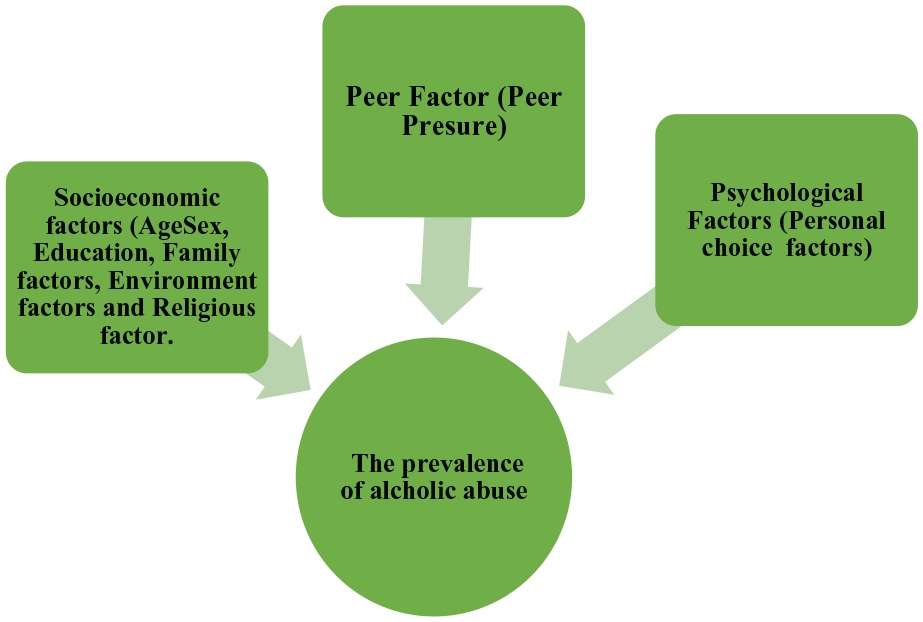
Conceptual framework on the determinant factors for the prevalence of alcohol abuse.
The above figure is about the conceptual framework using the diagram of student alcohol misuse’s pervasiveness and related factors. It explains the associated aspects of the prevalence of alcohol abuse practices, like socio-cultural factors, psychological factors, peer pressure, family-related factors, age, sex, and religion.
Research methodology
Research design
In terms of research design, this study employed a school-based cross-sectional study design in Fasiledes and Shinta preparatory schools in Gondar town, Ethiopia, from April 2020 to June 2020. This study aimed to investigate the prevalence and related factors of alcohol abuse. However, the data were composed and collected at a single point in time from carefully selected study participants. In addition, in terms of research approach, a mixed-methods research approach was employed, in which the study used the quantitative as prominent and the qualitative as supporting numerical data. According to Johnson et al., 19 the mixed-method approach is a kind of research approach that helps the researcher combine qualitative and quantitative data gathering. For this study, the investigators would use a mixed-methods approach to understand the depth, difficulty, and differences in the proceedings in an all-inclusive and precise way to grasp the phenomena under study. Among the different kinds of mixed-method designs, this study utilized an explanatory sequential mixed-method design. First, the investigators collected quantitative data by using a questionnaire; based on the quantitative data, detailed information was gathered through qualitative interviews.
Study population
The population sources were all students registered for the 2019–2020 academic year in Fasiledes and Shinta preparatory schools in both natural and social science disciplines. At Shinta School, there are 700 students in grades 11 and 12. Grade 11 students account for 420, and the rest of the 280 students are from the 12th grade. Three thousand two hundred fifty students were enrolled in Fasiledes Preparatory School for their preparatory education. Therefore, the total number of students in the study population was 3950.
Inclusion and exclusion criteria
All regular students in Fasiledes and Shinta preparatory schools, whose grades are 12 and 11, were involved in the study. However, the researchers exclude weekend, summer, and evening students. In addition, this study only included those students who were available at the time of data collection. This study excluded those students with chronic and acute conditions that limited their ability to participate in the study. Moreover, students who refused to be involved in the interview session were excluded because each participant should be involved when they are willing to participate.
Sample size and sampling techniques
The study aimed to assess the prevalence and associated factors of alcohol abuse among the selected preparatory schools in Gondar town. The Ethics was approved by Institutional Review Board ethics committee of the Ethiopian Society of Sociologists, Social Workers, and Anthropologists Institutional (0010915/WKUSSH). After receiving approval from the ESSSWA IRB, this study was critically evaluated by the Wolkite University research center and Wolkite University sociology department staff members independently (ref. no. SOCI/211/2019) (211/02019/PGSOCI). Written informed consent was taken from the legally authorized representatives (Teachers) in case of minor subjects prior to study initiation. Each participant read the informed consent provided by the researcher and signed it. After getting permission from the school principals and from the student participants, the researcher has taken into consideration the need to protect the privacy, anonymity, and confidentiality of respondents while collecting the required data. Besides, the respondents were instructed about the research’s overall purpose and asked first about their willingness to participate. Students under the age of 18 were asked about their willingness to participate in the study, and their teachers signed on their behalf on an informed consent form after they agreed to participate.
The researcher recruited respondents through both probability and non-probability sampling techniques. Of the probability sampling techniques, this study employed a proportional stratified sampling technique with four stages. In the first stage, the researcher identified the target population. This study focused on students from Fasiledes and Shinta preparatory schools. In the second stage, the target populations were divided based on their schools. The study only includes those who enrolled on a regular basis in the preparatory schools and excludes weekend, night, and extension students. Thus, there were 700 students at Shata Preparatory School (11 and 12 grades), and 3250 students were enrolled in Fasiledes Preparatory School. In the third stage, after clustering the samples through proportional stratified sampling techniques, respondents from each school were stratified first based on the field of study (social and natural science) and then by the grade of study (grades 11 and 12). At the Shanta preparatory school, 420 students were in grade 11, and the remaining were in grade 12. Moreover, of the 3250 students, 1800 were in grade 11, and the remaining 1450 were in grade 12 at the Fasiledes preparatory school.
In the fourth stage, the researchers began to collect data from the sampled clusters. The researchers then selected 196 respondents using the sampling formula n = (z/2)2p (1 − p)/d2, where n is the sample size, N is the total number of students covered by the study, and e is the margin of error or proportion of error likely to occur. Moreover, the researchers using non-probability sampling methods used purposive sampling techniques. According to Padgett and DesRoches, 20 the purposive sampling technique in the qualitative research approach is designed to deliberately recruit respondents based on their extensive ability to provide the intended information. This study purposefully selected those students who had the habit of alcohol consumption and were perceived to have good knowledge of alcoholic drinks.
Data collection instruments
To collect quantitative data, the Michigan Alcohol Screening Test was developed and used. This screening test comprises 24 questions that comprehend students’ drinking behavior and adverse consequences. 21 However, for this study, the researchers used half of the screening test and the alcohol use disorder identification test to look into the relationship between sex, religion, and frequency of attending church or mosques and alcohol consumption. The questionnaires were not made and used in a vacuum; however, there was a pilot study undertaken, and it was decided to use those questions that were consistent with the study. The researchers designed both open- and closed-ended questionnaires about the prevalence and associated factors of alcohol abuse among selected preparatory school students. The questions were more focused on substance abuse, the prevalence of alcohol use, and psychological factors. The questionnaire was designed in English and then translated into Amharic after looking into its feasibility to clarify the study for the respondents. The study employed standardized questions; however, there were some words that did not have an equivalent translation. Therefore, to ensure their validity, the researcher must transcribe them by finding equivalent sayings and consulting native Amharic speakers.
Furthermore, the questionnaire is formatted as follows: First, it consists of respondents’ sociodemographic information (sex, age, grade level, religion, ethnicity, marital status, high school attendance, family income, residence, and experience of alcohol use in their family members). The second sub-division is concerned with the prevalence and reasons for alcohol abuse. And finally, the last section discusses the fitness model using chi-square in dealing with the relationship between religion, sex, and frequency of going to church.
Another instrument of data collection using qualitative methods that this study employed was an in-depth interview. The researcher used in-depth interviews to investigate the student’s reasons for alcohol consumption in the study compound and outside. Therefore, the study involved eight participants until the data got saturated: four from the Shinta and four from the Fasiledes preparatory school. The study could go further beyond the eight participants; however, students were talking with the same answer, so the researcher decided to stop at the number of participants. The study participants were to be selected through purposive sampling methods. As inclusion criteria, the study included those who enrolled only on a regular basis. They had a 25-min one-on-one interview with the researcher (see Table 1).
Demographic profile of the in-depth interview participants, 2020.

Source: Self developed, 2020.
Method of data analysis
The required data gathered from the survey questionnaire was analyzed using SPSS version 23 and frequency tables. Systematic analytical methods using descriptive and inferential statistics were used to acquire the necessary data. Descriptive statistics were applied to see the relationship among variables. Inferential statistics, which are multiple logistic regressions and chi-square tests, were used to show how the variables were associated. However, the binary logistic regression here was used to test the determinant factors for the students’ engagement in alcohol abuse, combining their socio-economic background, and then the data was patterned for EXP (B) to determine the confidence interval (CI) for the odds ratio of predictor influence in the equation. This model’s data analysis was completed through Statistical Science for Social Science (IBM SPSS Statistics version 23.0). The chi-square analytical techniques were used to test the relationships between the frequency of going to church, religion, and sexual preference of respondents. To indicate the observed and expected outcomes of the variables.

The qualitative data gained from the in-depth interview was analyzed through descriptive narrations and thematic analysis, triangulating with the quantitative data by exporting the transcribed text into the Open Code program to facilitate the coding process. After the code was assigned for the transcribed texts, the researcher combined them into themes and sub-themes, and finally, they were arranged in a cohesive manner in line with the specific objectives outlined.
Results and analysis
Sociodemographic characteristics of respondents
As Table 2 shows, of the total respondents of 196 students who participated in the survey questionnaires, 195 remained careful to make the response rate 99.5%. The majority of the 195 students (97%) were adolescents, ranging in age from 16 years to 18 years, with a mean age of 17.87 and a standard deviation of 0.703. Of the total contributors, 89 (45.6%), were males; 73.3% (143) were from natural science; and 52.3% (102) were grade 11 students. Out of the total subjects, 78.5% (153) were followers of the Orthodox religion. The previous place of residence for most respondents, 89.7% (175), was in urban settings, and the majority, 139 (71.3%), attended a public or governmental high school. 69.7% (136) of the students reported a monthly family income of $5000–$69,999.
The sociodemographic profile of survey respondents, 2020.

Alcohol abuse prevalence
According to Table 3, drinking habits among the students were highly prevalent. However, 90 (46%) of respondents stated that they drink alcohol at least once in their lifetime, while 58 (29%) said they have not drunk alcohol once in the last 6 months. Among alcohol users, 50 (25%) used alcoholic drinks occasionally. Consequently, based on Table 3, the researchers assert that most of the students in the selected schools have little experience with consuming alcohol. Following that, the respondents with an experience of drinking once a month and occasional alcoholic drinkers take second and third place, respectively.
The prevalence and the reasons for the engagement in alcohol abuse.

Reasons for alcohol abuse
Table 3 illustrates that among the 195 students who reported practicing taking alcohol, 107 (54.8%) used it to get personal pleasure, 39 (20%) to get relief from tension, 20 (10.2%) to be pleasant, 53 (27.2%) to stay awake, 10 (5.12%), due to religious practice, 0.5% (1), and due to academic satisfaction, 16 (8.2%). As a result of the participants’ providing the same information on the reason they joined for alcoholic consumption, the study has outlined the four participants’ responses accordingly. Concerning this, two informants in the interview explained the following reasons why they participated in alcohol consumption:
Our friends were always begging us to drink alcohol to be free. One afternoon, we went to a small house near our school to have a cup of Tella (a local drink prepared from maize). We had some and came back to class. That day, I spent the whole day playing and even laughing at the silly jokes my classmates were telling. Since that day, I have always visited that house to have alcohol, later becoming addicted to alcohol and cigarettes. When some stress occurred, whether in the family or at school, alcohol served as an anti-pain drug. Now, I cannot get out of being addicted.
Another student in the interview explains this:
My mother’s job is selling local beverages, which is the basis for our family’s livelihood. She prepared the drinks and invited me to check the taste in the middle. I drink every day for that purpose. I never drank factory beverages and never drank in large crowds because I grew up in societies where women drinking in public was strictly prohibited and even considered impolite.
The third informant also provides the following:
I stand by the idea that every man has to drink alcohol because it is the only drink you can use to test your masculinity. I feel proud and confident when I drink alcohol in public places. My father always said that men and cement could not stand without a drink. This is to say, a man’s strength depends on the quality of alcohol he might take every day. I cannot remember the last time our house was without some sort of alcohol. It was this influence that threw me into constant alcohol use.
Factors associated with alcohol abuse
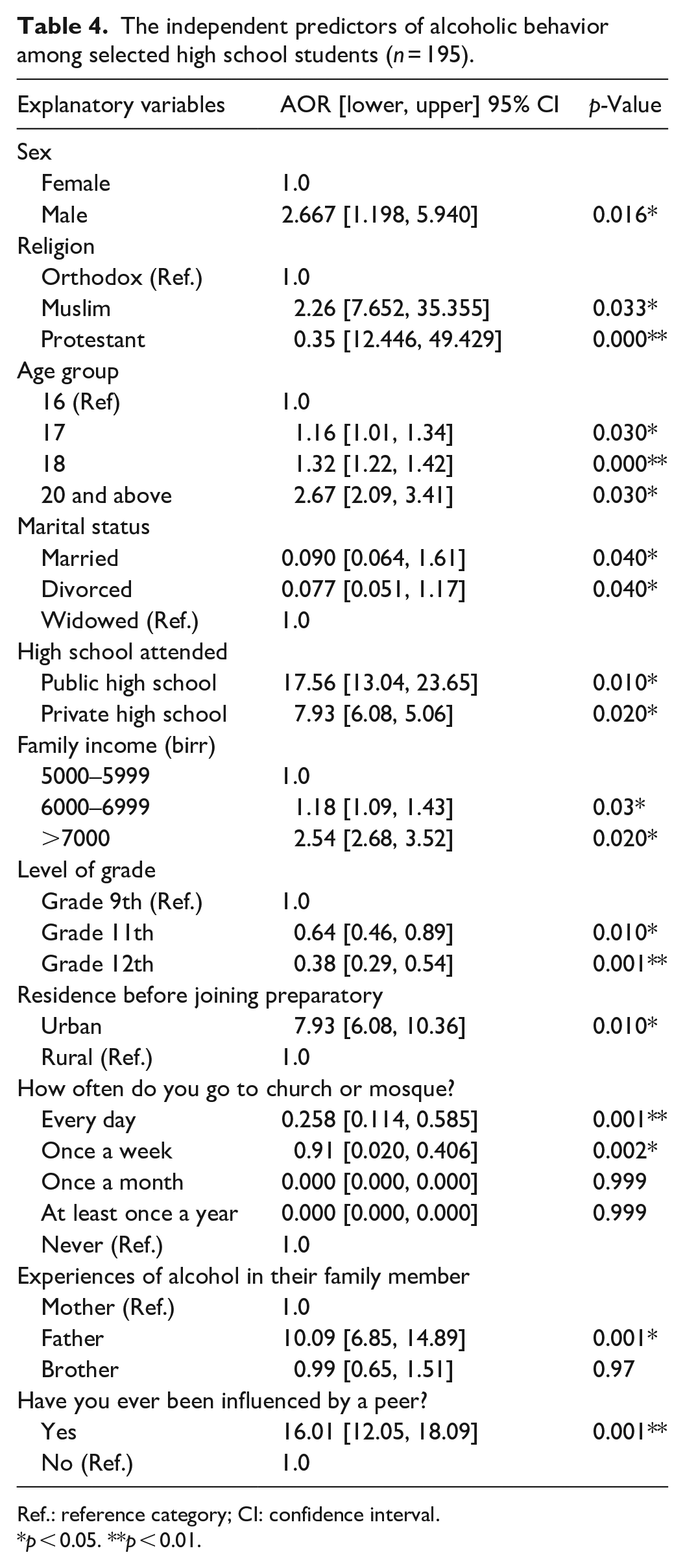
The multivariate logistic regression analysis has shown a statistically significant association between the lifetime prevalence of alcohol abuse and the respondent’s sex, religion, and frequency of going to church and mosque (religious). After examining the effects of confounding among the variables using multivariate logistic regression, the proprieties of sex and religion were found to be statistically significant factors in lifetime alcohol abuse. Being male has a strong connotation with lifetime alcohol abuse of at least one drink (see Table 4). Variables that are significantly correlated in the head model are taken and interpreted simultaneously by multivariate logistic regression. There was no statistically significant relationship between the academic achievements of students and alcohol abuse. And also, a family history of alcohol usage was not correlated with the consumption of alcohol.
The independent predictors of alcoholic behavior among selected high school students (n = 195).
Ref.: reference category; CI: confidence interval.
p < 0.05. **p < 0.01.
After controlling the effects of confounding among the variables by using multivariate logistic regression, the proprieties of sex and religion were found to be statistically significant factors in lifetime alcohol abuse. Being male has a strong connotation with lifetime alcohol abuse of at least one drink (adjusted odds ratio (AOR) = 2.667, 95% CI (1.198, 5.940)). In the multivariate analysis, being a follower of Muslim or protectant religions showed lower odds of having alcohol abuse than orthodox Christian followers. In the multivariate analysis, being a Muslim increased the odds of using substances (AOR = 2.26, 95% CI (1.49, 3.42)), whereas being a protestant was protective against substance abuse (AOR = 0.35, 95% CI (0.209, 0.59)). Concerning the age group, those who are over the age of 20 are more vulnerable to the consumption of alcoholic substances than those whose age is below (AOR = 2.67, 95% CI (2.09, 3.41)). As the above Table 4 indicates, the marital status of students who reside in the study school areas is also the biggest predictor of alcohol abuse. Those married students whose age is above 20 are more likely to abuse alcohol than the other group’s respondents (AOR = .090, 95% CI (0.064, 1.61)). Wealth is another important factor; families earning more than 7000 birrs are more than twice as likely as those earning less than 6000 birrs (AOR = 2.54, 95% CI (2.68, 3.52)). The table also figures out that most of the students who come from urban areas are more likely to consume alcohol than those from the peripheral regions of the study areas (AOR = 7.93, 95% CI (6.08, 10.36)). The experience of alcohol abuse in the family is also another determinant of the student’s engagement with the experience of an alcoholic. Those students who engage in alcoholism by seeing their father’s experiences are 10 times more vulnerable than those who engage by seeing their brother’s doings (AOR = 10.09, 95% CI (6.85, 14.89)). The significant association between going to church or mosque every day and being 0.11 times less likely to engage in alcohol abuse [AOR = 0.258, 95% CI (0.114, 0.585)) as compared to never going. Finally, the table shows that students who engage in the alcoholic experience under the influence of their intimate friends are sixteen times more vulnerable to becoming alcoholics than those in the other groups (AOR = 16.01, 95% CI (12.05, 18.09)).
The relationship between gender, religious affiliation, and alcohol abuse
Table 5 shows that the significant value for the association between respondents’ sex and the pervasive pace of alcohol abuse is 0.00, which is less than the level of significance of 5%. Therefore, the researchers have concluded that there is a significant correlation between the variables in the table. Being male or female is now a strong predictor of the prevalence of alcohol abuse among students in Gondar’s selected schools. According to the Pearson chi-square in Table 5, the association between respondent religions and alcohol consumption among the selected schools in Gondar is significant at p 0.005, which is less than 5% of the significance level. Consequently, the researchers can conclude that the respondents’ religious affiliation has a tremendous impact on students’ likelihood of engaging in alcohol consumption. Finally, the significant value of the correlation between the frequency of going to church or mosque for the respondent and alcohol abuse is significant at p 0.005, which is less than the 5% significance level. Therefore, researchers have found that students’ frequent attendance at the mosque or church reduces the likelihood of engaging in the abusive nature of alcoholic consumptions.
The association between gender, religious affiliation, and alcohol abuse, n = 196.

p < 0.05.
Discussion
The present study, using a mixed research approach, aimed to assess the prevalence and related factors of alcohol abuse among selected preparatory schools. The quantitative approach was employed to assess the prevalence of alcohol consumption among the students at the study site. On the other hand, the qualitative approach was used to indicate the reason for students’ excessive consumption of alcohol. Therefore, the study found that drinking habits among students were highly prevalent. The study revealed that most of the students in the study areas drink alcohol occasionally; the reason they engage in alcoholic consumption is to satisfy personal desires and get respite from strain. Moreover, the results indicated that more than half of students drink alcohol due to peer influence and for academic completion. According to Farah et al., 17 the most frequent reasons for first drinking are peer pressure and curiosity to drink, while the most common reasons for continued alcohol consumption are peer pressure and being sociable. Students, based on the qualitative data, consume alcohol for enjoyment, relief, and peer pressure. What the data shows as a new concept in the compound is that students usually consume or drink alcohol because it is regarded as a manifestation of masculinity. The community expected the males to drink, and those males who were unable to consume some alcoholic drinks were shamed for being like females; therefore, fearing this, students began to train themselves at their schools. Furthermore, the current study’s conclusions were found to be discordant with those of previous investigations. This disparity might be attributed to a variety of variables that impact alcohol consumption in diverse research settings.
Alcoholic consumption experience under the contributor category of gender has revealed significant differences in alcohol abuse between males and females.10,22 The evidence asserted by Atkinson et al. 23 and Plata et al. 8 suggests that there is a correlation between the practice of drinking alcohol and the gender composition of people. The finding revealed that males are more likely to drink alcohol than females. However, the findings of this study revealed that men were more likely than women to abuse alcohol. Being a male has a strong association with alcohol abuse (male students were about two times more likely to be lifetime alcohol users as compared to female students). In the same vein, Yormirzoev and Gabrielyan 24 stated that sex had an association with problematic drinking, whereas variables such as having an alcoholic intimate friend, ever using substances, academic achievement, and probable social phobia had a significant association with problematic drinking.
The findings of the study dictate that the marital status of students who reside in the study school areas is also the biggest predictor for alcohol abuse; those married students whose age is above 20 are more likely to abuse alcohol than the other group’s respondents. Wealth is another important factor; those whose families earn more than 7000 birr are more than twice as likely to use alcoholic drugs as those whose families earn less than 6000 birr. The findings point out that most of the students who came from urban areas are more likely to consume alcohol than those who came from the peripheral regions of the study areas. The Yun 25 study also asserts that, besides school compositional factors, the socio-economic background of students (students from wealthy families), the resident place where they grew up (most of the students who came from urban areas), and the ethnic background of the students are positively correlated with the level of alcohol consumption among the students. The experience of alcohol abuse in the family is also another determinant of the student’s engagement in the alcohol experience. Those students who engage in the alcoholic experience by seeing their father’s experiences are 10 times more vulnerable than the students who engage by seeing their brother’s doings. Furthermore, students who engage in the alcoholic experience under the influence of their intimate friends are 16 times more vulnerable to becoming alcohol dependent than those in the other groups. In redoubling the above arguments, the findings of Posavec et al. 22 and Yormirzoev and Gabrielyan 24 revealed that the prevalence of alcoholic consumptions among high school students emanated from the influence of intimate partner influences. Students in the school were mocked most of the time by their beloved friends to assimilate and not get out of their friends’ moods. Alcohol consumption prevalence by religion category also showed variation, with orthodox participants followed by Muslims with a high degree of alcohol abuse. In line with this, followers of Muslim and Protestant religions showed less alcohol abuse than Orthodox Christians. 2 In the multivariate analysis, being a follower of the Muslim religion increased the odds of using alcohol, whereas being a follower of the Protestant religion reduced the odds of using alcohol. The influence of the religion that they follow on the societal level of alcohol use has been stated in many published manuscripts.17,26 Those who go to a religious place are less likely to go there to practice alcohol abuse. As compared to never going, the interview results also showed that the student’s alcohol usage was due to family history factors or their personality and peer influences that exposed them to being alcohol addicted. They realized that alcohol brought them other substances of substance abuse, like chewing tobacco, smoking cigarettes, and other related substances. In reiterating the arguments of the above scholar, the study conducted by Hillesund et al. 27 and Reda et al. 18 asserts that the student’s age, the feeling that they are free to drink alcohol, their sex (mostly male), and peer influences are the major founding factors for the alcoholic drinking habit among the students in higher school.
Limitation and implication for future studies
The study encountered some limitations. As a result, the students were not willing to participate and provide full information about their drinking habits until they became confidential with the investigator after he promised to protect the participants’ anonymity and confidentiality. Their unwillingness affects to a little extent the external validity of the study. A further qualitative study is needed to know and get rich data on the reasons for their engagement and consumption of alcohol. Second, the researcher was conducting a preliminary assessment for the in-depth interview. Since the qualitative study involved the participants until the data got saturated, it was very difficult to know the percentage of informants involved in the pre-test assessment.The study also included only students in a unilineal way; however, the researcher recommends further studies be conducted including the student’s parents, school communities, and medical health practitioners to provide better wakefulness education to minimize the problem. Moreover, it would be interesting to study the effects of alcohol use in the mid- and long-term with the aim of evaluating whether the effects are maintained, accumulated, or decreased and whether the effects disappear when maintaining, increasing, or decreasing the pattern of binge drinking alcohol consumption.
Conclusion
This study aimed at scrutinizing the prevalence and determinants of alcohol abuse among the students of Shinta and Fasiledes preparatory schools found in the city of Gondar. The prevalence of alcohol consumption by religion category also showed variation, with orthodox participants followed by Muslims having a high degree of alcohol abuse. In line with this, being a follower of the Muslim or Protestant religion showed less alcohol abuse than being an Orthodox Christian. Regarding alcohol and sex, the alcohol consumption experience under the participant category of gender has revealed a significant difference in alcohol abuse between males and females. Males were more practiced in alcohol abuse than females. Because excessive alcohol use has a negative impact on student’s lives by serving as a gateway to other forms of abuse, schools must work on creating awareness at least once every 6 months. There are also associated factors for alcohol use; the people around the student were the ones who positively caused them to drink alcohol. There are also personality factors resulting from the student’s societal and family background that exposed them to alcohol and related abuses. A student from one family was considered to be drinking alcohol as usual, along with other things. Most of the students in the selected schools have little experience with the consumption of alcohol. Following that, the respondents with the experience of taking alcohol once a month and occasional alcohol drinkers take second and third place, respectively. This might be advising students to stop drinking alcohol since their primary objective is learning the appropriate skills crucial for their future. Therefore, it needs intervention from the Gondar city administration by restricting alcohol sales near schools where the students are easily exposed.
Footnotes
Acknowledgements
None.
Author contributions
The author confirms sole responsibility for the following: study conception and design, data collection, analysis and interpretation of results, and manuscript preparation.
Declaration of conflicting interests
The author declared no potential conflicts of interest with respect to the research, authorship, and/or publication of this article.
Ethical approval and informed consent
The Ethics was approved by Institutional Review Board ethics committee of the Ethiopian Society of Sociologists, Social Workers, and Anthropologists Institutional (0010915/WKUSSH). After receiving approval from the required IRB, this study was critically evaluated by Wolkite University research center and Wolkite University sociology department staff members independently (ref. no. SOCI/211/2019) (211/02019/PGSOCI). Each participant read the informed consent provided by the researcher and signed it. After getting permission from the school principals and from the student participants, the researcher has taken into consideration the need to protect the privacy, anonymity, and confidentiality of respondents while collecting the required data. Besides, the respondents were instructed about the research’s overall purpose and asked first about their willingness to participate.
Funding
The author received no financial support for the research, authorship, and/or publication of this article.
Trial registration
Not applicable.
