



Abstract
Objectives:
The aim of this study was to assess drug-related problems and determinants among elective surgical patients admitted to Jimma University Medical Center.
Methods:
A hospital-based prospective observational study was conducted at Jimma University Medical Center, from April 10 to July 10, 2018. Data were collected through patients’ interview and physicians’ medication orders and charts review using pre-tested questionnaire and data abstraction formats. Drug-related problems were assessed for each patient using drug-related problem classification tool. Data were analyzed using Statistical Package for Social Science for windows; version 21.0. The predictors of drug-related problems were determined by multivariable logistic regression analysis. A p-value of less than or equal to 0.05 was considered to be statistically significant.
Results:
Of the total 141 participants, 98 (69.5%) of them had at least one drug-related problem during their hospital stay. A total of 152 drug-related problems were identified among 141 elective surgical patients. The most common identified drug-related problems were indication-related problems (39%) followed by effectiveness-related problems (21%) and safety-related problems (21%). The presence of complication (adjusted odds ratio = 2.90, 95% confidence interval (1.302, 3.460)), American Society of Anesthesiologists Physical Status ⩾ 2 (adjusted odds ratio = 6.01, 95% confidence interval (1.0011, 9.500)), and postoperative antibiotics (adjusted odds ratio = 6.027, 95% confidence interval (1.594, 22.792)) were independent predictors of drug-related problems.
Conclusion:
The prevalence of drug-related problems is high among elective surgical patients. The indication-related problems were the most common category of drug-related problem identified among elective surgical patients. The presence of complication, American Society of Anesthesiologists Physical Status ⩾ 2, and postoperative antibiotics were the independent predictors of drug-related problems.
Background
Many problems associated with pharmacotherapy derive from prescribing errors that lead to potentially prevent morbidity, mortality, and increased treatment costs. Especially patients attending surgical wards are at risk, due to the need for pain medication and antibiotics, frequent adjustments of antithrombotic regimens, and blood and fluid loss. 1 A drug-related problem (DRP) is an event involving drug therapy that actually or potentially interferes with desired health outcomes. 2 According to Robert J. Cipolle classification of DRPs, there are four medication related needs of the patients which if unmet predispose the patients to DRPs. These are indication, safety, effectiveness, and compliance. Under this medication-related needs, there are seven categories of DRPs, namely unnecessary drug therapy, needs additional drug therapy, ineffective drug, dosage too low, adverse drug reaction (ADR), dosage too high, and non-compliance. 3
Approximately 50% of patients undergoing surgical procedures take regular drugs, with an average of 2.1 drugs per patient for different comorbidities. This increases approximately threefold risk of a postoperative complication. The period of fasting usually affects preoperative medication intake and the need for the route of administration adjustment. These patients will also require antibiotics, analgesics, and muscle relaxants to which many adverse drug events can be attributed. 4 Adverse events due to medication error can be prevented, but improvements in pharmaceutical care and their potential effectiveness in surgical patients are under-evaluated. 5
Hospitalized surgical patients are at risk for adverse events related to surgical procedures and for complications related to the use of medications. 5 However, majority of the patients scheduled for elective surgery are on chronic medications, which make their management an essential priority for every healthcare member participating in the perioperative period. 6 According to Lee et al., 7 medication discrepancies are more frequent for surgical patients as compared to medical patients, particularly in adjusting chronic medications postoperatively, which raise patient safety concerns for these patients despite perioperative practice guidelines recommending continuation or rapid re-initiation of these medications.
The previous study conducted at Jimma University Medical Center (JUMC) involved all types of surgical patient population. 8 Researches that report DRPs exclusively among elective type of surgical patients in the country are lacking. Therefore, the aim of this study was to assess DRPs and determinants among elective surgical patients admitted at elective surgery ward of JUMC.
Method and participants
Study area and period
The study was conducted at JUMC which found in Jimma town, Southwest Ethiopia. It has 523 beds and provides specialized health services for approximately 15,000 inpatients, 160,000 outpatients, 11,000 emergency cases, and 4500 deliveries per year coming to the hospital from the catchment population of about 15 million people. The surgical ward has three divisions: emergency surgery, elective surgery, and orthopedic surgery. The ward has 62 beds. The study was conducted in elective surgical ward of JUMC from April 10 to July 10, 2018.
Study design and population
A hospital-based prospective observational study design was conducted. All patients admitted to elective surgical wards during data collection period and those fulfill the inclusion criteria were included in the study.
Sample size and sampling technique
Sample size was calculated using single proportion formula by assuming 5% margin of error, 95% confidence interval, and 50% prevalence of DRPs in elective surgical patients as there is no previous study on DRPs among elective surgical patients. Since the population is less than 10,000, the sample size was reduced by correction formula. Data from surgical ward monthly report indicate that the previous monthly admitted patients at elective surgical ward ranges from 60 to 80. Accordingly, the total number of patients in consecutive 3 months was 210 patients. Using the correction formula, sample was reduced to 136 and adding 10% for non-response gave the final sample of 150.
Inclusion and exclusion criteria
Adult patients who were aged 18 years and above were diagnosed with elective surgical condition and admitted for surgical procedure, and those who were hospitalized for ⩾24 h were included in our study. However, those who were not willing to give written informed consent, re-admitted within data collection period, and who were transferred from other wards were excluded from this study.
Data collection instrument and procedure
Data abstraction form and semi-structured questionnaire were used for data collection. Data were collected from patient medical records and through patient interviews. Two clinical pharmacists and one nurse were trained and collected the data. The sociodemographic characteristics, medication, and disease history were recorded for each patient after 1 day of admission and followed up to their discharge from hospital. During preoperative stay in the ward, surgical diagnosis, medication regimen, comorbidities, complications, venous thromboembolism (VTE) risk, American Society of Anesthesiologists (ASA) physical status (PS), and laboratory tests were recorded using data abstraction forms. On the day of surgery, data regarding the type and duration of procedure, used antibiotic prophylaxis, type of anesthesia, and any changes and adjustments made to the preadmission comorbid medications had been assessed for each patient. Postoperatively, the patients had been visited and evaluated for the development of new conditions, the medication needs of patient, laboratory tests and vital signs, and the length of hospital stay.
The DRPs were assessed regarding the problems related to perioperative management of comorbid medications and potential indication for drug therapy, problems related to medications for elective surgical conditions, problems related to preoperative and postoperative medications (antibiotics, analgesics, and anticoagulants), and problems related to the management of different complications. The DRPs were assessed using Robert J. Cipolle classification of DRPs. 3
DRPs were identified by two clinical pharmacists through patient chart reviews and interviews for the appropriateness of each prescribed medication in terms of indication, dosage, safety, efficacy, and compliance. The DRPs and their possible causes were identified using pharmacotherapy: A pathophysiologic approach, 10th edition, 9 Schwartz’s Principles of Surgery, 10th edition, 10 Ethiopian standard treatment guideline, 3rd edition, 11 and other literatures. The possible interaction between drugs was evaluated using the “Medscape®” online drug interaction checker and “Up-to-date®” version 21.2. Naranjo ADR Probability Scale was used to assess the relationship between suspected drug and ADR in a given patient. ADR Probability Scale was categorized by taking the sum of 10 questions and grouped as definite, probable, possible, or doubtful, if the total score is ⩾9, 5–8, 1–4, and 0, respectively. 12 After the assessment of DRPs, their pharmaceutical interventions were communicated immediately to attending physicians and then to the patients. The principal investigator and one clinical pharmacist were involved in solving the identified problems.
Data quality management
To assure the quality of data, the data collectors were trained for 1 day on the objective of the study, how to collect data from patients’ medical records, how to conduct interview, and DRP identification. The English version of the questionnaire, which constitutes the sociodemographic part of interview, was translated into “Amharic” and “Afaan Oromoo,” and then back-translated into English to check consistency. Data abstraction format and questionnaire were pre-tested on 5% of study participants and modified before actual data collection. The principal investigator has closely supervised the project and also checked the completeness of the collected data on daily basis.
Data analysis and interpretation
Data were entered, coded, and cleaned using Epi-Data version 3.1 and then exported to Statistical Package for Social Science (SPSS) for window version 21.0 for analysis. Descriptive statistics, such as frequency, percentage, mean, and standard deviation, were conducted for the summarization of patient-related factors, clinical characteristics, and prevalence and types of DRPs among elective surgical patients. Variables with a significance value of ⩽0.25 in univariate regression were fitted into multivariable logistic regression. Predictors of DRP were identified by multivariable logistic regression. A p value of ⩽0.05 was considered to be statistically significant.
Results
Baseline characteristics of study participants
A total of 154 patients were admitted for elective surgery during the study period. However, 13 patients were excluded from study as they did not fulfill inclusion criteria. Accordingly, 141 participants (91.6% response rate) fulfilled the inclusion criteria and made the final sample size for analysis. The mean age of study participants was 48.65 (±16) years with an age range of 18–95 years; most study participants were in the age range 31–50 years. However, 80 (56.74%) of them were males. Meanwhile, 92 (65.25%) of the study participants cannot write and read, and 59 (41.84%) were farmers (Table 1).
Baseline characteristics of elective surgical patients admitted at JUMC, April 10–July 10, 2018 (N = 141).

Guard, non-governmental organization employee, and tailor.
Disease-related factors
Urologic procedures were the most common disease for which elective surgery was sought (28.37%), followed by abdominal surgeries (22.70%). However, 48 (34%) patients had at least one medical comorbidity. Most of the patients (63.83%) were classified as ASA-PS class-1 before undergoing surgery. However, 30 (21.28%) patients experienced at least one complication related to disease condition for which they are seeking surgery. The most frequent (7.80%) complication at admission was urinary tract infection. The prevalence of perioperative complication was accounted to be 10.64%. Majority (85.8%) of patients had low risk for VTE, whereas seven (4.96%) patients had high risk for VTE. The mean duration of hospitalization for the study participants was 16.31 ± 10.8 days. The length of hospitalization was ranged from 3 to 84 days (Table 2).
Clinical characteristics of elective surgical patients admitted at JUMC, April 10–July 10, 2018 (N = 141).

The percentage could not add up to 100 for some variables.
Varicose vein, esophageal, and hernias.
Retroviral infection, peripheral neuropathy, and goiter (patient was admitted for other surgical conditions).
Acute cholecystitis, obstructive uropathy, bladder stone, and dyspepsia.
Deep venous thrombosis and acute gastroenteritis
Drug-related factors
Preadmission medications and surgery-related drugs
Nearly, half of the patients 70 (49.64%) had at least one medication at admission which had been prescribed for medical comorbidities and for surgical conditions. Preoperative antibiotic prophylaxis was administered to all patients where 95.74% of them received ceftriaxone as surgical prophylaxis. However, 67 (47.52%) patients continued antibiotics postoperatively for ⩾24 h. Postoperative pain management was provided to 137 (97.16%) of patients (Table 3).
Description of preadmission and surgical-related drugs among elective surgical patients admitted at JUMC, April 10–July 10, 2018 (N = 141).

Amitriptyline, neurobin, and antiretroviral treatment.
These antibiotics were given orally 24 h before surgery.
Norfloxacin, ciprofloxacin, and cephalexin.
Cimetidine, warfarin, heparin, and steroid.
Prevalence of DRPs
From the total of 141 study participants, 98 (69.5%) of them had at least one DRP (Figure 1). A total of 152 DRPs were identified among study participants during the study period. Of these, 52 (53.06%) had one DRP, 39 (39.80%) had two DRPs, while 6.12% and 1.02% had three and four DRPs, respectively. The mean number of DRP per patient was 1.55 ± 0.66 with a maximum of four DRPs in one patient (Figure 2). Out of 152 DRPs identified, 137 (90.13%) DRPs were intervened out of which 112 (81.17%) interventions were accepted, while the rest 25 (18.11%) of interventions were not accepted by prescribers.
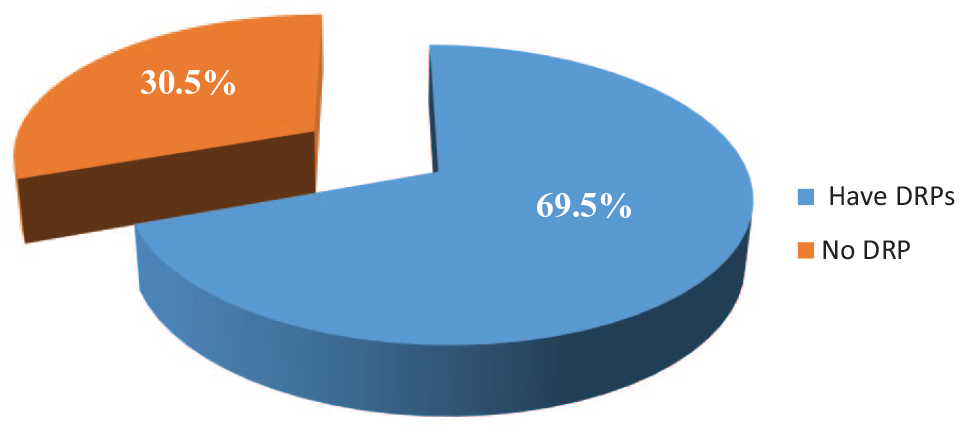
Prevalence of DRPs among elective surgical patients of JUMC, April 10–July 10, 2018.

Number of DRPs per patients of elective surgical patients of JUMC, April 10–July 10, 2018.
Types of DRPs and their causes
The “need additional drug therapy” was the most common (36.84%) DRP identified followed by non-compliance (19%) and ineffectiveness of drug therapy (15.13%). The least type of DRPs identified was an unnecessary drug therapy as it was encountered in three patients (Table 4). Out of the 14 ADRs detected, 6 of them were identified using Naranjo ADR assessment scale with a score of 4 (possible ADR). The medications associated with ADR during the perioperative admission were enalapril (five cases), metformin (four cases), hydrochlorothiazide (three cases), digoxin (one case), and nifedipine (one case).
Types and causes of DRPs among elective surgical patients of JUMC, April 10–July 10, 2018.

Medications contributed to the occurrence of DRPs
The major class of drugs which contributed to the occurrence of DRPs was antibiotics (33.55%), cardiovascular drugs (27.63%), and antithyroid drugs (17.10%). Analgesics, anticoagulant, and other class of drugs contributed to the occurrence of 7.26%, 4.60%, and 9.68% DRPs, respectively (Figure 3).

Types of medications implicated in causation of DRP in elective surgical patients at JUMC, April 10–July 10, 2018.
Determinants of DRPs
The presence of comorbidities and complications was significantly associated with the occurrence of DRPs in univariate analysis (crude odds ratio (COR) = 18.135, 95% CI (4.154, 79.165) and COR = 17.652, 95% CI (2.318, 34.410)), respectively. Similarly, patients with ASA ⩾ 2 were more likely to have DRPs (COR = 20.5, 95% CI (4.697, 89.472)). Among the types of drugs, patients who received postoperative antibiotics were more likely to develop DRPs (COR = 5.478, 95% CI (2.37, 12.662)), whereas patients who had cardiovascular drugs were less likely to have DRPs (COR = 0.084, 95% CI (0.019, 0.368)) (Table 5).
Univariate logistic regression analysis of determinants of DRPs in patients admitted to elective surgical ward of JUMC, April 10–July 10, 2018.

Legends: *statistically significant p-value. CI: confidence interval; COR: crude odds ratio; ASA: American Society of Anesthesiologists.
The results from multivariable logistic regression analysis revealed that, out of the five variables described under univariate analysis, the presence of complication, ASA-PS ⩾ 2, and the administration of postoperative antibiotics were remained independent predictors of DRPs. Accordingly, patients who have complication were 2.9 times more likely to have DRPs than those who have not (adjusted odds ratio (AOR) = 2.90, 95% CI (1.302, 3.460)). Besides this, patients with ASA-PS ⩾ 2 were six times more likely to have DRPs than those with ASA-PS = 1 (AOR = 6.01, 95% CI (1.0011, 9.500)). However, patients who received antibiotics postoperatively were 6.027 times more likely (AOR = 6.027, 95% CI (1.594, 22.792)) to develop DRPs than those who did not take antibiotics postoperatively (Table 6).
Multivariable logistic regression of determinants of DRPs among elective surgical patients admitted at JUMC, April 10–July 10, 2018.

Legends: *statistically significant p-value. CI: confidence interval, AOR: adjusted odds ratio; ASA: American Society of Anesthesiologists.
Discussion
This study was conducted to evaluate the prevalence, types, causes, and determinants of DRPs in patients admitted for elective surgical procedures at JUMC. The findings of the current study revealed that 69.5% of elective surgical patients had at least one DRP, with a mean of 1.55 ± 0.66 DRPs during the perioperative period. This is similar to the prospective study 13 conducted in a Canadian adult tertiary care hospital which reported the prevalence of DRPs 66.4% with a mean of 1.6 DRPs. Another retrospective study by Haley et al. 14 in the same country and also from Malaysia 15 showed DRPs of 79.5% and 76.1% with a mean of 1.88 and 1.5 ± 1, respectively, which were higher than the prevalence of the current study. This could be attributable to the difference among population of studies, as the majority of the study participants in their studies were elderly when compared to ours. This population was known to be associated with high prevalence of DRPs due to the increased number of comorbidities and home medications.
The need for additional drug therapy was the most frequent specific type of DRP (36.84%) which was much higher than the finding from Canada (13%) and lower than the other study reported from the same country (25.5%), 14 and all-cause of additional drug therapy was due to untreated indication in our study. This discrepancy could be explained by the difference in the experience of pharmaceutical care services between the study settings, difference in the classification of drug-related events, and study design. In study by Neville et al., 13 the drug without indication was found to be 8% which was higher than that reported in this study (1.97%). This inconsistency might be due to the difference in the categorization of DRPs and smaller sample size in the current study.
Prevalence of effectiveness-related problem class DRP (21%) in our study was in line with the Malaysian study (22.6%) by Zaman Huri et al. 15 Another study from Canadian hospital reported 9% of dose too low type of DRP which was higher than the finding in this study.
The prevalence of safety-related problems in the our study was 21%, of which 11.84% and 9.21% were contributed by dose too high and ADR type of DRPs which was two times higher than the prospective observational study finding in Canada by Neville et al. 13 Moreover, retrospective study from Brazil found lower prevalence of DRP related to ADR (3.1%) in the study of incidents related to the medication in surgical patients. 16 This could be due to the study design difference, and variation in the categorization of DRPs and experience of practice in these settings. Drug safety issue is a major concern in patients undergoing surgical procedures because of increased risk of adverse drug events related to the medications for different comorbidities and medications related to surgery in association with surgical procedure which brings about physiological changes.
According to this study, non-compliance-related problem accounted for 19% of DRPs and majority of them was happened due to the omission of the medications. However, higher non-compliance rate, that is, from 23% to 37.8% was found by the studies conducted elsewhere on elective surgical patients.8,14,16,17 The higher values in these studies might be due to larger sample size used, DRP classification discrepancy, and study design. However, similar to our study, most of the compliance-related problems stated in these studies were caused by the omission of the regular medications that had been taken at home.
Many medications must be continued throughout the perioperative period, with the last dose taken 2 h prior to the procedure, and resumed during recovery to reduce the risk of perioperative complications. 18 The omission of medications was happened either starting from the day of admission, during a few days before surgery, on the day of surgery, or after surgery during stay in the ward which could primarily be solved by conducting medication reconciliation and training the healthcare professionals on compliance to perioperative medication management.
In attempt to determine the factors associated with the occurrence of DRPs, multivariate logistic regression analysis revealed that the presence of complication, ASA-PS ⩾ 2, and postoperative antibiotics were independent predictors of DRPs. Accordingly, the patients who developed complications were 2.9 times more likely to have DRPs than those who had not these problems. This is might be due to the presence of complication associated with the prolongation of hospital stay which in turn increases the need for drug therapy. However, prior perioperative complications that have been treated with medications might have the problems related to the appropriateness of medications. Patients with ASA-PS ⩾ 2 were six times more likely to have DRPs than those with lower score which was not in line with the United States where higher ASA-PS score was not associated with the occurrence of DRPs. 19 The discrepancy could be explained by the differences in the evaluation of predictors.
Among the types of drugs, patients who received antibiotics postoperatively were about six times more likely to develop DRPs than those who did not take antibiotics postoperatively. This could be in part due to the inappropriate continuation of preoperative prophylaxis through postoperative for more than 24 h. However, this is not in line with the recommendations that have been mentioned in published guidelines and updated standards as continuing antibiotic prophylaxis beyond 24 h is associated with many problems, such as antimicrobial resistances.9,10,20
Being prospective, observation study allowed us to obtain maximum information from practice setting from patients’ medical records and by involving study participants, caregivers, physicians, and other healthcare professionals in case of incompleteness which is considered as the strength of this study. However, our study had some limitations. The differences in classification of DRPs have led to some discrepancies in the identification of the types, number, and causes of DRPs to compare it exactly with different studies conducted elsewhere. Other than reporting the pharmacist intervention as accepted or rejected, we could not assess the clinical outcomes of these interventions. Being a study involving small sample-sized population in a single center, it cannot be generalized to all surgical patients regarding DRPs and its predictors.
Conclusion
There is high prevalence of DRPs among elective surgical patients during the admission for surgery. The indication-related problems were the most frequent type of DRPs from which the need for additional drug therapy was the most common. The presence of complication, ASA-PS ⩾ 2, and postoperative antibiotics were the independent predictors of DRPs in elective surgical patients of JUMC.
Recommendations
The patients should consult their admitting physician about their chronic regular medications on admission continuation, and health care professionals should take the lead. The assessment of preadmission medication history and the potential need for additional drug therapy for each surgical patient at each handover point starting from admission should be strengthened. The study setting should strengthen the adherence to the current guidelines and literature recommendations regarding perioperative medication managements for patients with different medical comorbidities, complications, postop pain management, VTE prophylaxis, and timing and selection of antibiotic prophylaxis to reduce DRPs. The involvement of clinical pharmacists in providing pharmaceutical care at elective surgical ward should be emphasized because this can be one of the mechanisms to reduce DRPs in this patient population.
Supplemental Material
sj-docx-1-smo-10.1177_20503121221122438 – Supplemental material for Drug-related problems and determinants among elective surgical patients: A prospective observational study
Supplemental material, sj-docx-1-smo-10.1177_20503121221122438 for Drug-related problems and determinants among elective surgical patients: A prospective observational study by Mesud Mohammed, Bodena Bayissa, Mestawet Getachew and Fuad Adem in SAGE Open Medicine
Footnotes
Acknowledgements
The authors thank Jimma University for funding the study and the patients and health professionals working at the elective surgical ward for their cooperation during data collection.
Authors’ contributions
M.M. conceptualized the study, developed data collection tools, supervised data collection, analyzed data, and drafted the original document and the article. B.B. and M.G. participated in the study design, supervised the development of study instruments, and reviewed data analysis. F.A. is involved in the conception of the study, developing data collection tool, data analyses, and writing the article. All authors read and approved the final article.
Availability of data and material
All data used for the study will be made available by the correspondence author when requested.
Declaration of conflicting interests
The author(s) declared no potential conflicts of interest with respect to the research, authorship, and/or publication of this article.
Ethical approval
Research protocol was approved by Institutional Review Board (IRB) of Jimma University Institute of Health with Ref. No.IHRPG1/214/2018 prior to data collection. Official permission was obtained from the clinical director of the hospital before starting the data collection. Written informed consent was obtained from each participant. Patient information was kept confidential.
Funding
The author(s) disclosed receipt of the following financial support for the research, authorship, and/or publication of this article: The research was funded by Jimma University.
Informed consent
Written informed consent was obtained from all participants before the study.
Consent for publication
All co-authors read the final article and approved it for publishing.

Supplemental material
Supplemental material for this article is available online.
References
Supplementary Material
Please find the following supplemental material available below.
For Open Access articles published under a Creative Commons License, all supplemental material carries the same license as the article it is associated with.
For non-Open Access articles published, all supplemental material carries a non-exclusive license, and permission requests for re-use of supplemental material or any part of supplemental material shall be sent directly to the copyright owner as specified in the copyright notice associated with the article.
