



Abstract
Objective:
The menace of antibacterial resistance among enteropathogenic bacteria continues to raise therapeutic management concerns within public health system. As a strategy toward alternative control of resistant pathogen proliferation, a folkloric plant (green tea leaves: Camellia sinensis) was collected from Ishaka municipality and characterized for biomolecular components and antibacterial potency.
Methods:
The bioactive and biomolecular components of the plant’s ethanol extract were characterized using gas chromatography–mass spectrometry. A preliminary in vitro susceptibility test of the extract against characterized multiple antibiotic-resistant potential diarrheagenic bacterial strains was done.
Results:
The result revealed an exponential increase in susceptibility with a distinctive unit component of the C. sinensis extract at concentrations of 60 and 80 μg/ml. The extract also possessed antibacterial and antioxidant activities while having phytochemical constituents (flavonoids, alkaloids, phenolics, saponin, cardiac glycosides, etc.). The gas chromatography–mass spectrometry analysis further affirmed the potential of the extract by revealing 52 bioactive components/compounds as shown in the chromatogram.
Conclusion:
The C. sinensis has antimicrobial and antioxidant potentials, and the constituents of the plant might be of therapeutic importance in the management of various diseases, especially those related to Escherichia coli and Salmonella.
Introduction
Pathogens implicated in diarrhea cases and other enterocyte-infecting organisms have caused high mortality among children and adults in most developing countries of the world. These pathogens have been isolated from both fresh and ready-to-eat food specimens (milk, meat, etc.), 1 water and the environment. 2 Some of such potential pathogens are members of Salmonella spp, Shigella spp, Yersinia spp, Escherichia coli, Vibrio spp, Bacillus spp, Enterobacter spp, Plesiomonas spp, Klebsiella spp, Proteus spp, Serratia spp, Aeromonas spp, etc. Major infections associated with the aforementioned potential pathogens have remained a public health concern due to the multiple antibiotic resistance (MAR) revealed in the studies of various investigators.3 –6
The need for alternative control strategies is currently on the increase as these potential pathogens have been reported to be the carriers of multiple antibiotic-resistant genes ranging from the extensive drug resistance toward pan drug resistance. The MAR has been shown to pose major global threat to the health systems.4,5 It has been reported that the world is quickly going faster toward the post-antibiotic era than that was predicted and alternative medicine promises a future. 7 An alternative medicine or therapeutic strategy may employ the use of tested bioactive agents from medicinal plants. 8 Going by recent reports, medicinal plants have shown relevance as noteworthy pharmacological components against cancerous cells 9 while also having antioxidant potential, and effective against diverse infections and antibiotic-resistant organisms. Majority of such plant-based components include flavonoids, saponins, alkaloids, steroids, tannins, terpenoids, glycosides, and carotenoids, which may serve as potential drug leads.9 –11
Camellia sinensis (green tea leaves) are consumed as beverage and water additive worldwide due to its folkloric benefits. 12 It has shown numerous health benefits among consumers, including protection against heart-related (cardiovascular) diseases, cholesterol reduction, sugar reduction, and anticancer activity.13 –15 Recently, due to some prepositions by some consumers, it is being used as an antibacterial agent and diarrhea- or enteric infection-controlling agent for consumers within the tropical regions.
One of the best, fastest, and most precise procedures for detecting different chemicals is gas chromatography–mass spectrometry (GC-MS), 16 which is useful in detecting various compounds such as alcohols, alkaloids, nitrogenous compounds, long-chain hydrocarbons, organic acids, steroids, esters, and amino acids in medicinal plants.16,17 Also, to compensate for volatile or semi-volatile bioactive compounds present in plant extract and to access their relevant activities, GC-MS is of utmost important. This study investigated the antibacterial, antioxidant, and cytotoxic activities as well as the bioactive components of C. sinensis leaf extracts.
Methods
Study area
This is a laboratory experimental study conducted for a period of February 2019–June 2019 with samples of C. sinensis collected from the farm lands of ANKOLE tea farms in Ishaka Municipality, Bushenyi district, Uganda.
Plant collection and authentication
The locally consumed C. sinensis was authenticated by a plant taxonomist from the Department of Pharmacognosy, Kampala International University (KIU) Uganda. The voucher number of the specimen (HOPE-PHA-2019/02) was deposited at the School of Pharmacy herbarium, KIU.
Preparations of plant extracts
The leaves of C. sinensis were aseptically packed in sterile polythene bags and transported to the Department of Pharmacology Laboratory, KIU. They were shade-dried at room temperature for some weeks and later pulverized to powder using a clean mortar and a pestle, and stored in the desiccator until use.
Ethanol extract of the leaves was obtained using the cold maceration method as described previously.18,19 Briefly, 50 g of the powdered leaves was weighed and soaked with 800 ml of absolute ethanol for 72 h, followed by agitation twice every 24 h. Afterwards, the mixture was filtered using Whatman No. 1 filter paper into a sterile beaker, concentrated by centrifugation, covered with aluminum foil and stored at (2–8°C).
Phytochemical and GC-MS analysis of C. sinensis leaves’ ethanol extract
The recommended standard methods of Sofowora 20 and Trease and Evans 21 for quality screening of phenolics, alkaloids, flavonoids, steroids, saponins, and cardiac glycosides were adopted.
The GC-MS was used to characterize the bioactive constituents in this study. Briefly, the ethanol extract of the C. sinensis leaves, which showed high antibacterial activity, was analyzed using a Clarus 500 Mass Spectrometer (PerkinElmer, Waltham, MA, USA). It consists of a mass spectral library (Mass Hunter-Library-NIST14.LIB GC-MS) that was used for the identification of components in the GC/MS analysis. Its detectable mass ranges from 35 to 500 m/z, while its ion source and interface temperature were 200°C and 250°C, respectively. The start and end times (2.50 min and 47.14 min, respectively), column oven temperatures (40°C), and injection temperatures (25°C) were used. Injection mode was split and flow control mode was set at a pressure of 100 kPa. Total flow was 13.9 ml/min while column flow was 1.78 ml/min with a linear velocity of 48.1 cm/s. Purge flow was kept at 3.0 ml/min and a split ratio of 5.1. The oven temperature was programmed first at 40°C for 5 min with an increase of 5°C min−1 to 80°C, then 5°C min−1 to 300°C for 5 min.
Antioxidants activity of the C. sinensis ethanolic extracts
Nitric oxide scavenging activity of C. sinensis ethanolic extracts
About 0.5 ml of different concentrations (20, 40, 60, 80, and 100 μ/ml) of C. sinensis ethanol extract was mixed with 2 ml of 10 mM sodium nitroprusside dissolved in 0.5 ml phosphate buffer saline (pH: 7.4). The assortment was incubated at room temperature for 2 h and 30 min. Afterward, 1 ml of the incubated solution was added to 1 ml of Nedd reagent and incubated at room temperature for 30 min. Absorbance was measured using a spectrophotometer at 540 nm. Ascorbic acid was used as the standard. Blank was 1 ml of water, 2 ml of sodium nitroprusside, and 1 ml of Nedd reagent. Control was 2 ml of sodium nitroprusside, 0.5 ml of phosphate buffer, 1 ml of Nedd reagent, and 0.5 ml of methanol. 23 The number of nitric oxide (NO) radicals scavenged was determined using the formula shown below:

where Ac = absorbance of the control, As = absorbance of the plant extract.
DPPH free radical scavenging activity of C. sinensis ethanolic extracts
The 2,2-diphenyl-1-picrylhydrazyl (DPPH) radical scavenging activity was determined by adopting the protocol reported by Braca et al. 22 An aliquot of 2 ml of 0.04% DPPH solution in ethanol and 1.0 ml of ascorbic acid/C. sinensis extract at different concentrations were mixed, shaken vigorously, and allowed to get to a steady state for 30 min at room temperature in a dark chamber. DPPH decolorization was obtained by measuring the absorbance at 517 nm against a control prepared by adding 1 ml ethanol to 2 ml of DPPH. To determine the percentage inhibition of DPPH radicals scavenging ability of the extract/compound, the absorbance values of the control were compared to the experimental tubes and calculated using:

where Ac is the absorbance of control and As is the absorbance of extract/ascorbic acid.
Toxicity assay (Brine shrimp)
The toxic effect of C. sinensis leaf ethanol extracts was assayed using Brine shrimp model to attain treatment safe doses (LD50). 23 Briefly, different concentrations of C. sinensis extract (2, 60, 100, and 1000 μg/mL) solutions of 1% dimethyl sulfoxide (v/v) were added to 10 mL natural lake water (Lake Ngunguta Rubirizi Uganada). This was followed by the addition of 10 nauplii to each test tube content. Afterward, changes were observed at 8 h and survivors were counted after 24 h. The test was done in duplicates with a control group of distilled water only. The lethal concentration for 50% mortality (LC50) after 24 h of exposure was determined using the probit method as the measure of toxicity determination of the ethanolic extract.
Bacterial strain collection
Standard type culture collection of resistance strains of Salmonella enterica and E. coli that we previously isolated from meat and milk 1 were resuscitated from stored culture slant of the Department of Microbiology Laboratory, KIU Teaching Hospital for culture within 3 h of collection. Isolates were sub-cultured onto Salmonella Shigella agar and MacConkey agar, incubated at 37°C for 24–48 h. Discrete colonies were used for susceptibility testing.
Determination of antibacterial activity
The agar well diffusion method was applied. 24 Cells were subcultured from the glycerol stock, streaked onto pre-prepared nutrient agar plates while colonies were sub-cultured onto the test tube of 5 mL sterile normal saline and adjusted to obtain turbidity matching 0.5 Mc-Farland standards. Prepared isolates were seeded onto Muller Hinton agar plates, with 0.5 mm diameter wells made by a sterile micro cork-borer. Within 5–10 min, 60 and 80 µg/ml of C. sinensis crude ethanol extract was aliquoted onto each well. The plates were allowed to stand for 2 h to enable even diffusion of extract into the agar. Sterile distilled water was used as a negative control. The plates were inverted and incubated at 37°C for 24 h. All tests were done in duplicates and the antibacterial activity was expressed as the mean diameter of inhibition zones produced by the extract. Using a transparent ruler, the inhibition zones around the extract were measured to the nearest millimeter and recorded.
Effect on diarrhea-induced rabbit ilia
Apparently, healthy white rabbits (3) were acclimatized in a cage for 2 weeks and exposed to treatment with chloroform to temporarily put them to sleep. Using sterile surgical blade, their peritoneum was opened to assess the ilia, while the ilia was ligated into five loops. A 0.5 mL pre-prepared microbial suspension (supernatant of cold centrifuged peptone water containing 24 h culture of Salmonella spp and E. coli) was released/injected into each loop. Loop A contains 0.5 mL sterile water plus 0.5 mL saline, Loops B and C contain 0.5 mL microbial suspension plus 0.5 mL sterile water, Loops D and E contain 0.5 mL microbial suspension and 0.5 mL green Tea leaf extracts (C. sinensis). Thereafter, the experimental animals were allowed to rest for 24 h on the cage to wake up.
Test for the effect of C. sinensis extract on bacterial-challenged shrimp mortality
The mortality rate reduction was conducted to evaluate the antibacterial efficacy of the different concentrations of extract on the survival of shrimp challenged with the confirmed isolates. One liter of natural lake water (Lake Ngunguta Rubirizi Uganda) was collected into the conical flask while 10 shrimp per test were made to acclimatize in the conical flask. A control group of similar conical flask content was prepared but contains distill water and sterile normal culture medium, while the various treatment concentrations (5, 40, and 60 μg/ml) were prepared as describe previously. 25 The experimental shrimps in each test were fed with commercial diet to satiation twice a day followed by renewing of 10% water content with regular monitoring of water quality (pH, temperature). Then, shrimps were challenged with bacteria (E. coli and Salmonella spp) typed culture at a predetermined density of 104 CFU.mL−1. After 24 h of bacterial inoculation, different concentrations of ethanol extracts were added to the experimental conical flask with further incubation. After 4 days of incubation, the experiment was terminated and survival rate of shrimp in each test was evaluated and compared with control.
Statistical analysis
All experiments were performed in triplicates and data were expressed as mean and standard error of mean, comparisons were done with the analysis of variance using graph prism version 8.0.2, which was followed by Fisher’s least level of significant difference to test significant differences at p < 0.05 with regression analysis using R.
Results
Phytochemical analysis of C. sinensis
The phytochemical analysis conducted reveals the presence of six groups of bioactive compounds belonging to the groups of phenolics, alkaloids, flavonoids, steroids, saponins, and cardiac glycosides as depicted in Table 1.
Phytochemical screen of Camellia sinensis.

GC-MS analysis of C. sinensis leaf ethanolic extracts
A total of 52 bioactive components were identified from the ethanol extract of C. sinensis using the GC-MS analysis in the chromatogram (Figure 1). Table 2 shows the retention time (RT), peak area of components (A%), observed chemical components nomenclature, molecular formula, and the various molecular weight of components. Three of the components observed (2-hydrazino-8-hydroxy-4-phenylquinoline, oxazole, 2-(3-methoxyphenyl)-5-phenyl,- and 2-(4-cyanophenyl)-5-dimethylaminom ethylenaminopyrimidine) produced the highest RT of 65.939 and a peak area of (A%) 0.77. Noteworthy was the observation of a β-lactam antibiotic building block; imidazole-4-carboxamide at RT of 13.740, in addition to other antimicrobial components such as benzofuran, 2,3-dihydro-, methanol (1-ethyl-2-benzimidazolyl)(2-methoxyphenyl)-, 3-pyrrolidinecarboxamide, 1-methyl-N-[4-(octyloxy)phenyl]-5-oxo-, 2-pyrazoline, 5-(4-fluorophenyl)-3-(4-methoxyphenyl)-1-phenyl-, 1,4-benzenediamine, N1,N4-bis[4-(dimethylamino)phenyl]-, etc., with high RT ranging from 45 to 63 as given in Table 2.

GC-MS spectrum of purified Camellia sinensis ethanol extract with peaks of bioactive components.
Identified active constituents of extract of Camellia sinensis by GC-MS.

GC-MS: gas chromatography–mass spectrometry; RT: retention time.
Antioxidant activity of C. sinensis ethanol extract
C. sinensis inhibits DPPH radical in vitro
The scavenging potential of DPPH radical by C. sinensis is shown in a range of concentration from 20, 40, 60, 80, and 100 µg/m. The percentage inhibition of DPPH was increasing by ascorbic acid and C. sinensis as the dose increased from 20 up to 100 µg/ml. The percentage inhibitions of DPPH by C. sinensis (62.44 ± 0.36%; 46.86 ± 0.29%; 42.71 ± 0.01%; 26.82 ± 0.18 %; 17.21 ± 0.36%) were higher than those of vitamin C (56.83 ± 0.28%; 39.85 ± 0.32%; 32.47 ± 0.26 %; 19.50 ± 0.17%; 10.12 ± 0.06%) of the same dose, respectively (Figure 2).

DPPH activity of Camellia sinensis ethanol extract. Each bar represents the mean ± SEM of triplicate experiments.
C. sinensis inhibits NO radical in vitro
The scavenging potential of NO radical by C. sinensis is shown in a range of concentration from 20, 40, 60, 80, and 100 µg/m. The percentage inhibition of NO was increasing by ascorbic acid and C. sinensis as the dose increased from 20 up to 100 µg/ml. The percentage inhibitions of NO by C. sinensis (72.34 ± 0.94 %; 56.86 ± 0.29 %; 52.84 ± 0.20 %; 46.78 ± 0.21%; 26.23 ± 0.69%) were higher than those of vitamin C (60.63 ± 0.49%; 50.79 ± 0.19%; 47.85 ± 0.45%; 34.51 ± 0.51 %; 24.11 ± 0.34 %) of the same dose (Figure 3).

NO activity of Camellia sinensis ethanol extract. Each bar represents the mean ± SEM of triplicate experiments.
C. sinensis toxicity assay (Brine shrimp)
The brine shrimp lethality assay is a simple and inexpensive bioassay used for testing the efficacy of phytochemicals present in the plant extracts. Maximum concentration of mortalities at 1000 μg/ml and least mortality at 2 μg/ml concentrations were used. We observe that the extent of lethality was directly proportional to the concentration of the extract. This indicates that an increase in the concentration of C. sinensis produced a proportionate death of shrimp within 8 h of test and optimal death observed at a concentration of 65 μg/ml (LC50) after 24 h. All the shrimps in the control group survived while the shrimps in other treated groups died after 8 h and the highest death recorded at 24 h, the termination period of the test. The LC50 was calculated using a probit analysis. A concentration of LC50 = 66.8145 μg/ml was observed to be optimal below which all exposed shrimp survived during the test. The LC50 (median LC) values were calculated using the regression line obtained by plotting the concentration against the death percentage on a probit scale (Figure 4).
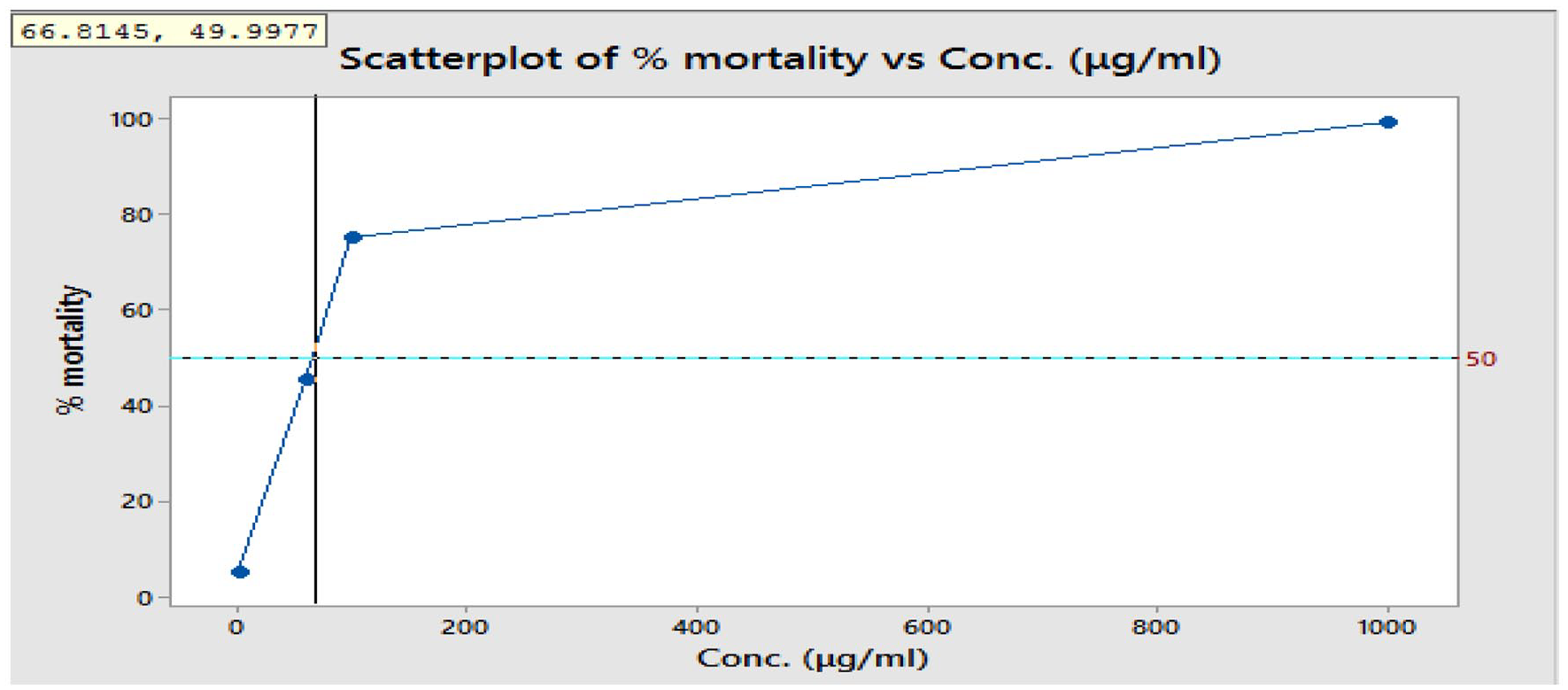
Toxicity effect of Camellia sinensis ethanolic extract.
Antibacterial activity of extract
Susceptibility profile of C. sinensis extract on isolates
Figure 5 shows the susceptibility pattern of the confirmed isolates to the C. sinensis ethanolic extracts using an agar well diffusion technique. The observed zones of inhibition were measured in millimeter (mm) using a transparent meter rule and compared with CLSI (2017) 26 guidelines for antibiotic determination and there were found to be within the susceptible range. The increase in susceptibility as the concentration of extracts was increased from 60 to 80 μg/ml is an indication of the concentration dependence of the extract (Table 3). On a general observation, it could be inferred that there is a wider zone of susceptible region indicating the antibacterial potential of the extract. It also shows that the extract may be beneficial in controlling the proliferation of such food-associated potential pathogens. This is further affirmed by the reports of the GC-MS analysis of biomolecular characterized components as most constituents of the leaf extracts include among them antibacterial derivatives and subunits.

Susceptibility of the isolates to antibiotics and C. sinensis extract.
Concentration and antibacterial activity of Camellia sinensis against isolates.

Bu: Bushenyi collection; E: E. coli; Is: Ishaka collection; Ka: Kashenyi collection; Ki: Kizinda collection; MK: multidrug-resistant milk; MT: multidrug-resistant meat; S: Salmonella spp.
Effect of C. sinensis extract on diarrhea-induced rabbit ilia
It was observed that diarrhea is induced in the Loops B and C as there was an engorged and an accumulation of fluid in these loops when compared with the negative control Loop A. The Loops D and E showed no observable accumulation of fluid when compared with the negative control Loop A, indicating the diarrhea-depleting antimicrobial effect of the C. sinensis extract (other details reported elsewhere).
Reduce mortality effect of C. sinensis extract on bacterial-challenged shrimp
The various effect on tested isolates is shown among E. coli
The reduced mortality effect of different concentrations of C. sinensis ethanolic extract on E. coli-challenged shrimp is shown in Figure 6. The test which determines the reduction of mortality of bacterial-challenged shrimps has revealed concentration dependence with a significant statistical difference from control group. The number of shrimps that survived after 4 days of exposure to E. coli-challenged shrimp and the C. sinensis treated both in the control and test groups were higher in control at 60 μg/ml as they both revealed similar expression/effect and concentration dependence.
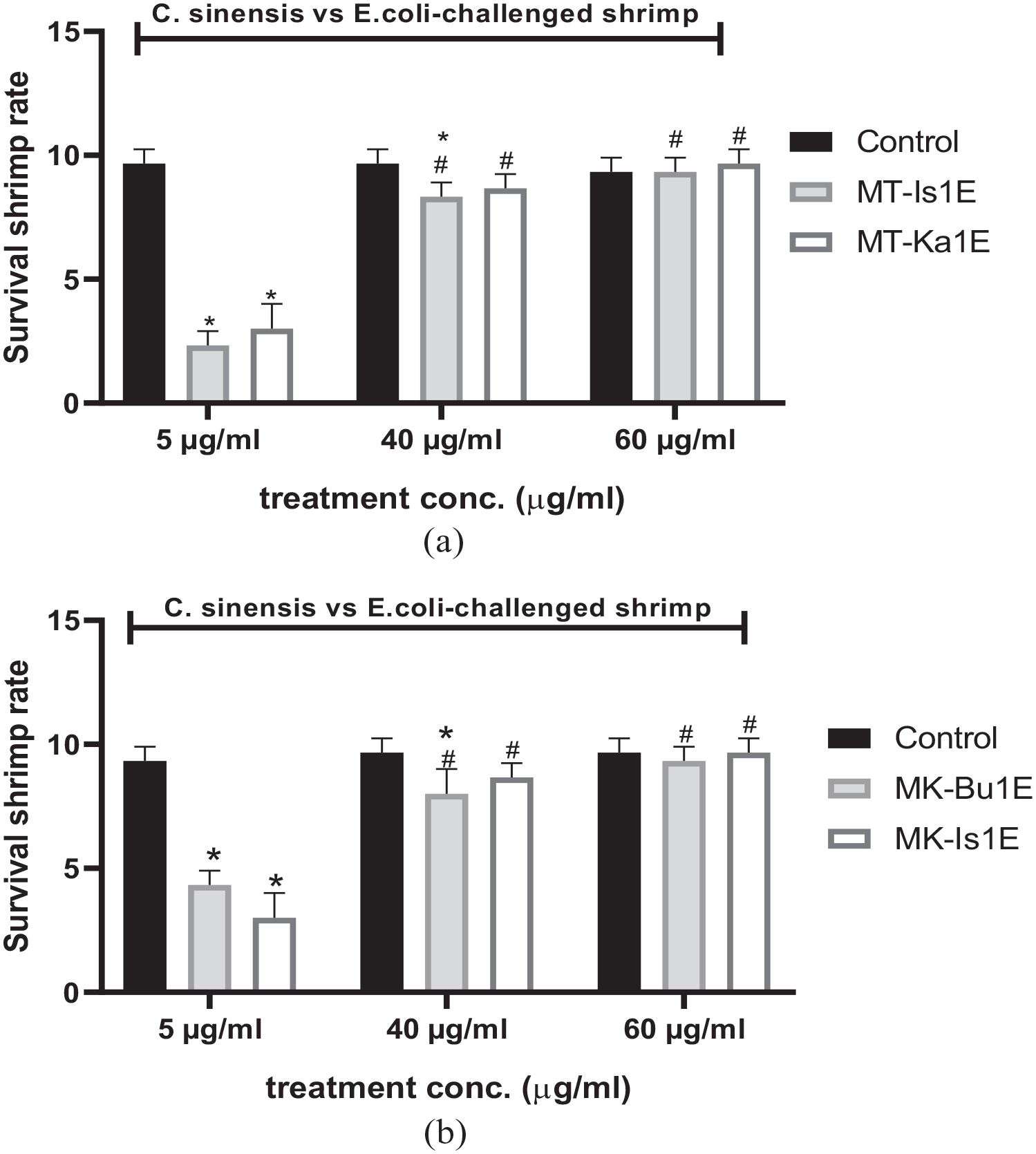
Reducing mortality effect of Camellia sinensis ethanolic extract on E. coli-challenged shrimp. Each bar represents the mean ± SEM of triplicate experiments, (a) Meat, (b) Milk.
The various effect on tested isolates are shown among Salmonella spp
The reduced mortality effect of different concentrations of ethanol extract of C. sinensis on Salmonella spp-challenged shrimp is shown in Figure 7. This test, which determines the reduction in mortality of bacteria-challenged shrimps, has revealed concentration dependence with a significant statistical difference from control group. The number of shrimps that survived after 4 days of exposure to Salmonella spp.-challenged shrimp and the C. sinensis treated both in the control and test groups were higher in control and MT-Ki1S (60 μg/ml). PCR-confirmed isolates of Salmonella spp. from both meat and milk were treated separately as they both revealed similar expression/effect and concentration dependence.
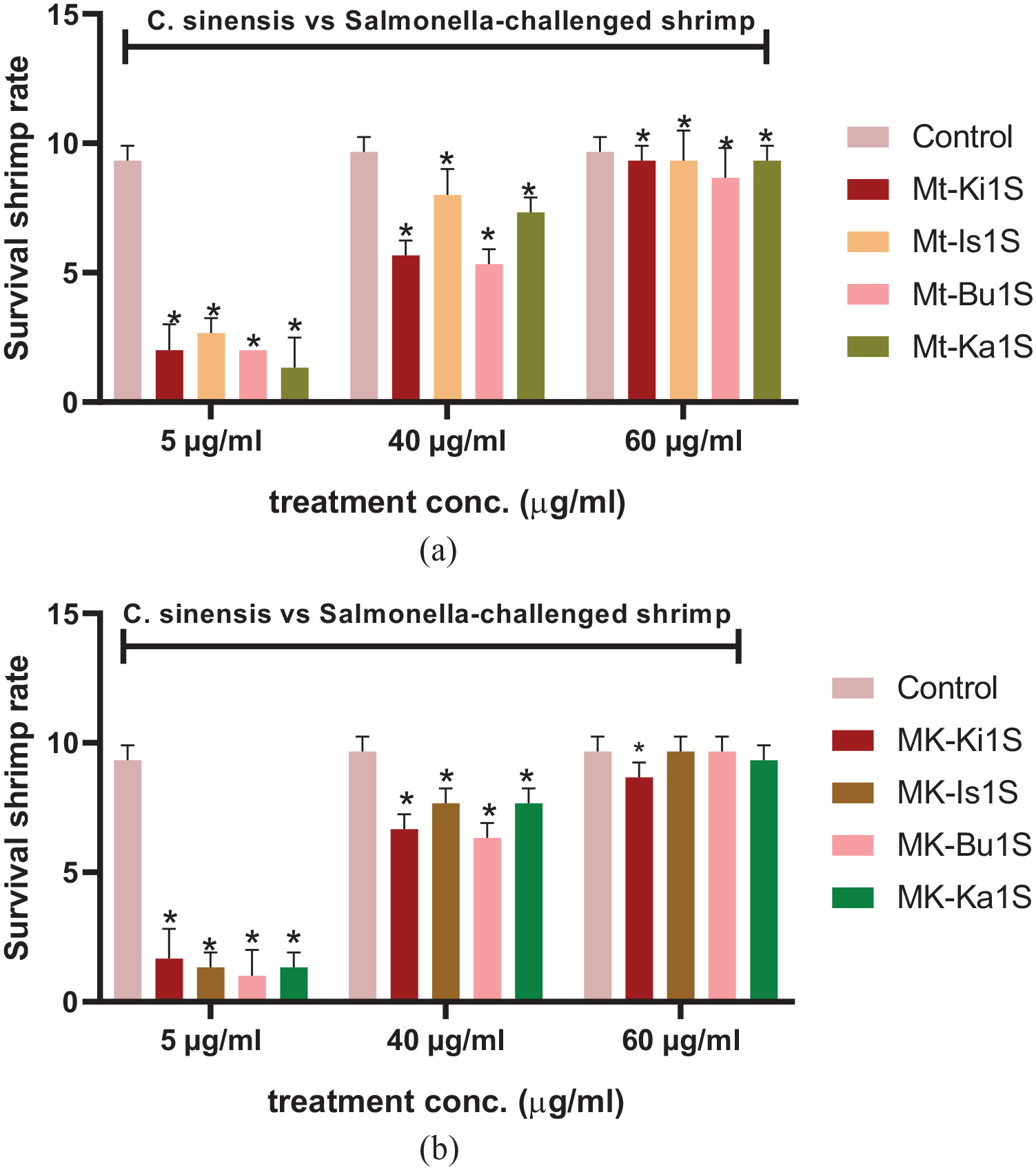
Reducing mortality effect of Camellia sinensis ethanolic extract on Salmonella spp-challenged shrimp, (a) Meat, (b) Milk.
Discussion
The green tea leaf was classified under the Kingdom: Plantae, Order: Ericales, Family: Theaceae, Genus: Camellia, and Species: sinensis. The phytochemical analysis of C. sinensis leaf extracts reveals the presence of six groups of bioactive compounds belonging to the groups of phenolics, flavonoids, saponins, cardiac glycosides, etc. Most green leaves and seeds 11 from the tropical region and their various plant extracts have been observed to possess diversity of phytochemical compounds which affirms their folkloric usage as food additive and control of various disease conditions. C. sinensis has shown such phyto-compounds of relevance which are similar to the observations of various investigators on phyto-compounds found among green leaves.10,27 –31 The crude extracts were further characterized using GC-MS. The spectra/chromatogram of the GC-MS showed 52 bioactive components as was further identified using database of the NIST 11 software which was installed in the spectrometry machine. These compounds were predicted based on PubChem database (NIH) and structures imported appropriately. Some of the observed bioactive components had been previously reported for their anti-inflammatory, anticancer, antioxidant antimicrobial, and nematicidal potential. 32 These compounds include hexadecanoic acid, ethyl ester, 1,2,3-benzenetriol (pyrogallol), caffeine (alkaloid), xanthine (alkaloid), palmitic acid, palmitic acid ethyl ester, phytol (diterpene), alkane and fatty aldehydes, etc.
The α-linolenic acid (9,12,15-octadecatrienoic acid, ethyl ester, (Z,Z,Z)-), which was observed during the study, has also been previously reported for its potential effect on heart-related cases and their tendency to lower cardiovascular cases. 32 Other observed components possess antibacterial and antimicrobial potential, some of them include: phytol, imidazole-4-carboxamide, naphthacene-5,12-dione, 6,11-dihydroxy-2,3,8,9-tetramethyl-, naphthacene-5,12-dione, 6,11-dihydroxy-2,3,8,9-tetramethyl-, etc. The potentials of constituents from C sinensis have also been previously reported by numerous investigators.33,34 The three most abundant compounds among the components observed were (2-hydrazino-8-hydroxy-4-phenylquinoline, oxazole, 2-(3-methoxyphenyl)-5-phenyl- and 2-(4-cyanophenyl)-5-dimethylaminom ethylenaminopyrimidine) which produced the highest RT of 65.939 and a peak area of (A%) 0.77. The chromatogram further reveals all the components of the crude extracts, while the most abundant in content are caffeine (82.69%), naphthacene-5,12-dione, 6,11-dihydroxy-2,3,8,9-tetramethyl- (3.73%), estra-1,3,5(10)-trien-17-ol, 2,3,4-trimethoxy-, (17.beta.)- (3.73%), phytol (1.74%), naphthacene-5,12-dione, 6,11-dihydroxy-2,3,8,9-tetramethyl- (1.65%), 8-[1-adamantyl]-1,3-diamino-5,6-dihydrobenzo[f]quinazoline (1.65%), ethyl 2-(4-nitrophenyl)-7-oxo-7H-1,3,4-thiadiazolo[3,2-a]pyrimidine-5-carboxylate (1.65%), 3-pyrrolidinecarboxamide, 1-methyl-N-[4-(octyloxy)phenyl]-5-oxo-(1.57%), 2-pyrazoline, 5-(4-fluorophenyl)-3-(4-methoxyphenyl)-1-phenyl- (1.57%), 1,4-benzenediamine, N1,N4-bis[4-(dimethylamino)phenyl]- (1.57%) in a reducing order, etc. Noteworthy was the observation of a β-lactam antibiotic building block; imidazole-4-carboxamide at RT of 13.740, in addition to other antimicrobial components such as benzofuran, 2,3-dihydro-, methanol, (1-ethyl-2-benzimidazolyl)(2-methoxyphenyl)-, 3-pyrrolidinecarboxamide, 1-methyl-N-[4-(octyloxy)phenyl]-5-oxo-, 2-pyrazoline, 5-(4-fluorophenyl)-3-(4-methoxyphenyl)-1-phenyl-, 1,4-benzenediamine, N1,N4-bis[4-(dimethylamino)phenyl]-, etc., with high RT ranging from 45 to 63.
The antioxidant potential of C. sinensis extract was conducted using the DPPH and NO activity. The extracts show maximum and optimum scavenging ability for DPPH radicals at half maximal effective concentration (EC50) as the concentration of extracts increases. There was also a maximum and optimum scavenging ability of the ethanolic extracts of C. sinensis for NO radicals at EC50 as extracts concentration increases. It is also an indication of appropriate antioxidant activity and/or potential of the extracts which is further affirmed by the detection of phytol (diterpene), hexadecanoic acid, ethyl ester, 1,2,3-benzenetriol (pyrogallol), caffeine (alkaloid), xanthine (alkaloid), palmitic acid, palmitic acid ethyl ester, alkane, and fatty aldehydes in the GC-MS chromatogram as these aforementioned components are known for their effective antioxidant characteristics. This is similar to the reports of Dorkbuakaew and his colleagues who observed the presence of similar bioactive agents in their study. 30 Similarly, anti-inflammatory compounds were detected in the extract as previously reported. 30
The toxicity assay reveals that the extent of lethality was directly proportional to the concentration of the extract. This is an indication that with an increase in the concentration of green tea leave extract, there is a proportionate death of shrimp within 8 h of test and optimal death observed at a concentration of LC50 = 66.815 μg/ml after 24 h. On reduced mortality effect of C. sinensis extract on bacterial-challenged shrimp, the test revealed a concentration dependence with a significant statistical difference from control group. The number of shrimps that survived after 4 days of exposure to E. coli-challenged shrimp and the C. sinensis-treated both in the control group/in test group were higher in control and at 60 μg/ml. This has occurred for both the shrimp challenged with E. coli and Salmonella spp.
The type culture collection used for the test possess resistant phenotypes which is an indication of antibiotic failure, should antibiotics be used in the treatment of any disease case implicated by any of them. In our previous surveillance studies,3 –5 it was reported that resistant phenotypes do occur among some enterocyte-associated bacterial pathogens which indicates failure of the various antibiotic regimen used which arouse the need for alternative effective antibiotics. The isolates with resistant phenotypes were further exposed to the C. sinensis ethanolic crude extracts in an in vitro antibacterial determination test which reveals an appreciable susceptible effect on the isolates E. coli and Salmonella spp. Among the 29 tested collections, one of them (3.4%) was resistant to the C. sinensis extract at 80 μg/ml, whereas 28 (96.6%) were susceptible, while three (10.3%) fell within the resistance range and 26 (89.7%) were susceptible using a concentration of 60 μg/ml. The study determined minimum bactericidal concentration and minimum inhibitory concentration using serial dilution with measured zone diameter of inhibition (ZDI) in the various concentration of extracts which has an optimum at 60 and 80 μg/ml and ZDI ranging from 14 to 22 mm. It is important to note that these organisms are potential enteric pathogens of human and animals which are implicated in most diarrhea infection cases in addition to enterotoxigenicity, enterohemorrhagic, uropathogenicity, etc. Observing such relevant susceptible effect on these potential pathogens is an indication for their potent usage in the control of these organisms when involved in a disease situation. The concentration of green tea leaf extracts (C. sinensis) which show such zone of inhibition ranged from 20 to 100 μg/ml with significant effect observed at 60 and 80 μg/ml concentrations. This report is similar to the previous results,33,34 that showed that C. sinensis possesses potential antibacterial activity against various bacterial pathogens. This observation was further affirmed by the effect of C. sinensis ethanolic extracts on the diarrhea-induced ilia of rabbit as the loop containing extract failed to show accumulation of fluid (details reported elsewhere). These observed antibacterial and diarrhea-depleting effects of C. sinensis may also be attributable to the various antimicrobial components harbored by the green tea leaves (C. sinensis) including phytol, imidazole-4-carboxamide, naphthacene-5,12-dione, 6,11-dihydroxy-2,3,8,9-tetramethyl-, 6,11-dihydroxy-2,3,8,9-tetramethyl-, naphthacene-5,12-dione, etc. as previously reported by Uma et al. 33 and George et al. 34
It is important to note that the study only focused on the effect of the ethanol extract of C sinensis without determining the impact of the individual components as potential bioactive components, which is a limitation of this study that could be explored in the future. Also, the power analysis for sample size on animals’ selection was not done since it was not fully animals-based experimental but an in vitro study.
Conclusion
This study has revealed that components of C. sinensis ethanol extract possess antibacterial, diarrhea-depleting, and antioxidant potentials. It also has phytochemical constituents including flavonoids, alkaloids, phenolics, saponin, cardiac glycosides, etc. The GC-MS analysis further affirmed the potential of the extract by revealing 52 bioactive components/compounds as shown in the chromatogram. Observing these components in green leaves and plants further affirms the constituents’ eco-friendliness. The various bioactive components with their potential activity in the aforementioned health-related situations need to be exploited for the benefit of man and the environment. Those with antibacterial potential may be applied as drug or antibiotic, leading to the improvement of the various antibiotic regimens and can also be used in the control of major multiple antibiotic-resistant organisms both in the health systems and in the environment.
Footnotes
Acknowledgements
Null.
Authors’ contributions
OH conceived and designed the study; carried out and analyzed samples data; OH and IBE interpreted the data. OH drafted the manuscript. IBE, OH, and AIA revised the manuscript; read and corrected the final copy of the manuscript.
Declarations
We declare that this study is our original work representing one of the first reported on food and food products within this study area.
Declaration of conflicting interests
The author(s) declared no potential conflicts of interest with respect to the research, authorship, and/or publication of this article.
Ethical approval
The protocol and ethical approval for this study was obtained from the Ethics Research Committee of the Kampala International University, Western Campus, Ishaka-Bushenyi, Uganda, with the clearance number Nr.UG-REC-023/201919.
Funding
The author(s) received no financial support for the research, authorship, and/or publication of this article.
Consent for publication
The various authors consent for publication were sorted while the journal option was discussed and agreed upon. However, there are no individual authors data/report included in the study
Animal welfare
Guidelines for humane animal treatment did not apply to the present study because it is an in vitro study and tests/experiments were not done on live animals.

Availability of data and materials
All data, machines, experiments, and analysis sources were appropriately acknowledged as necessary while writing the manuscript. Other data generated during the study are attached as supporting documents while any other information needed are available on request.