



Abstract
Objective:
Respiratory diseases are one of the main morbidities worldwide, especially in developing countries due to a lack of occupational safety and health measures. Therefore, this study aims to assess the prevalence and risk factors of chronic respiratory symptoms among street sweepers in Dessie and Kombolcha town, Ethiopia.
Methods:
A cross-sectional study design was used from 15 February to 16 March 2019 Gregorian calendar, among 392 participants. An interviewer-based questionnaire was used. Bivariable and multivariable logistic regression analyses were used, and variables with p value less than 0.05 in the final model were taken as associated factors.
Results:
The prevalence of chronic respiratory symptoms among street sweepers was 178 (45.4%) with the prevalence of cough 67 (16.54%), phlegm 60 (15.4%), wheezing 127 (32.3%), breathlessness 83 (21.3%), and chest pain 55 (14.3%). Respiratory symptoms were associated with not using face mask (p < 0.001, adjusted odds ratio = 0.31, 95% confidence interval: 0.17–0.57), monthly income (p = 0.013, adjusted odds ratio = 2.1, 95% confidence interval: 1.1–3.8), work experience (p < 0.001, adjusted odds ratio = 3.6, 95% confidence interval: 2.1–6.2), previous sinusitis (p < 0.001, adjusted odds ratio = 8.0, 95% confidence interval: 2.8–22), and educational status (p < 0.001, adjusted odds ratio = 8.6, 95% confidence interval: 3.0–24.4).
Conclusion:
Respiratory symptoms were prevalent among street sweepers in Dessie and Kombolcha towns, Northeast Ethiopia. The non-use of respiratory equipment, educational status, working experience, and past sinusitis was identified factors.
Introduction
Respiratory diseases are an important worldwide health burden, comprising 4 of the 30 most common causes of death such as chronic obstructive pulmonary disease (3rd); tracheal, bronchial, and lung cancer (6th); tuberculosis (TB; 12th); and asthma (28th).1,2 Altogether, more than 1 billion people suffer from either acute or chronic respiratory conditions. The stark reality is that each year 4 million people die prematurely from chronic respiratory disease. 3
Street sweepers play an essential role for public health by cleaning the environment but this exposes them to several hazardous agents. 4 Respiratory illness can lead to chronic lung function impairment. 2 Commonly reported respiratory symptoms associated with road dust among sweepers include wheezing, breathlessness, dry cough, cough with phlegm, and other nasal problems. 5
However, the health conditions of workers all over the world vary due to geographical location, the type of employment, and in the patterns of work chemicals, biological agents, physical factors, adverse ergonomic conditions, and road dust have been acknowledged as important sources.
Recently, in Ethiopia, the burden of diseases, injuries, and risk factors in human populations have been measured in disability-adjusted life years (DALYs). The DALY approach is grounded on economic and ethical principles and can guide policies toward more cost-effective and equitable health care.4 -9 Dust in developing countries plays an important role in environmental pollution because it is raised during sweeping and inhalation of ambient particles and their deposition in the lung eventually leads to the release of various cytokines, causing inflammatory reaction and tissue injury. 10
In addition, street sweeping is physically strenuous, resulting in workers breathing through their mouths rather than their noses. This showed that there are negative effects of dusting on the respiratory system of Municipal Solid Waste Worker (MSWW). 11
In Ethiopia, street sweeping and drain cleaning are labor-intensive activities, and in most cases, the work is done by people who have low-income status. Street sweeping depends on manual labor, particularly women who were more likely to participate in this job often have low occupational skills and belong to less advantaged educational and socioeconomic groups. Some studies revealed that reduced lung function and increased prevalence of respiratory symptoms and allergic diseases are related to occupational exposure, while others did not show any significant respiratory effect.11,12
The main purpose of this study was to determine the prevalence and risk factors of chronic respiratory symptoms among municipal street sweepers in Dessie and Kombolcha city, Northeast Ethiopia. This group of workers has not been studied in the area due to various misconceptions that dust on road contains mainly nuisance particulate matters with little respiratory effects. Most workers facing challenges from this job have been fully or partial exposed to high occupational hazards.
This study benefits street sweepers and helps them to know the type of hazard in their working environment, the importance of using personal protective equipment (PPE), and how to protect them from other factors which predispose to disease.
Methods
Study design and period
A cross-sectional study was conducted from 15 February to 16 March 2019 Gregorian calendar.
Study setting and population
The study was conducted at Dessie and Kombolcha towns which are located 401 and 370 km, respectively, to the north of Addis Ababa. The populations living in the towns were more prone to pollution and also live in crowded area compared to other towns. Street sweepers working in the selected site who have a minimum of 1 year of working experience during study period were included in the study but individuals who were seriously ill, not able to give information, and have less than 1 year of work experience were excluded from the study. Respondents who fulfilled the inclusion criteria were the study population.
The study participants were included in the sample by convenience sampling method. The sample size was calculated based on the prevalence of chronic respiratory symptoms in a previous study 13 of 40%, and a 95% confidence interval (CI) (z) and a 5% margin of error (d) using single population proportion formula 14
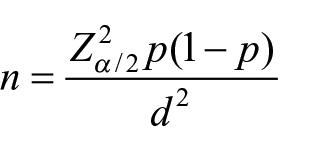
A total sample size of 405 was calculated with a 10% contingency
Measurements
The dependent variable was chronic respiratory symptom, whereas independent variables include socio-demographic characteristics, such as sex, age, religion, level of education, marital status, the salary of workers, and employment condition.
Chronic respiratory symptoms: The development of one or more of the symptom(s) of chronic cough, chronic phlegm, chronic wheezing, chronic shortness of breath, and chronic chest tightness which last(s) at least 3 months in 1 year.
Data collection tool and procedure
Data were collected using pretest by taking 5% of the population and structured Amharic version questionnaires via face-to-face interviews of the study participants. The questionnaire was designed from a modified version of the British Medical Research Council respiratory questionnaire and the American Thoracic Society and National Heart and Lung Institute.15 -17
Statistical analysis
After the completion of data collection, the raw data were entered into a computer using Epi info version 7 (Centers for Disease Control and Prevention (CDC), Atlanta, USA) computer software package for editing, cleaning, coding, and checking incompleteness and consistency. Finally, the data were exported to SPSS version 23 (IBM Corp., Armonk, NY, USA) for analysis. Bivariable and multivariable logistic regression analyses were used to determine the independent predictors of chronic respiratory symptoms. Variables having a p value of less than 0.2 in the bivariable analysis were retained in the multivariable model to control the effect of confounders. Not only that to control the confounder we used different methods, for example, stratification method was conducted, and to reduce important missing variables, amputation method was conducted. Moreover, error that faced due to variable selection based on p value to overcome such type of error backward elimination method with a selection criterion was conducted to pre-filtering variables.
The 95% CI was used to show the precision of data analysis. In multivariable analyses, p value less than 0.05 is considered statistically significant.
Ethical considerations
Ethical clearance was obtained from the ethical review committee of Wollo University College of Medicine and Health Sciences. Informed written consent was obtained from each participant. Those who had respiratory health symptoms were investigated and got treatment by sending them to health facilities.
Results
Socio-demographic characteristics of participants
Out of the total 392 respondents, the response rate of participants was 96.7%; the rest 13 (3.3%) participants refuse the study; the reason behind this is majority of participants stop their response due to personal problems and stop their interview with incomplete data.
And majority of them, 358 (91.3%), 224 (57.1%), 172 (54.2%), 92 (23.5%), and 294 (75%), were females, cannot read and write, married, age group of 35–39 years, and mean monthly income >US$17, respectively (Table 1).
Socio-demographic characteristics of municipal street sweeper in Dessie and Kombolcha city, Ethiopia 2019, Gregorian calendar.

From the characteristics of the utilization of PPE and behavioral status, more than half of them, 202 (51.5%), had work experience of 5 years or less. Likewise, 94 (23.4%) had the use of a respiratory face mask, 78 (19.8%) had taken training about occupational safety, and 374 (95.4%) of participants were working 5–7 days per week (Table 2). Participants using PPE in Dessie and Kombolcha towns used materials, such as Face mask 55 (14%), Gloves 129 (33%), Boots 20 (5%), Apron 133 (34%), and Reflector cloth 55 (14%).
Utilization of PPE and behavioral status of street sweeper in Dessie and Kombolcha city, Ethiopia 2019.

The prevalence of chronic respiratory symptoms among street sweepers was 178 (45.4%) with the magnitude of cough 67 (16.54%), phlegm 60 (15.4%), wheezing 127 (32.3%), breathlessness 83 (21.3%), and chest pain 55 (14.3%) (Figure 1).

Classification based on past respiratory illness among municipal street sweepers in Dessie and Kombolcha 2019, Gregorian calendar.
Among 358 (91.3%) female participants, 166 (46.3%) had respiratory symptom, and among 34 (8.7) male participants, 12 (35.3%) had chronic respiratory disease. However, 4 participants had chronic respiratory symptoms between 18 and 24 years age group; 20 participants in the 25–29 years age group, 28 participants in the 30–34 years age group, 34 in the 40–44 years age group, and 48 participants above 45 years age group had chronic respiratory symptoms.
In bivariable (crude) logistic regression analysis, education, income status, use of face mask, training on occupational safety, work experience, previous dust exposure, previous chronic sinusitis, previous chronic TB, previous chronic asthma, and previous chronic bronchitis have an association. The variables with a p value 0.2 or less in the bivariable result were entered into multivariable logistic regression analysis.
Based on the multivariable logistic regression analysis, respondents who cannot read and write were 8.6 times more likely to having chronic respiratory symptoms compared to those who have a primary and secondary school education (p = 0.003, adjusted odds ratio (AOR) = 8.6, 95% CI: 3.0–24.4). Monthly income showed a significant effect. Workers who earn < US$17 monthly income were 2.1 times more likely to have chronic respiratory symptom compared to those workers who earn ⩾ US$17 monthly income (p = 0.004, AOR = 2.1, 95% CI: 1.7–3.8). 18
Those participants who used face mask were 69% less likely to have chronic respiratory symptom compared to those who had not used face mask (p = 0.011, AOR = 0.31, 95% CI: 0.17–0.57). Also, respondents who had work experience of ⩾5 years were 3.6 times more likely to have chronic respiratory symptoms compared to those workers who had 1–5 years of work experience (p < 0.001, AOR = 3.6, 95% CI: 2.1–6.2). Moreover, workers who had previous chronic sinusitis were 8.0 more likely to having chronic respiratory symptom compared to those who had no previous chronic sinusitis (p = 0.009, AOR = 8.0, 95% CI: 2.8–22) (Table 3).
Bivariable and multivariable logistic regression analysis of the factors for chronic respiratory symptoms among street sweepers in Dessie and Kombolcha city, Ethiopia 2019.

CI: confidence interval; TB: tuberculosis.
Discussion
The purpose of this study was to assess the prevalence and risk factors of chronic respiratory symptoms among street sweepers in Dessie and Kombolcha towns. The response rate of participants was 96.7%. However, 13 (3.3%) participants could not complete the study due to personal unexplained reason.
In our study, the overall prevalence of chronic respiratory symptoms among street sweepers was 178 (45.4%) which is high as compared to research conducted in Addis Ababa. 19 The difference might be due to the fact that in the study conducted in Addis Ababa, majority of participants were educated and probably knew about the prevention of chronic respiratory disease. The result of this study was slightly lower than the related study conducted in India which was 66.2%. 20 These differences might be due to the fact that effective preventive measures, such as availability and proper use of PPE and training, were operational among the Indian study population.
The prevalence of respiratory symptoms among street sweepers in Nigeria was reported to be coughing 25.5%, chest pain 13.0%, and sneezing 6.0%. 21 These findings are low when compared with the current study. This discrepancy in the prevalence among symptoms can be linked to the difference between the countries in the level of development, status of workforce, strengths of occupational health and safety services, and diversity and complexity of work tasks, and environments.
In this study, indoor pollution, such as excessive moisture, volatile organic compounds, pesticides, and combustion products, was assessed and the majority of participants were exposed. Also, almost all participants had low-income status and poor environmental conditions.
In the current study, participants who cannot read and write were more likely to having chronic respiratory symptoms (95% CI = 3.0–24.0) than others who had secondary school education. This is in line with a study conducted in Addis Ababa and Thailand.5,21 The reason may be that educated participants had better opportunity to hear important information from different media about the prevention of chronic respiratory symptoms
Likewise, participants who earn <US$17 per month were more likely to have chronic respiratory symptom (95% CI = 1.1–3.8) than who earn ⩾US$17. Although we did not get other studies to support it, but logically it is proven that workers who had high income had more opportunities to get information on early prevention of chronic respiratory symptoms compared to those who had low income per month. 19
In this study, those who had not used face mask were more likely to develop chronic respiratory symptoms compared to those who had used a face mask. This is supported by a study conducted in Ethiopia and Ernakulam, India.19,22 However, the participants in this study had higher risk to compare to those earlier studies. The difference may be that, in their study, there were higher rates of face mask use compared to the current one.
Similarly, participants who had ⩾5 years of work experience were more likely to have chronic respiratory symptoms (95% CI = 2.1–6.2) than those who had <5 years of work experience. Supporting studies were conducted in Addis Ababa, Ernakulam, and Thailand. 23 However, another study conducted in Ethiopia found that workers who had ⩾5 years of work experience were less likely to have chronic respiratory symptoms compared to those who had <5 years of work experience. 24 The difference may be due to higher monthly income which means those who had longer work experience also had higher monthly income and could afford materials needed for prevention of chronic respiratory symptom.
In this study, respondents who had previous chronic sinusitis were more likely to have chronic respiratory symptoms compared to those who had no previous chronic sinusitis (95% CI: 2.8–22). This is in line with the study conducted in the Addis Ababa region, even though it has a lower risk. 19
The reason may be due to nutritional factors. The nutritional status of the study participants was not good enough. The second reason may due to the geographical location and weather condition, the geographical location being a highland poses a higher risk for the development of chronic respiratory symptoms.
In this study, age, marital status, occupational status, employment condition, working times a day, drinking alcohol, and smoking cigarette did not show significant effect on chronic respiratory symptoms, but in another study, those variables have a significant effect on chronic respiratory symptoms. 23 The reason behind this is maybe the study period is longer and the sample size is large compared to the current study.
To the knowledge of investigators, this is the first study in the region to assess the magnitude and risk factors of chronic respiratory symptoms among street sweepers. However, there were limitations to the study. Future studies will need to be carried out to develop interventions aimed at reducing the magnitude and risk factors of chronic respiratory symptoms among street sweepers.
Limitation of the study
Since the study is a cross-sectional study design, reverse causality is a problem. Due to the exclusion criteria, there might be recall bias and selection bias. In addition, due to the convenient sampling method, generalizing it to street sweepers may be a problem, so future study will need another type of study design.
Conclusion
This study found that chronic respiratory symptoms are highly prevalent among municipal street sweepers in South Wollo, Dessie, and Kombolcha towns. None use of respiratory mask, monthly income, education, work experiences, and previous chronic sinusitis were identified as contributing risk factors for chronic respiratory symptoms in this study. Therefore, municipal and other concerned bodies need to encourage the use of safe waste management techniques and the appropriate use of PPE.
Health education has to be done periodically to identify behavioral problems and increase frequency of occupational training because illiteracy was the most significant factor for chronic respiratory symptoms.
The municipal should be encouraged to given those who have previous respiratory symptoms periodic treatment because previous chronic sinusitis was observed to be a significant factor for chronic respiratory symptoms.
Supplemental Material
sj-docx-1-smo-10.1177_20503121221105329 – Supplemental material for Magnitude and risk factors of chronic respiratory symptoms among municipal street sweepers in Dessie and Kombolcha City, Northeast, Ethiopia: Cross-sectional study
Supplemental material, sj-docx-1-smo-10.1177_20503121221105329 for Magnitude and risk factors of chronic respiratory symptoms among municipal street sweepers in Dessie and Kombolcha City, Northeast, Ethiopia: Cross-sectional study by Elias Manaye, Yibekal Manaye and Mengesha Birkie in SAGE Open Medicine
Supplemental Material
sj-docx-2-smo-10.1177_20503121221105329 – Supplemental material for Magnitude and risk factors of chronic respiratory symptoms among municipal street sweepers in Dessie and Kombolcha City, Northeast, Ethiopia: Cross-sectional study
Supplemental material, sj-docx-2-smo-10.1177_20503121221105329 for Magnitude and risk factors of chronic respiratory symptoms among municipal street sweepers in Dessie and Kombolcha City, Northeast, Ethiopia: Cross-sectional study by Elias Manaye, Yibekal Manaye and Mengesha Birkie in SAGE Open Medicine
Footnotes
Acknowledgements
The authors thank Wollo University for giving this chance to do this research. They also thank Dessie and Kombolcha town municipalities for their generous provision of information.
Author contributions
E.M. conceived the idea of the study, prepared the study proposal, collected data in the field, performed the data analysis, and drafted the article. Y.M. assisted with the preparation of the proposal and the interpretation of data, participated in data analysis, and critically reviewed the article. M.B. participated in the critical comments of the proposal and article preparation. All authors read and approved the final article.
Availability of data and materials
The data supporting this finding can be available at any time with a request.
Declaration of conflicting interests
The author(s) declared no potential conflicts of interest with respect to the research, authorship, and/or publication of this article.
Ethical approval and consent to participate
Procedures followed the ethical standards of the Ethical Review Board of Wollo University. Following the approval, an official letter of co-operation was written to Dessie and Kombolcha town municipalities. From those participants who agreed to be included in the study, written informed consent was taken from each study participant during data collection. Those who were found affected by dust and having respiratory symptoms were investigated and got treatment by sending to health facilities.
Ethical approval
Ethical clearance was obtained from the ethical review committee of Wollo University College of medicine and health science. SOP/WU-IRB/008/01
Funding
The author(s) disclosed receipt of the following financial support for the research, authorship, and/or publication of this article: This is from a developing country; our salary could not cover the fee for publication. This article is original and has a great impact on designing prevention strategies for policymakers and it will be used as the baseline data for future researchers. Therefore, we request your journal to publish this paper-free.
Informed consent
From those participants who agreed to be included in the study, written informed consent was taken from each study participant during data collection.

Supplemental material
Supplemental material for this article is available online.
References
Supplementary Material
Please find the following supplemental material available below.
For Open Access articles published under a Creative Commons License, all supplemental material carries the same license as the article it is associated with.
For non-Open Access articles published, all supplemental material carries a non-exclusive license, and permission requests for re-use of supplemental material or any part of supplemental material shall be sent directly to the copyright owner as specified in the copyright notice associated with the article.
