



Abstract
In contrast to states and industries promoting continuous innovation, discourse around digital disconnection suggests that individuals increasingly seek a reduced presence of technology. Recognizing that ordinary people have limited opportunities to create and articulate their own visions of life with digital media, this study employs a creative inquiry with 20 women in emerging adulthood (ages 18 to 29) from Germany (n = 10) and Norway (n = 10). Specifically, participants reflected on the role a smartphone would play in an ideal world, expressing themselves through drawings, text, and bullet points. Employing utopian thought as the guiding framework, the data reveal both formative desires and perceptions of responsibility across three themes: (1) ideal self, reflecting a wish for greater self-discipline in personal use; (2) ideal technology, involving critiques of technological design and industry interests; and (3) ideal society, envisioning collective change toward reduced device use.
Narratives promoted by states and industries tend to frame a livable life, an ideal society, and even a better world as dependent on ever more advanced technologies. Policy and public institutions, for instance, promote such visions through “roadmaps, rules, and regulations” (Mager and Katzenbach, 2021, p. 224), advocating expanded technological infrastructure. Industries likewise position themselves, through corporate charters, mission statements, and announcements, as “leading the fabric of socio-technical development” (Natale et al., 2019, p. 324). Still, such visions involve notable trade-offs, as illustrated by the smartphone in Vorderer (2016). He notes that the device receives praise for providing access to information anytime and anywhere, yet it is precisely this quality that draws users into intrusive patterns of constant connectivity. He further argues that the mediated world we live in “in many ways brings us closer to some version of ‘the good life,’ while at the same time leading us away from it” (p. 4). Scaling such issues to a societal level, scholars argue that users face increasing difficulty in opting out, a condition described using various terms, including “digital enforcement” (Díaz Andrade and Techatassanasoontorn, 2021), the “digital by-default society” (Kuntsman and Miyake, 2022, p. 10), and a “culture of connectivity” (Van Dijck, 2013). Accordingly, critical engagement with the negative impacts of technology across public and scholarly debates has intensified (Albris et al., 2024; Fast, 2021).
However, despite this growing attention, the voices of ordinary people affected by these digital developments remain largely excluded from shaping visions of life with technology. In Benjamin's (2024) view, such perspectives remain absent, as a very small and male-dominated sliver of humanity monopolizes the imaginative space that she claims everyone has a right to. In redirecting the focus to ordinary people, this study specifically examines the utopian imaginings of an ideal relationship with smartphones among 20 women in the conceptual life stage of emerging adulthood (ages 18 to 29, as defined by Arnett, 2000) in Germany and Norway. It thereby builds on utopian thought as a framework (Levitas, 2013; Polizzi, 2023; Tower Sargent, 2010; Wells, 1906), conceptions of compulsory connectivity (Díaz Andrade and Techatassanasoontorn, 2021; Kuntsman and Miyake, 2022; Van Dijck, 2013), previous contributions on women and digital disconnection (Beattie, 2020; Bozan and Treré, 2023; Fast, 2021), the conceptual life stage of emerging adulthood (Arnett, 2000, 2010; Arnett et al., 2014), and the intersection of mobile media studies and media resistance (Vanden Abeele and Syvertsen, 2025). Through this, the present study seeks to understand both the formative desires of women in emerging adulthood regarding smartphones and the underlying perceptions of responsibility, within two highly digitalized national contexts.
Using a qualitative research design grounded in creative inquiry, participants imagined the role of their smartphones in an ideal world through a prompt exercise involving drawings, text, and bullet points. Subsequent interviews further examined these prompt outcomes. Through a thematic analysis of the multimodal data, three key themes were developed: (1) ideal self, where participants expressed a desire for greater self-discipline; (2) ideal technology, involving critiques of mobile media design and the technology industry's interests; and (3) ideal society, where participants envisioned a collective change toward reduced device use. By showing that conceptions of ideality do not inherently entail a greater technological presence, this study aims to contribute to a deeper understanding of the nuances of digital connection and disconnection.
Utopian Thought as Framework
To gain insight into women's imaginings of an ideal relationship with their smartphones and their accompanying perceptions of responsibility, this study applies utopian thought as a framework. Originating from the 16th-century novel titled Utopia, Greek for “no place,” including a poem titled Eutopia, Greek for “good place,” the term utopia is commonly understood as a blend of both meanings: a nonexistent good place (Tower Sargent, 2010). While utopia and its counterpart dystopia, a dysfunctional society, are well-established genres in literature and film, utopian thought has also received significance in academic scholarship (Levitas, 2013; Tower Sargent, 2010). As early as 1906, H. G. Wells argued that “the creation of Utopias – and their exhaustive criticism – is the proper and distinctive method of sociology” (p. 367). Levitas (2013) elaborates on this, explaining that utopias “embed a contrast with the present to which they stand as critique, articulating also the reasons for the ills of contemporary society” (p. xiv). Whether such visions are located “elsewhere or in the future,” she further argues, “they are always substantially about the present” (p. xiv). Building on this characteristic of utopian thought, Polizzi (2023) draws links between utopian studies, political theory, and matters of media and communication studies, proposing that users’ utopian and dystopian imaginaries of society are especially well-suited to examining the internet's potentials and limitations for civic life. Aligning with this proposal, the present study draws on the analytical qualities of utopian thought in the context of mobile media. Specifically, the study seeks to reveal both the formative desires at the individual level, here focused on an imagined ideal relationship with one's smartphone, and perceptions of societal structures, here considered in terms of responsibility.
Sociotechnical Imaginaries and Techno-Utopianism: Longing for More Technology
Dominant visions of an ideal society often arise less from individual reflection than from collective shaping by states and corporations (Levitas, 2013; Mager and Katzenbach, 2021). This is particularly evident in the realm of technology, as Jasanoff and Kim (2009) illustrate with their concept of “sociotechnical imaginaries,” initially defined as “collectively imagined forms of social life and social order reflected in the design and fulfillment of nation-specific scientific and/or technological projects” (p. 120). An example of this is Norway's National Digitalization Strategy, which aspires to make the country the most digitalized in the world by 2030 (Norwegian Ministry of Digitalisation and Public Governance, 2024). Remarkably, Norway is already a digital frontrunner: 99% of its citizens have home internet access (OECD, 2025), it ranks among the global leaders in e-government development (Department of Economic and Social Affairs, 2024), and in January 2024, it established a Ministry of Digitalisation and Public Governance (Norwegian Ministry of Digitalisation and Public Governance, 2024). Although policymakers acknowledge privacy concerns (Norwegian Ministry of Digitalisation and Public Governance, 2024) and advise limiting smartphone use in schools (Norwegian Government Security and Service Organisation, 2024), the overarching narrative remains firmly pro-digitalization. Germany, a much more populous country, exhibits similar patterns. With over 92% internet penetration (OECD, 2025) and a robust e-government infrastructure (Department of Economic and Social Affairs, 2024), one of the newly formed government's first actions was to establish a Federal Ministry for Digital and State Modernisation (BMDS, 2026), reinforcing its commitment to digitalization.
At a later point, Jasanoff (2015) clarified that sociotechnical imaginaries “are not limited to nation-states, as implied in our original formulation, but can be articulated and propagated by other organized groups, such as corporations, social movements, and professional societies” (p. 4). This is especially discernible in the ways technology industry leaders construct visions, missions, and strategies, commonly referred to as “techno-utopianism” (Barbrook and Cameron, 1996; Turner, 2006). Analyzing media artifacts from the 2021 announcement of the Metaverse, Lucia et al. (2025) found that Meta Platforms’ CEO Zuckerberg framed a perceived global deficit in connectivity as a problem and presented the Metaverse as its solution, reinforcing both his personal and corporate interests. A comparable narrative emerges in Apple's public communications, citing CEO Tim Cook (Apple Inc., n.d.): “We believe that business, at its best, serves the public good, empowers people around the world, and binds us together as never before.” Samsung (n.d.) similarly articulates in its “Mission and Approach” statement that it follows “a simple business philosophy: to devote its talent and technology to creating superior products and services that contribute to a better global society.” Hence, even though Apple and Samsung also address public concerns about smartphones, for example, by introducing screen time monitoring tools (Apple Inc., 2025; Samsung, 2025), they continue to construct connectivity as a moral objective with a global claim.
Dystopian Technology and Digital Disconnection: Longing for Less Technology
Despite technology often playing a key role in utopian visions, it is also recognized for its dystopian qualities (Syvertsen, 2017; Wajcman, 2004). Karppi and Nieborg (2021), for instance, point out that a number of former tech executives have acknowledged contributing to forms of “techno-dystopianism,” including by exploiting “neuro-chemical vulnerabilities in human psychology” (p. 2641) to keep users on their platforms as part of their business model. More broadly, such addictive qualities have been problematized across disciplines, including the social sciences, information and computer sciences, and law (Alter, 2017; Domalewska, 2025; Sorokowski and Sobczak, 2025). In response to such identified dangers, Karppi and Nieborg (2021) argue that a new kind of utopian vision centered on the refusal of technology is emerging, namely digital disconnection. The utopian character of nonuse is especially evident in temporary spaces created outside of daily routines. Examples include offline tourism sites (Schwarzenegger and Lohmeier, 2021; Syvertsen, 2022), pilgrimages (Jorge, 2023), or the Sexsibility Festival, embedded in a Swedish community for alternative lifestyles (Ljungberg, 2020), which incorporate disconnection as part of a broader experience. Others are entirely built around it, such as technology-free summer camps for adults, commonly known as digital detox camps (Fish, 2017; Karlsen, 2023). However, when considering digital disconnection in conjunction with utopia, three points are worth keeping in mind. First, digital disconnection is generally not understood as complete abstention from technology, but rather as “people's mundane, reflexive responses to the role that smartphones and computers should play in everyday life” (Albris et al., 2024, p. 12). In line with this, Karlsen (2023) recommends that digital connection and disconnection should not be “seen as a binary pair but a spectrum of practices fluctuating between embracing and refraining from use of specific media technology” (p. 361). Second, as was implicit in the previous point, digital disconnection is not a distant eventuality but is already being enacted in everyday contexts. Historically, technological innovation has consistently been met with resistance (Syvertsen, 2017), indicating that digital disconnection is not a novel phenomenon but rather its most recent manifestation. This development has been accompanied by a surge in interdisciplinary research, with digital disconnection studies receiving recognition as a field in its own right (Altmaier et al., 2024). Capturing this conjuncture of growing scholarly as well as public attention to practices of nonuse alongside broader critiques of digital media, Fast (2021) coined the term “disconnection turn,” and Albris et al. (2024) similarly frame this development as a “digital backlash.” Third, digital disconnection is not an ultimate remedy. Despite its growing momentum, associated practices largely remain individual tools, whereas digital enforcement and digital-by-default societies operate at a structural level, rendering nonuse not always feasible (Díaz Andrade and Techatassanasoontorn, 2021; Kuntsman and Miyake, 2022; Van Dijck, 2013). Hence, it is within this complex landscape of visions of continual innovation marked by potentially dystopian qualities and the general possibility yet persistent uncertainty of nonuse that the longing for less gains a utopian character.
Study Focus: Smartphones and Women in Emerging Adulthood
The promotion of tech-driven utopias by states and industries appears seemingly at odds with a growing societal aspiration for digital disconnection. This raises the question: If ordinary people had the opportunity to define their own utopias for life with technology, what might they say? Following this research interest, the present study invited participants to imagine the role technology might play in an ideal world. Given the potential ambiguity of the terms “technology” and “digital media,” it uses smartphones as a tangible entry point to contemporary discourse on the implications of ubiquitous connectivity. It thereby follows the recent invitation by Vanden Abeele and Syvertsen (2025) for research on mobile media and digital disconnection to recognize and leverage their shared stakes in questions surrounding mobile media affordances and media resistance.
Moreover, the study specifically examines women in the conceptual life stage of emerging adulthood, defined as ages 18 to 29 by Arnett (2000), within the previously introduced national contexts of Germany and Norway. This focus on gender and age is grounded in digital disconnection research that increasingly examines gendered dynamics. Just as technofeminism has highlighted how male-dominated technology industries and broader gender norms shape experiences and expectations of connectivity (Wajcman, 2004), such a perspective is now being extended to digital disconnection. Nonetheless, much of this research has focused on caregivers, typically wives and mothers, conceptualizing them as more constrained in their ability to disengage as their obligations increasingly extend into the digital realm (Beattie, 2020; Bozan and Treré, 2023; Fast, 2021). As a result, women outside these roles have received comparatively less attention. This gap is particularly relevant for women characterized by heightened self-focus and fewer daily obligations, which are key features of emerging adulthood (Arnett, 2000; Arnett et al., 2014). While women in this age range may still assume care responsibilities, their relative independence creates additional opportunities to examine women's experiences of digital disconnection.
The study also draws on further characteristics of emerging adulthood, including identity exploration, possibilities, and optimism (Arnett, 2010; Arnett et al., 2014). Having reached the age of majority, emerging adults are no longer subject to parental regulation. This newfound freedom is theorized to extend to media consumption and contribute to “a time of unparalleled fun” (Arnett, 2010, p. 271). However, taking on responsibility for both content choices and the amount of time spent can also introduce challenges (Coyne et al., 2016). Moreover, as cultures, technologies, and broader social circumstances evolve over time, so too does what it means to be an emerging adult (Arnett et al., 2014). Scholars therefore encourage ongoing cross-national research on media use during this life stage to remain attuned to both the opportunities and challenges it entails (Benvenuti et al., 2023).
Today's women in emerging adulthood find themselves at an interesting juncture: a life stage marked by newfound independence and minimal obligations, shaped by omnipresent technology such as smartphones and a cultural quest for moderation, whereas states and industries continue to endorse further innovation. Recognizing this context, this study draws on the creative potential for reflection and speculation that women in emerging adulthood may bring to this moment.
Method
The study employed a two-part qualitative data collection process followed by a thematic analysis. First, the participants received a sheet of paper with the prompt: Imagine living in an ideal world. What role would your smartphone play in your daily life? Express yourself (drawing, writing, etc.)!
Second, to further contextualize their prompt responses, participants took part in interviews in which they elaborated on their outcomes, answered follow-up questions, and discussed broader topics related to their experiences with smartphones and digital disconnection. The interviews lasted between 44 and 67 minutes and were subsequently transcribed and anonymized. To promote accurate representation of participants’ identities, they were encouraged to self-select a pseudonym (Pretorius and Patel, 2025). The data collection took place between August 5 and December 18, 2024.
To avoid projection and misinterpretation, the analysis approached the prompt outcomes not as artworks with latent meaning but through their multimodality (Kress and Van Leeuwen, 2001). Accordingly, the three forms generated by the prompt exercise – drawings, text (i.e., full sentences), and bullet points – were treated as distinct semiotic modes of data, intended by the participants to convey specific messages, just as the interview transcripts were. All modes were subjected to thematic analysis, a recognized analytical approach in qualitative research (Braun and Clarke, 2022), with the process leading to the development of the three key themes presented in the results section.
The study included 20 participants who met three inclusion criteria: self-identified as women, in emerging adulthood, and from either Germany (n = 10) or Norway (n = 10). Due to language limitations, the prompt exercise was conducted in English with Norwegian participants and in German with German participants. Recruitment followed a snowball sampling method, with outreach extending to a nursing school, a running club, and university students. Table 1 presents an overview of the participants, including their pseudonyms, age, country of residence, occupation, and the main modes of their prompt outcome. None of the participants have children, which was not an inclusion criterion but rather reflects a common characteristic of women in this age group from these countries, where the average age at first childbirth is 30.4 years in both Germany (Destatis, 2024) and Norway (Statistics Norway, 2025b). The project has received approval from the Norwegian Agency for Shared Services in Education and Research (No. 378655), confirming adherence to ethical standards in data handling.
Sample Characteristics.

These participants did not select their own pseudonyms but instead agreed to suggestions.
The main occupation/prompt outcome mode is listed first.
Results
Three key themes are presented below: (1) ideal self, (2) ideal technology, and (3) ideal society.
Ideal Self
Participants consistently took themselves as the point of departure, noting that, in an ideal world, their smartphone use would differ from their current habits. At present, they echoed contemporary concerns about the intrusiveness of digital media and the desire to disengage (Albris et al., 2024; Alter, 2017; Fast, 2021; Vorderer, 2016), referring to themselves as highly dependent on their devices, regularly distracted, and, in some cases, even as addicts. Ideally, however, they would manage to use their smartphones just the right amount. Luka, for instance, drew herself listening to music while ignoring an incoming call on her vibrating smartphone (Figure 1). She further explained that she often gives in to a perceived pressure to be immediately available, especially to her largely female friend group and to her girlfriend. In her ideal scenario, Luka alone would determine when she is available, independent of external influences. Her account illustrates that efforts to disengage amid navigating conflicting social expectations of availability, which Fast (2021) terms “disconnective work,” are not limited to heteronormative relationships or to women in caregiving roles. Rather, they also occur within relationships between women.

Luka's prompt outcome (excerpt).
Other participants also described a desire to be more intentional about their smartphone use, one of them being Michelle. She suggested the need “to create boundaries and building blocks” to limit the extent to which the device plays a role. Freyja provided a concrete example of such building blocks in her interview, saying she would like to ask herself more often, “Is this really necessary?” or “Is there anything else I need to do first?” when using her smartphone. Instead of scrolling, she wants to spend more time on hobbies, trying new things, and being with people. Similarly, Laura wrote in her prompt response that an ideal world makes her think of “nature, of garden, of time spent with family, time in the here and now, in which the smartphone does not play a role. At least it would not play an active role.” Elin illustrated how more such time could be allowed for by imagining her phone would, by default, remain “behind bars” in her purse (Figure 2). Her idea resembles the existing post-digital consumer object of mobile phone boxes, in which smartphones are temporarily stored to minimize distraction. Some of these, in fact, take the form of tiny jails, symbolizing the growing disenchantment with digital life that characterizes the post-digital condition (Cramer, 2014; Fast and Syvertsen, 2024). In Elin's ideal world, she would allow herself to take the phone out of its jail only for ten minutes, five times per day, far below the Norwegian average daily screen time of 4 hours and 35 minutes (Statistics Norway, 2025a).

Elin's prompt outcome (excerpt).
Some participants mentioned having tried digital detox apps to manage their screen time. These apps aim to “beat technology with technology” (You, 2024, p. 175) by limiting specific apps after a preset time. However, these limits can often be dismissed. Hence, as Hind put it, an obvious solution would be to “maybe not ignore the time limit!? [LAUGHS].” Across the sample, the women saw the ability to exercise self-discipline as integral to their ideal worlds. Such views seemingly mirror dominant self-help narratives, which frame individuals as responsible for their smartphone use and recommend that taking specific, small-scale actions can help them regain control (Karlsen and Syvertsen, 2016; Syvertsen, 2020). This pattern is also visible in Sara's self-portrait, depicting herself at home, with her phone placed in a drawer and an on/off switch connected by an arrow (Figure 3). In her interview, she explained that the drawing reflects her desire to put her phone away more often. Notably, the act of placing a device into a drawer, as well as the other practices described in this section, are already accessible. A study by Mannell (2019), for instance, identified several of the suggested ideas among the participants in the present study, such as putting the phone at a physical distance or delaying responses, as “disconnective affordances” currently employed within its own sample. So, when asked whether Sara could see herself following through with her proposed strategy, she responded candidly that she had been thinking about it but also described herself as lazy. This, in turn, consolidates the theme of an “ideal self,” in which participants do not desire disconnection practices themselves, but rather an inner drive to enact them.

Sara's prompt outcome (complete).
Ideal Technology
Some participants initially responded to the prompt by imagining life entirely without smartphones. Lilly, for instance, wrote in her prompt response: “In an ideal world, I wouldn’t need a smartphone anymore,” accompanied by a depiction of a crossed-out device (Figure 4). Freyja wrote: “Ideally, I wouldn’t have a smartphone in the first place. I would love to simply have a small brick phone like in the early 2000s and only use it for calling and texts.” Her prompt response was likewise accompanied by a crossed-out device (Figure 5). However, throughout the interviews, Lilly and Freyja's stances became more nuanced, as both also acknowledged the smartphone's benefits. This process of deconstructing their initial rejection and developing a more ambivalent view is especially discernible in Emily's prompt outcome. She wrote: “My first thought was none! but then I started thinking … Through my smartphone I connect with friends and family that lives[sic] far away.” Accordingly, Lilly, Freyja, and Emily revised their initial responses to accentuate that, while smartphones might not disappear, in an ideal world, they would at least play a lesser role.
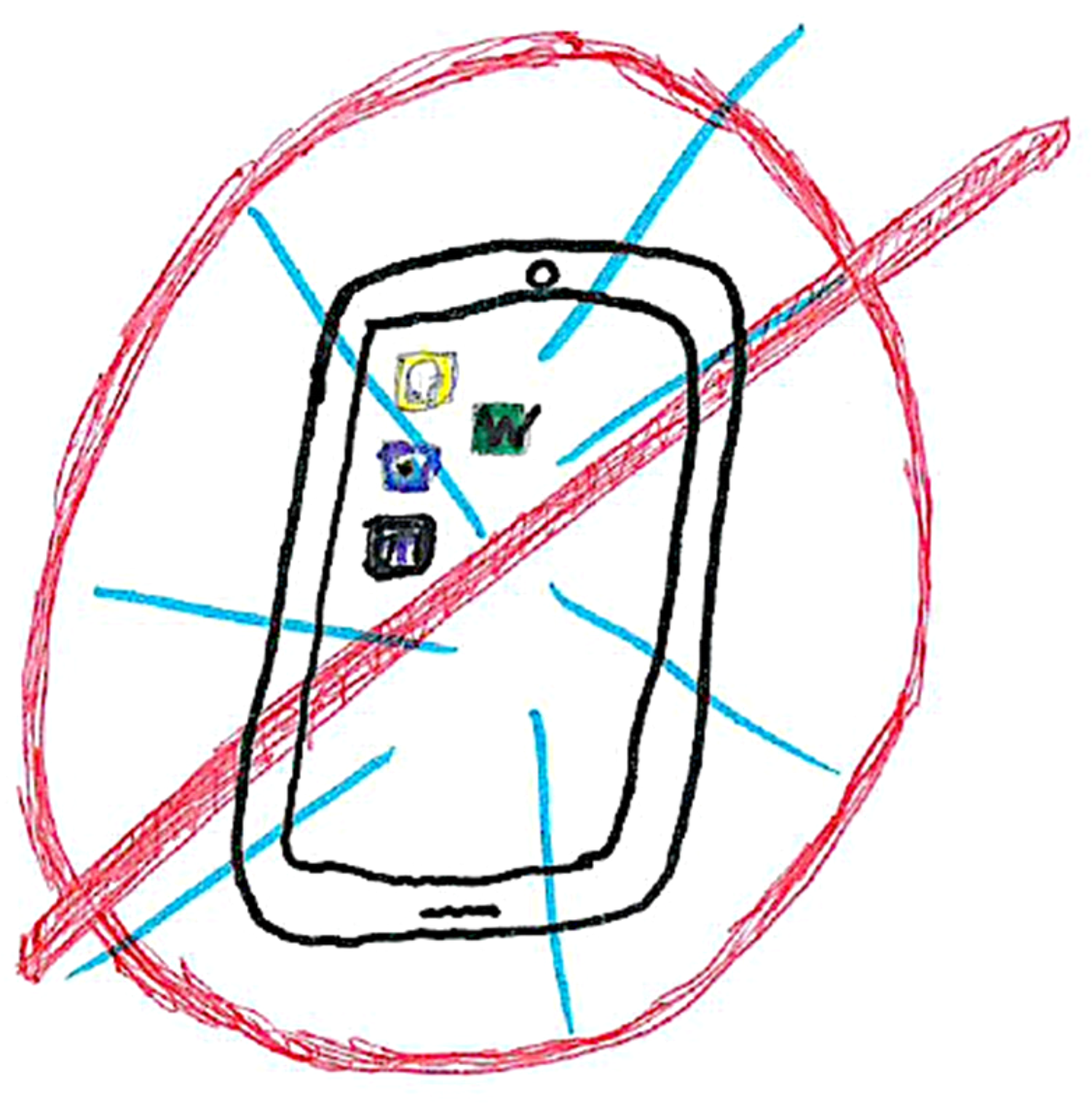
Lilly's prompt outcome (excerpt).
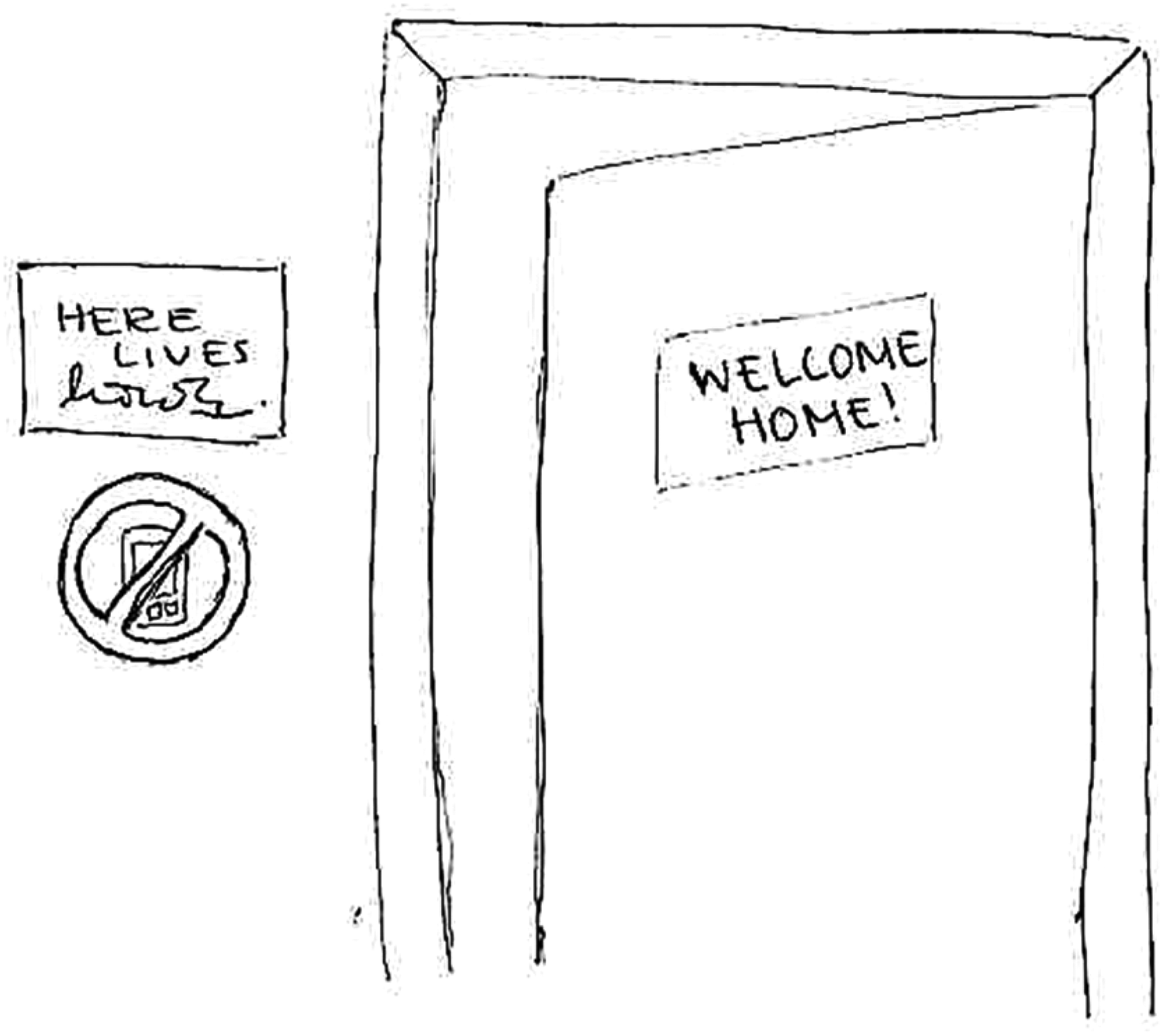
Freyja's prompt outcome (excerpt).
Other participants also voiced their interest in reducing the impact of the smartphone by redefining its role from a distracting force to something more positive. Freyja, Vilde, Emma, and Nora described the ideal role as a “tool,” Romy as a “helper,” Hind as a “colleague,” Friederike as an “everyday companion,” and Michelle as an “accompanying item,” whereas Laura simply stated that its role should be “functional.” To achieve this, Elin drew a model of a technological solution. She explained that she is intrigued by the idea of a phone without internet access, were it not for the essential services she relies on in everyday life, such as online banking and digital identification. Hence, whereas a “smart” phone has too many functionalities, a “stupid” one has too few. Her solution would be a “good filter” that allows the user to access essential internet-based services while blocking distractions such as social media (see Figure 6).
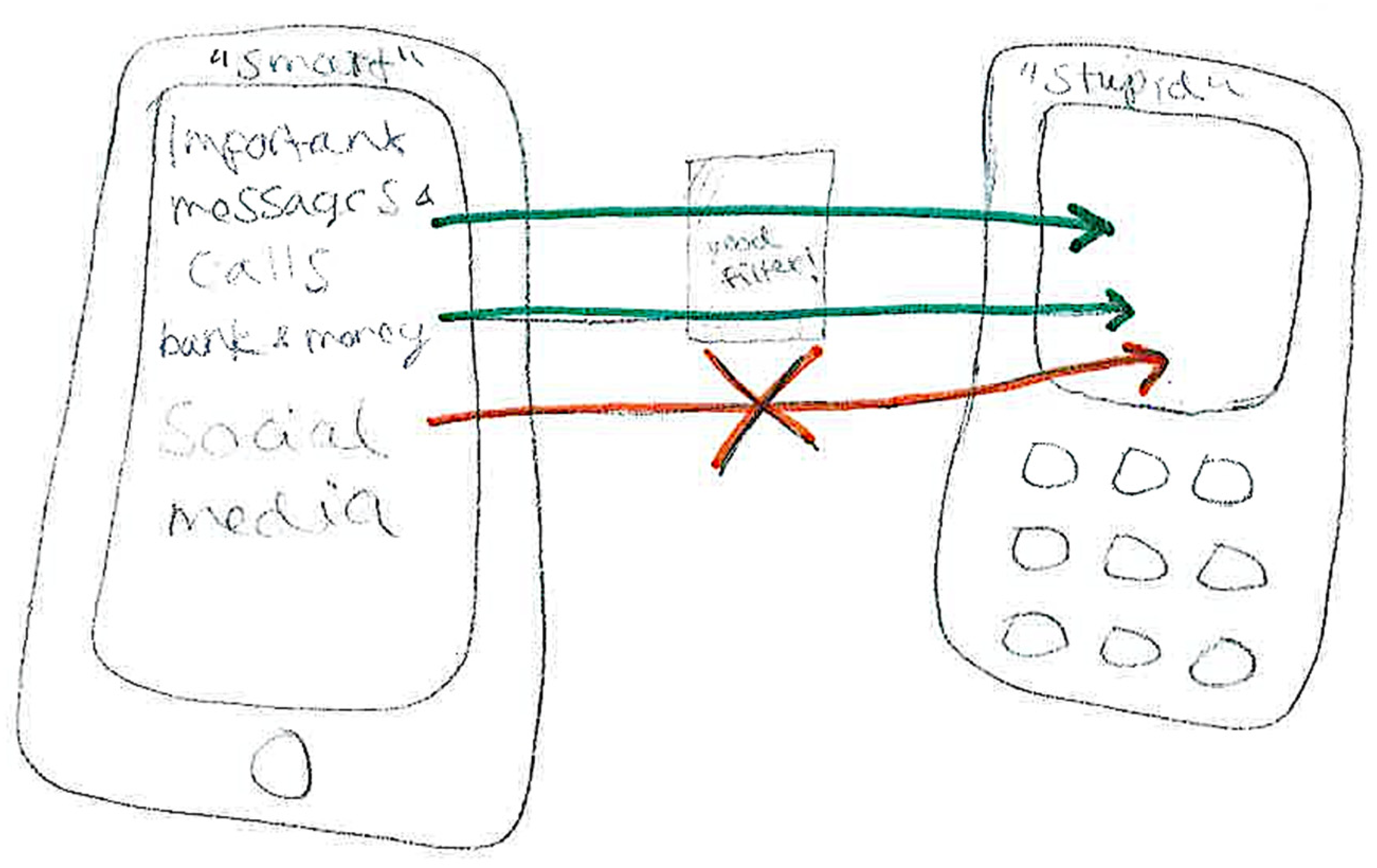
Elin's prompt outcome (excerpt).
Strikingly, imaginings of ideal technology not only included limiting current technology but, in a few cases, also advancing it. One such case was Friederike: I would like to see some replacement of smartphones with other technologies. For example – I don’t know – some kind of chips in our hands that we can use to pay or identify ourselves.
Aligning with interdisciplinary scholarship (Alter, 2017; Domalewska, 2025; Sorokowski and Sobczak, 2025), participants problematized the addictive qualities of technology design experienced firsthand, attributing them to the profit-oriented structure of the technology industry. As Freyja explained: I mean they make money off of people being on social media. And I don’t feel like they hide that very well. I think that it is very obvious that they want people to stay on their phones. I’d say the tech industry is focused on making money, and I don’t think they care that we’ll soon run out of rare resources, and that it's always just about getting bigger. And I have no hope that anything could change because they couldn’t care less.
Ideal Society
In reflecting on their relationship with smartphones, participants also acknowledged external influences. For instance, as emerging adults, most of the women were students or had just started their first jobs, often experiencing heightened stress. Consistent with the concept of escapism (Herzog, 1941), the women reported frequently turning to their devices to unwind during their downtime. Romy explained that her previous job had been very stressful and that her phone offered a quick and easy form of distraction, expressing hope that her upcoming new job would be the solution. Expanding on the role of work, Emma articulated a critique of capitalist work culture and expressed a desire for shorter workdays: Well, it's just that I imagine that if people had more spare time, they would have more energy. And then I think we wouldn’t kind of just revert like automatically to like looking at our phone all the time.
In terms of smartphone dependence in social contexts, both Norwegians and Germans demonstrated similar experiences. Sydney detailed that her current plan to delete TikTok will not only affect her, but that her friends expect her to send and receive short videos on the platform, requiring her to justify her decision before doing so. In general, participants described their smartphone use as deeply interwoven with their friends, families, partners, and society at large, echoing the arguments that digital participation is not merely a matter of individual choice (Díaz Andrade and Techatassanasoontorn, 2021; Kuntsman and Miyake, 2022; Van Dijck, 2013). Liv exemplifies this in her reflections on social media, noting that while she could potentially reduce her use, doing so might exclude her from her social life. Meaningful change, therefore, would require collective involvement: I think it's important for people to know that my age group, like young adults, we don’t want to be addicted to social media. It's not a choice, it's a force. You know. Because you have to have it to fit in. So, I feel like if I made a deal with everyone else to quit, I would go for it.
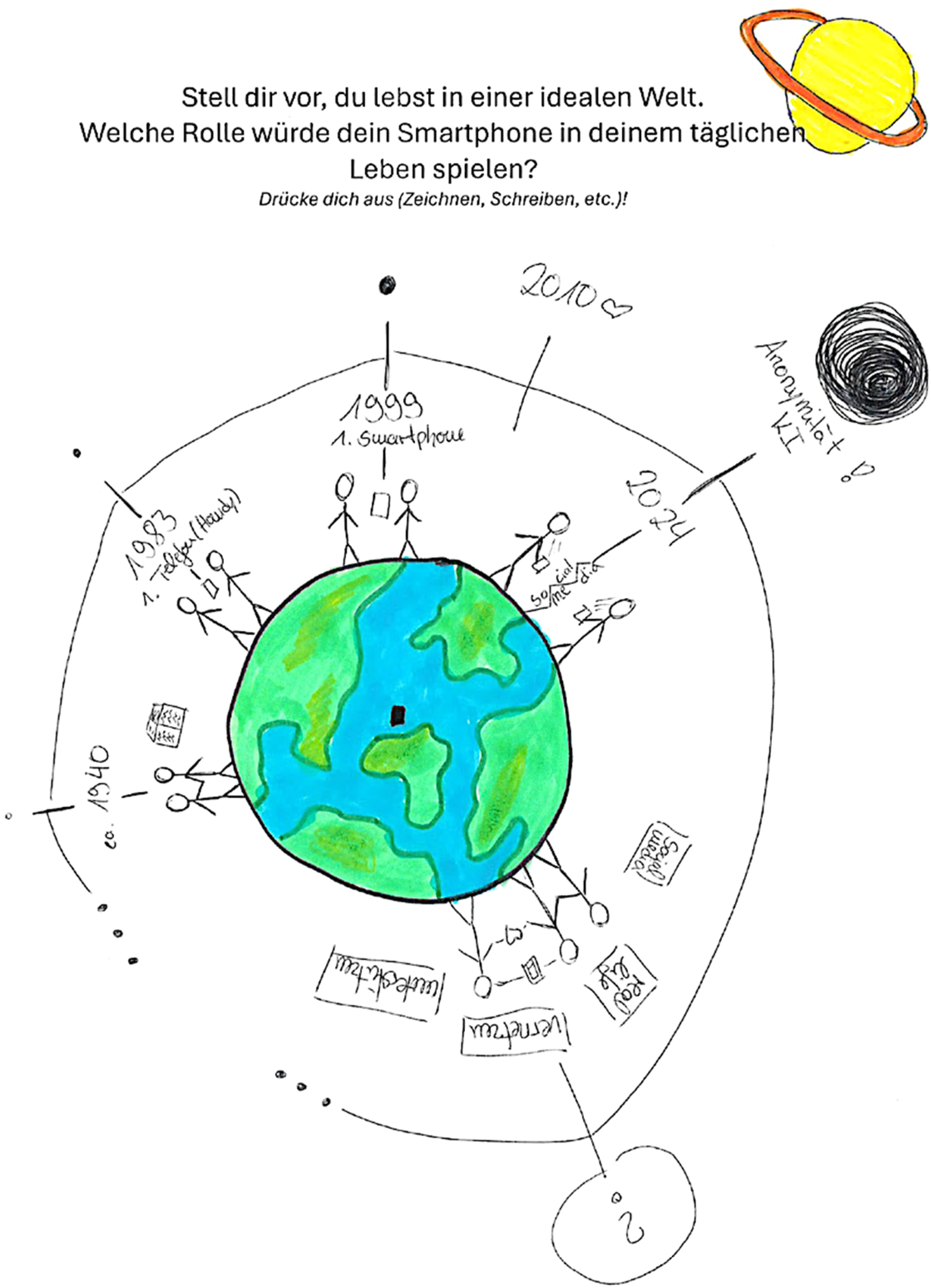
Anneliese's prompt outcome (complete).
Although several participants envisioned society undergoing collective change to achieve their ideal worlds, the makeup of this collective remains elusive. Having already ruled out the technology industry, participants could only imagine two types of interventions from state bodies. First, by making the internet safer, potentially through regulating platforms, and second, by restricting and educating children and teenagers about smartphone use. The latter was especially prominent among Norwegian participants, as the Norwegian government had recommended keeping smartphones out of classrooms shortly before data collection (Norwegian Government Security and Service Organisation, 2024). However, when discussing concrete ways in which state bodies could support not only students but media users more generally, participants stressed caution. Many saw government intervention as an unjustified intrusion into personal behavior, as expressed in Luka's comment: “I don’t think politics should be allowed to dictate media use per se.” Concerns regarding legal interventions also appear in academic work. Van Dijck (2013), for example, questions the effectiveness of such laws, noting that social norms often outweigh formal regulation. Hesselberth (2018) adds to this critique by arguing that the “right to disconnect,” which refers to labor laws limiting employer contact outside working hours, paradoxically reinforces the idea that connectivity precedes disconnectivity.
With individuals, the technology industry, and state bodies removed, the pool of potential leaders of collective change becomes noticeably smaller. Sydney suggested that influencers could take on this role, echoing Emily's reference to “role models, people you look up to.” Many participants expressed particular concern about how smartphone overuse affects children, with Emma, Lilly, Sydney, Michelle, Laura, Romy, Luka, and Emily emphasizing that parents hold the responsibility to ensure balance for future generations. Yet again, when the focus shifted to current generations of adults, responses became vaguer. Elin said that “we” need to reshape the norms of “our culture,” Emily referred to “all of us,” and Ares mentioned both “guerrilla fighters” and “people from every single side,” whereas Kine and Sydney spoke more broadly about “humans.” Their imaginings are rooted in the belief that the current world needs to undergo large-scale change, though they do not offer insight into how this process should unfold. Importantly, this absence of “blueprints” is not a deficiency but rather a defining characteristic of utopian thinking, as it reflects the capacity to disregard the constraints of existing measures and freely envision something entirely ideal (Kateb, 1965; Levitas, 2013).
Discussion and Conclusion
This study examined how women in emerging adulthood from Germany and Norway imagine an ideal relationship with their smartphones, employing creative inquiry. A thematic analysis of the multimodal data led to the development of three themes: (1) ideal self, (2) ideal technology, and (3) ideal society. Across all themes, the imagined worlds revolved around a core idea: finding a balance between smartphone use and nonuse. As such, the study's results resemble desires for digital well-being, a twin concept of digital disconnection (Vanden Abeele and Syvertsen, 2025). Specifically, Vanden Abeele (2020) defines digital well-being as “the subjective individual experience of optimal balance between the benefits and drawbacks obtained from mobile connectivity” (p. 938). Consequently, the findings reveal that even though these women are exposed to technology-driven utopias promoted by states and industries, their own imaginings nonetheless challenge both compulsory connection and the imperative of continuous innovation. Importantly, this does not mean that the women are entirely against technology, nor that devices would disappear from their imagined worlds. Rather, it highlights that conceptions of ideality are contestable, don’t have to be polarized, and may instead take more nuanced forms.
By applying utopian thought as a framework, the analysis revealed perceptions of responsibility. In many cases, the women initially saw their own shortcomings in managing mobile media consumption as the main barrier to an ideal relationship with their smartphones. This aligns with dominant narratives in self-help content and with the broader concept of responsibilization, which holds that individuals bear responsibility for their media use and its consequences, with little to no accountability placed on authorities (Karlsen and Syvertsen, 2016; Syvertsen, 2020). Notably, even though participants had the opportunity to challenge these liberal underpinnings, they did not envision scenarios in which this responsibility was lifted from them. A possible reason is that they may have internalized these dynamics too deeply, as imagination remains shaped by existing circumstances (Levitas, 2013; Markham, 2021). Accordingly, they expressed a desire for greater self-discipline, aspiring to successfully implement practices and strategies commonly found in self-help content.
When asked why they did not simply follow the suggested steps, participants explained that beyond habit and convenience, doing so might exclude them from their social circles and the broader societal infrastructure. Although they regarded smartphone use as an individual matter at the outset, they gradually came to see overconnectivity as a systemic issue, aligning with scholarly conceptions of digital enforcement, digital-by-default societies, and a culture of connectivity (Díaz Andrade and Techatassanasoontorn, 2021; Kuntsman and Miyake, 2022; Van Dijck, 2013). In considering how this issue might be addressed, they dismissed both the technology industry and state bodies, viewing their interference as either misaligned with their respective interests or too intrusive. Instead, they envisioned a somewhat leaderless change in which society at large calibrates connectivity and disconnection. Such a conception of collective change partially resonates with labels such as digital backlash, disconnection turn, and post-digital condition, all of which are argued to already be underway (Albris et al., 2024; Cramer, 2014; Fast, 2021). This invites reflection on whether these shifts primarily signal changing sentiments or have developed into observable actions that indeed challenge broader digital compulsion. It also underscores the importance of context. This study focuses on Germany and Norway, and its findings resonate strongly within these settings, as discussed further below. Future research could build on this work by examining societal structures across a wider range of social environments, including different communities and national contexts beyond Europe.
Given the sample's distinct inclusion criteria, a number of insights regarding gender, age, and national context became visible. Despite the sample consisting solely of women, the matter of gender receded into the background, likely because the prompt did not explicitly invite reflections on demographics. While several drawn responses included self-portraits in which the women depicted themselves with feminine signifiers such as dresses and long hair, they did not further emphasize their gender identity when providing context for their visions in the follow-up interviews. Still, the participants offered some insight into their identities as women by tying their imaginings to roles as friends, daughters, sisters, and romantic partners to men and women, showing that smartphones could play both supportive and straining roles in managing these relationships. This indicates that disconnective work has a considerable impact beyond heteronormative or mother–child dynamics. In this way, the study extends previous contributions on women and digital disconnection (e.g., Beattie, 2020; Bozan and Treré, 2023; Fast, 2021) by adding a childfree perspective, underscoring the importance of considering women at different stages of life and in diverse roles.
Regarding age, unrestricted access to media has been framed as a characteristic of emerging adults’ independence, which can be both challenging and an expression of their newfound freedom (Coyne et al., 2016). Here, the findings of this study clearly reinforce the interpretation that such unrestricted access can be overwhelming. Building on work that highlights the changing circumstances of emerging adulthood (Arnett et al., 2014) and identifies media use as a key direction (Benvenuti et al., 2023), this study underscores the need to attend to how ubiquitous connectivity not only fosters opportunities but also creates pressures within this life stage.
As for national differences, Norwegian participants reported a greater reliance on smartphones, which they attributed to the country's highly digitalized infrastructure. They also frequently referenced the government's recommendation to keep smartphones out of classrooms (Norwegian Government Security and Service Organisation, 2024). This suggests a more active and nuanced public debate on digitalization in Norway than in Germany, which, at the time of the interviews, had not yet established a Ministry for State Modernization and Digitalization. Despite these differences, the thematic analysis presents the same three key themes across both countries, which may reflect their shared positioning within a highly digitalized European context.
Naturally, this study also comes with limitations. Whereas state bodies and tech leaders command extensive resources to develop their visions, the participants in this study were constrained by a 15-minute time frame, reliance on basic writing and drawing materials, and limited prior experience with visualization and strategizing. Even so, through this creative inquiry, the study sought to foster access to imaginative spaces, aligning with Benjamin's (2024) argument that everyone should have the right to such spaces. Beginning with 20 women in emerging adulthood from Germany and Norway, the approach can likewise be applied to many demographics not included here, such as other genders, socioeconomic classes, ethnicities, and national contexts.
Footnotes

Ethical Approval
The project has received approval from the Norwegian Agency for Shared Services in Education and Research (No. 378655).
Funding
The author disclosed receipt of the following financial support for the research, authorship, and/or publication of this article: This work was supported by the Norwegian Research Council (Grant number287563). Project title: Intrusive media, ambivalent users and digital detox (Digitox).
Declaration of Conflicting Interests
The author declared no potential conflicts of interest with respect to the research, authorship, and/or publication of this article.