



Abstract
In today's digitally saturated world, mobile apps, particularly smartphone apps, have become indispensable for managing various aspects of life, including efforts to reduce digital media consumption. This study explores digital-disconnection apps as sociotechnical artifacts, examining their place within the self-helped disconnection trend and the broader app ecosystems such as app stores. Through a mixed-methods approach, 55 relevant apps were identified, with 20 app descriptions and 1,193 user reviews analyzed using descriptive statistics and thematic coding. The findings reveal that “Productivity” and “Health & Fitness” are the two dominant categories for these apps. While both emphasize mindfulness, habit formation, and personalized dis/engagement, they differ in the problems they address, the alternatives they encourage, and the contexts in which they are used. User reviews highlight concerns about app functionality, with technical and financial barriers revealed. This study sheds light on the gap between the idealized smartphone use and non-use promoted by app publishers, and the practical challenges experienced by users. Furthermore, this study contributes to the growing studies on technologies such as apps serving digital disconnection and well-being purposes, intertwining it with critical examinations of self-help culture within a digital framework.
Introduction
In the last decade, mobile apps, particularly smartphone apps, have reshaped how individuals interact with technology, consume media, and manage their lives. This trend, known as “appification,” refers to the increasing mediation of traditional activities through mobile apps (Morris & Murray, 2018). The rise of the app economy has transformed commerce, healthcare, education, and well-being, with apps becoming the dominant medium for delivering digital services (Goggin, 2021). App stores, such as Apple App Store and Google Play, act as gatekeepers, determining which apps are accessible to users (Dieter et al., 2019). Among the variety of apps are self-optimization tools such as time management (Gregg, 2018) and meditation apps (Jablonsky, 2021), designed for productivity, health, and well-being enhancement, extending self-help culture into the digital age (Lupton, 2016; McGee, 2012).
Parallel to the rise of digital engagement, a movement advocating for digital disconnection has emerged (Lomborg & Ytre-Arne, 2021). As individuals feel overwhelmed by constant notifications and digital content, digital disconnection, often referred to as a “digital detox,” has become a coping strategy (Syvertsen & Enli, 2020). Digital disconnection or detox apps have also gained popularity, offering self-control features such as screen time tracking, app blocking, and notification management (Lyngs et al., 2019). Early examples include Freedom and Forest launched in the early 2010s, aiming to help users reduce their use of distracting apps or phones (You & Karlsen, 2024). They align with the broader goal of cultivating a more balanced and mindful relationship with technology, a theme discussed in self-help books (Newport, 2019) and technology initiatives such as the Center for Humane Technology (Harris & Raskin, 2013).
Existing studies have explored the design and discourses surrounding selected apps or features (Beattie, 2020; Ganito & Ferreira, 2020; Jorge et al., 2022), as well as user experiences gathered through interviews, ethnographies, or surveys (Cao & Fang, 2022; Huang et al., 2022; Nguyen, 2022; Schmuck, 2020). Much of this research frames the apps in terms of their utility for digital disconnection (Beattie, 2020; Ganito & Ferreira, 2020), digital detox (Schmuck, 2020; You, 2024), digital well-being (Jorge et al., 2022; Widdicks, 2020), digital self-control (Lyngs et al., 2019), time management (Cao & Fang, 2022), focus management (Huang et al., 2022), or screen time management (Nguyen, 2022). In these studies, apps were mostly strategically sampled based on researcher selection or user mention, rather than through actual search results or user reviews from app stores.
Disconnection apps are sociotechnical artifacts embodying both technological and cultural meanings, as well as commodities within the app marketplace (Goggin, 2021; Light et al., 2018; Lupton, 2020). Despite the growing body of research on these apps, few studies have examined the broader sociotechnical context, specifically, the app stores in which these third-party apps operate. Not much research situates these apps within the broader app ecosystem, particularly regarding the role of app stores as critical gatekeepers in app development, categorization, and distribution (Dieter et al., 2019).
By situating the apps not only in the broader sociocultural phenomenon of digital disconnection and self-help but also in the sociotechnical landscape of the app ecosystem, this research provides insights into how digital disconnection is translated, packaged, sold, and understood in the app universe. This study seeks to contribute to both mobile app studies and digital disconnection research by providing a comprehensive analysis of disconnection apps, bringing together the views of app stores, app publishers, and app users. Specifically, it explores what these disconnection apps are, how they are presented on app stores, how they are reviewed by users, and the possible tensions embedded, by asking:
How do apps on Google Play promote digital disconnection and related practices through their categorization and descriptions (similarly or differently)?
What key concerns do users express in reviews? How do they align with or challenge the app descriptions?
What tensions (if any) emerge between the app categorization, promotional narratives, and user experiences of digital disconnection?
This study draws upon three types of empirical data from app stores: (1) app categories provided by app stores; (2) app descriptions provided by app publishers; and (3) app reviews written by users. Descriptive statistics are used to visualize how the apps are generally distributed, described, and rated on the store. This is followed by thematic coding analysis to identify themes from the descriptions of 20 apps and 1,393 reviews of seven apps. This research explores how digital disconnection is conceptualized and operationalized by app stores and publishers, and how it resonates with or diverges from users’ expectations and experiences. Inspired by the Actor–Network Theory (ANT) perspective on the distributed agency and media affordances, this study contributes to digital disconnection research and app studies, by elucidating the sociotechnical dynamics of app-enabled self-help digital disconnection in a hyperconnected context.
Self-helped digital disconnection through apps
The concept of self-help has deep roots in ancient philosophy and religion, with its modern form evolving throughout the twentieth century, reflecting a shift toward introspection and self-focus, driven by the proliferation of print culture and the individualizing forces of capitalism (McGee, 2005). In the digital era, self-help strategies have transcended traditional media, embracing digital tools such as apps that reshape access and interaction with self-improvement practices (McGee, 2012). The shift to digitalization incorporates traditional approaches such as time management and workouts with innovative features such as self-tracking and gamification (Lupton, 2016), changing how individuals engage with self-help. Digital disconnection technologies such as apps cater to the growing concern over digital overload by encouraging digital breaks and mindful technology use, blending old self-help themes with new digital functionalities (Beattie, 2020).
Existing studies on disconnection apps primarily focus on their design, use, and technological and sociocultural implications. In Human–Computer Interaction research, studies have explored the design and effectiveness of digital well-being and detox tools, often informed by behavioral sciences and computer sciences or design theories (e.g., Lyngs et al., 2019; Widdicks, 2020; You & Karlsen, 2024). For instance, Lyngs et al. (2019), based on an analysis of 380 self-control apps and extensions, identify four key functionalities: blocking distractions; self-tracking; goal-advancement; and reward/punishment mechanisms. These reflect the common design logic of digital disconnection tools, where apps seek to regulate engagement through restriction, motivation, and feedback mechanisms.
Media and cultural scholars have critically examined the efficacy of disconnection apps and the implications of individualized non-use. While systematic reviews report mixed outcomes on digital disconnection (Nassen et al., 2023; Radtke et al., 2022), specific studies show that detox apps may help mitigate the negative effects of social media use, particularly among young adults (Schmuck, 2020). From a media-critical perspective, individualized disconnection is understood more as a lifestyle choice than a collective action. Portwood-Stacer (2013) conceptualizes digital non-use, such as quitting Facebook, as a form of “conspicuous non-consumption,” embedded in personal lifestyle politics rather than structural resistance. Unlike involuntary or collective forms of disconnection, app-based disconnection is often positioned as highly individualized, flexible, and often shaped by “power from below” (Kaun & Treré, 2020; Nassen et al., 2023). Critical media studies have discussed the limits of such apps or technologies, for instance, overlooking deeper social and structural causes of digital dependency, risking a superficial engagement with self-help practices that overly emphasize personal responsibility (Miyake & Kuntsman, 2022; Natale & Treré, 2020).
The commodification of self-help through digital apps raises further concerns about their genuine benefit to users. For instance, Jablonsky (2021) points out that in meditation apps, profit motives may override the welfare of users, unfulfilling their promise of “attention by design.” Also, productivity apps that help people limit digital distractions may require more immaterial labor under the guise of efficiency or care and lead to inequalities (Fast, 2021; Gregg, 2018). As Syvertsen and Enli argue, digital detox in the market of self-help literature, retreats, events, or apps, is not only a practice but also a business opportunity, for which “the promise of authenticity” lays the ground (Syvertsen & Enli, 2020, p. 1280). These apps may further put people's privacy at risk as they serve the datafication of not only one's media use but non-use, in which users can be exposed to more invisible exploitation (Bucher, 2020).
Despite critiques, scholars have also explored the nuanced experiences of app use, emphasizing how users engage with these tools in their daily lives. As mobile technology has become deeply embedded in nearly all aspects of modern life, completely disconnecting is increasingly impractical (Vanden Abeele & Nguyen, 2022). Instead, self-improvement practices may help users to structure their routines and manage their lives. Interview-based studies, mostly with students and young people, highlight both positive and negative experiences with disconnection apps. On the one hand, productivity app users are empowered by actively doing boundary work to accept or resist what the app requires and negotiate (Huang et al., 2022). For instance, users reject the prescribed time regimes by the apps and create their own schedules (Cao & Fang, 2022). On the other hand, apps may fall short of facilitating the expected disconnection. As shown in Nguyen's study, while screen time tracking apps provide valuable insights into users’ digital habits, they are often ineffective at disconnecting from social media, as time limits are easily overridden (Nguyen, 2021, p. 805). The mixed opinions are also found in studies based on co-design workshops or app reviews. Users appreciate apps for helping them “take back control, save time, and make their device use fit better into their lives” (Lyngs et al., 2022, p. 4), while they also report the challenges related to “workarounds and cheating the system” and “complexity and unintended effects” (Widdicks et al., 2022).
App affordances and the negotiated use of disconnection apps: An ANT perspective
According to ANT, the world is constituted by shifting networks in which humans and non-humans like objects are active agents or “actants” (Latour, 2005). Agency is not fixed, and agential capacities are continually and dynamically generated with and between people and nonhuman agents such as technologies (Callon, 1984). In this study, the concept of affordances is particularly useful for examining how disconnection is technologically mediated.
Affordances refer to “actionable properties” of an artifact or environment (Gibson, 1977), which are relational and perception-dependent, shaped by users’ social, historical, and individual contexts (Ronzhyn et al., 2023). This concept helps position disconnection apps within a negotiated sociotechnical system involving users, apps, and the broader infrastructure of app stores. Apps can “request,” “demand,” “allow,” “encourage,” “discourage,” and “refuse” forms of engagement and disengagement (Davis & Chouinard, 2016), while humans can “resist, reinvent, ignore, or improvise with these affordances, drawing upon their bodily capacities” (Lupton, 2020, p. 12). Moreover, these interactions unfold within a wider network of actors, including not just apps and the users, but also “flows of digitized information, digital platforms, interfaces, hardware, regulatory environments, network protocols, algorithms, and other infrastructures” (Lupton, 2020, p. 12). Building on this ANT perspective, this study analyzes app categories, descriptions, and reviews to explore how the agency of smartphone users to disconnect is distributed across the network.
Research has revealed the affordances of apps or other commodities in modifying people's disconnecting experiences. In Mannell's study on “disconnective affordances” of different devices, operating systems, or apps, their features such as blockers “produce opportunities for different kinds of disconnection” that young people take up to satisfy their needs, “from delaying specific interactions to carving out periods of solitude” (Mannell, 2019, p. 89). You and Karlsen (2024) summarize the affordances of four detox apps within the framework of gamification and undesign, as game design elements are integrated into the design of disconnecting experiences to motivate people. Karppi et al. (2021) analyze three disconnection commodities and discuss the affective dimensions of disconnection, positing that disconnection is not solely a retreat from connectivity but a strategy to manage it. They argue for an understanding of how users become attuned to connectivity, with commodities sustaining this attunement in various capacities.
Despite various disconnective affordances, the expected outcomes are not easily achieved, as disconnection is allowed while not encouraged by the technology, and users are often required to navigate different functionalities and manage extra workloads (Mannell, 2019; You, 2024). Moreover, the network of different actors is not stable. In the case of using disconnection apps, the undesired non-use due to technological failures such as glitches evokes frustration and anxiety (Paasonen, 2015), complicating the disconnecting process and leading to unintended consequences (Widdicks et al., 2022).
Rather than seeing app-based disconnection as merely a reaction to digital overload, this study approaches it as a proactive engagement that shapes user–technology relations in complex ways in a hyperconnected context. Informed by ANT, this app study shows that the negotiation between human and non-human agency, including app stores, publishers, users, and other sociotechnical factors, plays a crucial role in shaping how disconnection apps function in practice. Drawing upon disconnection research and app studies, this research illuminates the sociotechnical implications of self-helped disconnection through apps.
Method, sampling, and data
While previous studies have examined the design, discourse, and user experiences of disconnection apps, few have explored the negotiated affordances and app use among users, app publishers, and app stores, based on a keyword search of apps from the platform. This study uses a mixed-methods approach to explore disconnection-related apps and user reviews on Google Play, integrating quantitative and qualitative data collection and analysis (Creswell & Creswell, 2023). Three data types were collected: app categories; app descriptions; and user reviews. Descriptive statistics and thematic coding analysis were employed to analyze this data, as illustrated in Figure 1.
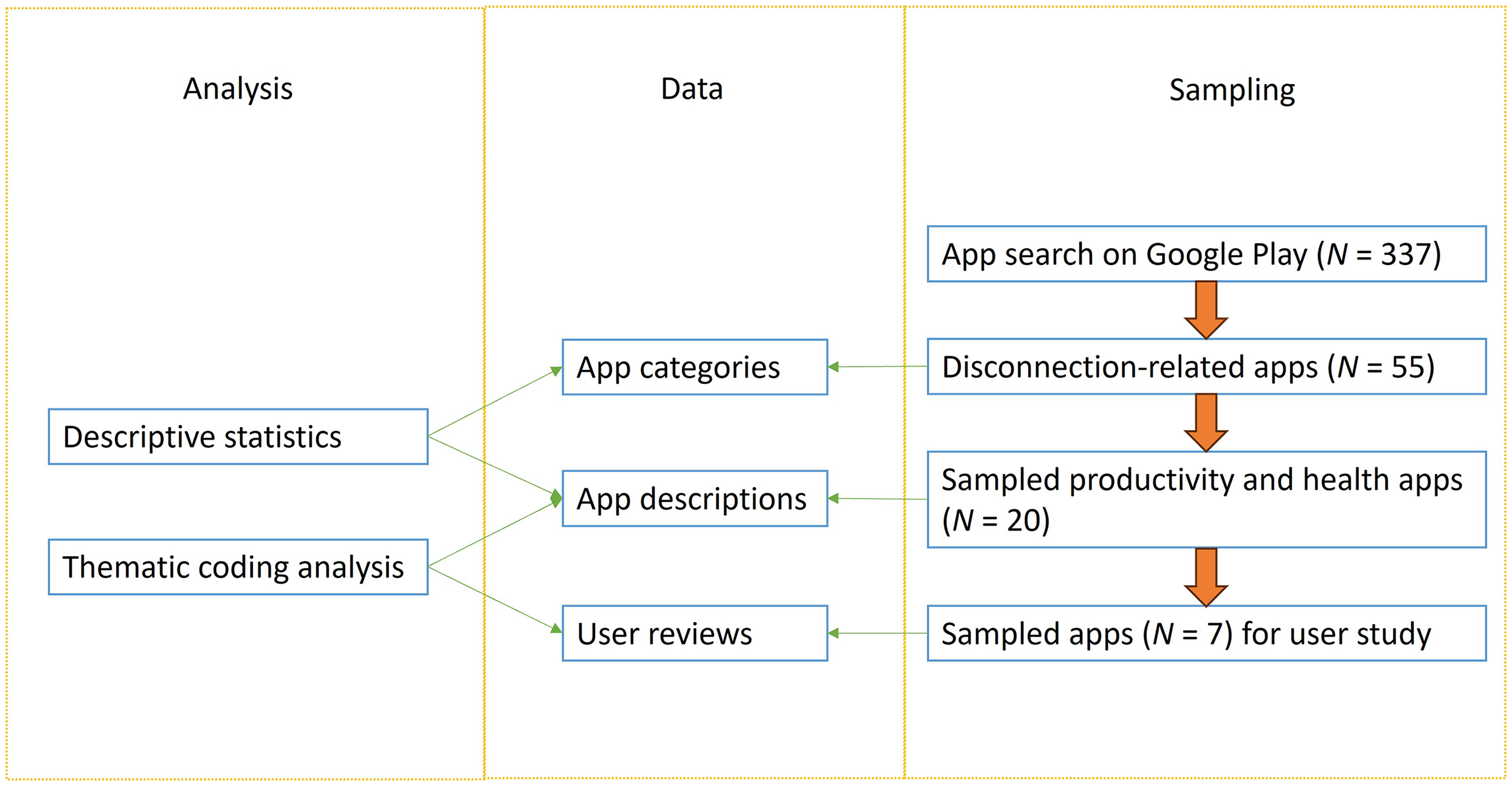
The visualization of sampling, data, analysis, and their relations.
App search and sampling
The app selection began with a keyword search on Google Play. Google Play was chosen due to its large user base and easy accessibility to Application Programming Interfaces (Goggin, 2021). The search was conducted on the United States store, the default for users who do not specify their region. Informed by popular and academic discourses on disconnection, fourteen keywords related to “digital disconnect,” “digital detox,” “digital well-being,” “digital wellness,” “non-use,” “opt-out,” and “unplug” were used to capture a wide range of apps related to disconnection. To avoid bias, terms related to specific problems or solutions such as “phone addiction” or “screen timer” were not used. This approach aims to explore general disconnection themes rather than cataloging all relevant apps.
A total of 337 apps popped up. Duplicates and non-English apps (N = 160) were removed, and irrelevant apps (N = 122) (e.g., social media and dating apps) were excluded. This left 55 relevant apps (see online Appendix Tables a. and b.), primarily in the “Productivity” (N = 25) and “Health & Fitness” (“H&F”) (N = 26) categories. These categories, along with others, are further discussed in the analysis. For further analysis, 20 apps (10 from each main category) were selected based on their relevance and popularity, with rankings determined by search frequency and download count (see online Appendix Table c.). Seven apps (denoted by boldface type in Table 1) were particularly chosen for user review analysis.
20 popular disconnection-related apps on Google Play (Scraped 21st March, 2024).
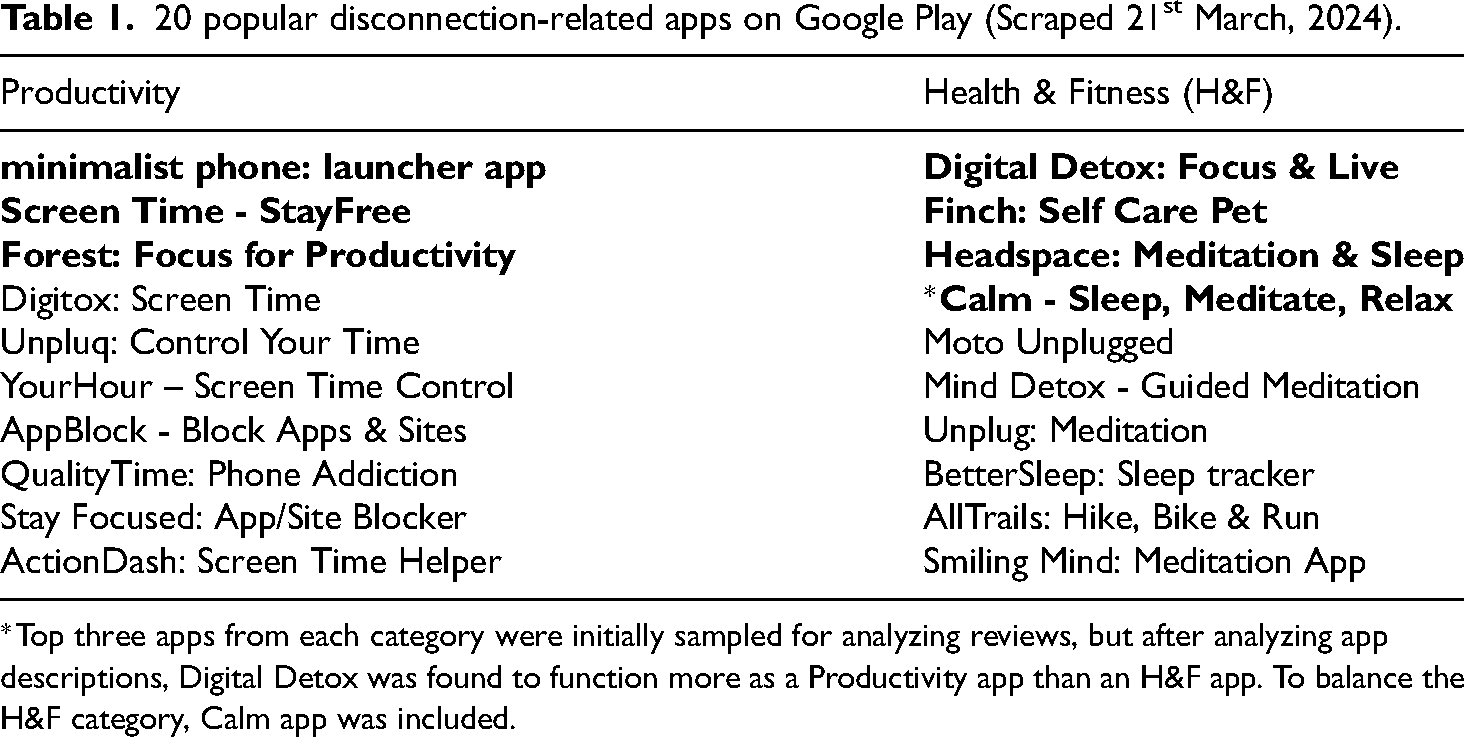
*Top three apps from each category were initially sampled for analyzing reviews, but after analyzing app descriptions, Digital Detox was found to function more as a Productivity app than an H&F app. To balance the H&F category, Calm app was included.
Data collection and analysis
Data collection involved scraping app metadata and user reviews from Google Play using the Google-Play-Scraper library (https://pypi.org/project/google-play-scraper/) in March 2024. The apps’ metadata were scraped on 21st March 2024, while the reviews of sampled apps were scraped on 25th March 2024. To make the dataset informative and manageable, I chose to analyze the recent 199 “most relevant” reviews of the seven apps. The “most relevant” filter was applied, as it typically features more detailed and well-written content. This provided a richer dataset for understanding user experiences and perceptions of app effectiveness and design, over time and app versions. In total, 1,393 reviews from seven apps were included (Table 2).
Background information of the 1,393 reviews of the 7 disconnection-related apps on Google Play (Scraped 25th March, 2024).
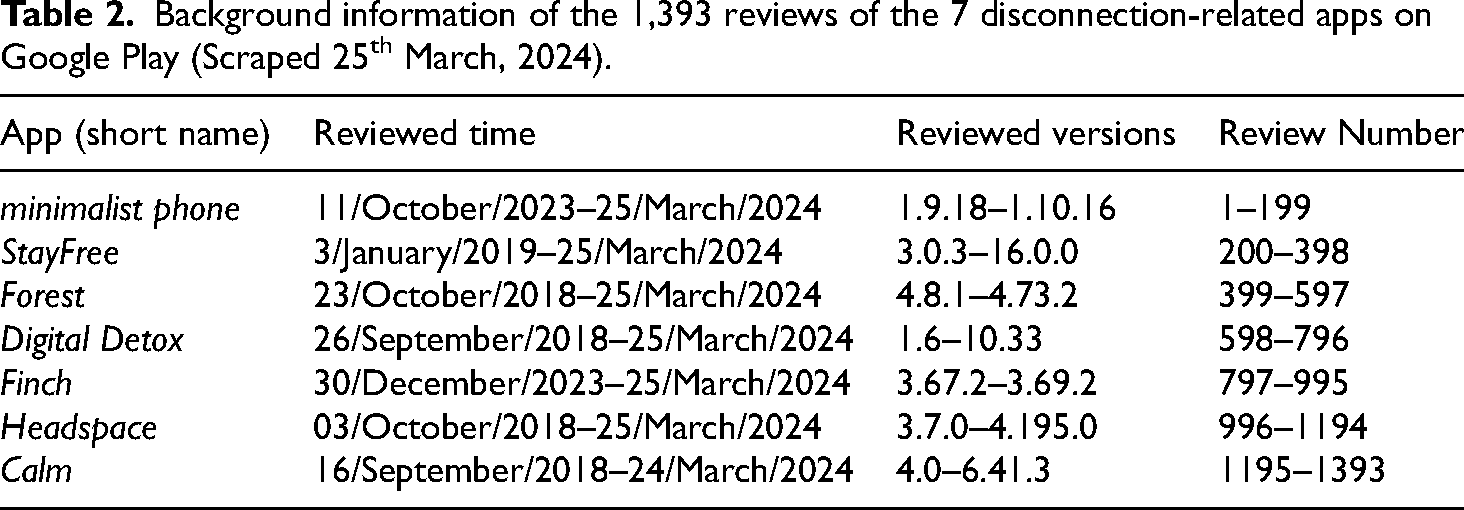
Two types of data were collected. First, the metadata of 20 apps, including the app titles, descriptions (“About this app”), categories, ratings, pricing, etc., were scraped. Both the app title and “About this app” were used for analyzing app descriptions. Second, 1,393 reviews of the seven apps, including reviewers’ comments, ratings, reviewed versions, reviewed times, etc., were extracted. The reviews were anonymized and numbered from 1 to 1,393.Two approaches, descriptive statistics and thematic coding analysis, were used to analyze the data. Descriptive statistics highlighted trends in app categories, keywords, and review ratings. NVivo 14 and Excel were used to generate word clouds for app descriptions and charts for average ratings, respectively. Thematic coding (Rivas, 2012), combining deductive and inductive approaches, was used to generate themes from app descriptions and reviews. Informed by the two prominent app categories and word clouds, I gained a general impression of the app descriptions and potential themes. Subsequently, I conducted the coding inductively, breaking down the texts into codes and categorizing them. I intentionally created themes from the categories to highlight the common and different aspects of the two app genres in describing digital disconnection (RQ1). Six themes were generated from app descriptions: “mindfulness and focus,” “habit formation,” and “personalized digital dis/engagement,” with differences in how the apps addressed “problems,” “alternative practices,” and “contexts of app use.” Informed by the themes, I coded the reviews inductively, paying attention to both the alignments and dissonances expressed by users (RQ2). Three themes were generated: “appreciation for usefulness;” “complaints about technological issues;” and “frustrations over paywalls.” The above themes help to discuss the tensions between app categorization, promotional narratives, and user expressions (RQ3).
Productivity and H&F apps as key disconnection apps
The 55 disconnection apps include four categories (Figure 2), while Productivity and H&F are the two key categories. This observation aligns with popular and academic discourses in which improving productivity and well-being are key motivations for digital disconnection (e,g., Nassen et al., 2023; Newport, 2019; Syvertsen, 2020).
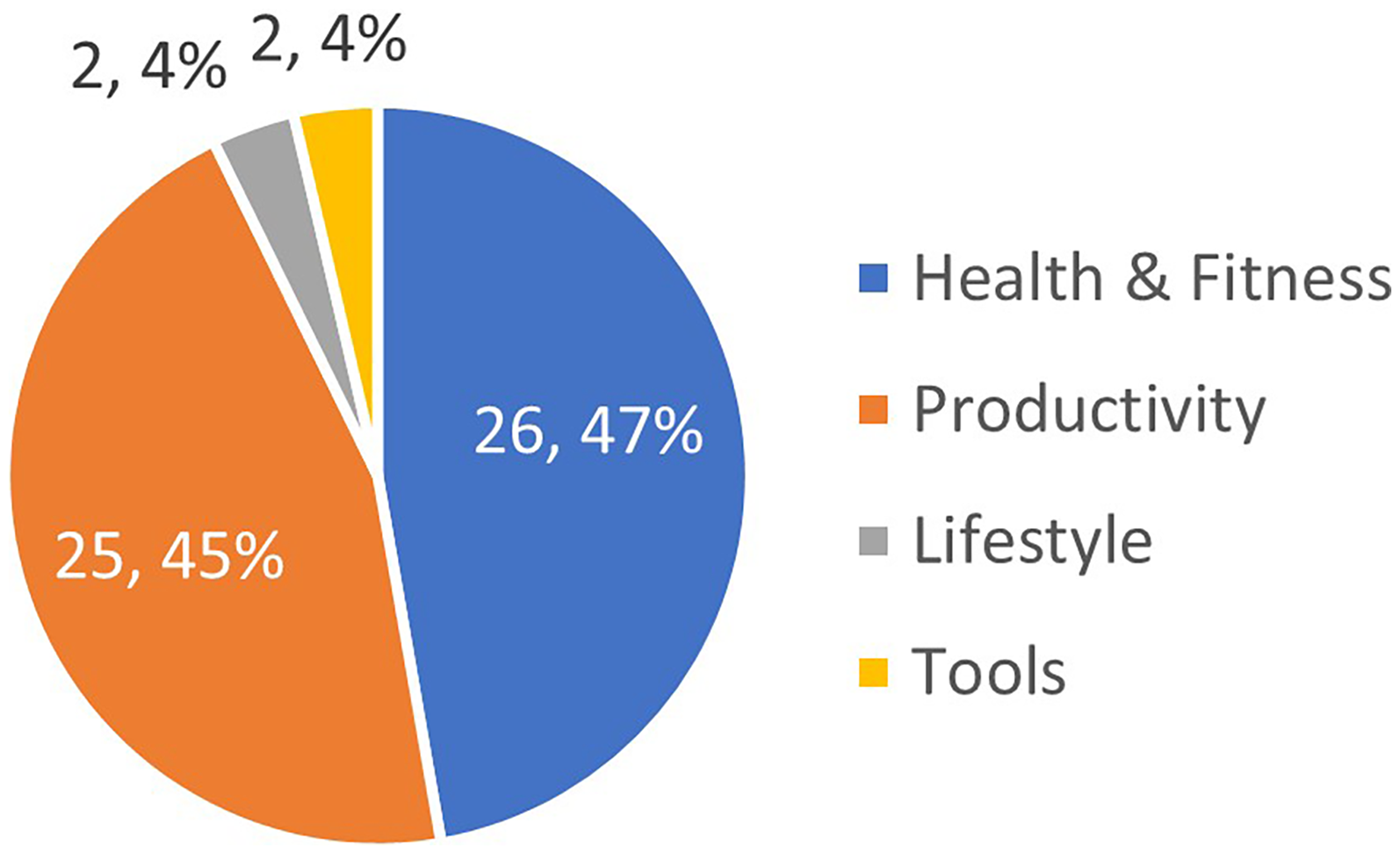
Category distribution of the 55 digital-disconnection-related apps on Google Play.
However, Productivity and H&F apps address digital disconnection differently in their app descriptions. When identifying disconnection-related apps, I skimmed over the app titles and descriptions. It was observed that Productivity apps mostly include phone/app/website blockers, screen time trackers and limiters, and habit builders, while H&F apps feature meditation apps, sleep trackers, exercise trackers, outdoor guides, screen time trackers, and phone blockers (see online Appendix Table b.). This distinction is further confirmed by word clouds generated from the 20 apps’ descriptions. Figure 3 illustrates that Productivity apps pay more attention to screen, usage, time, phone, and focus, whereas Figure 4 indicates that H&F apps are more oriented towards meditation, mind, mental health, sleep, and relaxation.
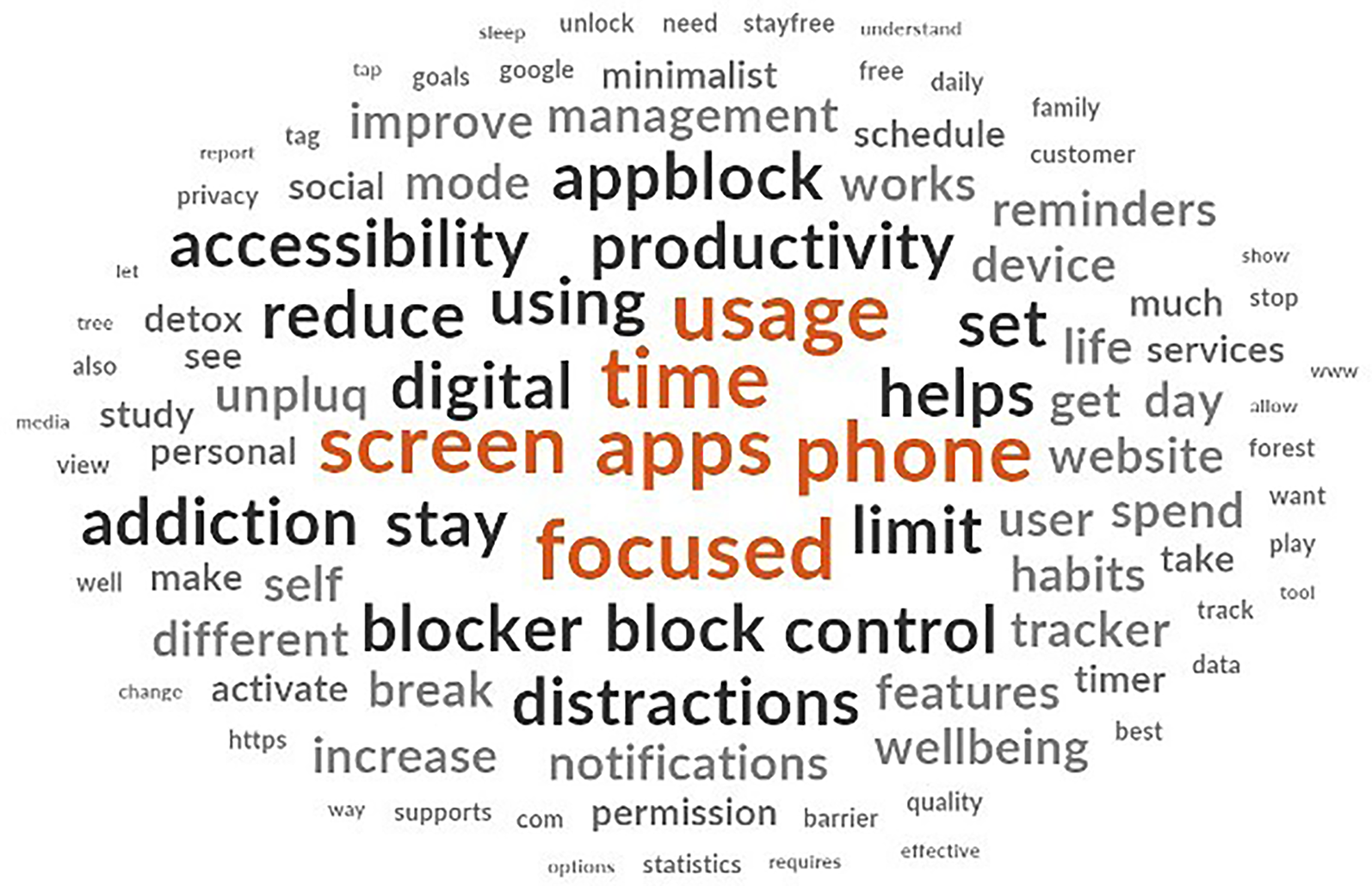
Word cloud of the 100 most frequent words in the 10 Productivity apps.
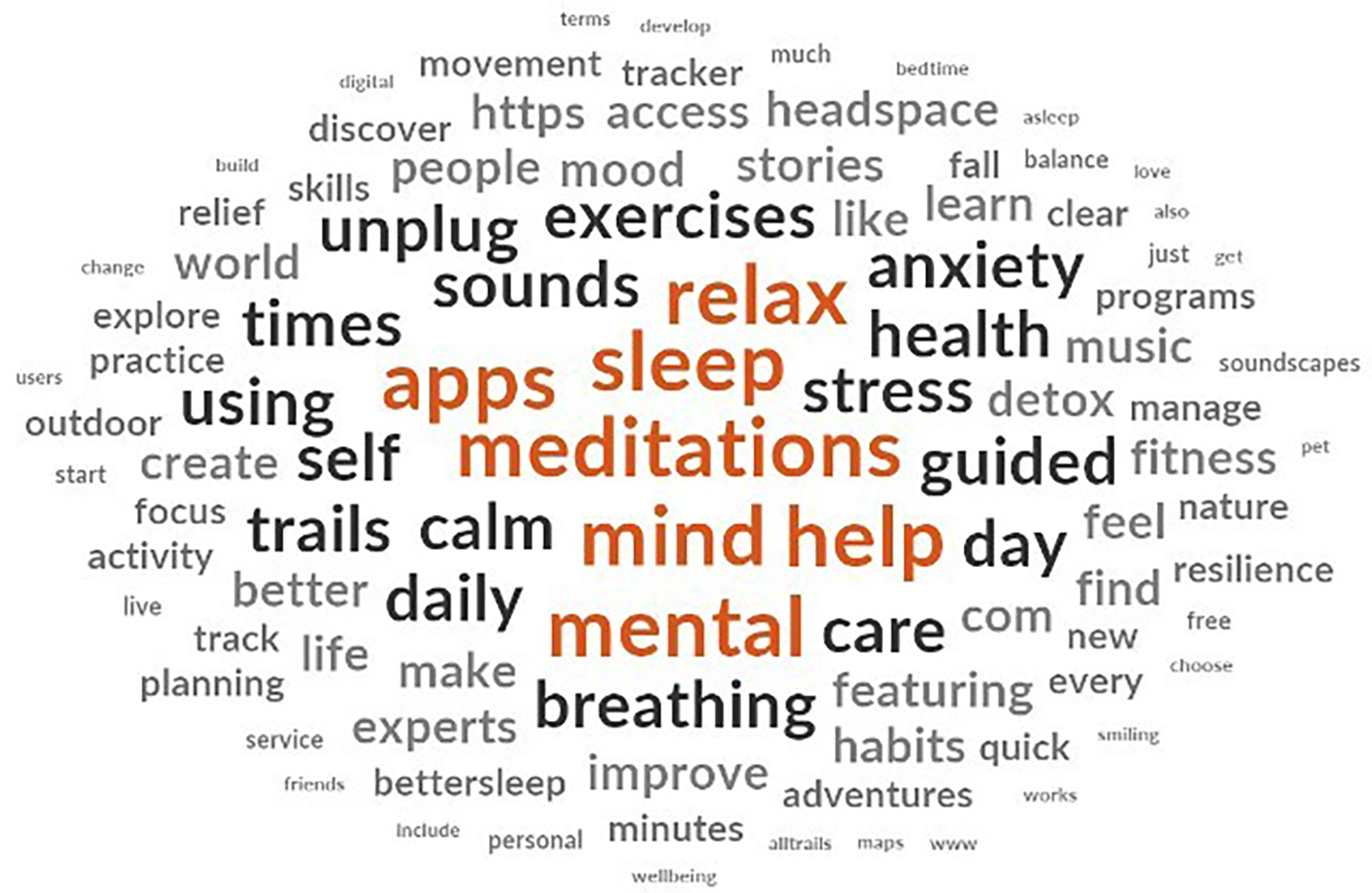
Word cloud of the 100 most frequent words in the 10 Health & Fitness apps.
To examine how disconnection is framed by app publishers, similarly or differently, a thematic analysis of 20 app descriptions was conducted, revealing shared expectations across Productivity and H&F apps, but with differing emphases on issues, approaches, and contexts of use.
Common expectations
There are three common themes that both types of apps address regarding digital disconnection: “mindfulness and focus;” “habit formation;” and “personalized digital dis/engagement.” First, both Productivity and H&F apps emphasize mindfulness as a strategy to manage and improve focus and concentration. For example, AppBlock is a Productivity app that mainly manages screen time and reduces digital distractions, while it argues its benefit for one's mental health: “Achieve mindfulness and relaxation with less screen time.” Headspace is an H&F app with meditation services; it also demonstrates its contribution to boosting one's “concentration and productivity” with their “wellbeing enhancing meditation music.” These examples underscore the common goals and the blurred boundaries between Productivity and H&F apps in the realm of digital disconnection. Both Productivity and H&F apps underscore the importance of mindfulness as a tool to enhance focus and concentration, demonstrating the interconnectedness of mindful digital use and mental wellness.
Second, both types of apps emphasize the importance of habit formation, particularly through tracking, which plays a crucial role in cultivating sustained beneficial behaviors. For instance, the Productivity app Forest encourages users to focus by linking digital abstinence to the growth of a virtual tree, providing a vivid tracking mechanism: “Plant a seed in Forest when you need to put down your phone and stay focused to get your to-do list done.” This gamification strategy is expected to keep users engaged by visually tracking their focus time. Similarly, BetterSleep, an H&F app, uses sleep tracking to promote healthy sleep habits, offering insights and recommendations based on user behavior: “Track your sleep, understand how it works, and let us propose actionable ways to improve it.” These quotes underline how tracking is used by both app types to reinforce habit formation and routinized app use, emphasizing the necessity of consistent practices for self-improvement.
Third, personalized digital dis/engagement is shared by both types of apps through customization features or personalized recommendations. Customization is found in almost all the apps. In self-control Productivity apps, customization is described as giving users choices to modify the settings or contents to fit their own needs. For example, customized access to apps or contents, and making one's schedules for blocking, are found in Productivity apps’ descriptions: “Create personalized Allow Lists for different situations. Non-allowed apps will be blocked” (Forest); and “Focus mode: create schedules to block distracting apps at specific times” (StayFree). This level of customization helps users to manage their digital interactions more effectively by aligning the app's functions with their personal goals and daily routines. On the H&F side, AllTrails provides customization that promotes engagement with physical activities tailored to one's lifestyle: “Custom route planning helps you search for dog-friendly, kid-friendly, stroller-friendly, or wheelchair-friendly trails, and more.” Personalized recommendations are more commonly found in H&F apps, for instance, “Choose from a wide variety of daily self-care exercises personalized for you” (Finch), or “Meditate with personalized recommendations” (Headspace).
Different focuses
Despite common concerns, Productivity apps and H&F apps have different focuses when describing the “problems (digital-media-related or health-related),” “alternative practices (device-oriented or exercise-oriented),” and “contexts of app use (work/study/social or health).” First, the two types of apps identify different primary problems associated with digital disconnection: digital-media-related issues (Productivity apps) or health-related issues (H&F apps). Productivity apps typically focus on digital-related issues such as smartphone overuse, excessive screen time, mindless scrolling, or distractions that impact focus and efficiency. For example, QualityTime explicitly targets phone addiction. Its description starts with three striking questions associated with phone overuse: “Do you want to know how much time you use your phone a day? Aren’t you spending too much time on your phone? Do you think you’re addicted to your phone?” Stay Focused, promoted as a “smart mobile tracker manager,” states it can help users “Control phone usage by blocking your social media and other distracting apps.”
Conversely, H&F apps center on health-related issues, particularly those connected to mental health and sleep. Finch, a self-care app, aims to help users “build mental resilience against stress, anxiety, and depression.” Meditation apps want to help “reduce stress and anxiety” (SmilingMind) or manage “stress, balance moods, sleep better, and refocus your attention” (Calm). These quotes illustrate how health apps target broader wellness concerns that may be affected by digital use but are not exclusively digital in origin.
Second, in response to the different problems identified, the apps suggest various disconnecting-related practices. Productivity apps emphasize device-oriented practices that manage or limit digital interactions. All ten Productivity apps highlight blockers or limiters. Unpluq not only blocks apps but also makes unblocking a conscious choice by introducing an “Unpluq Distraction Barrier—a digital key that makes you think twice and ensure you really want to open that app.” Users might need to take a walk, shake their phone, follow a random tapping pattern, charge their phone, or use the Unpluq Tag keyfob to access blocked apps.
Compared to Productivity apps, H&F apps focus on exercise-oriented practices and wellness routines that promote mental and physical health, often less reliant on device management. More than half of the ten H&F apps involve meditation. For example, Mind Detox guides users through mindset shifts with expert-led meditation practices for stress reduction or sleep improvement.
Third, the problems identified and the alternative practices suggested by the two types of apps inform different contexts in which these apps are expected to be used. Productivity apps are primarily geared towards work and study environments where focus and efficiency are crucial. Conversely, H&F apps are mainly used in contexts related to personal health, often combined with physical or mental exercises. Additionally, some Productivity apps suggest that their features are useful in social settings that require presence and attention. For example, QualityTime demonstrates its benefits for helping people “focus on your work or study from SMS [Short Message Service]” and “take more quality time with your family, friends, and yourself.” Also, the emphasis on quality time with close ones and oneself is also found in the H&F app Moto Unplugged (functioning more like a Productivity app for blocking apps and managing the home screen) which promotes “more quality time with friends and family, more time to focus on the work that matters now, and more balance in users’ day-to-day life.”
The above analysis of app descriptions reveals an idealized narrative of disconnection, portraying digital non-use as an intentional, structured, and rewarding process. This aligns with broader neoliberal self-help discourses, which frame digital well-being as an individual responsibility, positioning users as agents of self-discipline and optimization (Gregg, 2018; McGee, 2012). By presenting their apps as essential tools for mindfulness, focus, and habit formation, publishers reinforce a self-improvement paradigm that aligns digital disconnection with productivity, efficiency, and mental resilience.
However, the distinction between Productivity and H&F apps suggests a dualistic framework for digital disconnection in the app universe. Productivity apps explicitly name and target digital distractions, promoting efficient time management, while H&F apps frame disconnection within a broader well-being discourse, addressing stress, sleep, and mental health. This dual framing reinforces work–life balance as a key consideration in digital disconnection, illustrating how apps cater to both professional and personal spheres (Fast, 2021). Such multifaceted approaches mirror the increasingly embedded nature of mobile technologies in daily life, making complete disconnection less feasible (Vanden Abeele & Nguyen, 2022).
“Yes, but…”: Users’ concerns in reviews
The thematic analysis of user reviews identified three primary concerns—appreciation for usefulness, complaints about technological issues, and frustrations over paywalls—indicating the alignment and divergence between the promoted app use and lived experiences.
“Game changer”
Users frequently express appreciation for the app's functionality, aesthetic design, and usability, often describing these apps as effective tools for improving focus and well-being. For instance, a user of the minimalist phone launcher described it as a “game changer” that transformed their phone into a productive tool: “In today's world, the buzz of notifications is a source of constant distraction. Most phone interfaces are designed to maximize [z]e engagement and attention to these distractions. This app is a game changer. It transformed my phone into a lite phone, cutting down unnecessary distractions. It's more than a digital detox. It's a pathway to a more focused, productive, and balanced life.” (126)
Such positive feedback reflects users’ satisfaction with the app's core purpose, reinforcing the common goals of improving mindfulness and focus seen in app descriptions.
Users also praise the intuitive and motivating design which enhances overall satisfaction. Notably, gamified elements in apps such as Forest and Finch make disconnection more engaging and enjoyable. For example, a Finch user enjoyed the “self-care Tamagotchi” concept, where they grow a virtual bird avatar “birb” by completing self-care tasks:
“[S]eriously, get this app!! [I]t's like a self-care [T]amagotchi. [I]t's really helpful for goals, maintaining/tracking mental health, and general self-care. It's also fun and adorable, and wanting my lil birb to go on adventures has legitimately helped me get more water, wake up on time, etc. [T]he tracking features are also great if you have mental illness and are wanting to see a bigger picture of your mood, habits, sleep, etc.” (807)
The motivating game design with tracking and visual attractions such as avatars makes the apps more enjoyable to use, reinforcing the developers’ effort to make the tools both functional and engaging, as stated in the descriptions.
The positive feedback aligns with previous studies highlighting how digital self-control tools leverage mindfulness and focus to support disconnection (Widdicks et al., 2022), while also demonstrating the effectiveness of gamification in sustaining engagement (You & Karlsen, 2024).
“Fix it”
Despite positive feedback, users report design loopholes and technological glitches, which can lead to unintended consequences and undermine the app's effectiveness. First, design loopholes allow users to bypass restrictions, making self-limiting apps less effective. A StayFree user identified a major loophole in the blocking feature, allowing them to continue using restricted apps through the split screen: “There is a very big loophole. Suppose you’ve fixed the maximum usage time for an app such that it would shut down, but you can keep using it if you use it using split screen. Very bad loophole. Get your tech team to look in[to] the issue.” (318)
In addition to the backdoors, many users report significant technical problems that undermine these apps’ functionality. Technical issues, such as app bugs, glitches, and compatibility problems, accounted for a significant portion of negative feedback regarding effectiveness. Users expressed disappointment when encountering screen freezing, crashing, lagging, inaccurate tracking, data loss, or quick battery drain. The technical issues were particularly frustrating when they affected core features, creating unnecessary work or trouble. For example, a user of the minimalist home launcher complained about the malfunction of swiping in—“swiping in any direction only worked 50% of the time and I don’t have the time or knowledge to try to alter my phone to correct the problem” (151). A Calm user found it ironic that the app's instability disrupted their sleep—“it's frustrating when you’re already trying to fall asleep, and you have to restart an app that is supposed to ‘calm’ you” (1264).
A user of Digital Detox experienced serious functional failures during the COVID-19 pandemic, struggling to answer calls or exit the app in emergencies:
“It works well to block the addictive apps. The problem is the whitelisted apps seem buggy. I have the phone app whitelisted for example, but when I get a phone call the phone rings but I cannot actually answer the call. I also once tried to pay for the emergency quit so that I could scan a Covid QR code for track-and-trace, which seemed like an actual legitimate reason to break the detox, but the detox app charged me and then never actually quit. I was able to get a refund, but it does worry me about what will happen in a genuine emergency. On the other hand, the fact it is so hard to break the detox app is what makes it better than any other app for this I’ve tried.” (783)
While the user valued the app's strictness, they also expressed concern about its reliability in urgent situations, illustrating ambivalence toward the app's effectiveness. This reflects the challenge of achieving the “just right” level of control that balances restriction with flexibility (Lyngs et al., 2022). Moreover, technical failures highlight the fragility of disconnection through apps. Users expect control over their digital disconnection, yet malfunctions force disconnection in unintended and often problematic ways (see Widdicks et al., 2022). This underscores the delicate balance between connection and disconnection in the app ecosystem, where technological breakdowns disrupt users’ sense of agency (Paasonen, 2015).
“Locked behind the paywall”
Accessibility issues also arise when users encounter paywalls or limitations within free versions, which hinder their ability to fully utilize the apps. For instance, a Forest user was frustrated that even basic features were restricted to paid versions: “The concept for this app is really cool and I am definitely more productive when using the app. It has decreased my phone usage by a lot. However, the biggest problem I have with it is that almost everything is locked behind a paywall. Features behind the paywall are: achievements, friends, most analytics of your focus time, creating custom tags so you can accurately categorize your time focused, and the majority of the plants that you unlock with coins, and signing up for an account.” (401)
Access to disconnection apps is unequal, and their affordances can thus vary. The monetized app solutions privilege those who can pay for premium features while leaving others with limited or less effective features. Moreover, a Headspace user noted that affordability was a concern, particularly for students in developing countries:
“I rate the Headspace app a commendable 4/5. It offers valuable tools, yet affordability remains a concern, particularly for students in third-world countries like the Philippines. As someone navigating life's challenges, I appreciate its benefits but hope for more accessible pricing options. Expanding student discounts to underserved regions would make this excellent app even more impactful. Thank you for considering the needs of users worldwide.” (1126)
These reviews illustrate how monetization models within app stores shape users’ ability to engage with digital disconnection (You & Karlsen, 2024). This reinforces the idea that disconnection is made not just an effort but also an expense, echoing critical perspectives on the commodification of disconnection (Miyake & Kuntsman, 2022; Natale & Treré, 2020; Syvertsen & Enli, 2020).
The “appified” self-helped disconnection: Emerging tensions
By synthesizing the insights from the analysis of the key app categories, descriptions, and user reviews, two tensions emerge from the self-helped, app-based disconnection: first, the mismatch between app store categorization and the intentions of both users and app publishers; and second, the dissonance between promotional narratives, users’ expressions, and the sociotechnical environment. These tensions highlight the complexities of self-help disconnection in the app ecosystem and the challenges of achieving control through technological interventions.
The first tension arises from how disconnection apps are categorized within the app store ecosystem. Findings show that Productivity and H&F apps are the dominant genres for disconnection-related apps on Google Play, however, this classification may not always align with app publishers’ intentions or user expectations. Some apps labeled under H&F, such as Digital Detox and Moto Unplugged, function more like Productivity apps, focusing on self-restriction and screen management rather than holistic well-being. Since Google Play lacks a dedicated digital disconnection or digital well-being category, these apps are absorbed into pre-existing labels, shaping how developers market them and how users perceive their purpose. This reflects the gatekeeping role of app stores, which regulate the visibility and framing of digital disconnection (Dieter et al., 2019). Moreover, this classification reinforces a narrow conceptualization of digital disconnection in app stores, largely equating it with self-tracking, app blocking, and meditation practices. Other broader motivations for disconnecting, such as protecting privacy, reducing digital consumption for environmental reasons, or fostering offline social interactions, are largely absent from offerings. As a result, digital disconnection is largely appified as an individualized, self-optimization practice (Gregg, 2018; McGee, 2012), minimizing the potential for alternative, collective, or structural interventions (Kaun & Treré, 2020).
The second tension lies in the dissonance between how digital disconnection is idealized in app descriptions and how it unfolds in real-world use. Promotional materials present digital disconnection as seamless, empowering, and personalized, promising greater mindfulness, productivity, and balance through habit formation and self-tracking. However, user reviews reveal technological failures and financial barriers that complicate these aspirations. While users praise apps for enhancing focus, blocking distractions, and providing gamified self-control, they also report significant frustrations, from design loopholes that allow circumvention of blocking mechanisms to technical failures that force unintended disconnection. Such failures can shift disconnection from an intentional practice to an externally imposed condition (see Paasonen, 2015). This underlines the unevenly distributed agency in the app ecosystem: app affordances can exert greater control over the disconnection process than users themselves. Through their design and functionalities, apps guide and request actions, while users’ ability to negotiate or resist these is constrained by the “black-boxed” design, technical opacity, and limited knowledge. This imbalance of agency helps explain the frustrations expressed by users, who experience a loss of control when apps malfunction, impose rigid barriers, or fail to work as intended. Additionally, monetization strategies may conflict with the intended goals of these apps, as paywalls and subscription models restrict access to the app or key features. This adds to the discussion about who can afford to disconnect and who remains excluded (see Fast, 2021). While these apps are marketed as solutions to digital overload, they also introduce new constraints rather than alleviating them.
Conclusion
This study explores the dynamic roles played by various actors within the app ecosystem, focusing specifically on self-help disconnection apps as objects of sociocultural and technological inquiry. The “appified” disconnection is not solely a user-driven process but an outcome of interactions between users, apps, and the broader sociotechnical environment. The delicate and unstable nature of app-mediated disconnection reveals that users do not simply adopt or reject these tools but must continuously navigate their affordances, limitations, and unintended consequences.
This study advances digital disconnection research and app studies by positioning self-help disconnection apps within the app ecosystem, a critical yet understudied context. Unlike previous disconnection research that focuses primarily on productivity or self-restricting apps, this research expands the scope by incorporating health apps such as meditation and self-care apps as disconnection tools, based on a systematic search on the app store. By analyzing user feedback, the study provides empirical insights into the complexities and contradictions of app use, illustrating how technological failures, monetization models, and user expectations shape digital disconnection experiences.
Several limitations should be noted. First, user reviews have inherent constraints: informal; self-reported; and focused on immediate frustrations rather than long-term experiences. Reviews often serve practical purposes, such as reporting bugs and experiences, or requesting features (Noei & Lyons, 2019), rather than offering deep reflections on disconnection. They also do not fully account for individual differences, which could impact how useful the apps are perceived over time. The reviews are also skewed toward more engaged users and those who encountered problems, potentially overlooking those who are less active or have more “neutral” experiences. Second, the app descriptions may not fully capture all functions, leading to an incomplete understanding of the app's intended use. Additionally, the app search was influenced by keywords and Google Play's algorithms, which may have introduced bias. Not all apps in the search results explicitly self-identify as disconnection apps, complicating the analysis and making it difficult to draw firm conclusions about their primary purposes. The findings reflect dominant frames of disconnection on Google Play, but do not capture the full diversity of tools.
This study focuses on users, apps, and app stores as central actors in shaping digital disconnection. However, other networked actors, such as mobile infrastructures, platform governance, and app designers, also influence how agency is enabled or constrained, though their roles fall outside this study's scope. Future research could explore these dynamics more fully by examining multiple app stores and regional variations to better understand how platform governance shapes the design and availability of disconnection tools. Moreover, how apps might support alternative motivations for disconnection beyond productivity and health, such as privacy, environmental concerns, or social well-being, remains unclear. Additionally, longitudinal research could provide insights into sustained app use, retention patterns, and long-term effectiveness, while studies on user demographics could highlight how disconnection practices differ across sociodemographic groups.
Supplemental Material
sj-docx-1-mmc-10.1177_20501579251348318 - Supplemental material for Self-helped digital disconnection on Google Play
Supplemental material, sj-docx-1-mmc-10.1177_20501579251348318 for Self-helped digital disconnection on Google Play by Yukun You in Mobile Media & Communication
Footnotes
Acknowledgments
Special thanks to Anna Kaun and the anonymous reviewers for their valuable feedback on earlier drafts of this article.
Declaration of conflicting interests
The author declared no potential conflicts of interest with respect to the research, authorship, and/or publication of this article.
Funding
The authors disclosed receipt of the following financial support for the research, authorship, and/or publication of this article: The author is funded by the Department of Media and Communication at the University of Oslo, and supported by the project “Intrusive media, ambivalent users and digital detox (DIGITOX)” (2019–2024), funded by the Research Council of Norway (grant no. 287563).

Supplemental material
Supplemental material for this article is available online.
Author biography
Yukun You is a recent PhD graduate from the Department of Media and Communication, University of Oslo, Norway. Her doctoral research investigates the emergence, design, and use of digital disconnection technologies, especially apps or features with game elements. Her research interests are media and technology studies, games and gamification research, and app studies.
References
Supplementary Material
Please find the following supplemental material available below.
For Open Access articles published under a Creative Commons License, all supplemental material carries the same license as the article it is associated with.
For non-Open Access articles published, all supplemental material carries a non-exclusive license, and permission requests for re-use of supplemental material or any part of supplemental material shall be sent directly to the copyright owner as specified in the copyright notice associated with the article.
