




Abstract
Anthropogenic climate change, primarily driven by greenhouse gas emissions, is reshaping ecosystems and creating conditions that affect 58% of all known human infectious diseases, including fungal infections. Specifically, increasing temperatures, changing precipitation patterns, and extreme weather events are influencing fungal growth, distribution, and virulence. These factors may expand the geographic range of pathogenic fungi, exposing populations to novel, potentially more virulent, or drug-resistant strains. Simultaneously, human factors such as declining immunity, aging populations, and increased use of immunosuppressive therapies are enhancing host susceptibility. This review explores the intricate relationship between climate change and fungal infections, highlighting pathogens that may demonstrate increased virulence and antifungal resistance, along with emerging novel pathogens. The clinical implications are profound, with increased morbidity, mortality, and the spread of fungal infections into new regions. Immediate action is required to develop policies, educational initiatives, and novel antifungal therapies, enhance early diagnostic capabilities, and address healthcare disparities to mitigate the growing burden of fungal infections.
Introduction
The anthropogenic climate crisis is altering global temperatures and precipitation patterns, disrupting ecosystems, and creating conditions that favor the emergence and spread of infectious diseases, including fungal infections (Figure 1).1–5 Environmental shifts are impacting 58% of all known human infectious diseases. 6 Rising temperatures and altered precipitation patterns are influencing fungal growth, distribution, and virulence.3–5 These changes may facilitate the geographic spread of pathogenic fungi, increasing human exposure to novel, potentially more virulent or antifungal-resistant strains.
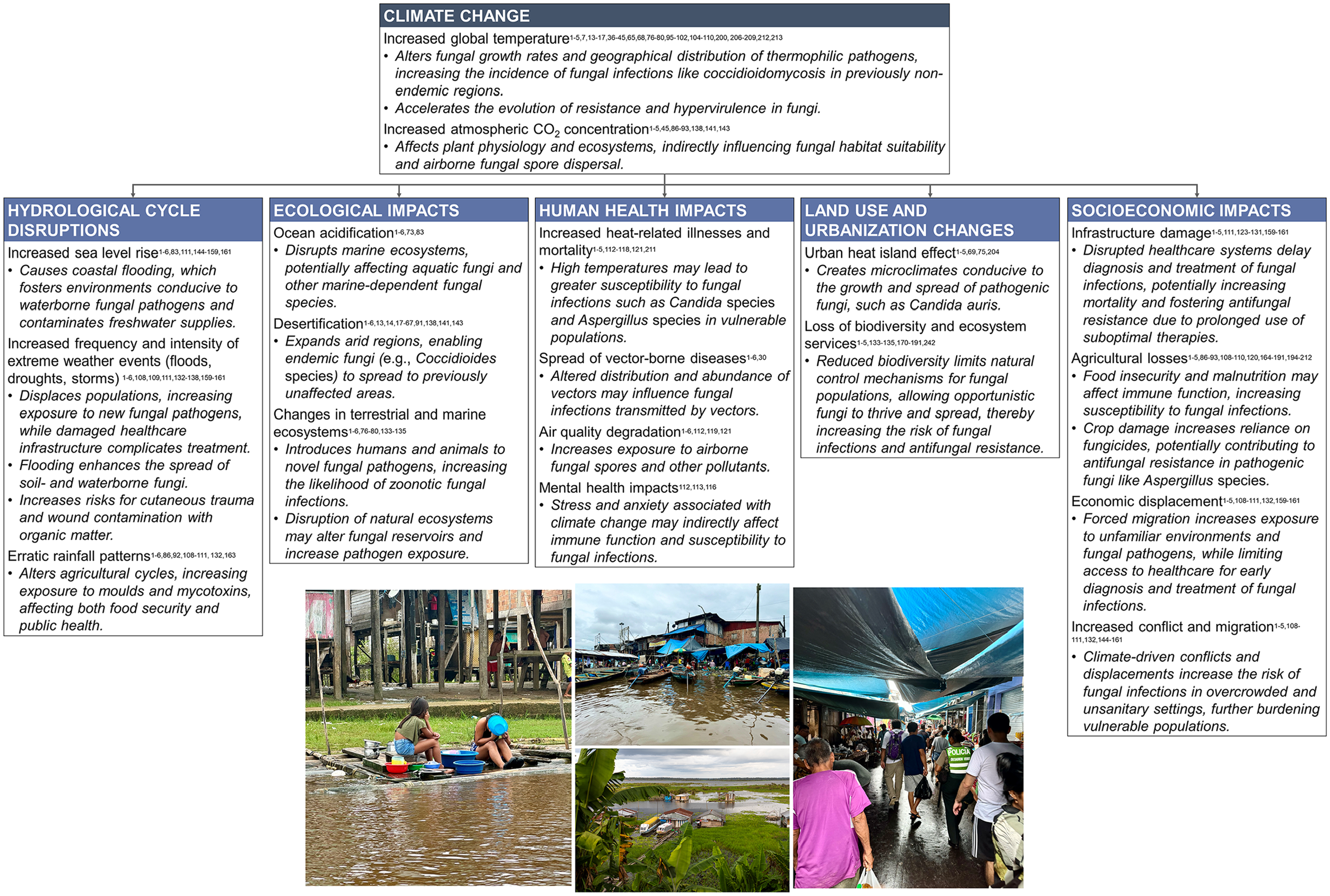
Impact of climate change on the epidemiology and evolution of fungal infections.
While the human core body temperature provides some defense against fungal infections, thermotolerant fungi like Aspergillus fumigatus can adapt to warmer environments.5,7 A gradual decline in average human body temperature—potentially associated with lower metabolic rates and reduced chronic inflammation—may weaken this thermal barrier. 8 Climate-induced changes in temperature and humidity, combined with heightened susceptibility due to the rising prevalence of age-related, disease-related, and medication-induced immunosuppression, could synergistically increase both the risk and severity of fungal infections.9–11
The clinical consequences of climate change-driven fungal infections are significant. Emerging pathogens may lead to a broader range of diseases with increased morbidity and mortality.3–5 Moreover, shifts in the geographic distribution of endemic fungi will place new populations at risk. Disparities in healthcare access and socioeconomic conditions will likely amplify these effects, disproportionately affecting vulnerable populations. 12
This review examines the intricate connections between climate change and fungal infections, exploring the underlying mechanisms, clinical implications, and the urgent need for research and public health interventions.
Expanded geographical range
Climate change is a major driver for the emergence and expansion of fungal infections.13–17 Rising global temperatures and shifting precipitation patterns create favorable conditions for the proliferation and migration of fungal pathogens, enabling their colonization in regions previously uninhabitable. In addition, extreme weather events further exacerbate the dispersal of fungal propagules, increasing the risk of both endemic and emerging fungal infections.18–20
Dimorphic fungi, once confined to specific geographic regions, are particularly susceptible to climate-induced environmental shifts.13–17 Disruptions caused by climate change are allowing these fungi to establish themselves in new ecological niches, thereby increasing human exposure. Species such as Blastomyces dermatitidis, Histoplasma capsulatum, Coccidioides species, Paracoccidioides species, Talaromyces marneffei, and Emergomyces species have demonstrated notable expansions in their geographic range (Table 1).13,14,17–66 However, even within traditionally endemic regions, the distribution of these fungi can be highly variable, ranging from areas with low incidence to those with hyperendemic outbreaks. These spatial and temporal fluctuations in fungal prevalence hinder effective disease surveillance and prevention. Climate change further complicates this challenge by altering environmental conditions and potentially generating new endemic zones.
Emerging geographic distribution of endemic mycoses in response to climate change.*

Current understanding of climate-driven expansion of endemic mycoses is limited by diagnostic test reliability and lack of population-based prevalence data.
For a visual representation of the geographic distribution of these endemic mycoses, please see the following references: Ashraf et al. Mycopathologia 2020; Gorris et al. Geohealth 2019; Thompson et al. Lancet Infect Dis 2021; Mazi et al. Clin Infect Dis 2023; and the resource available at mycoses.org.
Thermotolerant strains
Rising global temperatures and more frequent heat extremes are likely to drive fungal adaptation to human body temperature, potentially facilitating the emergence of novel fungal pathogens. 68 Thermotolerant fungi, which can exploit this environmental niche, may represent significant emerging threats.
C. auris is a globally disseminated pathogen known for its exceptional adaptability.69–71 It demonstrates superior thermal and halotolerance compared to other Candida species, enabling survival in extreme environments characterized by high temperatures and salinity.72–75 Its detection in aquatic environments and animal hosts raises concerns regarding zoonotic transmission and ongoing thermal adaptation.76–80 Since its initial identification in 2009, C. auris has been reported in over 50 countries across six continents, where it has been associated with frequent healthcare-associated outbreaks. 81 In the United States, the prevalence of C. auris has significantly increased in recent years, with clinical cases increasing by over 200% and positive screening cultures rising by 275% between 2019 and 2021. 82
Similarly, C. orthopsilosis, a species within the C. parapsilosis complex originating from warm marine habitats, highlights the role of rising ocean temperatures in reshaping fungal ecology. 83 Global warming may have exerted selective pressure favoring thermotolerant C. orthopsilosis strains and promoting their proliferation in marine ecosystems. Consequently, C. orthopsilosis isolation rates and nosocomial outbreaks have increased globally, with notable reports from Brazil and Italy.84,85
Fusarium species pose significant threats to both human and agricultural health.86–89 These fungi exhibit remarkable ecological adaptability, including efficient dispersal, mycotoxin production, and correlations between environmental and clinical isolates.87–93 Climate change is projected to exacerbate these risks by altering species distribution, increasing disease prevalence, and enhancing mycotoxin contamination in both crops and the food supply. Invasive fusariosis, though relatively rare, remains a serious infection, particularly affecting individuals who are immunocompromised. 94 Recent outbreaks of multidrug-resistant central nervous system fusariosis linked to medical tourism in Mexico demonstrate the evolving threat of these fungi. 94
The C. gattii species complex has expanded its geographic range, in part due to climate change-induced shifts, with increased thermotolerance and melanin production potentially enhancing pathogenicity.95–102 This species complex has been reported in the U.S. (including Oregon, Washington, California, and other states), Canada (British Columbia), Australia, Brazil, Colombia, and sub-Saharan Africa, though reporting varies by species.96,103 While C. gattii species complex infections are more common in immunocompetent individuals, and cases in patients who are immunocompromised are increasingly observed. 96
Additionally, heat stress may induce genetic alterations in C. deneoformans (formerly C. neoformans var. neoformans, serotype D), impacting virulence and resistance to antifungal agents.104–106 While globally distributed, C. deneoformans is more frequently reported in Europe. 107 However, recent studies indicate the increasing prevalence of C. neoformans × C. deneoformans hybrids (serotype AD) worldwide.
Dermatophytes, including species from the genera Epidermophyton, Microsporum, and Trichophyton, are the most prevalent pathogenic fungi in the U.S. and among the leading causes of skin diseases worldwide.108–110 These fungi thrive in warm, humid environments and infect keratinized tissues. Predisposing factors, such as immunosuppression, skin trauma, and exposure to high environmental temperatures and humidity, are often necessary for infection. Rising temperatures and more frequent heat waves contribute to increased transmission rates and a wider geographic distribution of dermatophyte infections.
Social determinants of health
Vulnerable populations are disproportionately affected by natural disasters due to underlying socioeconomic factors, including limited education, poor healthcare access, and inadequate housing quality. 111 These individuals are more likely to reside in geographically vulnerable areas and experience a higher burden of comorbidities, increasing their susceptibility to fungal infections.12,111 Natural disasters further exacerbate this risk through trauma, physical and psychological stress, and immunosuppression, creating a complex interplay of factors that increase vulnerability.112–118 Additionally the prevalence of chronic diseases, medication use, malnutrition, and emerging infectious diseases such as SARS-CoV-2 or influenza, further amplifies the risk.7,10,12,112–122 These challenges are particularly severe in regions with limited healthcare infrastructure and resources, where delayed diagnoses and suboptimal treatment remain common due to healthcare disparities, including restricted access to care and the affordability of antifungal therapies.12,123–126
A 2021 survey conducted by the European Confederation of Medical Mycology assessed diagnostic capacities for invasive fungal infections across 45 European countries. 127 The survey reported nearly universal access to culture-based methodologies (99%), microscopy (97%), and antigen-detection assays (94%), with molecular diagnostics and antibody tests available in 85% and 84% of institutions, respectively. However, significant disparities emerged based on gross domestic product (GDP) per capita. For example, antigen-detection tests were available in 95%–96% of institutions in high-income countries (GDP per capita ⩾$30,000) compared to 83% in low-income countries (GDP per capita <$30,000). While Europe has generally robust diagnostic and therapeutic capacities for fungal infections, institutions in lower-income regions continue to face challenges accessing essential diagnostics.
Many countries in the Asia-Pacific, African, Latin American, and Caribbean regions have limited or no access to diagnostic tools included in the World Health Organization (WHO) Model List of In Vitro Diagnostics, such as microscopy, fungal culture, blood culture, histopathology, and various antigen and polymerase chain reaction assays.128–131 The scarcity of mycology laboratories and expertise in many Low- and Middle-Income Countries (LMICs) further contributes to low awareness of fungal infections among healthcare professionals.
Access to antifungal therapies is similarly inconsistent worldwide. While most countries in Europe, Asia-Pacific, Latin America and the Caribbean report access to at least one triazole (commonly fluconazole and voriconazole) and one formulation of amphotericin B, access to other antifungals, including liposomal amphotericin B, echinocandins, itraconazole, posaconazole, isavuconazole, and flucytosine varies considerably.127,129–131 European countries have the highest reported access rates, whereas access remains severely limited across Africa.
Addressing disparities driven by social determinants of health is critical to mitigate the growing burden of fungal infections, particularly in the context of climate change. Strengthening healthcare infrastructure, improving access to diagnostics and antifungal treatments, and investing in mycology expertise in resource-limited settings are essential to mitigate the impact of these infections and improve global health outcomes.
Displaced populations
Climate change is a major driver of forced displacement, significantly increasing the vulnerability of affected populations to natural disasters and subsequent fungal infections. 132 According to the United Nations High Commissioner for Refugees (UNHCR), an average of 24 million people are displaced annually due to disasters, with weather-related events constituting the majority. 132 Displaced populations often inhabit climate-vulnerable regions, where insufficient resources and infrastructure amplify their susceptibility to health risks, including fungal infections.
Extreme weather events, exacerbated by climate change, disrupt ecosystems and infrastructure, creating conditions conducive to fungal growth and dissemination.3–5,133–135 These events compromise human health directly through injury and exposure to contaminated environments, and indirectly, by overwhelming healthcare systems.136–138 Aerosolized fungal spores and contaminated water are significant vectors, especially for individuals with immune deficiencies or disrupted skin barriers.
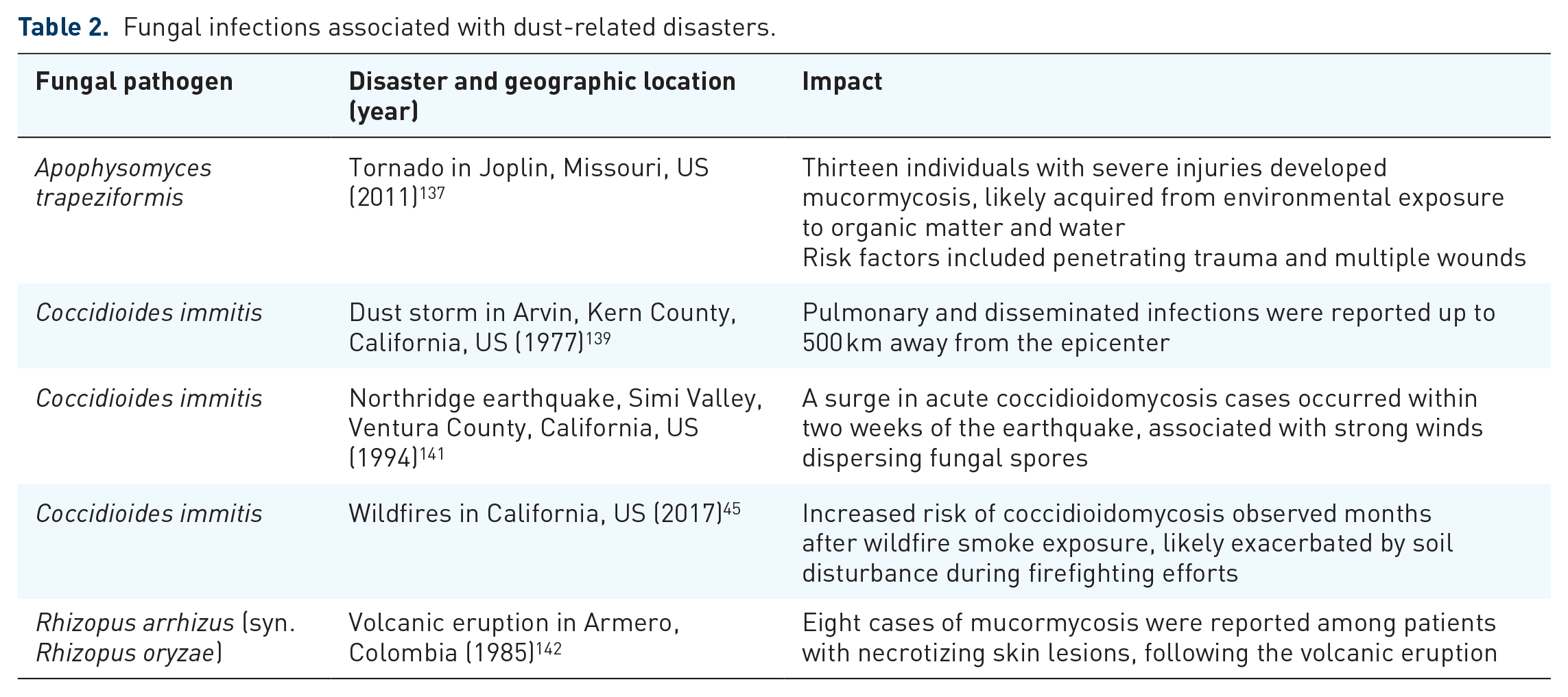
The synergistic effects of physical trauma, psychological stress, immunosuppression, and weakened healthcare infrastructure substantially increase the risk of fungal infections in disaster survivors.112–118 A variety of natural disasters—including dust storms, tornadoes, wildfires, earthquakes, hurricanes, tsunamis, and volcanic eruptions—have been associated with increased incidences of fungal infections (Table 2).45,137,139–142 For instance, dust storms can aerosolize spores, leading to outbreaks of coccidioidomycosis. 141 Wildfires also contribute to the risk of fungal infections by altering soil conditions and dispersing spores.45,138,143
Fungal infections associated with dust-related disasters.
Flooding is particularly conducive to fungal proliferation and dispersal (Table 3).144–159 Water-damaged infrastructure fosters mold growth, while contaminated water and debris increase exposure to fungal pathogens.144–148 These risks are especially problematic in regions prone to hurricanes and tsunamis, where large populations may be affected simultaneously.149–154
Fungal infections associated with flooding.

Refugees and displaced persons residing in climate-vulnerable regions are disproportionately affected by these factors. 132 Inadequate shelter, limited access to healthcare, and scarce resources exacerbate their vulnerability to fungal infections. Furthermore, population shifts toward densely populated, hot, and humid environments increase the transmission risk of dermatophytes, such as antifungal-resistant T. indotineae, compounding the public health burden.108,109,160
The complex relationship between climate change, displacement, and fungal infections necessitates a multidisciplinary approach. Research is urgently needed to elucidate the mechanisms of fungal dispersal in disaster settings, develop robust prevention and treatment strategies, and fortify healthcare infrastructure in vulnerable regions.
Healthcare systems
Natural disasters significantly increase the risk of fungal infections by disrupting healthcare systems and compromising medical care. Damage to infrastructure—such as power outages, structural collapse, and water intrusion—impairs the delivery of essential health services. Floods pose a particularly severe threat by damaging healthcare facilities, contaminating medical supplies, and creating conditions conducive to fungal proliferation.159,161
One notable example occurred in the aftermath of Hurricane Sandy (2012), which devastated the Atlantic coast of the U.S., leading to a polymicrobial fungal outbreak in a burn intensive care unit. 161 This nosocomial outbreak was attributed to severe water infiltration and high winds preceding landfall. Similarly, a case series from Sri Lanka reported A. fumigatus infections following a flood-related disaster, with infections linked to medical supplies stored under humid, suboptimal conditions. 159
These cases emphasize the critical need to strengthen the climate resilience of healthcare infrastructure, ensuring that facilities and medical supplies are protected from the adverse effects of increasingly frequent and severe extreme weather events. 162
Agricultural impact
Climate change is exacerbating the threat of fungal diseases to both crop production and human health. 163 Increasingly frequent and severe weather events, driven by climate change, are increasing crop vulnerability to fungal pathogens. Altered precipitation patterns, combined with rising temperatures, are expanding the geographic range and abundance of these pathogens, leading to elevated incidences of fungal infections and increased mycotoxin contamination in food crops.86,92 For instance, extreme precipitation and warmer temperatures have been directly linked to higher concentrations of mycotoxin contamination in maize, driven by the proliferation of F. graminearum. 92
In response to these threats, the intensive application of agricultural azoles has become a widespread strategy for managing fungal pathogens. However, this approach is creating significant selective pressure, driving the emergence of azole-resistant strains.164,165 A. fumigatus, in particular, has developed resistance to azoles, raising concerns about the effectiveness of fungicidal strategies in both agriculture and human health.166,167 As climate change continues to intensify crop losses, reliance on fungicides is expected to increase, further promoting resistance development in both crop-specific and environmental fungi with the potential for human infection.
The persistent and widespread use of agricultural azoles, such as difenoconazole, epoxiconazole, propiconazole, and tebuconazole, is especially concerning due to their structural similarity to medically important antifungal agents, including isavuconazole, itraconazole, posaconazole, and voriconazole.168,169 With global azole consumption exceeding 30,000 metric tons annually, and environmental half-lives ranging from 47 to 120 days, these fungicides create a selective environment that fosters resistance to both agricultural and clinical fungal pathogens.
The widespread use of azole fungicides in agriculture since the 1980s has contributed to the emergence of azole-resistant fungal pathogens in clinical settings. 163 Climate change, by increasing the frequency and severity of fungal diseases in crops, is likely to further accelerate the development and dissemination of antifungal resistance, as farmers rely more heavily on fungicide applications to protect their yields.164,165
Antifungal resistance
Climate change is increasingly recognized as playing a critical role in the emergence of antifungal resistance, particularly in A. fumigatus, where azole resistance has become a global concern, reported on all continents except Antarctica.166,167 The global prevalence of azole-resistant A. fumigatus varies significantly, ranging from 0.6% to 30%, with some regions, such as Yunnan Province in China, reporting rates as high as 80%.166,167,170–184 The widespread use of agricultural azoles is believed to be a major driver of this resistance.185,186 Notably, azole-resistant A. fumigatus is more prevalent in warmer environments, such as agricultural, healthcare, and public settings.169,170,187–190 Heat stress can induce ascospore germination, and when combined with azole exposure, may accelerate the development of resistance, suggesting a synergistic relationship between environmental temperature and antifungal resistance.187,189,191
Resistance to azoles in A. fumigatus is primarily mediated by mutations in the CYP51A gene, which encodes the 14α-demethylase enzyme targeted by azoles (Table 4).171,189,190,192,193 These mutations have been detected globally in both clinical and environmental isolates. Although novel antifungal agents with alternative mechanisms of action have shown efficacy against azole-resistant A. fumigatus, concerns about potential cross-resistance with agricultural fungicides remain, as many of these agents share similar targets.194–197
Mechanism of agricultural-related resistance to Aspergillus fumigatus.

In addition to A. fumigatus, the overuse of agricultural azoles has been linked to resistance in Candida species. 198 For example, Candida species isolated from non-organic fruit had higher fluconazole minimum inhibitory concentrations (MICs) than those from organic fruit, suggesting a link between agricultural practices and antifungal resistance. 199 Genetic analyses have revealed similarities between clinical and environmental azole-resistant C. tropicalis isolates, further supporting the possibility of cross-resistance. 198 In addition, C. albicans isolated from the oropharynx of individuals with human immunodeficiency virus have demonstrated resistance to both clinical and agricultural azoles. 200 In vitro studies have confirmed the development of azole resistance in C. glabrata and the C. parapsilosis complex following exposure to agricultural fungicides.201–203
The environmental niche of C. auris remains poorly defined, but its geographic overlap with regions of high agricultural azole use raises concerns about agrochemical exposure contributing to resistance.68,74,204 A case of azole-resistant C. albicans in a wild porcupine further illustrates the potential impact that environmental azoles pose to clinical antifungal efficacy. 205 Beyond fostering resistance, agricultural fungicides can influence the morphology and virulence of Candida species.202,206 For example, tebuconazole alters the metabolism of C. parapsilosis complex during adhesion, while azole-treated soils have produced azole-tolerant, biofilm-forming C. albicans variants.
While C. neoformans and the C. gattii species complex are less commonly found in agricultural settings, exposure to environmental fungicides can still impact their antifungal susceptibility and virulence. 207 Studies have demonstrated that fungicide exposure can induce cross-resistance to fluconazole in both Cryptococcus species, with some strains retaining resistance even after fungicide removal.208,209 Moreover, heat stress has been shown to promote the emergence of fungicide-resistant colonies in Cryptococcus species, and recent evidence suggests a link between heat stress and increased mutation rates in C. deneoformans.104,105 These findings align with studies demonstrating temperature-dependent selection for antifungal resistance in C. neoformans when exposed to fluconazole and amphotericin B.208–210 Collectively, these data suggest that both environmental fungicides and elevated temperatures can influence the acquisition and expression of antifungal resistance in Cryptococcus species, with potential implications for virulence and clinical management.
Agricultural workers, especially in South India, are at an increased risk of keratomycosis due to Fusarium species following plant- or soil-related corneal injuries. 211 The extensive use of agricultural azoles, known for their persistence in soil, and the elevated MICs observed in both clinical and environmental Fusarium isolates, raise concerns regarding the potential for resistance emergence in these populations. 212
In addition, a novel fungal pathogen, Rhodosporidiobolus fluvialis, was recently identified as capable of temperature-induced mutagenesis, providing further evidence that rising global temperatures may accelerate the evolution of resistance and hypervirulence in fungi. 213 It is crucial to address the effects of climate change on fungal evolution and antifungal resistance, as these changes present substantial challenges to clinical management in an increasingly warming climate.
Mitigating the impact of climate change on fungal infections
Climate change presents a multifaceted and escalating challenge in the management of fungal infections.3–5 The emergence of novel, thermotolerant fungal species, coupled with increasing resource demands, has further constrained available treatment options. The growing prevalence of fungal infections demands the urgent need for strategies to mitigate climate change, alongside enhanced surveillance, revised healthcare protocols, and strengthened educational initiatives.214–218 A comprehensive, multidisciplinary approach to combat antifungal resistance is critical to addressing these emerging challenges effectively. The rising incidence of climate-related fungal infections highlights the necessity for proactive strategies aimed at mitigating their impact and fortifying healthcare system resilience.
Strategies to mitigate climate change
The healthcare sector contributes significantly to global greenhouse gas emissions, including carbon dioxide, methane, and nitrous oxide.218,219 This contribution is projected to increase as healthcare demand grows worldwide. To mitigate this impact, a comprehensive approach encompassing both operational and systemic changes is required.
To initiate the decarbonization process, healthcare organizations should establish a sustainability team led by executive leadership and comprising diverse representatives from operational and clinical departments.218,220 Engaging key stakeholders, including staff, clinicians, board members, and patients, is crucial for achieving sustainability objectives. A fundamental initial step involves conducting a greenhouse gas inventory to assess both direct emissions and indirect emissions, such as those arising from business travel, employee commuting, and waste disposal. By setting specific, measurable decarbonization targets, including annual greenhouse gas reduction goals and long-term net-zero emission targets, clear direction and accountability are established. Developing a comprehensive implementation plan with defined milestones facilitates progress tracking and ensures successful execution.
To achieve decarbonization goals, healthcare systems must prioritize high-impact interventions.218,220 These include reducing building emissions through improved energy efficiency and increased use of renewable energy sources, addressing emissions from anesthetic gases and inhalers, minimizing waste, and reducing reliance on single-use plastics. Other essential strategies include promoting sustainable food services, reducing the carbon footprint of meals, and encouraging sustainable transportation options such as electric vehicles and active commuting. By systematically integrating these interventions, healthcare systems can reduce their carbon footprint, improve operational efficiency, and contribute to global climate change mitigation efforts.
In addition to operational changes, a systemic shift toward preventive care and value-based healthcare can reduce unnecessary treatments and procedures, thereby lowering both costs and emissions.218,220 However, a comprehensive understanding of the economic and environmental implications of such strategies is essential to inform decision-making.
While evidence suggests that sustainable healthcare practices offer both environmental and economic benefits, challenges remain.218,220 Implementing these changes often requires substantial investment, changes in work routines, and strong leadership. Overcoming these barriers requires raising awareness about the environmental and health consequences of unsustainable practices and fostering a culture of sustainability among healthcare professionals and the public.
Management strategies
Rapid and accurate diagnostic strategies are essential to address the rising incidence of fungal infections driven by climate change. 221 As global temperatures shift and weather patterns become more erratic, the geographic distribution and virulence of pathogenic fungi are evolving, leading to higher infection rates and the emergence of novel, antifungal-resistant organisms. Early identification is critical for reducing disease severity, enabling timely and effective treatment, and ultimately lowering morbidity and mortality.222,223 Moreover, rapid diagnosis is key for infection control and public health responses during outbreaks. Given the dynamic epidemiological landscape, advanced diagnostic methodologies are indispensable for optimizing clinical management and protecting public health from the growing threat of climate change-related fungal infections.
A thorough assessment of individual risk factors is equally important, including travel history, environmental exposures, living conditions, and preexisting medical conditions. Such detailed evaluations guide both diagnostic decisions and subsequent therapeutic interventions.
Diagnosing fungal infections remains challenging due to nonspecific clinical presentations, limited availability of essential diagnostic tests, and the inherent limitations of conventional culture techniques.127–130,221 Non-culture–based diagnostic tests offer significant advantages in speed, sensitivity, and specificity, providing promising alternatives for detecting fungal pathogens that are often difficult or slow to culture.224,225 This is particularly important as climate change accelerates shifts in environmental conditions favorable for fungal proliferation and transmission.3–5 These non-culture-based tests also have a high negative predictive value, making them valuable for ruling out fungal etiologies, but they should be used alongside conventional and serological methods to confirm diagnoses in patients with diverse clinical symptoms.224,225
Despite their benefits, non-culture-based diagnostic tests have limitations.224–227 Performance variability between platforms can affect accuracy, and false positives may arise from nonpathogenic colonization misinterpreted as infection, particularly when sampling from nonsterile sites. In addition, the specialized expertise required for implementation and interpretation, coupled with higher costs, may limit accessibility in resource-constrained settings.127–130
Antifungal susceptibility testing
Current methods for detecting antifungal resistance and tolerance have significant limitations. 228 Phenotypic susceptibility testing, which relies on isolating fungi from clinical specimens, is inherently less sensitive.228,229 This approach is further constrained by the limited availability of antifungal susceptibility testing in LMICs and the potential discordance between in vitro susceptibility results and actual clinical outcomes.128,228,230 Low-level clinical resistance may be masked by antifungal drug tolerance, leading to discrepancies between treatment efficacy and susceptibility testing. 228 Although molecular methods provide an alternative, their accuracy is influenced by prior antifungal exposure, the diversity of resistance mechanisms, and limited accessibility in resource-constrained environments. 230
A multifaceted approach is essential to combat the rise of antifungal resistance. This includes optimizing antifungal use, enhancing access to antifungal therapeutic monitoring, improving existing antifungals, and developing novel agents with broad-spectrum activity and unique mechanisms of action.128,231–234 Key strategies include robust surveillance programs to monitor resistance trends, stewardship initiatives to promote appropriate antifungal therapy, and advanced diagnostics for detecting fungal infections and resistance. Maintaining the efficacy of current antifungals also requires exploring combination therapies and host-directed strategies, such as immunotherapy, fungal vaccines, and antibodies that target fungal virulence factors.234–238
Disparities in healthcare infrastructure, coupled with financial strain on hospitals and health systems, limit access to essential antifungals.125,126 Disrupted supply chains and affordability challenges further exacerbate these issues, contributing to delayed diagnoses, suboptimal treatments, and a heightened burden of fungal infections. Effective antifungal management remains difficult, particularly in the face of emerging resistant pathogens. 239 A comprehensive understanding of cross-resistance mechanisms is critical for optimizing treatment, preserving therapeutic efficacy, and identifying evolving resistance patterns. 234 The association between the widespread use of agricultural antifungals and the development of clinical resistance underscores the need for stringent monitoring of agricultural practices to mitigate their impact on medical antifungal therapy (Table 4). Furthermore, the significant financial burden on hospitals and health systems, coupled with formulary constraints and an already strained healthcare system, underscores the critical need for effective antifungal stewardship. Surveillance programs provide invaluable insights into the regional and global prevalence of resistant strains, guiding empirical treatment decisions and supporting public health efforts. As climate change drives an increase in fungal infections, improving antifungal susceptibility testing methods becomes essential for personalized therapy.
Development of new antifungal agents
The increasing prevalence of antifungal resistance among pathogenic fungi highlights the urgent need for novel therapeutic strategies.231–234,236–238 Current research efforts are focused on developing antifungal agents that target novel pathways to overcome existing resistance mechanisms and enhance treatment efficacy against resistant strains. The US Food and Drug Administration (FDA) Limited Population Pathway for Antibacterial and Antifungal Drugs (LPAD) has been instrumental in accelerating the development and approval of antifungal therapies for serious or life-threatening infections caused by resistant pathogens. 240 By streamlining clinical trials and regulatory reviews, the LPAD pathway promotes innovation and broadens the range of treatment options available to patients with limited alternatives.
Given the growing influence of climate change on antifungal resistance patterns, proactive measures are critical to mitigate the associated risks. Advancing susceptibility testing, developing novel antifungal agents, and utilizing regulatory frameworks such as the LPAD are essential for optimizing the management of fungal infections and curbing the spread of antimicrobial resistance.
Policy, education, and future directions
The growing impact of climate change on the emergence and reemergence of fungal infections requires an integrated approach that combines policy, education, and research.5,128,241 International collaboration and stringent regulatory frameworks are essential to mitigate climate change and its environmental consequences. Simultaneously, substantial investments in research are needed to advance our understanding of fungal pathogens, enhance diagnostic tools, elucidate antifungal resistance mechanisms, and develop innovative therapeutic strategies.
Public health initiatives must prioritize raising awareness of fungal infections and their associated risk factors. Advocacy efforts should emphasize the critical connection between climate change mitigation and a reduced burden of fungal diseases. Policy changes promoting clean energy transitions and sustainable environmental practices are vital for building resilience against the rising threat of fungal infections.
To combat the expanding geographic distribution of fungal pathogens driven by climate change, key research areas need to be prioritized. Developing robust predictive models for fungal pathogens requires improved environmental monitoring and comprehensive characterization of fungal isolates.39,242 In addition, compiling data on antifungal usage and disease burden is essential to inform public health strategies, policy development, and timely interventions.243–245 Research should focus on developing novel diagnostic tools with enhanced sensitivity, specificity, and rapid turnaround times.224,225
Understanding the mechanisms underlying antifungal resistance is essential for guiding future antifungal development.4,171,200,246 This includes studying the effects of agricultural fungicide use and environmental exposures on the selection of resistant fungal strains. Investigating novel resistance mechanisms in fungi will be critical for developing new antifungal agents, especially due to the widespread use of azoles.163,247–249 Integrated management strategies, such as disease-resistant crops and sustainable fungicide practices, are essential in agriculture, and minimizing overlap between agricultural and clinical antifungal use is crucial to slowing resistance development.
Developing new therapeutic strategies remains a high priority.232,234,236–238 Given the limited antifungal options available, research should focus on creating broad-spectrum antifungals with enhanced fungicidal activity and a lower risk of resistance development. In addition, immunotherapies, fungal vaccines, and antibody-based therapies targeting fungal virulence factors are promising areas for investigation.
A One Health approach, integrating human, animal, and environmental health, is crucial to effectively address the global threat of fungal infections.247,248 This approach emphasizes equitable access to diagnostics, antifungals, and healthcare, with a focus on early detection and intervention.
To address the growing threat of fungal infections exacerbated by climate change, it is imperative to implement robust strategies to mitigate greenhouse gas emissions and reduce the frequency and intensity of extreme weather events. In addition, a deeper understanding of the complex ecological factors that influence fungal growth, dissemination, and virulence is essential to develop effective prevention and control measures.
Conclusion
Climate change is altering fungal ecology, increasing the risk of both emerging and reemerging fungal infections, necessitating a paradigm shift in clinical practice. Clinicians must remain vigilant for novel fungal pathogens, which may be more virulent or drug-resistant. Early and accurate diagnosis is essential for optimizing patient outcomes, as misdiagnosis can delay the initiation of appropriate antifungal therapy, worsening prognosis. The increasing threat of antifungal resistance highlights the urgent need for new antifungal agents with distinct mechanisms of action. Exploring combination therapies and host-directed strategies, such as immunotherapies and vaccines, may help preserve the efficacy of existing antifungals. However, healthcare disparities and limited access to antifungal treatments continue to impede optimal care, exacerbating the global burden of fungal infections.
