




Abstract
Outpatient parenteral antimicrobial therapy (OPAT) has been widely used in clinical practice for many decades because of its associated cost savings, reductions in inpatient hospital days, and decreases in hospital-associated infections. Despite this long history, evolving practice patterns and new drug delivery devices continue to present challenges as well as opportunities for clinicians when designing appropriate outpatient antimicrobial regimens. One such change is the increasing use of extended and continuous infusion (CI) of antimicrobials to optimize the achievement of pharmacokinetic and pharmacodynamic targets. Elastomeric devices are also becoming increasingly popular in OPAT, including for the delivery of CI. In this article, we review the clinical evidence for CI in OPAT, as well as practical considerations of patient preferences, cost, and antimicrobial stability.
Keywords
Introduction
Outpatient parenteral antimicrobial therapy (OPAT) is the administration of parenteral antimicrobial therapy in at least two doses on different days outside of an acute hospital setting. 1 For OPAT in the home, administration is usually undertaken by the patient or a caregiver. Therefore, a simpler, less frequently administered antimicrobial regimen is most likely to garner adherence.1,2 However, several antimicrobials that may be selected for a patient requiring OPAT are traditionally dosed multiple times a day to meet the required pharmacokinetic and pharmacodynamic (PK-PD) targets to treat pathogens. One possible option to leverage less-frequent administration and maximize the chances of meeting PK-PD targets is continuous infusion (CI). In this article, we review the evidence supporting the use of antimicrobial agents often given by CI in OPAT, their stability in available delivery devices, patient satisfaction, and cost considerations. We also discuss clinical controversies in CI and evidence for CI use with newer antimicrobial agents.
Practical considerations
Patient/caregiver acceptance
In some cases, CI may be less burdensome than intermittent infusions for OPAT. This is particularly true for medications that are traditionally administered 4–6 times daily and cannot be administered via intravenous (IV) push. CI may allow for a dose administration just once daily, and medication delivery devices can allow patients to be fully ambulatory during the infusion. CI does require patients to be connected to an infusion all day, however, and may introduce compatibility concerns if other concomitant medications need to be administered.
Common delivery devices used for CI include ambulatory electronic infusion pumps and elastomeric devices. Ambulatory electronic infusion pumps (Figure 1), or continuous ambulatory delivery devices, are battery-powered pumps that are connected to a compounded or commercially prepared medication bag or cassette. They are programed to deliver the medication for intermittent, continuous, bolus, or tapered infusions. They are small enough to be worn in a small carrying case or backpack, which allows the patient to be ambulatory during the medication infusion. 3 Advantages of ambulatory infusion pumps include a lower margin of error (5%), 4 alarms that alert the patient of infusion interruption or pump malfunction, and the ability to accommodate large and varying infusion volumes. These electronic pumps are, however, more difficult for patients to use and require home care staff to be available to assist with alarms and other mechanical malfunctions.
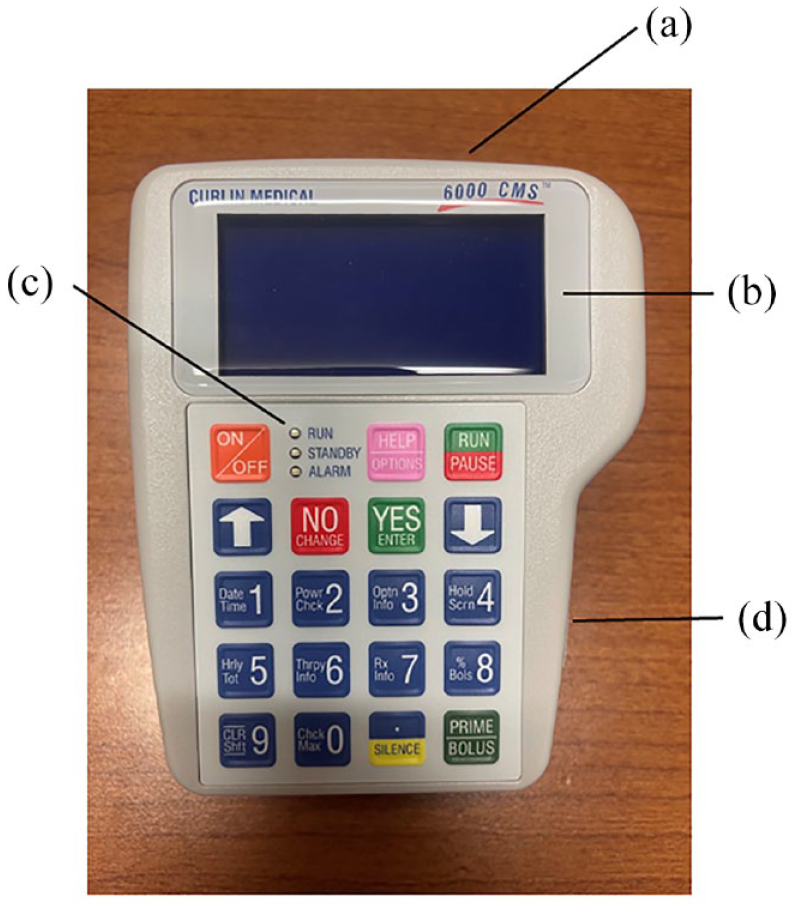
Ambulatory pump: (a) pump door for installation of tubing, (b) display screen, (c) LED light indicators, and (d) battery compartment on back (two size C batteries).
Elastomeric devices (Figure 2) are medication containers made of polyvinyl chloride, and when filled with medication they resemble a ‘ball’ or ‘grenade’. These devices use a patented membrane technology that creates a positive pressure system, which allows for consistent and uniform drug delivery. The tubing is already attached and there is no need for gravity, which makes these devices relatively easy to use. 3 Use of elastomeric devices has been shown to be preferred by patients, 5 but this may come at the expense of a higher margin of error (15%) because flow rates depend on fluid viscosity and temperature. 4
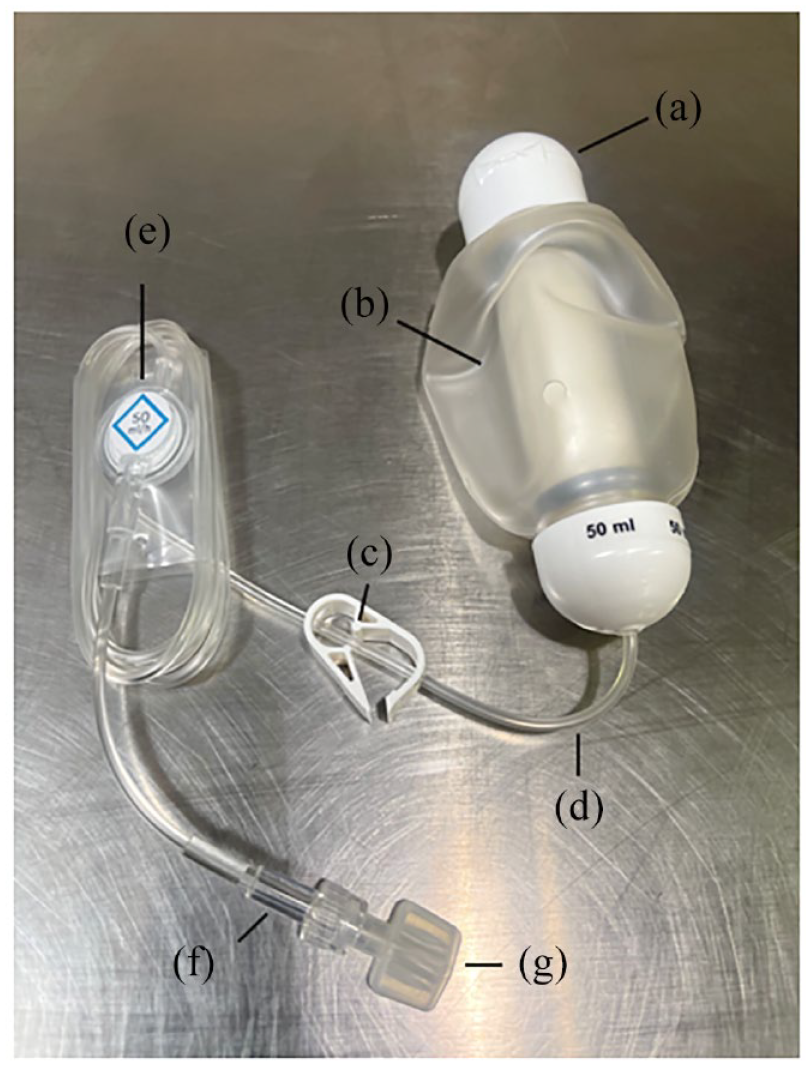
Elastomeric device: (a) filling port, (b) medication container with elastomeric membrane (deflated), (c) clamp, (d) tubing, (e) particulate- and air-eliminating filter with infusion rate indicator, (f) flow restrictor, and (g) Luer-Lok tip.
Cost
Multiple studies have demonstrated the cost-effectiveness of OPAT compared with inpatient treatment. One study showed the cost-effectiveness of antimicrobials (including nafcillin for 32% of the cohort; penicillin G, 34%; piperacillin/tazobactam, 13%; cefazolin, 17%; and cefepime, 4%) administered via disposable elastomeric CI pumps for 91 patients treated in the outpatient setting. 6 The use of self-administered elastomeric CI pumps for a total of 1925 OPAT days resulted in cost avoidance of $2.3 to $3.5 million relative to an inpatient-only treatment course. 6 A study in Spain among patients receiving CI OPAT via elastomeric devices (with piperacillin/tazobactam, 43%; meropenem, 20%; ceftazidime, 25%; ceftolozane/tazobactam, 3%; and cloxacillin, 2%) showed a similar cost avoidance of €745,290.55 associated with 1409 OPAT days compared with inpatient days. 7
Data are limited regarding cost comparisons among various OPAT delivery methods. A recent cost-minimization analysis based on OPAT practice models in the United Kingdom showed similar costs associated with CI via elastomeric devices compared with bolus dosing via elastomeric devices. 8 However, the use of elastomeric devices had higher costs than bolus dosing via gravity infusion. 8 The CHID (Comparing Home Infusion Devices) study protocol included pump operating costs of electronic versus elastomeric pumps for CI as a secondary outcome measure, 9 but the results of this trial are not yet published. In the United States, insurance coverage for these elastomeric devices and ambulatory electronic infusion pumps varies, which may create disparities in patient access. In some cases the cost of the medication may be covered by insurance, but patients may incur additional out-of-pocket costs for each elastomeric device or may incur a daily rental fee for the use of an ambulatory electronic infusion pump.
Stability
The stability of sterile antimicrobial preparations is typically determined under controlled conditions at room temperature (25°C) or with refrigeration (5°C). The actual conditions encountered in a patient’s home environment may vary substantially, particularly in warm climates and with prolonged infusions during which elastomeric devices may be kept close to the body and reach temperatures between 30°C and 37°C.10,11 In a study that examined temperature variations associated with the use of CI antimicrobials via elastomeric devices, the use of a white carrying pouch prevented excessive temperature increases. 11
Data on the stability of medications under these warmer conditions (30°C–37°C) are currently limited, but some suggest that ceftazidime and meropenem may be physically or chemically unstable at these warmer temperatures during prolonged infusion.12,13 Although some data support the safety and efficacy of ceftazidime via CI, as described below, it does degrade to a potentially toxic by-product, pyridine, which requires careful safety consideration to limit its accumulation. Jones et al. 12 suggest that this degradation may be limited by keeping the ceftazidime concentration to 3% or lower, maintaining temperatures between 15°C and 25°C while connected to the patient, and using normal saline (NS; 0.9% sodium chloride) as a diluent rather than 5% dextrose in water (D5W). Other data show that ceftazidime diluted to 36.6 mg/mL in sterile water for injection is stable for up to 24 h at 37°C in a polyvinyl chloride container. 14 In contrast, meropenem diluted in sterile water to 50 mg/mL has been reported to be physically instable after only 1 h at 37°C 13 In addition to reviewing published stability data, some facilities may have access to reference laboratories that can perform individualized stability testing to support local practice.
Available stability data for agents included in this review are summarized in Table 1 (plastic containers) and Table 2 (elastomeric devices). Medications being considered for CI should ideally have data to support stability at 25°C or higher for no less than 24 h. Preparations that do not meet these criteria are highlighted in gray in the tables.
Stability in plastic containers. a

Shading indicates preparations that do not have data to support stability at 25°C or higher for ⩾24 h.
d, day; D5W, dextrose 5% in water; EVA, ethylvinyl acetate; h, hour; NA, not available; NS, normal saline; PVC, polyvinyl chloride; SWFI, sterile water for injection.
Stability in elastomeric devices. a
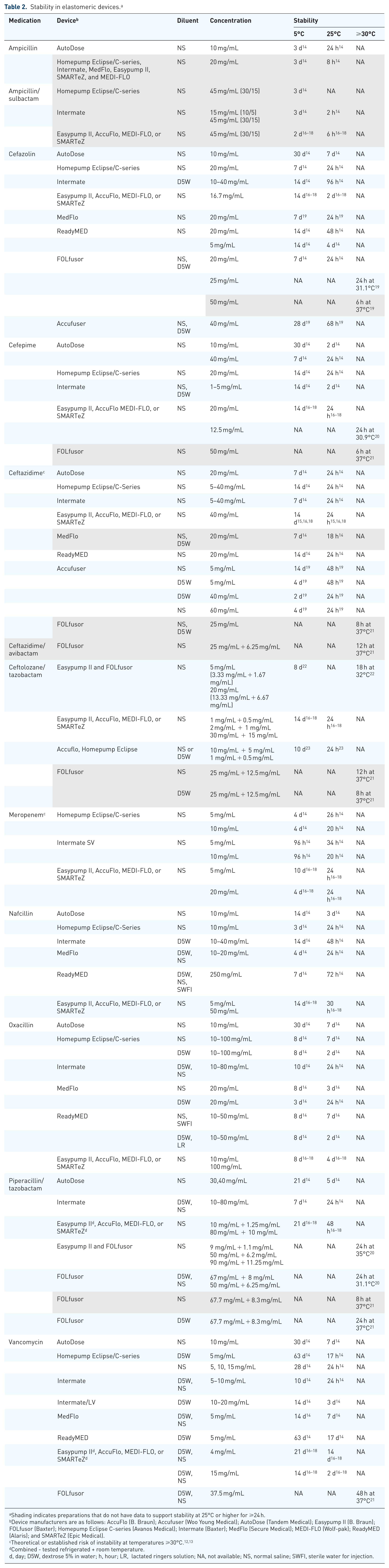
Shading indicates preparations that do not have data to support stability at 25°C or higher for ⩾24 h.
Device manufacturers are as follows: AccuFlo (B. Braun); Accufuser (Woo Young Medical); AutoDose (Tandem Medical); Easypump II (B. Braun); FOLfusor (Baxter); Homepump Eclipse C-series (Avanos Medical); Intermate (Baxter); MedFlo (Secure Medical); MEDI-FLO (Wolf-pak); ReadyMED (Alaris); and SMARTeZ (Epic Medical).
Combined - tested refrigerated + room temperature.
d, day; D5W, dextrose 5% in water; h, hour; LR, lactated ringers solution; NA, not available; NS, normal saline; SWFI, sterile water for injection.
Outcomes associated with CI antimicrobial use
Penicillins
CI penicillins have been used for serious invasive diseases such as central nervous system infections and enterococcal endocarditis.24–26 In one study of patients with central nervous system infections (meningitis, brain abscesses, and neurosyphilis), cure was noted all for patients with penicillin delivered as CI via ambulatory electronic infusion pump. 26 More recently, penicillin was shown to be frequently prescribed and administered via elastomeric systems for neurosyphilis and other diseases, which resulted in substantial institutional cost savings. 6
Ampicillin, which has more limited stability than penicillin, has been less frequently used in elastomeric systems and may require the use of ambulatory electronic pump systems. Some stability data are available for ampicillin in an elastomeric device as well as in a plastic container (72 h refrigerated; 20 mg/mL concentration).27,28 The ability to achieve large desired daily ampicillin doses (8–12 g/day), however, is hindered by available elastomeric device sizes and the need to provide more frequent home deliveries. In contrast, IV amoxicillin (although unavailable in the US) has been shown to be stable in such devices and has successfully treated Enterococcus faecalis endocarditis and osteomyelitis. 29
Data indicate that ampicillin-sulbactam also possesses limited stability with elastomeric systems. The limited stability of both ampicillin and ampicillin-sulbactam formulations must be considered when making treatment-related decisions, given that it takes extra time for compounding and delivery of OPAT medications. This compounding issue has limited their routine inclusion in the OPAT home infusion models and formularies. 1 However, data on the extended stability of ampicillin with and without sulbactam may support its use with ambulatory electronic pump-based CIs. 30 This method, although currently lacking published efficacy data, may allow for the provision of OPAT to treat deep-seated enterococcal infections and multidrug-resistant (MDR) Acinetobacter baumannii, for which large daily doses may be required. 31
Historically, antistaphylococcal penicillins such as nafcillin, as well as isoxazolyl penicillins (e.g. oxacillin, cloxacillin, and flucloxacillin), have been used for deep-seated methicillin-susceptible Staphylococcus aureus (MSSA) infections. High rates of clinical success have been established with CI penicillins because their frequency of dosing necessitated the use of CI to facilitate OPAT.6,32 Penicillin-based regimens for deep-seated enterococcal infections have other clinically relevant issues independent of stability, which are discussed later.
Piperacillin-Tazobactam
The short interval of traditional piperacillin-tazobactam dosing makes this agent less desirable for routine use in OPAT other than with CI. Piperacillin-tazobactam has been widely included in published reviews of the efficacy and safety of elastomeric pump systems in OPAT programs.6,7,32 It is important to note that rates of use of piperacillin-tazobactam varied throughout these reports (8−43%), but clinical success rates were high, with these investigations demonstrating approximately 84–95% cure rates. One study demonstrated mean (SD) serum piperacillin concentrations of 25.8 (15) mg/L. This resulted in advantageous serum concentration ratios of piperacillin relative to the epidemiologic cutoff values of the identified bacteria, which were one or greater in 12 of 14 assessments (86%). 32 The specific antimicrobial doses and tazobactam concentrations were not reported.
The safety and efficacy of CI piperacillin-tazobactam has been reported for Pseudomonas aeruginosa OPAT, including in 35 patients during a 3-year time frame. 33 This study demonstrated a high clinical cure rate (93%), with one patient dying during therapy, although unrelated to P. aeruginosa infection. Only one patient (3%) had a reinfection within 30 days. In a large, longitudinal evaluation of the safety of prolonged antimicrobial therapy, piperacillin-tazobactam had a 2.5-fold increased risk of non-Clostridioides difficile diarrhea compared with benzylpenicillin. 34 Administration modality was not specified, but approximately half the patients performed daily elastomeric device changes. 34
Cephalosporins
Cefazolin, a first-generation cephalosporin, has recently become more prevalently used in lieu of traditional nafcillin or oxacillin-based therapies for the treatment of invasive MSSA infections, which has prompted multiple reviews and meta-analyses.35–39 Traditionally, cefazolin has been administered as an every-8-h infusion with dose adjustment for kidney dysfunction. It has demonstrated stability in both elastomeric and electronic pump-based systems (Tables 1 and 2). Given the favorable results of clinical studies, as well as OPAT-related data demonstrating reduced tolerability of nafcillin-based regimens, CI cefazolin may present clinicians with an evidence-based, better-tolerated treatment alternative. Cefazolin has comparable, if not improved, clinical outcomes regarding patient tolerability compared with nafcillin-based therapy.40–42 These clinical data are supported by PK data in 100 patients with difficult-to-treat bone and joint infections. 43 Cefazolin demonstrated excellent median (range) serum cefazolin concentrations [60.75 (13–203) mg/L] when compared with the 90% minimum inhibitory concentration (MIC) in this study (1 mg/L). The median bone-to-serum concentration ratio of cefazolin was 0.25 (range, 0.06–0.41) in eight patients.
Later-generation cephalosporins, specifically ceftazidime and cefepime, have also been used as CI in acute care settings, mostly to optimize PK-PD target attainment. Efficacy and safety data with ceftazidime when administered as CI have been available since the late 1980s for patients with cystic fibrosis and P. aeruginosa infection.44–46 Ceftazidime was included in a recent large study of CI in OPAT patients, demonstrating high success rates. 7 Of note, however, more recent guidance documents from the Infectious Diseases Society of America (IDSA) have recommended avoiding ceftazidime with AmpC β-lactamase-producing Enterobacterales. 31 In these situations, cefepime or alternative therapies should be recommended.
Substantial effort has been expended toward optimizing the PK-PD parameters of cefepime, often with extended or CI regimens. 47 In the OPAT setting, CI cefepime has limited but promising efficacy data. In a study by Voumard et al., 32 cefepime was used in 36 of 150 episodes of OPAT, with treatment failure occurring in only one patient. One case of neutropenia occurred in the cefepime cohort, and no patients treated with cefepime had neurotoxicity. Therapeutic drug monitoring (TDM) of cefepime showed mean (SD) serum concentrations of 21.3 (12.1) mg/L. Antibiotic-free plasma concentration-to-epidemiologic cutoff ratios were also calculated, and 36 of 40 cefepime measurements (90%) yielded a desirable ratio of 1 or greater. Neutropenia has been reported with prolonged courses of cefepime (⩾2 weeks) in OPAT studies but is potentially associated with rapid IV push administration methods, compared with standard 30- to 60-min infusions.48,49 Given the paucity of comparative data with cefepime CI, clinicians should remain vigilant and adhere to standard OPAT monitoring recommendations. 50
Clinical controversies in CI
Management of staphylococcal infections
In recent years, increasing reports of intolerance and adverse events with nafcillin, when compared with agents such as oxacillin or cefazolin, have prompted debate regarding preferred therapies for OPAT. One 5-year study showed significantly increased rates of premature antimicrobial discontinuation with nafcillin versus cefazolin (33.8% versus 6.7%; p < 0.001). 42 Patients were more likely to have development of rash (13.9% versus 4.2%; p = 0.002), kidney dysfunction (11.4 versus 3.3%; p = 0.006), and abnormal liver function (8.1% versus 1.6%; p = 0.01) with nafcillin versus cefazolin therapy.
Subsequently published studies, in both admitted patients with MSSA endocarditis and OPAT-treated patients, have reported similar findings.40,41 Interestingly, nafcillin had increased rates of nephrotoxicity, with nearly a threefold increased rate of acute kidney injury compared with oxacillin-based treatments (18% versus 6%; p = 0.03). 51 This study also identified increased rates of hypokalemia (potassium ⩽3.3 mmol/L) for nafcillin-treated patients compared with oxacillin-treated patients (51% versus 20%). This is unlikely to be an institution-specific result, given a recent evaluation of the US Food and Drug Administration Adverse Event Reporting System demonstrating similarly lower rates of acute kidney failure and hypokalemia with oxacillin than with nafcillin. 52
Management of enterococcal endocarditis
The 2015 IDSA guidelines recommend ampicillin plus either gentamicin or ceftriaxone for up to 6 weeks for enterococcal endocarditis. 53 However, the frequency of administration and short stability at room temperature have presented challenges for the transition of ampicillin into the outpatient setting.
Ampicillin is a β-lactam antibiotic that exhibits time-dependent PD activity, and because β-lactams lack bactericidal activity for Enterococcus, combination therapy is required for the treatment of deep-seated infections.53,54 Given the short half-life of ampicillin, CI administration can maximize time above the MIC, which may improve clinical outcomes.54,55 In an experimental animal model of enterococcal endocarditis, CI ampicillin, compared with high-dose intermittent infusion, significantly improved survival rate and sterilization of blood cultures and cardiac vegetations after 5 days of treatment. 56
Clinical data evaluating CI ampicillin for enterococcal infections are limited. In one study, patients with enterococcal endocarditis were treated with ceftriaxone 4 g administered via short infusion over 30 min in combination with ampicillin 12 g daily in 500 mL of NS solution delivered as 2 g over every 4 h via programmable pump. 57 For the four patients who met the inclusion criteria, with a median of 22.5 days of outpatient therapy, all patients achieved clinical and microbiologic cure without recurrence or complications in the subsequent year. 57 Although guidelines recommend a dosage of ceftriaxone 2 g every 12 h for the treatment of enterococcal endocarditis, the dosing strategy that best optimizes synergy with ampicillin CI remains unknown, which demonstrates the need for additional prospective studies. 53 When using ceftriaxone and CI ampicillin in combination, the ampicillin infusion may be paused for administration of ceftriaxone due to potential concerns of physical incompatibility.
Although the combination of ampicillin and ceftriaxone has emerged as an effective and possibly safer regimen for specific patient populations, a recent case report described successful administration of CI ampicillin in conjunction with once-daily gentamicin for the treatment of enterococcal endocarditis. 58 Ampicillin and gentamicin were compounded daily and administered in an infusion therapy center. After gentamicin administration, ampicillin was set to infuse over the next 22 h via ambulatory infusion pump with battery charging completed overnight. As a result, the patient achieved clinical cure and was without relapse or readmission in the subsequent year. Of 42 days of therapy, 34 days were administered in the ambulatory setting. 58
The utility of TDM for optimization of CI ampicillin has also been investigated. In a study by Gatti et al., 55 patients with enterococcal infections were administered an ampicillin-based regimen with a loading dose of 2 g over 1 h, followed by CI. Real-time TDM was used, and optimal free fraction:MIC ratios were obtained for all 10 patients with documented infections. Dose reduction by more than 50% was recommended in 92% of the cohort within 48 h and in 56% of all interventions. This suggests that ampicillin doses required to maintain optimal PK-PD targets are likely lower with CI than intermittent infusion. Patients in the cohort received a median of 13.5 days of treatment with no persistent bloodstream infections or ampicillin-related adverse drug reactions observed. A 90-day mortality rate of 25% (3/12) was reported, however, occurring in patients with severe underlying disease. 55 Larger studies are warranted to better understand the relationship between PK-PD targets and clinical outcomes in enterococcal endocarditis.
Vancomycin
The first case reports of CI vancomycin were published in the early 1990s.59,60 Since then, interest has increased regarding the use of CI vancomycin to maximize its PK-PD properties, including a potentially faster time to a therapeutic steady state and less variation in levels. The 2019 IDSA update to the vancomycin dosing and monitoring guidelines specifically identified CI vancomycin as an appropriate modality to reach the area under the curve (AUC)-to-MIC targets. 61 Interestingly, for methicillin-resistant S. aureus isolates with a MIC of 1 mg/L, the guidelines recommend an AUC:MIC ratio for vancomycin of 400–600 for intermittent infusion but 480–600, or a random level of 20–25 mg/L, for CI. Justification for this higher AUC target appears related to previous trials of CI vancomycin in the intensive care unit setting. 61 If the intermittent infusion AUC:MIC range was applied to CI, the random level range would be 16.67–25 mg/L. The clinical risks and/or benefits of a more aggressive AUC:MIC ratio must be further investigated. A resultant MIC of 2 mg/L generally indicates a change to an alternative antimicrobial. Furthermore, the appropriate AUC:MIC ratio for isolates with MICs less than 1 mg/L is not well established.
Previous studies assessed CI vancomycin in various patient populations such as critically ill, pediatric, and outpatient populations. Improved clinical efficacy of CI compared with intermittent vancomycin regimens has not been demonstrated, which is expected because the two modalities obtain a similar AUC. The possible benefit of CI vancomycin is largely believed to be a reduced risk of nephrotoxicity. Multiple meta-analyses have evaluated the nephrotoxicity of intermittent infusion versus CI vancomycin with diverging results.62–64 Notably, most included studies are retrospective, with only two randomized clinical trials being included in all three meta-analyses.65,66
The use of CI vancomycin has many practical aspects that are of value to the clinician. Historically, substantial coordination has been needed between the patient, treating clinician, outside facilities, home healthcare nurses, and infusion pharmacies to ensure that blood samples are collected at an appropriate time for measurement of vancomycin levels. Several factors could potentially create scenarios in which vancomycin trough levels are not captured or are not clinically valid. With CI vancomycin, any random level obtained after 24 h of initiation is assumed to be equivalent to steady-state concentration and can be measured whenever it is most convenient for the patient.
Several studies of CI vancomycin in the adult outpatient population have been performed. In a randomized clinical trial of the outpatient treatment of osteomyelitis in France, CI vancomycin regimens were associated with more predictable serum concentrations and were less likely than intermittent infusions to require dose adjustment. Additionally, patients were less likely to discontinue CI vancomycin because of adverse drug reactions versus intermittent infusion vancomycin (8.7% versus 42.9%). 67 Discontinuations were related largely to adverse drug events, most commonly kidney adverse events. 67 Several retrospective reviews of CI vancomycin in the outpatient setting have demonstrated no difference in clinical failure rates compared with intermittent infusion, despite the potentially improved monitoring capabilities of CI vancomycin.68,69 Several studies identified lower incidence and/or slower development of kidney impairment with CI versus intermittent infusion.67,68,70
The increased safety and practicality benefits of CI vancomycin should be weighed against the potential work for the patient or caregiver. Patients receiving OPAT vancomycin in one study stated that receipt of vancomycin moderately affected their daily routines, which was not observed with receipt of daptomycin. 71 Of note, that study did not use CI vancomycin, and patient preference may have differed for CI versus intermittent infusion vancomycin when compared with daptomycin. A recent study in Belgium reported that all respondents in a home CI OPAT program were satisfied with their care, and 71.4% were ‘very satisfied’. 72 This contrast in responses may be related to various factors, but patients in the Belgian study received vancomycin CI via an elastomeric pump and not a traditional mechanical ambulatory infusion pump. 72 Further studies are warranted to compare patient preferences between CI and intermittent infusion modalities in OPAT.
Meropenem
The appropriateness of using meropenem for CI has been a clinical challenge given the variable stability data at different concentrations, particularly at the higher concentrations potentially used to achieve typical daily doses.73,74 Data regarding use of CI meropenem demonstrate its stability in both polyvinyl chloride and elastomeric systems, at concentrations up to 20 mg/mL, which would allow for compounding and delivery for in-home administration. 75 Similar to the situation with ampicillin, the lack of sufficiently sized elastomeric systems can hinder the use of larger daily doses (e.g. 6 g/day). Recently, a case series described meropenem compounded as 1% and 1.25% solutions (w/v) used in four patients transitioning from intermittent infusions to CI for OPAT. 76 CIs were coupled with TDM, and all four patients achieved serum drug concentration at least two times the measured or presumed MIC of the pathogen. Meropenem CI is promising and may become increasingly needed in OPAT for MDR organisms, but more research is needed.
CI OPAT experience with select newer antimicrobials
Ceftolozane/Tazobactam
Ceftolozane/tazobactam (C/T), a combination cephalosporin/β-lactamase inhibitor, is an option for certain MDR P. aeruginosa infections; however, the every-8-h infusions may be perceived as a barrier for OPAT. The C/T product label reports a stability after dilution in NS or D5W of 24 h at room temperature or up to 7 days when refrigerated; this generated early interest in converting the standard regimen to 24-h CI as an off-label use for OPAT.77,78
PK analyses, case reports, and case series support that C/T can be safe and effective when given as CI. A multicenter prospective cohort study evaluated the percentage of patients reaching PK-PD targets of 100% time-free drug concentration maintained above the MIC (ƒT>MIC) or 100% ƒT>4×MIC. Patients received CI, prolonged infusion (over 4 h), or intermittent infusion (over ⩽1 h) of C/T 2/1 g or renally adjusted equivalent based on simulations from plasma concentrations. 79 A total of 72 patients were enrolled in the clinical setting, with 79% being intensive care unit patients. For C/T MICs less than 4 mg/L, 100% ƒT>4×MIC was achieved with the three modalities for all patients. However, intermittent bolus and prolonged infusion did not achieve this target when the C/T MIC was 4 mg/L or greater. In patients receiving CI of C/T, 100% ƒT>4×MIC was achieved for strains with MICs up to 8 mg/L. 79
The first clinical report of C/T administered by CI in the outpatient setting was for a 71-year-old woman with MDR P. aeruginosa urinary tract infection without other treatment options that could avoid hospital admission. 80 A regimen of CI C/T 4.5 g in 240 mL NS via ambulatory infusion pump was exchanged every 24 h at an infusion center. The patient was treated for 2 weeks, which resulted in microbiological clearance and no adverse drug events. 80 Another report, 2 years later, described the use of CI C/T (6 g in 500 mL of NS over 24 h) for a 30-year-old patient with cystic fibrosis having positive respiratory cultures for P. aeruginosa and extended-spectrum β-lactamase-producing Escherichia coli. 81 The CI regimen was initiated in the acute care setting with a 3 g C/T loading dose, then later continued as OPAT over a total of 10 days. Adequate drug exposure was confirmed using TDM of ceftolozane and tazobactam. The patient had clinical resolution without adverse drug events. 81
Two case series from 2020, both including outpatients, describe the use of CI C/T.82,83 One was a single-center retrospective analysis of CI C/T from December 2016 to June 2019 that included inpatients and outpatients. 83 Seven unique CI C/T regimens were used, primarily for deep-seated infections caused by MDR P. aeruginosa. Four regimens were used for outpatient transitions of care. The typical C/T dose was 6 g every 24 h, with a renal dose adjustment in two cases. Serum TDM demonstrated target attainment in four of four patients. 83 Jones et al. 82 retrospectively reviewed the cases of seven adults receiving CI C/T entirely in the outpatient setting at an infusion center, from August 2016 through January 2018. Patients received either 4.5 or 9 g of C/T (1 g ceftolozane/0.5 g tazobactam per 1.5 g of mixture) in 240 mL NS IV every 24 h via a Continuous Ambulatory Delivery Device pump (ICU Medical, Inc), infused at 10 mL/h. The medication cassette was replaced at the infusion center daily. Six of seven patients had symptom resolution, three of three patients had microbiologic cure, and patient satisfaction scores were overall positive. 82
Furthermore, C/T has been investigated for CI via elastomeric devices (FOLfusor LV10; Baxter Healthcare and Easypump II; B. Braun Medical Ltd) in the UK. 22 C/T, diluted in NS at 5 mg/mL or 20 mg/mL (combined active drugs), degraded during in-use storage at 32°C, with less than 95% of the drugs remaining at 24 h at both concentrations in both devices. Extended storage up to 8 days at 2°C–8°C plus 12 h at 32°C in use with both devices was supported. The authors concluded that C/T can be administered via CI for 12 h at 32°C and as 24-h CI in countries where a 10% loss of C/T is acceptable. 22
Ceftazidime/Avibactam
Ceftazidime/avibactam (C/A), a combination cephalosporin/β-lactamase inhibitor, may be a necessary treatment for complex infections with Klebsiella pneumoniae carbapenemase-producing, OXA-48 carbapenemase-producing Enterobacterales, or carbapenem-resistant P. aeruginosa. However, using C/A in OPAT may be challenging due to the frequency and duration of infusions, as well as drug stability. In an elastomeric device, C/A was stable only up to 12 h in NS at 37°C. 21
In 2021, a case series including PK data detailed the use of C/A via CI for OPAT at a single center in Belgium. 84 It included 10 patients with infections mainly caused by MDR P. aeruginosa (55%) and K pneumoniae (36%) from December 2016 to October 2019. After a 2.5 g loading dose, patients received C/A as a CI of 5 g every 12 h diluted in 250 mL of NS, with renal dose adjustment (Table 3). Dosages were subsequently adjusted based on ceftazidime TDM to a goal of at least 4–5×MIC in plasma and/or at the site of infection. Clinical cure was achieved in 80% and microbiologic eradication was achieved in 90% of cases, and no adverse drug events were reported. Ceftazidime TDM of 4×MIC in plasma and/or at the site of infection was achieved in 100% of cases. Subsequently, two small case series of non-OPAT with PK analysis have further supported achievement of PK-PD targets with CI C/A.85,86
Antimicrobial CI dosing.

Source: Wilson et al. 88
Existing evidence is extremely limited for renal dose adjustments of CI antimicrobials. When no evidence exists for drugs with standard renal dose adjustment, a proportionate dose adjustment to the total daily dose when using CI dosing is generally recommended.
AUC, area under the curve; CI, continuous infusion; ClCr, creatinine clearance (mL/min); HAP/VAP, hospital-acquired pneumonia/ventilator-associated pneumonia; IV, intravenous; max, maximum; MDR, multidrug-resistant; MIC, minimum inhibitory concentration; NS, normal saline (0.9% sodium chloride); NTM, nontuberculous mycobacteria; UTI, urinary tract infection.
Ceftaroline
Ceftaroline is a cephalosporin, administered as a prodrug (ceftaroline fosamil), that is US Food and Drug Administration approved for complicated skin and skin structure infections and community-acquired bacterial pneumonia at a dosage of 600 mg IV every 12 h infused over 5 min to 1 h for those with creatinine clearance greater than 50 mL/min. 89 Ceftaroline exhibits gram-negative antibacterial and broad gram-positive antibacterial activity, including against methicillin-resistant S. aureus.
With an every-12-h bolus dose regimen option, CI ceftaroline is less compelling from a practical standpoint for OPAT. One study has reported on the stability of ceftaroline in elastomeric infusion devices for CI. 90 Ceftaroline 6 mg/mL in NS or D5W was stable for 144 h at 4°C, 24 h at 25°C, and 12 h at 30°C. At 35°C, ceftaroline was stable for 12 h in NS and for 6 h in D5W. The results supported a 12- or 24-h elastomeric CI of a ceftaroline-NS admixture. However, no known clinical reports of CI ceftaroline use in OPAT exist to date.
Conclusion
New data continue to emerge supporting the use of CI antimicrobials as a safe and effective administration strategy for OPAT; however, its use should be individualized by patient preference, feasibility, cost, and medication stability and supported by clinical outcome data. Multidisciplinary teams including pharmacists, physicians, advanced practice providers, nurses, and others are needed to determine when CI is the preferred OPAT option. On the basis of this review and author experience, CI antimicrobials that are the best fit for the OPAT setting include penicillin, piperacillin/tazobactam, and vancomycin. Ampicillin and meropenem, in contrast, have important stability issues that create a barrier to their use for CI. Areas for future research include the in-use stability of medications in elastomeric devices under various storage conditions and clinical outcome data between CI and traditional intermittent infusions. As demonstrated by recent reports of CI methods with newer antimicrobial agents, CI in the OPAT setting remains an exciting and relevant field.
Footnotes
Acknowledgements
The Scientific Publications staff at Mayo Clinic provided editorial consultation, proofreading, and administrative and clerical support. The authors have authorized Scientific Publications to submit the article on their behalf, and the authors have approved all statements and declarations.
Correction (December 2025):
article updated to include footnote “d” in Table 2 and to correct the links in References 16 and 18.
