




Abstract
University lecturers and coordinators of business and economics courses around the world are faced with the challenge that beginning students in these courses have heterogeneous entry conditions in terms of personal characteristics. This article focuses on the economic knowledge of German and Japanese beginning students in a business and economics degree programme. The German and Japanese versions of the US-American Test of Economic Literacy were used for the assessment of the economic knowledge of German (N = 901) and Japanese (N = 571) students. The TEL consists of 45 items in two questionnaire versions and is based on 20 globally accepted core standards of economics. The analyses in this paper are based on the total score of all 45 items of the TEL as well as the subscores for the 20 standards. A special focus of this paper is on gender-specific differences in economic knowledge. While gender has a strong effect on economic knowledge in Germany, only a small number of the core standards in Japan exhibit a difference between male and female test takers. The paper concludes by applying interpretative approaches to the different findings in both countries and suggests potential methods for further research on the gender effect in economics education.
Keywords
Introduction
Internationally established models of academic success such as Kuh et al. (2007) and Larsen et al. (2013) show that the entry conditions of students play a particularly important role in their future academic success. 1 This is especially true for the various study tracks in business and economics, where previous studies have already highlighted the importance of the students’ entry conditions in terms of their study success (Arnold and Rowaan, 2014). From the perspective of university teachers, it is particularly important to be aware of the students’ entry conditions at the beginning of their university career (Morgan, 2012). After all, differentiated teaching demands that teachers provide a standard of teaching that is appropriate to the addressee and that picks up the students at their respective levels of knowledge. This is only possible if the students’ entry conditions are known (Smart et al., 2012). In both the German and Japanese school systems, economic content is currently not very well anchored in the curriculum (see for Japan, Asano and Yamaoka, 2015; see for Germany, Oberrauch and Kaiser, 2019). This is a cause for concern, since economic knowledge is extremely relevant and significant for every individual in his or her life. Accordingly, it can be assumed that beginning students in both countries exhibit differences in knowledge relevant to their field of study in business and economics. According to models of academic success, students’ previous knowledge relevant to the subject of study as an entry requirement for students (in the context of this article, economic knowledge) is considered to make an important contribution to academic success (see Kuh et al., 2007; Larsen et al., 2013).
In the literature of economic education, the discussion repeatedly focuses on gender (see Holtsch et al., 2019; Jüttler and Schumann, 2019; Siegfried and Wuttke, 2019). This gender discussion covers two aspects; quantity and quality of female students who study business and economics. Male students constitute the majority of students in economics majors in Japan. In Japan however, gender gaps are under-reported in the fields of economics compared to the STEM fields. 2 Meanwhile, a few studies reported little differences of study achievement of economic knowledge by gender in Japan (Asano and Yamaoka, 2015). In Germany, however, the gender ratio in a business and economics study track 3 is more balanced. Many studies report a gap between male and female students in economic knowledge in Germany (see Ackermann and Siegfried, 2019; Förster and Happ, 2019). The state of research in the gender gap between Germany and Japan is therefore different, which provides exciting starting points for this article. Economic knowledge is suitable for international comparisons since it is based on internationally recognized economic principles (Mankiw, 2017). The overall aim of this article is to compare the economic knowledge of German and Japanese students at the time of their entry into universities while focusing on gender differences.
Up to now, however, the sum score of a test instrument has usually been used to assess economic knowledge. There is a consensus in economic education around the world that there are certain principles that economic knowledge can be broken down to. In 2010, the US Council for Economic Education (CEE) submitted a proposal detailing which economic principles should be mastered by young adults in their transition from high school to universities. The CEE (2010) formulated a total of 20 core standards (see Chapter 2.1). In addition to the current state of research on the gender effect, this paper analyses the gender difference between German and Japanese beginning students on the basis of the 20 core standards of the CEE (2010).
Chapter 2 provides the theoretical background and elaborates the state of research. First, the construct of economic knowledge is defined and the 20 core standards of the CEE (2010) are presented (Chapter 2.1). These standards form the theoretical framework of the construct economic knowledge. Chapter 2.2 gives an overview of the curricular anchoring of economic content in the German and Japanese school systems. Chapter 2.3 presents the state of research on the gender gap in economic knowledge in Germany and Japan. Chapter 3 introduces the test instrument (3.1) and the sample assessed in both countries. Based on 901 German and 571 Japanese beginning students from a business and economics study track, Chapter 4 focuses on empirical analyses. These analyses form the basis for implications for the design of the study entry phase for business and economics study tracks in Germany and Japan (Chapter 5).
Theoretical background
Economic knowledge and the core standards
Economic knowledge is based on fundamental concepts that are consensually established in economics education (e.g. Mankiw, 2017) and that allow for a fundamental understanding of economic relationships as well as for the application of economic principles to solving economic problems. As a taxonomy for economic content, the 20 core standards developed by the Council for Economic Education (CEE, 2010) are used, the comprehension and application of which is considered an essential prerequisite for economic knowledge. The core standards comprise economic principles like scarcity, allocation of goods, trade, markets and prices, competition, etc., as well as core economic policy concepts like market failure, state failure, and inflation (Table 1). The content standards were developed by renowned university professors (including Nobel Prize winners) and are now firmly established in high school curricula in 22 federal states in the United States (CEE, 2018). In Germany, these core standards are also fundamental for economic education (Förster et al, 2017). Yamaoka et al. (2010) and Asano and Yamaoka (2015) have shown that these principles are also important for economic education in Japan. Thus, the standards of the CEE (2010) can also be used for Germany and Japan as a theoretical basis for the content-theoretical modeling of economic knowledge. 4
Standards of the council for economic education.
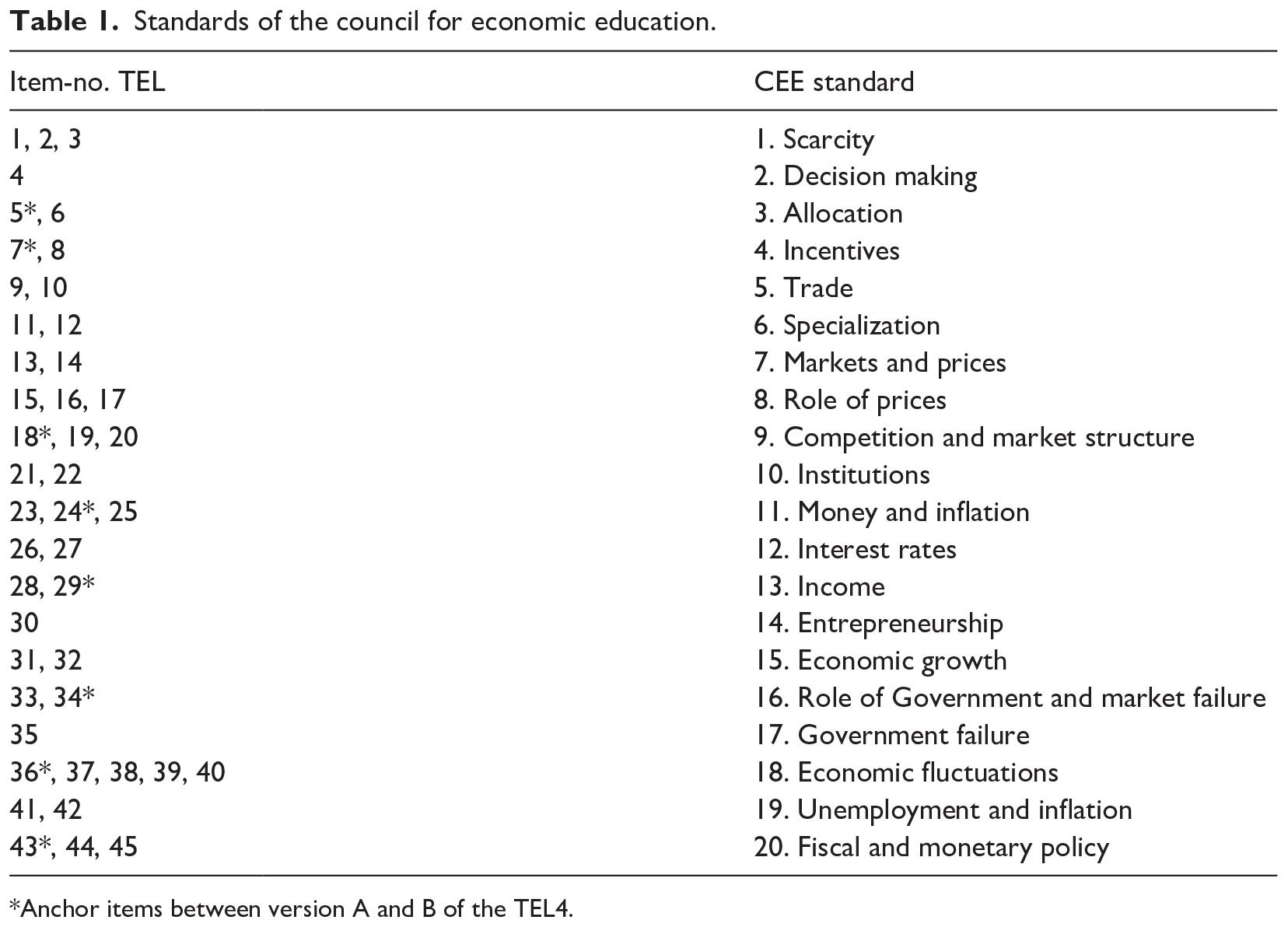
Anchor items between version A and B of the TEL4.
Economic education in Germany and Japan
In the following, the curricular anchoring of economic knowledge in the German and Japanese school systems is considered. A review of the curricular anchoring is important with regard to the empirical analysis and interpretation of the findings as well as their applications.
Economic education in the German school system
The German education system is fundamentally the responsibility of the 16 federal states, which exchange information on this subject through the Conference of Ministers of Education and Cultural Affairs (KMK) in a coordinating dialog. The school system can be divided into a general education sector and a vocational training sector (KMK, 2017). In the general education sector, not only the various types of school but also the individual federal states differ greatly in terms of the proportion of economic content. Due to this discrepancy, the introduction of a uniform subject of business and economics in the German school system is always under discussion. However, this has not yet been implemented throughout Germany. Only a few federal states, such as the federal state of Baden-Württemberg in 2016, have made the school subject of business and economics compulsory for all students in general education (Oberrauch and Kaiser, 2019). The KMK advocates for a continuous expansion of economic education in the general school sector. According to the KMK (2008), economic education is an indispensable component of general education (p. 7). Although the subject of economics is firmly anchored in the curriculum for some students, it is not always a part of the curriculum. The depth of the economic content, however, ultimately depends on the respective school type 5 and the specifications of the individual federal states. If economic content is taught, common topics in the upper secondary level (i.e. in upper secondary school) are for example “Social Market Economy,” “Broad Economic Guidelines,” or “Economy and Ecology” (KMK, 2008: 9).
In contrast to the general education sector, the subject of economics is an integral part of vocational training. Firstly, the vocational training field serves to consolidate general education. Secondly, it focuses on vocationally relevant knowledge that is intended to optimally prepare students for a later career entry as a qualified skilled worker (KMK, 2017: 122). On the one hand, these are occupations that require formal vocational training that can only be pursued by attending school. Training programmes include both the learning of theoretical concepts of business administration and economics as well as constant references to practice. On the other hand, vocational school enables the acquisition of a university entrance qualification after successfully completing the so-called 3-year vocational upper secondary school (KMK, 2017: 122). Students at vocational upper secondary schools attend a vocational subject in addition to the general education subjects. The students of the business and economics department take business administration in combination with accounting and economics as their profile subjects. Again, depending on the federal state, differences in the curricular anchoring of economic education are to be expected. Business administration studies deals with business processes, while economics deals with economic issues and economic connections (in the sense of a micro- and macro-economic perspective). Although the framework curricula and thus the individual subject focuses differ between the federal states, one of the two subjects is nevertheless obligatory as an advanced course in grades 12 and 13. Thus, economic education is firmly anchored in the schooling of these students. Looking at current studies, it is apparent that almost 40% of those beginning students of business and economics have already taken economics as a subject at school and that about 15% of them have respectively already completed vocational training (Happ et al., 2016: 50).
In summary, it can be said for Germany that the curricular anchoring of economic content in both general education and vocational education is subject to strong differences between the individual federal states. It can therefore be assumed that the range of economic knowledge among German beginning university students is quite broad, depending on the courses chosen and the federal state in which they went to school. It is therefore to be expected that there is a strong diversity in economic knowledge between German beginning university students (Happ et al., 2018).
Economic education in the Japanese school system
Unlike the German education system, the organization and structures of the Japanese education system are the responsibility of the National Ministry of Education, Culture, Sports, Science and Technology (MEXT). Originally, the education system is based on the “6-3-3-4” principle: 6 years of primary school, 3 years of secondary school, 3 years of high school, 4 years of university. Over the years, various educational paths have been established after middle and high school. Despite the distinction between a general upper secondary school and a vocational upper secondary school, the Japanese educational system clearly focuses on general education (Hiromitsu, 1994: 192). The hierarchical structure of the higher education system and evaluation methods for admission in which paper pencil tests are still common could impact beginning students’ knowledge level. Recently, more than half of high school leavers (53.7% in 2019) enrolled in higher education, and the proportion of female students for all undergraduates was 45.4% in 2019 (MEXT, 2020). Business and economics is a popular major as the proportion of undergraduate students majoring in these fields is 17.6% for all undergraduates in 2019 (MEXT, w/o y; MEXT, 2020).
Curricular analyses show that only a limited consideration of economic topics and concepts in the classroom is possible. In high school, students attend either “Contemporary Society” or “Politics and Economics.” In “Contemporary Society” economic concepts are treated rather superficially (Ellington and Uozumi, 1994: 172). Topics in this subject include current economic phenomena, characteristics of the Japanese economy, and economic development and welfare. In contrast, students in “Politics and Economics” examine economic topics in a systematic and theoretically detailed manner. In addition to the topics in the previously mentioned economics subject, the students also deal with economic growth and international relations or current economic topics and changes in Japan. There are several concerns related to economics education at high school including teachers’ characteristics and qualities. The teachers show little readiness for economic education at tertiary education due to less popularity of “Politics and Economics” as entrance examination subject for university (Kamaga, 2013). The situation results in students having little interest and understanding of these subjects at high school.
In summary, there are currently still deficits in the curricular anchoring of economic content in Germany and Japan. It is therefore not surprising that the general state of research on Germany and Japan shows that young adults still have deficits in economic knowledge (see Förster and Happ, 2019; Yamaoka et al., 2010). Consequently, there is a growing demand in both countries for a stronger anchoring of the subject of business and economics.
State of research on the gender gap
The following chapter provides an overview of the current state of research on the connection between gender and economic knowledge. The analysis of the current state of research can provide an overview of the situation and is used to derive the hypotheses.
The connection between gender and economic knowledge in Germany
Various German performance tests show that women achieve lower results in tests on economic knowledge than men (see Brandlmaier et al., 2006; Brückner et al., 2015; Förster and Happ, 2019; Lüdecke-Plümer and Sczesny, 1998). This state of research in Germany can also be supported by international studies from other countries (for Australia, USA, UK see Davies et al., 2005; for USA see Walstad et al., 2013). The studies considered focus both on high school students and students from the higher education sector. For both groups (high school and university students) the gender gap has been determined in favor of male test takers (see Asarta et al., 2014; Förster et al., 2015; Walstad et al., 2013). On the basis of this state of research it can be assumed that there are differences between male and female test takers in the sum score in the economic knowledge test in Germany. The following hypothesis can therefore be formulated:
H1. In Germany, male beginning university students perform better in economic knowledge tests than female beginning university students.
The reasons for these differences can be explained in various ways: Some studies refer to the questionnaire format as an explanation for the greater knowledge of male students compared to female students. Studies have found that female students tend to perform worse than male test takers on multiple-choice items (see Ferber et al., 1983; Lumsden and Scott, 1987). Male test takers in Germany also show a stronger interest in economic topics (Brandlmaier et al., 2006: 170). Accordingly, it is possible that this increased interest is responsible for a greater acquisition of economic knowledge (Förster and Happ, 2019). Lüdecke-Plümer and Sczesny (1998) found a further explanation in existing stereotypes. Economics is characterized as a male domain (p. 16) (Mae, 2000: 260). Further studies showed that women are not self-confident in their economics knowledge (Arnold and Rowaan, 2014) and therefore expect a lower performance even before the test is carried out (Ballard and Johnson, 2005: 116). Male students, on the other hand, answer the items in the test with significantly higher self-confidence, which in turn can increase the discrepancy between the two genders (Davies et al., 2005: 34). This is just a selection of possible explanations for the gender gap that are currently being discussed in Germany and the US.
Economic knowledge can be divided into different principles. So far, there is no study available for Germany that compares the economic knowledge between male and female test takers on the basis of the 20 core standards formulated by the CEE (2010). From a didactic point of view, it would be interesting to know whether the gender gap exists across all core standards in favor of male students or whether there are also core standards where both genders have an advantage. From this perspective, the comparison of the sum score can be characterized as rather imprecise, since possible advantages of female students in some subscores of the standards are not explicitly stated in the sum score. Due to the current state of research on the overall score in economics knowledge, this paper also assumes an advantage for male subjects in the 20 core standards of the CEE (2010). Whether this is the case in all core standards is still unclear. Therefore, the following research question (RQ) is formulated:
RQ1. Do male test takers in Germany perform better than female test takers in all 20 core standards on economic knowledge?
The connection between gender and economic knowledge in Japan
Different results are seen in Japan. Research studies from the higher education sector that compare the economic knowledge of test takers from Germany and Japan show that the difference in economic knowledge between male and female test takers is significantly smaller in Japan than in Germany (see Brückner et al., 2015: 513; Zlatkin-Troitschanskaia et al., 2016: 795–796). Further studies on economic knowledge in higher education show that women and men achieve similar results (see Asano and Yamaoka, 2015: 421; Yamaoka et al., 2007). Related to economic knowledge, some studies reported gender differences in financial literacy (see Kadoya and Khan, 2019; Okamoto and Komamura, 2019) while some did not (Yoshino et al., 2017). At the tertiary education level, the financial literacy of female students is significantly lower than that of male colleagues but test takers are not necessarily business or economics majors (Asai, 2016). Thus, the gender differences in financial knowledge are not apparent in related majors. The current state of research on gender-specific differences in economic knowledge (sum score) for Japan therefore supports the following hypothesis:
H2. No differences can be identified in the economic knowledge between male and female Japanese beginning university students.
To date, no study exists that compares the economic knowledge between male and female test participants on the basis of the 20 core standards formulated by the CEE (2010) for Japan. It is conceivable that although the overall sum score does not show any significant differences between male and female test takers in Japan, this may not apply to all 20 core standards. Thus, advantages achieved by one gender in certain standards could be compensated by disadvantages in other standards. These findings are important for teaching as instructors could create more targeted learning opportunities if differences existed between the two genders in specific standards. For this purpose, the following research question is formulated:
RQ2. Are there core standards for Japan where differences between male and female test takers can be identified?
After analyzing these hypothesis and research questions developed by each country, we will discuss the results by comparing Germany and Japan and the implications for economic education in both countries.
Test instrument and sample
Test of economic literacy
To assess economic knowledge, the fourth and thus most recent version of the Test of Economic Literacy (TEL4; Walstad et al., 2013) is used in this study. The TEL4 is updated by the CEE at regular intervals to reflect developments in economic content and teaching. For instance, changes due to the financial crisis in 2008 made it necessary to update the contents of the TEL. After the “Voluntary National Content Standards in Economics,” that is, the curricular fundamentals of the TEL4, were updated by the CEE in 2010, the corresponding changes were also made to the test.
The TEL4 assesses the fundamental economic knowledge of young adults and application thereof (Walstad et al., 2013). The test has a broad field of applications, ranging from various forms of didactic use in teaching and learning to teaching-learning research and international comparative studies (Walstad et al., 2013), which makes the TEL4 suitable for the present study. Possible interpretations of TEL4 results are discussed in its manual, which meets the requirements of the internationally widely used standards for educational testing (AERA et al., 2014). The test has been validated and standardized for the United States, indicating that the TEL4 allows a reliable and valid assessment of the economic knowledge and understanding of students in their final phase of high school. There are two parallel versions (A & B) of the TEL4, each with 45 items in single-choice format. The two versions are linked to one another by means of 10 (identical) anchor items. The testing time is 40 minutes. Table 1 from Chapter 2.1 describes the structure of the TEL4 and which items of the TEL4 cover the respective standards of the CEE.
For the present study, and to make the TEL4 suitable for use in Germany and Japan, an extensive translation and adaptation process was conducted in both countries in accordance with current best practices for the linguistic adaptation of tests (Arffman, 2013). While the conventional approach was to translate word for word or sentence for sentence, recent approaches aim to achieve functional equivalence between test versions (Reiß and Vermeer, 2013), that is, linguistic and cultural characteristics of the target language are taken into consideration during the translation process, resulting in an adaptation specifically tailored to the target audience. To ensure functional equivalence, this study is based on the TRAPD model (Translation, Review, Adjudication, Pretesting, and Documentation) (Mason et al., 2007). The Japanese and German versions of the TEL4 were initially created by professional translators in the respective national languages. These test versions were discussed with the developers of the TEL4 and national experts from economic and translation sciences with reference to the “Test Adaptation Guidelines” (Hambleton, 2001).
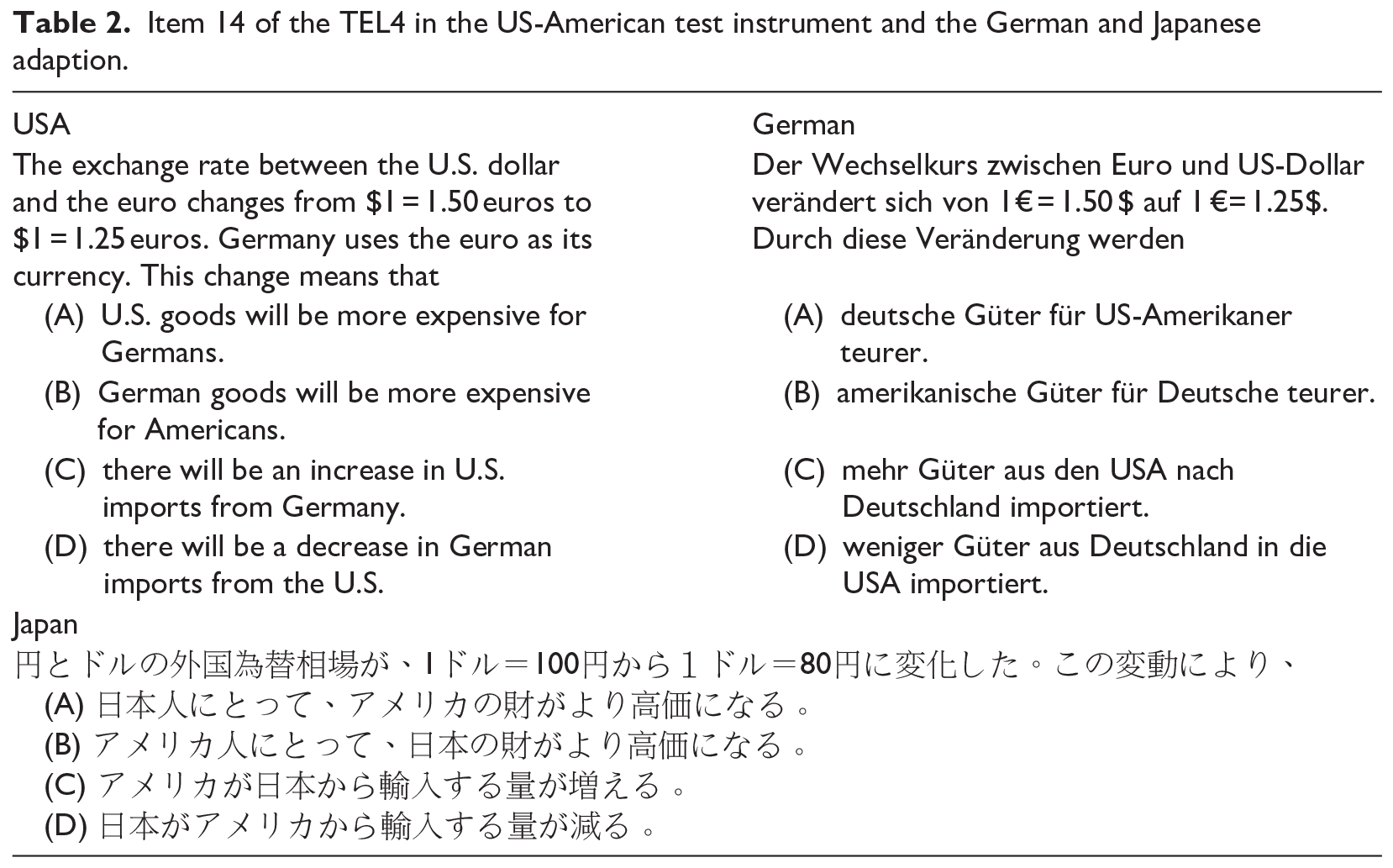
In the test adaptation process, it was taken into consideration that the content of the TEL4 emerged from an Anglo-American-dominated development process. As the economic textbooks are also used outside the United States (OECD, 2013), the economic core content is considered to be internationally established. Nevertheless, some content adjustments were necessary in the respective countries and were documented thoroughly. Table 2 shows, for example, the country-specific adaptations of item 14 from the TEL4 version A. Based on several feedback rounds with experts, all items of the TEL4 were adapted linguistically and culturally for the German and Japanese context, and the adapted versions for each country also allowed for international comparisons.
Item 14 of the TEL4 in the US-American test instrument and the German and Japanese adaption.
Sample
The surveys in Germany took place during the summer semester 2014 (Happ et al., 2016). The survey in Japan took place in April 2019. The 5-year period between the two survey dates is a challenge. Curricular validity of country-specific versions of the TEL was tested in 2014 in Germany and 2019 in Japan, respectively. In addition, the aim of the article is to examine gender differences in economic knowledge. The paper does not aim to compare the level of knowledge between Germany and Japan. For this reason, gender differences are not expected to change fundamentally within 5 years, so the analyses in this article should not be biased by the 5-year difference.
In Germany, universities as well as universities of applied sciences were assessed. However, a comparison of the higher education system between Japan and Germany shows that there are no universities of applied sciences in Japan. Therefore, the German sample was limited to test takers from universities, so that beginning students from four universities in Germany are included in the analyses. For Germany, a total sample of 901 students was assessed. In Japan, the survey was conducted at a university located in Tokyo. 6 There were 571 students, of which 454 were male and 117 female. In Germany, with 55.8% male and 44.2% female students, the gender ratio in the sample is slightly more balanced than in Japan. 7 In Japan, the ratio was about 79.5% male and 20.5% female 8 (for an interpretation of this relationship see Chapter 5). Methodologically, descriptive analyses on the scores of students in both countries are reported first. Table 3 shows the average number of points achieved by the test takers from Germany and Japan. First, the sum score for all test takers from Germany (N = 901) and Japan (N = 571) was calculated, because both versions of the TEL4 were constructed as parallel versions and therefore both versions should have the same degree of difficulty. However, the US-American test developers already point out that the two parallel versions in the USA do not have the same level of difficulty (Walstad et al., 2013). For this reason, Table 3 also shows the scores and standard deviations separately for the two versions A and B.
Score and standard deviation in the two countries.

As Table 3 shows, the solving frequencies between versions A and B differ between Germany and Japan. Version A is easier for Japanese beginning students than version B. In contrast, version B is easier for German test takers than version A. Accordingly, from the perspective of this descriptive results, it is decided for the following models that versions A and B will be evaluated separately for both countries.
In order to approach the data descriptively in a first step, histograms are examined in the two countries. To do this, we first look at German students and generate one histogram each for male and female students. Versions A and B are also analyzed separately. Figures 1 and 2 show the histograms of male and female students from Germany. German male test takers show higher scores in both version A and version B. The mean values of the test scores of the male and female students show a difference of about five points in both test versions (male mean score Test A = 30.56; female mean score Test A = 26.60; male mean score Test B = 32.29; female mean score Test B = 26.12).
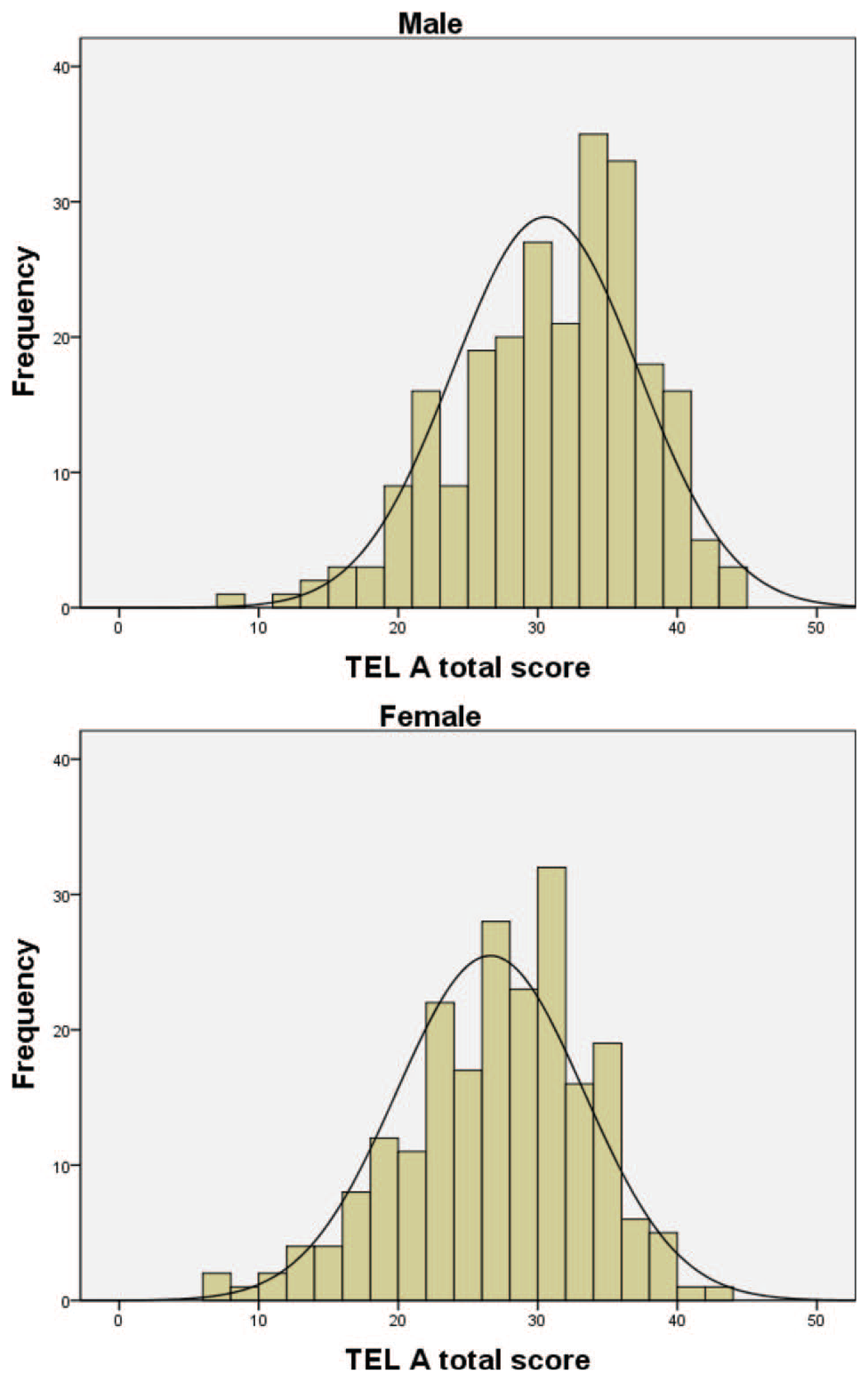
Histograms for the German TEL A score male and female.
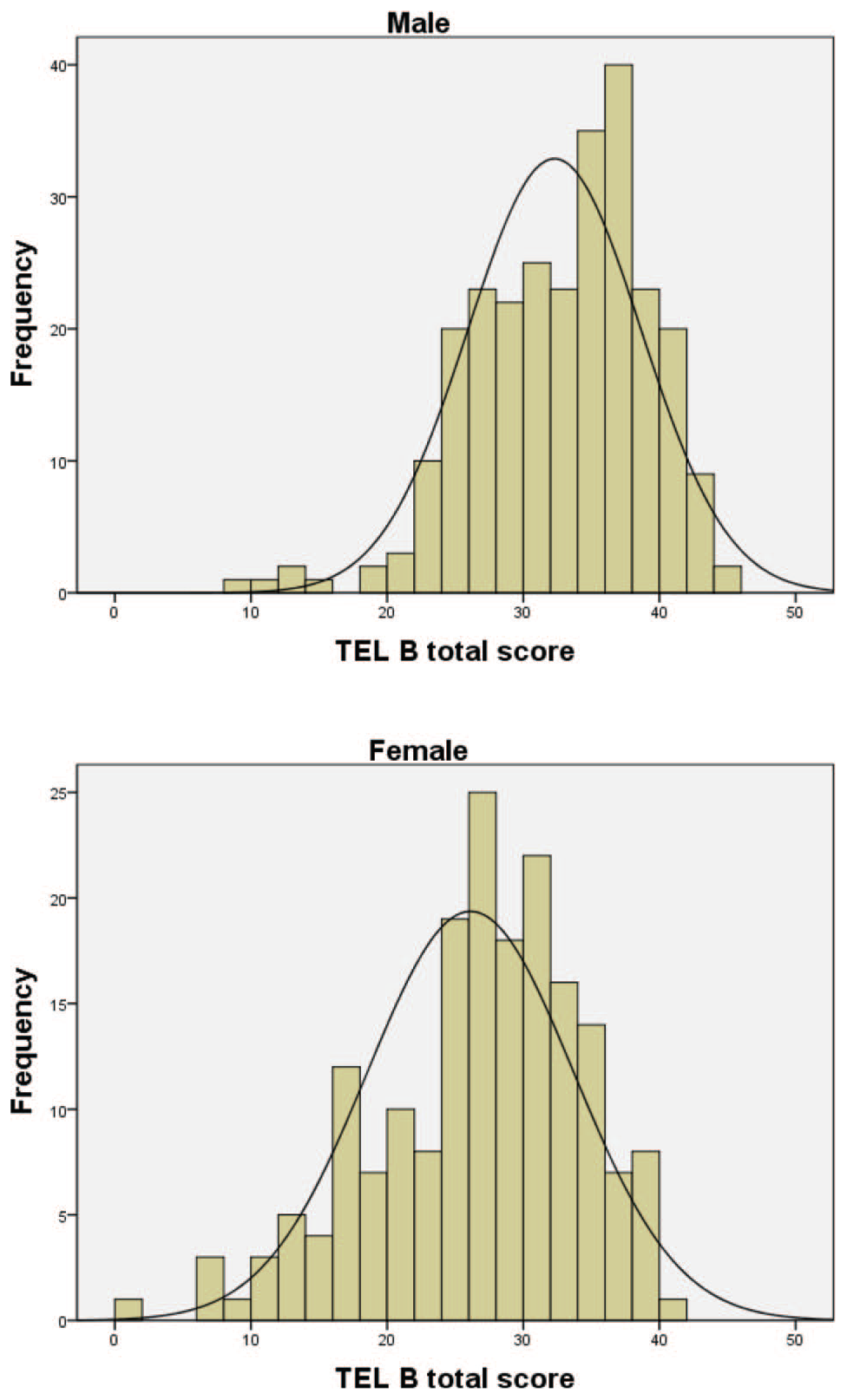
Histograms for the German TEL B score male and female.
In contrast, Japanese female and male test takers achieve similar scores in both test versions (see Figures 3 and 4). The mean values of the test scores differ by less than one point. In test version A, female test takers score higher whereas in test version B, male test takers show a higher score (male mean score Test A = 34.28; female mean score Test A = 34.42; male mean score Test B = 33.94; female mean score Test B = 33.29). So far, these are descriptive findings that are important for the researcher in order to become familiar with the data as a first step. Further inductive empirical analyses will take place in the following chapter.
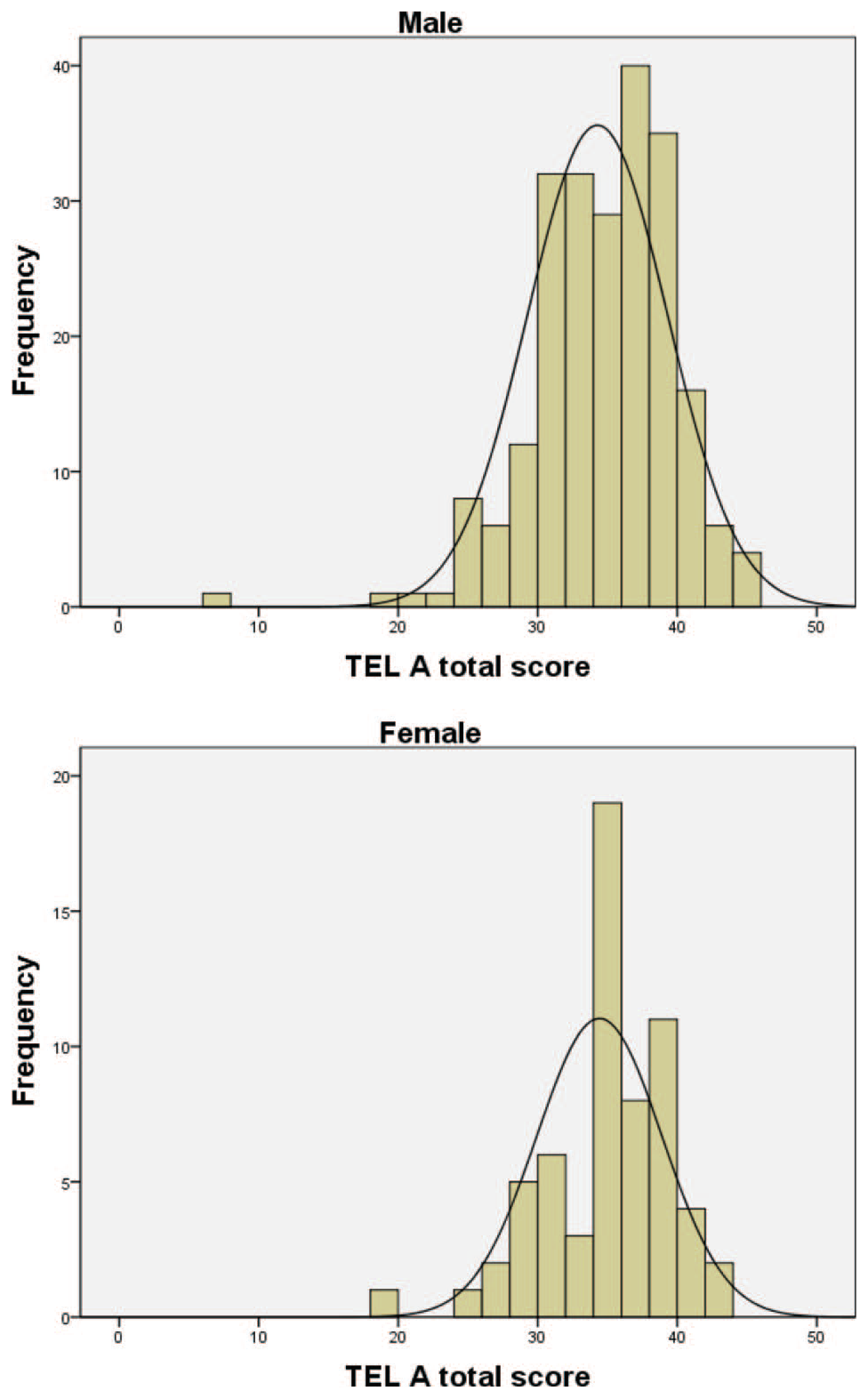
Histograms for the Japanese TEL A score male and female.
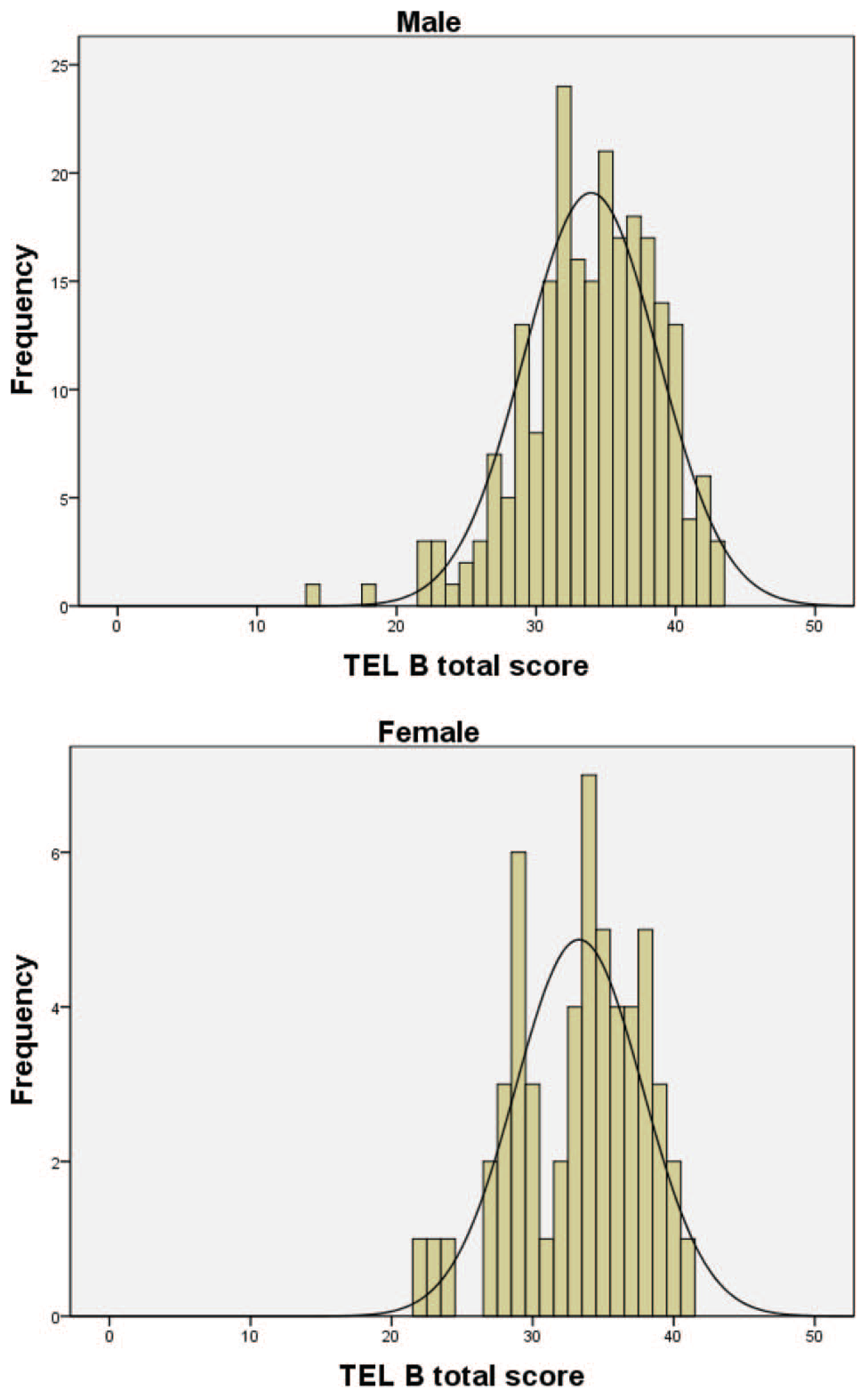
Histograms for the Japanese TEL B score male and female.
Analyses and results
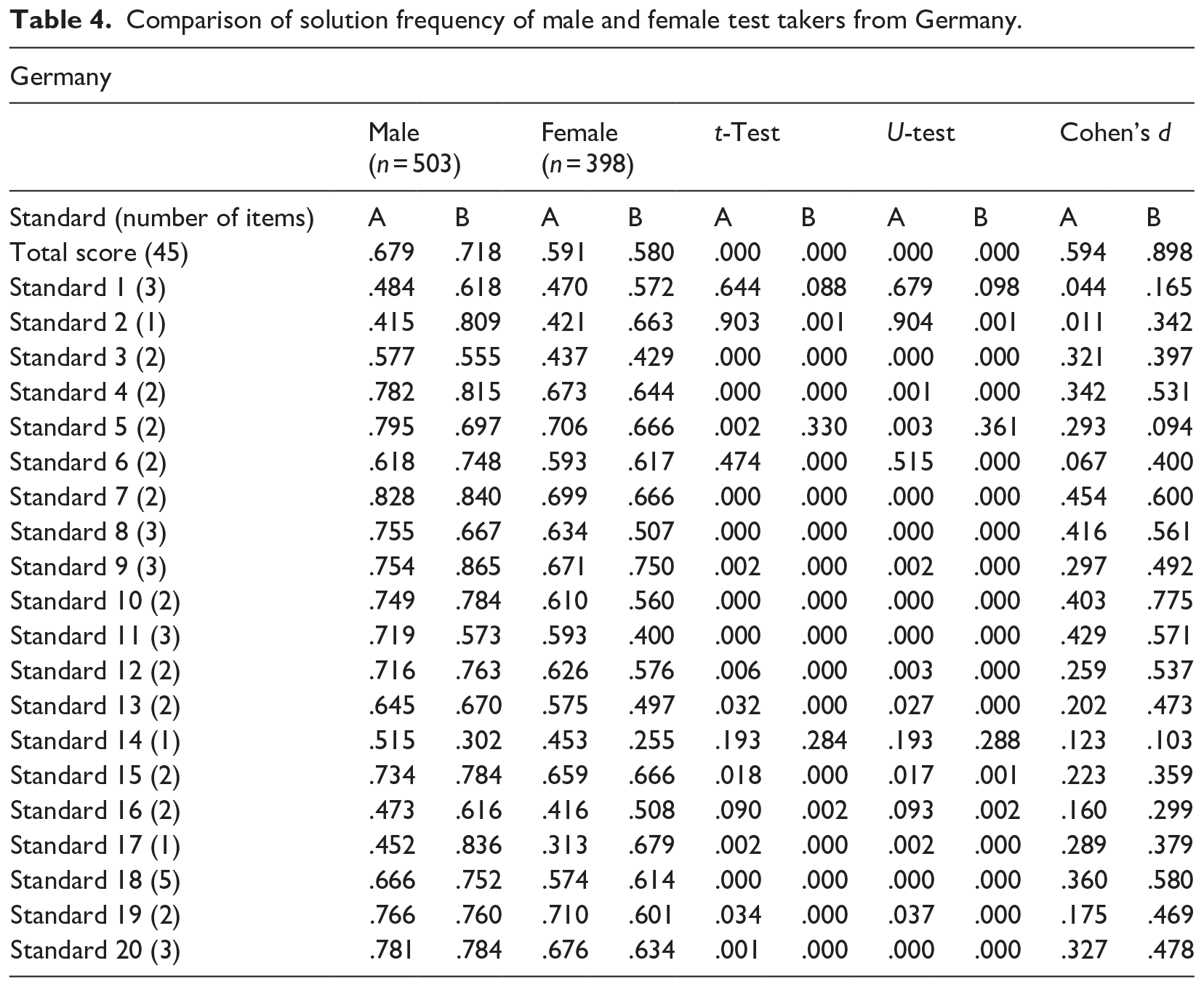
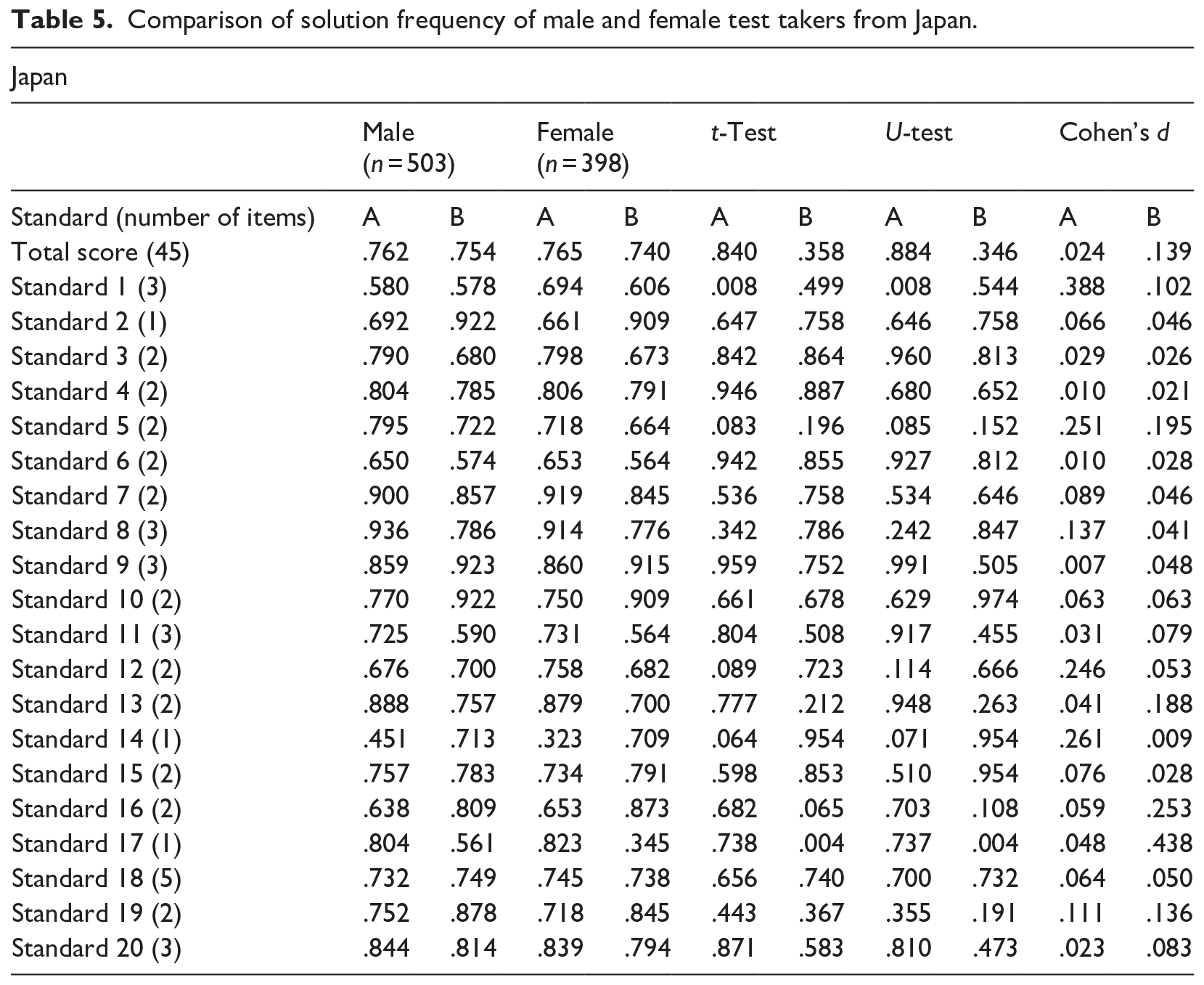
Methodologically, the article aims at mean comparisons between male and female test persons in Germany and Japan. Therefore, it must first be considered which analysis method is appropriate. Testing these preconditions is important in order to decide on the appropriate inductive method that allows for mean comparisons between male and female participants in Germany and in Japan. To evaluate whether there is a significant difference between the genders of each country, a two-sample Student’s t-test (t-test; Brown, 1967) or a Mann–Whitney-U-test, also known as Wilcoxon rank sum test (U-test; Sawilowsky, 2005), can be used. For a t-test, certain preconditions have to be met. Preconditions are in general that the dependent variable is metric, that both samples have the same variance and that they are normally distributed. When variances are different, the U-test can be used instead of the Student’s t-test. Therefore, first of all, the standards have to be tested for variance differences between the two gender groups. With a 5% significance level, 11 of the 20 standards for Germany (2, 4, 7, 8, 11, 13, 14, 15, 17, 19, 20) showed unequal variances and two of the standards for Japan (13, 17) showed unequal variances. For these standards, the U-test shows more robust results. For the other standards with equal variances, the Student’s t-test can also be used. It has to be mentioned that the results of both analyses (t-test or the more restrictive U-test) do not differ greatly so that we can report the results of both tests and both countries in Tables 4 and 5.
Comparison of solution frequency of male and female test takers from Germany.
Comparison of solution frequency of male and female test takers from Japan.
In Germany, male students are clearly ahead of female students in the sum score (45 items) of TEL4. The solution frequency of male students in version A is 67.9% and 71.8% in version B. In contrast, female students are clearly behind with 59.1% in version A and 58.0% in version B (Table 4). Since the sample sizes of male and female test persons differ in Germany and in Japan, the attention to solution frequency may be biased. Therefore, we looked for a statistical measure that can compare mean differences between two groups in a standardized way. Here, the effect size Cohen’s d is appropriate for our study. Using the effect size according to Cohen’s d, this difference is classified as a medium effect in version A (d = 0.594) and a strong effect (d = 0.898) in version B (H1). The difference in the sum score between male and female students is significant based on both the t-test and the U-test. If the 5% significance level is used, male students are significantly ahead of female students in 15 of the 20 standards in version A of the TEL4 in Germany. Only in five standards (1, 2, 6, 14, 16) are there no significant differences between female and male students in Germany in version A. In version B of the TEL4 in Germany, male students are significantly ahead of female students in 17 standards. Only in the standards 1, 5, and 14 are there no significant differences between male and female students in Germany. In version A, the effect size Cohen’s d in 14 standards predicts a small effect. In version B, the effect size Cohen’s d predicts a low effect for 10 standards and a medium effect for seven standards (d > 0.5). According to this, the vast majority of the standards in version A (15 standards) and B (17 standards) show significant advantages for male students (RQ1). The difference in favor of male students is more pronounced in Germany in version B than in version A.
In Japan, male and female students show almost exactly the same solution frequencies in the sum score in version A and version B of the TEL4. Male students score 76.2% in version A and 75.4% in version B. Female students have almost the same scores of 76.5% in version A and 74.0% in version B. It is therefore in line with expectations that Cohen’s d shows no significant effect between male and female students in version A (d = 0.024) and version B (d = 0.139) (H2). However, neither the t-test nor the U-test for versions A and B are significant (Table 5). Only in Standard 1 version A are female students (69.4%) significantly ahead of male students with a small effect (d = 0.388). In all other 19 standards of version A is there no significant difference between female and male students. In version B, male students (56.1%) are significantly ahead of female students (34.5%) with a small effect (d = 0.438). In all other 19 standards of version B are there no significant differences between the sexes in Japan. According to this, no significant differences between male and female students in 38 of the 40 standards in the TEL4 in Japan for versions A and B (RQ2) can be found.
Limitations and implications for economic education in both countries
Limitations
The findings in this article must be considered with some limitations of the study in mind. In Germany, only four universities are included in the analyses. In Japan, the analyses in this paper are based on only one university. Therefore, no representative sample is available for both countries. A further limitation is that apart from gender, no other comparable personal characteristics of students in either country were assessed. Even though gender is one of the characteristics of the students, which is controversially discussed in economics education (Asarta et al., 2014), a number of other personal characteristics of the students should be of importance for differences in economics knowledge. For example, the students’ interest in economic topics or the socio-economic background of the students’ parents are only two characteristics that cannot be integrated into the analyses in this article, but which are repeatedly the focus of discussion in economics education (Förster and Happ, 2019).
In Germany and Japan, the use of TEL4 at universities can be characterized as low-stake testing (Wise, 2009). For the test takers, a negative test performance has no negative consequences. In contrast, an admission test to a university, for example, is a high-stake test, in which a poor result does not enable access to the institution. In low-stake tests, the test motivation of the test takers has an effect on the performance of the test takers. Therefore, bias can arise from these test conditions. For Germany and Japan, it is currently not possible to combine the test results from the TEL4 with the performance in the course of study (e.g. after the first semester). Therefore, no findings on the prognostic validity (AERA et al., 2014) of the TEL4 for predicting the success of the study in both countries are currently possible. Such findings are particularly exciting for the test takers in this paper, as they would make it possible to consider whether gender differences also exist in student achievement, particularly in Germany. In Germany, for example, the findings from the TEL4, which show strong gender-specific differences in the majority of CEE standards, could be compared with the students’ academic performance and it could be examined whether these gender differences can also be found in the grades during their studies.
German universities offer “Wirtschaftswissenschaften,” which means business and economics while Japanese universities do not have this study track. In Japan, some universities and colleges have department of home economics attended mostly by women. According to Kurita (2015), economic education for women began in 1918 as a part of liberal arts education and home economics to manage their household. Several female economists target home economics or labor economics. This slightly differs from the main focus of male colleagues. Therefore, the definition of economics education should be discussed carefully for future larger-scaled comparisons.
Implications for economics education
The findings in this paper show that there are strong gender differences in economic knowledge between male and female students in Germany. Male students perform significantly better than female students (H1). In 32 of the 40 CEE standards (2010) from the TEL4 versions A and B, male students perform significantly better than female students (RQ1). Accordingly, it cannot be assumed that there are certain economic principles that lead to gender-specific differences in economic knowledge in Germany. Gender differences are undesirable from an educational perspective and should be compensated. In Japan, no gender-specific differences in economic knowledge can be found in the sample. This applies both to the sum score (H2) in TEL4 (Version A and B) and to 38 of the 40 standards of TEL4. Significant differences between male and female students can only be found in two of the 40 standards (RQ2).
Two main approaches can currently be identified to explain the findings in Germany. On the one hand, the item format is critically discussed in Germany. There are studies that have shown that female test takers handle a closed multiple-choice format differently than male test takers (see Ferber et al., 1983; Lumsden and Scott, 1987). Especially with low testwiseness in dealing with multiple-choice items, it is assumed that women in Germany show less risk-taking behavior than men. Such studies on gender-specific differences in the multiple-choice item format can also be found for the USA (Davies et al., 2005), whereby the gender gap in the USA is classified as smaller than in Germany. From these findings, first indications of the use of the multiple-choice format can be concluded for Germany. If closed multiple-choice or single-choice items are used in higher education in Germany, it should be ensured that the young adults in this test format demonstrate a certain level of testwiseness. The extent to which the format triggers gender-related inequalities has long been a topic of discussion on closed item formats. In order to prevent this, this format should not only be used in examination situations, but also, for example, for summative use during the course of a school year as individual performance feedback for students. This increases the students’ test knowledge so that everyone is more familiar with this format. This may possibly reduce test effects.
The contrast between the two countries, Germany and Japan, highlighted in this paper is very exciting. In Japan, female and male students in this article score equally as well as in other studies (Asano and Yamaoka, 2015). In Germany, male students perform significantly better than female students. On the other hand, gender ratio is more balanced in Germany, while the Japanese sample contains a much larger proportion of male students. The background of gender differences in quantity is explained by either the admission process or choice of economic majors because the higher education systems in both countries 9 require students to choose their majors before enrolment, which is different from the system in U.S. higher education with lower female ratios in economics majors. There is little reason that female students are denied access to a business and economics study track (Tonin and Wahba, 2014). 10 Therefore, the choice of economics majors at high school or before could be an influencing factor. Previous studies have shown a positive influence of female role models and experience of economic learning (Bertocchi and Bozzano, 2019). In Japan, teachers’ gender is imbalanced in economic subjects at high or junior high schools. National statistics and also survey results show around 13% of female teachers (Asano et al., 2017). This could be related to the current gender imbalance in economics education in higher education. Therefore, economics teacher is not selected by women as a potential career, although teachers are the most popular jobs of the full-time specialized and technical jobs for women in Japan (Kato, 2018). Statistics on the gender ratio of teachers in vocational education in Germany, which includes business and economics as a subject, paint a different picture. At 57.3%, the proportion of female teachers in the vocational education sector in Germany was slightly higher than the proportion of men (Authors’ Group on Educational Reporting, 2020). In order to balance the gender in economics education, Japan can learn carefully from the mechanism in Germany although the higher education system and job market after graduation are quite different between the two countries. If the female sample in this study is a positively selected group of students from Japan, gender-specific differences in economic knowledge may still be possible in other samples. Here, follow-up studies should aim to expand the sample on the broad population of Japan.
Footnotes
Declaration of conflicting interests
The author(s) declared no potential conflicts of interest with respect to the research, authorship, and/or publication of this article.
Funding
The author(s) received no financial support for the research, authorship, and/or publication of this article.
