




Abstract
As part of a large-scale survey of over 4000 undergraduates at British universities, 238 economics students reported on their experiences of studying post-compulsory secondary mathematics qualifications (A-levels) and the preparation they provided for their degrees. Participants were positive about their experience of post-compulsory mathematics and reported that both A-level Mathematics and A-level Further Mathematics were good preparation for undergraduate economics. They were most positive about the preparation that the statistics units had given them, as well as experience with calculus. Areas that students felt could have been advantageous to cover at A-level were optimisation and linear programming. Furthermore, participants who had taken Further Mathematics were very positive, which suggests that admissions tutors might wish to consider recommending it as an A-level for potential economics applicants.
The mathematical demands of undergraduate economics
Undergraduate economics
Economics degrees are becoming increasingly popular, with the number of full-time undergraduate students steadily increasing since 2006 to an all-time high of 29,980 in the 2013–2014 academic year 1 (Higher Education Statistics Agency, 2015), when they constituted 2.5% of the undergraduate student body. At the post-compulsory secondary school level, economics is also becoming increasingly popular. The uptake of the Advanced ‘A’ level Economics (students typically take three or four subjects of their choosing to earn A-level qualifications at age 18 in those subjects) has also increased in recent years (Joint Council for Qualifications, 2016).
A-levels will be described in more detail in the next two sections.
Mathematics in economics
Mathematics requirements for undergraduate courses in the United Kingdom
No UK universities require prospective economics undergraduates to have taken A-level Economics, although a survey in 2012 (Economics Network, 2012) found that most had taken it. Additionally, most economics undergraduates have been found to have taken A-level Mathematics, and the proportion has been increasing over recent years (Economics Network, 2012; Hillman, 2014). This may be in response to the fact that majority of the highest ranked universities require applicants to have taken A-level Mathematics and achieved at least an A grade in it. This suggests that A-level Mathematics is considered by many admissions tutors to be better preparation than A-level Economics for tertiary economics. Furthermore, the uptake of A-level Economics is reasonably small (only 27,575 candidates in 2015, compared to 92,711 Mathematics candidates, according to the Joint Council for Qualifications (2016)), meaning that enforcing it as a prerequisite could damage recruitment to economics degrees.
Economics students at universities in the prestigious Russell Group are more likely to have studied A-level Mathematics than students at other universities. In 2010–2011, 84.1% of all Russell Group university economics students had taken A-level Mathematics, compared to fewer than 40% of students at some other universities (Dawson, 2014). There is, however, a mixture of entry requirements across all universities (see also Advisory Committee on Mathematics Education (ACME), 2011).
The entry requirements for economics degrees vary between good passes in General Certificate of Secondary Education (GCSE – compulsory qualifications taken at age 16) Mathematics to the highest grades in A-level Mathematics. Approximately 39% of single honours economics degree courses require only a C grade at GCSE, with less than 10% requiring at least an A at A-level (Dawson, 2014). Current entry requirements may generally be insufficient and have the potential to mislead prospective students regarding the nature of the university degree. Indeed, many students have expressed concern that they had not been aware that their courses would have so much mathematical content, prior to beginning them (Economics Network, 2002, 2004, 2008).
Furthermore, separate analyses conducted by Dawson (2014) and ACME (2011), which compared the mathematical content of undergraduate economics syllabuses at UK universities and their corresponding entry requirements, found differences in the topics taught according to the school mathematics qualifications required.
Undergraduate economics incorporates a significant amount of mathematics and statistics, regardless of which country the course is in. In a study of the 20 highest ranking universities for economics in Europe and the United States (according to Kalaitzidakis et al., 2003), Monteiro and Lopes (2007) found that more than 75% of them offered courses in mathematics, statistics and econometrics, all of which require a strong mathematical background. Most universities also included game theory in their modules. Dawson (2014) found that mathematics and statistics modules constitute approximately one-quarter of the first year of economics degrees in the United Kingdom, and the number of modules increases with the mathematics entry requirements made of students applying for those degrees.
Additionally, the ‘benchmark statements’ for undergraduate degrees give an indication of the content and standards which must be met by UK universities (Quality Assurance Agency for Higher Education, 2016). The benchmark statement for economics states that graduates should have good numerical skills; understand ‘graphical, mathematical and economic representation of economic ideas and analysis’; and be able to interpret statistical data (Quality Assurance Agency for Higher Education, 2007: 3). This may sound basic, yet Dawson’s (2014) online review found that ‘algebra and differential calculus are fundamental topics in first year mathematical modules and inferential statistics and regression analysis are important topics in first year statistics modules’ (p.15). These are not trivial topics, and certainly are not part of GCSE Mathematics, meaning that students without A-level Mathematics might find first-year topics very challenging.
Impact of mathematical backgrounds on performance
Although a survey of 126 students of a ‘Principles of Economics’ course found no relationship between mathematical background and performance in a US university (Cohn et al., 1998), other empirical research points towards positive correlations between mathematics background and performance, and performance in economics degrees.
Much research in this area has been conducted in the United States, where the structures of university courses and secondary mathematics qualifications are different from their UK counterparts. These studies typically contrast performance in mathematics SATs 2 with performance in introductory economics courses and have found positive relationships between these two factors (Ballard and Johnson, 2004; Hoag and Benedict, 2010; Jensen and Owen, 2001; Swope and Schmitt, 2006). Additionally, a study by Anderson et al. (1994) found that Canadian students’ (N = 6718) high school grades in algebra, calculus, functions and relations correlated with performance in an introductory economics course at the University of Toronto. Similarly, secondary school mathematics grades have been found to correlate with economics performance in studies in the Netherlands (Arnold and Rowaan, 2014), Italy (Cappellari et al., 2012), Australia (Chowdhury and Mallik, 2012) and the Republic of Ireland (Denny, 2014). Additionally, the poor mathematical preparation of new undergraduate economists was attributed to the decline in the number of economics students in Australia in the 1990s (Lewis and Norris, 1997).
In the United Kingdom, A-level Mathematics was found to be an important determinant of performance in undergraduate economics (N = 386) at Royal Holloway, University of London (Lagerlöf and Seltzer, 2009). Furthermore, a large-scale study of over 35,300 economics students at UK universities between the 1984–1985 and 1992–1993 academic years found that A-level Mathematics had a positive impact on degree outcome (Naylor and Smith, 2004), as it did in performance at a Scottish university in the 1980s (Lumsden and Scott, 1987). However, these studies were conducted long before considerable reforms were made to A-level Mathematics in 2000.
A-level Mathematics not only benefits undergraduate performance but can also give more accurate expectations about the reality of an economics degree. The Economics Network’s annual surveys have found that students who did not take A-level Mathematics are less likely to find that their degree meets their expectations. Specifically, when asked to indicate their relative agreement with the statement ‘Studying this degree course has turned out to be much as I had expected’, students who had not taken A-level Mathematics were significantly more likely to disagree (Economics Network, 2004, 2006, 2008, 2010, 2012). Of those students who disagreed, the quantity and presence of mathematics were the most commonly stated reasons. Furthermore, the majority of participants in the surveys described mathematics as being the most difficult aspect of their degrees. Students with A-level Mathematics also reported higher satisfaction with their degrees compared to those without (Economics Network, 2006).
Students’ views echo those of lecturers, with lecturer surveys finding that students’ mathematics skills were the first or second most important issue in teaching economics (Economics Network, 2007, 2009, 2011). This pertains not only to the mathematical backgrounds of the students but also to a perception that students are mathematically weak, even when they have met the mathematics entry requirements.
In order to address problems with students’ mathematical ability, many universities offer additional support classes and stream their students according to mathematical background (Dawson, 2014). Economics departments have also been found to undertake ‘diagnostic testing’ (LTSN MathsTEAM, 2003) of new students.
Post-compulsory mathematics in England and Wales
In England and Wales, Advanced ‘A’ levels are qualifications taken by students at the end of upper secondary school, age 18. Students typically study for A-levels in three or four subjects out of a wide range of options (although choice may be restricted by what is available at their school). A-levels are usually studied over 2 years, and examinations are taken at the end of the course. Students may choose to take an Advanced Subsidiary ‘AS’ level qualification by studying only the first half of the A-level course and taking examinations at the end of the first year. There are no compulsory A-level subjects, although A-level Mathematics was the most popular in 2016 (Joint Council for Qualifications, 2016). The United Kingdom is an outlier – most other countries in the developed world make it compulsory for students to continue with mathematics until they leave secondary school (Hodgen et al., 2010).
Passes in A-levels are usually required of students from England and Wales in order for them to be conditionally offered places to study at university. The grades and subjects required depend on the degree course and the university to which the application is made. The specialisation of students at A-level is continued as they progress to higher education, where most students apply to study one particular subject throughout their degree. In contrast, in countries such as the United States, students apply to universities and then choose their degree specialism(s) after at least their first year of more general study.
A-level Mathematics and Further Mathematics
There are two mathematics A-levels available: Mathematics and Further Mathematics. Mathematics was the most popular A-level subject in 2016 (Joint Council for Qualifications, 2016). Further Mathematics, an additional qualification to Mathematics, is one of the fastest growing A-level subjects, although it has a relatively low uptake in comparison. At present, A-level Mathematics comprises four compulsory ‘Core Pure Mathematics’ units of equal weighting, in addition to two applied mathematics units. These applied units may be chosen from one of three different strands: (1) Mechanics; (2) Statistics; and (3) Decision Mathematics. Within each of these strands are between two and five sequential units, depending on the strand and awarding body. Students are able to take either two units from the same strand (e.g. Mechanics 1 and Mechanics 2) or one from two different strands (e.g. Statistics 1 and Decision Mathematics 1) as part of A-level Mathematics.
A-level Further Mathematics comprises two compulsory ‘Further Pure Mathematics’ units, plus four optional units. The optional units can be selected from any of the three applied mathematics strands offered within A-level Mathematics or from an additional two ‘Further Pure Mathematics’ units (excluding those which they have already taken as part of AS- or A-level Mathematics). There are therefore a large number of possible routes through Further Mathematics.
It is not necessarily the case that students’ choice of units is unconstrained. Restrictions on resources and timetabling within schools may mean that students are given a restricted choice, if at all.
Reforms
In England, A-level Mathematics and Further Mathematics are being reformed for first teaching in September 2017. The Office of Qualifications and Examinations Regulation (Ofqual), the regulator of qualifications in England has introduced 100% prescribed content for A-level Mathematics. From September 2017, A-level Mathematics will continue to comprise a mixture of pure and applied mathematics content, with compulsory topics in both statistics and mechanics. The A-level Content Advisory Board recommended the removal of decision mathematics content from A-level Mathematics (ALCAB, 2014), although such content may now be made available as part of Further Mathematics. Further Mathematics will have 50% prescribed content, with a wide range of possibilities for the remaining content not necessarily constricted by the Decision Mathematics/Statistics/Mechanics options of the old A-levels. Although these changes will help to reduce the variability in students’ mathematical backgrounds when entering university, the applied mathematics content that students are able to study will inevitably be reduced.
Research questions
In light of significant changes to post-compulsory mathematics being planned for the future, this study sought to establish the views of current undergraduate economists regarding their mathematical preparation for their degree. The literature which currently exists in this area rarely focuses on the views of students themselves, let alone specifically the views of those who have taken A-levels in Mathematics and/or Further Mathematics. The Higher Education Academy (Dawson, 2014) and Economics Network reports are comprehensive and highly informative; however, there is not a focus on the role of A-level Mathematics and/or Further Mathematics in preparing students for the mathematical demands of undergraduate economics.
This article reports on the responses of economics undergraduates to a questionnaire which was also aimed at students of other mathematically demanding courses. The wider study involved over 4000 undergraduates and 30 lecturers of STEMM (science, technology, engineering, mathematics, medicine) and social science degrees (see Darlington and Bowyer (2016a) for summaries of the overarching project). Findings relating to students of other subjects will be reported elsewhere (e.g. Darlington, 2015; Darlington and Bowyer, 2016b).
The study sought to answer the following research questions of economics undergraduates:
Which optional units in A-level Mathematics and/or Further Mathematics do undergraduates find useful as preparation for economics degrees?
Do students who took A-level Mathematics and/or Further Mathematics believe the qualification(s) useful preparation for their economics degree?
Are there any areas in which A-level Mathematics and/or Further Mathematics could be improved to suit the needs of future economics students?
Did economics students enjoy Further Mathematics?
What motivated economics students to take Further Mathematics?
Method
An online questionnaire was developed by the researchers in conjunction with A-level Mathematics assessment specialists, aimed at undergraduates who had taken a minimum of AS-level Mathematics since 2006, when the qualifications were restructured.
The questionnaire comprised a mixture of multiple choice questions, closed questions and open-ended questions. It surveyed participants on the following:
Mathematical background: their post-compulsory mathematics qualifications, grades and optional units;
Current study and performance: degree course, mathematical entry requirements (if any), year of study, examination performance;
Perceptions of mathematical preparedness: perceived utility of optional units and the A-levels overall;
Experiences of Further Mathematics (where applicable): influence of certain factors in their decision to study it and experiences of it.
After the survey was piloted with three recent graduates of STEMM degrees, background information and links to the survey were emailed to British university departments which offered single honours 3-year undergraduate economics degrees (N = 71). Recipients were asked to forward details of the survey to their students for completion. The Royal Economic Society liaised with the Conference of Heads of University Departments of Economics (CHUDE) to email details of the study to the CHUDE membership, which includes heads of economics departments across British universities.
The questionnaire was open for responses between September and December 2014. Participants were offered the opportunity to be entered into a prize draw for a £100 Amazon voucher or book token after taking part.
Data
The number of responses, N, to each question are given in this section because some participants accidentally missed some questions, and some questions were only applicable to participants who had taken Further Mathematics. Statistical testing was conducted on the data in order to establish whether there were any differences between sub-groups (e.g. between men and women or between students who were required to have taken A-level Mathematics for their degree and those who were not). No significant differences were found.
Sample
A total of 238 economics students completed the questionnaire. This is only a small proportion of the economics student body; however, as the following sections show, the composition of the sample by gender and attainment is reasonably representative of the cohort.
Gender
Although national figures are not available for economics degrees specifically, the proportion of males and females participating in the study was broadly reflective of the proportions who study subjects grouped under ‘Business and Administrative Studies’ (which includes economics). In total, 51.4% of participants studying such courses are female (UCAS via The Guardian, 2012), and 48.9% of participants who responded to this questionnaire were female.
Institution of study
Students from 24 different universities took part, with an average of 9.9 students per university (standard deviation (SD) = 10.8). The vast majority of participants studied in England, with the remaining 1.3% in Scotland and 0.8% in Wales.
Degree programmes
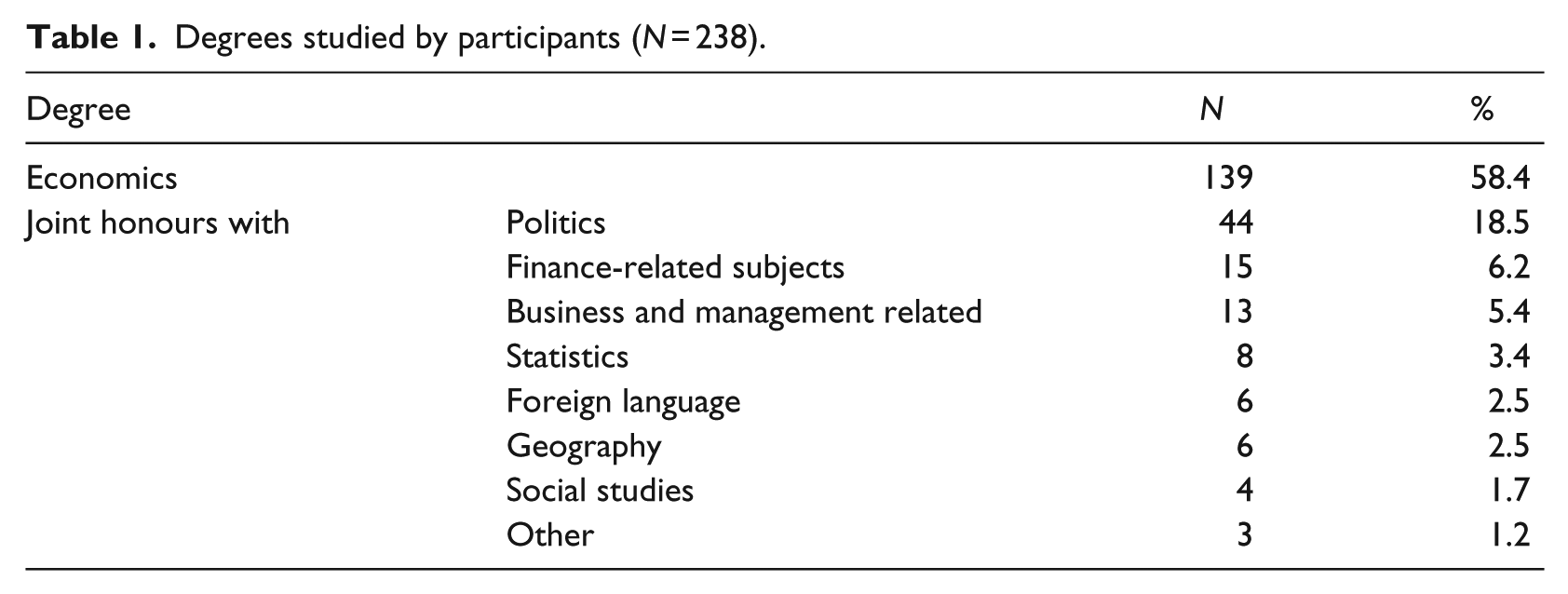
All students were studying for undergraduate bachelor’s degrees, with 23 different specific degree titles being studied among the participants (see Table 1). Most were studying for single honours in economics, although 41.6% were studying for joint honours with subjects ranging from finance to geography.
Degrees studied by participants (N = 238).
Over half of participants were in their second year of study, with 37.6% in their third year and 6.8% in their fourth year.
Participants’ academic performance
A-level results
The majority (57.98%) of participants had taken the single A-level in Mathematics, although a considerable minority had also taken either the AS-level or full A-level in Further Mathematics (see Figure 1).
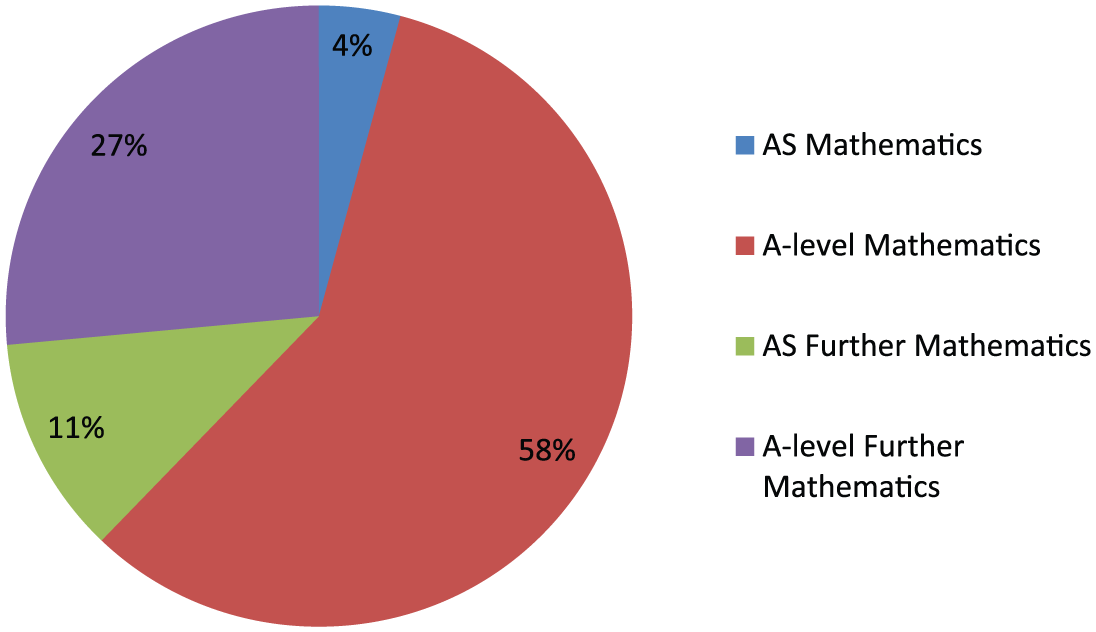
Participants’ A-level Mathematics qualifications (N = 238).
All participants who reported grades for AS-level Mathematics achieved an A. Of those who took the full A-level, nearly three-quarters (73.8%) were awarded an A* or A, meaning that this sample is heavily skewed in favour of those students who achieved the top grades at A-level. For comparison, in 2016 only 38.7% of students who took AS- or A-level Mathematics were awarded an A* or A (Joint Council for Qualifications, 2016).
Additionally, of those who studied Further Mathematics to AS-level only, 80.8% achieved an A grade, 15.4% a B and 3.9% a C. This compares to 53.8% of all AS-level Further Mathematics candidates being awarded an A in 2016 (Joint Council for Qualifications, 2016). In the full A-level, 68.9% of participants achieved an A or A*, compared to 56.2% of all candidates in 2016 (Joint Council for Qualifications, 2016).
Most participants took their A-levels in 2012 or 2013, with a further 0.8% of students taking them in 2009, 1.3% in 2010 and 10.5% in 2011.
A-level Mathematics units
Statistics units were the most commonly studied applied units by participants who had only taken A-level Mathematics, as well as those who had also taken Further Mathematics. It is important to distinguish between these two groups of participants, as those who had taken Further Mathematics had the opportunity to take more applied units, whereas those who only took A-level Mathematics were limited to only two applied units.
Of all applied units, participants more often than not reported that they had studied one unit in a particular strand, suggesting that participants were more likely to have studied a mixture of units than concentrated on one topic area (see Figure 2). Figure 2 shows that it was more common for students to have taken two Statistics units than to have taken two Mechanics units.
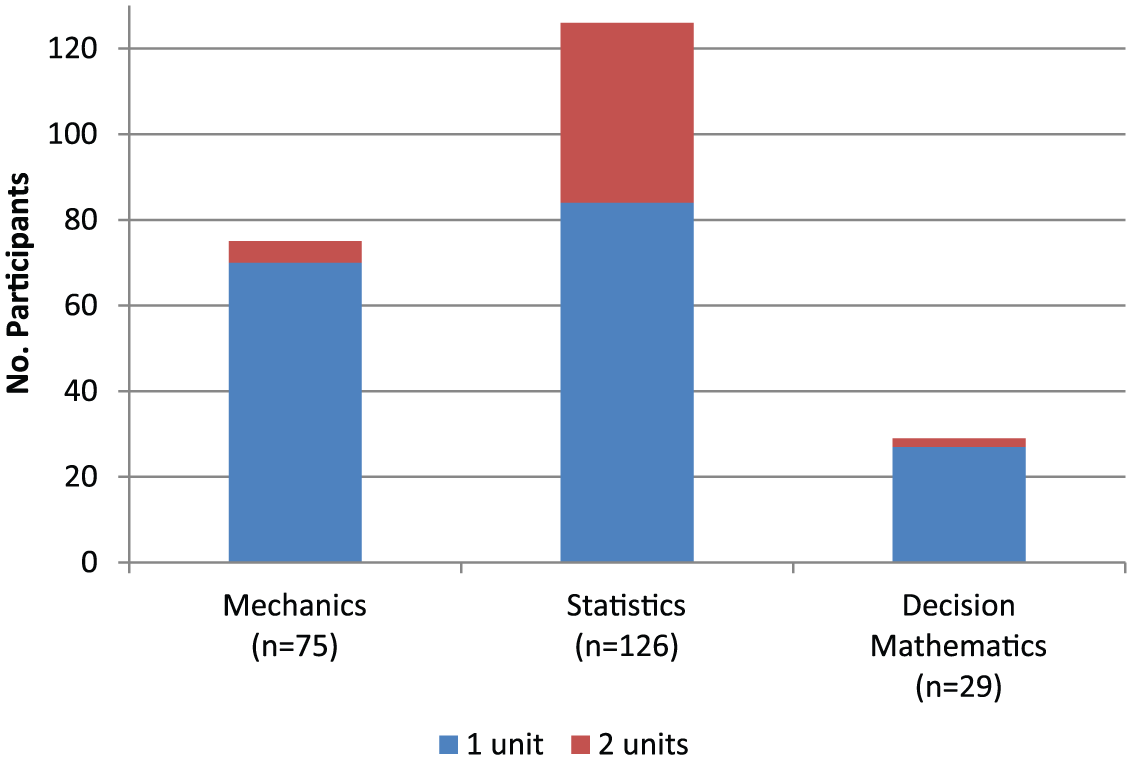
Number of optional units studied by participants who had only taken A-level Mathematics.
University results
The majority of participants had achieved an upper second class result in their previous year’s examinations (see Figure 3), with the spread of examination results being similar to that of all economics graduates’ final degree outcomes in 2015.
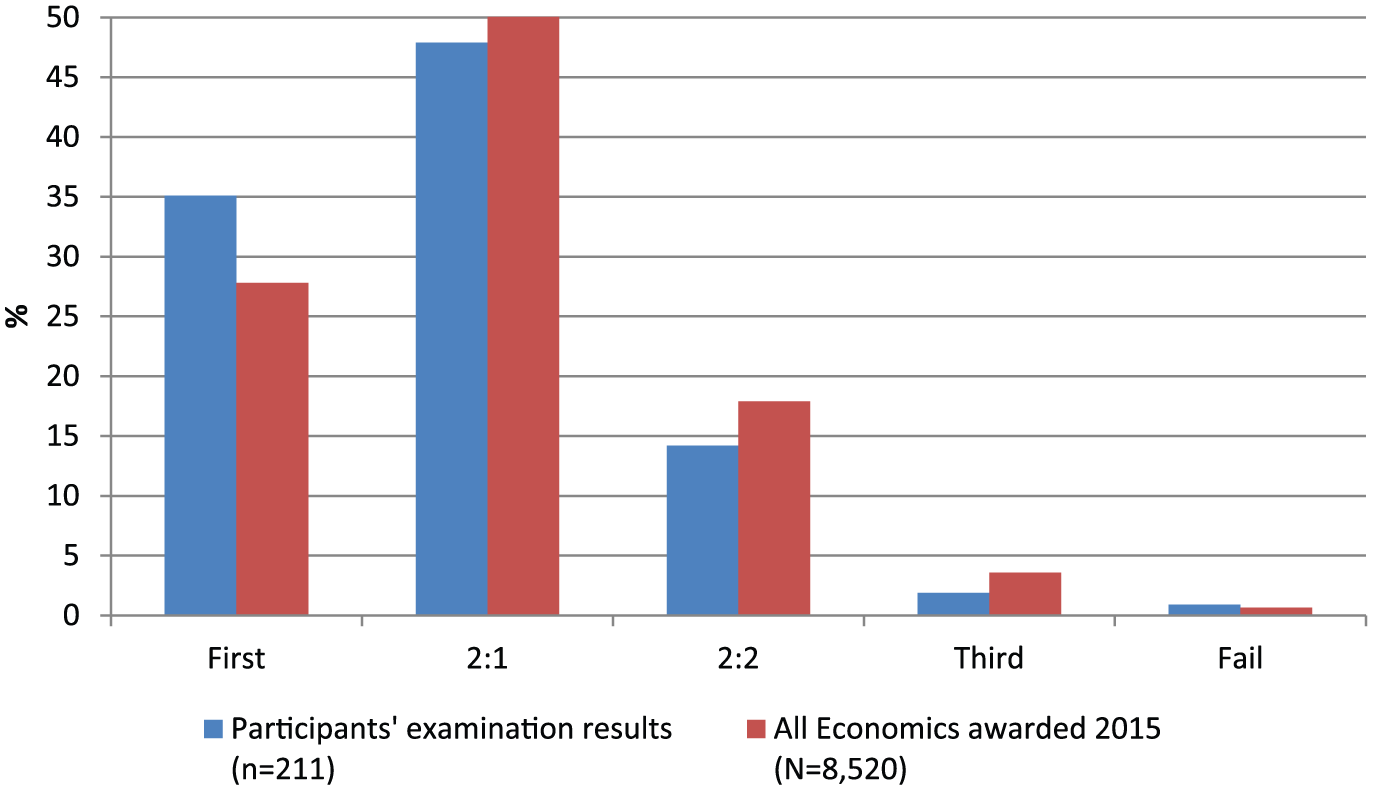
Participants’ previous year’s examination results in economics. 3
However, a greater proportion in the sample were awarded a first (35.1% compared to 24.6%), accounted for by a smaller proportion achieving a lower second class result than all economics graduates (14.2% compared to 20.7%). It should be noted that students’ results in first or scond year examinations may not necessarily reflect their performance in their final examinations.
Experiences of non-compulsory A-level units
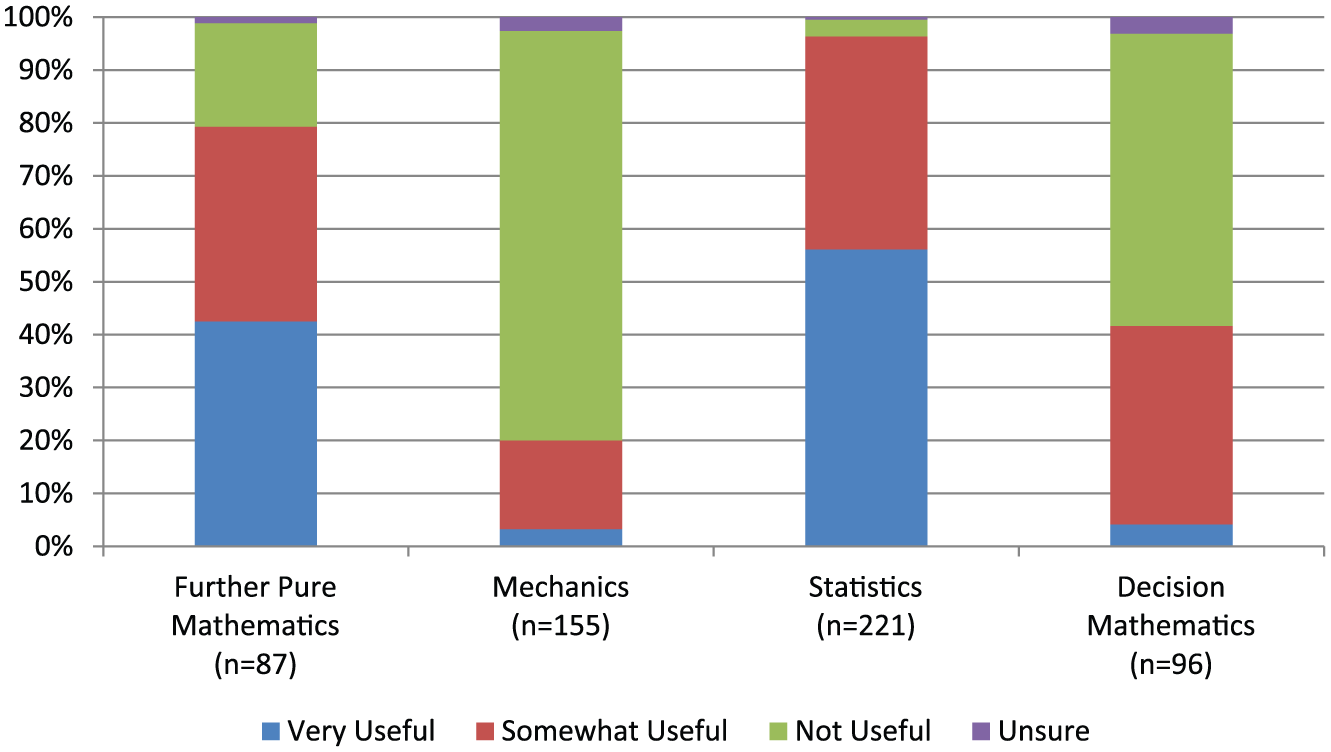
Participants were asked to describe the utility of their optional units from Mathematics and Further Mathematics in terms of whether they believed those units prepared them well for the mathematics elements of their course. The strand which received the most positive responses was Statistics, with 56.11% describing it as ‘very useful’ (see Figure 4).
Participants’ views of the utility of optional units.
Further Pure Mathematics units were also well received, with only 19.54% reporting that they were not useful. Conversely, participants were least enthusiastic about Mechanics, with 77.42% describing this strand as ‘not useful’. This suggests that the two areas which prospective economics undergraduates would find the most useful to study in depth are statistics and pure mathematics.
Motivations for studying Further Mathematics
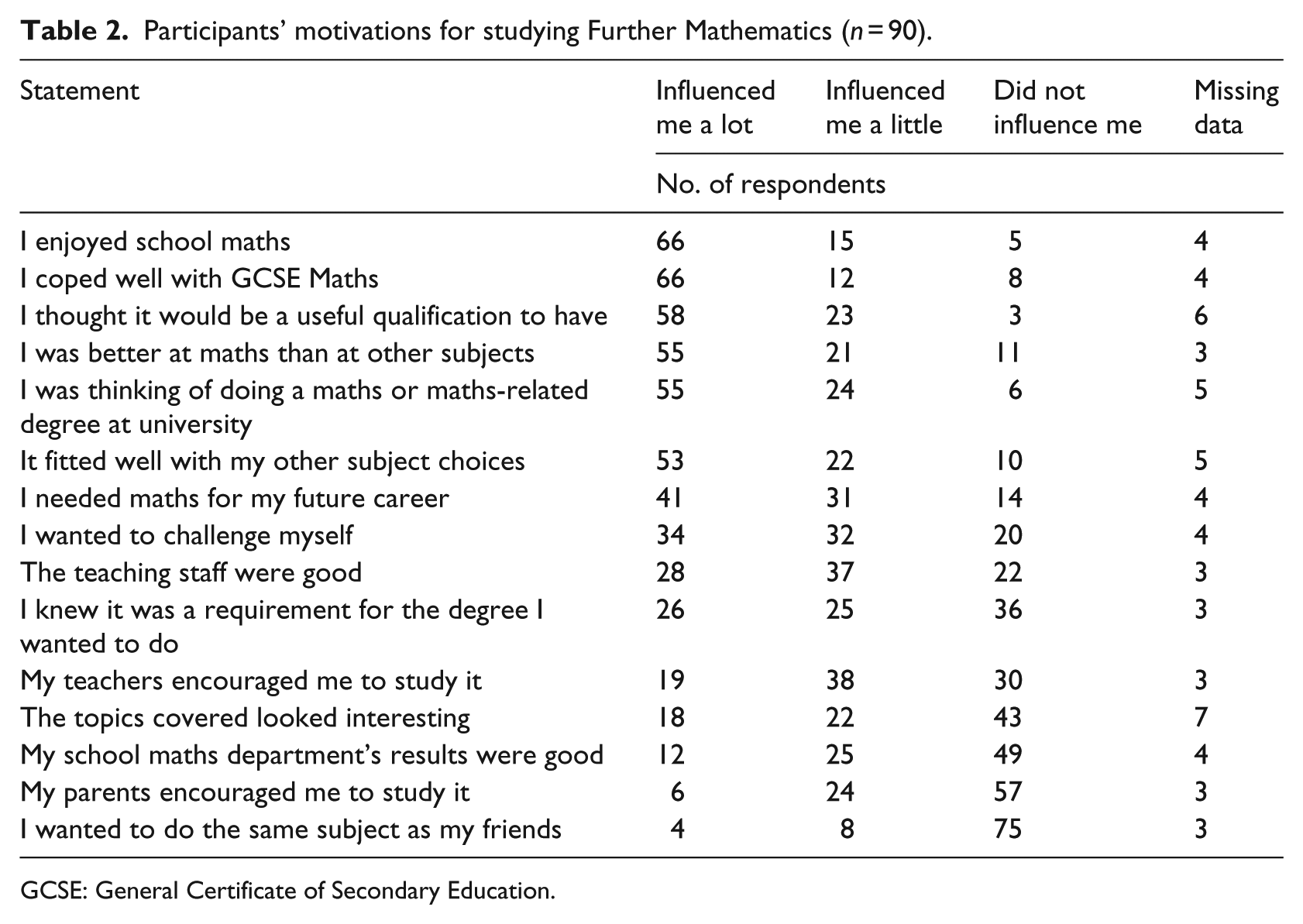
Participants were asked to describe the extent to which they were influenced to study Further Mathematics by a range of factors (see Table 2).
Participants’ motivations for studying Further Mathematics (n = 90).
GCSE: General Certificate of Secondary Education.
The factors which appeared to be the strongest motivators were the following:
Enjoyment of mathematics: 76.7% of participants reported that they were influenced a lot by this.
Prior success in mathematics: 76.7% reported that they were influenced a lot by coping well with GCSE Mathematics. Additionally, 63.2% were influenced a lot by a belief that they were better at mathematics than at other subjects.
Utility of the qualification: Although only 29.9% were influenced a lot by knowing that Further Mathematics was a requirement for the degree they wanted to do, 96.4% were influenced by the belief that Further Mathematics was a useful qualification to have. Additionally, 92.9% were influenced by considering studying a mathematics or mathematics-related degree at university.
Of the 15 options given to participants, the factors which seemed to have the least influence on their decisions were the following:
Taking the same subject as their friends: Only 12 of 87 participants reported that this influenced them.
Encouragement: Only 6.9% were influenced a lot by parental encouragement and 21.8% by teacher encouragement.
Experiences of Further Mathematics
Participants who had taken Further Mathematics were asked questions using a Likert scale about their experiences of Further Mathematics. Overall, their experiences appeared to have been positive (see Table 3).
Participants’ experiences of studying Further Mathematics (n = 90).
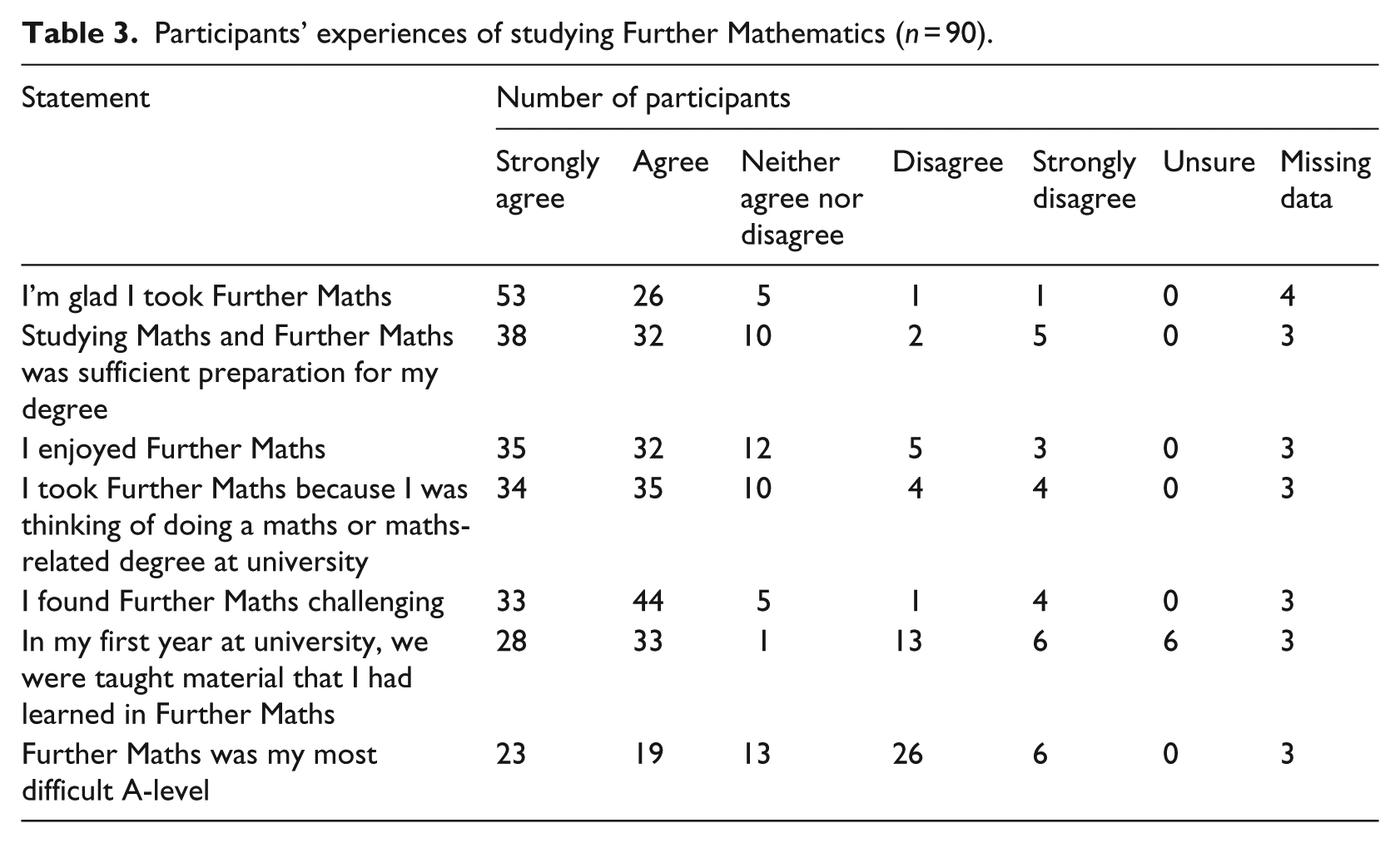
Encouragingly, 91.9% reported that they were glad that they had taken Further Mathematics, and 77.0% reported that they enjoyed it. It also stretched those who had taken it, with 88.5% describing it as challenging and 48.3% reporting that it was their most difficult A-level.
In all, 75.3% of participants stated that there had been an overlap in the content of Further Mathematics and the mathematical component of their degree. This suggests that Further Mathematics is a useful subject for those intending to go on to study economics at university, as it can give students an advantage in their preparation for their first-year courses. Furthermore, only 8.1% disagreed that studying the combination of Mathematics and Further Mathematics had been sufficient preparation for their degree.
A-level as preparation for the mathematical component of economics
Figure 5 shows that the majority of students who had taken Mathematics and/or Further Mathematics believed that it was good preparation for the mathematical aspects of their degree. Only 4.4% of those who took Mathematics and 3.5% of those who took Further Mathematics reported that they thought that these A-levels were bad preparation for undergraduate economics.
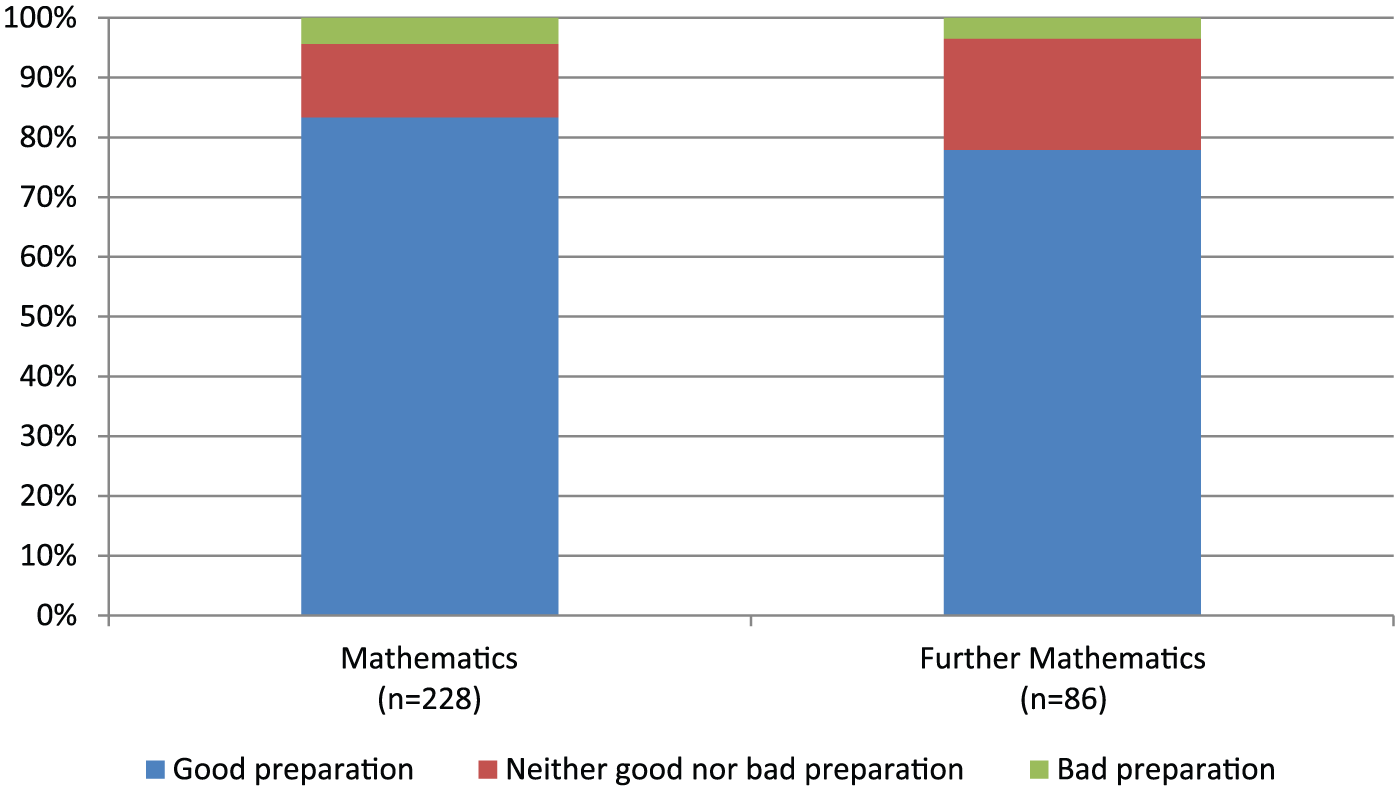
The A-levels as preparation for undergraduate economics.
Furthermore, the proportion of participants describing Mathematics and Further Mathematics as good preparation (83.3% and 77.9%, respectively) indicates that Further Mathematics does have additional benefits to A-level Mathematics in terms of preparing students mathematically for tertiary economics.
Improvements to A-level Mathematics and Further Mathematics
Participants were asked two open-response questions, regarding topics they would have found useful to have studied at A-level and any improvements they would suggest to Mathematics or Further Mathematics for the purposes of preparing prospective economics undergraduates for university.
There were 157 responses to the first question about useful additional topics. The most common topic areas suggested were in statistics and, in particular, hypothesis testing, regression and probability distributions. More advanced calculus and matrix algebra were also commonly suggested. Some participants also reported that economics related to mathematics would have also been useful, particularly game theory. The most frequently suggested topics are summarised in Table 4.
Topics most commonly suggested by students for inclusion at A-level.
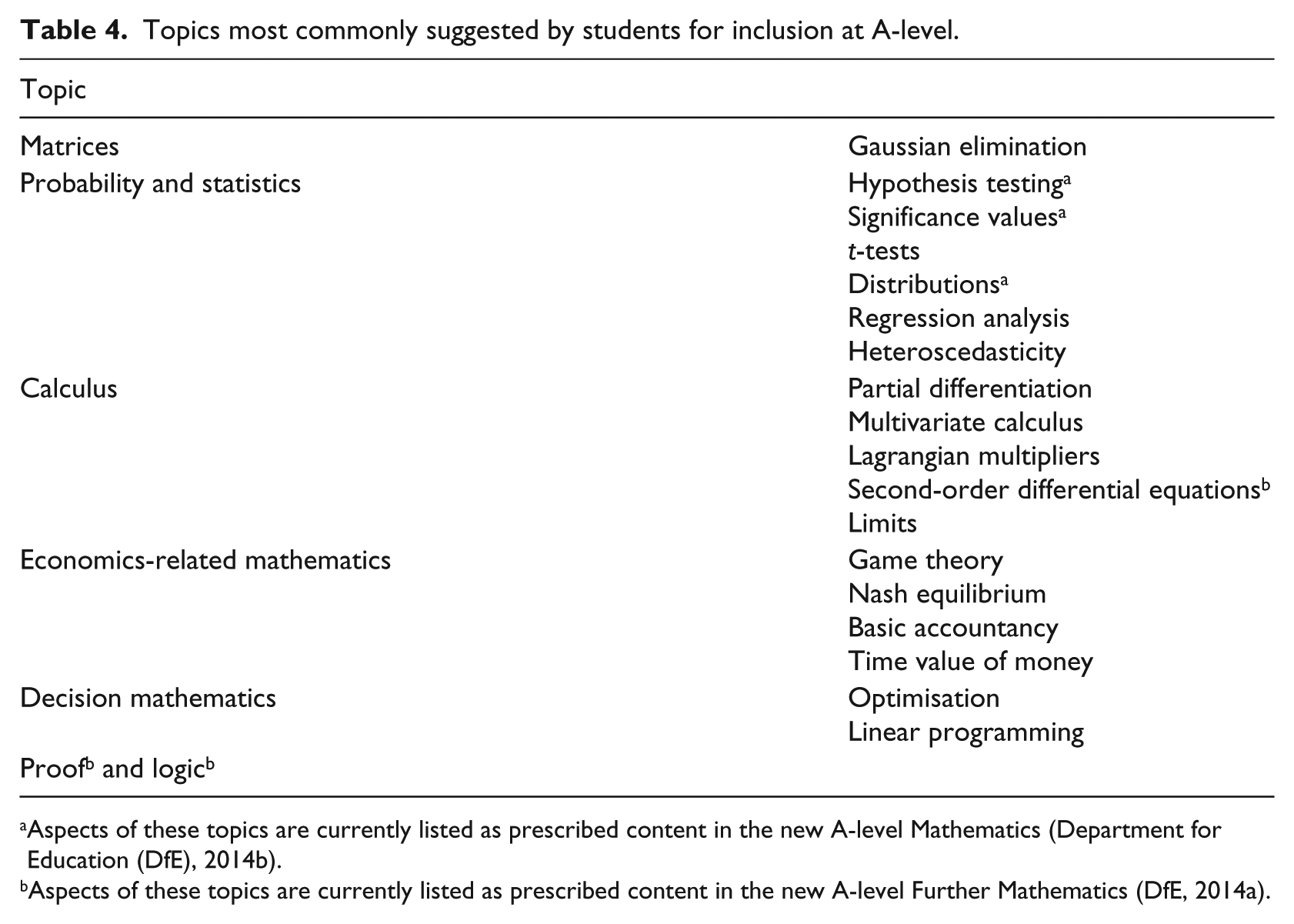
Aspects of these topics are currently listed as prescribed content in the new A-level Mathematics (Department for Education (DfE), 2014b).
Aspects of these topics are currently listed as prescribed content in the new A-level Further Mathematics (DfE, 2014a).
In total, 166 participants commented on improvements that could be made at A-level. The most common suggestion was that the mathematics studied at A-level should be applied in different contexts. It was suggested that current teaching is too theoretical, and students consequently struggle to apply the techniques and content they have learnt in unfamiliar contexts at university. Most of these participants felt that giving relevant examples of how concepts could be applied in real life would further students’ mathematical understanding, rather than learning to regurgitate a known method, particularly with topics such as differentiation.
Furthermore, students commented on the depth and variety of topics covered at A-level. However, there was no clear consensus as to whether breadth or depth should be the focus. Additionally, while it was rare for participants to reiterate calls for specific mathematical topics, most students who suggested that A-level should go into greater depth reported that this should particularly be the case for calculus, perhaps at the expense of trigonometry. The majority of participants who commented on the overall difficulty of A-level Mathematics indicated that they thought this qualification should be made harder.
Additionally, a minority of participants reported that the inclusion of more economics-related or financial mathematics would be particular useful at A-level. A small proportion of these comments reiterated the perceived utility of the topics they had mentioned earlier, such as game theory, but most made general comments about the inclusion of financial mathematics or mathematics within an economics context. Two students suggested that the inclusion of specific financial mathematics units would permit greater specialisation at A-level, in the same way that prospective engineering students can currently specialise in mechanics topics.
Limitations
A self-selecting study of this nature suffers from a number of classic limitations, as well as some limitations specific to this study:
Participation was not only self-selecting in terms of the responses of students filling in the questionnaire but was also self-selecting via the cooperation of the universities contacted. Data were therefore compared with national data, where possible, and so indicate that this sample is skewed towards the higher attaining end of the cohort, even when discounting the fact that A-level Mathematics is not studied by all prospective economists.
It could be that students felt particularly strongly about their mathematical preparedness and its impact on their transition to undergraduate study (either positively or negatively) and hence felt more compelled to take part.
This study only incorporates the views of students who had taken post-compulsory mathematics qualifications. We cannot contrast their responses with students who did not take A-levels in Mathematics and/or Further Mathematics.
This study did not survey first-year undergraduates because we sought the views of students who had already experienced the mathematical demands of their degree. Students surveyed during the first term of their degree would therefore not have been able to give useful feedback. Undergraduate attrition is most common in the first year of study, so it is not possible to use the data collected to establish whether mathematical preparedness/background relates to this factor.
Discussion
The data collected in this study indicate that both A-level Mathematics and Further Mathematics are beneficial preparation for prospective undergraduate economics students. Participants were enthusiastic about the increased exposure to statistics and calculus that post-compulsory mathematics had offered and believed that taking these qualifications had eased the transition to university economics.
Additionally, participants reported that Statistics and Further Pure Mathematics were the most useful non-compulsory strands, with there being considerably more limited use in studying either Mechanics or Decision Mathematics. This suggests that economics would benefit from specialising in statistics during their A-level studies, and students aiming to study at the higher ranking universities which stipulate A-level Mathematics as a prerequisite would probably benefit from taking at least AS-level Further Mathematics in addition to A-level Mathematics.
Students’ perception of Statistics as the most useful applied strand is not particularly surprising, but the strongly positive reception of Further Mathematics is a new finding. Participants’ positive experience of Further Pure Mathematics units suggests that the benefit of Further Mathematics lies in the exposure to more advanced calculus and matrices, rather than the option of taking a greater number of applied modules. These areas are particularly useful preparation for economics, as 75.3% of participants who took Further Mathematics reported an overlap between material covered in Further Mathematics and the first year of their undergraduate course. This corroborates the information shown in previous studies. For example, a review of undergraduate economics syllabuses at UK universities by Dawson (2014) found that differentiation and logarithms are first-year content in the majority of undergraduate economics courses, and degrees that require A-level Mathematics for admission will also cover integration and matrices. A prior understanding of these mathematical concepts thus puts students at a distinct advantage when beginning university study in economics.
The outcomes of this study have the potential to be used by students, secondary teachers, university admissions tutors, parents and careers advisors in assisting prospective undergraduate economists in making the best possible pre-university choices. It would be hoped that students who are given effective and accurate advice will make informed choices which will prepare them well for the future and give them the best possible chance of succeeding in their chosen field both academically at university and in the workplace upon graduating. Indeed, effective signposting and guidance are also important for students once they begin their university studies; work by Kinakh (2012) found that graduates of economics degrees felt that certain undergraduate modules 4 had been more helpful than others in preparing them for the workplace. Well-informed students at the secondary–university and university–workplace interfaces will hopefully be those who go on to be the most successful and thrive in the next phase of their work or studies.
Recommendations
Overall, the findings suggest that while few universities currently require students to take Further Mathematics at either AS- or A-level, they may wish to consider encouraging its study to prospective students. As matrices and advanced calculus will continue to be included in the reformed A-level Further Mathematics, it will continue to be a useful qualification to have. As the literature suggests, economics students are often surprised when confronted with the volume and difficulty of mathematics in their course. The lower ranking institutions which currently do not stipulate A-level Mathematics as a prerequisite (and therefore likely base first-year courses around a presumption that students have not studied A-level Mathematics) should consider at least recommending its study or making favourable offers to students who have taken it. By recommending A-level Mathematics, economics departments may project more realistic expectations of undergraduate study and find that their intake is better prepared for the mathematical demands of university economics study.
Further research in this area would be beneficial in ascertaining whether having taken A-level Mathematics and/or Further Mathematics has a positive impact on students’ degree performance and expectations, when controlling for whether or not this was an entry requirement.
Footnotes
Declaration of Conflicting Interests
The author(s) declared no potential conflicts of interest with respect to the research, authorship, and/or publication of this article.
Funding
The author(s) received no financial support for the research, authorship and/or publication of this article.