




Abstract
In today’s digital transformation era, process mining has emerged as a crucial technology, playing an integral part in the digital strategies of many organizations. Despite its significance, implementing process mining to leverage data-driven decision-making and boosting process efficiency presents notable challenges for such companies. This case study delves into the journey of the fictitious Swiss luxury retailer Elysian as they utilize process mining to derive data-driven insights on process inefficiencies and bottlenecks to increase their customer excellence for online retail procurement. The case highlights the capabilities of process mining for organizations. It is among the first to offer students hands-on guidance on process discovery, conformance, and enhancement using real-world data. Students take the role of Lisa Dister, Head of procurement in the business unit home care, who urgently requires improving process transparency after an unsatisfying internal audit result. This immersive experience helps students understand the application of process mining in high-volume data scenarios and equips them with skills in data literacy. Moreover, students are challenged to suggest recommendations for long-term process optimization and reflect on the effectiveness of process mining for tackling procurement issues.
Introduction
In early 2023, Lisa Dister, the Head of Procurement in the business unit Home Care of Elysian, eagerly awaited the results of an internal audit on the order-to-cash process, which she is responsible for as the product owner. When the audit report came via email, she was shocked. They received a fulfillment score of only 52% and several major findings, indicating that the process was poorly executed.
But why does such a fulfillment score in the order-to-cash process matter? Consider the frustration of a customer who orders exquisite goods online at a luxury retailer and then has to wait 2 weeks for the parcel to arrive. Or imagine a customer receiving a partly damaged package and needs to call the service center for a refund. As Steve Jobs, Apple’s founder and former CEO, has put it: “If a customer is having a problem, it’s our problem.” The Swiss luxury retailer Elysian was founded after the examples of the classical Parisian luxury warehouses but experienced a strong shift towards online shopping in recent years. Consequently, customers of Elysian now expect their online shopping experience to be as exquisite as in-store. For Elysian and other companies in the fast-moving consumer goods industry (FMCG), the procurement of their items is crutial. These companies are compelled to respond to customer expectations for fast and affordable delivery while maintaining their extraordinary quality—in other words, customer-centricity must be anchored as a core value.
Novel data science methods are paving the way for organizations to understand customers’ buying behavior, track deliveries, and assess their performance. This teaching case allows students to delve into procurement challenges of the fictious company Elysian, whose storyline and dataset are inspired by an existing Swiss company. The case demonstrates how data science techniques facilitate process mining, analyzing data from different transactional systems, and enhancing procurement processes in a high-end retail company. The case unfolds as follows: First, it introduces the FMCG industry and the Swiss luxury retailer Elysian. Second, it provides an introduction to process mining technology and its capabilities in procurement. Third, the case delves into the application of process mining for process discovery, conformance checking, and enhancement strategies. Finally, it concludes with insights on the business value of process mining for companies like Elysian.
Industry overview
Elysian boasts a strong presence in the FMCG industry, a sector characterized by unique challenges and opportunities. Most crucial, FMCG has an intense competitive landscape, with numerous brands having similar products and working on increasing their market share. This leads, on the one hand, to a focus on customer satisfaction to increase the percentage of returning customers and minimize attrition. On the other hand, companies find themselves in a high volume and revenue but low-profit situation, requiring them to strive for highly efficient processes across all operations. This is especially visible in the supply chain, with its need for timely deliveries and inventory management. Another crucial element is the regulatory compliance imposed on the FMCG industry. Maintaining these regulations and ensuring compliance is a complex and costly endeavor.
The story of Swiss luxury retailer Elysian
The Swiss luxury retailer Elysian was founded in 1985 by Reto Goldmann in the city of Zurich, Switzerland. The brand was inspired by the Parisian luxury retailers, such as Galeries Lafayette or Au Bon Marché. Elysian mainly sells consumer goods in the luxury market and, therefore, strives to deliver a flawless and convincing customer experience in-store and online. Their product range includes everything from exceptional fashion to premium delicacies. The company encompasses 34 locations, five of which are department stores and 29 specialty stores, as well as their headquarters in Zurich, Switzerland. With around 4200 employees, Elysian mainly operates in Switzerland and has two subsidies: Intag AG and Velestro AG. The company’s net order value is about 1.25 billion CHF.
Within the in-store environment, the retailer aims to deliver an extraordinary customer experience, for instance, through the placement of particularly well-educated staff for customers’ guidance through the product range, exquisitely curated interior design in the different shopping areas, beautifully arranged product displays, and the supply of little treats of appreciation, such as fine Swiss chocolate for their premium customers. With the growing existence of e-commerce and online shopping in the early 2000s, customers nowadays expect their online buying experience to be as exquisite as in-store. With an omnichannel strategy, the retailer tried to respond to these requirements by integrating offline and online experiences as complimentary experiences. However, in the last 5 years, the revenue from online sales doubled from 6% to 12% in 2023, and consequently, the importance of their online market is rising.
As customers experience more and more same-day delivery services, their expectations for online luxury retailing rise, placing high demands on FMCG companies. A recent study, which surveyed 500 customers on their expectations regarding online delivery, found that 69% of the customers are less likely to shop with a retailer again for future purchases if they experienced that a parcel is not delivered within 2 days of the promised date (Voxware, 2023). Elysian’s most important process for fulfilling these delivery demands is the order-to-cash process. The order-to-cash process has special significance for Elysian, as it has direct customer touchpoints and must be aligned with many external stakeholders, aiming to deliver customer orders efficiently and effectively- so that customers are satisfied and profitability for the company is ensured. Figure 1 exhibits all key activities and involved departments in the process. When the company’s system receives an order, an automatic confirmation is returned to the customer. Then, the delivery documents are prepared and generated. After that, the computer creates a sales invoice, which sales managers review, approve, and then send to the customer. Later, the goods are shipped, and the invoice is cleared. The process has a high volume of sales order items and is very complex, with many activities and departments involved. Overview of the order-to-cash process at Elysian. Audit report for the order-to-cash process.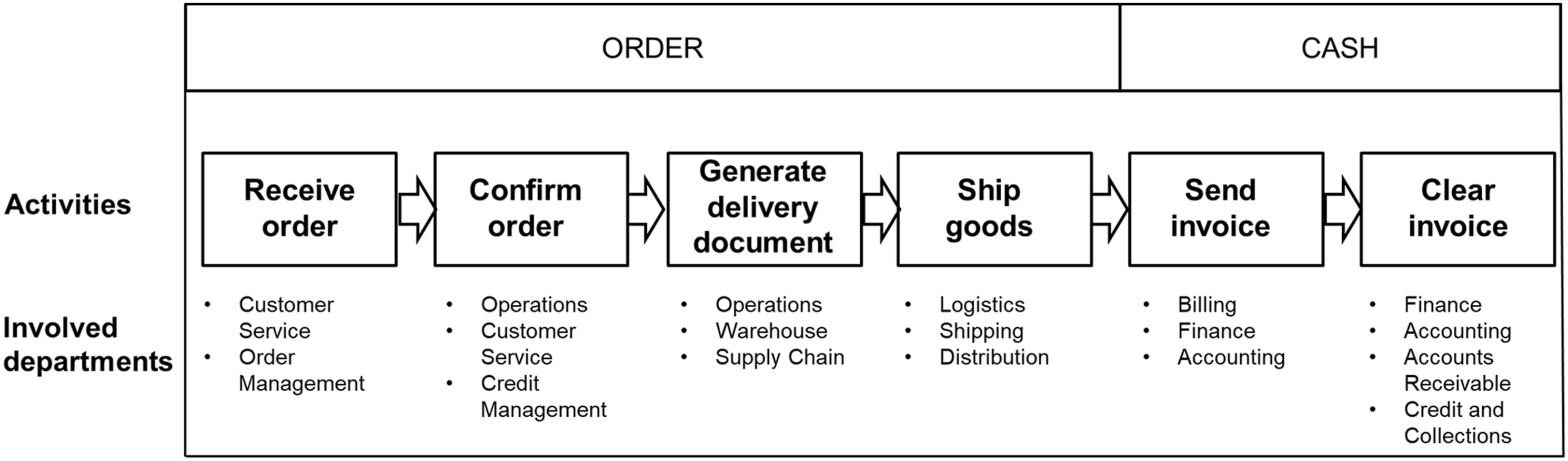
Let’s get started
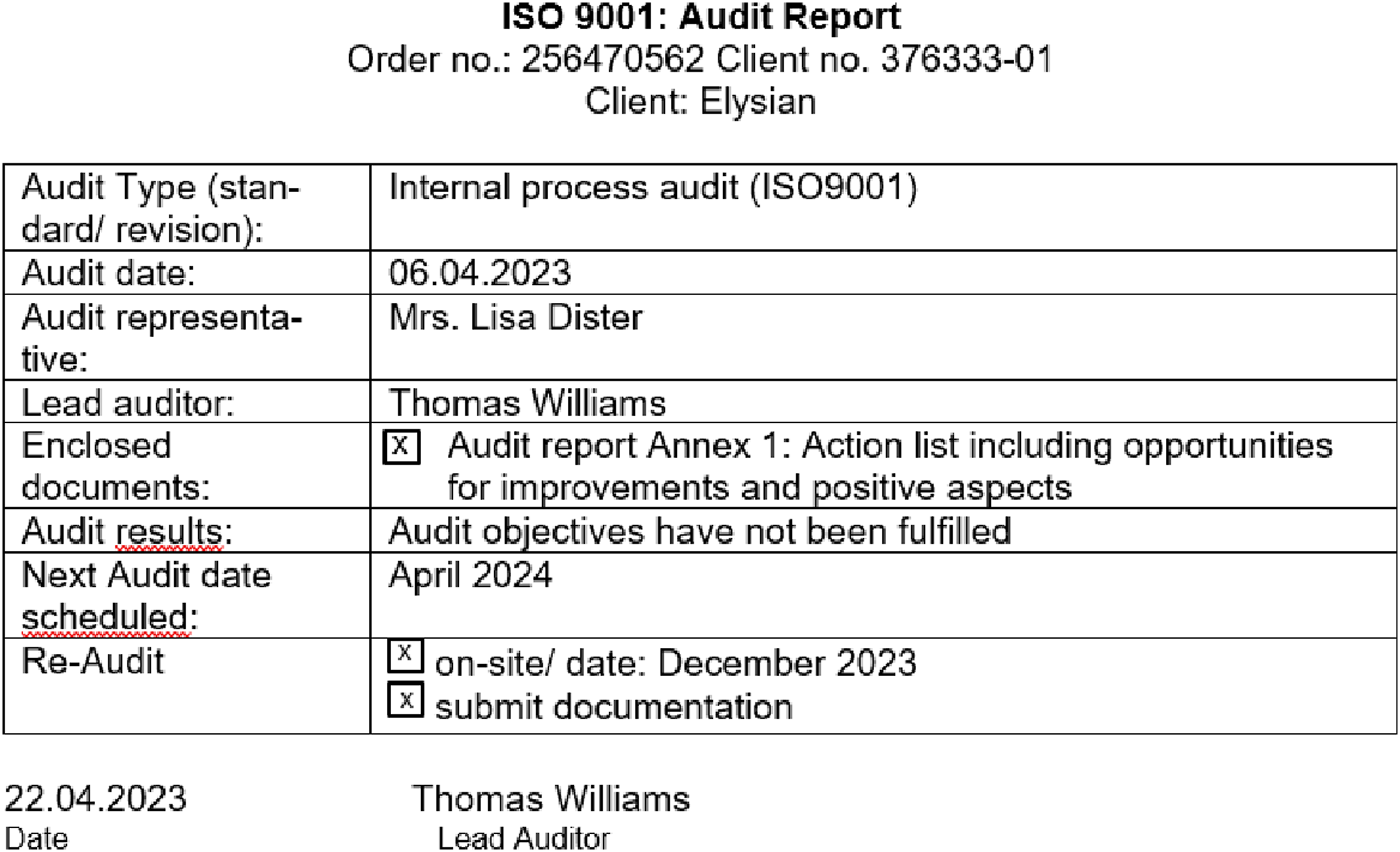
Let’s jump back to Lisa’s story and her issue with the internal audit of the order-to-cash process. Her obligation as the process owner is to find the roots that caused late deliveries and subordinate problems in the process.
Read the audit report (Figures 2 and 3) and familiarize yourself with Lisa’s current issues in the order management process. Please identify helpful KPIs to measure the efficiency of an order-to-cash process and explain why these KPIs can be useful for measuring process efficiency.
Eager to tackle these findings and explore the root causes of the order-to-cash process, Lisa and her team began their endeavor by examining delivery documents and exploring data on different operational systems. However, the massive amount of data posed a major issue. She once heard the CEO of Elysian saying that the company’s business data duplicates every 15 months. They had tons of data from the order-to-cash process, mainly collected from transaction processing systems such as Workday, Oracle, Salesforce, SAP, and Microsoft Dynamics. However, they initially struggled to derive data-driven conclusions. Her first thought was to hire external consultants for this project to apply methods such as shadowing processes, conducting qualitative expert interviews, measuring process duration, and developing process models. Still, she wasn’t sure if that would increase the transparency about the process and its issues. After some research on various data-driven methods, she opted for process mining to get more transparency into the business process at a fast pace.
Process mining at a glance
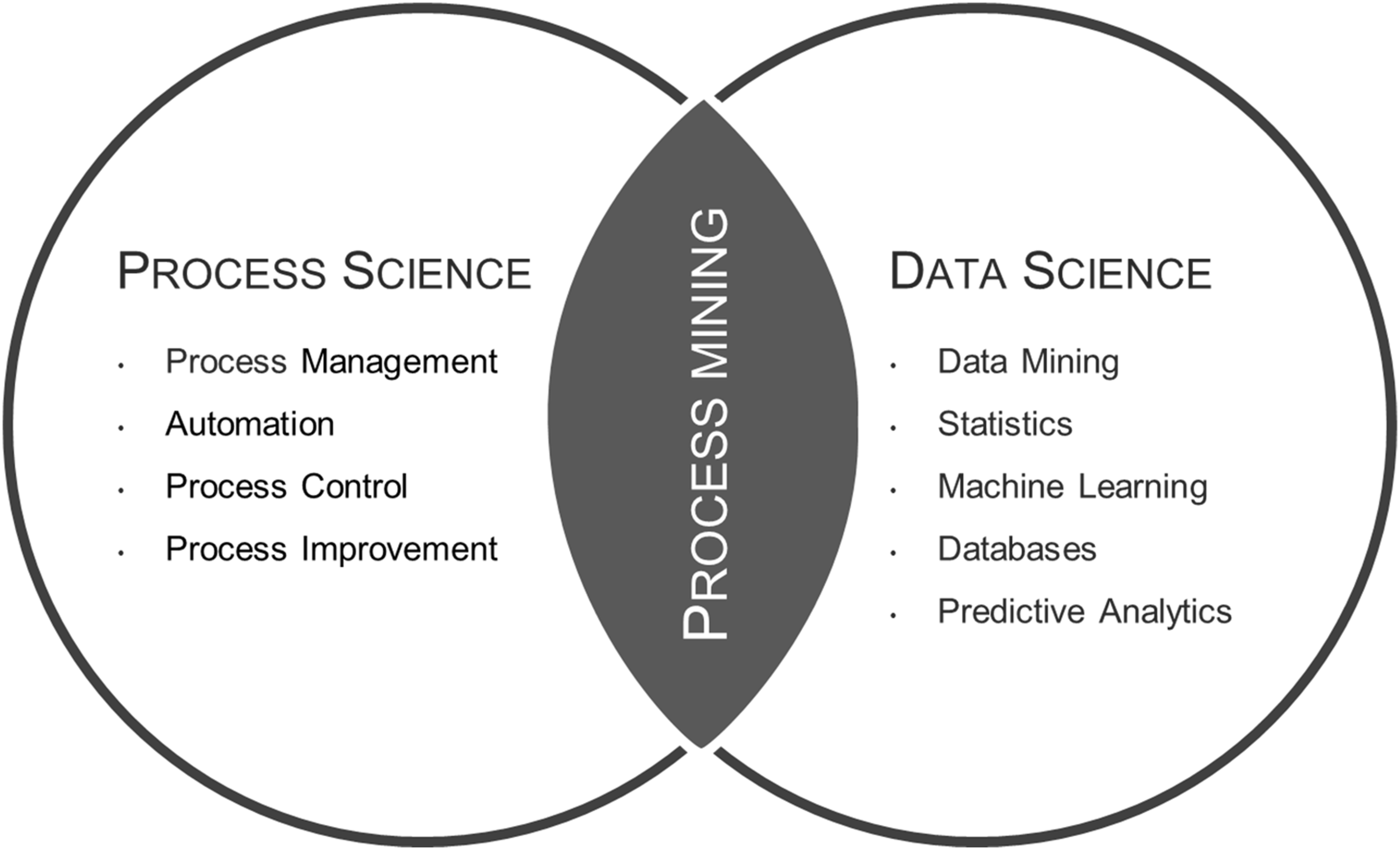
Process mining is a technology capable of processing transaction data from different IT systems. By applying process mining, undesired process patterns, bottlenecks, and compliance issues can also be detected, creating a better understanding of processes based on their digital footprint and underlying data. This reflects a major advantage to process mapping and modeling methods, as findings are not based on assumptions but on data-based evidence reflecting real-world events. Based on these data-driven insights, one can find out how to detect bottlenecks and root causes in the order-to-cash process. Figure 4 illustrates that process mining lies at the intersection between process science and data science, bridging the gap between model-based process analytics and data-centered analytics. It allows to reconstruct, analyze, and improve business processes based on event logs generated from transactional IT systems like SAP, Oracle, and Salesforce. For more information, you could also refer to the technology introduction deck in the teaching note.
1
Audit report for the order-to-cash process, annex 1. Process mining based on Van der Aalst, 2016.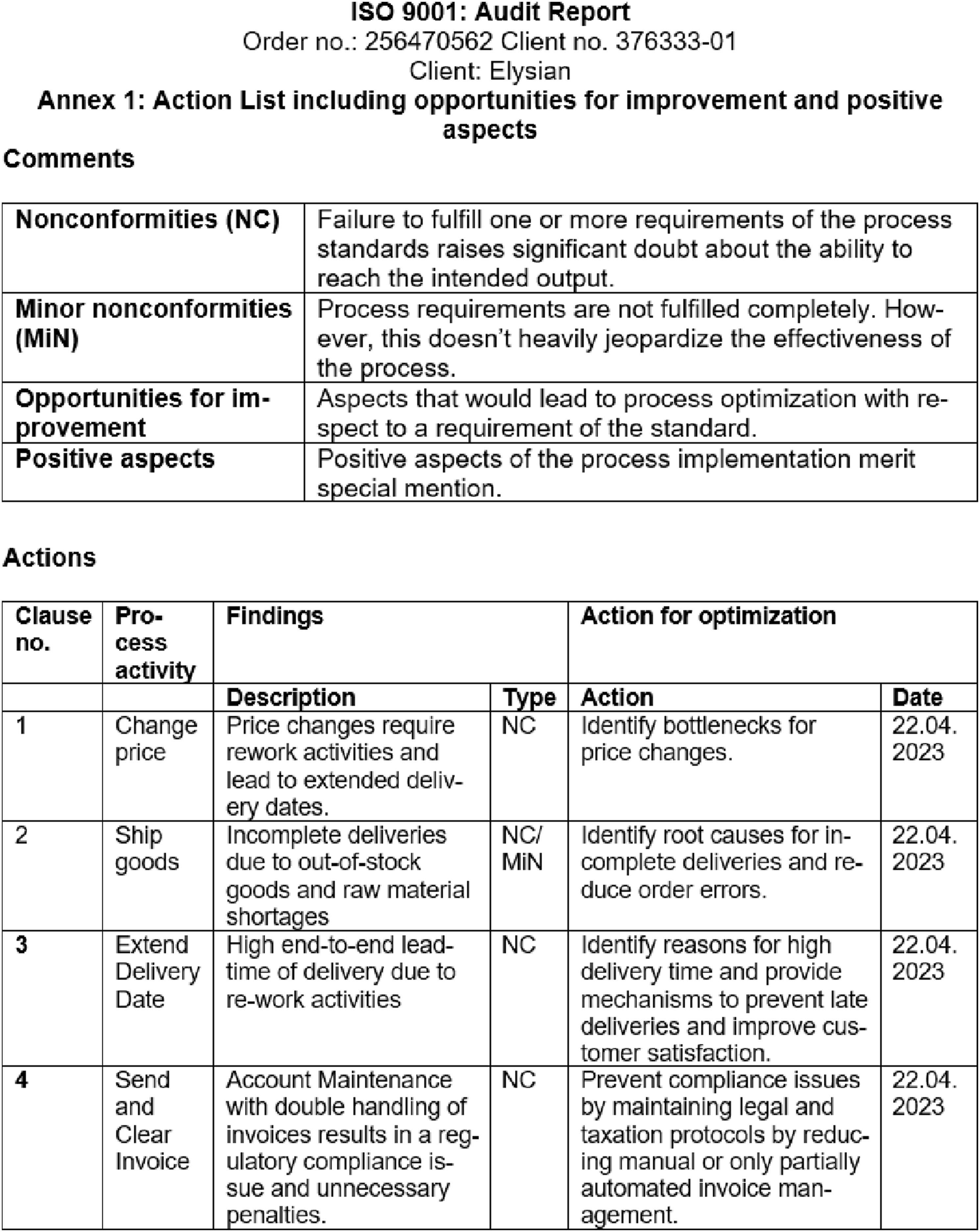
Please create a briefing for the head of the business unit on the technology process mining and explain why process mining could be beneficial to tackle procurement issues. This could include describing the technological foundations of process mining, its business potential, and the potential value for the organization.
Getting into the data
Lisa had only a couple of weeks to tackle the issues in the order-to-cash process. She prepared everything for the initiative, knowing this project was a top priority. Therefore, she presented an extremely ambitious project plan, including all key objectives and milestones to discuss with the team. She defined the key objectives of the project as follows: 1. Increase the transparency of the process and identify problems and root causes. 2. Analyze the process by reducing manual rework and increasing the automation of sales back-office operations in different regions. 3. Identify and apply measures to increase the efficiency of the process.
Based on these objectives, she developed key activities that would be important for the project (see Figure 5). To achieve her objectives, she was required to identify which process activities cause delayed or wrong deliveries. Project plan including key activities based on Chapman et al., 2000.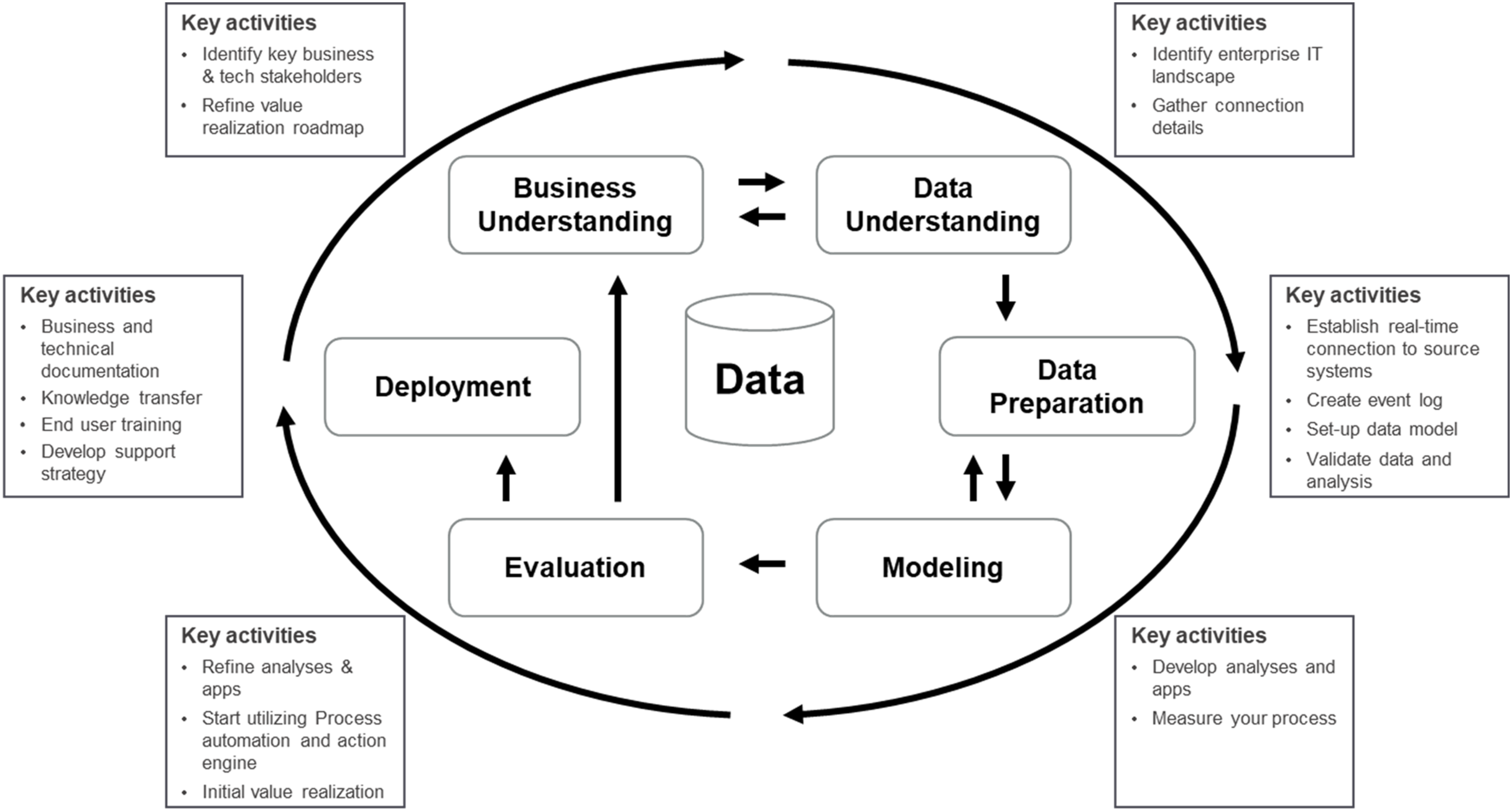
It was time for the project team to plan their next steps and delve into the data. Lisa and her team began to quantify execution potential for their case by observing how the order-to-cash process was executed, based on the data from transactional systems, and identifying any process inefficiencies (process discovery). For the second step, Lisa argued that it would be useful to rank the identified inefficiencies according to their impact and then determine actions with the management board to modify the process accordingly (process conformance). The team discussed that the third step would be a continuous improvement of the process, implying that the process should be enhanced long-term to unlock the full execution potential at Elysian (process enhancement).
Describe how and when you expect to apply the following three elements process discovery, conformance, and enhancement during the analysis. In addition, you should elaborate briefly on what business impact you expect from each of them.
Analyzing the order-to-cash data
Lisa’s first objective was to understand the data available for the process analysis. Happily, the technical expert Nils Duke promised to take care of extracting the event log data from the transactional systems. To access the data set, she clicked on the link (https://bit.ly/TC-Elysian) that Nils had sent her via email. She decided to use process mining software based on Nils’ recommendation and started uploading the data. The pre-loaded dataset consists of a data model and preconfigured analyses, which she excitedly inspected.
Lisa began the analysis of the as-is process model, wanting to examine its structure and variants. Given the considerable volume of the data set, a pre-processing strategy becomes essential for filtering out only the pertinent information for the analysis. This also adheres to the principle of data minimalism. Streamlining the process data can be achieved by setting filters. Lisa explored different filtering options for the order-to-cash data set, for instance, selecting individual process activities or process variants. To gain an understanding of the ongoing activities in the as-is order-to-cash process, you are asked to familiarize yourself with the order-to-cash process. Please begin by opening the process sheet using the process explorer of the order-to-cash data in the process mining software.
Please find out how many sales order items are involved in the as-is process and how many variants the order-to-cash process has. Then, count and describe the activities of the process variant with the longest throughput time and how long this variant takes on average. Additionally, please explain what Rework (repeating) activities exist in the first eight common variants.
Understanding root causes
The audit report revealed that one major finding was the high incidence of late deliveries, a matter directly impacting customer touchpoints. Thus, Lisa sought to dive deeper into the activities to identify which activities or contributing factors were responsible for the delivery date extension.
To ensure on-time and complete delivery, Lisa wanted to analyze what may cause the activity to extend the delivery date within Elysian. Select all sales order items where the activity “extending the delivery date” causes. Please explain what impact late deliveries may have and how many sales order items are affected.
After some process discovery activities, Lisa quickly talked to Nils on the phone. He advised her to look at the rework activities in greater detail to improve the process and explained, “Rework is one of our biggest concerns because it delays the process completion time for our customers and requires extra effort. This often also has cascade effects on the other projects. This usually happens because someone did a task wrong from the beginning or a task cannot be completed due to lack of information.” Following Nils’ advice, Lisa started looking at all rework activities more precisely.
Automation is one possible solution to prevent rework problems before they even occur because it can reduce manual touchpoints and reduce delays, for instance, the use of automatic emails to send out invoices. This could be done through an automatic adaptation and preparation of information (e.g., price changes, quantity changes) or automated decision-making based on pre-defined attributes (e.g., removing credit blocks due to high credibility in the past). Considering rework and automation may help gain more evidence on late deliveries and unsatisfied customers.
Please explain in which month(s) the rework rate is the highest and list the three most common rework activities in these month(s).
Checking process conformance
The steps undertaken by Lisa and her team were instrumental in discovering possible root causes through data filtering and benchmarking. However, these techniques happened in a very manual and intuition-driven manner. For the next project jour fixe, Lisa aimed to present a complete overview of all undesired process variants. She witnessed their root causes immediately, not with their team’s strenuous effort and work. To streamline this task, automating the identification of possible root causes in this process is vital, as manual detection can be very time-consuming. Most of the process mining tools offer a conformance check for this procedure. Conformance checking involves comparing the event log data with activities in the process. This step is important to verify if an observed order-to-cash process conforms to a pre-defined model. The purpose is to discover commonalities and discrepancies between modeled and observed behavior, which is relevant for business alignment and auditing, as well as to evaluate compliance.
Create a to-be process model with all desired activities and connections showing what the process should look like. Compare it to the as-is model. If you are experienced with business processes, you can use a business process modeling tool and model your process using business model process notation (i.e., BPMN). You can then upload your model to a process mining software tool and compare it to the existing is-process. Through this comparison, it is possible to derive how many deviations from your to-be process exist. How much percent of your is-process is non-conformant?
Process optimization
A week later, Lisa attended a business unit meeting where she updated everyone on the project’s progress and discussed the current developments in preparation for the upcoming re-audit. Following the presentation, she received valuable feedback via mail from the head of the business unit, Mr Tangu (Figure 6).
After conducting desk research, Lisa aimed to extend the existing process model and define actions for reducing the processes’ throughput time. In the weekly jour fixe, a team member suggested the integration of automated actions that could proactively execute within the system. Examples include automated notifications of credit check denials, emails to vendors about delayed deliveries, or alerts regarding price changes. In addition, Lisa planned to assess the financial impact of such deviations to garner support from Julian Tangu. She developed some initial calculations by utilizing process mining techniques and talking with some colleagues about activity durations. Including a reasonable target for the first wave, she devised a yearly saving with process mining. She added the qualitative impact on customer satisfaction and other company areas (Figure 7). Mail from the head of the business unit, Julian Tangu. Business case calculation example.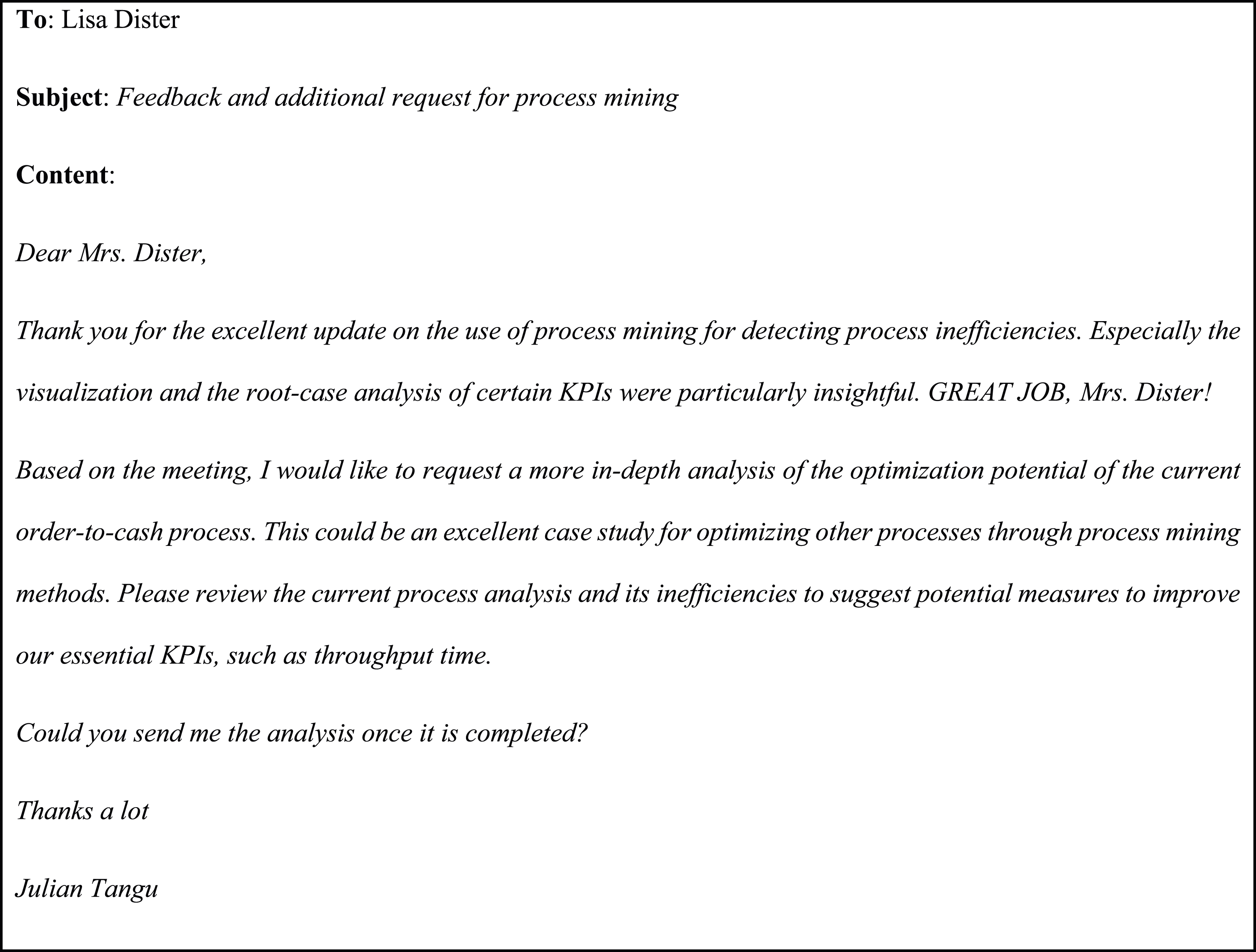
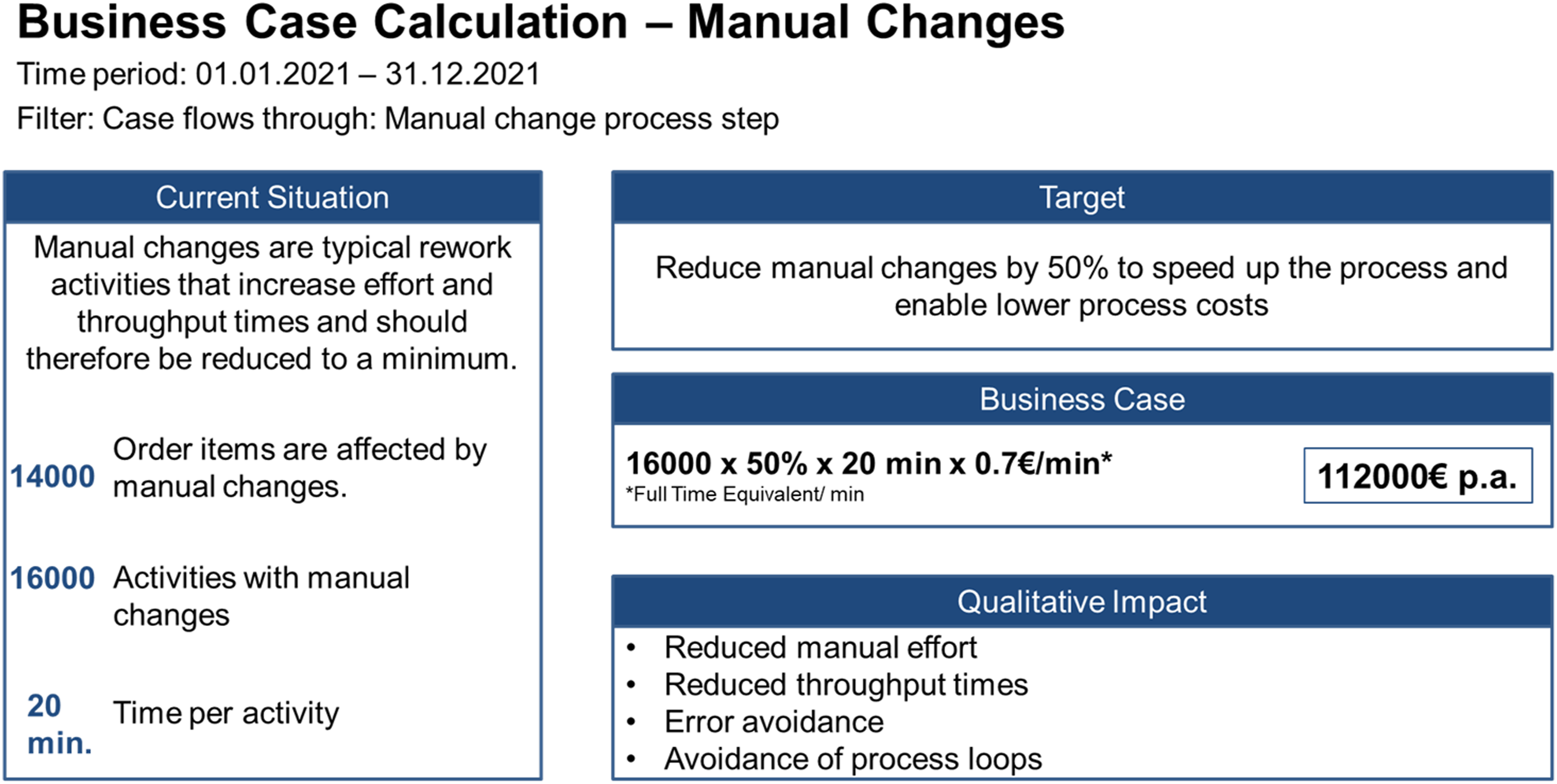
For the re-audit, Lisa requires quantitative evidence for the potential savings. Please calculate the savings for the inefficiency “extend the confirmed delivery date.” Also, calculate a business case and outline its financial impact.
What would you recommend to proactively reduce throughput time after finding out what causes late deliveries? What challenges could occur when transforming the insights from process mining into actual value for the Elysian?
Evaluating the impact
After all her diligent efforts, Lisa was fully prepared for the re-audit. The hard work had paid off: not only was there enhanced transparency across all process steps, but also a notable improvement in process performance. At the beginning of the re-audit, Lisa started her presentation:
“First, conformance checking increases process transparency for internal and external auditors, as it helps to identify fraud or compliance issues and remove these discrepancies before they can cause any bigger damage. In addition, we increased the on-time delivery rate by restructuring the logistics and distribution for most requested order items in identified peak times. The punctual delivery of goods increased our customer’s confidence and satisfaction with fewer order cancellations and higher revenue. Furthermore, we reduced manual labor and extra time for rework activities like price changes, wasted credit checks, route changes, etc. This led to increased on-time delivery rates, reduced costs, and a higher satisfaction rate. The identification of manual rework also created a good foundation for the company’s aspiration to automate their processes.”
Please take a moment to reflect on the project. What do you think were critical success factors for a successful re-audit? What advice would you give to other business units regarding the implementation of process mining in the Elysian? Please write down five lessons learned.
The audit team was impressed with Lisa’s ability to achieve and realize those process improvements without changing the underlying information systems landscape. Because of her efforts, they managed to increase customer satisfaction. They were even able to increase the top-line value, strengthening their revenue and order intake, reducing their bottom line, automating non-value process steps, and reducing penalties for late deliveries. An unexpected yet welcome discovery was the enhancement of sustainability. By optimizing routing and route changes, they significantly reduced CO2 emissions. The newfound transparency led to a redesign of the process based on the analysis and recommendations derived from process mining. The initiative even allowed them to dip their toes into the topic of automation, targeting areas with data-driven evidence of inefficiencies. Future explorations at Elysian will focus on resolving critical issues in real time, boosting productivity by reassigning orders, and efficiently managing other process-related tasks. There are just so many processes to explore in the future.
Footnotes
Declaration of conflicting interests
The author(s) declared no potential conflicts of interest with respect to the research, authorship, and/or publication of this article.
Funding
The author(s) received no financial support for the research, authorship, and/or publication of this article.
