



Abstract
Process mining is a big data technology, which focuses on the discovery, monitoring, and improvement of business processes, based on real data from information systems. This teaching case describes the objectives of a German airline as it introduces process mining and discusses current and future value potentials of this technology. The case is particularly useful for executive MBA courses on Strategy (the value of IT investments) or master’s-level courses on Business Process Management. This case has three main learning objectives. First, students will evaluate the capabilities of different (technological) approaches to reaching the airline’s business goals and will make a justified decision on the feasibility of implementing process mining. Second, students will analyze the airline’s approach to implementing process mining and the challenges along the way. They will derive lessons learned and discuss approaches to solving challenges. Third, students will evaluate the value potentials of process mining. This will enable the students to make well-informed decisions on technology investments and to discover how these decisions can contribute to business goals. The case is designed to be taught in two formats. In a 90-min lecture, students need to prepare short assignments for classroom discussions. In a 180-min lecture, the assignments are included as group work during the lecture, but they require the students to read the case before class. Teaching Notes, including videos and additional study material to support group work, are available to eligible lecturers upon request.
Keywords
Aviation industry
According to the International Air Transport Association (IATA), 2018 was shaped by ongoing worldwide growth in passenger numbers and transported air freight, as well as an increased number of connected city-pairs. By transporting 4.4 billion passengers and 63.3 million tons of freight on 38.1 million flights, a revenue of $812 billion with an estimated net post-tax profit of about $27.3 billion and an operating margin of 5.7% (based on earnings before interest and tax) was generated. However, although the passenger and flight numbers increased compared to 2017, the financial results were slightly lower ($37.6 billion net post-tax profit; 7.5% operating margin) (IATA, 2020).
While the real costs of air travel have nearly been reduced by half during the past 20 years, the air tourist spending roughly doubled, which resulted in a continued growth of transported passengers (IATA, 2019). Because this growth is expected to continue, the inconveniences of limited physical infrastructure will be exacerbated. These were already present in 2018 and were widely reported by the media. For example, the Lufthansa (LH) Group, which was the world’s 11th largest airline measured by offered seat capacity in 2018 (Zhang, 2019), canceled approximately 60 flights per day due to strikes, air traffic control issues, weather conditions, or airport-related bottlenecks (e.g. security checks or baggage handling) (Zeit Online, 2018). To make matters worse, experts predicted the problems would maintain for the upcoming years (Süddeutsche Zeitung, 2019). 1 Moreover, the airline industry faced several other risks, including rising costs for jet fuel and new governmental regulations. Therefore, it was—and still is—crucial for the airline industry to use its present facilities efficiently.
The situation at Lufthansa CityLine
Lufthansa CityLine (LHCL) is a 100 % subsidiary of the Lufthansa (LH) Group. The parent organization, LH Group, operates more than 550 subsidiaries in several branches of the aviation industry, including passenger and freight transport, catering, and maintenance. Besides LHCL, other airlines like SWISS, Austrian, Brussels Airlines, and Eurowings operate as part of the LH Group.
LHCL is based in Munich. With about 2250 employees (in cockpits, cabin, maintenance, and administration), its primary business is to provide commuter services to and from the LH Group hubs in Munich and Frankfurt. An approximate summary of its yearly numbers is 300 flights per day to 85 destinations, carrying 8.1 million passengers (LHCL, 2020a). The European portion of the LHCL network is illustrated in Figure 1.
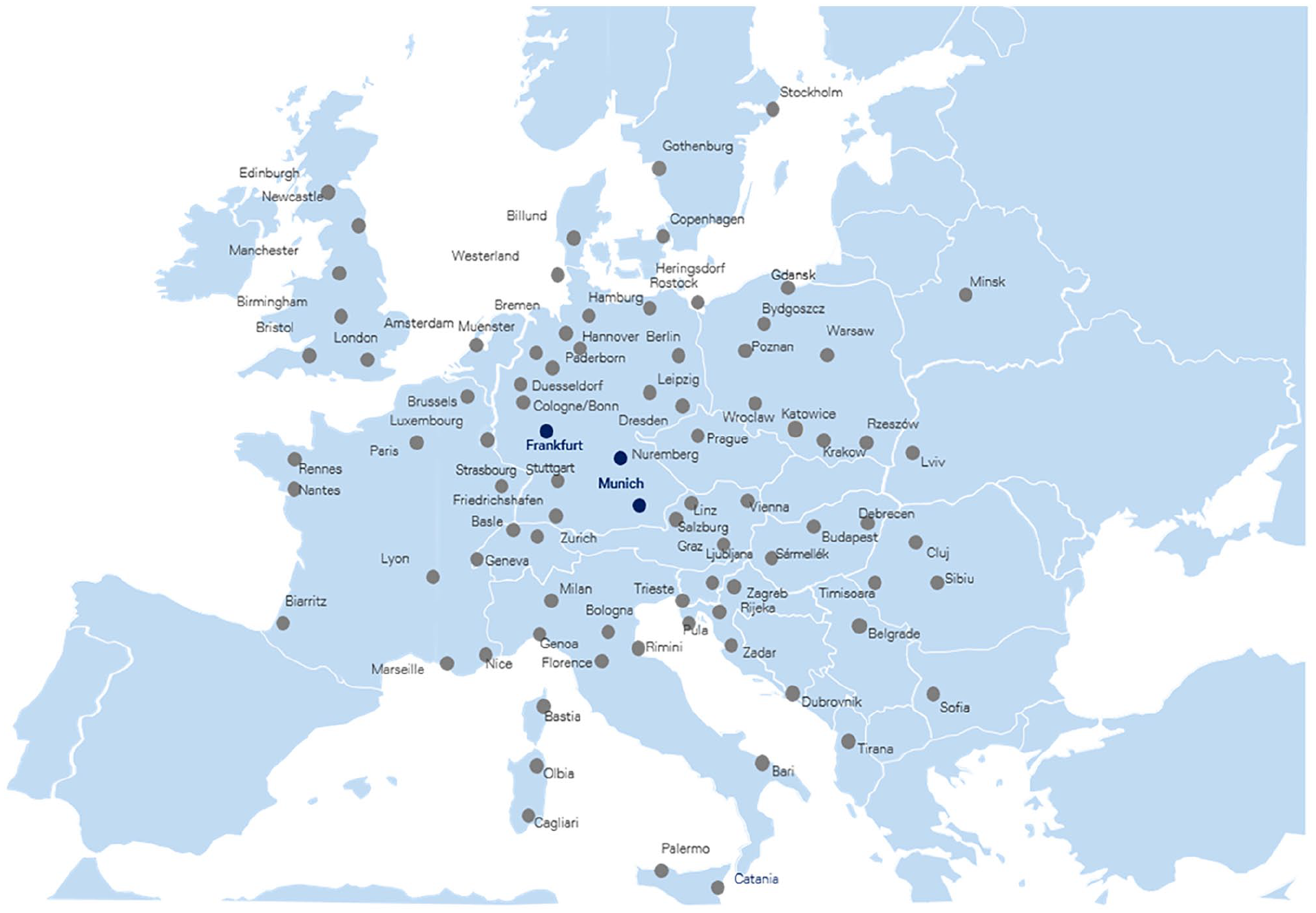
The Lufthansa CityLine European network (Lufthansa CityLine, 2020b).
LH Group CEO Carsten Spohr frequently emphasized in 2018 that their service did not meet customers’ expectations. This mismatch was reflected in an 18th place in the Official Airline Guide (OAG) punctuality ranking for mega airlines, which are “the world’s top 20 operators globally in terms of scheduled flights in 2018” (OAG Punctuality League, 2019). In 2018, LHCL had accumulated 600,000 min of delay in departures, also due to waiting for late transfer flights. Not all of these delays could be caught up during the flight. Consequently, the airline faced additional costs that resulted from reimbursements, additional hotel bookings, or the necessity to rebook flights (passenger-related) and additional parking charges (airport-related).
We, of course, hope for 2019, for the purpose of our customers to achieve higher punctuality and reliability and likewise reduce the additional costs. (Carsten Spohr, CEO, LH Group)
In addition, an airline’s business model is critically dependent on the utilization of its planes. An aircraft only generates revenue when it is up in the air. Thus, improving each turnaround performance—the time between an aircraft being on-block and off-block—increases the airline’s profitability. Figure 2 shows the key activities involved in such a turnaround (Lufthansa Systems, 2017).
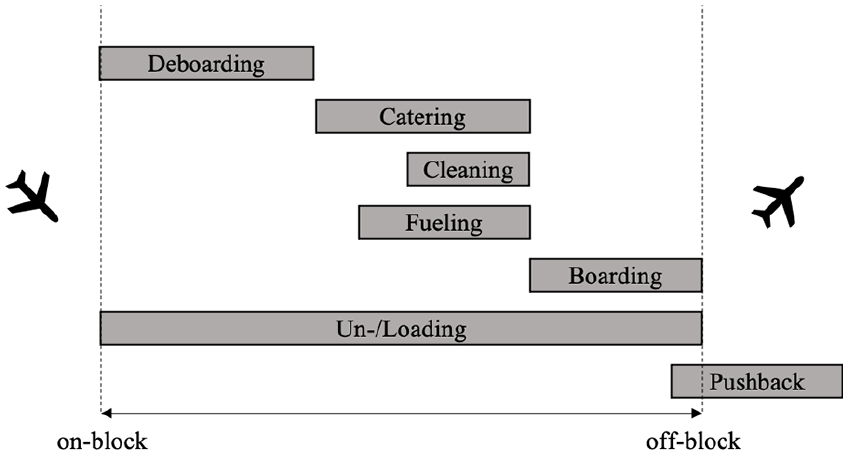
Exemplary ground-operation processes.
A turnaround starts as soon as the aircraft is “parked” at its assigned boarding position at the airport—either directly in front of a gate or in an apron position—and its position is fixed with wheel chocks. Some steps, like (de-)boarding, (un-)loading, cleaning, catering, and fueling are usually part of every turnaround; other steps, passenger transport by bus, for example, are only needed when the aircraft is parked remotely. Each turnaround process ends with the aircraft being pushed back from its position and, therefore, being off-block again. The many interdependent ground-operation processes, as well as the ever-changing environmental conditions, may result in an aircraft delay for several, not always apparent, reasons. For instance, a problem during the fueling process can cause a delayed departure. Alternatively, air traffic congestion or bad weather conditions may force an aircraft to circle before landing.
Setting the preconditions for a smooth turnaround process means an airline must keep its fleet in good condition. This involves maintenance scheduling and execution, as well as planning the availability of the corresponding maintenance tools and spare parts. These processes can be inherently complex. For example, spare parts delivery process has two main variants. The first variant is Line-Replaceable Units (e.g. auxiliary equipment), which are usually quite expensive and, therefore, not kept in stock. They must be ordered and delivered specifically for a scheduled maintenance task. The second variant is consumables like screws or gaskets, which are kept in stock and ready for assembly.
There are also several processes that do not directly belong to the process of producing passenger kilometers, such as purchasing and administrative processes. The ground operations process is heavily supported by ground handling firms (e.g. AeroGround Flughafen München GmbH in Munich). In contrast, the maintenance process is mainly operated by LHCL, and the administrative processes are primarily run by the LH Group or its shared-service corporations.
To address the industry-wide and LHCL-specific challenges, LHCL embarked on an operational excellence initiative. Philipp Grindemann, head of business development, was appointed to lead this initiative. Besides identifying new possible routes and expanding the fleet, he and his team of six colleagues are also responsible for managing LHCL’s project portfolio. The latter requires him to ensure that the projects are well aligned with the airline’s strategic goals. He was in the ideal position to oversee all related projects and streamline them toward the strategic goals: operational efficiency and customer satisfaction.
Philipp began the endeavor by acquiring an overview of the status quo. However, he did not find much information apart from the internal reporting tool for ground operations. This report was based on Excel and required many manual steps to reveal high-level key performance indicators (KPI)s, such as punctuality or the number of cancelations. Hence, he concluded that he would need to conduct a careful analysis of the current processes. He had the feeling that he would need to establish something new.
Toward process mining
After Philipp and his colleagues discussed several options, they decided to try process mining as a technology to identify and improve the current problem points in LHCL’s operations. Philipp contacted Celonis, the leading provider of process mining solutions with a market share of 95% (Handelsblatt, 2019). Following an initial contact, Philipp met with Matthias, an account executive at Celonis to discuss initial questions: Which topics are crucial for LHCL? Where are specific pain points in the LHCL organization? What are the possible cases in which process mining would be useful at LHCL?
Celonis has learned through experience that the probability of successful process mining projects is particularly high if the application of its methods is combined with already existing strategic initiatives, as was the case at LHCL. The objectives for the process mining project were defined as follows:
Increase the transparency of processes
Depict existing processes and sub-processes in the highest possible level of detail
Increase the efficiency of spare parts delivery
Ensure on-time departure of the first flight of an aircraft of the day (a delay on the first flight may proceed through all other flights on the same day)
These objectives were aligned with the goals of the operational excellence initiative focused on punctuality and reliability of flights.
Achieving the defined objectives meant identifying which processes directly impact punctuality and reliability. LHCL describes itself as a production company that produces “passenger-kilometers.” To maximize these kilometers, ground and maintenance processes have major importance. Processes that do not directly belong to this production process and have no direct influence on the main objective of punctuality and reliability, such as purchasing and administrative processes, are of lower priority. This is why the decision was made to implement process mining for the ground operations and maintenance processes.
However, this turned out to be tricky because Celonis had no prior experience with aviation-specific processes. The new context demanded increased effort on the part of the account executive at Celonis to understand the processes, the customer’s needs, and the IT infrastructure behind the operations. Furthermore, selecting processes in a domain where there was no prior experience was risky for both sides. It was possible that the implementation was not feasible for the selected processes or that it offered only marginal added value.
However, Celonis’ analysts remained convinced that process mining was a powerful solution that could reduce the pain points at LHCL. Because there were no aviation reference projects, a small pilot project, a so-called proof of value (PoV) project, was selected. Spare parts tracing in the maintenance process was chosen as the sample case.
A small team consisting of a solution engineer and data scientists from Celonis as well as domain experts from LHCL first validated the available data and second analyzed a preliminary dataset from LHCL. By connecting data sources, such as the aviation-specific ERP system AMOS for maintenance, repair, and operations, and by creating data visualizations, Celonis was able to provide valuable insights into the processes in a short time. To name a specific example, they discovered the actual process within two workshops and identified why a particular spare part was late for assembly. Thus, the PoV demonstrated the feasibility of process mining for relevant processes. They were confident that the required data were available and accessible and that they could draw meaningful insights based on the high degree of transparency provided by process mining.
Philipp liked what he saw in the PoV and set about securing funding for a process mining project. To justify the investment, a business rationalization was required to substantiate the financial viability of the project. This rationale was built on the potential savings that could be realized by reducing minutes of delay. On average, each minute of delay costs LHCL 60–70 €, including the apportioned costs for rebooking fees to other airlines, hotel costs, or costs for standby crews. From what Philipp learned from the PoV, he estimated there was the potential to save approximately 50,000 min of delay and 100 cancelations per year.
In addition, Philipp had to convince the process owners to adopt process mining. The process owners drew on their many years of experience in operating and managing processes to identify and realize optimization potential. They were reluctant to use process mining to support these optimization efforts. Philipp conducted interviews with different experts within the company and explored new opportunities for these experts to leverage process mining insights to optimize their processes. During these meetings, it was crucial to explain that process mining was intended to realize the potential for future improvements that had been previously hidden; it was not meant to reveal past failures.
Philipp began to calculate a 5-year business case that would analyze his project’s financial potential. He also deliberated on how much he would be able to pay Celonis to implement it.
Implementation at LHCL
LHCL operates as a cost center within the LH Group; it produces flight services necessary for other airlines within the group. Thus, the investment decision required approval at the group level. Philipp first gained insights as to the potential of the technology from the PoV; he had a convincing business case; and he could rely on the top management’s attention to delays because they were often mentioned by LH CEO Carsten Spohr. Thus, Philipp presented his concept to the project funding board at LH Group. This is a board of executives who decide to fund projects that will improve Lufthansa. As process mining was a comparatively new technology, it took Philipp three tries to convince the board to invest in the project. Each attempt was followed by one or more additional interviews with process experts. The board finally agreed to implement the Celonis software for two key processes and to support the project for three years to give it time to demonstrate a positive business case.
The project team was also required to present their approach to the employee organization to receive their approval. There were no concerns regarding the General Data Protection Regulation 2 as no personal data were handled. Furthermore, the group was ensured that it was not possible to control the behavior and performance of individual employees through the process mining analyses. The team removed any personal details from the data, such as who was responsible for or executed certain tasks. Thus, an internal agreement was set up detailing these points, and the employee organization approved the process mining initiative.
Celonis’ management agreed to collaborate with LHCL as a strategic business development opportunity to enter the aviation industry market. Hence, additional technical support was provided from data scientists that helped connect the relevant on-premise systems with the Celonis software, which transformed the data into the process- and customer-specific analyses.
One challenge that was identified early during the PoV was that data had to be collected from various sources. For example, one part of the process data was owned by LH in Frankfurt and had been stored on the servers of an external data service provider, whereas the other part was located on the premises on LHCL servers. Other parts of the data could be retrieved through interfaces of the enterprise resource planning system that LHCL was using.
The Celonis standard project plan was implemented based on Celonis’ prior experience in process mining and on the insights gained from the PoV project. Figure 3 displays the plan that was followed. The estimated effort on Celonis’ side was 40 person-days for each of the two processes. The team began implementing process mining for the maintenance process first and then continued with the ground operations process (cf. chapter 2).
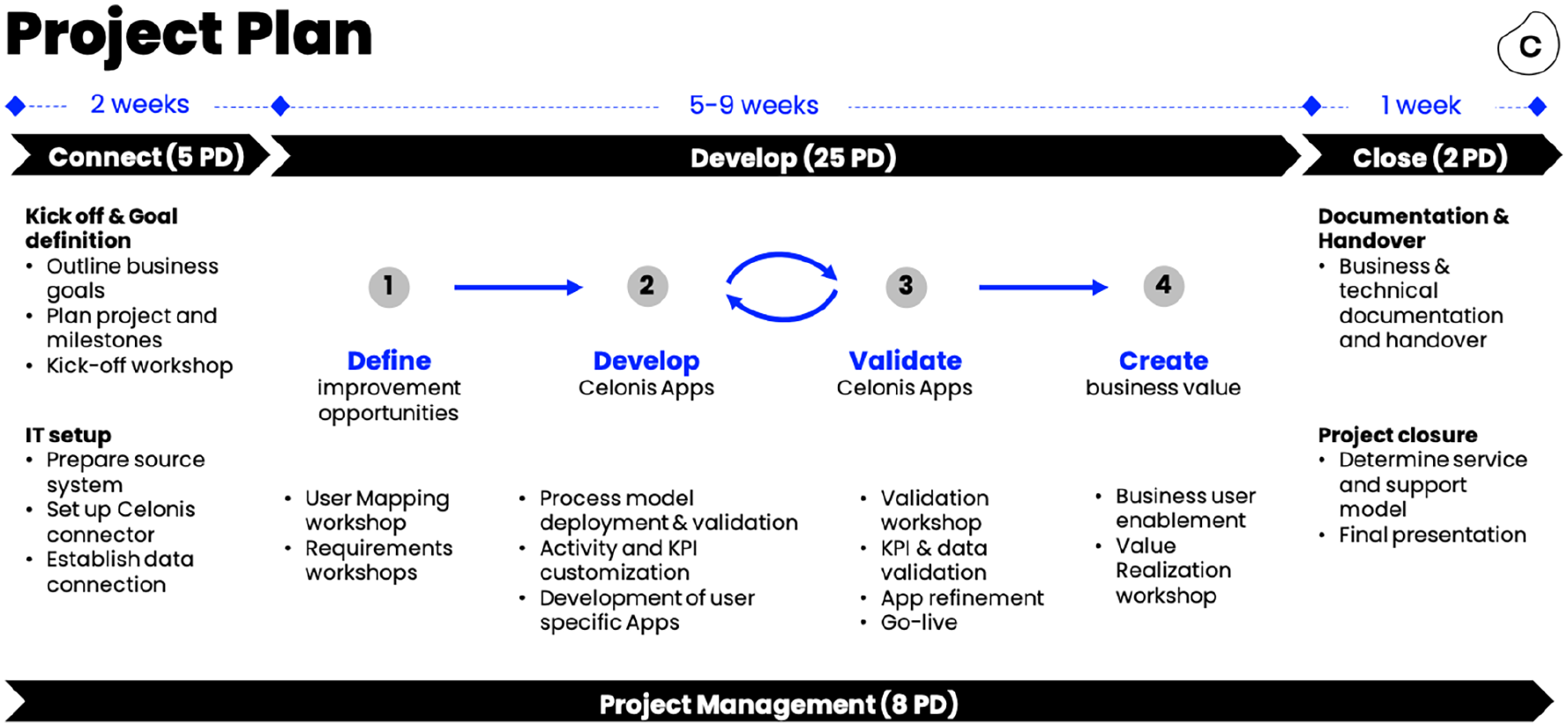
Celonis’ standard project methodology.
Due to the heterogeneous sources from which the data were retrieved, the process mining implementation was challenging. The understanding of processes and the underlying source data had to be reworked a couple of times before a realistic reflection of the processes could be achieved. This included spot-check inspections of certain past and live timestamps, and the comparison of aggregated KPIs in Celonis with the source system—the daily number of flights or the spare parts delivered per month, for example.
In terms of collaboration, Celonis favors channeled communication between the client company and Celonis through a Center of Excellence (CoE), as depicted in Figure 4. This CoE was established at LHCL, headed by Philipp and his colleague Max, a digitalization expert. The CoE promoted the initiative within the organization by identifying the use cases and consolidating their requirements together with the different departments. The CoE also disseminated the competencies to operate the software and was responsible for acquiring resources and providing access to relevant actors to ensure a smooth project implementation.
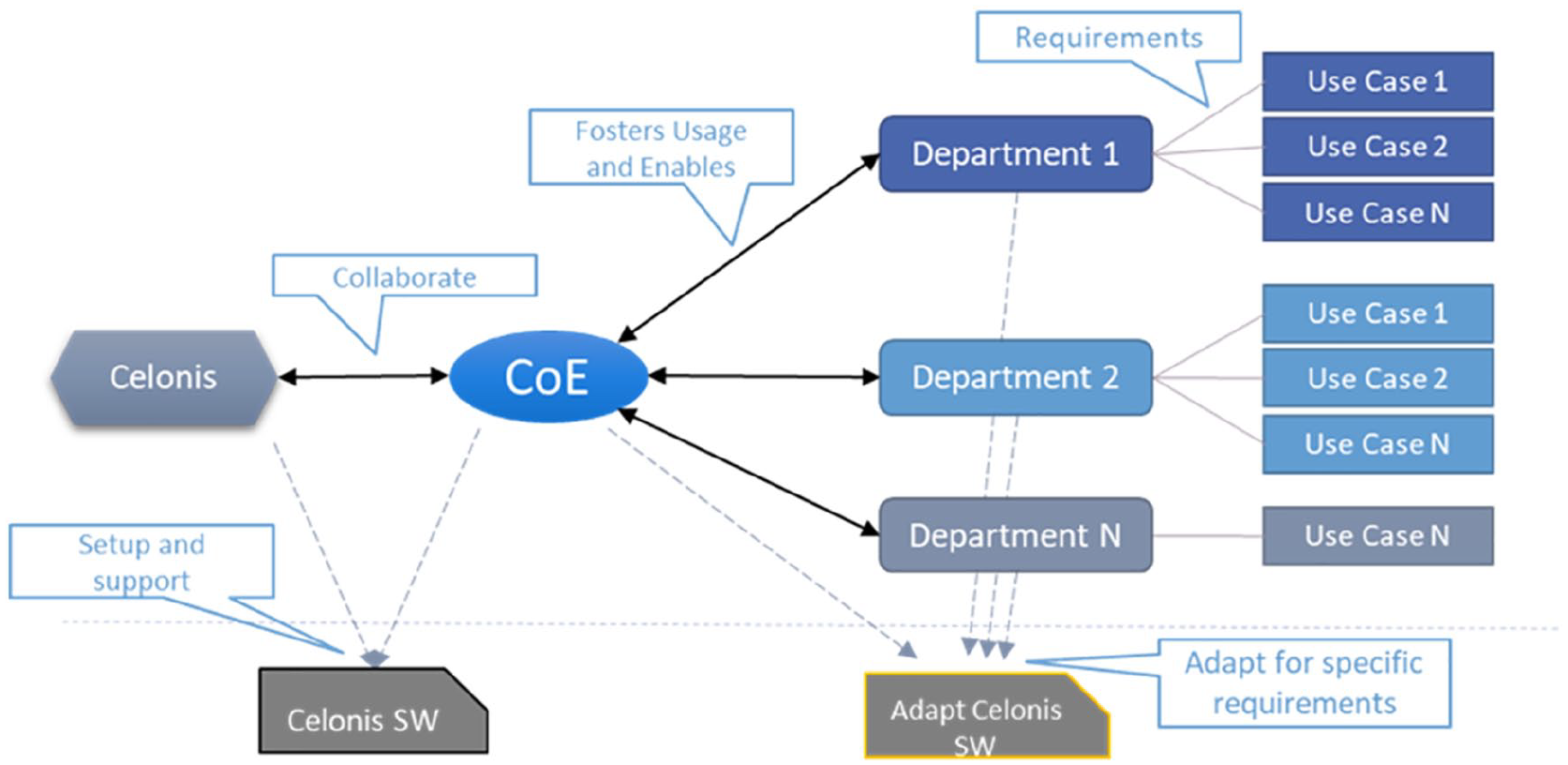
The operational model.
To get the different departments involved in the two processes on board (maintenance or ground operations), performance review meetings were held regularly. The Celonis software was introduced in those meetings to collaboratively analyze the current problems and derive countermeasures. Hence, the program named PROMOTE (
However, there was one critical challenge. When Grindemann reached out to the committees in charge of ground operations and maintenance processes, it became apparent that the chance of creating such a level of transparency was not only positively received. Although it was clear to everyone that transparency could generate an accurate understanding of the underlying problems, some people feared that the tool might lead to an unfair distribution of improvement tasks. In other words, whoever provided more data and thus allowed for more transparency had to fear that he or she would be over-prioritized during the performance review meetings.
This concern was addressed by LHCL ensuring that findings from the tool were owned and governed solely by the respective departments. Therefore, the task of the CoE was not to report on the general performance of each department to management, but to solely integrate the data into the system, create analyses where needed and support with their method expertise.
The CoE established a rule of conduct that ensured that the information generated was not used to leverage power over departments that had shared their information. Instead, the strategy was to offer operational transparency that enabled the departments to conduct their own in-depth analyses to optimize their business processes. Web-based training from Celonis allowed employees across hierarchical levels to get acquainted with the software and the CoE supported when specific, for example, software-related questions arose.
Every two weeks, we take a look at the processes, together with the experts, and also detect changes without anybody conducting a new analysis. (Philipp Grindemann, Head of Business Development, LHCL)
An important success factor for adopting process mining technology was ensuring sufficient data quality to produce reliable findings. Understanding and evaluating the data go hand in hand with understanding the business. Hence, a close collaboration between the data scientists of Celonis and the CoE was established. The data scientists implemented dashboards requested by the departments. Thus, the departments were able to work independently on their problems between and during the review meetings. When it was time to review the implemented improvements, the results were reflected in the dashboards. Eventually, trust was developed in the participants of the performance review, and their dedication was enhanced as they were responsible for the success of certain use cases.
Project results
The strategic decision to roll out the Celonis software to everyone responsible or involved in executing the mentioned processes at LHCL created the opportunity to find a large number of use cases. The dashboards (for an example, see Figure 5) provided an excellent management overview as well as the possibility to do a deep dive into particular processes using the drill-down function or the process explorer (see Figure 6).
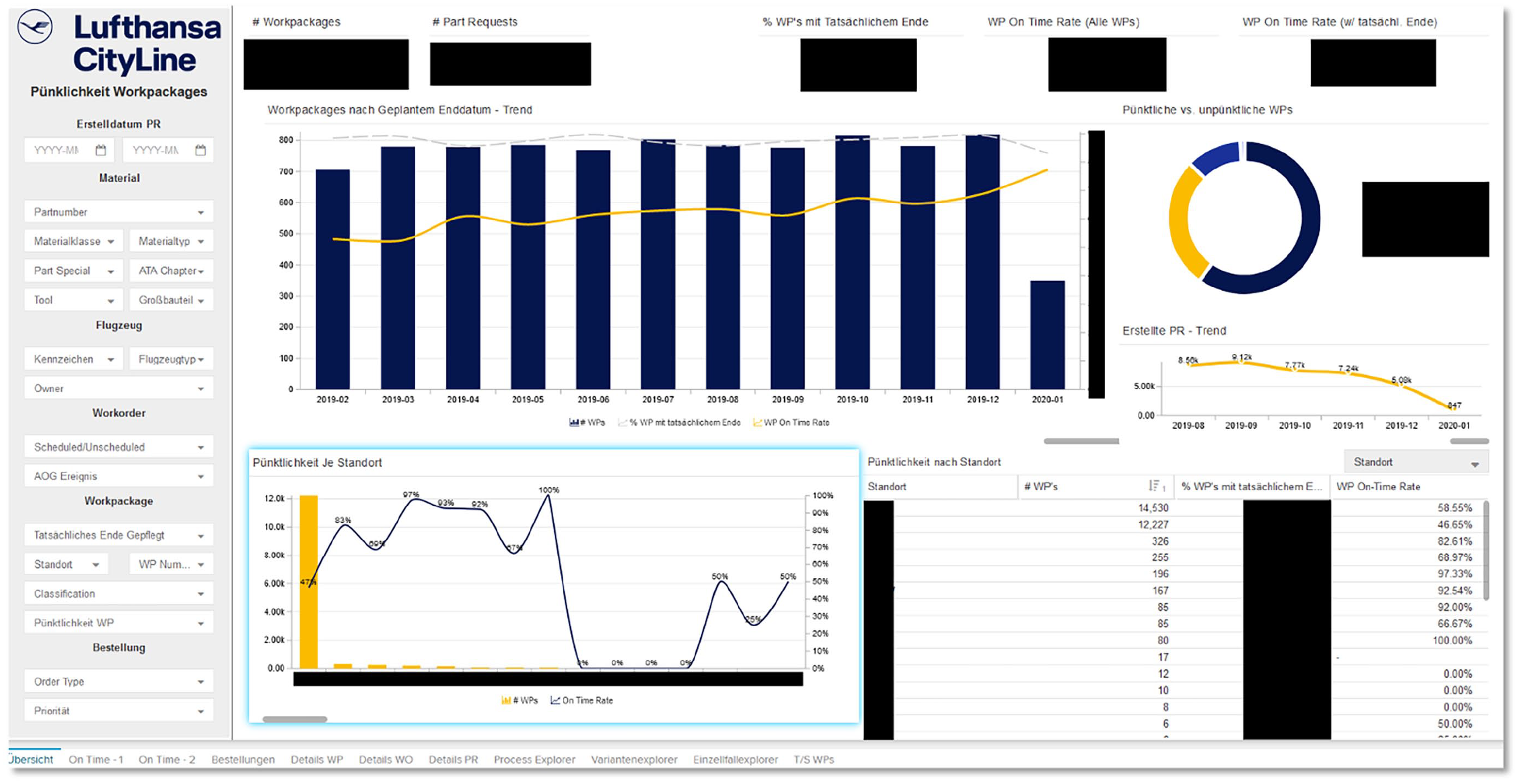
The Celonis dashboard created for LHCL.
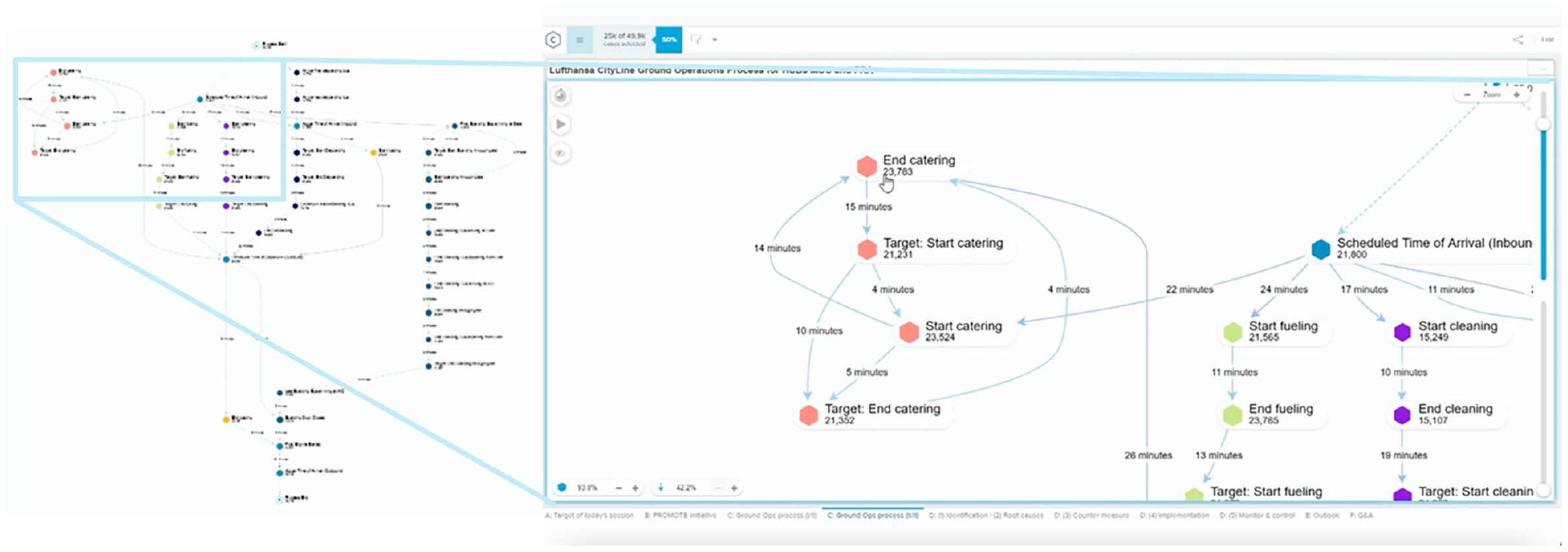
The Celonis process explorer.
In general, two approaches for justifying the investment in process mining can be distinguished at LHCL. The first approach analyzed the impact on high-level KPIs (top-down), such as punctuality or reliability. This approach was chosen for the calculation of the initial business case. The second approach described the implementation of specific use cases (bottom-up) while considering their impact not only on high-level KPIs. Instead, an in-depth investigation of financial and non-financial benefits and consequences was needed for each use case. One example of such a bottom-up process improvement was in the context of ground operations. The goal was to change the departure time of apron buses that transport passengers from the gate to planes standing on remote parking positions. The boarding procedure at the Munich airport was also redesigned to make it faster. This included the introduction of guided walk-boarding at two positions. This approach, which meant no bus transfer is needed even though the aircraft is at a remote location, enables the passengers to walk directly to the aircraft. The results were higher punctuality (2 min per flight), a reduced average boarding time (−5 min compared to bus boarding), and an increased open gate period (+7 min compared to bus boarding). Process mining analysis also revealed that introducing a 5-min buffer between flights in the flight schedule helped to prevent delays. This impacted customer satisfaction because schedules were more reliable, and delays were not propagated from one flight to the next throughout the day.
In the maintenance process, LHCL discovered that some of the most frequent spare parts delivered by express were the coffee machines. Because flights can depart without a working coffee machine, the cost for express deliveries could be saved. Further savings came from combining the repair of coffee machines with other maintenance measures, which avoided costs and reduced delays.
One high-impact improvement that the team only discovered with the help of process mining was the relocation of repair tools. There is only one set of some expensive repair tools at LHCL, and they must be transferred from one hub to another to execute maintenance actions. Without proper planning, this can lead to high costs and delays in the repair process. Thus, early indicators were developed. One was determining when a machine was soon due for maintenance but could only be checked in one hub while the tools were located in the other hub. Process mining established the urgent need for action before the problem occurred. This maintenance scheduling improvement allowed LHCL to reduce maintenance times and transport costs. Furthermore, several minor improvements in the overall maintenance process were achieved—such as the adjusted planning of maintenance work packages—due to the amount of detailed process information gained through process mining.
Looking at all these small and large process improvements, Philipp was convinced that he could easily reach his goals. The primary goal of the project was to improve flight punctuality. By the end of 2019, LHCL had increased its on-time performance (flights with a maximum of 15 min of delay) by around 8%, and the total delay of flights was reduced by 300.000 min compared to the previous year. Because LHCL plays an essential role in the LH Group’s flight network, reduced delays in the commuter service made an important contribution to the improvement of LH’s OAG ranking. An increase in on-time performance from approximately 69% to 74% meant that LH rose from 18th to 15th place (OAG Punctuality League, 2019).
Aftermath
Today, the biweekly performance meetings for value realization are agile. Improvement activities are planned and reviewed on a Kanban board, and regular sprints to implement these activities take place on a cycle that alternates every two weeks between the ground operations team and the maintenance team to ensure continuous improvement and an ongoing evaluation of the executed actions.
In the medium term, LHCL seeks to transition from reactive assessment to proactive analyses such as process and delay prediction that focus on processes that affect the punctuality of flights. In the short term, they will focus on crew-related operations as well as the fuel order process in line with their existing approach of tackling individual and industry-specific processes. These are highly complex domain- and company-specific processes. Hence, an in-depth analysis of these processes may uncover significant potential for improvement. There may be potential benefits from analyzing standard Celonis-use cases, such as the Purchase-2-Pay process for internal procurement, but these processes have a low priority because they only have a minor impact on the overarching goal of improving punctuality and reliability of flights.
Of course, LH Group’s management board has positively recognized the achievements of process mining with LHCL’s CoE. The management board seeks to realize process improvements and synergies across all its airlines, and the CoE is now the point of reference for various process improvement activities and has expanded its knowledge and experience throughout the LH Group. This has created additional opportunities for cross-organizational process mining between airlines and beyond—for example, with suppliers, ground handling firms, or airport operators. This could enhance collaboration between partners and leverage the potential for synergy.
When implementing new use cases for process mining, LHCL will also face new challenges concerning making event data available that have not yet been captured in information systems. For example, the fuel ordering process has several activities that are not traceable in current information system logs.
Furthermore, the COVID-19 pandemic in 2020 dramatically affected the aviation industry. Flights and passenger numbers decreased by 60%–80% compared to the 2019 numbers (Eurocontrol, 2020). Several airlines filed for bankruptcy, and airports temporarily closed terminals and runways. It is expected to take several years to reach the pre–COVID-19 level of flights and passengers; the entire industry faces considerable disruption. This also radically changed the focus of process control and process analysis. Airlines that formerly had to handle limited physical infrastructure and were therefore keen on optimizing operations and increasing customer satisfaction are now forced to cut costs wherever possible while handling new governmental regulations, such as COVID-19 testing procedures. Hence, process mining is used for monitoring accounts payable to minimize cash outflow, for cutting rework procedures needed in the technical fleet management, and for optimizing the process of planning and disposing of crews. Simultaneously, the CoE supports the operational departments in preparing the ramp up through continuous process monitoring and early identification of inefficiencies and bottlenecks. Thus, Philipp and the CoE will not soon exhaust their endeavors to improve LHCL’s and the entire LH Group’s processes with the help of process mining.
Footnotes
Appendix A
Acknowledgements
We thank Alexander Heiß, Frederick Koch, Daniel Nientiedt, Roman Straßer, and Philipp Baltes for their great support with the collection of background information on the case during the Process Mining Seminar at TUM.
Author note
In October 2021, Markus was appointed to the professorship for Information Systems, in particular Digital Transformation at the University of Applied Sciences Landshut.
Declaration of conflicting interests
The author(s) declared the following potential conflicts of interest with respect to the research, authorship, and/or publication of this article: Janina Nakladal is employed by Celonis, the software provider of the Process Mining tool used by Lufthansa CityLine.
Funding
The author(s) received no financial support for the research, authorship, and/or publication of this article.
