




Abstract
Walton group, which has its global headquarters in Bangladesh, is a relatively new entity in the electrical, electronic, automotive, and other appliance sectors. Since their inception, Walton has expanded their product categories that are vital for a contemporary lifestyle. The case highlights Walton’s dedication towards cutting-edge technology, innovation, and strategic plans to take prudent risks while meeting customer needs in the technologically sophisticated generation. Furthermore, in addition to aggressive innovation, Walton is conscious of its environmental impact. The organization handled modern environmental concerns by embracing the notion of reduce, reuse, and recycle. Moreover, the case emphasized on the prospects that other local firms may explore in accordance with the essentials of innovation mentioned in the case and Walton’s strategies, as the company sets an exemplary benchmark in the industry.
Introduction
Domestic brands of consumer electronics and household appliances have significantly contributed to raising Bangladeshis’ living standards over the last few decades. This industry used to be heavily import-focused, but local electronic companies have become largely self-sufficient over time. These regional firms may provide more affordable prices than global brands owing to their in-house manufacturing. As a result, people from various cities, significantly from rural parts of the country, have benefited since it makes these items much more accessible to them. Additionally, local brands are also exporting electronic appliances, with an export value of about BDT 900 crores in the fiscal year 2021–2022, making a substantial contribution to the economy (Hossan, 2022).
From a domestic standpoint, the Walton group is currently considered one of the leading manufacturers of electronic and electrical products in Bangladesh. The firm is meeting the needs of millions of people worldwide with its diversified product line, affordable price, and cutting-edge design. Beginning in 1977 as a manufacturer of electrical and electronic devices, Walton expanded its product categories to support the needs of a contemporary lifestyle (Walton Group, n. d.). Walton and Marcel, a trademark of the Walton Group, has become the most recognized and trusted name in Bangladesh’s E&E business due to its solid production foundation, excellent goods, reasonable prices, broad market penetration, and prompt after-sales services (Babu, 2021). Walton’s innovation is dedicated to integrating cutting-edge technology and fostering a tech-savvy culture in Bangladesh. Moreover, Walton’s retail network, which includes more than 4000 plazas, dealers, and exclusive distributors, enables it to cope with after-sale difficulties (Walton Group, n. d.).
Several other local electronic companies, such as Singer, Vision, Jamuna, and others, saw the rising potential of Bangladesh’s electronic sector during this period of growth and began operating independently to provide innovation to the market. Interestingly, Walton stood out from the crowd and established benchmarks for local businesses regarding innovation, expansion, and marketing techniques. The case will look into such techniques and reasons behind Walton’s massive success in acquiring customer confidence in the electronics sector and its aggressive innovation activities.
Rationale
A considerable percentage of Bangladesh’s people lacked electricity a few decades ago due to a lack of available resources. With a power generation capacity of approximately 5500 MW for a population of 150 million in 2009, the energy industry was too small and fragile. The consequence was frequent and continuous load-shedding, which served as a significant impediment to the country’s ability to develop its information technology sector (Imam, 2021). As a developing nation, Bangladesh has also experienced a sharp rise in its need for electricity, driven by the country’s steady GDP development. The Bangladeshi government has launched several initiatives to solve this issue and has successfully supplied energy facilities in many distant places (Islam and Khan, 2017). One of the world’s largest rural electrification schemes has been carried out by Bangladesh Rural Electrification Board (BREB) since 2009, providing access to more than 90 million people. Remarkably, Bangladesh also received $500 million from the World Bank to help with the sustainable transformation of its electrical system and to expand and modernize its power distribution infrastructure (World Bank, 2021). The vast improvement in energy generation has sped up and eased living in even the most isolated settlements. It has stimulated economic activity that has raised wages and added employment. Additionally, it has increased demand for support services and electrical and electronic household products (Noyon, 2022).
The development in power generation has increased the usage of smartphones and consumer electronics appliances like refrigerators, washing machines, and freezers among the rural population. This has contributed to the development of the domestic market of electrical products, making it worth Tk10,000 crore. Since then, local brands like Walton, RFL, Partex, and MyOne have started taking initiatives in manufacturing electronic products (Noyon, 2022). Local brands have a considerable market share due to their effective use of value engineering. Value engineering is a process that saves costs while adding value and improving the quality of a product or service. The present market is competitive, and the only way to succeed is to deliver the best value pricing to the client (Adnan et al., 2018). Local brands reaped the benefits of value engineering by manufacturing products locally, resulting in affordable costs.
Additionally, during the pandemic, significant improvements in the electronic industry were established to satisfy the increasing customer needs. During lockdown, people used to prepare restaurant-quality meals at home, find methods to occupy themselves at home, enjoy pleasant living conditions, and have a supply of food to avoid frequent grocery store visits. As a result, customer demand for items formerly regarded as luxury goods, such as washing machines, microwave ovens, refrigerators, and vacuum cleaners, has conspicuously increased (Hasan, 2020). However, in response to the adverse economic effects of COVID-19, customers chose affordable gadgets, which increased market demand for local goods and allowed domestic electronic brands to account for 77% of the market, formerly solely controlled by international companies (Tahmid, 2022). However, Walton distinguished itself from the plethora of local enterprises by steadily expanding their service offerings and product categories over time. In order to fulfill consumer demand, Walton could discern the current needs and kept manufacturing consumer gadgets with smart technology to capture a significant portion of the market. For instance, Walton has a market share of around 84.5% and commands 61.5% of the domestic refrigerator industry, which is worth Tk 6000 crore. Additionally, Walton’s diverse product lines for different categories serve a wide range of customer expectations and considerably increase the brand’s marketability. It is interesting to note that Walton’s development methods went beyond simply expanding their product line; they also made sure to maintain international standards, aiding their ability to export their products overseas. Walton has also successfully established their image as a producer of reasonably priced and long-lasting electronics in domestic and international markets (The Business Standard, 2021a). This illustrates Walton’s dedication to innovation and affordable technology in every corner of the nation. Additionally, their perpetual upgrade in product categories has aided them in remaining competitive with other domestic and international firms. The fundamental objective of the case is to highlight Walton’s fundamental approaches that drive their persistent innovation across several product categories. Furthermore, it will shed light on how the firm competes with top worldwide brands in domestic and international markets, as well as what insights other local businesses may gain to make the electronic industry one of Bangladesh’s important commercial sectors.
The electronics industry profile of Bangladesh is discussed in the next section which describes the emergence of a few notable local brands in the market.
Methodology
This paper is primarily based on secondary information. Secondary data analysis is a process in which data from one study are utilized to address new research questions or apply new statistical methods (Coyer and Gallo, 2005). Information regarding Walton’s various range of product lines, price, and innovation are collected from Walton’s official Web site. Moreover, secondary data, such as journal publications and newspaper reports, were also utilized to develop the case.
Electronics industry profile
Even though Bangladesh had a high consumer base of foreign electronic brands for decades but there has been a constant growth of local brands throughout last few years. People started gaining confidence on the local products’ functionalities which had a massive impact on the consumer purchase behavior.
Some of the most notable local electronic brands include the following:
Walton
With operations in more than 40 countries and the ability to create almost 10 million electrical items annually, Walton is one of the top electronics brands in Bangladesh. The company is a well-known producer of a range of useful household goods, including refrigerators, air conditioners, televisions, smartphones, laptops, and motorbikes (Business Inspection BD, 2022).
Singer Bangladesh
Singer started their operation by manufacturing sewing machines and has later expanded its business to produce a variety of goods, including refrigerators, LED/LCD TVs, fans, air conditioners, washing machines, irons, microwaves, rice cookers, DVD players, air coolers, laptops, desktop PCs, and Blu-ray players (Business Inspection BD, 2022). Singer is currently flourishing in the electronics sector owing to the expansion of their product line, seizing a significant share of the market.
Jamuna electronics
One of Bangladesh’s greatest commercial conglomerates, Jamuna Group, has a subsidiary firm, Jamuna Electronics and Automobiles Ltd, which is currently one of the top brands in the country’s refrigerator and freezer market. They have been providing their consumers with supplies of goods for various purposes for several years. They are one of the major producers and sellers of electronic goods, including motorbikes, televisions, air conditioners, small appliances, and refrigerators and freezers. Jamuna manufactures their product using contemporary equipment, cutting-edge technology, expert staff, and premium raw materials, ensuring the ruggedness and proper functionality of their goods (Business Inspection BD, 2022).
Vision
In addition to producing household appliances including blenders, rice cookers, induction cookers, room heaters, fans, and LED TVs, RFL Group’s subsidiary, Vision Electronics, also makes washing machines, irons, refrigerators, air conditioners, refrigerators, and Air conditioners. Similar to Walton, Vision Electronics has begun exporting its goods to more than 10 nations, contributing to the growth of the country’s economy (Business Inspection BD, 2022).
Marcel
The Walton Group owns and manages Marcel, a household electronics brand. Its primary commercial activities include developing, manufacturing, exporting, and marketing consumer electronics, home appliances, and automobiles. They provide various products, such as air conditioners, motorbikes, household appliances, and multi-storied refrigerators and freezers. Known for their superior quality, usability, and state-of-the-art technology, Marcel products are well-regarded. It has received international standardization certification for both its environmental management systems, ISO 14,001:2004, and its quality management systems, ISO 9001:2008 (Business Inspection BD, 2022).
MyOne
For around 20 years, MyOne has served the electrical, electronic, and home appliance industries. In addition to many other goods that were progressively released, they have a wide range of product line, meeting the consumer needs of the local market (Business Inspection BD, 2022).
Taking into account the aforementioned data, Walton’s dedication to provide smart and innovative products that are compatible with the modern lifestyle of society has enhanced consumer perception of the brand. In order for Walton to attain its inventive scale, it had to follow a few key strategies and stages, to set cross-cutting practices and processes to structure, coordinate, and support innovation.
The following section discusses the eight essential elements of innovation, which are linked to Walton’s crucial initiatives that have helped the corporation ensure its market expansion, innovation, and sustainability in the market.
The essentials of innovation
Innovation is crucial for every industry of the economy to remain competitive in the technological revolution. Even though many corporate leaders agree with this assertion, just 4% of them are satisfied with their innovation as it involves both creativity and execution. A corporation must provide creative outputs to its clients at the appropriate speed, and Walton’s comprehension of this principle helped it stand out from competing local brands in Bangladesh and obtain a sizable portion of the market (Jong et al., 2015). The first four components of innovation that are linked to Walton’s strategies and growth are as follows:
First and foremost, a company should aspire about what it wants to achieve in the long run and have cascaded targets to reflect that aspiration. For example, Walton set up its production plant in 2007 to manufacture refrigerator, air conditioner, television, and motorbikes. However, Walton has around 22 product categories including smartphones, E-bikes, home appliances, and hardware items (Walton Group, n. d.). Precisely, Walton’s progressive product line and category enhancements demonstrate the company’s desire to meet contemporary needs and be an industry leader.
Second, companies should be mindful of their choice of investments. For instance, businesses should invest in a cohesive, risk- and time-balanced portfolio of activities with enough funding to succeed. To prevent a liquidity constraint and losses, businesses should spring clean their portfolios and focus on projects that are financially viable for them. However, in order to make an informed decision, the firm must first go through the discovery step (Jong et al., 2015).
However, in order to make an informed decision or effective choices, businesses ought to have unique business, market, and technological insights that result in winning value propositions. Interestingly, the current CEO of Walton Hi-Tech Industries Ltd, Golam Murshed, first joined the Walton Group as an assistant engineer and is crucial to the business’s present success. Walton’s board of directors appreciated Golam Morshed’s understanding of the IT sector and his technological insights, since those helped the board of directors to make proper investments that resulted in higher profitability (Anik, 2021).
Moreover, businesses should develop business plans that offer scalable and strategically sound profit resources. If businesses do not update their goods and services in this rapidly evolving and technologically sound period, they run a great chance of going extinct in the market. Notably, in order to meet varied customer demands, Walton investigated its business strategies and created a range of product lines for each category, which reduced their risk of becoming extinct and help them evolve in the international and domestic electronic industry (Walton Group, n. d.).
Figure 1 depicts the eight essential techniques Walton has adopted in order to make continuous innovation and sustain in the market. Eight Essentials of Innovation Adopted by Walton. Source: Compiled by authors.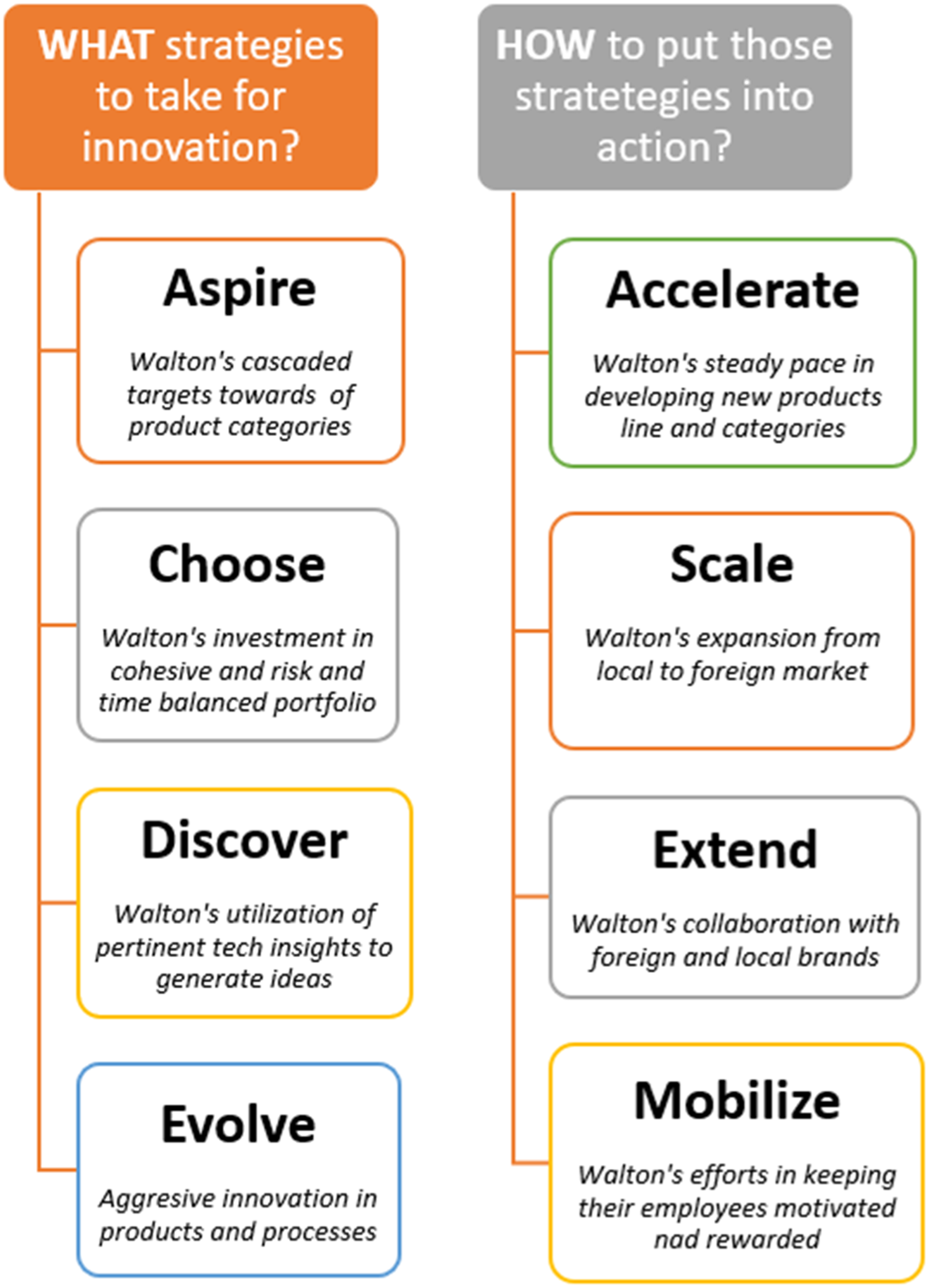
The first four steps presented above are crucial for a business to follow in order to develop and expand the brand. The next four, however, discuss how the businesses should put their innovation strategy into practice in order to keep up with their rivals.
Firstly, businesses should create and introduce innovations rapidly and successfully to outperform their rivals. For example, Walton’s aggressive extension in its product lines proves its acceleration in the market and has undoubtedly helped it in surviving in the local and foreign markets.
Secondly, businesses need to innovate at the proper scale in the pertinent markets and sectors. For instance, Walton’s products are well-known for their affordable rates, and as a result, they have garnered enormous appeal among rural residents during its initial stage. However, as they improved their equipment and procedures, they decided to export their electronics overseas and now the company exports its products to 40 other countries and has bought three European home appliance companies as it seeks to extend its presence in domestic and international markets (Parvez, 2022).
Moreover, companies can win by creating and capitalizing external networks. Companies should work with their peers to realize the benefits of each. As a result, in order to thrive on a bigger scale, firms must maintain and build their networks inside industries. For example, Walton has collaborated with a variety of international and domestic businesses, including HAAN easy-life Inc. and a South Korean based firm which might help them learn more about the foreign market (Daily sun, 2022).
Finally, in order to continuously develop, organizations must keep their personnel motivated, compensated, and organized. Golam Murshed, who joined Walton as an assistant engineer in 2010, is an incredible example of Walton’s efforts to keep its staff motivated. However, Golam Murshed’s great potential in the IT industry has made a difference and played an important part in the company’s success. As a result, Walton rewarded him with promotions, which kept him motivated and led to the technological growth of the company (Anik, 2021).
Walton’s devotion towards continuous upgrades in product lines
The accessibility and affordability of Walton electronics gave them a competitive edge over some of the top international brands in the market. Walton was able to minimize their production costs owing to their in-house manufacturing, which resulted in a reduced pricing in the market. It is noteworthy that Walton produces their electrical items using some of the finest machinery available, such as Thermoforming, Channel Extrusion, ABS/HIPS Sheet Extrusion, Magnetic Strip Extrusion, PP Hollow Sheet Extrusion, VMC, 5 axis VMC, Ultrasonic Welding, Injection Molding, Styrofoam Making, Hi Speed Power Press, Fin Press, Corrugation, SMT pick and place, SPG printing machine, AOI machine, and Tamura (Walton Group, n. d.).
Moreover, Walton’s innovation is committed to combining new technology to create a better developed society. In contrast to the past, when the entire country was largely dependent on foreign-imported equipment, Walton aims to manufacture locally made E&E goods that were previously seen as a luxury product to people of all socioeconomic classes with its self-sufficient R&D facility and its focus on innovation and affordability. Since the company’s very beginning, Walton has constantly been dedicated to supplying the market with contemporary goods, and as a consequence, they have been gradually growing their product lines across a range of areas (Walton Hi-Tech Industries PLC, n. d.) Some of the features of the product categories of Walton are explained in the following section.
Air conditioner
Walton has introduced the world’s first 3-in-1 converter air conditioner with Bluetooth and air plasma technology. Depending on the available space, the 1.5-ton Krystaline Preto series air conditioner can be reduced to 1 or 0.75 tons. It may save energy by 20.18% compared to a conventional 1-ton air conditioner and can also eradicate airborne germs and viruses. Moreover, Walton’s 0.75-ton air conditioner consumes 30.53% less power than the standard model, reducing global warming and ozone depletion (Hossain, 2022).
Refrigerator
Walton has enhanced its premium range of refrigerators by adding four new configurations. According to a local newspaper, Walton’s refrigerators include technology advancements and features like a ceramic-coated premium glass door and an appealing door handle. The refrigerators also have smart controls, UV-C technology, an intelligent germ terminator (IGT), and Syntho-Fresh technology (Star Business Report, 2022).
Syntho-Fresh is a technology that simulates natural light at an exact wavelength to preserve food for a longer duration. Furthermore, newer versions of Walton refrigerator include UVC technology to prevent microorganisms and viruses from contaminating food, while germ terminator technology removes unpleasant odors and germs (United News of Bangladesh, 2022). Moreover, Walton has improved its features by introducing intelligent inverter technology in its refrigerators that can be tuned using AI-based 3D matrix speed. Such capabilities provide users the ability to remotely change household equipment using their smartphones (Daily Sun, 2021).
Compressor
On 6 April 2017, Walton High-tech Industries Limited established the first compressor plant in Bangladesh, ushering in a new era in the country’s hi-tech product production industry. Walton established the world’s most advanced Hemi Anechoic Acoustic Chamber to assure the compressor’s lowest noise level, as well as an international standard QC (Quality Control) laboratory outfitted with modern testing instruments and machineries to ensure high-quality requirements. Furthermore, before being placed into operation, the compressor is subjected to rigorous testing, demonstrating Walton’s commitment to high standards (The Business Standard, 2020).
Moreover, Walton started shipping compressors and their parts overseas after meeting domestic demand. Their international marketing team has been expanding export markets to North and South America, the Middle East, Africa, Russia, and Europe. As a consequence, Walton has received more growing demand from reputable firms all around the world (The Business Standard, 2020).
New initiatives for raising Walton compressors’ export volume
In order to meet the growing need for energy-efficient, lightweight, and affordable compressors internationally, Walton’s R&D (Research and Development) team has been working diligently on a new series of its compressor that would establish a new performance benchmark globally. Walton employs US, Italian, Japanese, and South Korean expertise for product design, production, and worldwide marketing and currently exports its products to 40 countries (The Business Standard, 2020).
E-bike
Walton launched its TAKYON electric bike, which has a strong brushless DC motor with a maximum capacity of 1.5 kW. Notably, the battery utilized has 600–800 cycles and is environmentally benign. Furthermore, the e-bike includes a portable charger that can be charged from the household’s 220-V power line, as well as hydraulic disc brakes and tubeless tires (Risingbd, 2022).
Figure 2 shows a complete breakdown of Walton’s product lines. Walton Product Line.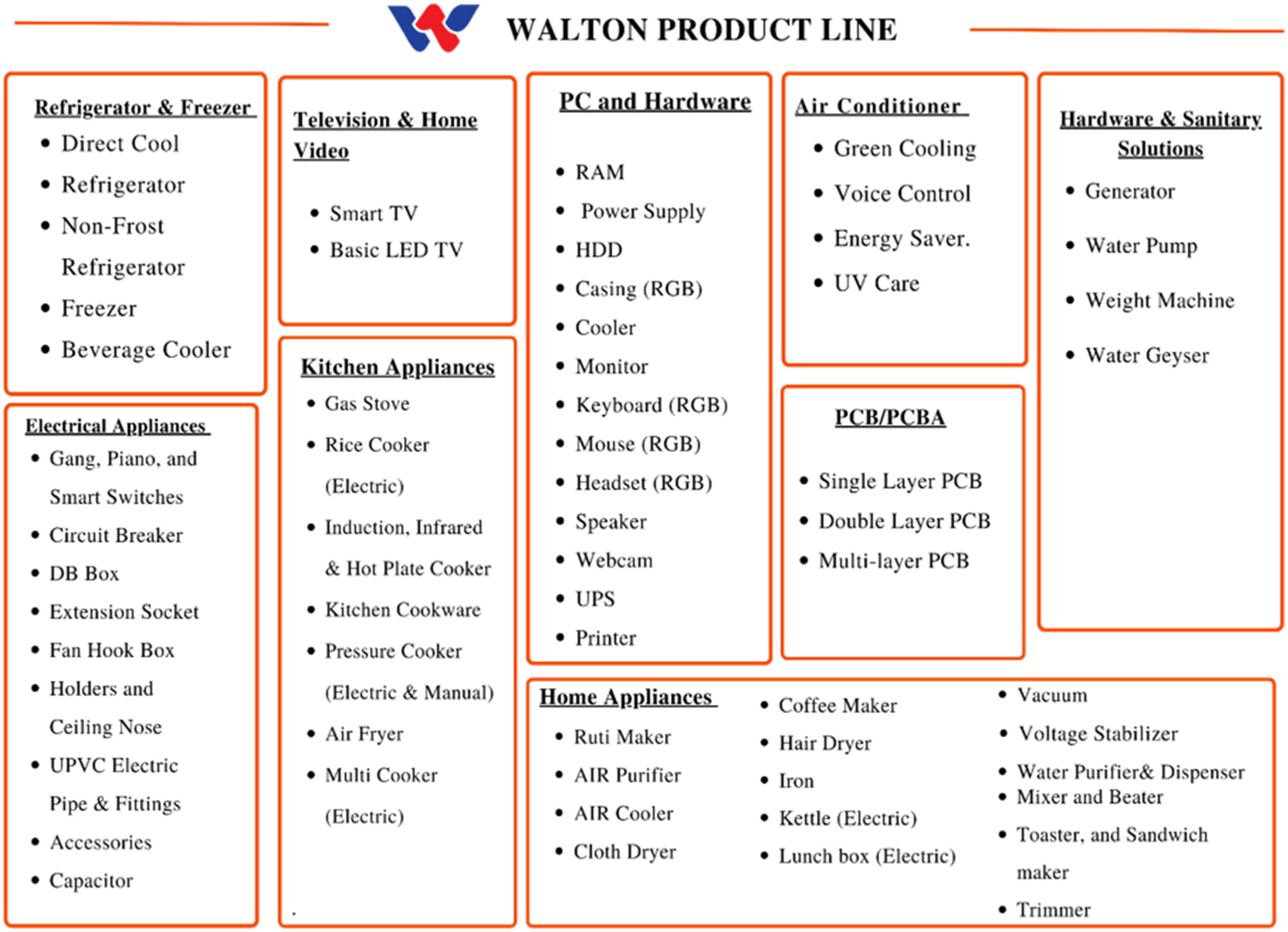
Perceptual mapping
Covid-19 lockdown increased use of consumer electronics, such as computers, Television, smartphones, and other devices. This encourages customers to embrace a digital lifestyle and to demand continuous customization of goods and services. Additionally, the dependency on technology has grown exponentially as a result of remote and hybrid working. This has considerably increased demand for smart electronics and changed the consumer electronics industry. Electronic brands must thus, comprehend changing trade patterns, adjust to an increasingly competitive environment, and gather insights into consumer choices. The consumer tech sector must revamp its communication techniques if it wants to draw in more clients. Since, in order to take the lead in this very dynamic business, it is crucial to give them the most end-user satisfaction possible. This is only viable, though, if the gadgets are jam-packed with innovation, have a beautiful design, are reasonably priced, and have top-notch after-sales support (Panda, 2022). It is interesting to note that Walton has been dominating the Bangladeshi market for low-cost smartphones for a while. The business originally forayed into feature phones before moving on to smartphones and began its venture with consumer electronics solutions. Walton’s product range, offers an exceptional blend of performance and reasonable pricing in the budget category, which makes it position in the first quadrant of the matrix, that is, high innovation and low-price electronics (Rabab, 2022).
On the other hand, foreign companies like Philips are likewise incredibly committed to innovation in order to enhance customer experiences and add value to their products. To address the changing demands of their customers in the rapidly expanding tech-savvy era, they place a strong emphasis on people-focused, responsible, agile, meaningful, collaborative, and creative innovation (Philips, n.d.). However, some customers find it out of their budget range, particularly the consumers in a developing nation like Bangladesh. As a result, they are placed in the second quadrant of the matrix, which has high prices and high levels of innovation. However, certain devoted customers who like distinctive designs and technology are drawn to these companies because brand recognition and distinctiveness significantly affect brand attractiveness, which has a considerable impact on brand loyalty (Zarei et al., 2020).
Electronics that lack innovation, however, seldom capture a substantial market share due to increased customer demands and the continual need for technological improvements to perform efficiently and productively. Companies, such as MyOne, Vision, and Minister, which lack as many product categories as Walton may follow the mee-too strategy to develop their products and compete with the existing brands in the market. Walton has, however, created great standards across a range of product categories, which may serve as a role model for the electronic firms, who are currently striving to sustain in the market and are low in innovation.
Figure 3 shows the innovation-price matrix and the position of Walton in terms of the variables. Innovation and price matrix.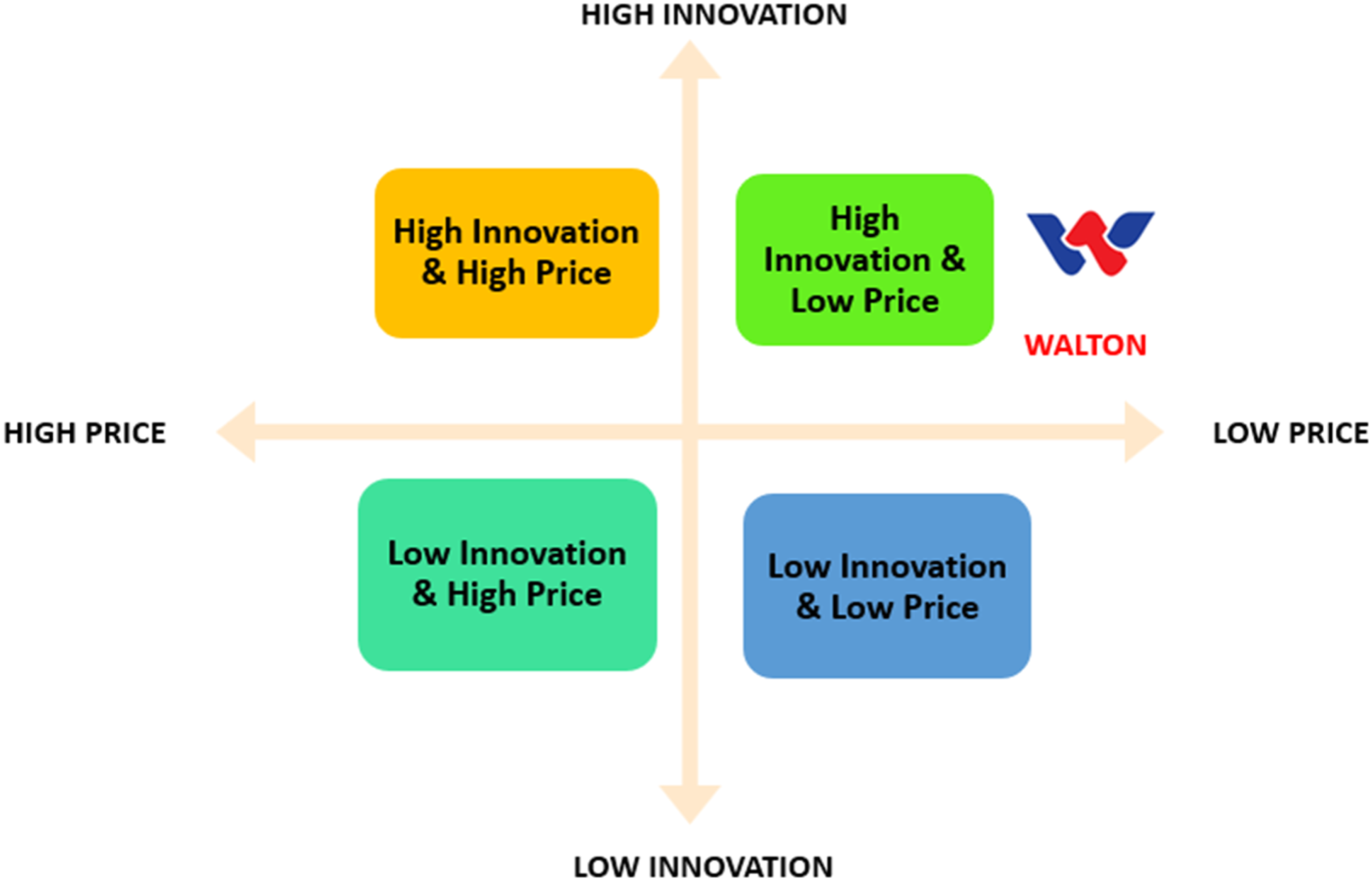
Collaboration with global and local
Walton signed a memorandum of understanding (MoU) with HAAN Easy-Life Inc. to collaborate for developing the new innovative design for home and small appliances where Walton and HAAN will work together on the second-generation model of a vacuum cleaner (Daily sun, 2022). Furthermore, Walton Hi-Tech Industries PLC and Danby Appliances, a well-known North American producer of small appliances, agreed to collaborate on product development and manufacturing, with Danby assisting with sales and distribution of Walton products in the North American market (The Business Standard, 2022a).
Interestingly, other than collaboration, Walton has acquired European brands such as ACC, Zanussi Elettromeccanica (ZEM), and Verdichter, which will steer their way towards the goal of becoming top five worldwide brands by 2030 (Parvez, 2022).
Green approach of Walton
Throughout few years, Walton not only thrived in improving their electrical appliances and product lines, but also remained mindful of the impact their actions have on the environment. The brand stayed vigilant of the detrimental effects that electronics bring to the environment, and hence, started taking actions towards sustainability. The country’s leading electronic brand, aspires to provide more energy-saving products for their customers, which helps to reduce energy loss and make the products more environmentally friendly. For this, they took an initiative, known as “Green CSM,” which aims to reduce carbon emissions at its service sites, making a substantial contribution to the UN’s Sustainable Development Goals. Moreover, to achieve the “Sustainable Development Goals” they organize their facilities with a green concept and they have received several awards for the initiatives to make the environment more friendly for the next generation through environmental protection (The Business Standard, 2022b). Additionally, Walton manufactures, promotes, and exports eco-friendly, energy-efficient goods and these efforts has reduced the number of dangerous compounds that are released in the atmosphere. Remarkably, Walton’s green initiatives have decreased carbon emissions by 543K tons and saved 30% on power, an evident example of Walton’s incredible contribution to sustainability, which led the company to receive the 2017 National Environment Award in recognition of its exceptional work in pollution, prevention and environmental preservation (The Business Standard, 2021b).
More recently, Walton unveiled its electric bus initiative, which will help to ensure the environmental health of the population. Employees will be transported by bus from the gate to their destinations inside the premises of the two and a half kilometer Walton Factory. In order to charge the bus inside of their facility, the electronics firm additionally installed their very own fast charging station. Walton asserts that this will be a significant milestone in Bangladesh’s public transportation system’s modernization (The Business Standard, 2022c).
Walton in 3R system
Recent paradigm shifts in viewing waste “not only as a nuisance but as a resource” and waste management strategy from the “contain and disposal” to “resource management” have helped the 3 Rs (Reduce, Reuse, and Recycle) start to garner greater attention. With this goal in mind, the Bangladeshi government created the National 3R Garbage Management Strategy in 2010, and action plans for local governments have since been created to encourage recycling of waste by creating treatment facilities and markets for recyclable products (Yousuf, 2013).
Walton has already begun using the 3R approach (Reduce-Reuse-Recycle) to minimize the 51.16 tonnes of waste generated in Bangladesh into its goods and production process in an attempt to lower its total carbon footprint. The training and awareness on environment friendly practices will encourage the youth to actively contribute to creating a sustainable future for themselves and the next generations. By balancing the natural and industrial ecosystem, this program aims to bring out harmony between the human population and mother nature from product design and sourcing through post-purchase services (The Business Standard, 2021c).
Conclusion
In conclusion, it can be said that Walton’s ability to innovate and develop in both domestic and international markets has been made possible by a blend of strategic planning, investment in technology, and a focus on consumer demands. The firm has been able to stay one step ahead of the competition and keep growing its position in both local and foreign markets because of its emphasis on continuous improvement and agility. Walton has also shown a dedication to sustainability and corporate social responsibility, which has aided in boosting its brand and attracting more new clients. Overall, Walton’s expansion and innovation initiatives provide other businesses, seeking to thrive in the constantly shifting global economy, a valuable model.
Questions
1. How can Bangladeshi Tech Firms learn from Walton’s strategies? 2. How is Walton addressing the environmental challenges through their green manufacturing process? 3. How did Walton effectively switch from a local to global brand? 4. Discuss Walton’s approach to 3R concept (Reduce-Reuse-Recycle)?
Footnotes
Declaration of conflicting interests
The author(s) declared no potential conflicts of interest with respect to the research, authorship, and/or publication of this article.
Funding
The author(s) received no financial support for the research, authorship, and/or publication of this article.
