




Abstract
Public sector organizations in remote and sparsely populated regions face persistent barriers in adopting digital innovation, from limited broadband and human capacity to rigid bureaucratic processes. This teaching case examines how peripheral public sector contexts can build innovation readiness for digital transformation by using the INNOCAP framework – a model developed under the Interreg Northern Periphery and Arctic (NPA) Programme. Derived from an empirical analysis of 32 real-world digital initiatives across NPA regions, the INNOCAP framework identifies four critical dimensions for capacity-building: Digital Solutions, Procurement of Innovative Solutions, Delivery Models, and Skills. The case explores each dimension through evidence from the 32 case studies, highlighting common challenges (e.g. fragmented pilot projects, inflexible procurement rules, skill shortages) and successful strategies (e.g. co-creation with citizens, adaptive contracting, investment in training) observed in these communities. Comparative insights illustrate how different countries emphasize different aspects of innovation depending on their local context. By analysing this case, students in graduate or executive programs will gain a nuanced understanding of how technology-driven public sector innovation is not just about digital tools, but also about governance readiness: the structures, processes, and skills needed to turn isolated experiments into sustainable, public value-creating transformations. The case is designed to support classroom discussion and individual assignments on digital government, innovation management, and policy implementation in challenging, resource-constrained environments.
Keywords
Introduction
This case examines how public sector organizations operating in remote and sparsely populated regions seek to design, implement, and sustain digital innovation under conditions of limited institutional capacity, geographic dispersion, and governance constraint. Although digital transformation has become a central objective of contemporary public administration (Jacob et al., 2024), much of the associated theory, policy guidance, and practical toolkits implicitly assume high administrative capacity (Borrás et al., 2024), dense service ecosystems(García et al., 2020), and flexible governance arrangements (Dubois and Sielker, 2022). Peripheral public sector contexts challenge these assumptions and raise fundamental questions about how innovation readiness can be developed where resources, skills, and institutional slack are constrained.
The case is grounded in the INNOCAP Innovation Capacity Building project, funded under the Interreg NPA Programme. It draws on an empirical analysis of thirty-two real-world digital innovation initiatives implemented by public authorities across Northern and Arctic Europe. Rather than framing digital transformation as a linear or technology-driven process, the case foregrounds governance arrangements, institutional capacity, and organizational learning as central determinants of innovation outcomes (Thapa and Iakovleva, 2026).
Written for graduate and executive-level courses in information systems, digital government, and public sector innovation, the case positions students as analysts and advisors. Students are invited to examine why some initiatives gain traction while others remain fragmented, how institutional and governance conditions shape innovation trajectories, and what strategic trade-offs public managers face in low-capacity environments.
Across the cases, public managers repeatedly faced practical dilemmas rather than clear solutions. These included deciding whether to prioritise short-term service fixes or longer-term capacity building, whether to pursue innovative digital tools despite rigid procurement rules, and how to sustain pilots once initial funding or leadership support diminished. The case invites students to engage with these tensions as unresolved governance problems rather than as best-practice examples.
Importantly, the INNOCAP framework was not defined a priori and subsequently imposed on the empirical material. Instead, it was developed inductively through cross-case thematic analysis of the 32 digital innovation initiatives examined in this study. Open coding and iterative comparison revealed recurring institutional and governance patterns, which were subsequently consolidated into four higher-order dimensions: Digital Solutions, Procurement of Innovative Solutions, Delivery Models, and Skills. Only after the framework had been analytically derived were the cases systematically mapped back onto these dimensions as a consolidation and sensemaking step. This distinction is critical for understanding INNOCAP as an empirically grounded diagnostic and teaching tool rather than a prescriptive model applied ex post.
Figure 1 illustrates this inductive development process. It depicts four sequential stages: the collection of 32 empirical cases across the NPA region; inductive thematic analysis of case narratives; the emergence of the four framework dimensions; and the subsequent mapping of individual cases to these dimensions for analytical consolidation and pedagogical use. Inductive development of the INNOCAP framework from empirical cases.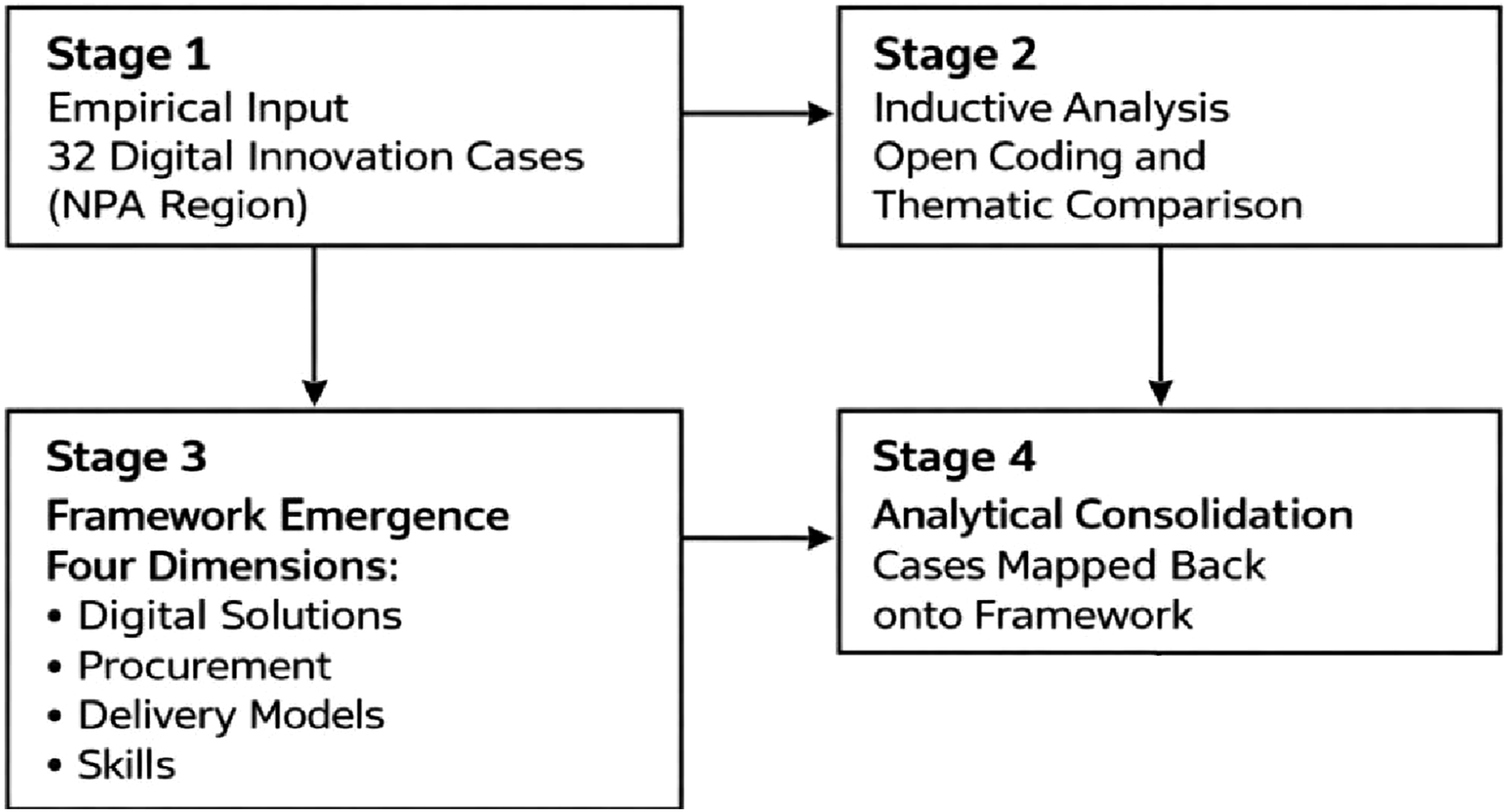
This figure supports student understanding by clearly distinguishing between framework generation and framework application, emphasizing that the INNOCAP model emerged from empirical evidence rather than being imposed in advance.
Background and context
Digital government and public sector innovation are now global priorities, with governments expected to modernize services, use data effectively, and respond more flexibly to citizens’ needs (Borins, 2006; Yerger, 2023). However, the capacity to innovate is unevenly distributed. Peripheral public sector contexts; characterized by small administrations, dispersed populations, and limited resources; face structural disadvantages that make digital transformation more difficult than in large urban or well-resourced settings (Dubois and Sielker, 2022).
These regions often lack reliable digital infrastructure, operate with small multifunctional staffs, and struggle to attract or retain technical expertise (Muilu, 2021). As a result, even when digital solutions or external funding are available, local governments may lack the institutional capacity to adopt, integrate, and sustain innovation. Compounding this issue, much of the public sector innovation literature and many existing frameworks are derived from high-capacity, urban contexts and assume conditions; such as ample skills, funding, and networks; that do not hold in peripheral regions (Mohammadi Aydoghmish and Rafieian, 2022; Mora et al., 2023). This has created a gap in practical, context-sensitive models suited to low-capacity environments.
The NPA region provides a representative setting for examining these challenges. Covering remote areas of Northern Europe, including parts of Finland, Sweden, Norway, Ireland, Scotland, Iceland, Greenland, and the Faroe Islands, the NPA region is marked by long distances, low population density, and strong reliance on public services. In recent years, these regions have experimented with digital initiatives to address isolation and service access, ranging from e-government portals and tele-services to open data platforms and immersive technologies. While these examples demonstrate willingness to innovate, many initiatives remain fragmented, pilot-based, and difficult to sustain.
Across both the literature and the NPA cases, innovation efforts frequently depend on individual champions, short-term project funding, or external grants, and often fail to become embedded in organizational routines (Christensen and Lægreid, 2016; Fuglsang et al., 2021; Ojo et al. 2019). Rigid procurement rules, inflexible budgeting, and siloed decision-making further limit experimentation and scaling. At the same time, pressing demographic and service delivery challenges create urgency to innovate, often resulting in reactive rather than strategic responses (Milovanovic et al., 2025).
In sum, peripheral digital governance is shaped by limited capacity, inflexible processes, and weak institutional support for sustained innovation. While experimentation is widespread, its impact is constrained by skill shortages, procurement barriers, and lack of strategic integration. These conditions highlight the need for an organizationally focused, context-sensitive framework for building innovation readiness, providing the motivation for the INNOCAP project.
Overview of the digital innovation cases across regions
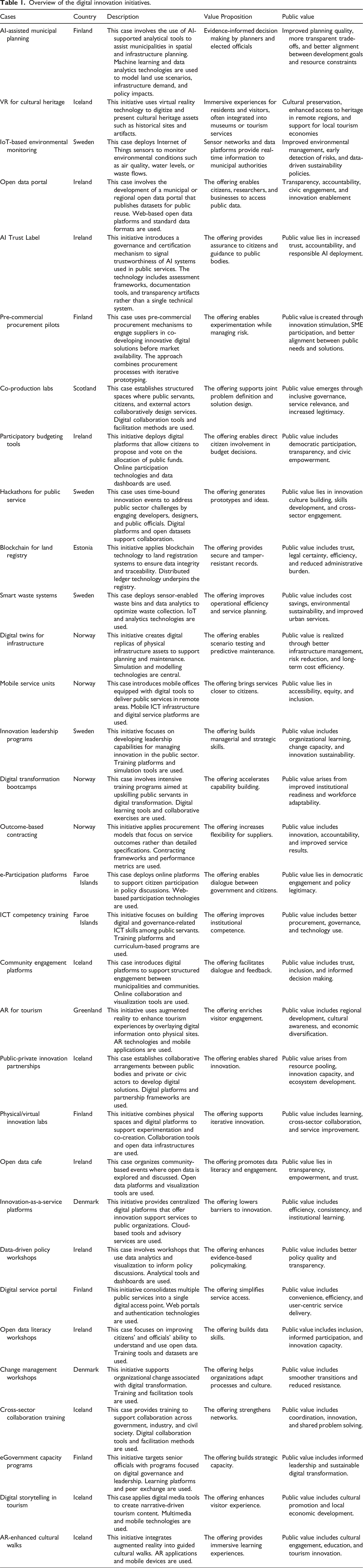
The empirical foundation of this case consists of 32 digital innovation initiatives implemented across the NPA region, including Finland, Ireland, Iceland, Sweden, Norway, Denmark, Scotland, the Faroe Islands, Greenland, and Estonia.
The initiatives span diverse policy domains such as municipal planning, cultural heritage, environmental monitoring, civic participation, tourism, and public service delivery.
Overview of the digital innovation initiatives.
The INNOCAP project and capacity building framework
To address the governance and capacity challenges faced by peripheral public sector organizations, the INNOCAP project (Innovation Capacity Building for Disruptive Transformation) was launched under the Interreg NPA Programme. The project aimed to develop a practical, evidence-based framework to support public organizations in becoming more innovation ready, understood as the ability to adopt, implement, and sustain digital innovation. Rather than imposing a predefined model, INNOCAP grounded its framework in empirical evidence drawn from the contexts it sought to support.
The framework was developed through a qualitative, exploratory analysis of 32 digital innovation initiatives across the NPA region. Data were collected using an open-ended digital questionnaire and follow-up interviews, covering a wide range of countries, policy domains, and levels of government. Using inductive thematic analysis (Braun and Clarke, 2006; Leech and Onwuegbuzie, 2007), the researchers identified recurring patterns across otherwise diverse cases. This analysis revealed that key challenges and enabling factors consistently clustered around four thematic areas, which were distilled into the core dimensions of the INNOCAP Disruptive Innovation Framework.
The first dimension, Digital Solutions, concerns the selection and integration of digital technologies and platforms within public services. The second, Procurement of Innovative Solutions, focuses on the mechanisms through which public organizations acquire or co-develop new technologies, including contracting practices and partnership models. The third dimension, Delivery Models, captures new ways of organizing and delivering services, such as co-production with citizens or the use of innovation labs and mobile service units. The fourth dimension, Skills, refers to the human and organizational capacities required for innovation, including digital competencies, leadership, and learning cultures.
These dimensions function as operational levers rather than prescriptive solutions. The INNOCAP framework is designed as a diagnostic and developmental tool that allows organizations to assess their strengths and weaknesses across the four areas and to prioritize targeted capacity-building efforts 13], [17]. It explicitly encourages building on existing local experimentation rather than importing externally defined models.
A defining feature of the framework is its emphasis on interdependence between dimensions. Consistent with public sector innovation research, INNOCAP highlights that technological change must be accompanied by changes in processes, skills, and governance arrangements to be sustainable (Hartley, 2005; Osborne, 2017). The framework aligns with public value and adaptive governance perspectives by promoting holistic, system-level thinking and continuous learning (Bryson et al., 2014; Janssen and Van der Voort, 2016).
While the framework has been piloted in selected NPA regions, the focus of this case is on its empirical development and conceptual structure rather than on pilot outcomes. The sections that follow examine each dimension in more detail using examples from the case studies, before turning to cross-country patterns and broader lessons for public sector innovation.
Delving into the four INNOCAP dimensions – Case elaboration
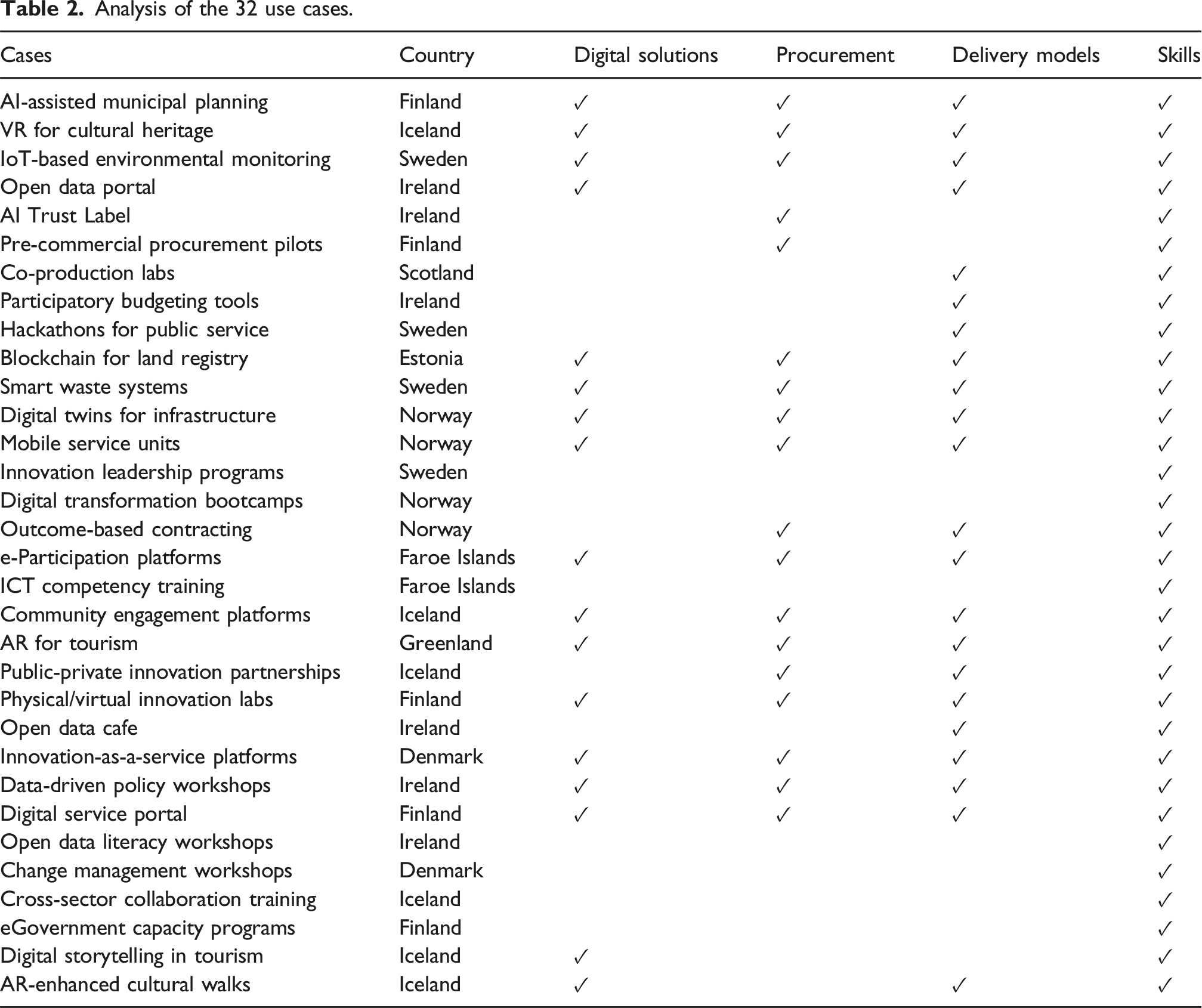
The 32 initiatives were analysed comparatively to identify recurring patterns across the four INNOCAP dimensions rather than treated as standalone narratives. Some cases, such as AI assisted municipal planning in Finland and blockchain enabled land registries in Estonia, engaged strongly with all four dimensions. Others, such as open data portals and participatory tools, placed greater emphasis on delivery models and skills than on technological complexity.
Digital solutions
Despite widespread experimentation, public organisations struggled to decide which digital solutions were worth sustaining once pilot funding ended.
Digital Solutions refer to the technologies and digital infrastructures adopted to improve public services or operations (Carvalhosa et al., 2024). Across the cases, initiatives included open data portals, GIS and analytics for planning, citizen engagement applications, IoT monitoring systems, and immersive technologies such as VR or AR, demonstrating that peripheral regions actively experiment with contemporary tools. These solutions often targeted practical local needs, including transparency, remote access to services, improved decision making, and place based economic development.
However, the cases also show that technology adoption alone rarely delivers sustained innovation. Many solutions remained fragmented or underused when they were not integrated into routine workflows, governance processes, or service delivery routines. This reinforces the view that public sector innovation should be assessed by institutional integration and public value contribution rather than the number of tools deployed (Cepilovs et al., 2013). The INNOCAP lens therefore foregrounds strategic alignment: selecting technologies that match organizational capacity and designing implementation plans that address maintenance, uptake, and process change. Overall, the Digital Solutions dimension prompts a core question: are technologies chosen for contextual fit and embedded into everyday operations to create public value (Bryson et al., 2014; Chen et al., 2023).
Procurement of innovative solutions
In many cases, procurement rules forced managers to choose between compliance and innovation, with no obvious path to reconcile the two.
Procurement shapes whether innovation can be commissioned, piloted, and scaled (Concha et al., 2012). The cases repeatedly identified rigid procurement rules and specification-heavy tendering as barriers, particularly for smaller authorities and SMEs. Lowest price award logics and highly prescriptive requirements can reduce supplier diversity and limit experimentation, making it difficult to procure emerging solutions or engage in iterative development.
In response, some cases adopted more adaptive pathways, including pre commercial procurement for R&D oriented piloting, innovation friendly tenders framed around problems or outcomes, and phased approaches that reduce lock in. Other cases relied on intermediaries such as regional innovation labs to broker partnerships, reduce administrative burden, and support joint procurement across multiple municipalities. These practices align with calls to reposition procurement as a strategic tool for public value creation and managed risk rather than compliance alone (Janssen and Van der Voort, 2016; Lewandowski and Moskała, 2023). For students, the procurement dimension raises a central governance dilemma: how can accountability and fairness be preserved while enabling experimentation, co-development, and scaling.
Delivery models
New delivery models created opportunities for participation but raised questions about accountability, ownership, and long-term resourcing.
Delivery Models refer to how public services are organised, delivered, and experienced by users. Many cases experimented with models designed to overcome distance, limited capacity, and diverse local needs. These included co production labs and innovation hubs, open data cafés, mobile service units for rural access, and participatory budgeting initiatives. A defining feature is that delivery innovation often depended on partnerships and engagement: governments acted as conveners enabling citizens, civil society, and private actors to co design services and contribute resources.
These findings reinforce scholarship that frames public innovation as increasingly networked and co-produced rather than exclusively top down (Bryson et al., 2014; Sørensen and Torfing, 2011). At the same time, institutionalisation remains a recurring challenge: successful pilots often required further work to secure funding, embed practices into formal structures, and build facilitation capacity.
Skills
Skills shortages posed a persistent dilemma: should organisations invest in training existing staff, rely on external consultants, or scale back ambitions altogether?
Skills capture the human and institutional capacities that enable innovation to be initiated, implemented, and sustained. Across the 32 cases, skill shortages emerged as a recurring constraint, spanning technical competencies such as data and IT management as well as managerial and collaborative skills including project management, agile methods, design thinking, and stakeholder engagement. Limited specialist staffing, dependence on external consultants, and uneven digital literacy frequently reduced the ability to integrate new tools or scale pilots.
Several cases addressed this through structured capacity building, including cross border training, communities of practice, and dedicated programmes such as internal digital academies. The INNOCAP framing treats skills as foundational because progress in the other dimensions depends on internal capability: digital solutions require competent users, procurement requires informed buyers, and delivery models require facilitation and partnership management. This aligns with wider claims that sustainable public innovation requires investment in people, leadership, and learning cultures (Bason, 2010; Lember, 2018; Milovanovic et al., 2025).
Analysis of the 32 use cases.
Comparative and cross-country insights
Across the 32 cases, the four INNOCAP dimensions consistently appeared, but countries differed in which dimensions they prioritised and how mature their practices were. These differences underline that innovation readiness is shaped by context, including policy environment, institutional capacity, and prevailing governance culture.
In Northern Europe, Finland, Sweden, and Norway showed relatively balanced engagement across the framework, supported by stronger baseline capacity. Finland most clearly combined structured skills development with innovation-oriented procurement practices. Sweden placed greater emphasis on digital experimentation and redesigned delivery models, often using participatory methods to involve users. Norway stood out for adaptive service delivery approaches and workforce preparedness, particularly where geography requires flexible access models.
In the North Atlantic and Celtic cases, Ireland and Scotland emphasised participatory delivery models and capability building, often prioritising engagement and practical upskilling over technologically complex solutions. Iceland appeared more integrated across all four dimensions, reflecting an ecosystem approach where cross-sector collaboration and coordinated innovation activity were comparatively easier to sustain. Estonia, while not central to the NPA grouping, served as a high-integration reference point in demonstrating how a small state can align technology, governance arrangements, and capability building in a single initiative.
In the most remote contexts, Faroe Islands and Greenland highlighted the importance of combining digital participation with capacity building to overcome distance and small scale. Greenland’s tourism-oriented AR example illustrated how a locally grounded priority can mobilise all four dimensions when implementation is tightly linked to community value and capability needs. Denmark’s cases reflected enabling infrastructure and organisational change management, showing how a strong national digital baseline can support peripheral administrations through shared platforms and structured adoption support.
Overall, the comparative evidence supports three conclusions. First, INNOCAP is flexible: different contexts emphasise different pathways while using the same diagnostic lens. Second, successful initiatives typically combined dimensions, particularly procurement flexibility and skills development alongside digital tools. Third, institutional maturity and culture shape which dimensions are feasible to prioritise first. For teaching purposes, these patterns invite students to treat innovation readiness as a contextual journey and to justify which dimension should be strengthened first in each national or regional setting.
Conclusion
Rather than revealing best practices, the cross-country comparison highlights different strategic trade-offs shaped by national context, institutional maturity, and resource constraints.
This teaching case demonstrates that digital innovation in peripheral public sector contexts is primarily a question of organizational readiness rather than technology adoption alone. Drawing on 32 empirical cases, the INNOCAP framework identifies four interdependent dimensions (digital solutions, procurement, delivery models, and skills) that collectively determine whether innovation efforts remain fragmented or become embedded in routine governance.
The central insight is that progress in one dimension depends on progress in the others. Digital tools deliver public value only when supported by adaptive procurement, appropriate delivery arrangements, and sufficient internal capabilities. The cases show that strengthening these dimensions in combination creates reinforcing effects that enable innovation to be sustained rather than confined to short-term pilots.
The comparative analysis further highlights that innovation pathways are context dependent. Countries and regions emphasise different dimensions based on institutional maturity, policy environments, and local needs. INNOCAP’s value lies in providing a flexible diagnostic structure that supports tailored strategies rather than prescriptive solutions.
Overall, the case illustrates how peripheral public sector organisations can build innovation readiness by investing in people, enabling experimentation within governance rules, redesigning service delivery, and selecting technologies that fit local capacity. These lessons are broadly applicable beyond the NPA context and provide students and practitioners with a practical lens for analysing and strengthening public sector innovation under constraint.
Guiding questions
1. Consider a small municipality with limited staff capacity and rigid procurement rules that has successfully piloted a digital service with high citizen uptake. Funding for the pilot is ending, and the staff member who led the initiative is leaving. At this point, what should management prioritise: scaling the technology, reforming procurement, investing in staff skills, or redesigning service delivery? 2. What unique challenges do peripheral or sparsely populated regions face in pursuing digital transformation of public services? How do these challenges (e.g. infrastructure, capacity, governance) differ from those faced in larger urban governments or well-funded national agencies? 3. How does the INNOCAP framework serve as a tool for assessing and improving innovation readiness in the public sector? Pick one of the four dimensions (Digital Solutions, Procurement, Delivery Models, or Skills) and discuss concrete steps a public manager in a small town might take to strengthen that dimension, based on insights from the case. 4. In what ways do the four dimensions reinforce each other? Can progress in one dimension compensate for weaknesses in another, or is a balanced approach necessary? For instance, if a municipality excels in Skills development but has very rigid Procurement processes, how might that impact its overall innovation outcomes? Use examples from the case to support your argument. 5. The case demonstrates different emphasis areas in countries like Finland, Ireland, and the Faroe Islands. Why do you think these differences exist? Consider factors such as national policy, culture, economic conditions, and prior investments. How should a public sector innovation strategy be tailored when advising a peripheral region in, say, Scandinavia versus one in the North Atlantic? 6. Imagine you are a consultant hired by a rural regional government that is part of a program like INNOCAP. The leadership wants to improve their digital innovation capacity. Based on the INNOCAP framework and case studies, what would be your key recommendations? Outline an action plan addressing each of the four dimensions – what specific initiatives or changes should they pursue in Digital Solutions, Procurement, Delivery Models, and Skills?
Footnotes
Funding
The authors received no financial support for the research, authorship, and/or publication of this article.
Declaration of conflicting interests
The authors declared no potential conflicts of interest with respect to the research, authorship, and/or publication of this article.